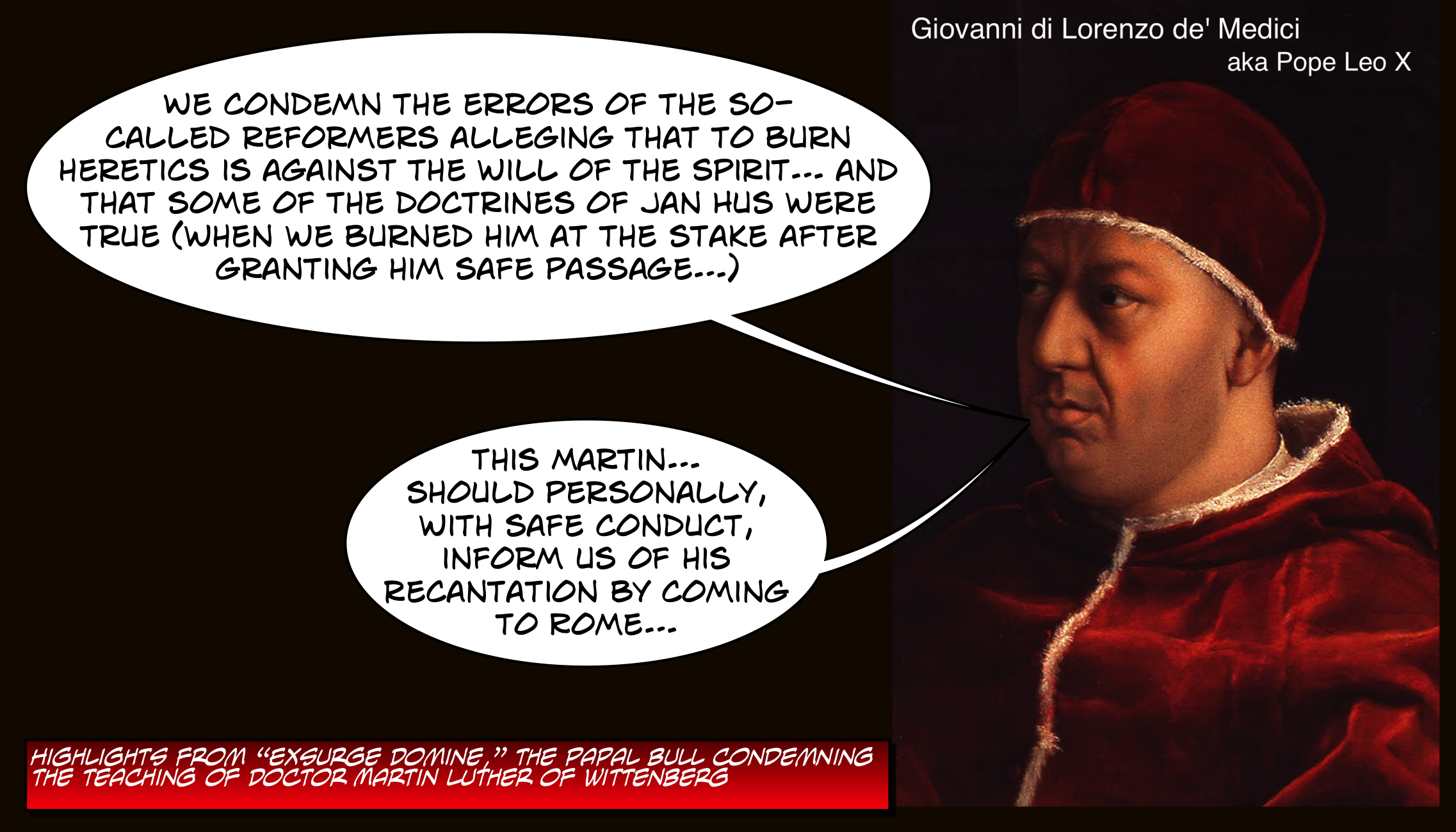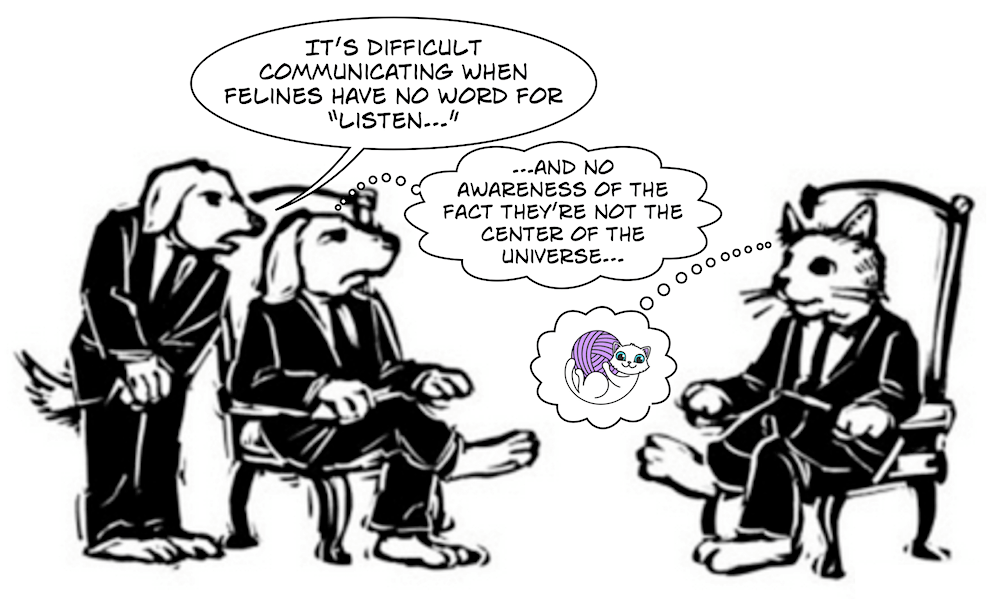
Using Quotations in Your Writing

Do you consider quotations good or bad? As a reader, do you think quotations enhance what you are reading . . . or do they detract from the text?

My personal opinion is that the educated use of quotations enriches writing. (Sloppy quotation is another matter.) Positive contributions made by quotes would include:

They can offer “authoritative” support of a point being made by the writer.
Quotations can offer a refreshing change of pace in a lengthy work.
The selection of the individuals quoted gives me insight into the mind of the current writer.
A well-chosen epigraph piques my curiosity about the chapter which follows.
And, frankly, I simply enjoy a brilliant turn of phrase or a timeless but fresh insight.

I’m not alone in appreciating quotations. It’s no accident The Oxford Dictionary of Quotations is in its seventh edition. Why Do We Quote? describes it this way:

The demand for ODQ remains substantial. It has also spawned numerous sister dictionaries, many themselves appearing in several editions. We have The Oxford Dictionary of Humorous Quotations,… of Literary Quotations,… of Political Quotations,… of Biographical Quotations,… of Medical Quotations,… of American Legal Quotations,…. of Scientific Quotations.… of Phrase, Saying, and Quotation,… of Thematic Quotations,… of Quotations by Subject,… of Modern Quotation,… of Twentieth-Century Quotations, The Concise Oxford Dictionary of Quotation. A Little Oxford Dictionary of Quotations has gone through successive editions. There have also been several editions of The Oxford Dictionary of English Proverbs, the first in 1936. There is an avid market, it seems, for quotation collections.

The number of quotation collections is staggering. Read on, and I’ll provide links to some of the compilations available for free download, thanks to public domain laws.

The sheer weight of these books reveals their popularity. And quotations collections are marketable today. In “How Inspirational Quotes became a Whole Social Media Industry,” the author cites a Canadian whose “interest in motivational quotes has proven lucrative, and while he still has a day job in the wireless technology industry, he says that he’s recently been taking home two to three times his regular income from advertising on his website.”

And it all began when, “One day when he was a teenager, he was browsing in a book shop and came across a small book of famous quotations. Something about these pithy sayings appealed to him, and he started to compile his own collection of quotes that particularly resonated.”

Before the birth of the internet, I invested in several quotation collections—a not uncommon purchase for pastors. I confess to still referring on occasion to The Quotable Lewis to suggest new themes to explore here at Mere Inkling.

C.S. Lewis and Quotations

A beloved lecturer, C.S. Lewis recognized the value of worthy quotation. While few of us have his “eidetic memory,” we can certainly follow his example in using apt quotations to illustrate our points.

Lewis even regarded quotation collections highly enough to compile one. In 1946, he published George MacDonald: An Anthology. It was a tribute to the writings of his “mentor,” who appears in his fictional masterpiece about heaven and hell, The Great Divorce. The anthology remains in print. However, Canadian readers of Mere Inkling can benefit from it falling into public domain status in their Commonwealth. Canadians will find it available for download at this site.

While every reader is capable of enjoying the 365 selections in the volume, Lewis did have a specific intent in the passages he chose.

This collection, as I have said, was designed not to revive MacDonald’s literary reputation but to spread his religious teaching. Hence most of my extracts are taken from the three volumes of Unspoken Sermons. My own debt to this book is almost as great as one man can owe to another: and nearly all serious inquirers to whom I have introduced it acknowledge that it has given them great help—sometimes indispensable help towards the very acceptance of the Christian faith.

Scores of Free Quotation Collections Available to All

Internet Archive has an enormous (free) lending library of books featuring collections of quotations. Many can be “checked out” for temporary use. Other older books are available for download.

Project Gutenberg offers a smaller number, but includes titles they have edited themselves by gleaning pithy phrases from books in their public domain library. Many* of these free (public domain) compilations are linked below.

The massive selection of quotation collections (I quit counting as I approached 100) is daunting. Among those not available for download (which are still accessible for reading) you will note ever more esoteric subject matter. As a whole, we find a small number are collected from prolific individuals, such as Shakespeare, Mark Twain, or John F. Kennedy. Many are generalist, featuring “popular” quotations on a wide range of subjects. Others are thematic, focusing on subjects such as friendship, humor, women, sports, country music, dog [or cat] lovers, climbers, business, motor racing, the military, lawyers, saints, atheists, rock ‘n’ roll, or any of fourscore more themes. Some featuring national or cultural quotations, for example French, Jewish, Scottish, German, etc. And, for those up to the challenge, you can even read Wit and Wisdom of the American Presidents: A Book of Quotations.

🚧 Feel Free to Ignore Everything Below 🚧

Only the smallest attempt has been made here to sort the free volumes. You will find a few general headings below, and a multitude of similarly titled books. One wonders how many of the quotations cited in the larger volumes are common to all of them. Perhaps as you glance through this list, you will see a title or two you might appreciate perusing.

General Quotation Collections

The Oxford Dictionary Of Quotations
(Second Edition: 1953)

The Book of Familiar Quotations
Unnamed Compiler (London: 1860)

Familiar Quotations
John Bartlett (Boston: 1876)

Dictionary of Contemporary Quotations (English)
Helena Swan (London and New York: 1904)

What Great Men have Said about Great Men: a Dictionary of Quotations
William Wale (London: 1902)

A Cyclopaedia of Sacred Poetical Quotations
H.G. Adams (London: 1854)

The International Encyclopedia of Prose and Poetical Quotations from the Literature of the World
William Shepard Walsh (Philadelphia: 1908)

The Book of Familiar Quotations; being a Collection of Popular Extracts and Aphorisms from the Works of the Best Authors
Unnamed Compiler (London: 1866)

The Book of Familiar Quotations; being a Collection of Popular Extracts and Aphorisms from the Works of the Best Authors
L.C. Gent (London: 1866)

Dictionary of Quotations (English)
Philip Hugh Dalbiac (Long & New York: 1908)

A Dictionary Of Quotations
Everyman’s Library (London: 1868)

Forty Thousand Quotations: Prose and Poetical
by Charles Noel Douglas (New York: 1904)

Three Thousand Selected Quotations From Brilliant Writers
Josiah H. Gilbert (Hartford, Connecticut: 1905)

Stokes’ Encyclopedia of Familiar Quotations: Containing Five Thousand Selections from Six Hundred Authors
Elford Eveleigh Treffry (New York: 1906)

Historical Lights: a Volume of Six Thousand Quotations from Standard Histories and Biographies
Charles Eugene Little (London & New York: 1886)

Great Truths by Great Authors: A Dictionary of Aids to Reflection, Quotations of Maxims, Metaphors, Counsels, Cautions, Aphorisms, Proverbs, &c., &c. from Writers of All Ages and Both Hemispheres
William M. White (Philadelphia: 1856)

Truths Illustrated by Great Authors: A Dictionary of Nearly Four Thousand Aids to Reflection, Quotations of Maxims, Metaphors, Counsels, Cautions, Aphorisms, Proverbs, &c., &c.
William M. White (Philadelphia: 1868)

Handy Dictionary of Prose Quotations
George Whitefield Powers (New York: 1901)

Letters, Sentences and Maxims
Philip Dormer Stanhope Chesterfield (London & New York: 1888)

Poetical Quotations from Chaucer to Tennyson: With Copious Indexes
Samuel Austin Allibone (Philadelphia: 1875)

Prose Quotations from Socrates to Macaulay
Samuel Austin Allibone (Philadelphia: 1880)

Cassell’s Book Of Quotations, Proverbs and Household Words
William Gurney Benham (London & New York, 1907)

Putnam’s Complete Book of Quotations, Proverbs and Household Words
William Gurney Benham (New York, 1926)

Benham’s Book Of Quotations
William Gurney Benham (London: 1949)

Hoyt’s New Cyclopedia Of Practical Quotations
by Kate Louise Roberts (New York: 1927)

Classic Quotations: A Thought-Book of the Wise Spirits of All Ages and all Countries, Fit for All Men and All Hours
James Elmes (New York: 1863)

A Dictionary of Quotations from the English Poets
Henry George Bohn (London: 1902)

A Complete Dictionary Of Poetical Quotations
Sarah Josepha Hale (Philadelphia: 1855)

The Handbook of Quotations: Gleanings from the English and American Fields of Poetic Literature
Edith B. Ordway (New York: 1913)

Carleton’s Hand-Book of Popular Quotations
G.W. Carleton (New York: 1877)

Many Thoughts of Many Minds
George W. Carleton (New York: 1882)

Many Thoughts Of Many Minds
Henry Southgate (London: 1930)

A Manual of Quotations (forming a new and considerably enlarged edition of MacDonnel’s Dictionary of Quotations)
E.H. Michelsen (London: 1856)

A Dictionary of Quotations from Various Authors in Ancient and Modern Languages
Hugh Moore (London: 1831)

Dictionary Of Quotations: from Ancient and Modern, English and Foreign Sources
James Wood (London: 1893)

A Dictionary of Quotations in Prose: from American and Foreign Authors
Anna L. Ward (New York: 1889)

Webster’s Dictionary Of Quotations: A Book of Ready Reference
(London: undated)

Collections of Individual Authors

Quotations from Browning
Ruth White Lawton (Springfield, Massachusetts: 1903)

The Wesley Yearbook: or, Practical Quotations from the Rev. John Wesley
Mary Yandell Kelly (Nashville: 1899)

Quotes and Images From The Works of Mark Twain
David Widger (Project Gutenberg: 2002)

Widger’s Quotations from the Project Gutenberg Editions of Paine’s Writings on Mark Twain
David Widger (Project Gutenberg: 2003)

Quotes and Images From The Diary of Samuel Pepys
David Widger (Project Gutenberg: 2004)

Quotes and Images From Memoirs of Louis XIV
David Widger (Project Gutenberg: 2004)

Quotes and Images From Memoirs of Louis XV and XVI
David Widger (Project Gutenberg: 2005)

Quotes and Images from the Memoirs of Jacques Casanova de Seingalt
David Widger (Project Gutenberg: 2004)

Quotes and Images From Motley’s History of the Netherlands
David Widger (Project Gutenberg: 2004)

Quotes and Images from the Writings of Abraham
David Widger (Project Gutenberg: 2004)

Quotes and Images From The Tales and Novels of Jean de La Fontaine
David Widger (Project Gutenberg: 2004)

Quotes and Images From The Works of George Meredith
David Widger (Project Gutenberg: 2004)

Quotes and Images From Memoirs of Cardinal De Retz
David Widger (Project Gutenberg: 2005)

Quotes and Images From Memoirs of Count Grammont by Count Anthony Hamilton
David Widger (Project Gutenberg: 2005)

Widger’s Quotations from the Project Gutenberg Editions of the Works of Montaigne
David Widger (Project Gutenberg: 2003)

Widger’s Quotations from Project Gutenberg Edition of Memoirs of Napoleon
David Widger (Project Gutenberg: 2003)

Quotes and Images From the Works of John Galsworthy
David Widger (Project Gutenberg: 2005)

Quotes and Images From The Confessions of Jean Jacques Rousseau
David Widger (Project Gutenberg: 2004)

The French Immortals: Quotes and Images
David Widger (Project Gutenberg: 2009)

Quotes and Images From The Works of Charles Dudley Warner
David Widger (Project Gutenberg: 2004)

Quotes and Images From Memoirs of Marie Antoinette
David Widger (Project Gutenberg: 2005)

Quotes and Images From The Works of Gilbert Parker
David Widger (Project Gutenberg: 2004)

Quotes and Images From The Confessions of Harry Lorrequer by Charles James Lever
David Widger (Project Gutenberg: 2004)

Quotes and Images From Memoirs of Madame De Montespan
David Widger (Project Gutenberg: 2005)

Quotes and Images From the Works of Oliver Wendell Holmes, Sr.
David Widger (Project Gutenberg: 2004)

Quotes and Images From The Works of William Dean Howells
David Widger (Project Gutenberg: 2004)

The Spalding Year-Book: Quotations from the Writings of Bishop [John Lancaster] Spalding for Each Day of the Year
Minnie R. Cowan (Chicago: 1905)

Worldly Wisdom; Being Extracts from the Letters of the Earl of Chesterfield to His Son
William L. Sheppard (New York: 1899)

A Year Book of Quotations: From the Writings of Henry Wadsworth Longfellow
with spaces for Autographs and Records (New York: 1896)

The Bernhardt Birthday Book: Being Quotations from the Chief Plays of Madame Sarah Bernhardt’s Repertoire and Other Works
E.M. Evors (London: 1912)

Beauties of Robert Hall
John S. Taylor (New York: 1839)

Shakespeare Gets His Own Section

Everyman’s Dictionary Of Shakespeare Quotations
D.C. Browning (London: 1961)

Shakespearean Quotations
Charles Sheridan Rex (Philadelphia: 1910)

Shakespeare Quotations
Emma Maria Rawlins (New York: 1900)

Quotations from Shakespeare
Edmund Routledge (London: 1867)

A Dictionary of Shakspere Quotations
C.J. Walbran (London: 1849)

The New Shaksperian Dictionary of Quotations
G. Somers Bellamy (London: 1875)

Longer Moral Quotations From Shakespeare
M. Venkatasiah (Mysore/Mysuru, India: 1923)

Dictionary of Shakespearian Quotations: Exhibiting the Most Forceful Passages Illustrative of the Various Passions, Affections and Emotions of the Human Mind
Thomas Dolby (New York: 1880)

Odd, Quaint and Queer Shaksperian Quotations Handsomely and Strikingly Illustrated
Henry McCobb [using pseudonym Shakspere Snug] (New York: 1892)

Thematic Quotation Collections

Quotations from Negro Authors
Katherine D. Tillman (Fort Scott, Kansas: 1921)

Sovereign Woman Versus Mere Man: a Medley of Quotations
Jennie Day Haines (San Francisco: 1905)

About Women: What Men have Said
Rose Porter (New York: 1894)

The Dixie Book of Days
Matthew Page Andrews (London & Philadelphia: 1912)

Living Waters
Alice L. Williams (Boston: 1889)

Green Pastures and Still Waters
Louis Kinney Harlow (Boston: 1887)

Out-of-Doors; Quotations from Nature Lovers
Rosalie Arthur

Ye Gardeyn Boke: a Collection of Quotations Instructive and Sentimental
Jennie Day Haines (San Francisco & New York: 1906)

The Optimist’s Good Morning
Florence Hobart Perin (Boston: 1909)

The Optimist’s Good Night
Florence Hobart Perin (Boston: 1910)

The Book of Love
Jennie Day Haines (Philadelphia: 1911)

Author’s Calendar 1889
Alice Flora McClary Stevens (Boston: 1888)

Proverbs and Quotations for School and Home
John Keitges (Chicago: 1905)

Excellent Quotations for Home and School
Julia B. Hoitt (Boston: 1890)

Borrowings: A Compilation of Helpful Thoughts from Great Authors
Sarah S.B. Yule & Mary S. Keene (San Francisco: 1894)

More Borrowings: the Ladies of First Unitarian Church of Oakland, California
Sarah S.B. Yule & Mary S. Keene (San Francisco: 1891)

Quotations
Norwood Methodist Church (Edmonton, Alberta: 1910).

Goodly Company: a Book of Quotations and Proverbs for Character Development
Jessie E. Logan (Chicago: 1930)

The Atlantic Year Book: Being a Collection of Quotations from the Atlantic Monthly
Teresa J. Fitzpatrick & Elizabeth M. Watts (Boston: 1920)

Here and There: Quaint Quotations, a Book of Wit
H.L. Sidney Lear

Author’s Calendar 1890
Alice Flora McClary Stevens (Boston: 1889)

Catch Words of Cheer
Sara A. Hubbard (Chicago: 1903)

Catch Words of Cheer (new series)
Sara A. Hubbard (Chicago: 1905)

Catch Words of Cheer (third series)
Sara A. Hubbard (Chicago: 1911)

How to Get On, Being, the Book of Good Devices: a Thousand Precepts for Practice
Godfrey Golding (London: 1877)

The Dictionary of Legal Quotations: or, Selected Dicta of English Chancellors and Judges from the Earliest Periods to the Present Time . . . embracing many epigrams and quaint sayings
James William Norton-Kyshe

The Vocabulary of Philosophy, Mental, Moral and Metaphysical: with Quotations and References
William Fleming (Philadelphia: 1860)

Manual of Forensic Quotations
Leon Mead and F. Newell Gilbert (New York: 1903)

Toaster’s Handbook Jokes Stories And Quotations
Peggy Edmund and Harold W. Williams (New York: 1932)

The Banquet Book: A Classified Collection of Quotations Designed for General Reference, and Also an Aid in the Preparation of the Toast List
Cuyler Reynolds (London & New York: 1902)

Like Expressions: a Compilation from Homer to the Present Time
A.B. Black (Chicago: 1900)

Oracles from the Poets: a Fanciful Diversion for the Drawing-Room
Caroline Howard Gilman (London & New York: 1844)

The Sibyl: or, New Oracles from the Poets
Caroline Howard Gilman (New York: 1848)

A Book of Golden Thoughts
Henry Attwell (London & New York: 1888)

A Little Book of Naval Wisdom
Harold Felix Baker Wheeler (London: 1929)

Medical Quotations from English Prose
John Hathaway Lindsey (Boston: 1924)

Psychological Year Book: Quotations Showing the Laws, the Ways, the Means, the Methods for Gaining Lasting Health, Happiness, Peace and Prosperity
Janet Young (San Francisco: 1905)

The Oshawa Book of Favorite Quotations
(Oshawa, Ontario: 1900)

The Pocket Book Of Quotations
Henry Davidoff (New York: 1942)

Quotations for Occasions
Katharine B. Wood (New York: 1896)

Quotations For Special Occasions
Maud Van Buren (New York: 1939)

A Complete Collection of the Quotations and Inscriptions in the Library of Congress
Emily Loiseau Walter

Words and Days: a Table-Book of Prose and Verse
Bowyer Nichols (London: 1895)

The Book of Good Cheer: “A Little Bundle of Cheery Thoughts”
Edwin Osgood Grover (New York: 1916)

The Good Cheer Book
Blanche E. Herbert (Boston: 1919)

Just Being Happy: a Little Book of Happy Thoughts
Edwin Osgood Grover (New York: 1916)

Pastor’s Ideal Funeral Book: Scripture Selections, Topics, Texts and Outlines, Suggestive Themes and Prayers, Quotations and Illustrations
Arthur H. DeLong (New York: 1910)

Quips and Quiddities: a Quintessence of Quirks, Quaint, Quizzical, and Quotable
William Davenport Adams (London: 1881)

The Book of Ready-Made Speeches: with Appropriate Quotations, Toasts, and Sentiments
Charles Hindley (London: 1893)

Suggestive Thoughts on Religious Subjects
Henry Southgate (London: 1881)

Two Thousand Gospel Quotations from the Bible, Book of Mormon, Doctrine and Covenants, and Pearl of Great Price
Henry H. Rolapp (Salt Lake City, Utah: 1918)

Selected Quotations on Peace and War: with Especial Reference to a Course of Lessons on International Peace, a Study in Christian Fraternity
Federal Council of the Churches of Christ in America (New York: 1915)

Book of Science and Nature Quotations
Isaac Asimov & Jason A. Shulman (New York: 1988)
From an Indian Library Collection (not generally public domain)

Foreign (i.e. non-English) Collections

Dictionary of Quotations (Spanish)
[With English Translations]
Thomas Benfield Harbottle and Martin Hume (New York: 1907)

A Literary Manual of Foreign Quotations Ancient and Modern, with Illustrations from American and English Authors
John Devoe Belton (New York: 1891)

Dictionary of Quotations (Classical)
Thomas Benfield Harbottle (London: 1897)

Dictionary of Latin Quotations, Proverbs, Maxims, and Mottos, Classical and Medieval
Henry Thomas Riley (London: 1866)

Treasury of Latin Gems: a Companion Book and Introduction to the Treasures of Latin Literature
Edwin Newton Brown (Hastings, Nebraska: 1894)

A Dictionary of Oriental Quotations (Arabic and Persian)
Claud Field (London & New York: 1911)

A Little Book of German Wisdom
Claud Field (London: 1912)

Dictionary Of Foreign Phrases And Classical Quotations
Hugh Percy Jones (Edinburgh: 1908)

Dictionary Of Quotations: in Most Frequent Use, Taken Chiefly from the Latin and French, but Comprising Many from the Greek, Spanish and Italian Languages
[Translated into English]
D.E. MacDonnel (London: 1826)

A Dictionary Of English Quotations And Proverbs
With translations into Marathi
C.D. Deshmukh (Poona/Pune, India: 1973)

Classical and Foreign Quotations: a Polyglot Manual of Historical and Literary Sayings, Noted Passages in Poetry and Prose Phrases, Proverbs, and Bons Mots
Wm. Francis Henry King (London: 1904)


* Too many.

⁑ A bit of irony in this title, since it was written over 115 years ago.
Not Quite Christmas

Sadly, most people miss out on the true meaning of Christmas. But then, there are some people who really miss the mark altogether. That was the case with many Brits during the Victorian era.

Today I read in Philosopher Mouse of the Hedge about Victorian Christmas cards. Phil’s great post was inspired by a BBC article, “Frog Murder and Boiled Children: ‘Merry Christmas’ Victorian style.” As Phil writes, “and you thought that sinister Elf on the Shelf was creepy.”

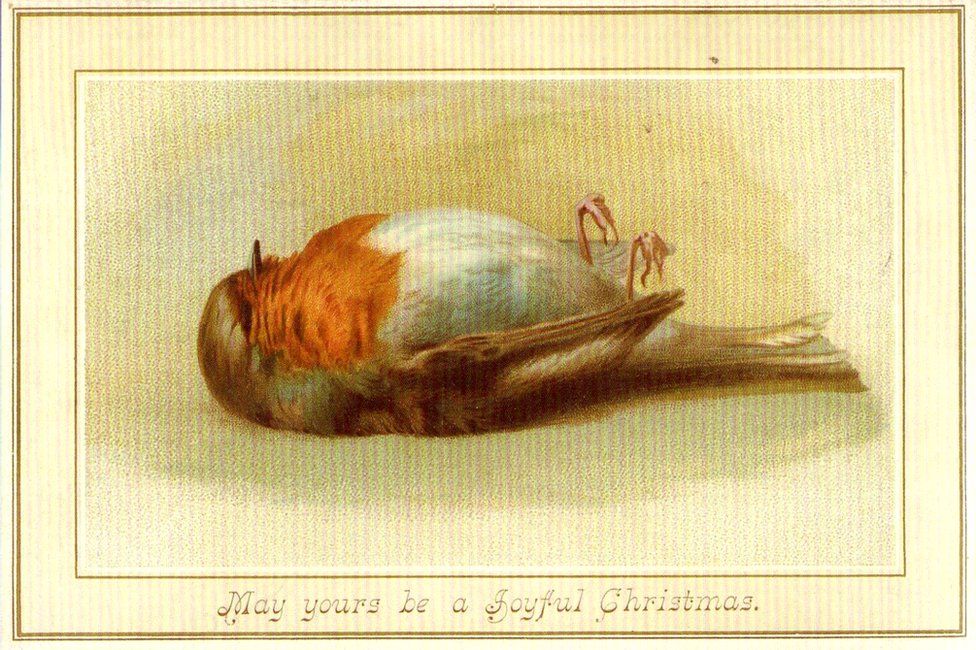
The card at the top of my post comes from the BBC collection. Pretty morbid. Where does the “Joyful Christmas” enter in? One might think this is the kind of card a passive aggressive victim of ornithophobia might send an enemy—but that was not its original design.

The Robin redbreast is a treasured resident of Britain, as this interesting article describes in detail. Just a few years ago, in fact, “it won a BBC Springwatch poll to choose the UK’s national bird.” The author describes their distinctive association with Christmas, although I am positive he did not have the image of this unfortunate creature in mind when he penned these words.

Another reason we connect robins with Christmas is that the early postmen wore red uniforms, and so were nicknamed ‘robins.’ And, as the cards pop through your letter box over the coming days, note how many feature a robin!

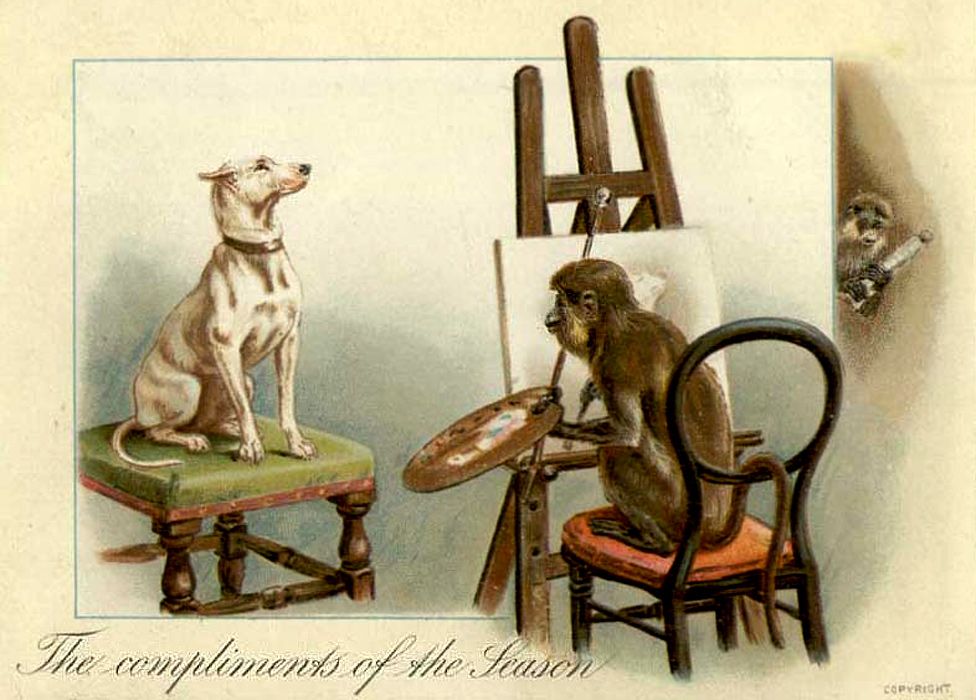
Here’s another peculiar card that has nothing to do with Christmas. At least it simply refers to “the Season,” and doesn’t tarnish the word “Christmas” itself.

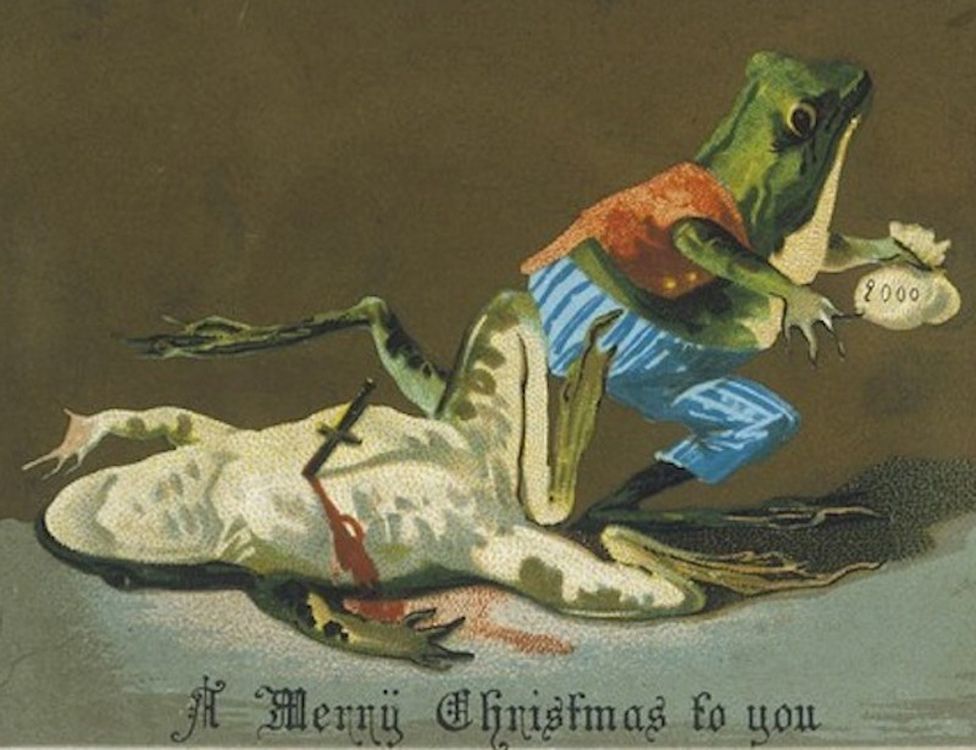
Such a modicum of good taste did not deter the creator of the next card from associating robbery and homicide (actually frogicide) with the day celebrating Christ’s birth. One must hope that the grim illustration was originally fashioned for a different context.

C.S. Lewis knew that the British had a problem comprehending Christmas’ meaning. Why, they even twisted things sufficiently to link telling ghost stories to the commemoration of the Nativity.

It may have something to do with a confused relationship between church and state. Nations with “state religions” typically see those religious faiths morph into distortions of their true selves. Thus history is filled with examples of total secularists or hedonists who were the “titular head” of a state church.

Henry VIII set the bar for hypocrisy quite high, with adultery and murder his bywords. C.S. Lewis includes a tribute (of damning sorts) to this despicable ruler in his sequel to The Screwtape Letters, “Screwtape Proposes a Toast.” In the address, fictitiously delivered by the devil Screwtape, the Tempter bemoans the mediocre vices of the humans whose anguish provides the main course.

The scene is in Hell at the annual dinner of the Tempters’ Training College for young Devils. The Principal, Dr Slubgob, has just proposed the health of the guests. Screwtape, who is the guest of honour, rises . . .

Your dreaded Principal has included in a speech full of points something like an apology for the banquet which he has set before us. Well, gentledevils, no one blames him. But it would be vain to deny that the human souls on whose anguish we have been feasting tonight were of pretty poor quality.

Not all the most skilful cookery of our tormentors could make them better than insipid. Oh to get one’s teeth again into a Farinata,* a Henry VIII, or even a Hitler! There was real crackling there; something to crunch; a rage, an egotism, a cruelty only just less robust than our own. It put up a delicious resistance to being devoured. It warmed your innards when you’d got it down.

So much for Henry VIII and the peculiarities of Church and State relations in England. Whatever the origin of this confusion about Christmas, it is quite tragic and disturbing.

So, What is the Proper Focus?

For an entertaining take on the proper focus during Christmas, you might want to check out “Martin Luther Yells about Anglican Christmas Hymns.” (Apologies to those who love English hymns for sentimental reasons.)

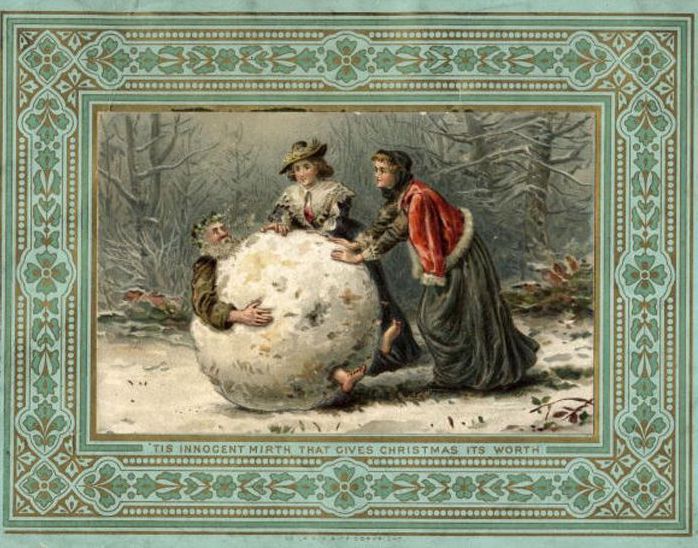
And now, one final Victorian card which serves as a fitting capstone to today’s conversation. ’Tis innocent mirth that gives Christmas its worth. (Or not.)


* Manente degli Uberti (aka Farinata delgi Uberti, 1212-1264) was an Italian heretic mentioned by Dante in Inferno.

C.S. Lewis and the History of Words

Like many of you, I love words. Like C.S. Lewis, I recognize the value of understanding each word’s etymology—its origin and history.

That’s why I was hooked right from the beginning by a short essay on “Language and the Bible” that I read in a magazine to which I subscribe. Dr. Mark Ward’s column goes by the heading Word Nerd. (Yes, I recognize the title is dweebish, but bear with me, his insights are worthwhile).

Word histories are for precocious nine-year-old homeschoolers who enjoy presenting irrelevant factoids to bemused adults. But word histories are history, and they come with all the drama that human life does.

You don’t have to be a geek to have fun with etymologies. Right here at Mere Inkling we enjoyed exploring Viking words that found their way into English. We also discussed the importance of using the etymological meanings of one’s name when determining how that name is properly rendered in the Elvish tongues of Middle Earth.

Etymology is serious business to those of us who study history and, especially, theology. The article I just cited is available online in a delightful video presentation. I’ll link to it below, for those interested in language as it relates to the Bible. Yet, even for those without these theological or historical interests, learning the life story of words can be fascinating, and even inspiring.

Listen to C.S. Lewis’ thoughts on the importance of philology, the broader study of languages which incorporates etymology.

I am sometimes told that there are people who want a study of literature wholly free from philology; that is, from the love and knowledge of words. Perhaps no such people exist. If they do, they are either crying for the moon or else resolving on a lifetime of persistent and carefully guarded delusion.

If we read an old poem with insufficient regard for change in the overtones, and even the dictionary meanings, of words since its date—if, in fact, we are content with whatever effect the words accidentally produce in our modern minds—then of course we do not read the poem the old writer intended.

What we get may still be, in our opinion, a poem; but it will be our poem, not his. If we call this tout court “reading” the old poet, we are deceiving ourselves. If we reject as “mere philology” every attempt to restore for us his real poem, we are safeguarding the deceit.

Of course any man is entitled to say he prefers the poems he makes for himself out of his mistranslations to the poems the writers intended. I have no quarrel with him. He need have none with me. Each to his taste. (Studies in Words)

Exciting News for Word Lovers

The Oxford English Dictionary (OED) provides an unrivaled treasure-trove of information about the world’s most influential language. And—it is currently being expanded. The second edition, published in 1989, consists of twenty volumes (21,728 pages). The new edition will, of course, eclipse that.

Best of all, will be the OED’s deeper exploration of each word’s etymology. As they say in the already-released Preface to the Third Edition of the OED:

The revision of the Oxford English Dictionary’s etymological component is a substantial undertaking. In the First Edition many entries whose origin was taken to be self-evident (typically native English formations) were not provided with etymologies.

In the revised material each entry has a formal etymology. . . . the most significant changes relate to the analytical content of the revised etymologies, which for the most part update text which appeared in the First Edition of the Dictionary, and therefore represented the state of scholarly knowledge approximately one hundred years ago.

Your reward for reading this far: At the beginning of this post, I quoted from the Bible Study Magazine article that inspired it. This is a link to the article itself . . . but I strongly recommend you follow this link to the video version by the author, which I mentioned earlier.

A Bonus Surprise from C.S. Lewis

I suspect most fans of C.S. Lewis would imagine him to be very fastidious, even punctilious, about spelling. The following letter will prove otherwise.

Lewis recognized the purpose of language is to communicate, and although there are valid reasons to investigate their etymologies, such pursuits need not muddy the conversation, so to speak. This letter was published on New Year’s Day in 1960 in the London Times Educational Supplement. It was written in response to a contemporary debate about “spelling reform.”

Nearly everything I have ever read about spelling reform assumes from the outset that it is necessary for us all to spell alike. Why? We got on for centuries without an agreed common orthography.

Most men of my age [i.e. officers serving during WWI] remember censoring the letters of soldiers and know that even the wildest idiosyncrasies of spelling hardly ever made them unintelligible.

Printing houses will always have, as they have now, their own rules, whether authors like them or not. Scholars, who know the ancestry of the words they use, will generally spell them accordingly.

A few hard words will still have to be learned by everyone. But for the rest, who would be a penny the worse if though and tho, existence and existance, sieze, seize and seeze were all equally tolerated?

If our spelling were either genuinely phonetic or genuinely etymological, or if any reform that made it either the one or the other were worth the trouble, it would be another matter.

As things are, surely Liberty is the simple and inexpensive ‘Reform’ we need? This would save children and teachers thousands of hours’ work. It would also force those to whom applications for jobs are made to exercise their critical faculties on the logic and vocabulary of the candidate instead of tossing his letter aside with the words “can’t even spell.”

So, console yourself today with the knowledge that C.S. Lewis would not judge you for accidentally writing “sieze,” or using personal shorthand like “tho” or “thru.” Lewis respected the value of etymology, but he also understood quite well its proper place.

Why C.S. Lewis Remained Protestant

I find it intriguing how so many Roman Catholics wonder why all Protestants don’t find “crossing the Tiber” irresistible. C.S. Lewis disappointed his good friend J.R.R. Tolkien by not joining him in that church.

As we prepare to commemorate another Reformation Day, I would like to share one of C.S. Lewis’ patient responses to that persistent query. In a moment we’ll read a letter Lewis wrote on this subject. Since some still ask the question,* it is important to set the stage for our consideration of this letter.

The letter which follows is part of an ongoing correspondence Lewis had with Peter Milward (1925-2017), a Jesuit priest. Milward had listened to some of Lewis’ lectures at Oxford, and had attended meetings of the Socratic Club.

Milward was among those who was amazed that such an enlightened Christian as C.S. Lewis could not recognize Roman Catholicism’s claim to be the true church. A number of Lewis’ letters to Milward are included in volume three of Lewis’ Collected Letters. (The same volume includes a succinct biography of Milward.)

Four years ago, I shared in Mere Inkling a letter Lewis had written to Father Milward. It related to the latter’s criticism of a point Lewis had (intentionally) not included in one of his books.   

If you sometimes read into my books what I did not know I had put there, neither of us need be surprised, for greater readers have doubtless done the same to far greater authors. Shakespeare would, I suspect, read with astonishment what Goethe, Coleridge, Bradley and Wilson Knight have found in him!

Returning to today’s discussion, we have a letter written by the Oxford and Cambridge professor to the student who would become a professor and literary critic in his own right.

Why Lewis Remained a Mere Christian

Father Peter Milward asked C.S. Lewis during the final year of his life, to explain why he had not followed the natural path of Christian enlightenment into the embrace of Rome. Lewis provided a reasoned and considerate response, in the following letter, which I will allow to speak for itself.

As from Magdalene College, Cambridge
6 May 63

Dear Padre

You ask me in effect why I am not an R.C. If it comes to that, why am I not—and why are you not—a Presbyterian, a Quaker, a Mohammedan, a Hindoo, or a Confucianist? After how prolonged and sympathetic study and on what grounds have we rejected these religions?

I think those who press a man to desert the religion in which he has been bred and in which he believes he has found the means of Grace ought to produce positive reasons for the change—not demand from him reasons against all other religions. It would have to be all, wouldn’t it?

Our Lord prayed that we all might be one ‘as He and His father are one.’ But He and His Father are not one in virtue of both accepting a (third) monarchical sovereign. That unity of rule, or even of credenda, does not necessarily produce unity of charity is apparent from the history of every Church, every religious order, and every parish.

Schism is a very great evil. But if reunion is ever to come, it will in my opinion come from increasing charity. And this, under pressure from the increasing strength & hostility of unbelief, is perhaps beginning: we no longer, thank God, speak of one another as we did even 100 years ago. A single act of even such limited co-operation as is now possible does more towards ultimate reunion than any amount of discussion.

The historical causes of the ‘Reformation’ that actually occurred were (1) The cruelties and commercialism of the Papacy. (2) The lust and greed of Hen[ry] 8. (3) The exploitation of both by politicians. (4) The fatal insouciance of the mere rabble on both sides.

The spiritual drive behind the Reformation that ought to have occurred was a deep re-experience of the Pauline experience.

Memo: a great many of my closest friends are your co-religionists, some of them priests. If I am to embark on a disputation–which could not be a short one, I would much sooner do it with them than by correspondence. We can do much more to heal the schism by our prayers than by a controversy. It is a daily subject of mine.

Yours
C.S. Lewis

Apparently Milward responded to this letter from Lewis, in which he must have further pressed the discussion about Lewis leaving Anglicanism. While Lewis remains courteous, his impatience with the matter is quite evident.

Dear Father Milward

Come, come! You show yourself lacking in the spiritual tact which is so conspicuous among my Jesuit friends in Oxford. Trying to goad a man into controversy when he has already declined it is not the way to convert him. Leave that to the Tee-Totallers and Pacifists who honour me with frequent letters.

Don’t you realise that if I were anxious for a disputatio I have among my friends many learned and delightful masters of your Church and even of your order, with whom the matter could be discussed at any length in comfort over a pot of tea or a pot of beer.

It is not likely I should prefer the manual labour (half my life is spent answering letters anyway) of a vast correspondence with a man at the other end of the world. Don’t you realise that my friends here wd. know the mollia tempora fandi (times favorable for speaking) a great deal better than you.

Peter Milward survived for five decades after Lewis passing. During those years he wrote many works, and in 1995 he penned A Challenge to C.S. Lewis. Fortunately, it was not a theological argument, but a critique of Lewis’ literary criticism. This is how the C.S. Lewis Institute “annotates,” the work: “Milward argues that Lewis fails to fully grasp medieval literature because he understands the background of medieval literature as pagan, rather than seeing the Catholic underpinnings.”

Not having read the book, I cannot comment on its merits. However, the following passage is of value for our present discussion. It is drawn from Milward’s 2013 review of a biography⁑ of C.S. Lewis.

Only when our correspondence came to an end . . . I came to put together my thoughts or feelings of “uneasiness” about the academic writings of Lewis in the form of a book entitled A Challenge to C.S. Lewis . . . I had always been perfectly at ease in reading his imaginative writings, even from Screwtape onwards, culminating in the Narnia stories, but I always had misgivings of various kinds on reading his academic writings.

And as I presented them in my book . . . I came to the conclusion that in his mind Lewis remained a Protestant till the end, with the “Ulsterior motive” he must have imbibed with his mother’s milk, whereas at heart he was at once Pagan and Papist, encouraging many a Catholic . . . to wonder when he would follow Newman and Chesterton on the path to Rome. Nor did he live to take up my challenge, having no doubt passed to what Shakespeare calls “a better life, past fearing death.”

Postscript

Some Roman Catholics have argued that, given the radical changes in Western Anglican theology, Lewis would have joined their denomination had he lived long enough. Such is the contention on a thought provoking article that explores a number of prominent Roman Catholic converts who credit C.S. Lewis with influencing their personal pilgrimages to Rome.


* A 2013 consideration is found in C.S. Lewis and the Catholic Church, written by the Director of the Center for Faith and Culture at Aquinas College.

⁑ Milward was reviewing Alister McGrath’s C.S. Lewis: A Life, in volume 54 of Heythrop Journal. He offers a number of insights into his own relationship with Lewis throughout the review.

The Good, Bad & Ugly of Dendroglyphs

Have you ever carved your initials, or some other pictograph (perhaps a heart?) in the bark of a tree? I never thought much about such things until I learned about the key role played by their bark in a tree’s health. Now I tend to consider this arboreal graffiti* as unfortunate.

I haven’t found any reference in C.S. Lewis to such carvings. However, I suspect that due to his love of nature and hiking, he would discourage the wounding of trees in this way. And there is another reason I believe the Inklings would be wary of this practice. More on that in a moment.

Tree carvings can actually record history for preliterate peoples. I even learned a new word, the meaning of which is easy to decipher from its parts—dendroglyphs. Not all tree scars are considered dendroglyphs. Just those, as Brittanica says, “the dendroglyph [is] an engraving on a living tree trunk. Carved in the usual geometric style, dendroglyphs featured clan designs or made references to local myths. They were used to mark the graves of notable men or to indicate the perimeters of ceremonial grounds.”⁑

One unique people group living “at the edge of the world” faced the fate of most pacifists who are not protected by a benign power. The Moriori lost their island home to the Māori people to whom they were related. Some of their stories survive, partly due to their dendroglyphs.

An academic article on the subject of dendroglyphs is available here.

Dendroglyphs are distinct from scarred trees, the former being decorative marks cut into the bark or heartwood of living trees, while the latter result from resource use, such as bark removal for making implements, obtaining native honey or hunting. A further distinction can be made between two types of dendroglyphs: Indigenous dendroglyphs and dendrograffiti.

Indigenous dendroglyphs are a form of visual expression that reflects affiliation with the land and special cultural association with the landscape and its resources. Dendrograffiti are carvings made by land users, such as shepherds and pastoralists, and often display names, dates, symbols and images that mark boundaries, communications and light entertainment.”

The image above comes from an ancient Australian tree. You can read more about it here, but this is the myth it portrays:

The tale behind the tree has been passed on for generations. It’s the story of two Western Yalanji men who have gone over into Eastern Yalanji country and tried to get a woman. . . . The family of the girl they were trying to take pursued the men.

The Western Yalanji men were chased and speared. One of the men that got speared . . . became a lizard, crawled up the tree and became that carving.

History aside, cutting bark should be avoided in general. And, should you visit a national forest in the United States, be forewarned—“carving into trees is illegal in all national forests!” As the National Park Service pleads: “please respect the law, the trees, and your fellow public land users by not carving words, initials, or anything into tree bark!”

Other Places Where Dendroglyphs are Dangerous

The United States isn’t the only place where a person desiring to mark a tree with a blade should be cautious. This activity is generally inadvisable in both Narnia and Middle Earth.

At Narnia’s very creation, Aslan bestowed sentience on some of the trees of that blessed land. “After Aslan gave certain animals the gift to speech, he declared to the Narnian creatures; “Be walking trees. Be talking beasts. Be divine waters.”

And their creator loved their company. Later we read: “Aslan stood in the center of a crowd of creatures who had grouped themselves round him in the shape of a half-moon. There were Tree-Women there and Well-Women (Dryads and Naiads as they used to be called in our world) who had stringed instruments . . .”

Yet, as gentle as these dryads were, the Witch was able to deceive some of their number. As Tumnus warns the children, “the woods are full of her spies, even some of the trees are on her side.” Still, most continued to follow Aslan, and some of these dryads were among the stone statues restored to life by their lord.

In one of The Last Battle’s saddest scenes, King Tirian is addressed by a tree nymph who warns that Aslan’s imposter is cutting down the forest.

King Tirian and the two Beasts knew at once that she was the nymph of a beech tree. “Justice, Lord King!” she cried. “Come to our aid. Protect your people. They are felling us in Lantern Waste. Forty great trunks of my brothers and sisters are already on the ground.”

“What, Lady! Felling Lantern Waste? Murdering the talking trees?” cried the King, leaping to his feet and drawing his sword. “How dare they? And who dares it? Now by the Mane of Aslan—”

“A-a-a-h,” gasped the Dryad, shuddering as if in pain—shuddering time after time as if under repeated blows. Then all at once she fell sideways as suddenly as if both her feet had been cut from under her. For a second they saw her lying dead on the grass and then she vanished. They knew what had happened. Her tree, miles away, had been cut down.

Narnia is not the only land where trees are damaged at one’s risk. J.R.R. Tolkien populated Middle Earth with amazing creatures. Among these were the Ents.

Ents are not actual trees. They are ancient “shepherds of the trees,” who care for the forests. (The Entwives preferred to care for smaller plants, such as gardens.)

When the hobbits awake Treebeard, he mistakes them for little orcs and is prepared to crush them. Orcs, after all, are destructive by nature and always deserving of a good stomping. When they explain their quest and inform the ancient Ent of Saruman’s burning of their forests near Isengard, he calls on his brethren who respond to the threat.

Treebeard is pleased and says, “Indeed I have not seen them roused like this for many an age. We Ents do not like being roused; and we never are roused unless it is clear to us that our trees and our lives are in great danger.”

I can almost hear Treebeard calling out now, “the Ents are going to war.”

We’ll close now with the marching song of the Ents, and let these words provide a sharp warning to those among us who might contemplate violating trees in the future.

Though Isengard be strong and hard, as cold as stone and bare as bone,
We go, we go, we go to war, to hew the stone and break the door;
For bole and bough are burning now, the furnace roars—we go to war!
To land of gloom with tramp of doom,
with roll of drum, we come, we come;
To Isengard with doom we come!


* I came up with the term “arboreal graffiti” myself, but was pleased to find that other creative minds have also used it online. This post on the subject offers an interesting twist, and is well worth the quick read.

⁑ This quotation is taken from their article on Australian aboriginal art.

Don’t Be a Pirate

Pirates make for interesting reading. The Inklings thought so. In a 1932 letter to his brother, C.S. Lewis mentions Sir Walter Scott’s novel, The Pirate.

“I am now reading through [a Scott biography], and am just at the Shetland and Orkney diary:89 which you will constantly have been reminded of if you have read The Pirate.”

In 1952, Lewis mentioned to a colleague another pirate story. “High Wind in Jamaica which I’ve just read is better than I expected. . . . A grim book but good in its way.”

This is not to say that Lewis regarded pirate tales, as a genre, as very good. His praise of Ray Bradbury’s work includes an entertaining aside in this regard.

I have just read two books by an American ‘scientifiction’ author called Ray Bradbury. Most of that genre is abysmally bad, a mere transference of ordinary gangster or pirate fiction to the sidereal stage, and a transference which does harm not good.

Bigness in itself is of no imaginative value: the defence of a ‘galactic’ empire is less interesting than the defence of a little walled town like Troy. But Bradbury has real invention and even knows something about prose. I recommend his Silver Locusts.

With the recent exception of the Pirates of the Caribbean series, piracy does not seem to capture our cinematic imagination as it once did. Onscreen, buccaneers are often treated as heroic swashbucklers, as in the delightful Princess Bride.

However, in reality, we know real pirates were merciless.*

Some were “privateers,” authorized by a government to prey on the shipping of other countries. (Privateering was not banned until 1856.)⁑ They were simply pirates with papers, although they possessed a veneer of respectability in some circles. If you are interested in a recent argument for privateering “to fight Chinese aggression at sea,” You need to read “Unleash the Privateers!”

These oceanic criminals were not confined to exotic ports. As recently as 1614, the coast of Ireland was home to a major “pirate alliance.”

[In 1604] James I of England ended the long English naval tradition of “privateering” as part of a peace agreement with Spain. . . . Though it was risky work, many sailors preferred it to more official service on the King’s ships, which offered low pay, poor sanitary conditions, and an aging fleet.

Over time, English privateers grew in numbers, with the more successful commanding well-armed fleets of multiple ships. . . . as a consequence of the decision by James I, thousands of mariners suddenly found themselves out of work. Used to operating independently, they became prime targets to drift into piracy. Unsanctioned piracy, that is.

Long before Jack Sparrow ever considered wearing an eyepatch, pirates had become a staple Hollywood trope. In 1935 Errol Flynn appeared in Captain Blood, where he portrayed a gentlemanly physician who is falsely imprisoned and ends up becoming a hugely successful scourge of the seas.

A decade earlier, Douglas Fairbanks starred in The Black Pirate (1926) where his dashing athleticism entertained audiences. Here too the protagonist is actually a “good” person, enlisting in criminal ranks merely to punish those responsible for his father’s death.

Pirates in Inkling Literature

Both of the most famous Inklings included pirates in their best known works. J.R.R. Tolkien included an entire nation of pirates in Middle Earth. The Corsairs of Umbar were utterly despicable, and aligned along with the Haradrim on the side of Mordor. Even before we see them portrayed in the film set in the Third Age, they had carried destruction to the people of Gondor.

The second and greatest evil came upon Gondor in the reign of Telemnar, the twenty-sixth king, whose father Minardil, son of Eldacar, was slain at Pelargir by the Corsairs of Umbar. . . . a deadly plague came with dark winds out of the East. The King and all his children died, and great numbers of the people of Gondor . . . When King Telemnar died the White Tree of Minas Anor also withered and died (Annals of the Kings and Rulers).

C.S. Lewis also incorporated pirates into his own Narnian saga. The entire Telmarine population, which figures prominently in Narnian history, is descended from pirates who arrived there from Earth. In the following passage, Aslan explains this arrival to Prince Caspian.

“You, Sir Caspian,” said Aslan, “might have known that you could be no true King of Narnia unless, like the kings of old, you were a son of Adam and came from the world of Adam’s sons. And so you are. Many years ago in that world, in a deep sea of that world which is called the South Sea, a shipload of pirates were driven by storm onto an island.

And there they did as pirates would: killed the natives and took the native women for wives, and made palm wine, and drank and were drunk, and lay in the shade of the palm trees, and woke up and quarreled, and sometimes killed one another. And in one of these frays six were put to flight by the rest and fled with their women into the center of the island and up a mountain and went, as they thought, into a cave to hide.

But it was one of the magical places of that world, one of the chinks or chasms between that world and this. There were many chinks and chasms between worlds in old times, but they have grown rarer. . . . And so they fell, or rose, or blundered, or dropped right through, and found themselves in this world, in the Land of Telmar which was then unpeopled.

But why it was unpeopled is a long story: I will not tell it now. And in Telmar their descendants lived and became a fierce and proud people, and after many generations there was a famine in Telmar and they invaded Narnia, which was then in some disorder (but that also would be a long story), and conquered it and ruled it.

Epilogue: Don’t Be a Pirate

In a 1950 letter to a correspondent who had apparently argued that institutional loyalty is actually loyalty to individual leaders, Lewis disagrees.

No, I don’t agree that loyalty to an institution is simply loyalty to the personnel and their policy. If I join a ship because I like the captain I am not justified in deserting the moment he dies, nor because I dislike his successor.

There might come a point (e.g. if the new captain were using the ship for piracy) at which it would be my right, and my duty, to leave: not because I simply disliked him and his polity, but because the particular duty (keep your contracts) would now conflict with, and yield to, the higher and more universal duty (Don’t be a pirate).

Like C.S. Lewis, I assume most readers of Mere Inkling would agree that we must follow our conscience, should our earthly loyalties be directed toward an institution or person devoted to an evil end. In the military, this conundrum was addressed in the legal freedom—even mandate—to disobey “unlawful orders.”

No doubt many people are challenged on a regular basis to compromise their conscience in order to succeed in their morally-challenged environment. I would add my own voice to Lewis’ in urging them not to become a pirate.


* Much has been written about piracy, an ancient plague that still afflicts the world today. You can download a fascinating piece of history in the form of a 1724 London publication of A general history of the robberies and murders of the most notorious pyrates, and also their policies, discipline and government, from their first rise and settlement in the island of Providence, in 1717 to the present year 1724.

⁑ The vast extent of Atlantic piracy is sobering. One history site describes it thusly:

The Golden Age of piracy (c1680s–1726) was the most dramatic era of maritime marauding the world has ever known, a period which at its peak saw as many as 4,000 pirates a year wreaking havoc across the Atlantic and Indian oceans.

The age of colonial expansion meant that huge quantities of valuable cargoes were being shipped over vast ocean areas and, as European navies were reduced, many experienced sailors who were out of work turned to piracy.

C.S. Lewis and Garters

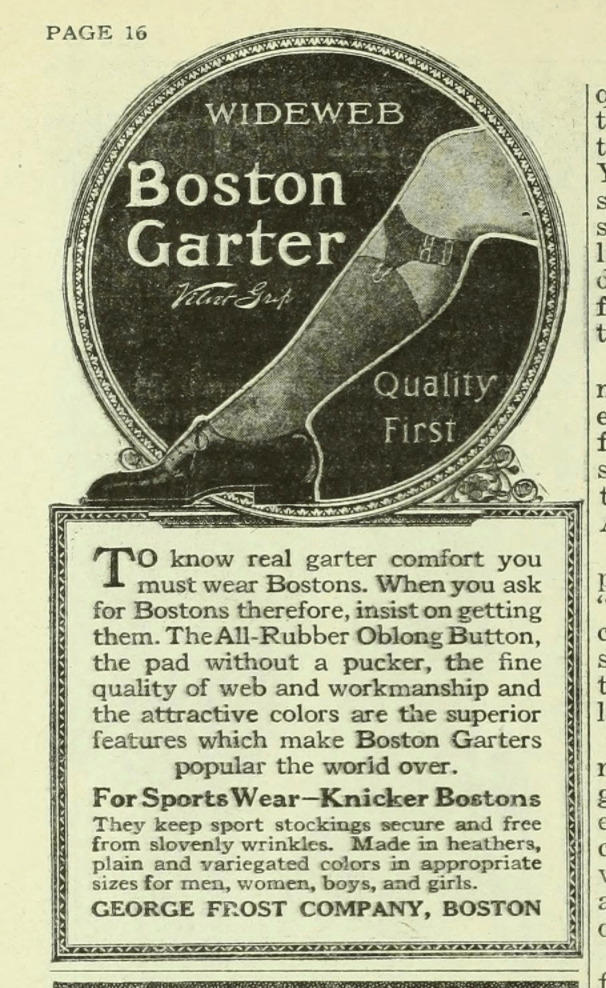
I don’t know whether or not C.S. Lewis wore garters. And, trust me, I have no interest in learning the answer to that trivia question. Nevertheless, a recent advertisement caught my eye in a 1925 issue of the American Legion Weekly.

Never having worn a garter, it struck me as interesting ad placement—in a veteran’s publication. I attributed the male use of hosiery to the lack of reliable elastic substitutes for stockings a century ago.

Even as I was reading the advertisement, I recalled the peculiar name of one of the United Kingdom’s most distinguished societies, the Most Noble Order of the Garter. Established a few years back, in 1348 it is one of Britain’s most revered orders of knighthood. And, like any lover of adventures, I know knights are pretty cool.

C.S. Lewis was once offered a royal title—albeit, not a knighthood in the prestigious Order of the Garter. Lewis declined the honor. He declined because he believed the politics involved would distract attention from his work as a Christian apologist.

Regular readers of Mere Inkling know that I am not wont to cite Wikipedia as a source, but the following description of their motto is enlightening.

Various legends account for the origin of the Order. The most popular involves the “Countess of Salisbury,” whose garter is said to have slipped from her leg while she was dancing at a court ball at Calais. When the surrounding courtiers sniggered, the king picked it up and returned it to her, exclaiming, Honi soit qui mal y pense! (“Shame on him who thinks ill of it!”), the phrase that has become the motto of the Order.

However, the earliest written version of this story dates from the 1460s, and it seems to have been conceived as a retrospective explanation for the adoption of what was then seen as an item of female underclothing as the symbol of a band of knights.

Times they were a-changin’ and garters had apparently become more associated with feminine wearers during the intervening century.

Fordham University has a delicate medieval “fringed garter” on display at this site.

Despite both sexes utilising the garter, the accessory was more associated with men because it was visible on their bodies. Women wore garters in the same location as men, but their long dresses concealed them, thus giving medieval Londoners the perception that it was more widely used by men. Since women’s garters were not visible to the eye, there is limited information in regards to women’s use of garters.

C.S. Lewis had better things to write about than garters. About knights, for example, he had much to say. He composed stories about them even during his childhood.

As an adult, Lewis’ focus rested on the quintessential attribute of true knighthood—chivalry.

Yes, the very word “chivalry” reeks of a bygone era that has been superseded and relegated to history books. But those who consider the concept outdated impoverish their lives and quite possibly contribute to the violent spirit of our age.

There does exist, however, a passing reference in one of C.S. Lewis’ letters to the fabled Order of the Garter. It was in 1952, and Lewis was illustrating the truth that Christianity is a faith based on grace. It cannot be earned. No one deserves divine forgiveness . . . yet it is freely offered through the miracle of the Atonement.

In his letter, Lewis quotes Lord Melbourne who held an irreverent opinion related to the Order. He considered its bestowal of honor to be arbitrary or political, rather than being based on a recipient’s worthiness.

Of course, none of us have “any right” at the altar. You might as well talk of a non-existent person “having a right” to be created. It is not our right but God’s free bounty. An English peer said, “I like the Order of the Garter because it has no dam’ nonsense about merit.” Nor has Grace. And we must keep on remembering that as a cure for Pride.

Apparently, Lord Melbourne did not take seriously the warning Honi soit qui mal y pense!

Sadly, it does not appear the George Frost Company currently sells garters, but you can find a number of their past products here, including the “Velvet Grip Rubber Button Hose Supporter for Boys and Girls.”

And all hope of garter-joy has not vanished. If you are in the market for medieval style garters—for reenacting, perhaps—you can purchase them here.

Whether you choose to emulate the Order of the Garter or not, please do not “think ill of it!”

Translating Foreign Languages

How many languages can you translate into English? If the answer is >0, I envy you. I’ve studied four,* and passed all the tests, but have an actual aptitude in none.

If I were thus gifted, I would be transferring some of the world’s literary wealth into my native tongue—and vice versa.

One of my granddaughters is currently fascinated by language. She wants to speak a dozen or more, and has begun some study in Spanish and Japanese. However, I attribute most of her dream to a young teenager’s excitement at having the entire world before them. In time, we all learn that finite concerns, such as time, finances and obligations, erode our options.

I’ve written about translation before, most extensively in “C.S. Lewis’ School of Translation.”⁑

This week, while writing an article about a Lutheran approach to ministry with the newly bereaved, I came across an entertaining reference to translation, in the letters of Martin Luther. Luther, of course, was the Reformation leader who, among other things, strongly believed the Bible should be accessible to lay people in their own language.

Translating the Holy Scriptures

Martin Luther was a scholar. Yet, even scholars lack expertise in all subjects. Thus, when translating the Bible into German, he welcomed the cooperation of others. This was particularly wise, since the so-called “Luther Bible” was the first German translation from the original languages rather than the Latin Vulgate. Unsurprisingly, the New Testament was published first. The longer Jewish Scriptures required more time.

The following letter was written in 1524 to Luther’s friend George Spalatin, another German theologian. Luther playfully explains how faithfulness to the original Hebrew text has delayed the publication of the final portion of the Bible.  

All is well with us. We have so much trouble in translating Job, on account of the grandeur of his sublime style, that he seems to be much more impatient of our efforts to turn him into German than he was of the consolation of his friends.

Either he always wishes to sit on his dunghill, or else he is jealous of the translator who would share with him the credit of writing his book. This keeps the third part of the Bible from being printed.

This casual identification with Job, one of God’s most faithful followers, appeals to me. The older I become, the greater is my sense of connection with the “cloud of witnesses,” the saints who have gone before us. In fact, I am also growing progressively more eager to fellowship with the angels. Though different from humanity in countless ways, we share the wonder of being beloved creatures of God.

In The Four Loves, Lewis writes that “friendship . . . This love, free from instinct, free from all duties but those which love has freely assumed, almost wholly free from jealousy, and free without qualification from the need to be needed, is eminently spiritual. It is the sort of love one can imagine between angels.” In my mind, phileo is also the sort of love we will one day experience between angels and humans.

C.S. Lewis’ Work with the Hebrew Language

Lewis did not read Hebrew. That shortcoming is certainly quite forgivable, given the numerous arenas in which his talents excelled. In his Reflections on the Psalms, he acknowledges his limitation. At the same time, he notes that we have many accessible resources by those acquainted with the ancient language.

I have worked in the main from the translation which Anglicans find in their Prayer Book; that of Coverdale. Even of the old translators he is by no means the most accurate; and of course a sound modern scholar has more Hebrew in his little finger than poor Coverdale had in his whole body. But in beauty, in poetry, he, and St. Jerome, the great Latin translator, are beyond all whom I know. I have usually checked, and sometimes corrected, his version from that of Dr. Moffatt.

In his explanation, Lewis notes the value in referring to several authoritative sources. This is especially wise when words are rare or unclear in their usage. Even people fluent in various languages would be negligent to ignore such resources where there is a question regarding significant interpretations.

In the meantime, Luther’s reminder of Job’s “grandeur of his sublime style,” along with the book’s remarkable message, has me preparing to read that book once again. In translation, of course.


* Spanish in junior high, Latin in high school, classical Greek in college, and Hebrew in seminary. As the Austrian-British philosopher, Ludwig Wittgenstein, said: “the limits of my language mean the limits of my world.” I am quite impressed by the fact that many of Mere Inkling’s readers from outside the States are at least bilingual.

⁑ If you’re interested in the subject, you might want to also (re)visit “C.S. Lewis as a Translator.”

What is Your Epithet?

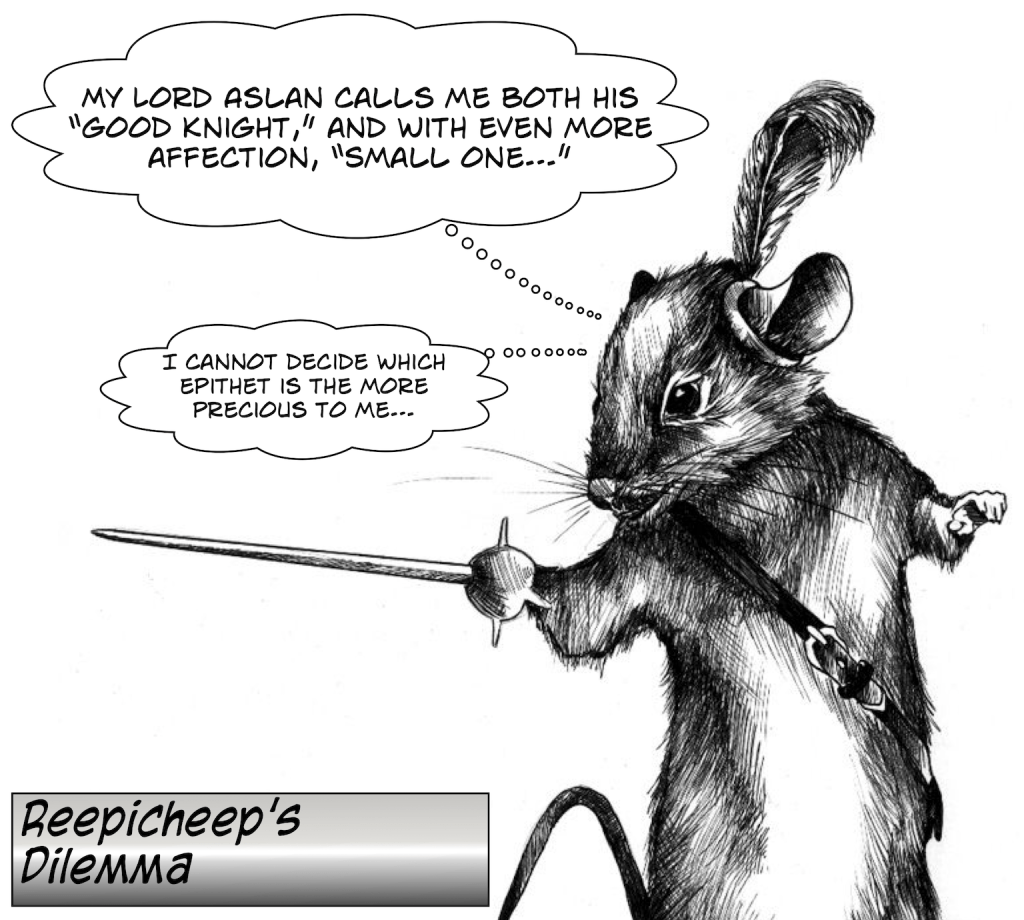
Everyone has epithets, even though we’re probably not aware of most of them. Some might be unflattering, but we could be pleasantly surprised by positive descriptive phrases people associate with our names.

First, it’s necessary for us to clear the air. Although the modern usage of the word “epithet” is usually negative, that is not the sole—or even primary—use of epithet. Far from being derogatory, most epithets are affirming. That’s because “epithet” is derived from the Greek verb epitithenai which simply means “to put on.” Basically, an epithet is anything that’s added to a person’s name to distinguish them as a particular individual.

Let me offer a simple quiz. What common epithet is often linked to all of the following historical figures?

Charlemagne, King of the Franks
Catherine, the Empress of Russia
Peter, Tsar of Russia
Alexander, the King of Macedonia
Kamehameha I, King of Hawaii
Constantine I, first Christian Emperor of Rome
Frederick, King of Prussia
Rhodri, King of Gwynedd

We can expand this list with several historical figures recorded in the holy Scriptures:

Herod, King of Judea
Cyrus, Founder of the Persian Empire
Darius, Third Shahanshah of the Persian Empire

Obviously, I provided far more options than necessary for you to discern the common epithet. Each of them is, of course, called “the Great.” (Bonus points to anyone recognizing Rhodri the Great; I assume only Mere Inkling’s Welsh readers will know who he was.)

If you think my list is lengthy, check out the wikipedia list of people referred to as “the Great.” And feel free to supplement it, if you recall someone they missed.

A common Christian epithet is “Apostle.” It’s not really a title, though it’s frequently used that way, especially when applied to the original fourteen.⁑ This Orthodox Christian website provides a list of early missionaries who earned the same epithet, including Patrick the Apostle to Ireland and Ansgar, the Apostle to the North.

Back to the Question

So, given that epithets can be neutral or positive, are you aware of any of yours? Our ten grandchildren are developing wonderful senses of humor. I’ve joked with them all ever since they were tiny. More than once they’ve called me their “Funny Grandpa.” That’s an epithet I can be proud of.

Back in my high school years, because I spoke with (assumed) authority on nearly any subject, a couple people called me the “Voice of Experience.” Which just reminded me—literally, as I was typing this—that back at my first active duty assignment, our wing commander publicly bestowed on me an epithet.

There at Reese Air Force Base we were conducting our very first Military Tattoo ceremony. Quite unexpectedly, after doing the yeoman’s work* in composing the lengthy ceremony, he selected me to be the emcee for the extravagant community event. The event flowed flawlessly. The next day, Colonel (later General) Lillard referred to me as the “Voice of Reese.” My wife was suitably impressed!

Now, I have no doubt I’ve accumulated a number of pejorative epithets during my life as well. The good thing about those though, is that people usually don’t share them to our face.

As for your own epithets, you might think of words that friends repeatedly use to describe you. If you’ve been called humble, trustworthy, brave, patient or witty by more than one person, you might be surprised to learn how many others associate that trait with you as well. Talented and smart are also common appellations from those who admire your your various skills or intellect. Sensitive is a nice epithet to own, although I confess it’s seldom applied to me.

Ruth Pitter, C.S. Lewis’ Friend

Pitter (1897-1992) was a highly regarded British poet. Living in artistic circles, it’s unsurprising that she describes her early life as “bohemian.” Bohemians tend to regard that epithet as admirable, while practical people such as myself consider it a negative term. Bohemian, of course, refers to “socially unconventional” behavior which may cover a multitude of alternative lifestyles.

Pitter, however, was also a friend of C.S. Lewis. And it was through his writings and their conversations that she became a Christian. In 1985, two decades after his death, she wrote,

As to my faith, I owe it to C.S. Lewis. For much of my life I lived more or less as a Bohemian, but when the second war broke out, Lewis broadcast several times, and also published some little books (notably The Screwtape Letters), and I was fairly hooked. I came to know him personally, and he came here several times. Lewis’s stories, so very entertaining but always about the war between good and evil, became a permanent part of my mental and spiritual equipment.

At one point in Lewis’ life he said although he was a confirmed bachelor, if he were to propose marriage, it would be to Ruth.

The two writers often critiqued one another’s works. In 1946, Lewis sent the following letter to Pitter. I reproduce the first half of it here not for its content per se, but because of its literary use of the word “epithet.” Presumably, seventy years ago its deprecatory usage had not gained dominance. (What strikes me as the most amazing thing about this letter, is the way in which the two share such a comprehensive knowledge that Lewis did not even need to cite the sources of the quotations to which he refers!)

Dear Miss Pitter–

Certainly a great many good lines have an epithet in them and depend principally on that epithet. But by no means all. Sometimes the work is done by a special use of a Noun:

multosque per annos sustentata ruet moles et machina mundi. (a)

or

how sweetly flows
That liquefaction of her clothes. (b)

sometimes by a verb:

J’ai mendiee la mort chez les peuples sauvages (c)
—where to get the effect one would almost have to translate “I have begged death as bread.” Or

Forever climbing up the climbing wave (d)

Though here something else, the “Figure” of repetition, comes in. Sometimes it turns on a Noun metaphorical:

Oh my America, my Newfoundland! (e)

Again and again it turns on Metaphor:

The expense of spirit in a waste of shame. (f)

That from the nunnery
Of thy chaste breast. (g)

But I beneath a rougher sea
And whelmed in deeper gulfs than he. (h)

But in all these there is something you may regard as equivalent to an epithet. There is another kind of poetry which seems to do it by simple statement:

Thou’ll break my heart, thou bonnie bird,
That sings on yonder bough. (i)

or

Twenty days and twenty nights
They went in red blood to the knee,
And he saw neither sun nor moon
But heard the roaring of the sea. (j)

No one will say that bonnie in the first or red in the second has much to do with the result. One might at a pinch say that the apostrophe to a bird in the first and the whole myth in the second are the same kind of thing as an epithet. But then there are still passages where the statement is of the most factual kind and yet (in its context) it is very poetry:

Ronsard me célébrait du temps que j’étais belle (k)

or

Fulsere quondam candidi tibi soles
Cum uentitabas quo puella ducebat
Amata tantum quantum amabitur nulla. (l)

Oh, and what about the chansons de gestes?

Roland is dead. God has his soul to Heaven (m)
(Roland est mort. Dieux en ad l’anme aux cieulx)

or

Paien unt tort et Chestien unt dreit
(Paynims [non-Christians] are wrong and Christians are right) (n)

The truth is that there are a great many different kinds of poetry and extreme roughness (or smoothness) evocative epithet (or plain statement), the metaphorical (or literal) the colloquial (or rhetorical) may all, in their place, rise to perfection.

And Finally, For Dessert

That was a lengthy quotation—particularly for readers who don’t thrive on poetry or literary criticism. Here, however, is a delightful use of the word epithet from C.S. Lewis’ youth. In a 1915 letter to his closest friend, Arthur Greeves, Lewis gently chides him for his application of an “impertinent epithet.”

It may be true that it is easier to assign music to people we know, than to conjure up people to fit the music, but I deny that anyone’s character is really unlike their appearance. The physical appearance, to my mind, is the expression and result of the other thing—soul, ego, psyche, intellect—call it what you will. And this outward expression cannot really differ from the soul.

If the correspondence between a soul & body is not obvious at first, then your conception either of that soul or that body must be wrong. Thus, I am “chubby”—to use your impertinent epithet, because I have a material side to me: because I like sleeping late, good food & clothes etc. as well as sonnets & thunderstorms.


* Yes, I’m consciously mixing my military metaphors. While I served as a USAF “airman,” the term yeoman is a junior Navy rating or rank (i.e. the people who do most of the work).
⁑ The original fourteen include Matthias, who replaced Judas, and Paul, the Apostle to the Gentiles.

Sources for the citations in Lewis’ letter to Pitter:
(a) Lucretius, De Rerum Natura: “The mighty and complex system of the world, upheld through many years, shall crash into ruins.”
(b) Robert Herrick, “Upon Julia’s Clothes” (1648).
(c) “I begged for death among the savages.”
(d) Tennyson, “The Lotus-Eaters” (1833).
(e) John Donne, Elegies, “To His Mistress Going to Bed” (c. 1595).
(f) Shakespeare, Sonnet 129 (1609).
(g) Richard Lovelace, “To Lucasta, Going to the Wars” (1649).
(h) William Cowper, “The Cast-Away.”
(i) Robert Burns, “The Banks o’ Doon” (1791).
(j) Thomas Rymer and Queen of Elfland.
(k) Pierre de Ronsard, Sonnets pour Hélène: “Ronsard would sing my praise at the time when I was beautiful.”
(l) Catullus, Carmen: “Once the sun shone bright for you,/when you would go whither your sweetheart led,/she who was loved by me as none will ever be loved.”
(m) The Song of Roland (12th century).
(n) The Song of Roland.

Disobeying Evil Rulers

Don’t appease evil rulers.

Have you heard the fascinating story of the successor to William the Conqueror? William, of course, is the Norman who conquered England after King Harold’s army had been battered during its victory over a Viking invasion in the preceding weeks. William’s heir was proved far worse than his father.  

William II, also called William Rufus, reigned three years. He was an impious, carnal ruler who refused to replace the Archbishop of Canterbury who died on his watch, so that he could pilfer the church’s wealth. During a serious illness, he reconsidered his choice and forced a reluctant monastic abbot, Anselm, to assume the purple.

Because of his integrity, Anselm became a thorn in Rufus’ side. It led the monarch to proclaim:

“Yesterday I hated him with great hatred, today I hate him with yet greater hatred and he can be certain that tomorrow and thereafter I shall hate him continually with ever fiercer and more bitter hatred.”

You must be doing something right if an evil ruler hates you.

The Bible records a number of stories where courageous prophets spoke unwelcome words to corrupt leaders. A wonderful example, delightfully recorded in a single chapter of First Kings,

In essence, the king of Israel (Ahab) asks the king of Judah (Jehoshaphat) to join him on a military venture. Jehoshaphat agrees, but requests that Ahab “inquire first for the word of the Lord.” Ahab brings in 400 loyal yes-men who promise God will deliver the city “into the hand of the king.”

Well, that settles that. But, wait a minute. Jehoshaphat, having his own court prophets, knows the ropes. He asks, “is there not another prophet of the Lord of whom we may inquire?”

You can feel Ahab squirming. Finally he responds, “there is yet one man by whom we may inquire of the Lord, Micaiah…”

Then Ahab offers this magnificent, self-implicating testimony: “…but I hate him, for he never prophesies good concerning me, but evil.”

The messenger arrives at Micaiah’s home and tells him the king’s prophets are unanimous, and he “warns” him, “let your word be like the word of one of them, and speak favorably.”

When Micaiah mockingly gives the desired response to the king, Ahab realizes Jehoshaphat will recognize the tone of ridicule, and he demands the prophet be honest. “How many times shall I make you swear that you speak to me nothing but the truth in the name of the Lord?” When he receives the genuine divine word, he turns to his fellow king and moans, “Did I not tell you that he would not prophesy good concerning me, but evil?”

The confrontation continues and Ahab has the true prophet imprisoned on “meager rations of bread and water” until his safe return from the battle. Micaiah calmly responds, “If you return in peace, the Lord has not spoken by me.” This is not the dramatic end of the story, which is well worth reading (after you finish reading this post).

Ahab was a miserable king. It’s no wonder he hated the faithful Prophet Micaiah. If the scribes had recorded Ahab’s entire rant, it may well have gone, “Yesterday I hated him with great hatred, today I hate him with yet greater hatred and he can be certain that tomorrow and thereafter I shall hate him continually with ever fiercer and more bitter hatred.”

C.S. Lewis and Anselm

In addition to being a courageous prophet, Anselm was a gifted theologian. Lewis was familiar with his contributions to theology, and also to philosophy. In one of the most influential scenes in the Chronicles of Narnia, humble Puddleglum explains why he would still believe in Aslan even in the face of all the world’s lies.

For the philosophically minded, I commend this extended essay on the subject: “Anselm and Aslan: C.S. Lewis and the Ontological Argument.”*

Lewis used the ontological argument apologetically only once in his public writings, and it was in a rather surprising place. This most sophisticated of philosophical arguments shows up in a presentation to the least sophisticated audience: the children for whom the Narnia books were written. It is the debate between Puddleglum and the Green Witch in The Silver Chair.

Five hundred years later, philosopher René Descartes would follow Anselm’s example, providing ontological arguments for the existence of a benevolent God.

Lewis discussed the passage in a letter written the final year of his life. This was penned to a family with a son who would become a Senior Lecturer in Philosophy at the University of Warwick.

Please remember me to your third son. I was very sorry the course of events separated us. He is not only a very promising scholar but the best mannered man of his generation I have ever met. I suppose your philosopher son—what a family you have been privileged to bring into the world!—means the chapter in which Puddleglum puts out the fire with his foot.

He must thank Anselm and Descartes for it, not me. I have simply put the “Ontological Proof” in a form suitable for children. And even that is not so remarkable a feat as you might think. You can get into children’s heads a good deal which is quite beyond the Bishop of Woolwich.

C.S. Lewis’ witty note about the inability of the “Bishop of Woolwich” to understand what is clear to a child, was apparently directed toward John Robinson (1919-1983). Robinson was a very liberal (possibly heretical) Anglican bishop whom Episcopal Bishop John Shelby Spong (definitely heretical) considered his mentor.

My guess is that whenever Bishop Robinson thought of C.S. Lewis and the unadorned “mere Christianity” that he championed, the self-satisfied hierarch thought:

“Yesterday I hated him with great hatred, today I hate him with yet greater hatred and he can be certain that tomorrow and thereafter I shall hate him continually with ever fiercer and more bitter hatred.”

It is not always bad to be spurned by those who pursue the world’s approval, and treat the truth with disdain. May God find us in the company of C.S. Lewis and Anselm.

——

* A simpler discussion of “How C. S. Lewis Put the Ontological Argument for God in Narnia” can be found here.

If you are interested in reading about Anselm and His Work, this links to a free biography available at Internet Archive.