C.S. Lewis, Apologues & Allegories

It has been argued that C.S. Lewis wrote apologues, but I humbly disagree.

An “apologue,” you see, is defined as “a moral fable, especially one with animals as characters.” From that core definition, it makes sense to some that works such as The Chronicles of Narnia might be described as apologues.  

However, this term is usually applied to much simpler, more concise stories –  short moral fables (think Aesop) rather than an extended tales. “Apologue” is a vastly insufficient label for what J.R.R. Tolkien described as subcreation. Narnia is not a fable, it is a world.

Years ago I compared Aesop’s brief “The Kingdom of the Lion,” with C.S. Lewis’ brilliant vision of Aslan.

In “The Lion’s Command,” I identified a virtuous parallel between the brief regent in the fable and the well-developed protagonist of Narnia. In the Chronicles, Narnia’s hero is nothing other than the Alpha and Omega, reigning over its creation and preserving his kingdom to its ultimate culmination.

In “C.S. Lewis and the Art of the Apologue,” Samuel Joeckel argues that “The Screwtape Letters and The Great Divorce might be read as pure apologues, while Lewis’s other works of mythopoeia contain elements of the apologue.” This is an intriguing proposal, which has not gained much traction. Of course, Joeckel’s point that “elements” of apologue are present is certainly true, but that would be so when considering the work of numerous authors.

If not an Apologue, might Narnia be an Allegory?

An interesting article about parables contrasts parables and apologues in the following manner.

Another story style that is related to parables is the apologue. Apologues are short stories that are intended to convey a lesson, and they often use animals as characters. . . . Unlike parables, which generally have realistic scenarios, apologues allow an element of fantasy while maintaining a moral point.

The same article describes differences between parables and apologues as contrasted with allegories, such as George Orwell’s Animal Farm.

Parables are not the only type of story that present a moral lesson. Allegories are stories or poems where different elements are designed to convey abstract or spiritual meaning. . . . Allegories and parables are related in their use of symbolic language.

The difference is, in essence, one of complexity. While parables (and apologues) normally focus on a single lesson, allegories feature broader elements fleshing out a more elaborate lesson or message. 

Allegories are more metaphorical and often involve characters representing abstract ideas, and the symbolism can be deeply complex. However, parables are more direct, with a simple narrative that usually involves a human character facing a moral dilemma or the consequences of a bad decision (“Allegory Vs. Parable”). 

Allegory vs Apologue,” offers a similar distinction between these two literary exercises. 

Allegory and apologue are both forms of extended metaphor that use symbolic characters and events to convey a deeper meaning. However, there are some important distinctions between the two. . . .

Apologue, on the other hand, is a more general term that refers to any story or fable that teaches a moral lesson. Unlike allegory, apologue does not necessarily have a hidden meaning . . .

C.S. Lewis challenges the notion that allegories possess “hidden” themes. In his preface to The Pilgrim’s Regress, he argues that true allegories do not mask their message. 

People . . . suppose that allegory is a disguise, a way of saying obscurely what could have been said more clearly. But in fact all good allegory exists not to hide but to reveal; to make the inner world more palpable by giving it an (imagined) concrete embodiment.

In The Allegory of Love: A Study of Medieval Tradition, C.S. Lewis describes the unique goal of this literary device. 

The function of allegory is not to hide but to reveal, and it is properly used only for that which cannot be said, or so well said, in literal speech.

The inner life, and specially the life of love, religion, and spiritual adventure, has therefore always been the field of true allegory; for here there are intangibles which only allegory can fix and reticences which only allegory can overcome. 

In an essay about the author of The Faerie Queene, “Edmund Spenser, 1552–99,” Lewis lauds the path allegories pursue to illumine readers.

We shall understand it best (though this may seem paradoxical) by not trying too hard to understand it. Many things – such as loving, going to sleep, or behaving unaffectedly – are done worst when we try hardest to do them. Allegory is not a puzzle.

With C.S. Lewis’ genuine appreciation for good allegory, it is unsurprising that some readers are tempted to label The Chronicles of Narnia as such. After all, too brief and far too elaborate to be a collection of mere apologues, it seems logical. Yet, Lewis himself dispelled that conclusion. His opinion is expressed clearly in the following passage from a letter written in 1958.

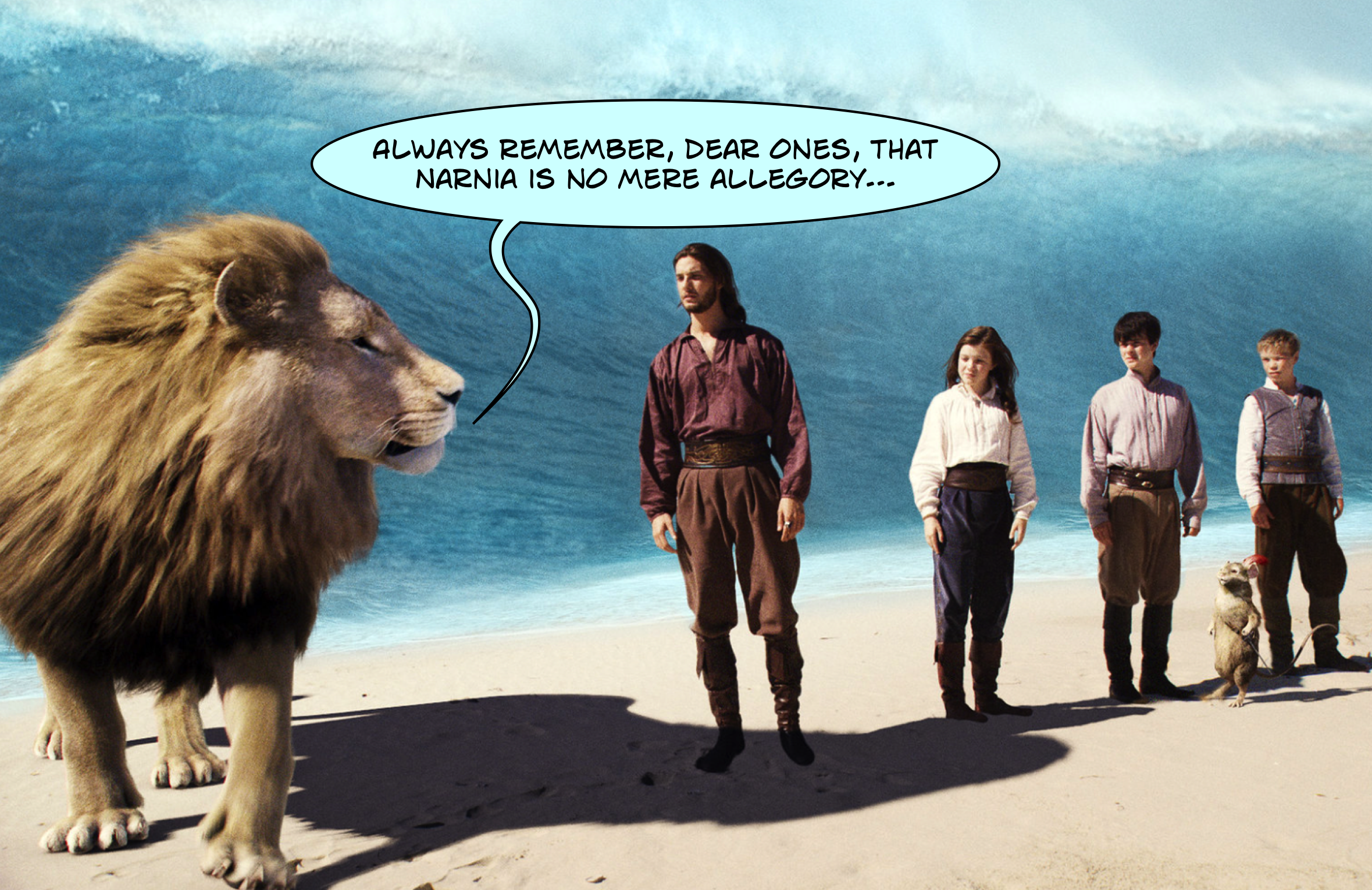
If Aslan represented the immaterial Deity in the same way in which Giant Despair represents Despair [in The Pilgrim’s Progress], he would be an allegorical figure.

In reality however he is an invention giving an imaginary answer to the question, “What might Christ become like, if there really were a world like Narnia and He chose to be incarnate and die and rise again in that world as He actually has done in ours?” This is not allegory at all.

No, the Chronicles offer no mere allegory. Aslan and Narnia are something altogether more rare and precious . . . and uniquely inspiring.


Bonus:

For those inclined to see how the AI at ChatGPT might compose an analogue, consider the following examples. I offered three brief prompts and amazingly swift apologues. 

Certainly! Here’s an apologue in the style of ancient Roman moral tales – think Aesop with a Roman flavor (e.g., Phaedrus) – explaining why the porcupine is hard to get along with. This style uses simple characters, a brief narrative, and a moral at the end.

Apologue: The Porcupine and the Burrowers

Characters:
~ Porcupine (Hystrix)
~ Mole (Talpa)
~ Hedgehog (Erinaceus)
Moralitas at the end.

In the time when the earth still whispered secrets to beasts, a bitter winter approached. The animals who dwelt below ground gathered to find warmth together.

The Mole, who dug deep and dark tunnels, said, “Let us share one chamber, and none shall freeze.”

The Hedgehog, with bristles soft enough in the cold, agreed. “We are small and spined, but kindred in spirit.”

Then came the Porcupine, bristling with long, sharp quills. “I seek shelter,” he said. “Let me in.”

The others, though wary, welcomed him. “There is warmth in many bodies, if none poke too hard.”

But when the Porcupine curled to sleep, his quills pricked every side of the burrow. The Mole winced. The Hedgehog bled. They shifted, gave him space – but no space was enough.

“Friend Porcupine,” said the Mole, “can you not soften your stance?”

The Porcupine replied, “My quills are my nature. I mean no harm, yet I cannot change.”

So, one by one, the others left, seeking colder but safer places.

The Porcupine remained, alone in warmth – but with no friend near.

Moralitas:
He who cannot bend his nature to spare his neighbors must be content with solitude, for warmth of company is given only to those who wound not.

Having delivered the moral of the fable, the AI was so thoughtful as to ask: “Would you like a Latin version of the apologue as well?”

~ ~ ~ ~ ~ ~ ~

Certainly! Here is an apologue in the style of C.S. Lewis – reminiscent of his storytelling in The Screwtape LettersThe Chronicles of Narnia, and The Pilgrim’s Regress. Lewis often used allegory and fable to convey theological or philosophical arguments through richly imagined, morally charged tales.

Apologue: The Two Gardens

In an ancient land that bordered both silence and song, there lived two brothers: Eldarion and Ruckus.

Their father, the Keeper of Harmony, was a master gardener who tended to two great gardens, each grown from a different seed of music.

One garden was called Lyrion, and it bloomed with strange and delicate flowers. Trees sang there – not with words, but with symphonies. The air was always filled with the faint sound of strings, like something half-remembered from a dream. This was the realm of Classica, the music that had deep roots and slow unfolding blossoms.

The other garden, Thundra, was younger, wilder. Vines twisted with fire, and great drums beat like the hearts of giants. Flames leapt from the leaves when touched. This was the realm of Rocka, born of storm and impulse. It throbbed with noise and power.

One day, the father called his sons. “Each of you shall choose a garden to tend,” he said. “But take heed: a garden grows into the likeness of its gardener.”

Eldarion, quiet and curious, chose Lyrion. He studied the old scores carved into the bark of the elder trees. He listened for the faintest cadences hidden in the wind. His garden grew slowly, but with order and depth. Some who visited said they heard truth in its song – though they could not explain it.

Ruckus chose Thundra. He brought iron tools and thunderous machines. He shouted into the wind and danced among the fire-vines. His garden grew quickly, wildly, and it drew many visitors who loved its power. But the soil became hard, and the songs repeated themselves. At night, when the fire died, there was silence – and the silence frightened him.

Years passed.

One evening, Ruckus visited his brother’s garden. It was still and strange, yet somehow more alive. The music there did not grab the ear – it waited, like a cathedral waits for a footstep.

“I do not understand this,” said Ruckus.

“You’re not meant to at first,” Eldarion said gently. “But if you sit long enough, you may find it is not music you hear – but yourself.”

Moral:
Not all noise is music, and not all music is noise. That which is deep may not dazzle, but it endures.

~ ~ ~ ~ ~ ~ ~

Certainly! Here’s an apologue in the style of C.S. Lewis, with his characteristic blend of gentle allegory, rational argument, and spiritual insight. Think of something akin to The Great Divorce or The Pilgrim’s Regress – a story that carries philosophical weight through symbolic characters and a clear moral undercurrent.

Apologue: The Library of the Lantern

There was once a Traveller who came upon an ancient Library, tucked between the hills of two realms: Factland, where the roads were straight and numbered, and Fablemere, where the paths curled like ivy and sometimes moved when you weren’t looking.

The Traveller, weary from debate and burdened with questions, was greeted by an old librarian named Lucidus, who wore a cloak woven from both parchment and ink.

“You may read whatever you like here,” said Lucidus. “But I warn you: some shelves are straight, others crooked – and both are true.”

The Traveller began in the Hall of Records, where volumes bore names like The History of the WorldNatural LawsThe Mind Explained, and Economics in Twelve Systems. The books were hard, clear, and bright like winter ice. Every sentence pointed like an arrow, and the Traveller felt smarter with every page. “Here,” he thought, “is what I came for: answers.”

But after a time, the light grew harsh, and the words – though sharp – offered no rest. He felt he had learned much, and yet not grown.

So he wandered next into the Chamber of Tales. Here were strange books that spoke of dragons and dying stars, of heroes who were cowards and cowards who became saints. The logic bent like a rainbow, and the truth came sideways.

At first he scoffed. “These things never happened!”

Lucidus appeared beside him and said quietly, “No – but they always happen.”

So the Traveller read on. And he wept when the fox died, and laughed when the king made a fool of himself. He saw his pride in the villain and his longing in the wandering knight. He saw the world as it might be – and in doing so, saw more clearly what the world was.

Time passed. The Traveller read from both wings of the library, sometimes walking the marble floors of Factland, sometimes lying on the mossy rugs of Fablemere. One sharpened his mind; the other softened his heart. One taught him how things work; the other, why they matter.

At last, he approached Lucidus.

“Which was truer?” the Traveller asked. “The world I could measure, or the one I could feel?”

Lucidus smiled. “Ah. One is the lamp, the other the flame. But both are needed to see.”

Moral:
Fiction teaches the soul what nonfiction explains to the mind – and wisdom lives where both meet.

This proved to be a very interesting exercise, indeed.
Explosive Clergy

What’s with pastors? As one, I probably know more than the typical person does about them – and all too often, they disappoint.

That’s a bit harsh. Most pastors are pretty selfless. That’s fairly evident in their salaries (if they even receive one). And, trust me, trying to be a faithful leader and peacemaker in any group comprised of human beings, is no easy task.

My sainted grandmother, born at the end of the nineteenth century, was the daughter of Norwegian immigrants. She was an authentic follower of Jesus, and when she was young the sermons at Fordefjord Lutheran Church* were preached in the immigrants’ tongue. We occasionally talked about how scandalized she was when one of the ministers serving the congregation pronounced “helvete vil være fullt av pastorer” (hell will be full of pastors).

Well, not “full” perhaps, but in principle he was right. And, sadly, his warning is not at all shocking to us today. We read regularly about clergy who are arrested for violating the trust of the most vulnerable. Likewise, we hear about the outrageous wealth of some ministers (including, it seems, nearly every televangelist). Even pastors in small enclaves with little access to the temptation offered by easily accessible cash, can too often succumb to the sirens of pride and power, twisting their pastoral authority into a weapon to abuse others. (It’s the opposite of the messianic promise found in Isaiah 2:4.)

It’s almost enough to drive a person from the Lord’s house. But that is not the answer, of course. Finding a truly Christian church, with a pastor earnestly (albeit imperfectly) pursuing his holy vocation, is the best course.

The Scriptures say many things about ministry, and Jesus himself provides the perfect example of willingness to lay down one’s life for the sheep.

The letter of James cautions those considering a life of “ministry” that they will face a stricter judgment than the laity (which comes from λαός which refers to the people at large).

Personally, I especially appreciate being reminded of God’s warning to religious leaders from the lips of Jeremiah. (I also appreciate the ironic tone of God’s judgment.)

“Woe to the shepherds who destroy and scatter the sheep of my pasture!” declares the Lord. Therefore thus says the Lord, the God of Israel, concerning the shepherds who care for my people: “You have scattered my flock and have driven them away, and you have not attended to them. Behold, I will attend to you for your evil deeds,” declares the Lord.

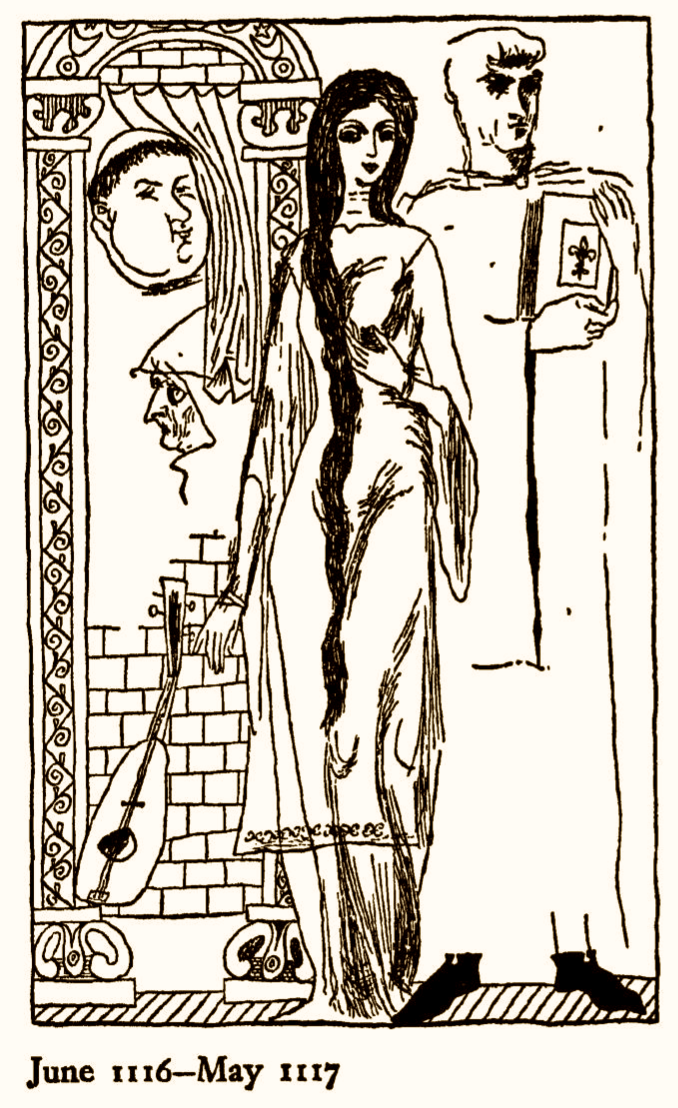
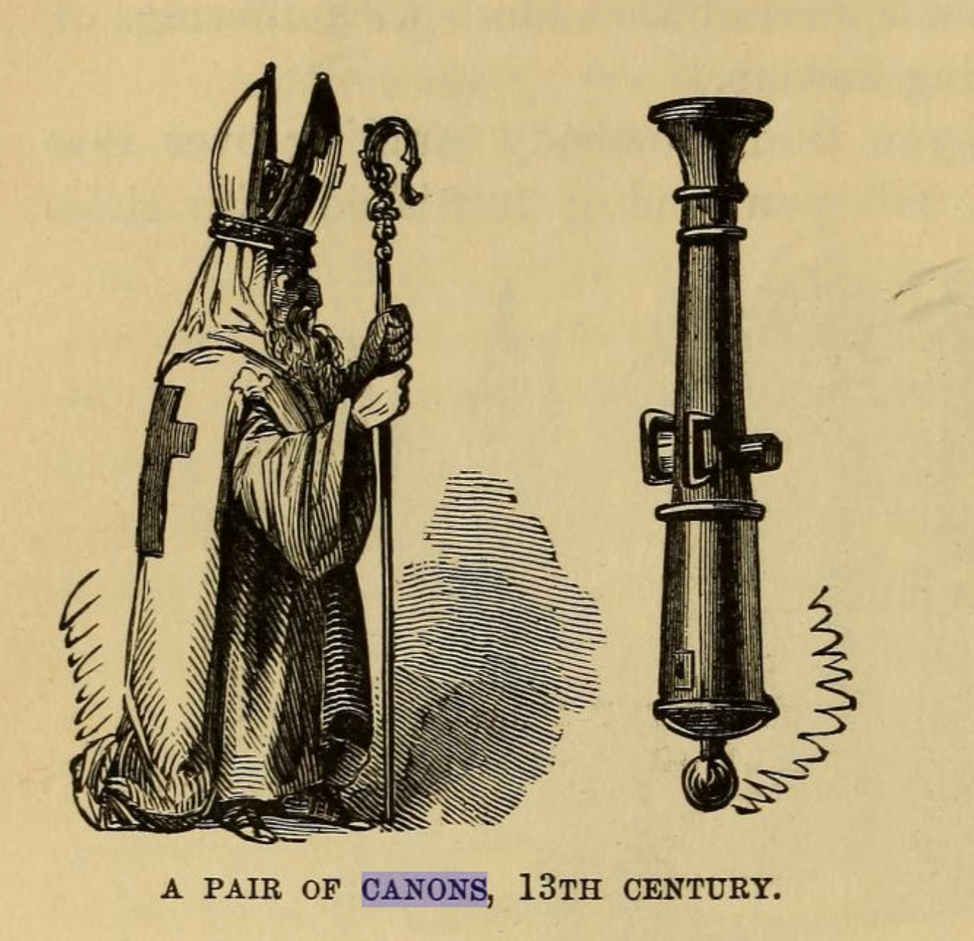
The picture at the top of this column comes from one of Mark Twain’s travelogues. It illustrates the vindictive priest Fulbert, in Twain’s retelling of the story of Abelard and Héloïse, 12th century lovers. More about that momentarily. Abelard was a prominent philosopher who tangled for several years with Saint Bernard of Clairvaux, a significant dispute ably discussed here.

Abelard and the Inklings

Abelard (c. 1079-1142) was a philosopher who, as was common during the Middle Ages, was also a theologian. Among his contributions to religion was revising the Roman Catholic doctrine of limbus infantium (Limbo for unbaptized infants).

In popular culture, Abelard’s love affair with his eventual “wife” is more prominent than his religious pursuits. Although Abelard was a famous figure during the medieval period, he did not feature significantly in C.S. Lewis’ thought. He did, however, exert a prominent influence on Charles Williams’ Place of the Lion, a volume Lewis praised.

In “Friendship in The Place of the Lion,” Dan Hamilton provides a very accessible synopsis of Williams’ book. He describes the experience of a primary character, who is writing her dissertation on “Pythagorean Influences on Abelard.” As she struggles with the appearance of supernatural phenomena, “she encounters the specter of Abelard, a major subject of her studies. But he is dead, and powerless to give her any aid, not even a meaningful word.” The “archetypes” in the story, by contrast, possess genuine power. It is a very unique book.

Returning to Mark Twain’s retelling of the popular medieval tale, we leave the realm of platonic philosophy, and enter the world of sordid human activities. Twain, you see, was not sympathetic to Abelard’s wooing of a young student and his eventual repentance. In his account, Twain desired “to show the public that they have been wasting a good deal of marketable sentiment very unnecessarily.” If you are curious as to his perspective on the events, continue reading.

Twain’s Take on Abelard and Héloïse
(not brief, but well worth reading)

In his own words, Twain’s “faithful” version of their story – but first, he begins with a description of their shared gravesite.

But among the thousands and thousands of tombs in Père la Chaise [cemetery] there is one that no man, no woman, no youth of either sex, ever passes by without stopping to examine. Every visitor has a sort of indistinct idea of the history of its dead, and comprehends that homage is due there, but not one in twenty thousand clearly remembers the story of that tomb and its romantic occupants. This is the grave of Abelard and Heloise – a grave which has been more revered, more widely known, more written and sung about and wept over, for seven hundred years, than any other in Christendom, save only that of the Saviour.

All visitors linger pensively about it; all young people capture and carry away keepsakes and mementoes of it; all Parisian youths and maidens who are disappointed in love come there to bail out when they are full of tears; yea, many stricken lovers make pilgrimages to this shrine from distant provinces to weep and wail and “grit” their teeth over their heavy sorrows, and to purchase the sympathies of the chastened spirits of that tomb with offerings of immortelles and budding flowers.

Go when you will, you find somebody snuffling over that tomb. Go when you will, you find it furnished with those bouquets and immortelles. Go when you will, you find a gravel-train from Marseilles arriving to supply the deficiencies caused by memento-cabbaging vandals whose affections have miscarried.

Yet who really knows the story of Abelard and Heloise? Precious few people. The names are perfectly familiar to every body, and that is about all. With infinite pains I have acquired a knowledge of that history, and I propose to narrate it here, [italics added] partly for the honest information of the public and partly to show that public that they have been wasting a good deal of marketable sentiment very unnecessarily.

Heloise was born seven hundred and sixty-six years ago. She may have had parents. There is no telling. She lived with her uncle Fulbert, a canon of the cathedral of Paris. I do not know what a canon of a cathedral is, but that is what he was. He was nothing more than a sort of a mountain howitzer, likely, because they had no heavy artillery in those days. Suffice it, then, that Heloise lived with her uncle the howitzer, and was happy.

She spent the most of her childhood in the convent of Argenteuil – never heard of Argenteuil before, but suppose there was really such a place. She then returned to her uncle, the old gun, or son of a gun, as the case may be, and he taught her to write and speak Latin, which was the language of literature and polite society at that period.

Just at this time, Pierre Abelard, who had already made himself widely famous as a rhetorician, came to found a school of rhetoric in Paris. The originality of his principles, his eloquence, and his great physical strength and beauty created a profound sensation. He saw Heloise, and was captivated by her blooming youth, her beauty and her charming disposition. He wrote to her; she answered. He wrote again, she answered again. He was now in love. He longed to know her – to speak to her face to face.

His school was near Fulbert’s house. He asked Fulbert to allow him to call. The good old swivel saw here a rare opportunity: his niece, whom he so much loved, would absorb knowledge from this man, and it would not cost him a cent. Such was Fulbert – penurious . . . He asked Abelard to teach her.

Abelard was glad enough of the opportunity. He came often and staid long. A letter of his shows in its very first sentence that he came under that friendly roof like a cold-hearted villain as he was, with the deliberate intention of debauching a confiding, innocent girl. This is the letter :

“I can not cease to be astonished at the simplicity of Fulbert; I was as much surprised as if he had placed a lamb in the power of a hungry wolf. Heloise and I, under pretext of study, gave ourselves up wholly to love, and the solitude that love seeks our studies procured for us. Books were open before us, but we spoke oftener of love than philosophy, and kisses came more readily from our lips than words.”

And so, exulting over an honorable confidence which to his degraded instinct was a ludicrous “simplicity,” this unmanly Abelard seduced the niece of the man whose guest he was. Paris found it out. Fulbert was told of it – told often – but refused to believe it. He could not comprehend how a man could be so depraved as to use the sacred protection and security of hospitality as a means for the commission of such a crime as that. But when he heard the rowdies in the streets singing the love-songs of Abelard to Heloise, the case was too plain – love-songs come not properly within the teachings of rhetoric and philosophy.

He drove Abelard from his house. Abelard returned secretly and carried Heloise away to Palais, in Brittany, his native country. Here, shortly afterward, she bore a son, who, from his rare beauty, was surnamed Astrolabe. . . . The girl’s flight enraged Fulbert, and he longed for vengeance, but feared to strike lest retaliation visit Heloise – for he still loved her tenderly. At length Abelard offered to marry Heloise – but on a shameful condition: that the marriage should be kept secret from the world, to the end that (while her good name remained a wreck, as before) his priestly reputation might be kept untarnished. It was like that miscreant.

Fulbert saw his opportunity and consented. He would see the parties married, and then violate the confidence of the man who had taught him that trick; he would divulge the secret and so remove somewhat of the obloquy that attached to his niece’s fame. But the niece suspected his scheme. She refused the marriage, at first; she said Fulbert would betray the secret to save her, and besides, she did not wish to drag down a lover who was so gifted, so honored by the world, and who had such a splendid career before him. It was noble, self-sacrificing love, and characteristic of the pure-souled Heloise, but it was not good sense.

But she was overruled, and the private marriage took place. Now for Fulbert! The heart so wounded should be healed at last; the proud spirit so tortured should find rest again; the humbled head should be lifted up once more. He proclaimed the marriage in the high places of the city, and rejoiced that dishonor had departed from his house. But lo! Abelard denied the marriage! Heloise denied it! The people, knowing the former circumstances, might have believed Fulbert, had only Abelard denied it, but when the person chiefly interested – the girl herself – denied it, they laughed despairing Fulbert to scorn.

The poor canon of the cathedral of Paris was spiked again. The last hope of repairing the wrong that had been done his house was gone. What next? Human nature suggested revenge. He compassed it. The historian says: “Ruffians, hired by Fulbert, fell upon Abelard by night, and inflicted upon him a terrible and nameless mutilation.”

I am seeking the last resting-place of those “ruffians.” When I find it I shall shed some tears on it, and stack up some bouquets and immortelles, and cart away from it some gravel whereby to remember that howsoever blotted by crime their lives may have been, these ruffians did one just deed, at any rate, albeit it was not warranted by the strict letter of the law.

Heloise entered a convent and gave good-bye to the world and its pleasures for all time. For twelve years she never heard of Abelard – never even heard his name mentioned. She had become prioress of Argenteuil, and led a life of complete seclusion. She happened one day to see a letter written by him, in which he narrated his own history. She cried over it, and wrote him. He answered, addressing her as his “sister in Christ.”

They continued to correspond, she in the un-weighed language of unwavering affection, he in the chilly phraseology of the polished rhetorician. She poured out her heart in passionate, disjointed sentences; he replied with finished essays, divided deliberately into heads and sub-heads, premises and argument. She showered upon him the tenderest epithets that love could devise, he addressed her from the North Pole of his frozen heart as the “Spouse of Christ!” The abandoned villain!

On account of her too easy government of her nuns, some disreputable irregularities were discovered among them, and the Abbot of St. Denis broke up her establishment. Abelard was the official head of the monastery of St. Grildas de Ruys, at that time, and when he heard of her homeless condition a sentiment of pity was aroused in his breast (it is a wonder the unfamiliar emotion did not blow his head off), and he placed her and her troop in the little oratory of the Paraclete, a religious establishment which he had founded.

She had many privations and sufferings to undergo at first, but her worth and her gentle disposition won influential friends for her, and she built up a wealthy and flourishing nunnery. She became a great favorite with the heads of the church, and also the people, though she seldom appeared in public. She rapidly advanced in esteem, in good report and in usefulness, and Abelard as rapidly lost ground. The Pope so honored her that he made her the head of her order.

Abelard, a man of splendid talents, and ranking as the first debater of his time, became timid, irresolute, and distrustful of his powers. He only needed a great misfortune to topple him from the high position he held in the world of intellectual excellence, and it came. Urged by kings and princes to meet the subtle St. Bernard in debate and crush him, he stood up in the presence of a royal and illustrious assemblage, and when his antagonist had finished he looked about him, and stammered a commencement; but his courage failed him, the cunning of his tongue was gone: with his speech unspoken, he trembled and gat down, a disgraced and vanquished champion.

He died a nobody, and was buried at Cluny, A.D., 1144. They removed his body to the Paraclete afterward, and when Heloise died, twenty years later, they buried her with him, in accordance with her last wish. He died at the ripe age of 64, and she at 63. After the bodies had remained entombed three hundred years, they were removed once more. They were removed again in 1800, and finally, seventeen years afterward, they were taken up and transferred to Pere la Chaise, where they will remain in peace and quiet until it comes time for them to get up and move again.

History is silent concerning the last acts of the mountain howitzer. Let the world say what it will about him, I, at least, shall always respect the memory and sorrow for the abused trust, and the broken heart, and the troubled spirit of the old smooth-bore. Rest and repose be his!

Such is the story of Abelard and Heloise. (Innocents Abroad).


* Later Fordefjord was unimaginatively renamed “First Lutheran Church.”

A novel entitled Peter Abelard was published in 1933 by Helen Waddell. It is available at Internet Archive for those who prefer their history via the medium of historical fiction. The illustration below, apparently imitating a fading fresco, comes from that volume.

Do Not Read the Bible

How would you respond if the government prohibited you from reading the Holy Scriptures? That was the situation in Great Britain when the Parliament passed the ironically named “Act for the Advancement of True Religion.”

Nearly five centuries ago, on May 12, 1543, Britain’s enlightened politicians and bishops determined that people of the “lower sort” needed to be protected from reading and interpreting the Bible themselves. 

Just sixty-one years later, King James VI/I would commission the translation of the Authorized Version, making God’s Word more accessible to all who could read English. William Tyndale (c. 1494 – 1536) had actually translated a fair portion of the Scriptures a decade prior to Parliament’s restrictive law. For this, and similar “Protestant” sins, Tyndale was strangled and burned at the stake in Belgium.

Even the so-called Great Bible had been authorized by Henry VIII in 1539. The approval decreed “one book of the bible of the largest volume in English, and the same set up in some convenient place within the said church that ye have care of, whereas your parishioners may most commodiously resort to the same and read it [emphasis mine].”

Nevertheless, not all of the powers that be apparently agreed with making the text of the Bible accessible to the common folk. We will consider this category of “inadequates” momentarily.

First let’s consider the distaste expressed by some for any modern translation of the Scriptures. (If you’ve ever attended a Bible study group you have probably encountered at least one person who insists on using the true KJV, despite the archaic language.

C.S. Lewis addressed this reticence for clear translations in an essay entitled “Christian Apologetics.” It was originally presented to Anglican priests and youth leaders in 1945.

“Do we not already possess,” [some will say] “in the Authorised Version the most beautiful rendering which any language can boast?” Some people whom I have met go even further and feel that a modern translation is not only unnecessary but even offensive.

They cannot bear to see the time-honoured words altered; it seems to them irreverent. There are several answers to such people. In the first place the kind of objection which they feel to a new translation is very like the objection which was once felt to any English translation at all.

Dozens of sincerely pious people in the sixteenth century shuddered at the idea of turning the time-honoured Latin of the Vulgate into our common and (as they thought) ‘barbarous’ English. A sacred truth seemed to them to have lost its sanctity when it was stripped of the polysyllabic Latin, long heard at Mass and at Hours, and put into . . . language steeped in all the commonplace associations of the nursery, the inn, the stable, and the street.

The Biblically Unworthy

So, who were these “lower sort” of individuals deemed unsuited for reading the Scriptures already translated into their native tongue? Well, they included “women, artificers, apprentices, journeymen, serving-men of the rank of yeoman and under, husbandmen and laborers.” Women of the gentry class were allowed an exception, being able to read the Scriptures, but only in private.

Fortunately, the law was short-lived. Henry’s son, Edward VI/I would have it repealed in the Treason Act of 1547. (Of course, this goodwill did not prevent Edward from condemning the translations of the aforementioned martyr, William Tyndale.)

Who Should Read the Bible?

The short answer is “everyone.” Yet the fact exists that some individuals are susceptible to confusion – or even to intentional twisting of the clear meaning of God’s Word. So, while the Scriptures should be accessible to all, it is wise to guide children and the easily-confused in their studies. After all, what we all desire is honest understanding and enlightenment.

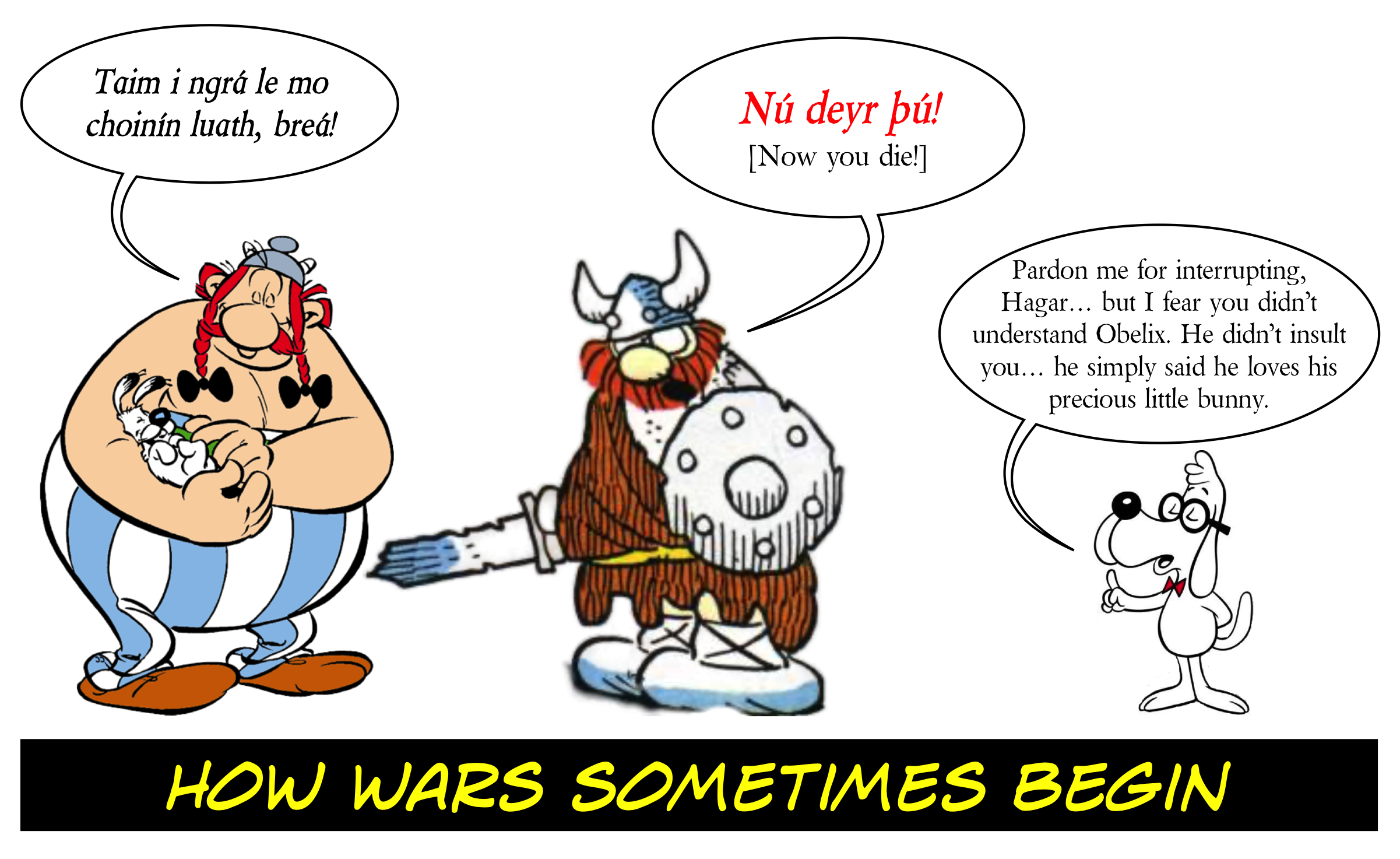
This direct access is one reason Martin Luther, William Tyndale and others labored so tirelessly to translate the Bible into the vernacular. Cheerfully, “believers no longer had to read Latin [or Greek, Hebrew or Aramaic] to understand the word of God.”

As for those who would directly attempt to distort God’s inspired words, a clear example is found in the New World version paraphrase invented by Jehovah’s Witnesses. Another example, which I have discussed in the past, is the distorted abomination created by the Chinese Communist Party

There are also “abbreviated” versions of the Bible, which contain properly translated passages, but leave out passages that challenge preconceived positions. This would include Thomas Jefferson’s cut and paste Bible and an edition of the Scriptures developed for teaching slaves to read.


If you are interested in receiving daily notes about Christian history such as the one which prompted this post, visit the Christian History Institute.

Literary Translators Beware

Translating literature from one language to another is a valuable, yet often undervalued, skill. It breaks the linguistic shackles restricting the benefits of good books to those literate in the language in which they are composed.

You can think of it this way. Without the dedicated efforts of translators, someone familiar only with English – e.g. as is, sadly, the case with most Americans – could never read the works of ancient Greeks or Romans. Asian philosophy such as the Four Books and Five Classics of Confucianism would be virtually unknown in the West.

Even contemporary literature from most of the world would be beyond our access. And, obviously, God’s written Word would only be accessible to those who mastered Hebrew, Aramaic, and Greek.

While C.S. Lewis is seldom thought of as a translator, it was indeed one of his talents. That doesn’t mean he devoted serious energy to translation. That was not his vocation. On the contrary, in 1945 he wrote: “People praise me as a ‘translator,’ but what I want is to be the founder of a school of ‘translation.’” (I discussed this a number of years ago in “C.S. Lewis’ School of Translation.”)

Dedicated translators have played an invaluable role throughout recorded history. A number of people still make translation their life’s labor. Yet, there are dark clouds on their horizon.

Is there a Future for Translation by Human Beings?

A recent literary journal alerted me to advances in artificial intelligence, which now jeopardize the future of professional translators. 

Back in 2023, an article in Forbes compared the respective advantages and challenges of the two methods. They accurately identified one distinction between a truly fluent human and an artificial substitute.

Language is complex, and culturally specific expressions such as idioms and metaphors, as well as ambiguous or ungrammatical sentences and other context-dependent word choices, can be challenging for AI algorithms.

Unsurprisingly, that same year the American Translators Association offered a more critical opinion in “Machine Translation vs. Human Translation: Will Artificial Intelligence Replace the World’s Second Oldest Profession?

We already mentioned that computers don’t possess our human capacity to comprehend meaning. The creative process, especially when it comes to translation, is the pinnacle of meaning. Human translators translate meaning, not words. The art of translation is understanding the meaning of the original text and then transforming it into something that communicates the same message (or evokes the intended emotion) but might not superficially look like an exact equivalent. . . .

But both now and then, professional translators are here to stay. Equipped with unique human skill and a toolbox full of tech, they’re ready to continue helping the world navigate the tricky business of multilingual communication – transporting messages appropriately, creatively, consistently, and securely to whatever audience you aim to reach. 

In short: machine translation can help when it doesn’t count, but professional human translation is there for you when it does.

Related to expressly literary translations, in contrast to mundane subject matter, the current issue of Poets & Writers contains a piece titled “AI Threatens Literary Translation.” When a European subsidiary of Simon & Schuster announced they would begin limited use of AI for this purpose,

Reactions rose in a flurry: Writers, publishers, and translators contended that AI would produce “bland” work. They lamented the possibility of lost jobs. The European Council of Literary Translators’ Associations resisted the standardization of an idiosyncratic process, stating that the imagination, understanding, and creativity that translation demands are “intrinsically human.”

This informative essay acknowledges that “AI isn’t new to translation either. Literary translators sometimes input segments of their source text into AI-based technologies . . . to generate ideas for particularly thorny passages. But these tools have to be used ‘very carefully . . . because the translations it produces are error-ridden and devoid of flow or beauty.’”

A Quick Experiment with AI Translation

Before completing this post I took a brief (less than ten minute) excursion to ChatGPT to experiment with their translation tool.

The results appear below (all produced in a mere handful of minutes). First I asked the AI to compose a sonnet on the subject of translation. Then I requested translations of that sonnet in five different languages. I have included the sonnet and the final two lines of each translation below.

You can perform a more elaborate experiment yourself, especially if you are familiar with more than one language. This would enable you to compare the accuracy of the translation. Or, perhaps one might take a translated version and translate that back into the original language, to see how closely it relates to the starting point.

In my experiment, the AI was constrained by needing to maintain the original’s form as a sonnet. I assume that if it were simply a literal translation, it may have modified the vocabulary and grammar. Each translation included footnotes. To illustrate how elaborate some of these notes were, I’ve reproduced those which appeared with the translation into Aramaic.

Frankly, if this is what these early AI prototypes are capable of, it appears to me that professional translators may truly have something to be worried about.

The Sonnet

In languages vast, where meanings hide and shift,
A translator’s art gives voice to what is known.
Through words, they bridge the gap, a timely gift,
To carry thought from one to others’ throne.

The rhythm, tone, and essence all must stay,
Though words may bend, they still must hold their grace.
A careful hand must guide the text’s relay,
To keep its heart while moving through time and space.

Yet oft the meaning’s lost in fleeting sound,
Or tangled in the strings of foreign speech.
But still they strive, where words and thoughts are bound,
To bring the message close, within our reach.

A translation’s not just words that blend –
It’s worlds revealed, with meaning without end.

~ Latin ~

Translatio non est solum verba iuncta –
Sed mundi patent, et mens non est puncta.

~ Old English ~

Nis anginn of wordum gemenged anum –
Ac worulda onwreah, and andgit ne swylt.

~ Classical Greek ~

Οὐ γάρ μόνον λέξεις αἱ μεταφράσεις,
ἀλλὰ κόσμοι φαίνονται, ἄνοια οὐδέποτε.

~ Middle Egyptian ~

𓏏𓂋 𓅓𓏏 𓊪 𓏏𓏤 𓆑𓏏 𓊵𓏤,
t r mt ḏbꜥ t ft ḏbꜥ
(“A translation’s not just words that blend –”)

𓂋 𓅓𓏏 𓆑𓏏 𓊵𓏤 𓏏𓏏𓀀.
r mt ft ḏbꜥ t t
(“It’s worlds revealed, with meaning without end.”)

~ Classical Aramaic ~

ܬܪܓܡܐ ܠܐ ܗܘܐ ܒܠܚܘܕ ܡܠܐ ܕܡܬܚܠܛܢ,
ܐܠܐ ܥܠܡܐ ܡܬܓܠܝܢ، ܘܡܕܡ ܠܐ ܚܒܠ.

Notes on the Translation:
1. Classical Aramaic Grammar & Style: The sentence structure follows Classical Aramaic syntax as used in ancient texts. Some phrases had to be adapted poetically since direct translations of modern concepts do not always exist.
2. Vocabulary Adjustments: “Translator” = ܡܬܪܓܡܢܐ (metargemana), a direct and historically accurate term. “Translation” is expressed as ܗܫܬܘܪܬܐ (hishtorta), meaning “interpretation, explanation.” “Essence” is translated as ܡܗܘܬܐ (mehutā), meaning “nature, essence.” “To bridge the gap” = ܡܫܬܪܝܢ ܓܦܐ (meshatrin gapé), literally meaning “to stretch wings” (a poetic expression).
3. Preserving the Poetic Flow: The rhythm and parallel structure of the original sonnet were carefully kept. Adjustments were made for metrical and phonetic balance in Aramaic.
4. This version captures the spiritual and poetic depth of the original while remaining faithful to the Classical Aramaic linguistic style.
5. Would you like an audio recording or a version in Syriac script for authenticity? Let me know how you’d like to refine it!

And all of this in ten minutes. Unfathomable . . .

C.S. Lewis, Liturgy & a Dash of Theology

C.S. Lewis wrote: “There is no subject in the world (always excepting sport) on which I have less to say than liturgiology” (Letters to Malcolm: Chiefly on Prayer).

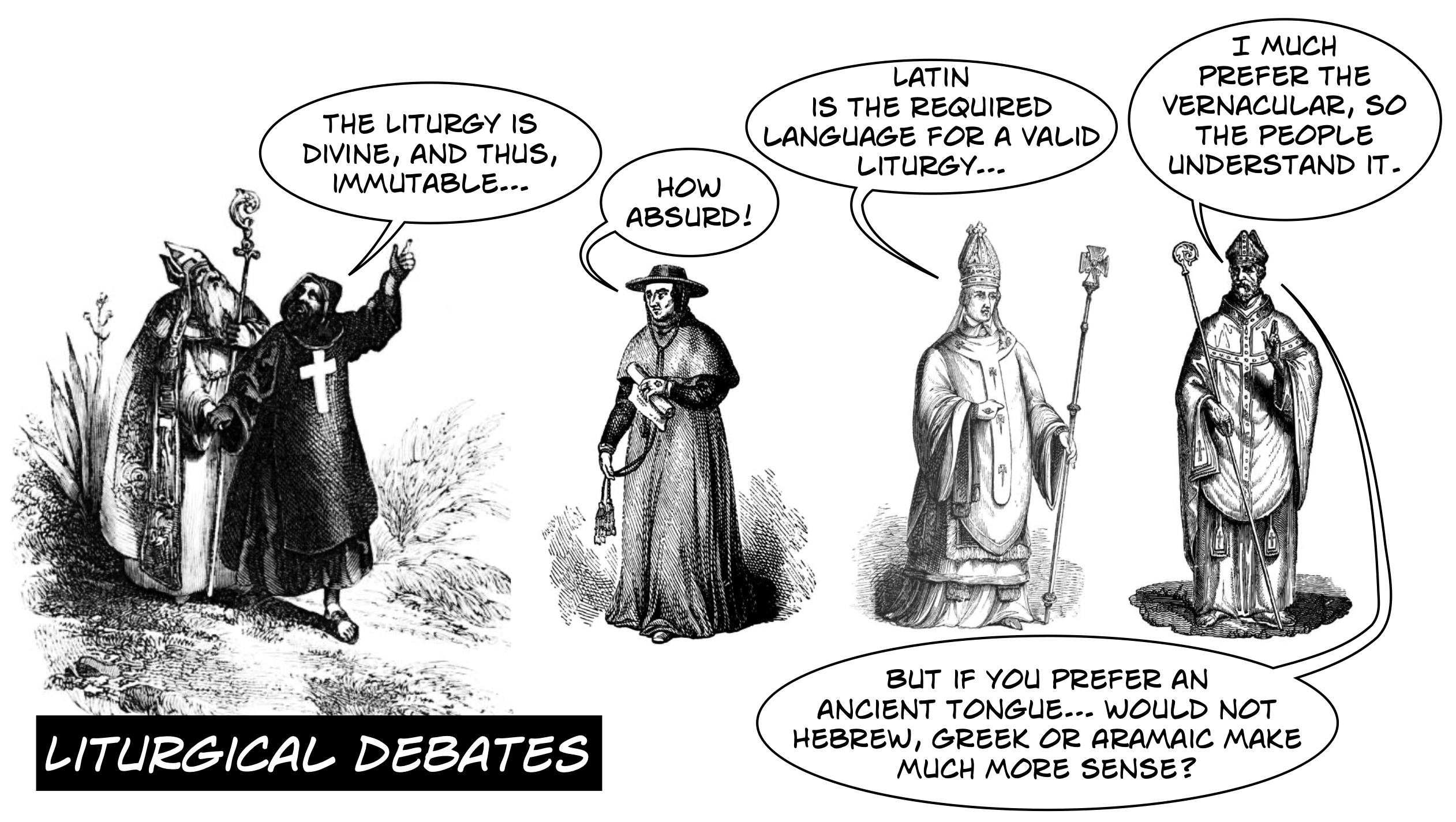
In Christian usage, the word “liturgy” – derived from leitourgia, and translated “work of the people” or “work for the people” – corresponds to the public worship service.

For some, “liturgy” is regarded as a negative word. It may evoke, in such cases, a sense of sterile ritual or what the Scriptures refer to (in the King James Version) as “vain repetitions” (Matthew 6). The irony is that human beings generally prefer familiarity, and almost all worship is essentially liturgical. 

Nondenominational churches sometimes claim they do not possess a liturgy. In truth, every nonspontaneous worship experience possesses liturgical elements. They may be simple – a welcome or greeting followed by music, prayer, the reading of a Bible passage, often followed by some form of sermon or reflection. Oh, and for American Protestants at least, it appears most consider “announcements” are essential to worship services.

The particular elements vary, but the “liturgical” aspects, normally occur in the same sequence at regular services.

C.S. Lewis was a faithful member of the Church of England. He was also respectful of tradition, and genuinely content with the Book of Common Prayer. While he did not prefer conventional church hymnody, he acknowledged that it blessed others. In “The Classical Anglicanism of C.S. Lewis,” the author says Lewis challenged “the assumptions of a liberal theology which undermined the Church’s confidence in its proclamation” of the Gospel. However, he continues, Lewis “was no reactionary.”

C.S. Lewis loved the simplicity of church worship in its unostentatious form. That was one reason he faithfully attended services at his modest local parish. He referred to himself as a “very ordinary layman.” This was his humble confession, although there was precious little about the scholar that was “ordinary.” Still, he was reticent to comment on ecclesiastical subjects where he possessed no expertise. Thus his complacency with time proven liturgical matters, and his academic disinterest in commenting on them formally.

This, of course, did not apply to theological truths such as the doctrinal core of “Mere Christianity.” C.S. Lewis was deeply troubled by challenges to historic Christian orthodoxy. His devotion to the faith he had once rejected forced him to come to its defense when theologians diverged from “the path of life” (Psalm 16).

In 1959, C.S. Lewis delivered an address now entitled “Fern Seed and Elephants.” It is profound. [You can listen to a reading of “Fern Seed and Elephants” at C.S. Lewis Essays.]

Invited to speak to some clergy about the threat of liberal theologies undermining the Christian faith, Lewis begins by acknowledging his lack of formal theological training.

I am a sheep, telling shepherds what only a sheep can tell them. And now I begin my bleating.

Many of us who have attended seminary, can attest to his fear that what passes for illumination is too often the opposite.

I find in these theologians a constant use of the principle that the miraculous does not occur. Thus any statement put into our Lord’s mouth by the old texts, which, if he had really made it, would constitute a prediction of the future, is taken to have been put in after the occurrence which it seemed to predict.

This is very sensible if we start by knowing that inspired prediction can never occur. Similarly in general, the rejection as unhistorical of all passages which narrate miracles is sensible if we start by knowing that the miraculous in general never occurs.

Now I do not here want to discuss whether the miraculous is possible. I only want to point out that this is a purely philosophical question. Scholars, as scholars, speak on it with no more authority than anyone else. The canon ‘If miraculous, then unhistorical’ is one they bring to their study of the texts, not one they have learned from it.

If one is speaking of authority, the united authority of all the biblical critics in the world counts here for nothing. On this they speak simply as men; men obviously influenced by, and perhaps insufficiently critical of, the spirit of the age they grew up in.

In Lewis’ The Great Divorce, he describes just such a theologian. If you would like to read my article on this subject, “Confused Clerics: The Landlord’s Stewards in C.S. Lewis’s The Pilgrim’s Regress,” just click on the article’s title.

C.S. Lewis ends his essay “Fern Seeds and Elephants” with a sort of apology. Yet, despite his reluctance to venture into the ecclesiastical realm, he shares the compulsion of the Prophet Jeremiah to speak truth. The prophet, who suffered greatly for his faithfulness, said “If I say, ‘I will not mention [God], or speak any more in his name,’ there is in my heart as it were a burning fire shut up in my bones, and I am weary with holding it in, and I cannot” (Jeremiah 20).

Missionary to the priests of one’s own church is an embarrassing role; though I have a horrid feeling that if such mission work is not soon undertaken the future history of the Church of England is likely to be short.

More Liturgical Wisdom from C.S. Lewis

C.S. Lewis did not begin his vocation as a voice of reason for the clergy when he wrote this essay. On the contrary, his concern for the erosion of sound theology began much earlier. A decade earlier he weighed in on a public discussion of arbitrary liturgical changes in the church. Lewis’ concerns at that time remain valid, more than seventy years later.

Sir,– I agree with Dean Hughes that the connection of belief and liturgy is close, but doubt if it is ‘inextricable.’ I submit that the relation is healthy when liturgy expresses the belief of the Church, morbid when liturgy creates in the people by suggestion beliefs which the Church has not publicly professed, taught, and defended.

If the mind of the Church is, for example, that our fathers erred in abandoning the Romish invocations of saints and angels, by all means let our corporate recantation, together with its grounds in scripture, reason and tradition be published, our solemn act of penitence be performed, the laity re-instructed, and the proper changes in liturgy be introduced.

What horrifies me is the proposal that individual priests should be encouraged to behave as if all this had been done when it has not been done.

One correspondent compared such changes to the equally stealthy and (as he holds) irresistible changes in a language. But that is just the parallel that terrifies me, for even the shallowest philologist knows that the unconscious linguistic process is continually degrading good words and blunting useful distinctions. Absit omen!

Whether an ‘enrichment’ of liturgy which involves a change of doctrine is allowable, surely depends on whether our doctrine is changing from error to truth or from truth to error. Is the individual priest the judge of that? (Church Times, 1 July 1949).

In The Screwtape Letters, an experienced devilish tempter is training a subordinate. In Letter XVI, he discusses attending a church with which his target “is not wholly pleased.”

Laying aside the matter of the futility of ever finding a perfect church – after all, they are made up of people – the letter cautions us about some of the criticisms related to the topic at hand. Since many aspects of Screwtape’s vile advice relate to our own vulnerabilities, I will close with an admittedly lengthy excerpt from the correspondence.

My dear Wormwood, You mentioned casually in your last letter that the patient has continued to attend one church, and one only, since he was converted, and that he is not wholly pleased with it. May I ask what you are about? Why have I no report on the causes of his fidelity to the parish church? Do you realise that unless it is due to indifference it is a very bad thing?

Surely you know that if a man can’t be cured of churchgoing, the next best thing is to send him all over the neighbourhood looking for the church that ‘suits’ him until he becomes a taster or connoisseur of churches. The reasons are obvious. In the first place the parochial organisation should always be attacked, because, being a unity of place and not of likings, it brings people of different classes and psychology together in the kind of unity the Enemy [in Screwtape’s case, the Enemy to whom he refers, is God] desires. The congregational principle, on the other hand, makes each church into a kind of club, and finally, if all goes well, into a coterie or faction.

In the second place, the search for a ‘suitable’ church makes the man a critic where the Enemy wants him to be a pupil. . . . [One nearby congregation boasts a] Vicar is a man who has been so long engaged in watering down the faith to make it easier for a supposedly incredulous and hard-headed congregation that it is now he who shocks his parishioners with his unbelief, not vice versa. He has undermined many a soul’s Christianity. His conduct of the services is also admirable. In order to spare the laity all ‘difficulties’ he has deserted both the lectionary and the appointed psalms and now, without noticing it, revolves endlessly round the little treadmill of his fifteen favourite psalms and twenty favourite lessons. . . .

[While encouraging church shopping], all the purely indifferent things – candles and clothes and what not – are an admirable ground for our activities. We have quite removed from men’s minds what that pestilent fellow Paul used to teach about food and other unessentials – namely, that the human without scruples should always give in to the human with scruples.

You would think they could not fail to see the application. You would expect to find the ‘low’ churchman genuflecting and crossing himself lest the weak conscience of his ‘high’ brother should be moved to irreverence, and the ‘high’ one refraining from these exercises lest he should betray his ‘low’ brother into idolatry.

And so it would have been but for our ceaseless labour. Without that the variety of usage within the Church of England might have become a positive hotbed of charity and humility.

Please Forgive My Sesquipedalianism

Long words can be daunting. Even for native speakers. The illustration above comes from The Japan Times, and reveals how the challenge is magnified for others.

I love learning new words. And, since these treasures frequently drift out of my vocabulary because I fail to use them, I often have the joy of re-learning unique words.

Sesquipedalianism is actually a genuine word which can be validly applied in a variety of settings. After all, haven’t we all encountered a sesquipedalianist or two, who uses especially long, and occasionally obscure words?

How many syllables are required before a word grows too long? To a monosyllabic individual, two might be deemed excessive.

Seriously, it’s not the length of a word that matters, it’s the word’s familiarity. For example, “familiarity” has six syllables, and everyone reading Mere Inkling knows its meaning. (I resisted saying “is familiar with . . .”) On the other hand, “carbuncle” is only trisyllabic, and yet the only people likely to know its definition are either those in medical professions, or unfortunate individuals who have suffered from one.

But it’s not only unfamiliarity that causes confusion; misunderstanding can result from a lack of context. Let’s take “trisyllabic,” a word even an active reader seldom encounters. As used in the paragraph above, the context (along with the prefix and root), provide us with more information than a person needs to recognize its meaning.

In a famous letter from 1956, C.S. Lewis included the following advice:

Don’t use words too big for the subject. Don’t say “infinitely” when you mean “very”; otherwise you’ll have no word left when you want to talk about something really infinite.

Great advice, just as one would expect. However, this does not constitute a blanket rejection of “big words.” Lewis is simply reminding us that our prose must not be more complicated than it needs to be. Thus, the title of this column uses a precise word – rather than saying “Please Forgive My Practice of Using Long and Sometimes Obscure Words” – since Mere Inkling readers are quite capable of uncovering a definition if a particular word is unfamiliar.

Plus, as I hinted above, many of us enjoy expanding our vocabularies.

In the aforementioned correspondence, Lewis offered additional useful advice. Another dictum is: “Always prefer the plain direct word to the long, vague one. Don’t implement promises, but keep them.”

Here too the great writer is astute. However, this caution is not actually about the length of words. Lewis’ desire for clarity in communication leads him to reject “vague” words, which coincidentally happen to be longer than those he refers to as “direct.”

Using longer words than necessary is not, of course, always a good thing. While it comprises neuron-stretching play for word lovers, it can easily be misperceived by others as “showing off.” (Note: I’m not defending those cases in which the writer or speaker really are attempting to impress others with their verbal dexterity.*)

You can easily find collections of the longest words in English. While some cheat, including “supercalifragilisticexpialidocious,” others are more scrupulous. Despite doing just that, I like the list at grammarly because of their definition of one of the words they include.

Floccinaucinihilipilification
The estimation of something as valueless. Ironically, floccinaucinihilipilification is a pretty valueless word itself; it’s almost never used except as an example of a long word.

I’m not currently planning on adding floccinaucinihilipilification to my personal vocabulary, but don’t let me dissuade you from doing so.

Learning new words often reaps extrinsic benefits. As a historian who enjoys learning about the Latin language, I found the following definition, and illustration, from the Cambridge dictionary quite interesting.

The act of considering something to be not at all important or useful – used mainly as an example of a very long word:

The honor of being the longest non-technical word goes to floccinaucinihilipilification.

The word . . . is “an 18th-century coinage that combines four Latin prefixes meaning ‘nothing.’”

Oh, and one final suggestion. When visiting the Cambridge site, in the likelihood you’ll someday wish to use this word in conversation, take a moment to make certain you learn to pronounce in the U.K. or American manner, as appropriate for your location.


* I am not here referring to the Irish bred Bay Colt for some curious reason named “Verbal Dexterity.”

Humorous Examinations

Could you pass this examination?

Sketch the development of human thought, estimate its significance. Compare with the development of any other kind of thought.

In contrast to the serious tone of the last two posts, today I am offering some edifying entertainment. As a gift to you, I have edited a perennial favorite of internet humorists. I recently came across my copy of this comprehensive knowledge examination, which motivated me to tweak it for Mere Inkling’s erudite audience.

You have probably seen versions of this exam in the past. The basic questions have remained surprisingly stable despite its age. I encountered it in the University of Washington campus paper in 1973. One writer claims “the Graduation Exam—Authentic Assessment has been in circulation since at least the 1950’s.”

The exam certainly makes the rounds, as this Navy veteran described.

The pressures of comprehensive exams were apparent to many, which resulted in one of the few officially sanctioned jokes in Naval Nuclear Power. In one of the official publications of Naval Reactors, someone inserted a sample “final exam” from Nuclear Power School.

In 2012 elements of the examination created confusion in the People’s Republic of China. It was included in an article about how Chinese nationals could prepare for an American State Department exam required for positions at the United States embassy in Beijing. According to China’s Global Times, “US embassy spokesman Richard Buangan made clear on his Sina microblog Sunday that an alleged ‘recruitment test for expatriate employees at the US embassy’ is fake.”

A June 2008 issue of Foreign Service Journal carried a story, which includes an English version of the [exam stating] the questions are from the US State Department’s entrance exam, in a bid to “measure the stability of perspective Foreign Service officers and to weed out the dummies.”

The Function of Examinations

Testing and documenting competence is obviously important. This is especially true for people in critical roles, such as prescribing drugs, designing aircraft engines, and manufacturing ice cream.

Of course, not everyone is able to pass every test. Which is precisely how things should be.

C.S. Lewis noted how educators truly familiar with their students readily recognize when it is a waste of time for them to continue repeating an exam they obviously cannot pass. He said an academic “master often knows, when boys and parents do not, that it is really useless to send a boy in for a certain examination again” (The Problem of Pain).

I have met very few people who enjoy being tested. Yet, for many faculty members (C.S. Lewis included), being on the “other side” of exams is not particularly enjoyable either. This delightful passage comes from a 1927 letter to his brother, Warnie.

My period of examining passed over with its usual accompaniment of neuralgia and oaths, relieved by the one excellent boy who defined ‘a genie’ correctly, yet more than correctly, as ‘an eastern spirit inhabiting bottles and buttons and rings.’ Pretty good for a boy.

I was also pleased with a youth who, being asked to write a letter to a friend recommending Guy Mannering,* wrote to his brother recommending it and saying ‘I think you would be interested in the character of Colonel Mannering, he is so like our father’: and then later in a paper on Guy Mannering in which I had set the question ‘Would you have liked Colonel Mannering as a father?’—illustrate your answer etc.—began decisively ‘I would not have liked Colonel Mannering as a father in the least.’

Well, it’s time now to offer you the opportunity to prove your worthiness. If you wish to evidence the breadth and depth of your knowledge, proceed now to the exam. (Astute readers will note I’ve added a personal twist to a couple of the exam questions.)

Comprehensive Knowledge Exam

HISTORY: Describe the history of the papacy from its origins to the present day, concentrating especially, but not exclusively, on its social, political, economic, religious, and philosophical impact on Europe, Asia, North and South America, and Africa. Be brief, concise, and specific. Now do the same for the Zoroastrian priesthood. [Bonus credit for including Antarctica in your response.]

MEDICINE: You have been provided with a razor blade, a piece of gauze and a bottle of scotch. Remove your appendix. Do not suture until your work has been inspected. You have fifteen minutes. [Option: if you feel the scotch would impair your responses to the remaining questions, you may defer this portion of the exam to the end of the exam.]

PUBLIC SPEAKING: Two thousand riot-crazed anarchists are storming the campus. Calm them. You may use any ancient language except Latin, Greek or Sanskrit. [Pig Latin is allowed.]

BIOLOGY: Postulate the 500 million year progression of a life form based on silicon, ranking its likely preference for form of government Enumerate the pros and cons it would associate with democracy, monarchy, socialism, theocracy, and totalitarianism. [Caution: any references to the Horta of Janus VI will result in disqualification of your answer, since Star Trek is a fictional resource.]

MUSIC: Write a piano concerto. Orchestrate and perform it with flute and digeridoo. You will find a piano under your seat. The wind instruments, of course, were among the items you were directed to bring with you to the examination.

PSYCHOLOGY: Based on your knowledge of their works, evaluate the emotional stability, degree of adjustment, and repressed frustrations of each of the following: Alexander of Aphrodisias, Hildegard of Bingen, Rābi’a bint Ka’b al-Quzdārī and Simeon the Stylite. Support your evaluation with quotations from each individual’s work, citing original sources. It is not necessary to translate.

SOCIOLOGY: Using the pretext of Planet of the Apes, where homo sapiens have been subordinated to various primate species, assess the prospects for achieving mutual toleration and equilibrium before one group is driven to extinction. [Caution: confusion of apes (which lack tails) and monkeys (which lack an appendix) will result in disqualification of your response.]

CHEMISTRY: Transform lead into gold. You will find a beaker, a three hundred count box of matches and five lead sinkers under your seat. Show all work including Feynman diagrams and quantum functions for all steps. [Transformation into silver will provide half credit.]

ENGINEERING: The disassembled parts of a high-powered rifle have been placed on your desk. You will also find an instruction manual, printed in Swahili. In 10 minutes a hungry Bengal tiger will be admitted to the room. [Special Consideration: Satisfactorily explain the differences between Fahrenheit and Celsius to the tiger, and it will be replaced by a rabid ferret.]

ECONOMICS: Develop a realistic plan for refinancing global debt, without hypothesizing a benevolent intergalactic alliance with unlimited resources coming to the planet’s aid. Trace the possible effects of your plan in the following areas: Cubism, the Donatist controversy, and the 1913 foundation of Hôpital Albert Schweitzer in Gabon.

POLITICAL SCIENCE: Devise an infallible, seven-step plan to transform the United Nations into an organization that will successfully foster peace and goodwill in all international relationships. [Bonus credit for providing a major role for two of the following nations: Dominica, Liechtenstein, Tuvalu.]

AGRICULTURAL SCIENCE: Outline the steps involved in breeding your own super high yield, all weather hybrid strain of wheat. Describe its chemical and physical properties and estimate its impact on world food supplies. Construct a model for dealing with world-wide surpluses. Draft your Nobel Prize acceptance speech.

PHYSICS: Explain the nature of matter. Include in your answer an evaluation of the impact of the development of mathematics on astronomy, botany and numismatics. [Bonus Credit: write today’s date in metric.]

PHILOSOPHY: Sketch the development of human thought, estimate its significance. Compare with the development of any other kind of thought. Be sure to include an analysis of the influence exerted on philosophy by Diogenes the Cynic.

CREATIVE WRITING: Compose an epic poem based on the events of your own life in which you see and footnote allusions from T.S. Eliot, Titus Lucretius Carus, Miguel de Cervantes, Dante Alighieri, Þorbjörn Hornklofi, Gilgamesh and Stephen King. Critique your poem with a full discussion of its syntax and metrics. [Bonus Credit for writing alternating stanzas between free and rhyming verse.]

EDUCATION: Formulate an examination which accurately measures an individual’s comprehensive knowledge base without cultural or linguistic prejudice. Limit the question parameters to what can reasonably be covered during a four hour testing block.

LITERATURE: Discuss in detail at least three major literary figures from each of the following civilizations: the Xia Dynasty, the Akkadian Empire, the Mayan Empire, the Aksumite Empire, the Polynesian Tuʻi Tonga Empire, and nineteenth century United Kingdom. [Caution: failure to include J.R.R. Tolkien and/or C.S. Lewis will result in disqualification of your answer to this question.]

Congratulations on finishing the exam. You are encouraged to use any remaining time to review your answers in light of the fact that grammatical errors and misspellings will significantly impact your final grade.


* You can download a personal copy of Guy Mannering, one of Sir Walter Scott’s Waverly novels, at Internet Archive.

If you should question the distinctions I noted between apes and monkeys, please know that the facts are genuine. However, for future examinations, you should be aware that not all monkeys have tails.

Peculiarities of the German Language

Mark Twain wrote some entertaining travelogues about his overseas travel. In A Tramp Abroad, he relates a conversation he and a friend had with an American who had been studying veterinary medicine in Germany. The expatriate complains about how long his studies have taken – nearly two years – and proclaims how good it is to hear his native tongue.

The student’s most humorous words relate to his impression of the German language. It’s unusual in its nineteenth century phrasing. However, he does note one rather common opinion in his earthy observation.

“I spotted you for my kind [fellow Americans] the minute I heard your clack. . . .” The young fellow hooked his arm into the Reverend’s, now, with the confiding and grateful air of a waif who has been longing for a friend, and a sympathetic ear, and a chance to lisp once more the

sweet accents of the mother tongue, — and then he limbered up the muscles of his mouth and turned himself loose, — and with such a relish!

Some of his words were not Sunday-school words, so I am obliged to put blanks where they occur. . . . “when I heard you fellows gassing away in the good old American language, I’m – if it wasn’t all I could do to keep from hugging you! My tongue’s all warped with trying to curl it around these forsaken wind-galled nine-jointed, German words here; now I tell you it’s awful good to lay it over a Christian word once more and kind of let the old taste soak in. . . .

“I’m learning to be a horse-doctor! I like that part of it, you know, but ____ these people, they won’t learn a fellow in his own language, they make him learn in German; so before I could tackle the horse-doctoring I had to tackle this miserable language.”

And, as if mastering German wasn’t difficult enough in itself, he continues:

“First-off, I thought it would certainly give me the botts, but I don’t mind it now. I’ve got it where the hair’s short, I think; and dontchuknow, they made me learn Latin, too. Now between you and me, I wouldn’t give a ____ for all the Latin that was ever jabbered; and the first thing I calculate to do when I get through, is to just sit down and forget it. ’Twon’t take me long . . .”

I don’t intend to offend Germans for the challenge their language poses to some. (In fact, one set of my grand-parents named Vonderohe originally came from Pomerania.) But the nature of agglutinative languages is so alien to most of us that the very length of the glued-together words becomes daunting.

Since I’m not a linguist, I had to research to discover as I wrote this post that German is not a truly agglutinative language. It merely uses agglutination. Apparently, the distinction involves distinctions with which most non-linguists need not concern themselves. We can be satisfied with the simplified definition provided by Glottopedia.org – “Agglutinating language is a language which has a morphological system in which words as a rule are polymorphemic and where each morpheme corresponds to a single lexical meaning.”

In truth, it’s quite logical to make new words by stringing them together. Most English compound words are a combination of two elements. Longer Germanic words seem more common. Kraftfahrzeug-Haftpflichtversicherung, for example, sounds “nine-jointed,” but is actually only two words, meaning motor vehicle liability insurance.

C.S. Lewis and the German Language

C.S. Lewis was multilingual, and studied German while relatively young. He and his wife used every language as a source when playing Scrabble.

Nevertheless, Lewis was quite modest about his grasp of German. In 1954, while thanking a German professor for the offer of a philosophy book he had written, Lewis wrote,

I look forward to reading the book (when the translation arrives! My German is wretched, and what there is of it belongs chiefly to the libretto of the Ring and Grimm’s Märchen – works whose style and vocabulary you very possibly do not closely follow).

The following year Lewis wrote once again to Helmut Kuhn. This time it was to thank him for a review Lewis’ works. Lewis said, “it certainly seems to me that your grasp of the whole situation in which I have written and of the relation of my ideas both to it and to each other, goes far beyond any criticism I have yet had.” Before he makes that noteworthy statement, Lewis makes a playful comment relating to the presumed dignity implicit in the German language itself.

To be written about in the German language is, for an Englishman, a grave temptation to spiritual pride. The sentences are so massive and the words so long that, even if the content were less flattering than it is in your article, the subject can hardly resist feeling that he must be a much weightier phenomenon than he had ever supposed!

Eucestoda Words: Well Worth a Postscript

Germans are an accomplished, literate people who take pride in their language. They have gone so far as to coin a word that specifically identifies these sometimes lengthy compound words. Germans call them bandwurmwörter, which literally means “tapeworm words.” (Mark Twain would have delighted in knowing that.)

Friedrich Akademie, an education website, devotes a page on their website to “Beautiful German Tapeworm Words.”

Tapeworm words . . . what a fascinatinglyinventivesemanticnovelty!

Elegies, Eulogies & C.S. Lewis

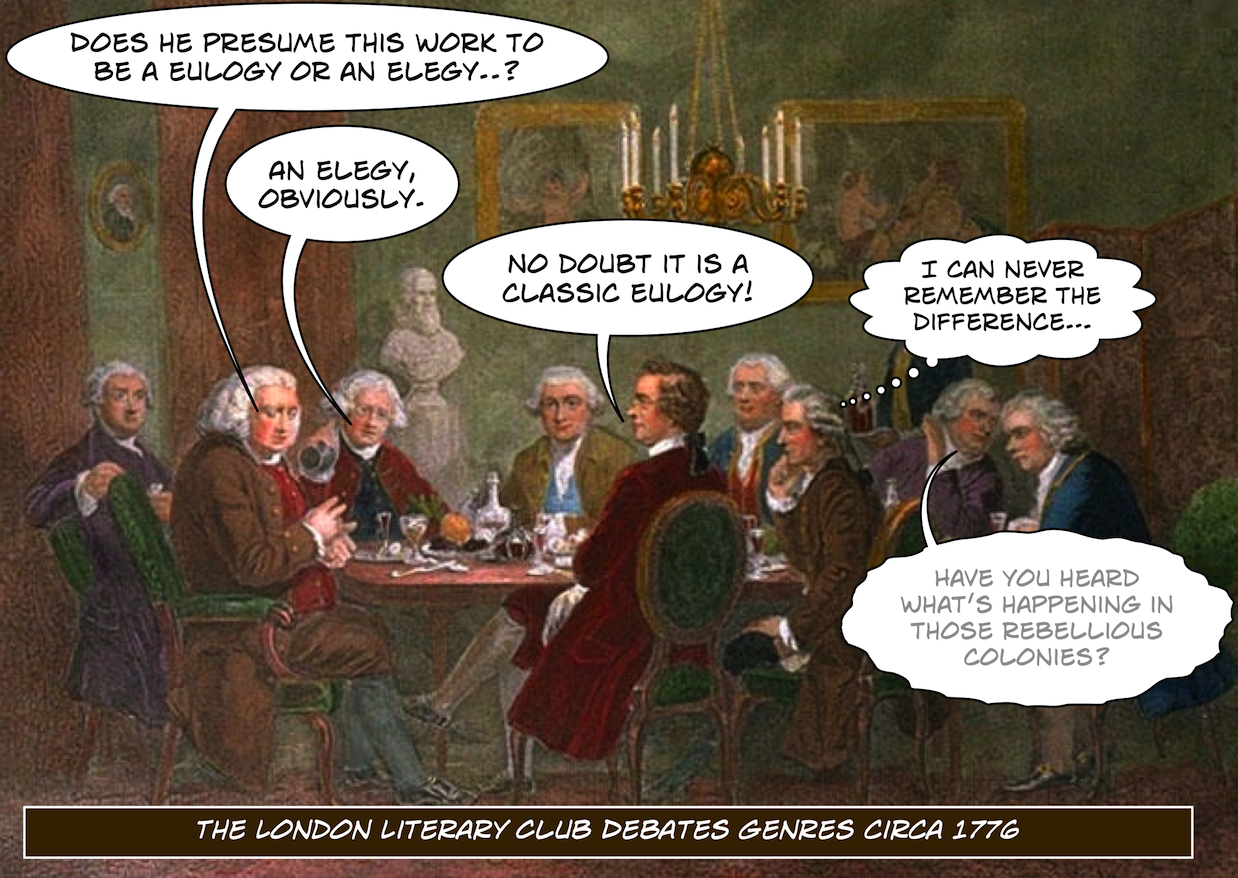
For a long time I was puzzled by the difference between the two words, elegy and eulogy. My confusion was not simply due to their obvious visual and aural similarities. My puzzlement was increased by their use in similar contexts (e.g. death). Even worse, they are sometimes (mis)used interchangeably.

If you are confused, let me clarify the matter—the words have significantly different definitions. The fact they are both three syllables and share four letters, is simply coincidence. Both are frequently written, but only eulogies are intended to be delivered as an oration.

A eulogy (ˈyü-lə-jē) is a message of commendation and praise, typically offered in honor of someone who has died. (It originates from the Greek word eulogia which means praise.)

An elegy (ˈe-lə-jē) is a poem, or possibly a song, with a melancholy tone. It can, but does not have to, be about someone who is deceased. (It finds its origin in elegos, the Greek word for a song of mourning.)

Thus, even when both eulogies and elegies are offered in response to the same person’s passing, they remain quite distinct from one another. The eulogy focuses on praise, and is positive in tone. The elegy focuses on sorrow and is like a lamentation.

As a young man, C.S. Lewis wrote to his father about the nature of exaggeration often found in eulogies.

I was sorry to see the other day news of our friend Heineman’s sudden death. The papers have been so covering him with eulogy since he went that I begin to feel glad I met him, if only for once—Vergilium vidi tantum! [“I have seen the great Virgil!” (Ovid, Tristia)]

In this case however I think the virtues are not wholly of the tombstone nature: a great publisher is really something more than a mere machine for making money: he has opportunities for doing things for the best of motives, and if one looks round most of our English houses, I think he avails himself of them as well as anyone can expect. I always put up a fight for the tribe of publishers here where so many young men with manuscripts have nothing too bad to say of them.

The close companionship of the Inklings meant that they took one another’s death quite hard. C.S. Lewis’ brother Warren wrote a moving eulogy when Charles Williams passed. In it he said, “the blackout has fallen, and the Inklings can never be the same again.”

The talented Christian writer, Dorothy Sayers, shared a dynamic friendship with C.S. Lewis. Lewis wrote a heartfelt eulogy for her when she died in 1957. Her son wrote back thanking him for the warm and uplifting gift.

Lewis was unable to present it in person at the funeral, so his eulogy was read to the congregation by the Lord Bishop of Chichester. It is quite substantial and because Sayers’ son preserved a copy, it is now preserved in the essay collection On Stories. It is entitled “A Panegyric for Dorothy L. Sayers,” panegyric being another word for publicly rendered praise. At the conclusion of the sensitive tribute, Lewis praises her translation of Dante’s Divine Comedy. Unfortunately, Sayers died before completing the final section of the work. After complimenting her work on the initial section, the Inferno, he concludes:

. . . when I came to the Purgatorio, a little miracle seemed to be happening. She had risen, just as Dante himself rose in his second part: growing richer, more liquid, more elevated. Then first I began to have great hopes of her Paradiso. Would she go on rising? Was it possible? Dared we hope?

Well. She died instead; went, as one may in all humility hope, to learn more of Heaven than even the Paradiso could tell her. For all she did and was, for delight and instruction, for her militant loyalty as a friend, for courage and honesty, for the richly feminine qualities which showed through a port and manner superficially masculine and even gleefully ogreish—let us thank the Author who invented her.

As a literary historian, C.S. Lewis was extremely familiar with elegies. In an essay, “Donne and Love Poetry in the Seventeenth Century,” he critically analyzes that author’s elegies. (You can download the complete collection of Donne’s poems in two volumes here: 12.)

In another essay, “Shelley, Dryden, and Mr. Eliot,” Lewis praises Shelley’s “Witch of Atlas,” and moves on to an interesting critique of Adonais: An Elegy on the Death of John Keats.

If Shelley had written only such poems he would have shown his genius: his artistry, the discipline and power of obedience which makes genius universal, are better shown elsewhere. Adonais naturally occurs to the mind, for here we see Shelley fruitfully submitting to the conventions of a well-established form.

It has all the traditional features of the elegy—the opening dirge, the processional allegory, and the concluding consolation. There is one bad error of taste. The Muse, lamenting Adonais, is made to lament her own immortality,

     I would give All that I am to be as thou now art!
     But I am chained to Time, and cannot thence depart! (xxvi)

This is to make a goddess speak like a new-made human widow, and to dash the public solemnity of elegy with the violent passions of a personal lyric. How much more fitting are the words of the Roman poet:

Immortales mortales si foret fas flere
Flerent divae Camenae Naevium poetam.

[Gnaeus Naevius (c. 270-199 BC) was a Roman poet who composed this modest epitaph for his tomb:
If it would be lawful for immortals to weep for mortals,
the divine Muses would weep for the poet Naevius.]

A Special Bonus

For readers who have continued to this point, I have a special treat. It is a satirical elegy written by G.K. Chesterton (1874-1936), who was a popular English writer, and staunch defender of Christianity (particularly of the Roman Catholic flavor).

This excellent column describes the influence Chesterton had on the Inklings, especially Lewis and J.R.R. Tolkien. Chesterton often launched his work from current events or twists on common knowledge, creatively manipulating it to provide new insights. He did this very thing with the following, famous elegy.

In 1751, English poet Thomas Gray wrote “Elegy Written in a Country Churchyard.”  It grew in fame, and was memorized by many English schoolchildren. It consists of more than thirty stanzas. The link offers the entire poem, but eight lines will suffice to illustrate for our purpose here.

Elegy Written in a Country Churchyard
by Thomas Gray

Far from the madding crowd’s ignoble strife,
     Their sober wishes never learn’d to stray;
Along the cool sequester’d vale of life
     They kept the noiseless tenor of their way.

Yet ev’n these bones from insult to protect,
     Some frail memorial still erected nigh,
With uncouth rhymes and shapeless sculpture deck’d,
     Implores the passing tribute of a sigh.

Their name, their years, spelt by th’ unletter’d muse,
     The place of fame and elegy supply:
And many a holy text around she strews,
     That teach the rustic moralist to die.

And here we close with Chesterton’s brief version, intentionally bearing the same title. It is both somber (in the first two sincere stanzas) and scathing (in the last verse). I am certain citizens of many nations would nod in agreement if this elegy was applied to their own countries.

Elegy in a Country Churchyard
by G.K. Chesterton

The men that worked for England
They have their graves at home:
And birds and bees of England
About the cross can roam.

But they that fought for England,
Following a falling star,
Alas, alas for England
They have their graves afar.

And they that rule in England,
In stately conclave met,
Alas, alas for England
They have no graves as yet.

Learning New Words

When you encounter an unfamiliar word, do you consider that inconvenient, or exciting?

I encountered a new word today. I read a lot, but rarely do I encounter an unfamiliar word.* I share it with you because of its peculiar meaning. You may want to use it sometime. The drawback is that it is a tad antiquated (thus its unfamiliarity). The word is “Panglossian.”

My “passing” grade in the study of Classical Greek in 1977 suggested the word might mean multi-lingual, since pan means “all,” and glossa means languages or tongues. I was wrong—but for a very odd reason.

Panglossian, you see, doesn’t refer to the literal meaning of its root words. It is based on the qualities of a character created by Voltaire for his satirical novella, Candide. Ironically, Voltaire presumably christened his professor of métaphysico-théologo-cosmolonigologie with this nomen⁑ because of its actual meaning.

The adjective Panglossian, however, has a completely distinct definition. Its difference was signaled for me by the capitalization of the first letter. Fans of Voltaire (among whom I do not count myself, or C.S. Lewis, for that matter) may already know its meaning. a definition, trust me, we shall get to momentarily.

First, I want to share C.S. Lewis’ observation about Voltaire, a Deist who was a savage critic of Christianity. In his autobiography Lewis includes the philosopher in a list of people he considered allies during his own season of atheism.

All the books were beginning to turn against me. Indeed, I must have been as blind as a bat not to have seen, long before, the ludicrous contradiction between my theory of life and my actual experiences as a reader.

George MacDonald had done more to me than any other writer; of course it was a pity he had that bee in his bonnet about Christianity. He was good in spite of it. Chesterton had more sense than all the other moderns put together; bating, of course, his Christianity. Johnson was one of the few authors whom I felt I could trust utterly; curiously enough, he had the same kink. Spenser and Milton by a strange coincidence had it too.

Even among ancient authors the same paradox was to be found. The most religious (Plato, Aeschylus, Virgil) were clearly those on whom I could really feed.

On the other hand, those writers who did not suffer from religion and with whom in theory my sympathy ought to have been complete—Shaw and Wells and Mill and Gibbon and Voltaire—all seemed a little thin; what as boys we called “tinny.” It wasn’t that I didn’t like them. They were all (especially Gibbon) entertaining; but hardly more. There seemed to be no depth in them. They were too simple. (Surprised by Joy).

Voltaire’s religious views aside, in Dr. Pangloss he devised a character energized by an incurable optimism. From that characterization, fifty years after Voltaire’s work another writer derived the adjective. If you are like me, knowing a word’s etymology—its origin and history—is intrinsically satisfying.

So, as Merriam Webster says: Pan·​gloss·​ian | pan-ˈglä-sē-ən was first used in 1831 to describe someone or something as being “marked by the view that all is for the best in this best of possible worlds: excessively optimistic.”

And, since the minting of new words is an ongoing process, it comes as no surprise panglossian has spawned variations.

According to a word research site, “writers have since made several compounds out of his name, such as Panglossic and Panglossism, but the adjective Panglossian is by far the most common and is frequently found even today.”

I encountered the word in an interesting First Things essay entitled “The Gospel According to Dickens.” The author describes Dickens’ hopeful tone and confidence, but declares “Dickens was not Panglossian, however. He expressed scorn for the society that insults and injures the weak and vulnerable.”

While I’m neither panglossic nor inclined in the least to panglossism, I’m glad such people exist. Their naiveté makes this world of ours far more interesting.⁂


* This is true, aside from specific “names” of things like an animal genus (e.g. trochilidae for hummingbirds or urochordate for the beloved sea squirt), or a pharmaceutical (e.g. Unituxin or Tecfidera). The business channel CNBC reports:

“If it seems as if drug names have been getting weirder, it’s because, in some cases, they have. . . . drug names use the letter Q three times as often as words in the English language. For Xs, it’s 16 times as much. Zs take the cake, at more than 18 times the frequency you’d find them in English words. And Ws? You’ll rarely see one in a drug name.” And, shockingly, the cost ranges from $75,000 to $250,000 for developing a single drug brand name.”

⁑ I studied Latin too, way back in 1969-71. The grades for my Latin scholarship were also “satisfactory.”

⁂ No offense intended to any readers of Mere Inkling who count themselves among the excessively optimistic! But, as for me, I’ve yet to be panglossterized.