C.S. Lewis & Emotions

Are you one of those people who pride themselves on not being particularly emotional? Probably not, since the pendulum has swung far in the opposite direction in our current day. (Consider how few clicks a Tik Tok influencer with “flat affect” would get.)

Most of us know some people (most commonly men – forgive me the generalization) who keep their emotions under tight rein.

Back when I was a child, in the mid-twentieth century, it was not uncommon for men to “guard” their notion of masculinity by acting emotionless. And various ethnicities, including my own ancestors, possessed a reputation for being staid.

I can’t recall my Norwegian grandfather, who died when I was about ten, ever expressing truly warm sentiments. I know he must have laughed, and my grandmother had a great sense of humor, but I have no memory of it.

For some reason, many people picture C.S. Lewis as an emotionally sober intellectual. Perhaps it’s because he wrote so many profound essays. The truth is that Lewis was extremely jovial and fun-loving. I have noted some of this humor in the past.

Like most of us, C.S. Lewis’ closest friends saw him most clearly. They witnessed his jocularity in their regular gatherings. His fellow Inklings witnessed it frequently, but I don’t see how anyone can read the Chronicles of Narnia, and perceive their author as reserved, much less grave.

One reason some readers misunderstand C.S. Lewis’ exquisite sense of humor is because it is British. For Americans, for example, appreciating British humor is an acquired taste. As reported by the BBC, the wit often includes elements of “sarcasm, understatement [and] self-deprecation.”

In The Screwtape Letters, C.S. offers an insight into one of the Tempter’s tactics in undermining human nature, in terms of being fashioned in the image of our Creator.

[Englishmen] take their “sense of humour” so seriously that a deficiency in this sense is almost the only deficiency at which they feel shame. Humour is for them the all-consoling and (mark this) the all-excusing, grace of life.

Hence it is invaluable as a means of destroying shame. [. . .] A thousand bawdy, or even blasphemous, jokes do not help towards a man’s damnation so much as his discovery that almost anything he wants to do can be done, not only without the disapproval but with the admiration of his fellows, if only it can get itself treated as a Joke.

And this temptation can be almost entirely hidden from your patient by that English seriousness about Humour. Any suggestion that there might be too much of it can be represented to him as “Puritanical” or as betraying a “lack of humour.”

Lewis’ humor was on full display to his intimate friends, and uninhibitedly on display to the world in a number of his writings. But his openness didn’t end there. 

Just Like the Rest of Us:
a Person of Humor and Grief

I don’t recall anyone labeling C.S. Lewis a “humorist” – likely because his corpus is so diverse and complex – but I think a literary critic could make that case.

Ironically, I once cited an autobiographical reference in which C.S. Lewis applied that very attribute to his own father, a serious solicitor.

In contrast, C.S. Lewis would mature to the point where he was willing to expose that deepest of emotions, grief, with the entire world. In A Grief Observed, he explored his pain in the wake of his wife’s untimely passing. Joy Davidman was the precious wife this confirmed bachelor never anticipated having, and her death crippled him.

His description of his thoughts, doubts, and spiritual struggle in the aftermath has helped many others to survive the nightmare of bereavement. Curiously, for privacy C.S. Lewis initially used a pen name for the volume. (You can read about that here.)

He did not wish to have his authorship of the book distract from its subject matter. He would have known that would only be a temporary tool, since pseudonyms are nearly always uncovered. Initially, however, it was so effective that when it was published, readers recognized it could speak to Lewis’ own grief, and offered him gift copies.

T.S. Eliot was one of its first advocates for the volumes publication, and you can read that story at Faber & Faber.

A Final Lewisian Observation on Emotions

Some people view the intensity of emotions associated with events to be a measure of their validity. If my passions are aroused by an activity, we incorrectly think, it must be real!

This error is particularly dangerous when related to so-called “matters of the heart” and matters of faith. 

C.S. Lewis was cautious in both realms. We already noted his resignation to live out his life as a single man. In terms of faith, he was just as circumspect. His conversion from atheism to Christianity was long, thoughtful, and reluctant. 

And this, I found, was something I had not wanted. But to recognize the ground for my evasion was of course to recognize both its shame and its futility.

I know very well when, but hardly how, the final step was taken. I was driven to Whipsnade [Zoo] one sunny morning. When we set out I did not believe that Jesus Christ is the Son of God, and when we reached the zoo I did.

Yet I had not exactly spent the journey in thought. Nor in great emotion. “Emotional” is perhaps the last word we can apply to some of the most important events.

It was more like when a man, after long sleep, still lying motionless in bed, becomes aware that he is now awake. And it was, like that moment on top of the bus, ambiguous.

Freedom, or necessity? Or do they differ at their maximum? At that maximum a man is what he does; there is nothing of him left over or outside the act.

Certainly, many people are blessed with emotional confirmation in their spiritual lives. The obvious peril, of course, is in evaluating the veracity of something by how giddy it makes us feel. 

After all, there will always come “dark nights of the soul” when the feelings have fled . . . but Jesus, still remains.  

Divine Christmas Gifts

I hope everyone was pleased with the gifts they may have received during their Christmas celebrations. As grandparents, my wife and I delighted in the presence of our children and grandchildren as we celebrated together Jesus’ Nativity.

Which raises the subject of the proverbial “reason for the season.” My hope is that Mere Inkling’s friends will know the deep and lasting joy of receiving our Creator’s most precious gift.

In 1958, C.S. Lewis wrote to an American correspondent about one obstacle to receiving God’s gifts. He cited an observation by Saint Augustine that if we are too busy grasping less important things, we can miss out on what is truly priceless.

St. Augustine says “God gives where He finds empty hands.” A man whose hands are full of parcels can’t receive a gift.

Augustine was an ancient African bishop. One of his Christmas sermons has survived and remains quite inspiring sixteen centuries after it was first preached. I encourage you to bask in the glow of the following excerpt.

So then, let us celebrate the birthday of the Lord with all due festive gatherings. Let men rejoice, let women rejoice. Christ has been born, a man; he has been born of a woman; and each sex has been honored.

Now therefore, let everyone, having been condemned in the first man [Adam], pass over to the second. It was a woman who sold us death; a woman who bore us life. The likeness of the flesh of sin [Romans 8] has been born, so that the flesh of sin might be cleansed and purified.

And thus it is not the flesh that is to be faulted, but the fault that must die in order that the nature may live; because One has been born without fault, in whom the other who was at fault may be reborn.

Rejoice, you just; it is the birthday of the Justifier. Rejoice, you who are weak and sick; it is the birthday of the Savior, the Healer. Rejoice, captives; it is the birthday of the Redeemer.

Rejoice, slaves; it is the birthday of the one who makes you lords. Rejoice, free people; it is the birthday of the one who makes you free. Rejoice, all Christians; it is the birthday of Christ.

Rejoice, one and all. God’s undeserved gift to each of us, for all those willing to receive it, is forgiveness and eternal life. 

In his book The Problem of Pain, C.S. Lewis elaborates on the Augustinian analogy shared above.

Everyone has noticed how hard it is to turn our thoughts to God when everything is going well with us. We “have all we want” is a terrible saying when “all” does not include God. We find God an interruption.

As St Augustine says somewhere, “God wants to give us something, but cannot, because our hands are full – there’s nowhere for Him to put it.” Or as a friend of mine said, “We regard God as an airman regards his parachute; it’s there for emergencies but he hopes he’ll never have to use it.”

Now God, who has made us, knows what we are and that our happiness lies in Him. Yet we will not seek it in Him as long as He leaves us any other resort where it can even plausibly be looked for. While what we call “our own life” remains agreeable we will not surrender it to Him.

What then can God do in our interests but make “our own life” less agreeable to us, and take away the plausible sources of false happiness? It is just here, where God’s providence seems at first to be most cruel, that the Divine humility, the stooping down of the Highest, most deserves praise.

Remember friends, our celebration of the Messiah’s entrance into our world is not limited to a single day, or even a brief season. Every single day we can rejoice at the miracle of the Incarnation and the fact that God loved us enough to send his Son to redeem us.

Choosing a Career

Do you remember when you were making decisions about your future career? C.S. Lewis’ comment on the subject of careers remains quite valuable in today’s rapidly changing world.

Toward the end of high school, I recall filling out some educational assessments that projected how successful I might be in a number of different pursuits. Employability appeared to be the primary focus for the assessments. 

Not taken into much account at that time (a half century ago), was what sort of job satisfaction one might anticipate following those various pursuits. 

This “graduation” life milestone is on my mind, since several of my grandchildren are presently finishing their own high school years. None have yet “chosen” a career – they are approaching their futures with open minds. However, we have chatted about the major options before them: college, vocational training, directly entering the workplace, the military, or burying themselves in social media and living off of their parents for the next decade or two.

Most lean towards college, without specific programs in mind. Still, I have encouraged them to consider the marketability of various studies. As most are aware, AI is a growing threat. In “ChatGPT May be Coming for Our Jobs,” you can see ten particularly vulnerable fields.

Goldman Sachs estimates “300 million full-time jobs globally” could well be automated.

A Pair of Options

I’ve been thinking about two career fields at opposite ends of the spectrum, in regard to the viability of their futures: Newspaper Reporters (that’s not the positive example) and Security (and not just cyber-security).

The United States Department of Labor enthusiastically declares “the cybersecurity field is booming.”

As of August 2022, there were over 700,000 open roles in cybersecurity in the United States and, according to Bureau of Labor Statistics projections, jobs for information security analysts are expected to grow 32% from 2022 to 2032. It’s clear that cyber talent is in demand.

Compare that to opportunities for newspaper reporters. Just last week the Los Angeles Times (established in 1881) and the Baltimore Sun (1837) announced (additional) major job cuts for their editorial staffs. Whether these two “venerable” publications will exist in print form a decade or two from now is a valid question. And they are simply part of an unrelenting media transformation.

My undergrad degree in editorial journalism has served me well, but would I recommend a similar path to my grandkids? Hardly. I believe the Georgetown University Center on Education and the Workforce is overly optimistic in stating “journalism employment is projected to decrease about 3 percent from 2022 to 2031.” But even with that minor drop, “it will have decreased by 35 percent since 2002.”

Now, many people may say, “of course cyber-security is expanding, but I am not computer literate enough to pursue that.” Well, that is not the only type of security opportunity that’s exploding.

It turns out that the U.S. is not the only place where criminals often roam the streets with little fear of a defanged judicial system. Here, the ill-advised “defund the police” movement has given rise to the need for many more private security firms. Private security is an established norm in many countries. Their expansion in Western nations is more recent.

In one American city, at least, the police welcome the addition of security guards to the safety mix.

Detroit Police’s top brass do not view the growth in private security as any sort of affront or threat to officers’ jobs. In fact, Chief James Craig has encouraged officers to work off-duty security as a way to earn extra cash.

Your Job is not You

Fortunately, as C.S. Lewis reminds us, our job does not define who we are. Nor does it affect the attitudes of those who regard us as friends. In The Four Loves, Lewis reveals how little such considerations mean among “true friends” (and who needs any more of the other, pretend, variety?).

In a circle of true Friends each man is simply what he is: stands for nothing but himself. No one cares twopence about any one else’s family, profession, class, income, race, or previous history. . . .

That is the kingliness of Friendship. We meet like sovereign princes of independent states, abroad, on neutral ground, freed from our contexts. This love (essentially) ignores not only our physical bodies but that whole embodiment which consists of our family, job, past and connections.

In Perelandra, a work of fiction, C.S. Lewis includes a sobering insight for those of us who may be tempted to think that our profession or job makes us “better” than someone else. If you ever begin to feel like your position marks you as someone who is uniquely special, remember these words:

One never can see, or not till long afterwards, why any one was selected for any job. And when one does, it is usually some reason that leaves no room for vanity.

I am sympathetic to young people today as they seek the right path for their life. The future appears more uncertain and convoluted than ever before. One piece of advice that I can confidently offer to those who are Christian, is to pray and seek God’s leading in your quest. And know that whatever vocation the Lord leads you to, will be the ideal one for you. 

C.S. Lewis & the Playful God

When my grandchildren were younger, we played a game where everything would be “normal” and I would without warning say “you don’t need to be afraid of me, because I’m not…” [transformational pause, followed with a growl] “… an ogre!”

The kids would squeal and hightail it for cover where they were safe while I briefly lumbered about for a moment. It was much fun, and if Jesus tarries, perhaps I’ll play a similar game with their children.

I recently read an interesting article about Martin Luther’s understanding of God’s playfulness. You can read the entire article here: “Deus Ludens: God at Play in Luther’s Theology.”

Finally, and perhaps most importantly, Luther knows a kind of unstructured play, especially between parents and children, that may involve . . . a kind of pretending which then gives way to the revelation of reality.

C.S. Lewis was a confirmed bachelor when he was surprised by encountering Joy, who would become his wife. He did a commendable job as a stepfather after her death, but wasn’t well equipped for the job.

In The Abolition of Man, Lewis confessed “I myself do not enjoy the society of small children . . . I recognize this as a defect in myself.” Yet he did enjoy other forms of play – of the mental and imaginary varieties – that many young people also savor.

One pastor encourages us to apply Lewis’ observation to ourselves.

Do you recognize that an inability to enjoy children is not representative of a defect in the children, but of a defect in us? I hope that you do. And if not, I hope that you will.

In “C.S. Lewis on Pretending,” the author touches on this theme. After quoting the following passage from Mere Christianity, he writes, “Lewis is drawing out two key elements of change. The role of imagination in faith. The necessity of visionary faith for change.”

Very often the only way to get a quality in reality is to start behaving as if you had it already. That is why children’s games are so important. They are always pretending to be grown-ups – playing soldiers, playing shop.

But all the time, they are hardening their muscles and sharpening their wits so that the pretence of being grown-up helps them grow up in earnest.”

Poet Malcolm Guite challenges (accurately, in my opinion) Lewis’ self-diagnosed disconnect from children.

That Lewis could write immortal children’s tales in late middle age, and weave into those tales such truth and vision that the children who first read them at 8 or 9 keep returning to them in adult life and finding more and more, is a sign that he retained to the end, ‘the child within,’ to borrow George Macdonald’s phrase. And yet in those very stories he provides for both children and grown-ups some very searching truths about what it is both to be a child and to grow up.

Other Christians have identified with Lewis’ challenge. One pastor repeated Lewis’ words about his “defect,” admitted he felt similarly, and responded:

Do you recognize that an inability to enjoy children is not representative of a defect in the children, but of a defect in us? I hope that you do. And if not, I hope that you will.

Because children, just like the poor, offer us another unique opportunity to see what it means to live inside God’s kingdom.

Like it or not, children are going to be who they are. With zero nuance or subtlety, they are going to be consistent – the authentic version of themselves – in every situation.

Ironically, despite his supposed handicap, C.S. Lewis directly blessed more children than it would be possible to number. The follow article, “A Playful Romp with God,” reveals an excellent example of his accomplishment.

The first time I encountered this scene – as an adult, reading the Narnia books to my own kids – I cried. The possibility that God might laugh, romp, and play with his children stopped me in my tracks. How could such a scandalous thing be true?

Growing up, I never heard a word about God laughing, joking, or doing anything for fun. No one invited me to imagine the Jesus of the Gospels smiling, much less goofing around with his disciples, playing hide-and-seek with the children who flocked to him, or basking in the sunshine on a gorgeous summer day.

The list of characteristics I associated with God – omniscience, holiness, transcendence, righteousness – did not include playfulness.

The writer of these words is not alone. Too many people have been raised with the image of a stern, humorless Christ. That’s one of the reasons I am so pleased with the new series, “The Chosen.”

While they may carry the image of Jesus’ playfulness a bit too far – who can say – it is a truly refreshing and convincing portrayal of the Lamb who came to lay down his life as a sacrifice for each of us.

C.S. Lewis portrays this aspect of God brilliantly in The Lion, the Witch, and the Wardrobe. After his resurrection, Aslan reveals himself first to Susan and Lucy. And, rather than rush off to prepare Narnia for the approaching battle with the Witch . . . he plays.

“Oh, children,” said the Lion, “I feel my strength coming back to me. Oh, children, catch me if you can!” He stood for a second, his eyes very bright, his limbs quivering, lashing himself with his tail. Then he made a leap high over their heads and landed on the other side of the Table.

Laughing, though she didn’t know why, Lucy scrambled over it to reach him. Aslan leaped again. A mad chase began. Round and round the hilltop he led them, now hopelessly out of their reach, now letting them almost catch his tail, now diving between them, now tossing them in the air with his huge and beautifully velveted paws and catching them again, and now stopping unexpectedly so that all three of them rolled over together in a happy laughing heap of fur and arms and legs.

It was such a romp as no one has ever had except in Narnia; and whether it was more like playing with a thunderstorm or playing with a kitten Lucy could never make up her mind. And the funny thing was that when all three finally lay together panting in the sun the girls no longer felt in the least tired or hungry or thirsty.

Do we have a playful God? If you still think not, you have my sympathy, my prayers, and my encouragement to read this helpful article, “The Role of Laughter in the Christian Life,” written by the author of Surprised by Laughter: The Comic World of C.S. Lewis.

The Right Kind of Family Love

People who are wise understand that not all forms of “love” are healthy. That’s obvious with the epidemic of faux love in today’s “hookup culture.”

But even in genuine relationships, such as families, what passes for “love” can become twisted. Even the best of motives can blind us to what’s really best for our children. This sad irony is on my mind right now, since it recently struck close to home.

The title of this post suggests that just as there is a healthy version of family love, there can also be subtle corruptions of that virtue.

Parenting is complicated. We love our children, but if we make “happiness” the primary goal we are missing the mark. This pursuit of what is more often “pleasure” than genuine joy, usually devolves into letting kids do whatever they want. Some people parent this way.

Others are willing to pay the price of helping their children learn the lessons that will lead to a truly meaningful and fulfilling life. This is love. Children raised with the first objective often end up pursuing their appetites. They seldom accomplish much in life and rarely look beyond their own desires, to see the needs of others.

One prominent organization supporting the families of addicts shares the following epiphany.

When I first came to Al‑Anon, I spent a great deal of time wrestling with the term, “enabling.” I am a mother. Surely a mother’s role is to enable her children, is it not? It has been a struggle to understand, let alone accept, that the behavior I viewed as that of a good mother was actually unhealthy!

In his brilliant book, The Four Loves, C.S. Lewis describes how this unbalanced approach can be based in love, but results in unintended consequences.

The maternal instinct . . . is a Gift-love, but one that needs to give; therefore needs to be needed. But the proper aim of giving is to put the recipient in a state where he no longer needs our gift.

We feed children in order that they may soon be able to feed themselves; we teach them in order that they may soon not need our teaching.

Thus a heavy task is laid upon this Gift-love. It must work towards its own abdication. We must aim at making ourselves superfluous. The hour when we can say “They need me no longer” should be our reward.

But the instinct, simply in its own nature, has no power to fulfil this law. The instinct desires the good of its object, but not simply; only the good it can itself give. A much higher love – a love which desires the good of the object as such, from whatever source that good comes – must step in and help or tame the instinct before it can make the abdication.

The internationally recognized Hazelden Betty Ford Foundation offers an article on the subject entitled “Five Most Common Trademarks of Codependent and Enabling Relationships.”

The concept of codependency and enabling sounds simple and straight forward – doing for a loved one what they can and should do for themselves – but it can be incredibly difficult to tell the difference between supporting and enabling a loved one.

So what’s the difference? After all, enablers want to help their loved one, too, and codependency might feel like healthy support. But enabling allows the status quo – drinking or using drugs – to continue, whereas healthy support encourages a person to address their addiction and all of its consequences.

In contrast to this indulgent version of parenting, good parents are able to say “no” to their children, when it is necessary or appropriate. Teaching healthy behavioral boundaries early on teaches kids to make their own, healthy, decisions. Letting them take shortcuts and lie leads to disaster.

God’s divine love is inexhaustible. But God’s approval and blessing are linked to the choices we make. He does not commend self-destructive actions. He still loves, but he makes quite clear the life he desires for his children and the alternative path that leads to Death. God does not prevaricate. God does not hesitate to say “no.”

In the Book of Hebrews, the writer elaborates on this truth – that discipline (not to be confused with anger or punishment) is an evidence of genuine love.

Have you forgotten the exhortation that addresses you as sons? “My son, do not regard lightly the discipline of the Lord, nor be weary when reproved by him. For the Lord disciplines the one he loves, and chastises every son whom he receives.”

It is for discipline that you have to endure. God is treating you as sons. For what son is there whom his father does not discipline? If you are left without discipline, in which all have participated, then you are illegitimate children and not sons.

Besides this, we have had earthly fathers who disciplined us and we respected them. Shall we not much more be subject to the Father of spirits and live? For they disciplined us for a short time as it seemed best to them, but he disciplines us for our good, that we may share his holiness.

For the moment all discipline seems painful rather than pleasant, but later it yields the peaceful fruit of righteousness to those who have been trained by it (Hebrews 12).

Parental Love in Lewis’ Fiction

C.S. Lewis’ classic The Great Divorce creatively illuminates errors that can come between each of us and God’s desire to bless and redeem us, and to usher us into his heavenly presence. In an “encounter” which shows how something as wonderful as familial affection can be perverted into a grotesque distortion of true love.

You should read the entire account in Lewis’ book, but hopefully the selection below will illustrate his insight.

One of the most painful meetings we witnessed was between a woman’s Ghost and a Bright Spirit who had apparently been her brother. They must have met only a moment before we ran across them, for the Ghost was just saying in a tone of unconcealed disappointment, ‘Oh…Reginald! It’s you, is it?’ ‘Yes, dear,’ said the Spirit. ‘I know you expected someone else. Can you…I hope you can be a little glad to see even me; for the present.’

‘I did think Michael would have come,’ said the Ghost . . . ‘Well. When am I going to be allowed to see him?’

‘There’s no question of being allowed, Pam. As soon as it’s possible for him to see you, of course he will. You need to be thickened up [the unredeemed are insubstantial, thus their description as “ghosts”] a bit.’

‘How?’ said the Ghost. The monosyllable was hard and a little threatening.

‘I’m afraid the first step is a hard one,’ said the Spirit. ‘But after that you’ll go on like a house on fire. You will become solid enough for Michael to perceive you when you learn to want Someone Else besides Michael. I don’t say “more than Michael,” not as a beginning. That will come later. It’s only the little germ of a desire for God that we need to start the process.’

‘Oh, you mean religion and all that sort of thing? This is hardly the moment . . . and from you, of all people. Well, never mind. I’ll do whatever’s necessary. What do you want me to do? Come on. The sooner I begin it, the sooner they’ll let me see my boy. I’m quite ready.’

‘But, Pam, do think! Don’t you see you are not beginning at all as long as you are in that state of mind? You’re treating God only as a means to Michael. But the whole thickening treatment consists in learning to want God for His own sake.’

‘You wouldn’t talk like that if you were a mother.’

‘You mean, if I were only a mother. But there is no such thing as being only a mother. You exist as Michael’s mother only because you first exist as God’s creature. That relation is older and closer. No, listen, Pam! He also loves. He also has suffered. He also has waited a long time.’

‘If He loved me He’d let me see my boy. If He loved me why did He take Michael away from me? I wasn’t going to say anything about that. But it’s pretty hard to forgive, you know.’

‘But He had to take Michael away. Partly for Michael’s sake…’

‘I’m sure I did my best to make Michael happy. I gave up my whole life . . .’

‘Human beings can’t make one another really happy for long. And secondly, for your sake. He wanted your merely instinctive love for your child (tigresses share that, you know!) to turn into something better. He wanted you to love Michael as He understands love. You cannot love a fellow-creature fully till you love God. Sometimes this conversion can be done while the instinctive love is still gratified. But there was, it seems, no chance of that in your case. The instinct was uncontrolled and fierce and monomaniac. Ask your daughter, or your husband. Ask our own mother. You haven’t once thought of her. . . .

‘This is all nonsense—cruel and wicked nonsense. What right have you to say things like that about Mother-love? It is the highest and holiest feeling in human nature.’ ‘Pam, Pam—no natural feelings are high or low, holy or unholy, in themselves. They are all holy when God’s hand is on the rein. They all go bad when they set up on their own and make themselves into false gods.’ ‘My love for Michael would never have gone bad. Not if we’d lived together for millions of years.’

‘You are mistaken. And you must know. Haven’t you met—down there—mothers who have their sons with them, in Hell? Does their love make them happy . . ?’

‘Give me my boy. Do you hear? I don’t care about all your rules and regulations. I don’t believe in a God who keeps mother and son apart. I believe in a God of love. No one had a right to come between me and my son. Not even God. Tell Him that to His face. I want my boy, and I mean to have him. He is mine, do you understand? Mine, mine, mine, for ever and ever.’

Exercising the right kind of family love is not always easy. Due to our sinful nature, it is often corrupted. Still, striving to build a healthy (and, dare I say, holy) family is quite an adventure. A final thought from C.S. Lewis.

Since the Fall no organization or way of life whatever has a natural tendency to go right. . . . The family, like the nation, can be offered to God, can be converted and redeemed, and will then become the channel of particular blessings and graces.

But, like everything else that is human, it needs redemption. Unredeemed, it will produce only particular temptations, corruptions, and miseries. Charity begins at home: so does un-charity.

By the conversion or sanctification of family life we must be careful to mean something more than the preservation of “love” in the sense of natural affection. Love (in that sense) is not enough. Affection, as distinct from charity, is not a cause of lasting happiness. Left to its natural bent affection affection becomes in the end greedy, naggingly solicitous, jealous, exacting, timorous. It suffers agony when its object is absent—but is not repaid by any long enjoyment when the object is present. . . . The greed to be loved is a fearful thing. . . .

Must we not abandon sentimental eulogies and begin to give practical advise on the high, hard, lovely, and adventurous art of really creating the Christian family? (“The Sermon and the Lunch”).

The Responsibility of Parenting

Some of us had the sad misfortune of growing up without parents. A larger number had mothers, but absent fathers. For a few, there was a dad, but the home lacked the presence of a mother. And then there are those who were blessed with the presence of a loving mother and father.

Each of these circumstances (and there are even more, of course), generates a different dynamic in a home. I am persuaded that God’s ideal of a father and mother, joined together as a “single flesh,” is best for nurturing healthy children. Thankfully, God loves every child, and living in less than ideal situations does not mean a person will grow up handicapped.

C.S. Lewis provides an amazing example of a boy who lost his mother to disease, and was raised by an emotionally distant father. Lewis’ father resorted to sending his sons off to boarding school rather than attempting to work through their shared grief together, in their home.

As an echo of that decision, C.S. Lewis sent his own sons away to school after their mother succumbed to her own battle with cancer. The situation was different, since Joy was raising the boys alone before Lewis married her, and Lewis who had imagined he would die a bachelor, was ill-equipped to provide a suitable environment for the children once their mother died.

I would be a different man today, if I had been raised in a home with parents whose love for one another overflowed. Perhaps my own family background is the reason I kept a plaque in my office that proclaimed that “the most precious gift a father can give his children is to love their mother.”

I was thinking about parenting because of a wonderful quote I read this morning in a interview with British comedian, Ricky Gervais. He was talking about growing up in a working class family, but being unconscious of their relative poverty.

I didn’t know I was poor, because my mother knitted all my jumpers, she made our Christmas presents, did all the decorating, grew things in the garden that she then cooked. I always thought, men work hard, but women work miracles.

Now that’s certainly a humorous way to express something that is quite frequently true.

What Kind of a Parent Am I?

Not all of us are blessed to be parents. Some consciously choose that path. Others, with whom I sincerely sympathize, wish to, but are never given the opportunity.

Some men simply contribute to the physical process and go merrily on their way, often carelessly impregnating others. These individuals can be considered “biological” parents, but they are not fathers. On the other hand, a woman who feels compelled by circumstances to allow her child to be raised by others, displays the compassion of a true mother.

I’ve seen some great fathers in my day. Unfortunately, I didn’t see them while I was growing up. So I had to “learn on the job.” I consider my early years as a dad “above average,” but my later years have actually been pretty decent. It’s been far easier than for many people, because my wife brings out the best in me. I wouldn’t care to postulate what kind of dad I would be without her counsel and encouragement.

I always imagined I’d be a husband and father someday. I see that is becoming less true with each generation.

If you are considering the question of “what kind of parent” you are, I’d like to caution you about two dangers. First, don’t get cocky. You aren’t perfect, not by a long stretch. There’s definitely room for some improvement.

Second, don’t get discouraged. We can all improve as parents, even after serious stumbles. Give parenting the attention it deserves. Seek advice from those who appear more successful – and are willing to be honest about their struggles. Choose schools and social activities that reinforce your efforts to raise healthy human beings. Adding prayer to the formula is often a wise choice.

There are a vast number of parental resources available online. The best of them are framed by a biblical worldview. Many address specific contexts, while others are more general. One I just visited for the first time is Philosophy for Parents.

Holly Hamilton-Bleakley teaches philosophy at the University of San Diego. Although she hasn’t posted recently, there is a wealth of thought-provoking material on her site. The most recent addresses the challenge of “Parenting in an Age of ‘Politics-as-Destruction.’”

She confronts a concern that should be at the forefront of every parents’ concern today, saying “It’s taking everything I have to protect my family from the toxic political culture in which we find ourselves.”

One of her earliest columns posed this question: “Could Parenting be More Important than Politics?” I highly recommend the piece, which begins with a pertinent passage from a letter C.S. Lewis wrote in 1955.

Quoting Lewis: “I think I can understand that feeling about a housewife’s work being like that of Sisyphus (who was the stone rolling gentleman). But it is surely in reality the most important work in the world. What do ships, railways, miners, cars, government etc. exist for except that people may be fed, warmed, and safe in their own homes? As Dr. Johnson said, ‘To be happy at home is the end of all human endeavor’ … We wage war in order to have peace, we work in order to have leisure, we produce food in order to eat it. So your job is the one for which all others exist.”

I love this quote.  I live my life by this quote.  But I think it needs some discussion.

And the discussion she provides is excellent. Regular readers of Mere Inkling know I’m no particular fan of “philosophy,” but these articles possess practical value! Something I’m confident C.S. Lewis would also commend.

Translating Foreign Languages

How many languages can you translate into English? If the answer is >0, I envy you. I’ve studied four,* and passed all the tests, but have an actual aptitude in none.

If I were thus gifted, I would be transferring some of the world’s literary wealth into my native tongue—and vice versa.

One of my granddaughters is currently fascinated by language. She wants to speak a dozen or more, and has begun some study in Spanish and Japanese. However, I attribute most of her dream to a young teenager’s excitement at having the entire world before them. In time, we all learn that finite concerns, such as time, finances and obligations, erode our options.

I’ve written about translation before, most extensively in “C.S. Lewis’ School of Translation.”⁑

This week, while writing an article about a Lutheran approach to ministry with the newly bereaved, I came across an entertaining reference to translation, in the letters of Martin Luther. Luther, of course, was the Reformation leader who, among other things, strongly believed the Bible should be accessible to lay people in their own language.

Translating the Holy Scriptures

Martin Luther was a scholar. Yet, even scholars lack expertise in all subjects. Thus, when translating the Bible into German, he welcomed the cooperation of others. This was particularly wise, since the so-called “Luther Bible” was the first German translation from the original languages rather than the Latin Vulgate. Unsurprisingly, the New Testament was published first. The longer Jewish Scriptures required more time.

The following letter was written in 1524 to Luther’s friend George Spalatin, another German theologian. Luther playfully explains how faithfulness to the original Hebrew text has delayed the publication of the final portion of the Bible.  

All is well with us. We have so much trouble in translating Job, on account of the grandeur of his sublime style, that he seems to be much more impatient of our efforts to turn him into German than he was of the consolation of his friends.

Either he always wishes to sit on his dunghill, or else he is jealous of the translator who would share with him the credit of writing his book. This keeps the third part of the Bible from being printed.

This casual identification with Job, one of God’s most faithful followers, appeals to me. The older I become, the greater is my sense of connection with the “cloud of witnesses,” the saints who have gone before us. In fact, I am also growing progressively more eager to fellowship with the angels. Though different from humanity in countless ways, we share the wonder of being beloved creatures of God.

In The Four Loves, Lewis writes that “friendship . . . This love, free from instinct, free from all duties but those which love has freely assumed, almost wholly free from jealousy, and free without qualification from the need to be needed, is eminently spiritual. It is the sort of love one can imagine between angels.” In my mind, phileo is also the sort of love we will one day experience between angels and humans.

C.S. Lewis’ Work with the Hebrew Language

Lewis did not read Hebrew. That shortcoming is certainly quite forgivable, given the numerous arenas in which his talents excelled. In his Reflections on the Psalms, he acknowledges his limitation. At the same time, he notes that we have many accessible resources by those acquainted with the ancient language.

I have worked in the main from the translation which Anglicans find in their Prayer Book; that of Coverdale. Even of the old translators he is by no means the most accurate; and of course a sound modern scholar has more Hebrew in his little finger than poor Coverdale had in his whole body. But in beauty, in poetry, he, and St. Jerome, the great Latin translator, are beyond all whom I know. I have usually checked, and sometimes corrected, his version from that of Dr. Moffatt.

In his explanation, Lewis notes the value in referring to several authoritative sources. This is especially wise when words are rare or unclear in their usage. Even people fluent in various languages would be negligent to ignore such resources where there is a question regarding significant interpretations.

In the meantime, Luther’s reminder of Job’s “grandeur of his sublime style,” along with the book’s remarkable message, has me preparing to read that book once again. In translation, of course.


* Spanish in junior high, Latin in high school, classical Greek in college, and Hebrew in seminary. As the Austrian-British philosopher, Ludwig Wittgenstein, said: “the limits of my language mean the limits of my world.” I am quite impressed by the fact that many of Mere Inkling’s readers from outside the States are at least bilingual.

⁑ If you’re interested in the subject, you might want to also (re)visit “C.S. Lewis as a Translator.”

C.S. Lewis & Cinderella

C.S. Lewis did not write a Cinderella story of his own, but he did refer to one of his books as his “Cinderella,” for a different reason.

The Cinderella folk tale is familiar to many cultures. Like the Ugly Duckling, it celebrates real life occasions where events turn upside down, and the disadvantaged are vindicated.

More than two thousand years ago, the Greeks told the story of Rhodopis, a Greek slave girl whose sandal was snatched by an eagle and dropped into the lap of the Egyptian pharaoh. His search for the lovely foot that graced the footwear culminated in a joyous marriage.

I was thinking about step parenting recently, and how some people care for their own children differently than they treat children brought into the union from a spouse’s previous relationship. The subject arose during my prayers, when I thought to offer thanks to God for the depth of love he has given me for my “step-grandchildren.” It is, as far as I can tell, indistinguishable from the love I hold for my biological grandkids.

Following my prayers, I reflected further on family. And—because it reflects real life in terms of raising children, I thought of the story of Cinderella. In particular, I was wondering whether the “wicked stepsisters” were destined to be cruel simply because they were raised by their “wicked stepmother.”

The answer to that dilemma is obvious. Do bad parents raise bad kids? Sometimes, but thankfully, not always. Do good parents raise good kids? Sometimes, but sadly, not always.

If you remove the outliers—the saints on one side and the sociopaths on the other—kids have a reasonable chance to turn out “okay.” Basically, just because someone’s parents are disreputable, doesn’t mean the kids will grow up to be bums as well.

This comes as no shock to any of us, of course. We are too sophisticated to impute the sins of the parents to their children. But are we really? In truth, we often make judgments based upon things utterly beyond a child’s control. Nationality, social status, physical or mental disability . . . some people default to an unconscious ranking of desirability.

I’m reminded of the rewards of working with orphans and the tragic manner in which even these victims are “ranked” in terms of their perceived worth. So much for viewing the world through carnal eyes.

C.S. Lewis described the way a children’s story can flip things around in a way that reveals truth. In 1947 he described this to an American correspondent.

About stories for children. (a) Don’t the ordinary fairy tales really already contain much of the Spirit, in solution? Does not Cinderella give us exaltavit humiles,* and is not Redemption figured in The Sleeping Beauty? (b) For something a little more explicit, what about Geo. MacDonald’s⁑ The Princess & the Goblins, Curdie & the Princess, The Wise Woman, and The Golden Key?

In a 1943 letter to Sister Penelope, Lewis commented on a manuscript she had sent for his review. He suggests a “longish speech” by Melchizedek would be better presented in a different manner.

He’s got to have the sense of mystery about him. That means, for purposes of these plays, he must sound like a king out of a fairy tale. Actually in this speech he sounds more like a Bampton Lecturer! Represents, condemnation, include, mediator all strike the wrong note. I am referring only to the style: the matter is perfectly right. It is easier, of course, to pick holes than to mend them!

He then offers a note about the power of stories to communicate facts and deeper truths.

If I were trying to do it myself I should make it a speech about the Kings of Salem, not about ‘kingship’ in general—like a special magic in that family. (The Kings of Salem are not ordinary kings. . . .)

On the imaginative level I think the deepest truths enter the mind much better as arbitrary marvels than as universal theorems. Cinderella had to be back at midnight—Psyche must not see Cupid’s face—Adam and Eve must not eat the fruit: how much better these statements are than any philosophical generalities about obedience.

C.S. Lewis’ Personal Cinderella

Each reader of C.S. Lewis has their personal favorite, thoughtfully selected from the rich buffet of his diverse works. While I treasure many of his works, my personal favorite is The Great Divorce. It pleases me that the title also occupied a special place in Lewis’ own estimation.

Lewis described the underappreciated volume as his “Cinderella.” The beauty and nobility were there all of the time, though unrecognized.

Writing in 1954 to his editor, Jocelyn Gibb, he expresses appreciation for two handsomely bound copies of his books. He says, “perhaps these two charming volumes will teach me at last to have for the bodies of my own books the same reverence I have for the bodies of all other books.” In the same letter he writes, “I am always glad to hear of anyone’s taking up that Cinderella, The Great Divorce.”

Kathryn Lindskoog wrote an article about the book, calling the volume “C.S. Lewis’s Divine Comedy.” She begins with a personal anecdote.

C. S. Lewis beamed, then said “It’s my Cinderella.” I had just told him how much I loved The Great Divorce. (If I had been forced to choose one favorite of all his books, that would have been my choice.) He said he didn’t understand why Screwtape Letters got all the attention when The Great Divorce was so much better.

The Screwtape Letters is another of Lewis’ works that continues to impress me for its unique and effective way of illustrating the malevolent mind that shapes so many of the temptations that assail us. But, for sheer pleasure, I too prefer the wisdom, and the witness to heaven’s reality, that shine so brightly in The Great Divorce.

——

* Exaltavit humiles comes from the Magnificat (Luke 1:46-55) and means God “has exalted the humble.”

⁑ Most of MacDonald’s books are available for free download at Google and Kindle.

Teaching Kids to Write

banner

My grandkids have stunned me with their enthusiasm for writing. And all it took to inspire them was a very simple activity.

I invited our ten youngest grandchildren (aged 4 to 12) to write their own family newspaper. Although I devised our family publication myself, I’ve since learned that there are abundant resources—albeit of vastly different qualities—available online. You’ll find some links below.

The first challenge was to explain to them what a newspaper is. The irony is not lost on me that none of our four families currently subscribe to daily papers. It was more difficult than I anticipated to explain to all of the novice journalists precisely what newspapers are. I use the present tense, because the medium is not quite obsolete, despite the downward trajectory of most local papers. As an editorial in the Washington Post said this year, “newspapers have been dying in slow motion for two decades now.” And it seems to many the process is accelerating.

Nevertheless, as the proud veteran of high school and college newspaper staffs, and a former contributor to my hometown weekly, I believe such publications are ideal for developing writing skills. The passion overflowing from my writing bullpen has vastly exceeded my expectations, confirming my impression.

While it took a while to gather enough submissions for the first issue, they rushed to fill the second. When each was “published,” all of the kids immediately sat down and read their personal issues from proverbial cover to cover.

My endorsement of family newspapers does not carry over to the commercial press. Sadly, too much of what is presented as “objective reporting,” is patently subjective. I debated my journalism profs about that matter forty years ago, and the evidence has only grown more visible. I also agree with C.S. Lewis’ opinion that the majority of what passes for “news,” is superfluous or sensationalistic.

Even in peacetime I think those are very wrong who say that schoolboys should be encouraged to read the newspapers. Nearly all that a boy reads there in his teens will be seen before he is twenty to have been false in emphasis and interpretation, if not in fact as well, and most of it will have lost all importance.

Most of what he remembers he will therefore have to unlearn; and he will probably have acquired an incurable taste for vulgarity and sensationalism and the fatal habit of fluttering from paragraph to paragraph to learn how an actress has been divorced in California, a train derailed in France, and quadruplets born in New Zealand. (Surprised by Joy)

Perhaps ironically, Lewis did not hesitate to publish his own writings in worthy newspapers. Most notably, The Guardian (an Anglican newspaper printed between 1846 and 1951) published several of his essays. In addition, they presented to the world (in serial form) both The Screwtape Letters and The Great Divorce.

For an interesting discussion about C.S. Lewis’ opinion that newspapers are inadequate tools for assessing truth, check out this article. The author draws a valid distinction between Lewis’ example and the current state of affairs where “we judge too quickly and offer grace much too slowly.”

Elements of Our Family’s Publishing Experiment

After describing to the kids what newspapers are, I provided them with a list of potential subject matter. In addition to “standard” sorts of news and reviews, I added things like “sermon notes,” fiction, and comics.

I encourage them to illustrate their own articles, and the first two issues have been graced with images of dogs, horses, King Tut, and a Turtle Bear (who served as a weather forecaster). Each child contributes at their own level, and the cousins commend each other on their efforts.

We’re early in the stages of teaching the kids about rewriting and self-editing. Depending on the situation, either their parents or the editorial staff (grandma and grandpa) assist them with learning to revise their own work.

I must confess that one of the most fun aspects of Curious Cousins Courier is my ability, as the editor, to creatively engage in a bit of editorial privilege. The primary example comes in a “Family Heritage” feature that I write for each issue.

In the first, we considered the life of the cousins’ great-great-grandfather who immigrated from Norway in 1912. Julius Olaissen Næsbø unsuccessfully attempted to travel on the RMS Titanic, but the steerage class was full, and he had to settle for a departure several weeks later. The fringe benefit of reading about “Grandpa Nesby” came in learning that other languages include letters in their alphabet that are foreign to us in the States.

In the second issue, I pointed the children to one of their ancestors who helped establish our country itself, during the Revolutionary War. Joseph Johnston was born in Ireland, and was a sergeant in the Fifth Virginia Regiment.

The importance of cementing family bonds—and instilling a healthy awareness of our family’s legacy—is extremely important to me. I suppose that is due in large part to spending the first third of my life as a nomadic military kid. Yet that sense of disconnectedness from my extended family did not prevent me from inflicting the same itinerant military lifestyle on my own children. But that’s a story for another day.

If you help to establish a newspaper or journal for members of your own family, I trust you will find it as rewarding as I do.

A Few Online Resources

Get the Scoop: Create a Family Newspaper,” from Education.com

How to Make a Family Newspaper,” from wikiHow.

The 5 Ws are noted on ImaginationSoup. (In case you’ve forgotten, they’re who, what, where, when and why.)

More developed thoughts, with an eye toward the classroom, are available at The CurriculumCorner.

An Experiment with C.S. Lewis

cheep

Few authors are so gifted that even in their casual, never-intended-to-be-published moments they continuously offer brilliant insights into life.

Of course, here at Mere Inkling we know that C.S. Lewis is one of those few.

I decided to attempt an experiment with this post. It’s motivated by the fact that I’m spending the week watching over three of my grandkids (the youngest of whom is two, and wailing right now . . . be back in a moment. That’s resolved for now, although he wants his sisters to play UNO now, according to his shifting infantile rules.)

For my experiment, I am selecting random pages in Lewis’ three volumes of correspondence. The letters were not written for publication, but I hypothesize that each page will contain some insight or wisdom that merits deeper reflection. I won’t provide the discussion here, I’ll simply select a quotation I believe meets the requirement. (Pagination is from my Kindle copies, so it may be off a bit from the print edition.)

Volume I Page 111

In 1915, Lewis describes to his father a veteran who has recuperated quickly and is in very good spirits. This foreshadows Lewis’ own wounds he will receive in the same military theater.

That Gerald Smythe of whom I told you, who lost an arm in the war, was staying with us last week. He is really wonderful: he has only been out of bed about a month and is going back to the front again next week. It does one good to see a person thoroughly cheerful under circumstances like his, and actually eager to be there again. Even in so short a time he has learnt to be quite independant, and can cut his food, light his pipe, and dress–tho’ how a man can tie a tie with one arm, I don’t know.

Page 333

In 1917 he describes to his friend Arthur Greeves the difference between prose and poetry.

You have started the question of prose style in your letter and ask whether it is anything more than the ‘literal meaning of the words’. On the contrary it means less–it means the words themselves. For every thought can be expressed in a number of different ways: and style is the art of expressing a given thought in the most beautiful words and rythms of words. For instance a man might say ‘When the constellations which appear at early morning joined in musical exercises and the angelic spirits loudly testified to their satisfaction’. Expressing exactly the same thought, the Authorised Version says ‘When the morning stars sang together and all the sons of God shouted for joy.’

Volume II Page 111

In a 1933 letter to Greeves, Lewis shares how he has set his expectations low for the reception of his second literary undertaking, based on his first effort.

I had an extremely kind letter from Reid about the book. I think it is going to be at least as big a failure as Dymer, and am consequently trying to take to heart all the things I wrote you when you were bowled over by Reid’s decision on your first novel–not entirely without success. How goes the detective story? [Note: the Reid here is Greeve’s friend, the novelist Forrest Reid (1875–1947).]

Page 333

In a 1940 letter to his brother Warnie during the latter’s convalescence, Lewis recalls how relaxing how recuperating under medical care comprised some of his fondest memories related to his military service!

I trust it has proved a time worthy to be added to your rich store of blessed periods in sick rooms, ‘san’s,46 and hospitals-pleasant backwaters whence one drowsily hears the roar of the main stream going past. They are certainly among the nicest recollections I have of school and army. One such I spent at Le Tréport with the now probably abolished complaint of ‘Trench Fever’ very early in 1918;47 of specially blessed memory since it was there I first began to conceive that beer was not an utterly unpleasant drink. As my experiments were being made with bottled Bass, it is a little odd that such a result was reached. I remember too nice solitary walks on the ‘front’ of that empty watering place: which, mixed with recollections of the Olderfleet48 in winter and the not disagreeable feebleness of a convalescent’s first walks, increase the general ‘backwater’ feeling.

Volume III Page 111

In a 1951 letter to Dom Bede Griffiths, he relates that only by appreciating things in their proper order (i.e. subordinate to their Creator) can they be truly enjoyed. A keen insight into the nature of idolatry.

it seems to me, the subordination of Nature is demanded if only in the interests of Nature herself. All the beauty of nature withers when we try to make it absolute. Put first things first and we get second things thrown in: put second things first & we lose both first and second things. We never get, say, even the sensual pleasure of food at its best when we are being greedy.

Page 333

In a 1953 letter to a young girl who had sent him drawings of some of Narnia’s characters, Lewis’ extends his appreciation and relates a quaint personal peculiarity.

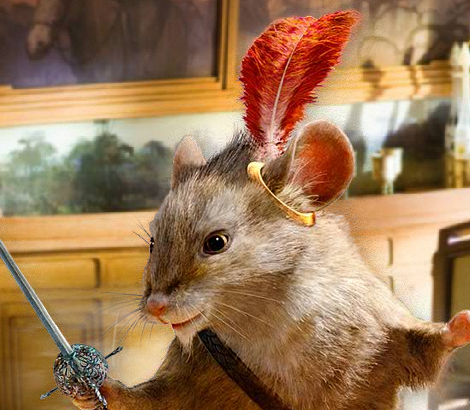
Reepicheep in your coloured picture has just the right perky, cheeky expression. I love real mice. There are lots in my rooms in College but I have never set a trap. When I sit up late working they poke their heads out from behind the curtains just as if they were saying, ‘Hi! Time for you to go to bed. We want to come out and play.’

That review of letters was fun, and hopefully you enjoyed portions of it as well. It was certainly a good choice for me with no fewer than eight or nine interruptions during its course. Well, the dinosaur shaped chicken nuggets are about ready to come out of the oven, so it’s time to conclude.