Explosive Clergy

What’s with pastors? As one, I probably know more than the typical person does about them – and all too often, they disappoint.

That’s a bit harsh. Most pastors are pretty selfless. That’s fairly evident in their salaries (if they even receive one). And, trust me, trying to be a faithful leader and peacemaker in any group comprised of human beings, is no easy task.

My sainted grandmother, born at the end of the nineteenth century, was the daughter of Norwegian immigrants. She was an authentic follower of Jesus, and when she was young the sermons at Fordefjord Lutheran Church* were preached in the immigrants’ tongue. We occasionally talked about how scandalized she was when one of the ministers serving the congregation pronounced “helvete vil være fullt av pastorer” (hell will be full of pastors).

Well, not “full” perhaps, but in principle he was right. And, sadly, his warning is not at all shocking to us today. We read regularly about clergy who are arrested for violating the trust of the most vulnerable. Likewise, we hear about the outrageous wealth of some ministers (including, it seems, nearly every televangelist). Even pastors in small enclaves with little access to the temptation offered by easily accessible cash, can too often succumb to the sirens of pride and power, twisting their pastoral authority into a weapon to abuse others. (It’s the opposite of the messianic promise found in Isaiah 2:4.)

It’s almost enough to drive a person from the Lord’s house. But that is not the answer, of course. Finding a truly Christian church, with a pastor earnestly (albeit imperfectly) pursuing his holy vocation, is the best course.

The Scriptures say many things about ministry, and Jesus himself provides the perfect example of willingness to lay down one’s life for the sheep.

The letter of James cautions those considering a life of “ministry” that they will face a stricter judgment than the laity (which comes from λαός which refers to the people at large).

Personally, I especially appreciate being reminded of God’s warning to religious leaders from the lips of Jeremiah. (I also appreciate the ironic tone of God’s judgment.)

“Woe to the shepherds who destroy and scatter the sheep of my pasture!” declares the Lord. Therefore thus says the Lord, the God of Israel, concerning the shepherds who care for my people: “You have scattered my flock and have driven them away, and you have not attended to them. Behold, I will attend to you for your evil deeds,” declares the Lord.

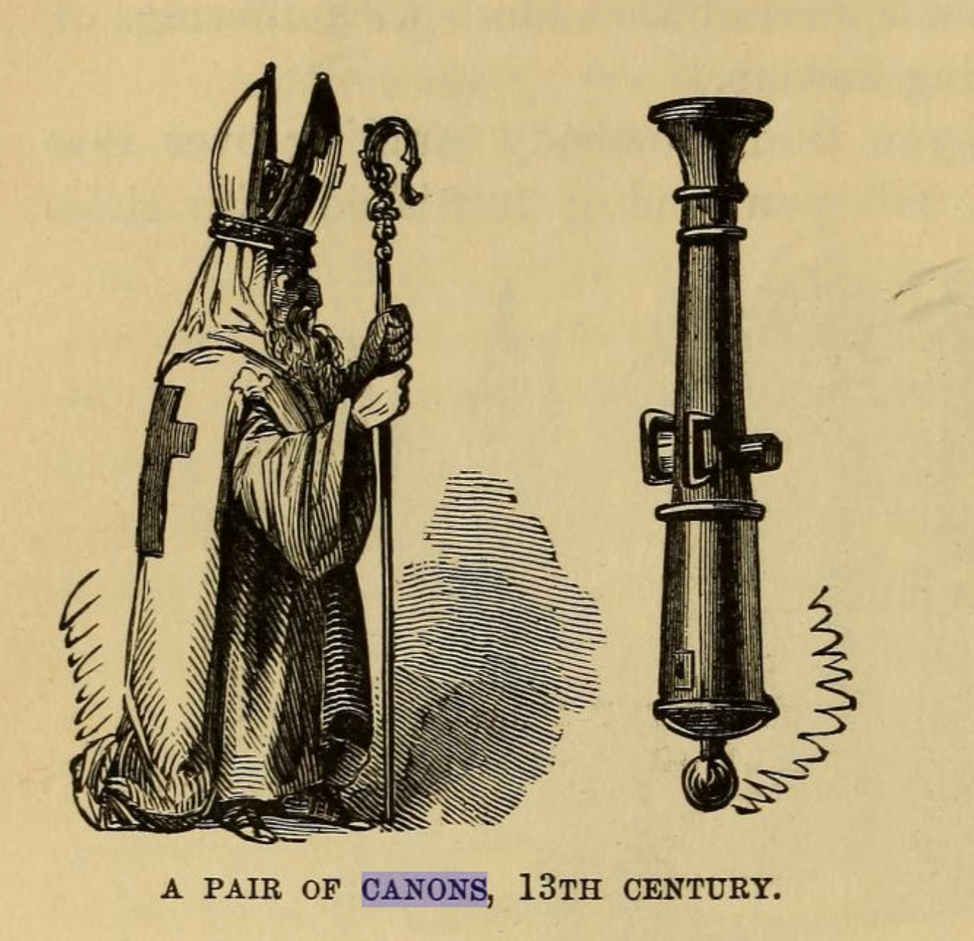
The picture at the top of this column comes from one of Mark Twain’s travelogues. It illustrates the vindictive priest Fulbert, in Twain’s retelling of the story of Abelard and Héloïse, 12th century lovers. More about that momentarily. Abelard was a prominent philosopher who tangled for several years with Saint Bernard of Clairvaux, a significant dispute ably discussed here.

Abelard and the Inklings

Abelard (c. 1079-1142) was a philosopher who, as was common during the Middle Ages, was also a theologian. Among his contributions to religion was revising the Roman Catholic doctrine of limbus infantium (Limbo for unbaptized infants).

In popular culture, Abelard’s love affair with his eventual “wife” is more prominent than his religious pursuits. Although Abelard was a famous figure during the medieval period, he did not feature significantly in C.S. Lewis’ thought. He did, however, exert a prominent influence on Charles Williams’ Place of the Lion, a volume Lewis praised.

In “Friendship in The Place of the Lion,” Dan Hamilton provides a very accessible synopsis of Williams’ book. He describes the experience of a primary character, who is writing her dissertation on “Pythagorean Influences on Abelard.” As she struggles with the appearance of supernatural phenomena, “she encounters the specter of Abelard, a major subject of her studies. But he is dead, and powerless to give her any aid, not even a meaningful word.” The “archetypes” in the story, by contrast, possess genuine power. It is a very unique book.

Returning to Mark Twain’s retelling of the popular medieval tale, we leave the realm of platonic philosophy, and enter the world of sordid human activities. Twain, you see, was not sympathetic to Abelard’s wooing of a young student and his eventual repentance. In his account, Twain desired “to show the public that they have been wasting a good deal of marketable sentiment very unnecessarily.” If you are curious as to his perspective on the events, continue reading.

Twain’s Take on Abelard and Héloïse
(not brief, but well worth reading)

In his own words, Twain’s “faithful” version of their story – but first, he begins with a description of their shared gravesite.

But among the thousands and thousands of tombs in Père la Chaise [cemetery] there is one that no man, no woman, no youth of either sex, ever passes by without stopping to examine. Every visitor has a sort of indistinct idea of the history of its dead, and comprehends that homage is due there, but not one in twenty thousand clearly remembers the story of that tomb and its romantic occupants. This is the grave of Abelard and Heloise – a grave which has been more revered, more widely known, more written and sung about and wept over, for seven hundred years, than any other in Christendom, save only that of the Saviour.

All visitors linger pensively about it; all young people capture and carry away keepsakes and mementoes of it; all Parisian youths and maidens who are disappointed in love come there to bail out when they are full of tears; yea, many stricken lovers make pilgrimages to this shrine from distant provinces to weep and wail and “grit” their teeth over their heavy sorrows, and to purchase the sympathies of the chastened spirits of that tomb with offerings of immortelles and budding flowers.

Go when you will, you find somebody snuffling over that tomb. Go when you will, you find it furnished with those bouquets and immortelles. Go when you will, you find a gravel-train from Marseilles arriving to supply the deficiencies caused by memento-cabbaging vandals whose affections have miscarried.

Yet who really knows the story of Abelard and Heloise? Precious few people. The names are perfectly familiar to every body, and that is about all. With infinite pains I have acquired a knowledge of that history, and I propose to narrate it here, [italics added] partly for the honest information of the public and partly to show that public that they have been wasting a good deal of marketable sentiment very unnecessarily.

Heloise was born seven hundred and sixty-six years ago. She may have had parents. There is no telling. She lived with her uncle Fulbert, a canon of the cathedral of Paris. I do not know what a canon of a cathedral is, but that is what he was. He was nothing more than a sort of a mountain howitzer, likely, because they had no heavy artillery in those days. Suffice it, then, that Heloise lived with her uncle the howitzer, and was happy.

She spent the most of her childhood in the convent of Argenteuil – never heard of Argenteuil before, but suppose there was really such a place. She then returned to her uncle, the old gun, or son of a gun, as the case may be, and he taught her to write and speak Latin, which was the language of literature and polite society at that period.

Just at this time, Pierre Abelard, who had already made himself widely famous as a rhetorician, came to found a school of rhetoric in Paris. The originality of his principles, his eloquence, and his great physical strength and beauty created a profound sensation. He saw Heloise, and was captivated by her blooming youth, her beauty and her charming disposition. He wrote to her; she answered. He wrote again, she answered again. He was now in love. He longed to know her – to speak to her face to face.

His school was near Fulbert’s house. He asked Fulbert to allow him to call. The good old swivel saw here a rare opportunity: his niece, whom he so much loved, would absorb knowledge from this man, and it would not cost him a cent. Such was Fulbert – penurious . . . He asked Abelard to teach her.

Abelard was glad enough of the opportunity. He came often and staid long. A letter of his shows in its very first sentence that he came under that friendly roof like a cold-hearted villain as he was, with the deliberate intention of debauching a confiding, innocent girl. This is the letter :

“I can not cease to be astonished at the simplicity of Fulbert; I was as much surprised as if he had placed a lamb in the power of a hungry wolf. Heloise and I, under pretext of study, gave ourselves up wholly to love, and the solitude that love seeks our studies procured for us. Books were open before us, but we spoke oftener of love than philosophy, and kisses came more readily from our lips than words.”

And so, exulting over an honorable confidence which to his degraded instinct was a ludicrous “simplicity,” this unmanly Abelard seduced the niece of the man whose guest he was. Paris found it out. Fulbert was told of it – told often – but refused to believe it. He could not comprehend how a man could be so depraved as to use the sacred protection and security of hospitality as a means for the commission of such a crime as that. But when he heard the rowdies in the streets singing the love-songs of Abelard to Heloise, the case was too plain – love-songs come not properly within the teachings of rhetoric and philosophy.

He drove Abelard from his house. Abelard returned secretly and carried Heloise away to Palais, in Brittany, his native country. Here, shortly afterward, she bore a son, who, from his rare beauty, was surnamed Astrolabe. . . . The girl’s flight enraged Fulbert, and he longed for vengeance, but feared to strike lest retaliation visit Heloise – for he still loved her tenderly. At length Abelard offered to marry Heloise – but on a shameful condition: that the marriage should be kept secret from the world, to the end that (while her good name remained a wreck, as before) his priestly reputation might be kept untarnished. It was like that miscreant.

Fulbert saw his opportunity and consented. He would see the parties married, and then violate the confidence of the man who had taught him that trick; he would divulge the secret and so remove somewhat of the obloquy that attached to his niece’s fame. But the niece suspected his scheme. She refused the marriage, at first; she said Fulbert would betray the secret to save her, and besides, she did not wish to drag down a lover who was so gifted, so honored by the world, and who had such a splendid career before him. It was noble, self-sacrificing love, and characteristic of the pure-souled Heloise, but it was not good sense.

But she was overruled, and the private marriage took place. Now for Fulbert! The heart so wounded should be healed at last; the proud spirit so tortured should find rest again; the humbled head should be lifted up once more. He proclaimed the marriage in the high places of the city, and rejoiced that dishonor had departed from his house. But lo! Abelard denied the marriage! Heloise denied it! The people, knowing the former circumstances, might have believed Fulbert, had only Abelard denied it, but when the person chiefly interested – the girl herself – denied it, they laughed despairing Fulbert to scorn.

The poor canon of the cathedral of Paris was spiked again. The last hope of repairing the wrong that had been done his house was gone. What next? Human nature suggested revenge. He compassed it. The historian says: “Ruffians, hired by Fulbert, fell upon Abelard by night, and inflicted upon him a terrible and nameless mutilation.”

I am seeking the last resting-place of those “ruffians.” When I find it I shall shed some tears on it, and stack up some bouquets and immortelles, and cart away from it some gravel whereby to remember that howsoever blotted by crime their lives may have been, these ruffians did one just deed, at any rate, albeit it was not warranted by the strict letter of the law.

Heloise entered a convent and gave good-bye to the world and its pleasures for all time. For twelve years she never heard of Abelard – never even heard his name mentioned. She had become prioress of Argenteuil, and led a life of complete seclusion. She happened one day to see a letter written by him, in which he narrated his own history. She cried over it, and wrote him. He answered, addressing her as his “sister in Christ.”

They continued to correspond, she in the un-weighed language of unwavering affection, he in the chilly phraseology of the polished rhetorician. She poured out her heart in passionate, disjointed sentences; he replied with finished essays, divided deliberately into heads and sub-heads, premises and argument. She showered upon him the tenderest epithets that love could devise, he addressed her from the North Pole of his frozen heart as the “Spouse of Christ!” The abandoned villain!

On account of her too easy government of her nuns, some disreputable irregularities were discovered among them, and the Abbot of St. Denis broke up her establishment. Abelard was the official head of the monastery of St. Grildas de Ruys, at that time, and when he heard of her homeless condition a sentiment of pity was aroused in his breast (it is a wonder the unfamiliar emotion did not blow his head off), and he placed her and her troop in the little oratory of the Paraclete, a religious establishment which he had founded.

She had many privations and sufferings to undergo at first, but her worth and her gentle disposition won influential friends for her, and she built up a wealthy and flourishing nunnery. She became a great favorite with the heads of the church, and also the people, though she seldom appeared in public. She rapidly advanced in esteem, in good report and in usefulness, and Abelard as rapidly lost ground. The Pope so honored her that he made her the head of her order.

Abelard, a man of splendid talents, and ranking as the first debater of his time, became timid, irresolute, and distrustful of his powers. He only needed a great misfortune to topple him from the high position he held in the world of intellectual excellence, and it came. Urged by kings and princes to meet the subtle St. Bernard in debate and crush him, he stood up in the presence of a royal and illustrious assemblage, and when his antagonist had finished he looked about him, and stammered a commencement; but his courage failed him, the cunning of his tongue was gone: with his speech unspoken, he trembled and gat down, a disgraced and vanquished champion.

He died a nobody, and was buried at Cluny, A.D., 1144. They removed his body to the Paraclete afterward, and when Heloise died, twenty years later, they buried her with him, in accordance with her last wish. He died at the ripe age of 64, and she at 63. After the bodies had remained entombed three hundred years, they were removed once more. They were removed again in 1800, and finally, seventeen years afterward, they were taken up and transferred to Pere la Chaise, where they will remain in peace and quiet until it comes time for them to get up and move again.

History is silent concerning the last acts of the mountain howitzer. Let the world say what it will about him, I, at least, shall always respect the memory and sorrow for the abused trust, and the broken heart, and the troubled spirit of the old smooth-bore. Rest and repose be his!

Such is the story of Abelard and Heloise. (Innocents Abroad).


* Later Fordefjord was unimaginatively renamed “First Lutheran Church.”

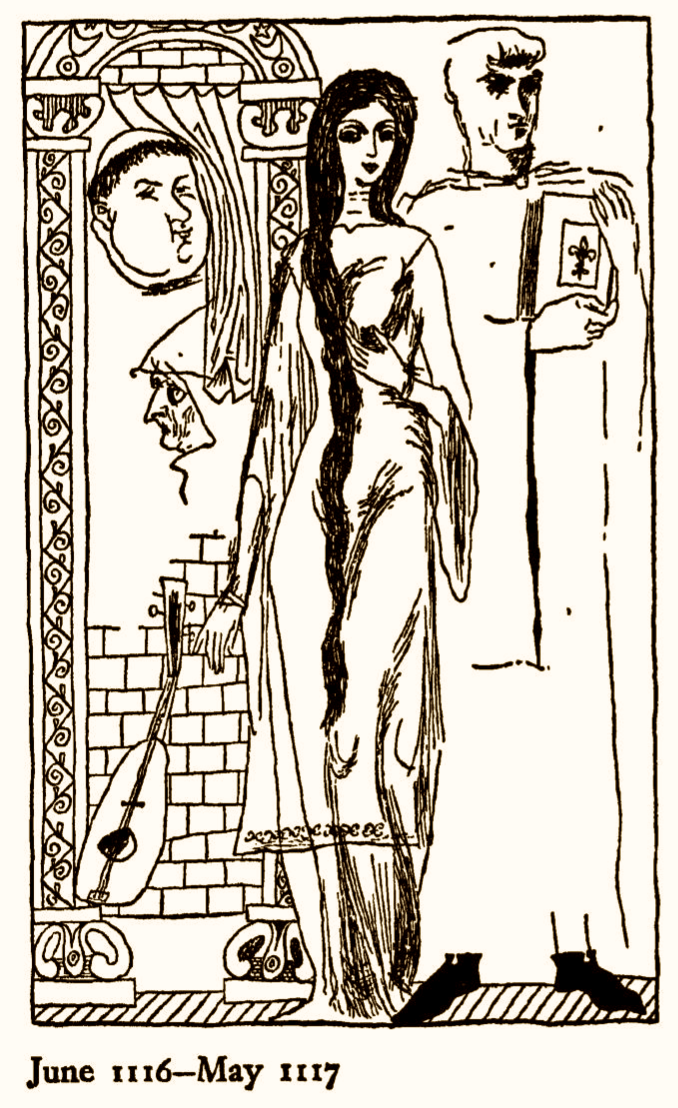
A novel entitled Peter Abelard was published in 1933 by Helen Waddell. It is available at Internet Archive for those who prefer their history via the medium of historical fiction. The illustration below, apparently imitating a fading fresco, comes from that volume.
Tesla & the Inklings

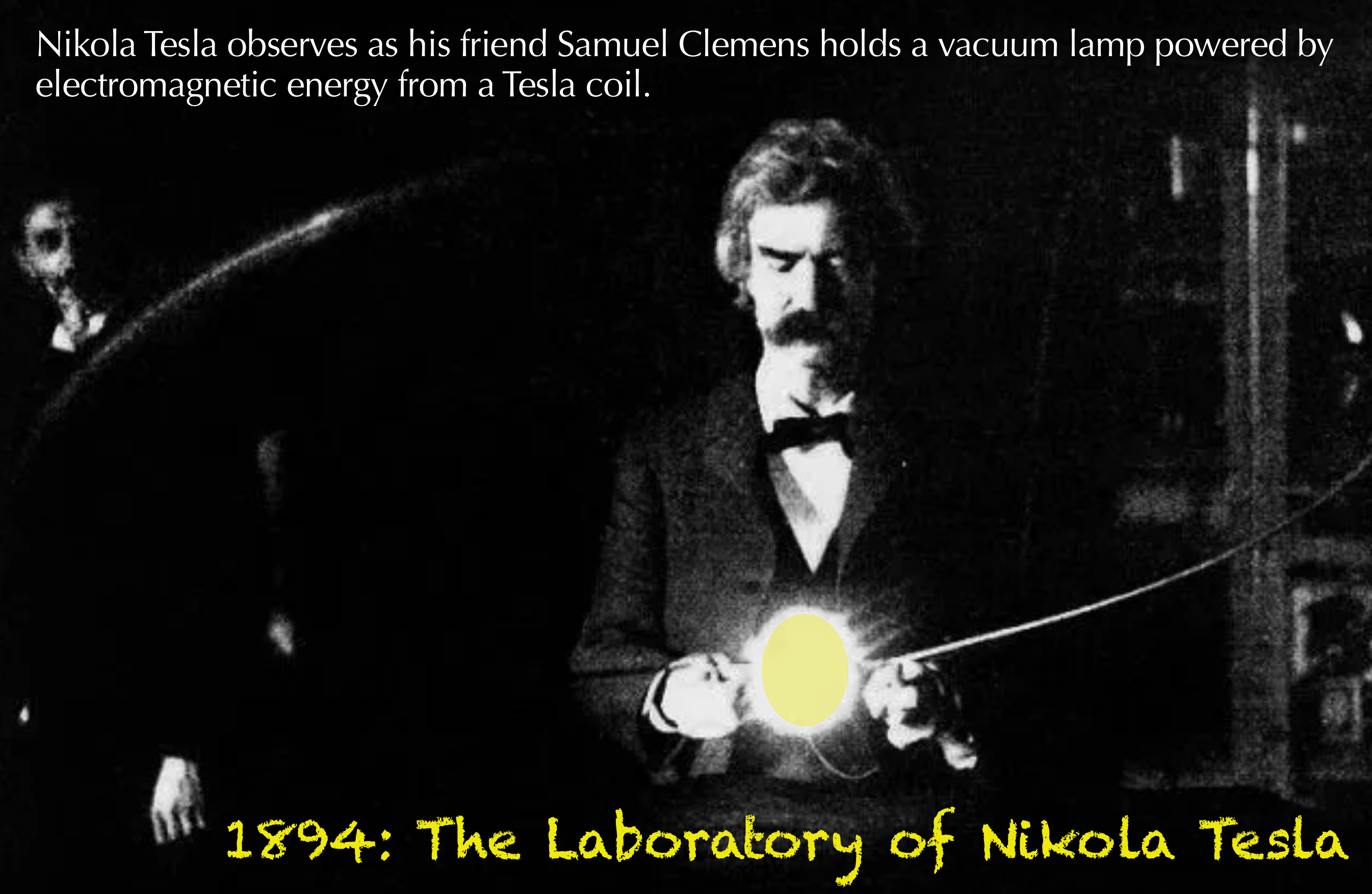
I recently uncovered a curious connection between C.S. Lewis and Tesla. (Not the current target of anarchist vandalism, the scientist.) While researching scientists living in the early twentieth century, a photograph of Tesla and his friend Mark Twain ignited my curiosity as to whether or not there might have been any connection between Lewis and Tesla.

C.S. Lewis (1898 – 1963) and Nikola Tesla (1856 – 1943) never met or corresponded. And yet, they do possess a rather tenuous, speculative connection.

Their connection isn’t based on any similarities. Tesla was a radically innovative scientist. Lewis was a grounded literary master who was wisely suspicious of misplaced faith in scientism. 

Despite the fact Tesla’s father and uncle were both Serbian Orthodox priests, and he maintained an interest in various religious traditions throughout his life, his adult beliefs were eclectic.

Lewis, the grandson of a Church of Ireland priest, went through a period of atheism before returning to Christianity as a devout member of the Anglican communion.

So, how might the two men have been connected? Before exploring the notion that they shared a mysterious source of inspiration, consider the application of a modern theory.

Six Degrees of Separation

Various experiments have supported the idea that people (in Western nations, at least) find it “truly possible to trace a social connection between any two random people within just six steps” (This is far more refined than the overlapping of lifespans as discussed here.)

But the pressing question remained: Why six? The answer has finally been revealed in a paper published in the journal Physical Review X. The study authors include researchers from Israel, Spain, Italy, Russia, Slovenia, and Chile. 

For an academic study of the phenomenon check out “Why Are There Six Degrees of Separation in a Social Network?

Even without the existence of social media, which some have argued may reduce “6 Degrees of Separation [to] 2,” I uncovered a pair of paths connecting Tesla and Lewis.

The first example is the more “direct,” but the second includes as an intermediate link, a writer of great importance to C.S. Lewis.

Nikola Tesla (1856 – 1943)
Had as a friend who visited his laboratory, and later invited the inventor to attend his daughter’s wedding

Mark Twain (1835 – 1910)
Who, after offering a scathing indictment of British colonialism, officially introduced to deliver a 1900 speech in New York…

Winston Churchill (1874 – 1965)
Who offered “the honour of becoming a Commander of the Most Excellent Order of the British Empire (CBE)” to…

C.S. Lewis (1898 – 1963)
one of the most renowned scholars to ever teach at Oxford and Cambridge.

And an alternate path:

Nikola Tesla (1856 – 1943)
Had as a friend who visited his laboratory, and later invited the inventor to attend his daughter’s wedding…

Mark Twain (1835 – 1910)
Who maintained a longtime literary and personal friendship with…

George MacDonald (1824 – 1905)
Who received as a gift A Speech and Two Poems with a personal letter from Irish poet…

William Butler Yeats (1865 – 1939)
Who, on more than one occasion, entertained in his home

C.S. Lewis (1898 – 1963)
who, coincidentally, regarded the very same George MacDonald as one of his greatest mentors.

Tracking down these relationship paths was not that difficult. It was actually fun. If I wasn’t so busy, I would create a few more examples.

Was there Another Connection?

Nikola Tesla (Никола Тесла) was a Serbian-American inventor and futurist. His design of the alternating current (AC) electricity system was a breakthrough. As noted above, he was not a credal Christian. In “A Machine to End War,” he described his beliefs in the following manner.

To me, the universe is simply a great machine which never came into being and never will end. The human being is no exception . . . Man, like the universe, is a machine. . . . what we call “soul “ or “spirit,” is nothing more than the sum of the functionings of the body. When this functioning ceases, the “soul” or the “spirit” ceases likewise.

The possible connection between Tesla and the Inklings, postulated by a sensationalist Anglican priest, is offered in Secrets of Rennes Le Chateau. The author, R. Lionel Fanthorpe, an Anglican priest who believes “there are as many roads to the loving God of all mankind as there are individual human beings,” has written about many offbeat subjects. 

In the aforementioned work, he references passages from J.R.R. Tolkien, C.S. Lewis, Charles Williams and George MacDonald as writers whose fiction may “contain hints about the Rennes-le-Château enigma.” He immediately follows this discussion with the case of “another contemporary of theirs [who] was one of the strangest and most brilliant men” of his age, Nikola Tesla.

He ends the chapter with the question, “what if the enigma with which all our Men of Mystery seem to have been involved was some form of superior communication? But communication with what? Or with whom?”

I doubt there is any connection in the source of the inspiration experienced by the Inklings, Tesla and the church at Rennes-le-Château. That said, it is an odd place of worship, due to the renovations made by its eccentric Roman Catholic priest, François-Bérenger Saunière (1852 – 1917).

Among the alterations made was the addition of a holy water font resting on the back of a devil or demon. That certainly qualifies as a “mysterious” decision. A mystery with which the Inklings bear no connection. 

Ultimately, Fanthorpe’s odd musings are illusory. Better to dismiss them and focus on the actual connection between C.S. Lewis and Nikola Tesla – one documented through the Six Degrees of Separation model.

God as the Author of Creation

Satan is powerless versus Christians, especially those who know he exists. Yet, vis-à-vis unbelievers, he “prowls around like [an invisible] lion, seeking someone to devour” (1 Peter 5). Christian “immunity” to Lucifer’s power, if not his temptations, is due to the indwelling presence of God’s Holy Spirit.

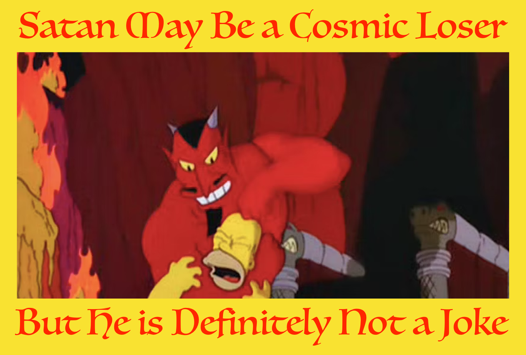
Still, for every human being, whatever their personal belief, the Devil is no mere cartoon, with whom to be trifled. I discussed this briefly in my previous post, “Only God Can Create,” which you might want to read before continuing here.

As for humanity’s vulnerability to the Devil’s influence, the consensus in paradoxically-labeled “enlightened” cultures is that he doesn’t even exist. Sadly, this cosmic lie even tricks self-described “Christians.”

This illusion plays directly into his purposes, as C.S. Lewis described in The Screwtape Letters. Screwtape, a senior demon, instructs his protégée Wormwood in the preferred method of dispelling human wariness about Evil.

The fact that “devils” are predominantly comic figures in the modern imagination will help you. If any faint suspicion of your existence begins to arise in his mind, suggest to him a picture of something in red tights, and persuade him that since he cannot believe in that (it is an old textbook method of confusing them) he therefore cannot believe in you.

Ironically, the populations of less Westernized cultures possess some immunity to this deception. Even in their traditional religions, there is a keen awareness of the existence of evil presences. In the words of The African Study Bible, “we Africans understand instinctively the stories of angelic visitations, spiritual warfare, and demonic oppression that are in the Bible.”

Christians believe in God, not the Devil. While the Scriptures attest to the personal identity of this fallen angel, acknowledgment of his existence is not salvific (i.e. it is not essential to salvation). Thus, C.S. Lewis is correct in his 1944 essay “Answers to Questions on Christianity” when he writes:

No reference to the Devil or devils is included in any Christian Creeds, and it is quite possible to be a Christian without believing in them. I do believe such beings exist, but that is my own affair.

Supposing there to be such beings, the degree to which humans were conscious of their presence would presumably vary very much. I mean, the more a man was in the Devil’s power, the less he would be aware of it, on the principle that a man is still fairly sober as long as he knows he’s drunk. It is the people who are fully awake and trying hard to be good who would be most aware of the Devil. It is when you start arming against Hitler that you first realize your country is full of Nazi agents.

Of course, they don’t want you to believe in the Devil. If devils exist, their first aim is to give you an anaesthetic – to put you off your guard. Only if that fails, do you become aware of them.

On the Matter of Creative Power

Only God can create. That was the core message of our previous discussion. C.S. Lewis recognized, as do biblically-grounded believers, that Satan is merely a sinful, fallen being, little different from humanity in that regard. This truth shatters the pagan philosophy of dualism, or the misguided notion that two equal and opposite forces (e.g. good and evil) exist in some sort of equilibrium. 

In “The Seeing Eye,” C.S. Lewis described the way in which God is beyond his creation. 

Looking for God – or Heaven – by exploring space is like reading or seeing all Shakespeare’s plays in the hope that you will find Shakespeare as one of the characters . . . Shakespeare is in one sense present at every moment in every play. But he is never present in the same way as Falstaff or Lady Macbeth. . . .

If there were an idiot who thought plays existed on their own, without an author . . . our belief in Shakespeare would not be much affected by his saying, quite truly, that he had studied all the plays and never found Shakespeare in them. . . .

My point is that, if God does exist, He is related to the universe more as an author is related to a play than as one object in the universe is related to another. If God created the universe, He created space-time, which is to the universe as the metre is to a poem or the key is to music.

To look for Him as one item within the framework which He Himself invented is nonsensical. If God – such a God as any adult religion believes in – exists, mere movement in space will never bring you any nearer to Him or any farther from Him than you are at this very moment. You can neither reach Him nor avoid Him by travelling to Alpha Centauri or even to other galaxies.

Mark Twain’s Divinized Satan

I had intended to mention Samuel Clemens in my previous article, as one who advanced the assertion that Satan possesses creative ability. Whether Twain regarded the Devil as an actual entity is certainly debatable. What is undeniable, however, is his devoted defense of Lucifer.

As Twain famously wrote in his autobiographical writings, “But who prays for Satan? Who, in eighteen centuries, has had the common humanity to pray for the one sinner that needed it most?” 

Mark Twain was (in)famous for his atheism, or his agnostic antipathy of the Christian understanding of our Creator. Not content to disbelieve, Samuel Clemens actively worked to undermine Christian faith. One of his books, Letters from the Earth, had to be printed posthumously, due its irreverent (or blasphemous) nature.

It bears a superficial resemblance to C.S. Lewis’ amazing Screwtape Letters – insofar as both fictional works present themselves as demonic correspondence. 

The similarity ends there. While Lewis provides keen insight into Evil’s tactics in wreaking havoc in human lives, Twain’s letters present Satan in a positive, even noble, light.

Letters from the Earth is only one of Mark Twain’s anti-Christian works. The Mysterious Stranger is one of his most bizarre. It evidences his long-term preoccupation with Satan, in that it was composed (in various versions) between 1897 and 1908.

The first serious rendition, The Chronicle of Young Satan, was completed in 1900. I mention it here because there is a scene in which the Devil “creates” a miniature world. Obviously it errs in attributing to Lucifer the power to create life – but to its credit, it does reveal Satan as a capricious, vain, cruel, and compassionless lord.

In 1985 a claymation film was released titled The Adventures of Mark Twain. It features the mock scene from Chronicle of Young Satan. It is quite disturbing. However, if one is curious about the subject, and wishes to be forearmed regarding such deceptions, you can view the excerpt here.

Especially for those who do choose to view Twain’s portrayal of the Devil in his fictional “youth,” I desire to end our current discussion on a positive note.

Claymation was also the medium for a long-lived Christian television series. Davey & Goliath, the story of a regular kid and his dog, ran between 1964 and 1975. Many of the episodes can be seen here.

And finally (and forever), we can celebrate with C.S. Lewis the wonder that this world we currently inhabit will not be God’s sole creation. In fact, because of Jesus’ redemptive sacrifice, we can look forward to a new cosmos, untainted by sin.

The New Testament writers speak as if Christ’s achievement in rising from the dead was the first event of its kind in the whole history of the universe. He is the “first fruits”, the “pioneer of life”.

He has forced open a door that has been locked since the death of the first man. He has met, fought, and beaten the King of Death. Everything is different because He has done so. This is the beginning of the New Creation: a new chapter in cosmic history has opened (Miracles).

Damnable Typos & the Bible

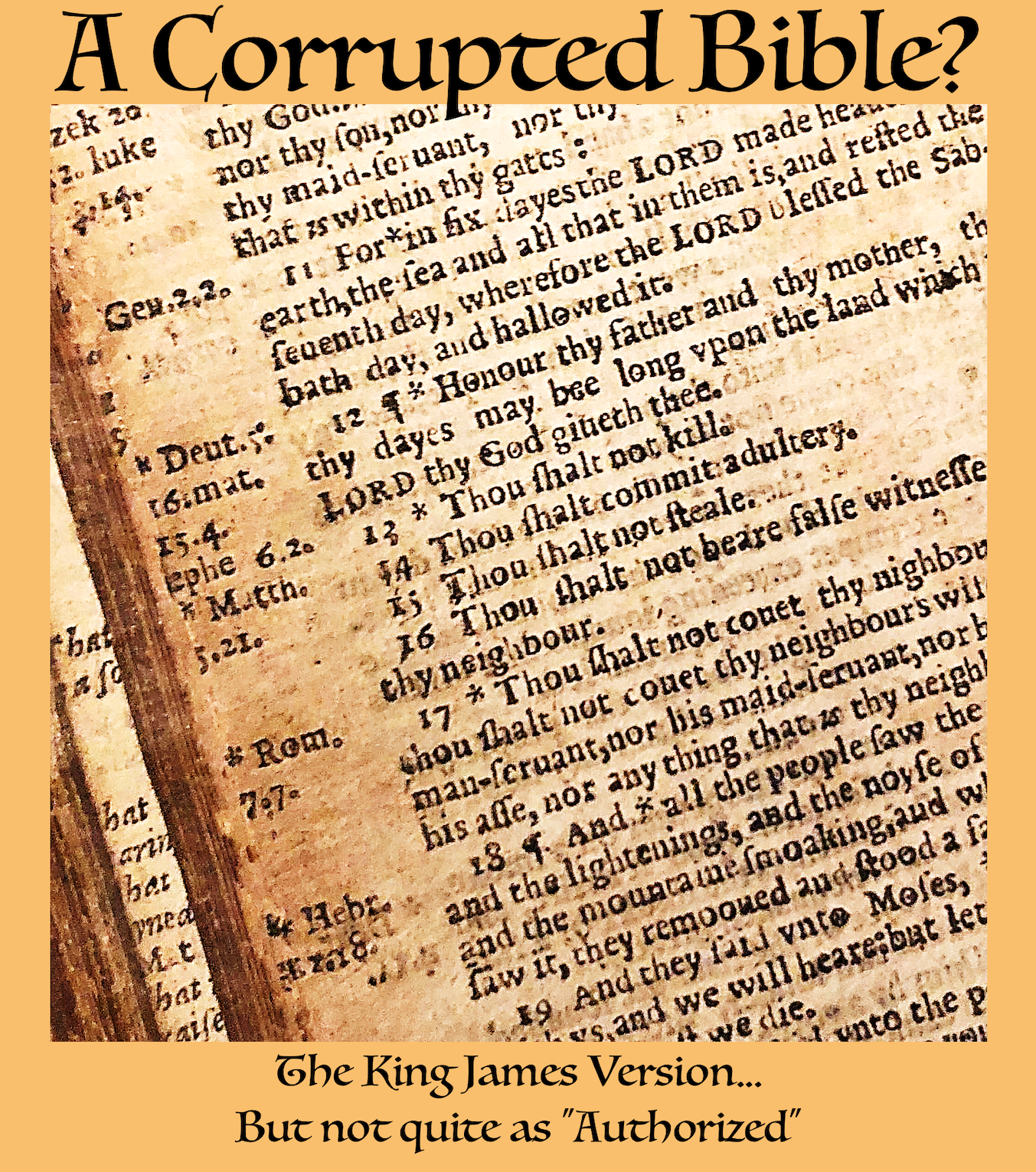
While the title of this post will be shocking to some, it’s far less scandalous than the typographical error discussed below. Due to two misprints appearing in a 1641 edition of the King James Bible (KJV), the publication has been labeled the “Wicked Bible.”

Translating the Scriptures is a necessary, and demanding, task. The early editions of the KJV (which was preceded by the Wycliffe Bible) reveal how vulnerable the words themselves were to being altered during the typesetting process.

I’ve written about this subject a number of times during the past decade, and even devoted a column to “C.S. Lewis’ School of Translation,” which is about something even more important than merely translating words. There I quote one of the great author’s deepest hopes.

What I want is to be the founder of a school of ‘translation . . .’ Where are my successors? (correspondence, 7 October 1945).

Returning to the seventeenth century book with its unfortunate errors, we witness an example of how even a solid translation can be derailed by careless (or malevolent) typesetters.

The magnitude of the mistake discovered in this particular edition caused its suppression, and most copies were destroyed. While some still exist in private hands, only fifteen remain in public collections. One of these made its way to New Zealand before being identified in 2018.

A Truly Scandalous Misprint

It would be one thing if a printer accidently dropped the final “e” from “breathe,” leaving the word “breath.” Even substituting an errant “w” for the “b,” would create an alternate word that would greatly muddle a passage . . . but still not appear remotely “wicked.” 

However, a 1631 mistake in an English Bible literally turned a passage – one of the Ten Commandments, no less – on its head. Rather than reading “Thou shalt not commit adultery,” this edition declares, “Thou shalt commit adultery” (Exodus 20:14).

The consequences of this disaster were significant, particularly for His Majesty’s official printers. In Cyprianus Anglicanus by royalist priest Peter Heylyn (1599-1662), we learn the details. (You can download a free facsimile of the volume which includes many other fascinating facts.) The passage related to the misbegotten tome reads as follows:

His Majesties Printers, at or about this time [1632], had committed a scandalous mistake in our English Bibles, by leaving out the word Not in the Seventh Commandment.

His Majesty being made acquainted with it by the Bishop of London, Order was given for calling the Printers into the High-Commission where upon the Evidence of the Fact, the whole Impression was called in, and the Printers deeply fined, as they justly merited.

Reports of Cases in the Courts of Star Chamber and High Commission, penned by Samuel Rawson Gardiner in 1886, includes a detailed account of the court’s findings. (Due to their uniqueness, I have transposed the full account, as found in two sections, as a footnote below.) One passage describes a second “gross error.”

. . . showed the two grossest errors, vizt. “Shalt commit adultery” and “great asse:” for “shalt not commit adultery” and “greatnesse…”

The second of these blunders occurs in Deuteronomy 5:24, which properly reads “Behold, the Lord our God hath shewed us his glory and his greatness.” (It should be noted that the word asse would most commonly be associated with donkeys.)

The magnitude of these mistakes can only be understood when one recognizes how reverentially the Scriptures were regarded at this time. C.S. Lewis would suggest that during an age when the Bible has been relegated to historic literature, it is difficult for us to comprehend the seriousness of this matter.

It is very generally implied that those who have rejected its theological pretensions nevertheless continue to enjoy it as a treasure house of English prose. It may be so. There may be people who, not having been forced upon familiarity with it by believing parents, have yet been drawn to it by its literary charms and remained as constant readers.

But I never happen to meet them. Perhaps it is because I live in the provinces. But I cannot help suspecting, if I may make an Irish bull, that those who read the Bible as literature do not read the Bible. (“The Literary Impact of the Authorised Version”).

In “Challenges in Printing Early English Bibles,” you can read about other Bibles featuring noteworthy mistakes. In two, “peacemakers” become “placemakers,” and “murmurers” are transformed into “murderers.” Another example, in the very first edition of the KJV, finds Jesus’ ancestor Ruth referred to by the male pronoun, due to the accidental dropping of an “s.”

More troubling is another early KJV Bible where “the text of Psalm 14 [reads], “The fool hath said in his heart there is a God,” rather than “The fool hath said in his heart there is no God.”

Worst of all, in terms of blasphemous connotations, would likely be the so-called “Judas Bible.”

In the 1609 Geneva Bible, the typesetters mistakenly replaced Jesus’s name with that of Judas. John 6:67 reads: “From that time many of his disciples went back, and walked no more with him. Then said Judas unto the twelve, Will ye also go away?”

Fortunately, modern editions of the Jewish and Christian Scriptures undergo thorough proofreading, so this sort of error is rare today. Still, typos will persist as long as the remotest possibility of error exists.

Those among us who have sought to have our writing published by traditional publishers may relate to the example with which we end. C.S. Lewis and J.R.R. Tolkien and even Mark Twain faced challenges working with some of their editors and publishers.

With all of the printing mishaps in the early English Bible, it is only appropriate that one of the editions was called “The Printers Bible.”

This text, published in about 1702, takes its name from a typesetting error found in Psalm 119, which should have read “Princes have per­secuted me without a cause” but was mistakenly printed as “Printers have persecuted me.”


Full references from Reports of Cases in the Courts of Star Chamber and High Commission by Samuel Rawson Gardiner (1886).

Mr Barker the printer. There is a cause begunne against him for false printeing of the Bible in divers places of it, in the Edition of 1631, vizt., in the 20 of Exod[us], “Thou shalt committ adultery”; and in the fifte of Deut[eronomy] “The Lord has shewed his glory, and his great asse”; and for divers other faults; and that they had printed it in very bad paper. And the Bishop of London showed that this would undoe the trade, and was a most dishonorable thing; that they of the church of Rome are soe carefull, that not a word or letter is to be found amisse in their Ladie’s Psalter and other superstitious books; and that we should not be soe carefull in printinge the sacred Scriptures; and that they in Holland, at Amsterdam, had gott up an English presse, and had printed the Bible in better paper, and with a better letter, and can undersell us 18d. in a Bible. Mr Barker and his partners endeavored in partt to excuse themselves, and had advocates to speake for them, and were willing to submitt, and promised to amend their faults; but the Court would not remitt their offense, but the cause was ordered to goe on.

The Printers having answered move the Court to passe by their oversight being the fault of the workmen but the King’s Advocate desired they might make their defense legally and the cause to go onto hearing: and that he might have liberty to put in additional articles against them. The Bishop of London would have the Church sett upright in her reputacion, that we are as carefull in printeing the Bible as they are of their Jesus’ psalter : and whereas the Printers say this is stirred up by the malice of one man against them; The Bishop saith he stirred not till the Bible was sould into his house, bought by his footman: and he saith the printinge is soe bbad and the paper too that, if it be not mended shortlie, they wilbe put downe by those of Amsterdam and their trade spoyled, and showed for the two grossest errors, vizt. “Shalt commit adultery” and “great asse:” for “shalt not commit adultery” and “greatnesse…” The Arch Bishop of Canterbury saith, that the Printers that print for his Matie have a very profitable place, and therefore should be more carefull. I knew the tyme when greater care was had about printeing, the Bibles especiallie, good compositors and the best correctors were gotten being grave and learned men, and the paper and letter rare and faire every way of the best; but now the paper is naught, the composers boyes, and the correctors unlearned: There is a farmer and he makes the benefit, and careth for nothing about it. They heretofore spent their whole time in printeing, but these looke to gaine, gaine, gaine, then they are not to be commended: Well, let them looke to it: and let the cause proceed, saith the ArchBishop. London. “There was a great deale of doo between you of this Citty and those of Cambridge heretofore about the priviledge of printeing the Bible and psalms which they of Cambridge claymed; then the Bible was exactlie printed, now you have forced the Cambridg printer to an agreement, now noe bible is right printed.

[It appears this volume itself would have benefited from having more diligent “correctors.” Perhaps most curiously, two spellings of the word printing – “printinge” and “printeing” – appear in this publication.]

George MacDonald’s Poetry

George MacDonald (1824-1905) was a prolific Scot writer. His legacy was amplified due to his influence on G.K. Chesterton and C.S. Lewis. (He was also a friend of Mark Twain.) An essay, originally presented as a speech by G.K. Chesterton, is available online.

Chesterton goes so far as to say, “if to be a great man is to hold the universe in one’s head or heart, Dr. MacDonald is great. No man has carried about with him so naturally heroic an atmosphere.” Listen to his description of that special type of literature that inspired many Inklings, chiefly C.S. Lewis and J.R.R. Tolkien.

Many religious writers have written allegories and fairy tales, which have gone to creating the universal conviction that there is nothing that shows so little spirituality as an allegory, and nothing that contains so little imagination as a fairy tale. But from all these Dr. MacDonald is separated by an abyss of profound originality of intention.

The difference is that the ordinary moral fairy tale is an allegory of real life. Dr. MacDonald’s tales of real life are allegories, or disguised versions, of his fairy tales.

It is not that he dresses up men and movements as knights and dragons, but that he thinks that knights and dragons, really existing in the eternal world, are dressed up here as men and movements.

C.S. Lewis, for his part, praised MacDonald as instrumental in tilling the soil for his eventual conversion to Christianity. He was on the defensive, since the writers which most inspired him shared a common flaw – they were Christians.

All the books were beginning to turn against me. Indeed, I must have been as blind as a bat not to have seen, long before, the ludicrous contradiction between my theory of life and my actual experiences as a reader.

George MacDonald had done more to me than any other writer; of course it was a pity he had that bee in his bonnet about Christianity. He was good in spite of it.

Chesterton had more sense than all the other moderns put together; bating, of course, his Christianity. Johnson was one of the few authors whom I felt I could trust utterly; curiously enough, he had the same kink. Spenser and Milton by a strange coincidence had it too (Surprised by Joy).

Lewis would actually come to edit a selection of MacDonald’s passages for an edifying anthologyThis post includes a link for downloading a copy of George MacDonald: An Anthology.

This week I was reading one of MacDonald’s excellent essays, which appears in The Imagination and Other Essays. I intend to discuss some of his thoughts on age and writing soon. Although I am not an aficionado of poetry – despite having composed poetry from time to time, including quintains, I turned to another of MacDonald’s books.

On to His Poetry

I decided to follow up MacDonald’s brilliant essay with a dip into his poetry. Fortunately, Internet Archive allows you to freely download a complete copy of MacDonald’s Scotch Songs and Ballads, published in 1893. My conscience forces me, however, to provide a single caveat. Be forewarned that the tome is not suited for those intimidated by pronounced dialects.

Before looking at one of his poems in its entirety, allow me to share with you a passage from “The Waesome Carl” which I particularly enjoyed (due to its portrait of a preacher). 

The minister wasna fit to pray
And lat alane to preach;
He nowther had the gift o’ grace
Nor yet the gift o’ speech!
He mind’t him o’ Balaäm’s ass,
Wi’ a differ we micht ken:
The Lord he opened the ass’s mou,
The minister opened’s ain!
He was a’ wrang, and a’ wrang,
And a’thegither a’ wrang;
There wasna a man aboot the toon
But was a’thegither a’ wrang!
The puir precentor couldna sing,
He gruntit like a swine . . .

Not that I claim able to decipher it all, but my impression is that it’s not especially flattering. It is definitely entertaining. And I humbly think I interpret it significantly more accurately than Google’s online translator, which provided the following version.

The minister was not fit to pray
And lat alane to preach;
He nowther had the gift o’ grace
Nor yet the gift o’ speech!
He mind’t him o’ Balaam’s ass,
Wi’ a differ we micht ken:
The Lord he opened the ass’s mou,
The minister opened his eyes!
He was a’ wrang, and a’ wrang,
And a’thegither a’wrang;
There was a man aboot the toon
But thegither was wrong!
The puir precentor couldna sing,
He grunted like a swine. . .

Using the Dictionars o the Scots Leid, you can make perfect sense of the words about which you may be uncertain. (Thank you, Scotland.)

Dialects are interesting things indeed. I will close with another of MacDonald’s poems. I submit it for (1) those who comprehend the dialect, (2) those who deem precious their Scottish ancestry, (3) those with an affinity for Connor MacLeod, and (4) those who simply enjoy a challenge.

Nannie Braw

I like ye weel upo Sundays, Nannie,
I’ yer goon and yer ribbons and a’;
But I like ye better on Mondays, Nannie,
Whan ye’re no sae buskit and braw.

For whan we’re sittin sae douce, Nannie,
Wi’ the lave o’ the worshippin fowk,
That aneth the haly hoose, Nannie,
Ye micht hear a moudiwarp howk,

It will come into my heid, Nannie,
O’ yer braws ye are thinkin a wee;
No alane o’ the Bible-seed, Nannie,
Nor the minister nor me!

Syne hame athort the green, Nannie,
Ye gang wi’ a toss o’ yer chin;
And there walks a shadow atween ‘s, Nannie,
A dark ane though it be thin!

But noo, whan I see ye gang, Nannie,
Eident at what’s to be dune,
Liltin a haiveless sang, Nannie,
I wud kiss yer verra shune!

Wi’ yer silken net on yer hair, Nannie,
I’ yer bonnie blue petticoat,
Wi’ yer kin’ly arms a’ bare, Nannie,
On yer ilka motion I doat.

For, oh, but ye’re canty and free, Nannie,
Airy o’ hert and o’ fit!
A star-beam glents frae yer ee, Nannie–
O’ yersel ye’re no thinkin a bit!

Fillin the cogue frae the coo, Nannie,
Skimmin the yallow ream,
Pourin awa the het broo, Nannie,
Lichtin the lampie’s leme,

Turnin or steppin alang, Nannie,
Liftin and layin doon,
Settin richt what’s aye gaein wrang, Nannie,
Yer motion’s baith dance and tune!

I’ the hoose ye’re a licht and a law, Nannie,
A servan like him ‘at’s abune:
Oh, a woman’s bonniest o’ a’, Nannie,
Doin what maun be dune!

Cled i’ yer Sunday claes, Nannie,
Fair kythe ye to mony an ee;
But cled i’ yer ilka-day’s, Nannie,
Ye draw the hert frae me!

Addendum:

For those interested in pursuing this linguistic subject, I just came across a delightful 1896 collection of works you can download for free. Legends of the Saints: in the Scottish Dialect of the Fourteenth Century is “edited from the unique manuscript in the University Library, Cambridge.”


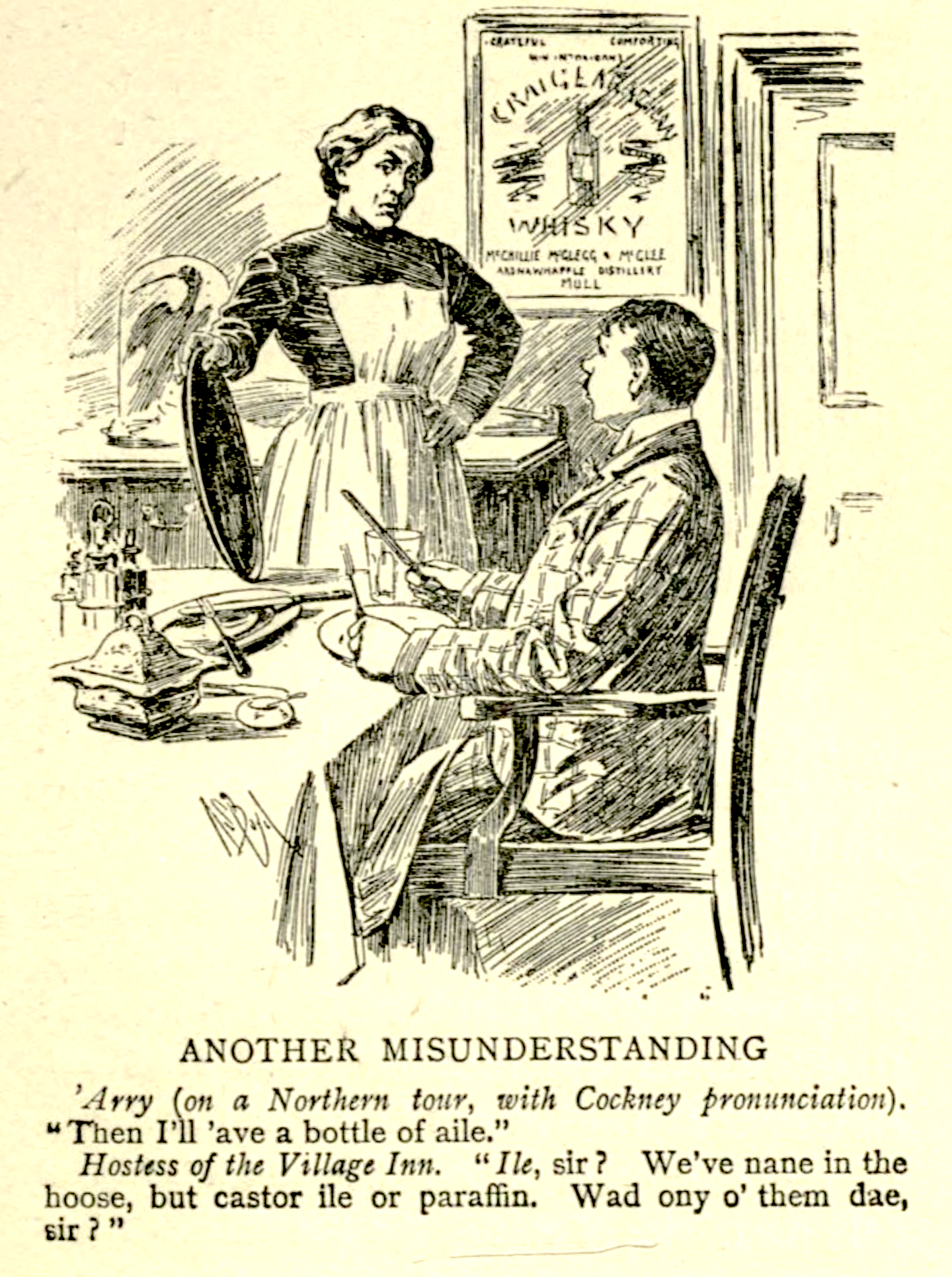
The cartoon above comes from Mr. Punch in the Highlands which was published “with 140 illustrations” more than a century ago. You can download your personal copy of humorous work at Internet Archive.

What is Courage?

We live in an age where our courage matters more than ever. With social, cultural and international relationships all in terrible disarray, facing the future is not for the timid.

Courage is essential for living a life of integrity. Without it, we bend and fold whenever the pressure grows too great. Some people even go so far as to compromise their conscience.

In The Screwtape Letters, C.S. Lewis described how it is only when courage is required, that a person’s true values come into focus.

Courage is not simply one of the virtues, but the form of every virtue at the testing point, which means, at the point of highest reality.

A chastity or honesty or mercy which yields to danger will be chaste or honest or merciful only on conditions. Pilate was merciful till it became risky.

Samuel Johnson, an eighteenth century English writer, was highly esteemed by C.S. Lewis. His words on this subject foreshadow Lewis’ own thoughts. “Courage,” according to Johnson, “is the greatest of all virtues, because if you haven’t courage, you may not have an opportunity to use any of the others.”

Two millennia earlier, an influential Greek philosopher described this same truth. Aristotle, who did not look to the Greek pantheon for inspiration, also deduced that courage is a necessary attribute for the virtuous.

You will never do anything in this world without courage. It is the greatest quality of the mind next to honor.

Examining Ourselves

As a boy, I used to imagine myself playing heroic roles. These often involved rescuing innocent people from barbarians or tyrants, often in ancient settings. As a man I shed those imaginations and pondered realities. In the military, I witnessed courage up close, and I became persuaded that Mark Twain was correct when he declared “Courage is resistance to fear, mastery of fear, not absence of fear.”

True courage is not found in the cloying display of heroics, especially when arising from an ignorance of genuine danger. Neither is simple risk-taking an evidence of courage, since it may merely be the mark of an adrenaline junkie

I haven’t personally been confronted with many situations which required physical courage, and when I have, I’ve been tempted to feel a little like I was “pretending.” But then I recall that truly courageous men and women also need to overcome their fear.

And, I honestly suspect that even those who have done the most selfless and courageous things possible, also recognized their limits. They ventured forth because they were truly courageous, not because they lacked fear. This is precisely what happened in a garden on Jerusalem’s Mount of Olives called Gethsemane.

Although encounters with physical dangers have been rare, my courage has been tested numerous times in the service of maintaining my integrity. I can recall a number of academic, professional, and personal occasions where standing for truth came at a very real cost. And, who knows how many times to which we are oblivious, that enemies have wished (and worked) us ill, because we did not surrender to their coercive manipulations.

Happy are those – I am sure Lewis, Johnson, Aristotle and Twain, would agree – who do not compromise their convictions. It appears that courage is a matter of character, not of the moment.

Two uplifting insights provide a fitting end to our meditation on this subject. While the courageous sometimes feel like they stand alone, Billy Graham reminds us of an encouraging fact.

Courage is contagious. When a brave man [or woman] takes a stand, the spines of others are often stiffened.

And, C.S. Lewis’ dear friend J.R.R. Tolkien provides us with another keen observation. In The Fellowship of the Rings, an elf named Gildor protects the hobbits at the outset of their journey, and observes, “courage is found in unlikely places.” Indeed, it is.

It may even be found in us.

Free Books Offered Monthly

Would you like to receive free books for the simple exchange of a short, honest review of them? If so, join me at LibraryThing. Best of all, they offer additional benefits for readers (and writers).

You may already have a free account there, since they offer a book cataloging system connecting you to fellow readers, which appeals to many book lovers.

They also offer TinyCat, which is a sophisticated cataloging system designed for small libraries. And it is free for personal use! I don’t have the time to input my own library, despite all of their tools for making that easy, but it could well work for you. [Warning: if your library includes more than 20,000 items, it may be a tad too large.]

Requesting a book for review is simple. Each month they list a bunch of new, mostly self-published titles that are available. You express your interest and they distribute the quantity that are available. You can see current offerings here: LibraryThing Early Reviewers.

The truth is that I rarely request a title. The vast majority are fiction, while my tastes strongly lean toward nonfiction. Even there, available time restricts my interests to a handful of topics. Still, I wrote a review about a book I received entitled  A Curmudgeon’s Guide to Postmodern Times: Aphorisms. (I am a sucker for thought-provoking maxims, especially if they are witty.) More on my review in a moment.

In the past I’ve written book reviews for military and theological journals. Most publications offer specific guidelines as to what they desire in a review. If you opt to ignore these, you are wasting everyone’s time. Most online sites are more tolerant.

Writing Book Reviews

Writing effective reviews is an art in itself. To do it well requires some conscious effort. To simply describe something as “good” or “boring” is basically not worth the effort. You need to think about what you, as a potential reader, are interested in knowing about a title before you invest your time and money in procuring it.

It appears there are hundreds of online sites describing the process. This one from Grammarly is a quick, clear read. One piece of their advice relates directly to my latest review.

Remember that you’re reviewing a book that another human poured their heart and soul into to write. Express your honest opinion, but don’t be nasty about it.

That sentiment is similar to one I just read in an old magazine I was perusing.

Concerning satire, I’ve always followed the rule laid down by an old college professor: “I only pick on those I love.” If I have trouble loving someone, it’s better if I refrain from jokes, satire, and teasing.

C.S. Lewis & the Art of Reviewing Books

If one were to tally all the reviews that have been written about the works of C.S. Lewis, their number might rival the grains of sand spread around the world’s beaches.*

It is unsurprising that Lewis, being a professor of English literature, wrote a significant number of book reviews himself. Some of the most notable are gathered in Image and Imagination. While the volume includes a number of valuable essays, it is the collection of his published book reviews which are of interest to us today.

You see, in Image and Imagination we encounter ten of his reviews written about books authored by his fellow Inklings. These include Owen Barfield, J.R.R. Tolkien and Charles Williams. The volume is edited by Walter Hooper, who ably introduces each of the reviews, and provides unique insight. For example, he notes C.S. Lewis’ ongoing debate with Owen Barfield about anthroposophy.

Barfield’s conversion to Anthroposophy . . . marked the beginning of . . . the ‘Great War’ between [the two friends]. . . . While the ‘Great War’ had ended years before, the problem Lewis faced in reviewing Romanticism Comes of Age is that it contains in the Introduction and other places Barfield’s ‘case’ for Anthroposophy (“Who Gaf Me Drink?”).

Lewis’ review of the culmination of the Lord of the Rings is worth the full price of the collection. Doesn’t the following ring true?

The other excellence is that no individual, and no species, seems to exist only for the sake of the plot. All exist in their own right and would have been worth creating for their mere flavour even if they had been irrelevant.

Treebeard would have served any other author (if any other could have conceived him) for a whole book. His eyes are ‘filled up with ages of memory and long, slow, steady thinking.’

Through those ages his name has grown with him, so that he cannot now tell it; it would, by now, take too long to pronounce. When he learns that the thing they are standing on is a hill, he complains that this is but ‘a hasty word’ for that which has so much history in it (“The Dethronement of Power”).

On My Review of the Curmudgeon’s Concerns

My recent review (to which I referred above) was not easy to write. What made it difficult was my mixed opinion of the aphorisms chosen for the publication. Most were quite interesting, and a few were downright brilliant. The problem was the strong bias of the author when he addressed two “controversial” topics – politics and religion.

Unlike Mark Twain, to whom I refer in the review, this author forsakes humor when he deplores subjects with which he disagrees. Twain made it clear how he stood, but usually in a manner that left even his opponents entertained. This particular book is much more “curmudgeonly,” in that some of it is delivered in an ill-tempered, alienating manner.

If you are curious in seeing how I threaded the needle of honestly reviewing a book with problematic material, you can read it here. While praising many aspects of the book, I did make one critical observation related to an aphorism related to The Chronicles of Narnia.

Greene even invokes my favorite author to mischaracterize Christianity. “C.S. Lewis depicted God as a lion. The lion, of course, is a predator.” So much for agnus dei and Aslan’s manifestation as a lamb.

A Final Encouragement

If you are a writer, or an aspiring writer, consider writing some book reviews. It can provide a more welcoming entrée into the publishing world than other features. Write it in a style similar to the reviews they normally run, and be sure to read any guidelines they provide for contributions. As with other submissions, it’s best to query first. Best of luck!


* The World Atlas estimate of 2.5 to 10 sextillions may suggest this estimate of Lewisian reviews may be hyperbole. But at least I did not refer to the number of stars, which is estimated at 10 to 200 sextillion.

Glorifying the Evil One

One perplexing behavior of humanity, is seen in the inclination of some to glorify our greatest enemy. Some people sincerely adore a being who desires nothing more than humanity’s suffering and eternal separation from our loving Creator.

I once heard the difference between God and Satan put this way: even when you hate him, God still loves you, and even when you love him, Lucifer still hates you.

Yet some still idealize this fallen angel who has earned many corrupt titles, including Tempter and Father of Lies.

In literature and other media you can readily find positive treatments of the Devil. John Milton’s Paradise Lost presents Lucifer as the classic tragic figure. Even his arrogance and vanity about his beauty are presented in a sympathetic fashion. In “Why Satan’s Character in Paradise Lost is the Original Antihero,” Lisa Ampleman says “at the 350th anniversary of its publication, Milton’s masterpiece seems ever more relevant.”

The Romantic poet William Blake even said that Milton was “of the Devil’s party without knowing it.” For the first few books, the charismatic demon’s concerns are front and center, and God seems authoritarian and legalistic.

Fortunately, Milton does not leave us with this sympathetic portrayal of Lucifer. As the article’s author writes, Satan “is not the absolute evil we may have expected, and a sympathetic devil is a dangerous devil.” In Book IX, the Devil even confesses his grim obsession.

But neither here seek I, no nor in Heaven
To dwell, unless by mastering Heaven’s Supreme;
Nor hope to be myself less miserable
By what I seek, but others to make such
As I, though thereby worse to me redound:

For only in destroying I find ease
To my relentless thoughts; and, him destroyed,
Or won to what may work his utter loss,
For whom all this was made, all this will soon
Follow, as to him linked in weal or woe;

In woe then; that destruction wide may range:
To me shall be the glory sole among
The infernal Powers, in one day to have marred
What he, Almighty styled, six nights and days
Continued making . . .

In his Preface to Paradise Lost, C.S. Lewis astutely describes Milton’s depiction of the Devil’s eternal dilemma.

What we see in Satan is the horrible co-existence of a subtle and incessant intellectual activity with an incapacity to understand anything. This doom he has brought upon himself; in order to avoid seeing one thing he has, almost voluntarily, incapacitated himself from seeing at all.

And thus, throughout the poem, all his torments come, in a sense, at his own bidding, and the Divine judgement might have been expressed in the words “thy will be done.” He says “Evil be thou my good” (which includes “Nonsense be thou my sense”) and his prayer is granted.

Turning to one of America’s most renowned authors, we encounter in Mark Twain an unabashedly positive portrayal of Lucifer. In Letters from the Earth (which was too controversial for publication during his lifetime), Satan remains a trusted member of God’s Grand Council. It is left to Satan to question God’s arbitrary creation of violent and flawed creatures.

After a long time and many questions, Satan said, “The spider kills the fly, and eats it; the bird kills the spider and eats it; the wildcat kills the goose; the — well, they all kill each other. It is murder all along the line. Here are countless multitudes of creatures, and they all kill, kill, kill, they are all murderers. And they are not to blame, Divine One?”

“They are not to blame. It is the law of their nature. And always the law of nature is the Law of God. Now – observe – behold! A new creature – and the masterpiece – Man!”

Far from humanity being created in the Divine image, Twain’s twisted version of the Creator has God throwing together all of the positive, and negative, traits he had bestowed on the imperfect animals.

“Put into each individual, in differing shades and degrees, all the various Moral Qualities, in mass, that have been distributed, a single distinguishing characteristic at a time, among the nonspeaking animal world – courage, cowardice, ferocity, gentleness, fairness, justice, cunning, treachery, magnanimity, cruelty, malice, malignity, lust, mercy, pity, purity, selfishness, sweetness, honor, love, hate, baseness, nobility, loyalty, falsity, veracity, untruthfulness – each human being shall have all of these in him, and they will constitute his nature.

“In some, there will be high and fine characteristics which will submerge the evil ones, and those will be called good men; in others the evil characteristics will have dominion, and those will be called bad men.”

Satan later offered some sarcastic compliments about creation and is exiled briefly to Earth. There, Twain’s hero pens a number of letters to archangels sympathetic to his views. A single passage is adequate to illustrate the whole.

Man is a marvelous curiosity. When he is at his very very best he is a sort of low grade nickel-plated angel; at his worst he is unspeakable, unimaginable; and first and last and all the time he is a sarcasm. Yet he blandly and in all sincerity calls himself the “noblest work of God. . . .”

Moreover – if I may put another strain upon you – he thinks he is the Creator’s pet. He believes the Creator is proud of him; he even believes the Creator loves him; has a passion for him; sits up nights to admire him; yes, and watch over him and keep him out of trouble. He prays to Him, and thinks He listens. Isn’t it a quaint idea?

For an accurate illustration of Satan’s activities and purposes, one need look no further than C.S. Lewis’ Screwtape Letters. In one letter, Screwtape highlights the progress Satan’s minions have made in desensitizing humanity to what was recognized as provocative in an earlier age.

We have engineered a great increase in the licence which society allows to the representation of the apparent nude (not the real nude) in art, and its exhibition on the stage or the bathing beach. It is all a fake, of course; the figures in the popular art are falsely drawn; the real women in bathing suits or tights are actually pinched in and propped up to make them appear firmer and more slender and more boyish than nature allows a full-grown woman to be.

Yet at the same time, the modern world is taught to believe that it is being ‘frank’ and ‘healthy’ and getting back to nature. As a result we are more and more directing the desires of men to something which does not exist – making the rôle of the eye in sexuality more and more important and at the same time making its demands more and more impossible. What follows you can easily forecast!

Artistic Presentations of a Sympathetic Devil

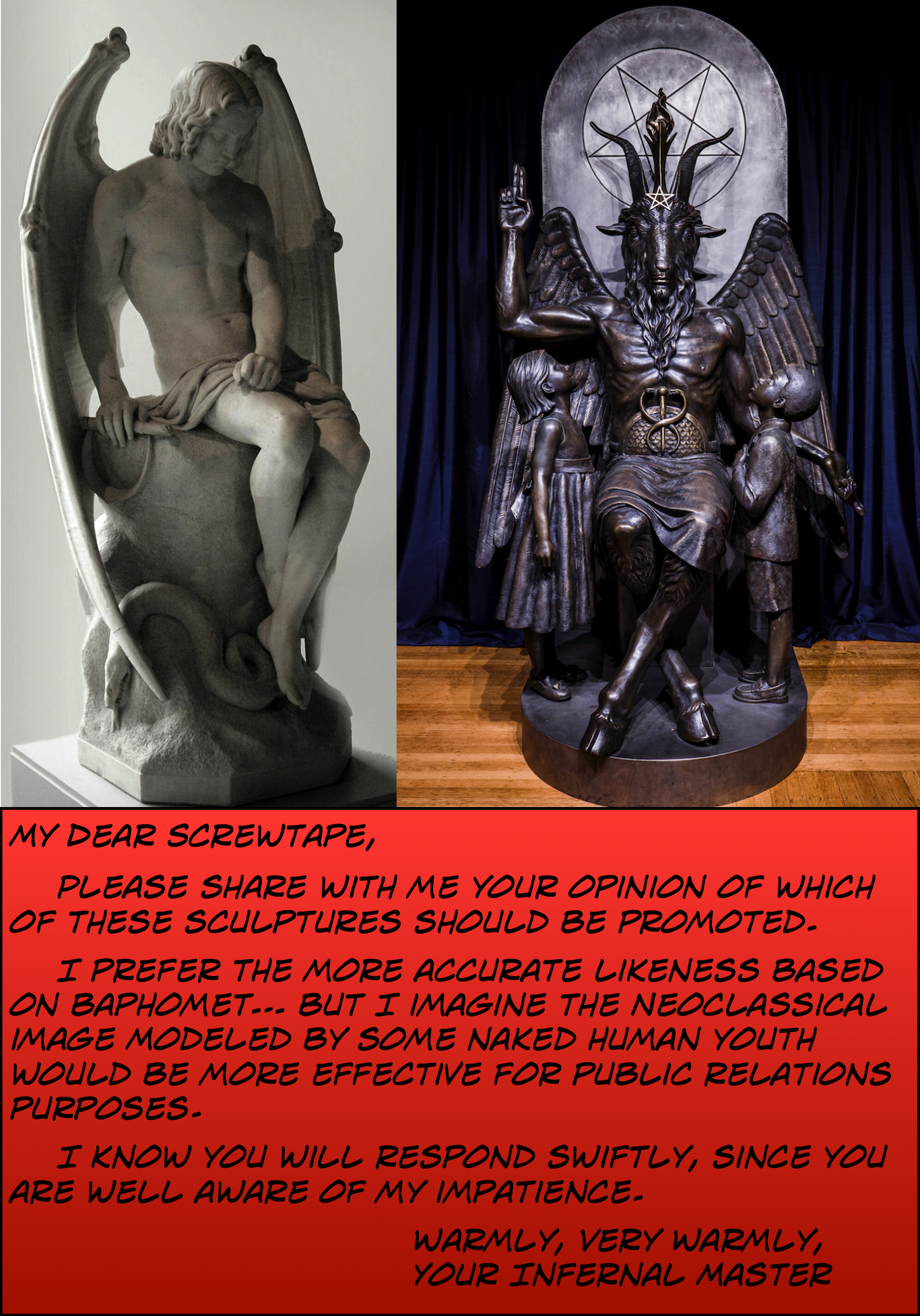
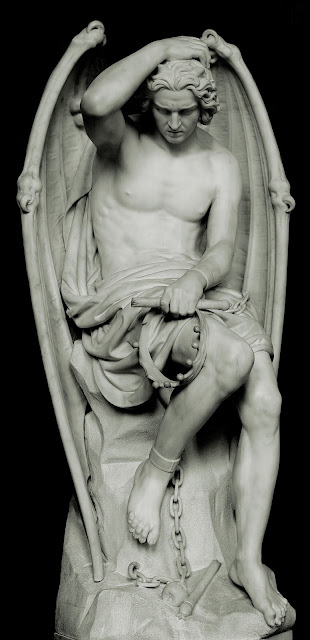
It was actually a nineteenth century Belgian sculpture of Lucifer which is part of the elaborate pulpit of St. Paul’s Cathedral in Liège which inspired today’s reflections. Guillaume Geefs was commissioned to create the piece as part of a general theme of the triumph of religion over evil. The Devil as he portrayed the rebel angel, is rather too appealing for those acquainted with his actual biblical portrait.

Even though his wings have devolved to appear more like those of a bat than a bird, and his foot is chained, the sculpture’s physique is attractive. His apparent regret, evident in his expression and the presence of a tear, invite sympathy. It is regarded as an outstanding example of Romanticism. In a word, it serves as an attractive personification of a vile and malignant being. And this presents a dangerously misleading view of the very real spiritual warfare raging about us.

Curiously, Guillaume’s nude (with a robe safely draped over his lap) was actually a more modest and religious alternative to the image originally intended for the space. Ironically, it was the artist’s younger brother, Joseph, who originally received the commission. Joseph’s sculpture was regarded as even more titillating, and it was replaced. The Royal Museums of Fine Arts of Belgium admits “Joseph created one of the most disturbing works of the period.”

When it was revealed, the initial version of “Le Génie du Mal” (The Genius of Evil) raised questions about its positive portrayal. One publication reported the cathedral’s administrators determined “this devil is too sublime.”

The last thing imperfect human beings living in a fallen world need are sublime and alluring depictions of evil. In the words of C.S. Lewis,

To admire Satan, then, is to give one’s vote not only for a world of misery, but also for a world of lies and propaganda, of wishful thinking, of incessant autobiography. Yet the choice is possible. Hardly a day passes without some slight movement towards it in each one of us.

That is what makes Paradise Lost so serious a poem. The thing is possible, and the exposure of it is resented. Where Paradise Lost is not loved, it is deeply hated. (A Preface to “Paradise Lost”).

Replacement Sculpture by Guillaume Geefs.

Peculiarities of the German Language

Mark Twain wrote some entertaining travelogues about his overseas travel. In A Tramp Abroad, he relates a conversation he and a friend had with an American who had been studying veterinary medicine in Germany. The expatriate complains about how long his studies have taken – nearly two years – and proclaims how good it is to hear his native tongue.

The student’s most humorous words relate to his impression of the German language. It’s unusual in its nineteenth century phrasing. However, he does note one rather common opinion in his earthy observation.

“I spotted you for my kind [fellow Americans] the minute I heard your clack. . . .” The young fellow hooked his arm into the Reverend’s, now, with the confiding and grateful air of a waif who has been longing for a friend, and a sympathetic ear, and a chance to lisp once more the

sweet accents of the mother tongue, — and then he limbered up the muscles of his mouth and turned himself loose, — and with such a relish!

Some of his words were not Sunday-school words, so I am obliged to put blanks where they occur. . . . “when I heard you fellows gassing away in the good old American language, I’m – if it wasn’t all I could do to keep from hugging you! My tongue’s all warped with trying to curl it around these forsaken wind-galled nine-jointed, German words here; now I tell you it’s awful good to lay it over a Christian word once more and kind of let the old taste soak in. . . .

“I’m learning to be a horse-doctor! I like that part of it, you know, but ____ these people, they won’t learn a fellow in his own language, they make him learn in German; so before I could tackle the horse-doctoring I had to tackle this miserable language.”

And, as if mastering German wasn’t difficult enough in itself, he continues:

“First-off, I thought it would certainly give me the botts, but I don’t mind it now. I’ve got it where the hair’s short, I think; and dontchuknow, they made me learn Latin, too. Now between you and me, I wouldn’t give a ____ for all the Latin that was ever jabbered; and the first thing I calculate to do when I get through, is to just sit down and forget it. ’Twon’t take me long . . .”

I don’t intend to offend Germans for the challenge their language poses to some. (In fact, one set of my grand-parents named Vonderohe originally came from Pomerania.) But the nature of agglutinative languages is so alien to most of us that the very length of the glued-together words becomes daunting.

Since I’m not a linguist, I had to research to discover as I wrote this post that German is not a truly agglutinative language. It merely uses agglutination. Apparently, the distinction involves distinctions with which most non-linguists need not concern themselves. We can be satisfied with the simplified definition provided by Glottopedia.org – “Agglutinating language is a language which has a morphological system in which words as a rule are polymorphemic and where each morpheme corresponds to a single lexical meaning.”

In truth, it’s quite logical to make new words by stringing them together. Most English compound words are a combination of two elements. Longer Germanic words seem more common. Kraftfahrzeug-Haftpflichtversicherung, for example, sounds “nine-jointed,” but is actually only two words, meaning motor vehicle liability insurance.

C.S. Lewis and the German Language

C.S. Lewis was multilingual, and studied German while relatively young. He and his wife used every language as a source when playing Scrabble.

Nevertheless, Lewis was quite modest about his grasp of German. In 1954, while thanking a German professor for the offer of a philosophy book he had written, Lewis wrote,

I look forward to reading the book (when the translation arrives! My German is wretched, and what there is of it belongs chiefly to the libretto of the Ring and Grimm’s Märchen – works whose style and vocabulary you very possibly do not closely follow).

The following year Lewis wrote once again to Helmut Kuhn. This time it was to thank him for a review Lewis’ works. Lewis said, “it certainly seems to me that your grasp of the whole situation in which I have written and of the relation of my ideas both to it and to each other, goes far beyond any criticism I have yet had.” Before he makes that noteworthy statement, Lewis makes a playful comment relating to the presumed dignity implicit in the German language itself.

To be written about in the German language is, for an Englishman, a grave temptation to spiritual pride. The sentences are so massive and the words so long that, even if the content were less flattering than it is in your article, the subject can hardly resist feeling that he must be a much weightier phenomenon than he had ever supposed!

Eucestoda Words: Well Worth a Postscript

Germans are an accomplished, literate people who take pride in their language. They have gone so far as to coin a word that specifically identifies these sometimes lengthy compound words. Germans call them bandwurmwörter, which literally means “tapeworm words.” (Mark Twain would have delighted in knowing that.)

Friedrich Akademie, an education website, devotes a page on their website to “Beautiful German Tapeworm Words.”

Tapeworm words . . . what a fascinatinglyinventivesemanticnovelty!

On the Nature of Digressions

It’s nearly impossible to avoid digressions – those temporary departures from the current subject of conversation. While many digressions are interesting in the own right, they occasionally cause the speaker (or writer) to lose track of the actual point they are attempting to establish.

It’s like when I would be reading something the Emperor Constantine the Great, and at the mention of the Persian Empire, I would put the current article on hold while I explored the subject of just how the current regime in Iran reflects the religious fundamentalism of Zoroastrianism as it resisted during the Abbasid Caliphate. Ah, but forgive me, I digress.

The reason I am thinking about digressions today is because I recently encountered a massive one in one of Mark Twain’s works. But before we look at it, let’s consider a more recent example, in an article about C.S. Lewis.

In “The Uses of Ignorance,” literary critic Alan Jacobs explores a number of themes, including the way Lewis’ presentation of Christianity’s core resonates with believers from diverse theological backgrounds.

One lesson to be learned . . . is just how carefully Lewis articulated his “mere Christianity” so that it seemed “mere” indeed – recognizable to Christians from many different traditions as the faith they understood and practiced. But we also see . . . “that the lasting appeal of Mere Christianity is not based so much on Lewis’s genius as on his ability to point readers to the luminosity of the gospel message itself.” Which, I might add, is a kind of genius in itself.

The article is well worth reading, but the specific reason I mention it now, is because the author includes a lengthy (315 word) departure from his main theme which he brackets with the words “A digression:” and “End of digression”.) It’s rare to see something this straightforward.

C.S. Lewis as a Digresser

If the average woman or man is prone to digression, it seems apparent a genius – with voluminous knowledge on diverse subjects – would occasionally succumb to the same temptation. For someone like C.S. Lewis this is not a major problem, as he would never lose his place in the original conversation. On the contrary, Lewis’ digressions would invariably enrich the discussion, as they illuminated his points.

One of the only books written by C.S. Lewis which has entered the public domain is Spirits in Bondage. When it was published in 1919 (while he was an atheist), Lewis wrote to a friend: “The sub-title ‘A cycle of lyrical poems’ was not given without a reason: the reason is that the book is not a collection of really independent pieces, but the working out, loosely of course and with digressions, of a general idea.” (You can download a free copy of Spirits in Bondage at Project Gutenberg.)

Mark Twain’s Masterful Digression

I’ve written about Mark Twain in the past. In one column I shared his humorous reflections on the nature of editors. Writers will find the post particularly entertaining.

Editors played a major (usually unwelcome) role in Twain’s existence. Thus, it is unsurprising that a major digression in “How to Make History Dates Stick” involves these denizens of the publishing world.

One book I was reading this week includes an extensive and, of course, intentional example of digression. Although he doesn’t bracket it with the word “digression,” it is probably one of the best examples in existence. (We would expect nothing less from Samuel Clemens!)

In his novel Roughing It, Twain describes a pervasive blight to the western frontier, sagebrush.

I do not remember where we first came across “sage-brush,” but as I have been speaking of it I may as well describe it. This is easily done, for if the reader can imagine a gnarled and venerable live oak tree reduced to a little shrub two feet high, with its rough bark, its foliage, its twisted boughs, all complete, he can picture the “sage-brush” exactly.

Often, on lazy afternoons in the mountains I have lain on the ground with my face under a sage-bush, and entertained myself with fancying that the gnats among its foliage were Lilliputian birds, and that the ants marching and countermarching about its base were Lilliputian flocks and herds, and myself some vast loafer from Brobdingnag waiting to catch a little citizen and eat him.

Twain’s description of his daydreaming about sagebrush is entertaining, but this is not the quintessential digression I wish to share. After this brief digression, Twain writes a page and a half about the plant’s actual physical attributes and utility (e.g. for fires and tea). But then, when the reader least expects it, Twain goes off on another extended ramble.

Sage-brush is very fair fuel, but as a vegetable it is a distinguished failure. Nothing can abide the taste of it but the jackass and his illegitimate child, the mule. But their testimony to its nutritiousness is worth nothing, for they will eat pine knots, or anthracite coal, or brass filings, or lead pipe, or old bottles, or anything that comes handy, and then go off looking as grateful as if they had had oysters for dinner. Mules and donkeys and camels have appetites that anything will relieve temporarily, but nothing satisfy.

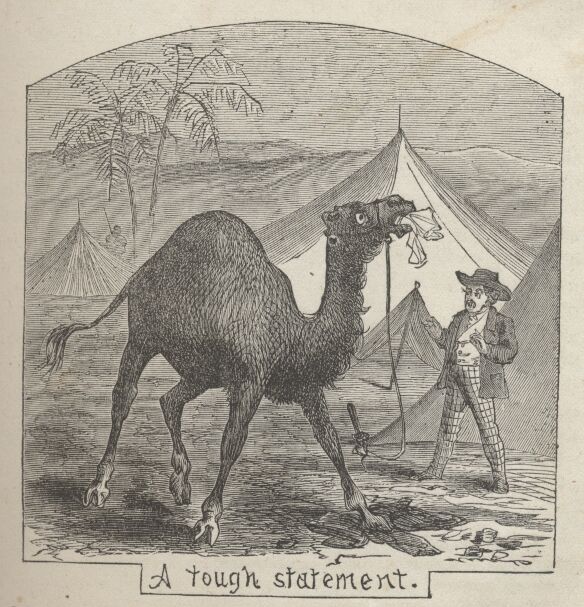
In Syria, once, at the head-waters of the Jordan, a camel took charge of my overcoat while the tents were being pitched, and examined it with a critical eye, all over, with as much interest as if he had an idea of getting one made like it; and then, after he was done figuring on it as an article of apparel, he began to contemplate it as an article of diet. He put his foot on it, and lifted one of the sleeves out with his teeth, and chewed and chewed at it, gradually taking it in, and all the while opening and closing his eyes in a kind of religious ecstasy, as if he had never tasted anything as good as an overcoat before in his life.

Then he smacked his lips once or twice, and reached after the other sleeve. Next he tried the velvet collar, and smiled a smile of such contentment that it was plain to see that he regarded that as the daintiest thing about an overcoat. The tails went next, along with some percussion caps and cough candy, and some fig-paste from Constantinople.

And then my newspaper correspondence dropped out, and he took a chance in that – manuscript letters written for the home papers. But he was treading on dangerous ground, now. He began to come across solid wisdom in those documents that was rather weighty on his stomach; and occasionally he would take a joke that would shake him up till it loosened his teeth; it was getting to be perilous times with him, but he held his grip with good courage and hopefully, till at last he began to stumble on statements that not even a camel could swallow with impunity.

He began to gag and gasp, and his eyes to stand out, and his forelegs to spread, and in about a quarter of a minute he fell over as stiff as a carpenter’s work-bench, and died a death of indescribable agony. I went and pulled the manuscript out of his mouth, and found that the sensitive creature had choked to death on one of the mildest and gentlest statements of fact that I ever laid before a trusting public.

At that point, the writer pretends to realize he has digressed and concludes the chapter in the persona of the naturalist he has earlier assumed.

I was about to say, when diverted from my subject that occasionally one finds sage-bushes five or six feet high, and with a spread of branch and foliage in proportion, but two or two and a half feet is the usual height.

Well, that’s probably more than enough of a diversion from your day’s responsibilities. I hope you enjoyed reading these words, and that your own skills as a digresser will be correspondingly enhanced.