C.S. Lewis, Writing and Lust

We’re accustomed to hearing the word “lust” used in a positive manner, such as “she has a lust for life.”

You might even see this in the context of writing. C.S. Lewis himself did this. In 1948, in a letter to an American pastor, he apparently answers a query about what inspires him to write. “The ‘incentive’ for my books has always been the usual one—an idea and then an itch or lust to write.”

I resonate with Lewis’ response. Some idea dawns on me—usually arising from something I’m reading—and then I get the desire to put my own twist on it and share the original idea with others.

This post is no different. I have been working on the military chaplaincy journal that I edit, and I was reading the poetry of a British chaplain from the First World War. Rev. G.A. Studdert Kennedy (1883-1929) was an Anglican priest. He was awarded the Military Cross due to his “disregard for his own safety in attending to the wounded under heavy fire.” The award also noted his Gospel contribution to the harsh life of WWI trenches. “He searched shell holes for our own and enemy wounded, assisting them to the dressing station, and his cheerfulness and endurance had a splendid effect upon all ranks in the front line trenches, which he constantly visited.”

You can read many of his poems in past issues of Curtana: Sword of Mercy, which is available for free download here.

After reading some of his poetry, I turned for the first time to one of his postwar books. It was entitled “Lies!” and addresses a litany of deceptions that plague the world. Included among these deceits is “the lie of lust.”

In the following excerpt, he refers to writing prurient literature which can guarantee a market. It is echoed by a later comment I read from a writer who said she had to write erotic novels to supplement her preferred titles, just so she could make a living. She used a pen name, of course, for the smut.

You can follow Chaplain Kennedy’s argument in the excerpt which follows. Since it is rather lengthy, I will highlight the reference to writing by using a boldface font. Kennedy contrasts in this passage the conflict between humanity’s sinfulness and our call to holiness, the struggle the Apostle Paul describes so succinctly in the seventh chapter of Romans.

“For I do not do the good I want, but the evil I do not want is what I keep on doing. Now if I do what I do not want, it is no longer I who do it, but sin that dwells within me.”

Here is Kennedy’s argument:

But lust in a man is obscene and filthy because it is unnatural. It becomes cruel and debased. It does not proceed to the making of children naturally and cleanly; it descends to unmentionable and disgusting things. The report on the German atrocities in Belgium* provides a kind of horror-chamber in which we can see what lust can bring men to. As one reads that awful document a kind of hot shame comes over one, and makes one sweat for sorrow over sin.

The sting of that shame lies in the fact that one is dreadfully conscious that the root of that disgusting horror is there in one’s own soul. Have you never felt a ghastly doubt rising up in your mind when you read such things? Now what am I reading this for? Is it purely because I want to hate it . . ?

Write a book about the cruelties and debaucheries of a Nero or a Rasputin, and it will sell. There is an appeal in it which thousands, nay, which all men feel, which all men would answer, if the other force within them failed. But the horror of it, the shame for it, is, thank God, as real, more real, than the appeal. There is human history: the war between the appeal and the repulsion of sin: the war between the monkey and the man.

There are thousands of writers, artists, playwrights, musicians, who are making their fortunes out of the appeal to the animal in man. It is the best paying business in the world. Yet, if there is anything that human experience makes certain, it is that there is no end to the journey a man makes in answer to that appeal except damnation, the utter loss of all that makes life good. Lust cannot satisfy a man, because he needs Love. Lust is unnatural in man, it leaves one side of his nature out, and sooner or later that neglected side has its revenge, and turns life’s sweetness bitter to his taste. Then in his despair he will descend in search of new sensations to things which men cannot mention, or even think of without shame. That is the way of it with all men if the great force fail that leads them upward from the animal to the human and divine (Lies! published in 1919).⁑

C.S. Lewis on Carnality

As noted, Lewis was able to use the word “lust” in its muted, nonliteral sense. He was also able to address it literally, and to challenge the hold it exerts on so many lives. In “Religion: Reality or Substitute?” C.S. Lewis vividly described how lust is an enemy.

If we wish to be rational, not now and then, but constantly, we must pray for the gift of Faith, for the power to go on believing not in the teeth of reason but in the teeth of lust and terror and jealousy and boredom and indifference that which reason, authority, or experience, or all three, have once delivered to us for truth.

In a more metaphorical manner, in the Great Divorce Lewis uses the surprising image of a foreboding ruddy lizard to portray the sinister nature of lust.  

I saw coming towards us a Ghost who carried something on his shoulder. Like all the Ghosts, he was unsubstantial, but they differed from one another as smokes differ. Some had been whitish; this one was dark and oily. What sat on his shoulder was a little red lizard, and it was twitching its tail like a whip and whispering things in his ear. As we caught sight of him he turned his head to the reptile with a snarl of impatience. “Shut up, I tell you!” he said. It wagged its tail and continued to whisper to him. He ceased snarling, and presently began to smile.

The encounter which follows is amazing. I won’t spoil it by describing how it ends, but I will once again encourage you to read what is one of my favorite novels. The Great Divorce is about the separation between Heaven and Hell, and explains how a loving God could allow some of his creation to choose a path away from him.

And a Bonus Insight from Dorothy Sayers

Lewis and Sayers were friends, and they deeply respected one another’s work. In 1943, Lewis wrote to Sayers congratulating her on her recently published The Other Six Deadly Sins. He said, “it is one of the few things which I find, within its limits, perfect—i.e. there is nothing one would wish added or removed or altered.” High praise.

Sayers brilliantly strips away some of the euphemisms that mask and confuse candid discussions about sin. This is how she begins what was originally delivered as a public address:

Perhaps the bitterest commentary on the way in which Christian doctrine has been taught in the last few centuries is the fact that to the majority of people the word “immorality” has come to mean one thing and one thing only. The name of an association like yours is generally held to imply that you are concerned to correct only one sin out of those seven which the Church recognizes as capital.

By a hideous irony, our shrinking reprobation of that sin has made us too delicate so much as to name it, so that we have come to use for it the words which were made to cover the whole range of human corruption. A man may be greedy and selfish; spiteful, cruel, jealous, and unjust; violent and brutal; grasping, unscrupulous, and a liar; stubborn and arrogant; stupid, morose, and dead to every noble instinct—and still we are ready to say of him that he is not an immoral man. I am reminded of a young man who once said to me with perfect simplicity: “I did not know there were seven deadly sins: please tell me the names of the other six.”

About the sin called Luxuria or Lust, I shall therefore say . . . that it is a sin, and that it ought to be called plainly by its own name, and neither huddled away under a generic term like immorality, nor confused with love.

The book sounds like it’s well worth reading. It has been out of print for eighty years⁂ but it appears to have been reproduced in toto by this website. (I plan to read the essay as soon as I get this post uploaded!)


* Over 800 civilians were killed by German troops as they advanced through neutral Belgium in 1914. A short describing of these events can be found at this British Library site.

⁑ You can download free copies of Chaplain Kennedy’s books at Internet Archive: Lies! or a collection of his poetry in Rough Rhymes of a Padre.

⁂ A single used copy is currently available via amazon, for the modest price of $287.36, with the comforting notation that the shipping is free.

Disobeying Evil Rulers

Don’t appease evil rulers.

Have you heard the fascinating story of the successor to William the Conqueror? William, of course, is the Norman who conquered England after King Harold’s army had been battered during its victory over a Viking invasion in the preceding weeks. William’s heir was proved far worse than his father.  

William II, also called William Rufus, reigned three years. He was an impious, carnal ruler who refused to replace the Archbishop of Canterbury who died on his watch, so that he could pilfer the church’s wealth. During a serious illness, he reconsidered his choice and forced a reluctant monastic abbot, Anselm, to assume the purple.

Because of his integrity, Anselm became a thorn in Rufus’ side. It led the monarch to proclaim:

“Yesterday I hated him with great hatred, today I hate him with yet greater hatred and he can be certain that tomorrow and thereafter I shall hate him continually with ever fiercer and more bitter hatred.”

You must be doing something right if an evil ruler hates you.

The Bible records a number of stories where courageous prophets spoke unwelcome words to corrupt leaders. A wonderful example, delightfully recorded in a single chapter of First Kings,

In essence, the king of Israel (Ahab) asks the king of Judah (Jehoshaphat) to join him on a military venture. Jehoshaphat agrees, but requests that Ahab “inquire first for the word of the Lord.” Ahab brings in 400 loyal yes-men who promise God will deliver the city “into the hand of the king.”

Well, that settles that. But, wait a minute. Jehoshaphat, having his own court prophets, knows the ropes. He asks, “is there not another prophet of the Lord of whom we may inquire?”

You can feel Ahab squirming. Finally he responds, “there is yet one man by whom we may inquire of the Lord, Micaiah…”

Then Ahab offers this magnificent, self-implicating testimony: “…but I hate him, for he never prophesies good concerning me, but evil.”

The messenger arrives at Micaiah’s home and tells him the king’s prophets are unanimous, and he “warns” him, “let your word be like the word of one of them, and speak favorably.”

When Micaiah mockingly gives the desired response to the king, Ahab realizes Jehoshaphat will recognize the tone of ridicule, and he demands the prophet be honest. “How many times shall I make you swear that you speak to me nothing but the truth in the name of the Lord?” When he receives the genuine divine word, he turns to his fellow king and moans, “Did I not tell you that he would not prophesy good concerning me, but evil?”

The confrontation continues and Ahab has the true prophet imprisoned on “meager rations of bread and water” until his safe return from the battle. Micaiah calmly responds, “If you return in peace, the Lord has not spoken by me.” This is not the dramatic end of the story, which is well worth reading (after you finish reading this post).

Ahab was a miserable king. It’s no wonder he hated the faithful Prophet Micaiah. If the scribes had recorded Ahab’s entire rant, it may well have gone, “Yesterday I hated him with great hatred, today I hate him with yet greater hatred and he can be certain that tomorrow and thereafter I shall hate him continually with ever fiercer and more bitter hatred.”

C.S. Lewis and Anselm

In addition to being a courageous prophet, Anselm was a gifted theologian. Lewis was familiar with his contributions to theology, and also to philosophy. In one of the most influential scenes in the Chronicles of Narnia, humble Puddleglum explains why he would still believe in Aslan even in the face of all the world’s lies.

For the philosophically minded, I commend this extended essay on the subject: “Anselm and Aslan: C.S. Lewis and the Ontological Argument.”*

Lewis used the ontological argument apologetically only once in his public writings, and it was in a rather surprising place. This most sophisticated of philosophical arguments shows up in a presentation to the least sophisticated audience: the children for whom the Narnia books were written. It is the debate between Puddleglum and the Green Witch in The Silver Chair.

Five hundred years later, philosopher René Descartes would follow Anselm’s example, providing ontological arguments for the existence of a benevolent God.

Lewis discussed the passage in a letter written the final year of his life. This was penned to a family with a son who would become a Senior Lecturer in Philosophy at the University of Warwick.

Please remember me to your third son. I was very sorry the course of events separated us. He is not only a very promising scholar but the best mannered man of his generation I have ever met. I suppose your philosopher son—what a family you have been privileged to bring into the world!—means the chapter in which Puddleglum puts out the fire with his foot.

He must thank Anselm and Descartes for it, not me. I have simply put the “Ontological Proof” in a form suitable for children. And even that is not so remarkable a feat as you might think. You can get into children’s heads a good deal which is quite beyond the Bishop of Woolwich.

C.S. Lewis’ witty note about the inability of the “Bishop of Woolwich” to understand what is clear to a child, was apparently directed toward John Robinson (1919-1983). Robinson was a very liberal (possibly heretical) Anglican bishop whom Episcopal Bishop John Shelby Spong (definitely heretical) considered his mentor.

My guess is that whenever Bishop Robinson thought of C.S. Lewis and the unadorned “mere Christianity” that he championed, the self-satisfied hierarch thought:

“Yesterday I hated him with great hatred, today I hate him with yet greater hatred and he can be certain that tomorrow and thereafter I shall hate him continually with ever fiercer and more bitter hatred.”

It is not always bad to be spurned by those who pursue the world’s approval, and treat the truth with disdain. May God find us in the company of C.S. Lewis and Anselm.

——

* A simpler discussion of “How C. S. Lewis Put the Ontological Argument for God in Narnia” can be found here.

If you are interested in reading about Anselm and His Work, this links to a free biography available at Internet Archive.

C.S. Lewis & Hyperbole

This is the most amazing post you will ever read about hyperbole. Well, until you write one yourself and use even more exaggerated adjectives.

Hyperbole is a curious rhetorical device, a frequent element of satire. Unfortunately, hyperbole is too often employed in a sloppy way (e.g. “he was the worst politician ever”). Yet, in skillful hands it can be quite effective. For example, in English Literature in the Sixteenth Century, when Lewis discusses poet Michael Drayton,* he writes:

When he speaks simply as any lover he can sometimes outsoar all the sonneteers except Shakespeare. . . . Yet again, and in quite a different vein, that of towering hyperbole, Drayton (this time with no rival at all, neither Shakespeare nor any other) sets up the seamark beyond which poetry in that kind has never gone nor could go:

And Queens hereafter shall be glad to live
Upon the almes of thy superfluous prayse.

If he had never written another verse, these two would secure him that praise which is due to men who have done some one thing to perfection.

I was thinking about hyperbole after coming across a wonderful quote by Erasmus of Rotterdam⁑  about his contemporary, the reformer Martin Luther. Though they shared many concerns, they parted company on how best to reform the Roman Catholic Church. Erasmus objected to Luther’s tendency to take every disagreement to extremes, and he named the Wittenberg professor “Doctor Hyperbolicus.”

It reminded me of one of our sons. As a youngster, he suffered from that common childhood disease, excessive summa hyperbolism. Everything was either the best thing ever, or the worst thing he’d ever encountered. Sometimes I referred to him as the “King of Hyperbole,” which was hyperbole on my own part. He was more like a Duke of Hyperbole.

John Colet⁂ was another English scholar discussed in Lewis’ longest work. Colet was a theologian, and a strong advocate of biblically-grounded morality. As we frequently find, Lewis’ assessment is informative, and entertaining.

Colet is, in fact, a declamatory moralist. By calling him declamatory I do not at all mean that he is insincere, but that his methods are those of the declamation; repetition, hyperbole, and a liberal use of emotional adjectives. The morality he wishes to enforce is harsh and ascetic. . . .

The truth is that Colet is a Platonist at heart and has really little interest in the temporal and mutable world below the moon. . . . A cloistered perfectionist, who happens to be also a rhetorician, often says, not exactly more than he means, but more than he understands. He leaves out the reservations: he has really no idea of the crudely literal applications which will be made. (English Literature in the Sixteenth Century)

Hyperbole in Lewis’ Personal Life

The First World War began in 1914. It was a conflict which would cost ten million military lives. C.S. Lewis himself would be counted among a greater number, who suffered terrible wounds during combat. At the beginning of the conflict, Lewis gently chided his father for embracing a growing British fear.

My dear Papy, You have surpassed yourself. The popular press . . . remarks on the possibility of an invasion: the idea, after being turned over in your mind, appears in your next letter, clothed as “it is absolutely certain that he is going to invade England” Surely . . . this is rather hyperbole?

The one thing that Britain can depend upon is her fleet: and in any case Germany has her hands full enough. You will perhaps say that I am living in a fool’s paradise. “Maybe thon.” But, providing it only be a paradise is that not preferable to a wise and calculating inferno? Let us have wisdom by all means, so long as it makes us happy: but as soon as it runs against our peace of mind, let us throw it away and “carpe diem.” I often wonder how you came to have such a profound and genuine philosopher for your son, don’t you?

In a 1949 letter he explains to a correspondent that the Gospel claims to Christ’s divinity were not hyperbolic appellations.

The Jews may have had their own use of hyperbole but the last direction in wh. they would have used it was to deify a man. The absolute chasm which they put between Jahveh and His creatures was just the thing that cut them off from Pagans.

No other race could have told the stories they told about Moses & Elijah and yet left these persons absolutely, sheerly human. What was Jesus condemned for by the Sanhedrin? Surely His declaration “I am etc.” must have been recorded right?

And, finally, a quotation C.S. Lewis selected for inclusion in his anthology of George MacDonald’s writings.

“But how,” says a man, who is willing to recognize the universal neighborhood, but finds himself unable to fulfill the bare law toward the woman even whom he loves best—“How am I then to rise into that higher region, that empyrean of love?” And, beginning straightaway to try to love his neighbor, he finds that the empyrean of which he spoke is no more to be reached in itself than the law was to be reached in itself. . . .

The man who will love his neighbor can do so by no immediately operative exercise of the will. It is the man fulfilled of God from whom he came and by whom he is, who alone can as himself love his neighbor who came from God too and is by God too. The mystery of individuality and consequent relation is deep as the beginnings of humanity, and the questions thence arising can be solved only by him who has, practically at least, solved the holy necessities resulting from his origin. In God alone can man meet man. . . .

It is possible to love our neighbor as ourselves. Our Lord never spoke hyperbolically. (Unspoken Sermons, First Series, “Love Thy Neighbor”)

I am absolutely convinced C.S. Lewis is one of the most outstanding Christian writers in history. That’s not hyperbole. If anything, it is a vast understatement.


* A selection of the poetry of Michael Drayton (1563-1631) is available at Internet Archive. The introduction to the collection begins, “no poet is more thoroughly English than Michael Drayton.”

⁑ Desiderius Erasmus Roterodamus (1466-1536) was a Dutch humanist who shared many concerns about the state of the Roman Catholic Church with Luther. However, he disliked Luther’s roughshod response and chose to attempt to accomplish some amount of reform from within. His early epistles are available in this free volume.

⁂ For more about John Colet (1467-1519), you might download this biography.

C.S. Lewis & Cinderella

C.S. Lewis did not write a Cinderella story of his own, but he did refer to one of his books as his “Cinderella,” for a different reason.

The Cinderella folk tale is familiar to many cultures. Like the Ugly Duckling, it celebrates real life occasions where events turn upside down, and the disadvantaged are vindicated.

More than two thousand years ago, the Greeks told the story of Rhodopis, a Greek slave girl whose sandal was snatched by an eagle and dropped into the lap of the Egyptian pharaoh. His search for the lovely foot that graced the footwear culminated in a joyous marriage.

I was thinking about step parenting recently, and how some people care for their own children differently than they treat children brought into the union from a spouse’s previous relationship. The subject arose during my prayers, when I thought to offer thanks to God for the depth of love he has given me for my “step-grandchildren.” It is, as far as I can tell, indistinguishable from the love I hold for my biological grandkids.

Following my prayers, I reflected further on family. And—because it reflects real life in terms of raising children, I thought of the story of Cinderella. In particular, I was wondering whether the “wicked stepsisters” were destined to be cruel simply because they were raised by their “wicked stepmother.”

The answer to that dilemma is obvious. Do bad parents raise bad kids? Sometimes, but thankfully, not always. Do good parents raise good kids? Sometimes, but sadly, not always.

If you remove the outliers—the saints on one side and the sociopaths on the other—kids have a reasonable chance to turn out “okay.” Basically, just because someone’s parents are disreputable, doesn’t mean the kids will grow up to be bums as well.

This comes as no shock to any of us, of course. We are too sophisticated to impute the sins of the parents to their children. But are we really? In truth, we often make judgments based upon things utterly beyond a child’s control. Nationality, social status, physical or mental disability . . . some people default to an unconscious ranking of desirability.

I’m reminded of the rewards of working with orphans and the tragic manner in which even these victims are “ranked” in terms of their perceived worth. So much for viewing the world through carnal eyes.

C.S. Lewis described the way a children’s story can flip things around in a way that reveals truth. In 1947 he described this to an American correspondent.

About stories for children. (a) Don’t the ordinary fairy tales really already contain much of the Spirit, in solution? Does not Cinderella give us exaltavit humiles,* and is not Redemption figured in The Sleeping Beauty? (b) For something a little more explicit, what about Geo. MacDonald’s⁑ The Princess & the Goblins, Curdie & the Princess, The Wise Woman, and The Golden Key?

In a 1943 letter to Sister Penelope, Lewis commented on a manuscript she had sent for his review. He suggests a “longish speech” by Melchizedek would be better presented in a different manner.

He’s got to have the sense of mystery about him. That means, for purposes of these plays, he must sound like a king out of a fairy tale. Actually in this speech he sounds more like a Bampton Lecturer! Represents, condemnation, include, mediator all strike the wrong note. I am referring only to the style: the matter is perfectly right. It is easier, of course, to pick holes than to mend them!

He then offers a note about the power of stories to communicate facts and deeper truths.

If I were trying to do it myself I should make it a speech about the Kings of Salem, not about ‘kingship’ in general—like a special magic in that family. (The Kings of Salem are not ordinary kings. . . .)

On the imaginative level I think the deepest truths enter the mind much better as arbitrary marvels than as universal theorems. Cinderella had to be back at midnight—Psyche must not see Cupid’s face—Adam and Eve must not eat the fruit: how much better these statements are than any philosophical generalities about obedience.

C.S. Lewis’ Personal Cinderella

Each reader of C.S. Lewis has their personal favorite, thoughtfully selected from the rich buffet of his diverse works. While I treasure many of his works, my personal favorite is The Great Divorce. It pleases me that the title also occupied a special place in Lewis’ own estimation.

Lewis described the underappreciated volume as his “Cinderella.” The beauty and nobility were there all of the time, though unrecognized.

Writing in 1954 to his editor, Jocelyn Gibb, he expresses appreciation for two handsomely bound copies of his books. He says, “perhaps these two charming volumes will teach me at last to have for the bodies of my own books the same reverence I have for the bodies of all other books.” In the same letter he writes, “I am always glad to hear of anyone’s taking up that Cinderella, The Great Divorce.”

Kathryn Lindskoog wrote an article about the book, calling the volume “C.S. Lewis’s Divine Comedy.” She begins with a personal anecdote.

C. S. Lewis beamed, then said “It’s my Cinderella.” I had just told him how much I loved The Great Divorce. (If I had been forced to choose one favorite of all his books, that would have been my choice.) He said he didn’t understand why Screwtape Letters got all the attention when The Great Divorce was so much better.

The Screwtape Letters is another of Lewis’ works that continues to impress me for its unique and effective way of illustrating the malevolent mind that shapes so many of the temptations that assail us. But, for sheer pleasure, I too prefer the wisdom, and the witness to heaven’s reality, that shine so brightly in The Great Divorce.

——

* Exaltavit humiles comes from the Magnificat (Luke 1:46-55) and means God “has exalted the humble.”

⁑ Most of MacDonald’s books are available for free download at Google and Kindle.

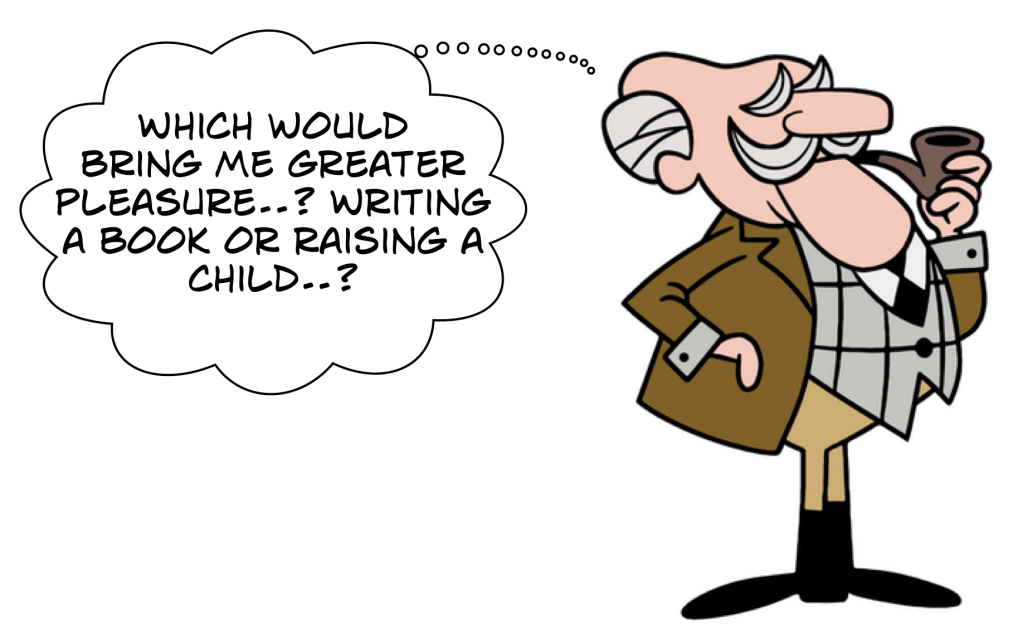
On Choosing Between a Child and a Book

Some people become parents and others do not. This column isn’t about the complex considerations that determine which path each individual follow. We all know people in each situation who are happy—as well as those who are dissatisfied.

I want to consider here a single reason some people choose not to have children. There are, of course, many valid reasons for not bringing children into this world, but this one struck me as particularly odd.   

Before we look at the interview question, allow me to offer a thesis that I believe most writers would agree with. Not all would concur, but don’t you think there would be strong consensus with this statement:

Raising children makes being a productive writer more challenging.

It’s pretty logical that the time spent actively parenting children leaves an author with less time to pursue their writing. Especially if they are a good mother or father.

Sure, kids provide us with some great stories and inspiration that can occasionally be worked into an article or story. But unless we’re a Dave Barry, an Erma Bombeck or a Bil Keane, people won’t line up to read about our children’s hijinks. So, if you were to balance the scales, I think we’d be hard-pressed to make the case that the addition of children to our household will make our writing more prolific.

In a recent interview with Forbes columnist Amity Shlaes, the editor of World Magazine raised this subject in an unusual way. Here is the question: “I talked with a Harvard economist years ago who said he was deliberately not having any children because he felt each child would lose him a book. You and I each have four children, and yet we’ve written books. Did you ever do a calculation like this foolish Harvard economist?”

Shales’ response was thoughtful. “Well, I’m very lucky in the husband department. He wanted lots of children and didn’t mind the work. But the main thing is: Children enrich life, they don’t impoverish it. You’d often be richer in dollars if you’d had no children, but with kids you’re richer in social capital, in happiness . . .”

It will come as no surprise that I agree with Shales’ opinion (with the substitution of “wife” in the first sentence). But the idea that struck me as rather shocking in this interchange was the reason the economist gave for opting not to have children: “because he felt each child would lose him a book.”

Wow. That is a pretty honest, and rather crass calculation. I won’t argue with his domestic equation, but it makes me shake my head. I can’t help but wonder how he will feel at the end of his life when he looks at his bookshelf of soon-to-be-forgotten titles and contemplates whether his choice was wise.

Lewis’ Personal Experience

C.S. Lewis was one of the most prolific writers. And he wrote in an expansive range of genres. It could easily be argued that his bachelorhood provided him with the time to write. That, in addition to the creative fountain provided by the Inklings made for a productive environment.

When he became a father, he was extremely conscientious. The boys were sent to private (or, in British parlance, “public”) schools after their mother’s death. However, that was the norm for children in their comfortable economic circumstances.

Lewis loved his sons, and did the best he could to be a father to them, despite his lack of confidence. Lewis was still the man who many years earlier (in 1935) wrote to his closest friend: “I theoretically hold that one ought to like children, but am shy with them in practice.” A decade later, in one of his most powerful books, Lewis confessed “I myself do not enjoy the society of small children . . . I recognize this as a defect in myself” (The Abolition of Man).

Self-awareness is a mark of intelligence and honesty. I strongly believe Lewis put the lie to his self-criticism about lacking a rapport with children, with his wonderful letters written to children.*

It could be argued that parenthood was one of the factors that affected Lewis’ literary production. Brenton Dickieson has a chart showing his annual production of books, here. Another scholar, Joel Heck, has done the world a great service by providing the definitive chronology of C.S. Lewis’ life and work, available here.

Lewis did not marry earlier in his life because he considered himself a confirmed bachelor. Joy’s unexpected arrival transformed his life.

But, even before he became a (step-)father, he would never have uttered the sentiment of the Harvard professor.

A book or a child? Which shall it be? If that is a difficult question for someone, here’s my advice: “Please just write your books; you’d probably make a lousy parent anyway.”


* C.S. Lewis was able to speak clearly to children. And, unlike so many adults, he did not speak down to them. While toddlers may have remained a mystery to him—and he never parented any—he respected children’s questions, and offered wise advice.

On putting one’s life in its proper order: “You are quite right if you mean that giving up fun for no reason except that you think it’s “good” to give it up, is all nonsense.”

And, how is this for a thoughtful, practical comment: “All schools, both here [in England] and in America, ought to teach far fewer subjects and teach them far better.”

Wise counsel to a young person (or anyone): God knows quite well how hard we find it to love Him more than anyone or anything else, and He won’t be angry with us as long as we are trying. And He will help us.”

And, one particularly inspiring comment about faith: “Anyone in our world who devotes his whole life to seeking Heaven will be like Reepicheep” in The Voyage of the Dawn Treader.

C.S. Lewis & Anodyne Writing

Do you practice anodyne writing? Or, perhaps you enjoy reading anodyne literature?

Talk about a phrase with two different meanings!

I must not be reading the right publications, because until recently I was only aware of the medical sense of the word. Apparently I’m not alone in having forgotten the second usage (if I ever knew it). One “publication coach” writes:

I always welcome the chance to learn new words—or to cement the knowledge of words I should know already. Anodyne falls into this latter camp. I probably confer with my dictionary at least once a year to determine the meaning of this word and yet, despite the frequent checking, I can’t seem to hold the definition in my brain.

Like so many words, anodyne enters English, via Latin, from Greek. It’s literal meaning is “without pain.” Thus, it typically refers (as a noun) to medicines or medical treatments devoted to eliminating pain.

By extension, anodyne is also applied (as an adjective) to other things, such as writing. In this context it would refer to writing where the purpose is to comfort, or to alleviate pain. This is the good sense of the word.

An example of this use appears in “L.M. Montgomery’s The Watchman and Other Poems, a Review.” There, Brenton Dickieson expertly describes the value good-but-not-great poetry by affirming its reassuring essence in its historical context. “Any one of these poems is quite nice on its own and an anodyne to the negative poetry of many of the WWI poets.” A positive, and astute, assessment.

There is, however, a second sense in which anodyne is applied to literature.* It may mean something so inoffensive, so innocuous, that it becomes boring.

At one university writing center they describe this evolution of the word.

[An anodyne word] lets a disturbing idea be described in a soothing manner. . . .

The OED Online lists several definitions, all about a procedure or medicine that eases pain, the oldest dating from the 16th Century. Only more recently has the word come to include anything that may avoid a strong response. It can mean something so inoffensive as to be bland, the cafeteria pudding of language.

So, as for anodynic writing, it is admirable when it relieves pain and suffering. If its primary goal is to be innocuous, that’s another matter. Essentially, comfort—good, pablum—not so much.

Lewis’ Use of Anodyne

Unsurprisingly, C.S. Lewis uses this word in its positive sense of alleviating discomfort. Two occurrences in The Screwtape Letters will illustrate. (Remember, these words of the counsel of one demonic tempter to another.)

But hatred is best combined with Fear. Cowardice, alone of all the vices, is purely painful—horrible to anticipate, horrible to feel, horrible to remember; Hatred has its pleasures. It is therefore often the compensation by which a frightened man reimburses himself for the miseries of Fear.

The more he fears, the more he will hate. And Hatred is also a great anodyne for shame. To make a deep wound in his charity, you should therefore first defeat his courage.

Not only do the demons seek to foster hatred in their human targets, they encourage us to seek counterfeit solace in destructive places.

In the first place I have always found that the trough periods of the human undulation provide excellent opportunity for all sensual temptations, particularly those of sex. This may surprise you, because, of course, there is more physical energy, and therefore more potential appetite, at the peak periods; but you must remember that the powers of resistance are then also at their highest.

The health and spirits which you want to use in producing lust can also, alas, be very easily used for work or play or thought or innocuous merriment. The attack has a much better chance of success when the man’s whole inner world is drab and cold and empty. . . .

It is the same with other desires of the flesh. You are much more likely to make your man a sound drunkard by pressing drink on him as an anodyne when he is dull and weary than by encouraging him to use it as a means of merriment among his friends when he is happy and expansive.

Never forget that when we are dealing with any pleasure in its healthy and normal and satisfying form, we are, in a sense, on the Enemy’s [God’s] ground. I know we have won many a soul through pleasure. All the same, it is [God’s]  invention, not ours. He made the pleasures: all our research so far has not enabled us to produce one. All we can do is to encourage the humans to take the pleasures which our Enemy has produced, at times, or in ways, or in degrees, which He has forbidden.

Having read the majority of what C.S. Lewis published, I assert with certitude that his writing is anodyne—it is healing. Some of it may be discomforting (for a moment), and much of it may be demanding (in the sense of requiring our mental and spiritual focus to understand it), but it was all written to edify.

Postscript, Star Date 73890.7

There is one more use of the word anodyne which I did not include above, due to its fictional source. In the Star Trek universe, the starships rely on a massive number elements, including the ubiquitous “anodyne relay.”

The circuits invariably appear to be perfectly reliable during routine missions. However, they are prone to malfunctioning at critical moments and threatening the lives of everyone aboard.


* Anodyne is also applied—in both its positive and negative senses—to music and other activities.

Add this Book to Your Library

No one can teach us to “write like C.S. Lewis.” The great author was definitely one of a kind.

It is possible, however, to study Lewis’ advice about writing. And that is a journey well worth taking.

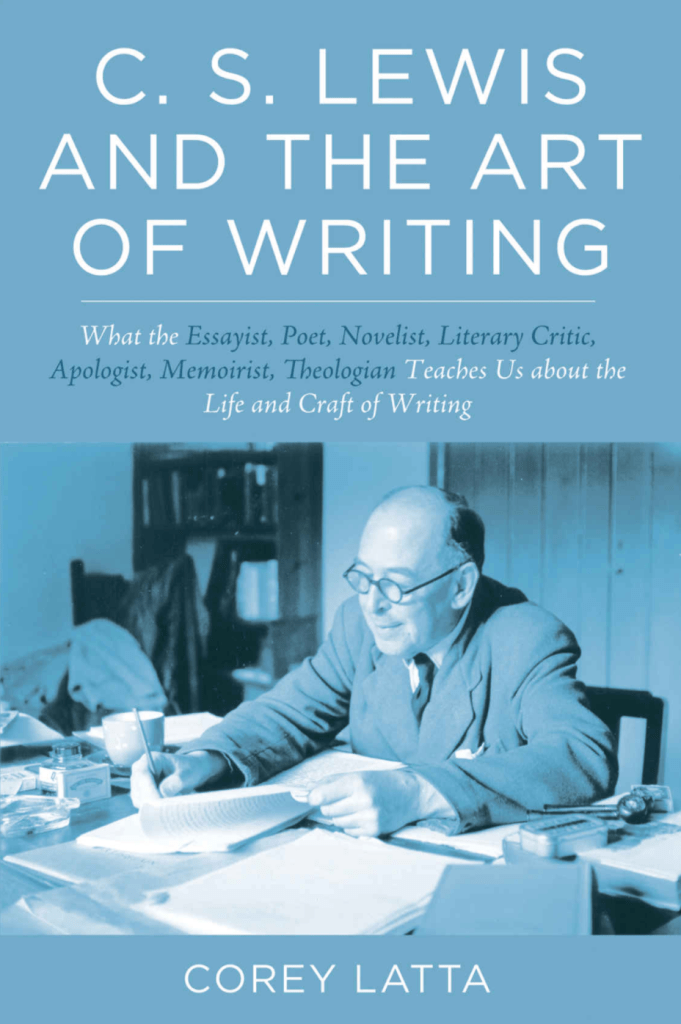
Many students of C.S. Lewis are quite curious about his advice for writing well. And, for the proverbial “limited time,” the premier study of that subject is available at an unbelievable price.

The kindle version of C. S. Lewis and the Art of Writing: What the Essayist, Poet, Novelist, Literary Critic, Apologist, Memoirist, Theologian Teaches Us about the Life and Craft of Writing is only three dollars at amazon. (Great subtitle, right?)

Coincidentally, I only recently purchased the volume for my Logos library (at a significantly higher cost). I’ve yet to read it, but it appears to be worth what I paid. Still, I don’t want any readers of Mere Inkling to miss out on this opportunity to get such a bargain.

Wipf and Stock, the publishers, regularly place a few titles from their excellent list on sale. The current offering features another book I previously purchased at full price, The Gospel According to Star Trek: The Original Crew. (I mention that, confident there is at least one other trekkie out there reading this.)

Writing about Writing

Many people who follow blogs such as Mere Inkling are bloggers themselves. It’s rare to find a writer who doesn’t also like to read. And because of the complementarity of reading and writing, books about writing always find an audience.

In my “works in progress” (research) files, I have a handful of projects related to writing. One of them is—digital drumroll—C.S. Lewis on Writing.

That’s the main reason I haven’t begun reading the book I’m recommending. While I assume our approaches to the topic will be different enough to avoid any suggestion of plagiarism, I’m reluctant to open the door to unsought influences.

I have never plagiarized, and never will. In fact, I tend to overattribute thoughts. So, eventually I will read the work, since I’m forearmed with my integrity, and I understand that, as a well-known science fiction writer once reminded me . . .

Ideas cannot be copyrighted—only the particular expressions of ideas are protected by copyright.

As the writer of “5 Things that Can’t be Copyrighted” says:

Ideas can not [sic] be copyrighted because they are not fixed into a tangible medium of expression. For a work to be copyrighted, it has to be written down, saved to a hard drive or somehow otherwise fixed.

For example, if you give a speech but fail to write it down first and it isn’t recorded, there is no copyright protection. . . . it is the expression of the idea that is protected. My “5 Things That Can’t Be Copyrighted” post is fixed, but you can certainly write your own post with the same title and idea. However, you can not use my exact words, unless, of course, you follow my CC [Creative Commons] license.

Those of you who are American can learn more about protections covered in the United States at this site. They dispel some of the myths associated with copyrights, such as whether something must be (1) “published” or (2) registered to be protected. (The answer to both is “no.”)

Someday you may have an opportunity to read C.S. Lewis on Writing by yours truly. In the meantime, don’t miss the opportunity to add C.S. Lewis and the Art of Writing to your personal library.

Epitaphs & C.S. Lewis

Have you already decided on an epitaph for your headstone? Or are you trusting others to sum up your life in familiar, traditional words of relationship? C.S. Lewis was of the opinion that a unique sentiment was most appropriate for such occasions.

My own decision has been made by default. At the present time I’m leaning towards simply using a military marker. They look distinguished, and the money that is saved can benefit the living, or perhaps one of the charities we support.

Basically, they have name, rank (I just want “Chaplain” instead of “Lieutenant Colonel”), dates and sometimes a very short personalized element. I think I’ll opt for the simple “Christian cross” which is familiar to those who have visited military cemeteries. I am tempted though, to use the agnus dei, even though it is listed as the official emblem of the United Moravian Church.

Due to the religious diversity (and confusion) in the United States, the Veterans Administration offers a theological smorgasbord of options. You can see the seventy-five options currently available here.

They include established American faiths such as Zoroastrianism and the Tenrikyo Church as well as more contemporary favorites Wicca and Eckankar (which claimed not to be a religion when I encountered its missionaries during my college years). Not to be ignored, are Humanism and its sibling, Atheism. For those preferring ethnic options, we have the Medicine Wheel, ancestor worship (African Ancestral Traditionalist), and the Hammer of Thor.

How Much Should an Epitaph Say?

I’ve seen some headstones that record only a name. Leaves only questions. Some give a brief observation, such as Boot Hill’s marker for Dan Dowd who perished in 1884. It records single word, “Hanged.”*

There are a few longer epitaphs, such as this one, sounding almost like an apology. “Here lies George Johnson hanged by mistake 1882. He was right we was wrong. But we strung him up and now he’s gone.” Sadly, they learned too late the horse they assumed he had stolen, was purchased legally.

In New Hampshire, there is a headstone with a 150 word inscription. Apparently, the woman’s husband had quite an axe to grind with a local congregation.

Caroline H., Wife of Calvin Cutter, M.D. Murdered by the Baptist Ministry and Baptist Churches As follows: Sep’t. 28, 1838; aged 33 She was accused of lying in church meeting by the Rev. D. D. Pratt and Deacon Albert Adams. Was condemned by the church unheard. She was reduced to poverty by Deacon William Wallace. When an exparte council was asked of the Milford Baptist Church, by the advice of their committee, George Raymond, Calvin Averill, and Andrew Hutchinson They voted not to receive any communication on the subject. The Rev. Mark Carpenter said he thought as the good old Deacon said, “We’ve got Cutter down and it’s best to keep him down.” The intentional and malicious destruction of her character And happiness as above described destroyed her life. Her last words upon the subject were “Tell the Truth and The Iniquity will come out.”

C.S. Lewis’ Epitaph

Lewis wrote a moving epitaph for his wife, Joy Davidman. It was based upon one he had written for his good friend Charles Williams. The phrase “Lenten Lands” was used by his stepson David Gresham, as the title of his story of his parents’ marriage.

Here the whole world (stars, water, air,
And field, and forest, as they were
Reflected in a single mind)
Like cast off clothes was left behind
In ashes, yet with hopes that she,
Re-born from holy poverty,
In Lenten lands, hereafter may
Resume them on her Easter Day.

To adorn C.S. Lewis’ own grave, his brother Warnie opted for simpler verse. It was taken from a passage in Shakespeare’s King Lear.

“Men must endure their going hence.”

C.S. Lewis wrote another noteworthy epigraph. It was in a poem by that very name. It was originally published in 1949 in Time and Tide magazine. It has been included in the collection of Lewis Poems as a stanza in “Epigrams and Epitaphs.” He shared it with his fellow poet, Ruth Pitter when it was first written, writing “I append my latest Short, your most obliged C.S. Lewis.”

My grave my pillory, by this blabbing stone
Forbidden to rest unknown,
I feel like fire my neighbours’ eyes, because
All here know what I was.
Think, stranger, of that moment when I too
First, and forever, knew.

In 2013, C.S. Lewis received the great honor of having a memorial stone placed in Poet’s Corner of Westminster Abbey. The inscription was chosen from one of his talks.

I believe in Christianity as I believe that the Sun has risen,
not only because I see it but because by it I see everything else.

I began with the question of what each of us might hope is inscribed as the legacy of our life. In truth, I don’t care if my marker even bears my name, since the Lord knows me as a member of his flock. But what I would like to see gracing my passing, are the words, “Well done, good and faithful servant” (Matthew 25:23).


The photograph adorning this post comes from side-by-side monuments for two Yale chemists. You can read the curious story about them, and the reason for the “Etc.” that adorns the second. Apparently it was added by the family at a later date, since they regarded “Nobel Laureate” as insufficient.

* The most famous epitaph in Arizona’s Boot Hill Cemetery reads “Here lies Lester Moore. Four slugs from a 44. No Les. No More.”

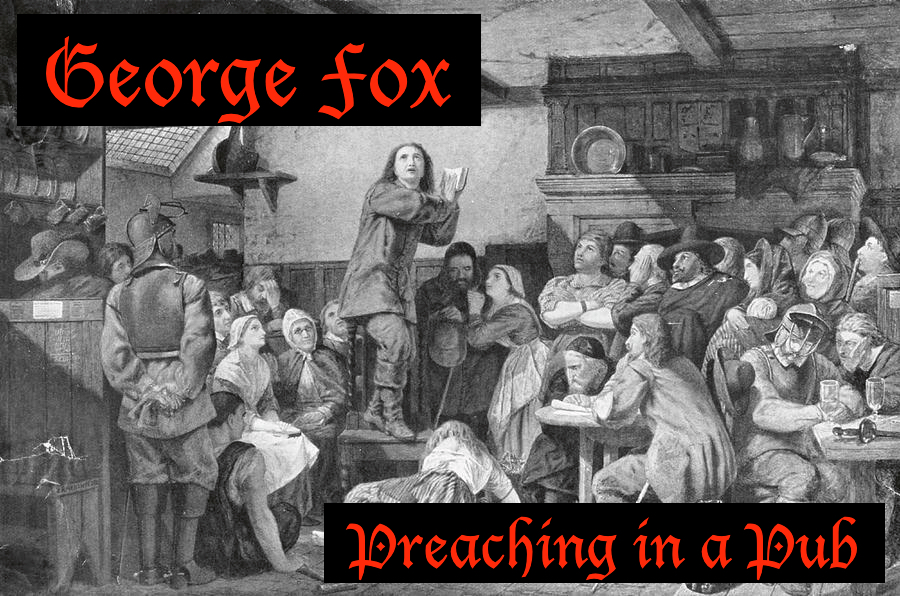
Pubs & Pandemics

How would the Inklings have conducted their meetings during a pandemic? Would they have continued secret rendezvous at the Eagle and Child?

Of course not. They were a law-abiding group of thinkers, and would never have thought to visit a pub if the Queen or Prime Minister told them to remain at home. After all, even the University of Oxford is following government directives: “All non-essential staff members must work from home. . . . Students have been asked to leave the University unless they have a compelling reason to stay.”

My guess is that C.S. Lewis would have relished the opportunity to settle in at home to work on his correspondence and perhaps a new essay. He would, of course, still want to enjoy a good walk during the day—although Lewis would doubtless wear a mask and maintain safe distances.

Pubs are on my mind due to a recent article entitled “How the Black Death Gave Rise to British Pub Culture: For centuries-old bars, a pandemic is nothing new.”

The piece featured two ancient public houses that lay “claim to the contentious title of Britain’s oldest pub and [are] no stranger[s] to pandemics.” While we lived in the U.K., I don’t recall ever visiting Ye Olde Fighting Cocks in Saint Albans.* However, we did enjoy visiting Ye Olde Trip to Jerusalem in Nottingham.

In times of tribulation, such as war, pubs provide a warm respite for many. An alcoholic can drink happily in solitude at home.⁑ But one express purpose of a pub is to foster a casual and comfortable social environment.

C.S. Lewis and his fellow Inklings enjoyed pubs in Oxford. When Lewis moved to the environs of Cambridge, he naturally sought out a similar setting in which to relax and entertain. In 1954, he wrote the following to a friend.

There are excellent pubs at Cambridge; and I speak from first-hand knowledge, having just returned from a week of spying out the land there. I’m afraid one must admit that, architecturally, Cambridge beats Oxford; there is so much more variety in Cambridge.

Here in the United States, only “essential” functions have remained accessible during the various restrictions imposed by “stay-at-home orders.” It’s sobering to ponder what our culture values most important, weigh those deemed necessary (e.g. marijuana dispensaries) against those deemed nonessential (e.g. churches).

Gradually now they intend to transition toward a restoration of some of our Constitutional rights. The New York Times is updating the state-by-state status on a regular basis.

It will be interesting to see if this progresses forward gradually, or if unanticipated events cause any locales to reverse their course.

Hopefully, life will return to “normalcy” sooner rather than later. The scars will last though, whatever happens. Lives lost. Businesses closed, with hopes shattered and dreams dispelled. In the aftermath of this global tragedy, it may well be that cordial, familiar gathering places, will once again play a role in reestablishing balance.

The previously cited article about the Black Plague says, “For Brits, a pub has always been more than just a place that sells beer . . .” That sentiment is true in many other cultures, as well. We humans are, by our very nature, social beings. Being deprived of these social settings has caused some people to experience a sort of shell shock. It may well take some time—and perhaps even a pint or two—to begin the healing.   


* Our family did visit the spectacular Roman ruins of Verulamium. One of the Romans’ largest cities, it was destroyed by Boudicca during the rebellion she led. It was later renamed in honor of Alban, one of the first British martyrs.

⁑ Some alcoholics do prefer to get plastered in bars. Examples include Ernest Hemingway and Dylan Thomas. The latter had his final drink at New York City’s White Horse Tavern. “After downing 18 shots, Thomas collapsed outside the tavern and later died at St. Vincent’s Hospital.”

Sand, Sand, Everywhere

Sand is a fascinating, and awe-inspiring, substance. It evokes a variety of reactions, depending on our personal histories and preferences. Some smile as they contemplate lounging on warm, smooth beaches. Others may grimace as they recall desert experiences where they struggled to remain hydrated, and sandy grit seemed to work its way into all those places it didn’t belong.

Some places have lots of sand. For example, 80% of Turkmenistan is covered by sand. And yet, this doesn’t stop them from wanting more! Turkmenistan determined theirs wasn’t appropriate for building a racing track, so they paid $1.3 million for British sand.

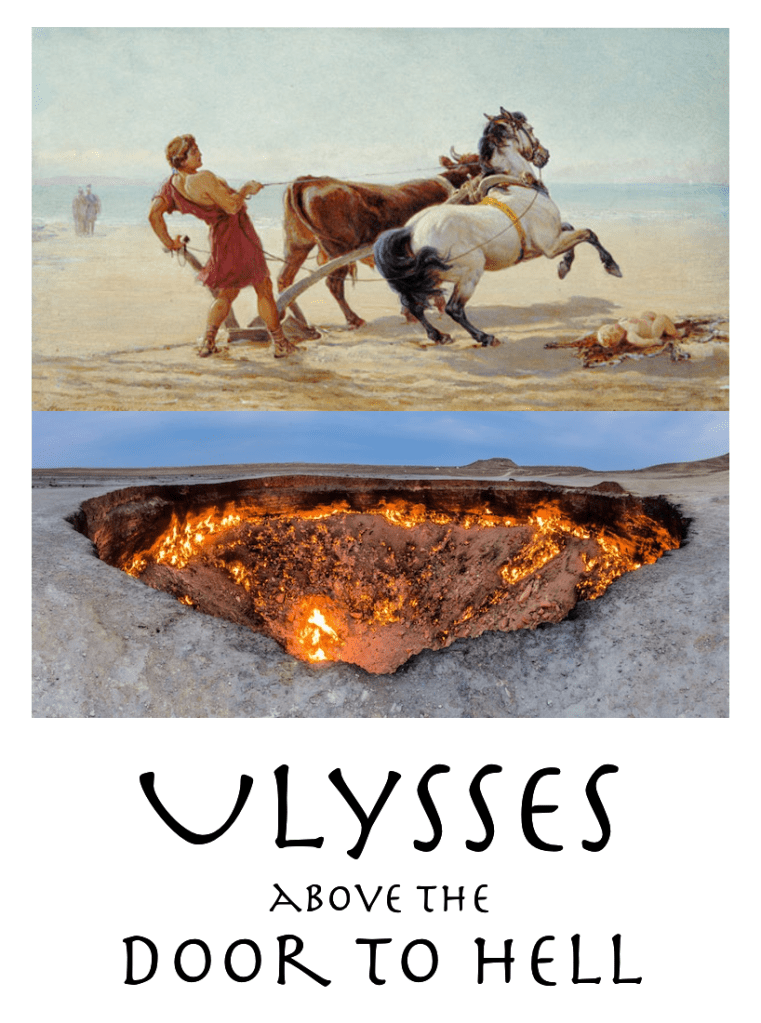
Turkmenistan is so stark that one of its main tourist attractions is a fiery crater on a barren landscape that is called the “Door to Hell.” National Geographic participated in an expedition which included a descent into the 100 foot deep inferno.

The idea of a nation of unending sand purchasing even more, brought to my mind a familiar verse from Coleridge’s “Rime of the Ancient Mariner.” And recalling the relentless flames of their methane pit, inspired me to pen my own variation of that theme.

Water, water, every where,
And all the boards did shrink;
Water, water, every where,
Nor any drop to drink.
(Samuel Coleridge)

Sand, sand, everywhere,
But not a grain to sell;
Sand, sand, everywhere,
A scorched foretaste of hell.
(Robert Stroud)

Lewis and Irish Sand

It is no surprise to readers of Mere Inkling, that we can find a Lewisian connection to even something so inconsequential as rocks* which have been weathered and worn into small fragments.

Like most of us, Lewis encountered sand in a variety of settings. In the 1950s he made a trip to Donegal, where he noted its distinctive beaches.

My correspondence has lately been in much the same state as yours: that is, on coming back from a holiday in Ireland I found about 60 letters to deal with. I had a lovely time over there: the best part in Donegal, all Atlantic breakers & golden sand and peat and heather and donkeys and mountains and (what is most unusual there) a heat wave and cloudless skies. Walks were much interrupted by blackberries: so big and juicy, and sweet that you just couldn’t pass without picking them.

To another friend, he wrote:

I was with a friend in Donegal which is a very fine, wild country with green mountains, rich secretive valleys, and Atlantic breakers on innumerable desolate sands.

But alas!, they get less desolate every year and it will soon be just a holiday resort like so many other places. (One always disapproves of all holiday-makers except oneself!)

Sand as a Metaphor

Everyone knows sand. That is especially true of the people who populated the lands of the Bible. From Ur to Egypt to Jerusalem, they encountered more than their share.

Because of its familiarity, and its unique traits, sand provides fertile soil [sorry] for producing metaphors. A couple, for example, from the Scriptures themselves.

[God speaking to Jacob] “I will surely bless you, and I will surely multiply your offspring as the stars of heaven and as the sand that is on the seashore.”
(Genesis 22:17)

[Description of the combined army facing the Hebrews in Canaan] “And they came out with all their troops, a great horde, in number like the sand that is on the seashore, with very many horses and chariots. And all these kings joined their forces . . .”
(Joshua 11:4)

“How precious to me are your thoughts, O God!
    How vast is the sum of them!
If I would count them, they are more than the sand.”
(Psalm 139:17-18)

But sand is not simply used to illustrate multitudes or numbers.

“A stone is heavy, and sand is weighty,
    but a fool’s provocation is heavier than both.”
(Proverbs 27:3)

[From a description of the Messianic Age]
“Then the eyes of the blind shall be opened,
    and the ears of the deaf unstopped;
then shall the lame man leap like a deer,
    and the tongue of the mute sing for joy.
For waters break forth in the wilderness,
    and streams in the desert;
the burning sand shall become a pool,
    and the thirsty ground springs of water . . .”
(Isaiah 35:7)

[God declares his power]
“Do you not fear me? declares the Lord.
    Do you not tremble before me?
I placed the sand as the boundary for the sea,
    a perpetual barrier that it cannot pass;
though the waves toss, they cannot prevail;
    though they roar, they cannot pass over it.”
(Jeremiah 5:22)

[Jesus said] “Everyone who hears these words of mine and does not do them will be like a foolish man who built his house on the sand.” (Matthew 7:26)

C.S. Lewis’ Use of Sand as a Metaphor

In Mere Christianity, Lewis alludes to Jesus’ words when he says even the best human beings will disappoint. Only the trust placed in Christ will never disappoint.

We must go on to recognise the real Giver. It is madness not to. Because, if we do not, we shall be relying on human beings. And that is going to let us down. The best of them will make mistakes; all of them will die. We must be thankful to all the people who have helped us, we must honour them and love them.

But never, never pin your whole faith on any human being: not if he is the best and wisest in the whole world. There are lots of nice things you can do with sand: but do not try building a house on it.

In Surprised by Joy, Lewis explains his concept of Joy and how it relates to longing for heaven and being in the presence of God. In his description of how flashes of wonder grace our lives, he warns we should not confuse them with the ultimate joy for which we yearn.

I saw that all my waitings and watchings for Joy, all my vain hopes to find some mental content on which I could, so to speak, lay my finger and say, “This is it,” had been a futile attempt to contemplate the enjoyed.

All that such watching and waiting ever could find would be [merely] an image . . . I knew now that they were merely the mental track left by the passage of Joy—not the wave but the wave’s imprint on the sand.

A final example comes from Lewis’ under-appreciated Pilgrim’s Regress. One of the archetypal characters, Mr. Savage, attempts to waylay young Christian from following the Landlord (i.e. God).

“But as [belief in the Landlord] is not true, there remains only one way of life fit for a man.” This other way of life was something he called Heroism, or Master-Morality, or Violence. “All the other people in between,” he said, “are ploughing the sand.”

Plowing the sand is an ancient idiom. And its meaning is fairly evident, even to those encountering it for the first time. An online dictionary says “ploughing the sand has been a proverbial image of fruitless activity since the late 16th century.” In truth, wasting one’s energies in this fruitless pursuit possesses far deeper roots.

In The Story of Troy, the author describes the efforts of Ulysses to avoid crossing the Aegean to fight a war for which he had forcibly argued. He feigned insanity to stay home.

[Ulysses] paid no heed, however, to the messages sent to him asking him to join the army at Aulis. Agamemnon resolved, therefore, to go himself to Ithaca to persuade Ulysses to take part in the expedition. He was accompanied by his brother Menelaus, and by a chief named Palamedes, a very wise and learned man as well as a brave warrior.

As soon as Ulysses heard of their arrival in Ithaca, he pretended to be insane, and he tried by a very amusing stratagem to make them believe that he was really mad. Dressing himself in his best clothes, and going down to the seashore, he began to plow the beach with a horse and an ox yoked together, and to scatter salt upon the sand instead of seed.

Fortunately for the great author, Homer, Ulysses’ ruse was exposed. And it was revealed in an act worthy of Solomon that gave dual meaning to the hero’s fruitless plowing of sand.

Palamedes, however, was more than a match in artifice for the Ithacan king. Taking Telemachus from the arms of his nurse, he placed the infant on the sand in front of the plowing team. Ulysses quickly turned the animals aside to avoid injuring his child, thus proving that he was not mad but in full possession of his senses. The king of Ithaca was therefore obliged to join the expedition to Troy.

It is my hope that you have found this post informative and entertaining . . . and that writing it does not constitute my own example of plowing the sand.


* Most sand was originally rock, although some beaches are predominantly composed of other materials. Many beaches are “almost entirely composed of worn down dead animal bits.” White sand beaches often have a different source, parrotfish excrement.

Parrotfish eat the algae that grow on coral. [Their] large, beak-like teeth (which inspire their name) help them break off and eat small pieces of coral. They have another set of teeth, called pharyngeal teeth [that] grind up the coral into small grains of sediment, which parrotfish then excrete in clouds of white powdery sand. (A single large parrotfish can produce hundreds of pounds of sand a year!) The sediment is distributed onto the reef and, eventually, can pile up above the surface of the water, forming islands like the Maldives . . .