
C.S. Lewis on Translating Poetry

“A poetic translation is always to some extent a new work of art.”
C.S. Lewis
English Literature in the Sixteenth Century

C.S. Lewis was a gifted translator. One who recognized well the challenges of skillful rendition, including the differing requirements imposed by prose and poetry. Thus, in his essay “The Literary Impact of the Authorised Version,” he offers the following insight.

No translation can preserve the qualities of its original unchanged. On the other hand, except where lyrical poetry is in question, the literary effect of any good translation must be more indebted to the original than to anything else.

In his autobiography, Surprised by Joy, C.S. Lewis describes his transformative encounter with translated poetry that introduced him to the “northern sky.” Before he became a skilled translator in his own right, he describes how a major part of his awakening,

. . . came through poetry. I had become fond of Longfellow’s “Saga of King Olaf:” fond of it in a casual, shallow way for its story and its vigorous rhythms.

But then, and quite different from such pleasures, and like a voice from far more distant regions, there came a moment when I idly turned the pages of the book and found the

unrhymed translation of Tegner’s Drapa and read

I heard a voice that cried,
Balder the beautiful
Is dead, is dead

I knew nothing about Balder; but instantly I was uplifted into huge regions of northern sky, I desired with almost sickening intensity something never to be described (except that it is cold, spacious, severe, pale, and remote) and then, as in the other examples, found myself at the very same moment already falling out of that desire and wishing I were back in it.

One of Lewis’ most involved explanations of the subject is found in Reflections on the Psalms. As Mere Inkling has noted in the past, C.S. Lewis was a distinguished member of a committee appointed to “revise the Psalter.” Being poetry, the Psalms demanded the proper mindset in their translators.

What must be said, however, is that the Psalms are poems, and poems intended to be sung: not doctrinal treatises, nor even sermons. . . . Most emphatically the Psalms must be read as poems; as lyrics, with all the licences and all the formalities, the hyperboles, the emotional rather than logical connections, which are proper to lyric poetry.

They must be read as poems if they are to be understood; no less than French must be read as French or English as English. Otherwise we shall miss what is in them and think we see what is not.

Some translations, unfortunately, are intentionally corrupted. I described in 2020 the Communist Chinese twisting of the Christian Scriptures. Fortunately, this sort of intentional crime is rare, and most translation efforts are well motivated. That does not mean, however, that even gifted linguists are up to every challenge.

In a letter to the editor of The Christian Century, C.S. Lewis contrasted academic and vernacular translations. Declaring that “any fool can write learned language,” he argues that clergy in particular are faced with the challenge of translating languages into prose which is understandable to the general population. He begins by demurring that he cannot respond to a request for an article written for a popular American audience.

An article on “translation” such as Dr. Pittenger suggests . . . certainly needs doing, but I could not usefully do it for Americans. The vernacular into which they would have to translate is not quite the same as that into which I have translated. Small differences, in addressing proletarians, may be all-important.

In both countries an essential part of the ordination exam ought to be a passage from some recognized theological work set for translation into vulgar English – just like doing Latin prose. Failure on this exam should mean failure on the whole exam.

It is absolutely disgraceful that we expect missionaries to the Bantus to learn Bantu but never ask whether our missionaries to the Americans or English can speak American or English. Any fool can write learned language. The vernacular is the real test.

C.S. Lewis remained an avid reader and critic until his death. In 1961, he received some translations of “modern” Greek poetry from his friend, Muriel Bradbrook (1909-1993), a Professor of English at Cambridge. After thanking her for the gift, he offers his personal response to the intercultural translations.

Dear Muriel,

What a nice thing for a man half drowned in compulsory leisure [due to poor health] . . . It has set me a problem. I find I get a good deal of pleasure out of many of these poems, but am at a loss to say why. One is not getting the “numbers” – and so far as I can judge from the notes the metres of the originals would not much please me.

Nor am I much in sympathy with many of the poets’ moods. The pleasure is like – at least rather like – what I get out of most translations of Chinese lyric. But that isn’t a solution, but merely another problem of the same sort. Anyway, thanks very much indeed.

Advice to Budding Translators

So many good works of literature remain to be translated so they can benefit those unfamiliar with their original tongue. Several years ago, I wrote a column entitled “C.S. Lewis’ School of Translation,” assembling some of the great writer’s wisdom.

I recently encountered a curiously brilliant observation on the subject of translating poetry in C.S. Lewis’ English Literature in the Sixteenth Century. Although he refers here to advising others, it would be wise for any of us who are considering the task to reflect long on Lewis’ acumen.

Most of us, I suspect, would advise a mediocre poet, if he must translate, to avoid the greater originals and choose the less, as if these would be easier. But this is probably a mistake.

The great poets have so much wealth that even if you lose two-thirds of it on the voyage home you can still be rich on the remainder: slighter art, when it loses the perfection of its original form, loses all power of pleasing.

As I think about it, this advice likely applies to prose as well. If you or I someday attempt to translate a work, we should consider working with the richest possible source material. That way, even if it loses value in the process, the quality that remains will still possess value for our translation’s readers.

Even if we do not pen “a new work of art.”

Aerial Inspiration

C.S. Lewis and J.R.R. Tolkien are two of the countless authors who have immortalized the beauty and majesty of eagles in their books.

In Narnia, talking eagles such as Farsight serve in Aslan’s councils of war, while their speechless brethren go about their instinctual activities. 

There would have been a splendid view . . . but among all those trees you could see nothing – only, every now and then, some huge pinnacle of rock above the tree-tops, and an eagle or two wheeling high up in the blue air.

“They smell battle,” said Corin, pointing at the birds. “They know we’re preparing a feed for them” (The Horse and His Boy).

Eagles feature even more prominently in Middle Earth. The sapient Great Eagles appear at various key moments, including the rescue of doomed heroes. After the One Ring has been destroyed, an eagle bears news of the defeat of Sauron to Minas Tirith. Its proclamation is voiced in poetry.

Sing now, ye people of the Tower of Anor,
for the Realm of Sauron is ended for ever,
and the Dark Tower is thrown down.

Sing and rejoice, ye people of the Tower of Guard,
for your watch hath not been in vain,
and the Black Gate is broken,
and your King hath passed through,
and he is victorious.

Sing and be glad, all ye children of the West,
for your King shall come again,
and he shall dwell among you
all the days of your life.

And the Tree that was withered shall be renewed,
and he shall plant it in the high places,
and the City shall be blessed.

Sing all ye people!

If that sounds biblical, don’t be surprised. Although Tolkien scrupulously avoided Judeo-Christian references, so his work would not be misconstrued as allegory, the Psalms have exerted great influence on Western literature. The Lord’s entrance into the holy city is celebrated in the following words in Psalms 33 and 24.

Rejoice in the Lord, O ye righteous:
for praise is comely for the upright.
. . . 
Lift up your heads, O ye gates; and be ye lifted up, ye everlasting doors;
and the King of glory shall come in.
Who is this King of glory?
The Lord strong and mighty, the Lord mighty in battle.
Lift up your heads, O ye gates; even lift them up, ye everlasting doors;
and the King of glory shall come in.

Eagles in Our Earthly Realm

My thoughts today rose toward the sky because of an eagle I encountered while enjoying nature with my border collie this morning.

I’m blessed to live in a community near the Hood Canal, one of America’s longest fjords, extending about fifty miles. Near my home, is a nesting ground for Bald Eagles, our national bird and one of the world’s grandest raptors. Their aeries, or nests, are massive.

Even after their crowded gathering to raise their young each year, we have eagles who remain in the area. It was one of these that I contemplated today.

I was almost mesmerized as I watched the creature circle around in the sky. Even with its unrivaled vision, it appeared to be above its normal hunting altitude. Rather, it looked for all the world like it was simply enjoying its nature, celebrating its eaglehood. 

Such sightings are impressive, but not rare. However, one thing truly amazed me. As I watched that eagle soar for many long minutes, not once did it flap its wings. It simply danced in the thermals.

During that riveting time it neither departed its unmapped path in pursuit of food, nor tired of its aerial ecstasy. It savored the gifts of its Creator, and I vicariously experienced shalom as I rested and beheld. 

The Lord is the everlasting God,
    the Creator of the ends of the earth.
He does not faint or grow weary;
    his understanding is unsearchable.
He gives power to the faint,
    and to him who has no might he increases strength.
Even youths shall faint and be weary,
    and young men shall fall exhausted;
but they who wait for the Lord shall renew their strength;
    they shall mount up with wings like eagles;
they shall run and not be weary;
    they shall walk and not faint (Isaiah 40).

Thank you, Lord, for granting me this reminder – and experience – of your holy promise this day.

A Bible Translation for Slaves

Only three copies of an abridged Bible printed in the United Kingdom remain in existence. To some, their very existence is scandalous. To others, they evidence the desire of Christians to promote spiritual liberation, even for those shackled by human chains.

The sole copy held in North America is in the possession of Fisk University in Nashville, Tennessee. Fisk is one of the United States’ distinguished  Historically Black Colleges & Universities (HBCUs), and was founded only six months after the end of the Civil War by the American Missionary Association.

Prior to returning the volume to Fisk, this extremely rare Bible was on loan to the Museum of the Bible in Washington, D.C.* During its exhibition there, the museum described it thusly:⁑

The Slave Bible, as it would become known, is a missionary book. It was originally published in London in 1807 on behalf of the Society for the Conversion of Negro Slaves, an organization dedicated to improving the lives of enslaved Africans toiling in Britain’s lucrative Caribbean colonies.

They used the Slave Bible to teach enslaved Africans how to read while at the same time introducing them to the Christian faith.

A Liberty Fund essay on the volume describes the thought process behind the editing. “The unknown editors intended to steer clear of any revolutionary verses that might spark interest in the idea of liberty,” they say.

For example, the selections from Genesis include the first three chapters, which cover the creation of the world and Adam and Eve in Eden but omits chapter four, which tells the story of Cain and Abel and the first murder.

Even an abbreviated Bible, however, retains the power to communicate a divine message. When C.S. Lewis discussed whether the Bible will become fashionable for secular literary study, he said the challenge would come in the fact that it is, in fact, sacred.

Unless the religious claims of the Bible are again acknowledged, its literary claims will, I think, be given only “mouth honour” and that decreasingly. For it is, through and through, a sacred book.

Most of its component parts were written, and all of them were brought together, for a purely religious purpose (“The Literary Impact of the Authorised Version”).

Because of that, I believe that C.S. Lewis would agree with me that this translation (stunted though it is) would retain the power to enlighten its readers. After all, we are not considering a version of the Bible to which human words have been added. What remains is still inspired. 

But in most parts of the Bible everything is implicitly or explicitly introduced with “Thus saith the Lord.” It is, if you like to put it that way, not merely a sacred book but a book so remorselessly and continuously sacred that it does not invite, it excludes or repels, the merely aesthetic approach. . . .

It demands incessantly to be taken on its own terms: it will not continue to give literary delight very long except to those who go to it for something quite different. I predict that it will in the future be read as it always has been read, almost exclusively by Christians (“The Literary Impact of the Authorised Version”).

Thus, I believe the missionaries who devised this edited version of the Scriptures did so with good intent. They would, I am sure, have preferred to deliver to their enslaved hearers the complete Word. However, in cases where slaveowners would bar the Bible altogether because of its themes of rescue, freedom, and the judgment of the powerful, the missionaries compromised their desires.

They deemed the benefits outweighed the compromise. The benefits being the opportunity to learn to read, and even more importantly, the Light that would still shine through the portions of God’s Word to which these precious souls would have access.

As C.S. Lewis noted in a 1952 letter, “it is Christ Himself, not the Bible, who is the true word of God. The Bible, read in the right spirit and with the guidance of good teachers, will bring us to Him.” And, upon making their compromise, these formerly barred missionaries would gain access to those who might otherwise never meet humanity’s Savior, who is the Word incarnate.

So, in order to provide at least a portion of the true Bible, they risked violating the New Testament precedent established in the Book of Revelation.

I warn everyone who hears the words of the prophecy of this book: if anyone adds to them, God will add to him the plagues described in this book, and if anyone takes away from the words of the book of this prophecy, God will take away his share in the tree of life and in the holy city, which are described in this book (22:18-19).

This is a fascinating subject, the various attitudes toward the education of people held in bondage. Various books have been written on the subject, and numerous primary sources describe the differing opinions all those involved. The perspective of “freemen” is particularly poignant. A freeman (or freedman), is a person who has been delivered from a state of slavery.

In the biblical sense, as defined in the International Standard Bible Encyclopedia, it is “one who was born a slave and has received freedom” and is commonly used to describe those who were delivered from “bondage to sin [and] presented with spiritual freedom by the Lord.”

For he who was called in the Lord as a bondservant is a freedman of the Lord. Likewise he who was free when called is a bondservant of Christ (1 Corinthians 7:22).

As we used to pray in the liturgy of my childhood – Grant this, O Lord, unto us all!

Online Resources for Further Reflection

Internet Archive not only offers many public domain works for free download. They also host many great texts that you can “borrow” online. Your local library remains a great place, but they probably don’t offer the following books related to this subject.

“When I can read my title clear:” Literacy, Slavery, and Religion in the Antebellum South

Masters & Slaves in the House of the Lord: Race and Religion in the American South, 1740-1870

Memoir of Mrs. Chloe Spear, a Native of Africa, who was Enslaved in Childhood, and Died in Boston, January 3, 1815

And, even more exciting, there are some period writings you can read and even download. A quick search turned up a copy of The Duty of Masters: a Sermon, Preached in the Presbyterian Church, in Danville, Kentucky. In 1846, the Rev. John C. Young devoted a significant portion of his message to the responsibility of slaveowners to promote literacy.

The duty of attending to the religious improvement of our servants comprises among others two important particulars – teaching and encouraging them to read God’s word, and inducing them to attend his worship. Many have avowed the doctrine that it is not right to teach servants to read the Bible – and in some of the States their instruction is prohibited by law.

Our posterity will doubtless wonder how so monstrous a doctrine could ever prevail to any great extent in a Christian land; and how good men could ever delude themselves into the belief that such a doctrine was consistent with the first principles of that gospel which is sent to the bond as well as the free, and which requires all who receive it to impart a knowledge of it to the utmost of their ability to all who have it not.

Amazingly, you can even download your own copy of Select Parts of the Holy Bible for the Use of the Negro Slaves in the British West-India Islands from Internet Archives. Determine for yourself whether it was better to share with the captives in the British West Indies these “select parts” or to ignore their plight altogether. A wise man once wrote:

The Church exists for nothing else but to draw men into Christ, to make them little Christs. If they are not doing that, all the cathedrals, clergy, missions, sermons, even the Bible itself, are simply a waste of time.

God became Man for no other purpose. It is even doubtful, you know, whether the whole universe was created for any other purpose (Mere Christianity).


* Coincidentally, the Museum of the Bible will also be hosting a live performance this summer of C.S. Lewis’ “The Horse and His Boy.” Check out the promo on their site to see how they creatively present the equine stars of the book on stage!

⁑ Yes, I understand that the “-ly” appended to “thus” is superfluous, since the word itself is an adverb, but it just sounds so right to my (as C.S. Lewis might appreciate) dinosaur ears.

The picture above, “Reading the Scriptures,” was painted in 1874 by Thomas Waterman Wood. 

Learning Languages

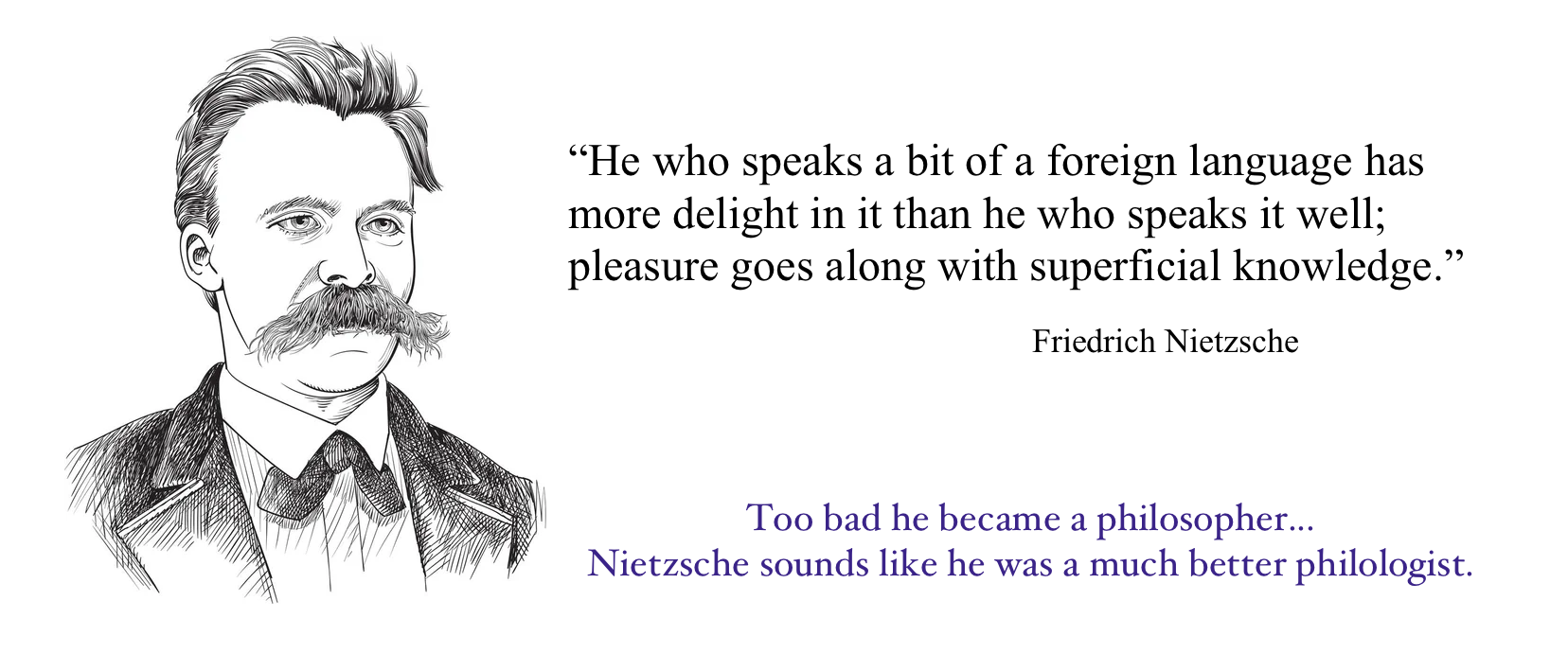
C.S. Lewis possessed a gift for languages. Although he was not a philologist like his friend J.R.R. Tolkien, Lewis was well educated and read and spoke a variety of languages.

In fact, when he and his wife played Scrabble, they allowed for the use of words from any language! For the record, though, he does confess to a German professor that his grasp of that tongue is “wretched.”

The only bona fide genius I’ve known was a classmate at the University of Washington. While I was struggling with classical Greek, in preparation for seminary, at the age of 23 Bruce already possessed four master’s degrees and was closing in on his PhD in Linguistics. He spoke fifteen languages, but could read nineteen.

Of course, that is still a small portion of the 7,168 languages Ethnologue tells us are in use today.

This enormous number – which doesn’t include unknown languages spoken among untouched people groups – accounts for the fact that thousands of Christians are laboring now in groups such as Lutheran Bible Translators to make the Scriptures available to all people.

Sometimes this involves creating a written language itself, where only an oral version exists. The largest such organization, Wycliffe Global Alliance, reports that “Bible translation is currently happening in 2,846 languages in 157 countries.”

While the Bible’s translation is certainly of utmost importance, it is wonderful to know that other valuable literature is also made available to readers who could not decipher the language in which it was originally composed. 

Lewis, in fact, was a translator in his own right. Beyond the literal translation of works from one tongue to another, Lewis also functioned as a “translator” of complex concepts and eternal truths. I once described this as C.S. Lewis’ bilingualism.

How many extremely intelligent and well educated people do you know . . . who can actually communicate with those of us possessing normal human intelligence? That talent is a rarity.

And it is precisely what makes C.S. Lewis such an unusual man. He was brilliant. Yet he could communicate with the common person – even the child – just as easily as he conversed with his fellow university dons.

C.S. Lewis mastered a number of modern languages, but it was his study of historic languages that especially inspired him. Icelandic, with its similarity to Old Norse, is one example about which I have written. 

. . . J.R.R. Tolkien and his friend C.S. Lewis established a group called Kolbitár which was devoted to reading Icelandic and Norse sagas. The word itself means “coal biter” and refers to those in a harsh environment drawing so close to the fire’s warmth they can almost bite the coals.

Another example is Old English. Along with Middle English, birthed by the Norman Conquest, these were essential elements of his training as one of the preeminent English scholars of Oxford and Cambridge. And these languages were not merely dusty relics. I encourage the curious to read “C.S. Lewis’s Unpublished Letter in Old English,” which appeared in the journal VII.

In 1926 C.S. Lewis wrote his friend Nevill Coghill a letter in Old English, a language also known as Anglo-Saxon. Unreadable for most current readers of Lewis, it understandably does not appear in his three-volume Collected Letters.

In the essay, George Musacchio provides an illuminating outline of Lewis’ diverse expertise with languages, both “foreign and domestic.” Lewis began the letter to his friend with the following salutation.

“Leowis ceorl hateð gretan Coghill eoorl luflice ond freondlice.”
Which translates as: “Lewis the churl bids to greet Coghill the earl.”

Is English Really that Difficult to Learn?

English is reputed to be one of the most challenging languages to learn. (More on this in a moment.) For example, the simple sentence which follows consists of a mere seven words, but holds seven different meanings, dependent upon which word is emphasized.

“I never said she stole my money.”

This example comes from an article entitled “English is Hard, But Can Be Understood Through Tough Thorough Thought Though.”

Rosetta Stone answers the question of how hard it is to learn English by saying “it depends on your first language.” 

In addition to the fact that “spelling is a poor indicator of pronunciation,” English possesses numerous “specific rules,” and complements this burden with the fact that “some rules have lots of exceptions.” The complexity is due to the language’s history, which also gave rise to its mammoth vocabulary.

English has a lot of words—Webster’s English Dictionary includes approximately 470,000 entries, and it’s estimated that the broader English vocabulary may include around a million words. . . .

English has such a broad vocabulary because it’s a blend of several different root languages. While English is a West Germanic language in its sounds and grammar, much of the vocabulary also stems from Romance languages, such as Latin, Italian, Spanish, and Portuguese.

One result of combining these various root languages is that the English vocabulary includes a ton of synonyms . . . And unfortunately, most of these synonyms aren’t fully interchangeable, so the exact word you choose does have an impact on the overall meaning.

It turns out English doesn’t even rank in the top three most difficult languages for the speakers of the five largest language groups. The ranked listings do include, however, Arabic, Japanese, Russian, and Mandarin.

So, let’s reverse the question for a moment. Which languages are the most difficult for a native English speaker to learn? Unbabel lists ten. Fortunately, only one of them is on my wish list.

Babbel Magazine has an article approaching that question from the opposite end. Which language is easiest for English speakers to learn.

This may come as a surprise, but we have ranked Norwegian as the easiest language to learn for English speakers. Norwegian is a member of the Germanic family of languages — just like English! This means the languages share quite a bit of vocabulary, such as the seasons vinter and sommer (we’ll let you figure out those translations).

Another selling point for Norwegian: the grammar is pretty straightforward, with only one form of each verb per tense. And the word order closely mimics English. For example, “Can you help me?” translates to Kan du hjelpe meg? — the words are in the same order in both languages, so mastering sentence structure is a breeze!

Finally, you’ll have a lot more leeway with pronunciation when learning Norwegian. That’s because there are a vast array of different accents in Norway and, therefore, more than one “correct way” to pronounce words.

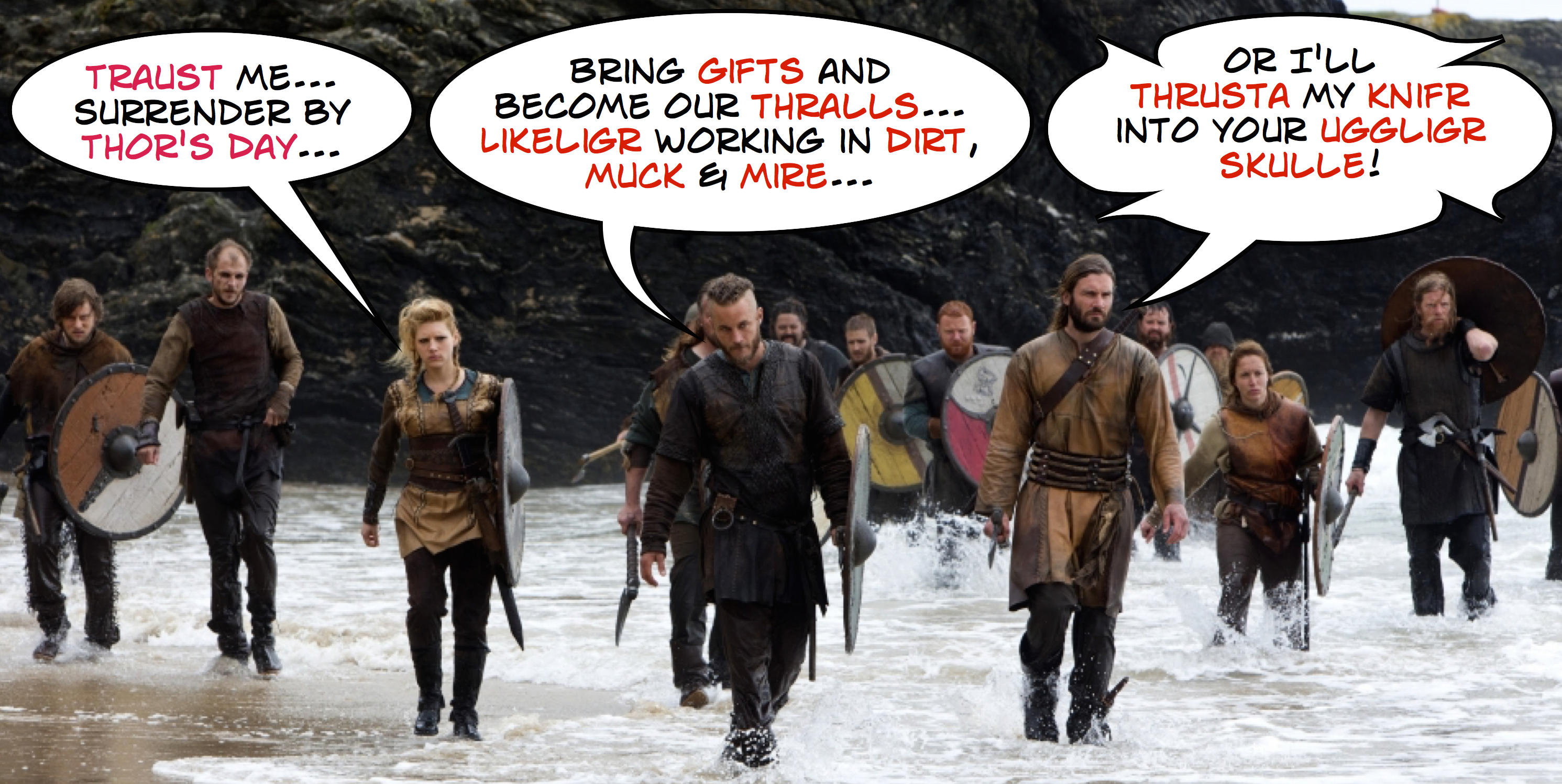
An article I wrote seven years ago hints at that same conclusion. I made this informative, and mildly threatening, illustration for “Norse Linguistic Invasion.”

Oxford Royale Academy lists several reasons why English is especially challenging to new students. The following issue of “irregularities” also plagues countless native speakers.

One of the hardest things about English is that although there are rules, there are lots of exceptions to those rules – so just when you think you’ve got to [come to] grips with a rule, something comes along to shatter what you thought you knew by contradicting it.

A good example is the rule for remembering whether a word is spelt “ie” or “ei:” “I before E except after C.” Thus “believe” and “receipt.”

But this is English – it’s not as simple as that. What about “science?” Or “weird?” Or “seize?”

There are loads of irregular verbs, too, such as “fought”, which is the past tense of “fight”, while the past tense of “light” is “lit.” So learning English isn’t just a question of learning the rules – it’s about learning the many exceptions to the rules.

The numerous exceptions make it difficult to apply existing knowledge and use the same principle with a new word, so it’s harder to make quick progress.

And even some of the normative “rules” are difficult to grasp. One example is that there’s a very specific order that adjectives must be listed ahead of a noun. According to Rosetta Stone,

The adjective order is: quantity, opinion, size, age, shape, color, origin/material, qualifier, and then noun. For example, “I love my big old yellow dog.” Saying these adjectives in any other order, like “I love my yellow old big dog,” will sound wrong, even when otherwise the sentences are exactly the same and communicate the same thing. Keeping rules like this in mind can be tricky, and it takes a lot of practice to get it right.

Adjective order is seldom considered, in part because it’s not considered good writing to string too many such words together. But apparently there are right and wrong ways to organize any such list.

Royal Order of Adjectives

Most students aren’t taught about adjective order in school and instead learn it through listening and reading. In English, the rules regarding adjective order are more specific than they are in other languages; that is why saying adjectives in a specific order sounds “right,” and deviating from that order makes a statement sound “wrong,” even if it’s otherwise grammatically perfect.

And, since we’re talking about English, even this Royal Order of Adjectives rule has exceptions

The hierarchy is not absolute, and there is some wiggle room among the “fact” categories – size, age, and so on – in the middle.

Native speakers are often delighted when they learn about this law and discover how flawlessly they apply it. It even went viral in 2016 . . . The tweet attached a paragraph by etymologist Mark Forsyth . . . giving an example that uses all the categories according to the OSASCOMP hierarchy: “a lovely little old rectangular green French silver whittling knife.”

I do not ever recall being taught (or reading on my own) about the “Royal Order of Adjectives.” Nevertheless, I don’t feel too embarrassed at acknowledging my previous ignorance, since even Lewis himself was comfortable in expressing gratitude for being introduced to new words. For example, when he thanked Dorothy Sayers for enlarging his vocabulary with her work on Dante.

So, is English all that challenging? Well, C.S. Lewis did his part to make it less daunting, joining a public debate in Britain, with an unexpected argument. Discussing English’s previously noted problem with inconsistencies and confusion in spelling, the don offered a simple solution.

In a column on Lewis and the history of words, I included an extended passage from a letter Lewis wrote challenging a contemporary British effort to “reform” spelling. Surprisingly, he argued against the necessity for uniformity in spelling. After explaining why our language functions as it does, he advocates:

As things are, surely Liberty is the simple and inexpensive ‘Reform’ we need? This would save children and teachers thousands of hours’ work.

Surely all but the most diehard grammarians would be sympathetic to his argument.

Next week I plan to write about another linguistic matter closely associated with the Inklings – the creation of new words and languages.

Resurrection Bodies, Angels & C.S. Lewis

And just what will those heavenly bodies be like..? And what about those angels..?

Among the many things that Christians look forward to, as an unearned gift from God, is a new body. This resurrected body will not be like our old (i.e. former) body… but it will be similar to the bodies of our first parents, Eve and Adam. So, in a sense, one might say it’s a bit like that old, old (i.e. original) body.

Sadly, there’s a lot of unnecessary confusion about what awaits us after death. While the Lord doesn’t give us all the details (which we wouldn’t be able to comprehend right now anyway), he does make the big picture clear. Here are some facts (based on the Scriptures as interpreted for 2,000 years within the orthodox Christian faith).

1.  You can’t do enough good works to deserve to enter heaven. It’s all about God’s mercy and grace.

If you think you can be good enough to get there on your own . . . sorry. If you therefore don’t think it matters at all how you live… you will end up just as sorry.

2. In heaven, God’s redeemed will not be incorporeal spirits. We’ll have bodies, just as our Maker intended from the day he breathed life into Adam’s lungs. Christians affirm belief in the “resurrection of the body.”

As to the nature of the bodies, God doesn’t leave us ignorant. One of the best New Testament descriptions is found in First Corinthians.

Even the Old Testament prophet Job proclaimed the wonders of a bodily resurrection when, in his own flesh, he would see the Lord.

God’s written word includes more about our resurrection bodies. One, from the letter to the Christians in Philippi, says, “the Lord Jesus Christ . . . will transform our lowly body to be like his glorious body.” This verse, like the stained glass image above, inspires me to wonder what that body will be like. Like Jesus’ own resurrection body, we learn.

Perhaps also like humanity’s unfallen human bodies portrayed here in colored glass. If the artist’s vision is accurate, I’m eager to welcome back the hair that once adorned my head, and to enjoy those stunningly defined abs, that I unfortunately never possessed.

Writing to his friend Arthur Greeves, Lewis clarified the biblical definition of resurrection.

I agree that we don’t know what a spiritual body is. But I don’t like contrasting it with (your words) “an actual, physical body.” This suggests that the spiritual body wd. be the opposite of “actual” – i.e. some kind of vision or imagination. And I do think most people imagine it as something that looks like the present body and isn’t really there.

Our Lord’s eating the boiled fish seems to put the boots on that idea, don’t you think? I suspect the distinction is the other way round—that it is something compared with which our present bodies are half real and phantasmal. (19 August 1947)

3. Human beings never become angels. One of most common mistakes about heaven is that people (“good” ones, at least) become angels after they die. They don’t. Period. Angels are angels and people are people – two separate beings, each with their own nature. Angels are majestic, most certainly, but they were not blessed like humanity to be created in the very image of God.

And never forget, not all angels are good. Those fallen ones, in fact, no longer merit their identification as angels. Better to label them as what they’ve become, demons.

As for people being intrinsically distinct from angels, C.S. Lewis wrote a poem that contrasts angelic and human personhood.

On Being Human by C. S. Lewis

Angelic minds, they say, by simple intelligence
Behold the Forms of nature. They discern
Unerringly the Archetypes, all the verities
Which mortals lack or indirectly learn.
Transparent in primordial truth, unvarying,
Pure Earthness and right Stonehood from their clear,
High eminence are seen; unveiled, the seminal
Huge Principles appear.

The Tree-ness of the tree they know – the meaning of
Arboreal life, how from earth’s salty lap
The solar beam uplifts it; all the holiness
Enacted by leaves’ fall and rising sap;

But never an angel knows the knife-edged severance
Of sun from shadow where the trees begin,
The blessed cool at every pore caressing us
– An angel has no skin.

They see the Form of Air; but mortals breathing it
Drink the whole summer down into the breast.
The lavish pinks, the field new-mown, the ravishing
Sea-smells, the wood-fire smoke that whispers Rest.
The tremor on the rippled pool of memory
That from each smell in widening circles goes,
The pleasure and the pang – can angels measure it?
An angel has no nose.

The nourishing of life, and how it flourishes
On death, and why, they utterly know; but not
The hill-born, earthy spring, the dark cold bilberries.
The ripe peach from the southern wall still hot
Full-bellied tankards foamy-topped, the delicate
Half-lyric lamb, a new loaf’s billowy curves,
Nor porridge, nor the tingling taste of oranges.
– An angel has no nerves.

Far richer they! I know the senses’ witchery
Guards us like air, from heavens too big to see;
Imminent death to man that barb’d sublimity
And dazzling edge of beauty unsheathed would be.
Yet here, within this tiny, charmed interior,
This parlour of the brain, their Maker shares
With living men some secrets in a privacy
Forever ours, not theirs.

Heaven will be wondrous. Not only will we get to worship the One who created and redeemed us, there is so much more we have to look forward to. Enjoying a new, unflawed body . . . hobnobbing with angels who sang to celebrate Christ’s Nativity . . . and waiting in line to enjoy a beverage with C.S. Lewis.


The picture above is of a stained glass window in the Basilica of Our Lady of the Children in Châteauneuf-sur-Cher, France. Olive Titus, CC BY 2.0, via Wikimedia Commons

C.S. Lewis, the Psalms, and Penitence

When do you feel closest to God? When you’ve been about holy business all day and are now praying at your bedside? Or, when everything in your life seems to have imploded, and you look about you helplessly, with nowhere else to turn than your heavenly Father?

In The Four Loves, C.S. Lewis provides a brilliant insight into the nature of our souls.

Man approaches God most nearly when he is in one sense least like God. For what can be more unlike than fullness and need, sovereignty and humility, righteousness and penitence, limitless power and cry for help?

This rings true as I ponder my own spiritual pilgrimage. Tribulation and suffering clear my vision of material distractions in a way that allows me to recognize more vividly my need for God’s grace. And, in relying more consciously on his mercy and compassion, I draw closer to my Lord.

It’s no accident, in my opinion, that among the Psalms of David most treasured by God’s people, are those in which he cries out to the Lord for deliverance and salvation. Verses where David places no trust in his own strength or even in God’s previous beneficence. Poetry where this anointed king acknowledges that even the drawing of his next breath depends wholly on the providence of his Creator.

Seven of David’s songs are traditionally identified as the Penitential Psalms.* The great Saint Augustine’s regard for these Psalms is revealed in the manner in which he spent his final days.

As Augustine lay dying . . . he ordered those psalms of David which are especially penitential to be copied out [for example, “Have mercy on me according to thy steadfast love . . . For I know my transgressions, and my sin is ever before me,” Psalm 51], and when he was very weak, he used to lie in bed facing the wall where the sheets of paper were put up, gazing at them and reading, and copiously and continually weeping as he read (Robert Wilken, The First Thousand Years).

Like this ancient saint, C.S. Lewis knew the Psalms – and the English language – intimately. This led to his appointment to a distinguished “Committee to Revise the Psalter” for the Anglican Book of Common Prayer. Joint service on this committee facilitated the healing of a previously strained relationship with the poet T.S. Eliot.

Lewis had largely taken on this task in order to discourage revisions, since he thought the Miles Coverdale version that had been in use for four hundred years more than adequate.

His opinion was shared by another member of the committee, T.S. Eliot, whom Lewis finally got to know. (They had met only once, very briefly, in the forties, though they had corresponded for a while about Charles Williams after their mutual friend’s death.)

The two men got along very well indeed; bygones could at last be bygones, it seems. (The Narnian: The Life and Imagination of C. S. Lewis)

One of C.S. Lewis’ books is devoted to his thoughts about various themes in the Psalms. One such theme is judgment.

The “just” judge, then, is primarily he who rights a wrong in a civil case. He would, no doubt, also try a criminal case justly, but that is hardly ever what the Psalmists are thinking of. Christians cry to God for mercy instead of justice;’ they cried to God for justice instead of injustice. The Divine Judge is the defender, the rescuer. (Reflections on the Psalms)

In the introduction to this work, Lewis explains, “This is not a work of scholarship. I am no Hebraist, no higher critic, no ancient historian, no archaeologist. I write for the unlearned about things in which I am unlearned myself.” This, readers, is not false humility. It’s the real thing.

One of his most valuable observations comes in the following passage:

What must be said, however, is that the Psalms are poems, and poems intended to be sung: not doctrinal treatises, nor even sermons. Those who talk of reading the Bible “as literature” sometimes mean, I think, reading it without attending to the main thing it is about; like reading Burke with no interest in politics, or reading the Aeneid with no interest in Rome. That seems to me to be nonsense.

But there is a saner sense in which the Bible, since it is after all literature, cannot properly be read except as literature; and the different parts of it as the different sorts of literature they are. Most emphatically the Psalms must be read as poems; as lyrics, with all the licences and all the formalities, the hyperboles, the emotional rather than logical connections, which are proper to lyric poetry.

They must be read as poems if they are to be understood; no less than French must be read as French or English as English. Otherwise we shall miss what is in them and think we see what is not (Reflections on the Psalms).

In C.S. Lewis’ monumental study of English Literature in the Sixteenth Century (Excluding Drama), Lewis does not discuss the Psalms per se. He does, however, refer to them as the occasional subjects of Renaissance writers.

The most interesting such discussion involves John Fisher (1469-1535), a Roman Catholic bishop who was executed by Henry VIII. Fisher was a scholar, whose works included Commentary on the Seven Penitential Hymns.⁑

His vernacular works include devotional treatises – a Consolation to his sister and The Ways to Perfect Religion – and sermons, a series on the Penitential Psalms, funeral orations for Henry VII, and for the Countess of Richmond, and the famous sermon against [Martin] Luther in 1521.

Fisher’s style is grave and a little diffuse, never comic (though the pulpit then admitted that excellence), mildly rhetorical, and at times really eloquent. . . . His chief weakness is that he is too leisurely he is in no hurry to end a sentence or to let an idea go. . . .

Some of the medieval sweetness and richness still hangs about the prose of Fisher . . . but for our present purpose he matters less as a literary figure than as a convenient representative of the religion in possession at the very beginning of the English Reformation. He was a bishop and died for his faith. In him we ought to find what men like Tyndale were attacking. It was not in all respects what they imagined it to be. The Pelagianism of which they implicitly accused the Roman Church is, like the antinomianism of which the Papists accused them, a figment of controversy.

Some of Fisher’s statements seem, at least to a layman, to be very close to Tyndale’s own, as when Fisher writes: ‘From the eyen of almyghty God whiche may be called his grace shyneth forth a meruaylous bryghtnes lyke as the beme that cometh from the sonne. And that lyght of grace stereth and setteth forthwarde the soules to brynge forth the fruyte of good werkes.’ (Sermon on Psalm xxxii)

And again, on Psalm li, ‘no creature of himself hath power to do good werkes without the grace and help of God’ What Tyndale would have regarded as the cloven hoof appears chiefly when Fisher is talking of penance By penance, on his view, sinners can ‘make due satysfacion’ so as to be ‘clene out of dette’ (Sermon on Psalm xxxii), and so ‘mstyfyed by the sacrament of penaunce’ that ‘God can ask no more of them’ (ibid). . . .

One merit, very unusual in that age, Fisher can claim he is hardly at all scurrilous. His attack on Luther is not, indeed, masked under those forms of politeness which are usual between theological (though not between political) opponents today. But there is hardly any real abuse, compared with More, or even with Tyndale, Fisher is almost courteous.

Many readers of Mere Inkling already possess a high regard for the Psalms. In light of the affection felt for them by saints (including C.S. Lewis) for millennia, perhaps those who do not yet appreciate them, will reconsider their appraisals.


* They are Psalms 6, 32, 38, 51, 102, 130 and 143. The opening of the first expresses a theme common to all: “O Lord, rebuke me not in your anger, nor discipline me in your wrath” (ESV).

Likewise, the beginning of Psalm 130: “Out of the depths I cry to you, O Lord! O Lord, hear my voice! Let your ears be attentive to the voice of my pleas for mercy!” (ESV).

⁑ You can download John Fisher’s Commentary in two volumes at no cost, from Internet Archive (1 and 2).

Renaissance Fashions

Although it does not relate to the topic of this post directly, the following information from the “Medieval Manuscripts Blog” of the British Library is quite interesting. It describes “Girdle Books,” which frequently included selections from the Psalms.

In the 16th century, it became fashionable for aristocratic women to wear miniature prayer books bound in elaborate metalwork covers hanging from their girdles (i.e. belts). These girdle books provided them with handy reading material as well as fashionable dress accessories, allowing them to display their literacy and piety to the world.

The images on the page are fascinating. Of special historical interest is one that once belonged to Anne Boleyn (shown above), a gift from her murderous husband.

A particularly luxurious example is a girdle book with covers of gold filigree . . . It contains selected Psalms in English verse, translated and apparently written out by John Croke, one of Henry VIII’s clerks in Chancery, with a portrait of Henry VIII at the beginning.

The volume is traditionally thought to have belonged to Anne Boleyn, who is said to have handed it to one of her maids of honour when she was standing on the scaffold before her execution in 1536.

The Goodness of Good Friday

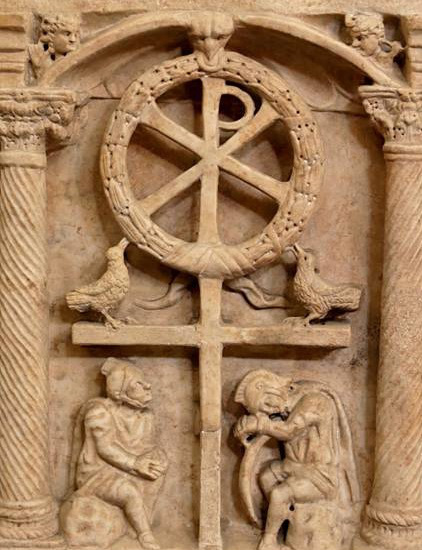
Jesus died on a cross. So why in the world would his followers choose the image of a cross to identify their faith?

The answer comes via a paradox. The cross is about two, superficially-contradictory realities. (1) Jesus bled, suffered and died on the cross. (2) On that very cross, Jesus purchased for all who call upon his name, eternal life.

This seeming paradox between simultaneous truths is sometimes referred to as a theological dialectic.

C.S. Lewis brilliantly illustrates this dynamic in his description of Death in his book Miracles.

On the one hand Death is the triumph of Satan, the punishment of the Fall, and the last enemy. Christ shed tears at the grave of Lazarus and sweated blood in Gethsemane: the Life of Lives that was in Him detested this penal obscenity not less than we do, but more.

On the other hand, only he who loses his life will save it. We are baptized into the death of Christ, and it is the remedy for the Fall. Death is, in fact, what some modern people call “ambivalent.”

It is Satan’s great weapon and also God’s great weapon: it is holy and unholy; our supreme disgrace and our only hope; the thing Christ came to conquer and the means by which He conquered (Miracles).

Thus, the grim suffering of Good Friday . . . becomes Good. It is not an accident. Nor is it a mistake. It was the necessary consequence of humanity’s fall and our costly, divine rescue. As C.S. Lewis writes in The Four Loves:

He creates the universe, already foreseeing – or should we say “seeing”? there are no tenses in God – the buzzing cloud of flies about the cross, the flayed back pressed against the uneven stake, the nails driven through the mesial nerves, the repeated torture of back and arms as it is time after time, for breath’s sake, hitched up. . . .

Herein is love. This is the diagram of Love Himself, the inventor of all loves.

Of course, this truth is only recognizable to those who have knelt before Jesus the Messiah and received his grace.

To unbelievers, “the world,” the cross makes no sense at all. Those in spiritual blindness reject it as the epitome of Christian absurdity.

Just such claims were made from the very beginning. Not long after Christ’s resurrection, these challenges were addressed by Paul, the Pharisee turned Apostle. Proclaiming the miracle of the cross, he reminds the young church in Corinth how they cannot expect the lost to comprehend its glory, its untainted goodness.

For the word of the cross is folly to those who are perishing, but to us who are being saved it is the power of God. . . .

Where is the one who is wise? Where is the scribe? Where is the debater of this age? Has not God made foolish the wisdom of the world? For since, in the wisdom of God, the world did not know God through wisdom, it pleased God through the folly of what we preach to save those who believe.

For Jews demand signs and Greeks seek wisdom, but we preach Christ crucified, a stumbling block to Jews and folly to Gentiles, but to those who are called, both Jews and Greeks, Christ the power of God and the wisdom of God. For the foolishness of God is wiser than men, and the weakness of God is stronger than men (1 Corinthians).

The crucifixion and resurrection of the only begotten Son of God are the sole means by which you and I may be cleansed, healed, and restored to the unending life for which our Lord created us.

Out of Context

Journalists quickly learn the skill of taking the words of people they dislike out of context. By doing this, they can make absolutely brilliant men and women sound like simpletons.

If the person is a public figure, with lots of material to sort through, you can find partial quotations (or obviously humorous or sarcastic remarks) that make the object of their ridicule sound like nearly anything – from a compassionate philanthropist to a conniving fascist.

That’s one reason some people who hope to tarnish the reputation of C.S. Lewis consciously avoid citing his work in its totality (or each piece in its honest context). Thus, as this article suggests, intelligent readers understand Lewis’ writing is “exceptionally good,” while some infantile critics regard it as “dodgy and unpleasant.”

(Do you appreciate my skillful use of adjectives in the previous sentence? They, of course, represent another dishonest method of undermining the arguments of people with whom one disagrees.)

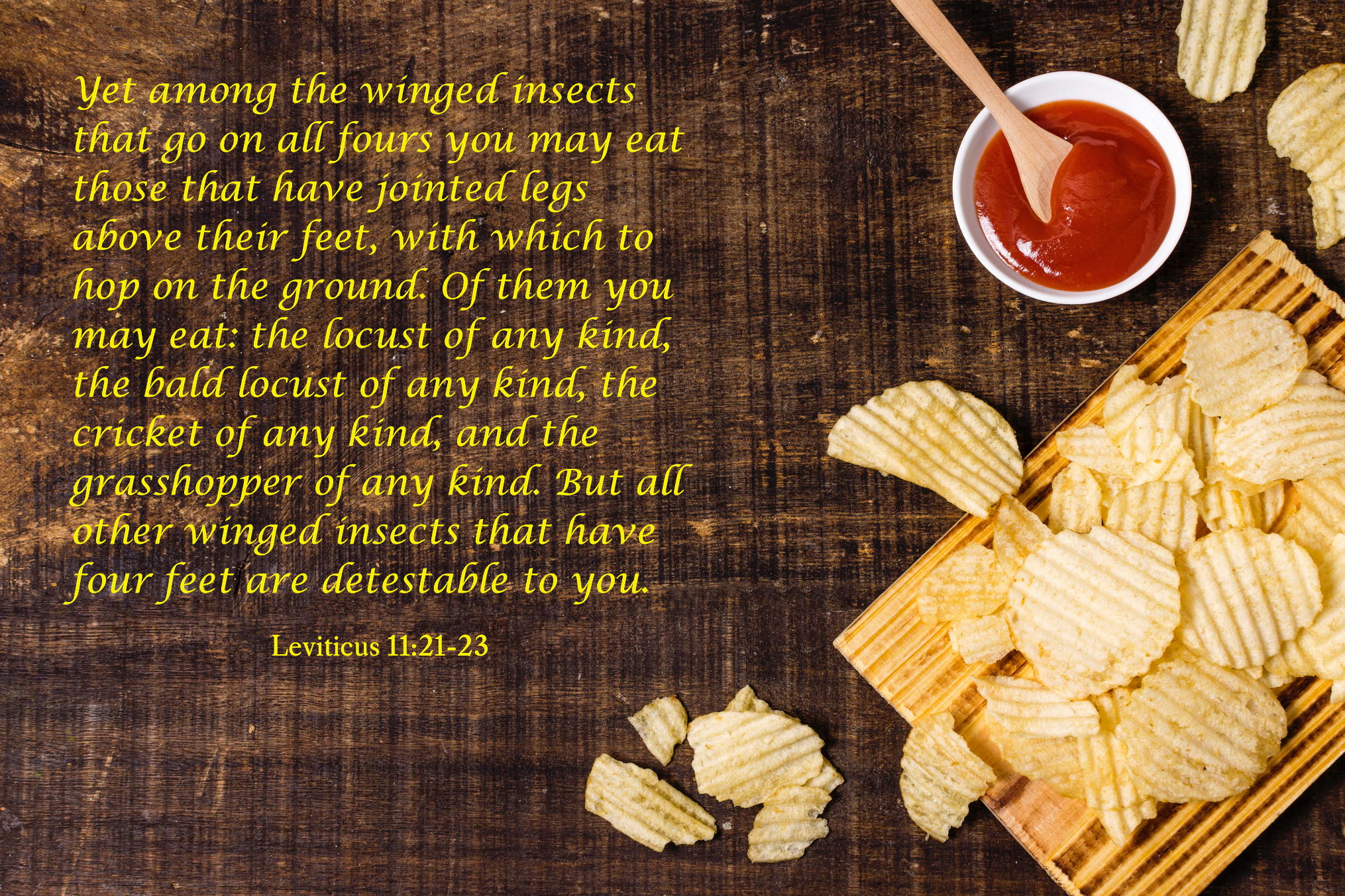
Returning to the idea of taking things out of their context, I offer the graphic (meme, if you will) that I created for the top of this column. It was inspired by “The 12 Most Inspiring Verses In The Bible” in the Babylon Bee. The brief article humorously illustrates how excising words from their context can make them sound rather bizarre.

These examples (mine included) are offered in a light-hearted way. However, the internet teems with examples of malicious attacks on God’s written Word. And many of these rely on the tried and true[false] technique of ignoring the immediate or full context to construct their strawman.

Strawmen or strawwomen are another dishonest form of argument, as “Logical Fallacies 101” explains.

Strawmen, scarecrows, and mannequins all have one thing in common: they are, by nature, flimsy objects that are easy to knock down. In the context of logical fallacies, a “straw man” argument is an argument that is framed in such a way that it is easy to “knock down” or dismantle.

How many times have you been in conversation with someone—someone who holds an opposing viewpoint to yours—who frames your position in a way that you have not? Then once they frame your position in that way, they attack it, supposing that by doing so they have won the argument?

In “Lewis on the Atheist’s Straw Man,” the author quotes a concise argument provided by C.S. Lewis “in Mere Christianity, [where] Lewis warns about over simplifying Christianity (something some people who call themselves Christians sometimes do), and the straw man Atheists often build from this. It’s definitely worth the read.

Biblical Verses that Demand Knowledge of Their Context

Admittedly, there are some passages in the Scriptures that are challenging to comprehend, apart from the whole. Intervarsity Press even has a website “Hard Sayings of the Bible,” subtitled “A Difficult Passage Explained Each Day.”

In “Encountering Difficult Passages,” the author charts a helpful course in how to discover their meaning. Here’s a sample of their sound advice:

Be extra careful with Google. I know. It’s so easy. It’s so tempting. You think, “Google tells me where to go when I’m physically lost; why can’t it help when I’m lost in the Bible?”

The problem is that Google only shows you what’s popular; it cannot differentiate between sites that provide truth and sites that provide ignorance. Avoid your natural impulse to click the first link that appears in a search. There are good websites out there to find answers, but you have to be discerning.

Some of Jesus’ own teachings were difficult for the disciples to comprehend. This was especially true of his announcement that he must die as part of the divine plan to deliver us all from the consequences of sin. When he announced the marvelous mystery of the eucharist (Lord’s Supper) he said “I am the bread of life. . . . Whoever feeds on my flesh and drinks my blood has eternal life, and I will raise him up on the last day. . . . This is the bread that came down from heaven, not like the bread the fathers ate, and died. Whoever feeds on this bread will live forever” (John 6).

While the twelve who become the Apostles continued to follow the Lord, some fell away in confusion because “When many of his disciples heard it, they said, ‘This is a hard saying; who can listen to it?’”

The Bible Truly “In Context”

Christians understand that the Incarnation, Life, Death, Resurrection and Return of Jesus Christ is the final, ultimate Word of the Bible. The Word himself, through whom all things were created, is the central, life-giving message of the holy Scriptures.

Because of this truth, we can evaluate the entire, comprehensive meaning of the Scriptures. We recognize the clear significance of those passages dealing with the Savior of humanity are vital, while those dealing with the nutritional value of locusts are rather less so.

While many people consciously practice this Christocentric reading of the God’s Word, one of its great champions was Martin Luther. If you wish to explore this subject in detail, I commend to you “All Scripture is Pure Christ: Luther’s Christocentric Interpretation in the Context of Reformation Exegesis.” You can find the entire volume in which this essay appears here.

As Martin Luther puts it, “To him who has the Son, Scripture is an open book; and the stronger his faith in Christ becomes, the more brightly will the light of Scripture shine for him.”

Christians are not Gnostics, who believe the Bible is hiding divine secrets from the uninitiated. Quite the contrary. However, the only way to truly understand the meaning of the Scriptures is to read them in their full context. And that context is Jesus, “the Lamb of God, who takes away the sin of the world!”

Christians & Retirement

When do pastors retire? Or, in the opinion of some, can Christian pastors actually retire?

If you’re looking for answers to this question in the Bible, you will find it’s not specifically addressed. Retirement is a relatively modern concept. In earlier ages, women and men were expected to continue contributing to the family and common good as they were able, even during their winter years.

This added a type of dignity to many of their lives. It is not that the crippled or dependent were viewed as something less, but there was an expectation that as long as a person had something valuable to offer to others, it was wrong to waste it.

Pastors are in a unique position. Most believe they have been “called” by God in some manner to serve the Lord and our brothers and sisters, created in his image. If God actively calls you, does that vocation (from vocatio, calling) expire on some set timeline?

It’s curious how people refer to some arbitrary age such as sixty-five as time to retire. Many Western nations have institutionalized that rather capricious practice by determining an age at which you can begin collecting money from the government’s coffers.

Some, like the U.S., have recently adjusted that beneficent accomplishment (i.e. becoming a senior citizen eligible to receive “social security” payments), in light of increasing lifespans, and political policies not suitable for discussion among the genteel audience of Mere Inkling.

Most secularists naturally think retirement – like everything else – is about them. One financial adviser said, “Retirement is like a long vacation in Las Vegas. The goal is to enjoy it the fullest, but not so fully that you run out of money.”

C.S. Lewis described one such person in a 1921 letter to his brother. He describes a mutual friend’s in-laws as ironic.

As you will never meet them (nor indeed will I), it is no breach of confidence to touch on the grim humours of his future ‘in-laws.’ A mother . . . who has all the money but is nevertheless incapable of resisting her husband, a retired army officer, busily engaged in trying to see if his constitution will ‘keep’ by being sufficiently soaked in spirits.

This indeed has been his life work, and the devil of it is that it seems likely to ‘keep’ a good bit yet.

Semi-Retirement

The frame on my auto license says “Semi-Retired Military Chaplain.” After retiring from active duty in the Air Force, I anticipated providing “pulpit supply” for vacationing pastors and serving an occasional “vacancy.” An interim or vacancy pastor covers the months between the departure of a congregation’s pastor and the call of a new pastor. I’ve served three, one of which was more than a year long.

Now that I’m a bona fide senior, I thought my vacancy days were over. It appears, however, that God may have other plans. This week I’ve been approached by a congregation interested in calling me to serve them in that role.

Please pray that God leads them in whether or not they should formalize that call. And, please pray that I will clearly discern God’s desire in this matter. Right now it appears to be one of those “Matthew 26” moments where “the spirit indeed is willing, but the flesh is weak.”

Can Anyone Truly Retire?

So, do pastors ever really retire, in the sense of ending their ministry? The answer is an unequivocal “no.” What’s more, if you are a Christian, you don’t get to retire either.

Here’s the catch – this vocation to actively serve God all of our days doesn’t just apply to pastors. You see, all Christians are called to “let your light shine before others, so that they may see your good works and give glory to your Father who is in heaven” (Matthew 5:16).

Consider 1 Peter 2:5 where the apostle writes: “You yourselves like living stones are being built up as a spiritual house, to be a holy priesthood, to offer spiritual sacrifices acceptable to God through Jesus Christ.”

While you usually hear the truth of the “priesthood of all believers” from Protestants, the fact is that it comes directly from the Bible and applies to us all. As one prominent Roman Catholic journal puts it:

The priesthood of all believers is a call to ministry and service; it is a barometer of the quality of the life of God’s people in the body of Christ and of the coherence of our witness in the world, the world for which Christ died. . . . this teaching is a summons to faithfulness on the part of all Christians, Protestants and Catholics alike.

Retirements or Transitions?

So, whatever we would like to be true, the fact remains that retirement is not part of God’s plan for his children. But that shouldn’t trouble us. Because the Lord not only promises to give us the strength to do anything he asks of us, he also leads us into different fields of harvest at different points in our pilgrimage.

Thankfully, he doesn’t expect me to be as effective working with youth as I was in my thirties (although some of the best youth workers I’ve seen were in their seventies).

Just as I can’t rapidly deploy to a warzone with members of my flock as I once did, I possess the maturity, patience and compassion to care for those in the twilight of their lives far better than I did decades ago.

An interesting testimony to these shifts in ministry focus is found in the Old Testament. God set the tribe of Levi apart to oversee all details related to the worship of God in the Temple. But their ministry in the holy place (the Temple and the Tent of Meeting which preceded it) was of a specified duration.

And the Lord spoke to Moses, saying, “This applies to the Levites: from twenty-five years old and upward they shall come to do duty in the service of the tent of meeting. And from the age of fifty years they shall withdraw from the duty of the service and serve no more.

They minister to their brothers in the tent of meeting by keeping guard, but they shall do no service. Thus shall you do to the Levites in assigning their duties” (Numbers 8).

This passage is fascinating. At fifty, the priest step down from their ceremonial religious duties. But they do not drift off into some lazy retirement. They assume new responsibilities. A role God deemed better suited to this stage of their lives.

So too, wizened old pastors still have a role in God’s church. For some it may be serving during seasons of congregational vacancies. For others it may simply be to pray.

In a 1930 letter to his closest friend, Arthur Greeves, C.S. Lewis offers a delightful description of a “retired” pastor who is still about the business of caring for others. The fact that Lewis wrote this while an avowed atheist makes it all the more moving.

I walked as usual after lunch, dropping in on the way to see if old Foord-Kelsie would accompany me. I think I have mentioned him to you – a retired country parson of 80, who drives his own car, carpenters, and mends everyone’s wireless.

He is an irreplaceable character . . . as redolent of English country life as an old apple in a barn. He is deliciously limited: cares for no poetry but Shakespeare, distrusts all mysticism and imagination, and all overstrained moods.

Yet you could not wish him to be otherwise: and inside this almost defiantly human and mundane framework there is such tenderness of heart that one never feels it bleak.

He was in his workshop when I arrived, with shavings all about his ankles, making a cover for the font of old Headington Church.

He would not come out, and I stayed to shout conversation for fifteen minutes above the thudding and singing of his circular saw. We had a bit of everything: an outburst against Shaw, a broad story, and then, as always, onto Tristram Shandy. ‘Wonderful book–oh a wonderful book. You feel snug when you read that–you get in among them all in that little parlour. . . .’

I wish you could have seen him saying all this, bending down as he shoved a beam of wood against the saw, with one dear old wrinkled eye screwed up and held close to the work. You must hurry up and come and see me before he dies, for he of all people should be added to our stock characters.

Lewis does, indeed, portray his walking companion, the Reverend Foord-Kelcey, as a “stock character.” But he does so with evident and sincere affection.

So, our vocations do not forever remain constant. They may change over time, but God’s call on our lives does not wane.

We may approach these transitions with some trepidation. I am not ashamed to admit I do so at the present moment. I hope you will join me in seeking to hear God’s call and respond with joy and enthusiasm, just as the saints before us – “Here I am! Send me.

For the Love of Words

Most writers, including the majority of bloggers, share a common affection. We love words, don’t we?

That love extends beyond mere fondness. We can find ourselves in a state of genuine wonder as we ponder definitions, etymologies (evolutions through diverse languages), and phonesthetics (how they sound). As C.S. Lewis once wrote, “Isn’t it funny the way some combinations of words can give you – almost apart from their meaning – a thrill like music?”

This is one aspect of a great article in the current issue of The Lutheran Witness.* In “For the Love of Words,” editor Roy Askins uses C.S. Lewis’ classic The Four Loves to explore the relationship we have with words. He does so from a Christian perspective shared by the Oxford don.

Words shape us in profound ways. God formed creation and continues to sustain it by the Word of His mouth. . . . Words, then, are not incidental to our lives, but form a central part and core of our identity as God’s people. It’s certainly appropriate for us to talk about “loving words.”

The very word for a lover of words – logophile – combines the Greek logos (word) with philia, which Lewis deems priceless, like “that Philia which Aristotle classified among the virtues or that Amicitia on which Cicero wrote a book.”

[Coincidentally, I have an article about ministry to those who are mourning in the current issue of The Lutheran Witness, as well. I assure you, however, that’s not why I’m citing “For the Love of Words.”] Longtime readers of Mere Inkling are well acquainted with my personal fascination with words and wordplay.

Many of you share this predilection. C.S. Lewis describes us in Studies in Words.

I am sometimes told, that there are people who want a study of literature wholly free from philology; that is, from the love and knowledge of words. Perhaps no such people exist. If they do, they are either crying for the moon or else resolving on a lifetime of persistent and carefully guarded delusion.

Literature, Lewis argues, is not simply the sum of its words. It involves the history of the words, their complex shades of meaning, and even what those very words meant to their original writers.

The Uniquely Christian Perspective

God pours out his gifts of writing quite broadly. Countless styluses, quills and pens have been wielded by talented pagans and atheists over the centuries.

Still, as Askins’ article alludes, Christians have a unique connection to words. Not only did God speak all creation into existence through his Word, but that Logos, that Word became incarnate and suffered an innocent death so that humanity might be redeemed. Askins concludes his article with a joyful truth.

When we seek to love words, then, we do not seek to love them as words in themselves. This danger we editors and writers must mark and avoid. No, we love words because in them and by them, we hear of and share God’s love for us in Christ. He alone makes words holy and precious; He alone makes words worth loving.

I love these closing words. And I strongly believe C.S. Lewis would too.


* The Lutheran Witness is the magazine of the Lutheran Church – Missouri Synod.