Writing Styles Revisited (What is Yours?)

If you were to liken your personal writing to that of a famous author, who would you name? Are you similar to Emily Dickinson, or are you an echo of Charles Dickens?

Perhaps your words flow like Shakespeare’s or erupt in staccato, like Hemingway’s. If you are a member of a writing critique group – which I highly recommend – your friends may have offered their own suggestions about authors you resemble.

It just so happens there are a couple of tools that can offer hints as to the answer to this question. When I looked back at an earlier post on this subject, I was shocked to find I had written it all the way back in 2012. Yes, I know some of you were in grammar school then.

I shared then a site which was relatively new. The “I Write Like” site invites you to submit samples of your writing, which it compares to a range of famous authors. I am curious to try the process today, since the programmer continued to update it until 2016. Perhaps my results will be different than those from 2012.

Programs such as this are frankly quite limited. For those of you interested in the programmer who designed this one, you can check out an interview conducted when it was initially released. In the interview, Dmitry Chestnykh explains how his “algorithm is not a rocket science, and you can find it on every computer today. It’s a Bayesian classifier, which is widely used to fight spam on the Internet.”

My Own Results

I’m unsure how many authors our Russian friend has included in the comparison files. It does include historical and contemporary authors. I have no idea whether my favorite author, C.S. Lewis, found his way into the database or not. My results do reveal, however, that at least one of his fellow Inklings did make the cut.

Without further conversation, allow me to share the results from my experiment nearly a decade ago.

Make sure you include lengthy selections from your work. Also, testing the program with different genres (assuming you write in different styles) will actually give you new matches. (That is, of course, as it should be.)

I tried a number of times (no, not fishing for results I wanted, but using a variety of types of my writing) and here were the repeated results:

For my blog posts: H.P. Lovecraft or J.R.R. Tolkien
For my more formal essays: J.R.R. Tolkien or Jonathan Swift

These were admirable results with which I have been happy to live. Thus, it is with some trepidation that I revisited the astonishing program today. And the results – For my blog posts: Arthur C. Clarke – For my more formal essays: Ditto.

Very interesting. Aside from the possibility that the program has been contaminated by some spaceborne virus, or intemperate Clarkean fans, I have to assume that Clarke may have been added after my initial venture into the unfathomable world of I Write Like.

In case any of you try out the program, I’d enjoy hearing your results – especially if they are someone other than a science fiction writer who died in 2008.

Another Way to Look at Writing Styles

There are a multitude of different elements involved in assessing a writer’s style – that which constitutes your “voice.” Vocabulary, sentence length, cadence, tone and a myriad of additional elements meld together in unique ways.

As David Downing’s fine article on C.S. Lewis’ advice to writers points out, the skilled writer considers how their words “sound.”

Lewis also believed that one should always write for the ear as well as for the eye. He recommended that a piece of prose be read aloud, to make sure that its sounds reinforce its sense.

Naturally, when we write for different audiences or purposes our voice can shift accordingly. That is why I fed the program selections from my blogs and my more considered essays. And, if they differ somewhat, you can imagine how distinctive my devotions are from my catechesis, or my fiction from my satire.

Speaking of satire, check out my recent report on Chinese Olympic results and the Uyghur people published last week in the Damascus Dropbear, a site similar to the Babylon Bee from the Land Down Under.

Back now to a second online program for assessing one’s writing. It can be found on a curious site called MySocialBrain. There you can participate in a variety of “research projects” that forfeit structured controls for broader access. The scientific benefit is obviously debatable, but the personal insights may well be beneficial.

One study entitled “Who do you write like?” compares the writing you submit with a number of famous authors. (As with “I Write Like,” your text is not retained on the system. Likewise, neither site requires that you enter your name or any other identifying information.)

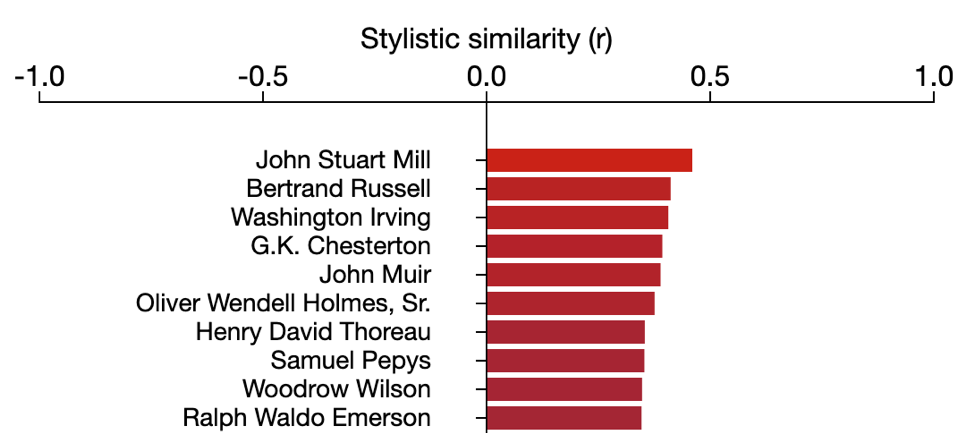
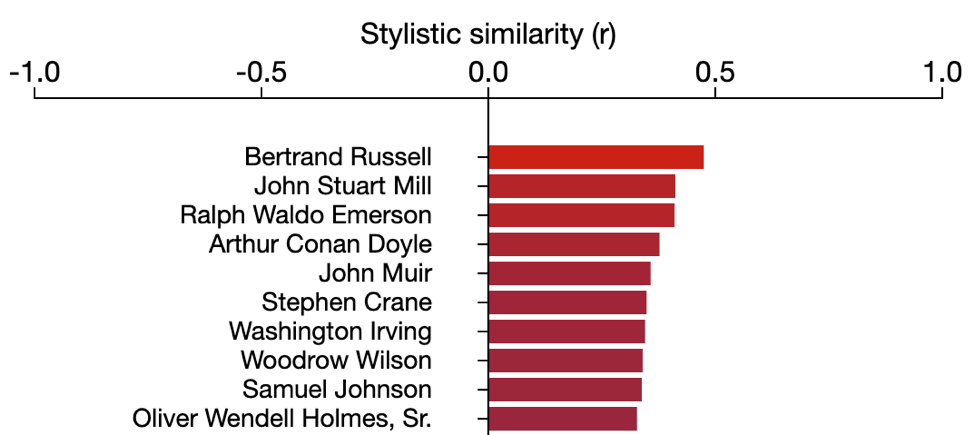
This research project focuses narrowly on one dimension of stylometric study, a field explored in great depth in “Quantitative Patterns of Stylistic Influence in the Evolution of Literature,” available online in the Proceedings of the National Academy of Sciences of the United States of America.

MySocialBrain bases its study on a reasonable premise. “Despite the seemingly ineffable qualities of style, great progress has been made in measuring writing quantitatively. This process, known as stylometry, can identify the influence of one writer on another or reveal the author of unattributed work.”

You can have your writing compared to that of others at this site.

I used two different samples of my writing (blog, then essay) and came up with fairly similar results. I haven’t read much from every one of these authors, but my gut suggests there may be a valid correlation here. And that impression is reinforced by how little correlation my submission had with the writing of Beatrix Potter, R.M. Ballantyne and Baroness Orczy (of whom I had never heard).

If you have a few free minutes, and are curious about what this stylometry tool might conclude about your writing, give it a try.


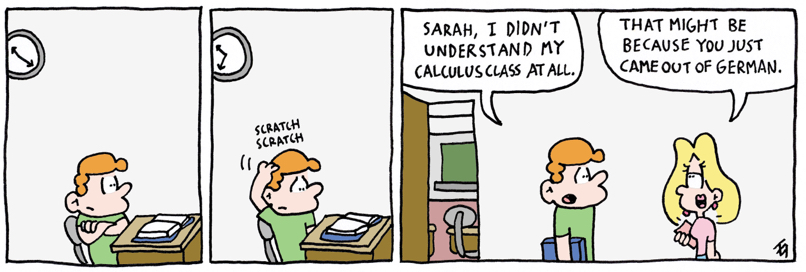
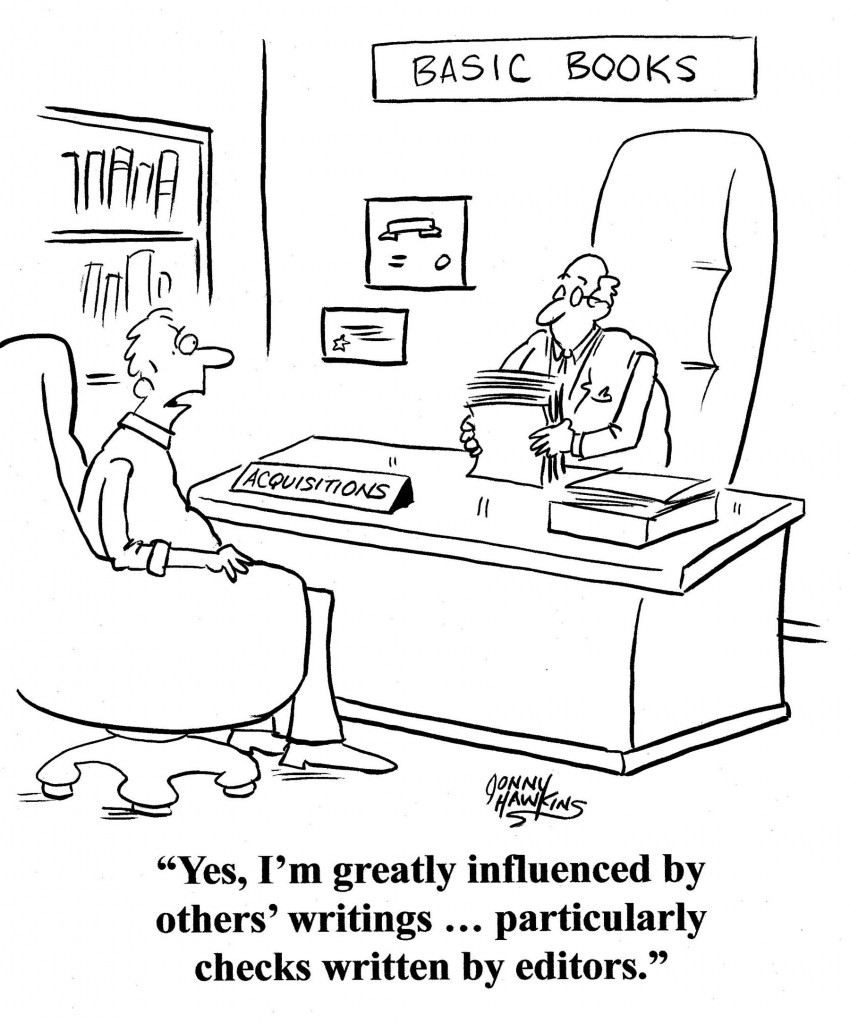
The cartoon at the top of this column is used with the permission of its talented creator, Jonny Hawkins. He is both talented and prolific. Enjoy a humorous jaunt through his personal website today.

Peculiarities of the German Language

Mark Twain wrote some entertaining travelogues about his overseas travel. In A Tramp Abroad, he relates a conversation he and a friend had with an American who had been studying veterinary medicine in Germany. The expatriate complains about how long his studies have taken – nearly two years – and proclaims how good it is to hear his native tongue.

The student’s most humorous words relate to his impression of the German language. It’s unusual in its nineteenth century phrasing. However, he does note one rather common opinion in his earthy observation.

“I spotted you for my kind [fellow Americans] the minute I heard your clack. . . .” The young fellow hooked his arm into the Reverend’s, now, with the confiding and grateful air of a waif who has been longing for a friend, and a sympathetic ear, and a chance to lisp once more the

sweet accents of the mother tongue, — and then he limbered up the muscles of his mouth and turned himself loose, — and with such a relish!

Some of his words were not Sunday-school words, so I am obliged to put blanks where they occur. . . . “when I heard you fellows gassing away in the good old American language, I’m – if it wasn’t all I could do to keep from hugging you! My tongue’s all warped with trying to curl it around these forsaken wind-galled nine-jointed, German words here; now I tell you it’s awful good to lay it over a Christian word once more and kind of let the old taste soak in. . . .

“I’m learning to be a horse-doctor! I like that part of it, you know, but ____ these people, they won’t learn a fellow in his own language, they make him learn in German; so before I could tackle the horse-doctoring I had to tackle this miserable language.”

And, as if mastering German wasn’t difficult enough in itself, he continues:

“First-off, I thought it would certainly give me the botts, but I don’t mind it now. I’ve got it where the hair’s short, I think; and dontchuknow, they made me learn Latin, too. Now between you and me, I wouldn’t give a ____ for all the Latin that was ever jabbered; and the first thing I calculate to do when I get through, is to just sit down and forget it. ’Twon’t take me long . . .”

I don’t intend to offend Germans for the challenge their language poses to some. (In fact, one set of my grand-parents named Vonderohe originally came from Pomerania.) But the nature of agglutinative languages is so alien to most of us that the very length of the glued-together words becomes daunting.

Since I’m not a linguist, I had to research to discover as I wrote this post that German is not a truly agglutinative language. It merely uses agglutination. Apparently, the distinction involves distinctions with which most non-linguists need not concern themselves. We can be satisfied with the simplified definition provided by Glottopedia.org – “Agglutinating language is a language which has a morphological system in which words as a rule are polymorphemic and where each morpheme corresponds to a single lexical meaning.”

In truth, it’s quite logical to make new words by stringing them together. Most English compound words are a combination of two elements. Longer Germanic words seem more common. Kraftfahrzeug-Haftpflichtversicherung, for example, sounds “nine-jointed,” but is actually only two words, meaning motor vehicle liability insurance.

C.S. Lewis and the German Language

C.S. Lewis was multilingual, and studied German while relatively young. He and his wife used every language as a source when playing Scrabble.

Nevertheless, Lewis was quite modest about his grasp of German. In 1954, while thanking a German professor for the offer of a philosophy book he had written, Lewis wrote,

I look forward to reading the book (when the translation arrives! My German is wretched, and what there is of it belongs chiefly to the libretto of the Ring and Grimm’s Märchen – works whose style and vocabulary you very possibly do not closely follow).

The following year Lewis wrote once again to Helmut Kuhn. This time it was to thank him for a review Lewis’ works. Lewis said, “it certainly seems to me that your grasp of the whole situation in which I have written and of the relation of my ideas both to it and to each other, goes far beyond any criticism I have yet had.” Before he makes that noteworthy statement, Lewis makes a playful comment relating to the presumed dignity implicit in the German language itself.

To be written about in the German language is, for an Englishman, a grave temptation to spiritual pride. The sentences are so massive and the words so long that, even if the content were less flattering than it is in your article, the subject can hardly resist feeling that he must be a much weightier phenomenon than he had ever supposed!

Eucestoda Words: Well Worth a Postscript

Germans are an accomplished, literate people who take pride in their language. They have gone so far as to coin a word that specifically identifies these sometimes lengthy compound words. Germans call them bandwurmwörter, which literally means “tapeworm words.” (Mark Twain would have delighted in knowing that.)

Friedrich Akademie, an education website, devotes a page on their website to “Beautiful German Tapeworm Words.”

Tapeworm words . . . what a fascinatinglyinventivesemanticnovelty!

On the Nature of Digressions

It’s nearly impossible to avoid digressions – those temporary departures from the current subject of conversation. While many digressions are interesting in the own right, they occasionally cause the speaker (or writer) to lose track of the actual point they are attempting to establish.

It’s like when I would be reading something the Emperor Constantine the Great, and at the mention of the Persian Empire, I would put the current article on hold while I explored the subject of just how the current regime in Iran reflects the religious fundamentalism of Zoroastrianism as it resisted during the Abbasid Caliphate. Ah, but forgive me, I digress.

The reason I am thinking about digressions today is because I recently encountered a massive one in one of Mark Twain’s works. But before we look at it, let’s consider a more recent example, in an article about C.S. Lewis.

In “The Uses of Ignorance,” literary critic Alan Jacobs explores a number of themes, including the way Lewis’ presentation of Christianity’s core resonates with believers from diverse theological backgrounds.

One lesson to be learned . . . is just how carefully Lewis articulated his “mere Christianity” so that it seemed “mere” indeed – recognizable to Christians from many different traditions as the faith they understood and practiced. But we also see . . . “that the lasting appeal of Mere Christianity is not based so much on Lewis’s genius as on his ability to point readers to the luminosity of the gospel message itself.” Which, I might add, is a kind of genius in itself.

The article is well worth reading, but the specific reason I mention it now, is because the author includes a lengthy (315 word) departure from his main theme which he brackets with the words “A digression:” and “End of digression”.) It’s rare to see something this straightforward.

C.S. Lewis as a Digresser

If the average woman or man is prone to digression, it seems apparent a genius – with voluminous knowledge on diverse subjects – would occasionally succumb to the same temptation. For someone like C.S. Lewis this is not a major problem, as he would never lose his place in the original conversation. On the contrary, Lewis’ digressions would invariably enrich the discussion, as they illuminated his points.

One of the only books written by C.S. Lewis which has entered the public domain is Spirits in Bondage. When it was published in 1919 (while he was an atheist), Lewis wrote to a friend: “The sub-title ‘A cycle of lyrical poems’ was not given without a reason: the reason is that the book is not a collection of really independent pieces, but the working out, loosely of course and with digressions, of a general idea.” (You can download a free copy of Spirits in Bondage at Project Gutenberg.)

Mark Twain’s Masterful Digression

I’ve written about Mark Twain in the past. In one column I shared his humorous reflections on the nature of editors. Writers will find the post particularly entertaining.

Editors played a major (usually unwelcome) role in Twain’s existence. Thus, it is unsurprising that a major digression in “How to Make History Dates Stick” involves these denizens of the publishing world.

One book I was reading this week includes an extensive and, of course, intentional example of digression. Although he doesn’t bracket it with the word “digression,” it is probably one of the best examples in existence. (We would expect nothing less from Samuel Clemens!)

In his novel Roughing It, Twain describes a pervasive blight to the western frontier, sagebrush.

I do not remember where we first came across “sage-brush,” but as I have been speaking of it I may as well describe it. This is easily done, for if the reader can imagine a gnarled and venerable live oak tree reduced to a little shrub two feet high, with its rough bark, its foliage, its twisted boughs, all complete, he can picture the “sage-brush” exactly.

Often, on lazy afternoons in the mountains I have lain on the ground with my face under a sage-bush, and entertained myself with fancying that the gnats among its foliage were Lilliputian birds, and that the ants marching and countermarching about its base were Lilliputian flocks and herds, and myself some vast loafer from Brobdingnag waiting to catch a little citizen and eat him.

Twain’s description of his daydreaming about sagebrush is entertaining, but this is not the quintessential digression I wish to share. After this brief digression, Twain writes a page and a half about the plant’s actual physical attributes and utility (e.g. for fires and tea). But then, when the reader least expects it, Twain goes off on another extended ramble.

Sage-brush is very fair fuel, but as a vegetable it is a distinguished failure. Nothing can abide the taste of it but the jackass and his illegitimate child, the mule. But their testimony to its nutritiousness is worth nothing, for they will eat pine knots, or anthracite coal, or brass filings, or lead pipe, or old bottles, or anything that comes handy, and then go off looking as grateful as if they had had oysters for dinner. Mules and donkeys and camels have appetites that anything will relieve temporarily, but nothing satisfy.

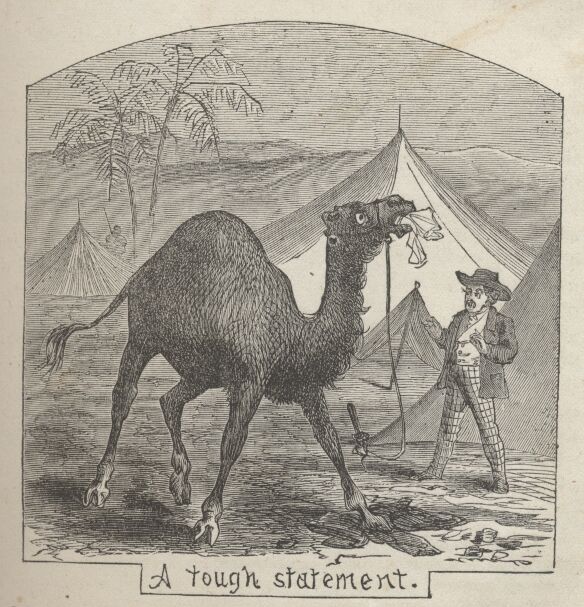
In Syria, once, at the head-waters of the Jordan, a camel took charge of my overcoat while the tents were being pitched, and examined it with a critical eye, all over, with as much interest as if he had an idea of getting one made like it; and then, after he was done figuring on it as an article of apparel, he began to contemplate it as an article of diet. He put his foot on it, and lifted one of the sleeves out with his teeth, and chewed and chewed at it, gradually taking it in, and all the while opening and closing his eyes in a kind of religious ecstasy, as if he had never tasted anything as good as an overcoat before in his life.

Then he smacked his lips once or twice, and reached after the other sleeve. Next he tried the velvet collar, and smiled a smile of such contentment that it was plain to see that he regarded that as the daintiest thing about an overcoat. The tails went next, along with some percussion caps and cough candy, and some fig-paste from Constantinople.

And then my newspaper correspondence dropped out, and he took a chance in that – manuscript letters written for the home papers. But he was treading on dangerous ground, now. He began to come across solid wisdom in those documents that was rather weighty on his stomach; and occasionally he would take a joke that would shake him up till it loosened his teeth; it was getting to be perilous times with him, but he held his grip with good courage and hopefully, till at last he began to stumble on statements that not even a camel could swallow with impunity.

He began to gag and gasp, and his eyes to stand out, and his forelegs to spread, and in about a quarter of a minute he fell over as stiff as a carpenter’s work-bench, and died a death of indescribable agony. I went and pulled the manuscript out of his mouth, and found that the sensitive creature had choked to death on one of the mildest and gentlest statements of fact that I ever laid before a trusting public.

At that point, the writer pretends to realize he has digressed and concludes the chapter in the persona of the naturalist he has earlier assumed.

I was about to say, when diverted from my subject that occasionally one finds sage-bushes five or six feet high, and with a spread of branch and foliage in proportion, but two or two and a half feet is the usual height.

Well, that’s probably more than enough of a diversion from your day’s responsibilities. I hope you enjoyed reading these words, and that your own skills as a digresser will be correspondingly enhanced.

Healing Laughter in Our World & Narnia

If you are like me, you could benefit from a rich, genuine laugh right about now. Las year was stressful on all of us, and many are wary the new year may not be dramatically better.

For many of us, humor is an integral part of our lives. In our extended family, it is an ever ready tool for lifting the spirits of others. Just the other day our son and his six-year-old son dropped by, and as they entered the front door I said, “enter, most welcome king and prince.” Without missing a proverbial beat, my grandson responded, “I’m the king, and he’s the prince.” It was a hilarious, spontaneous moment. My wife and I are deeply blessed because our lives are filled with these moments.

We have all heard about the healing powers of laughter. One Mayo Clinic article on the subject, “Stress Relief from Laughter? It’s No Joke,” lists a number of short- and long-term benefits. For example:

Laughter enhances your intake of oxygen-rich air, stimulates your heart, lungs and muscles, and increases the endorphins that are released by your brain. . . . [It can] improve your immune system. Negative thoughts manifest into chemical reactions that can affect your body by bringing more stress into your system and decreasing your immunity.

By contrast, positive thoughts can actually release neuropeptides that help fight stress and potentially more-serious illnesses. [And laughter can] relieve pain . . . by causing the body to produce its own natural painkillers.

Since laughter has indisputable mental—and physical—benefits, promoting it is a worthwhile avocation. That effort is complicated by the fact our individual sense(s) of humor differ significantly. For example, some people find slapstick humor wildly funny. I find it funny (in the sense of “odd”), that they consider it witty.

On the other hand, some people appreciate the “subtleties” of so-called British humor. Many of my relatives have never understood how much I have enjoyed Monty Python. To them, the Python approach is bizarre and unpalatable. Meanwhile, they enjoyed the clumsy stumblings of Jerry Lewis.*

Ricky Gervais, an English comedian who has met great success on both sides of the pond, wrote an interesting piece for Time. He offers very thoughtful observations on “The Difference Between American and British Humour.” Having lived in the United Kingdom, and counting some Brits as friends today, the following comment rings true with me.

There’s a received wisdom in the U.K. that Americans don’t get irony. This is, of course, not true. But what is true is that they don’t use it all the time. It shows up in the smarter comedies but Americans don’t use it as much socially as Brits.

We use it as liberally as prepositions in every day speech. We tease our friends. We use sarcasm as a shield and a weapon. We avoid sincerity until it’s absolutely necessary. We mercilessly [verbally assault] people we like or dislike basically.

And ourselves. This is very important. Our brashness and swagger is laden with equal portions of self-deprecation. This is our license to hand it out.

Perhaps my affinity for British humor comes from a flaw in my personal psyche, I mean, an innate appreciation for irony.

Another consideration is whether laughter is genuine or feigned. The latter presumably produces no positive results. Researchers in Japan conducted some laughter studies. One professor noted that honest laughter reaches down to a person’s diaphragm. He devised a machine to measure it.

Sensors placed near the diaphragm transmit waves to a computer screen, and these waves apparently reflect not only the intensity of a subject’s laughter but also its sincerity. A genuine laugh, straight from the heart, weighs in at 5 or more “aHs” per second –the “aH” (read “aha” in Japanese) being the unit of measurement Kimura devised in his quest to quantify laughter. Fake laughter makes no waves. The sensors ignore it, and the graph-lines on the screen remain unmoved.

Most of us, I suspect, can usually tell the difference between sincere responses, be they simple chuckles or raucous belly laughs, and the fake stuff. Fortunately, the inauthentic laughter is rarely malicious. An interesting dissertation entitled “The Meaningless Laugh,” explores laughter’s use to ease tension and “cover-up,” or mask, true opinions. It seems to me that insincere laughter has much in common with “white lies.”

Humor in the Life of C.S. Lewis

C.S. Lewis had a healthy sense of humor. Laughter abounded at gatherings of the Inklings. In light of Gervais’ comment about the British propensity for “teasing our friends,” check out “C.S. Lewis Compared J.R.R. Tolkien to What?

Our sense of humor is shaped and refined (or dulled) throughout our lives. An interesting letter from 1914, before Lewis was scarred in the trenches of the First World War, reveals his entertainment preferences as a young man.  

Last week I was up with these people to the Coliseum: and, though of course (which by the way I see no prospect of) I had sooner have gone to some musical thing, yet I enjoyed myself. The Russian Ballet–and especially the music to it–was magnificent, and G.P. Huntley* in a new sketch provoked some laughter.

The rest of the show trivial & boring as music halls usually are. At ‘Gastons’ however, I have no lack of entertainment, having been recently introduced to Chopin’s Mazurkas, & Beethoven’s ‘Sonate Pathétique.’

The mature Lewis made a profound observation about humor in Reflections on the Psalms.

A little comic relief in a discussion does no harm, however serious the topic may be. (In my own experience the funniest things have occurred in the gravest and most sincere conversations.)

I have found this to be true in my own life and ministry. In the words of the Mayo Clinic piece, “Laughter can also make it easier to cope with difficult situations. It also helps you connect with other people” even during the most trying of times.

Can Laughter Be Dangerous?

We all recognize that when humor is pursued at the expense of others, it is often destructive. Sarcasm is a dangerous, and often cruel, weapon. Healthy laughter, though, possesses a divine quality.

Laughter can, in fact, be such a positive thing that even the Tempter Screwtape⁂ warns his protégé to undermine it. (Remember, when reading Screwtape, that since Screwtape, the fictional writer of the infernal advice, serves the Devil, and thus the language is reversed.)

I am specially glad to hear that the two new friends have now made [your patient] acquainted with their whole set. All these, as I find from the [infernal] record office, are thoroughly reliable people; steady, consistent scoffers and worldlings who without any spectacular crimes are progressing quietly and comfortably towards Our Father’s house.

You speak of their being great laughers. I trust this does not mean that you are under the impression that laughter as such is always in our favour. The point is worth some attention. I divide the causes of human laughter into Joy, Fun, the Joke Proper, and Flippancy.

You will see the first among friends and lovers reunited on the eve of a holiday. Among adults some pretext in the way of Jokes is usually provided, but the facility with which the smallest witticisms produce laughter at such a time shows that they are not the real cause. What that real cause is we do not know.

Something like it is expressed in much of that detestable art which the humans call Music, and something like it occurs in Heaven—a meaningless acceleration in the rhythm of celestial experience, quite opaque to us. Laughter of this kind does us no good and should always be discouraged. Besides, the phenomenon is of itself disgusting and a direct insult to the realism, dignity, and austerity of Hell (The Screwtape Letters).

As to whether or not laughter can nudge a person towards a negative end, Screwtape singles out flippancy.

But flippancy is the best of all. In the first place it is very economical. Only a clever human can make a real Joke about virtue, or indeed about anything else; any of them can be trained to talk as if virtue were funny. Among flippant people the Joke is always assumed to have been made. No one actually makes it; but every serious subject is discussed in a manner which implies that they have already found a ridiculous side to it.

If prolonged, the habit of Flippancy builds up around a man the finest armour-plating against the Enemy that I know, and it is quite free from the dangers inherent in the other sources of laughter. It is a thousand miles away from joy: it deadens, instead of sharpening, the intellect; and it excites no affection between those who practise it (The Screwtape Letters).

Forewarned about the potential pitfalls of unhealthy humor, we can choose to avoid it. Meanwhile, we can rejoice with laughter that our Creator has bestowed upon us the ability to laugh.

C.S. Lewis celebrated this gift in his echo of our own creation in the story of Narnia’s birth. From the very first day, laughter was meant to resound throughout the world.

“Creatures, I give you yourselves,” said the strong, happy voice of Aslan. “I give to you forever this land of Narnia. I give you the woods, the fruits, the rivers. I give you the stars and I give you myself. The Dumb Beasts whom I have not chosen are yours also. Treat them gently and cherish them but do not go back to their ways lest you cease to be Talking Beasts. For out of them you were taken and into them you can return. Do not so.”

“No, Aslan, we won’t, we won’t,” said everyone. But one perky jackdaw added in a loud voice, “No fear!” and everyone else had finished just before he said it so that his words came out quite clear in a dead silence; and perhaps you have found out how awful that can be—say, at a party.

The Jackdaw became so embarrassed that it hid its head under its wing as if it were going to sleep. And all the other animals began making various queer noises which are their ways of laughing and which, of course, no one has ever heard in our world.

They tried at first to repress it, but Aslan said: “Laugh and fear not, creatures. Now that you are no longer dumb and witless, you need not always be grave. For jokes as well as justice come in with speech.”

So they all let themselves go. And there was such merriment that the Jackdaw himself plucked up courage again and perched on the cab-horse’s head, between its ears, clapping its wings, and said: “Aslan! Aslan! Have I made the first joke? Will everybody always be told how I made the first joke?”

“No, little friend,” said the Lion. “You have not made the first joke; you have only been the first joke.” Then everyone laughed more than ever; but the Jackdaw didn’t mind and laughed just as loud till the horse shook its head and the Jackdaw lost its balance and fell off, but remembered its wings (they were still new to it) before it reached the ground.

Laughter is a gift from God. I believe it is one of his best.


* The warm appreciation of comedian Jerry Lewis (1926-2017) by the French has always been a mystery to me. Talk about different ways to view humor. An interesting discussion of that enigmatic fact is found in “Why France Understood Jerry Lewis as America Never Did.”

Jerry Lewis was always a subject of a deep trans-Atlantic misunderstanding, one that triggered sarcasm in the United States, and bewilderment in France. While some Americans felt embarrassed by this contortionist comic, the French embraced Mr. Lewis’s humor as both an abstract art and social satire of American life.

Americans mocked the French for falling for this crass clown, while the French couldn’t understand why Mr. Lewis’s genius was not obvious to his compatriots.

⁑ George Patrick Huntley (1868–1927) was an Irish actor, known for comic performances in the theatre and the music halls.

⁂ The fictional author of C.S. Lewis’ book, The Screwtape Letters. Screwtape, the senior Tempter serves his master, the Devil. He refers to him as “Our Father Below,” accordingly.


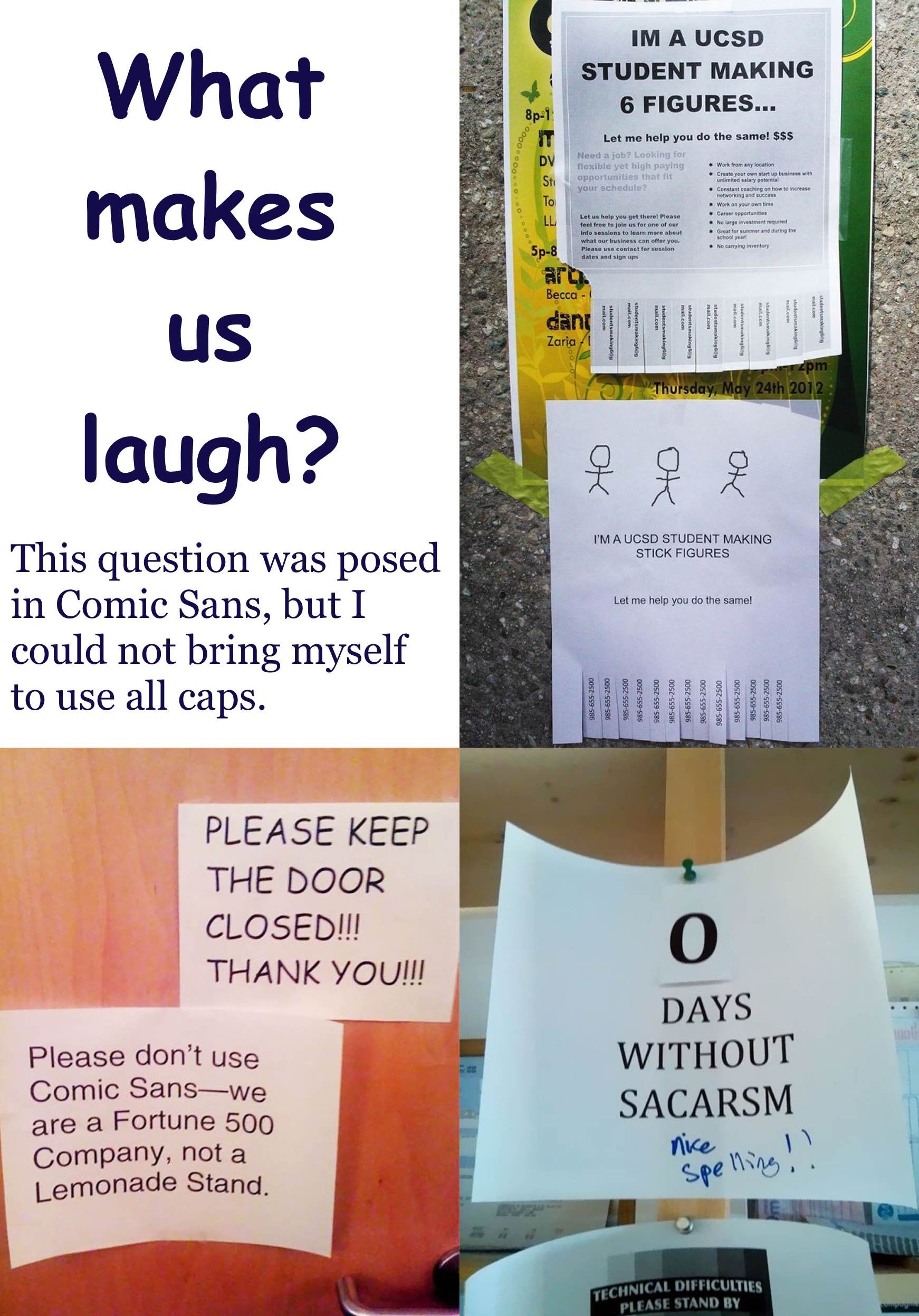
The graphic above comes from the blog of a very talented writer and producer. Mitch Teemley included in a recent post at The Power of Story. I agree with my friend that “laughter has healing properties.” If you believe the same, you absolutely need to spend a few minutes reading his hilarious post.

C.S. Lewis and Times of Crisis

Dark days demand two seemingly contradictory things. Serious reflection and diversion (often in the form of entertainment).

Things are serious. The ultimate toll of the current pandemic remains unknown. Even if we regard ourselves as safe due to age, health and isolation, the simple fact is thousands are dying. Beyond our compassionate concern for those who are suffering, only a fool would fail to reflect on their own mortality during this plague.

Christians, who recently “celebrated” Good Friday are quite conscious of the fact that “we are dust and to dust we shall return” (Genesis 3:19).

Yet this awareness doesn’t leave us in despair, because Easter has come. Our Lord’s resurrection means that for those who trust in him, death does not have the final word.

I pray for those who are overcome by worry during these days. Because dwelling solely on the negative robs life of its present joys, and worsens the impact of the pandemic on individual lives.

Rather than feed your anxiety with troubling reports and thoughts, I urge you to take the opportunity to read, watch a classic program, or play a game. Distracting activities are healthy, as long as they do not displace serious awareness of our circumstances.

Seriously Assessing Our Predicament

Others have written eloquently about Lewis’ response to situations such as that in which we find ourselves today.

For example, the Gospel Coalition offers an excerpt from C.S. Lewis’ 72 year old essay about atomic weapons. They suggest we “just replace ‘atomic bomb’ with ‘coronavirus.’” Lewis’ advice holds up well in our turbulent era.

Annie Holmquist of Intellectual Takeout elaborates on Lewis’ essay. “How C.S. Lewis Would Tell Us to Handle Coronavirus” is well worth a read.

Several weeks ago, the Wade Center (which hosts the Western Hemisphere’s finest Inkling collection) struck the balance I am suggesting. They acknowledged the danger, and offered advice on spending our time well. Their blog included an excellent suggestion in “Those Who Lived to see Such Times: Suggested Readings from the Wade Authors during Times of Uncertainty.” The Wade Center provides links to a number of fine text and audio resources that will offer encouragement from authors who “witnessed both world wars, and . . . lived to see the unsettling days of nuclear weapons.”

Enjoying Life Despite the Danger

Those who are working during this time remain in need of our prayerful support. For the majority of us, however, the cancellation of most of our normal social activities has provided us with an abundance of leisure time. In addition to attacking postponed chores around the house, we should fill some of this interval by enjoying old pleasures and discovering new interests.

Take advantage of treasures such as those mentioned in the Wade Center post. Hundreds—even thousands—of free, public domain books are available online. For those whose preference is visual, there are plenty of free video options, including many vintage television shows you can view on YouTube.

If you’re craving a humorous treat, check out the great satire at The Babylon Bee and The Salty Cee.

A recent article on the former site reveals the sad tale of a boy whose childhood has been ruined by modern online games. It’s entitled, “Boy Discovers Wondrous Land Of Narnia, Leaves Negative Yelp Review.”

Lutherans (and self-confident Christians of other traditions) will enjoy the Lutheran Satire site. For people who don’t object to listening in on a demonic press conference, a fictional Easter interview on their main page is enlightening.

A bit lighter, is this rendition of Saint Patrick explaining the Trinity to the Irish pagans. It will help you sharpen your Christology.

There is a vast, unexplored world of literature out there. I recently read this illuminating post about one of George MacDonald’s fairy tales. MacDonald exerted a great influence on C.S. Lewis. With a curious twist on light and dark, the post also provides a link to a film based on MacDonald’s The Light Princess. I haven’t viewed it yet—but if you have a high tolerance for 1980s BBC productions combining animation and live action, you could be in for a treat.

Where to Begin?

Before exploring some of these links I’ve included, I encourage you to view “The Age of the Coronavirus.” The videographer has done what was suggested in one of the articles mentioned above. He has substituted the virus for the threat of nuclear war in C.S. Lewis’ abbreviated essay.

The video is good enough that you may well desire to share it with others. It can help to know the threats of our day are not unique to history. I suggest that you also include the amazing C.S. Lewis Doodle which offers an illustrated version of the entire essay.

Free Book on C.S. Lewis’ Humor

lindvallIf you want a great volume on C.S. Lewis’ humor to your library—for free—get over to Amazon and download the Kindle version of Surprised by laughter: The Comic World of C.S. Lewis right now.

I recently posted a column on Lewis’ humor, and referenced this very volume by Professor Terry Lindvall.

You never know how long these Amazon sales will last, so do hurry to secure your copy.

This volume is sure to answer any question you have about C.S. Lewis’ use of humor.

One caution, however, which the author includes at the close of his Acknowledgements. Provoking laughter within the confines of the faith community may have consequences . . .

If any cleric or monk speaks jocular words, such as provoke laughter, let him be anathema.

ORDINANCE, SECOND COUNCIL OF CONSTANCE, 1418

Get your copy here.

C.S. Lewis & Humor – a 100% Politics Free Post

csl-humorHumor is an essential element of human existence. C.S. Lewis recognized that our very nature was molded to incorporate joy and laughter.

In a great article on the subject, “The Role of Laughter in the Christian Life,” Terry Lindvall introduces the subject with the story of an early Christian monk who wrote this truth.

In the fourth century, a monk named Evagrius identified key temptations against living the Christian life. He named eight of them, and they became the eight deadly sins. Now we know that Pope Gregory the Great reduced them to seven to fit them in with the symbolic biblical number.

But unfortunately the sin that Gregory conflated into sloth was the sin of sadness. Sadness in the face of God’s grace and mercy was a denial of faith and hope.

But it isn’t the vice that concerns me. It is its corresponding virtue, what Evagrius identified as the blessing of hilaritas as essential to Christian living, even if you were an ascetic monk and especially if you are a lawyer or accountant.

Amen. We can all, whatever our vocation, do with an extra dose of hilaritas. After all, it’s good for your health.

I highly commend Lindvall’s entertaining article, which you can read online here or download as a pdf here.

It is filled with references to C.S. Lewis, as one would expect from the author of Surprised by Laughter: The Comic World of C.S. Lewis.

One particularly beneficial section of the article is his discussion of the four types of laughter mentioned by Screwtape in his epistles.

If you don’t have access to your copy of The Screwtape Letters, the following quotation will provide the context for Lindvall’s remarks.

Because Screwtape is a devil, viewing God as the “Enemy,” his viewpoint is reversed. Keep that in mind as you read.

I divide the causes of human laughter into Joy, Fun, the Joke Proper, and Flippancy. You will see the first among friends and lovers reunited on the eve of a holiday. Among adults some pretext in the way of Jokes is usually provided, but the facility with which the smallest witticisms produce laughter at such a time shows that they are not the real cause. What that real cause is we do not know.

Something like it is expressed in much of that detestable art which the humans call Music, and something like it occurs in Heaven—a meaningless acceleration in the rhythm of celestial experience, quite opaque to us. Laughter of this kind does us no good and should always be discouraged. Besides, the phenomenon is of itself disgusting and a direct insult to the realism, dignity, and austerity of Hell . . .

But flippancy is the best of all. In the first place it is very economical. Only a clever human can make a real Joke about virtue, or indeed about anything else; any of them can be trained to talk as if virtue were funny.

Among flippant people the Joke is always assumed to have been made. No one actually makes it; but every serious subject is discussed in a manner which implies that they have already found a ridiculous side to it. If prolonged, the habit of Flippancy builds up around a man the finest armour-plating against the Enemy that I know, and it is quite free from the dangers inherent in the other sources of laughter.

It is a thousand miles away from joy: it deadens, instead of sharpening, the intellect; and it excites no affection between those who practise it,

So, a wise person will savor joy and fun, along with jokes proper that are offered in good taste. But they will remain wary of flippancy, from which more ill than good usually flows.

Have a joy-filled life.

Dangerous Clowns

clownsThe latest concern here in the United States, aside from who will be our next president, involves “scary clowns.” And this bizarre meme got me thinking about clowndom in its broader expressions.

The current worry comes from people dressing up in sometimes morbid variations of clown attire. It’s not quite so bad as “It,” Stephen King’s 1990 miniseries about a demonic counterfeit.

It, by the way, has been updated lest the current generation be deprived of its arguable glories. The new film is in post-production and is due for release next fall.

Anyway, this film is only one of a legion of movies and cable productions that portray clowns in an ominous light.

So, it appears that the public is primed to expect the worst when people decide to dress up like jesters and do odd things in suspicious places at strange hours.

Expressed that way, there’s no reason people shouldn’t be concerned. After all, one of the most familiar elements of the criminal ensemble is a mask.

I sincerely hope that this fad doesn’t result in any serious problems. However, even if 99 out of 100 people are simply donning the make-up to be silly . . . that still leaves the 1%.

Attitudes Towards Clowns

I’ve never cared much about clowns, one way or the other. I’ve never considered them particularly eerie or entertaining.

I learned listening to the radio this week that I have that in common with Michael Medved.

Medved is a talented radio personality who coincidentally is a renowned film critic. Today, because of this media attention related to these harlequin lurkers, Medved was questioned about his attitude towards clowns.

He shared that he doesn’t particularly care one way or the other, but his family did have a negative experience many years ago. He related how one of his brothers was able to attend a taping of the San Diego expression of the “Bozo the Clown” program. Curiously, the stage for the broadcast was in Tijuana, but that’s another story.

Readers of Medved’s and my generation will immediately know who Bozo was. (To be distinguished from Bonzo, who was tucked into his blankets by President Reagan long ago.)

Returning to the clown . . . it turns out that Medved’s brother was frightened by the appearance of Bozo, and began crying. That drew the immediate attention of the actor in the intimidating suit, who said—probably in a low, threatening whisper, through the façade of the painted smile—“That’s a Bozo no-no . . .” Pretty creepy.

C.S. Lewis and Clowns

It just so happened that it was time for my next blog column. I wondered if there might be some connection I might draw with the Oxford don, or some bit of wisdom I might be able to apply to the subject at hand with minimal logical gymnastics.

It turns out I needn’t have been concerned. Here’s a wonderful description of Lewis, written the year after his death by his close friend, J.R.R. Tolkien.

C.S.L. of course had some oddities and could sometimes be irritating. He was after all and remained an Irishman of Ulster. But he did nothing for effect; he was not a professional clown, but a natural one, when a clown at all.

He was generous-minded, on guard against all prejudices, thought a few were too deep-rooted in his native background to be observed by him.

That his literary opinions were ever dictated by envy (as in the case of T.S. Eliot) is a grotesque calumny. After all it is possible to dislike Eliot with some intensity even if one has no aspirations to poetic laurels oneself.

I like that description of Lewis. As someone who is usually among the first to usher humor into a conversation or situation, I would like to think I might be described in a similar way. Not a “professional clown,” seeking to gain attention and praise. But a “natural one” who promotes laughter, good humor, and emotional health.

Those results are, I assume, the goals of all true clowns.

As for those who work to transform this image of merrymaking into something sinister . . . we can only hope and pray, that the trend exhausts itself soon.

And, at No Extra Cost

If you have never seen Bozo, you owe it to yourself to learn what your parents and grandparents called “entertainment” back in the day! (Trust me, you’ll never be the same.)


Bill Cosby & Me

cosby[Do not read this post without also reading “Bill Cosby Redux,” which was written two months later.]

One of the finest compliments my wife ever paid me was saying, “You remind me of Bill Cosby.”

She tells me that’s one of the reasons she married me thirty-eight years ago. And she also says it’s still true today.

I owe a lot to Bill Cosby. He has modeled (for several generations now), how humor highlights the most precious aspects of our human lives. He also showed us how a real man works hard to accomplish his goals, and keeps the promises he makes.

And now, approaching the winter of his life, Cosby continues to inspire.

My wife and I have always wanted to see him perform. This summer that dream came true.

He offered the audience two full hours of good natured (healthy) laughter with an ample dose of self-introspection as well.

Cosby began his performance (at one of our Washington State fairgrounds) by commenting on our lovely weather. He noted that every other time he had spoken outdoors that it had poured. He suggested that there was something demented about Washingtonians wanting to watch entertainers on stage being drenched while they are handling microphone and other electrical devices.

I refer to Cosby’s presentation as a “performance,” but it was far more than that. It is no exaggeration to say that it was like being invited to an intimate family gathering. One where everyone has gathered around—and the audience was filled with people of all ages—to hear their witty patriarch weave delightful stories about their shared past and mysteries of life.

Bill Cosby embodies the truth spoken by C.S. Lewis in The Screwtape Letters: “Humour is . . . the all-consoling and . . . the all-excusing, grace of life.” Cosby is, in a sense, an ambassador of humor. Or, even, a physician of humor, whose words carry the power to heal.

In mere minutes he made us all, albeit temporarily, his family. (Another reason for me to be proud my wife likens me to this gifted story-teller.)

I’ve always liked Cosby. I was introduced to him on a vinyl album my family had. We probably owned several, over the years, but this one was his debut album, recorded live in 1963.

As a young Christian, I was particularly captivated by his three sketches about Noah. (If you’ve never heard the routine, check out my note at the bottom of this column.) Only today, in the fall season of my own life, does it dawn on me just how profound an effect his comedy had on me.

I believe that was the first time I became aware that matters of faith could be funny. Not diminished by ridicule, but uplifted by laughter. It was okay to enjoy discussing serious matters, by highlighting some of their humorous aspects.

In a world where so many of faith’s spokespersons were dour and humorless, seeds of mirth were planted in my life. Thank you, Bill.

Those seeds have born fruit. They have never undermined my recognition of the authority and trustworthiness of the Scriptures. But, at the same time, they have opened my eyes to the warmth and wonder of the Creator who spoke the cosmos into existence.

Cosby engaged us with an exploration of humanity’s creation, and moved on into a delightful conversation about the differences between men and women. He spoke about his beloved Camille and his children in ways the entire audience connected to. His deep affection for his family resonates even as he uses them as a comedic foil (actually, the majority of his humor is self-deprecating).

Here’s a simple truth. A winsome witness to the faith, who can laugh with one of America’s finest humorists about their beliefs, will win far more “converts” than someone who does not know the joy that comes from being God’s child.

For those unfamiliar with Bill Cosby, allow me to offer a note about only a few of his many accomplishments.

He served for four years as a hospital corpsman in the United States Navy.

He attended Temple University on a track scholarship, where he also played fullback on the football team.

He has an earned doctorate (not the “honorary” type that adorns many public figures). Doctor Cosby earned his Doctor of Education degree in 1976 from the University of Massachusetts Amherst.

On the amazing espionage series, I Spy, Cosby became the first African-American to co-star in a dramatic series. (I remember being riveted to the show, identifying more with Cosby’s thoughtful portrayal than with the shallower, flashier persona of Robert Culp.) Apparently, many recognized Cosby’s acting prowess—he won three consecutive Emmy Awards during the show’s run.

Cosby’s acting prowess was proven repeatedly through television accomplishments, most notably The Cosby Show, which overwhelmed its competition.

He is a gifted musician and has recorded a dozen music albums.

He is also a skilled writer, and has written a dozen books.

He is a genuine family man, whose devotion to his wife, children and grandchildren is unquestioned. He also has gracefully born the pain of losing his only son quite tragically.

He has courageously confronted some of the serious issues facing the poor in the world’s most prosperous nation. He has put his talents and treasures where his words are, seeking to reinforce the value of education in communities where far too many condemn themselves to poverty by dropping out of school.

Bill Cosby is an amazing man. He is a person to be respected, and heeded.

I can think of no better compliment from the woman I love than hearing that I remind her of him.

_____

In the picture above, Cosby is wearing his Presidential Medal of Freedom, awarded to him in 2002.

If you’ve never heard Cosby’s account of God’s conversation with Noah, your life is incomplete. Fortunately, you can remedy that sad situation by viewing a brief version of it here.

If you’re interested in a brief survey of Cosby’s impact, this clip provides an excellent introduction.

Volcano Hurricane

volcanoVolcano hurricane. An epic disaster film! No sharks, but copious amounts of lava flung by gale force winds across the globe. And all from the mind of a six year old boy.

Imaginations are great. They are one of the most precious gifts of God (which makes it all the more tragic when the human imagination is diverted towards carnal ends).

The minds of young boys, thankfully, have yet to turn to such lamentable matters. Their innocence shields them from the worst of human corruption. They, instead, are consumed with thoughts of spiders and other things that creep out girls . . . and especially their moms.

Our almost-seven-year-old grandson was here for the weekend with his family. We had a wonderful time. We had actually found the ideal book to include as part of his birthday celebration: How to Convince Your Parents You Can Care for a Pet Tarantula. Perfect.

Young male imaginations seem to revolve around things that shock—and also things that gross others out.

Our kids have trained their own children well. For example, they always excuse themselves when they experience flatulence. It’s a natural experience, of course, and as we mature, adults learn to ignore potentially embarrassing moments related to it. That’s part of becoming “civilized.”

Six year olds . . . not so much. Our grandson properly excuses himself, but he typically does so in the midst of enthusiastic laughter. It’s as though he relishes just how uncultured the moment seems.

During this particular visit, he leaped into my lap in a semi-ninja attack. As we wrestled, there was a minor explosion. Not quite volcanic, but close enough. He apologized, amidst great hilarity. “Sorry about my little gas,” he added.

And here’s where I made the mistake. I reinforced his innate boyhood grossness by saying, “little! . . . that sounded like it was a buffalo!”

Not quite the right thing to say, since it simply encouraged the precocious guy. But what I can say . . . time may change a boy into a man, but in most of us . . . somewhere deep in the recesses of our psyches . . . that boyhood irreverence lingers.

Not that I enjoy the crass “body humor” that pervades so much comedy (on tv and film). I steadfastly avoid it. It insults my mind and viewing it constitutes a total waste of time. Still, with my grandson wrapped in my arms, laughing away, it all seemed so genuine and innocently funny.

Of course, I recognize one needed to be there—and probably to also be related by bloodline to the participants—to find any humor in the moment. But it certainly seemed funny to us.

C.S. Lewis and Children

I was thinking about that moment as I sat down to write this post. I intended to focus on the amazing imaginations of children, and my grandson’s current preoccupation with gigantic volcanoes.

But whim or muse redirected the column. In the end, it turns out to be a reflection on the simple pleasure that we adults experience when we interact with kids. Especially when they are children who are precious to us.

I wish that C.S. Lewis had been able to experience that joy. He wasn’t. His awkwardness with children is well known. Most attribute it to the early passing of his mother, and the emotional distance his father maintained from his sons.

In a 1935 letter he wrote to a close friend, “I theoretically hold that one ought to like children, but am shy with them in practice.”

In The Abolition of Man he was even more forthcoming, sharing that, “I myself do not enjoy the society of small children: . . . I recognize this as a defect in myself.”

So, Lewis recognized his discomfort with children as a shortcoming. It was something he wished could be dispelled. Unfortunately, we can’t simply wish (or pray) away our ingrained personality traits. We’re lucky if we can tame them or reshape them.

We work hard to strengthen our positive traits and the wise deny nourishment to their weaker qualities. People often use the analogy of wearing off one’s rough edges, and that’s an apt image.

Lewis’ reticence with children makes his creation of Narnia all the more wondrous. The Chronicles of Narnia have captivated the hearts and imaginations of innumerable children, and adults alike. Certainly Lewis was correct when he wrote the following in “On Stories.”

No book is really worth reading at the age of ten which is not equally (and often far more) worth reading at the age of fifty—except, of course, books of information. The only imaginative works we ought to grow out of are those which it would have been better not to have read at all.

With his marriage, late in life, Lewis became a step-father. He did the very best he could, but was conscious of just how ill-equipped he was to raise Douglas and David. Both became successful men. Doug shares his parents’ love of Christ, and helps direct the course of various Lewisian projects today.

Allow me to close with another evidence of the greatness of C.S. Lewis. He was able to rise far above his innate uneasiness with children. In fact, his fabled correspondence included many children who had written to him seeking his attention. In 1951 he wrote to one of them, saying:

I am glad you all liked The Lion. A number of mothers, and still more, schoolmistresses, have decided that it is likely to frighten children, so it is not selling very well. But the real children like it, and I am astonished how some very young ones seem to understand it. I think it frightens some adults, but v[ery] few children.

Lewis did not disappoint the many children who wrote to him during those terribly busy years. Nor do his writings disappoint us today. Unlike the transience of youthful volcano hurricanes, Lewis’ legacy will forever remain alive in the imaginations of child and adult alike.