CS Lewis | Mistakes

Deep Thoughts from the Quill of the Other C.S. Lewis

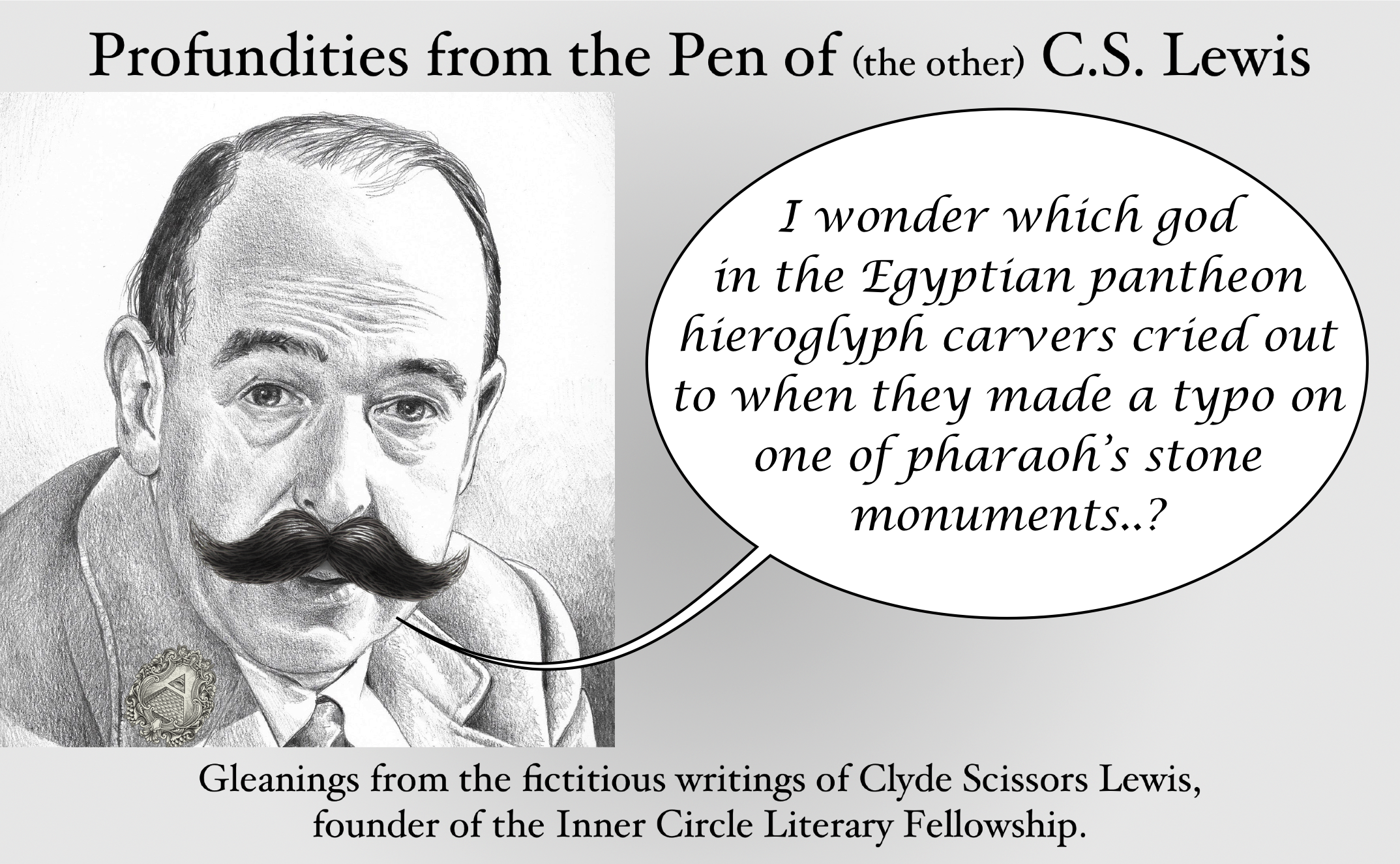
Welcome to another in an occasional series of fictitious quotations from a fabricated contemporary of the great Oxbridge professor, Clive Staples Lewis.

The C.S. Lewis who authored these questionable observations, Clyde Scissors Lewis, possessed a worldview enigmatically different from that of the esteemed Christian author. Despite the fact that their two lives overlapped in a variety of ways, the similarities were superficial.

A brief biography of the lesser Lewis is available at this link.

The Other C.S. Lewis: A Brief Biography

By all means, do not confuse the wisdom of the genuine article with his shadowy counterfeit. Despite any cursory similarities between the two men, this is most definitely not the C.S. Lewis readers have come to know and love.

Narnian Numismatics

I’m a numismatist, and you may be one as well.

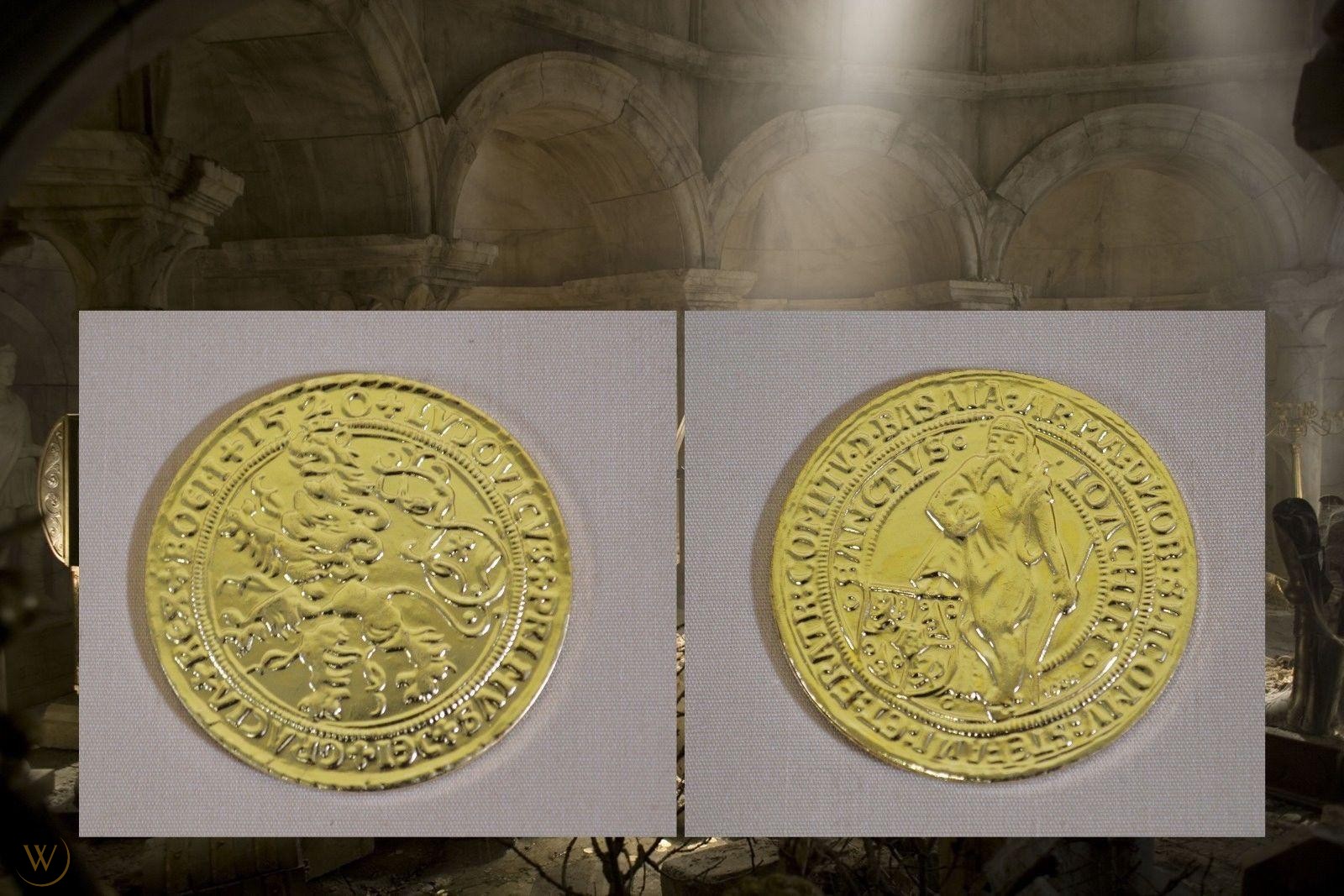
Although I haven’t actively accumulated coins for some years, I do have as a prize piece of my collection a Narnia coin used in the production of Prince Caspian (2008). Technically, since it isn’t a true, earthly coin, it is considered exonumia, but we coin collectors still recognize just how truly special these treasures are.

Speaking of treasures, that is precisely where my Narnian medallion comes from. The treasure chamber scene had a surfeit of the pieces, and some were sold in collectible frames. The obverse and reverse of the coin can be seen above. I’ve actually written about “my precious” piece of Narnia in the past but just this morning I woke up with the word “numismatist” on my mind, crying out for a Mere Inkling post. (More on this in a moment.)

First, those interested in the history of money may wish to skim a few of my other related columns. These include: inflationary currency such as German notgeld and Zimbabwe’s more recent $1,000,000 bills, a comparison of the women in the life of Constantine the Great and the prominent women in the life of C.S. Lewis, and the misspelling of the name of Jesus on a papal medallion.

Coins Have Given Way in My Life, to Words

As I said above, I awoke today with the word “numismatic” fluttering across my thoughts. And it was not alone. It was linked to the wordplay I recently discussed in “Creative Definitions.”

Before pondering where my mental gyrations on the word in question carried me, allow me to share two additional examples I scribbled out on my bedside tablet before rising to brush my teeth and begin the day.

Provocatours: excursions to politically explosive environs where travelers can accurately anticipate their guides will provide an explosively entertaining adventure.

Methics: the ethical perversion which allows people to justify creating pharmaceuticals with the primary function of destroying lives. [See chemistry teacher Walter White on “Breaking Bad.”]

From there my mind jumped to the pecuniary avarice of drug dealers as associated with the word numismatics – and it coined the related word,

Numethmatics: wherein the potential temporal gains associated with drug dealing outweighs the cost to society, oneself and an individual’s soul.

And in relatively rapid sequence came the following.

Flumismatics: when viral contagions disrupt the entire global economy.

Cluemismatics: either the determination of the financial motivations for murder mysteries or the funding required for law enforcement agencies who determine the criminals’ identities.

Numismantics: when economic theory is dominated by traditionally masculine concepts and values (e.g. profit and greed).

Numissmatics: economic theory which is strongly influenced by traditionally feminine values (e.g. charity and compassion).

If the last two culturally antiquated examples haven’t lost you, read on.

Gloomismatics: the prospect for economic survival in light of crushed hopes for the future due to unbridled inflation (e.g. the insanity of some economists and politicians who advocate simply “printing more money” to solve the problem).

Newmismatics: novel currencies and specie that seek to deceive citizens through the pretense that they actually possess some value.

Bluemismatics: the depressive condition elicited when one’s financial holdings inadequately counterbalance one’s debts; historically, applied to cabin boys in sailing days who only realized they would not be fiscally compensated for their services after the ship had left port.

Pneumismatics: pecuniary considerations based on spiritual rather an material considerations.

Numismetrics: the partly scientific, partly fanciful art of exchanging international currencies.

Nufistmatics: the shocking rise of unprovoked blindsided blows to strangers in urban jungles, frequently without any apparent desire to steal property.

Truemismatics: the actual value of monies before economists get involved in the matter.

Gluemismatics: the tight-fisted relationship misers have with their monetary hordes (see Ebenezer Scrooge, or dragons such as described by C.S. Lewis and J.R.R. Tolkien).

Nuclearmismatics: the grim cost calculation involved by world powers when weighing the “benefits” of a possible nuclear conflagration.

There were a couple of other scribblings I was unable to decipher once I was fully awake, but near the end of my meanderings, I came upon,

Zoomismatics: the financial resources required to provide a healthy environment, as close as possible to their natural habitat, for animals residing in zoological parks.

Unsurprisingly, this neologism gave rapid birth to Gnumismatics and Moomismatics . . . well, you get the idea. For the sake of my on sanity, I had to forcibly end the spontaneous exercise.

Returning to Narnia

It is fitting to end this numismatic revelry with a return to the scene for which my coin was minted. As noted earlier, it appeared in Prince Caspian. The Pevensie children have returned to Narnia, and are reawakened to their former life which had become but a dream.

Rediscovering their treasure chamber, in the now-ruins of the castle Cair Paravel (time runs differently in Narnia) is pivotal in their reawakening.

“There’s one thing,” said Lucy. “If this is Cair Paravel there ought to be a door at this end of the dais. In fact we ought to be sitting with our backs against it at this moment. You know – the door that led down to the treasure chamber.”

“I suppose there isn’t a door,” said Peter, getting up. The wall behind them was a mass of ivy.

“We can soon find out,” said Edmund . . .

They worked at the ivy with their hands and with Peter’s pocket-knife till the knife broke. After that they used Edmund’s. Soon the whole place where they had been sitting was covered with ivy; and at last they had the door cleared. “Locked, of course,” said Peter. “But the wood’s all rotten,” said Edmund. “We can pull it to bits in no time . . .

[Descending into the chamber, Peter who is bringing up the rear tells Edmund to count the steps.] “One—two—three,” said Edmund, as he went cautiously down, and so up to sixteen. “And this is the bottom,” he shouted back.

“Then it really must be Cair Paravel,” said Lucy. “There were sixteen.” Nothing more was said till all four were standing in a knot together at the foot of the stairway.

Then Edmund flashed his torch slowly round. “O—o—o—oh!!” said all the children at once. For now all knew that it was indeed the ancient treasure chamber of Cair Paravel where they had once reigned as Kings and Queens of Narnia. There was a kind of path up the middle (as it might be in a greenhouse), and along each side at intervals stood rich suits of armor, like knights guarding the treasures.

In between the suits of armor, and on each side of the path, were shelves covered with precious things – necklaces and arm rings and finger rings and golden bowls and dishes and long tusks of ivory, brooches and coronets and chains of gold, and heaps of unset stones lying piled anyhow as if they were marbles or potatoes – diamonds, rubies, carbuncles, emeralds, topazes, and amethysts. Under the shelves stood great chests of oak strengthened with iron bars and heavily padlocked.

The tale continues, as with each returning memory, the children resumed their stature and confidence as the Kings and Queens of Narnia. Their character, you see, was restored, but they remained only a year older (in Earth age) than they had been when they had previously left the wonderland.

Much to the disappointment of the dwarf Trumpkin. “Well, then – no offense,” said Trumpkin. “But, you know, the King and Trufflehunter and Doctor Cornelius were expecting – well, if you see what I mean, help. To put it in another way, I think they’d been imagining you as great warriors. As it is – we’re awfully fond of children and all that, but just at the moment, in the middle of a war – but I’m sure you understand.”

Lesser children may have filled their pockets with gold coins and diamonds and sought a return to their native land and a life of leisure. Not so these four young heroes. And, due in part to their immunity to avarice, the glory of Narnia is eventually reestablished.

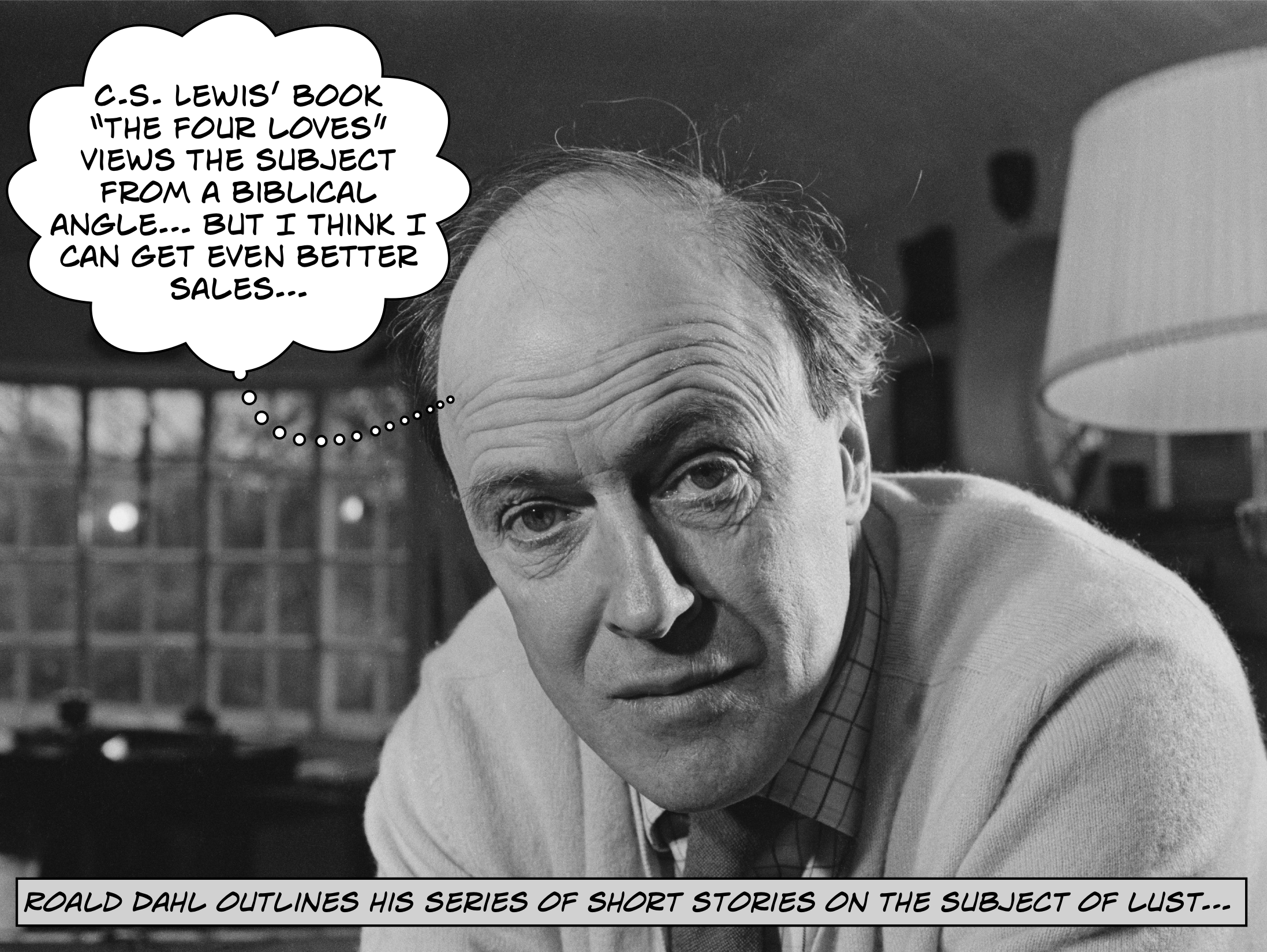
C.S. Lewis & Roald Dahl

Do C.S. Lewis (1898-1963) and Roald Dahl (1916-1990) have anything in common, besides authoring books enjoyed by children?

Looking back, I must have been deprived of opportunities to read common children’s books. I recall my mom having many of Dr. Seuss’ classics, but don’t remember more advanced works such as those of Beatrix Potter or E.B. White.

I suppose that is why Roald Dahl’s name means little to me. By the time I was aware of his popular works, I was too old to appreciate them. Added to that was my intense dislike for the cinematic presentation of his Chocolate Factory, which has permanently (and probably unfairly) soured my impression of the poor man.

In Matilda, published in 1988, Dahl offers a rather curious homage to the Inklings. The young protagonist offers to her teacher the following observations.

“I like The Lion, the Witch and the Wardrobe,” Matilda said. “I think Mr. C.S. Lewis is a very good writer. But he has one failing. There are no funny bits in his books.”

“You are right there,” Miss Honey said.

“There aren’t many funny bits in Mr. Tolkien either,” Matilda said.

If you are intrigued by this brief interchange, you would probably enjoy reading “Disagreeing with Matilda on Lewis and Tolkien.”

Curiously, a number of people have offered their evaluations of Lewis and Dahl, vis-à-vis one another. Author Grudge Match: Roald Dahl vs. C.S. Lewis invited diverse contributions to the debate eight years ago on LibraryThing.

A Christian blogger offers a faith-based appraisal on an entertaining website called “Like but better.” It’s entitled “How C.S Lewis is like Roald Dahl, but better (and Aslan is like Willy Wonka, but better).”

C.S Lewis is serious about what Dahl jokes about; even as both want us to pursue a childlike wonder and joy. For Lewis these enchanted stories and our sense of wonder are small stories reflecting on the big story — the ‘myth that became history’ — the death and resurrection of Jesus.

A BBC Culture article is quite critical of Dahl, despite his popularity. The introduction to “The Dark Side of Roald Dahl” aptly describes the essay.

Roald Dahl was an unpleasant man who wrote macabre books – and yet children around the world adore them. Perhaps this shouldn’t surprise us, writes Hephzibah Anderson.

An article by a Jewish journalist refers to both of the authors discussed here. It describes his bitter introduction to the major flaws of an author whose work he enjoyed as a child. “Why I Hope My Kids Never Read Roald Dahl” is, for me, most valuable for the way in which the journalist regards the faith which underlies the tales of Narnia.

As a nerdy Jewish kid in Indiana and Tennessee in the late 1970s and 1980s, I had far better relationships with books than I did with other kids. If I liked a book, I read it again, and again and again.

And so it was with Roald Dahls “Charlie and the Chocolate Factory.” Dahl’s protagonists Charlie and later James (of the “Giant Peach”) both provided early models for how to find a better way through a hostile world where I always felt like an outsider.

Given that personal history, the announcement that Netflix has acquired Dahl’s entire catalog and plans a robust lineup of multimedia adaptations ought to feel like good news. . . .

Seeing his work still celebrated fills me with sadness, leaving me caught between attachment to something that mattered to me as a boy and commitment to the principles that, I hope, make me the man I am today.

Because I know that Roald Dahl hated Jewish people like me.

There are cases where it’s complicated to ascribe modern values to figures from the past and as a reader, my feelings, my emotions, are just not going to be consistent. I don’t share C.S. Lewis’ religious views . . . J.R.R. Tolkien’s “Lord of the Rings” trilogy is, I’m sad to say, bound up in long histories of racism.But my childhood copies of their books still occupy my shelves, some missing covers and pages, and I bought new copies for my kids and tried – with mixed success – to share my love of those stories with them. It’s hardly new for readers of one generation to struggle with the views of authors from another.But Dahl is different. He passed away in 1990, only 31 years ago. And we know he was an anti-Semite because he said so.

While I would challenge Perry’s modest critiques of the Inklings, I am delighted he is able to look beyond his adult disappointment with their imperfections to commend them to his own children. As for Dahl . . . this article reinforces my lack of regret in being unfamiliar with his work.

Enough, now, of their differences. I promised readers a surprising similarity between the two British authors.

And What Is Their Unusual Commonality?

In 1951, C.S. Lewis was approached by Prime Minister Churchill’s office to accept an honor occasionally bestowed upon renowned literary figures. He was invited to become a Commander of the Most Excellent Order of the British Empire. Lewis declined, because he felt the political implications might overshadow the nonpartisan spirit of his writings. He was, however, honored to have been offered the honour.

This decision brings us to the peculiar similarity between the two writers. It turns out that Roald Dahl also passed up the invitation to join this chivalric order.

And the two were not alone. In 2012 a list of deceased individuals who had declined related honors between 1951 and 1999 was published.

Literary names were prominent amongst those to have said no to CBEs, OBEs and knighthoods in the annual New Year or Birthday Honours list, with Dahl, Lewis, and Huxley . . . joined by fellow naysayers Eleanor Farjeon, the children’s author, the poets Philip Larkin and Robert Graves, who said no to both a CBE and a CH (Order of the Companions honour), literary critic F.R. Leavis, Booker [Prize] winner Stanley Middleton and the authors J.B. Priestley and Evelyn Waugh.

An aspiring literary historian might do well to research whether and why successful writers might be more inclined to dismiss such an honor than other British citizens. I wonder if that inclination would carry over to other nationalities or cultures.

Ultimately, I assume most writers care less about receiving honors, than having their work read. And, perchance, having their literary efforts improve the lives of one or two others along the way. [This statement inspired vigorous debate when I shared this draft with members of my critique group.]

That desire – to enrich lives – is what motivates me. I believe it is also what inspired C.S. Lewis. And I know we are not alone.

Creative Definitions

Recently I read about an African Christian who was raised in a family that practiced ancestral worship. His grandfather was considered a witchdoctor, and it was expected that this young man would assume his duties.

The only problem is that when I initially viewed the passage, I read that his grandfather was a whichdoctor.

My once 20/20 vision is long gone. I still read without glasses (for the most part), but when I have yet to wash the sleep from my eyes, I encounter some surprising words.

“Whichdoctor” actually made some sense. I acknowledge it hasn’t been an English word (until now) but is so clear and so utilitarian that it cries out for recognition.

Whichdoctor: An interrogative used when attempting to ascertain which physician’s  attention an individual should be seeking. Especially useful in a hospital setting with numerous specialists. As in: Whichdoctor should I talk to, the podiatrist, the pediatrician, the pulmonologist, the psychiatrist, the pathologist, or the proctologist?

Last year I posted a column entitled “Create a Word Today.” It was inspired by an article I cited about making up useful words with pertinent definitions. I included 22 examples in my first column. They touched on a variety of subjects.

Mannekin: A boring, sedentary relative, who rarely rises from the couch.

Purrification: The activity of forgiveness and restoration that occurs when any cat makes a sincere confession of its sins.

Several were ecclesiastical in flavor.

Cathedroll: A large church led by a senior minister given to quaint and unintentionally comic humor.

Concupiscents: Hollywood’s obsession with including graphic sexual themes in all of their productions, resulting in the selling of their souls for pennies on the dollar.

And some related to the field of writing.

Manuskipped: The sad condition when the article or book into which you poured your blood, sweat and tears has been tossed into a slush pile to lie forgotten.

Proofreaper: Someone you invited to read your manuscript for misspellings who advises you to delete entire sections of your precious creation.

If you’re curious, there are 16 additional words included in the original post linked above.

So, allow me to offer here a few recent efforts, inspired by the misreading I referred to at the top of the page. How about 22 more?

But, before that, let’s look at a passage from C.S. Lewis’ autobiography, Surprised by Joy. As a person who has always appreciated a good vocabulary – and who is blessed to have grandchildren who are articulate beyond their years – I am saddened by Lewis’ youthful experience.

Reading much and mixing little with children of my own age, I had, before I went to school, developed a vocabulary which must (I now see) have sounded very funny from the lips of a chubby urchin in an Eton jacket.

When I brought out my “long words” adults not unnaturally thought I was showing off. In this they were quite mistaken. I used the only words I knew.

The position was indeed the exact reverse of what they supposed; my pride would have been gratified by using such schoolboy slang as I possessed, not at all by using the bookish language which (inevitably in my circumstances) came naturally to my tongue.

And there were not lacking adults who would egg me on with feigned interest and feigned seriousness – on and on till the moment at which I suddenly knew I was being laughed at.

Then, of course, my mortification was intense; and after one or two such experiences I made it a rigid rule that at “social functions” (as I secretly called them) I must never on any account speak of any subject in which I felt the slightest interest nor in any words that naturally occurred to me. And I kept my rule only too well . . .

Hooplaw: The two, vastly different legal disciplines dealing with (1) basketball contracts, and (2) litigation related to injuries caused by overly excited commotion.

Interdisciplinairy: The entire field of specialty studies related to the atmosphere.

Marvelouse: A creep or cad who considers himself something quite extraordinary.

Atrofee: The medical bills associated with the care of patients suffering an enduring coma.

Predilicktion: A preference for the sensation of taste over the other four basic human means of perceiving the world around us.

Ammunishun: The attitude of some activists seeking to restrict Second Amendment rights.

Megalowmaniac: The true stature of power hungry narcissists.

Gratuitruss: The unnecessary wear of a device to restrain a nonexistent hernia.

Calumknee: Malicious misrepresentations of political figures who frequently stumble.

Misscalibration: The awkward occasion when footwear retailers suggest to a young lady try on size 20 Air Jordans.

Patriought: The noble, often self-sacrificial, behavior of citizens who truly love their country.

Hypnothetically: The wide range of potentially embarrassing acts a person might be directed to perform under the influence of mesmerism.

Enlightenmint: The experience of achieve a spiritual pinnacle, accompanied by an aromatic scent.

Raspewtin: What Russia’s last Tsar should have done to Grigori.

Canonball: An elegant celebration lacking minuets, due the participants’ vows of celibacy, but not lacking in a wide selection of vinted and distilled beverages.

Immaculatte: A perfectly balanced beverage prepared by one of the world’s finest baristas.

Telegraft: Crimes committed over the phone by telemarketers, or via the airwaves and internet by televangelists.

Archietype: Ideas and symbols that recur in stories from many cultures and eras which bear a clear likeness to Archibald Andrews, who was often accompanied by his companion Jughead.

Syruptitious: The practice of slipping secrets past the unsuspecting by applying sticky sentimentality to one’s words.

Youphemism: The substitution of a mild or neutral description of someone to replace what you truly think of them.

Boulebard: The landscaped avenues of Stratford-upon-Avon by William Shakespeare.

Hagographer: An author who prefers to write the biographies of harpies rather than saints.

Admittedly, these words are not all top tier, but I challenge you to do better. If you have one or two winners, please cite them in the comments below. Oh, I just thought of another:

Religioscity: The religious devotion expressed by the residents of an urban environment.

Now I need to think about something else so I’ll be able to sleep tonight without jumbled word running through my mind.

As the sainted C.S. Lewis once described some troubled days in a boarding school while a youth:

Consciousness itself was becoming the supreme evil; sleep, the prime good. To lie down, to be out of the sound of voices, to pretend and grimace and evade and slink no more, that was the object of all desire—if only there were not another morning ahead—if only sleep could last for ever! (Surprised by Joy)

Keeping the Peace, Finn Style

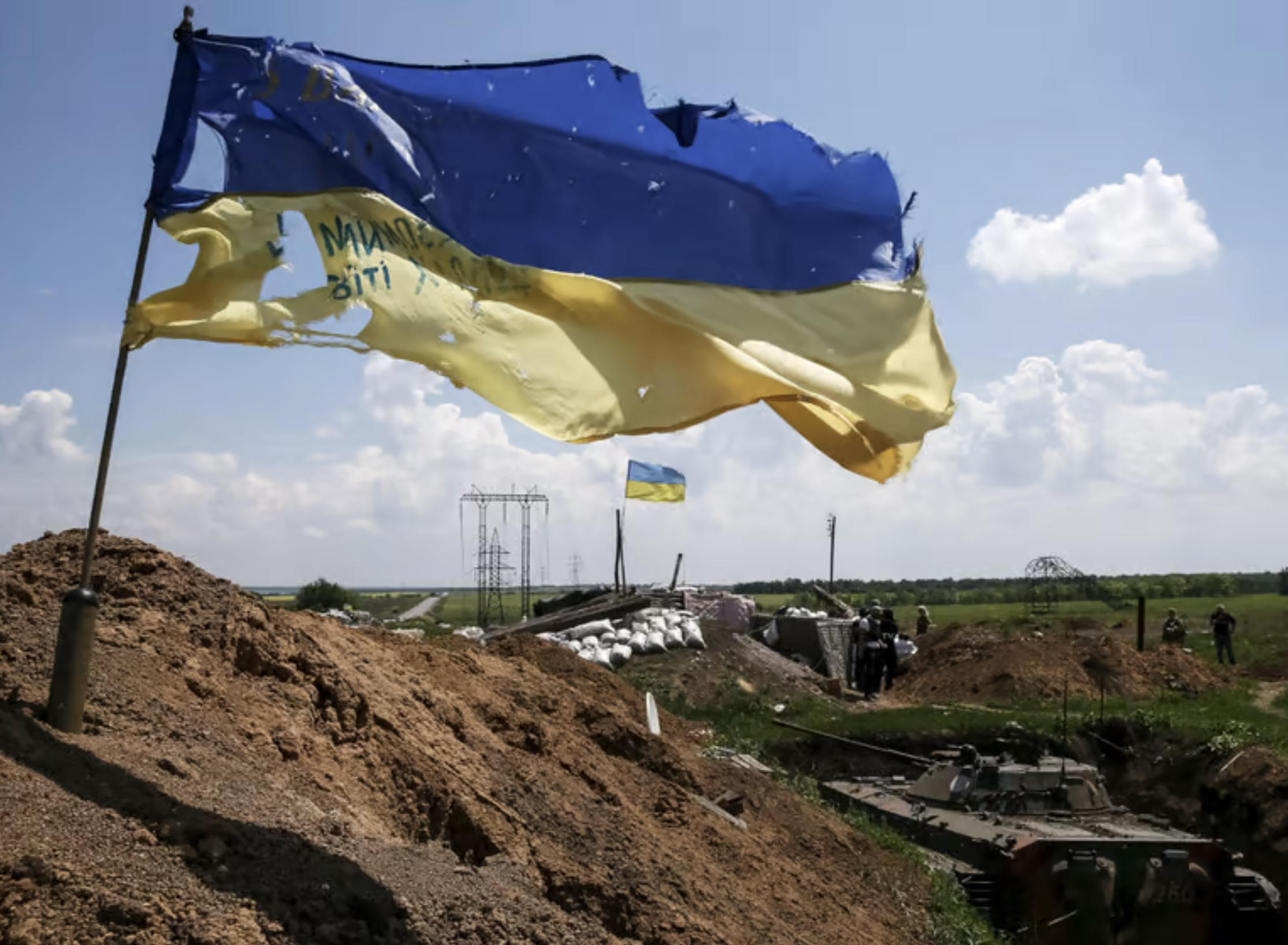
The war in Ukraine trudges on, but the world has become safer with the imminent expansion of the North Atlantic Treaty Organization (NATO).

Recognizing the expansionist aspirations of Dictator Putin’s Russia, Sweden and Finland have decided to request formal admission to the peacekeeping alliance. Their reception has tentatively been approved, although just today another dictator, Recep Tayyip Erdogan of Turkey is threatening to “freeze” them out if they don’t support his efforts to suppress Kurdish independence.

I have my own experiences with NATO. Foremost among them was the small part I played in helping bring about the Intermediate-Range Nuclear Forces Treaty. (I even served as one of the “escort officers” for a Soviet verification team when it visited RAF Greenham Common.)

I mentioned the treaty on Mere Inkling and lauded its success.

The great thing about NATO’s cruise missiles is that they were deployed to bring the Soviet Union to the negotiating table, where the Intermediate Nuclear Forces Treaty led to the elimination of all such munitions from Europe!

Alas, this monumental treaty has expired.

It is a casualty of Russian Federation dreams to restore the Soviet Union’s former borders in Europe. Combined with the “defection” of the former Warsaw Pact nations, it is easy to understand why a suspicious Russia postures so aggressively.

Which, of course, encourages the democratic nations to draw closer in mutual defense.

How are the Finns Celebrating

Finns are different.

Not quite what you would expect. Many people – certainly most Americans, the ones who are not totally geographically ignorant – mistakenly think Finland is a Scandinavian country. Not quite. True, they are a Nordic nation, but Nordic Perspective offers an insightful discussion, replete with great maps, on the subject.

Being a Nordic people, it comes as no surprise many Finns are welcoming their entry into NATO with a beer. In fact, a brewing company named “Olaf” has opted to use the French acronym for NATO – OTAN – as a play on words. “The beer’s name is a play on the Finnish expression ‘Otan olutta,’ which means ‘I’ll have a beer…’”

Good for them. (So long as they remember to drink in moderation.)

Now, this OTAN-business raises a question in my mind. Is it merely a coincidence, or might the French have a passive aggression purpose in mind with this heteropalindrome?

After all, the headquarters of NATO had to be moved from Paris to Belgium when Charles de Gaulle withdrew from the military alliance.

Wondering about French subliminal messages got me thinking about C.S. Lewis’ thoughts on the subject. Lewis loved all people, but was no one’s fool. He understood many of the influences exerted upon culture are destructive. Decadent societies (e.g. pre-war Berlin) sow seeds that ultimately bear tragic fruit.

As the Second World War was just beginning, and Lewis’ brother Warnie had safely returned home after the Dunkirk evacuation, Lewis mentioned France in one of his 1940 letters to his veteran brother. It is quite entertaining, as long one is not an über-Francophile.

I am also working on a book sent me to review, Le Mystere de la Poesie*by a professor at Dijon, of which my feeling is “If this is typical of modern France, nothing that has happened in the last three months surprises me” – such a mess of Dadaists, Surrealists, nonsense, blasphemy and decadence, as I could hardly have conceived possible.

But one ought to have known for, now that I come to think of it, all the beastliest traits of our intelligentsia have come to them from France.

Well, that’s enough of that. It’s time to pop the tab on an OTAN and toast the NATO, and its expanding protection of world democracies.


* Volume two of The Collected Letters of C.S. Lewis has a footnote reading “This work cannot be traced.” I believe the likely object of Lewis’ disdain may have been written by André Vovard and published in 1951 in Paris and Montreal by Fides.

Inventing Poetry Forms

Would you like to leave your mark on literary history? Why not invent a new poetic form? It just might catch on.

If it did, you could become as famous as Adelaide Crapsey (1878-1914). She lived a privileged but brief life. Adelaide is remembered today as the creator of the American Cinquain. She also wrote a book entitled A Study in English Metrics which you can download for free.

C.S. Lewis describes the imaginative aspect of writing poetry as a creative act. “For poetry too is a little incarnation, giving body to what had been before invisible and inaudible” (Reflections on the Psalms).

LitCharts offers a description of the form itself, and notes an alternative name for the poetic invention.

The American cinquain is an unrhymed, five-line poetic form defined by the number of syllables in each line—the first line has two syllables, the second has four, the third six, the fourth eight, and the fifth two (2-4-6-8-2). They are typically written using iambs.

In the early twentieth century the American poet Adelaide Crapsey, inspired by the five-line Japanese poetic form of tanka, began to write five-line poems that followed a distinct form. This poetic form soon came to be known as an American cinquain (though it’s also sometimes referred to as a Crapseian cinquain, after its creator).

I think I’ll stick with “American.”

Oddly, one of the reasons Crapsey’s story drew me in is the fact she was the daughter of a prominent Episcopal clergyman. Algernon Sidney Crapsey (1847-1927) had aspirations of becoming a bishop, only to end up defrocked for heresy.

Writer’s Digest offers a list of 168 poetic forms, including “a few fun super new nonce forms.” I advise reviewing this listing so you don’t go to the effort of birthing your own form, only to find out that someone beat you to it.

I’ve written in the past about the benefit of writing outside of our normal styles. As a nonfiction writer, I’ve never desired to be considered a poet.

But I have enjoyed dabbling in a variety of poetic forms as a literary exercise. On occasion, I’ve actually been pleased with the results. And, due to its Inkling inspiration, my personal favorite is probably “A Foreshadowing of Epics.”

In a moment I’ll share my modest attempts at American Cinquains. But first, allow me to offer a Sijo that I wrote to introduce my Cinquains. A Sijo is “a Korean verse form related to haiku and tanka and comprised of three lines of 14-16 syllables each, for a total of 44-46 syllables.”

Immortalize your poetic memory this novel way.
Inventing a new form of poetry is easy to do.
With meter, hyperbole and rhyme – make your fame last for all time.

What follows is a medley of American Cinquains that I composed yesterday while waiting for an optometry appointment. My goal was not to awe readers, but to stretch my writing – what Chuck Palahniuk (the author of Fight Club) refers to as one’s “writing chops.”

The last story you should write is the most important story. You should start with a story that is just an amusing, entertaining, fun story to write and learn your writing chops with the least important things before you start applying them to the most important things.

I intentionally attempted to write cinquains evoking a variety of emotions. Here you will find examples that are thoughtful and frivolous, serious and sentimental.

Cudgel
Beaten by words
Angry themes beget hate
Eardrums torn by condemnation
Wounds last.

Pet dogs
Each breed a joy
Humanity’s best friends
Frolicking with unbounded joy
Precious.

Just War
Tragic option
For innocents still die
Theology deems it okay
Last choice.

Poets
Can be stuck up
Denigrating others
Counting fine prose lower than verse
Vain pride.

Dinner
Fresh fare tonight
Feasting on each choice cut
Cannibals toast missionaries
Dessert.

Comfort
Love wraps its arms
About the wayward lamb
Carried safely back to the fold
Rescued.

Try your own hand at writing an American Cinquain. Or, better yet, establish your own unique poetry form. If you promote it well – say by getting someone like Oprah to endorse it – you could one day become as famous as Adelaide Crapsey.

Ukrainian War Poetry

In the heat of war, bullets are not the only weapons piercing the air. Words too are wielded as weapons. And some of those martial messages take the form of poetry.

C.S. Lewis thought and wrote much about poetry. In his monumental study, English Literature in the Sixteenth Century, he offers this curious insight. “Great subjects do not make great poems; usually, indeed, the reverse.”

Certainly, countless refrains have been penned about historical events and noteworthy personages. But the poetry that seems to speak directly to the emotions is typically unencumbered by dramatic or political reference.

That does not mean poetry and conflict do not possess an intimate bond. One of the tragedies of the First World War was, in fact, that so many promising young poets were cut down in their youth. These brief biographical notes introduce readers to several of them.

C.S. Lewis was a veteran of the grim trench warfare himself. Although most “professional poets” don’t consider his work praiseworthy, I do. I once wrote a post on the subject and included a poem which includes the following stanza.

Long leagues on either hand the trenches spread
And all is still; now even this gross line
Drinks in the frosty silences divine
The pale, green moon is riding overhead.

Voices of Ukraine

The current conflict raging in Europe carries echoes of the past century. Among those reverberations we hear war-inspired lyrics. Some seek to stir patriotic passions. Others consider the universal grief spawned by scenes of mangled mortality.

Five years ago, a collection of poetry entitled Words for War: New Poems from Ukraine was published. It chronicled the Euromaidan Revolution, also called the “Revolution of Dignity,” which possesses direct links to today’s war, and preceded Russia’s annexation of Crimea.

Borys Humenyuk fought during that revolution, and appears to be in uniform today, as well. Presumably he will write more about today’s war, once Russia has been repelled and Ukraine’s sovereignty has been reaffirmed. In the meantime, he is likely reexperiencing the moment he captured in these words almost ten years ago.

When you shoot
Even when it’s at night and you don’t see the enemy’s face
Even when night hides the enemy from you and you from the enemy
And embraces each of you as her own
You smell like gunpowder
Your hands, face, hair, clothing, shoes —
No matter how much you wash them —
    smell of gunpowder
They smell of war
You smell of war
You and war are one.

It is poignant how the suffering birthed by war is also capable of giving voice to such moving sentiments.

Would that war should end. The loss of such heartrending words would be small price to pay.


After publishing this column, I received correspondence from Ukrainian poet, Vyacheslav Konoval, inviting me to share one of his poems. I offer the following, which I found particularly poignant. And I encourage you to visit Slava’s personal website at All Poetry.

Dog Day

Staggering, a drop of dew falls from the green grass,
fog, and even acrid smog, covers the ground,
the cylinder was torn on all sides, so it was gas.

Ragged camouflage with holes,
the Red Sea swallows the corpses
Are they in the field, cartridges without controls?

The tire blazed, moaned and tire finished,
here is the hostility, aggressive appetite has not diminished,
the enemy turned into fertilizer.

A stray dog ​​howls,
recites prayers with a hoarse voice,
stares at the torn soldier’s jaws,
the enemies have made their choice.

C.S. Lewis, Puritanism & Prudes

Puritans often get a bad rap from people who don’t know their true history. Reading C.S. Lewis can help correct that error.

Digital History describes the problem in the following way.

Few people, however, have been as frequently subjected to caricature and ridicule. The journalist H.L. Mencken defined Puritanism as “the haunting fear that someone, somewhere, might be happy.”

In truth, Puritans enjoyed having a good time as much as anyone. They only objected to sinful activities. Drinking, fine. Drunkenness, sinful. Sexual intimacy in marriage, wonderful. Fornication and promiscuity, iniquitous. As C.S. Lewis writes in his essay “Tasso,” the Puritans were not about eliminating pleasure.

Asceticism is far more characteristic of Catholicism than of the Puritans. Celibacy and the praise of virginity are Catholic: the honour of the marriage bed is Puritan. (Studies in Medieval and Renaissance Literature)

In English Literature in the Sixteenth Century, C.S. Lewis includes Puritans in his description of the broader Protestant Reformation landscape.

Nearly every association which now clings to the word puritan has to be eliminated when we are thinking of the early Protestants. Whatever they were, they were not sour, gloomy, or severe; nor did their enemies bring any such charge against them. . . .

For [Thomas] More, a Protestant was one “dronke of the new must of lewd lightnes of minde and vayne gladnesse of harte.” Luther, he said, had made converts precisely because “he spiced al the poison” with “libertee.” Protestantism was not too grim, but too glad, to be true. . . . Protestants are not ascetics but sensualists.

Within the contemporary American Christian community, Puritanism has many defenders. This is due, I believe, to the prominence of Reformed theology within Protestant churches, something traceable to the nation’s beginnings.

Contrary to common understanding, the Puritans were not “separatists” who rejected the established church. In contrast, they remained members of the Church of England throughout the late sixteenth century. They did, however, believe that the Anglican Church retained too many extrabiblical Roman Catholic Church elements and ceremonies.

Much confusion derives from failing to distinguish between the Pilgrims and Puritans.

The main difference between the Pilgrims and the Puritans is that the Puritans did not consider themselves separatists. They called themselves “nonseparating congregationalists,” by which they meant that they had not repudiated the Church of England as a false church.

But in practice they acted – from the point of view of Episcopalians and even Presbyterians at home – exactly as the separatists were acting (History.com).

While the far more numerous Puritans began arriving in the colonies in the 1630s, the Pilgrims (who referred to themselves as “Saints,” not “Pilgrims”) arrived on the Mayflower a decade earlier. The previously quoted article describes the denigration of the Puritan theology, in the following manner.

As they gained strength, Puritans were portrayed by their enemies as hairsplitters who slavishly followed their Bibles as guides to daily life or hypocrites who cheated the very neighbors they judged inadequate Christians.

Sadly, nowadays any serious Christian – anyone who honestly reads the Bible and tries to live according to God’s teachings – is regarded with similar disdain. This sad fact was recognized by C.S. Lewis long ago.

To be sure, there are standards by which the early Protestants could be called “puritanical;” they held adultery, fornication, and perversion for deadly sins. But then so did the Pope. If that is puritanism, all Christendom was then puritanical together (English Literature in the Sixteenth Century).

So From Where Does the Puritan Label Come?

C.S. Lewis answers this question in an essay, “Edmund Spenser, 1552–99.”

By purity the Elizabethan Puritan meant not chastity but “pure” theology and, still more, “pure” church discipline (Studies in Medieval and Renaissance Studies).

In “Donne and Love Poetry” he elaborates on Puritan focus on ecclesiastical, rather than moral, matters.

We have come to use the word “Puritan” to mean what should rather be called “rigorist” or “ascetic,” and we tend to assume that the sixteenth-century Puritans were “puritanical” in this sense. Calvin’s rigorist theocracy at Geneva lends colour to the error.

But there is no understanding the period of the Reformation in England until we have grasped the fact that the quarrel between the Puritans and the Papists was not primarily a quarrel between rigorism and indulgence, and that, in so far as it was, the rigorism was on the Roman side (Selected Literary Essays).

Returning to the essay on Edmund Spencer, we see Lewis elaborating on the ecclesiastical hopes of the Puritans.

We must picture these Puritans as the very opposite of those who bear that name today: as young, fierce, progressive intellectuals, very fashionable and up-to-date. They were not teetotallers; bishops, not beer, were their special aversion. . . .


There was no necessary enmity between Puritans and humanists. They were often the same people, and nearly always the same sort of people: the young men “in the Movement,” the impatient progressives demanding a “clean sweep.” And they were united by a common (and usually ignorant) hatred for everything medieval . . . (Studies in Medieval and Renaissance Studies).

Some readers may be surprised to see Lewis, an Anglican, speak so favorably of Puritans. To those of us who are interested in genuine history, his words are illuminating. And, his warning – which is applicable to many other historical movements – is appreciated.

I must immediately guard against a possible misunderstanding. Both words have so changed their sense that puritan now means little more than ‘rigorist’ or ‘ascetic’ and humanist little more than ‘the opposite of puritan.’

The more completely we can banish these modern senses from our minds while studying the sixteenth century the better we shall understand it.

That is sound advice for every circumstance. Accurately understanding what we are discussing is a necessity. Just think how much disagreement could be dispelled in our polarized world, if we only followed C.S. Lewis’ example.

Anachronistic Military Imagery

Peace is almost universally valued. Ironically, it cannot be achieved without holding militaristic forces at bay. And preventing them from crushing the weak, requires that a more “benevolent” be strong enough to stand up to the international bullies.

If there is no champion for those unable to defend themselves, the wolves tear their prey apart and the only limits placed on their appetites are the threats posed by other predators. The fate of the small ranges from domination by ruthless powers to domination by less ruthless overlords.

If there is no benevolent “superpower,” or if it is viewed as feeble and indecisive, the Third Reichs of the world will reign.

Historically, imperialistic agendas have been checked by other empires or alliances. Some alliances are small, such as the North American Aerospace Defense Command (NORAD) which includes only Canada and the U.S. Others are intercontinental, such as the North Atlantic Treaty Organization (NATO), with its thirty members. Further growth of this alliance is at the heart of global tensions as this post is published.

The alliances I have mentioned are established for mutual defense. NATO has not secreted away a covert plan for world domination.

My thoughts turn to the possibility of war because (in view of many) the power of the United States is waning. Wolves are licking their proverbial chops, eager to expand their spheres of influence.

Even as we pray that God would preserve Europe from conflict around Ukraine, remember that there are nations where civil wars have raged for generations. God have mercy.

War & Peace

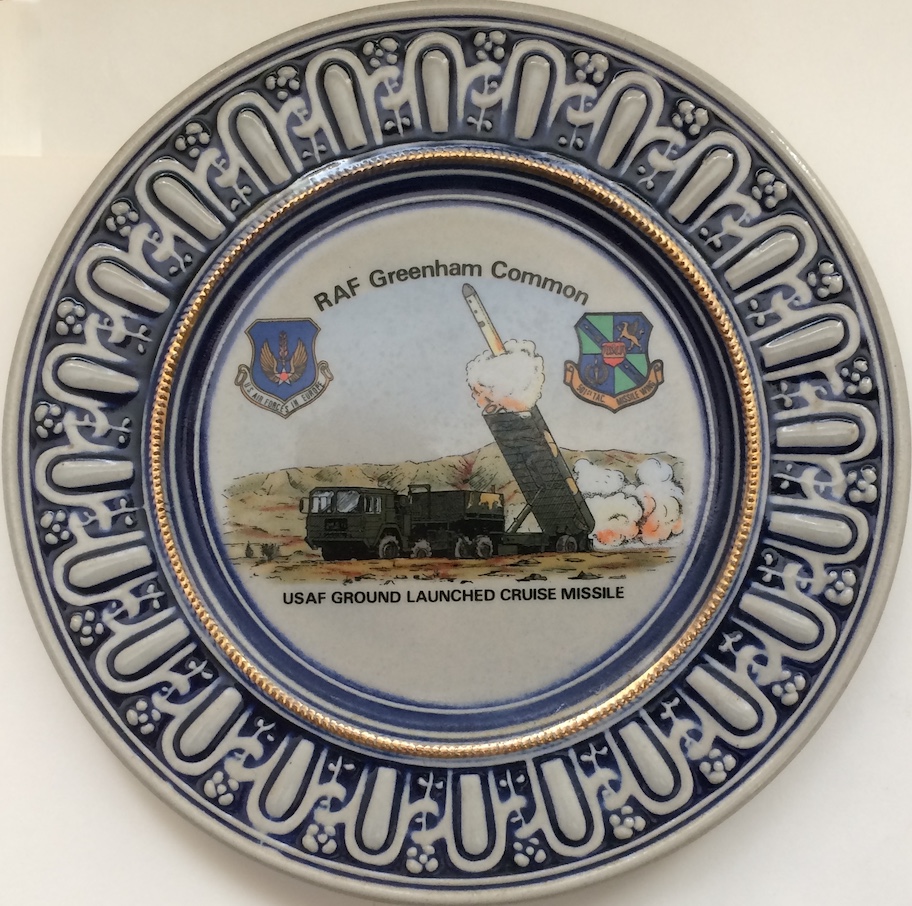
The “collectable plate” pictured at the top of this post was purchased by my mother when she visited our family in the U.K. in 1990. A decade after my retirement from the USAF, I am still unpacking some of the boxes I accumulated during decades, and after my mom’s passing, this souvenir joined the archives.

It really is beautifully ornate. Such an attractive setting for an awesomely combative image.

Lest they be misperceived as “conventional” weapons, it should be noted that Ground Launched Cruise Missiles were expressly devised to deliver intermediate range nuclear explosives. Deadly.

The great thing about NATO’s cruise missiles is that they were deployed to bring the Soviet Union to the negotiating table, where the Intermediate Nuclear Forces Treaty led to the elimination of all such munitions from Europe!

Combining military and peace imagery has a long tradition. I wrote about “Powerful Names” and how Iran chose the classic name “Peacekeeper” for one of its deadly missiles. But you can find in my post many other, stranger labels. (I’m still confused why the Brits named of their 1950s missiles “Green Cheese.”)

My assignment at Royal Air Force Greenham Common was a joy. And it was a genuine privilege to be part of a mission that literally made the world a safer place.

I hope all people who desire lasting peace will join me in supporting the allied nations of democratic countries as they counterbalance the world’s totalitarians. And if they can combine the power of necessary arms with artistry that celebrates the pastimes of peace, all the better.

C.S. Lewis worked his own magic combining frightening images with peaceful pursuits. Included in the ranks of Aslan’s army, after all, we see not only cute badgers and prickly hedgehogs. Fierce (even beastly) satyrs are found in the ranks of Good. (Think super-gross, goat-faced fauns . . . with axes). Still, when they are aligned in the ranks beside Narnia, they appear noble. I can even imagine them, during seasons of peace, tilling the soil and tending the orchards.

We will close with a piece of trivia about Narnian warriors. In the books, the Minotaurs (nasty creatures these), are all portrayed in a negative light. They are among the troops of the White Witch celebrating Aslan’s death. However, in the films they have been redeemed and some fight beside Aslan and Narnia’s kings. C.S. Lewis’ son, Doug Gresham, explained the change in an interview:

There are several reasons for that. Firstly, we felt that we needed to show that in Narnia as here, old foes can be forgiven and can reconcile and work together, given the will to do so. Secondly, that in Narnia as also it is here, a common adversary will bring even the worst of enemies together and unite them.

Also, that the shapes and colours of a species’ body do not necessarily denote their character, that just because someone is a Minotaur does not have to mean that they are all bad. Finally, we kind of like Minotaurs.

Writing a Biography

What kind of writer are you? A poet, journalist, essayist or, perhaps, a minimalist? (By “minimalist” I mean someone who writes the bare minimum they have to.)

Many readers of Mere Inkling are, in fact, writers in their own right. Even ignoring the profusion of texts ricocheting around the globe (which are, in fact, literary creations), a fair number of Mere Inkling subscribers have blogs of their own.

The preeminent position of physical letters as the medium for correspondence has been usurped by email. People still write to one another, but – to the woe of the struggling United States Postal Service – they do it digitally.

More serious writers gravitate toward a varieties of genres. Often we try our hands at the sort of literature we prefer reading. That’s why I seldom write poetry. (And, when I do, it’s usually because I’m consciously stretching myself.)

My poetic skills may be limited – you can decide for yourself – but I don’t experience any of the disappointment that befell C.S. Lewis when his poetic dreams were dashed.

Poets are fine. Until they become snobs. If they treat other genres with respect, they stand on an equal footing with everyone else. But when they claim primacy for their preference, they lose me. Consider “William Faulkner Makes Us Wonder: What’s So Great About Poetry, Anyhow?

There’s a reason I can call poetry the highest form of artistic expression without thinking twice about it. And even though most Americans today don’t acknowledge the art form all that much, you’d be hard-pressed to find a sensible person who doesn’t respect or – if only from a distance – admire the magic in it.*

I guess I am one of the Americans who doesn’t possess a special reverence for poetry. And, as for “admiring the magic in it,” please. Wait, I don’t desire to offend you poets out there. Unless, of course, you consider yourself better than everyone else. In that case, consider my words a gentle rebuke (and encouragement to consider the virtue of humility).  

I hope that everyone will read on, and forgive me for maligning “the highest form of artistic expression.”

A Less Honored Literary Genre

I write nonfiction, unsurprising for someone who is basically a historian. Theologically, I neglect the conjecture of systematic theological considerations and focus on what’s usually called “practical theology.” It too, is unpretentious, and intended to make sense to “regular” people.

Recent years have found me dabbling in the memoir, or versions of autobiography, as I consider the potential value of such documents to my descendants.

One arena I’ve never really considered is biography. I suspect it would be a comfortable literary form, for a historian. I mean, you’re simply telling the story of a single life, relating facts and explaining the context of various events. That doesn’t sound too challenging, does it?

I suppose almost anyone could write a biography. The question is, could we write a good one?

Writing a Biography

I have been thinking about this subject ever since my research for my previous post introduced me to the work of David Cecil,⁑ one of the Oxford Inklings who shared the company of C.S. Lewis and J.R.R. Tolkien.

Cecil wrote several biographies. At Internet Archives you can read his lives of William Cowper, Charles Lamb, or Max Beerbohm, or his two-volume biography of Lord Melbourne (1 and 2).

If those individuals don’t tickle your proverbial fancy, you might want to look at the book that piqued my interest: An Anthology of Modern Biography. In it, Cecil explores the work of sixteen biographers. One of the chapters is his own portrayal of the evangelical Anglican cleric, John Newton (an extract from his biography of Cowper).

What intrigues me most about the volume is not the biographical material itself. Rather, it is Cecil’s very informative introduction. Here is his opening, which may whet the interest of future biographers . . . one of whom could be you?

Biography is not an important form of literary art. But it has a special interest to the student of modern literature. For it is the only new form. We can talk of modern poetry and modern novels, but these are only new variations on old forms. . . . Not so biography.

Art is primarily the expression of the artist’s creative powers; he writes to express his personal vision; he chooses as his subject that which he thinks will best exhibit his particular talent.

Now this is not true of the biographer of the past. His aim was not artistic, it was useful; he wanted to give people information. If he was a man of literary talent . . . his book was a work of art. But even if it had not been, it would not have failed. For its primary purpose had been, not to give an artistic impression, but to tell the truth.

This desire for the truth over ostentation resonates with me. But, mind you, he is referring to biographers “of the past.” Now (the book was published in 1936), other influences are at work.

But for the typical modern biographer literature comes first. Mr. Lytton Strachey writes about Queen Victoria, not in order to give us information about her, but because he thinks her life an excellent subject for a work of art. . . .

He does not set out his facts . . . complete with reference and proof, he weaves them into a story, grouping them in order and proportion that will make his picture as vivid and entertaining as possible.

Cecil’s explanation for this transformation is fascinating, and I encourage you to read it yourself, whether or not you are interested in writing a biography yourself. The book is available here, and thanks to the Public Library of India, you can download a complete copy for free.

In a 1932 letter to Arthur Greeves, C.S. Lewis contrasts biographies with the evidence from people’s daily lives. He shares with his lifelong friend a question this raises in his own minid.

It is a very consoling fact that so many books about real lives – biographies, autobiographies, letters etc. – give one such an impression of happiness, in spite of the tragedies they all contain. What could be more tragic than the main outlines of Lamb’s or Cowper’s lives?

But as soon as you open the letters of either, and see what they were writing from day to day and what a relish they got out of it, you almost begin to envy them.

Perhaps the tragedies of real life contain more consolation and fun and gusto than the comedies of literature?

Biography. Considering trying it. And, Poetry, it’s not that bad, either.


* The article does include interesting information about Faulkner. It appears his disappointed poetic dream shifted him to more productive fields. This parallels C.S. Lewis’ literary career.

For all of [Faulkner’s] achievements, his Nobel Prize for Literature, his Pulitzers and National Book Awards, his mug on a 22-cent postage stamp – the man still fell short. And it wasn’t that he dropped out of high school and did only a few semesters of college, or that he was once fired by an employer for reading on the job.

These were small missteps and shortcomings that were basically inconsequential in the long run. The larger issue is that, in his own view, William Faulkner was a failed poet. Failed.

“Maybe every novelist wants to write poetry first,” he told The Paris Review in 1956, “finds he can’t, and then tries the short story, which is the most demanding form after poetry. And, failing at that, only then does he take up novel writing.”

What you may not know is that before his first novel, Soldier’s Pay, Faulkner had written two books of poetry, Vision in Spring in 1921 and The Marble Faun in 1924. While he’d long dreamed of being taken seriously as a poet, the verse was always second-rate and not particularly significant. Eventually he abandoned his efforts as a poet to focus solely on his fiction.

⁑ In the spirit of most colonials who shook off the reigns of monarchial rule, I tend to respect the Queen as a head of state, and disregard the affectations of an aristocracy they once “lorded” it over. Thus, I can take or leave Cecil’s normative citation as “Lord David Cecil.