Literary Translators Beware

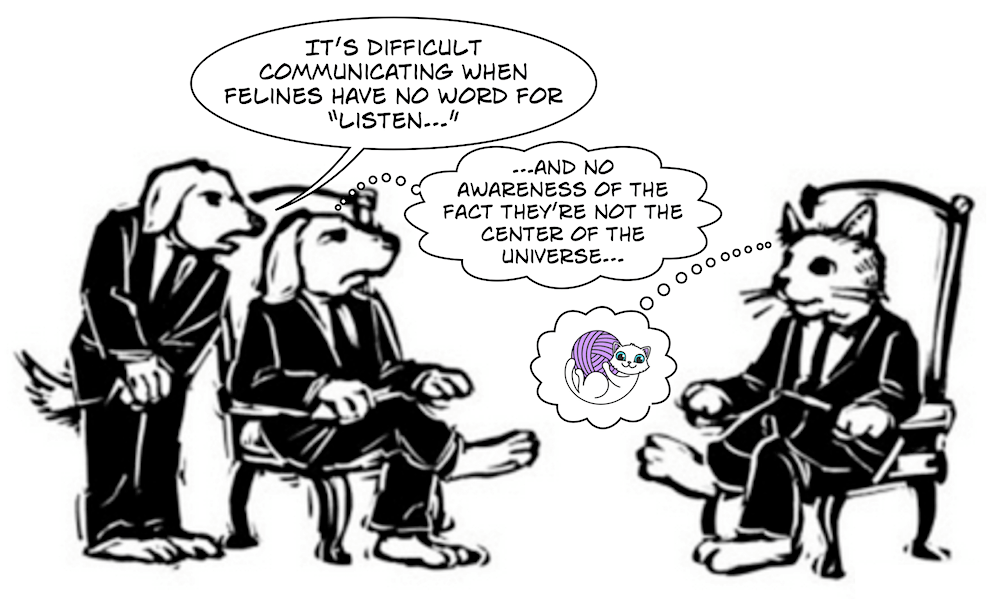
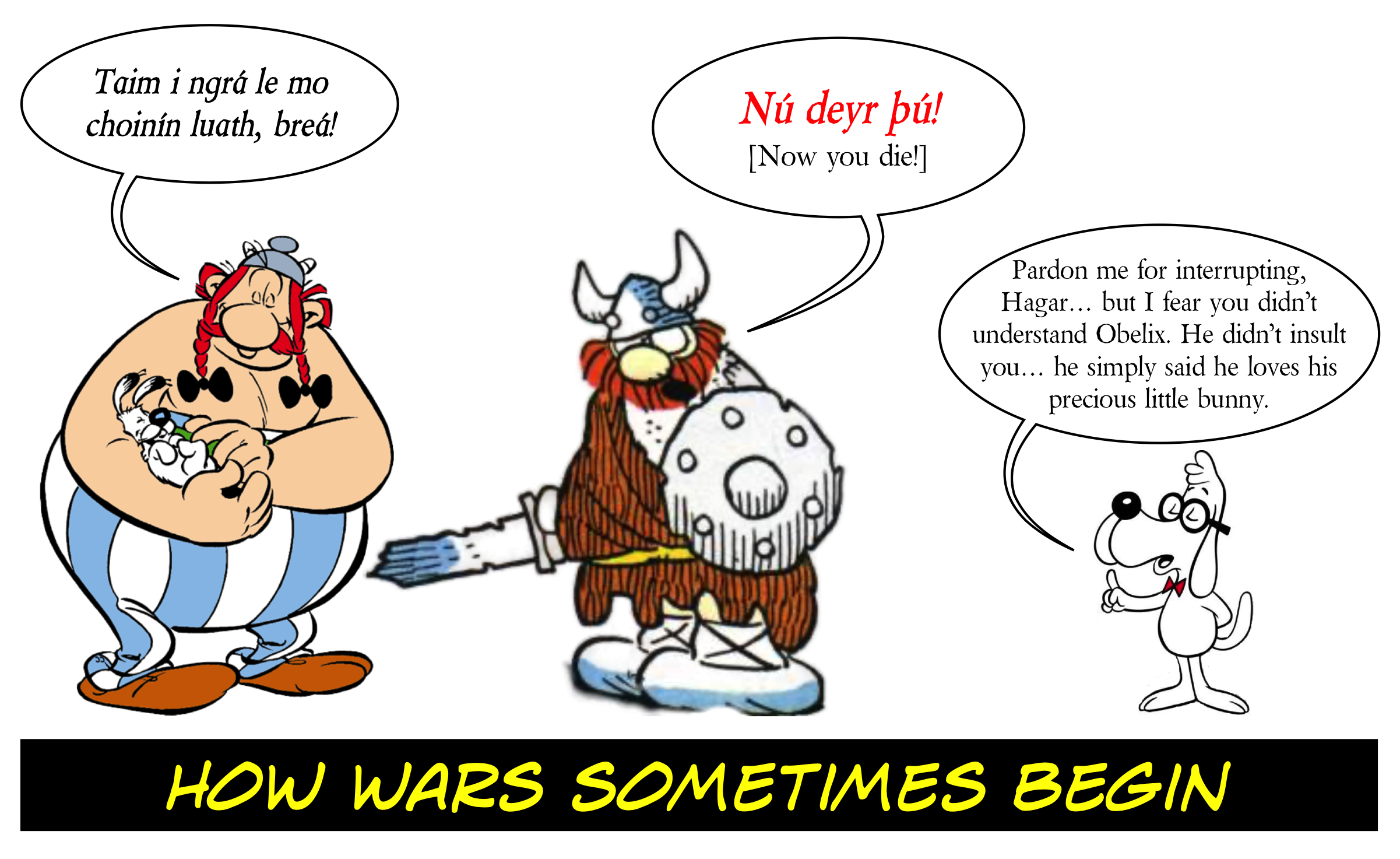
Translating literature from one language to another is a valuable, yet often undervalued, skill. It breaks the linguistic shackles restricting the benefits of good books to those literate in the language in which they are composed.

You can think of it this way. Without the dedicated efforts of translators, someone familiar only with English – e.g. as is, sadly, the case with most Americans – could never read the works of ancient Greeks or Romans. Asian philosophy such as the Four Books and Five Classics of Confucianism would be virtually unknown in the West.

Even contemporary literature from most of the world would be beyond our access. And, obviously, God’s written Word would only be accessible to those who mastered Hebrew, Aramaic, and Greek.

While C.S. Lewis is seldom thought of as a translator, it was indeed one of his talents. That doesn’t mean he devoted serious energy to translation. That was not his vocation. On the contrary, in 1945 he wrote: “People praise me as a ‘translator,’ but what I want is to be the founder of a school of ‘translation.’” (I discussed this a number of years ago in “C.S. Lewis’ School of Translation.”)

Dedicated translators have played an invaluable role throughout recorded history. A number of people still make translation their life’s labor. Yet, there are dark clouds on their horizon.

Is there a Future for Translation by Human Beings?

A recent literary journal alerted me to advances in artificial intelligence, which now jeopardize the future of professional translators. 

Back in 2023, an article in Forbes compared the respective advantages and challenges of the two methods. They accurately identified one distinction between a truly fluent human and an artificial substitute.

Language is complex, and culturally specific expressions such as idioms and metaphors, as well as ambiguous or ungrammatical sentences and other context-dependent word choices, can be challenging for AI algorithms.

Unsurprisingly, that same year the American Translators Association offered a more critical opinion in “Machine Translation vs. Human Translation: Will Artificial Intelligence Replace the World’s Second Oldest Profession?

We already mentioned that computers don’t possess our human capacity to comprehend meaning. The creative process, especially when it comes to translation, is the pinnacle of meaning. Human translators translate meaning, not words. The art of translation is understanding the meaning of the original text and then transforming it into something that communicates the same message (or evokes the intended emotion) but might not superficially look like an exact equivalent. . . .

But both now and then, professional translators are here to stay. Equipped with unique human skill and a toolbox full of tech, they’re ready to continue helping the world navigate the tricky business of multilingual communication – transporting messages appropriately, creatively, consistently, and securely to whatever audience you aim to reach. 

In short: machine translation can help when it doesn’t count, but professional human translation is there for you when it does.

Related to expressly literary translations, in contrast to mundane subject matter, the current issue of Poets & Writers contains a piece titled “AI Threatens Literary Translation.” When a European subsidiary of Simon & Schuster announced they would begin limited use of AI for this purpose,

Reactions rose in a flurry: Writers, publishers, and translators contended that AI would produce “bland” work. They lamented the possibility of lost jobs. The European Council of Literary Translators’ Associations resisted the standardization of an idiosyncratic process, stating that the imagination, understanding, and creativity that translation demands are “intrinsically human.”

This informative essay acknowledges that “AI isn’t new to translation either. Literary translators sometimes input segments of their source text into AI-based technologies . . . to generate ideas for particularly thorny passages. But these tools have to be used ‘very carefully . . . because the translations it produces are error-ridden and devoid of flow or beauty.’”

A Quick Experiment with AI Translation

Before completing this post I took a brief (less than ten minute) excursion to ChatGPT to experiment with their translation tool.

The results appear below (all produced in a mere handful of minutes). First I asked the AI to compose a sonnet on the subject of translation. Then I requested translations of that sonnet in five different languages. I have included the sonnet and the final two lines of each translation below.

You can perform a more elaborate experiment yourself, especially if you are familiar with more than one language. This would enable you to compare the accuracy of the translation. Or, perhaps one might take a translated version and translate that back into the original language, to see how closely it relates to the starting point.

In my experiment, the AI was constrained by needing to maintain the original’s form as a sonnet. I assume that if it were simply a literal translation, it may have modified the vocabulary and grammar. Each translation included footnotes. To illustrate how elaborate some of these notes were, I’ve reproduced those which appeared with the translation into Aramaic.

Frankly, if this is what these early AI prototypes are capable of, it appears to me that professional translators may truly have something to be worried about.

The Sonnet

In languages vast, where meanings hide and shift,
A translator’s art gives voice to what is known.
Through words, they bridge the gap, a timely gift,
To carry thought from one to others’ throne.

The rhythm, tone, and essence all must stay,
Though words may bend, they still must hold their grace.
A careful hand must guide the text’s relay,
To keep its heart while moving through time and space.

Yet oft the meaning’s lost in fleeting sound,
Or tangled in the strings of foreign speech.
But still they strive, where words and thoughts are bound,
To bring the message close, within our reach.

A translation’s not just words that blend –
It’s worlds revealed, with meaning without end.

~ Latin ~

Translatio non est solum verba iuncta –
Sed mundi patent, et mens non est puncta.

~ Old English ~

Nis anginn of wordum gemenged anum –
Ac worulda onwreah, and andgit ne swylt.

~ Classical Greek ~

Οὐ γάρ μόνον λέξεις αἱ μεταφράσεις,
ἀλλὰ κόσμοι φαίνονται, ἄνοια οὐδέποτε.

~ Middle Egyptian ~

𓏏𓂋 𓅓𓏏 𓊪 𓏏𓏤 𓆑𓏏 𓊵𓏤,
t r mt ḏbꜥ t ft ḏbꜥ
(“A translation’s not just words that blend –”)

𓂋 𓅓𓏏 𓆑𓏏 𓊵𓏤 𓏏𓏏𓀀.
r mt ft ḏbꜥ t t
(“It’s worlds revealed, with meaning without end.”)

~ Classical Aramaic ~

ܬܪܓܡܐ ܠܐ ܗܘܐ ܒܠܚܘܕ ܡܠܐ ܕܡܬܚܠܛܢ,
ܐܠܐ ܥܠܡܐ ܡܬܓܠܝܢ، ܘܡܕܡ ܠܐ ܚܒܠ.

Notes on the Translation:
1. Classical Aramaic Grammar & Style: The sentence structure follows Classical Aramaic syntax as used in ancient texts. Some phrases had to be adapted poetically since direct translations of modern concepts do not always exist.
2. Vocabulary Adjustments: “Translator” = ܡܬܪܓܡܢܐ (metargemana), a direct and historically accurate term. “Translation” is expressed as ܗܫܬܘܪܬܐ (hishtorta), meaning “interpretation, explanation.” “Essence” is translated as ܡܗܘܬܐ (mehutā), meaning “nature, essence.” “To bridge the gap” = ܡܫܬܪܝܢ ܓܦܐ (meshatrin gapé), literally meaning “to stretch wings” (a poetic expression).
3. Preserving the Poetic Flow: The rhythm and parallel structure of the original sonnet were carefully kept. Adjustments were made for metrical and phonetic balance in Aramaic.
4. This version captures the spiritual and poetic depth of the original while remaining faithful to the Classical Aramaic linguistic style.
5. Would you like an audio recording or a version in Syriac script for authenticity? Let me know how you’d like to refine it!

And all of this in ten minutes. Unfathomable . . .
Must Writing be a Solitary Endeavor?

It’s often said that “writing is a solitary task.” I find that’s only half true.

Sure, each individual is responsible for putting the words on the page (AI-cheats aside), but sharing your work with others before publishing it provides amazing dividends.

Not only can “other eyes” see flaws we are too close to the piece to recognize, good critiques often include suggestions to make our writing stronger.

I’ve occasionally described the benefits I’ve received from being a member of writers [critique] groups around the globe. I titled one of my posts “Be an Inkling,” because this mutual sharing was central to those brilliant minds who gathered together in Oxford.

In 1967, J.R.R. Tolkien described his reason for using that particular word in just such settings. He said he used the word Inkling as “a ‘jest,’ because it was a pleasantly ingenious pun in its way, suggesting people with vague or half-formed intimations and ideas plus those who dabble in ink.”

I too find it “pleasantly ingenious” and have echoed it here in my own domain. 

Conferences can be helpful too, but my experience is that nothing surpasses the encouragement that emanates from the mutual commitment shared by writers who physically gather to share their creations.

I noted above two concrete ways writing friends can contribute to strengthening our work. However, this third element – encouragement – cannot be underestimated. It was precisely this element that brought that masterpiece, The Lord of the Rings, to the world’s attention.

A Pilgrim in Narnia provides a superb account of C.S. Lewis’ essential role in boosting the confidence of his friend J.R.R. Tolkien. He cites a letter in which Tolkien describes how Lewis’ most precious gift was in challenging him to complete his opus.

The unpayable debt that I owe to him was not ‘influence’ as it is ordinarily understood, but sheer encouragement. He was for long my only audience. Only from him did I ever get the idea that my ‘stuff’ could be more than a private hobby. But for his interest and unceasing eagerness for more I should never have brought The L. of the R. to a conclusion.

Melancholy Transitions

Critique groups are weighing on my mind, since the one I’ve been part of for many years has come to its end. The passing of various members during the past decade left too few of us to continue, and we few who were left are mourning the fact that it was not sensible to continue meeting regularly.

It is another reminder of Solomon’s wisdom when he wrote, “For everything there is a season, and a time for every matter under heaven.”

Sadly, I lack the energy to help establish another new writing fellowship at this point in my life. Perhaps I will join one of the online communities. Christian Writers looks promising.

I actually participated in an online critique community back when primitive “bulletin board systems” were giving way to the nascent internet. No doubt the modern equivalent would be far better in every way.

In the meantime, I do have a few readers I trust to review my work before submitting it to an editor. One is my very talented wife. The problem there, however, is that her love (and compassionate nature) make her too gentle when she critiques my work. 

This drawback is one side of the coin to which author Dan Brown refers when he says: “I learned early on not to listen to either critique – the people who love you or the people who don’t like you.”

This does not mean, of course, that those who love us are unsuitable candidates. It simply suggests that we need to (often repeatedly) give them permission to offer genuinely critical comments, especially when they are accompanied by suggestions for how we might improve a given passage.

In essence although people like William Faulkner are correct in stating that “writing is a solitary job,” most of us can benefit from sharing our drafts with others. 

And fortunate are those of us who discover such friendship, where our writing companions are like-minded, trustworthy, self-confident, and honest. (I personally find having a sense of humor an essential trait, as well.)

In a word, we are greatly blessed to personally become part of our own fellowship of Inklings.

Blackout Writing

Do you have trouble coming up with ideas for your poems or stories? How about starting with an interesting collection of words and winnowing them down to a creation of your own? Read on to learn more about a simple process.

A few years ago a fellow pastor told me he could write, even short articles like blog posts. Since he had successfully completed a challenging graduate program, I was a bit shocked at this disclosure. “The problem,” he said, “is that I just can’t come up with any ideas for what to write.”

I had two reactions. First, I was amazed, since I can’t get through a day without encountering at least a handful of observations that beg to be explored. Second, I wondered just what sort of sermons his congregation was exposed to, if creative imagery and fresh ways of expressing God’s timeless truths were not coming from their pulpit.

One of the ways I attempt to improve my own writing is by stretching. In my personal shorthand, this refers to engaging in new forms of writing. Principally that means voluntarily jumping into sometimes ominous literary waters. I stretch myself by humbly engaging in genres which I may, in all honesty, find intimidating.

For example, occasionally, when bored with outlining books that may never get written, I’ll just scribble out some “impromptu verse.” Some of it turns out rather decent. (You’ll notice I didn’t say “excellent.”)

Blacking Out Words to Compose New Literature

I had heard of Blackout Poetry before, but never attempted to “write” any. Actually, it seems to me that “decompose” might be a more accurate word for this type of creating. Although most commonly used to create brief works, such as poetry, the concept can be used for narratives as well.

If you are unfamiliar with the process, you may enjoy the following, introductory articles.

Teach Kids Art” explains the basic process and then adds some visual artistry to the mix.

Blackout Poetry is a form of “found poetry” where you select words that catch your interest from a newspaper, book, or other printed text – along with a few additional words to make it flow. Then you “redact” all the words you don’t want. This is often (but not always) done with a black marker, hence the name “blackout poetry.” Your chosen words will form a new message, giving the text a whole new meaning.

Take your Blackout Poetry a step further by adding patterns, designs, or a drawing to the areas you’re “redacting.” For example, instead of just filling in around your chosen words with solid black, you could create a drawing or design that relates to your poem. Just as with any illustration, your art should support the remaining text and add to its meaning.

Looking Beyond the Comfort Zone” discusses a reservation many will have about pursuing blackout writing.

I really wanted to give it a try. There were however a few obstacles to overcome. First was my ingrained prohibition of defacing books. Although I owned a highlighter in college I rarely used it. It seemed wrong. . . .

Secondly the blackout poetry requires making the page unreadable for the original words. I felt a lot of good old-fashioned guilt in the prospect of destroying someone’s story. Lastly, I didn’t have any books that I felt so little regard for that I could take a sharpie marker to the pages.

I, personally, have eliminated the second reservation by scanning an image of each experimental page and blacking words out digitally. It would be just as simple to print out such an image, or simply use a copier with a physical book, if you prefer to create your work manually. My method eliminates another potential problem for bibliophiles, the damage often caused to a book’s spine when attempting to flatten the page for copying.

5 Tips for Creating Blackout Poetry” claims the genre is “the best cure for writer’s block.” To enhance miscellany, they suggest “when picking an article to use, it’s best not to read it too closely.”

That way, you aren’t overly influenced by the author’s original work and you can create something uniquely your own.

This suggestion will certainly be beneficial in liberating the creativity of many writers. For my own purposes, I disregarded this advice, since I intentionally desired to use words by or about particular authors. I honestly want the original context to be in my mind during the metamorphosis.

A final source, “A blackout poem on the Trinity,” reveals how a writer in Europe found inspiration in the writings of C.S. Lewis for her own poem about the Trinity. Check out Christine’s verse at the link above.

This is the first time I’ve tried a blackout poem. They work by taking a page of text and then blacking it out until only the remaining words give you the poem.

In the end, I chose “It all began with a picture . . .” published in the Junior Section of The Radio Times on 15 July 1960. It’s a short and sweet description of how Lewis was inspired to write the Narnia stories.

My Initial Attempts

As I mentioned above, I scanned printed pages that you can easily find at Internet Archives, Google Books, Project Gutenberg and various other sites.

I did not attempt to write poetry. Rather, I used each page to write a brief, new narrative. Of my first three efforts, I was most pleased with “Savage Editing,” displayed above. Below, I will place it beside the original page, from The Collected Poems Of  G.K. Chesterton.

I’ll close by passing on to you the experience of the author who composed an ode on the Trinity, using an article about C.S. Lewis. My guess is that you too – should you be so bold as to attempt writing your own blackout works – will experience a similar satisfaction.

It’s hard being constrained by the page of text in front of you. The more you black out, the less you say; but the less you black out, the less impact each word has. It’s a game of compromise, striking the balance between being artistic and understandable.

But I think the end result is a celebration of both Lewis’ work and the Trinity.


The illustration below shows my blackout, which I entitled “Savage Editing,” beside the original page, which includes a portion of “The Scouring of the Horse,” from The Collected Poems Of  G.K. Chesterton. “The Scouring” is the final book in Chesterton’s Ballad of the White Horse.

Improve Your Writing with a Brevity Exercise

While we are unlikely to become another J.R.R. Tolkien or C.S. Lewis, it is quite possible to improve our literary skills.

There are numerous ways to strengthen our writing. One of my favorites is to “stretch” my abilities by engaging in exercises that push me far beyond my nonfiction comfort zone. More on the details in a moment.

C.S. Lewis prized brevity and clarity. Most readers do. I’ve written about this in “C.S. Lewis on brevity.” Before that, I had discussed brevity as a factor of “clear communication,” while focusing on the value of common semantics to avoid confusion.

I encourage you to read “In Defense of the Fairy Tale: C.S. Lewis’s Argument for the Value and Importance of the Fairy Tale.” The author cites Lewis’ reason for choosing the fairy tale as his genre for Narnia.

[Lewis] describes the invention process for the Chronicles of Narnia as first coming in mental images, “a faun carrying an umbrella, a queen on a sledge, a magnificent lion.” Next came the selection of a form in which to tell the story, one absent of a love interest or close psychology.

The form excluding these was the fairy tale. Lewis tells us that he fell in love with the form itself, “its brevity, its severe restraints on description, its flexible traditionalism, its inflexible hostility to all analysis, digression, reflections and ‘gas’” and the very limitations of the vocabulary.

He concludes, “I wrote fairy tales because the Fairy Tale seemed the ideal Form for the stuff I had to say,” not unlike the stone selected by the sculptor or the sonnet by the poet.

While I share the passage above at some length, my focus here is on Lewis’ observation that fairy tales are inherently “brief.” The fairy tale was, indeed, the “ideal Form” for C.S. Lewis’ classic stories from Narnia.

Even Briefer Genres

As a brevity-challenged individual (common for pastors), I like writing exercises able to make a dent in my innate verbosity. And what shorter option might one explore than a genre limited to a half dozen words?

Before embarking on my current challenge, let me give you a bit of background on the Six Word Story.

As Mark Twain famously wrote, “I didn’t have time to write a short letter, so I wrote a longer one instead.” Intense Minimalism provides similar inspiration from other earlier writers.

“Not that the story need be long, but it will take a long while to make it short.”
Henry David Thoreau,
“It is my ambition to say in ten sentences what others say in a whole book.”
Friedrich Nietzsche
“If I had more time, I would have written a shorter letter.”
Marcus Tullius Cicero (a predecessor of Samuel Clemens)
And back again to Mark Twain:
“If you want me to give you a two-hour presentation, I am ready today.  If you want only a five-minute speech, it will take me two weeks to prepare.”

C.S. Lewis was capable of writing long personal tomes to family and intimate friends. His correspondence with casual friends – such as Americans who sometimes sent food gifts during Britain’s post-WWII rationing – tended to be warm, but short. This was particularly true when his brother Warnie was not available to assist with his correspondence, as the following letters attest.

20th. January 1948
Dear Mr. Howard, This is really very handsome of you, and you could hardly have sent a more welcome gift. I have only to call your attention to the so-called ‘Superfine’ paper on which I am replying to give you some idea of the luxury of writing on a decent paper at last. But I’m afraid there is something which even American generosity cannot supply me with: an article called TIME, which was the cause of my previous letter! (its brevity I mean)

25th August 1949
Dear Dr. Allen Yet once again hearty thanks for a fine parcel which has arrived in excellent condition to-day. I don’t know how we should get on without you. My brother who drives the typewriter is away and my hand is nearly dropping off from letter writing, so you’ll forgive brevity – and the horrible scrawl! I’m none the less grateful inside!

Six Word Stories were popularized in the United States through association with Ernest Hemingway. However, it is an urban legend to credit him with this poignant example: “For sale, Baby shoes, Never worn.”

MasterClass offers a helpful lesson at “How to Write an Unforgettable Six-Word Story.” They actually suggest that you can drop a few of these into your writing day to renew your energy.  

Like other forms of short stories or flash fiction, a six-word story allows a reader to consume an entire narrative in just a moment’s time. If you’re trying to get in some short, but challenging, bursts of writing practice throughout your day, try writing six-word stories. These bite-sized narratives are fast and fun.

As for telling any sort of satisfying “story” in six words, it’s a bit of an hyperbole. However, that hasn’t stopped a number of people from making a literal career of promoting the genre. At the forefront of the movement is Six Word Memoirs.

Christians have likewise joined the club. For example, Six-Word Lessons to Discover Missional Living: 100 Lessons to Align Every Believer with the Mission of Jesus is volume  forty-three in “The Six-Word Lessons Series.”

Prior to learning about these companies, I thought it be fun to suggest that one you compose Six Words about the Christian Life. Still, since an idea can’t be copyrighted, you’re still free to market your own works in this genre.

Some of My Modest “Attempts”

One subgenre of Six Word Stories is Six Word Biographies. One website applies this to biblical personages. Among them:

Mary
“Behold the handmaid of the Lord.”
Esther
“For such a time as this.”

To which I dare to add: 

Jephthah (Judges 11-12)
“Rash vows bring about terrible tragedies.”
Jehosheba (Exodus 1-2)
“Moses’ mother, eclipsed by her daughter.”
Abednego (Daniel 1-3)
“I survived the fiery furnace too.”

Now, allow me to apply the technique to several other people. 

Jeanne d’Arc
“Heroic innocent, visionary warrior, martyred saint.”

Walt Disney
“Gifted Kingdom maker, buried, rolling over”

Grigori Rasputin
“Poisoned, shot, drowned, and ultimately, damned.”

George Washington
“Soldier, statesman, who shunned the throne.”

Bozo
“Dated humor, creepy antics, Krusty cosmetics.”

And, I close now with my personal favorite.

Larry Norman
“He was only visiting this planet.”

A half century hasn’t diminished the power of Norman’s message. (The titular lyrics are in the “Reader’s Digest” track on the record linked here.)

Education and the Human Mind

Learning is fun. Education can be enjoyable too. But obviously, they are not the same. 

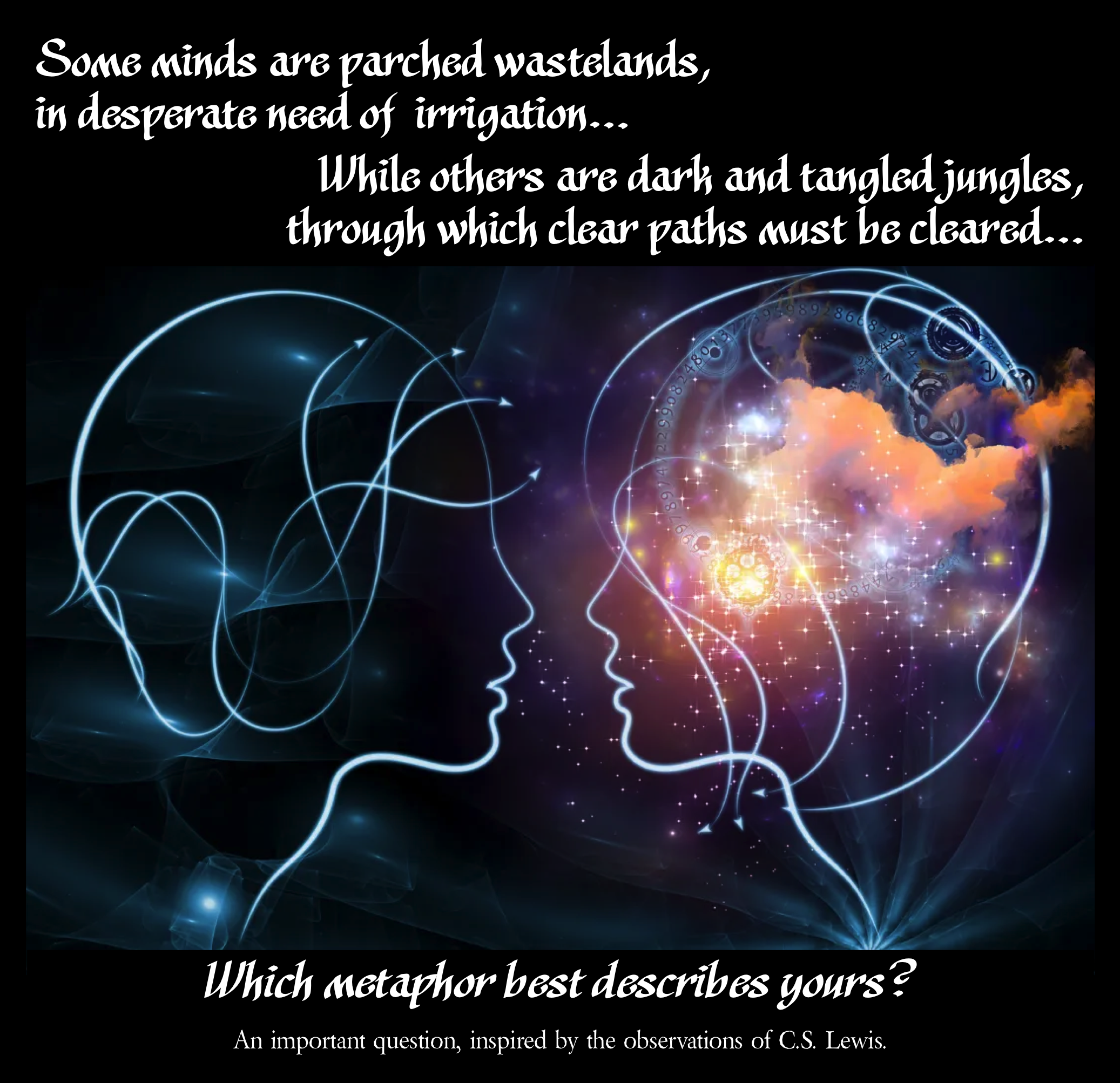
C.S. Lewis wrote a great deal about learning. A master of metaphors, he brilliantly described two distinct challenges faced by educators. In The Abolition of Man, he stated “the task of the modern educator is not to cut down jungles but to irrigate deserts.” 

Wheaton professor, Robert McKenzie, offers a concise explanation of Lewis’ keen observation.

‘Cutting down jungles,’ as I understand that phrase, means helping students with passionate convictions to evaluate critically their world views, to examine what lies beneath the personal beliefs they profess.

‘Irrigating deserts,’ conversely, involves nurturing in apathetic or cynical students the hope that there is meaning and purpose in human existence.

Quite true, and I believe Lewis’ insight is more timely today than it was during the past century.

Classical Versus Modern Education

Today I read a passage that reminded me just how dramatically contemporary curricula deviate from the traditional educational materials used before the modern era. 

While conducting research for a book about imperial Rome, which I hope to complete this year, I came upon the following passage. 

It would have been easy to swell this little volume to a very considerable bulk, by appending notes filled with quotations; but to a learned reader such notes are not necessary; for an unlearned reader they would have little interest; and the judgment passed both by the learned and by the unlearned on a work of the imagination will always depend much more on the general character and spirit of such a work than on minute details.

It appears in Lays of Ancient Rome by Thomas Babington Macaulay, which is available for free download at Internet Archive.

Macaulay (1834-59) was a prominent British historian and politician. His histories were thoroughly researched and widely respected, especially by those on the (liberal) Whig* end of the political spectrum.

A contemporary of Macaulay described his preparation for writing in poetic fashion. According to novelist William Makepeace Thackeray (1811-63), “he reads twenty books to write a sentence; he travels one hundred miles to make a line of description.”

It appears that, like C.S. Lewis, Macaulay possessed a lasting recollection of all he read. 

Returning to our beginning dichotomy – jungles versus deserts – both writers were a product of wide and critical literary study. Their minds were, in a sense, like a “rain forest.” Albeit, with C.S. Lewis it was certainly an orderly, well-tended forest. For some less stably grounded and more scatterbrained, the result is a jungle which requires radical clearing.

Alas, today’s more common problem, the unceasing pursuit of entertainment and distraction, leaves many with barren mental landscapes. In consequence, our calling as parents, educators, and friends, becomes one of irrigating the sparse flora and planting healthy new seeds in the hope that they will one day bloom.


* There is an interesting Mythlore article about C.S. Lewis’ view of history you can read here. In it, the author notes that “Lewis rejected a Whig history of unidirectional progress…” For a succinct article on the dangers of Whiggishness, I recommend “Evangelicals and Whig History” at First Things.

⁑ The brain truly can resemble a jungle, as a “digital reconstruction” reproduced on BrainFacts illustrates.

Immediately recognizable by its intricate folds and grooves, the cerebral cortex is the wrinkly, outer layer of the brain responsible for awareness, perception, and thought. Its interconnected neurons are arranged in six layers, a bit like the layers of tropical rainforests. . . . The findings may bring scientists closer to understanding how the complex jungle of cortical neurons interpret sensory information.

When the Learnèd Deserve Gentle Ridicule

The halls of academia are a curious place. Dark wooden walls and well-worn stairways hearken back to legions of students and professors who have invested portions of their lives in the academies’ life. Some of us are drawn to the air of knowledge and residue of research that made them what they are.

At the same time, however, many universities have become parodies of what they once were. Some self-important leaders and faculty cry out for satire and parody. As one liberal American journalist, a defender of academic elitism, admitted: “academics can be condescending and arrogant.”

Through the years I’ve known many brilliant men and women who retained their humility. Sadly, I’ve also encountered many whose view of themselves was so exaggerated that one could only respond with disbelief. Do they really believe no one sees through the façade?

Rather than write a longer column here, I want to provide a link to an unusual article I recently wrote related to this subject. If you have a sense of humor, and are not afflicted with academic grandiosity, please check it out. It appeared this past week in the latest issue of CSL: The Bulletin of the New York C.S. Lewis Society.

CSL is a small but mighty (think Reepicheep) publication. It’s worth subscribing to, even for those of us thousands of miles from their regular meetings in the Empire State.

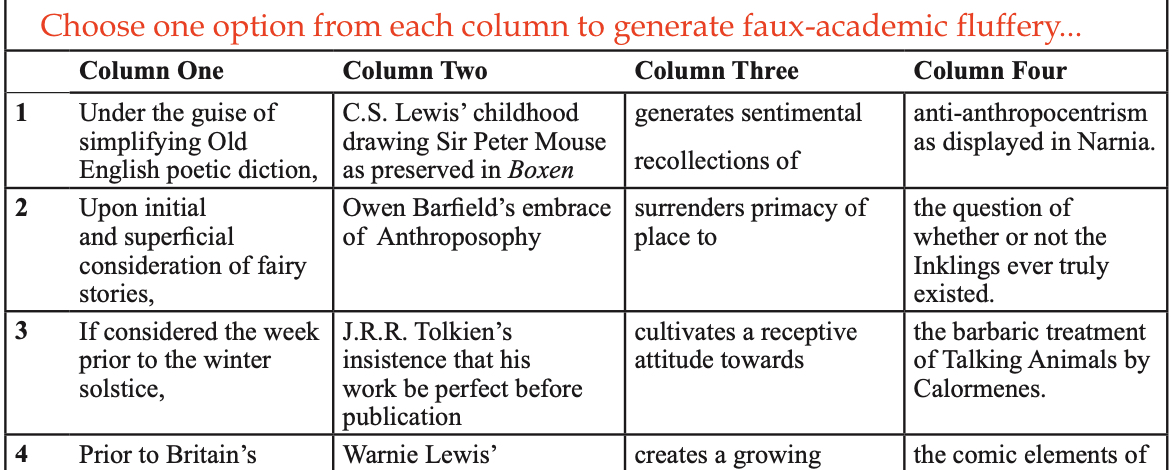
My article is brief, but it includes “the Mere Oxford Inkling Erudition Chart,” which promises countless hours of educational entertainment.

The people my satire seeks to unmask are the type of academics who attempted to make Oxford and Cambridge Universities so inhospitable to C.S. Lewis. Read this interview with one of his former student who critiques the opinions of lesser minds.

The BBC [invited him to broadcast the] talks that ultimately became Mere Christianity. The BBC was astounded by the response to these talks. As you know, Mere Christianity has never been out of print since.

He then became very unpopular with the senior faculty at Magdalen College. Magdalen was a godless college and a very famous college, very atheistical. . . . So [Lewis] got a rough ride there. He never made professor at Oxford.

So much for the civility one would expect in such environs.

You can read my modest article, “Mastering Inkling Erudition,” at this link today.

Inventing Poetry Forms

Would you like to leave your mark on literary history? Why not invent a new poetic form? It just might catch on.

If it did, you could become as famous as Adelaide Crapsey (1878-1914). She lived a privileged but brief life. Adelaide is remembered today as the creator of the American Cinquain. She also wrote a book entitled A Study in English Metrics which you can download for free.

C.S. Lewis describes the imaginative aspect of writing poetry as a creative act. “For poetry too is a little incarnation, giving body to what had been before invisible and inaudible” (Reflections on the Psalms).

LitCharts offers a description of the form itself, and notes an alternative name for the poetic invention.

The American cinquain is an unrhymed, five-line poetic form defined by the number of syllables in each line—the first line has two syllables, the second has four, the third six, the fourth eight, and the fifth two (2-4-6-8-2). They are typically written using iambs.

In the early twentieth century the American poet Adelaide Crapsey, inspired by the five-line Japanese poetic form of tanka, began to write five-line poems that followed a distinct form. This poetic form soon came to be known as an American cinquain (though it’s also sometimes referred to as a Crapseian cinquain, after its creator).

I think I’ll stick with “American.”

Oddly, one of the reasons Crapsey’s story drew me in is the fact she was the daughter of a prominent Episcopal clergyman. Algernon Sidney Crapsey (1847-1927) had aspirations of becoming a bishop, only to end up defrocked for heresy.

Writer’s Digest offers a list of 168 poetic forms, including “a few fun super new nonce forms.” I advise reviewing this listing so you don’t go to the effort of birthing your own form, only to find out that someone beat you to it.

I’ve written in the past about the benefit of writing outside of our normal styles. As a nonfiction writer, I’ve never desired to be considered a poet.

But I have enjoyed dabbling in a variety of poetic forms as a literary exercise. On occasion, I’ve actually been pleased with the results. And, due to its Inkling inspiration, my personal favorite is probably “A Foreshadowing of Epics.”

In a moment I’ll share my modest attempts at American Cinquains. But first, allow me to offer a Sijo that I wrote to introduce my Cinquains. A Sijo is “a Korean verse form related to haiku and tanka and comprised of three lines of 14-16 syllables each, for a total of 44-46 syllables.”

Immortalize your poetic memory this novel way.
Inventing a new form of poetry is easy to do.
With meter, hyperbole and rhyme – make your fame last for all time.

What follows is a medley of American Cinquains that I composed yesterday while waiting for an optometry appointment. My goal was not to awe readers, but to stretch my writing – what Chuck Palahniuk (the author of Fight Club) refers to as one’s “writing chops.”

The last story you should write is the most important story. You should start with a story that is just an amusing, entertaining, fun story to write and learn your writing chops with the least important things before you start applying them to the most important things.

I intentionally attempted to write cinquains evoking a variety of emotions. Here you will find examples that are thoughtful and frivolous, serious and sentimental.

Cudgel
Beaten by words
Angry themes beget hate
Eardrums torn by condemnation
Wounds last.

Pet dogs
Each breed a joy
Humanity’s best friends
Frolicking with unbounded joy
Precious.

Just War
Tragic option
For innocents still die
Theology deems it okay
Last choice.

Poets
Can be stuck up
Denigrating others
Counting fine prose lower than verse
Vain pride.

Dinner
Fresh fare tonight
Feasting on each choice cut
Cannibals toast missionaries
Dessert.

Comfort
Love wraps its arms
About the wayward lamb
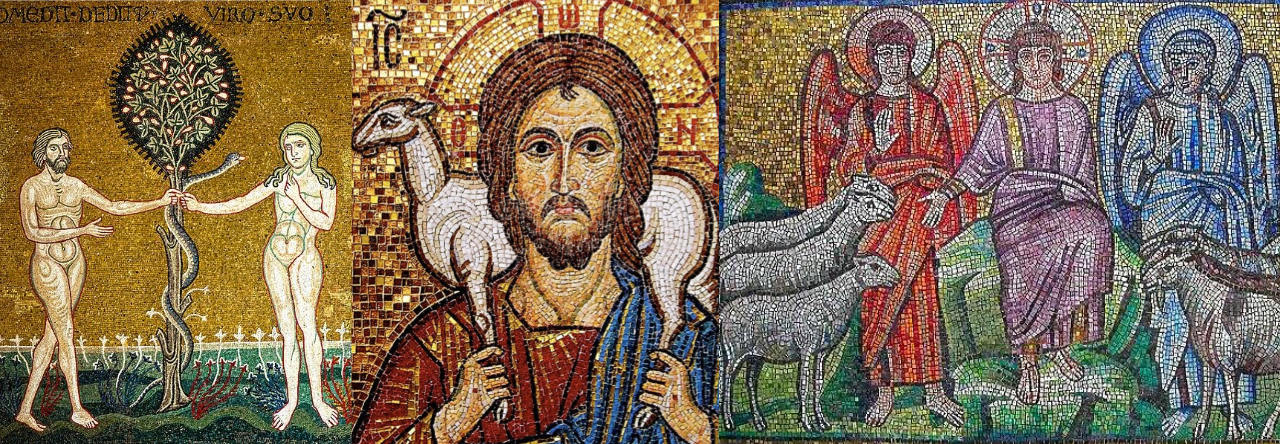
Carried safely back to the fold
Rescued.

Try your own hand at writing an American Cinquain. Or, better yet, establish your own unique poetry form. If you promote it well – say by getting someone like Oprah to endorse it – you could one day become as famous as Adelaide Crapsey.

For the Love of Words

Most writers, including the majority of bloggers, share a common affection. We love words, don’t we?

That love extends beyond mere fondness. We can find ourselves in a state of genuine wonder as we ponder definitions, etymologies (evolutions through diverse languages), and phonesthetics (how they sound). As C.S. Lewis once wrote, “Isn’t it funny the way some combinations of words can give you – almost apart from their meaning – a thrill like music?”

This is one aspect of a great article in the current issue of The Lutheran Witness.* In “For the Love of Words,” editor Roy Askins uses C.S. Lewis’ classic The Four Loves to explore the relationship we have with words. He does so from a Christian perspective shared by the Oxford don.

Words shape us in profound ways. God formed creation and continues to sustain it by the Word of His mouth. . . . Words, then, are not incidental to our lives, but form a central part and core of our identity as God’s people. It’s certainly appropriate for us to talk about “loving words.”

The very word for a lover of words – logophile – combines the Greek logos (word) with philia, which Lewis deems priceless, like “that Philia which Aristotle classified among the virtues or that Amicitia on which Cicero wrote a book.”

[Coincidentally, I have an article about ministry to those who are mourning in the current issue of The Lutheran Witness, as well. I assure you, however, that’s not why I’m citing “For the Love of Words.”] Longtime readers of Mere Inkling are well acquainted with my personal fascination with words and wordplay.

Many of you share this predilection. C.S. Lewis describes us in Studies in Words.

I am sometimes told, that there are people who want a study of literature wholly free from philology; that is, from the love and knowledge of words. Perhaps no such people exist. If they do, they are either crying for the moon or else resolving on a lifetime of persistent and carefully guarded delusion.

Literature, Lewis argues, is not simply the sum of its words. It involves the history of the words, their complex shades of meaning, and even what those very words meant to their original writers.

The Uniquely Christian Perspective

God pours out his gifts of writing quite broadly. Countless styluses, quills and pens have been wielded by talented pagans and atheists over the centuries.

Still, as Askins’ article alludes, Christians have a unique connection to words. Not only did God speak all creation into existence through his Word, but that Logos, that Word became incarnate and suffered an innocent death so that humanity might be redeemed. Askins concludes his article with a joyful truth.

When we seek to love words, then, we do not seek to love them as words in themselves. This danger we editors and writers must mark and avoid. No, we love words because in them and by them, we hear of and share God’s love for us in Christ. He alone makes words holy and precious; He alone makes words worth loving.

I love these closing words. And I strongly believe C.S. Lewis would too.


* The Lutheran Witness is the magazine of the Lutheran Church – Missouri Synod.

Are You an Author or an Editor?

Each writer brings a unique balance of talents to the task before them. Some excel at the initial writings. Others are especially talented at sharpening their work after the first draft has been created.

Understanding where we fit on that spectrum of author or editor, can be very empowering. Knowing our strengths and non-strengths is a major step in becoming a better writer.

Andy Le Peau worked for four decades at InterVarsity Press. His excellent blog, Andy Unedited, explores “books, life, and writing.” Five years ago he penned a short post that I still find extremely enlightening.

In “Authors are Like Pioneers—Editors Are Like Settlers,” Le Peau uses that unusual analogy to explain a creative tension at play in the lives of most writers I know. And, once we understand this fluid dichotomy, I believe it makes us better writers.

Authors tend to come up with new ideas and push them forward. They like to move into literary territories not explored before. Creating something new is like a shot of caffeine to their systems.

Good editors see how to improve a book, make it read better, clearer. They don’t try to shape the book in their own image. Rather they see the good that is already there and find ways to make it even more effective, better organized, clearer.

Good writers are usually pretty decent editors. Not expert, but adequate enough to recognize ways in which their own work can be improved. That’s why we call the “first draft” a first draft.

Now, if you consider your initial draft a finished product, you are definitely not a settler!

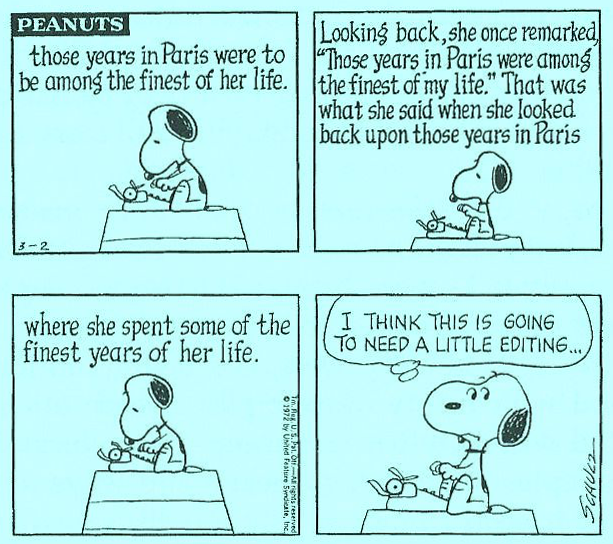
C.S. Lewis was a gifted writer. He also knew a great deal about editing, as I’ve discussed here in the past. I’ve even described his astonishment with the practices of some editors.

Lewis was quite open to revising his own work, even after it was published. In 1959, he wrote to one of his publishers, “Yes, there is one chapter of Miracles that needs revision. The result of the revision will, I think, make it shorter rather than longer. I’ll get onto this job as soon as I can.”

My Perspective on the Writing Process

While I embrace the pioneer or settler symbolism, I expand the analogy by thinking about my own writing process. I tend to think of it in three categories, with

Researching – Writing – Editing

To this process, if we desire to actually share our work, should be added at its end, “Submitting/Publishing.” Submitting refers to presenting it for potential publication in various media. By publishing, I refer to skipping the proverbial middle person, and posting your work online or using one of the self-publishing options readily available today.

In my personal context, I regard researching as a semi-independent stage of the writing process.

This may be due to the fact I focus on nonfiction. (Fiction writers can devote meager attention to it, and get away with it—not that they should ever ignore it.)

There are two additional reasons researching earns its own place in my writing process. First, because it is in my innate nature to be thorough and accurate. Second, I simply love the process. I know I’m in the minority.

Most writers prefer to get on with the task as soon as possible. I, however, am enslaved by my inherent curiosity to learn as much as possible about the undertaking as I can, before embarking on the actual writing. (And, yes, I recognize this may be exaggerated by my mortal tendency to procrastinate.)

To maintain the original analogy, in the spirit of Leif Erikson, I think of it this way:

Explorer – Pioneer – Settler

This works well for me, and I hope this post offers some insight and encouragement to you, as well.

Translating Foreign Languages

How many languages can you translate into English? If the answer is >0, I envy you. I’ve studied four,* and passed all the tests, but have an actual aptitude in none.

If I were thus gifted, I would be transferring some of the world’s literary wealth into my native tongue—and vice versa.

One of my granddaughters is currently fascinated by language. She wants to speak a dozen or more, and has begun some study in Spanish and Japanese. However, I attribute most of her dream to a young teenager’s excitement at having the entire world before them. In time, we all learn that finite concerns, such as time, finances and obligations, erode our options.

I’ve written about translation before, most extensively in “C.S. Lewis’ School of Translation.”⁑

This week, while writing an article about a Lutheran approach to ministry with the newly bereaved, I came across an entertaining reference to translation, in the letters of Martin Luther. Luther, of course, was the Reformation leader who, among other things, strongly believed the Bible should be accessible to lay people in their own language.

Translating the Holy Scriptures

Martin Luther was a scholar. Yet, even scholars lack expertise in all subjects. Thus, when translating the Bible into German, he welcomed the cooperation of others. This was particularly wise, since the so-called “Luther Bible” was the first German translation from the original languages rather than the Latin Vulgate. Unsurprisingly, the New Testament was published first. The longer Jewish Scriptures required more time.

The following letter was written in 1524 to Luther’s friend George Spalatin, another German theologian. Luther playfully explains how faithfulness to the original Hebrew text has delayed the publication of the final portion of the Bible.  

All is well with us. We have so much trouble in translating Job, on account of the grandeur of his sublime style, that he seems to be much more impatient of our efforts to turn him into German than he was of the consolation of his friends.

Either he always wishes to sit on his dunghill, or else he is jealous of the translator who would share with him the credit of writing his book. This keeps the third part of the Bible from being printed.

This casual identification with Job, one of God’s most faithful followers, appeals to me. The older I become, the greater is my sense of connection with the “cloud of witnesses,” the saints who have gone before us. In fact, I am also growing progressively more eager to fellowship with the angels. Though different from humanity in countless ways, we share the wonder of being beloved creatures of God.

In The Four Loves, Lewis writes that “friendship . . . This love, free from instinct, free from all duties but those which love has freely assumed, almost wholly free from jealousy, and free without qualification from the need to be needed, is eminently spiritual. It is the sort of love one can imagine between angels.” In my mind, phileo is also the sort of love we will one day experience between angels and humans.

C.S. Lewis’ Work with the Hebrew Language

Lewis did not read Hebrew. That shortcoming is certainly quite forgivable, given the numerous arenas in which his talents excelled. In his Reflections on the Psalms, he acknowledges his limitation. At the same time, he notes that we have many accessible resources by those acquainted with the ancient language.

I have worked in the main from the translation which Anglicans find in their Prayer Book; that of Coverdale. Even of the old translators he is by no means the most accurate; and of course a sound modern scholar has more Hebrew in his little finger than poor Coverdale had in his whole body. But in beauty, in poetry, he, and St. Jerome, the great Latin translator, are beyond all whom I know. I have usually checked, and sometimes corrected, his version from that of Dr. Moffatt.

In his explanation, Lewis notes the value in referring to several authoritative sources. This is especially wise when words are rare or unclear in their usage. Even people fluent in various languages would be negligent to ignore such resources where there is a question regarding significant interpretations.

In the meantime, Luther’s reminder of Job’s “grandeur of his sublime style,” along with the book’s remarkable message, has me preparing to read that book once again. In translation, of course.


* Spanish in junior high, Latin in high school, classical Greek in college, and Hebrew in seminary. As the Austrian-British philosopher, Ludwig Wittgenstein, said: “the limits of my language mean the limits of my world.” I am quite impressed by the fact that many of Mere Inkling’s readers from outside the States are at least bilingual.

⁑ If you’re interested in the subject, you might want to also (re)visit “C.S. Lewis as a Translator.”