Please Forgive My Sesquipedalianism

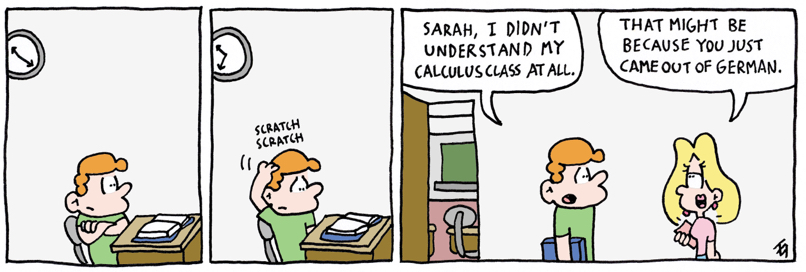
Long words can be daunting. Even for native speakers. The illustration above comes from The Japan Times, and reveals how the challenge is magnified for others.

I love learning new words. And, since these treasures frequently drift out of my vocabulary because I fail to use them, I often have the joy of re-learning unique words.

Sesquipedalianism is actually a genuine word which can be validly applied in a variety of settings. After all, haven’t we all encountered a sesquipedalianist or two, who uses especially long, and occasionally obscure words?

How many syllables are required before a word grows too long? To a monosyllabic individual, two might be deemed excessive.

Seriously, it’s not the length of a word that matters, it’s the word’s familiarity. For example, “familiarity” has six syllables, and everyone reading Mere Inkling knows its meaning. (I resisted saying “is familiar with . . .”) On the other hand, “carbuncle” is only trisyllabic, and yet the only people likely to know its definition are either those in medical professions, or unfortunate individuals who have suffered from one.

But it’s not only unfamiliarity that causes confusion; misunderstanding can result from a lack of context. Let’s take “trisyllabic,” a word even an active reader seldom encounters. As used in the paragraph above, the context (along with the prefix and root), provide us with more information than a person needs to recognize its meaning.

In a famous letter from 1956, C.S. Lewis included the following advice:

Don’t use words too big for the subject. Don’t say “infinitely” when you mean “very”; otherwise you’ll have no word left when you want to talk about something really infinite.

Great advice, just as one would expect. However, this does not constitute a blanket rejection of “big words.” Lewis is simply reminding us that our prose must not be more complicated than it needs to be. Thus, the title of this column uses a precise word – rather than saying “Please Forgive My Practice of Using Long and Sometimes Obscure Words” – since Mere Inkling readers are quite capable of uncovering a definition if a particular word is unfamiliar.

Plus, as I hinted above, many of us enjoy expanding our vocabularies.

In the aforementioned correspondence, Lewis offered additional useful advice. Another dictum is: “Always prefer the plain direct word to the long, vague one. Don’t implement promises, but keep them.”

Here too the great writer is astute. However, this caution is not actually about the length of words. Lewis’ desire for clarity in communication leads him to reject “vague” words, which coincidentally happen to be longer than those he refers to as “direct.”

Using longer words than necessary is not, of course, always a good thing. While it comprises neuron-stretching play for word lovers, it can easily be misperceived by others as “showing off.” (Note: I’m not defending those cases in which the writer or speaker really are attempting to impress others with their verbal dexterity.*)

You can easily find collections of the longest words in English. While some cheat, including “supercalifragilisticexpialidocious,” others are more scrupulous. Despite doing just that, I like the list at grammarly because of their definition of one of the words they include.

Floccinaucinihilipilification
The estimation of something as valueless. Ironically, floccinaucinihilipilification is a pretty valueless word itself; it’s almost never used except as an example of a long word.

I’m not currently planning on adding floccinaucinihilipilification to my personal vocabulary, but don’t let me dissuade you from doing so.

Learning new words often reaps extrinsic benefits. As a historian who enjoys learning about the Latin language, I found the following definition, and illustration, from the Cambridge dictionary quite interesting.

The act of considering something to be not at all important or useful – used mainly as an example of a very long word:

The honor of being the longest non-technical word goes to floccinaucinihilipilification.

The word . . . is “an 18th-century coinage that combines four Latin prefixes meaning ‘nothing.’”

Oh, and one final suggestion. When visiting the Cambridge site, in the likelihood you’ll someday wish to use this word in conversation, take a moment to make certain you learn to pronounce in the U.K. or American manner, as appropriate for your location.


* I am not here referring to the Irish bred Bay Colt for some curious reason named “Verbal Dexterity.”

Do People Say You’re Crazy?

First of all, they may be right. If everyone tells you you’re crazy, you should be concerned. Especially if those you trust the most are convinced you’re unhinged, you should probably be evaluated by a psychiatrist.

However, even when you are 100%, bona fide sane, you may have to deal with the misperception that there is something off kilter in your perceptions or behavior. It happened to me.

I’m not too concerned, since there are even maniacs out there who consider C.S. Lewis to be a tad daft due to his counter-cultural (i.e., Christian) views.

In an article measuring his legacy a half century after his death, James Como said, Lewis’ “long and unrelenting resistance [to civilization’s decline] yields a commanding perspective that is not only not cultural, not only not trans-cultural, not only not merely counter-cultural, but almost anti-cultural; in a word it is supra-cultural . . .”

Surely Lewis’s sharp-shooter’s application of the phrase “enemy-occupied territory” to Western culture must come to mind.  Of course, from inside the culture, it is Lewis who must seem crazy: if not quite as febrile as  Jeremiah out there in the wilderness, surely close enough?  And so his genius – the application of his transcending individuality – is to present us with a choice: in or out?  We, with Lewis, might escape, leaving the Zeitgeist behind.

I’m with Lewis, which I understand makes me suspect in the eyes of the worldly. But it’s not my faith that has caused me to be labeled as crazy for many decades, even by family members whose love for me is beyond question.

It’s all about that despicable herb some people sickeningly regard as delicious – cilantro. As early as I can remember, I would sometimes have a meal where I found a dish had been contaminated by soap. It was horrible. Not just unpalatable, but inedible.

Everyone would praise the food and call me crazy. Especially when I told them why it tasted so bad. It was because it tasted like the chefs had grated a bar of soap over the meal. They would all laugh, look at each other with that “he can’t be serious” expression, and resume their dinner. Meanwhile, I’d basically go hungry, since I was unwilling to eat the perfectly “good” food.

After many years, as an adult, I finally was able to analyze the problem and identify the culprit as cilantro. This did not, unfortunately, restore my mental credibility. Now everyone was certain I was insane, because the whole world knows cilantro is delicious! My case was weakened by the fact that I thought the seeds of the plant, coriander, were just fine. Ahah! That inconsistency proved to them that I was faking my dislike for some unknown reason.

During the decades that followed, I would try to avoid the herb. Occasionally I would bite into something only to unexpectedly encounter the dreaded flavor of a bar of soap. If it was minor, like mixed very lightly into the salsa, I could force myself to ignore, but it was still there, robbing me of the opportunity to really savor my meal.

If I mentioned that I had tasted the cleansing residue, I’d get the familiar quizzical looks and drop the subject. Until one glorious day when one of the other people at the table said, “it tastes like soap to me too.” And I learned they too had lived under the stigma of being a nutcase.

Over the years (I’m not young), I encountered a number of like spirits who shared my alleged dementia. I delighted in assuring them they were not alone. Like most people who truly are crazy, we had learned to try to mask our aberrant tastes and blend in with the cilantro-enamored masses . . . lest we be treated as outcasts.

Still, I wondered why only a small number of people shared my experience, when the taste is so pronounced it can taste literally like biting into a bar of Ivory.

Thank God, I was finally rescued by genetic scientists. Per Brittanica, “for those cilantro-haters for whom the plant tastes like soap, the issue is genetic. These people have a variation in a group of olfactory-receptor genes that allows them to strongly perceive the soapy-flavored aldehydes in cilantro leaves.”

And, in a related article, they warn about one member of the aldehyde-family you will want to steer clear of: “formaldehyde (HCHO), also called methanal, an organic compound, the simplest of the aldehydes.”

Pure formaldehyde is a colourless, flammable gas with a strong pungent odour. It is extremely irritating to the mucous membranes and is associated with certain types of cancer in humans and other animals. Formaldehyde is classified as a human carcinogen (cancer-causing substance).

Cilantrophiles be warned. It may be cilantro is just a gateway aldehyde. Now who’s the crazy one? The lesson – don’t be hasty in judging the mental acuity of others. (With the single exception for contemporary Americans, who feel compelled to say the absolute worst about anyone who has different political opinions.)

On a serious note, actual mental illness is no joke. Whether it’s genetic, accidental, or degenerative, it can destroy the life of the victim and all those who care about them. If you don’t have any acquaintances suffering in this manner, there are plenty of places you can volunteer to serve these various communities.

Providing love and encouragement to others is always admirable. When we do so for those unable to “repay” us in any way, it’s doubly rewarding. Jesus had something to say about that, and you can read it in Matthew’s Gospel.

Literary Pasta

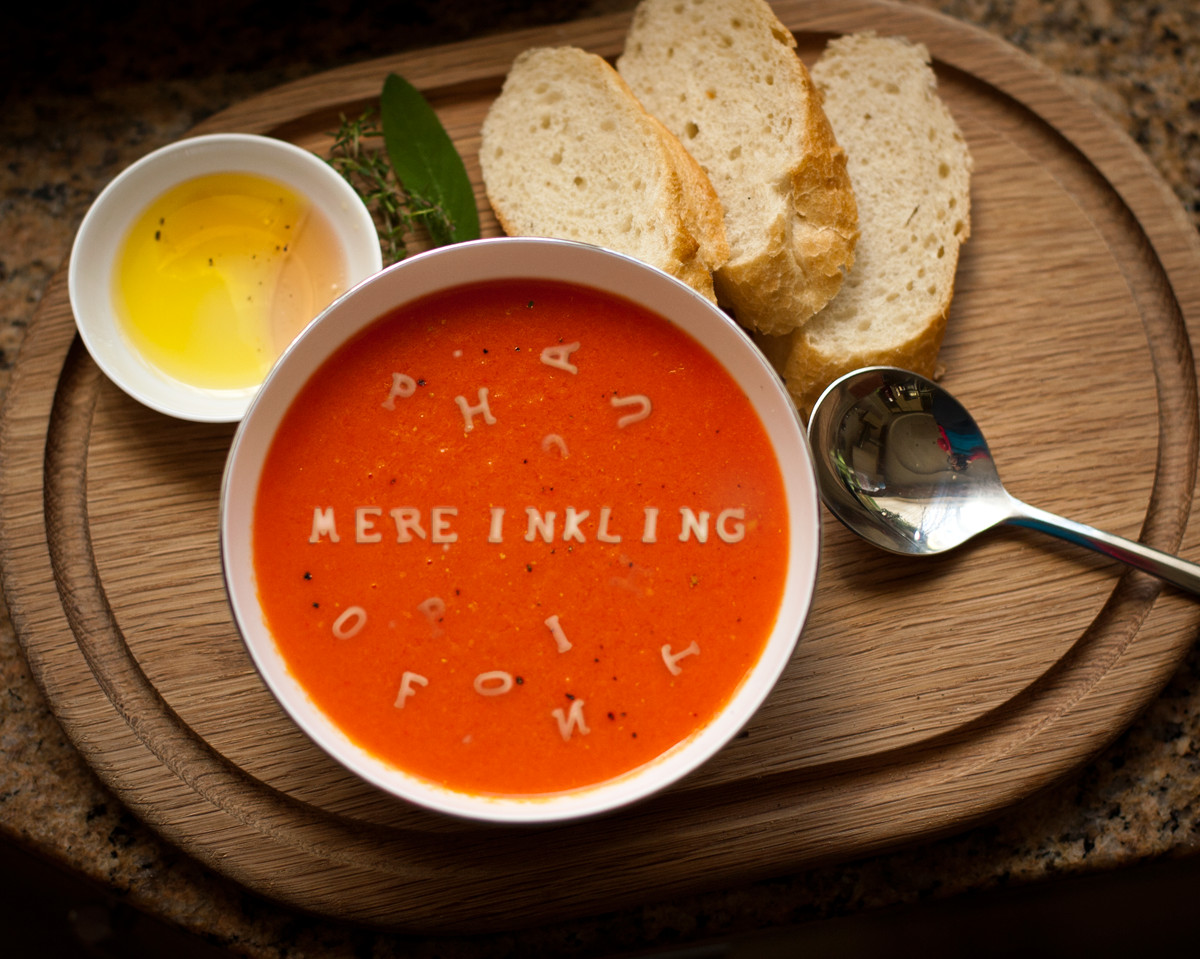
How many cans of SpaghettiOs would you need to purchase to be able to write the entire Lord of the Rings trilogy in their noodley alphabet?

What, you’ve never pondered that quandary? Well, now that the question has been posed, you may as well learn the answer.

The purveyor of this revelation is an online personality who analyzed the ratio of letters in cans of the SpaghettiOs A to Zs. He then devised a computer “program that converts books to SpaghettiOs.” [An inarguably valuable pursuit.]

It involved identifying the typical shapes of the pasta fonts.

Ah, to the solution to the puzzle. An individual seeking to replicate the Lord of the Rings would require 8,795 cans. The price would be slightly more than $2,000 and as a bonus, you would be left with more than eight million characters to devour.

Having labored to create the complex algorithms in his computer program, he has applied the versatile tool to other publications.

The King James Bible, for example, would demand 51, 214,669 cans to reproduce. At a price of approximately seventy-one billion dollars. [Editor’s note: the cost would probably be prohibitive, so don’t expect to see a physical attempt made in the near future.]

J.R.R. Tolkien was an extraordinary philologist. He loved languages, and he actually created more than one.

The creator of Middle Earth actually fashioned an alphabet for his Elven tongues. I have had my own name (by virtue of its meaning) rendered in Tengwar alphabet here.

Nevertheless, as inspired by linguistics and alphabets as he was, I doubt Tolkien would have been the least bit impressed by the canned pasta research.

In a 1956 letter, Tolkien described the process of completing his masterpiece for publication. I share the letter now, due to its reference to alphabets. However, due to its illuminating insight into the broader subject, I offer here a more extended rendition.

As ‘research students’ always discover, however long they are allowed, and careful their work and notes, there is always a rush at the end, when the last date suddenly approaches on which their thesis must be presented.

So it was with this book, and the maps. I had to call in the help of my son – the C.T. or C.J.R.T. of the modest initials on the maps – an accredited student of hobbit-lore. And neither of us had an entirely free hand.

I remember that when it became apparent that the ‘general map’ would not suffice for the final Book, or sufficiently reveal the courses of Frodo, the Rohirrim, and Aragorn, I had to devote many days, the last three virtually without food or bed, to drawing re-scaling and adjusting a large map, at which he then worked for 24 hours (6 a.m. to 6 a.m. without bed) in re-drawing just in time.

Inconsistencies of spelling are due to me. It was only in the last stages that (in spite of my son’s protests: he still holds that no one will ever pronounce Cirith right, it appears as Kirith in his map, as formerly also in the text) I decided to be ‘consistent’ and spell Elvish names and words throughout without k. There are no doubt other variations. . . .

I am, however, primarily a philologist and to some extent a calligrapher (though this letter may make that difficult to believe). And my son after me. To us far and away the most absorbing interest is the Elvish tongues, and the nomenclature based on them; and the alphabets.

My plans for the ‘specialist volume’ were largely linguistic. An index of names was to be produced, which by etymological interpretation would also provide quite a large Elvish vocabulary; this is of course a first requirement. I worked at it for months, and indexed the first two vols. (it was the chief cause of the delay of Vol iii) until it became clear that size and cost were ruinous.

Back to the noodle font. I doubt it Tolkien would have been impressed. What about his fellow Inkling, C.S. Lewis? What might he have said about the quantity of pasta-based “moveable type” required to reproduce Tolkien’s trilogy?

Allow me to take two simple words (out of context) from a letter he wrote in 1956. I think the Oxbridge don would have labeled the effort (and today’s post itself) “infinitely unimportant.”

Please forgive me if this sojourn into current trivia wasted your time. (But I hope, at least, that you enjoyed learning more about Tolkien’s linguistic and cartographic expertise.)

C.S. Lewis on Stupidity

Just because someone did something extraordinarily stupid does not mean that another fool should repeat the act. And C.S. Lewis would agree.

This summer a (likely unemployed) Coloradan decided to push a peanut to the top of Pikes Peak – a 14,115 foot American landmark – using his nose. Talk about stupid. His ambition was to be the first person in the twenty-first century to accomplish this pseudo-impressive goal.

That’s right, “in the twenty-first century.” Oddly, he is the fourth man (women are too intelligent, IMHO) to waste time in this pursuit, but the others proved their mettle in the twentieth century.

Simple stupidity is not the oddest motivator of irrational actions. Some people feel compelled to pursue death-defying activities. Those of us who would prefer to avoid danger whenever possible, are confused by others who embrace it.

Quite recently, “the body of an American mountaineer whose daring achievements brought her acclaim among some of the world’s most elite climbers was found . . . on a peak in Nepal.” Apparently, she climbed the “world’s eighth-highest peak” so she could ski down from its peak.

Hilaree Nelson, 49, and her romantic and climbing partner, Jim Morrison, were trying to ski down Manaslu . . . An avalanche apparently blew her off a cliff onto the south face of the mountain, opposite of their intended route of descent.

Tragic, most would agree. Foolish, many would add.

Doing something silly falls lower on the FDS (foolishness disorder spectrum) than does taking arbitrary and utterly unnecessary risks.

C.S. Lewis offers some interesting counsel to a woman who shared concern about the marital frustrations of someone close to her. (Yes, people actively sought his advice.) He ranks ignorance very low on the scale of relationship problems.

It is a great joy to be able to ‘feel’ God’s love as a reality, and one must give thanks for it and use it. But you must be prepared for the feeling dying away again, for feelings are by nature impermanent.

The great thing is to continue to believe when the feeling is absent: & these periods do quite as much for one as those when the feeling is present. It sounds to me as if Genia had a pretty good husband on the whole.

So much matrimonial misery comes to me in my mail that I feel those whose partner has no worse fault than being stupider than themselves may be said to have drawn a prize! It hardly amounts to a Problem. (Correspondence, 1953).

So it is, that while obviously undesirable, stupidity is not a bad thing in itself. In “The World’s Last Night,” Lewis includes the trait in a curious list. And the passage suggests to me the dangers implicit in allowing one‘s ignorance to jeopardize their wellbeing.

Perfect love, we know, casteth out fear. But so do several other things – ignorance, alcohol, passion, presumption, and stupidity.

It is very desirable that we should all advance to that perfection of love in which we shall fear no longer; but it is very undesirable, until we have reached that stage, that we should allow any inferior agent to cast out our fear.

It is precisely when what I would identify as stupidity inspires dangerous activities, that C.S. Lewis would rule it to be detrimental. And this brings us to the question of why some few people do what the majority of us “saner” people would avoid.

Why Do People Pursue Risky Activities

For our discussion here, I am not including people who face danger due to their vocations. Doubtless some “first responders” and military members relish brushes with death, but they are in the minority. Most are not eager to court death.

It has been debated as to why some people are drawn to the most hazardous of so-called “extreme sports.” The uncharitable might attribute a vulnerability to the siren call of danger to mere stupidity, but there are other factors at work.

However, some people are conditioned by their upbringing to participate in unsafe behaviors (e.g. base jumping, smoking or alligator wrestling). And, in recent years, we have been hearing more about genetic dispositions to such activities. It appears there is some merit to the notion of there being a “risk taking gene.”

A major 2019 study reported in in Nature Genetics “identified . . . 99 [genetic] loci associated with general risk tolerance.” An accessible discussion of the study says, “the genetic variants identified in the study open a new avenue of research on the biological mechanisms that influence a person’s willingness to take risks.”

In any case, DNA is only one, limited factor. Researchers confirmed “non-genetic factors matter more for risk tolerance than genetic factors. The study shows evidence of shared genetic influences across both an overall measure of risk tolerance and many specific risky behaviors.”

Lacking the fear gene is not quite the same thing as being courageous. As noted above, a person may face danger because of a valid reason. Thus “first responders” and most military members I served as a chaplain were not foolhardy. They didn’t take unnecessary risks. But most were willing to place themselves between very real threats and those they were protecting.

If you personally are of an adventurous nature, I encourage you to take sensible precautions. Avoiding rafting on Class VI rapids and cave diving – anywhere – would be a good place to start..

And for the less daring among us, perhaps we can avoid foolish pursuits that are merely a waste of time. It seems apparent to me that time spent serving others in a food bank, or mowing the lawn of a disabled neighbor, constitute a far better use of our time.

C.S. Lewis & Summertime

What’s your favorite season of the year? My preference is Autumn, with Spring a close second.

In the United States, Spring comes out on top. Actually, it is the preference in forty (80%) of the states. Probably due to its northern latitude, “the most popular season in the Northeast is Summer.” Unsurprisingly, Winter is the least favorite across the board, although a few hardy souls disagree. “Alaska and Vermont are the only two states that say winter is the most wonderful time of the year.”

Some years ago, Gallup published the result of polls on the subject, which are also analyzed by the ages of respondents.

Americans aged 18 to 29 are the group least likely to prefer spring (24%), while those 65 and older are most likely to prefer it (53%). Younger Americans are much more likely to prefer summer than are those in older age groups, and, in fact, summer is the top choice among this age group. [Editor: I wonder if that has anything to do with the traditional academic calendar?]

Everyone is aware of how the seasons (through length of daylight, etc.) affect our moods. In a 1914 letter to his father in Ireland, C.S. Lewis offers a curious description of the “magnificent summer” he was enjoying in England.

My mental picture of home is disturbed to a certain extent by your mention of a fire. Here, we are in the middle of a magnificent summer: day succeeds day with the same cloudless sky and parched earth, and the nights are hot and comfortless. But on the whole, fine weather is agreeable, and has, I think, a certain effect on the spirits.

At the end of September, he wrote again about the extended summer he was experiencing. It doesn’t sound like the opinion of someone whose seasonal preference was summer. “I suppose the winter has closed in at home by this time: but we are still having quite summer weather here – which I rather resent.” Sometimes, it seems, seasons do overstay their welcome.

The following year, C.S. Lewis again lamented summer’s length. In mid-November he complained to his father.

The weather here is a perfect joke, warmer than July, bright sunshine and gentle breezes. Personally I have had quite enough summer, and should not be sorry to bid it goodbye, though Kirk persistently denounces this as a most unnatural state of mind.

A year later, in 1916, Lewis’ distaste for excessive heat is seen in an October letter to his friend Arthur Greeves. One reason for this was C.S. Lewis’ passion for hiking through the countryside.

The beastly summer is at last over here, and good old Autumn colours & smells and temperatures have come back. Thanks to this we had a most glorious walk on Saturday: it was a fine cool, windy day & we set out after lunch . . .

In a poem entitled “The Day with a White Mark,” Lewis opens with vivid imagery and the notion that mood is normally related to environment and circumstances.

All day I have been tossed and whirled in a preposterous happiness:
Was it an elf in the blood? or a bird in the brain? or even part
Of the cloudily crested, fifty-league-long, loud uplifted wave
Of a journeying angel’s transit roaring over and through my heart?
My garden’s spoiled, my holidays are cancelled, the omens harden;
The plann’d and unplann’d miseries deepen; the knots draw tight.
Reason kept telling me all day my mood was out of season.
It was, too. In the dark ahead the breakers only are white.

One website offers generalized thoughts about “what your favorite season” reveals about you. For example, it says of those who share my preference:

“Delicious autumn! My very soul is wedded to it, and if I were a bird I would fly about the earth seeking the successive autumns,” George Eliot (aka Mary Ann Evans) once wrote of her affection for the fall season.

While parts of the world tend to think of spring as the season of renewal, fall is also a very good time for a fresh start. The vibrant orange colors and cooler weather of autumn appeal to your constant desire for change. The upcoming holidays inspire many to reflect back on the year that was and make plans for the year to come.

A study in England went so far as to link birth months to the frequencies of several psychiatric conditions. If it is correct, your likelihood of suffering from recurrent depressive disorder, bipolar affective disorder and even schizophrenia varies according to your birth month.

Summer does provide a welcome time for vacations and events that would be difficult to wedge into the “busier” seasons of the year. For example, it’s not too late to register for the 2022 C.S. Lewis Summer Institute. The theme is “Surprised by Love: Cultivating Intellectual Hospitality in an Age of Uncertainty.” It is slated for 28 July – 5 August 5, 2022 in Oxford.

C.S. Lewis’ Favorite Season

Last year, the United Kingdom’s National Trust* conducted a poll which determined summer (30%) as the favorite season for Brits. Curiously, for young adults, summer tied with the second overall favorite, autumn.

After autumn colour, Britons’ favourite things about the [autumn] season are spending time in nature – running, walking or cycling (13 per cent) and the weather – cold crisp days, Indian summer, or stormy days (12 per cent).

So what exactly was C.S. Lewis’ favorite season. At the end of his life he wrote the following. As he so often did, he used a familiar subject to make a profound comment about life.

Yes, autumn is really the best of the seasons; and I’m not sure that old age isn’t the best part of life. But of course, like autumn, it doesn’t last.

But then, isn’t it the flow of the seasons that makes each so welcome in turn? Charles Dickens offered just such an observation in a quote which offers a fitting end to our reflections today.

Nature gives to every time and season unique beauty; from morning to night, as  from the cradle to the grave, it’s just a succession of changes so soft and comfortable that we hardly notice the progress.


* The National Trust helps conserve sites of historic and natural significance in England, Wales, and Northern Ireland. Scotland has its own National Trust for Scotland, devoted to the same purposes.

Lewis’ good friend J.R.R. Tolkien also enjoyed autumn. In a post several years ago I shared a portion of a letter to his son where he says, “I have the autumn wanderlust upon me, and would fain be off with a knapsack on my back and no particular destination . . .” Sounds like something someone in Middle Earth might say – although, certainly not a hobbit!

Dangerous Facial Hair

Beards come, and beards go. Yet humanity offers no consensus on their value. Perhaps that is because there are so many diverse styles, ranging from restrained to insane.

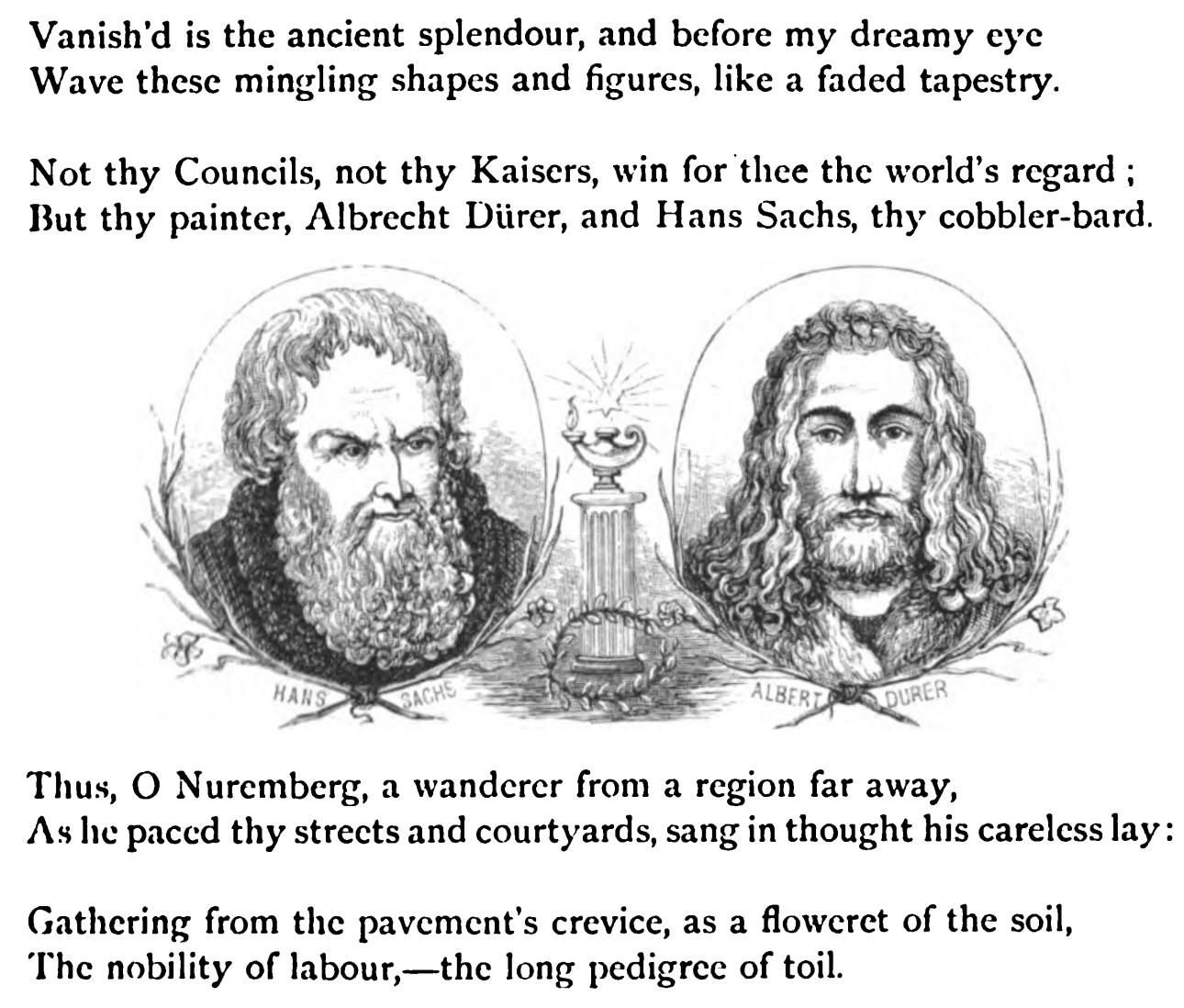
C.S. Lewis mentioned in passing the “biblical” style of beards in a 1939 letter to his brother Warnie.

For instance the presence of the revolving bookcase in the study has just introduced me to a book of Minto’s mother’s which is well worth studying. It is called Gems of Literature/Elegant, rare, and Suggestive

The engravings are of a sort you can probably imagine – damsels with those peculiar comic-section or peg-top legs and eyes raised to heaven and old men with what can only be called Biblical beards.

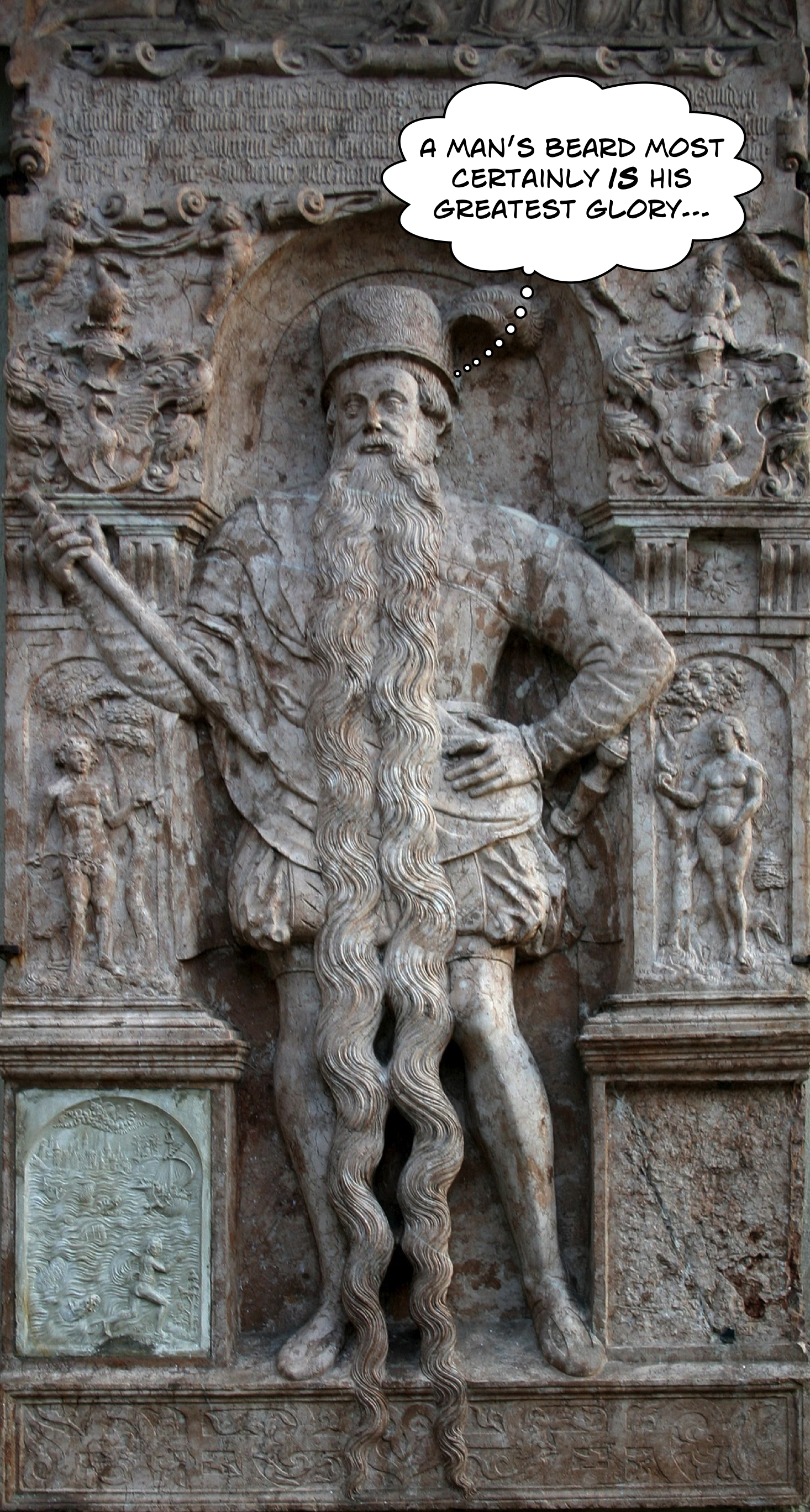
Facial hair is a personal choice. But when that choice becomes deadly, perhaps society should intervene. Take the case of Hans Steininger, a sixteenth century burgomaster in the Austrian-German city that would one day become the birthplace of Adolf Hitler.

Some mental disorder apparently compelled him to have scissors banned from his city, lest a single hair on his magnificent beard be severed. Seriously, he died because he tripped over his chin whiskers during a major fire in 1567.

Steininger usually kept his prodigious beard hair rolled up and stuffed in a pocket, but during the commotion he was running around with it hanging free. In the midst of the chaos, he managed to step on his own beard, sending him tumbling down a flight of stairs and breaking his neck…

The full-body illustration at the church shows Steininger’s beard bifurcated into two scraggly strands, stretching down past his feet. And tucked away in the local district museum is the town’s most hirsute artifact: the 450-year-old beard of Steininger.

Even in ancient times, everyone recognized an unkempt beard was a liability, particularly in combat. In The Life of Theseus, Plutarch states this was why Alexander the Great ordered his soldiers in his phalanxes to shave.

They write also that this was the reason why Alexander gave command to his captains that all the beards of the Macedonians should be shaved, as being the readiest hold for an enemy.

Although I sported a modest mustache for a short time back in the day when Tom Selleck starred as Magnum P.I., I’ve never been a big fan of facial hair. Seeing Steininger’s likeness reinforces that.

Add to that the biblical warning from Leviticus: “When a man or woman has a disease on the head or the beard, the priest shall examine the disease. And if it appears deeper than the skin, and the hair in it is yellow and thin, then the priest shall pronounce him unclean.” (Leviticus 13).

Historical Biases

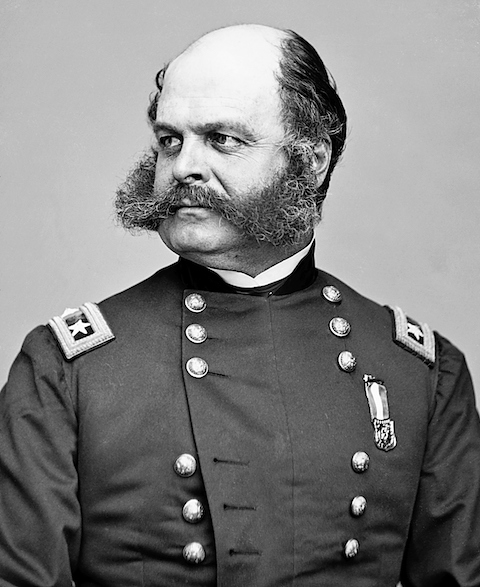
While well-maintained beards are okay, two additional (historical) factors contribute to my discomfiture. First, as a student of the American Civil War, I find myself repelled by the odd appearance choices of people such as General Ambrose Burnside. Although he gave his name to “sideburns,” that’s hardly what I would call these monstrosities. (Also called mutton chops, which is precisely what the cultured bon vivant should have adorning their cheeks.)

The second reason for my wariness is due to the affinity of too many pastors in my own denomination for beards. I doubt they wear them to wow the ladies. Perhaps they think the beards make them appear more distinguished?

Actually, I’ve become desensitized to most pastors who opt for facial hair – with one bizarre exception. To employ a cliché literally: for the life of me, I can’t understand why anyone living in the twenty-first century would opt for a “chin curtain.” I understand the Amish have an affinity for them, but who ever considered those German Anabaptists fashionable?

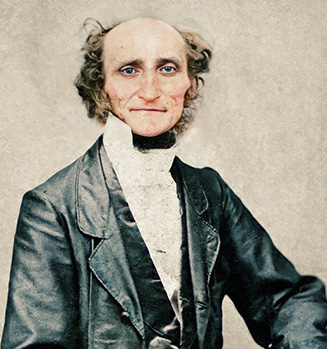
Sadly, because my church also possesses a strong Germanic strain, I’ve discovered more than one minister bearing this mark of Cain. Perhaps they hope to emulate the denomination’s first president, the Rev. Dr. C.F.W. Walther. If so, my advice is they follow his example of conscientious pastoral care, and dispense with the externals. (I will concede that his black leather suit does look rather dapper, being that the image was captured for posterity in the mid-1800s.)

C.S. Lewis & His Beard

I can forgive C.S. Lewis for aligning with the beard-faction on at least two occasions. That’s because there were extenuating circumstances.

In 1924 he wrote to his father about an illness that led to what may have been his first transgression.

My dear Papy,

I got chicken pox and am only now out of quarantine. I have of course been quite well enough to write for some time but I don’t know whether you have had this complaint and thought it better not to chance infecting you: I am told that the older you are the less likely it will be to ‘take’, but the worse if it does.

I had a pretty high temperature at the beginning and some very uncomfortable nights of intense perspiration, but it soon passed off.

The danger of cutting any of the spots on my face of course made shaving impossible till this very day and I had a fine beard. I have left the moustache which would excite ‘poor Warren’s’ envy, but I shall probably get tired of it in a few weeks. It is very stiff, and all the hairs grow in different directions and it is thicker on one side than on the other.

In a 1931 letter to his childhood friend, Arthur Greeves, he mentions offhand as he closes that he has altered his appearance.

I suppose you have heard about Warnie’s peerage – for gallantry during the recent manoeuvres. I have grown a beard – Good night.

In two letters written in 1956, C.S. Lewis would describe the illness-induced beard he had mentioned to his father.  He humorously describes its imperfections. The first was written to a young fan.

Your mother tells me you have all been having chicken pox. I had it long after I was grown up and it’s much worse if you are a man for of course you can’t shave with the spots on your face. So I grew a beard and though my hair is black the beard was half yellow and half red! You should have seen me.

The following month he shared more details with a longtime correspondent.

The Tycoon may count himself lucky to have got chickenpox before he reaches the age of shaving brushes and razors. I had it in my late 20’s and grew a beard which was part yellow and part red though my hair is black – a very striking colour scheme.

Apart from that, though, I think it a very good sort of illness on the whole. A nice long quarantine which by sentencing one to solitary confinement secures one against pupils, committees etc. But no doubt it had no such charms for you.

Seeing C.S. Lewis adorned with a beard would surely make for an odd photograph. Especially one taken in color.

Postscript

Forgive me. I’ve vented more than I intended. Wear whatever hairstyle you prefer. However, I would caution you that if your beard drags on the ground, it’s best to carry an emergency set of shears, lest you stumble during an emergency stampede.

As a treat for those who have read to the end of this column, here is an image from Gems of Literature. I suspect these were two of the “Biblical beards” to which C.S. Lewis referred.

Bonus for beard aficionados: For a curious look at a guy whose quest is to see how many facial hair variations he “can check off from the chart of facial hair types,” visit this site.

Create a Word Today

What could possibly be more fun than making up a witty new word?

Well, to be honest, lots of things. But inventing words is still an enjoyable creative exercise. I made up several in less than an hour this evening, while half-watching an old movie. A few may be lame, but I hope you will discover one or two you enjoy.

I’ve touched on the subject of inventing words in the past. But this approach involves a different process.

This article from The Guardian asks, “English speakers already have over a million words at our disposal – so why are we adding 1,000 new ones a year to the lexicon?” That’s certainly a fair question. However, it doesn’t pertain to my thoughts here. I’m not attempting to birth any neologisms. These are simply humorous tweaks to existing words. A form of wordplay.

I got the idea when I read a short article, “The Best Made Up Words Ever,” by Bill Bouldin.* He admits to including a number of words from an online site I won’t name here (due to its preponderance of vulgar terms). While Bouldin doesn’t indicate which examples are his own contributions, and which are reproduced, I found a couple of the words quite entertaining.

The first of these reminded me of many group meetings where we consider all sorts of opportunities and possibilities.
Blamestorming – The act of attempting to identify the person who is most at fault for a plan’s failure.

As a pastor I couldn’t resist modifying this gem.
Sinergy – When performing two bad acts make you feel as guilty as if you had committed three.

This one struck home since it’s a play on one of the words in the title of the Narnian classic, The Lion, the Witch and the Wardrobe.
Chairdrobe – A chair on which one piles clothes that belong in the closet. Not to be confused with a floordrobe.

The final example will resonate with everyone who enjoys reading and writing.
“Illiteration – The mistaken impression that you know more about rhetorical devices than you really do.

At the risk of revealing myself to be an illiterator, I’ve included below some of the words I conjured up during an idle hour. I don’t claim any are masterpieces, but you may find one or two that bring a smile to your face. And, who doesn’t need an extra smile during these trying times?

My Initial Experiment

Caution: Before proceeding, keep in mind these are not real words. As genuine and utilitarian as they may appear, I advise you not to use them in conversation or composition. They are offered by Mere Inkling purely for entertainment purposes. Feel free to add some of your own in a comment.

Miscellaneous Vocabulary

Subbatical: the period when some temp like you is hired to fill in for some privileged person who has a job that has sent him or her off for an extended paid vacation.

Dippididude: Confused men who use hair gel designed for young girls and women.

Cemetarry: The unwillingness of some people to ponder the reality of their own mortality.

Mannekin: A boring, sedentary relative, who rarely rises from the couch.

Candlelablouse: The name for candlesticks with multiple arms in the homes of prudes.

Carnivirus: Individuals who strive to draw blood from those who view the coronavirus and its implications differently than they do.

Brigadeer: A domineering deer who tries to order all the other members of its herd around (antlers optional).

Altruistick: Actions that appear on the surface to be selfless, but include a hidden agenda.

Monumentill: Descriptor for someone of little worth who builds a significant reputation with the sole purpose of lining their pockets.

Blasphemee: An individual’s personal inability to consistently observe the Second Commandment.

Concupiscents: Hollywood’s obsession with including graphic sexual themes in all of their productions, resulting in the selling of their souls for pennies on the dollar.

Cathedroll: A large church led by a senior minister given to quaint and unintentionally comic humor.

Cadaversary, pl., cadaversaries: A member of the endless hordes of the undead during a zombie apocalypse.

Writing Vocabulary

Literasee: The capacity of one’s imagination to visualize what you are reading.

Bloggrr: An essentially angry person, given to writing unbridled tirades on various digital formats.

Gerdprocessing: When whatever you are typing just doesn’t work, and causes you severe heartburn instead.

Manuskipped: The sad condition when the article or book into which you poured your blood, sweat and tears has been tossed into a slush pile to lie forgotten.

Editteen: The maturity level of the editor who did not recognize the merits of your manuscript and rejected it without comment.

Subliminil: When the word you are reading or writing possesses no hidden or subconscious message.

Proofreaper: Someone you invited to read your manuscript for misspellings who advises you to delete entire sections of your precious creation.

Skulldigory: Misbehavior by the English professor, Digory Kirke, who, as a child, introduced evil into Narnia.

I will close now with two words that cat-lovers may find objectionable. If you are a devoted feline-fancier, you are advised to cease reading now.

Lucifur: The anonymous leader of that faction of felines devoted to serving evil.

Purrification: The activity of forgiveness and restoration that occurs when any cat makes a sincere confession of its sins.


* This columnist cites various words from the Bouldin’s piece, and others from a book entitled The Emotionary: a Dictionary of Words That Don’t Exist for Feelings That Do.

Humorous Examinations

Could you pass this examination?

Sketch the development of human thought, estimate its significance. Compare with the development of any other kind of thought.

In contrast to the serious tone of the last two posts, today I am offering some edifying entertainment. As a gift to you, I have edited a perennial favorite of internet humorists. I recently came across my copy of this comprehensive knowledge examination, which motivated me to tweak it for Mere Inkling’s erudite audience.

You have probably seen versions of this exam in the past. The basic questions have remained surprisingly stable despite its age. I encountered it in the University of Washington campus paper in 1973. One writer claims “the Graduation Exam—Authentic Assessment has been in circulation since at least the 1950’s.”

The exam certainly makes the rounds, as this Navy veteran described.

The pressures of comprehensive exams were apparent to many, which resulted in one of the few officially sanctioned jokes in Naval Nuclear Power. In one of the official publications of Naval Reactors, someone inserted a sample “final exam” from Nuclear Power School.

In 2012 elements of the examination created confusion in the People’s Republic of China. It was included in an article about how Chinese nationals could prepare for an American State Department exam required for positions at the United States embassy in Beijing. According to China’s Global Times, “US embassy spokesman Richard Buangan made clear on his Sina microblog Sunday that an alleged ‘recruitment test for expatriate employees at the US embassy’ is fake.”

A June 2008 issue of Foreign Service Journal carried a story, which includes an English version of the [exam stating] the questions are from the US State Department’s entrance exam, in a bid to “measure the stability of perspective Foreign Service officers and to weed out the dummies.”

The Function of Examinations

Testing and documenting competence is obviously important. This is especially true for people in critical roles, such as prescribing drugs, designing aircraft engines, and manufacturing ice cream.

Of course, not everyone is able to pass every test. Which is precisely how things should be.

C.S. Lewis noted how educators truly familiar with their students readily recognize when it is a waste of time for them to continue repeating an exam they obviously cannot pass. He said an academic “master often knows, when boys and parents do not, that it is really useless to send a boy in for a certain examination again” (The Problem of Pain).

I have met very few people who enjoy being tested. Yet, for many faculty members (C.S. Lewis included), being on the “other side” of exams is not particularly enjoyable either. This delightful passage comes from a 1927 letter to his brother, Warnie.

My period of examining passed over with its usual accompaniment of neuralgia and oaths, relieved by the one excellent boy who defined ‘a genie’ correctly, yet more than correctly, as ‘an eastern spirit inhabiting bottles and buttons and rings.’ Pretty good for a boy.

I was also pleased with a youth who, being asked to write a letter to a friend recommending Guy Mannering,* wrote to his brother recommending it and saying ‘I think you would be interested in the character of Colonel Mannering, he is so like our father’: and then later in a paper on Guy Mannering in which I had set the question ‘Would you have liked Colonel Mannering as a father?’—illustrate your answer etc.—began decisively ‘I would not have liked Colonel Mannering as a father in the least.’

Well, it’s time now to offer you the opportunity to prove your worthiness. If you wish to evidence the breadth and depth of your knowledge, proceed now to the exam. (Astute readers will note I’ve added a personal twist to a couple of the exam questions.)

Comprehensive Knowledge Exam

HISTORY: Describe the history of the papacy from its origins to the present day, concentrating especially, but not exclusively, on its social, political, economic, religious, and philosophical impact on Europe, Asia, North and South America, and Africa. Be brief, concise, and specific. Now do the same for the Zoroastrian priesthood. [Bonus credit for including Antarctica in your response.]

MEDICINE: You have been provided with a razor blade, a piece of gauze and a bottle of scotch. Remove your appendix. Do not suture until your work has been inspected. You have fifteen minutes. [Option: if you feel the scotch would impair your responses to the remaining questions, you may defer this portion of the exam to the end of the exam.]

PUBLIC SPEAKING: Two thousand riot-crazed anarchists are storming the campus. Calm them. You may use any ancient language except Latin, Greek or Sanskrit. [Pig Latin is allowed.]

BIOLOGY: Postulate the 500 million year progression of a life form based on silicon, ranking its likely preference for form of government Enumerate the pros and cons it would associate with democracy, monarchy, socialism, theocracy, and totalitarianism. [Caution: any references to the Horta of Janus VI will result in disqualification of your answer, since Star Trek is a fictional resource.]

MUSIC: Write a piano concerto. Orchestrate and perform it with flute and digeridoo. You will find a piano under your seat. The wind instruments, of course, were among the items you were directed to bring with you to the examination.

PSYCHOLOGY: Based on your knowledge of their works, evaluate the emotional stability, degree of adjustment, and repressed frustrations of each of the following: Alexander of Aphrodisias, Hildegard of Bingen, Rābi’a bint Ka’b al-Quzdārī and Simeon the Stylite. Support your evaluation with quotations from each individual’s work, citing original sources. It is not necessary to translate.

SOCIOLOGY: Using the pretext of Planet of the Apes, where homo sapiens have been subordinated to various primate species, assess the prospects for achieving mutual toleration and equilibrium before one group is driven to extinction. [Caution: confusion of apes (which lack tails) and monkeys (which lack an appendix) will result in disqualification of your response.]

CHEMISTRY: Transform lead into gold. You will find a beaker, a three hundred count box of matches and five lead sinkers under your seat. Show all work including Feynman diagrams and quantum functions for all steps. [Transformation into silver will provide half credit.]

ENGINEERING: The disassembled parts of a high-powered rifle have been placed on your desk. You will also find an instruction manual, printed in Swahili. In 10 minutes a hungry Bengal tiger will be admitted to the room. [Special Consideration: Satisfactorily explain the differences between Fahrenheit and Celsius to the tiger, and it will be replaced by a rabid ferret.]

ECONOMICS: Develop a realistic plan for refinancing global debt, without hypothesizing a benevolent intergalactic alliance with unlimited resources coming to the planet’s aid. Trace the possible effects of your plan in the following areas: Cubism, the Donatist controversy, and the 1913 foundation of Hôpital Albert Schweitzer in Gabon.

POLITICAL SCIENCE: Devise an infallible, seven-step plan to transform the United Nations into an organization that will successfully foster peace and goodwill in all international relationships. [Bonus credit for providing a major role for two of the following nations: Dominica, Liechtenstein, Tuvalu.]

AGRICULTURAL SCIENCE: Outline the steps involved in breeding your own super high yield, all weather hybrid strain of wheat. Describe its chemical and physical properties and estimate its impact on world food supplies. Construct a model for dealing with world-wide surpluses. Draft your Nobel Prize acceptance speech.

PHYSICS: Explain the nature of matter. Include in your answer an evaluation of the impact of the development of mathematics on astronomy, botany and numismatics. [Bonus Credit: write today’s date in metric.]

PHILOSOPHY: Sketch the development of human thought, estimate its significance. Compare with the development of any other kind of thought. Be sure to include an analysis of the influence exerted on philosophy by Diogenes the Cynic.

CREATIVE WRITING: Compose an epic poem based on the events of your own life in which you see and footnote allusions from T.S. Eliot, Titus Lucretius Carus, Miguel de Cervantes, Dante Alighieri, Þorbjörn Hornklofi, Gilgamesh and Stephen King. Critique your poem with a full discussion of its syntax and metrics. [Bonus Credit for writing alternating stanzas between free and rhyming verse.]

EDUCATION: Formulate an examination which accurately measures an individual’s comprehensive knowledge base without cultural or linguistic prejudice. Limit the question parameters to what can reasonably be covered during a four hour testing block.

LITERATURE: Discuss in detail at least three major literary figures from each of the following civilizations: the Xia Dynasty, the Akkadian Empire, the Mayan Empire, the Aksumite Empire, the Polynesian Tuʻi Tonga Empire, and nineteenth century United Kingdom. [Caution: failure to include J.R.R. Tolkien and/or C.S. Lewis will result in disqualification of your answer to this question.]

Congratulations on finishing the exam. You are encouraged to use any remaining time to review your answers in light of the fact that grammatical errors and misspellings will significantly impact your final grade.


* You can download a personal copy of Guy Mannering, one of Sir Walter Scott’s Waverly novels, at Internet Archive.

If you should question the distinctions I noted between apes and monkeys, please know that the facts are genuine. However, for future examinations, you should be aware that not all monkeys have tails.


Peculiarities of the German Language

Mark Twain wrote some entertaining travelogues about his overseas travel. In A Tramp Abroad, he relates a conversation he and a friend had with an American who had been studying veterinary medicine in Germany. The expatriate complains about how long his studies have taken – nearly two years – and proclaims how good it is to hear his native tongue.

The student’s most humorous words relate to his impression of the German language. It’s unusual in its nineteenth century phrasing. However, he does note one rather common opinion in his earthy observation.

“I spotted you for my kind [fellow Americans] the minute I heard your clack. . . .” The young fellow hooked his arm into the Reverend’s, now, with the confiding and grateful air of a waif who has been longing for a friend, and a sympathetic ear, and a chance to lisp once more the

sweet accents of the mother tongue, — and then he limbered up the muscles of his mouth and turned himself loose, — and with such a relish!

Some of his words were not Sunday-school words, so I am obliged to put blanks where they occur. . . . “when I heard you fellows gassing away in the good old American language, I’m – if it wasn’t all I could do to keep from hugging you! My tongue’s all warped with trying to curl it around these forsaken wind-galled nine-jointed, German words here; now I tell you it’s awful good to lay it over a Christian word once more and kind of let the old taste soak in. . . .

“I’m learning to be a horse-doctor! I like that part of it, you know, but ____ these people, they won’t learn a fellow in his own language, they make him learn in German; so before I could tackle the horse-doctoring I had to tackle this miserable language.”

And, as if mastering German wasn’t difficult enough in itself, he continues:

“First-off, I thought it would certainly give me the botts, but I don’t mind it now. I’ve got it where the hair’s short, I think; and dontchuknow, they made me learn Latin, too. Now between you and me, I wouldn’t give a ____ for all the Latin that was ever jabbered; and the first thing I calculate to do when I get through, is to just sit down and forget it. ’Twon’t take me long . . .”

I don’t intend to offend Germans for the challenge their language poses to some. (In fact, one set of my grand-parents named Vonderohe originally came from Pomerania.) But the nature of agglutinative languages is so alien to most of us that the very length of the glued-together words becomes daunting.

Since I’m not a linguist, I had to research to discover as I wrote this post that German is not a truly agglutinative language. It merely uses agglutination. Apparently, the distinction involves distinctions with which most non-linguists need not concern themselves. We can be satisfied with the simplified definition provided by Glottopedia.org – “Agglutinating language is a language which has a morphological system in which words as a rule are polymorphemic and where each morpheme corresponds to a single lexical meaning.”

In truth, it’s quite logical to make new words by stringing them together. Most English compound words are a combination of two elements. Longer Germanic words seem more common. Kraftfahrzeug-Haftpflichtversicherung, for example, sounds “nine-jointed,” but is actually only two words, meaning motor vehicle liability insurance.

C.S. Lewis and the German Language

C.S. Lewis was multilingual, and studied German while relatively young. He and his wife used every language as a source when playing Scrabble.

Nevertheless, Lewis was quite modest about his grasp of German. In 1954, while thanking a German professor for the offer of a philosophy book he had written, Lewis wrote,

I look forward to reading the book (when the translation arrives! My German is wretched, and what there is of it belongs chiefly to the libretto of the Ring and Grimm’s Märchen – works whose style and vocabulary you very possibly do not closely follow).

The following year Lewis wrote once again to Helmut Kuhn. This time it was to thank him for a review Lewis’ works. Lewis said, “it certainly seems to me that your grasp of the whole situation in which I have written and of the relation of my ideas both to it and to each other, goes far beyond any criticism I have yet had.” Before he makes that noteworthy statement, Lewis makes a playful comment relating to the presumed dignity implicit in the German language itself.

To be written about in the German language is, for an Englishman, a grave temptation to spiritual pride. The sentences are so massive and the words so long that, even if the content were less flattering than it is in your article, the subject can hardly resist feeling that he must be a much weightier phenomenon than he had ever supposed!

Eucestoda Words: Well Worth a Postscript

Germans are an accomplished, literate people who take pride in their language. They have gone so far as to coin a word that specifically identifies these sometimes lengthy compound words. Germans call them bandwurmwörter, which literally means “tapeworm words.” (Mark Twain would have delighted in knowing that.)

Friedrich Akademie, an education website, devotes a page on their website to “Beautiful German Tapeworm Words.”

Tapeworm words . . . what a fascinatinglyinventivesemanticnovelty!

Legal & Illegal Fonts

One contemporary challenge to democracy in the United States is judicial activism. This is the term for jurists who mistakenly think they are in the legislative branch of the American government.

While too many Courts pursue this unconstitutional path, it is refreshing to see one federal Court actually “legislating” within its actual purview.

The District of Columbia Circuit of the United States Court of Appeals has mandated which fonts can and cannot be used for court documents. The National Law Journal says the official shunning of the Garamond font has set “lawyers abuzz.”

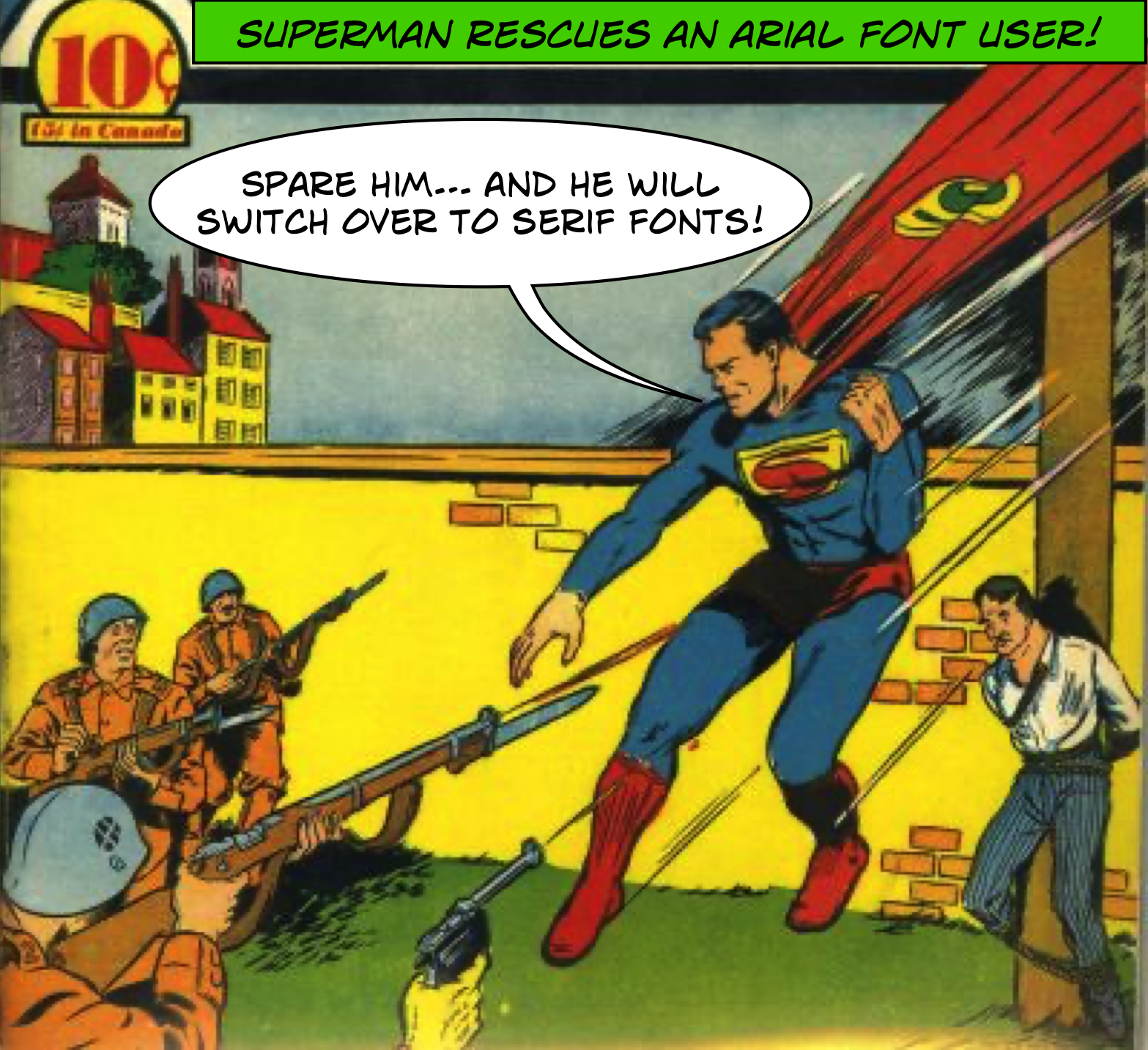
The Court—quite correctly—notes that serif fonts are much more legible than sans serif fonts like Arial.

But that has not saved Garamond, which appears slightly smaller than some other serif fonts. Apparently the fact that all documents must also be printed in a 14 point size does not adequately compensate for the difference.

If you would like to read the formal notice you can find it here.

Consistent with the Court’s magnanimity, while briefs “must be set in a plain, roman style,” they will graciously allow “italics and boldface [to] be used for emphasis.”

C.S. Lewis had a proper respect for the legal system. How could it be otherwise for a man whose own father was a solicitor? Yet one wonders what Lewis would have thought about this strict new requirement in the colonial Courts.

Counting Our Blessings

Since the Court has spoken on the matter of fonts, the question must be settled. After all, to whom could it be appealed?

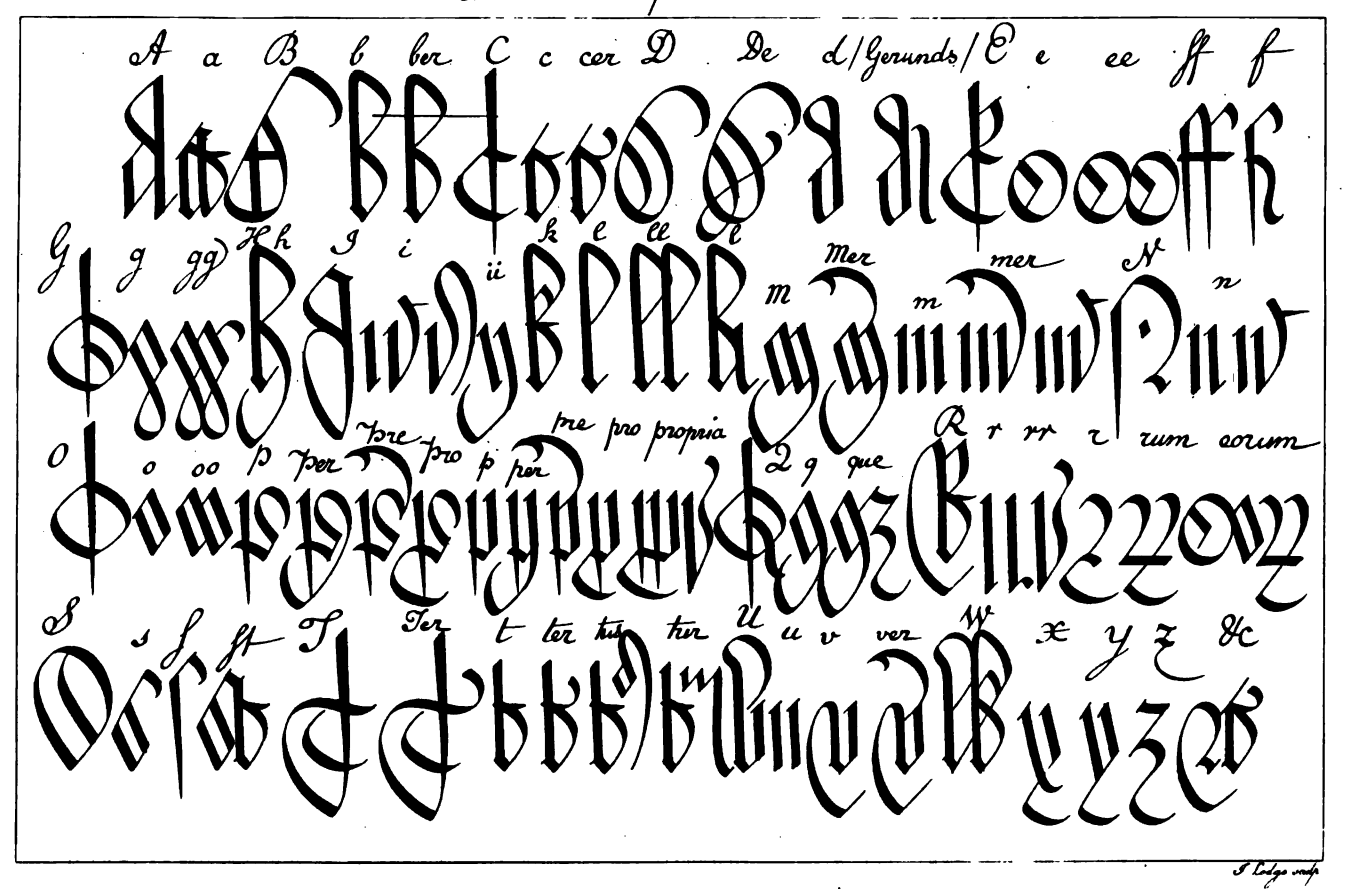
However, we should be grateful that they have limited their judicial caprice to barring sans serif fonts. After all, they could have reinstated Court Hand.

The various forms of writing in which English medieval documents . . . are preserved to us are all derived from an increasingly current writing of the same script which . . . are known to us collectively as Court Hand, that is the writing of the Courts. (Palaeography and the Practical Study of Court Hand).*

Yes, I realize Court Hand dates back to the medieval era, and reinstating it in contemporary American courts would seem asinine on its face, but that certainly doesn’t make it implausible in our current judicial milieu.

C.S. Lewis appreciated the quality of Court Hand. In 1943 he wrote a letter to Gerald Hayes (1889-1955), who was Chief Cartographer for the Admiralty. Hayes had provided some maps for one of C.S. Lewis’ favorite authors, E.R. Eddison. Two of these maps can be found at Inventing Imaginary Worlds.

Hayes gifted C.S. Lewis with a copy of one of these illustrations. Lewis responded with an invitation to visit the Inklings, appreciation for the unique “treasure,” and a compliment about Hayes’ skillful handwriting.

You must come & [visit] our little confraternity if you ever are in Oxford & receive in person my repeated thanks for what is one of my notablest treasures. It has given me again what I have not had for years & years, the old pleasure in a ‘present.’ I wish I could write either modern or court hand as you do!

Fortunately, we live in a digital age when we need not labor to replicate ornate fonts. We can simply add them to our computers and voilà, there they are. In case the Courts resume such a requirement, you may want to add a Court Hand font to your computer today. Even if you do not anticipate being involved in litigation, and simply enjoy elegant fonts, you can find a free copy here.


* You can download a free copy of this book—which belongs in every writer’s library—from the Internet Archive.

And, here is a handy reference sheet for the next time you need to decipher court hand.