Do you have trouble coming up with ideas for your poems or stories? How about starting with an interesting collection of words and winnowing them down to a creation of your own? Read on to learn more about a simple process.
A few years ago a fellow pastor told me he could write, even short articles like blog posts. Since he had successfully completed a challenging graduate program, I was a bit shocked at this disclosure. “The problem,” he said, “is that I just can’t come up with any ideas for what to write.”
I had two reactions. First, I was amazed, since I can’t get through a day without encountering at least a handful of observations that beg to be explored. Second, I wondered just what sort of sermons his congregation was exposed to, if creative imagery and fresh ways of expressing God’s timeless truths were not coming from their pulpit.
One of the ways I attempt to improve my own writing is by stretching. In my personal shorthand, this refers to engaging in new forms of writing. Principally that means voluntarily jumping into sometimes ominous literary waters. I stretch myself by humbly engaging in genres which I may, in all honesty, find intimidating.
For example, occasionally, when bored with outlining books that may never get written, I’ll just scribble out some “impromptu verse.” Some of it turns out rather decent. (You’ll notice I didn’t say “excellent.”)
Blacking Out Words to Compose New Literature
I had heard of Blackout Poetry before, but never attempted to “write” any. Actually, it seems to me that “decompose” might be a more accurate word for this type of creating. Although most commonly used to create brief works, such as poetry, the concept can be used for narratives as well.
If you are unfamiliar with the process, you may enjoy the following, introductory articles.
“Teach Kids Art” explains the basic process and then adds some visual artistry to the mix.
Blackout Poetry is a form of “found poetry” where you select words that catch your interest from a newspaper, book, or other printed text – along with a few additional words to make it flow. Then you “redact” all the words you don’t want. This is often (but not always) done with a black marker, hence the name “blackout poetry.” Your chosen words will form a new message, giving the text a whole new meaning.
Take your Blackout Poetry a step further by adding patterns, designs, or a drawing to the areas you’re “redacting.” For example, instead of just filling in around your chosen words with solid black, you could create a drawing or design that relates to your poem. Just as with any illustration, your art should support the remaining text and add to its meaning.
I really wanted to give it a try. There were however a few obstacles to overcome. First was my ingrained prohibition of defacing books. Although I owned a highlighter in college I rarely used it. It seemed wrong. . . .
Secondly the blackout poetry requires making the page unreadable for the original words. I felt a lot of good old-fashioned guilt in the prospect of destroying someone’s story. Lastly, I didn’t have any books that I felt so little regard for that I could take a sharpie marker to the pages.
I, personally, have eliminated the second reservation by scanning an image of each experimental page and blacking words out digitally. It would be just as simple to print out such an image, or simply use a copier with a physical book, if you prefer to create your work manually. My method eliminates another potential problem for bibliophiles, the damage often caused to a book’s spine when attempting to flatten the page for copying.
“5 Tips for Creating Blackout Poetry” claims the genre is “the best cure for writer’s block.” To enhance miscellany, they suggest “when picking an article to use, it’s best not to read it too closely.”
That way, you aren’t overly influenced by the author’s original work and you can create something uniquely your own.
This suggestion will certainly be beneficial in liberating the creativity of many writers. For my own purposes, I disregarded this advice, since I intentionally desired to use words by or about particular authors. I honestly want the original context to be in my mind during the metamorphosis.
A final source, “A blackout poem on the Trinity,” reveals how a writer in Europe found inspiration in the writings of C.S. Lewis for her own poem about the Trinity. Check out Christine’s verse at the link above.
This is the first time I’ve tried a blackout poem. They work by taking a page of text and then blacking it out until only the remaining words give you the poem.
In the end, I chose “It all began with a picture . . .” published in the Junior Section of The Radio Times on 15 July 1960. It’s a short and sweet description of how Lewis was inspired to write the Narnia stories.
I did not attempt to write poetry. Rather, I used each page to write a brief, new narrative. Of my first three efforts, I was most pleased with “Savage Editing,” displayed above. Below, I will place it beside the original page, from The Collected Poems Of G.K. Chesterton.
I’ll close by passing on to you the experience of the author who composed an ode on the Trinity, using an article about C.S. Lewis. My guess is that you too – should you be so bold as to attempt writing your own blackout works – will experience a similar satisfaction.
It’s hard being constrained by the page of text in front of you. The more you black out, the less you say; but the less you black out, the less impact each word has. It’s a game of compromise, striking the balance between being artistic and understandable.
But I think the end result is a celebration of both Lewis’ work and the Trinity.
The illustration below shows my blackout, which I entitled “Savage Editing,” beside the original page, which includes a portion of “The Scouring of the Horse,” from The Collected Poems Of G.K. Chesterton. “The Scouring” is the final book in Chesterton’s Ballad of the White Horse.
Poor Tinker Bell. The political prejudices of our day have caught up with the sparkling fairy, and relegated her to a significantly reduced presence in the Disney universe.
Inside the Magic reported “Tinker Bell seems to have left Walt Disney World and is now on her way back to Neverland following a recent change at Walt Disney World Resort.” You can read the tragic tale on their site.
. . . once more, Disney’s animated classic, Peter Pan (1953), is under scrutiny, with Disney issuing a statement regarding Captain Hook and Tinker Bell as characters with potential concerns.
Linking poor Tink to a murderous pirate seems a bit of a stretch, and she has not been fully banished, but she has definitely been demoted. According to TMZ, Disney alleges the company’s “own people felt she wasn’t a good role model for girls in the 21st century.”
Well, eventually she too will be in the public domain, like Mickey Mouse. Actually, her literary portrait as introduced in the play, coincidentally just entered the public domain this year (2024)!
However, should you reside in the United Kingdom, beware that in 1988, the copyright holder, Great Ormond Street Hospital, was granted the rights to Peter Pan “in perpetuity.”
The Creator of Tinker Bell & Peter Pan
Tinker Bell is one of the most memorable characters in Neverland, the creation of James Matthew Barrie (1860-1937). He was a prolific Scottish writer and is best known for his 1911 novel, Peter and Wendy – which initially debuted in the form of a stage play in 1904, as Peter Pan; or, the Boy Who Wouldn’t Grow Up.
Peter Pan was actually introduced to the world as a baby in The Little White Bird. Tinker Bell does not appear in the novel, but the following description of J.M. Barrie’s fairy mythology is quite fanciful.
One of the great differences between the fairies and us is that they never do anything useful. When the first baby laughed for the first time, his laugh broke into a million pieces, and they all went skipping about. That was the beginning of fairies.
They look tremendously busy, you know, as if they had not a moment to spare, but if you were to ask them what they are doing, they could not tell you in the least. They are frightfully ignorant, and everything they do is make-believe.
They have a postman, but he never calls except at Christmas with his little box, and though they have beautiful schools, nothing is taught in them; the youngest child being chief person is always elected mistress, and when she has called the roll, they all go out for a walk and never come back.
It is a very noticeable thing that, in fairy families, the youngest is always chief person, and usually becomes a prince or princess; and children remember this, and think it must be so among humans also, and that is why they are often made uneasy when they come upon their mother furtively putting new frills on the basinette.
Barrie continues, describing how infants are simply following fairy “ways” when they misbehave, and they naturally experience “exasperation, because we don’t understand [them], though [they are] talking an intelligible language . . . fairy.”
Returning to the person of Tinker Bell herself, she outgrew her supporting role as, in the words of her creator, “a common fairy.” She was literally a tinker, who died following the departure of Wendy and her brothers from Neverland.
Presumably, some of the gatekeepers at Disney would have preferred that the affection of the crowds had not restored her to life.
The Inklings
The Imaginative Conservative offers an interesting take on C.S. Lewis’ view of fairies. I quote a portion related to our present subject.
Lewis treats the subject of fairies in . . . The Discarded Image. . . . After explaining the medieval understanding of the heavens and planetary systems, Lewis turns to what he calls the Longaevi. He avoids the term “fairies” because it is “tarnished by pantomime and bad children’s books with worse illustrations.” (Probably referring to Barrie’s popular play and Princess Mary’s Gift Book – the book from which Elsie and Frances clipped the pictures they used in their fake photos.)
Jane Douglass, an American actress and playwright, contributed a fascinating essay to C.S. Lewis at the Breakfast Table, and Other Reminiscences. One wonderful portion of “An Enduring Friendship” describes Lewis’ thoughts about the possible dramatization of The Lion, the Witch, and the Wardrobe.
C.S. Lewis deemed the prospect absurd on its face, saying “I believe plays should be plays, poems, poems, novels, novels, stories, stories, and certainly the book you mention is pure narrative.” So much for a partially surviving 1967 series, the 1979 animation, the 1988 BBC television series, and the cinematic version(s) which began in 2005. Oh, and there is the matter of the impending Netflix telling which remains a closely guarded secret. Douglass continued with a reference to Disney.
He repeated his dread of such things as radio and television apparatus and expressed his dislike of talking films. I said I quite understood this, and that nothing would distress me more than that he should think that I had in mind anything like the Walt Disney shows; I hoped nobody had suggested the book to Mr. Disney.
This seemed to relieve Mr. Lewis to such an extent that I thought perhaps Mr. Disney had been after the book, but of course I did not ask. And in his usual generous way, Mr. Lewis said, “Too bad we didn’t know Walt Disney before he was spoiled, isn’t it?”
Author Jim Denney has a nice article on “What C.S. Lewis and J.R.R. Tolkien Thought of Walt Disney” in which he describes parallels between the live of Lewis and Disney and concludes, “you might think that, with all that C.S. Lewis and Walt Disney had in common, they might have been mutual admirers – but that was not the case.”
Disney’s Snow White and the Seven Dwarfs debuted in the United States in 1937 and in the United Kingdom in 1938. . . . A few months later, Lewis went to see it again, this time with his good friend (and fellow Oxford professor) J.R.R. Tolkien.
Coincidentally, Tolkien’s first novel The Hobbit had been published in September 1937, just three months before the American debut of Snow White.
Their greatest disappointment was in Disney’s utterly comical take on dwarves and the absence of the slightest air of “the mythic nobility of the dwarves from Germanic folklore.”
Although Snow White is itself a fairy tale, fairy characters are not to be found in the film. In the same way, J.R.R. Tolkien referred to the Lord of the Rings as a “fairy story” for adults, yet they do not appear to dwell in Middle Earth.
In fact, according to The Encyclopedia of Arda, “the name ‘Faerie’ belongs to an early period of Tolkien’s writings, and is never seen in The Lord of the Rings, but it does survive in a single usage in the earlier book The Hobbit.” And even in that case, it refers not to a population, but to a place.
On the Effect of Tinker Bell
Tinker Bell’s significance in the world is not confined to literature, or the interests of children. There is a brilliant application of her legend which has been transposed into the psychological realm.
It’s call the “Tinker Bell Effect,” and “Be(lie)ve It or Not,” from Psychology Today, offers the following description.
One theory manifesting connections among belief, psychology, and mythology is the Tinkerbell effect named for the fairy Tinker Bell of Peter Pan whose resuscitation depends upon the audience expressing their belief in fairies through clapping . . .
The Tinkerbell effect refers to those things that exist only through imaginative acts and because people believe in them. The Reverse Tinkerbell effect maintains that, somewhat paradoxically, the more people believe in something the more likely it is to disappear.
In their article, the psychologists parenthetically offer an additional application of Tinker Bell’s nature to their area of study. (It actually appears in the paragraph above, where I replaced it with an ellipsis.)
(because she is so small that she can only hold one feeling at a time, Tinkerbell is also a model for mood disorders and difficulties with emotional self-regulation)
Fascinating. It seems to me this insight opens the door to further literary exploration of the Tinker Bell Phenomenon that would be of interest to writers and literary critics alike. I close with my proposal for a new label for an ancient plague afflicting fictional works. If it interests any scholars among you, I invite you to develop it further and claim it as your own.
Tinker Bell (var. Tinkerbell) Crippling Character Creation Complete Content Complexity Phenomenon: The invention of fictional characters who lack depth and bear no resemblance to real people. Literary tropes that are often referred to as one-dimensional or “flat” characters. (See nearly all Marvel supervillains.)
P.S. – Feel free to abbr. the admittedly verbose proposed title; keeping in mind most readers prefer brief reads.
While we are unlikely to become another J.R.R. Tolkien or C.S. Lewis, it is quite possible to improve our literary skills.
There are numerous ways to strengthen our writing. One of my favorites is to “stretch” my abilities by engaging in exercises that push me far beyond my nonfiction comfort zone. More on the details in a moment.
C.S. Lewis prized brevity and clarity. Most readers do. I’ve written about this in “C.S. Lewis on brevity.” Before that, I had discussed brevity as a factor of “clear communication,” while focusing on the value of common semantics to avoid confusion.
I encourage you to read “In Defense of the Fairy Tale: C.S. Lewis’s Argument for the Value and Importance of the Fairy Tale.” The author cites Lewis’ reason for choosing the fairy tale as his genre for Narnia.
[Lewis] describes the invention process for the Chronicles of Narnia as first coming in mental images, “a faun carrying an umbrella, a queen on a sledge, a magnificent lion.” Next came the selection of a form in which to tell the story, one absent of a love interest or close psychology.
The form excluding these was the fairy tale. Lewis tells us that he fell in love with the form itself, “its brevity, its severe restraints on description, its flexible traditionalism, its inflexible hostility to all analysis, digression, reflections and ‘gas’” and the very limitations of the vocabulary.
He concludes, “I wrote fairy tales because the Fairy Tale seemed the ideal Form for the stuff I had to say,” not unlike the stone selected by the sculptor or the sonnet by the poet.
While I share the passage above at some length, my focus here is on Lewis’ observation that fairy tales are inherently “brief.” The fairy tale was, indeed, the “ideal Form” for C.S. Lewis’ classic stories from Narnia.
Even Briefer Genres
As a brevity-challenged individual (common for pastors), I like writing exercises able to make a dent in my innate verbosity. And what shorter option might one explore than a genre limited to a half dozen words?
Before embarking on my current challenge, let me give you a bit of background on the Six Word Story.
As Mark Twain famously wrote, “I didn’t have time to write a short letter, so I wrote a longer one instead.” Intense Minimalism provides similar inspiration from other earlier writers.
“Not that the story need be long, but it will take a long while to make it short.” Henry David Thoreau, “It is my ambition to say in ten sentences what others say in a whole book.” Friedrich Nietzsche “If I had more time, I would have written a shorter letter.” Marcus Tullius Cicero (a predecessor of Samuel Clemens) And back again to Mark Twain: “If you want me to give you a two-hour presentation, I am ready today. If you want only a five-minute speech, it will take me two weeks to prepare.”
C.S. Lewis was capable of writing long personal tomes to family and intimate friends. His correspondence with casual friends – such as Americans who sometimes sent food gifts during Britain’s post-WWII rationing – tended to be warm, but short. This was particularly true when his brother Warnie was not available to assist with his correspondence, as the following letters attest.
20th. January 1948 Dear Mr. Howard, This is really very handsome of you, and you could hardly have sent a more welcome gift. I have only to call your attention to the so-called ‘Superfine’ paper on which I am replying to give you some idea of the luxury of writing on a decent paper at last. But I’m afraid there is something which even American generosity cannot supply me with: an article called TIME, which was the cause of my previous letter! (its brevity I mean)
25th August 1949 Dear Dr. Allen Yet once again hearty thanks for a fine parcel which has arrived in excellent condition to-day. I don’t know how we should get on without you. My brother who drives the typewriter is away and my hand is nearly dropping off from letter writing, so you’ll forgive brevity – and the horrible scrawl! I’m none the less grateful inside!
Six Word Stories were popularized in the United States through association with Ernest Hemingway. However, it is an urban legend to credit him with this poignant example: “For sale, Baby shoes, Never worn.”
MasterClass offers a helpful lesson at “How to Write an Unforgettable Six-Word Story.” They actually suggest that you can drop a few of these into your writing day to renew your energy.
Like other forms of short stories or flash fiction, a six-word story allows a reader to consume an entire narrative in just a moment’s time. If you’re trying to get in some short, but challenging, bursts of writing practice throughout your day, try writing six-word stories. These bite-sized narratives are fast and fun.
As for telling any sort of satisfying “story” in six words, it’s a bit of an hyperbole. However, that hasn’t stopped a number of people from making a literal career of promoting the genre. At the forefront of the movement is Six Word Memoirs.
Christians have likewise joined the club. For example, Six-Word Lessons to Discover Missional Living: 100 Lessons to Align Every Believer with the Mission of Jesus is volume forty-three in “The Six-Word Lessons Series.”
Prior to learning about these companies, I thought it be fun to suggest that one you compose Six Words about the Christian Life. Still, since an idea can’t be copyrighted, you’re still free to market your own works in this genre.
Some of My Modest “Attempts”
One subgenre of Six Word Stories is Six Word Biographies. One website applies this to biblical personages. Among them:
Mary “Behold the handmaid of the Lord.” Esther “For such a time as this.”
To which I dare to add:
Jephthah (Judges 11-12) “Rash vows bring about terrible tragedies.” Jehosheba (Exodus 1-2) “Moses’ mother, eclipsed by her daughter.” Abednego (Daniel 1-3) “I survived the fiery furnace too.”
Now, allow me to apply the technique to several other people.
He’s no Reepicheep, but the earliest iteration of Mickey Mouse just became public property!
One of the little-heralded New Year’s Day events was the entry of the SteamboatWillie version of Mickey into public domain. Now anyone who desires can use the image without infringing on Disney’s copyrights.
Actually, my headline is not 100% accurate. As I just noted, it’s the earliest version of the most famous mouse in the world. However, the rodent’s name, and his subsequent graphic version remains protected. That’s because while copyrights eventually expire, trademarks don’t.
Therefore, as reported in Fortune magazine, “current artists and creators will be able to make use of Mickey, but with major limits. It is only the more mischievous, rat-like, non-speaking boat captain in ‘Steamboat Willie’ that has become public.”
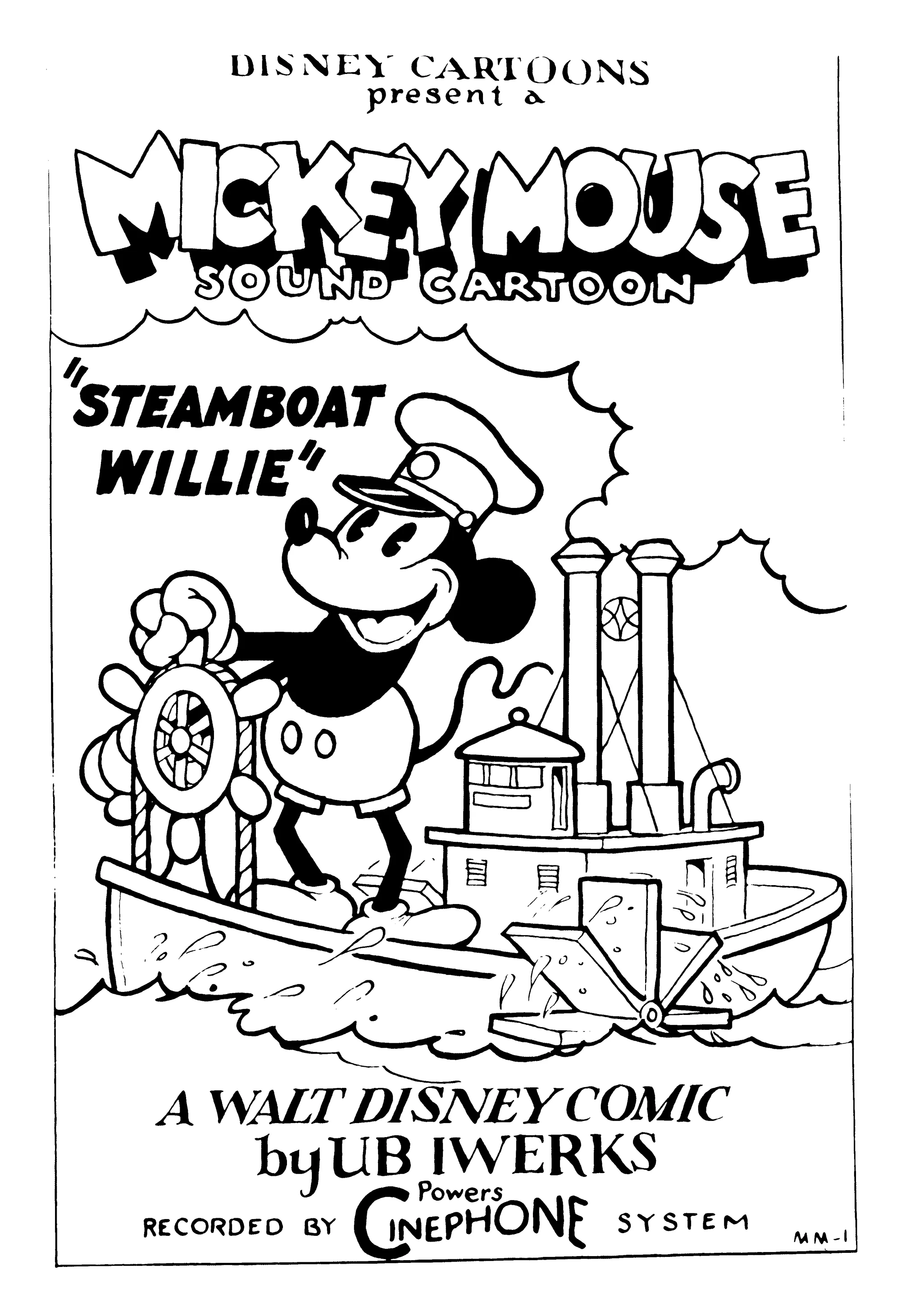
The 1928 poster advertising Mickey’s cinematic debut comes from a great article at Animation Scoop. Without comparing measurements of Mickey’s initial and contemporary snouts, it doesn’t appear to me the public domain version is that much more “rat-like.”
As for differences between the two . . . well, I’m not an attorney, but it appears Mickey’s onscreen persona in 1928 wasn’t wearing his standard white gloves. The poster, nevertheless, shows a Mickey closely resembling the cartoon mouse who was part of many of our childhoods. As noted in the Fortune piece:
Not every feature or personality trait a character displays is necessarily copyrightable, however, and courts could be busy in the coming years determining what’s inside and outside Disney’s ownership.
My question, and perhaps one of you intelligent readers can answer this, is about the image’s “name.” His full name, with his surname “Mouse,” is undebatably trademarked. Can a person legally use the name “Mickey” with the 1928 likeness? My guess is that the first name is not restricted, no matter how much Disney protests.
Speaking of Disney, a company which has become a disappointment in recent years, the Inklings were not big fans. If you are interested in learning more about the Inklings’ opinion about Disney Studios, check out author Jim Denney’s “What C.S. Lewis and J.R.R. Tolkien Thought of Walt Disney.”
After identifying a number of parallels in their lives, he explores the irony that “you might think that, with all that C.S. Lewis and Walt Disney had in common, they might have been mutual admirers—but that was not the case.”
And, there is always another option. As Britannica reminds us, Mickey wasn’t even his original name. Walt’s first choice (vetoed by his wife) was “Mortimer.”
That’s it for today. Now I’m off to write a book about Mickey’s alliance with Reepicheep. Oh wait, Reepicheep won’t be in the public domain until after I’m enjoying heaven with my Lord, and with the Christian members of the Inklings.
And, even if one could pair the two up for an adventure, they wouldn’t prove compatible. The reason should be obvious, but for an enjoyable exploration of that subject, I commend to you, “Reepicheep and Mickey.”
Artificial intelligence is on the rise. It’s IQ is somewhere above 75, and presumably still climbing. And some very intelligent human beings, are issuing apocalypticwarnings.
“Mitigating the risk of extinction from A.I. should be a global priority alongside other societal-scale risks, such as pandemics and nuclear war,” reads a one-sentence statement released by the Center for AI Safety, a nonprofit organization. The open letter was signed by more than 350 executives, researchers and engineers working in A.I.
Presently, I’m more wary of Russia, China and Iran igniting an end of the world scenario.
But there is one particular aspect of artificial intelligence that intrigues me. And that is the creation of literary works by these programs, which are themselves creations of humankind.
Some people, such as copywriters, feel their livelihoods are being threatened. “My amusement turned to horror: it took ChatGPT 30 seconds to create, for free, an article that would have taken me hours to write.” (And that was clocked way back in January; no telling how quickly the AI could perform the feat today.)
Others – think teachers – are alarmed by how simply this new technology can seduce students to take self-crippling shortcuts. One article refers to this as “the elephant in the room.”
Perhaps all questions centered on AI are inherently questions of ethics, and at the forefront of many teachers’ minds is cheating and plagiarism.
Cheating and plagiarism are two separate concerns, of course. AI is capable of not only drawing together already existing material, and generating new word combinations that cannot be tracked back to any unique original source.
I feel confident that the Inklings would be extremely suspicious of computer-generated “literature.” Yet, at the same time, I think it is a subject they too would find intriguing.
Test-Driving AI
There are a myriad of free sites where a person can enter some basic parameters or directions and await the product of text generated by a synthetic “mind.” I share below some examples of the input—output results of my initial experiment.
I asked Open AI, creators of ChatGPT, to write two limericks, about the Oxford Inklings and C.S. Lewis, respectively.
In Oxford, the Inklings did meet, With words and with wisdom so sweet. Tolkien and Lewis, Their minds in a breeze, Inkling tales made our imaginations fleet.
⁂
C.S. Lewis, a writer so grand, In Narnia’s magical land. With Aslan the Lion, In tales that inspire, He showed us the way to understand.
Next I asked for an Inkling sonnet, followed by two haikus, addressing the Inklings as a fellowship and C.S. Lewis the individual.
In Oxford’s hallowed halls, they gathered ‘round, The Inklings, minds of genius, so profound. With ink-stained fingers, in their fellowship, They wove their tales, from wisdom’s well to sip.
Tolkien, the philologist of ancient lore, In Elvish tongues, his stories did explore. Lewis, the Christian apologist true, In Narnia’s world, he brought God’s message through.
Williams, Barfield, Dyson, and the rest, In literature and faith, they were blessed. Their words a beacon in a world so dark, Igniting minds with sparks from wisdom’s arc.
Oxford’s Inklings, their legacy remains, In timeless tales, where inspiration reigns.
⁂
Inklings’ minds aflame, Oxford’s thinkers left their mark, Words and wisdom’s claim.
⁂
C.S. Lewis penned grace, Faith and fantasy embraced, Words that still embrace.
And finally, I requested: “write a story about C.S. Lewis really traveling to Narnia.” The program has a “regenerate” button to address the same query with a fresh response. Due to their lengths, I’ve included them as “footnotes” below.
Shockingly, to me at least, it took less than 10 minutes to complete all of this. Each response, in fact, took mere seconds . . . not much longer than the time required to type the requests.
There are a growing number of companies offering AI services. Most offer free opportunities to test their wares. I decided to try one such vendor.
WriterHand declares “our tool is 100% free, allowing you to create limitless text and blog content with the assistance of artificial intelligence.” I requested of them a sonnet and haiku, as well. The first follows, with two other variants in the footnotes below.
The Oxford Inklings, a literary group Of J.R.R. Tolkien, C.S. Lewis and more Created stories that still make us droop And have us seeking out their lore.
Their works of fantasy and myth Fill our imaginations with delight We all search for the answers they lit To the depths of our inner sight.
They wrote of worlds we can explore Of knights, dragons and magical things We follow their tales and come back for more And find joy in their musings.
The Oxford Inklings have a special charm Their words bring us together in song And we are forever in their warm Enchanting arms of wonder and long.
⁂
Inklings of Oxford Stories of fantasy told Enchantment forever
As with ChatGPT, I ended by requesting a brief, fictional story. My request was for a story about:
C.S. Lewis Meeting an Actual Talking Marsupial
On a recent summer day, C.S. Lewis, the famed author of the Chronicles of Narnia series, had a very extraordinary encounter. He had the chance to meet an actual talking marsupial.
The marsupial was a small wallaby, and it was found on the grounds of Lewis’ estate. It was not long before the wallaby began speaking to Lewis in a highly sophisticated manner. The wallaby spoke in a dialect that sounded similar to English, and was even able to converse with Lewis about the various topics he enjoyed discussing.
The wallaby was quite curious about Lewis and seemed to be quite eager to learn more about him and his works. It asked numerous questions about the Narnia series and the world that Lewis had created. It seemed to be quite fascinated by the various creatures and wonders that he had described.
The wallaby seemed to be quite intelligent and even asked for Lewis’ advice on certain topics. Lewis found the wallaby’s interest in the Narnia series quite amusing and was quite impressed by its intelligence and wit.
This meeting between Lewis and the talking marsupial was one that Lewis would never forget. It was an experience that he found both fascinating and enlightening. He was amazed by the marsupial’s intelligence and ability to converse on a level that exceeded many humans.
Lewis was quite taken aback by the talking marsupial’s presence and the conversation that ensued. He was quite intrigued by the creature’s intelligence and the fact that it could understand complex topics. This experience would later serve to further inspire Lewis’ writing and help him create some of the most beloved characters in literature.
This experience between Lewis and the talking marsupial was truly extraordinary and one that will never be forgotten. It was a meeting that allowed Lewis to learn more about the creatures that inhabit his beloved Narnia and to gain a better understanding of the power of imagination and creativity.
A Final Thought from C.S. Lewis
One of C.S. Lewis’ countless correspondents was the famous British author Arthur C. Clarke. In 1954, they exchanged letters discussing the human element of literature. I suppose it’s a subject for philosophers to explore, but one wonders how clearly the “humanity” element is communicated through a nonhuman mechanism. Sadly, Lewis’ letter is not so prescient as to address our current question, but it was sufficient to raise the matter in my own thoughts.
Dear Clarke,
Human interest, yes. But that is inevitably present if the fears and hopes and wonders of the astronauts are vividly realised – e.g. as in Bedford & Cavor on the Moon [he refers here to H.G. Wells’ The First Men in the Moon] or even Crusoe on the island. And an author who can’t do that won’t mend matters by dragging in Crooks, Crutches, or Conspiracies: for the sort of story he drags in will be just as lacking in Human interest as his space story.
About ‘escapism,’ never let that flea stick in your ear. I was liberated from it once & for all when a friend said ‘These critics are v. sensitive to the least hint of Escape. Now what class of men would one expect to be thus worked-up about Escape? – Jailers.’ Turn-key critics: people who want to keep the world in some ideological prison because a glimpse at any remote prospect would make their stuff seem less exclusively important.
Fantasy & S-F. is by miles the best. Some of the most serious satire of our age appears in it. What is called ‘serious’ literature now – Dylan Thomas & Pound and all that – is really the most frivolous. All the best. Yours C.S. Lewis
The two brief stories below were generated by ChatGPT in response to the request for a story about Lewis actually visiting Narnia.
In the quiet confines of his cozy Oxford study, C.S. Lewis sat by his flickering fireplace, a manuscript of his latest book on theology resting on his desk. The clock on the wall ticked away the minutes, marking the time as late evening gave way to the inky embrace of night. Lewis’s eyes grew heavy, and he decided it was time to retire to bed.
As he settled into his comfortable bed, he couldn’t shake the feeling of restlessness that had gripped him that evening. He stared at the wardrobe across the room, the same wardrobe that had once belonged to his grandparents and had always fascinated him as a child. He closed his eyes and drifted into a dream, or so he thought.
To his astonishment, Lewis found himself standing before the wardrobe, which now seemed more magnificent than ever. It loomed like a gateway to another world, and he couldn’t resist the urge to open its creaking doors. With a sense of wonder and trepidation, he stepped inside.
Instead of feeling wood beneath his feet, Lewis’s toes sank into soft, cool earth. He looked around and found himself standing in a dense, snow-covered forest. The air was crisp and carried a scent of pine and adventure. He realized that he was in Narnia.
Before him stood a lamppost, its light casting a warm and inviting glow. Lewis recognized it from his own stories. He couldn’t help but smile, realizing that he had somehow stepped into the world he had created through his Chronicles of Narnia.
As he ventured deeper into the forest, Lewis encountered creatures of myth and magic—talking animals, fauns, and even a majestic lion named Aslan. They welcomed him with open arms, for they knew him as the one who had brought their world to life through his words.
Days turned into weeks, and Lewis explored Narnia with childlike wonder. He sailed on the Dawn Treader, encountered the White Witch, and witnessed the coronation of King Caspian. He marveled at the beauty of Narnia’s landscapes, the bravery of its inhabitants, and the profound wisdom of Aslan.
Throughout his journey, Lewis engaged in deep conversations with the creatures of Narnia, discussing matters of faith, morality, and the nature of storytelling. Each encounter enriched his understanding of the Christian faith he had embraced in the real world.
Eventually, Lewis knew that he had to return to his own world. With a heavy heart, he stood before the same lamppost where he had first arrived and closed his eyes. When he opened them again, he was back in his Oxford bedroom, the wardrobe standing silent and ordinary once more.
He sat at his desk, the manuscript still awaiting him, but now with a newfound sense of purpose and inspiration. The memories of Narnia, his journey, and the lessons he had learned would forever shape his writing and his faith.
C.S. Lewis had indeed traveled to Narnia, not in body, but in spirit and imagination, and his stories would continue to transport readers to that magical world for generations to come.
⁂
Using the “regenerate” option with the same command: “write a story about C.S. Lewis really traveling to Narnia.”
Once upon a time in the quiet town of Oxford, C.S. Lewis, the renowned author and scholar, found himself embarking on a remarkable adventure. It was a crisp, autumn evening when he was invited to attend a secret gathering by a mysterious stranger who had slipped an enigmatic note under his door. The note simply read, “Come, Narnia awaits.”
Intrigued and a bit skeptical, Lewis decided to follow the call. He put on his overcoat, grabbed his umbrella, and stepped out into the cool night. The moon was a silvery crescent in the sky, casting an eerie glow on the cobblestone streets.
As he followed the directions given in the note, Lewis found himself walking through an old, secluded part of Oxford that he had never seen before. The air seemed to grow colder, and the world around him took on an otherworldly quality. Suddenly, he stumbled upon a large, ancient wardrobe tucked away in the corner of a park.
With a sense of déjà vu, Lewis remembered writing about such a wardrobe in one of his stories. He cautiously opened the wardrobe door, half-expecting it to be filled with coats and mothballs. To his astonishment, the wardrobe seemed to stretch and expand, and he found himself tumbling headfirst into a land covered in snow and surrounded by towering fir trees.
He had arrived in Narnia.
The moment his feet touched the snowy ground, Mr. Tumnus, the faun, rushed forward with a smile and exclaimed, “Welcome, dear friend! We’ve been waiting for you.”
Lewis was both bewildered and delighted. As he explored Narnia, he met talking animals, dwarves, and even the great lion, Aslan, whom he had created in his own stories. The world he had once imagined had come to life before his eyes.
Days turned into weeks, and Lewis became a beloved member of the Narnian community. He marveled at the beauty and wonder of this magical land. He listened to the tales of its inhabitants, learned from their wisdom, and shared stories of his own.
But as all adventures must come to an end, Lewis knew he couldn’t stay in Narnia forever. With a heavy heart, he approached the wardrobe once more and stepped back into his own world, leaving Narnia behind.
Back in Oxford, Lewis couldn’t help but wonder if his journey to Narnia had been a dream or a product of his imagination. Yet, the memories were vivid, and the lessons he had learned about faith, courage, and the power of imagination remained with him for the rest of his days.
And so, the story of C.S. Lewis’s extraordinary voyage to Narnia remained a secret he carried with him, a testament to the enduring magic of literature and the boundless possibilities of the human imagination.
⁂
Variants of the sonnet and haiku produced by WriterHand follow.
The Oxford Inklings were a group of friends Whose conversations filled the air with wit and wit; Their words of wisdom still live on to this day, Their legacy of literature still stands tall and lit.
From C.S. Lewis to J.R.R. Tolkien They bantered and debated through the night; Their words and stories filled us all with joy, A source of inspiration, both dark and light.
From fantasy to science fiction, The Inklings had a way with words; Their genres and stories still stand the test of time, And their influence still continues to be heard.
The Oxford Inklings and their works Will live on in the hearts of many; Their words will inspire generations to come, A lasting legacy of literary plenty.
⁂
The Inkling’s works shine A legacy of wisdom still In our hearts, forever
⁂
The Oxford Inklings were a unique group Formed in the city of dreaming spires A gathering of friends with a shared goal To explore the depths of their desires
A fellowship of authors, poets, and more Including Tolkien, Lewis, and Williams Discussing literature, theology, and lore In the Eagle and Child’s hidden realms
From the Inklings came works of great fame The Chronicles of Narnia and The Lord of the Rings Legends of Middle Earth and tales of great shame A legacy that will last through the ages
The Oxford Inklings were a brilliant crew Inspiring writers and readers anew.
⁂
Oxford Inklings’ lore In tales of fantasy and truth Lives on forever
C.S. Lewis and J.R.R. Tolkien are two of the countless authors who have immortalized the beauty and majesty of eagles in their books.
In Narnia, talking eagles such as Farsight serve in Aslan’s councils of war, while their speechless brethren go about their instinctual activities.
There would have been a splendid view . . . but among all those trees you could see nothing – only, every now and then, some huge pinnacle of rock above the tree-tops, and an eagle or two wheeling high up in the blue air.
“They smell battle,” said Corin, pointing at the birds. “They know we’re preparing a feed for them” (The Horse and His Boy).
Eagles feature even more prominently in Middle Earth. The sapient Great Eagles appear at various key moments, including the rescue of doomed heroes. After the One Ring has been destroyed, an eagle bears news of the defeat of Sauron to Minas Tirith. Its proclamation is voiced in poetry.
Sing now, ye people of the Tower of Anor, for the Realm of Sauron is ended for ever, and the Dark Tower is thrown down.
Sing and rejoice, ye people of the Tower of Guard, for your watch hath not been in vain, and the Black Gate is broken, and your King hath passed through, and he is victorious.
Sing and be glad, all ye children of the West, for your King shall come again, and he shall dwell among you all the days of your life.
And the Tree that was withered shall be renewed, and he shall plant it in the high places, and the City shall be blessed.
Sing all ye people!
If that sounds biblical, don’t be surprised. Although Tolkien scrupulously avoided Judeo-Christian references, so his work would not be misconstrued as allegory, the Psalms have exerted great influence on Western literature. The Lord’s entrance into the holy city is celebrated in the following words in Psalms 33 and 24.
Rejoice in the Lord, O ye righteous: for praise is comely for the upright. . . . Lift up your heads, O ye gates; and be ye lifted up, ye everlasting doors; and the King of glory shall come in. Who is this King of glory? The Lord strong and mighty, the Lord mighty in battle. Lift up your heads, O ye gates; even lift them up, ye everlasting doors; and the King of glory shall come in.
Eagles in Our Earthly Realm
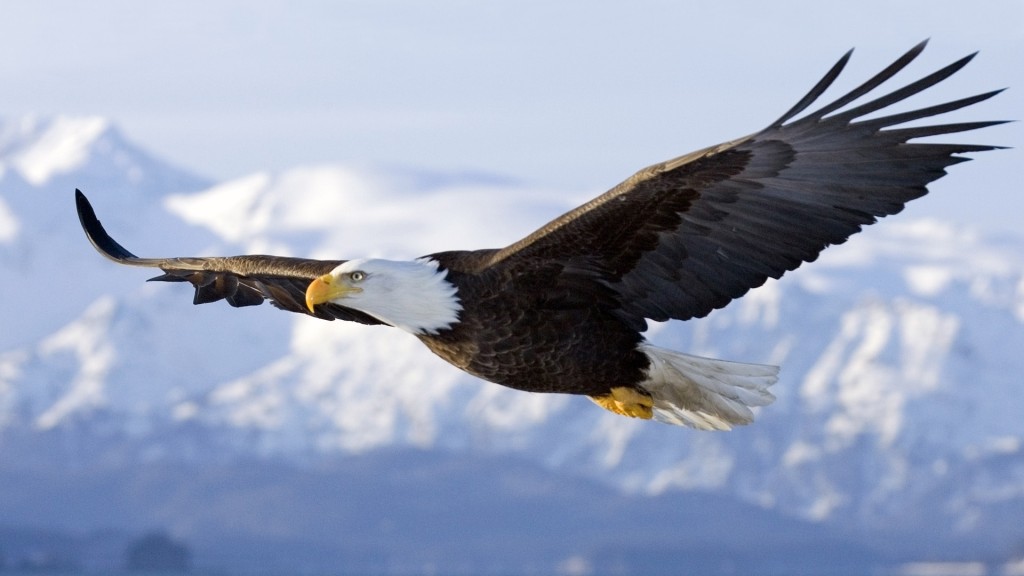
My thoughts today rose toward the sky because of an eagle I encountered while enjoying nature with my border collie this morning.
I’m blessed to live in a community near the Hood Canal, one of America’s longest fjords, extending about fifty miles. Near my home, is a nesting ground for Bald Eagles, our national bird and one of the world’s grandest raptors. Their aeries, or nests, are massive.
Even after their crowded gathering to raise their young each year, we have eagles who remain in the area. It was one of these that I contemplated today.
I was almost mesmerized as I watched the creature circle around in the sky. Even with its unrivaled vision, it appeared to be above its normal hunting altitude. Rather, it looked for all the world like it was simply enjoying its nature, celebrating its eaglehood.
Such sightings are impressive, but not rare. However, one thing truly amazed me. As I watched that eagle soar for many long minutes, not once did it flap its wings. It simply danced in the thermals.
During that riveting time it neither departed its unmapped path in pursuit of food, nor tired of its aerial ecstasy. It savored the gifts of its Creator, and I vicariously experienced shalom as I rested and beheld.
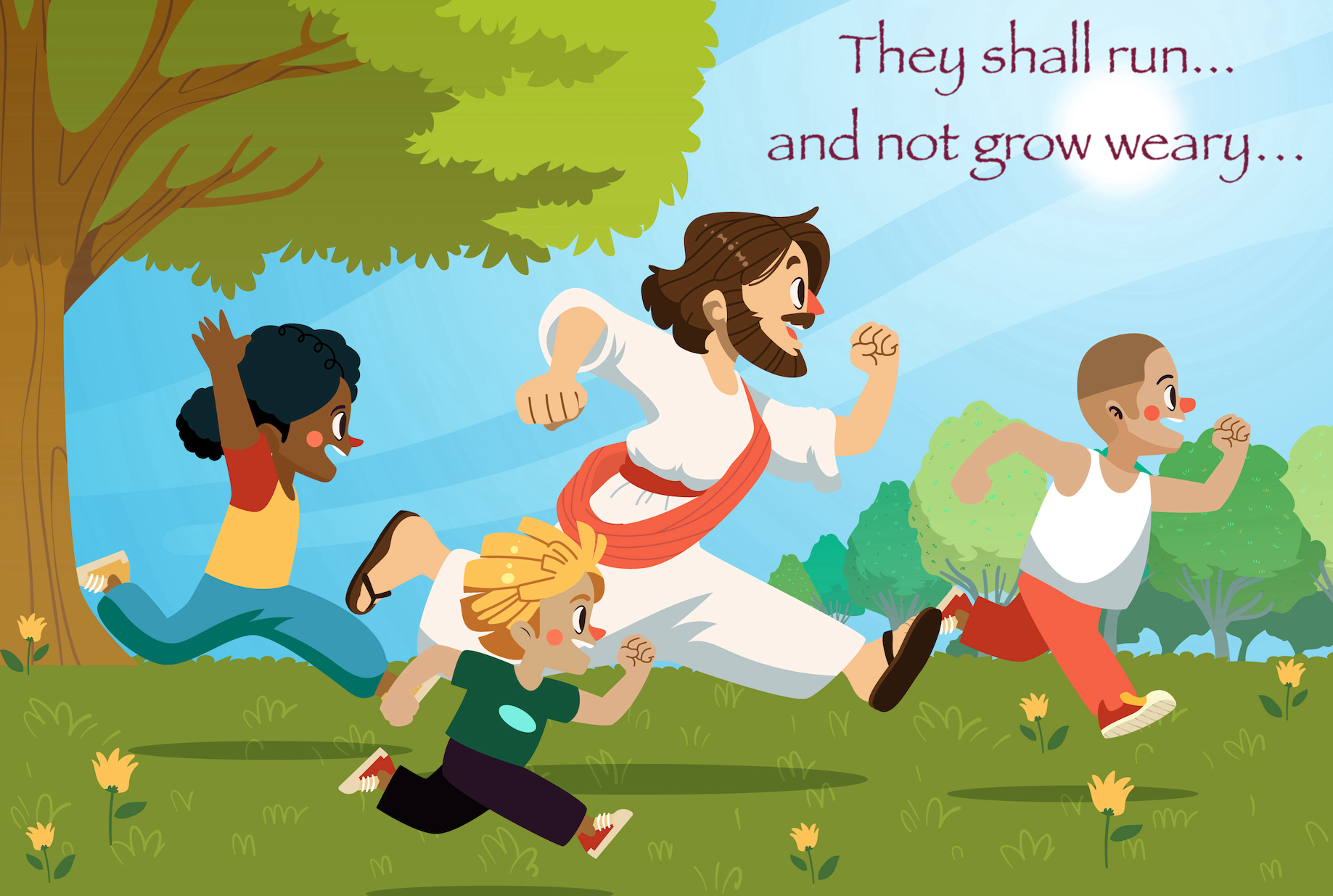
The Lord is the everlasting God, the Creator of the ends of the earth. He does not faint or grow weary; his understanding is unsearchable. He gives power to the faint, and to him who has no might he increases strength. Even youths shall faint and be weary, and young men shall fall exhausted; but they who wait for the Lord shall renew their strength; they shall mount up with wings like eagles; they shall run and not be weary; they shall walk and not faint (Isaiah 40).
Thank you, Lord, for granting me this reminder – and experience – of your holy promise this day.
Here at Mere Inkling our admiration for C.S. Lewis moves us to emulate some of his practices. Thus, we are avid readers and we also enjoy learning new words.
Some of us even enjoy inventing new words. No, we’re not so presumptuous as to desire to wend our ways into the dictionary. We just find this creative game to be both fun and useful for promoting mental health.
The challenge is providing rational definitions for our neologisms. These meanings can be serious or absurd; that doesn’t matter. Here are four I recently devised. (More, from years past, are available in the links I have included above.)
: Zambaloney : noun
A succulent cut of meat served only in skating rinks while the ice is being resurfaced during formal sporting competitions.
: Teguchigulper : noun
The indigenous name for the Honduran species of Chupacabra.
: Belladonut : noun
The presentation of poison derived from the perennial Atropa belladonna in appealing confectionaries. See also, doughnut.
: Sinderella : noun
The Brothers Grimm story about a beneficent stepmother who learns her two biological daughters are being terrorized by their physically beautiful yet wicked stepsister.
We’re Not Alone
If you have tried your hand at this, or at least think it’s curious, you might be surprised to learn there are online “word generators” that perform at least part of this function. Let me mention a couple before sharing some more of my own inventions.
Unfortunately, some only toss out made up words, in literary isolation. This is the case of Random Word Generator, which did, however, suggest the intriguing word “picneted.”
Nonsense Word Generator “generates nonsense words based on a frequency list of phonemes as they occur in legitimate English words.” They claim “an actual word may slip through occasionally but it should mostly generate pronounceable gibberish.”
Since gibberish isn’t what I’m after, and I haven’t yet found an artificial intelligence website offering what I seek, it’s up to human beings to fill the gap. I hope you enjoy at least one or two of my other neologisms which follow.
New Words & Apropos Definitions
: Dramadairy : noun
A business offering various products created from camelid milk. Suspense is generated by the uncertainty as to the particular species from the genus Camelus that provided the day’s primary ingredient.
: Sir Mize : proper noun
A minor noble of the Carolingian dynasty noted for his skill at accurately assessing situations despite lacking clear evidence for his hypotheses.
: Fleedom : verb
The attempt to escape restrictions imposed by an autocratic government.
: Califate : noun
The final destiny awaiting those who seek to impose their religion on others by means of violence rather than through thoughtful conversation and compassionate service.
: Hippocampus : noun
Commonly considered a region of the brain, the word originally referred to the special academies where priestesses of Taweret schooled Egypt’s hippopotami to serve Pharaoh.
: Integreation : verb
The process through which individuals or different groups are incorporated into a common whole, resulting in a truly synergistic benefit to all.
: Sinergy : noun
The crippling illusion that one should embrace diverse expressions of evil simply because they have become a standard practice under a decadent worldview.
: Laboratorinthine : adjective
Applied to extremely complex, often inescapable, research and medical facilities hosting arcane experiments on human subjects. See also, “science fiction and horror tropes.”
: Confort : noun, verb
noun : The false sense of security felt by a vulnerable individual who is being successfully deceived by a criminal. See conforter.
verb : The act of pretending to render aid or support to someone in need while laying the groundwork for a malevolent action toward them.
: Pintacostal : noun
Members of an ecstatic religious sect who allege that their ancestors arrived in America in the fifteenth century aboard one of Christopher Columbus’ smaller caravels.
: Calumknee : noun
Defamatory statements, especially directed toward athletes, related to the largest joint in a particular person’s anatomy.
: Commaraderie : noun
The collegiality felt by writers who advocate the use of the Oxford comma in lists of three or more items.
: Peripathetic : adjective
Traveling from place to place and job to job without ever finding the right fit.
: Lyberry : noun
A fruit concoction comprised of berries cleansed with minute amounts of lye water, which can be fatal if mismeasured. Not to be confused with the tragic mispronunciation of “library.”
: Indogtrination : noun
The process of training people to uncritically embrace a canine belief system and obedience to arbitrary and sometimes self-injurious commands. Antonym of catechesis.
: Banalgesic : noun
A drug designed to reduce the pain induced by participating in a banal conversation.
: Farmageddon : noun
Subterranean postapocalyptic nutrient harvesting plants specializing in either edible algae or plant-based meat alternatives (derived from algae).
: Olympipad : noun
Special edition of Apple’s iPad scheduled for release in conjunction with Olympiad XXXIV in Los Angeles in 2028.
And, as a final tribute to that great writers and saints, C.S. Lewis and J.R.R. Tolkien:
: Nearnia : noun
A fantastical world which does not require a Wardrobe to discover, but is as close as one’s own inspired imagination. See also, “Median Earth.”
I never thought I would become an apiarist, but living in forests of America’s Pacific Northwest made this a logical stage in my growth as a naturalist. And I’m convinced that if he had known how simple it is to promote healthy bee populations, C.S. Lewis would have joined me in the hobby.
After all, he delighted in their work ethic, describing the moment of their Narnian creation with the words, “Butterflies fluttered [and] Bees got to work on the flowers as if they hadn’t a second to lose.”
In “An Experiment in Criticism” Lewis discussed the value of seeing the world through the eyes of others. In awe of the majesty of creation he expressed a yearning to explore its myriad facets from perspectives other than his own.
The man who is contented to be only himself, and therefore less a self, is in prison. My own eyes are not enough for me, I will see through those of others. Reality, even seen through the eyes of many, is not enough. . . .
Even the eyes of all humanity are not enough. I regret that the brutes cannot write books. Very gladly would I learn what face things present to a mouse or a bee: more gladly still would I perceive the olfactory world charged with all the information and emotion it carries for a dog.
Like most people, I grew up thinking of beekeepers as the people who dress in protective gear and harvest the honey produced by those tireless little workers. Honeybees, however, are only one type of bee. The Treehugger site offers an illustrated page featuring the bee types, with Hoverflies (good, and in more than 6,000 species) and Wasps (bad, and in more that 100,000 species) thrown in.
The bees I help to encourage in our area are not honeybees or bumblebees, who form colonies. They are mason bees, who are solitary by nature. They don’t have an aggressive bone in their tiny bodies and they are excellent at their jobs. They “pollinate around 95% of the flowers they visit, whereas honey bees generally only pollinate about 5%.”
C.S. Lewis, like his close friend J.R.R. Tolkien, loved nature. Like most people Lewis either knew nothing about solitary bees, or his attention was directed by default to the honeybees we prize for the honey refined in their hives. In 1930, he wrote to his friend Arthur Greeves about the deeper motivations that drive people such as themselves to become writers.
As for the real motives for writing after one has ‘got over’ the desire for acknowledgement . . . I found and find, that precisely at the moment when you have really put all that out of your mind and decided not to write again . . . precisely then the ideas – which came so rarely in the days when you regarded yourself officially as an author – begin to bubble and simmer, and sooner or later you will have to write . . .
Who knows . . . what will in the end reach the ear of humanity? The successes of our own age may be speedily forgotten: some poem scribbled in pencil on the fly leaf of a schoolbook may survive and be read and be an influence when English is a dead language. . . .
So . . . whether the necessity and duty of writing is laid on a man or not can soon be discovered by his own feelings. With remote consequences we have no concern. We never know enough. I think the thing is to obey the ordinary rules of morality . . . but for ultimate justifications & results to trust to God.
The bee builds its cell and the bird its nest, probably with no knowledge of what purpose they will serve: another sees to that. Nobody knows what the result of your writing, or mine . . . will be. But I think we may depend upon it that endless and devoted work on an object to which a man feels seriously impelled will tell somewhere or other: himself or others, in this world or others, will reap a harvest exactly proportional to the output.
In 1914, C.S. Lewis shared with his father a humorous anecdote from the Roman poet Virgil.
Did you ever at Lurgan read the 4th Georgic? It is the funniest example of the colossal ignorance of a great poet that I know. It’s about bees, and Virgil’s natural history is very quaint: bees, he thinks, are all males: they find the young in the pollen of flowers. They must be soothed by flute playing when anything goes wrong etc., etc.
C.S. Lewis enjoyed his laugh at Virgil’s poetic ignorance about bees. Coincidentally, he would discuss the humble creatures in a poem of his own. It appears in his posthumous Poems collection, as the fourth and fifth of his “Five Sonnets.”
Pitch your demands heaven-high and they’ll be met. Ask for the Morning Star and take (thrown in) Your earthly love. Why, yes; but how to set One’s foot on the first rung, how to begin? The silence of one voice upon our ears Beats like the waves; the coloured morning seems A lying brag; the face we loved appears Fainter each night, or ghastlier, in our dreams. “That long way round which Dante trod was meant For mighty saints and mystics not for me,” So Nature cries. Yet if we once assent To Nature’s voice, we shall be like the bee That booms against the window-pane for hours Thinking that way to reach the laden flowers.
“If we could speak to her,” my doctor said, “And told her, “Not that way! All, all in vain You weary out your wings and bruise your head,” Might she not answer, buzzing at the pane, “Let queens and mystics and religious bees Talk of such inconceivables as glass; The blunt lay worker flies at what she sees, Look there—ahead, ahead—the flowers, the grass!” We catch her in a handkerchief (who knows What rage she feels, what terror, what despair?) And shake her out—and gaily out she goes Where quivering flowers stand thick in summer air, To drink their hearts. But left to her own will She would have died upon the window-sill.”
British Bees
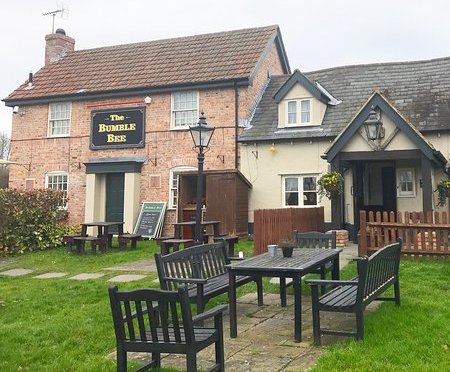
The British are quite enamored with quaint names for their public houses. Because of that, I knew I would be able to find a suitable pub to feature at the top of this post. I was, however, caught off guard by an embarrassment of riches in the return to my google search.
In addition to “The Bumble Bee” in Quedgeley pictured above (which I chose because of the lamppost in the garden), I found images of similarly named pubs in Blackwood, Flitwick, Gloucester, Gwent, Westoning, and Fleur-de-lis, Wales.
I’m sure I could find many other tributes to buzzing pollinators, if I broadened my search to include pubs like “The Beehive” in Egham or “The Golden Bee” in Stratford-upon-Avon.
The story of one more bee will bring our reflections to an end. In his early diary, All My Road Before Me, C.S. Lewis mentioned a number of visits to Bee Cottage, where some of his friends occasionally resided. For example, one summer Sunday in 1922, he recorded:
After lunch I bicycled to Beckley and called at Bee Cottage where I found [Cecil] Harwood alone and reading in a pleasant, stumpy 18th Century Bible. He quoted from Genesis “Whatever Adam called anything, that was the name of the thing,” as an excellent definition of poetry.
Once lost to the mysteries of time, the precise location of Bee Cottage has been discovered, as we can read in Bee and Church Cottage.
Laurence Harwood, C.S. Lewis’s godson, was a lecturer at [the 2009] Summer Seminar on C.S. Lewis Remembered. His father, Cecil Harwood, was a close personal friend of Lewis as well as fellow Inkling Owen Barfield.
Harwood and Barfield had often rented a small cottage-Bee Cottage-in Beckley, a few miles from Lewis’s home in the Kilns, and Lewis often visited the place (perhaps while on walking tours though the countryside just like his character Elwin Ransom). Unfortunately its precise location was lost and remained unknown.
Following the lectures, “Laurence decided that searching for the cottage would be a . . . great way to remember Lewis.” He and several friends “managed to locate the small house, and found that it looked just as anyone would have expected-the waning summer sun sinking behind it, and the bees buzzing about the lavender plants alongside the stairs.”
Bees are important members of our environment. Many would argue they are essential and famine would certainly follow if they became extinct. The Environmentorsays,
If all the bees died, humans would become responsible for taking up the slack. This is already happening in China, where a majority of the bees have already died. People take buckets full of pollen and “paint” the pollen on with a paintbrush.
But, this could only be done with a few of the plants that require pollination because there simply aren’t enough humans to perform the task.
The alternative, offered by Brittanica is that we could “robo-pollinate.” But I have already written about where that ominous trend might lead.
I think it’s best that we diligently care for bees we currently enjoy, and nurture all their future generations. And I believe C.S. Lewis would agree.
Why would Christian Scriptures commend people for waging war? War, after all, is nearly universally condemned – even as it remains a relentless curse in various corners of our world.
One young pastor was “charged” with a duty that belongs, by biblical extension, to all believers. “This charge I entrust to you [that] you may wage the good warfare, holding faith and a good conscience” (1 Timothy 1).
The reason followers of Jesus are encouraged to actively train for and engage in war is because our enemies are not other human beings. We discussed this fact in our last conversation, as we considered the theological concept of the Church Militant.
To call the Body of Christ “militant” is misleading to those who don’t understand spiritual warfare, the fact that “we do not wrestle against flesh and blood, but against . . . the cosmic powers over this present darkness . . .” (Ephesians 6).
Unfortunately, because all of us are imperfect (i.e. fallen), Christians can sometimes fail to distinguish between our true enemies and those who witlessly follow their banner. For an excellent discussion of this, from a Roman Catholic perspective, I recommend you read “The Church Militant or the Church Belligerent?”
The truth about Gothic [architecture] is, first, that it is alive, and second, that it is on the march. It is the Church Militant; it is the only fighting architecture.
All its spires are spears at rest; and all its stones are stones asleep in a catapult. In that instant of illusion, I could hear the arches clash like swords as they crossed each other. The might and numberless columns seemed to go swinging by like the huge feet of imperial elephants.
The graven foliage wreathed and blew like banners going into battle; the silence was deafening with all the mingled noises of a military march; the great bell shook down, as the organ shook up its thunder.
The thirsty-throated gargoyles shouted like trumpets from all the roofs and pinnacles as they passed; and from the lectern in the core of the cathedral the eagle of the awful evangelist crashed his wings of brass (“The Architect of Spears”).
As a master of words and wit, Chesterton’s writing rarely disappoints. You can download a free copy of The Man Who was Chesterton, which includes this essay, from Internet Archive.
C.S. Lewis did more to equip us for spiritual warfare with The Screwtape Letters than a thousand clergy with a hundred thousand sermons. As one Baptist theologian summed it up in an article about spiritual warfare:
On the subject of spiritual warfare, Lewis is a helpful guide. I’ll remember what he taught: There is an enemy. He seeks my destruction. And this is war.
There is a brilliant quote about this supernatural confrontation, ascribed (apparently in error) to the historical Martin Luther.
If I profess, with the loudest voice and the clearest exposition, every portion of the truth of God except precisely that little point which the world and the devil are at that moment attacking, I am not confessing Christ, however boldly I may be professing Christianity.
Where the battle rages the loyalty of the soldier is proved; and to be steady on all the battle-field besides is mere flight and disgrace to him if he flinches at that one point.
C.S. Lewis echoes this sentiment in The Magician’s Nephew. When Aslan questions the humble man whom he would crown the first King of Narnia, he poses a query which reveals the man’s courage and humility.
“And if enemies came against the land (for enemies will arise) and there was war, would you be the first in the charge and the last in the retreat?”
“Well, sir,” said the Cabby very slowly, “a chap don’t exactly know till he’s been tried. I dare say I might turn out ever such a soft ’un. Never did no fighting except with my fists. I’d try – that is, I ’ope I’d try – to do my bit.”
“Then,” said Aslan, “you will have done all that a King should do.”
If anyone would follow Christ, neutrality is not an option. Though some temporary retreats are inevitable, in God’s strength, we are empowered to continue our (in reality, the Lord’s) advance.
The battlelines are drawn, and they are real. As C.S. Lewis proclaimed in “Christianity and Culture” – “There is no neutral ground in the universe. Every square inch, every split second is claimed by God, and counterclaimed by Satan.”
The image above, “Livonian Sword Brother” (a member of a military monastic order) was created by JLazarusEB and is used here in compliance with the Creative Commons CC BY-NC-ND 3.0 License.
When my grandchildren were younger, we played a game where everything would be “normal” and I would without warning say “you don’t need to be afraid of me, because I’m not…” [transformational pause, followed with a growl] “… an ogre!”
The kids would squeal and hightail it for cover where they were safe while I briefly lumbered about for a moment. It was much fun, and if Jesus tarries, perhaps I’ll play a similar game with their children.
I recently read an interesting article about Martin Luther’s understanding of God’s playfulness. You can read the entire article here: “Deus Ludens: God at Play in Luther’s Theology.”
Finally, and perhaps most importantly, Luther knows a kind of unstructured play, especially between parents and children, that may involve . . . a kind of pretending which then gives way to the revelation of reality.
C.S. Lewis was a confirmed bachelor when he was surprised by encountering Joy, who would become his wife. He did a commendable job as a stepfather after her death, but wasn’t well equipped for the job.
In The Abolition of Man, Lewis confessed “I myself do not enjoy the society of small children . . . I recognize this as a defect in myself.” Yet he did enjoy other forms of play – of the mental and imaginary varieties – that many young people also savor.
One pastor encourages us to apply Lewis’ observation to ourselves.
Do you recognize that an inability to enjoy children is not representative of a defect in the children, but of a defect in us? I hope that you do. And if not, I hope that you will.
In “C.S. Lewis on Pretending,” the author touches on this theme. After quoting the following passage from Mere Christianity, he writes, “Lewis is drawing out two key elements of change. The role of imagination in faith. The necessity of visionary faith for change.”
Very often the only way to get a quality in reality is to start behaving as if you had it already. That is why children’s games are so important. They are always pretending to be grown-ups – playing soldiers, playing shop.
But all the time, they are hardening their muscles and sharpening their wits so that the pretence of being grown-up helps them grow up in earnest.”
Poet Malcolm Guite challenges (accurately, in my opinion) Lewis’ self-diagnosed disconnect from children.
That Lewis could write immortal children’s tales in late middle age, and weave into those tales such truth and vision that the children who first read them at 8 or 9 keep returning to them in adult life and finding more and more, is a sign that he retained to the end, ‘the child within,’ to borrow George Macdonald’s phrase. And yet in those very stories he provides for both children and grown-ups some very searching truths about what it is both to be a child and to grow up.
Other Christians have identified with Lewis’ challenge. One pastor repeated Lewis’ words about his “defect,” admitted he felt similarly, and responded:
Do you recognize that an inability to enjoy children is not representative of a defect in the children, but of a defect in us? I hope that you do. And if not, I hope that you will.
Because children, just like the poor, offer us another unique opportunity to see what it means to live inside God’s kingdom.
Like it or not, children are going to be who they are. With zero nuance or subtlety, they are going to be consistent – the authentic version of themselves – in every situation.
Ironically, despite his supposed handicap, C.S. Lewis directly blessed more children than it would be possible to number. The follow article, “A Playful Romp with God,” reveals an excellent example of his accomplishment.
The first time I encountered this scene – as an adult, reading the Narnia books to my own kids – I cried. The possibility that God might laugh, romp, and play with his children stopped me in my tracks. How could such a scandalous thing be true?
Growing up, I never heard a word about God laughing, joking, or doing anything for fun. No one invited me to imagine the Jesus of the Gospels smiling, much less goofing around with his disciples, playing hide-and-seek with the children who flocked to him, or basking in the sunshine on a gorgeous summer day.
The list of characteristics I associated with God – omniscience, holiness, transcendence, righteousness – did not include playfulness.
The writer of these words is not alone. Too many people have been raised with the image of a stern, humorless Christ. That’s one of the reasons I am so pleased with the new series, “The Chosen.”
While they may carry the image of Jesus’ playfulness a bit too far – who can say – it is a truly refreshing and convincing portrayal of the Lamb who came to lay down his life as a sacrifice for each of us.
C.S. Lewis portrays this aspect of God brilliantly in The Lion, the Witch, and the Wardrobe. After his resurrection, Aslan reveals himself first to Susan and Lucy. And, rather than rush off to prepare Narnia for the approaching battle with the Witch . . . he plays.
“Oh, children,” said the Lion, “I feel my strength coming back to me. Oh, children, catch me if you can!” He stood for a second, his eyes very bright, his limbs quivering, lashing himself with his tail. Then he made a leap high over their heads and landed on the other side of the Table.
Laughing, though she didn’t know why, Lucy scrambled over it to reach him. Aslan leaped again. A mad chase began. Round and round the hilltop he led them, now hopelessly out of their reach, now letting them almost catch his tail, now diving between them, now tossing them in the air with his huge and beautifully velveted paws and catching them again, and now stopping unexpectedly so that all three of them rolled over together in a happy laughing heap of fur and arms and legs.
It was such a romp as no one has ever had except in Narnia; and whether it was more like playing with a thunderstorm or playing with a kitten Lucy could never make up her mind. And the funny thing was that when all three finally lay together panting in the sun the girls no longer felt in the least tired or hungry or thirsty.
Do we have a playful God? If you still think not, you have my sympathy, my prayers, and my encouragement to read this helpful article, “The Role of Laughter in the Christian Life,” written by the author of Surprised by Laughter: The Comic World of C.S. Lewis.






 Mere Inkling Press