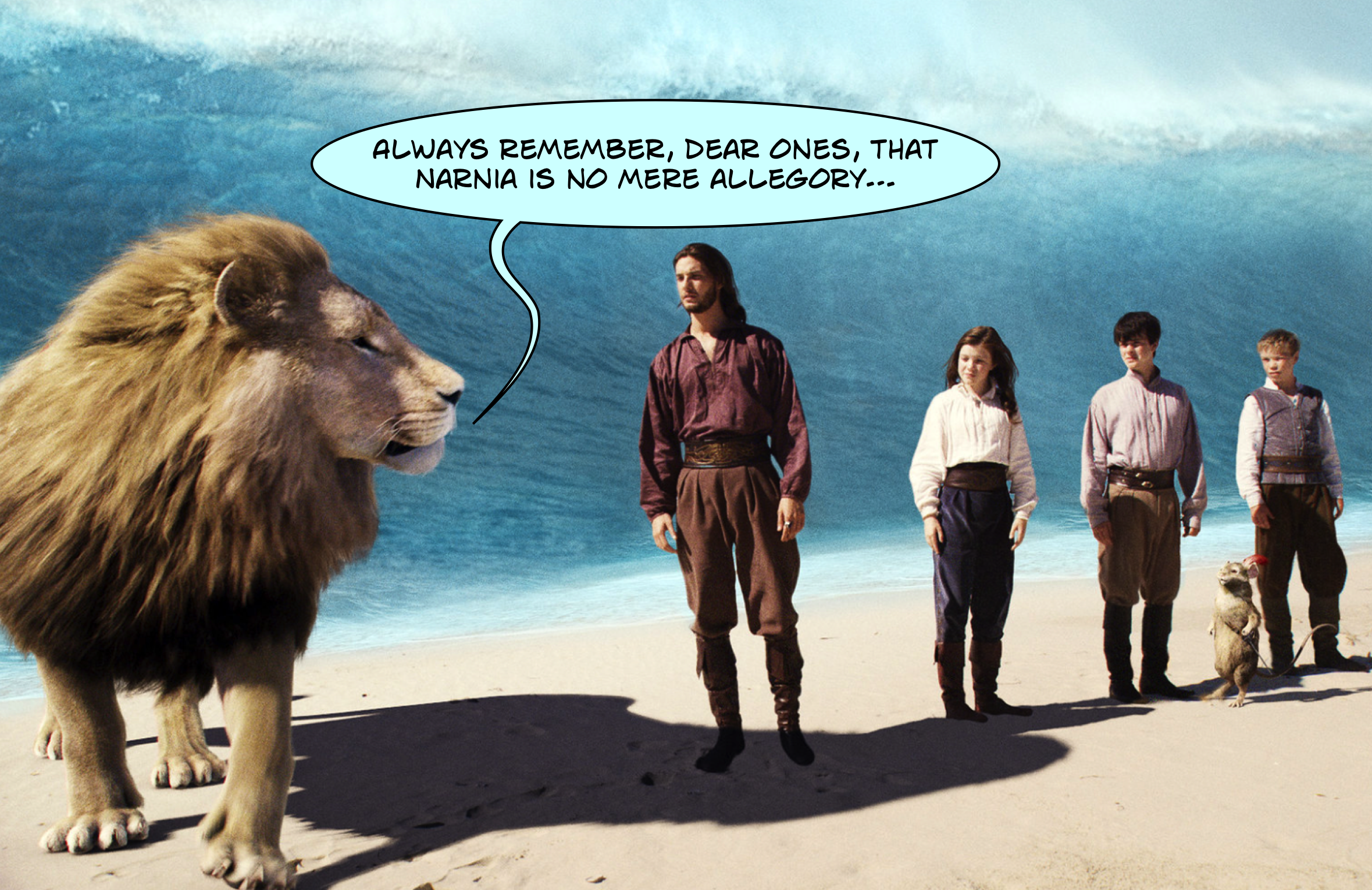
C.S. Lewis, Apologues & Allegories

It has been argued that C.S. Lewis wrote apologues, but I humbly disagree.

An “apologue,” you see, is defined as “a moral fable, especially one with animals as characters.” From that core definition, it makes sense to some that works such as The Chronicles of Narnia might be described as apologues.  

However, this term is usually applied to much simpler, more concise stories –  short moral fables (think Aesop) rather than an extended tales. “Apologue” is a vastly insufficient label for what J.R.R. Tolkien described as subcreation. Narnia is not a fable, it is a world.

Years ago I compared Aesop’s brief “The Kingdom of the Lion,” with C.S. Lewis’ brilliant vision of Aslan.

In “The Lion’s Command,” I identified a virtuous parallel between the brief regent in the fable and the well-developed protagonist of Narnia. In the Chronicles, Narnia’s hero is nothing other than the Alpha and Omega, reigning over its creation and preserving his kingdom to its ultimate culmination.

In “C.S. Lewis and the Art of the Apologue,” Samuel Joeckel argues that “The Screwtape Letters and The Great Divorce might be read as pure apologues, while Lewis’s other works of mythopoeia contain elements of the apologue.” This is an intriguing proposal, which has not gained much traction. Of course, Joeckel’s point that “elements” of apologue are present is certainly true, but that would be so when considering the work of numerous authors.

If not an Apologue, might Narnia be an Allegory?

An interesting article about parables contrasts parables and apologues in the following manner.

Another story style that is related to parables is the apologue. Apologues are short stories that are intended to convey a lesson, and they often use animals as characters. . . . Unlike parables, which generally have realistic scenarios, apologues allow an element of fantasy while maintaining a moral point.

The same article describes differences between parables and apologues as contrasted with allegories, such as George Orwell’s Animal Farm.

Parables are not the only type of story that present a moral lesson. Allegories are stories or poems where different elements are designed to convey abstract or spiritual meaning. . . . Allegories and parables are related in their use of symbolic language.

The difference is, in essence, one of complexity. While parables (and apologues) normally focus on a single lesson, allegories feature broader elements fleshing out a more elaborate lesson or message. 

Allegories are more metaphorical and often involve characters representing abstract ideas, and the symbolism can be deeply complex. However, parables are more direct, with a simple narrative that usually involves a human character facing a moral dilemma or the consequences of a bad decision (“Allegory Vs. Parable”). 

Allegory vs Apologue,” offers a similar distinction between these two literary exercises. 

Allegory and apologue are both forms of extended metaphor that use symbolic characters and events to convey a deeper meaning. However, there are some important distinctions between the two. . . .

Apologue, on the other hand, is a more general term that refers to any story or fable that teaches a moral lesson. Unlike allegory, apologue does not necessarily have a hidden meaning . . .

C.S. Lewis challenges the notion that allegories possess “hidden” themes. In his preface to The Pilgrim’s Regress, he argues that true allegories do not mask their message. 

People . . . suppose that allegory is a disguise, a way of saying obscurely what could have been said more clearly. But in fact all good allegory exists not to hide but to reveal; to make the inner world more palpable by giving it an (imagined) concrete embodiment.

In The Allegory of Love: A Study of Medieval Tradition, C.S. Lewis describes the unique goal of this literary device. 

The function of allegory is not to hide but to reveal, and it is properly used only for that which cannot be said, or so well said, in literal speech.

The inner life, and specially the life of love, religion, and spiritual adventure, has therefore always been the field of true allegory; for here there are intangibles which only allegory can fix and reticences which only allegory can overcome. 

In an essay about the author of The Faerie Queene, “Edmund Spenser, 1552–99,” Lewis lauds the path allegories pursue to illumine readers.

We shall understand it best (though this may seem paradoxical) by not trying too hard to understand it. Many things – such as loving, going to sleep, or behaving unaffectedly – are done worst when we try hardest to do them. Allegory is not a puzzle.

With C.S. Lewis’ genuine appreciation for good allegory, it is unsurprising that some readers are tempted to label The Chronicles of Narnia as such. After all, too brief and far too elaborate to be a collection of mere apologues, it seems logical. Yet, Lewis himself dispelled that conclusion. His opinion is expressed clearly in the following passage from a letter written in 1958.

If Aslan represented the immaterial Deity in the same way in which Giant Despair represents Despair [in The Pilgrim’s Progress], he would be an allegorical figure.

In reality however he is an invention giving an imaginary answer to the question, “What might Christ become like, if there really were a world like Narnia and He chose to be incarnate and die and rise again in that world as He actually has done in ours?” This is not allegory at all.

No, the Chronicles offer no mere allegory. Aslan and Narnia are something altogether more rare and precious . . . and uniquely inspiring.


Bonus:

For those inclined to see how the AI at ChatGPT might compose an analogue, consider the following examples. I offered three brief prompts and amazingly swift apologues. 

Certainly! Here’s an apologue in the style of ancient Roman moral tales – think Aesop with a Roman flavor (e.g., Phaedrus) – explaining why the porcupine is hard to get along with. This style uses simple characters, a brief narrative, and a moral at the end.

Apologue: The Porcupine and the Burrowers

Characters:
~ Porcupine (Hystrix)
~ Mole (Talpa)
~ Hedgehog (Erinaceus)
Moralitas at the end.

In the time when the earth still whispered secrets to beasts, a bitter winter approached. The animals who dwelt below ground gathered to find warmth together.

The Mole, who dug deep and dark tunnels, said, “Let us share one chamber, and none shall freeze.”

The Hedgehog, with bristles soft enough in the cold, agreed. “We are small and spined, but kindred in spirit.”

Then came the Porcupine, bristling with long, sharp quills. “I seek shelter,” he said. “Let me in.”

The others, though wary, welcomed him. “There is warmth in many bodies, if none poke too hard.”

But when the Porcupine curled to sleep, his quills pricked every side of the burrow. The Mole winced. The Hedgehog bled. They shifted, gave him space – but no space was enough.

“Friend Porcupine,” said the Mole, “can you not soften your stance?”

The Porcupine replied, “My quills are my nature. I mean no harm, yet I cannot change.”

So, one by one, the others left, seeking colder but safer places.

The Porcupine remained, alone in warmth – but with no friend near.

Moralitas:
He who cannot bend his nature to spare his neighbors must be content with solitude, for warmth of company is given only to those who wound not.

Having delivered the moral of the fable, the AI was so thoughtful as to ask: “Would you like a Latin version of the apologue as well?”

~ ~ ~ ~ ~ ~ ~

Certainly! Here is an apologue in the style of C.S. Lewis – reminiscent of his storytelling in The Screwtape LettersThe Chronicles of Narnia, and The Pilgrim’s Regress. Lewis often used allegory and fable to convey theological or philosophical arguments through richly imagined, morally charged tales.

Apologue: The Two Gardens

In an ancient land that bordered both silence and song, there lived two brothers: Eldarion and Ruckus.

Their father, the Keeper of Harmony, was a master gardener who tended to two great gardens, each grown from a different seed of music.

One garden was called Lyrion, and it bloomed with strange and delicate flowers. Trees sang there – not with words, but with symphonies. The air was always filled with the faint sound of strings, like something half-remembered from a dream. This was the realm of Classica, the music that had deep roots and slow unfolding blossoms.

The other garden, Thundra, was younger, wilder. Vines twisted with fire, and great drums beat like the hearts of giants. Flames leapt from the leaves when touched. This was the realm of Rocka, born of storm and impulse. It throbbed with noise and power.

One day, the father called his sons. “Each of you shall choose a garden to tend,” he said. “But take heed: a garden grows into the likeness of its gardener.”

Eldarion, quiet and curious, chose Lyrion. He studied the old scores carved into the bark of the elder trees. He listened for the faintest cadences hidden in the wind. His garden grew slowly, but with order and depth. Some who visited said they heard truth in its song – though they could not explain it.

Ruckus chose Thundra. He brought iron tools and thunderous machines. He shouted into the wind and danced among the fire-vines. His garden grew quickly, wildly, and it drew many visitors who loved its power. But the soil became hard, and the songs repeated themselves. At night, when the fire died, there was silence – and the silence frightened him.

Years passed.

One evening, Ruckus visited his brother’s garden. It was still and strange, yet somehow more alive. The music there did not grab the ear – it waited, like a cathedral waits for a footstep.

“I do not understand this,” said Ruckus.

“You’re not meant to at first,” Eldarion said gently. “But if you sit long enough, you may find it is not music you hear – but yourself.”

Moral:
Not all noise is music, and not all music is noise. That which is deep may not dazzle, but it endures.

~ ~ ~ ~ ~ ~ ~

Certainly! Here’s an apologue in the style of C.S. Lewis, with his characteristic blend of gentle allegory, rational argument, and spiritual insight. Think of something akin to The Great Divorce or The Pilgrim’s Regress – a story that carries philosophical weight through symbolic characters and a clear moral undercurrent.

Apologue: The Library of the Lantern

There was once a Traveller who came upon an ancient Library, tucked between the hills of two realms: Factland, where the roads were straight and numbered, and Fablemere, where the paths curled like ivy and sometimes moved when you weren’t looking.

The Traveller, weary from debate and burdened with questions, was greeted by an old librarian named Lucidus, who wore a cloak woven from both parchment and ink.

“You may read whatever you like here,” said Lucidus. “But I warn you: some shelves are straight, others crooked – and both are true.”

The Traveller began in the Hall of Records, where volumes bore names like The History of the WorldNatural LawsThe Mind Explained, and Economics in Twelve Systems. The books were hard, clear, and bright like winter ice. Every sentence pointed like an arrow, and the Traveller felt smarter with every page. “Here,” he thought, “is what I came for: answers.”

But after a time, the light grew harsh, and the words – though sharp – offered no rest. He felt he had learned much, and yet not grown.

So he wandered next into the Chamber of Tales. Here were strange books that spoke of dragons and dying stars, of heroes who were cowards and cowards who became saints. The logic bent like a rainbow, and the truth came sideways.

At first he scoffed. “These things never happened!”

Lucidus appeared beside him and said quietly, “No – but they always happen.”

So the Traveller read on. And he wept when the fox died, and laughed when the king made a fool of himself. He saw his pride in the villain and his longing in the wandering knight. He saw the world as it might be – and in doing so, saw more clearly what the world was.

Time passed. The Traveller read from both wings of the library, sometimes walking the marble floors of Factland, sometimes lying on the mossy rugs of Fablemere. One sharpened his mind; the other softened his heart. One taught him how things work; the other, why they matter.

At last, he approached Lucidus.

“Which was truer?” the Traveller asked. “The world I could measure, or the one I could feel?”

Lucidus smiled. “Ah. One is the lamp, the other the flame. But both are needed to see.”

Moral:
Fiction teaches the soul what nonfiction explains to the mind – and wisdom lives where both meet.

This proved to be a very interesting exercise, indeed.

Dogs & Rescues

When we add an un-homed dog to our family, who is the true “rescuer?” In the States, we call many of our agencies placing orphaned pets “rescue centers.” But I believe most of us who have welcomed such creatures into our homes feel less pride in doing what’s noble, than we do appreciation for what these loving animals bring into our lives.

Long ago, I learned that the best way to tell about a person’s true character and compassion is to observe how they treat animals.

 Nothing I’ve witnessed in the past decades has caused me to question that conviction.

Recently I saw a quote attributed to Abraham Lincoln which expresses the same sentiment. 

While the attribution of these words to America’s sixteenth president may be questioned, they are certainly consistent with his regard for dogs . . . and, as the quotation declared, cats as well.

Four of our most recent six dogs have been rescues. All but one has been a border collie.

The latest girl who joined our family, just last year, was promoted on a Border Collie Rescue page. She appeared to be a young mix with, of all things, a dalmatian.

When we traveled to meet her, we immediately suspected she lacked any border collie DNA, but we (and our older border collie) connected with her that day and she came home with us. A year later, we’re certain she’s just, as our vet assessed, a mutt – but that’s fine with us. The picture at the top of this page shows her resting on her adoptive mom’s lap. (Many of her black spots have spread since we first got her when she resembled the victims of Cruella de Vil.)

I’ve written in the past about how C.S. Lewis loved dogs. It’s no surprise, of course, that a good-natured man of faith like Lewis would love animals.

J.R.R. Tolkien also loved dogs. They are featured in a number of his books, and a canine named Rover featured as the protagonist of his 1925 children’s story, Roverandom.

A Caution

Pay attention to how people treat animals. It is a clue to their psyche and a window into their soul. 

While some people are indifferent to animals, which is normal, there are those who treat them with cold disregard or animosity. The message of “The Link Between Cruelty to Animals and Violence Toward Humans” confirms what we all recognize intuitively.

People who hurt animals don’t stop with animals. There is an established link between cruelty to animals and violence toward humans . . .

This link makes it critically important that cruelty toward animals be taken seriously by law enforcement, and by society at large. This is for the sake of the animals themselves, and for people who are also at risk. . . .

Ample research backs up the finding that there is a direct link between acts of cruelty to animals and violence toward humans. This includes child abuse, domestic violence, elder abuse and other violent behavior.

There are good people, and bad people. Fortunately, in the case of the treatment of pets, the former outnumber the latter. One day, when Earth is made new and restored to its initial goodness, all life will once again be in harmony. As we hear in Psalm 148 and Revelation 5,

Praise the Lord from the earth,
    you great sea creatures and all deeps,
fire and hail, snow and mist,
    stormy wind fulfilling his word!
Mountains and all hills,
    fruit trees and all cedars!
Beasts and all livestock,
    creeping things and flying birds!

And I heard every creature in heaven and on earth and under the earth and in the sea, and all that is in them, saying, “To him who sits on the throne and to the Lamb
be blessing and honor and glory and might forever and ever!”

Until that day, let us each act with compassion toward the creatures that enrich our lives, particularly those who trust us to protect their welfare.

A Closing Thought

Sometimes the word “rescue” applies literally. More than one lonely and clinically depressed person has stopped contemplating the ending of their life when a gentle support animal brought light to their dark world. 

Then there is the recent case of Buford, a ranch dog who found a two-year-old boy lost in a desert wilderness and remained with him overnight until he could lead him safely home.

As for who rescues whom, count me in the camp of those who believe the gift is mutual.

C.S. Lewis & Iran’s Nuclear Program

Connecting C.S. Lewis to the pursuit of nuclear weapons by Iran’s mullahs admittedly sounds like a protracted stretch. Yet the current conflict between Iran and Israel does have one astonishing element that does link the great Oxbridge professor with the conflict.

If you’re familiar with Lewis’ writings, you might logically assume the connection relates to his writing on nuclear weapons. After all, in 1948 he wrote an essay entitled “On Living in an Atomic Age.” The matter is even more acute since we moved from the era of relatively minuscule A-bombs into a time when humanity’s H-bombs, employing fusion rather than mere fission, are thousands of times more deadly.

Lewis discusses some interesting philosophical (and theological) questions in his article. He begins by placing the question within the context of our inherent physical mortality. He writes, “do not let us begin by exaggerating the novelty of our situation.”

Believe me, dear sir or madam, you and all whom you love were already sentenced to death before the atomic bomb was invented: and quite a high percentage of us were going to die in unpleasant ways. . . .

It is perfectly ridiculous to go about whimpering and drawing long faces because the scientists have added one more chance of painful and premature death to a world which already bristled with such chances and in which death itself was not a chance at all, but a certainty.

Don’t let the stoic beginning of his thoughts deter you from reading the essay itself, because C.S. Lewis does not leave us despairing. On the contrary, he offers hope and practical advice for maximizing the meaning of our lives. 

Although C.S. Lewis lived into the beginning of the MAD (Mutually Assured Destruction) era, he chose not to inject himself into political subjects, lest it detract from his advocacy for the simple Gospel.

Nevertheless, the brief note “C.S. Lewis and Nuclear Weapons,”penned forty years ago by a “peace activist” pastor, conjectures on what the author’s opinion may have been. It is thought-provoking, especially in mentioning a possible link between nuclear destruction and the “deplorable word” referred to in The Chronicles of Narnia. 

In The Magician’s Nephew, Lewis’ child protagonists encounter a witch queen on the devasted world of Charn. Queen Jadis, when denied the power to rule over the planet, chose to invoke a curse that destroyed every living thing other than herself. “Then I spoke the Deplorable Word. A moment later I was the only living thing beneath the sun.”

While Lewis does not elaborate on the nature of the destructive nature of this most deplorable of powers, Aslan does offer the following caution near the end of the novel.

It is not certain that some wicked one of your race will not find out a secret as evil as the Deplorable Word and use it to destroy all living things. And soon, very soon, before you are an old man and an old woman, great nations in your world will be ruled by tyrants who care no more for joy and justice and mercy than the Empress Jadis. Let your world beware.

So, what does this have to do with Iran & Israel?

Frankly, I find the connection to be especially odd. As you may know, military entities have a propensity to apply nicknames or euphemisms to various things, such as their weapon systems.

This is true for military campaigns or discrete operations. For example, the United States has employed labels like Operation Linebacker (in Vietnam) and Operation Crossroads (for 1946 nuclear weapons tests).

Sadly, Operation Enduring Freedom (in which I personally took part) did not live up to its name. Under the Taliban, Afghanistan has degenerated once again into a primitive morass which abuses its women and children.

A number of distinct operations have taken place during the current war between Iran (and its proxies) and Israel. Operation Rising Lion is Israel’s nomenclature for the various elements of their direct attack on Iran. One independent Jewish news site points out how Benjamin Netanyahu foreshadowed the campaign in May when he said, “the verse in the Tanach that most fits with an existential war? That’s our war – a war of existence . . . A people that rises like a lion, leaps up like the king of beasts.”

Every Israeli military operation has a name, and the Iran attack is now called Am K’lavi, or “a people like a lion” – the exact wording Netanyahu used six weeks ago. English-language publications now refer to the operation as “Rising Lion.”

While this is quite interesting, it is the name assigned to one of the subsidiary operations encompassed by Rising Lion which possesses a genuinely shocking designation.

One initial focus of Israel’s campaign was to eliminate the leading scientists leading Iran’s efforts to pursue a nuclear arsenal. They named this particular facet Operation Narnia.

When I first saw that, I immediately thought I must have misread the title. But no, they actually chose Narnia as the name for the assassinations. At that point I thought they might be referring to some other Narnia. Alas, it doesn’t appear they were alluding to the medieval Italian city whose name inspired C.S. Lewis.

The reason for choosing Narnia as the operation’s title was apparently an intentional reference to the amazing world where so many of us met the awesome and compassionate Aslan. In “‘Operation Narnia:’ How Israeli Intelligence Targeted Key Iranian Nuclear Scientists,” we read:

Israel kicked off Operation “Rising Lion” last Friday, launching a sweeping military assault that dealt a major blow to Iran’s leadership and nuclear infrastructure. . . .

In a surprising detail, the Jerusalem Post reports, the component of the mission aimed at Iran’s nuclear scientists was codenamed “Narnia” by Israeli forces – a reference to the fantasy realm, underscoring how bold and unlikely such a strike might have seemed before it was executed.

Another intriguing rationale for entitling the Operation after C.S. Lewis’ creation is even more provocative. The Substack blog Wardrobe Door proposes a supernatural consideration for the choice of “Narnia.”

The [Jerusalem] Post says the name “reflects the operation’s improbable nature, like something out of a fantasy tale rather than a real-world event.” One could also imagine it involved deep espionage tactics that may have had soldiers sneaking in areas as if through a magical wardrobe.

Whatever tactics may have been used in Operation Narnia, it is intriguing to consider how the power of C.S. Lewis’ vision has spread across national boundaries. May all people heed Lewis’ witness to humanity’s Savior, for surely,

God cannot give us a happiness and peace apart from Himself, because it is not there. There is no such thing (Mere Christianity).

Explosive Clergy

What’s with pastors? As one, I probably know more than the typical person does about them – and all too often, they disappoint.

That’s a bit harsh. Most pastors are pretty selfless. That’s fairly evident in their salaries (if they even receive one). And, trust me, trying to be a faithful leader and peacemaker in any group comprised of human beings, is no easy task.

My sainted grandmother, born at the end of the nineteenth century, was the daughter of Norwegian immigrants. She was an authentic follower of Jesus, and when she was young the sermons at Fordefjord Lutheran Church* were preached in the immigrants’ tongue. We occasionally talked about how scandalized she was when one of the ministers serving the congregation pronounced “helvete vil være fullt av pastorer” (hell will be full of pastors).

Well, not “full” perhaps, but in principle he was right. And, sadly, his warning is not at all shocking to us today. We read regularly about clergy who are arrested for violating the trust of the most vulnerable. Likewise, we hear about the outrageous wealth of some ministers (including, it seems, nearly every televangelist). Even pastors in small enclaves with little access to the temptation offered by easily accessible cash, can too often succumb to the sirens of pride and power, twisting their pastoral authority into a weapon to abuse others. (It’s the opposite of the messianic promise found in Isaiah 2:4.)

It’s almost enough to drive a person from the Lord’s house. But that is not the answer, of course. Finding a truly Christian church, with a pastor earnestly (albeit imperfectly) pursuing his holy vocation, is the best course.

The Scriptures say many things about ministry, and Jesus himself provides the perfect example of willingness to lay down one’s life for the sheep.

The letter of James cautions those considering a life of “ministry” that they will face a stricter judgment than the laity (which comes from λαός which refers to the people at large).

Personally, I especially appreciate being reminded of God’s warning to religious leaders from the lips of Jeremiah. (I also appreciate the ironic tone of God’s judgment.)

“Woe to the shepherds who destroy and scatter the sheep of my pasture!” declares the Lord. Therefore thus says the Lord, the God of Israel, concerning the shepherds who care for my people: “You have scattered my flock and have driven them away, and you have not attended to them. Behold, I will attend to you for your evil deeds,” declares the Lord.

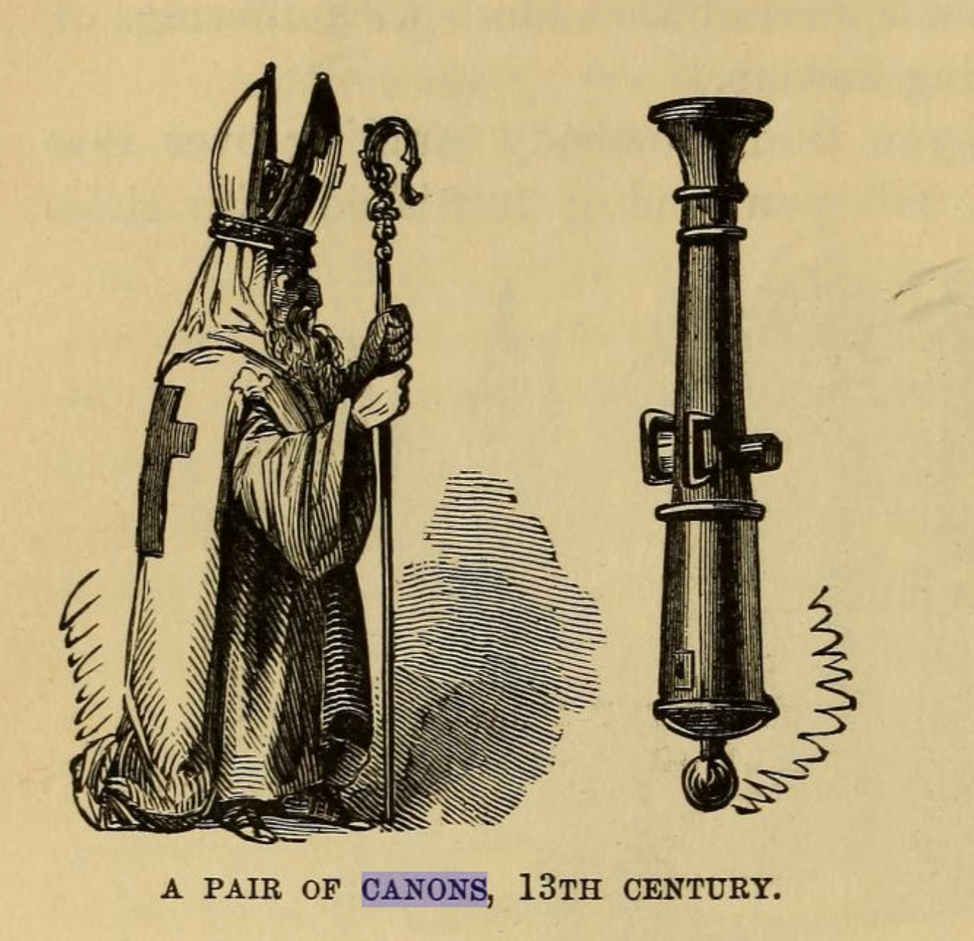
The picture at the top of this column comes from one of Mark Twain’s travelogues. It illustrates the vindictive priest Fulbert, in Twain’s retelling of the story of Abelard and Héloïse, 12th century lovers. More about that momentarily. Abelard was a prominent philosopher who tangled for several years with Saint Bernard of Clairvaux, a significant dispute ably discussed here.

Abelard and the Inklings

Abelard (c. 1079-1142) was a philosopher who, as was common during the Middle Ages, was also a theologian. Among his contributions to religion was revising the Roman Catholic doctrine of limbus infantium (Limbo for unbaptized infants).

In popular culture, Abelard’s love affair with his eventual “wife” is more prominent than his religious pursuits. Although Abelard was a famous figure during the medieval period, he did not feature significantly in C.S. Lewis’ thought. He did, however, exert a prominent influence on Charles Williams’ Place of the Lion, a volume Lewis praised.

In “Friendship in The Place of the Lion,” Dan Hamilton provides a very accessible synopsis of Williams’ book. He describes the experience of a primary character, who is writing her dissertation on “Pythagorean Influences on Abelard.” As she struggles with the appearance of supernatural phenomena, “she encounters the specter of Abelard, a major subject of her studies. But he is dead, and powerless to give her any aid, not even a meaningful word.” The “archetypes” in the story, by contrast, possess genuine power. It is a very unique book.

Returning to Mark Twain’s retelling of the popular medieval tale, we leave the realm of platonic philosophy, and enter the world of sordid human activities. Twain, you see, was not sympathetic to Abelard’s wooing of a young student and his eventual repentance. In his account, Twain desired “to show the public that they have been wasting a good deal of marketable sentiment very unnecessarily.” If you are curious as to his perspective on the events, continue reading.

Twain’s Take on Abelard and Héloïse
(not brief, but well worth reading)

In his own words, Twain’s “faithful” version of their story – but first, he begins with a description of their shared gravesite.

But among the thousands and thousands of tombs in Père la Chaise [cemetery] there is one that no man, no woman, no youth of either sex, ever passes by without stopping to examine. Every visitor has a sort of indistinct idea of the history of its dead, and comprehends that homage is due there, but not one in twenty thousand clearly remembers the story of that tomb and its romantic occupants. This is the grave of Abelard and Heloise – a grave which has been more revered, more widely known, more written and sung about and wept over, for seven hundred years, than any other in Christendom, save only that of the Saviour.

All visitors linger pensively about it; all young people capture and carry away keepsakes and mementoes of it; all Parisian youths and maidens who are disappointed in love come there to bail out when they are full of tears; yea, many stricken lovers make pilgrimages to this shrine from distant provinces to weep and wail and “grit” their teeth over their heavy sorrows, and to purchase the sympathies of the chastened spirits of that tomb with offerings of immortelles and budding flowers.

Go when you will, you find somebody snuffling over that tomb. Go when you will, you find it furnished with those bouquets and immortelles. Go when you will, you find a gravel-train from Marseilles arriving to supply the deficiencies caused by memento-cabbaging vandals whose affections have miscarried.

Yet who really knows the story of Abelard and Heloise? Precious few people. The names are perfectly familiar to every body, and that is about all. With infinite pains I have acquired a knowledge of that history, and I propose to narrate it here, [italics added] partly for the honest information of the public and partly to show that public that they have been wasting a good deal of marketable sentiment very unnecessarily.

Heloise was born seven hundred and sixty-six years ago. She may have had parents. There is no telling. She lived with her uncle Fulbert, a canon of the cathedral of Paris. I do not know what a canon of a cathedral is, but that is what he was. He was nothing more than a sort of a mountain howitzer, likely, because they had no heavy artillery in those days. Suffice it, then, that Heloise lived with her uncle the howitzer, and was happy.

She spent the most of her childhood in the convent of Argenteuil – never heard of Argenteuil before, but suppose there was really such a place. She then returned to her uncle, the old gun, or son of a gun, as the case may be, and he taught her to write and speak Latin, which was the language of literature and polite society at that period.

Just at this time, Pierre Abelard, who had already made himself widely famous as a rhetorician, came to found a school of rhetoric in Paris. The originality of his principles, his eloquence, and his great physical strength and beauty created a profound sensation. He saw Heloise, and was captivated by her blooming youth, her beauty and her charming disposition. He wrote to her; she answered. He wrote again, she answered again. He was now in love. He longed to know her – to speak to her face to face.

His school was near Fulbert’s house. He asked Fulbert to allow him to call. The good old swivel saw here a rare opportunity: his niece, whom he so much loved, would absorb knowledge from this man, and it would not cost him a cent. Such was Fulbert – penurious . . . He asked Abelard to teach her.

Abelard was glad enough of the opportunity. He came often and staid long. A letter of his shows in its very first sentence that he came under that friendly roof like a cold-hearted villain as he was, with the deliberate intention of debauching a confiding, innocent girl. This is the letter :

“I can not cease to be astonished at the simplicity of Fulbert; I was as much surprised as if he had placed a lamb in the power of a hungry wolf. Heloise and I, under pretext of study, gave ourselves up wholly to love, and the solitude that love seeks our studies procured for us. Books were open before us, but we spoke oftener of love than philosophy, and kisses came more readily from our lips than words.”

And so, exulting over an honorable confidence which to his degraded instinct was a ludicrous “simplicity,” this unmanly Abelard seduced the niece of the man whose guest he was. Paris found it out. Fulbert was told of it – told often – but refused to believe it. He could not comprehend how a man could be so depraved as to use the sacred protection and security of hospitality as a means for the commission of such a crime as that. But when he heard the rowdies in the streets singing the love-songs of Abelard to Heloise, the case was too plain – love-songs come not properly within the teachings of rhetoric and philosophy.

He drove Abelard from his house. Abelard returned secretly and carried Heloise away to Palais, in Brittany, his native country. Here, shortly afterward, she bore a son, who, from his rare beauty, was surnamed Astrolabe. . . . The girl’s flight enraged Fulbert, and he longed for vengeance, but feared to strike lest retaliation visit Heloise – for he still loved her tenderly. At length Abelard offered to marry Heloise – but on a shameful condition: that the marriage should be kept secret from the world, to the end that (while her good name remained a wreck, as before) his priestly reputation might be kept untarnished. It was like that miscreant.

Fulbert saw his opportunity and consented. He would see the parties married, and then violate the confidence of the man who had taught him that trick; he would divulge the secret and so remove somewhat of the obloquy that attached to his niece’s fame. But the niece suspected his scheme. She refused the marriage, at first; she said Fulbert would betray the secret to save her, and besides, she did not wish to drag down a lover who was so gifted, so honored by the world, and who had such a splendid career before him. It was noble, self-sacrificing love, and characteristic of the pure-souled Heloise, but it was not good sense.

But she was overruled, and the private marriage took place. Now for Fulbert! The heart so wounded should be healed at last; the proud spirit so tortured should find rest again; the humbled head should be lifted up once more. He proclaimed the marriage in the high places of the city, and rejoiced that dishonor had departed from his house. But lo! Abelard denied the marriage! Heloise denied it! The people, knowing the former circumstances, might have believed Fulbert, had only Abelard denied it, but when the person chiefly interested – the girl herself – denied it, they laughed despairing Fulbert to scorn.

The poor canon of the cathedral of Paris was spiked again. The last hope of repairing the wrong that had been done his house was gone. What next? Human nature suggested revenge. He compassed it. The historian says: “Ruffians, hired by Fulbert, fell upon Abelard by night, and inflicted upon him a terrible and nameless mutilation.”

I am seeking the last resting-place of those “ruffians.” When I find it I shall shed some tears on it, and stack up some bouquets and immortelles, and cart away from it some gravel whereby to remember that howsoever blotted by crime their lives may have been, these ruffians did one just deed, at any rate, albeit it was not warranted by the strict letter of the law.

Heloise entered a convent and gave good-bye to the world and its pleasures for all time. For twelve years she never heard of Abelard – never even heard his name mentioned. She had become prioress of Argenteuil, and led a life of complete seclusion. She happened one day to see a letter written by him, in which he narrated his own history. She cried over it, and wrote him. He answered, addressing her as his “sister in Christ.”

They continued to correspond, she in the un-weighed language of unwavering affection, he in the chilly phraseology of the polished rhetorician. She poured out her heart in passionate, disjointed sentences; he replied with finished essays, divided deliberately into heads and sub-heads, premises and argument. She showered upon him the tenderest epithets that love could devise, he addressed her from the North Pole of his frozen heart as the “Spouse of Christ!” The abandoned villain!

On account of her too easy government of her nuns, some disreputable irregularities were discovered among them, and the Abbot of St. Denis broke up her establishment. Abelard was the official head of the monastery of St. Grildas de Ruys, at that time, and when he heard of her homeless condition a sentiment of pity was aroused in his breast (it is a wonder the unfamiliar emotion did not blow his head off), and he placed her and her troop in the little oratory of the Paraclete, a religious establishment which he had founded.

She had many privations and sufferings to undergo at first, but her worth and her gentle disposition won influential friends for her, and she built up a wealthy and flourishing nunnery. She became a great favorite with the heads of the church, and also the people, though she seldom appeared in public. She rapidly advanced in esteem, in good report and in usefulness, and Abelard as rapidly lost ground. The Pope so honored her that he made her the head of her order.

Abelard, a man of splendid talents, and ranking as the first debater of his time, became timid, irresolute, and distrustful of his powers. He only needed a great misfortune to topple him from the high position he held in the world of intellectual excellence, and it came. Urged by kings and princes to meet the subtle St. Bernard in debate and crush him, he stood up in the presence of a royal and illustrious assemblage, and when his antagonist had finished he looked about him, and stammered a commencement; but his courage failed him, the cunning of his tongue was gone: with his speech unspoken, he trembled and gat down, a disgraced and vanquished champion.

He died a nobody, and was buried at Cluny, A.D., 1144. They removed his body to the Paraclete afterward, and when Heloise died, twenty years later, they buried her with him, in accordance with her last wish. He died at the ripe age of 64, and she at 63. After the bodies had remained entombed three hundred years, they were removed once more. They were removed again in 1800, and finally, seventeen years afterward, they were taken up and transferred to Pere la Chaise, where they will remain in peace and quiet until it comes time for them to get up and move again.

History is silent concerning the last acts of the mountain howitzer. Let the world say what it will about him, I, at least, shall always respect the memory and sorrow for the abused trust, and the broken heart, and the troubled spirit of the old smooth-bore. Rest and repose be his!

Such is the story of Abelard and Heloise. (Innocents Abroad).


* Later Fordefjord was unimaginatively renamed “First Lutheran Church.”

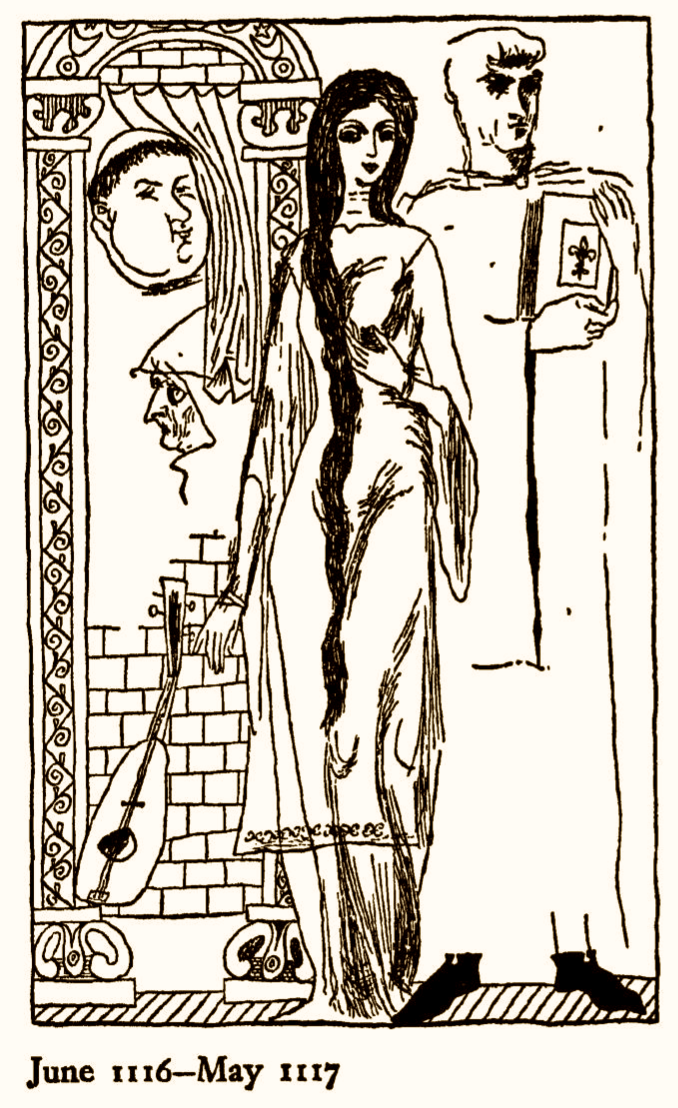
A novel entitled Peter Abelard was published in 1933 by Helen Waddell. It is available at Internet Archive for those who prefer their history via the medium of historical fiction. The illustration below, apparently imitating a fading fresco, comes from that volume.

Anxiety & Nighttime

Everyone experiences some anxiety, but it is only considered a “disorder” when it negatively affects one’s quality of life. Sadly, that level has been reached by nearly twenty percent of Americans.

An estimated 19.1% of U.S. adults had an anxiety disorder in the past year. Past year prevalence of any anxiety disorder was higher for females (23.4%) than for males (14.3%). An estimated 31.1% of U.S. adults experience any anxiety disorder at some time in their lives (National Institute of Mental Health).

As one specialist puts it, “there’s a very strong, well-documented bidirectional link between sleep and mental health issues like anxiety.” And it can become a vicious cycle: “If you have poor sleep, you’re at greater risk of a mental health issue. And if you have a mental health condition like anxiety, you’re more likely to develop a sleep disorder.”

Those “disorder” figures are only for anxiety passing a problematic threshold. Feeling some anxiety is a normal part of life, even for Christians. (Fortunately, however, we have an Intercessor who alleviates anxiety in our fallen lives.)

Do not be anxious about anything, but in everything by prayer and supplication with thanksgiving let your requests be made known to God. And the peace of God, which surpasses all understanding, will guard your hearts and your minds in Christ Jesus (Philippians 4:6-7).

The universality of experiencing anxiety is evidenced by the etymology of the word itself. The Latin anxius simply means troubled or worried (i.e. anxious). 

In his classic Letters to Malcolm: Chiefly on Prayer, C.S. Lewis addresses the negativity associated with being anxious, that actually worsens the problem.

Some people feel guilty about their anxieties and regard them as a defect of faith. I don’t agree at all. They are afflictions, not sins. Like all afflictions, they are, if we can so take them, our share in the Passion of Christ.

So, if most of us admit to experiencing some worry, the question posed by a recent article in TIME is whether the anxiety peaks at night. While not universal, “research has long suggested that, for many people, anxiety symptoms spike and mental health otherwise suffers at night.” While the piece cited several reasons, it left out two causes I consider self-evident.

The article points to studies about how substance abuse and suicidal behavior rise “after midnight,” and how “the racing thoughts that plague many anxiety sufferers are at their worst in the evening.” While I didn’t read the linked research, these statements are simply descriptive of the problem.

As for identified causes, the studies point to our diminished ability to “regulate emotions” as we tire. The issue of isolation is noted as a second factor, since “the rest of the world is asleep.” Further, the lack of daytime distractions may set the stage for “runaway anxiety” as we ponder the “what ifs” of the future. Another logical finding is that anxiety builds as we sleep poorly because we are worrying, which makes us prone to becoming even more anxious.

So What are the Uncited Factors?

First, it seems to me that the darkness of night itself is a major consideration. Since primordial times, night was foreboding. Sharpened wooden or stone-tipped weapons offered little enough defense when we could see predators (beast or human). Our ability to make fires and light candles ignited trifling circles of light that barely penetrated the shadows.

The uncertainty about what lurks in those shadows remains with us today. Just consider how quickly chaos can arise when there are power outages and the “protection” offered by light instantly evaporates.

Related to this is the simple fact that bad things (like crimes), increase during darkness. While many unlawful acts certainly occur during daylight hours, many of the most violent and heinous crimes, such as rape, occur after the sun sets. You can compare many variables at this website

It is simply common sense to recognize we are more vulnerable to violent attack when darkness masks attackers’ identities. The Book of Job vividly describes this lawless predilection.

There are those who rebel against the light,
    are not acquainted with its ways,
    and do not stay in its paths.
The murderer rises before it is light,
    that he may kill the poor and needy,
    in the night he is like a thief.
The eye of the adulterer also waits for the twilight,
    saying, ‘No eye will see me;’
    he veils his face.
In the dark they dig through houses;
    by day they shut themselves up;
    they do not know the light.
For deep darkness is morning to all of them;
for they are friends with the terrors of deep darkness (Job 24:13-17).

While the increased criminal behavior during darkness may have been omitted due to the tacit acknowledgment that it is a factor, my second observation was quite possibly overlooked due to ignorance or prejudice.

The Spiritual Consideration

I am convinced there is a spiritual component to our wariness related to darkness. Even those secularists dismissive of this reality would likely recognize this as a common perception. After all, it is no accident that stories (ancient and modern) depict wicked gatherings and malevolent supernatural events as taking place primarily at night.

The Scriptures discuss this Light/Dark dichotomy extensively. One of the clearest examples comes in the explanation for why sinful people choose to reject the coming of Christ.

In the beginning was the Word, and the Word was with God, and the Word was God. . . . In him was life, and the life was the light of men. The light shines in the darkness, and the darkness has not overcome it. . . .

[Jesus said] “For God so loved the world, that he gave his only Son, that whoever believes in him should not perish but have eternal life. For God did not send his Son into the world to condemn the world, but in order that the world might be saved through him. Whoever believes in him is not condemned . . . the light has come into the world, and people loved the darkness rather than the light because their works were evil.

For everyone who does wicked things hates the light and does not come to the light, lest his works should be exposed. But whoever does what is true comes to the light, so that it may be clearly seen that his works have been carried out in God” (John 1–3, selected verses).

Because darkness helps mask unsavory behavior, author Dave Jenkins advises people to be vigilant regarding their own temptations. He shares his personal story attesting to his contention that “night time for many men and women is danger time.”

This certainly is not God’s desire for any of us. As “The Godliness of a Good Night’s Sleep” concludes, “sleep, it seems, is no fallen necessity, nor merely a fleshly temptation, but a divine gift.”

In The Screwtape Letters, C.S. Lewis’ brilliant exploration of diabolic strategies, the senior demon advises his protégé, how to rob humanity of this blessing.

There is nothing like suspense and anxiety for barricading a human’s mind against the Enemy. He wants men to be concerned with what they do; our business is to keep them thinking about what will happen to them.

But fortunately, humanity’s first Enemy does not have the final say in the matter.

Even During the Darkest Night

We need never be alone nor despair in the night. In fact, even the trials posed by anxiety can become a pathway to a more intimate reliance and relationship with God.

Perhaps most famously, this concept has been associated in Christian circles with “Dark Night of the Soul,” a poem written by Saint John of the Cross in the sixteenth century. In an upcoming post, we will consider John’s life and the controversial actions which followed his death.

C.S. Lewis & Medicine

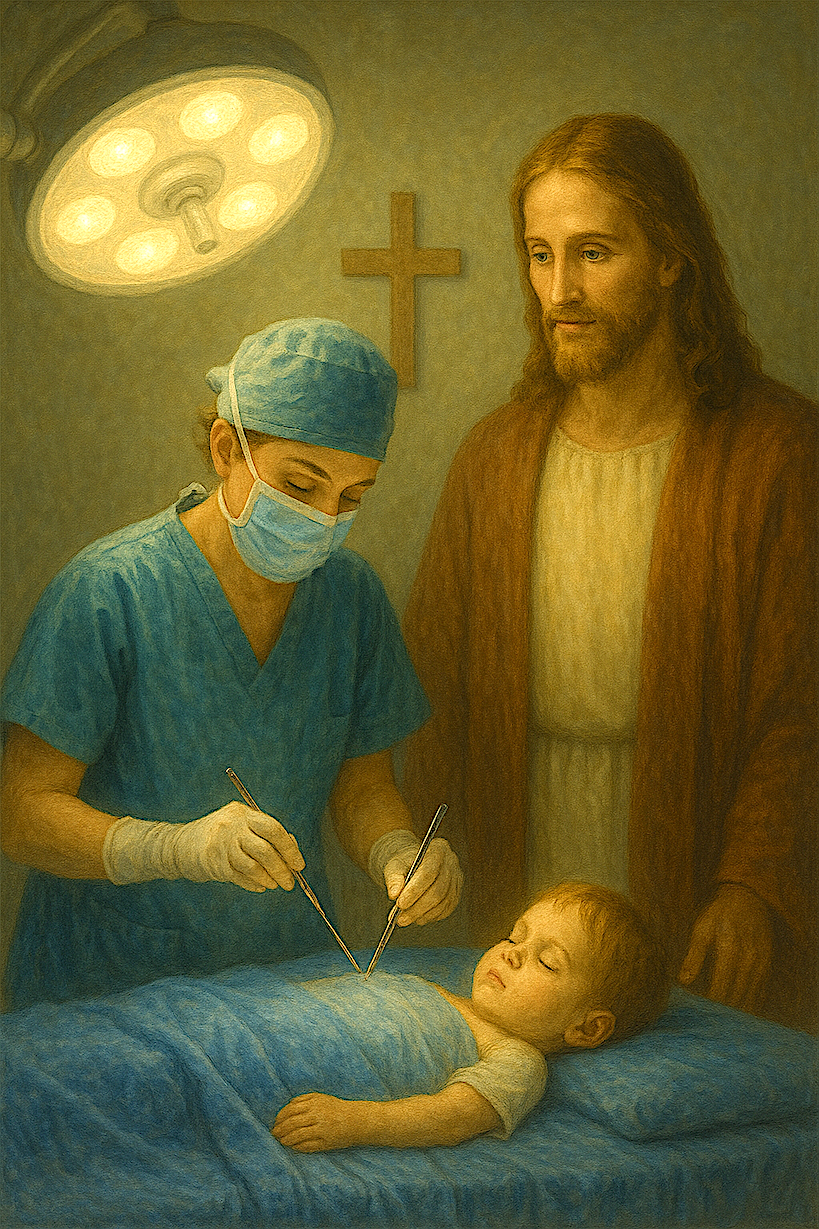
[I originally penned this post in 2020, but delayed its publication due to failing in my attempt to secure permission to receive this perfect illustration. Five years later, AI allowed me to create the image shown above. Since the message remains pertinent, I’m offering my thoughts on this subject today.]

Medicines are precious. Right now we are seeing the release of the first antiviral drugs devised to protect us from the covid plague. The trials have been positive, and now the caregivers on the frontlines are receiving these protective injections.

Unfortunately, some so-called medicines are not effective. They can even be harmful. That’s the case with “patent medicines” hawked by shysters lying about their results. Originally the term was positive. According to one museum, “patent medicines originally referred to medications whose ingredients had been granted government protection for exclusivity.”

Sadly, though, “the recipes of most 19th century patent medicines were not officially patented. Most producers (often small family operations) used ingredients quite similar to their competitors—vegetable extracts laced with ample doses of alcohol.

In a previous post, I shared Lewis’ view of God’s role in healing.

In his essay entitled “Miracles,” C.S. Lewis described during World War II the Christian viewpoint that God is the author of healing. After discussing the natural order of creation, he argues that God is at work in restoring the health of the those who are ailing.

In 1962, Lewis commiserated with a correspondent complaining about the number of pills she needed to take. He acknowledges the problem, and then points to a very positive corollary.

Yes, and one gets bored with the medicines too–besides always wondering ‘Did I remember to take them after breakfast?’ and then wondering whether the risk of missing a dose or the risk of an over dose is the worst!

Yes, one gets sick of pills. But thank God we don’t live in the age of horrible medicines such as our grandparents had to swallow.

In A Grief Observed, Lewis used an illustration of physical pain to explore the emotional pain caused by his sorrow at his wife’s passing.

I once read the sentence “I lay awake all night with a toothache, thinking about the toothache and about lying awake.” That’s true to life. Part of every misery is, so to speak, the misery’s shadow or reflection: the fact that you don’t merely suffer but have to keep on thinking about the fact that you suffer. I not only live each endless day in grief, but live each day thinking about living each day in grief.

In some ways, psychological suffering is particularly painful. The mentally ill have historically been ostracized. For all of the neurological discoveries that have been made in recent years, the human brain remains a mystery.

Fortunately, medical science has experienced some success formulating medicines that are helpful in treating mental disorders. One problem, however, is that (like nearly all meds) psychological formulas occasionally produce extreme side effects.

C.S. Lewis’ primary experience of psychological suffering came through grief. Tweaking Optimism, a great blog, has gathered a number of Lewis’ thoughts on mental anguish. One passage he cites from The Problem of Pain aptly contrasts physical and mental suffering.

Mental pain is less dramatic than physical pain, but it is more common and frequently more difficult to bear. The common attempt to conceal mental pain increases the burden: it is easier to say “My tooth is aching” than to say “My heart is broken.”

In the same book, Lewis lifts up the truth about suffering. In cases where no cure can bring relief, he beautifully describes various ways to survive journeying through the valley.

When pain is to be born, a little courage helps more than much knowledge, a little human sympathy more than much courage, and the least tincture of the love of God more than all.

C.S. Lewis’ Prescription for Christians Today

We live in an uncertain and turbulent time. Only God knows how long this world will last, but he has promised to deliver from death and hell those who call on his name. Thus, Jesus’ followers need not live in dread or despair.

We live with hope, and look forward with enthusiasm to our Lord’s return. It is to that glorious day, the Parousia, that Lewis refers in his essay “The World’s Last Night.”

The doctrine of the Second Coming, then, is not to be rejected because it conflicts with our favorite modern mythology. It is, for that very reason, to be the more valued and made more frequently the subject of meditation. It is the medicine our condition especially needs.

An Entertaining Tolkien “Game”

The inspiration for this revisitation of Lewis’ thoughts about medicine came from a fun website I recently encountered. Some creative soul noticed the similarity between two dissimilar matters—antidepressant medications and residents of Middle Earth.

The game offers 24 words, and you are challenged to identify the group into which it falls. Is it the name of a pharmaceutical, or is it one of the characters created by J.R.R. Tolkien? One name is a giveaway, but you may find many of the others rather difficult to discern.

Kudos to anyone who gets over twenty correct. (I almost did . . . well, if sixteen is close.) Have fun, and learn something, at the very same time!

Antidepressants or Tolkien Character?

Do Not Read the Bible

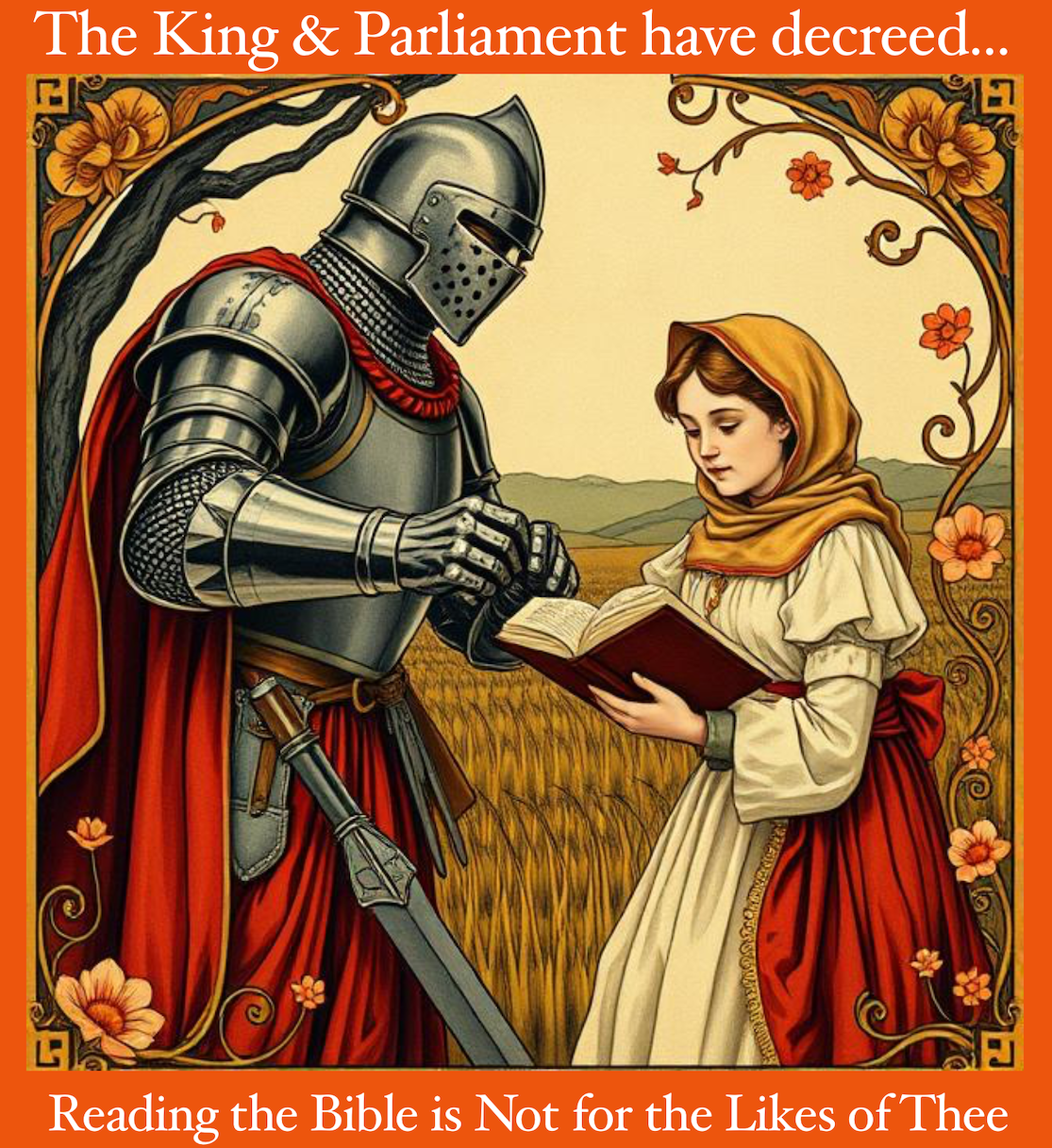
How would you respond if the government prohibited you from reading the Holy Scriptures? That was the situation in Great Britain when the Parliament passed the ironically named “Act for the Advancement of True Religion.”

Nearly five centuries ago, on May 12, 1543, Britain’s enlightened politicians and bishops determined that people of the “lower sort” needed to be protected from reading and interpreting the Bible themselves. 

Just sixty-one years later, King James VI/I would commission the translation of the Authorized Version, making God’s Word more accessible to all who could read English. William Tyndale (c. 1494 – 1536) had actually translated a fair portion of the Scriptures a decade prior to Parliament’s restrictive law. For this, and similar “Protestant” sins, Tyndale was strangled and burned at the stake in Belgium.

Even the so-called Great Bible had been authorized by Henry VIII in 1539. The approval decreed “one book of the bible of the largest volume in English, and the same set up in some convenient place within the said church that ye have care of, whereas your parishioners may most commodiously resort to the same and read it [emphasis mine].”

Nevertheless, not all of the powers that be apparently agreed with making the text of the Bible accessible to the common folk. We will consider this category of “inadequates” momentarily.

First let’s consider the distaste expressed by some for any modern translation of the Scriptures. (If you’ve ever attended a Bible study group you have probably encountered at least one person who insists on using the true KJV, despite the archaic language.

C.S. Lewis addressed this reticence for clear translations in an essay entitled “Christian Apologetics.” It was originally presented to Anglican priests and youth leaders in 1945.

“Do we not already possess,” [some will say] “in the Authorised Version the most beautiful rendering which any language can boast?” Some people whom I have met go even further and feel that a modern translation is not only unnecessary but even offensive.

They cannot bear to see the time-honoured words altered; it seems to them irreverent. There are several answers to such people. In the first place the kind of objection which they feel to a new translation is very like the objection which was once felt to any English translation at all.

Dozens of sincerely pious people in the sixteenth century shuddered at the idea of turning the time-honoured Latin of the Vulgate into our common and (as they thought) ‘barbarous’ English. A sacred truth seemed to them to have lost its sanctity when it was stripped of the polysyllabic Latin, long heard at Mass and at Hours, and put into . . . language steeped in all the commonplace associations of the nursery, the inn, the stable, and the street.

The Biblically Unworthy

So, who were these “lower sort” of individuals deemed unsuited for reading the Scriptures already translated into their native tongue? Well, they included “women, artificers, apprentices, journeymen, serving-men of the rank of yeoman and under, husbandmen and laborers.” Women of the gentry class were allowed an exception, being able to read the Scriptures, but only in private.

Fortunately, the law was short-lived. Henry’s son, Edward VI/I would have it repealed in the Treason Act of 1547. (Of course, this goodwill did not prevent Edward from condemning the translations of the aforementioned martyr, William Tyndale.)

Who Should Read the Bible?

The short answer is “everyone.” Yet the fact exists that some individuals are susceptible to confusion – or even to intentional twisting of the clear meaning of God’s Word. So, while the Scriptures should be accessible to all, it is wise to guide children and the easily-confused in their studies. After all, what we all desire is honest understanding and enlightenment.

This direct access is one reason Martin Luther, William Tyndale and others labored so tirelessly to translate the Bible into the vernacular. Cheerfully, “believers no longer had to read Latin [or Greek, Hebrew or Aramaic] to understand the word of God.”

As for those who would directly attempt to distort God’s inspired words, a clear example is found in the New World version paraphrase invented by Jehovah’s Witnesses. Another example, which I have discussed in the past, is the distorted abomination created by the Chinese Communist Party

There are also “abbreviated” versions of the Bible, which contain properly translated passages, but leave out passages that challenge preconceived positions. This would include Thomas Jefferson’s cut and paste Bible and an edition of the Scriptures developed for teaching slaves to read.


If you are interested in receiving daily notes about Christian history such as the one which prompted this post, visit the Christian History Institute.

Tesla & the Inklings

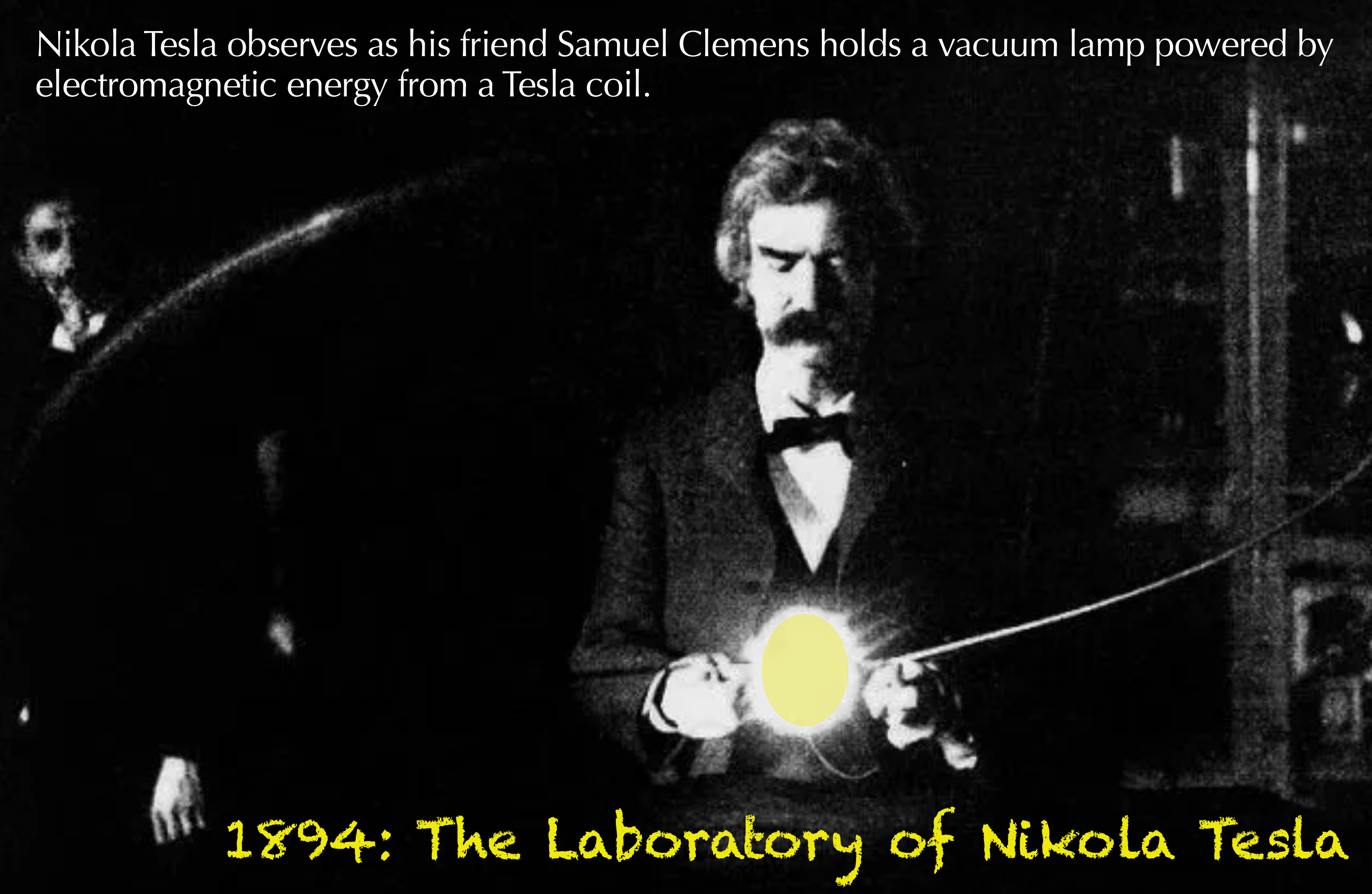
I recently uncovered a curious connection between C.S. Lewis and Tesla. (Not the current target of anarchist vandalism, the scientist.) While researching scientists living in the early twentieth century, a photograph of Tesla and his friend Mark Twain ignited my curiosity as to whether or not there might have been any connection between Lewis and Tesla.

C.S. Lewis (1898 – 1963) and Nikola Tesla (1856 – 1943) never met or corresponded. And yet, they do possess a rather tenuous, speculative connection.

Their connection isn’t based on any similarities. Tesla was a radically innovative scientist. Lewis was a grounded literary master who was wisely suspicious of misplaced faith in scientism. 

Despite the fact Tesla’s father and uncle were both Serbian Orthodox priests, and he maintained an interest in various religious traditions throughout his life, his adult beliefs were eclectic.

Lewis, the grandson of a Church of Ireland priest, went through a period of atheism before returning to Christianity as a devout member of the Anglican communion.

So, how might the two men have been connected? Before exploring the notion that they shared a mysterious source of inspiration, consider the application of a modern theory.

Six Degrees of Separation

Various experiments have supported the idea that people (in Western nations, at least) find it “truly possible to trace a social connection between any two random people within just six steps” (This is far more refined than the overlapping of lifespans as discussed here.)

But the pressing question remained: Why six? The answer has finally been revealed in a paper published in the journal Physical Review X. The study authors include researchers from Israel, Spain, Italy, Russia, Slovenia, and Chile. 

For an academic study of the phenomenon check out “Why Are There Six Degrees of Separation in a Social Network?

Even without the existence of social media, which some have argued may reduce “6 Degrees of Separation [to] 2,” I uncovered a pair of paths connecting Tesla and Lewis.

The first example is the more “direct,” but the second includes as an intermediate link, a writer of great importance to C.S. Lewis.

Nikola Tesla (1856 – 1943)
Had as a friend who visited his laboratory, and later invited the inventor to attend his daughter’s wedding

Mark Twain (1835 – 1910)
Who, after offering a scathing indictment of British colonialism, officially introduced to deliver a 1900 speech in New York…

Winston Churchill (1874 – 1965)
Who offered “the honour of becoming a Commander of the Most Excellent Order of the British Empire (CBE)” to…

C.S. Lewis (1898 – 1963)
one of the most renowned scholars to ever teach at Oxford and Cambridge.

And an alternate path:

Nikola Tesla (1856 – 1943)
Had as a friend who visited his laboratory, and later invited the inventor to attend his daughter’s wedding…

Mark Twain (1835 – 1910)
Who maintained a longtime literary and personal friendship with…

George MacDonald (1824 – 1905)
Who received as a gift A Speech and Two Poems with a personal letter from Irish poet…

William Butler Yeats (1865 – 1939)
Who, on more than one occasion, entertained in his home

C.S. Lewis (1898 – 1963)
who, coincidentally, regarded the very same George MacDonald as one of his greatest mentors.

Tracking down these relationship paths was not that difficult. It was actually fun. If I wasn’t so busy, I would create a few more examples.

Was there Another Connection?

Nikola Tesla (Никола Тесла) was a Serbian-American inventor and futurist. His design of the alternating current (AC) electricity system was a breakthrough. As noted above, he was not a credal Christian. In “A Machine to End War,” he described his beliefs in the following manner.

To me, the universe is simply a great machine which never came into being and never will end. The human being is no exception . . . Man, like the universe, is a machine. . . . what we call “soul “ or “spirit,” is nothing more than the sum of the functionings of the body. When this functioning ceases, the “soul” or the “spirit” ceases likewise.

The possible connection between Tesla and the Inklings, postulated by a sensationalist Anglican priest, is offered in Secrets of Rennes Le Chateau. The author, R. Lionel Fanthorpe, an Anglican priest who believes “there are as many roads to the loving God of all mankind as there are individual human beings,” has written about many offbeat subjects. 

In the aforementioned work, he references passages from J.R.R. Tolkien, C.S. Lewis, Charles Williams and George MacDonald as writers whose fiction may “contain hints about the Rennes-le-Château enigma.” He immediately follows this discussion with the case of “another contemporary of theirs [who] was one of the strangest and most brilliant men” of his age, Nikola Tesla.

He ends the chapter with the question, “what if the enigma with which all our Men of Mystery seem to have been involved was some form of superior communication? But communication with what? Or with whom?”

I doubt there is any connection in the source of the inspiration experienced by the Inklings, Tesla and the church at Rennes-le-Château. That said, it is an odd place of worship, due to the renovations made by its eccentric Roman Catholic priest, François-Bérenger Saunière (1852 – 1917).

Among the alterations made was the addition of a holy water font resting on the back of a devil or demon. That certainly qualifies as a “mysterious” decision. A mystery with which the Inklings bear no connection. 

Ultimately, Fanthorpe’s odd musings are illusory. Better to dismiss them and focus on the actual connection between C.S. Lewis and Nikola Tesla – one documented through the Six Degrees of Separation model.

A Curious Papal Funerary Tradition

Several unique items are buried with modern popes when they die. Most, including their vestments, point to their spiritual role as the Bishop of Rome and patriarch of the Roman Catholic Church. One, however, highlights his secular role as the leader of the world’s smallest independent nation state.

This post is not about Pope Francis’ reign, or the papacy in general. As C.S. Lewis noted in a letter to an American poet, Mary Willis Shelburne, opinions on such matters differ in sometimes unproductive ways. In response to a comment she had written about the passing of Pope John XXIII (1881 – 1963), who had convened the Second Vatican Council, Lewis astutely observed,

God’s purposes are terribly obscure. I am thinking both of your [physical] sufferings and of the removal of such a Pope at such a moment. And the horrid conclusions which some bigots on both sides will probably draw from it.

Rather than discussing the role of the Bishop of Rome, I am considering one specific aspect of the office of the Bishop of Rome – the formalities associated with the funeral and burial/interment of a deceased pope. My focus is further restricted to a single unique facet of that process. This involves the coinage of the Vatican City State issued during their reign.

Despite its status as a nation, Vatican City has declined full membership in the United Nations. This is due to the admirable goal of remaining detached from the official political tentacles associated with having an official vote. Instead, through the Holy See, the papacy’s ecclesiastical office, the Roman Catholic Church maintains a presence and voice in the UN.

Vatican City is one of the few independent states that has not become a member of the United Nations. It does hold permanent observer status, with all the rights of a full member except for having a vote in the General Assembly.

On April 6, 1964, the Holy See became a Permanent Observer Mission to the United Nations and established its Mission in New York City. This was fitting, not only because of the growing involvement of the Holy See in UN deliberations, but above all because the four pillars of the UN as enshrined in its Charter dovetail very well with four main pillars of Catholic Social Teaching . . .

The Holy See enjoys by its own choice the status of Permanent Observer at the United Nations, rather than of a full Member. This is due primarily to the desire of the Holy See to maintain absolute neutrality in specific political problems.

In accordance with tradition, “preparations are also being made for a numismatic commemoration of the Sede Vacante.” The Latin term  means “vacant seat,” and refers to the transitional period between popes. Thus, in addition to the papal coins minted for each pope, special issues are normally released during the interims. However, due to a reorganization of the Vatican’s coinage office, CoinsWeekly reports it remains “uncertain whether a 2-euro commemorative coin” will be produced for this papal interregnum.

NumismaticNews echoes the fact that due to their rarity, Sede Vacante issues rapidly increase in value. Fortunately due to their infrequency, they “ are seldom at the center of a collector’s radar. That’s probably a good thing, as it means we are not losing popes quickly or routinely.”

A number of items are traditionally included in a pope’s casket. Unsurprisingly, these include a miter, crozier, and rosary. They also include coins minted during their reign, reflecting their role as ruler of the Papal State. This last fact surprised me.

So, precisely what is the precedent being set with Pope Francis’ funeral? First, he was not buried in the Vatican, but in a basilica dedicated to St. Mary.

There was another, more significant symbol of the simplicity that characterized his papacy. While popes traditionally have three elaborate caskets nestled inside one another, Francis asked to have only one simple wooden casket with a modest zinc inner lid.

Pope Francis’ 2017 Revision of Vatican Coinage

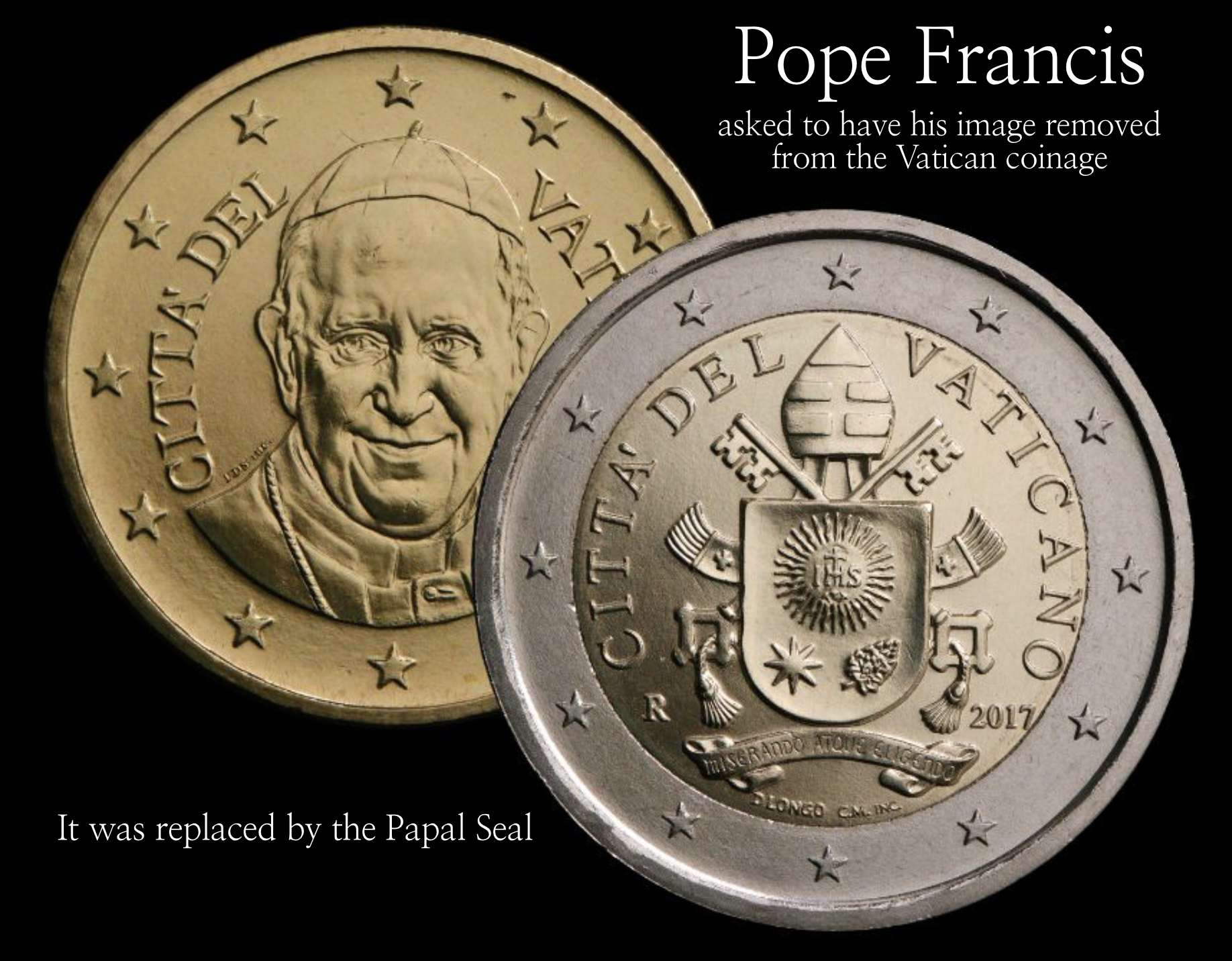
For centuries, the portrait of the current Bishop of Rome graced coins in Rome. That tradition ended with Pope Francis. In 2017, he personally requested that his visage no longer appear on coins. This is commendable, since it was presumably based on Francis’ humility. 

This then, his image has been replaced by the papal coat of arms. Notably, every other country minting euros bears the head of its head of state. It will be interesting to see whether or not Francis’ successor follows his example.

A Brief Note on Protestant Coinage

Although there have been some historical attempts to create governmental structures led by religious leaders besides Roman Catholicism, they have been the rare exception. (The claimed leadership of the Church by sovereigns such as King Henry VIII is another case.) 

In Zurich, Huldrych Zwingli (1484 – 1531) sought to establish a theocracy, and actually perished on the battlefield resisting the Roman Catholic armies of several Swiss cantons. John Calvin (1509 – 1564) pursued similar goals in Geneva, and beyond. Calvin, however, never bore arms in his effort.

Fortunately, the “two kingdoms” theology of Martin Luther became dominant in primarily Protestant realms. It is based on the declaration Jesus made during his trial before Pontius Pilate that “My kingdom is not of this world” (John 19).

For a fascinating discussion of the implications of this theological position, consider “Martin Luther’s Farewell to Arms: The Two Kingdoms and the Rejection of Crusading.”

Turning to numismatics, it is not rare to find religious leaders portrayed on historical coinage. However, these portrayals serve as commemorations of individuals who have made a cultural or ethical contribution to a particular society – not because they sat upon a throne.

For example, Switzerland minted a 20 franc coin with the images of Zwingli and Calvin during the 500th anniversary of the Reformation.

Likewise, in 1965, the Communist government of Czechoslovakia produced a 10 korun coin in honor of the 550th anniversary of the martyrdom of Jan Hus. This particular coin, like many similar pieces, was actually minted as a non-circulating coin, intended for collectors rather than daily commerce.

This leads us to note that most coin-like pieces of metal bearing the likeness of reformers are actually medallions, not coins. As such, the vast majority of the commemoratives have been fashioned by organizations, rather than governments.

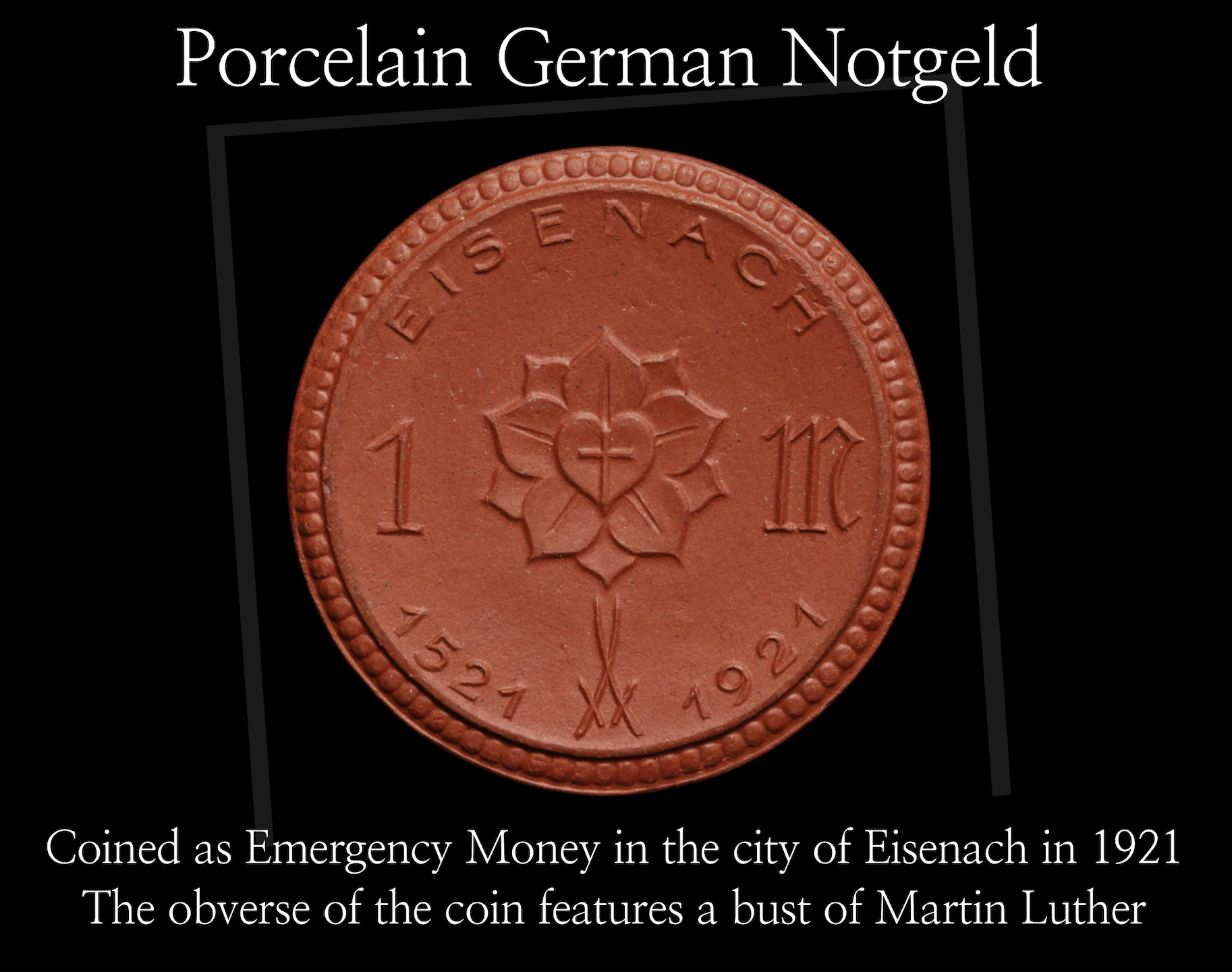
Being an amateur numismatist and a Lutheran pastor myself, I have several related items in my personal collection (none of which were costly, of course . . . since it’s just a hobby). One of my favorite items is a genuine 1 Mark coin minted in Eisenach in Weimar Germany in 1921 (pictured below). What makes it especially unusual is that due to postwar metal shortages, it was actually struck in porcelain!

This emergency coinage and currency was called “Notgeld,” which means “necessity money” because individual cities found it necessary to provide their own money when the Reichsbank succumbed to hyperinflation between the world wars.

The city of Eisenach chose the centennial of Martin Luther’s work because of his historic ties to the city. The Lutherhaus Eisenach cultural center commemorates, among other events, Luther’s early schooldays there, and his stay at Wartburg Castle where he translated the New Testament into German.

Conclusion

In light of Pope Francis’ funeral and the association it has with numismatics, it is a good time to consider how coinage has often carried a religious message. Although this was more frequent in past centuries, it still occurs today. It will be interesting to see just how many nations eventually mint coins in honor of Pope Francis. The Philippines, Samoa and the Cook Islands already have.

And even Narnia, the home of Aslan, minted coins in honor of its heroes, didn’t it?

C.S. Lewis & Ethnic Ancestry

Most American think C.S. Lewis was English. But that’s not quite right, is it? After all, he was born in Belfast, which is in Northern Ireland. And that makes him Irish, doesn’t it? Well, yes but not exactly.

The most accurate description is that C.S. Lewis was Anglo-Irish, with an identity linked to both English and Irish identities. Unfortunately, even that designation is subject to potential confusion, since it holds more than one definition. It is sometimes used for persons of English descent living in Ireland, Irish folks living in England, or those of mixed Irish and English ancestry. 

The classical definition, directly applicable to C.S. Lewis, is: “of English descent but born or resident in Ireland, or a member of such a family, and associated particularly with the Protestant Ascendancy” (Oxford Reference).

The Emerald Isle is particularly confusing to most Americans. Only a minority possess any awareness of the history which led to the division of Ireland into today’s Republic of Ireland and Northern Ireland, which is part of the United Kingdom. (Read to the end and discover a little known aspect about America’s dominant ethnicities.)

If Ireland is a mystery to those in the United States, so too are other identifications. The “United Kingdom” itself is perplexing to many on “this side of the pond” (i.e. the Atlantic). 

People find it baffling that a nation consists of three one-time kingdoms (England, Wales and Scotland) and the northeast counties on the island of Ireland. Add to that the fact that the initial three also comprise “Great Britain,” and eyes can glaze over.

Why does it matter? Because a person’s background and heritage often influences many aspects of their personality and values. And the outcome of this blending is particularly manifest in the unique combination of the Irish and English cultures. The Hiberno-English dialect provides a colorful example, with words like the adjective “cats” (awful), “amn’t” (am not), plámás (flattery), and “the jacks” (bathroom), plus phrases such as “acting the maggot” (misbehaving). 

Like all other tongues, Hiberno-English continues to evolve.

Anglo-Irish Writers

Anglo-Irish literature constitutes a distinct category of poetry and prose. Ironically, it is the essential Irishness of the style in “Anglo-Irish literature [which] registers itself [as] the most difficult . . . and the most important” element to be identified.

Few non-Europeans recognize there are many prominent Anglo-Irish writers.* Many, including C.S. Lewis who studied and taught in England, celebrated their Irish heritage. An example taken from a letter written in 1917 to his friend Arthur Greeves provides an illustration of this pride. Describing a day spent walking with a classmate while debating the merits of various authors, he wrote:

Like all Irish people who meet in England we ended by criticisms on the invincible flippancy and dulness of the Anglo-Saxon race. After all, there is no doubt, ami, that the Irish are the only people: with all their faults I would not gladly live or die among another folk.

While this tongue in cheek remark reflects Lewis’ youthful humor, you can read a more brilliant study of the subject in “C.S. Lewis: An Irish Writer.

It discusses, among other matters, why “Lewis, a proud Irishman, [chose] not to promote himself as an Irish writer or write more regularly about Irish themes.”

American Geographical Eccentricities

Sadly, geography is quite undervalued in the American educational system. The common ignorance about the makeup of other continents is nothing less than embarrassing. Of course, Americans aren’t the only people ignorant about such matters, as GeoCurrents notes.

But if geographical ignorance is pronounced in the United States . . . the problem does seem to be even more extreme in some other parts of the world.

The United States as it exists today, is the product of constant immigration. During the early years of the colonies and Republic, most arrivals were Europeans, with nearly eleven million Africans brought involuntarily to North America, most during the rule of the British (Gilder Lehrman Institute of American History).

As a result of this influx of foreigners, each state possesses its own unique identity (or, more accurately, identities). The following map shows the largest single ancestral ethnicity of the residents of each state. It contains a few surprises.

The fact that Irish descendants represent a plurality in five states raises the question of just how many talented Irish-American writer may have shared the intercultural experiences of C.S. Lewis.


* A list of noteworthy Anglo-Irish writers would include, in addition to C.S. Lewis:

Jonathan Swift (1667 – 1745)
Oliver Goldsmith (c. 1730 – 1774)
Maria Edgeworth (1768 – 1849)
Joseph Sheridan LeFanu (1814 – 1873)
Dionysius Boucicault (1820 – 1890)
Lady Augusta Gregory (1852 – 1932)
Oscar Wilde (1854 – 1900)
George Bernard Shaw (1856 – 1950)
John Bagnell Bury (1861 – 1927)
William Butler Yeats (1865 – 1939)
James Owen Hannay (aka George A. Birmingham) (1865 – 1950)
John M. Synge (1871 – 1909)
Edward John Moreton Drax Plunkett (aka Lord Dunsany) (1878 – 1957)
Lady Clodagh Beresford (1879 – 1957)
Emily Lorimer (1881 – 1911)
James Joyce (1882 – 1941)
Terence James Stannus Gray (aka Wei Wu Wei) (1895 – 1986)
Elizabeth Bowen (1899 – 1973)
Cecil Day-Lewis (1904 – 1972)
Samuel Beckett (1906 – 1989)
Louis MacNeice (1907 – 1963)
Mitch Teemley