Out of Context

Journalists quickly learn the skill of taking the words of people they dislike out of context. By doing this, they can make absolutely brilliant men and women sound like simpletons.

If the person is a public figure, with lots of material to sort through, you can find partial quotations (or obviously humorous or sarcastic remarks) that make the object of their ridicule sound like nearly anything – from a compassionate philanthropist to a conniving fascist.

That’s one reason some people who hope to tarnish the reputation of C.S. Lewis consciously avoid citing his work in its totality (or each piece in its honest context). Thus, as this article suggests, intelligent readers understand Lewis’ writing is “exceptionally good,” while some infantile critics regard it as “dodgy and unpleasant.”

(Do you appreciate my skillful use of adjectives in the previous sentence? They, of course, represent another dishonest method of undermining the arguments of people with whom one disagrees.)

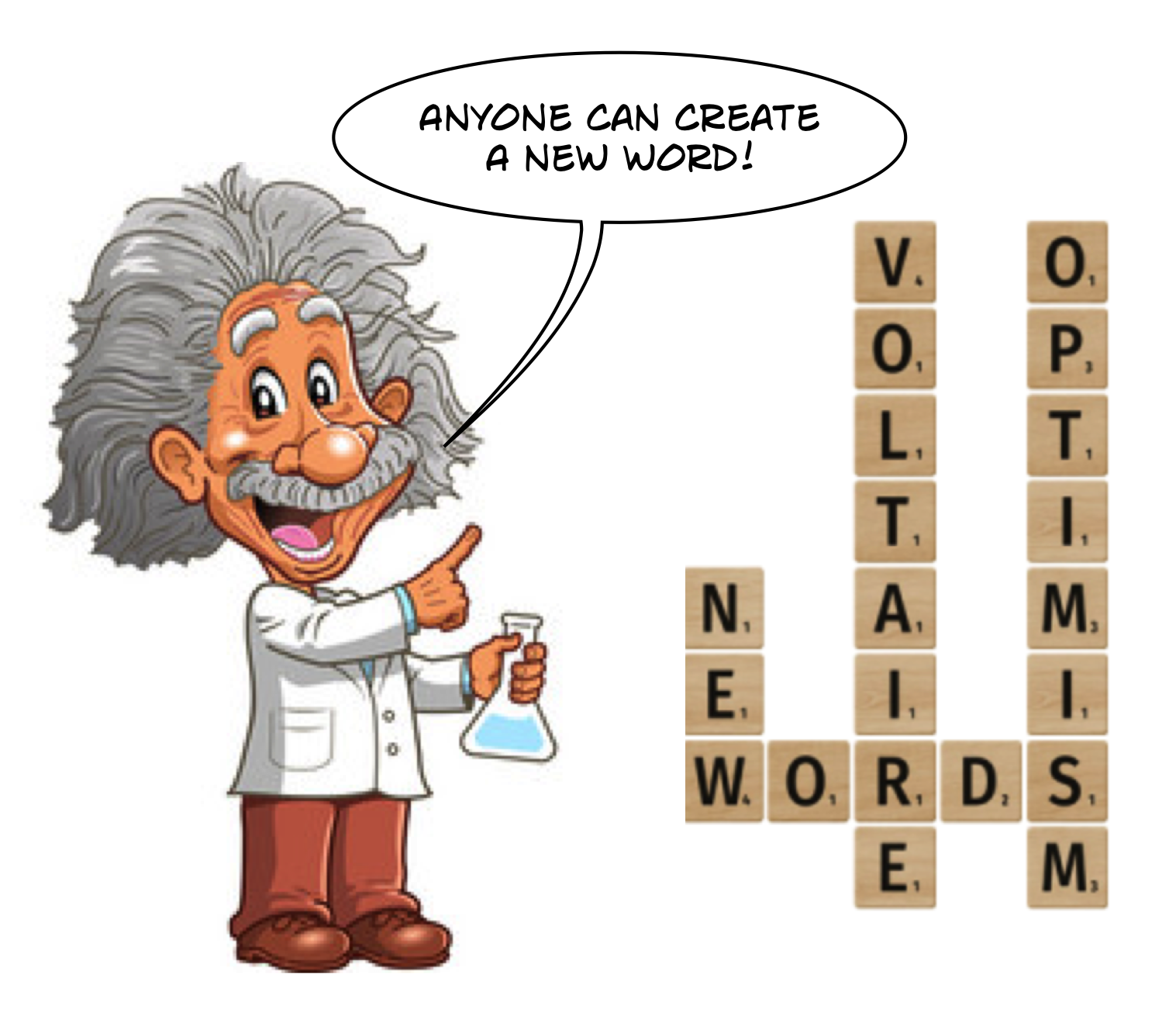
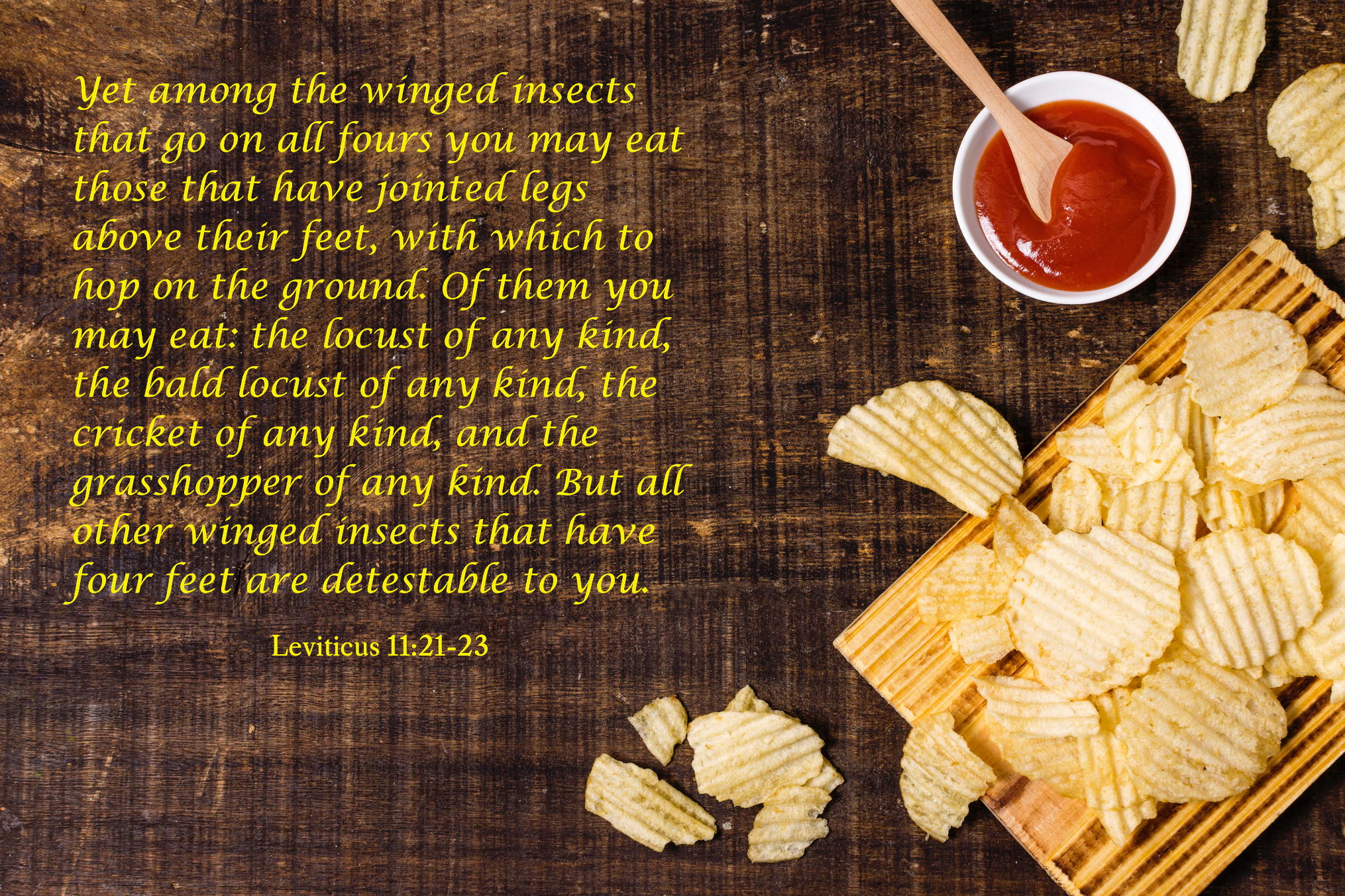
Returning to the idea of taking things out of their context, I offer the graphic (meme, if you will) that I created for the top of this column. It was inspired by “The 12 Most Inspiring Verses In The Bible” in the Babylon Bee. The brief article humorously illustrates how excising words from their context can make them sound rather bizarre.

These examples (mine included) are offered in a light-hearted way. However, the internet teems with examples of malicious attacks on God’s written Word. And many of these rely on the tried and true[false] technique of ignoring the immediate or full context to construct their strawman.

Strawmen or strawwomen are another dishonest form of argument, as “Logical Fallacies 101” explains.

Strawmen, scarecrows, and mannequins all have one thing in common: they are, by nature, flimsy objects that are easy to knock down. In the context of logical fallacies, a “straw man” argument is an argument that is framed in such a way that it is easy to “knock down” or dismantle.

How many times have you been in conversation with someone—someone who holds an opposing viewpoint to yours—who frames your position in a way that you have not? Then once they frame your position in that way, they attack it, supposing that by doing so they have won the argument?

In “Lewis on the Atheist’s Straw Man,” the author quotes a concise argument provided by C.S. Lewis “in Mere Christianity, [where] Lewis warns about over simplifying Christianity (something some people who call themselves Christians sometimes do), and the straw man Atheists often build from this. It’s definitely worth the read.

Biblical Verses that Demand Knowledge of Their Context

Admittedly, there are some passages in the Scriptures that are challenging to comprehend, apart from the whole. Intervarsity Press even has a website “Hard Sayings of the Bible,” subtitled “A Difficult Passage Explained Each Day.”

In “Encountering Difficult Passages,” the author charts a helpful course in how to discover their meaning. Here’s a sample of their sound advice:

Be extra careful with Google. I know. It’s so easy. It’s so tempting. You think, “Google tells me where to go when I’m physically lost; why can’t it help when I’m lost in the Bible?”

The problem is that Google only shows you what’s popular; it cannot differentiate between sites that provide truth and sites that provide ignorance. Avoid your natural impulse to click the first link that appears in a search. There are good websites out there to find answers, but you have to be discerning.

Some of Jesus’ own teachings were difficult for the disciples to comprehend. This was especially true of his announcement that he must die as part of the divine plan to deliver us all from the consequences of sin. When he announced the marvelous mystery of the eucharist (Lord’s Supper) he said “I am the bread of life. . . . Whoever feeds on my flesh and drinks my blood has eternal life, and I will raise him up on the last day. . . . This is the bread that came down from heaven, not like the bread the fathers ate, and died. Whoever feeds on this bread will live forever” (John 6).

While the twelve who become the Apostles continued to follow the Lord, some fell away in confusion because “When many of his disciples heard it, they said, ‘This is a hard saying; who can listen to it?’”

The Bible Truly “In Context”

Christians understand that the Incarnation, Life, Death, Resurrection and Return of Jesus Christ is the final, ultimate Word of the Bible. The Word himself, through whom all things were created, is the central, life-giving message of the holy Scriptures.

Because of this truth, we can evaluate the entire, comprehensive meaning of the Scriptures. We recognize the clear significance of those passages dealing with the Savior of humanity are vital, while those dealing with the nutritional value of locusts are rather less so.

While many people consciously practice this Christocentric reading of the God’s Word, one of its great champions was Martin Luther. If you wish to explore this subject in detail, I commend to you “All Scripture is Pure Christ: Luther’s Christocentric Interpretation in the Context of Reformation Exegesis.” You can find the entire volume in which this essay appears here.

As Martin Luther puts it, “To him who has the Son, Scripture is an open book; and the stronger his faith in Christ becomes, the more brightly will the light of Scripture shine for him.”

Christians are not Gnostics, who believe the Bible is hiding divine secrets from the uninitiated. Quite the contrary. However, the only way to truly understand the meaning of the Scriptures is to read them in their full context. And that context is Jesus, “the Lamb of God, who takes away the sin of the world!”

Free Books Offered Monthly

Would you like to receive free books for the simple exchange of a short, honest review of them? If so, join me at LibraryThing. Best of all, they offer additional benefits for readers (and writers).

You may already have a free account there, since they offer a book cataloging system connecting you to fellow readers, which appeals to many book lovers.

They also offer TinyCat, which is a sophisticated cataloging system designed for small libraries. And it is free for personal use! I don’t have the time to input my own library, despite all of their tools for making that easy, but it could well work for you. [Warning: if your library includes more than 20,000 items, it may be a tad too large.]

Requesting a book for review is simple. Each month they list a bunch of new, mostly self-published titles that are available. You express your interest and they distribute the quantity that are available. You can see current offerings here: LibraryThing Early Reviewers.

The truth is that I rarely request a title. The vast majority are fiction, while my tastes strongly lean toward nonfiction. Even there, available time restricts my interests to a handful of topics. Still, I wrote a review about a book I received entitled  A Curmudgeon’s Guide to Postmodern Times: Aphorisms. (I am a sucker for thought-provoking maxims, especially if they are witty.) More on my review in a moment.

In the past I’ve written book reviews for military and theological journals. Most publications offer specific guidelines as to what they desire in a review. If you opt to ignore these, you are wasting everyone’s time. Most online sites are more tolerant.

Writing Book Reviews

Writing effective reviews is an art in itself. To do it well requires some conscious effort. To simply describe something as “good” or “boring” is basically not worth the effort. You need to think about what you, as a potential reader, are interested in knowing about a title before you invest your time and money in procuring it.

It appears there are hundreds of online sites describing the process. This one from Grammarly is a quick, clear read. One piece of their advice relates directly to my latest review.

Remember that you’re reviewing a book that another human poured their heart and soul into to write. Express your honest opinion, but don’t be nasty about it.

That sentiment is similar to one I just read in an old magazine I was perusing.

Concerning satire, I’ve always followed the rule laid down by an old college professor: “I only pick on those I love.” If I have trouble loving someone, it’s better if I refrain from jokes, satire, and teasing.

C.S. Lewis & the Art of Reviewing Books

If one were to tally all the reviews that have been written about the works of C.S. Lewis, their number might rival the grains of sand spread around the world’s beaches.*

It is unsurprising that Lewis, being a professor of English literature, wrote a significant number of book reviews himself. Some of the most notable are gathered in Image and Imagination. While the volume includes a number of valuable essays, it is the collection of his published book reviews which are of interest to us today.

You see, in Image and Imagination we encounter ten of his reviews written about books authored by his fellow Inklings. These include Owen Barfield, J.R.R. Tolkien and Charles Williams. The volume is edited by Walter Hooper, who ably introduces each of the reviews, and provides unique insight. For example, he notes C.S. Lewis’ ongoing debate with Owen Barfield about anthroposophy.

Barfield’s conversion to Anthroposophy . . . marked the beginning of . . . the ‘Great War’ between [the two friends]. . . . While the ‘Great War’ had ended years before, the problem Lewis faced in reviewing Romanticism Comes of Age is that it contains in the Introduction and other places Barfield’s ‘case’ for Anthroposophy (“Who Gaf Me Drink?”).

Lewis’ review of the culmination of the Lord of the Rings is worth the full price of the collection. Doesn’t the following ring true?

The other excellence is that no individual, and no species, seems to exist only for the sake of the plot. All exist in their own right and would have been worth creating for their mere flavour even if they had been irrelevant.

Treebeard would have served any other author (if any other could have conceived him) for a whole book. His eyes are ‘filled up with ages of memory and long, slow, steady thinking.’

Through those ages his name has grown with him, so that he cannot now tell it; it would, by now, take too long to pronounce. When he learns that the thing they are standing on is a hill, he complains that this is but ‘a hasty word’ for that which has so much history in it (“The Dethronement of Power”).

On My Review of the Curmudgeon’s Concerns

My recent review (to which I referred above) was not easy to write. What made it difficult was my mixed opinion of the aphorisms chosen for the publication. Most were quite interesting, and a few were downright brilliant. The problem was the strong bias of the author when he addressed two “controversial” topics – politics and religion.

Unlike Mark Twain, to whom I refer in the review, this author forsakes humor when he deplores subjects with which he disagrees. Twain made it clear how he stood, but usually in a manner that left even his opponents entertained. This particular book is much more “curmudgeonly,” in that some of it is delivered in an ill-tempered, alienating manner.

If you are curious in seeing how I threaded the needle of honestly reviewing a book with problematic material, you can read it here. While praising many aspects of the book, I did make one critical observation related to an aphorism related to The Chronicles of Narnia.

Greene even invokes my favorite author to mischaracterize Christianity. “C.S. Lewis depicted God as a lion. The lion, of course, is a predator.” So much for agnus dei and Aslan’s manifestation as a lamb.

A Final Encouragement

If you are a writer, or an aspiring writer, consider writing some book reviews. It can provide a more welcoming entrée into the publishing world than other features. Write it in a style similar to the reviews they normally run, and be sure to read any guidelines they provide for contributions. As with other submissions, it’s best to query first. Best of luck!


* The World Atlas estimate of 2.5 to 10 sextillions may suggest this estimate of Lewisian reviews may be hyperbole. But at least I did not refer to the number of stars, which is estimated at 10 to 200 sextillion.

Create a Word Today

What could possibly be more fun than making up a witty new word?

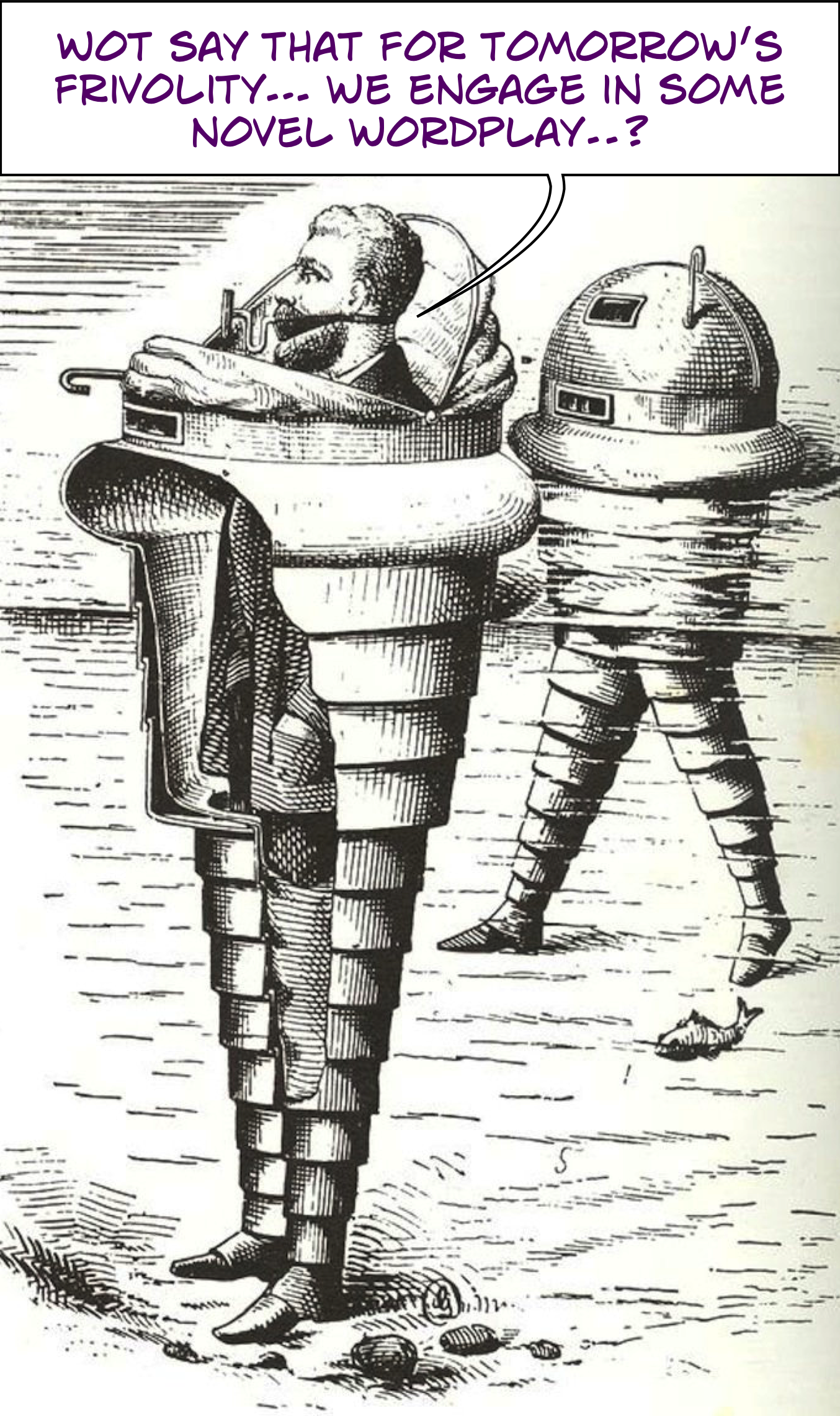
Well, to be honest, lots of things. But inventing words is still an enjoyable creative exercise. I made up several in less than an hour this evening, while half-watching an old movie. A few may be lame, but I hope you will discover one or two you enjoy.

I’ve touched on the subject of inventing words in the past. But this approach involves a different process.

This article from The Guardian asks, “English speakers already have over a million words at our disposal – so why are we adding 1,000 new ones a year to the lexicon?” That’s certainly a fair question. However, it doesn’t pertain to my thoughts here. I’m not attempting to birth any neologisms. These are simply humorous tweaks to existing words. A form of wordplay.

I got the idea when I read a short article, “The Best Made Up Words Ever,” by Bill Bouldin.* He admits to including a number of words from an online site I won’t name here (due to its preponderance of vulgar terms). While Bouldin doesn’t indicate which examples are his own contributions, and which are reproduced, I found a couple of the words quite entertaining.

The first of these reminded me of many group meetings where we consider all sorts of opportunities and possibilities.
Blamestorming – The act of attempting to identify the person who is most at fault for a plan’s failure.

As a pastor I couldn’t resist modifying this gem.
Sinergy – When performing two bad acts make you feel as guilty as if you had committed three.

This one struck home since it’s a play on one of the words in the title of the Narnian classic, The Lion, the Witch and the Wardrobe.
Chairdrobe – A chair on which one piles clothes that belong in the closet. Not to be confused with a floordrobe.

The final example will resonate with everyone who enjoys reading and writing.
“Illiteration – The mistaken impression that you know more about rhetorical devices than you really do.

At the risk of revealing myself to be an illiterator, I’ve included below some of the words I conjured up during an idle hour. I don’t claim any are masterpieces, but you may find one or two that bring a smile to your face. And, who doesn’t need an extra smile during these trying times?

My Initial Experiment

Caution: Before proceeding, keep in mind these are not real words. As genuine and utilitarian as they may appear, I advise you not to use them in conversation or composition. They are offered by Mere Inkling purely for entertainment purposes. Feel free to add some of your own in a comment.

Miscellaneous Vocabulary

Subbatical: the period when some temp like you is hired to fill in for some privileged person who has a job that has sent him or her off for an extended paid vacation.

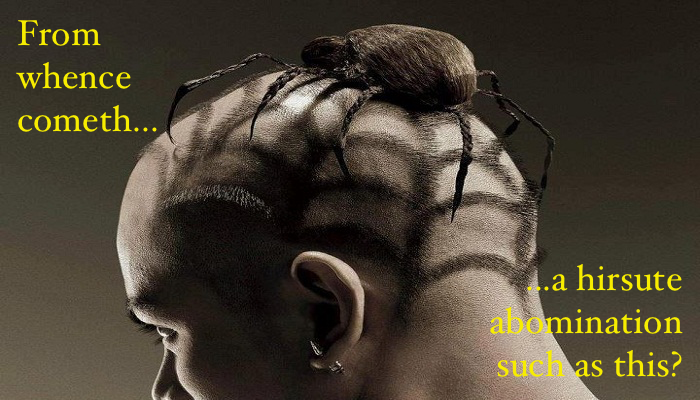
Dippididude: Confused men who use hair gel designed for young girls and women.

Cemetarry: The unwillingness of some people to ponder the reality of their own mortality.

Mannekin: A boring, sedentary relative, who rarely rises from the couch.

Candlelablouse: The name for candlesticks with multiple arms in the homes of prudes.

Carnivirus: Individuals who strive to draw blood from those who view the coronavirus and its implications differently than they do.

Brigadeer: A domineering deer who tries to order all the other members of its herd around (antlers optional).

Altruistick: Actions that appear on the surface to be selfless, but include a hidden agenda.

Monumentill: Descriptor for someone of little worth who builds a significant reputation with the sole purpose of lining their pockets.

Blasphemee: An individual’s personal inability to consistently observe the Second Commandment.

Concupiscents: Hollywood’s obsession with including graphic sexual themes in all of their productions, resulting in the selling of their souls for pennies on the dollar.

Cathedroll: A large church led by a senior minister given to quaint and unintentionally comic humor.

Cadaversary, pl., cadaversaries: A member of the endless hordes of the undead during a zombie apocalypse.

Writing Vocabulary

Literasee: The capacity of one’s imagination to visualize what you are reading.

Bloggrr: An essentially angry person, given to writing unbridled tirades on various digital formats.

Gerdprocessing: When whatever you are typing just doesn’t work, and causes you severe heartburn instead.

Manuskipped: The sad condition when the article or book into which you poured your blood, sweat and tears has been tossed into a slush pile to lie forgotten.

Editteen: The maturity level of the editor who did not recognize the merits of your manuscript and rejected it without comment.

Subliminil: When the word you are reading or writing possesses no hidden or subconscious message.

Proofreaper: Someone you invited to read your manuscript for misspellings who advises you to delete entire sections of your precious creation.

Skulldigory: Misbehavior by the English professor, Digory Kirke, who, as a child, introduced evil into Narnia.

I will close now with two words that cat-lovers may find objectionable. If you are a devoted feline-fancier, you are advised to cease reading now.

Lucifur: The anonymous leader of that faction of felines devoted to serving evil.

Purrification: The activity of forgiveness and restoration that occurs when any cat makes a sincere confession of its sins.


* This columnist cites various words from the Bouldin’s piece, and others from a book entitled The Emotionary: a Dictionary of Words That Don’t Exist for Feelings That Do.

Delicious Words

Have you ever wondered what colors people see when they read what you write? If so, you are not (necessarily) insane. And we’re not talking about coloring your fonts to evoke certain responses.

The fact is, some people honestly do see colors when they read – or hear – particular words.

Perhaps even more oddly, some people actually taste specific words. And the flavor(s) they sense are not necessarily related in any reasonable way. For example, we might think that if someone heard the word “orange,” or saw an orange color, that some psychological trick might cause them to think they can taste an orange citrus flavor. But that’s not how it works. There may not be any fathomable connection at all.

This phenomena is called “synesthesia.” Healthline describes synesthesia as “a neurological condition in which information meant to stimulate one of your senses stimulates several of your senses.” Although they are rare, “synesthetes” are not unique.

A study entitled “Survival of the Synesthesia Gene: Why Do People Hear Colors and Taste Words?” alleges the condition is experienced by 2% to 4% of the population.

While a proven genetic basis for synesthesia remains elusive, the phenomenon tends to run in families, as ∼40% of synesthetes report a first-degree relative with the condition. Pedigree analyses of synesthesia suggest high transmissibility from parent to offspring . . .

I have a confession to make. Through the years I’ve met a handful of people who told me they could taste colors, or the like. They were describing to me their sincere experiences of synesthesia. Unfortunately, since I’d never read about the validity of the phenomenon, I dismissed it. I assumed that the more playful of the advocates were trying to trick me. And I attributed the other cases to people tricking themselves, due to odd imaginations or to gullibility manipulated by the power of suggestion.

Mea culpa. The awkwardness was my fault. I am sorry for any hurt I may have caused. I, of all people, should have accepted their testimony. You see, for many years I was stunned that people voluntarily ate cilantro. To me, the herb tastes like soap – exactly like picking up a bar of soap and taking a big bite. Everyone laughed and me. But one day I met someone whose eyes widened before they declared “me too!”

Britannica explains the problem: ‘for those cilantro-haters for whom the plant tastes like soap, the issue is genetic. These people have a variation in a group of olfactory-receptor genes that allows them to strongly perceive the soapy-flavored aldehydes in cilantro leaves.” The frequency of this “genetic quirk” varies by ethnicity. Trust me, if you knew what it tastes like to “us,” you would never force the unpalatable cleanser on anyone but your worst enemy.

You see, because of my dismissal of their revelation, I could very well have caused some people to consider themselves defective, or discourage them from being open in their lives after that time. Healthline describes it this way:

On the other hand, some synesthetes feel that their condition isolates them from others. They may have trouble explaining their sensory experiences because they are very different. Finding communities of other synesthetes online may help ease this feeling of isolation.

Fortunately, on the other hand, “many people seem to enjoy perceiving the world in a different way than the general population.” There are even artistic efforts which attempt to replicate the experience of these unique individuals.

For a simple guide to the numerous types of synesthesia experienced by your fellow human beings (which may or may not parallel animal phenomena), check out this article.

There is a short scene from the film Ratatouille that creatively illustrates the experience of the synesthete, who is, in this case, Remy the rat. (We’ll link to it at the end of the post.)

What about the Inklings?

I don’t believe any member of the Inklings experienced synesthesia. It is possible, of course.

Nevertheless, there are echoes of synesthesia in their works. Consider for a moment the following description of Lewis’ work as a literary critic in C.S. Lewis at Poet’s Corner.

What I want to call attention to here is yet another example of what one might call Lewis’s narrative synaesthesia. . . . I am not arguing that this kind of movement between genres is unique to Lewis – far from it, I think we all do it to some extent, if only in our imaginations rather than on paper. . . .

[Lewis] is a writer whose perceptions just jostle against each other, and are so interconnected that it is almost impossible to separate one strand from the next. These are characteristics more common in the poet than the critic, and not for nothing did Lewis see himself as primarily a poet.

C.S. Lewis could also skillfully energize his fiction with synesthetic elements. An excellent example is found in Voyage of the Dawn Treader. An article on Encyclopedia.com describes it in the following way.

As they sail nearer to Aslan’s country, references to Christ and our heavenly home accumulate quickly. Reepicheep discovers that the water is sweet! Caspian describes the phenomenon with synesthesia, using the terms of one sense experience to describe another: “It – it’s like light more than anything else.”

In the novel itself we see Reepicheep being pulled from the sea, after falling overboard.

“Sweet!” he cheeped. . . . “I tell you the water’s sweet,” said the Mouse. “Sweet, fresh. It isn’t salt.” For a moment no one quite took in the importance of this. But then Reepicheep once more repeated the old prophecy:

Where the waves grow sweet,
Doubt not, Reepicheep,
There is the utter East.

Then at last everyone understood. “Let me have a bucket, Rynelf,” said Drinian [the ship’s captain]. It was handed him and he lowered it and up it came again. The water shone in it like glass.

“Perhaps your Majesty would like to taste it first?” said Drinian to Caspian. The King took the bucket in both hands, raised it to his lips, sipped, then drank deeply and raised his head. His face was changed. Not only his eyes but everything about him seemed to be brighter. “Yes,” he said, “it is sweet. That’s real water, that. I’m not sure that it isn’t going to kill me. But it is the death I would have chosen . . .”

“What do you mean?” asked Edmund.

“It – it’s like light more than anything else,” said Caspian.

“That is what it is,” said Reepicheep. “Drinkable light. We must be very near the end of the world now.”

There was a moment’s silence and then Lucy knelt down on the deck and drank from the bucket. “It’s the loveliest thing I have ever tasted,” she said with a kind of gasp. “But oh – it’s strong. We shan’t need to eat anything now.” And one by one everybody on board drank. And for a long time they were all silent. They felt almost too well and strong to bear it, and presently they began to notice another result.

As I have said before, there had been too much light ever since they left the island of Ramandu – the sun too large (though not too hot), the sea too bright, the air too shining. Now, the light grew no less – if anything, it increased – but they could bear it. They could look straight up at the sun without blinking.

They could see more light than they had ever seen before. And the deck and the sail and their own faces and bodies became brighter and brighter and every rope shone. And the next morning, when the sun rose, now five or six times its old size, they stared hard into it and could see the very feathers of the birds that came flying from it.

Synesthetic Rodents

The dashing Reepicheep is not the only cute little rodent who experiences reality synesthetically. That should come as no surprise, since Rodentia such as mice like our hero, Remy the rat chef and their cousins like beavers and porcupines constitute about 40% of all mammal species. God alone knows how many rabbits, prairie dogs and pikas share these sensory delights.

The aforementioned scene from Ratatouille offers a “taste” of what life is like for a synesthete. Enjoy.

On the Nature of Digressions

It’s nearly impossible to avoid digressions – those temporary departures from the current subject of conversation. While many digressions are interesting in the own right, they occasionally cause the speaker (or writer) to lose track of the actual point they are attempting to establish.

It’s like when I would be reading something the Emperor Constantine the Great, and at the mention of the Persian Empire, I would put the current article on hold while I explored the subject of just how the current regime in Iran reflects the religious fundamentalism of Zoroastrianism as it resisted during the Abbasid Caliphate. Ah, but forgive me, I digress.

The reason I am thinking about digressions today is because I recently encountered a massive one in one of Mark Twain’s works. But before we look at it, let’s consider a more recent example, in an article about C.S. Lewis.

In “The Uses of Ignorance,” literary critic Alan Jacobs explores a number of themes, including the way Lewis’ presentation of Christianity’s core resonates with believers from diverse theological backgrounds.

One lesson to be learned . . . is just how carefully Lewis articulated his “mere Christianity” so that it seemed “mere” indeed – recognizable to Christians from many different traditions as the faith they understood and practiced. But we also see . . . “that the lasting appeal of Mere Christianity is not based so much on Lewis’s genius as on his ability to point readers to the luminosity of the gospel message itself.” Which, I might add, is a kind of genius in itself.

The article is well worth reading, but the specific reason I mention it now, is because the author includes a lengthy (315 word) departure from his main theme which he brackets with the words “A digression:” and “End of digression”.) It’s rare to see something this straightforward.

C.S. Lewis as a Digresser

If the average woman or man is prone to digression, it seems apparent a genius – with voluminous knowledge on diverse subjects – would occasionally succumb to the same temptation. For someone like C.S. Lewis this is not a major problem, as he would never lose his place in the original conversation. On the contrary, Lewis’ digressions would invariably enrich the discussion, as they illuminated his points.

One of the only books written by C.S. Lewis which has entered the public domain is Spirits in Bondage. When it was published in 1919 (while he was an atheist), Lewis wrote to a friend: “The sub-title ‘A cycle of lyrical poems’ was not given without a reason: the reason is that the book is not a collection of really independent pieces, but the working out, loosely of course and with digressions, of a general idea.” (You can download a free copy of Spirits in Bondage at Project Gutenberg.)

Mark Twain’s Masterful Digression

I’ve written about Mark Twain in the past. In one column I shared his humorous reflections on the nature of editors. Writers will find the post particularly entertaining.

Editors played a major (usually unwelcome) role in Twain’s existence. Thus, it is unsurprising that a major digression in “How to Make History Dates Stick” involves these denizens of the publishing world.

One book I was reading this week includes an extensive and, of course, intentional example of digression. Although he doesn’t bracket it with the word “digression,” it is probably one of the best examples in existence. (We would expect nothing less from Samuel Clemens!)

In his novel Roughing It, Twain describes a pervasive blight to the western frontier, sagebrush.

I do not remember where we first came across “sage-brush,” but as I have been speaking of it I may as well describe it. This is easily done, for if the reader can imagine a gnarled and venerable live oak tree reduced to a little shrub two feet high, with its rough bark, its foliage, its twisted boughs, all complete, he can picture the “sage-brush” exactly.

Often, on lazy afternoons in the mountains I have lain on the ground with my face under a sage-bush, and entertained myself with fancying that the gnats among its foliage were Lilliputian birds, and that the ants marching and countermarching about its base were Lilliputian flocks and herds, and myself some vast loafer from Brobdingnag waiting to catch a little citizen and eat him.

Twain’s description of his daydreaming about sagebrush is entertaining, but this is not the quintessential digression I wish to share. After this brief digression, Twain writes a page and a half about the plant’s actual physical attributes and utility (e.g. for fires and tea). But then, when the reader least expects it, Twain goes off on another extended ramble.

Sage-brush is very fair fuel, but as a vegetable it is a distinguished failure. Nothing can abide the taste of it but the jackass and his illegitimate child, the mule. But their testimony to its nutritiousness is worth nothing, for they will eat pine knots, or anthracite coal, or brass filings, or lead pipe, or old bottles, or anything that comes handy, and then go off looking as grateful as if they had had oysters for dinner. Mules and donkeys and camels have appetites that anything will relieve temporarily, but nothing satisfy.

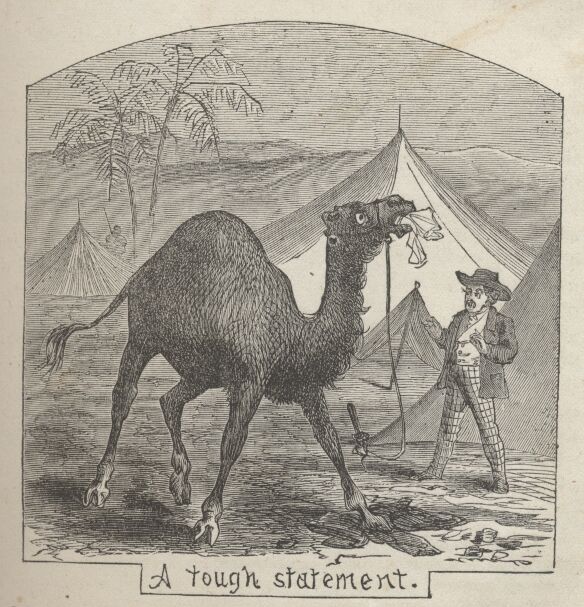
In Syria, once, at the head-waters of the Jordan, a camel took charge of my overcoat while the tents were being pitched, and examined it with a critical eye, all over, with as much interest as if he had an idea of getting one made like it; and then, after he was done figuring on it as an article of apparel, he began to contemplate it as an article of diet. He put his foot on it, and lifted one of the sleeves out with his teeth, and chewed and chewed at it, gradually taking it in, and all the while opening and closing his eyes in a kind of religious ecstasy, as if he had never tasted anything as good as an overcoat before in his life.

Then he smacked his lips once or twice, and reached after the other sleeve. Next he tried the velvet collar, and smiled a smile of such contentment that it was plain to see that he regarded that as the daintiest thing about an overcoat. The tails went next, along with some percussion caps and cough candy, and some fig-paste from Constantinople.

And then my newspaper correspondence dropped out, and he took a chance in that – manuscript letters written for the home papers. But he was treading on dangerous ground, now. He began to come across solid wisdom in those documents that was rather weighty on his stomach; and occasionally he would take a joke that would shake him up till it loosened his teeth; it was getting to be perilous times with him, but he held his grip with good courage and hopefully, till at last he began to stumble on statements that not even a camel could swallow with impunity.

He began to gag and gasp, and his eyes to stand out, and his forelegs to spread, and in about a quarter of a minute he fell over as stiff as a carpenter’s work-bench, and died a death of indescribable agony. I went and pulled the manuscript out of his mouth, and found that the sensitive creature had choked to death on one of the mildest and gentlest statements of fact that I ever laid before a trusting public.

At that point, the writer pretends to realize he has digressed and concludes the chapter in the persona of the naturalist he has earlier assumed.

I was about to say, when diverted from my subject that occasionally one finds sage-bushes five or six feet high, and with a spread of branch and foliage in proportion, but two or two and a half feet is the usual height.

Well, that’s probably more than enough of a diversion from your day’s responsibilities. I hope you enjoyed reading these words, and that your own skills as a digresser will be correspondingly enhanced.

Satirical Scottish Birds

C.S. Lewis has introduced me to many fascinating writers. Authors I never would have learned about without Lewis’ reference to them.

Sometimes Lewis praises their work. At other times, being an honest literary critic, he is compelled to provide a less flattering appraisal. He typically offers the latter evaluation with a novel flair.

In my previous post I shared the sad tale of a blackbird tapping at our window. I promised to discuss today some other curious birds. These creatures, in contrast to the forlorn blackbird, arise from the imagination of a Scottish poet named Sir David Lyndsay* of the Mount. He lived around 1490 to 1555.

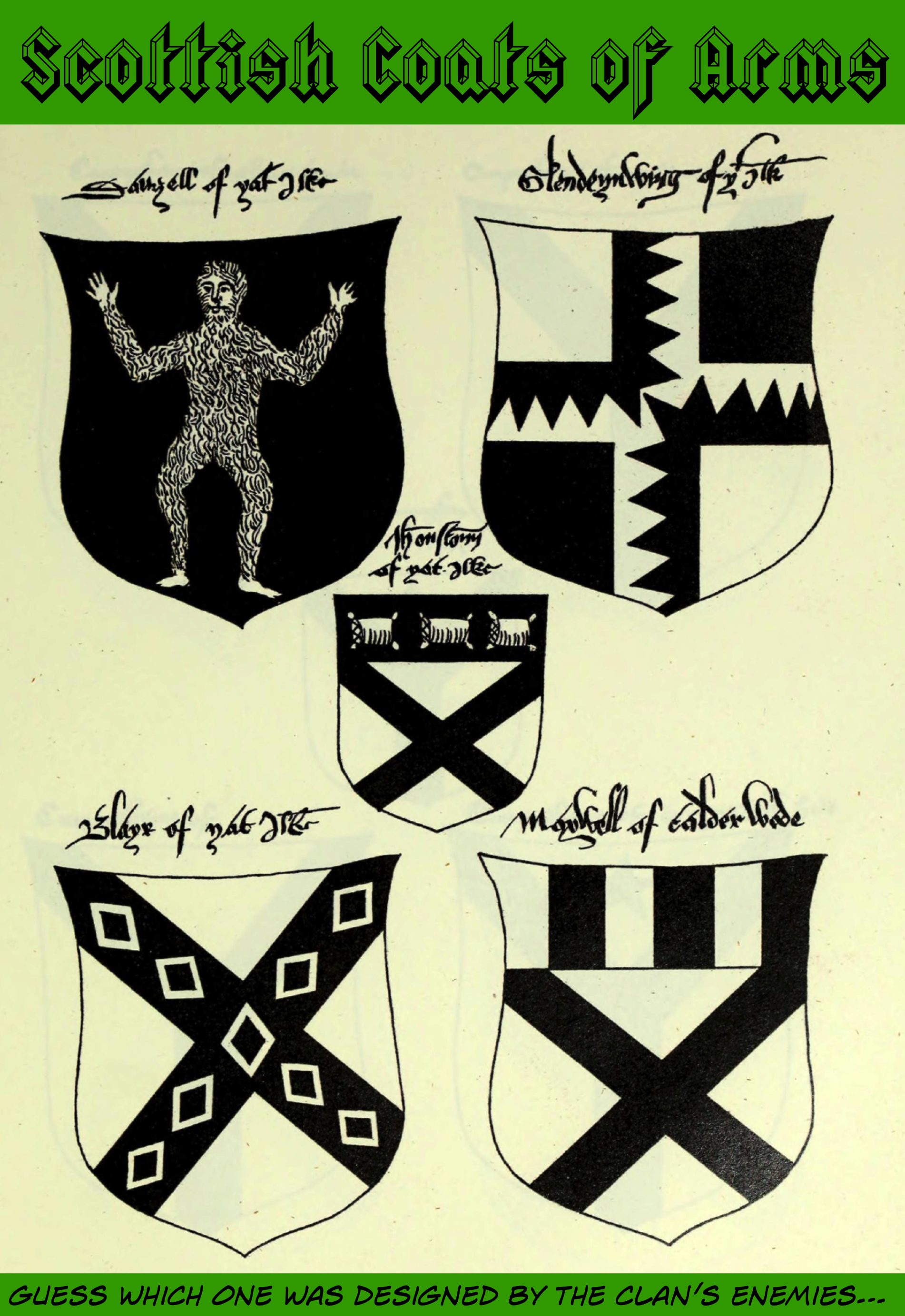
Lyndsay rose to the ceremonial rank of “The Right Honourable the Lord Lyon King of Arms,” which sounds quite impressive. In that capacity, he compiled 400 Scottish coats of arms, which was quite an achievement. You can download a rare facsimile of that document for your personal library from Internet Archive. The central shield may belong to my wife’s ancestors, “Jhonstoun of that ilke.”

Sir Lyndsay was a tutor to James V and served in his Court after his ascendancy to Scotland’s throne. However, it is for his poetry that David Lyndsay is remembered. Which is precisely why C.S. Lewis included him in the volume he wrote for the Oxford History of English Literature. English Literature in the Sixteenth Century Excluding Drama was published in 1944. While this authoritative volume is certainly not casual reading, it is extremely interesting. Just listen to how Lewis introduces Scottish writers of the “close of the Middle Ages.”

Sir David Lyndsay’s Legacy

This academic work is the place our favorite Inkling introduced me to “the last major poet of the old Scotch tradition.” I was on a quest for something interesting about birds, and I learned of a delightful piece of satire written by this Renaissance “Lion King.”

His works are a beautiful example of the ‘single talent well employed.’ The Satyre of the Thrie Estaitis, which holds an important place among our scanty materials for a history of the allegorical drama in Scotland, will be dealt with in another volume of this series . . . stands apart from the rest of Lyndsay’s output by the looseness of the metre and the general popularity of the style, and that it is rich in pathos and low humour.

In his remaining works he everywhere keeps well within the lines marked out for him by his great predecessors, there is no novelty in them . . . But what there is of him is good all through.

I am quite receptive to satire that skewers hypocritical clergy. That’s why the “episcopal ghost”⁑ in The Great Divorce is my favorite example of someone who has rejected the Truth.

This is what appealed to me about Lyndsay’s satire The Testament and Complaynt of our Soverane Lordis Papyngo.

The Complaynt [an earlier work] records, in a brisk, mocking fashion . . . the marked improvement in social order and general well-being throughout the kingdom, except as regards the “spiritualitie.” On the doings of the ecclesiastics he advises [the young king] to keep a watchful eye, and see that they preach with “unfeyneit intentis,” use the sacraments as Christ intended and leave such vain traditions as superstitious pilgrimages and praying to images. . . .

In The Testament and Complaynt of our Soverane Lordis Papyngo (parrot) he exposed more particularly the corruptions and worldliness of the spirituality, and this in a more comprehensive and scathing fashion than in his two previous pieces . . . (Cambridge History of English and American Literature).

And here are the ecclesiastical nemeses of the poem, “religious men, of gret devotioun.”

Here, also, all is pure satire—much of it of a very clever and trenchant character . . . the wise bird [the king’s parrot] with its “holy executors,” who appear in the form of a pyot [magpie] (representing a canon regular), a raven (a black monk) and a gled or hawk (a holy friar). The disposition and aims of these ghostly counsellors are sufficiently manifest; and they act entirely in keeping with their reputed character.

The poor parrot would have much preferred to have, at her death-bed, attendants of a less grovelling type of character, such as the nightingale, the jay, the mavis [song thrush], the goldfinch, the lark, etc.; but, since none of them has come, she has to be content with the disreputable birds who have offered her their services.

After a piquant discussion with them on the growth of ecclesiastical sensuality and greed, she thereupon proceeds to dispose of her personality—her “galbarte of grene” to the owl, her eyes to the bat, her beak to the pelican, her music to the cuckoo, her “toung rhetoricall” to the goose and her bones to the phoenix.

Her heart she bequeaths to the king; and she leaves merely her entrails, including her liver and lungs, to her executors who, however, immediately on her death, proceed to devour her whole body, after which the ged flies away with her heart, pursued by the two other birds of prey.

I can picture the assembled clergy in their avian forms offering their pseudo-comfort to the dying parrot. In English Literature in the Sixteenth Century, C.S. Lewis describes the misbegotten flock in the following manner.

[The parrot’s] testament is made in the unwelcome presence of certain birds of prey who turn out to be monks and friars of the feathered world. The dying parrot inveighs against their hypocrisy and avarice . . . while they vigorously defend themselves by throwing the blame on the secular clergy.

So far, the satire has been ordinary enough; but we find real satiric invention, and even a strange beauty, when the popinjay, having provided for the poor by leaving her gay coat to the owl, her eyes to the bat, and her voice to the cuckoo, and for herself by committing her spirit to the Quene of Farie, is torn in pieces by her carrion executors the moment the breath is out of her body—hir angell fedderis fleying in the air.

It is not without reason an article in Studies in Scottish Literature opens with this praise:

Lindsay’s concern for morality and truthfulness, in an age when political and religious institutions were notoriously corrupt, earned him a considerable reputation in his lifetime. Indeed for later generations of Scottish readers, Lindsay’s name became a byword for reliability and truthfulness, at times even rivalling divine Scripture.

You can read the original poem, along with all of Lyndsay’s other poetic works, in this 1871 collection.


* Just a caution for those looking for more information about Lyndsay: be aware that his surname is also spelled Lindsay, Lindesay and Lyndesay. Also, he should not be confused with Robert Lindsay of Pitscottie, a roughly contemporary author who compiled The Historie and Chronicles of Scotland. (Robert’s family name is also spelled with similar variants.)

⁑ Lewis’ use of the word “episcopal” here does not refer to a denomination. It suggests a churchly, or more accurately, a high-churchly theologian.

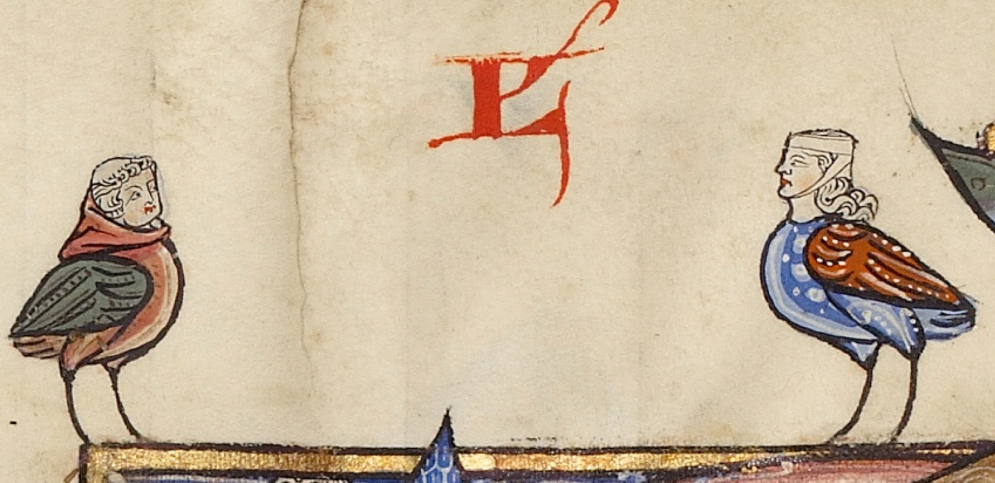
Noble Birds of Aragon, circa AD 1290

A Lesson Taught by a Blackbird

My wife and I love birds. Perhaps we enjoy them too much.

I say that because our backyard includes four different feeders. They are different types, and appeal to a variety of species. (We also have a hummingbird feeder on the other side of the house, just outside my office window.)

Blessed as we are to live in the Puget Sound area, we see a variety of avifauna.* Nearly every day we see doves, robins, sparrows, chickadees, juncos, finches, Steller’s jays, thrushes, flickers, towhees, red-winged blackbirds and hummingbirds. Oh, and starlings too, that are the only birds our border collie chases (because of their darting taunts, I suppose).

Occasionally we have goldfinches, quail, band-tailed pigeons, woodpeckers, and various other guests I’m not quite positive about. In the sky, and on the nearby shoreline, we see many seagulls, mallards, great blue herons, Canadian geese, and—particularly during the current season—bald eagles.

As I said, we are definitely blessed to enjoy so many lovely creatures surrounding us. But this post isn’t really about birds; it concerns a particular bird who has recently joined our community. It is (I’m pretty confident) a Brewer’s blackbird.

He boasts magnificent sheen on his jet black plumage. Sadly, though, he appears to be quite unhappy.

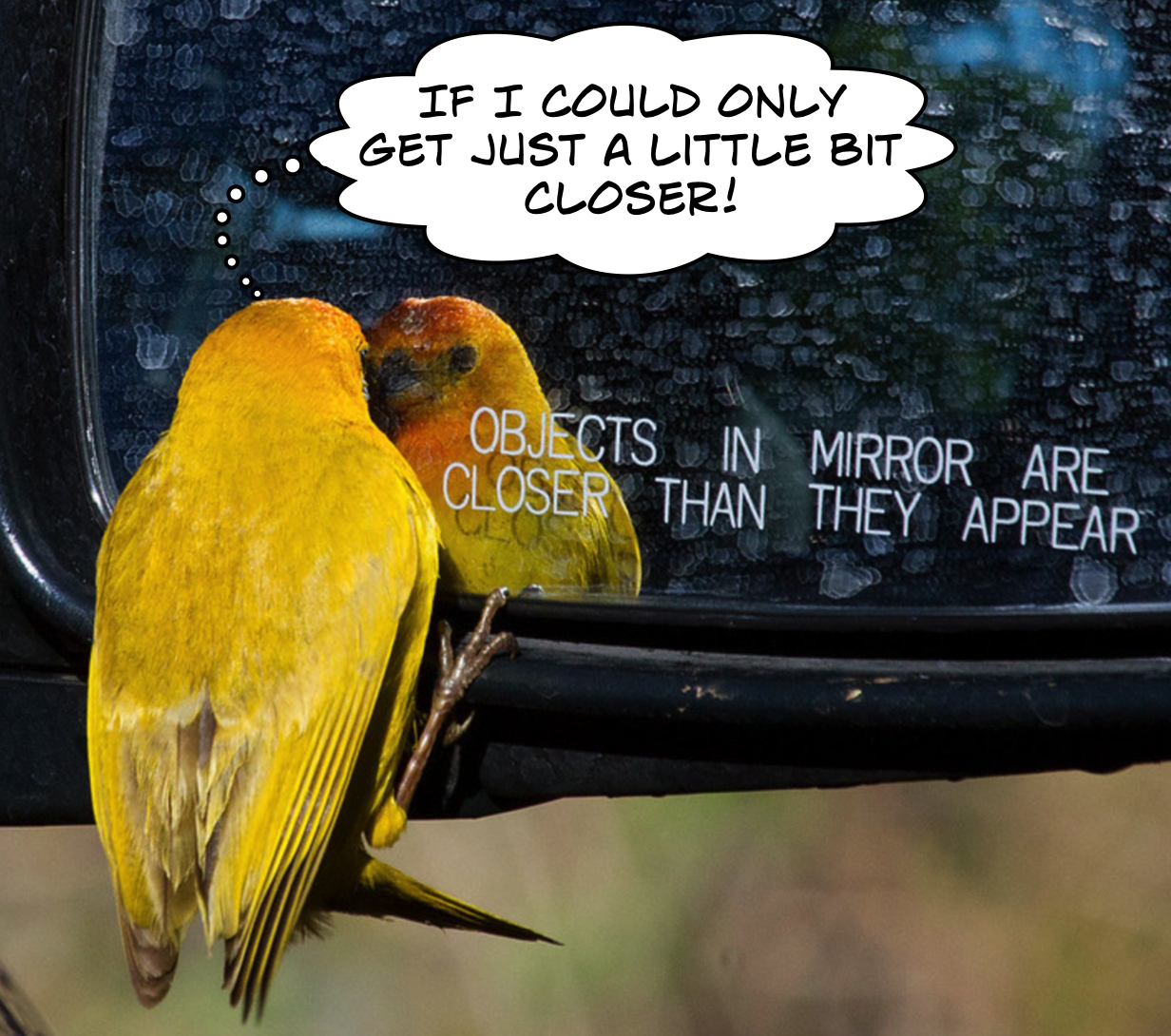
His unhappiness is due to unrequited love. A tragic condition shared by many human beings. You see, each morning he comes to a bird bath near our bedroom window where he can perch and view his own reflection on the glass.

Seeing a potential companion, he does a sort of courting dance, which the reflection presumably imitates. He bumps into the glass, often repeatedly. Despite his zealous efforts, he inevitably ends up disappointed. And yet, there he is, the next morning, delighted that his friend is willing to give him another chance.

We Are Like the Blackbird

One recent morning I awoke to his antics, and it struck my waking mind that that poor bird’s futile efforts are a metaphor of our lives.

We perceive idealized reflections of ourselves, so flawless we become enraptured. We think of ourselves as the most important thing in the world. In a sense, we begin to believe the universe revolves around us.

I remembered the Greek story of Narcissus. It is a myth offering many insights, not solely the dangers of unbridled self-love. It was because of his contempt for others that Narcissus was cursed to see in a pool a reflection of the only person he considered worthy of his attention. At first, when he fell “in love,” he did not recognize the image as being himself. The tragedy leads to his destruction.⁑

We too, I think as a I watch that small bird vainly striving to find fulfillment in an illusion, experience only disappointment and ultimate despair.

For days Narcissus knelt by the pool, hopelessly in love with the beauty of his own reflection. Before his eyes he saw the image grow pale and thin, weep tears, stretch out its arms, and look at him. Still he could not hear it, could not touch it, no matter how he implored.

While reflecting on this subject, I found a couple of articles I recommend to those desiring to ponder it further. And, next week we will consider other birds, from another perspective—their use in a Renaissance work of fiction, included by C.S. Lewis in his volume from Oxford History of English Literature.

C.S. Lewis on the Bible: Myth, Truth, Fact, and Genesis” explores C.S. Lewis’ contribution to comprehending the complexity inherent in mythology. He cites the simplistic interpretation of the story of Narcissus as a misleading reduction of the myth’s deeper message.

Understanding and Dealing with Today’s Culture of Narcissism” notes how C.S. Lewis offered a non-narcissian prescription for addressing the “hungry soul.”

Self-Centeredness Isn’t Narcissism’s Central Problem,” discusses the myth and the culture of Narcissism in which we are immersed. Author Angela Franks, a professor at St. John’s Seminary, then moves into a brilliant discussion of Till We Have Faces, which C.S. Lewis considered his finest book.

C. S. Lewis’s unjustly neglected rewriting of the myth of Cupid and Psyche, in his novel Till We Have Faces, provides a profound insight into the narcissistic spectrum. . . .

So it appears [in Lewis’ myth] that the beloved of the gods is not only the beautiful and wise Psyche, but also the tormented and ugly Orual. In the divine plan, the hideous older half-sister suffers in order to aid the beautiful maiden, but the beautiful maiden also goes through the greatest trials in order to purify Orual. The god, it appears, is willing to sacrifice his beloved in order to be united to the one who hates him. “What’s mine is yours!” Psyche and the god proclaim to Orual, but this time not in vengeance; in Lewis’s new myth, just retribution gives way to undeserved love.

To discourage our obsidian-feathered friend from squandering his brief life in pursuit of his own reflection, my wife and I just placed some decals on the window. It appears to have worked.

Would that our own echoes of Narcissus were addressed so simply.


* Don’t feel bad if this word is unfamiliar to you, don’t feel bad. I didn’t know it before I wrote this post. It means “the birds of a particular region, habitat, or geological period.”

⁑ The versions of this myth end in different ways, ranging from his divine transformation into a flower, to his despair and suicide.

Learning New Words

When you encounter an unfamiliar word, do you consider that inconvenient, or exciting?

I encountered a new word today. I read a lot, but rarely do I encounter an unfamiliar word.* I share it with you because of its peculiar meaning. You may want to use it sometime. The drawback is that it is a tad antiquated (thus its unfamiliarity). The word is “Panglossian.”

My “passing” grade in the study of Classical Greek in 1977 suggested the word might mean multi-lingual, since pan means “all,” and glossa means languages or tongues. I was wrong—but for a very odd reason.

Panglossian, you see, doesn’t refer to the literal meaning of its root words. It is based on the qualities of a character created by Voltaire for his satirical novella, Candide. Ironically, Voltaire presumably christened his professor of métaphysico-théologo-cosmolonigologie with this nomen⁑ because of its actual meaning.

The adjective Panglossian, however, has a completely distinct definition. Its difference was signaled for me by the capitalization of the first letter. Fans of Voltaire (among whom I do not count myself, or C.S. Lewis, for that matter) may already know its meaning. a definition, trust me, we shall get to momentarily.

First, I want to share C.S. Lewis’ observation about Voltaire, a Deist who was a savage critic of Christianity. In his autobiography Lewis includes the philosopher in a list of people he considered allies during his own season of atheism.

All the books were beginning to turn against me. Indeed, I must have been as blind as a bat not to have seen, long before, the ludicrous contradiction between my theory of life and my actual experiences as a reader.

George MacDonald had done more to me than any other writer; of course it was a pity he had that bee in his bonnet about Christianity. He was good in spite of it. Chesterton had more sense than all the other moderns put together; bating, of course, his Christianity. Johnson was one of the few authors whom I felt I could trust utterly; curiously enough, he had the same kink. Spenser and Milton by a strange coincidence had it too.

Even among ancient authors the same paradox was to be found. The most religious (Plato, Aeschylus, Virgil) were clearly those on whom I could really feed.

On the other hand, those writers who did not suffer from religion and with whom in theory my sympathy ought to have been complete—Shaw and Wells and Mill and Gibbon and Voltaire—all seemed a little thin; what as boys we called “tinny.” It wasn’t that I didn’t like them. They were all (especially Gibbon) entertaining; but hardly more. There seemed to be no depth in them. They were too simple. (Surprised by Joy).

Voltaire’s religious views aside, in Dr. Pangloss he devised a character energized by an incurable optimism. From that characterization, fifty years after Voltaire’s work another writer derived the adjective. If you are like me, knowing a word’s etymology—its origin and history—is intrinsically satisfying.

So, as Merriam Webster says: Pan·​gloss·​ian | pan-ˈglä-sē-ən was first used in 1831 to describe someone or something as being “marked by the view that all is for the best in this best of possible worlds: excessively optimistic.”

And, since the minting of new words is an ongoing process, it comes as no surprise panglossian has spawned variations.

According to a word research site, “writers have since made several compounds out of his name, such as Panglossic and Panglossism, but the adjective Panglossian is by far the most common and is frequently found even today.”

I encountered the word in an interesting First Things essay entitled “The Gospel According to Dickens.” The author describes Dickens’ hopeful tone and confidence, but declares “Dickens was not Panglossian, however. He expressed scorn for the society that insults and injures the weak and vulnerable.”

While I’m neither panglossic nor inclined in the least to panglossism, I’m glad such people exist. Their naiveté makes this world of ours far more interesting.⁂


* This is true, aside from specific “names” of things like an animal genus (e.g. trochilidae for hummingbirds or urochordate for the beloved sea squirt), or a pharmaceutical (e.g. Unituxin or Tecfidera). The business channel CNBC reports:

“If it seems as if drug names have been getting weirder, it’s because, in some cases, they have. . . . drug names use the letter Q three times as often as words in the English language. For Xs, it’s 16 times as much. Zs take the cake, at more than 18 times the frequency you’d find them in English words. And Ws? You’ll rarely see one in a drug name.” And, shockingly, the cost ranges from $75,000 to $250,000 for developing a single drug brand name.”

⁑ I studied Latin too, way back in 1969-71. The grades for my Latin scholarship were also “satisfactory.”

⁂ No offense intended to any readers of Mere Inkling who count themselves among the excessively optimistic! But, as for me, I’ve yet to be panglossterized.

Pandemic Politicians & Dinosaurs

One would think that with over two million deaths and counting, along with a global economy in freefall, that politicians would have no trouble focusing on what is important.

Of course, if you base your assumption on the logic of the matter—you would be wrong.

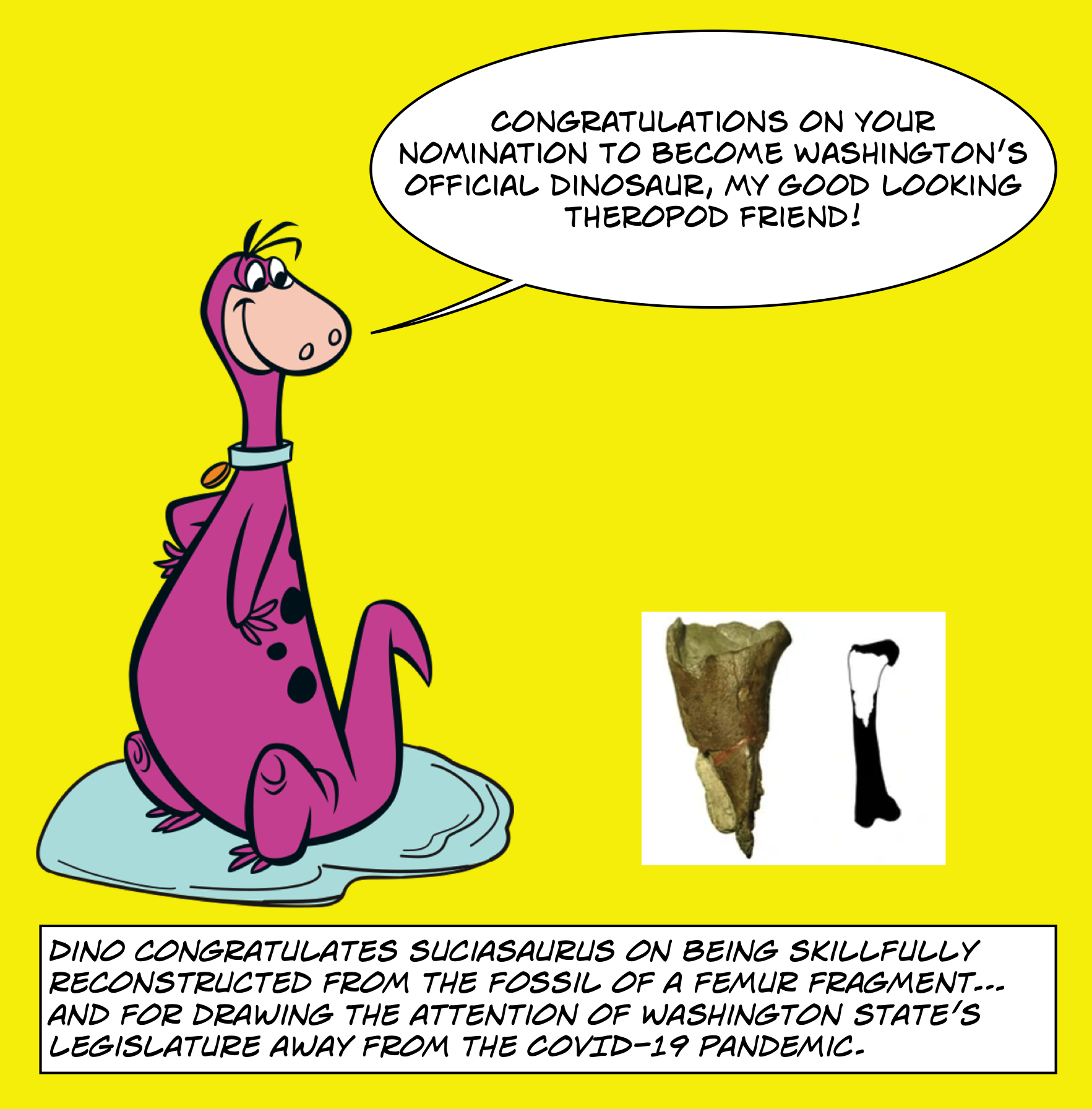
Politicians, nearly all of them it seems, possess an unlimited capacity for ignoring vital concerns and focusing on petty matters. Today’s example comes via the long-extinct theropod, Suciasaurus.

In the United States and, I suppose, various other nations, we have the quaint custom of adopting specific flora, fauna, etc. as their own. So, for example, the state tree of New Jersey is dogwood. The state fish of Wisconsin is the muskellunge.

I recently discovered a number of states have their own dinosaur (sometimes referred to as a fossil, which most are). Some, like Colorado, choose a familiar giant, in their case the stegosaurus. Others, such as Kentucky, opt for something more humble, in their case a brachiopod. (They look like clams, but are not molluscs.)*

Since dinosaurs are fashionable—even J.R.R. Tolkien has one—states without them are rushing to claim one before the best are all gone. Which brings us to our point.

Why, with life and death concerns competing for a government’s actions, would legislators waste their time with such inconsequential concerns?

In the “one-party” state in which I live, Washington, the legislative majority has already (in 2021) sought to schedule time to elevate the public stature of Suciasaures. (The minority party has suggested instead that COVID-19 cries out for attention before turning to dinosaurs, who have inarguably been waiting without complaint for some time.) More on dinos below.

C.S. Lewis’ Thoughts on the Subject

C.S. Lewis shared my ever-expanding disdain for most politicians. In The Literary Legacy of C.S. Lewis, we read that his stepson Douglas “Gresham pictures Lewis as completely skeptical of politicians . . .”

In The Allegory of Love, Lewis describes the power of politics to subvert a person from their earnest beliefs. “Some politicians hold that the only way to make a revolutionary safe is to give him a seat in Parliament.” Get people invested in the system, reaping the “rewards” of power and office, and it may come to own many of them.

C.S. Lewis’ clearest warning about politicians may come in his essay “Willing Slaves of the Welfare State.” It is worth reading in full, but I share here the pertinent section.

Here, I think, lies [humanity’s] real dilemma. Probably we cannot, certainly we shall not, retrace our steps [to freer, less governed ages]. We are tamed animals (some with kind, some with cruel, masters) and should probably starve if we got out of our cage. That is one horn of the dilemma. But in an increasingly planned society, how much of what I value can survive? That is the other horn.

I believe a man is happier, and happy in a richer way, if he has “the freeborn mind.” But I doubt whether he can have this without economic independence, which the new society is abolishing. For economic independence allows an education not controlled by Government; and in adult life it is the man who needs, and asks, nothing of Government who can criticise its acts and snap his fingers at its ideology.

Read Montaigne; that’s the voice of a man with his legs under his own table, eating the mutton and turnips raised on his own land. Who will talk like that when the State is everyone’s schoolmaster and employer? Admittedly, when man was untamed, such liberty belonged only to the few. I know. Hence the horrible suspicion that our only choice is between societies with few freemen and societies with none.

Again, the new oligarchy must more and more base its claim to plan us on its claim to knowledge. If we are to be mothered, mother must know best. This means they must increasingly rely on the advice of scientists, till in the end the politicians proper become merely the scientists’ puppets.

Technocracy is the form to which a planned society must tend. Now I dread specialists in power because they are specialists speaking outside their special subjects. Let scientists tell us about sciences. But government involves questions about the good for man, and justice, and what things are worth having at what price; and on these a scientific training gives a man’s opinion no added value. Let the doctor tell me I shall die unless I do so-and-so; but whether life is worth having on those terms is no more a question for him than for any other man.

It is shocking to realize the prescient Oxbridge professor wrote this essay more than sixty years ago. For further discussion of Lewis’ political thoughts, read this fine review of C.S. Lewis on Politics and the Natural Law.⁑

C.S. Lewis, the Dinosaur

C.S. Lewis made no apology about holding fast to what he deemed the treasures of the past. In this regard, he famously referred to himself as a dinosaur. In an essay entitled “De Descriptione Temporum,” he described the unique lessons that can be taught by dinosaurs.

If a live dinosaur dragged its slow length into the laboratory, would we not all look back as we fled? What a chance to know at last how it really moved and looked and smelled and what noises it made! And if the Neanderthaler could talk, then, though his lecturing technique might leave much to be desired, should we not almost certainly learn from him some things about him which the best modern anthropologist could never have told us . . .

I would give a great deal to hear any ancient Athenian, even a stupid one, talking about Greek tragedy. He would know in his bones so much that we seek in vain. At any moment some chance phrase might, unknown to him, show us where modern scholarship had been on the wrong track for years.

Ladies and gentlemen, I stand before you somewhat as that Athenian might stand. I read as a native, texts you must read as foreigners. You see why I said that the claim was not really arrogant; who can be proud of speaking fluently his mother tongue or knowing his way about his father’s house. . .

Where I fail as a critic, I may yet be useful as a specimen. I would even dare to go further. Speaking not only for myself but for all other Old Western men whom you may meet, I would say, use your specimens while you can. There are not going to be many more dinosaurs.

C.S. Lewis, the Dinosaur?

And, finally, there is a curious mention of dinosaurs in C.S. Lewis’ book, Miracles. While affirming the bodily resurrection, he dismisses the peculiar notion held by some that bodies will be comprised of the very cells that comprised the [original] body of each individual person. Lewis alludes to the recycling of atoms for other uses,⁂ which is an overwhelming concept.

The general resurrection involves the reverse process universalised—a rush of matter towards organisation at the call of spirits which require it. It is presumably a foolish fancy (not justified by the words of Scripture) that each spirit should recover those particular units of matter which he ruled before.

For one thing, they would not be enough to go round: we all live in second-hand suits and there are doubtless atoms in my chin which have served many another man, many a dog, many an eel, many a dinosaur.

Nor does the unity of our bodies even in this present life, consist in retaining the same particles. My form remains one, though the matter in it changes continually. I am, in that respect like a curve in a waterfall.

Well, that’s certainly something to ponder. But don’t ask any politicians to read this post; they have far more serious matters that demand their attention.


* Talk about digressions . . . now we have trivia within trivia.

⁑  From the review of C.S. Lewis on Politics and the Natural Law:

Lewis contends the roots of the rejection of natural law were formed by the ideas put forth in the 16th century. At the beginning of that century, “eternal verities” were abolished and by the end, man was abolished himself completely ruled by his passions and void of reason. Lewis termed these people, “men without chests,” an apt description for many politicians driven more by their passion for power and popularity than by reason.

⁂ Apparently, according to “Atomic Tune-up,” up to “98 percent of our atoms are replaced every year.” If you are willing to consider some freakish mathematical calculations related to the atoms recycled from the hydrogen and oxygen atoms that we breathe and become a part of us, check this out.

. . . there are hundreds of billions of King Tut’s atoms inside you right now, hundreds of billions of Hitler’s or Caesar’s atoms inside of you, and if you want to go even farther back, trillions of atoms that were a part of the Tyrannosaurus Rex, Sue, at the moment she died.

Prayers, Barbers & Saints

Barbers, and hairdressers, play a unique role in society. Let’s consider now two barbers whose interactions with great Christians contributed to our understanding of prayer.

Before we do, however, I wish to share another aspect of C.S. Lewis’ life which parallels many of our own. The great professor and author was exceptional for his knowledge, but in most other ways was just like us.

One example of Lewis’ normalness, is seen in his interactions with barbers. Due to the survival of much of his correspondence, we can witness a perennial tension—the desire of fathers that their sons cut their hair.

As a veteran whose adult son had a ponytail for several years, I understand the frustration of Lewis’ father, the Irish solicitor, when his son Jack lacked diligence in maintaining a neat appearance. In my own case, the die had been cast from my youth. Growing up in the late sixties, I did manage to sport a thick contemporary mane which chafed my own father, but too much of my youth was spent with a crewcut, the haircut-of-choice for my dad, the Marine Corps sergeant.

Presumably, while young Jack was still at home, his parents saw to it his hair was attended to. After his mother Florence’s death, and his move to boarding school, haircuts were a curious recurring theme in Lewis’ correspondence with his “Papy.” Below are a few of young Jack’s passing remarks on the subject.

Today I did a thing that would have gladdened your heart: walked to Leatherhead (for Bookham does not boast a barber) to get my hair cut. And am now looking like a convict (1914).

My dear Papy, Thanks very much for the photographs, which I have duly received and studied. They are artistically got up and touched in: in fact everything that could be desired–only, do I really tie my tie like that? Do I really brush my hair like that? Am I really as fat as that? Do I really look so sleepy? However, I suppose that thing in the photo is the one thing I am saddled with for ever and ever, so I had better learn to like it. Isn’t it curious that we know any one else better than we do ourselves? Possibly a merciful delusion (1914).

I am very sorry to hear that you were laid up so long, and hope that you now have quite shaken it off. I have had a bit of a cold, but it is now gone, and beyond the perennial need of having my hair cut, I think you would pass me as ‘all present and correct’ (1921).

I am afraid this has been an egotistical letter. But it is dull work asking questions which you can’t (at any rate for the moment) give a reply to. You do not need to be told that I hope you are keeping fairly well and that I shall be glad to hear if this is the case. For myself—if you came into the room now you would certainly say that I had a cold and that my hair needed cutting: what is more remarkable: you would (this time) be right in both judgements. Your loving son, Jack (1928)

Lewis’ High Street Barber

In the early 1950s, C.S. Lewis developed a meaningful relationship with his barber, based on their shared faith. Before we consider an essay inspired, in part, by this friendship, this 1951 letter reveals the affection Lewis held for the man.

My brother joins me in great thanks for all your kindnesses, and especially on behalf of dear little comical Victor Drewe—our barber, as you know.

When he cut my hair last week he spoke in the most charming way of his wife who has just been ill and (he said) ‘She looks so pretty, Sir, so pretty, but terribly frail.’ It made one want to laugh & cry at the same time—the lover’s speech, and the queer little pot-bellied, grey-headed, unfathomably respectable figure.

You don’t misunderstand my wanting to laugh, do you? We shall, I hope, all enjoy one another’s funniness openly in a better world.

Years later, C.S. Lewis would write a profound essay on “The Efficacy of Prayer.”

Some years ago I got up one morning intending to have my hair cut in preparation for a visit to London, and the first letter I opened made it clear I need not go to London. So I decided to put the haircut off too.

But then there began the most unaccountable little nagging in my mind, almost like a voice saying, “Get it cut all the same. Go and get it cut.” In the end I could stand it no longer. I went.

Now my barber at that time was a fellow Christian and a man of many troubles whom my brother and I had sometimes been able to help. The moment I opened his shop door he said, “Oh, I was praying you might come today.” And in fact if I had come a day or so later I should have been of no use to him.

It awed me; it awes me still. But of course one cannot rigorously prove a causal connection between the barber’s prayers and my visit. It might be telepathy. It might be accident. . . .

Our assurance—if we reach an assurance—that God always hears and sometimes grants our prayers, and that apparent grantings are not merely fortuitous, can only come [through a relationship which knows the promiser’s trustworthiness].

There can be no question of tabulating successes and failures and trying to decide whether the successes are too numerous to be accounted for by chance. Those who best know a man best know whether, when he did what they asked, he did it because they asked.

I think those who best know God will best know whether He sent me to the barber’s shop because the barber prayed.

You can read “The Efficacy of Prayer” in its entirety here. Or, should you prefer, you can hear it expertly read here.

The Story of Another Godly Barber

Four centuries before C.S. Lewis honored his barber by forever associating his name with the subject of prayer, the church reformer Martin Luther did the same. Luther’s friend was named Peter, and he lived during an age when skilled barbers also served as surgeons. According to the Barber Surgeons Guild,

The early versions of the Hippocratic Oath cautioned physicians from practicing surgery due to their limited knowledge on its invasive nature.  During the Renaissance, Universities did not provide education on surgery, which was deemed as a low trade of manual nature.

Barber surgeons who were expertly trained in handling sharp instruments for invasive procedures quickly filled this role in society. Barber surgeons were soon welcomed by the nobility and given residence in the castles of Europe where they continued their practice for the wealthy. These noble tradesmen, armed with the sharpest of blades, performed haircuts, surgeries and even amputations.

One church historian describes the Reformation context in an article entitled “Praying with Peter the Barber.”

Early in the year 1535, Peter Beskendorf became the most famous hairdresser of the reformation. He was Martin Luther’s barber and wrote to the great reformer asking for advice on how to pray.

Peter not only had a reputation as the master barber of Wittenberg, but he had a reputation for godliness and sincerity in his love for the Word of God. He was one of Luther’s oldest and best friends, so his request is not all that surprising.

What is surprising, however, is that Luther took the time out of his immensely busy reformation schedule to write him a thirty-four-page reply with theological reflections and practical suggestions about how he ought to approach prayer to the Almighty God.

In “Cutting Hair and Saying Prayers,” a lay theologian describes the focus of Martin Luther’s counsel.

When Luther’s barber, Peter Beskendorf, asked him how to pray, Luther wrote him an open letter that has become a classic expression of the “when, how, and what” of prayer. It is as instructive today as when it was first penned in 1535. . . .

Luther spends the bulk of his letter discussing what to pray. Implicitly in his letter, Luther teaches that God’s word is the content of our prayers.

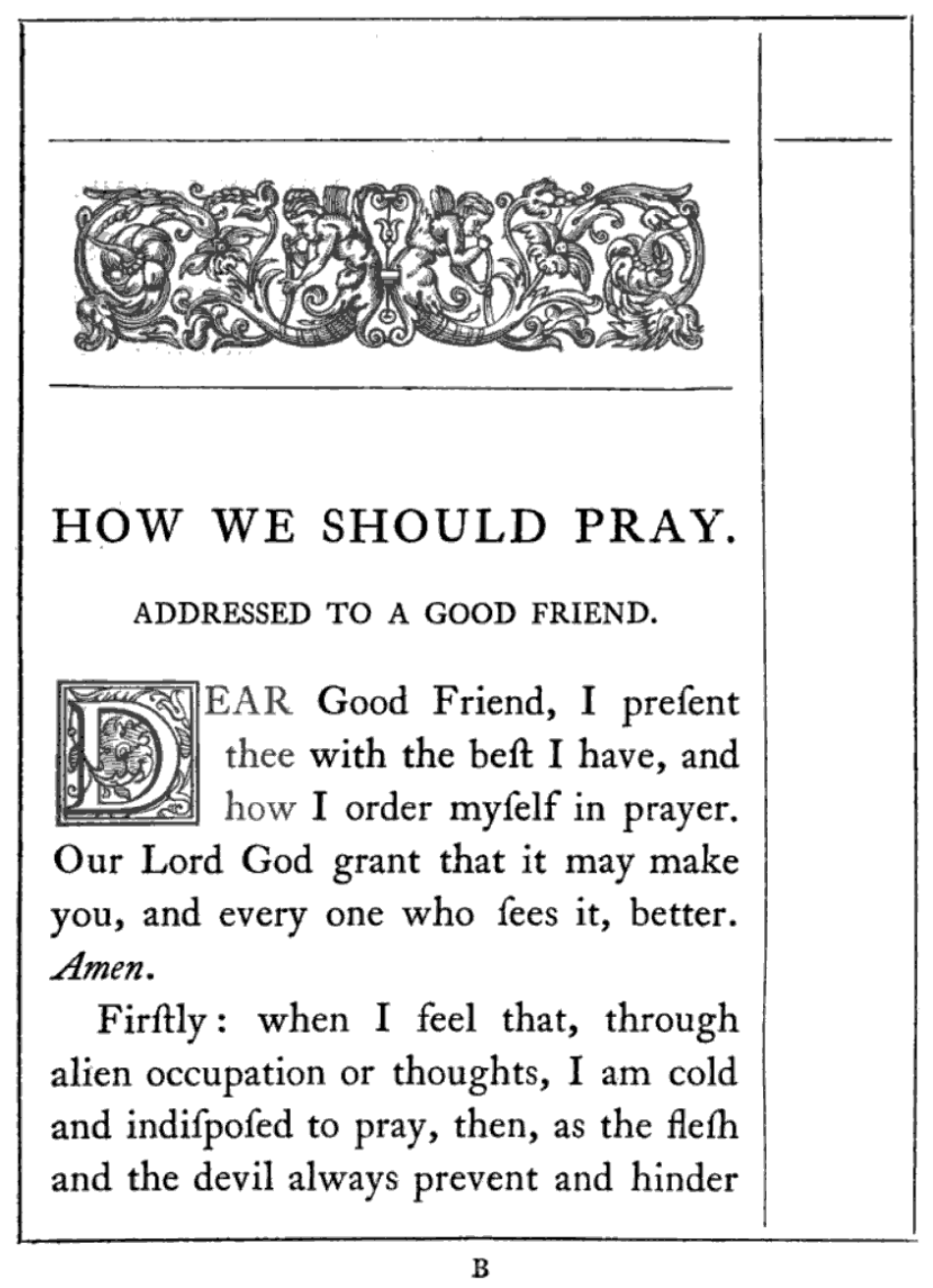
Luther graces the beginning of the book with a sincere prayer of blessing. “Dear Master Peter: I will tell you as best I can what I do personally when I pray. May our dear Lord grant to you and to everybody to do it better than I! Amen.”

In a very interesting essay entitled “Warrior Saints,” a Marquette professor commends the “sweet and practical booklet,” writing that “today this work is justly celebrated as a minor classic that both epitomizes Luther’s spirituality and powerfully suggests what a deep and lasting impact he would make on the lives of his many followers.”

Volume 43 of Luther’s Works includes the treatise. In the collection’s introduction to the document, it includes a heartbreaking event that followed its publication.

Luther wrote the book early in 1535 and it was so popular that four editions were printed that year.

At Easter a tragedy befell Peter. He was invited to the home of his son-in-law, Dietrich, for a convivial meal the Saturday before Easter, March 27, 1535. Dietrich, an army veteran, boasted that he had survived battle because he possessed the art of making himself invulnerable to any wound. Thereupon the old barber, doubtlessly intoxicated, plunged a knife into the soldier’s body to test his boast. The stab was fatal.

Master Peter’s friends, including Luther, intervened for him, and the court finally sent him into exile. . . . He lost all his property and, ruined and impoverished, spent the rest of his life in Dessau.

Such was the sad course of Beskendorf’s life. One can only hope that, as his life itself had been spared, Peter experienced some sort of healing and peace. Such blessings, after all, are often the fruit of prayer.

Luther’s humble essay on prayer remains in print today. If you would like to read or own it for free, I have found a London edition entitled The Way to Prayer.

One caveat, which might trouble some readers: since the translation was published in 1846, it employs the “medial S,” the one that looks more like a lower case “F.”* Whichever edition you choose to read, you will not be disappointed.


* The medial S is sometime referred to as the long S. You can read about its history in this interesting article.

The history of S is a twisting, turning path. Until around the 1100s or so, the medial S was the lowercase form of the letter, while the curvy line we use today was the uppercase form. But over time, the regular S, technically known as the “round S” or “short S,” started being used as a lowercase letter, too.

By the 1400s, a new set of S usage rules was established: The medial S would be used at the beginning of a lowercase word or in the middle of a word, while the round S would appear either at the end of a word or after a medial S within a word, as in “Congreſs” (which appears in the first line of Article I of the Constitution).