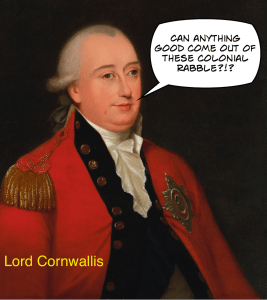
Not Wholly Contemptible

cornwallisEveryone loves a compliment. Allow me to rephrase that. Most people appreciate a sincere compliment when it is genuinely flattering.

Actually, “flattering” isn’t a good word choice here. Flattery has a bad rep. The way it’s currently used, it hints of exaggeration and manipulation.

So let’s return to the concept of “compliments” in general. Most, we know, are welcome. It’s nice to have someone tell us we did a commendable job or had a good idea.

Then there are those less sincere “compliments” that require a bit of intelligence or wit to offer. The go by different names, but are commonly referred to as “left-handed compliments” or “backhanded compliments.”

This type of statement might sound on its surface like a compliment, but includes an element that undermines the praise. The Urban Dictionary offers the following example:

“Boy, you’re pretty hot . . . for a fat (or skinny) chick!”

Now, that is nothing but an insult. And it’s an insult of the crassest variety. One that demands no wit at all.

The British, on the other hand, are often capable of offering highly refined backhanded compliments.

I just came across a delightful one, delivered by the commander of the King’s forces during America’s War of Independence. What makes this exquisite is that it was offered in the wake of the general’s defeat at the close of the war.

When finally brought to heel at Yorktown, Lord Cornwallis reported, “I will not say much in praise of the Militia of the Southern Colonies, but the list of British officers and Soldiers killed or wounded by them since last June, proves but too fatally that they are not wholly contemptible.”

You can read more about the context for that statement in an excellent article about the American legacy of “citizen soldiers” published in Hallowed Ground magazine. This excellent journal is published by the Civil War Trust, which works diligently to preserve battlefields from the Civil War. They have recently expanded those efforts to include the Revolutionary War.

C.S. Lewis & Compliments

Lewis included backhanded compliments in his fictional works. Two simple examples follow. The first is found in The Screwtape Letters, where the tempter frequently commends the skill of God (“the Enemy”) in redeeming the lost.

Never forget that when we are dealing with any pleasure in its healthy and normal and satisfying form, we are, in a sense, on the Enemy’s ground. I know we have won many a soul through pleasure. All the same, it is His invention, not ours.

Here is an offhanded compliment that Lewis places on the lips of Prince Corin in The Chronicles of Narnia. He is asked where Queen Susan is, on the eve of a battle and he responds like a typical young boy (which he still is at the time). He praises the martial spirit of her sister, Queen Lucy, who is a young adult at this point in the series.

At Cair Paravel. She’s not like Lucy [her sister who is in the ranks of the archers], you know, who’s as good as a man, or at any rate as good as a boy. Queen Susan is more like an ordinary grown-up lady. She doesn’t ride to wars, though she is an excellent archer. (The Horse and His Boy).

The late Bruce Edwards described how C.S. Lewis offered H.G. Wells a backhanded compliment. He did so by following the structure of Wells’ works, but devoting them to a vastly different philosophical purpose.

In Out of the Silent Planet (1938), Lewis adapted the general plot outline from H.G. Wells’s First Men in the Moon in order to tell an essentially anti-Wellsian tale. In Perelandra, Lewis pays a similar backhanded compliment to the man he admired as a speculative writer, but not as a philosopher.

The broad narrative structure of Perelandra resembles another novel by H.G. Wells, The Time Machine (1895). . . . In Wells’s novel, this narrative outline provides the basis of a quasi-Marxist fable about effete bourgeoisie and surly proletariat. In Lewis’s hands, a similar story structure tells a very different tale, one in which the ultimate battles are not economic and political, but rather cosmic and spiritual. (C.S. Lewis: Fantasist, Mythmaker, and Poet).

Compliments: the Good & the Bad

Lewis’ use of Wells’ science fiction template was not meant to slight him. It was actually a tribute. Likewise, in the examples from his fiction, Lewis is simply representing (effectively) the attitudes of the speakers.

Returning for a moment to the abject General Cornwall, we recognize as well the grudging nature of his praise of the enemy. They were certainly rabble—possessing no great military skill, in his estimation. Yet, in terms of bringing the army of the greatest power in the world at that time to its surrender, “they are not wholly contemptible.”

And that, when it came to winning the war, apparently proved quite sufficient.

Africa Comes to America

saharaYes, you read the title correctly; it’s no typo. Africa itself arrived in America this summer—and it’s an event that apparently takes place every year!

In a recent post by one of Mere Inkling’s earliest subscribers, I learned about the annual Saharan Air Layer. It is an enormous dust cloud that transits the entire Atlantic Ocean and is vital to the western hemisphere, especially the Amazonian rain forests. More about the SAL below.

I find this phenomenon fascinating. It reveals how intricately balanced and interconnected God has created this amazing ecosystem we call earth.

I appreciate this fact, even though I don’t consider myself an environmentalist. That doesn’t mean, of course, that I don’t recycle. What’s more, I would actually like to see brazen polluters incarcerated and tasked with personally cleaning toxic waste dumps . . . but that’s not the theme of this reflection.

It seems to me that part of being truly human, is possessing an appreciation—or even a love—for the world in which our Creator has allowed us to dwell. By love, I mean a deep affection for the flora and fauna, and even the mountains and valleys themselves.

I am not proposing idolatry.

I am in good company in valuing nature. C.S. Lewis found time spent walking in the countryside to be invigorating. It was renewing, for body, mind and soul.

Several years back a book was published with the peculiar subtitle, The Environmental Vision of C.S. Lewis.

The authors of Narnia and the Fields of Arbol explores the way Lewis displays his “ecological” concerns, particularly in his fiction. They also consider J.R.R. Tolkien’s similar attitude.

It is no coincidence that these two men, as soldiers during the Great War, had seen the worst violence humanity could do to nature. The ravages wrought by the orcs surrounding Isengard were echoes of the lifeless terrain of shell-shattered Western Front.

Writing this now, I recall a poem I wrote for Curtana: Sword of Mercy.

“A Foreshadowing of Epics” begins:

Filthy trenches greeted the novice soldiers’ eyes,

their two imaginations envisioned greener lands.

Crimson combat splashed red their vision,

and colored portraits one day painted with their words.

The frontlines were barren,

scarred earth stripped of all life.

Fallen trees mimicked casualties,

not even the smallest of creatures escaped death.

It may seem ironic to some that those very fields now are green, and teeming with life. It is the mercy of God that restores the scarred and heals the broken. And, as impressive as those miracles are evident in nature, they are far more wondrous when it is human lives that are transformed and resurrected.

So it is that I find the wonder of the barren and seemingly lifeless Saharan dust bringing nutrients to hungry forests on the other side of the earth amazing. No mere accident that.

If Jesus delays his return and this globe continues to spin for more centuries still, I would not be surprised to see the Americas returning to Africa a similar gift of life.

_____

Weather.com has a short video about the Saharan Air Layer here.

Pacifism as an Enemy of Peace 

blimp 01The literary careers of C.S. Lewis and George Orwell overlapped in some interesting ways.* Today we will consider a rather odd British personality mentioned by each of them in wartime essays, Colonel Blimp.

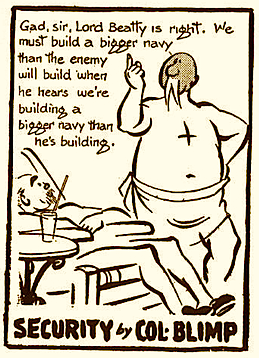
Colonel Blimp was a cartoon figure, inspired by a conversation between two military officers who were arguing that “cavalry” officers should continue to wear spurs even when they migrated into tanks.**

At one time the cartoon was so popular that Lewis wrote:

It may well be that the future historian, asked to point to the most characteristic expression of the English temper in the period between the two wars, will reply without hesitation, “Colonel Blimp.” (“Blimpophobia”).

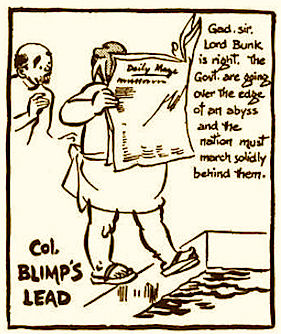
The good colonel echoes similar foolish notions as he blusters about in a caricature of pompous military commanders. Blimp is retired, but harangues all within earshot about the wisest course for the nation.

Orwell wrote derisively of the military and imperialistic middle class, that he called “the Blimps.” He drew the label from the “colonel with his bull neck and diminutive brain, like a dinosaur.” (“The Lion and the Unicorn”).***

blimp 02The cartoon above illustrates how Colonel Blimp is certain he has the solution to winning the arms race. The frame to the right shows that he believes his wisdom extends beyond the military to politics in general.

Timely Advice from C.S. Lewis

In “Blimpophobia,” Lewis offers advice which proves apropos for our modern age. Today, as fanatical barbarians seek to destroy civilization, enlightened nations and individuals must be vigilant.

One dimension of that vigilance involves walking the fine line between unbridled nationalism and self-absorbed pacifism. When he wrote, Lewis was worried about the anti-war sentiment that threatened to undermine Britain’s response to the Nazis.

Lewis, a wounded combat veteran of the Great War, recognized the truth of the Colonel Blimp caricature. He said something veterans recognize even more clearly than civilians. There is an overabundance of preening and stupidity in the military.

The infection of a whole people with Blimpophobia would have been impossible but for one fact—the fact that seven out of every ten men who served in the last war, emerged from it hating the regular army much more than they hated the Germans. How mild and intermittent was our dislike of “Jerry” compared with our settled detestation of the Brass Hat, the Adjutant, the Sergeant-Major, the regular Sister, and the hospital Matron!

Now that I know more (both about hatred and about the army) I look back with horror on my own state of mind at the moment when I was demobilized. I am afraid I regarded a Brass Hat and a Military Policeman as creatures quite outside the human family.

Still, he said we cannot allow that sad truth to cause us to deny the requirement to maintain a strong defense. “A nation convulsed with Blimpophobia will refuse to take necessary precautions and will therefore encourage her enemies to attack her.”

C.S. Lewis warned his countrymen of the dangers military-phobia during the Second World War. And—among the war-weary nations of the free world battling jihadism—we are wise to heed his wise words today.

The future of civilization depends on the answer to the question, “Can a democracy be persuaded to remain armed in peacetime?” If the answer to that question is No, then democracy will be destroyed in the end. But “to remain armed” here means “to remain effectively armed”. A strong navy, a strong air force, and a reasonable army are the essentials. If they cannot be had without conscription, then conscription must be endured. (C.S. Lewis, “Blimpophobia”).

_____

* In “A Literary Phobia,” I compared some advice they offered to writers. The counsel in question sounds similar on the surface, but actually differs. In “Orwellian Advice,” I contrast the two authors in much greater detail.

** Blimp’s creator, David Low, resided in London but was actually a New Zealander.

*** You can read Orwell’s 1941 essay, “The Lion and the Unicorn,” here.

Fleeting Fame

fameIt’s likely that the names of 98.6% of authors who top the bestseller charts today will be unremembered a century from now.

This weekend I posted the latest issue of Curtana: Sword of Mercy, a journal I edit about military chaplains. (If you are interested in checking it out, you can download a free copy here.)

The current issue includes an interesting article about two chaplains from Vermont who served during the War of 1812. (For international readers, that was the war following the winning of America’s independence when they British got their revenge—they captured our national capital and burned the capitol.)

In the biographical portion of the article, the author included a final summary of the life of one of the chaplains. Solomon Aiken (1758-1833) left his civilian pulpit to serve soldiers and sailors.

Aiken was quite prominent in his day. Not only was he a well known preacher and writer, he actually served as a member of Vermont’s legislature. Yet, I doubt that even Vermonters would recognize his name today.

Here is the quotation from a nineteenth century tribute published after his passing.

Mr. Aiken enjoyed uncommon health and vigor. He never took a particle of medicine, or lost a relish for food, until his final and brief sickness—a pleurisy fever. He possessed peculiar power as a logician, and was very popular as a preacher. He was kind-hearted and benevolent, almost to a fault. But it is chiefly as a political writer that Mr. Aiken is remembered. He was sent as a representative for two years, by the town of Dracut. He published several sermons and pamphlets, chiefly upon political themes, which excited much attention in their season.

The words that seized my attention were the conclusion, “. . . which excited much attention in their season.”

“In their season . . .” That season must have been brief, since the history was written just twenty years after Aiken’s death. By then his works had either withered or, more optimistically, gone to seed. In either case, their day was passed.

Translating that to our modern era, where things become obsolete almost as soon as they are envisioned, it would imply that our “season” of fame or reputation will last little more than a handful of months. And that, of course, assumes that a person actually achieves some level of renown.

Fame is fleeting. It has always been so, and the good Reverend Aiken is simply another example of that truth.

Thank God (literally) that there is more to life than notoriety.

C.S. Lewis is one of the 1.4% whose fame lasts. His has not diminished; it continues to grow. Just a year ago, on the fiftieth anniversary of his death, he was honored by having a plaque dedicated in Poet’s Corner in Westminster Abbey.

Lewis never sought fame, as the following discussion from his essay “The Weight of Glory” clearly reveals.

I turn next to the idea of glory. There is no getting away from the fact that this idea is very prominent in the New Testament and in early Christian writings. Salvation is constantly associated with palms, crowns, white robes, thrones, and splendour like the sun and stars. All this makes no immediate appeal to me at all, and in that respect I fancy I am a typical modern.

Glory suggests two ideas to me, of which one seems wicked and the other ridiculous. Either glory means to me fame, or it means luminosity. As for the first, since to be famous means to be better known than other people, the desire for fame appears to me as a competitive passion and therefore of hell rather than heaven. As for the second, who wishes to become a kind of living electric light bulb?

When I began to look into this matter I was stocked to find such different Christians as Milton, Johnson and Thomas Aquinas taking heavenly glory quite frankly in the sense of fame or good report. But not fame conferred by our fellow creatures—fame with God, approval or (I might say) “appreciation’ by God.

And then, when I had thought it over, I saw that this view was scriptural; nothing can eliminate from the parable the divine accolade, “Well done, thou good and faithful servant.” With that, a good deal of what I had been thinking all my life fell down like a house of cards.

This exceptional work merits consideration not only by people of faith. It invites all honest readers to gaze within themselves at their deepest yearnings.

Another passage from C.S. Lewis that relates strongly to the subject at hand comes from The Great Divorce. You can read the entire passage here, but the heart of it is this. Lewis views a simple woman, presently in heaven, receiving magnificent praise and celebration. He naturally assumes she must have been some well known saint.

He is, however, informed that she lived an obscure life, despite the fact that she touched countless nondescript people and animals with her compassion. Lewis’ heavenly guide is rather surprised that the Oxford professor has overlooked a simple truth:

Fame in heaven “and fame on Earth are two quite different things.”

Only the second will last.

Inkling Chivalry

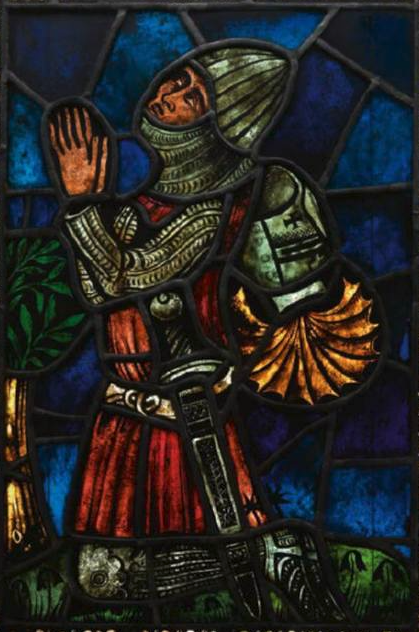
praying knightJ.R.R. Tolkien and C.S. Lewis practiced what they preached.

While most people are content to sit back while others battle for just causes. Sadly, cowardice appears to outweigh bravery in our modern age. We have, Lewis says, “having grown up among the ruins of the chivalrous tradition . . .” (“The Necessity of Chivalry”).

Lewis and Tolkien, by contrast, were genuine heroes. Peaceful academics by nature, each of them responded to their nation’s call to defend their homeland against the Huns.

In the world of the modern university—inhospitable to those who would defend the veracity of the Scriptures—each man counted the cost, and willingly bore the ridicule of skeptics and secularists.

Not only were these two Inklings paragons of courage, they engaged in their battles with a code of chivalry. Neither desired the destruction of their foes. Instead, they sought the preservation of truth, justice, peace and mercy.

Chivalry is a concept alien to the modern era. In an age when there is so little mercy and forgiveness, it seems a more and more archaic notion each day.

Yet, chivalry is not dead.

Both of these men not only modeled the virtue, they imbued their works with its spirit. The heroes of Middle Earth and Narnia are chivalrous almost to a fault. And the spiritual heirs of both fictional domains, still yearn to be chivalrous in their own lives.

So, precisely what is it? As Lewis begins his essay on the subject, he writes, “The word chivalry has meant at different times a good many different things—from heavy cavalry to giving a woman a seat in a train.”

Lewis considers the “double demand it makes on human nature” through an exploration of the Middle Ages.

The knight is a man of blood and iron, a man familiar with the sight of smashed faces and the ragged stumps of lopped-off limbs; he is also a demure, almost a maidenlike, guest in hall, a gentle, modest, unobtrusive man. He is not a compromise or happy mean between ferocity and meekness; he is fierce to the nth and meek to the nth.

Gentle toward the innocent and vulnerable. Relentless versus evil.

What, you may ask, is the relevance of this ideal to the modern world? It is terribly relevant. It may or may not be practicable—the Middle Ages notoriously failed to obey it—but it is certainly practical; practical as the fact that men in a desert must find water or die.

We live in a violent world, and the beheading of even children suggest things are growing worse. So, more than ever, Lewis tells us, we need chivalrous people like Lancelot, who combined these conflicting qualities. We need gentle men, like Lewis and Tolkien, who are willing to lay aside their books to face the specter of war on the front lines.

Lewis forcefully describes the three divisions of humanity bereft of chivalry.

If we cannot produce Launcelots, humanity falls into two sections—those who can deal in blood and iron but cannot be “meek in hall”, and those who are “meek in hall” but useless in battle—for the third class, who are both brutal in peace and cowardly in war, need not here be discussed. When this dissociation of the two halves of Launcelot occurs, history becomes a horribly simple affair.

Lewis wrote the essay during the Second World War. He and others among the Inklings had stood in the gap during the “war to end all wars.” Now he was observing a glimmer of hope in the witness of a successive generation doing its part.

Launcelot is not yet irrecoverable. To some of us this war brought a glorious surprise in the discovery that after twenty years of cynicism and cocktails the heroic virtues were still unimpaired in the younger generation and ready for exercise the moment they were called upon.

In the face of the contemporary ferocity of global terrorism, we see many young men and women following their example. Surely, they are a minority among the population, but we are all deeply fortunate they exist.

Our prayers should accompany those of all nationalities who are courageous enough to face the blade of modern barbarians. And our prayer should be that they are not merely brave, but also meek.

Parachute Optional

c141Under what circumstances would you tell an airman that pulling their rip cord if they exit the plane is optional? I never knew of any until I read an article about resupply missions to the South Pole.

The current issue of Air Force Magazine includes a fascinating article about resupplying McMurdo Station and a second temporary site at the Pole itself. Because of the extreme cold, 100 degrees below zero Fahrenheit (that’s -73.333 degrees Celsius), any airman who accidentally fell from the plane as the pallets were dropped, could not expect to be rescued before freezing to death.

Parachute-laden crewmen standing near open doors of a C-141B Starlifter during a midwinter Antarctic airdrop in 1983 were told they could pull the D-ring ripcord if they fell overboard—or just not bother. The chance of being safely recovered in the darkness and [bone-freezing] temperatures was practically nonexistent.

Putting things in historical perspective, we can consider the fate of WWI pilots in Germany. Theirs was the first nation to provide standard parachutes, and during the first 70 bail outs, a third of the pilots perished. With those statistics, one wonders how many airmen followed the “just not bother” course of action and chose to remain with their plunging aircraft.

C.S. Lewis had a friend named Leo Baker who had served in France as a pilot of the 80th Squadron of the Royal Air Force. The two combat veterans hit it off because of shared interests, including their mutual love of poetry. Here is how Lewis initially described Baker to his lifelong friend, Arthur Greeves, in 1920.

You ask about Baker, and I hardly know how to describe him. He was at a mixed school of a very modern type, where everyone seems to have written, painted and composed. He is so clairvoyant that in childhood “he was afraid to look round the room for fear of what he might see.” He got a decoration in France for doing some work in an aeroplane over the lines under very deadly fire: but he maintains that he did nothing, for he was “out of his body” and could see his own machine with “someone” in it, “roaring with laughter.” He has a bad heart.

He was a conscientious objector, but went to the war “because this degradation and sin might be just the very sacrifice which was demanded of him.” He maintains that everything in Algernon Blackwood [writer of ghost stories] is quite possible: and though the particular cases may be fictitious, “things of that sort” are quite common. He is engaged to be married.

In appearance, he is about my height, with very fair hair, glasses, remarkable eyes and according to the Minto [Janie Moore], rather like you. I like and admire him very much, though at times I have doubts on his sanity.

Like Lewis, Baker had been seriously wounded during the war. He was awarded the Distinguished Flying Cross. Fortunately, it appears he did not have to rely on a primitive parachute. Or, if he did, he was one of the fortunate survivors.

Returning to Antarctica for just a moment, it seems that South Pole mission would have been an exciting adventure in which to share. Terrifying too, perhaps. Fortunately, like Lewis and Baker (and Tolkien, as well), all of the service members returned home safely, mission accomplished.

_____

The picture above is a military photograph of a pair of Emperor penguins observing an American C-141 resupply mission during the summer months.

Navy Nerds

nerdEvery once in a while, the military has a good idea. Sure, they have a knack for technological breakthroughs in warfare . . . but what about other fields? The NAVY NeRD answers that question in the affirmative.

NeRD stands for Navy eReader Device.

Well-informed readers of Mere Inkling are already aware of the growing intensity of international cyberwarfare. It is no joke, and lives are at stake.

Draconian policies are in place to avoid the contamination of the military computer system by innocently transferred viruses. Since virtually all digital platforms allow for the transfer of data, they are potentially dangerous.

Because of that, even ereaders have been off limits in certain environments. Now, however, someone has thought outside the proverbial box and come up with a solution to that problem.

The United States Navy has devised a novel ereader that comes loaded with 300 titles, but has no ports or wireless connectivity to allow for inadvertent viral transfers.

The selection of books sounds pretty well rounded. Some public domain classics, and a number of contemporary best sellers like A Game of Thrones. Fans of J.R.R. Tolkien will be delighted to know the readers also include The Lord of the Rings.

Reading is a productive way to spend one’s free time during a lengthy period at sea. Even for those not prone to opting for it when faced with all the distractions ashore.

During WWII, C.S. Lewis wrote a letter to a former student who was serving in the Navy, “out of reach of libraries.” It acknowledges the perennial problem of sailors—lack of space for personal property. The letter was written in response to a request from Michael Rayner Thwaites for reading recommendations. Thwaites was an Australian poet and military intelligence officer.

A man who has already your linguistic training might well, I think, begin the Anglo Saxon on his own. You will need E. Wardale Old English Grammar. . . . For texts, the ordinary beginning is first Sweet’s Anglo Saxon Primer and then his Old English Reader. But you, being a classic might well, after a dip in the Primer go on to King Alfred’s trans. of Boethius De Consolatione Philosophiae . . .

Whether you can begin O.E. poetry on your own I don’t know. But try getting . . . Beowulf: and with it Clark Hall’s trans. ed. by Wrenn with preface by Tolkien . . . This edition is essential for it is Tolkien’s part of metre wh. is essential. (O.E. verse uses both quality and accent, and your ear is prob. ruined, as mine was, by the false way they teach Latin metre at schools–drastic re-education is required. . . .

As to modern literature. You must not start out to study it ‘as it reveals man’s hesitant advance to the idea of a God-created world’. Don’t you see you are laying down in advance what a phenomenon is to reveal before you have examined the phenomenon? It may reveal that: it may not. You have to find out. I don’t think I can lay down any v. definite course of reading.

All I can point out is that while you are in the navy and out of reach of libraries and new publications, this is the proper time for solid reading through the big (i.e. long) authors, critical works and histories of lit. can come later. Now is the time for Chaucer, Malory, Spenser, Sidney, Shakespeare, Dryden, Pope, Swift, Johnson, Fielding, Richardson, Cowper, Scott, Wordsworth, Byron, Dickens etc etc.

If you usually keep two books of widely different period and type going together (e.g. Faerie Queene & Tom Jones) you won’t get bored. I myself always index a good book when I read it for the first time noting (a) Linguistic phenomena. (b) Good & bad passages. (c) Customs: meal times, social classes, what they read etc. (d) Moral ideas.

All this reading, tho’ dedicated ad Dei gloriam in the long run must not be infected by any immediate theological, ethical, or philosophic reference. Your first job is simply the reception of all this work with your imagination & emotions. Each book is to be read for the purpose the author meant it to be read for: the story as a story, the joke as a joke.

Back to the NeRD

The Navy is making 385 devices at first, with more to follow, with five being sent to each submarine in the Navy to be shared among the crew.

That’s only the start, of course. One would anticipate that even for a military crew (for example, 155 personnel on a Trident sub), a mere five mini-libraries would prove insufficient. (No offense intended; yours truly is a veteran himself.)

Undue Honor

orphan flightHow should we respond when someone else receives all of the praise and accolades for something we actually accomplished? I confess my natural, human reaction is to resent them for it. The example of one outstanding Korean War chaplain, however, clearly reveals how it is much more noble to simply reject resentment and move forward in life.

This column continues a story introduced in my last post, so if you missed it, you may find it helpful to pause and read that piece before continuing. It’s available here.

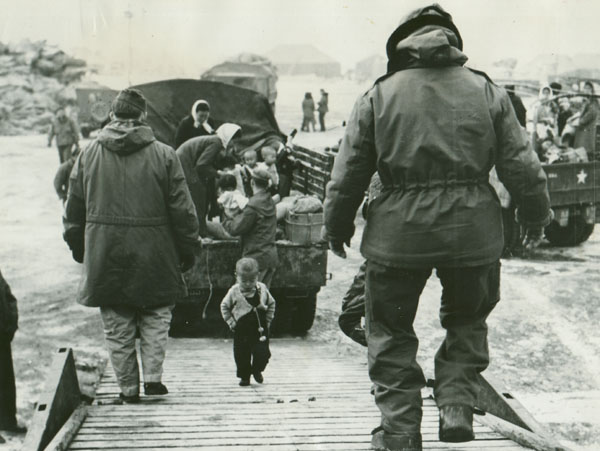
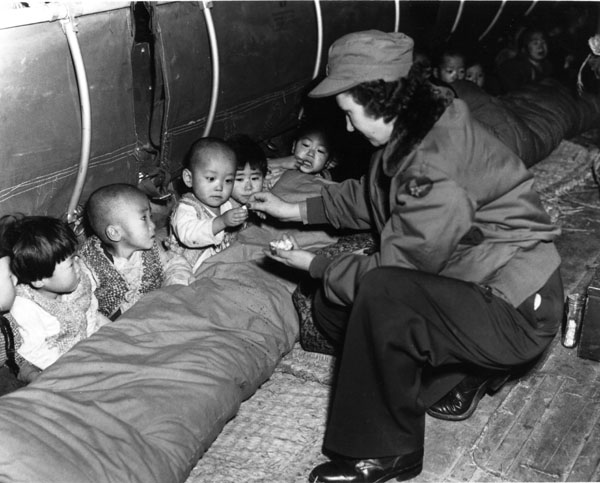
In discussing the plight of the orphans during the Korean War, I mentioned the name of Chaplain Russell Blaisdell. He and his ministry partner, Staff Sergeant Mike Strang, saved nearly a thousand orphans during a single heroic action in December of 1950.

The full story of the Kiddy Car Airlift can be found on the website of the Korean War Children’s Memorial.

Here are the highlights. For months Chaplain Blaisdell and Sergeant Strang had been rescuing homeless children from the streets of Seoul. Due to the rapid advance of Communist forces, the fall of the capital city became imminent.

The military was rapidly attempting to redeploy its assets, to minimize the resources which were destined to fall into the hands of the enemy. Transporting noncombatants to safety fell far down the long list of urgent missions. The children were nonessential. To everyone, that is, except these two men.

The details of their heroic effort are the stuff of movies. And a movie that included this great escape was indeed made. The only problem is that it did not reflect the true story, and neither of the true heroes received their due.

The story of this injustice is related online here. Briefly, another Air Force officer, a pilot who assisted Blaisdell with finding quarters for the refugees behind friendly lines, received the credit due to the ministry team. So, exactly how did this travesty come about?

Colonel Dean Hess wrote a book, entitled Battle Hymn. It sold well, and included many significant actions in which the author had presumably been directly involved. However, the most significant event, in which he was involved only indirectly, was a focal point of book and its subsequent film (starring Rock Hudson, no less).

Only in very recent years, and unfortunately after Strang had died, has the story been set straight. Blaisdell has received overdue recognition from the Air Force and the Republic of Korea. Strang’s recognition has necessarily been posthumous.

Dr. George Drake wrote an article on this unfortunate tale, and although he entitles it “Hess: Fraudulent Hero,” he does offer a less critical rationale for how misperceptions may have been carried so far.

Once the movie was released it seemed impossible for Hess to say “This is not a true portrayal of what happened.” Hess had become a captive of his own earlier mis-statement of the facts of the rescue. Recently Hess has privately, but not publicly, stated that he was upset with the way the movie distorted the story of the rescue but the truth of the matter is that his concern for that distortion of the facts did not prevent him from accepting the honors due someone else.

Drake reproduces correspondence between Strang and Blaisdell related to the matter. In 1957, Strang wrote his friend about having dinner with Hess in California, in the hopes that he might get a role in the film. “I went out there and he met me one night for dinner and asked me a few questions about what happened on Kiddy Car Operation and I never heard from him after that, as a matter of fact I called him any number of times and he never even had the courtesy to return my call or even leave a message for me.”

Blaisdell’s response brings us back to the question with which I began this column. Based on how the two of them had been overlooked, and especially in light of Strang’s disappointment at failing to get a break in a hoped for civilian career, what should the two of them do? Blaisdell took the high ground and wrote to his comrade in arms:

In regard to doing anything about it, I have decided in the negative. Although I agree with you in principle, the goal of our efforts, in regard to the orphans and also in the evacuation of the Koreans by convoy, was the saving of lives, which would otherwise have been lost. That was accomplished.

In a sense, Mike, well-doing has its own reward, which is not measured in dollars, prestige, or good will . . . This does not mean that I would not be willing to state the facts as they existed to anyone who might properly request them to substantiate your story.

Strang joined his chaplain on the high moral ground, and did not create a scandal. I hope that, had I been in their combat boots, I would have joined them there.

There is something quite alluring about fame. Not everyone is vulnerable to it—we all have our own weak links in our personal armor—but many are. Writers, I suspect are particularly susceptible to the wounds pride and renown can inflict. After all, who among us who writes does not desire a large audience? (Or at least a small but clearly “devoted” one.)

Even C.S. Lewis was not impervious to the assault of fame. In a letter to his friend Don Giovanni Calabria, Lewis describes how personal concerns prevented him from doing much writing at the time. With great personal insight and wisdom, he adds that this may not be such a bad thing.

As for my own work, I would not wish to deceive you with vain hope. I am now in my fiftieth year. I feel my zeal for writing, and whatever talent I originally possessed, to be decreasing; nor (I believe) do I please my readers as I used to. I labour under many difficulties. . . .

These things I write not as complaints but lest you should believe I am writing books. If it shall please God that I write more books, blessed be He. If it shall please Him not, again, blessed be He. Perhaps it will be the most wholesome thing for my soul that I lose both fame and skill lest I were to fall into that evil disease, vainglory.

Like Lewis, we are well served when we ponder the effects of fleeting fame and worldly success on our lives and souls. And, like Strang and Blaisdell, we should carefully weigh our own motivations whenever we desire to seize the recognition we believe we deserve.

orphan airliftAfter all, in the end what is untrue will be dispelled like the morning mists . . . and when that bright Light shines upon us all, only what is true and selfless will glow with the reflection of God’s own glory.

Rescuing Orphans

orphansWar is a terrible thing. It should be avoided at (nearly) all costs. As C.S. Lewis wrote during Hitler’s atrocities, “If war is ever lawful, then peace is sometimes sinful” (“The Conditions for a Just War”).

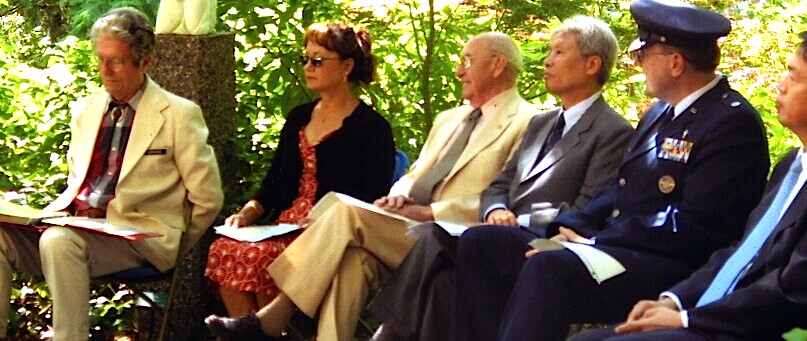
I was writing this weekend about one of the sad consequences of war—the creation of orphans. As an adopted child of God, I possess deep compassion for children without parents in this world. Over a decade ago I was privileged to represent the United States Air Force at the dedication of the Korean War Children’s Memorial.

When I contacted the coordinator of that event, Dr. George Drake, he provided me with the photograph above, which shows the speakers that day. Drake appears to the left, and yours truly is in uniform, to the right. The primary speaker was Chaplain Russell Blaisdell, center, who saved the lives of at least a thousand Korean orphans during the war, delivering them from almost certain death as Seoul fell to the Communists. (My next post will reflect on his heroism and humility.)

The war in Korea was horrific. The frontlines swept across the peninsula, leaving desolation and tragedy in their wake. The number of orphans created by the violence was legion. In the cruel ebb and flow of the conflict, many perished. Still, even in the crimson terror there were expressions of mercy and grace.

Chaplains often led the way in reaching out to the children, but their efforts would have accomplished little if the compassion of the common Soldier, Marine, Sailor and Airman had not moved them as well to make sacrifices to care for the children.

Chaplains who serve in Korea today have maintained the strong bonds of support for orphanages that was so vital to the wartime chaplains represented by Blaisdell.

During my year in Taegu (Daegu), I coordinated the ministry of the airmen at Taegu Air Base in partnership with Love and Hope Orphanage. Love and Hope has a unique role, caring for the least of the least . . . children with serious physical and/or mental handicaps. There is little room for them in most societies, and Korea is no exception.

Orphans are made not by war alone, of course, but by a variety of tragic confluences of suffering. Some lose parents to accident or disease. Today, we find the greatest number of orphaned children in various parts of Africa where AIDS has devastated local adult populations. Similarly, following natural disasters such as major earthquakes and tsunamis, many orphans are left alone in the rubble or receding waters.

Some children flee abusive homes, or are rescued from dangerous environments; in one sense these were orphans even before their legal bonds with cruel predators were severed.

Many causes account for the existence of orphans. And, as long as we live in this fallen world, orphans will be among us. This is why we must never forget that, “Religion that is pure and undefiled before God, the Father, is this: to visit orphans and widows in their affliction, and to keep oneself unstained from the world” (James 1:27, ESV).

C.S. Lewis was well acquainted with the sorrow of wartime violence and the shattering of families. A veteran of World War I, he saw many friends perish just as they were embarking on adulthood. After World War II, one of his many correspondents was Don Giovanni Calabria, who operated an orphanage in devastated Italy

In 1951, Lewis sent his friend a newly translated copy of the first book in his Chronicles of Narnia. He invited the priest (who would be canonized by the Roman Catholic Church less than fifty years later) to pass the book on to one of the orphans in his care.

I am sending you my tale recently translated into Italian in which, frankly, I have rather played than worked. I have given my imagination free rein yet not, I hope, without regard for edification—for building up both my neighbour and myself. I do not know whether you will like this kind of trifle. But if you do not, perhaps some boy or girl will like it from among your “good children.”

While I imagine the volume remained close to the future “saint,” I trust that Lewis’ powerful tale delighted many of the young children in his care.

As Chaplain Blaisdell says about caring for innocent children, the act itself provides more than sufficient reward. Formal recognition is not required, and may in fact detract from the intrinsic satisfaction that accompanies the giving of oneself in service. Ninety-nine percent of those who sacrifice for the widow and orphan remain essentially anonymous to all but God, and this is just fine. (You can read more about the Kiddy Car Airlift and who received credit for it here.)

Words of Death

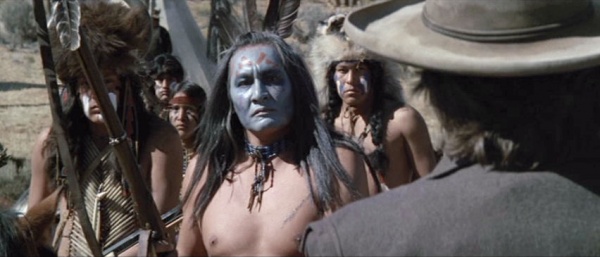
joseyOne of the cinema’s most powerful scenes occurs in a film many might disregard due to its genre. In “The Outlaw Josey Wales,” a man trying to rebuild his war-shattered life, rides out to face a Comanche chieftain.

Josey: You be Ten Bears?

Ten Bears: I am Ten Bears.

Josey: I’m Josey Wales.

Ten Bears: I have heard. You’re the Gray Rider. You would not make peace with the Blue Coats. You may go in peace.

Josey: I reckon not. Got nowhere to go.

Ten Bears: Then you will die.

Josey: I came here to die with you. Or, live with you. Dying ain’t so hard for men like you and me, it’s living that’s hard; when all you ever cared about has been butchered or raped. Governments don’t live together, people live together. With governments you don’t always get a fair word or a fair fight. Well I’ve come here to give you either one, or get either one from you. I came here like this so you’ll know my word of death is true. And that my word of life is then true. The bear lives here, the wolf, the antelope, the Comanche. And so will we. Now, we’ll only hunt what we need to live on, same as the Comanche does. And every spring when the grass turns green and the Comanche moves north, he can rest here in peace, butcher some of our cattle and jerk beef for the journey. The sign of the Comanche, that will be on our lodge. That’s my word of life.

Ten Bears: And your word of death?

Josey: It’s here in my pistols, there in your rifles . . . I’m here for either one.

Ten Bears: These things you say we will have, we already have.

Josey: That’s true. I ain’t promising you nothing extra. I’m just giving you life and you’re giving me life. And I’m saying that men can live together without butchering one another.

Ten Bears: It’s sad that governments are chiefed by the double-tongues. There is iron in your word of death for all Comanche to see. And so there is iron in your word of life. No signed paper can hold the iron, it must come from men. The word of Ten Bears carries the same iron of life and death. It is good that warriors such as we meet in the struggle of life . . . or death. It shall be life.

This conversation has always caused me to stop and think—even as I typed it out now. It contains many profound thoughts about honesty, commitment, respect and even peace. Most captivating to my thoughts, though, is the contrast between words of death and words of life.

“There is iron in your word of death . . . And so, there is iron in your word of life.”

People say all sorts of things, often without much regard as to whether or not they are true. They often speak without thinking about the words before they leave their lips. Most daily conversation is superficial, and immediately forgotten.

That changes, when we speak of death. Sure, comedians joke about it, but when people discuss actual death—often in the wake of someone’s passing—our words become more measured, our tempo slows, and we more consciously ponder what we are saying.

I recall a conversation with a fellow chaplain who described his father’s dying. He contracted a terminal disease, which would take some time to extinguish his life, and he told his children: “As you have grown up, I’ve done my best to teach you how to live. Now I will do my best to teach you how to die.”

It doesn’t require faith in God to die with dignity, but those of us who know the resurrected Jesus, face death with a confidence that death does not have the final word.

The truly wise live all of their days in the knowledge that we all will someday (barring the parousia) experience physical death. In light of that, our words should not be careless, or even frivolous. That’s true for our life words, as well as our death words.

By this I do not mean that we should not play with language or engage in humor. After all, humor is inarguably one of God’s most precious gifts to us. Nor should we allow the cloud of death that hangs over all mortal flesh rob us of the many joys life brings.

C.S. Lewis would have understood the essence of the conversation quoted above. (The movie was made thirteen years after his own death.) When grieving the death of his wife, Lewis wrote:

You never know how much you really believe anything until its truth or falsehood becomes a matter of life and death to you. It is easy to say you believe a rope to be strong and sound as long as you are merely using it to cord a box. But suppose you had to hang by that rope over a precipice. Wouldn’t you then first discover how much you really trusted it? . . . Only a real risk tests the reality of a belief. (A Grief Observed).

What I am trying to capture is more than simply the notion that our words of life, our day to day conversations, should be just as sincere and thoughtful as our words of death. It’s more in line with what Lewis was referring to. That our words, thoughts, and hopes have been tested and proven true . . . because they are based not on the fancy of the moment, but on the final, concluding whole of the testimony of our lives.

In other words, it is precisely because one’s word of death (ultimate, naked honesty) is true, that you can trust their word of life.

That’s a message that echoes both the sound of a hammer driving nails on a Judean hill, and a heavy stone rolling away from the entrance to a sealed tomb, two days later.