Titles You Don’t Want


eyechartThe world’s oldest man just died—and I’m not looking forward to ever becoming one of his successors. I mean, I understand the sentiments of non-Christians who quip that any day on this side of the grass is a good one, but I would only be interested in staying around here that long if I still had a keen mind and good health.

I’m not sure most of the people who eventually earn those titles have either. This gentleman was 111, and in the picture of him receiving his Guinness certificate, he actually looks like he had already expired. I mean, no offense, just a statement of simple fact.

As for his state of mind, I’m a bit more optimistic. Apparently when asked a while ago how he had lived so long, he responded, “because I haven’t died yet.” Assuming that was tongue in cheek (I recognize that is merely an assumption), he had retained his sense of humor. A good sign.

I don’t think ultra-long longevity is all it’s cracked up to be. I remember my 92 year old grandmother (my only relative who lived to be “elderly”) telling me that she was ready to go to heaven. She was in a nursing home, but not in pain, and still witty.

She said, “Robbie, I’ll miss you and everyone who is still here, but if you live long enough, more of the people you love are already in heaven than remaining here.” She had been widowed for three decades. And, unbeknownst to us at the time, three of her four children would follow her within three years of her own passing.

I am not eager to die, of course. And, unlike Polycarp, the bishop of second-century Smyrna, I’m certainly not zealous about the possibility of someday being martyred.

Still, God-willing, when I’ve come to the end of my appointed days I will make that transition peacefully, as is appropriate for a child of God who has been blessed with a full life.

When death is seen as a dark end—a soundless void—it’s understandable that many would resist it to the “bitter” end. That theme has been common in literature and cinema.

In a comic light, a character on Parks and Recreation exhibits the desire to live as long as humanly possible. He exercises without pause and takes every vitamin that exists in horse-pill doses. Soon after Chris Traeger was introduced to the show, he shared his view of life:

I take care of my body above all else. Diet, exercise, supplements, positive thinking. Scientists believe that the first human being who will live 150 years has already been born. I believe I am that human being.

Humorous. And, a respectable goal perhaps, if not driven by deep fear.

I don’t share Traeger’s goal of being the first human to reach 150. Nor, as we considered at the outset of our discussion, do I long to gain the title of World’s Oldest Man.

And I take comfort that I find myself, once again, in the comfortable camp of C.S. Lewis. In his essay “Is Progress Possible?” Lewis wrote:

Progress means movement in a desired direction, and we do not all desire the same things for our species. In “Possible Worlds” Professor Haldane pictured a future in which Man, foreseeing that Earth would soon be uninhabitable, adapted himself for migration to Venus by drastically modifying his physiology and abandoning justice, pity and happiness.

The desire here is for mere survival. Now I care far more how humanity lives than how long. Progress, for me, means increasing goodness and happiness of individual lives. For the species, as for each man, mere longevity seems to me a contemptible ideal.

More important, we believe, is the quality than the quantity, of our lives.
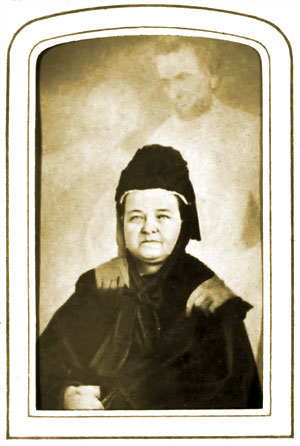
Suspicious Séances

lincolnsDid you hear about the séances that were held at the White House? It’s true, but it’s not recent news. They were conducted for Mary Todd Lincoln, and her husband, the president, apparently joined in attendance at some of them.

The Lincoln’s had lost their eleven year old son Willie to Typhoid in February 1862. Nearly all historians describing Mary’s grief accurately use the word “inconsolable”.

Since the Lincoln’s were not Christian, Mary sought the illusion of comfort in spiritualism, a thriving movement in the mid-nineteenth century. Spiritualism typically contends that the spirits of the dead survive in a manner where they can, and do, communicate with the living. This interchange is typically facilitated by a “medium,” someone particularly attuned to the “spirit world.”

Mediums sometimes allow themselves to become physical vessels for these spirits.

Christians either dismiss such experiences as fraud, or as demonic possession. Which depends on their own worldview. Some Christians dismiss the spiritual realm, while others recognize it is quite real.

C.S. Lewis would be in the latter camp, as his preface to The Screwtape Letters amply illustrates.

There are two equal and opposite errors into which our race can fall about the devils. One is to disbelieve in their existence. The other is to believe, and to feel an excessive and unhealthy interest in them. They themselves are equally pleased by both errors and hail a materialist or a magician with the same delight.

Christians who acknowledge the spiritual warfare which is waged beyond our physical senses understand the meaning of Paul’s words: “For we do not wrestle against flesh and blood, but against the rulers, against the authorities, against the cosmic powers over this present darkness, against the spiritual forces of evil in the heavenly places” (Ephesians 6:12).

Returning to the 1800s

The reason I have been thinking about Mary Lincoln—who would later be institutionalized and attempted suicide—is because I’m finishing up an article for the online journal I edit about the military chaplaincy. It’s called Curtana: Sword of Mercy, and the new issue will be posted by the end of the month.*

The specific article relates the story of Ellen Elvira Gibson (Hobart),** who was the first woman chaplain in the American military. She served a Wisconsin regiment, and her story is nothing short of fascinating.

Hobart was a spiritualist, and “ordained” by a group of the same who banded together to provide just such credentials. Interestingly, although she gave hundreds of (paid) lectures in a spiritual “trance” state, she would ultimately reject spiritualism. She turned to a more radical and secular “freethinking” as spiritualism was waning in popularity, but still a formidable presence.

Chaplain Hobart would gain renown in anti-Christian circles for her book The Godly Women of the Bible by an Ungodly Woman of the Nineteenth Century. Numerous atheist websites cite a quotation from the volume. “The abominable laws respecting [women in the Bible] . . . are a disgrace to civilization and English literature; and any family which permits such a volume to lie on their parlor-table ought to be ostracized from all respectable society. . .”

Contemporary readers will find it odd that one of the reasons spiritualism received a warm welcome in Europe and America was precisely because it seemed to offer measurable, “scientific” evidence of the afterlife. In This Republic of Suffering: Death and the American Civil War, Drew Faust writes:

To an age increasingly caught up in the notion of science as the measure of truth, spiritualism offered belief that seemed to rely on empirical evidence rather than revelation and faith. If the dead could cause tables to rise, telegraph messages from the world beyond, and even communicate in lengthy statements through spirit mediums, an afterlife clearly must exist. Here was, in the words of one popular spiritualist advocate, ‘proof palpable of immortality’” (180-81).

Returning to the Inklings

One of Lewis’ dearest friends was Owen Barfield. Sadly, the two remained separated throughout life by their religious beliefs. Barfield had helped Lewis come to believe in God (i.e. theism) but could not journey with Lewis on to Christianity. Barfield, instead, became one of the greatest of Anthroposophist evangelists.

Anthroposophy possesses elements of philosophy, but is also inarguably a religion in its own right. It also holds a view of the afterlife distinct from both Christianity and historic spiritualism.

But the nature of the religion created by Rudolf Steiner (which evolved from his involvement in Theosophy) is not the subject of our reflections here. However, if one is interested in learning more about Owen Barfield, a 1992 documentary can be viewed here.

_____
The image above is a famous example of “spirit photography” taken by William Mulmer, who made it popular. He was once placed on trial for fraud, but the case was dismissed for lack of evidence.

* I may delay publication of this particular article since the issue will already carry the biography of another chaplain.

** The reason “Hobart” is bracketed, is because it was her married name at the time of her military service. However, the marriage was short lived, and most of her life she went by “Ella E. Gibson.”

One Person’s Joy, Another’s Curse

Dislike emoticonEmoticons. Some people love them. Others find them irritating. I’m in the latter camp. That’s why I enjoyed a comic in the paper this week.* A fifty-something husband and wife are talking as she’s typing on her desktop.

Jeannie: I wish I was a little more computer-literate.

Charlie: I don’t really care for that term.

Jeannie: Why not?

Charlie: I don’t like ascribing literacy to people who think emoticons are a part of speech.

I am forced to respond with a wholehearted “ditto!”

I find the evolution of alphabets fascinating. Primitive pictographs amaze me. Emoticons, not so much.

I have to admit that I occasionally use the primitive :) to indicate that something is intended to be humorous, rather than serious. It has served as useful shorthand for written speech, conveying what would be evident in the intonations of oral communication.

However, this nouveau-punctuation has mutated into an abomination. Today there are innumerable graphic variations of that once modest “smile.” And some of them are truly bizarre.

Emoticons run amuck are an evidence of humanity’s demand for novelty. In The Screwtape Letters, C.S. Lewis shows how an incessant demand for something new saps the joy out of the present moment. As the senior demonic tempter declares:

Now just as we pick out and exaggerate the pleasure of eating to produce gluttony, so we pick out this natural pleasantness of change and twist it into a demand for absolute novelty. This demand is entirely our workmanship. If we neglect our duty, men will be not only contented but transported by the mixed novelty and familiarity of snowdrops this January, sunrise this morning, plum pudding this Christmas. . . . Only by our incessant efforts is the demand for infinite, or unrhythmical, change kept up. This demand is valuable in various ways. In the first place it diminishes pleasure while increasing desire.

I realize it’s a bit of a stretch to apply this passage to the subject at hand, but the principle remains the same. When is enough enough? When it comes to emoticons, apparently, that level has yet to be reached. 

I am not seriously suggesting that there is a conspiracy going on here, but one never knows.

Please forgive me if I have offended any Mere Inkling readers who may suffer from emoticonaddiction or some other disorder. It is not my desire to upset you. Feel free to continue your unbridled (ab)use of these tiny monstrosities.

Simply include me (and C.S. Lewis) alongside Charlie in saying, “I don’t like ascribing literacy to people who think emoticons are a part of speech.”

Postscript: I must confess to finding one set of emoticons rather amusing. If you are familiar with Spock from Star Trek, you too may enjoy these Vulcan emoticons that exhibit the full range of Vulcan expression.

vulcan

_____

* You can see the strip I am referring to here.


Beware the Tablet

tabletDid the ancient wax writing tablet of the Romans possess the power to terrorize enemies? Two ancient texts suggest that under some circumstances, carrying these humble wax tablets could cost someone their life.

I love history. I love writing. When you combine the two, I’m in a literary paradise. I just read a journal article that took me there. I recently joined a fascinating online organization called Academia.edu, where international scholars freely share their research.

It’s like stumbling into a free four-star buffet for the mind.

I do not only love words themselves. I’ve long been interested in the physical or mechanical aspects of writing, as well. Along this line, I’ve written here in the past about typewriters and the printing press.

I do not recall, however, writing about one of the most fascinating literary devices used by both common and gifted writers for century upon century. I am referring to the wax tablets of Rome, and the often elaborate styluses used to write on them.

I read a captivating article today that related a pair of historical incidents—one ancient, the other medieval—in which modest tablets such as these were mistaken for weapons. Deadly consequences followed.

In a Welsh journal entitled Studia Celtica, there appears “Tírechán on St. Patrick’s Writing Tablets,” by David Woods of University College, Cork. Cork is, of course, in Ireland, that enchanted isle from which the sainted C.S. Lewis also sprang. In fact, in a letter written to a child, Lewis once wrote: “I was born in Holy Ireland where there are no snakes because, as you know, St. Patrick sent them all away.

The purpose of the article was to explain how writing tablets being carried by Saint Patrick and his party could be mistaken (from a distance) as swords. The author is persuasive in revealing the historic scene and the potential for misunderstanding. In doing so, he appeals to an ancient incident in which Octavius (who would become Caesar Augustus) unjustly executed a political enemy he suspected had posed a threat.

When Quintus Gallius, a praetor, held some folded tablets under his robe as he was paying his respects, Augustus, suspecting that he had a sword concealed there, did not dare to make a search on the spot for fear it should turn out to be something else; but a little later he had Gallius hustled from the tribunal by some centurions and soldiers, tortured him as if he were a slave, and though he made no confession, ordered his execution, first tearing out the man’s eyes with his own hand.

The incident with Saint Patrick was not quite so gruesome, although it may have easily turned bloody, if the pagan’s hoping to instigate a bloodbath had succeeded.

Patrick came from Mag Arthicc to Drummut Cérrigi . . . and people saw him with eight or nine men, holding written tablets in their hands like Moses. The pagans shouted as they saw them, demanding that one should kill the holy men, and said: “They have swords in their hands for killing people. In their hands they look wooden by day, but we believe they are swords of iron for shedding blood.”

The big crowd was on the point of doing harm to the holy men; but there was a man among them who felt pity, Hercaith by name, of the race of Nothe, the father of Feradach. He believed in Patrick’s God, and Patrick baptized him and his son Feradach.

Fortunately, reason prevailed, and Patrick continued to spread the gospel in the land to which he had originally been carried as a slave.

The article also references occasions where the stylus, rather than the innocuous tablet, was used as a weapon. “For example, when his assassins confronted Julius Caesar in the senate in 44 BC, he sought to defend himself with his stylus, and stabbed one of them, Casca, in the arm with it.”

The pen, (the original) Caesar’s weapon of last resort.

This delightful article offered a wealth of knowledge. It alerted me to the fact that it is not only wax tablets that are threatening. Those who are wise will exercise extreme caution, whenever they are confronted by any and all writing tools.

Navy Nerds

nerdEvery once in a while, the military has a good idea. Sure, they have a knack for technological breakthroughs in warfare . . . but what about other fields? The NAVY NeRD answers that question in the affirmative.

NeRD stands for Navy eReader Device.

Well-informed readers of Mere Inkling are already aware of the growing intensity of international cyberwarfare. It is no joke, and lives are at stake.

Draconian policies are in place to avoid the contamination of the military computer system by innocently transferred viruses. Since virtually all digital platforms allow for the transfer of data, they are potentially dangerous.

Because of that, even ereaders have been off limits in certain environments. Now, however, someone has thought outside the proverbial box and come up with a solution to that problem.

The United States Navy has devised a novel ereader that comes loaded with 300 titles, but has no ports or wireless connectivity to allow for inadvertent viral transfers.

The selection of books sounds pretty well rounded. Some public domain classics, and a number of contemporary best sellers like A Game of Thrones. Fans of J.R.R. Tolkien will be delighted to know the readers also include The Lord of the Rings.

Reading is a productive way to spend one’s free time during a lengthy period at sea. Even for those not prone to opting for it when faced with all the distractions ashore.

During WWII, C.S. Lewis wrote a letter to a former student who was serving in the Navy, “out of reach of libraries.” It acknowledges the perennial problem of sailors—lack of space for personal property. The letter was written in response to a request from Michael Rayner Thwaites for reading recommendations. Thwaites was an Australian poet and military intelligence officer.

A man who has already your linguistic training might well, I think, begin the Anglo Saxon on his own. You will need E. Wardale Old English Grammar. . . . For texts, the ordinary beginning is first Sweet’s Anglo Saxon Primer and then his Old English Reader. But you, being a classic might well, after a dip in the Primer go on to King Alfred’s trans. of Boethius De Consolatione Philosophiae . . .

Whether you can begin O.E. poetry on your own I don’t know. But try getting . . . Beowulf: and with it Clark Hall’s trans. ed. by Wrenn with preface by Tolkien . . . This edition is essential for it is Tolkien’s part of metre wh. is essential. (O.E. verse uses both quality and accent, and your ear is prob. ruined, as mine was, by the false way they teach Latin metre at schools–drastic re-education is required. . . .

As to modern literature. You must not start out to study it ‘as it reveals man’s hesitant advance to the idea of a God-created world’. Don’t you see you are laying down in advance what a phenomenon is to reveal before you have examined the phenomenon? It may reveal that: it may not. You have to find out. I don’t think I can lay down any v. definite course of reading.

All I can point out is that while you are in the navy and out of reach of libraries and new publications, this is the proper time for solid reading through the big (i.e. long) authors, critical works and histories of lit. can come later. Now is the time for Chaucer, Malory, Spenser, Sidney, Shakespeare, Dryden, Pope, Swift, Johnson, Fielding, Richardson, Cowper, Scott, Wordsworth, Byron, Dickens etc etc.

If you usually keep two books of widely different period and type going together (e.g. Faerie Queene & Tom Jones) you won’t get bored. I myself always index a good book when I read it for the first time noting (a) Linguistic phenomena. (b) Good & bad passages. (c) Customs: meal times, social classes, what they read etc. (d) Moral ideas.

All this reading, tho’ dedicated ad Dei gloriam in the long run must not be infected by any immediate theological, ethical, or philosophic reference. Your first job is simply the reception of all this work with your imagination & emotions. Each book is to be read for the purpose the author meant it to be read for: the story as a story, the joke as a joke.

Back to the NeRD

The Navy is making 385 devices at first, with more to follow, with five being sent to each submarine in the Navy to be shared among the crew.

That’s only the start, of course. One would anticipate that even for a military crew (for example, 155 personnel on a Trident sub), a mere five mini-libraries would prove insufficient. (No offense intended; yours truly is a veteran himself.)

Is More Better?

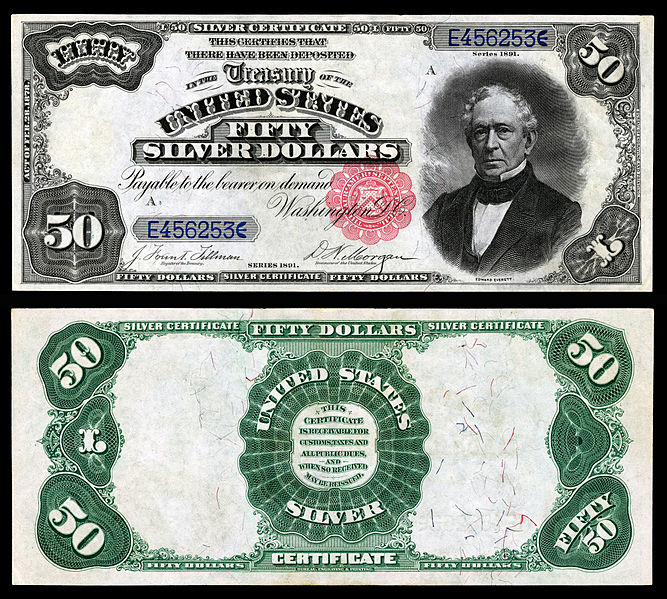
everettThat’s a trick question. More of some things certainly is better . . . more peace, more compassion. But more—even of good things—can sometimes become too much.

Case in point: words.

I continue to frustrate one of my critique group friends because I write “like a historian rather than a journalist.” The distinction being:

Journalist – Just the facts, please.
Historian – Lover of descriptions, details, esoterica, and trivia.

Guilty as charged.

C.S. Lewis commends the literary virtue of brevity. The following passage is found in his aptly named essay, “Before We Can Communicate.”

In the very process of eliminating from your matter all that is technical, learned, or allusive, you will discover, perhaps for the first time, the true value of learned language: namely, brevity. It can say in ten words what popular speech can hardly get into a hundred.

Last year marked the 150th Anniversary of one of the world’s most famous speeches. Not only Americans are familiar with Abraham Lincoln’s Gettysburg Address. It has become a monument to succinctness and power.

Rereading it recently I began to wonder about the other speech delivered at the event . . . the two hour oration delivered by Edward Everett, one of the era’s most highly regarded public speakers.*

The journalists and audience at the dedication of the Gettysburg National Cemetery were extremely impressed by Everett’s presentation, and surprised by the brevity of Lincoln’s remarks.

Following the event, both men lauded each other’s message. Lincoln responded to Everett’s note which praised him for the “eloquent simplicity & appropriateness” of his remarks. Everett said, “I should be glad, if I could flatter myself that I came as near to the central idea of the occasion, in two hours, as you did in two minutes.”

Your kind note of to-day is received. In our respective parts yesterday, you could not have been excused to make a short address, nor I a long one. I am pleased to know that, in your judgment, the little I did say was not entirely a failure. Of course I knew Mr. Everett would not fail; and yet, while the whole discourse was eminently satisfactory, and will be of great value, there were passages in it which transcended my expectation. The point made against the theory of the general government being only an agency, whose principals are the States, was new to me, and, as I think, is one of the best arguments for the national supremacy. The tribute to our noble women for their angel-ministering to the suffering soldiers, surpasses, in its way, as do the subjects of it, whatever has gone before.

I tracked down an online copy of Everett’s Gettysburg speech. I’ve skimmed it, and it is rather interesting. With the course of the war still undetermined at the time it was presented, it is easy to see how its stirring words could inspire an already war-weary nation. As he elaborates on the efforts of the Confederates to establish a new nation, he begs for patience. “Pardon me, my friends, for dwelling on these wretched sophistries.” Sophistries indeed.

The speech offers a partisan analysis of the entire course of the war up to that time. International readers of Mere Inkling may find the references to other countries interesting. He describes “civil wars” in England, Germany, Italy and France. Since he spoke during an era when Italy was still disunited, allow me to quote that portion of the speech.

In Italy, on the breaking up of the Roman Empire, society might be said to be resolved into its original elements–into hostile atoms, whose only movement was that of mutual repulsion. Ruthless barbarians had destroyed the old organizations, and covered the land with a merciless feudalism. As the new civilization grew up, under the wing of the Church, the noble families and the walled towns fell madly into conflict with each other; the secular feud of Pope and Emperor scourged the land; province against province, city against city, street against street, waged remorseless war with each other from father to son, till Dante was able to fill his imaginary hell with the real demons of Italian history.

So ferocious had the factions become, that the great poet-exile himself, the glory of his native city and of his native language, was, by a decree of the municipality, condemned to be burned alive if found in the city of Florence. But these deadly feuds and hatreds yielded to political influences, as the hostile cities were grouped into States under stable governments; the lingering traditions of the ancient animosities gradually died away, and now Tuscan and Lombard, Sardinian and Neapolitan, as if to shame the degenerate sons of America, are joining in one cry for a united Italy.

For those who are interested, this paragraph from Everett’s speech is only fifty-five words shorter than the entire Gettysburg Address.

Of course, just as being loquacious does not guarantee irrelevance, neither does brevity ensure quality.

The key is using the right number of words. That will vary from person to person.

In the twenty-first century, though, a good rule of thumb is to follow the example of Lincoln rather than his speechifying colleague.

_____
* Everett had a prolific political career. It included: U.S. House of Representatives, Governor of Massachusetts, U.S. Ambassador to the United Kingdom, U.S. Secretary of State, U.S. Senator. Oh, and he was also President of Harvard University, a job that probably included at least as much politics as his previous endeavors.

Safer Police Chases

crashLaw Enforcement often gets a bum rap. I assume I’m overly sensitive to this because I’m a volunteer chaplain with our county Sheriff’s Office.

But my feeling is not new, so I don’t think it’s the result of my current chaplaincy duties. I’ve always felt that the media, corrupt lawyers, and certain politicians have sided with criminals at the expense of society.

An example of this is just how quick many are to condemn police whenever there is a high speed chase. While nearly all law enforcement agencies strive to keep these to a minimum, occasionally one of these pursuits will end tragically.

Whenever that occurs, it seems that the police are blamed. And the question that is too seldom asked, remains: Whose fault is it that such massive pieces of metal (i.e. the cars) were impelled down our streets at such dangerous speeds?

It is the fault of the criminals, of course.

Allow me to repeat that. It is the fault of the criminals . . . not the police officers.

The role of law enforcement professionals is to protect the public. All of the individuals in those ranks with whom I have worked (both military and civilian) have believed that. In Mere Christianity, C.S. Lewis wrote:

The State exists simply to promote and to protect the ordinary happiness of human beings in this life. A husband and wife chatting over a fire, a couple of friends having a game of darts in a pub, a man reading a book in his own room or digging in his own garden—that is what the State is there for.

And unless they are helping to increase and prolong and protect such moments, all the laws, parliaments, armies, courts, police, economics, etc., are simply a waste of time.

Overreaction to the potential dangers of police chases has led some jurisdictions to offer criminals get out of jail free cards. These are issued whenever a person desires to escape justice by committing an additional crime—fleeing the police.

As one writer says, “A ‘no pursuit’ policy practically guarantees the suspect gets away.”

But it no longer has to be that way. I recently read about a new invention that allows cops to fire a laser-guided, sticky GPS tag that will allow them to drop their speed and still be able to track the progression of the fleeing criminals.

It’s pretty amazing. You can see a video of how it works here. Although the cost is reasonable, I imagine the expense will still prevent most departments from being able to leverage this new technology.

The StarChase company says their products are available around the globe, so this isn’t simply for Americans. No matter where you live, you may want to contact your local law enforcement agencies to inquire into whether they have considered this invention.

After all, law abiding citizens want criminals captured—especially those who brazenly threaten everyone’s welfare with their highway racing—but we want them arrested safely.

Impromptu Poetry

eye

I had to endure a to and fro transcontinental trip this week. Endure is the right word, when flying miles above what would otherwise be a scenic, albeit lengthy, journey.

One positive thing about flying is that I have time to catch up on some of my “pleasure” reading. This week it included an article about cinquains.

A quintain is a poem with five verses. A cinquain is a specific form which has the following number of syllables in each of the lines: two, four, six, eight, and two.

I took a break from my reading and drafted a few of these small poems. I found it quite simple, and it’s likely you may as well.

I make no promises about the quality of my verse, but perhaps you’ll find one or more of them interesting. Or, at least they may inspire you to write some of your own.

Springtime
Narnian hope
Delayed by the White Witch
Borne by Aslan’s Resurrection
New dawn

Pilgrim
Traveling through
This world is not my home
Destined for a new creation
With Christ

True hope
He died for us
Emancipation now
Washed clean by the blood of the Lamb
New life

Inklings
Lewis, Tolkien
Friends rounded out the group
Imaginations unfettered
Wonder

Naming Inanimate Objects

PENTAX ImageDo you ever talk to inanimate or non-sentient objects? My wife often talks to her computer, and though she is never vulgar, the conversation is rarely pretty.

There is a current advertisement featuring the slightly off Gary Busey, in which he says, “If you’re like me, you like to talk to things.” His gaze drifts to the side, and he adds, “Hello lamp.” Smiling after greeting his tabletop light source, he drops his gaze and gets an expression like someone who has just encountered a long lost friend. “Hello, pants.”

It’s quite bizarre, but rather humorous in an oddly disconcerting way.

My wife and I named the first car we owned. It was an orange Gremlin. Newlyweds, and still in college, we named it Hezekiah in the hopes that it would “live” long.

In those days Hezekiah became sick and was at the point of death. And Isaiah the prophet the son of Amoz came to him and said to him, “Thus says the Lord, ‘Set your house in order, for you shall die; you shall not recover.’” Then Hezekiah turned his face to the wall and prayed to the Lord, saying, “Now, O Lord, please remember how I have walked before you in faithfulness and with a whole heart, and have done what is good in your sight.”

And Hezekiah wept bitterly. And before Isaiah had gone out of the middle court, the word of the Lord came to him: “Turn back, and say to Hezekiah the leader of my people, Thus says the Lord, the God of David your father: I have heard your prayer; I have seen your tears. Behold, I will heal you. On the third day you shall go up to the house of the Lord, and I will add fifteen years to your life. (2 Kings 20).

A recent survey in the United States found that nearly a quarter of the population give their rides a name. Younger drivers (18-34) do so more frequently than their parents, with 36 percent giving their cars a personal name. “Hello, car.”

A British poll found that women are more likely than men to attribute personality to their cars, with 60 percent naming their rides compared with 41 percent of men.

The higher likelihood of a British car being named than its American cousin does not surprise me. After all, we learned during our three years in the United Kingdom that they even name their houses. We lived on a family farm near Newbury while stationed at RAF Greenham Common. There were several domiciles on the farm, each with its respective appellation. We resided in “New House,” which was ironically a good thirty years old.

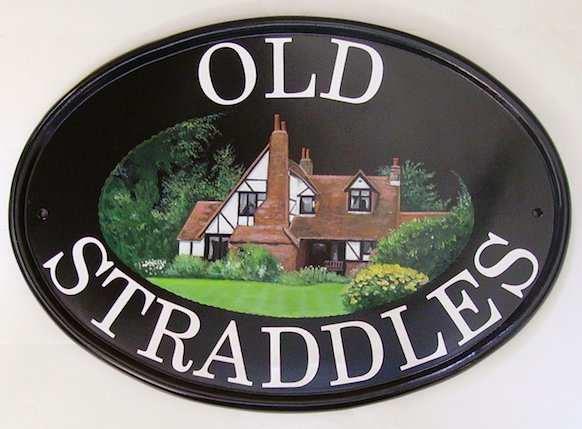
C.S. Lewis’ house in Oxford had a name. “The Kilns” received its distinctive name when it was built on the site of a former brickworks. There is a small lake nearby, which was originally the clay pit which supplied the kilns.

In the United States I suppose it’s possible to find a few places where a home has a name rather than a number. But the norm in our systematized structure is for homes to have sequential numbers. This proves quite practical for reasons such as emergency response by fire fighters, and doubtless many other countries have adopted the practice.

We’ve made the change at some cost though. Houses do have architectural character. Personalities, even. When naming houses, some might choose labels that relate to the profession of the owner. For example:

Clergy: Ascension Manor or Hosanna House

Attorney: Prosecution Place or Litigation Lodge

Physician: Resident’s Residence or Hemorrhoid Hall

If one dispenses with a requirement for alliteration as an arbitrary naming convention—the options would expand exponentially.

Sadly, we don’t get to name our houses today, unless we do so informally like one would with an automobile. We must be content for our streets to possess names while our houses must be content with numbers.

If you are interested in reading more about unusual or entertaining house names, check out this site. (It’s from the United Kingdom, of course.) Names like “Tadpole Cottage,” “Leprechaun’s Leap,” and “The Riddlepit” certainly evoke entertaining images.

Perhaps you’ll also want to consider naming your own home. It just might make your conversations with your residence a little more interesting when they no longer have to begin with “Hello, house . . .”

Harry Potter in the Bible

potterSo much for the effectiveness of “state churches.” The European ones appear to have become abject failures. There is ample evidence that the “establishment” of religions has rarely served either church or state very well.

Here’s the latest proof from the United Kingdom. The BBC recently reported a study that shows three in ten teenaged Brits don’t know the Nativity of Jesus came from the Bible. Similar numbers had never heard about the Crucifixion or Adam and Eve.

I imagine they’ll consider the new Noah film just another work of Hollywood fiction. (Actually, half of them didn’t know that very story comes from the Bible.)

What’s more—their parents are nearly as ignorant.

Many of the teens did, however, think that the plotlines from the Harry Potter series were based on Bible stories.

As a person who was genuinely inspired by England’s magnificent cathedrals while I lived there, it is painful to contemplate the terrible loss. The great-great-grandchildren of saints who suffered and sacrificed for the Gospel have disregarded the good news.

And, lest any readers think I’m pointing fingers as a “self-righteous” American, let me assure you I take no pride in my own nation’s slide into apostasy. The words of Micah’s prophecy seem closer to fulfillment each day. “The faithful have been swept from the land; not one upright person remains.”

C.S. Lewis saw this coming. Consider the following from his 1950 essay, “The Literary Impact of the Authorised Version.”

It may be asked whether now, when only a minority of Englishmen regard the Bible as a sacred book, we may anticipate an increase of its literary influence. I think we might if it continued to be widely read. But this is not very likely. Our age has, indeed, coined the expression “the Bible as literature.” It is very generally implied that those who have rejected its theological pretensions nevertheless continue to enjoy it as a treasure house of English prose.

It may be so. There may be people who, not having been forced upon familiarity with it by believing parents, have yet been drawn to it by its literary charms and remained as constant readers. But I never happen to meet them. Perhaps it is because I live in the provinces. But I cannot help suspecting, if I may make an Irish bull, that those who read the Bible as literature do not read the Bible.

Speaking of reading the Bible “as literature,” that’s not a bad thing. It informs so much Western literature, that an ignorance of the Scriptures is tantamount to possessing an inadequate education. An excellent online resource for exploring this truth can be found at the Bible Literacy Project.

The site includes a copy of a comprehensive 2006 study of English professors from America’s top-rated schools, including Yale, Harvard, Princeton, Stanford, Texas A&M, UC-Berkeley and others. In the study, not a single professor disagreed with the statement that: “Regardless of a person’s faith, an educated person needs to know the Bible.”

If some people could get past their prejudices against the Bible, they would recognize the truth of this statement. Everyone should be reading the Bible, even if only as a significant literary work.

Perhaps, if this widespread study comes to pass, one day people will be able to recognize the difference between the Scriptures and Harry Potter.