On Being Aptly Named

terrorIf you were going to embark on a lengthy, dangerous journey of exploration, how would you feel about signing onto the crew of the HMS Terror? Doesn’t that strike anyone else as a tad ominous?

The HMS Terror suffered a horrific fate. No surprise there. Its demise was so great, though, that it ranks among the worst ever suffered by the Royal Navy. And its ultimate fate remained unconfirmed until this past week when the wreck was found, resting on the ocean floor, 168 years after it perished during the ill-fated Franklin Expedition.

Along with the HMS Erebus, the Terror was supposed to traverse the Northwest Passage. The evidence shows, however, the ice trapped the ships, and both crews perished trying to make their way south across the floes. (There is evidence of cannibalism during that doomed journey, something attested to by Inuit oral traditions.)

The voyage had begun well enough. The vessels had been fitted for the harsh environment after a rather auspicious exploration of the coast of Antarctica. There they had discovered the Ross Ice Shelf, and in honor of their mission, two Antarctic features were named for them Mounts Erebus & Terror, on Ross Island.

Upon their return to London, iron plate was added to their hulls and coal-fueled steam engines were installed.

Sadly, the Arctic proved less hospitable, and their entrance into Baffin Bay in August 1845 marked the final time either ship was seen until now. An extensive search at the time proved futile. Their respective discoveries are announced here, and here.

Around 130 men abandoned the ships when they became icebound. Some of their bones were recovered from King William Island. The sad story has been recited in many places, including this article which was written when the wreck of the Erebus was discovered.

As in the Antarctic, here too the ships were honored by having natural features named after them. Fittingly, Erebus Bay and Terror Bay hug the west coast of King William Island, just north of which marked the estimated position where the ships were abandoned.

Read on, and learn something quite interesting about the names of these two ill-fated ships.

Naming Ships

I have written about the importance of names in the past.*

There are a variety of conventions for christening ships. Some result in creative names, but others are quite mundane. In the United States, with plenty of exceptions, the contemporary patterns for naming ships vary by their type of class. For example:

Aircraft Carriers – are now named after Presidents

Amphibious Assault Ships – early Ships or USMC Battles

Ballistic Missile Submarines – States

Fast Attack Submarines – Cities

Cruisers – Past Battles

Frigates – Navy, Marine or Coast Guard Heroes

Patrol Boats – Weather Phenomena like Squall, Monsoon and Cyclone

Of course, like everything else in the United States, the naming of ships is prone to becoming politicized, as this entertaining article reveals.

Other nations have followed comparable christening patterns throughout recent centuries. Grouping similarly functioning vessels with particular themes makes sense. That way if you encountered a ship named Blue Dwarf or Yellow Dwarf, you could make a well educated guess that the vessel was a mining ship, and part of the Jupiter Mining conglomerate.

I suppose even garbage scows are named in some logical fashion, perhaps after politicians?

Unsurprisingly, in addition to battles, heroes, and major cities, aquatic life has been a common feature. Thus pre-Soviet Russian subs were named things like Walrus or Shark (albeit, in Cyrillic).

The Royal Navy shared an affinity for marine life, and Dolphin was a popular example. There were no fewer than a dozen ships, thus named, although some were fairly modest (including a convict ship used in the first have of the nineteenth century).

I actually possess the altar rail from the ship’s chapel in the HMS Dolphin that was commissioned in 1882. But that’s a sea tale for another day . . .

C.S. Lewis christened a ship of his own. He even included its name in the title of the Chronicle of Narnia which describes its quest: The Voyage of the Dawn Treader. The ship herself was modest, but marked a new age of Narnia exploration.

The name of the ship was Dawn Treader. She was only a little bit of a thing compared with one of our ships, or even with the cogs, dromonds, carracks and galleons which Narnia had owned when Lucy and Edmund had reigned there under Peter as the High King, for nearly all navigation had died out in the reigns of Caspian’s ancestors. . . .

But now Caspian had begun to teach the Narnians to be sea-faring folk once more, and the Dawn Treader was the finest ship he had built yet.

She was so small that, forward of the mast, there was hardly any deck room between the central hatch and the ship’s boat on one side and the hen-coop (Lucy fed the hens) on the other.

But she was a beauty of her kind, a “lady” as sailors say, her lines perfect, her colors pure, and every spar and rope and pin lovingly made.

In his Middle Earth sagas, J.R.R. Tolkien includes the names of a number of ships.

Eärrámë – Sea Wing

Númerrámar – Sunset Wings

Palarran – Far-Wanderer

Vingilótë – Foam Flower

Hirilondë – Haven Finder

Entulessë – Return (sailed by Vëantur during the Númenórean’s return to Middle Earth)

The Inklings appear to have given the decision of naming their ships the attention the activity merits.

More about the HMS Terror and the HMS Erebus

The name of the HMS Terror was, of course, not chosen to jinx its future. It was thus named to instill fear in those it opposed. This was natural, since it was originally commissioned as a warship, as was the Erebus. In fact, the two vessels were the same exact type of warship.

So, how might “Terror” and “Erebus,” the mythological Greek deity of darkness, who shared his name with an abode of the dead? It becomes clearer when we learn that both of the ships originally served as “bomb ships.” Like later battleships, these vessels were designed to rain fire from the sky—something terrifying to stationary garrisons.

The names of some of their sister ships whose mortars fired upon enemies of the British Empire included Thunder, Vesuvius, and Hecla (the Icelandic volcano).

The HMS Terror actually saw combat, prior to its conversion to peaceful pursuits. Amazingly, it was among the bomb ships—accompanied by the Volcano, Meteor, Devastation and Aetna—during the Battle of Baltimore in the War of 1812. Thus, the Terror is also memorialized in the national anthem of the United States: “the bombs bursting in air.”

Curiously, the predecessor of the HMS Erebus we have been discussing, a “rocket vessel” with the same name, inspired the lyrics “by the rocket’s red glare,” at the same historic battle.

_____

* The importance of naming has led me to address the subject from a number of angles through the years.

The Power of Names

Crying for Attention

From Ear to Quill

Pet Names

Powerful Names

Sharing Surnames

Fleeting Fame

red-dwarfAnd, for those who recognized the homage to Red Dwarf


The Urgent Need for Chivalry

chivalryWith all the nations of the world engaged in power struggles—or cowering behind the protection of their more courageous allies—C.S. Lewis’ essay on “The Necessity of Chivalry” demands our attention.

Yes, the very word “chivalry” reeks of a bygone era that has been superseded and relegated to history books. But those who consider the concept outdated impoverish their lives and quite possibly contribute to the violent spirit of our age.

Warfare is not an abstract concept to the millions—yes, millions—of people who are surrounded by vicious threats every hour. Britain itself was in this position when Lewis penned these words during the Battle of Britain.

As he wrote, three days before Winston Churchill’s most famous speech, Lewis commended those same few to whom so many owed so much. It was 1940, and Germany’s advance had yet to be halted. Ultimate victory in the world conflagration would remain uncertain for years.

It is in this milieu, but not only for this context, that Lewis challenges us to combine the chivalrous values of meekness and ferocity.

Lewis argues that in the chivalrous “knight,” true humility and the capacity for great (but moral) violence are merged. The result is not a schizophrenic warrior, but a noble defender of what is good.

Indeed, even apart from wartime, it is vital that society has heroes to protect sheep from wolves. In a moment I will share with you a brief video featuring an amazing artistic rendering of this essay on chivalry.*

In the essay, Lewis’ examples span Western history. He uses Launcelot as the archetype of the chivalrous man. And he offers the hope and evidence that chivalry is not extinct. A veteran of the previous war, he wrote at the outset of the Second World War:

Launcelot is not yet irrecoverable. To some of us this war brought a glorious surprise in the discovery that after twenty years of cynicism and cocktails the heroic virtues were still unimpaired in the younger generation and ready for exercise the moment they were called upon. Yet with this “sternness” there is much “meekness;” from all I hear, the young pilots in the R.A.F. (to whom we owe our life from hour to hour) are not less, but more, urbane and modest than the 1915 model. (“The Necessity of Chivalry”)

And accordingly, in our own day there are many serving in uniform who exemplify the same virtues. Would, though, that all who bear arms could be described thusly.

Some who are reading these words may regard chivalry as a “sexist” concept. It is not. Certainly no more than courage, strength and virtue could be deemed such. The fact that Lewis’ historical examples of society’s defenders are men simply reflects history.

In the seventy-five years since he wrote, it has become evident that women too can easily embody both meekness and unyielding courage. One need look no further than the ranks of the military and law enforcement to see this borne out.

Chivalry for the Civilian

It would be a tragic mistake to think that chivalry is only required during war. It is a vital, daily necessity of all social life. And the increasing incivility of the world suggests its erosion. (Many attribute this in part to the anonymity of the internet, which allows bullies to savage others anonymously and without mercy.)

This is what Lewis was saying when he described Launcelot as being “not a compromise or happy mean between ferocity and meekness; he is fierce to the nth and meek to the nth.”

After all, it is not the bland or “lukewarm” person who makes this world a better place. It is upon chivalrous men and women that the majority of the vulnerable must ever rely.

Each of us needs to be willing to examine our own lives for the union of these two traits: courage that does not surrender to what is wrong, and meekness that is gentle, calm and patient with others.

These are the values that we need to promote in our communities, media and schools. Because what we instill in receptive minds is precisely that which will take root. To use more contemporary terms, the “programming” these young minds are subject to will directly influence the behaviors that they “output.”

Let us do all we are capable of, to be, and to raise up, what is chivalrous. After all, despite all of the utopian promises of those who believe humanity is capable of purifying itself, the evidence shows otherwise. As Lewis said,

There was, to be sure, a rumour in the last century that wolves would gradually become extinct by some natural process; but this seems to have been an exaggeration.

Enjoy this fine presentation of  “The Necessity of Chivalry.”

_____

* This video is a creation of CSLewisDoodle, about which I have written before. (Their name may sound quaint, but the expertise with which they visualize Lewis’ words is astounding.)

One Weakness of Modern Books

mayanC.S. Lewis offered one of his keen insights into literature when he wrote: “The more ‘up to date’ the book is, the sooner it will be dated.” (Letters to Malcolm)

The racks of clearance titles at bookstores provide ample evidence of that truth. It’s particularly evident with nonfiction works dealing with technology. Their shelf life can be counted in months (if they are fortunate).

But the short lifespan of modern writing is not restricted to science-driven topics. It also relates to the literary “fads” that come and go like mists dispelled by the afternoon sun.

There appears to be a direct correlation between touting the modernity or timeliness of a book and it imminent obsolescence. Many readers of Mere Inkling vividly recall the deluge of books warning about the dangers posed by Y2K. The new millennium was guaranteed—in the eyes of publishers milking the rare event—to bring momentous change, perhaps including catastrophic disasters.

When that crisis failed to materialize, there was a slightly less voluminous—but equally ominous—discussion of the threat of Armageddon heralded by the end of the Mayan calendar in 2012. It was newsworthy enough that NASA posted this message the day after “doomsday.”

News flash: the world didn’t end on Dec. 21, 2012. You’ve probably already figured that out for yourself. Despite reports of an ancient Maya prophecy, a mysterious planet on a collision course with Earth, or a reverse in Earth’s rotation, we’re still here.

The Mayan connection “was a misconception from the very beginning,” says Dr. John Carlson, director of the Center for Archaeoastronomy. “The Maya calendar did not end on Dec. 21, 2012, and there were no Maya prophecies foretelling the end of the world on that date.”*

It is unfair, though, to single out time sensitive publications as doomed to pass quickly into the recycling bin. After all, it wasn’t technological or calendar-focused texts Lewis was referring to.

What Lewis was critiquing is books that consciously attempt to catch the latest wave of popularity . . . without recognizing that only a small fraction of such movements are of lasting value.

He despised books that lacked substance and were utterly transient in their “value.”

Lewis knew from personal experience about the varying quality and potential lifespan of books. The following passage from his autobiography describes vividly how in his childhood he was exposed to books of all sorts, even though some had been purchased only because of his parents’ “transient” interests.

I am a product of long corridors, empty sunlit rooms, upstairs indoor silences, attics explored in solitude, distant noises of gurgling cisterns and pipes, and the noise of wind under the tiles.

Also, of endless books. My father bought all the books he read and never got rid of any of them. There were books in the study, books in the drawing room, books in the cloakroom, books (two deep) in the great bookcase on the landing, books in a bedroom, books piled as high as my shoulder in the cistern attic, books of all kinds reflecting every transient stage of my parents’ interest, books readable and unreadable, books suitable for a child and books most emphatically not.

Nothing was forbidden me. In the seemingly endless rainy afternoons I took volume after volume from the shelves. I had always the same certainty of finding a book that was new to me as a man who walks into a field has of finding a new blade of grass. (Surprised by Joy)

Lewis believed that any good book was worth rereading. As a relatively young man he wrote in 1916, “You really lose a lot by never reading books again.” Sixteen years later he would write to Arthur Greeves once again and say, “I can’t imagine a man really enjoying a book and reading it only once.” And, without belaboring the subject, in 1933 he would once again voice this conviction to his lifelong friend. “Clearly one must read every good book at least once every ten years.”

The “good books,” of course, were those that had proven themselves over the passage of time. They were polar opposites to the shallow, insipid writing Lewis derided.

In An Experiment in Criticism, Lewis elaborates on this notion. He argues that no truly worthwhile text can be fully digested in a single reading.

The sure mark of an unliterary man is that he considers “I’ve read it already” to be a conclusive argument against reading a work. . . . Those who read great works, on the other hand, will read the same work ten, twenty or thirty times during the course of their life.

It is honest to acknowledge that a book only recently published is not inherently of lesser value than something that has remained of sufficient value to have been preserved over the centuries. After all, every book was at one time new.

Lewis offers a persuasive rationale for his position reading outside one’s own historical context is beneficial.

Every age has its own outlook. It is specially good at seeing certain truths and specially liable to make certain mistakes. We all, therefore, need the books that will correct the characteristic mistakes of our own period. And that means the old books. (“On the Reading of Old Books”)

It should be noted that Lewis did offer an exception to his rule about revisiting texts. He regarded it as feasible that a volume of facts or “information” could be processed in one reading.

No book is really worth reading at the age of ten which is not equally (and often far more) worth reading at the age of fifty—except, of course, books of information. The only imaginative works we ought to grow out of are those which it would have been better not to have read at all. (“On Stories”)

Lewis could exclude “books of information” from requiring rereading due to his prodigious memory which made that unnecessary. Lesser minds, such as that of the writer of this column, often benefit from returning to even these books.

Lewis, however, was absolutely convinced that the classics (using the term in a broad sense) were vital to developing the mind. He even proposed a specific ratio for one’s literary consumption.

It is a good rule, after reading a new book, never to allow yourself another new one till you have read an old one in between. If that is too much for you, you should at least read one old one to every three new ones. (“On the Reading of Old Books”)

One reason for alternating one’s reading is to ensure we don’t ingest too much mental “junk food.” After all, as Lewis writes in “Learning in War-Time,”

You are not, in fact, going to read nothing . . . if you don’t read good books you will read bad ones. If you don’t go on thinking rationally, you will think irrationally.

The Classics as Curricula

Recent years have witnessed a revival of interest in reading what Lewis called “old books,” as the essential foundation for an excellent education. He would certainly have applauded this movement.

Numerous American colleges and universities offer Great Books programs. The Association for Core Texts and Courses tracks them here.

One Roman Catholic university describes theirs in this way:

Our students immerse themselves in the Great Books (the Western Canon), the Good Book (the Bible), and God’s “First Book” (nature)—all of which we consider necessary for a true liberal education. Our humanities curriculum starts our freshmen off in Homeric Greece and brings our seniors through modernity and postmodernity. In a time of cultural amnesia, this deep study in the sweep of Western literature, history, politics, and philosophy cultivates the intellect and the heart.**

The Great Books Foundation is an organization established to provide resources for younger students. It’s never too early, supporters believe, to undertake this approach to grounding one’s education.

The C.S. Lewis Society, which operates the Study Center at the Kilns where Lewis resided, has been attempting to fund C.S. Lewis College in the States. They have a grand dream, inspired by the worldview of their namesake. “C.S. Lewis College will be a college of the Great Books and the Visual and Performing Arts.”

God-willing, in the future, more and more enlightened readers, taught from their youth to value quality literature, will echo Lewis’ words, saying, I too “am a product . . . of endless books.”

_____

* The full article is here and offers an interesting insight in to Mayan religion. According to Carlson,

“If we could time warp a Maya to the present day, they would say that Dec. 21, 2012, is a very important date. Many Maya believed that their gods who created the world 5125 years ago would return. One of them in particular, an enigmatic deity named Bolon Yokte’ K’uh, would conduct old rites of passage, to set space and time in order, and to regenerate the cosmos.” The world would be refreshed, not destroyed.

** “Mother Church or Uncle Sam” by Kevin Roberts (unfortunately not available in full online).


C.S. Lewis Versus Socialism

chavezSocialism is in the news, and we need not wonder what the prolific and wise C.S. Lewis would have thought about it.

In the United States, for example, one of the serious contenders for the presidential election this fall belonged to neither the Democrat nor Republican parties.

Bernie Sanders dropped the “D” descriptor he had, for political convenience, worn for several months. He did so soon after Hillary clinched the Democrat nomination, saying he was elected as an “Independent,” and would return to the Senate as one.

Elsewhere in the world we see one of the most recent experiments in socialism following the historic pattern. Venezuela has fallen from the ranks of successful nation states into the abyss of socialist turmoil.

Even liberal (progressive) voices are acknowledging the abject failure of socialism in a formerly comfortable country.

When a Venezuelan entrepreneur we know launched a manufacturing company in western Venezuela two decades ago, he never imagined he’d one day find himself facing jail time over the toilet paper in the factory’s restrooms. But Venezuela has a way of turning yesterday’s unimaginable into today’s normal.

The entrepreneur’s ordeal started about a year ago, when the factory union began to insist on enforcing an obscure clause in its collective-bargaining agreement requiring the factory’s restrooms to be stocked with toilet paper at all times. The problem was that, amid deepening shortages of virtually all basic products (from rice and milk to deodorant and condoms) finding even one roll of toilet paper was nearly impossible in Venezuela—let alone finding enough for hundreds of workers. When the entrepreneur did manage to find some TP, his workers, understandably, took it home: It was just as hard for them to find it as it was for him.

Toilet-paper theft may sound like a farce, but it’s a serious matter for the entrepreneur: Failing to stock the restrooms puts him in violation of his agreement with the union, and that puts his factory at risk of a prolonged strike, which in turn could lead to its being seized by the socialist government under the increasingly unpopular President Nicolas Maduro.

So the entrepreneur turned to the black market, where he found an apparent solution: a supplier able to deliver, all at once, enough TP to last a few months. (We’re not naming the entrepreneur lest the government retaliate against him.) The price was steep but he had no other option—his company was at risk.

But the problem wasn’t solved.

No sooner had the TP delivery reached the factory than the secret police swept in. Seizing the toilet paper, they claimed they had busted a major hoarding operation, part of a U.S.-backed “economic war” the Maduro government holds responsible for creating Venezuela’s shortages in the first place. The entrepreneur and three of his top managers faced criminal prosecution and possible jail time.

Yes, it “may sound like a farce,” but thinkers like C.S. Lewis have recognized all along that socialism doesn’t work.

Europe took years to recover from the ravages of World War II. One consequence, common to many nations throughout the world during the war, was severe rationing.

The war’s end signaled a swift return to normal life in the United States and Canada. Meanwhile, in places like the United Kingdom, rationing continued, and some products (notably potatoes) were added to the list.

Rationing in the U.K. did not end until 1954, and one of Britain’s staples—tea!—was still rationed in 1952.

It’s in this context that we read the following letter that Lewis penned to one of his American correspondents. Vera Gebbert and her husband were among the Americans who occasionally forwarded food gifts which Lewis generously shared with others.

In 1954 he thanks her for her generosity and acknowledges the welcome end of rationing. In the same letter he offers a humorous political aside—at the expense of socialism.

Dear Mrs. Gebbert, Many thanks for your nice letter of the 15th, though it would have given both of us more pleasure if your account of your own state had been better: which I hope it now is.*

And I’m so glad that the Horse helped to see you through an illness, which I trust is now a thing of the past. My brother thanks you too for all the kind things you say of the Century,** and says he hopes to have another book out either late this year or early next, of which you shall have a copy.

I’m afraid it would be sheer dishonesty to pretend that we now have any kitchen needs; this government has done a magnificent job in getting us on our feet again, and a few weeks back, we solemnly burnt our Ration Books. Everything is now ‘off ration,’ and though at first of course, prices went up with a rush, they are now dropping.

But cheer up, if our friends the Socialists get back into power, you will be able to exercise your unfailing kindness once more by supplying us, not with little luxuries, but with the necessities of life!

‘How is Cambridge?’ Well, so to speak, it isn’t; in other words, I have not yet begun my Cambridge career. And when I do, the break will not be so big as you might imagine; for I shall be non-resident. Cambridge will be content with my presence there from Tuesdays to Saturdays in term time, so I shall be able to keep on the house at Oxford and become what I think you call a ‘commutor’ don’t you? Our sister college, Magdalene, has been good enough to give me a set of rooms, so I shall be very snug during the week.

The subject addressed above is not simply about toiletry scarcities or the eccentricities of antediluvian politicians. It dramatically affects the lives of real people.

Our thoughts and prayers should be offered on behalf of the victims of socialism. Just as we should recognize that unbridled capitalism does not nurture a paradise, either. However, it is unfathomable to imagine a contemporary democracy (based on capitalism) imposing serfdom on its citizens, as Venezuela is now doing.

So, it seems Lewis was correct about the propensity of socialism to undermine order and dishevel systems of proven success. After all, those supermarket shelves were not always empty before the Chaveznistas took over.

_____

* Gebbert had shared with Lewis about her domestic problems which were culminating in an imminent divorce.

** The Splendid Century: Life in the France of Louis XIV, was a well-received study Warnie had written.

Tolkien, C.S. Lewis and Music

albumHave you ever written something that inspired a musician to compose new music? J.R.R. Tolkien hoped to do so one day, and had he lived to hear the scores of the Lord of the Rings trilogy created by Howard Shore, he would have been in awe.

I was reading Tolkien’s correspondence last week and came across a fascinating letter he wrote to a musician who was requesting permission to write a serious composition based on The Hobbit.

This would have been quite different than the quaint “Ballad of Bilbo Baggins,” made famous by Leonard Nimoy. (I wish their choreographer had read the book, so we could have been spared the tiny T-Rex arms sported during the chorus by the dancers.)

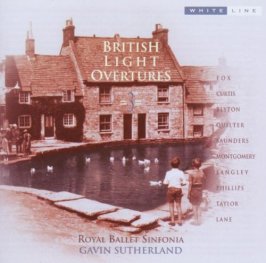
Anyway, returning to more serious musical ventures, in 1964 Tolkien received a request for permission to write a “Hobbit Overture.” It came from British composer Carey Blyton (1932-2002) who would become best known for his song “Bananas in Pyjamas.”

Tolkien’s response to the composer’s query is fascinating, on several levels. First, he is gracious in extending his permission, without any restrictions. And, in 1967 Blyton did compose “The Hobbit” Overture, opus 52a. It appears on the CD, British Light Overtures 3.

Secondly, he shares his unspoken desire that his work might someday inspire music. Then he makes a curious comment about the illustrations of Pauline Baynes, which would similarly grace the work of C.S. Lewis.

After that, Tolkien describes his own, musically impoverished, upbringing. Finally he expresses his deep appreciation for good music, despite his lack of knowledge on the subject.

And Tolkien accomplishes all of this in just a handful of sentences!

You certainly have my permission to compose any work that you wished based on The Hobbit. . . . . As an author I am honoured to hear that I have inspired a composer. I have long hoped to do so, and hoped also that I might perhaps find the result intelligible to me, or feel that it was akin to my own inspiration—as much as are, say, some (but not all) of Pauline Baynes’ illustrations. . . . .

I have little musical knowledge. Though I come of a musical family, owing to defects of education and opportunity as an orphan, such music as was in me was submerged (until I married a musician), or transformed into linguistic terms. Music gives me great pleasure and sometimes inspiration, but I remain in the position in reverse of one who likes to read or hear poetry but knows little of its technique or tradition, or of linguistic structure.

It is common for people of sincere Christian devotion, such as Tolkien and Lewis, to express an appreciation for the divine capacity of music to touch the human spirit.

luteMartin Luther, for example, wrote much about music. “Music is God’s greatest gift,” he proclaimed. He was not only a composer of hymns, but also an acceptable player of the lute, which he used to accompany his children during their family devotions.

Music is deeply intertwined with the heart of Christian worship.

C.S. Lewis on the Subject of Music

One of the modest challenges in contrasting fellow Inklings J.R.R. Tolkien and C.S. Lewis results from the significantly different natures of their literary corpora. While they both wrote fantasy, though of a vastly different magnitude, Lewis’ vocation as one of Christianity’s chief modern apologists necessitated that he defend the faith in diverse contexts. Thus, he wrote numerous essays and a number of texts addressing a wide range of considerations that his friend Tolkien never discussed in print.

Because of this distinction, it is relatively simple to discover what Lewis thought about the nature and powers of music. Typical of the man’s practical orientation, Lewis appears little interested in the abstract attributes of music. What interests him is its confluence with human existence. The following profound insight comes from his essay “On Church Music.”

There are two musical situations on which I think we can be confident that a blessing rests. One is where a priest or an organist, himself a man of trained and delicate taste, humbly and charitably sacrifices his own (aesthetically right) desires and gives the people humbler and coarser fare than he would wish, in a belief (even, as it may be, the erroneous belief) that he can thus bring them to God. The other is where the stupid and unmusical layman humbly and patiently, and above all silently, listens to music which he cannot, or cannot fully, appreciate, in the belief that it somehow glorifies God, and that if it does not edify him this must be his own defect.

Neither such a High Brow nor such a Low Brow can be far out of the way. To both, Church Music will have been a means of grace; not the music they have liked, but the music they have disliked. They have both offered, sacrificed, their taste in the fullest sense.

But where the opposite situation arises, where the musician is filled with the pride of skill or the virus of emulation and looks with contempt on the unappreciative congregation, or where the unmusical, complacently entrenched in their own ignorance and conservatism, look with the restless and resentful hostility of an inferiority complex on all who would try to improve their taste—there, we may be sure, all that both offer is unblessed and the spirit that moves them is not the Holy Ghost.

This discussion about church music is particularly interesting due to Lewis’ personal dislike for much of the music used in worship, which I’ve written about before.

Lewis described his own church music pilgrimage in “Answers to Questions on Christianity.”

My own experience is that when I first became a Christian, about fourteen years ago, I thought that I could do it on my own, by retiring to my rooms and reading theology, and I wouldn’t go to the churches . . .

If there is anything in the teaching of the New Testament which is in the nature of a command, it is that you are obliged to take the Sacrament [holy communion], and you can’t do it without going to Church. I disliked very much their hymns, which I considered to be fifth-rate poems set to sixth-rate music. But as I went on I saw the great merit of it.

I came up against different people of quite different outlooks and different education, and then gradually my conceit just began peeling off. I realized that the hymns (which were just sixth-rate music) were, nevertheless, being sung with devotion and benefit by an old saint in elastic-side boots in the opposite pew, and then you realize that you aren’t fit to clean those boots. It gets you out of your solitary conceit.

In “The Weight of Glory,” Lewis addresses this notion that we must look beyond the music itself, to assess its influence on our humanity.

The books or the music in which we thought the beauty was located will betray us if we trust to them; it was not in them, it only came through them, and what came through them was longing. These things—the beauty, the memory of our own past—are good images of what we really desire; but if they are mistaken for the thing itself they turn into dumb idols, breaking the hearts of their worshippers.

For they are not the thing itself; they are only the scent of a flower we have not found, the echo of a tune we have not heard, news from a country we have never yet visited.

Lewis recognized the deep influence and mystery with which music communicates and inspires. It is no accident that Narnia’s creation itself comes through Aslan’s song.

The Lion was pacing to and fro about that empty land and singing his new song. It was softer and more lilting than the song by which he had called up the stars and the sun; a gentle, rippling music. And as he walked and sang the valley grew green with grass. It spread out from the Lion like a pool.

It ran up the sides of the little hills like a wave. In a few minutes it was creeping up the lower slopes of the distant mountains, making that young world every moment softer.

Returning to “On Church Music,” Lewis expands on the importance of our intentions as we approach music.

It seems to me that we must define rather carefully the way, or ways, in which music can glorify God. There is . . . a sense in which all natural agents, even inanimate ones, glorify God continually by revealing the powers He has given them. . . . An excellently performed piece of music, as natural operation which reveals in a very high degree the peculiar powers given to man, will thus always glorify God whatever the intention of the performers may be. But that is a kind of glorifying which we share with the ‘dragons and great deeps,’ with the ‘frost and snows.’

What is looked for in us, as men, is another kind of glorifying, which depends on intention. How easy or how hard it may be for a whole choir to preserve that intention through all the discussions and decisions, all the corrections and the disappointments, all the temptations to pride, rivalry and ambition, which precede the performance of a great work, I (naturally) do not know. But it is on the intention that all depends.

When it succeeds, I think the performers are the most enviable of men; privileged while mortals to honor God like angels and, for a few golden moments, to see spirit and flesh, delight and labour, skill and worship, the natural and the supernatural, all fused into that unity they would have had before the Fall. . . .

We must beware of the naïve idea that our music can ‘please’ God as it would please a cultivated human hearer. That is like thinking, under the old Law, that He really needed the blood of bulls and goats. To which an answer came, ‘mine are the cattle upon a thousand hills,’ and ‘if I am hungry, I will not tell thee.’ If God (in that sense) wanted music, He would not tell us. For all our offerings, whether of music or martyrdom, are like the intrinsically worthless present of a child, which a father values indeed, but values only for the intention.

At the outset of this column I declared Tolkien would have been “in awe” of the musical score written to accompany the Lord of the Rings movies. Lewis too, I believe, would have been impressed by the scores composed for the three Chronicles of Narnia films made thus far. We owe a debt of gratitude to three composers: Howard Shore,* Harry Gregson-Williams,** and David Arnold***.

An Historical Postscript

In the spirit of Lewis and Tolkien, who appreciated the importance of music, we’ll close now with another engaging quotation from the wry pen of Doctor Martin Luther.

I wish all lovers of the unshackled art of music grace and peace from God the Father and from our Lord Jesus Christ! I truly desire that all Christians would love and regard as worthy the lovely gift of music, which is a precious, worthy, and costly treasure given to mankind by God.

The riches of music are so excellent and so precious that words fail me whenever I attempt to discuss and describe them…. In summa, next to the Word of God, the noble art of music is the greatest treasure in the world.

A person who gives this some thought and yet does not regard music as a marvelous creation of God, must be a clodhopper indeed and does not deserve to be called a human being; he should be permitted to hear nothing but the braying of asses and the grunting of hogs.

_____

* Howard Shore has nearly a hundred credits as a composer, conductor and orchestrator on the Internet Movie Database (IMDb). In addition to the Tolkien cinema projects, he has also worked on a number of other very successful films and ninety-six episodes of Saturday Night Live. Shore won three Oscars for his work on Lord of the Rings.

** Harry Gregson-Williams has nearly a hundred credits on the IMDb, including a number of box office successes, a variety of popular video games, and several productions in the Shrek series. He won awards for his work on the Chronicles of Narnia series and another of my favorite films, Kingdom of Heaven.

*** David Arnold, wrote the score for the third Narnia film, The Chronicles of Narnia: The Voyage of the Dawn Treader. He has seventy-three credits listed on IMDb, ranging from this year’s Independence Day: Resurgence, all the way back to a BBC made for tv picture entitled Mr. Stink.

C.S. Lewis & the Police

policePolice are entrusted with the power and authority to protect the innocent. That very power provides them with the opportunity to abuse that trust.

Recent events in the United States have drawn to the world’s attention the fact that human beings are incapable of providing perfect law enforcement. That should come as no surprise since, due to our fallen nature, we can do nothing perfectly.

C.S. Lewis never wrote a treatise specifically about law enforcement, but he did refer to it on a number of occasions. This week I thought it might be beneficial to consider a number of his insights. The final quotation relates a specific experience Lewis had with responsive police and a rather unresponsive judiciary.

Lewis had an impressive knack for using familiar images to illustrate biblical principles. In the following example he uses police, an occupation recognized by all, to display the absurdity of the logic of skeptics of Christianity.

If the universe is teeming with life, this, we are told, reduces to absurdity the Christian claim—or what is thought to be the Christian claim—that man is unique, and the Christian doctrine that to this one planet God came down and was incarnate for us men and our salvation.

If, on the other hand, the earth is really unique, then that proves that life is only an accidental by-productd in the universe, and so again disproves our religion. Really, we are hard to please. We treat God as the police treat a man when he is arrested; whatever He does will be used in evidence against Him. (“Dogma and the Universe”)

Let us now consider a few of the principles easily gleaned from Lewis’ writings.

Law Enforcement is a Normal Occupation

In that sense, police are no different than any other member of the community. C.S. Lewis illustrates that truth by including them in a list of “regular” occupations.

Dr. Pittenger would be a more helpful critic if he advised a cure as well as asserting many diseases. How does he himself do such work? What methods, and with what success, does he employ when he is trying to convert the great mass of storekeepers, lawyers, realtors, morticians, policemen and artisans who surround him in his own city? (“Rejoinder to Dr. Pittenger”)

Law Possesses a Vital Function

The State exists simply to promote and to protect the ordinary happiness of human beings in this life. A husband and wife chatting over a fire, a couple of friends having a game of darts in a pub, a man reading a book in his own room or digging in his own garden—that is what the State is there for. And unless they are helping to increase and prolong and protect such moments, all the laws, parliaments, armies, courts, police, economics, etc., are simply a waste of time. (Mere Christianity)

In his essay “Vivisection,” Lewis mentions in passing the role of law enforcement in society. We have assigned to them the responsibility of investigating suspicious behavior to determine whether it conforms to the law of the land. And they do so according to whatever guidelines or restrictions the government (presumably of by and for the people) levies upon them.

In justifying cruelty to animals we put ourselves also on the animal level. We choose the jungle and must abide by our choice. You will notice I have spent no time in discussing what actually goes on in the laboratories. We shall be told, of course, that there is surprisingly little cruelty. That is a question with which, at present, I have nothing to do. We must first decide what should be allowed: after that it is for the police to discover what is already being done.

In Democracies Police are Generally Trustworthy

Lewis acknowledges that there are places where the police are frequently corrupt and perhaps even brutal. But he reminds us that we who live in democratic nations should be grateful for the normal behavior of those who serve in law enforcement.

The decline of ‘religion’ is no doubt a bad thing for the ‘World.’ By it all the things that made England a fairly happy country are, I suppose, endangered: the comparative purity of her public life, the comparative humanity of her police, and the possibility of some mutual respect and kindness between political opponents.

But I am not clear that it makes conversions to Christianity rarer or more difficult: rather the reverse. It makes the choice more unescapable. When the Round Table is broken every man must follow either Galahad or Mordred: middle things are gone. (“The Decline of Religion”)

Is it inappropriate to note how prophetic Lewis’ observation was that the secularization of Western culture would also erode political civility?

“Police States,” by Contrast, are Evil

In his preface to The Screwtape Letters, Lewis divulges where he found some of his images for his infernal milieu.

I live in the Managerial Age, in a world of “Admin.” The greatest evil is not now done in those sordid “dens of crime” that Dickens loved to paint. It is not done even in concentration camps and labour camps. In those we see its final result. But it is conceived and ordered (moved, seconded, carried, and minuted) in clean, carpeted, warmed and well-lighted offices, by quiet men with white collars and cut fingernails and smooth-shaven cheeks who do not need to raise their voices. Hence, naturally enough, my symbol for Hell is something like the bureaucracy of a police state or the office of a thoroughly nasty business concern.

C.S. Lewis’ father was an attorney. But not just any sort of solicitor. He was a Police Court Solicitor, an important role which had as one of its purposes allowing a person who was arrested on suspicion of a criminal offense to consult with a lawyer while in initial police custody.

Lewis describes in his autobiography how his father regaled him and his brother Warnie with stories about curious police-court happenings. At the same time, Lewis confesses to his father’s struggle to relate to his boys after the loss of his wife when they were still young. Confessing that he frequently found his father’s conversations with his young sons confusing, he writes:

The man who, in his armchair, sometimes appeared not so much incapable of understanding anything as determined to misunderstand everything, was formidable in the police court and, I presume, efficient in his office. He was a humorist, even on occasion, a wit. (Surprised by Joy)

Corrupt Governments Corrupt the Police Force

One of the characteristics of police states is that they have extensive networks of “secret police,” who are often imbued with extraordinary prerogatives. One such malevolent presence plays just such a role in The Lion, the Witch, and the Wardrobe. Searching for Mr. Tumnus, the Pevensie children are discovered by Mr. Beaver. When they inquire of Lucy’s friend, the faun, he says:

“Ah, that’s bad,” said Mr. Beaver, shaking his head. “That’s a very, very bad business. There’s no doubt he was taken off by the police. I got that from a bird who saw it done.”

That explains the note the children had discovered at Mr. Tumnus’ ransacked home.

The former occupant of these premises, the Faun Tumnus, is under arrest and awaiting his trial on a charge of High Treason against her Imperial Majesty Jadis, Queen of Narnia, Chatelaine of Cair Paravel, Empress of the Lone Islands, etc., also of comforting her said Majesty’s enemies, harboring spies and fraternizing with Humans.

signed MAUGRIM, Captain of the Secret Police

LONG LIVE THE QUEEN!

One more passage reveals how quickly the deceitful captain can vacillate between threatening and gracious poses. Edmund has arrived at the Witch’s castle is been confronted by Maugrim.

“If you please, sir,” said Edmund, trembling so that he could hardly speak, “my name is Edmund, and I’m the Son of Adam that Her Majesty met in the wood the other day, and I’ve come to bring her the news that my brother and sisters are now in Narnia—quite close, in the Beavers’ house. She—she wanted to see them.”

“I will tell Her Majesty,” said the Wolf. “Meanwhile, stand still on the threshold, as you value your life.”

Then it vanished into the house. Edmund stood and waited, his fingers aching with cold and his heart pounding in his chest, and presently the gray wolf, Maugrim, the Chief of the Witch’s Secret Police, came bounding back and said, “Come in! Come in! Fortunate favorite of the Queen—or else not so fortunate.”

The Police Can Solve Problems

Yes, the example below comes from his novel The Silver Chair, but it is too good to overlook. Lewis is skilled at teaching through his fiction as well as in his essays.

This excerpt come from one of the Chronicles of Narnia, and Aslan has just returned Jill and Eustace to England, where there was a “corrective” encounter with some school bullies. The headmistress calls the police, and we join the scene . . .

When the police arrived and found no lion, no broken wall, and no convicts, and the Head behaving like a lunatic, there was an inquiry into the whole thing. And in the inquiry all sorts of things about Experiment House came out, and about ten people got expelled.

After that, the Head’s friends saw that the Head was no use as a Head, so they got her made an Inspector to interfere with other Heads. And when they found she wasn’t much good even at that, they got her into Parliament where she lived happily ever after.

Police are Not Soldiers

In the following passage, Lewis shows an astute awareness of the actual role of the Roman soldier in the Jerusalem of Jesus’ day. They were certainly an occupation force, but their role in garrison was not to be “soldiers,” but rather to be “peacekeepers.” They were to maintain law and order, the so-called Pax Romana.

And because the whole difficulty for us is that the natural life has to be, in a sense, ‘killed,’ [Jesus] chose an earthly career which involved the killing of His human desires at every turn—poverty, misunderstanding from His own family, betrayal by one of His intimate friends, being jeered at and manhandled by the Police, and execution by torture. (Mere Christianity)

Lewis does the same thing in his essay “Modern Translations of the Bible,” where he compares the common* nature of the Greek used to write the Scriptures with the Incarnation.

The New Testament in the original Greek is not a work of literary art: it is not written in a solemn, ecclesiastical language . . . It is a sort of `basic’ Greek; a language without roots in the soil, a utilitarian, commercial and administrative language. Does this shock us? It ought not to, except as the Incarnation itself ought to shock us.

The same divine humility which decreed that God should become a baby at a peasant-woman’s breast, and later an arrested field-preacher in the hands of the Roman police, decreed also that He should be preached in a vulgar, prosaic and unliterary literary language. If you can stomach the one, you can stomach the other.

C.S. Lewis’ Experience with the (In)Justice System

In 1957, Lewis wrote an essay** about a personal experience with the British judicial system. I choose to close with this selection because it is quintessential Lewis. He uses a fine critique of the treatment of criminals to also acknowledge his personal sinfulness. In this true story, the police do their job admirably. The judge . . . not so much.

Not long ago some of my young neighbours broke into a little pavilion or bungalow which stands in my garden and stole several objects—curious weapons and an optical instrument. This time the police discovered who they were. As more than one of them had been convicted of similar crimes before, we had high hopes that some adequately deterrent sentence would be given.

But I was warned: “It’ll all be no good if the old woman’s on the bench.” I had, of course, to attend the juvenile court and all fell out pat as the warning had said. The—let us call her—Elderly Lady presided. It was abundantly proved that the crime had been planned and that it was done for gain: some of the swag had already been sold.

The Elderly Lady inflicted a small fine. That is, she punished not the culprits but their parents. But what alarmed me more was her concluding speech to the prisoners. She told them that they must, they really must, give up these “stupid pranks.”

Of course I must not accuse the Elderly Lady of injustice. Justice has been so variously defined. If it means, as [Athenian sophist] Thrasymachus thought, “the interest of the stronger,” she was very just; for she enforced her own will and that of the criminals and they together are incomparably stronger than I.

But if her intention was—and I do not doubt that the road on which such justice is leading us all is paved with good ones—to prevent these boys from growing up into confirmed criminals, I question whether her method was well judged. If they listened to her (we may hope they did not) what they carried away was the conviction that planned robbery for gain would be classified as a “prank”—a childishness which they might be expected to grow out of.

A better way of leading them on, without any sense of frontiers crossed, from mere inconsiderate romping and plundering orchards to burglary, arson, rape and murder, would seem hard to imagine.

This little incident seems to me characteristic of our age. Criminal law increasingly protects the criminal and ceases to protect his victim. One might fear that we were moving towards a Dictatorship of the Criminals or (what is perhaps the same thing) mere anarchy. But that is not my fear; my fear is almost the opposite.

According to the classical political theory of this country we surrendered our right of self-protection to the State on condition that the State would protect us. Roughly, you promised not to stab your daughter’s murderer on the understanding that the State would catch him and hang him.

Of course this was never true as a historical account of the genesis of the State. The power of the group over the individual is by nature unlimited and the individual submits because he has to. The State, under favourable conditions (they have ceased), by defining that power, limits it and gives the individual a little freedom.

And so we see that Lewis shared a concern that has only become accentuated among many today. When the State abuses its prodigious power, and especially when it revises the role of those in law enforcement, transforming them into “enforcers,” we are in dire straits.

Thankfully, that has not yet transpired in most democratic lands. Still, the possibility of such decay has not been eliminated, and wisdom suggests that we remain vigilant should we see things sliding in that direction.

_____

* On the subject of the commonness of the language God uses to speak to us, you may wish to read my column on “Vulgar Christianity.”

** “Delinquents in the Snow” is included in the readily available collection, God in the Dock.

C.S. Lewis’ Wedding

jack & joyC.S. Lewis put his priest in an awkward position, relying on him to perform a wedding ceremony that was contrary to church rules—for at least two reasons. (More on this below.)

I performed a wedding this past weekend. Clergy commonly say “I married so-and-so,” but that phrase sometimes leads to confusion, and occasionally elicits snickers.

At any rate, I’m marrying fewer couples now that I’m semi-retired. Serving as a military chaplain, with a youngish population, I sometimes got weighed down by the number of requests to conduct wedding ceremonies. That’s no longer the case, although ironically both bride and groom in this case are on active duty in the United States armed forces (the Air Force and Army respectively).

The reason I allude to weddings being a bit of a burden, is that—for the conscientious pastor, which I strive, imperfectly, to be—they involve far more than the ceremony itself.

The majority of pastors I know require premarital counseling . . . and that requires time. It may come as a shock to some, but pastors don’t schedule those counseling sessions for their own benefit. Pastors provide them (and even require them) for the benefit of the couple. It’s called “pastoral care,” and decently done, it can only enhance the chances for a marriage’s success.

This was one of those wonderful weddings where I am quite confident the couple will live happily ever after. I really don’t mean to be trite, but they have the qualifications that strongly influence marital success, e.g. emotional maturity and a shared faith in Christ (who will be the cornerstone of their union, just as he is of the Church).

They understand, insofar as our finite minds are capable, that God truly has accomplished the miracle of making of the two of them a single flesh. And now they are living out that adventure.

So, as I write this post my thoughts are not about Independence Day (although it is the fourth day of July). Instead I’ve been rereading the story of C.S. Lewis’ two weddings with Joy Davidman. Their initial union was a sham, in the sense that it was a legal act conducted for ulterior reasons (circumventing immigration laws).

And this fact, that they were not married with the intention of truly being husband and wife, is one reason to validly question the validity of the very act.

If you’ve never read about Joy, or at least viewed the film Shadowlands, you are missing out on a fascinating story . . . and you lack familiarity with one of the most important elements of C.S. Lewis’ life. I’ve briefly discussed Lewis and Joy at Mere Inkling in the past, including “Dating Like an Inkling” and “C.S. Lewis and Women.”

When the two of them married, it was in a purely civil ceremony, on 23 April 1956, in Oxford. Naturally, they continued to live separately.

Only after she was diagnosed with terminal cancer did Lewis realize he had fallen in love. He accordingly sought to make of their fiction a true marriage. This meant, for Lewis and Joy, marrying “in the church.”

Unfortunately, the Church of England would not sanction the marriage, since Joy was divorced. (The fact that her husband, William Gresham was a serial adulterer did not excuse that fact.)

And thus we arrive at the focus of my reflection.

Since the church could not officially bless his marriage, Lewis turned to an Anglican priest who was a former student and a personal friend. His name was Peter Bide.

Pastoral Flexibility

I suspected that the Reverend Bide needed to give the request some prayerful consideration. After all, a pastor does not “bend” the practices of the church (and faith) he represents without serious reflection. Still, Christian ministers do possess what is referred to as pastoral discretion.

The concept is already developed in early Christian theology. In the Orthodox churches, it is referred to as pastoral economy (οἰκονομία, oikonomia). It relates to the pastoral principle of following the spirit, rather than the strictest letter of the law.*

Joy’s death was thought to be imminent when Bide joined them in marriage at her hospital bedside. Yet, they were blessed with a three year remission of the cancer, and enjoyed some precious time together before its grim return. Bide had initially been asked by Lewis simply to come and pray for her.

In a fascinating letter to Dorothy Sayers, written on the 25th of June, Lewis alludes to this concept while relating his special news.

I ought to tell you my own news. On examination it turned out that Joy’s previous marriage, made in her pre-Christian days, was no marriage: the man had a wife still living. The Bishop of Oxford said it was not the present policy to approve re-marriage in such cases, but that his view did not bind the conscience of any individual priest.

Then dear Father Bide (do you know him?) who had come to lay his hands on Joy—for he has on his record what looks very like one miracle—without being asked and merely on being told the situation at once said he would marry us. So we had a bedside marriage with a nuptial Mass.

It is interesting that Lewis uses the words “without being asked.”

That’s not quite how Bide recalls it.

Fortunately, Bide provided an account of this event, published under the title “Marrying C.S. Lewis.” (The title provides a prime example of what I said earlier about how pastors talk about weddings.) It appears in C.S. Lewis and His Circle: Essays and Memoirs from the Oxford C.S. Lewis Society

When I got there, up to the quarry where he lived, Jack said, ‘Peter, what I’m going to ask you isn’t fair. Do you think you could marry us? I’ve asked the Bishop, I’ve asked all my friends at the faculty here, and none of them will.’ He said, ‘It doesn’t seem to me to be fair. They won’t marry us because Joy was divorced, but the man she married in the first place was a divorced man, so in the eyes of the church, surely there isn’t any marriage anyway. What are they making all this fuss about?’

Well, I must admit that I had always thought that the Church of England’s attitude to marriage was untenable. They rested everything upon the promises given in the marriage service, and said that they couldn’t possibly be repeated elsewhere. However, there was one exception. If the man turned out not to be able to consummate the marriage, then a Decree of Nullity would go through the courts and be recognized by the church. This made the whole thing collapse in my view. I mean, if you promise for better or worse, and non-consummation isn’t for worse, I don’t know what is.

On the other hand, I went to a minor public school, and a public school is a terrible place not least because it gives you a lasting fear of authority. ‘The headmaster wants to see you.’ And that lasts all through life—I’ve never got rid of it totally. And so the fact that there were church laws by the dozen which forbade me to do anything of the sort really worried me. I mean it worried me because it wasn’t something that I just thought was a superficial thing, something I could just push to one side. I wasn’t in my own parish, I wasn’t in my own diocese. What right had I to go charging into a situation like this which everybody else had refused to have anything to do with?

Well, I know you’ll probably find this a rather corny thing, but after long cogitations—and it took me the best part of an hour—I said to myself, ‘What would He [Jesus] have done?’ and then there wasn’t any further answer at all. Of course He would have married them, wouldn’t He? Would He have regarded the law and everything else above the expression of love which this woman had made both towards the church and Himself and to her future husband? And so I married them in the hospital, with Warnie and the ward sister as witnesses.

Bide continues, expressing his frustration at how differing versions of the story have proliferated, while the truth of the matter has been left unexplored.

I don’t understand this, I never have . . . but that is the story, and what you see in Shadowlands has little or nothing to do with it. It made me very cross that there have been about six different treatments of this episode in the course of the last ten years and nobody has ever come and asked me what happened. It strikes me as absolutely extraordinary.

A.N. Wilson went all the way to America to talk to somebody who had talked to me: an expensive journey, when he could have walked down the road and found me himself. It’s a very odd thing, but now you know what the truth is.

Reverend Bide died in 2003, and his obituary includes some fascinating facts. I had not realized that, like Joy, in his early and foolishly idealistic years he too became a communist!

The article in The Telegraph describes his reprimand by the Bishop of Oxford, and the gentler correction offered by his own bishop. And it uses a word rarely seen in the United States to describe the episode.

A year at Wells Theological College was followed by ordination at Chichester in 1949 and appointment to a curacy at Portslade with Hangleton, near Hove. His dynamic ministry there led to the creation of a separate Hangleton parish, with himself as its first vicar since the Middle Ages. Then came the contretemps over the Lewis/Davidman marriage and his move to Goring-by-Sea in 1957.

It is interesting to note that Bide was no child when he chose to conduct the marriage ceremony. Although he had only been ordained for eight years, he was a veteran of WWII and MI6 before attending seminary.

A Sad Postscript

Lewis and Bide shared the pain of losing their wives the same year. Immediately after learning about Bide’s wife’s death, Lewis wrote the following letter. It provides a fitting conclusion to our reflections on the subject of the contretemps of Lewis’ wedding.

The Kilns, Headington Quarry, Oxford 20 Sept 1960

My dear Peter I have just come in from saying my morning prayers in the wood, including as always one for ‘Peter and Margy and Joy and me,’ and found your letter. I hope they are allowed to meet and help one another. You and I at any rate can. I shall be here on Wed. next. If you could let me have a card mentioning the probable time of your arrival, all the better. If not, I shall just ‘stand by’. Yes–at first one is sort of concussed and ‘life has no taste and no direction.’ One soon discovers, however, that grief is not a state but a process–like a walk in a winding valley with a new prospect at every bend God bless all four of us.

Yours Jack

_____

* Several New Testament passages refer to the “letter of the law,” including Romans 7:6-7 and 2 Corinthians 3:5-6.

The photograph above was created by combining images of the real couple with a transparent image of the couple as portrayed in Shadowlands by Anthony Hopkins and Debra Winger.

C.S. Lewis & Brexit

brexitThe United Kingdom’s vote to leave the European Union has shocked the world . . . and it caused me to wonder just what C.S. Lewis would think of the narrow decision to reaffirm their national identity.

It turns out, I’m not the first to ponder the question.

A quick internet search led me to an interesting post by a British academic who addresses this very point. The political philosophy of the Inklings is not the focus of his essay, but in response to a question posed by Arthurian writer David Llewellyn Dodds, he writes the following:

Dodds: I don’t have a sense of what, if anything, the major post-1945 Inklings said about things like the Council of Europe, the ECSC, the EEC,and Euratom (all within Lewis’s lifetime), the Merger Treaty, the UK joining the European Communities (within which Tolkien lived his last nine months), and all the further developments through and within which Barfield lived. Has anyone surveyed this?

. . . I hope and pray the re-emergence of the UK from the EU will indeed be taken up to its own good, the true good of Europe, the Commonwealth, and the world, and in that the resistance to the ongoing strivings (conscious or usefully idiotic) for ‘the Abolition of Man.’*

Bruce Charlton: I think I have probably read all the relevant material about Tolkien and Lewis. Tolkien would certainly and Lewis very probably have been against Britain or England subordinating itself to Europe. About Barfield and Williams, I am not sure.

This matches my own sense of what Lewis and Tolkien would say about the decision to reassert the United Kingdom’s historical identity. They would applaud it.

While neither man was a supporter of the many excesses to which nationalism is prone, they would recognize the listless European experiment as the bloated and doomed effort it has become.

In The Screwtape Letters we witness how the Tempter skillfully recognizes that the abuse of any principle can twist it into something destructive. Since Lewis was writing during a global war (a reality in our modern world as well) he used the powerful dichotomy between patriotic supporter of the nation’s war and pacifist.

I had not forgotten my promise to consider whether we should make the patient an extreme patriot or an extreme pacifist. All extremes, except extreme devotion to the Enemy, are to be encouraged. Not always, of course, but at this period. Some ages are lukewarm and complacent, and then it is our business to soothe them yet faster asleep. Other ages, of which the present is one, are unbalanced and prone to faction, and it is our business to inflame them. . . .

Whichever he adopts, your main task will be the same. Let him begin by treating the Patriotism or the Pacifism as a part of his religion. Then let him, under the influence of partisan spirit, come to regard it as the most important part. Then quietly and gradually nurse him on to the stage at which the religion becomes merely part of the ‘cause,’ in which Christianity is valued chiefly because of the excellent arguments it can produce in favour of the British war-effort or of Pacifism.

The attitude which you want to guard against is that in which temporal affairs are treated primarily as material for obedience. Once you have made the World an end, and faith a means, you have almost won your man, and it makes very little difference what kind of worldly end he is pursuing. Provided that meetings, pamphlets, policies, movements, causes, and crusades, matter more to him than prayers and sacraments and charity, he is ours—and the more ‘religious’ (on those terms) the more securely ours. I could show you a pretty cageful down here . . .

Returning to the Brexit column, which I encourage you to read in full, the author is Bruce Charlton. He teaches Psychology at Newcastle University and is a Visiting Professor of Theoretical Medicine at the University of Buckingham.

Here are a couple of quotations to whet your appetite for his astute analysis of the political and religious climate in the United Kingdom.

Unsurprisingly, the situation seems to be that the majority of those with highest status, power, education and wealth (i.e. the Secular Left, Politically Correct Social Justice Warriors) want to remain in the EU—everybody else, not.

The referendum campaign in the mass media was overwhelmingly-dominated by Remain—but the effects of decades of corruption and self-destruction in this class was very evident—in that the Remain campaign held all the cards, but was ineffectual to the point of counter-productive in its tactics. . . .

One scenario is that pretty soon, the fickle, mass media-addicted majority will soon forget this vote, just like they have forgotten many other (should-have-been) highly significant events over the past decades. (The mass media, after all, are overwhelmingly in favour of Remain.)

. . . What will happen now depends on whether the majority vote is evidence of a positive and strategic resolve towards a new future for England: this would have to be some kind of ‘spiritual’ movement, a new destiny for the nation; because that is the only kind of thing which motivates large populations over long periods of time. I have said, many times, that net-positive change entails some kind of religious (and specifically Christian) revival—because I believe that ‘nationalism’ is a spent-force in the history of The West.

After further exploring the alternatives ahead, Charlton closes with a pertinent Lewis reference.

Either way, things have now ‘come to a point’ as CS Lewis put it (in That Hideous Strength)—the issues are becoming very clear, the sides are very distinct. The next few days, weeks and months will be crucial.

Indeed, they shall.

_____

* You can read The Abolition of Man here.

Robotic Religion

robot monkClergy can be irritating. I know that better than most . . . because I am one.

While a tiny minority bear some striking similarities to humble saints of the past, far more carry all of the common marks of fallen humanity. They can be argumentative, vain, manipulative, and even vindictive.

It’s not pretty.

Ministers aren’t unique. Being on the “inside” of any community—be it construction workers, educators, soldiers, bankers and politicians—allows one to see unpleasant attributes that are often shielded from the general population.

But, getting back to clergy . . . Since their role is unique in conveying “divine” counsel to others, it is especially important that they be approachable and amicable.

Scientists in China are working on a means of getting around the built-in limitations of the human mediation of divine wisdom.*

They have devised a “robot monk.” It is quite versatile. Not only can it chant Buddhist mantras, something an iPod could do at least as well, it is able to carry on a conversation! Well, the conversation is presently limited to 20 set questions about Buddhism. And the use of a touch screen “held” against his chest makes the comparison with an iPad a bit more accurate.

The automaton’s creator predicts the robot in the yellow robe of a novice will have a major impact, even though he spends most of his day “meditating” on an office shelf.

Enthusiastically agreeing, one worshiper said, “He looks really cute and adorable. He’ll spread Buddhism to more people, since they will think he’s very interesting, and will make them really want to understand Buddhism.”

Now, how can a Christian pastor hope to compete with that. After all, not many are considered to be “cute and adorable.”

What Would C.S. Lewis Think?

That’s a question I sometimes ponder when confronted by particularly odd realities that few of his day could have foreseen.

Lewis was quite respectful of clergy. Read, for example, this account of the way that even religious leaders can succumb to a type of patriotism that is far from biblical.

Patriotism . . . is not a sentiment but a belief: a firm, even prosaic belief that our own nation, in sober fact, has long been, and still is markedly superior to all others. I once ventured to say to an old clergyman who was voicing this sort of patriotism, “But, sir, aren’t we told that every people thinks its own men the bravest and its own women the fairest in the world?”

He replied with total gravity—he could not have been graver if he had been saying the Creed at the altar—“Yes, but in England it’s true.” To be sure, this conviction had not made my friend (God rest his soul) a villain; only an extremely lovable old ass. It can however produce asses that kick and bite. On the lunatic fringe it may shade off into that popular Racialism which Christianity and science equally forbid. (The Four Loves)

Now, it was not the personality or demeanor of this elderly priest that made his comment inappropriate. It was the comment itself. But for a prime example of clerical pride that drives people away from the Gospel, one needs look no farther than the “Episcopal Ghost” in Lewis’ The Great Divorce.

In Mere Christianity, Lewis concisely states the distinctive purpose of clergy. “The clergy are those particular people within the whole Church who have been specially trained and set aside to look after what concerns us as creatures who are going to live for ever.”

Could any other role demand so much integrity and goodwill? I think not. And it is precisely because this role is so unique and significant, that our shortcomings are doubly damning.

Perhaps, given the failings of sinful (i.e. all) ministers, it’s time to consider substituting a robot?

shermanI have no doubt that in no few cases it would be an improvement.

Of course, Christian churches would require a different model. Perhaps one that looks like Sherman on the Mount (minus the bird)?

_____

* You can read a Reuters article about this marvel of Chinese technology here.

The Nones Have It

noneThe arrival of the “post-Christian” Western world is ahead of schedule. Great Britain just passed the point where those with “no religious preference” actually outnumber those who profess to be Christians.

With Europe leading the way, can North America be far behind?

You know what makes this even more shocking? The results come from a survey where all the people claiming to be disciples of Jesus needed to do, was simply check a box. One wonders how many among that 48% would still claim to be Christians if they lived in Iraq.

Ponder for a moment the sobering title of an article in London’s The Spectator.

“Britain Really is Ceasing to be a Christian Country.”

The secularization of the United Kingdom was a matter of great concern to C.S. Lewis. And this erosion was well underway during his lifetime.

The truth is that although Lewis excelled as a Christian apologist (defender of the faith), it was not a role he coveted. He much preferred to write speculative fiction, literary criticism and devotional works.

Yet, because the need to reach people with the simple truth of the Gospel had grown so dire, Lewis felt forced to offer a persuasive rationale for belief. Consider the following description of his self-understanding. These words were written in response to a public attack of his work by a theologian. The final sentence bears directly on the subject of this column.

When I began, Christianity came before the great mass of my unbelieving fellow-countrymen either in the highly emotional form offered by revivalists or in the unintelligible language of highly cultured clergymen.

Most men were reached by neither. My task was therefore simply that of a translator—one turning Christian doctrine, or what he believed to be such, into the vernacular, into language that unscholarly people would attend to and could understand. For this purpose a style more guarded, more nuance, finelier shaded, more rich in fruitful ambiguities . . . would have been worse than useless. It would not only have failed to enlighten the common reader’s understanding; it would have aroused his suspicion. He would have thought, poor soul, that I was facing both ways, sitting on the fence, offering at one moment what I withdrew the next, and generally trying to trick him.

I may have made theological errors. My manner may have been defective. Others may do better hereafter. I am ready, if I am young enough, to learn. Dr. Pittenger would be a more helpful critic if he advised a cure as well as asserting many diseases. How does he himself do such work? What methods, and with what success, does he employ when he is trying to convert the great mass of storekeepers, lawyers, realtors, morticians, policemen and artisans who surround him in his own city? One thing at least is sure.

If the real theologians had tackled this laborious work of translation about a hundred years ago, when they began to lose touch with the people (for whom Christ died), there would have been no place for me. (“Rejoinder to Dr. Pittenger”)

It is the duty of each generation of Christians to share the faith with their neighbors. Likewise, it is the responsibility of each new generation of clergy to teach faithfully . . . and to live a God-pleasing life.

Whenever we fail to tackle the “laborious work of translation,” God is able to raise up another to do it. Still, men and women of the caliber of C.S. Lewis are few and far between.

May God have mercy on Britain, America, and all of those lands where we have taken for granted the heritage of faith bequeathed to us.

_____

If this subject interests you in the least, take a moment to read “Having Pity on Pittenger.” Anglican priest Dwight Longenecker describes a chance encounter with Dr. Pittenger decades after Lewis’ death.

I was alerted to this news account by Gene Veith’s fine blog, Cranach. The good doctor does an outstanding job of bringing newsworthy stories to the attention of those interested in Church and State relations.