A Mother Knows Her Child

calfWhen we lived in England, we witnessed the birth of a calf in a peculiar setting. We were driving along winding country roads, turned a corner, and saw a newborn calf lying in the middle of the road, covered in her still-warm afterbirth.

During the decades since that day, our (now adult) children complained: “why do you always get to save the baby cows?” (They had been restricted to the safety of our car, pulled off of the road with flashers blazing.)

To describe it succinctly, we were able to set up warnings along the rapprochements and lift the newborn infant into farm-familiar hands. While I attended to approaching traffic, a neighbor farmer picked up the little one and carried him or her to their mother who was mournfully mooing on the hillside above.

You see, she had backed up near the fence that surrounded her pasture, and when the infant was delivered, it slid down the fifteen-foot embankment onto the road.

I directed the traffic, while my wife Delores assisted the farmer in conveying the child to its mother.

I was surprised by what I saw as we climbed up into the field. There was the mother of the lost infant, crying out in her misery for her terrible misfortune. And gathered around her were the rest of her herd, mooing in anguished sympathy for her loss.

When we laid the bloodstained calf on the ground behind its forlorn mother, we called out to it to turn and recognize the deliverance that had dawned. The mother approached the calf, with the rest of the cattle hanging respectfully in her wake.

She sniffed at her little one and began immediately to lick it clean and smother it with love. The plaintive cries gave way to soothing moos, and a holy calm fell upon that field.

It was a glorious moment I will never forget. One of those where we recognize the privilege God has granted us to simply be in his presence as we gaze in awe at his creation.

C.S. Lewis and the Wonder of Cattle

In July 1930, Lewis wrote to his dear friend Arthur Greeves, complaining about the burden of “marking papers” at the end of the academic year. He then gently rebukes his friend for thinking that the discussion of the mundane matters of home life are insignificant.

Thank you for writing–I enjoyed your two letters enormously. Do stop apologising for them and wondering archly . . . how I can read them. Surely it needs no great imagination for you to realise that every mention of things at home now comes to me with the sweetness that belongs only to what is irrevocable.

Those who have left the rural life for academia can relate to the sentiments of C.S. Lewis. He loved the ambiance of Oxford, but missed the simplicity of the common world.

Lewis thanks Greeves for his description of the birth of a calf and confesses his own moral shortcoming in not celebrating without reservation the wondrous moment.

Oh you can’t imagine the poignancy with which your account of the sunny windy day near the dry tree fell across a dreary, dusty afternoon of those sordid papers, when my head was aching and the boys’ horrid handwriting seemed to jump on the page.

I don’t know quite what I feel about your assistance at the accouchement of our sister the cow.

I know what I ought to feel—simply the same thrill that I feel at the first coming up of a flower.

Physical disgust is a sensation which I have very often and of which I am always ashamed. If one lets it grow upon one it will in the end cut one out from all delighted participation in the life of nature. For God is gross and never heard of decency and cares nothing for refinement: nor do children, nor most women, nor any of the beasts, nor men either except in certain sophisticated classes.

And yet its hard to feel that the faculty of disgust is a sheer evil from beginning to end. I don’t know what to make of it. (Perhaps in one way it is, in another, it isn’t!)

Lewis closes his letter with an entertaining reflection on the amazing scenes such as I witnessed long ago in the English countryside.

At any rate there can be no two opinions about the delightfulness of seeing the other cows coming round to inspect the infant. Did they show any signs of congratulating the mother? for I notice that when one of our hens lays an egg, all join in the noise—whether that is congratulation or simply that they regard themselves as a single individual and announce “We have laid an egg.”

If you have another free moment, check out this great post on the spiritual value of maternal instincts . . . You can read Gloria Furman’s thoughts at desiringGod.

I Don’t Need No Forgiveness

repentanceC.S. Lewis foresaw one of the greatest plagues of the post-modern world. He knew that humanity’s insistence on its own “goodness” would undermine our love for God

Believing the lie that we do not require forgiveness causes us to rely on a deception that will ultimately disappoint. As Lewis wrote, “a man who admits no guilt can accept no forgiveness” (The Problem of Pain).

In the United States we have a sad propensity to worship celebrity. Famous people possess an allure that many find irresistible.

I am amazed so many people who lived for American Idol never recognized the irony of the program’s name.*

I suspect most famous people recognize fame’s fickle and fleeting nature. Some avoid the dangers of fame’s flames, but many rush headlong into the furnace.

Some allow the illusory nature of celebrity to deceive them into thinking they rise above the concerns of normal human beings. Why, you might even find one of them professing to be a Christian while denying the very core of the faith.

One of our presidential candidates (unnamed here, because this post is not about politics) went so far as to profess his love for God and when asked if he has ever asked God for forgiveness responded, “I am not sure I have. I just go on and try to do a better job from there. I don’t think so. . . . I don’t bring God into that picture.”**

It is vitally important for all of us to understand that (1) we need forgiveness and (2) God is eager to extend it to us.

Most Christians understand this.

It is second nature, for example, to orthodox Lutherans. Lutheran preaching is based on the Law/Gospel dialectic. While it’s often short on the “How Then Shall We Live?” counsel, it goes to great lengths to avoid any intermingling of the Law and the Gospel.

This sharp divide between the two is proclaimed throughout the Scriptures, but clearly seen in the following passage: “For the wages of sin is death, but the free gift of God is eternal life in Christ Jesus our Lord” (Romans 7:23).

A proper understanding of the Law, and our sinfulness, lays the solid foundation for understanding the Gospel. It declares we cannot—under any circumstances—rescue ourselves.

“None is righteous, no, not one; no one understands; no one seeks for God. All have turned aside; together they have become worthless; no one does good, not even one. . . . But now the righteousness of God has been manifested apart from the law, although the Law and the Prophets bear witness to it the righteousness of God through faith in Jesus Christ for all who believe. For there is no distinction: for all have sinned and fall short of the glory of God, and are justified by his grace as a gift, through the redemption that is in Christ Jesus, whom God put forward as a propitiation by his blood, to be received by faith. (Romans 3:10-12, 21-25).

Or, as the Apostle John cautions us: “If we say we have no sin, we deceive ourselves, and the truth is not in us. 9 If we confess our sins, he is faithful and just to forgive us our sins and to cleanse us from all unrighteousness. 10 If we say we have not sinned, we make him a liar, and his word is not in us” (1 John 1:8-10).

I need not belabor here our need for God’s mercy. God help those who choose to rely on their own corrupt “holiness!”

C.S. Lewis’ Take on Rejecting Mercy

In one of Lewis’ most amazing books, The Great Divorce, he addresses a common excuse for atheism. How could a loving God allow Hell to exist? He illustrates with a number of fascinating vignettes the sad truth.

There are only two kinds of people in the end: those who say to God, “Thy will be done,” and those to whom God says, in the end, “Thy will be done.” All that are in Hell, choose it. Without that self-choice there could be no Hell. No soul that seriously and constantly desires joy will ever miss it. Those who seek, find. Those who knock, it is opened.

My favorite encounter in the book involves a liberal, atonement-denying theologian, but there is another that perfectly illustrates the point of this column.

We all require mercy.

One of the lost souls has been approached by a redeemed saint who attempts to persuade him to continue journeying towards the presence of God. It so happens that the “ghost” (as the insubstantial disbelievers are called, knew the forgiven man while both were alive. And the redeemed person had committed murder. The perceived “injustice” of the forgiveness of that sin only reinforces the intransigence of the ghost towards God’s mercy.

‘Look at me, now,’ said the Ghost, slapping its chest (but the slap made no noise). ‘I gone straight all my life. I don’t say I was a religious man and I don’t say I had no faults, far from it. But I done my best all my life, see? I done my best by everyone, that’s the sort of chap I was. I never asked for anything that wasn’t mine by rights. If I wanted a drink I paid for it and if I took my wages I done my job, see? That’s the sort I was and I don’t care who knows it.’

‘It would be much better not to go on about that now.’

‘Who’s going on? I’m not arguing. I’m just telling you the sort of chap I was, see? I’m asking for nothing but my rights. . . . But I got to have my rights same as you, see?’

‘Oh no. It’s not so bad as that. I haven’t got my rights, or I should not be here. You will not get yours either. You’ll get something far better. Never fear.’

‘That’s just what I say. I haven’t got my rights. I always done my best and I never done nothing wrong. . . . I’m only telling you the sort of chap I am. I only want my rights. I’m not asking for anybody’s bleeding charity.’

‘Then do. At once. Ask for the Bleeding Charity. Everything is here for the asking and nothing can be bought.’

‘That may do very well for you, I daresay. If they choose to let in a bloody murderer all because he makes a poor mouth at the last moment, that’s their look out. But I don’t see myself going in the same boat as you, see? Why should I? I don’t want charity. I’m a decent man and if I had my rights I’d have been here long ago and you can tell them I said so.’

Every time I read those words I am reminded of the truth that I am not a perfect man . . . I don’t want to pay the price the Law demands . . . I want, and need, to receive the bloody Charity of God that flowed from the wounds of my Lord on Golgotha.

It is my hope and prayer that you share this joy with me.

_____

* Yes, I realize it was based on a British show with a similar title; that may suggest that some other Western nations succumbed even more dangerously to secularism than America. Talent competitions make fine entertainment, but a little more thought should have gone into naming the two series.

** Ironically, this individual professes to be Presbyterian, and I am confident that if Calvin were still alive, he would have a few facts he would like to teach him.

A Better Wig

wigHow important is honesty? When is it okay to fudge on the truth? If the main point is valid, how necessary is it to keep all of the details straight?

I just read a bizarre story that got me thinking about this subject. A director of Senior Services in Rhode Island wanted to promote snow removal assistance for the elderly, and couldn’t rustle up a suitable “Cranston Senior Home Resident” to be featured during a news report.

So, she did the next best thing. She manufactured one.

The only apparent flaw in her plan was forgetting that such facilities also have male residents. So, the bus driver she pressed into the role had to don a wig, makeup and earrings. (Perhaps she just thought that an elderly female would elicit greater sympathy.

At any rate, her nefarious plot was revealed when local television viewers did not fall for the questionable disguise. The coup de grâce, or the punch line as you may read it, came in the pronouncement of the salon owner who prepped the man for his debut.

“I probably would have given him a better wig if I had known.”

You see, the problem wasn’t the misrepresentation. The error was in not doing it persuasively.

I suppose this odd story struck me as timely (even though it apparently occurred this past winter) because we in the United States are currently suffering in the midst of a lengthy presidential primary season. (No comments, please, on whether any of the candidates might benefit from wearing “a better wig.”)

C.S. Lewis & the Subject of Deception

C.S. Lewis thought a great deal about the subjects of truth, and deception. For much of his life, well into adulthood, he was deceived by sirens who denied the reality of a loving God.

One of his accurate observations is that deception must be reasonable to be successful.

Nothing can deceive unless it bears a plausible resemblance to reality. (“An Experiment in Criticism”)

Obviously, the incident above did not pass the plausibility standard.

In the same essay, Lewis declared scenarios that represent imaginary realities as being innocent of deception.

No one can deceive you unless he makes you think he is telling the truth. The un-blushingly romantic has far less power to deceive than the apparently realistic. Admitted fantasy is precisely the kind of literature which never deceives at all. Children are not deceived by fairy-tales; they are often and gravely deceived by school-stories. Adults are not deceived by science-fiction; they can be deceived by the stories in the women’s magazines. (“An Experiment in Criticism”).

We would be inclined today to add “men’s magazines” as an equally disingenuous source. I believe Lewis was referring to the kind of story that manipulates one’s emotions and exaggerates reality to provoke the desired response.

Self-Deception as a Danger

As a Christian, Lewis reflected in great depth on how prone you and I are to deceiving ourselves. Some of this self-deception is not intentional. In correspondence with an American acquaintance he discussed Martin Buber’s book, I and Thou.

What I had not yet thought about was your objection, that he ignores the Me. You are probably right. He might even have said that just as the Thou is deeper than the Me, so the I is deeper than the Me. For I believe self consciousness to be full of deception and that the object I call me and think about (both in my moments of pride and in my moments of humility) is very different from the I who think about it.

I agree with Lewis that we are often unaware of aspects of our own personality. And, unfortunately, we are prone to misperceiving what we do observe. This is not a conscious twisting of the truth to our own benefit, as in proclaiming that we are exceptional and never fail.

johariThis raises the question of our self-awareness. The Johari Window is a simple resource that illustrates the four aspects of our identity, based on two axes—what is known/unknown and by whom the traits are recognized.

You can see how it works out in this simple diagram. And you can read a brief description of the tool here.

It seems evident that one key to living with integrity and enjoying greater happiness is to be honest in all of our dealings. Honest with others. And honest with ourselves.

It was good to be reminded once again of that vital truth.

_____

Here’s a piece of Lewisian trivia. The collection of essays available in the United States as God in the Dock was originally published in the United Kingdom with the title Undeceptions. Ironically, the British reference in the American version of the title still creates confusion for those who don’t realize “in the dock” refers to a person who is on trial.

Misplaced Values

lewis penAn elderly church usher just left his home as a bequest to his church. That isn’t uncommon, but the fact that his home was filled with a vast collection of toy cars accumulated during a lifetime, was rather unusual.

The church will doubtless reap unexpected treasure from the collection’s sale, along with that of a couple of well restored classic autos. That’s nice news for them, and for the other collectors who will find some rare treasures “recycled” into the hobby during the months ahead.

What disturbed me, was the first comment offered on the website in response to the story.

“I throw everything away, even photos people hand me. Keeps me living in the present.”

That comment is disturbing on several levels. First of all, it reveals an utter disregard for the people who give gifts, “even photos,” to the writer. I hope the person has the integrity to tell their acquaintances not to waste their time and money on offering him (or her) tokens of their concern.

Second, if taken literally, the statement that he (I’ll assume it’s a guy, since I have a difficult time picturing a woman this crass) “throw[s] everything away,” is criminal. While things like photographs rarely have value to anyone but those who know the people in them, virtually any other sort of item possesses some tangible value. To toss them in the garbage—presumably for one’s selfish convenience—is terrible, when every community has charities that could use unwanted possessions to generate support for worthy enterprises.

The third thing that offends me about this comment is the inference that people who do not dispose of things in a similar manner become incapable of “living in the present.” What an impoverished view of the power of images and objects to evoke powerful and valuable memories and sentiments!

We are not talking here about someone who is afflicted with “compulsive hoarding,” that has been recognized as a psychiatric disorder. We are talking about a collector with an innocent interest. Or, removing the comment from this specific context, we would be referring to anyone who bothered to retain a photograph of their nephew or niece they received from a sibling.

I love history. But I don’t expect others to share my interest in the same sorts of artifacts that I have gathered through the years. Still, holding a coin with the image of Constantine the Great, or a civil war token with the USS Monitor adorning the obverse, don’t confine me to the distant past.

Studying history does just the opposite. It enables me to live with greater wisdom and insight in the present. C.S. Lewis summarized this truth quite eloquently.

To study the past does indeed liberate us from the present, from the idols of our own market-place. But I think it liberates us from the past too. I think no class of men are less enslaved to the past than historians. (Selected Literary Essays, “De Descriptione Temporum”).

Another observation about history’s importance from the pen of Lewis is found in The Weight of Glory. He reveals how only through the study of history can we be delivered from the danger of believing that “living in the present” is being held prisoner to current cultural conventions.

We need intimate knowledge of the past. Not that the past has any magic about it, but because we cannot study the future, and yet need something to set against the present, to remind us that the basic assumptions have been quite different in different periods and that much which seems certain to the uneducated is merely temporary fashion. A man who has lived in many places is not likely to be deceived by the local errors of his native village: the scholar has lived in many times and is therefore in some degree immune from the great cataract of nonsense that pours from the press and the microphone of his own age.

Thank God that you are not one of those whose vision is restricted to the current age, with its cacophony of reality television and unbridled hedonism. (I can confidently make that observation based on your reading this column to its end.)

Obviously, it’s not necessary to handle or possess actual artifacts to appreciate history . . . although I occasionally take my civil war sabre down from the wall and think about how my great-grandfather wielded one just like it.

That said, who among us would not love to have in their personal library the very copy of a book that had come from C.S. Lewis’ own?

For an excellent exploration of the current disposition of C.S. Lewis manuscripts and legacy, check out the current post at the always excellent A Pilgrim in Narnia.

_____

The image above of pipe and pen is from a display at The Wade Center, at Wheaton College.

A Dire Norwegian Crime

pulpitrockActually, the title may be slightly misleading, since we don’t know the nationality of the people who risked their child’s life over a 2,000 foot cliff . . . but the scene of their crime was one of Norway’s amazing natural wonders.

Preikestolen, is known in English as Pulpit Rock. It is a rare geological feature, a pillar of rock thrusting 1,982 feet from the ground, with three sides a sheer drop to the rocks. It stands majestic, adjacent to a picturesque fjord.

It’s lovely to behold. But only a fool would want to walk out on it, right?

I mean, just look at it. Doesn’t anyone else notice the huge fissure that splits the pulpit right in half? As I look at it, I can just imagine it splitting down the middle with the exposed side crashing down like an enormously oversized and exponentially elongated domino . . . but a domino made out of granite exposed for eons to the frigid Nordic winters so when it strikes the earth it will shatter into a million and a half fragments like a sheet of ice. Well, that’s what I see when I look at the pictures.

What I don’t see is a tourist site where I would like to prance out and pose for a photo beside the edge, or pretend to have accidentally fallen off the side.

Nope, not by a long shot.

As one visitor said, “It’s a straight drop. You don’t want to go too close because it’s pretty scary. You’d be pretty much dead if you fall down there.”

Yes, “pretty much.’

Nevertheless, scores of thousands of people every year prove how few cautionary genes they and I share by doing just that. Of course, I do share with C.S. Lewis the conviction that courage is utterly necessary for living a Christian life in an anti-Christian world. Even Screwtape understands that!

Courage is not simply one of the virtues, but the form of every virtue at the testing point, which means, at the point of highest reality. A chastity or honesty or mercy which yields to danger will be chaste or honest or merciful only on conditions. Pilate was merciful till it became risky. (The Screwtape Letters).

But this sort of courage does not necessarily translate into foolhardy risking of one’s fragile body.

Back to Scandinavia

Apparently, Preikestolen is quite a popular spot.

I offer links below to a several videos of crazy stunts people have pulled on the small bluff. Some people apparently also like to go there for picnics. That reminded me of a column I posted about “Rational Fears” related to another frightening dining experience.

Tragically, in 2013 a tourist fell from the precipice while shooting photos. But here is the amazing part of that story: “Local sheriff Odd-Bjørn Næss said it was the first time anyone had accidentally fallen over the edge of Preikestolen.”

Up until I read the sheriff’s statement I had always taken pride in my 50% Norse lineage. One reason was because I considered my ancestors sturdy and honest folk. Yes, I see the sheriff’s “accidentally” disclaimer, and I suspect they do experience a number of suicides . . . but I believe that with all of the foolish behavior transpiring at Preikestolen there must be more fatal accidents . . .

The Crime With Which We Began

Accidents, of course, are not crimes. But this, most certainly is. Some adults, presumably the baby’s parents, put their small child at terrible risk by posing her or him beside the edge of the cliff simply to take some shocking photographs.

Yes, you read that right.

They set their little child, who was crawling at the time, on the brink of a 2,000 foot drop!

cliffchildIf you’re familiar with precious little ones, you know that babies do not always crawl in a straight line. Nor do they always continue moving in the direction you plan for them. Not only that, but they are prone to taking occasional tumbles–perhaps even rolling over onto their side or back. And on this rugged pillar top, mind you, the baby was on an extremely uneven, and possibly slippery, surface.

Simply put, these parents are criminals. In every civilized country I’m aware of, “child endangerment” is a crime. You can read the story about their foolhardy action here, and see the frightening photo from which this small image is cropped. (You can see the original picture and the the accompanying article here.)

Unfortunately, they pixilated the adults’ faces, so they can’t be recognized. Seems to me that they should have allowed them to be identified . . . if not for trial, for public shaming so they would be forced to reflect on the responsibilities one assumes as a parent.

Epilogue

trolltonguePreikestolen is not the only deadly sightseeing destination in Norway. Another goes by the more foreboding name of Trolltunga, Troll’s Tongue. It too has claimed at least one life, and from the photo of the small spit of rock, I can’t imagine why anyone would want to walk out on it.


As promised:

A Base Jumper Who Nearly Dies

Free Hanging Off of the Cliff

Insane Italians Slack Lining

There are more examples of the craziness evoked by the image of Preikestolen, but these are representative. I thank God I don’t feel the slightest envy as I watch people base jumping, free hanging, or slack lining.

I’m content to get my adrenaline rushes from reading a great book.

Governmental Coersion

bookThe title of the book is provocative. And it’s message is sure to offend some. But at the same time, its theme will provide encouragement to those who resist the pressure to conform to the spirit of this age.

You Will be Made to Care is due for release this week. It’s subtitle describes its focus: The War on Faith, Family and Your Freedom to Believe. The authors are evangelical Christians who have also been active in the political realm.

I’ve never offered a formal “book review” on this blog, and this will sound decidedly “Christian,” so fair warning for whether or not you wish to read on.

Like the majority of evangelical Christians in the United States, Erick Erickson and Bill Blankschaen advocate what are commonly called “traditional” values. In essence, that means their position reflects the one that was normative in the country until the past couple of decades.

I must acknowledge up front that in light of my review, I will be offered a signed copy of the book itself. I mention that fact because integrity requires me to do so. At the same time, I assure you that my own integrity would not allow me to offer an insincere recommendation, for any inducement. (Besides, having written book reviews for several military and civilian publications in the past, I am aware of the fact that receiving gratis copies of the texts is not uncommon.)

The initial chapter of the book describes the rapid shift in American moral values during the recent past.

After decades of culture wars, failed leadership in both parties, and almost eight years of a progressive president committed to fundamentally transforming America, there’s a sense that we are no longer slouching toward Gomorrah, as Robert Bork famously put it, but rushing headlong toward inevitable decline.

The authors make a persuasive argument that not only are citizens now pressured to tolerate lifestyles with which they disagree (something we understand is a fact of life in a democracy) . . . they are increasingly being pressured to act affirmatively to support and promote those very alternatives. They will be made to care!

My Personal Experience

I served twenty-four years as an Air Force chaplain, with twenty two of that on active duty. The armed forces are considered a bastion of conservative culture. That’s a good thing when it comes to patriotism (something becoming less common in the general culture). It can have some downsides also, but they are outweighed by the stability that is provided for this community that discharges the most important responsibility of any government, protecting the nation (i.e. the people, and in the case here in the United States, of the Constitution itself which enshrines their rights).

Because the president is the commander in chief, and the executive branch controls the military, it is vulnerable to excessive interference. One form of this comes in “social engineering,” where the political powers impose revisions they deem appropriate, with little or no regard for the utility or ethics of that intervention.

In some cases this is a good thing. The Republican dictate that African-Americans should be allowed to serve in the military was one such triumph. Another came more than eighty years later, when President Truman desegregated the armed forces in 1948.

In 1994, President Clinton implemented a “don’t ask, don’t tell” policy to allow homosexuals to serve in the military. This simply formalized the existing reality. However, in 2011 President Obama removed the ban to public practice of this previously “alternative” lifestyle. But this has not proven adequate for those who would “make others care.”

Through aggressive indoctrination and ruthless suppression of any competing voices, social engineers press forward their goal of eradicating any “traditional” voice on this subject.

And here is where Erickson’s and Blankschaen’s warning becomes most frighteningly accurate. When they have stilled any contrary voices, they notch the pressure up one more degree and say it is no longer sufficient to tolerate a given activity, now you must actively support or even celebrate it.

The pressure is being ratcheted up on chaplains even as you read this. The goal of some would be to purge all evangelicals from the ranks, and replace them with clergy from religious bodies that affirm the new policies. Either that, or dispense with chaplains altogether. After all, to many inquisitors of the new age the very notion of the world having a Creator is itself archaic and regressive.

Do Not Despair

This book would not be worth the read if it merely diagnosed the disease. But the authors also offer a remedy.

Now is not the time for quitting. Now is the time for engaging culture strategically with an understanding of the times in which we live and a reinvigorated faith in God. Now is the time for building up our own faith and intentionally surrounding ourselves with a community that shares our beliefs. These may well be “times that try men’s souls . . . Such times can produce a new generation of heroes because they offer an opportunity for clarity, authentic community, and courageous leadership.

C.S. Lewis, whose words and thoughts frequent the columns here at Mere Inkling, waged a cultural battle during his life. He paid a price for his defense of the Gospel and of traditional values. He was ridiculed for his “simple” faith that trusted the words of Jesus and the Scriptures.

Lewis knew the truth of the Lord’s warning. “If the world hates you, know that it has hated me before it hated you. If you were of the world, the world would love you as its own; but because you are not of the world, but I chose you out of the world, therefore the world hates you. Remember the word that I said to you: ‘A servant is not greater than his master.’ If they persecuted me, they will also persecute you.” (John 15:18-20)

Lewis did not bemoan this fact. Rather than be shunned into silence he championed the truth. This book advises we follow the same course (and even includes a couple of pertinent Lewis quotes). The following sounds like something that Lewis would have written if he were alive today (in either Europe or America).

In addition to supporting live-and-let-live legislation and leaders who demonstrate the courage to stand for your freedom of conscience, there is really something much more basic to Christianity that each of us should do as citizens—love your neighbor. I don’t mean love them in some sort of philosophical or esoteric way, but really and truly connect with the people in the community in which you live and do good to and for them.

Right now the publishers are offering a special incentive to preorder the book. By going to this link, You Will Be Made to Care, you will find details about the bonus materials. It’s quite an eclectic list, including a collection of devotions, a sermon entitled “The Believer in the Public Square,” an audio collection, and a PDF cookbook. (Invite me over if you decide to make some of the cappuccino knots; they look delicious.)

A Final Lewis Thought on Government Oppression

I recently read some correspondence between C.S. Lewis and fellow writer Idrisyn Oliver Evans in 1954. Apparently Evans had taken a government job that involved the oversight of some government publications. Lewis’ fictitious titles are entertaining and insightful.

You inflict, as well as suffering, the punishment of Tantalus in your description of your new job. I can’t imagine what sort of books that library contains. Is it titles like Seven Ways of Spoiling a Landscape, The War Against Agriculture, Amenities are Bunk and Liberty: Its Cause and Cure? But I expect you would commit the sin of Tantalus if you told me.

Liberty: Its Cause and Cure. Brilliant!

Lewis was not able to preserve the letter he received, but we do have a copy of this subsequent letter to his friend. I was taken aback by his comment about the civil service. Lewis must certainly have been writing in the context of governmental bureaucracy and the growth of regulations restricting freedom.

The previous criticism, quoted above, is referred to in passing, but Lewis hastens to note it included a “grain of seriousness.”

The words are sobering, especially for those of us who align with civic institutions. And they provide a fitting close for the review of a book warning about the government’s growing predilection to use its coercive power so that we would all be made to care . . .

There was a grain of seriousness in my rally against the Civil Service. I don’t think you have worse taste or worse hearts than other men. But I do think that the State is increasingly tyrannical and you, inevitably, are among the instruments of that tyranny . . .

C.S. Lewis & Women

hermeneuticDid C.S. Lewis disrespect women? Some of his detractors make that argument, but two new books reveal just how weak the notion is.

There is a great book review in the herŸ.menenutics column of the current issue of Christianity Today. You can read it here, but please finish reading this post before checking it out.

Readers of Mere Inkling who are only familiar with Lewis through the Chronicles of Narnia or his classic Mere Christianity, may be surprised to learn that there are some who claim he was a misogynist. While they pull decontextualized examples from his works, the essence of their arguments seem to arise from an animosity to Lewis’ Christian worldview.

Even if you do not go on to read either of the books discussed, taking a moment to read the review itself will be worthwhile. For example, they cite one of Lewis’ longtime friendships.

Lewis’s good friend the detective novelist Dorothy L. Sayers once remarked that when it came to women as a whole, “he had a complete blank in his mind.” But this didn’t keep her from liking and corresponding with him, often in the form of cheerful and vigorous argument . . .it was friendships like hers that “blew away Lewis’ assumptions about women,” helping his ideas to change and develop over time.

The first text discussed in the review is Women and C.S. Lewis: What His Life and Literature Reveal for Today’s Culture, edited by Carolyn Curtis and Mary Pomroy Key. The volume has a diverse collection of contributors and portrays the writer honestly. Many of the chapters are written by well respected authors who have written their own works on Lewis.

The book offers no foolish attempt to make a feminist of Lewis. The contributions are thoughtful and nuanced. Lewis’ views were a product of his era and upbringing. Yet, to that stodgy context, he added a Christian appreciation for the all of humanity, male and female, created in the image of God.

The second volume examines the life of the woman who played the most significant role in C.S. Lewis’ life. This is a true biography of Joy Davidman, not restricted to the years she spent with Lewis, who was her second husband. It is no hagiography of this convert from atheism to Christianity. Precisely because of that, it promises to provide valuable insights into the woman, Lewis, and Lewis’ attitudes towards women.

And, great news for those interested in this subject. The Kindle version of Joy: Poet, Seeker, and the Woman Who Captivated C. S. Lewis is currently on sale for only $2.99, a price any student of the Oxford Inkling can scarcely ignore.

If you don’t recall my post several months ago about Lewis and “dating,” you may find it interesting.

I will close now with a quotation from a letter Lewis wrote to a Benedictine monk in 1952. I chose it because it juxtaposes two aspects of his experience with women. The first is based on his daily experience with the discipline of carrying on an excessive correspondence with readers. The second was a remark in passing about Jane Austen which compliments her for both her substance and her strength.

It isn’t chiefly men I am kept in touch with by my huge mail: it is women. The female, happy or unhappy, agreeing or disagreeing, is by nature a much more epistolary animal than the male. . . . I am glad you think J. Austen a sound moralist. I agree. And not platitudinous, but subtle as well as firm.

Just one small example of what the linked book review praises as “his ability to see and appreciate a woman as a whole, multifaceted person.”

2019 Addendum: Last year a new, well-reviewed book was published on this subject: Becoming Mrs. Lewis: The Improbable Love Story of Joy Davidman and C. S. Lewis by Patti Callahan.

Echoes of Christmas

Rosary Basilica LourdesI love greeting people with “Merry Christmas” after the day itself has passed.

Most people are surprised—probably thinking that I slept through the celebration. Many Christians, however, respond with their own best wishes, in recognition that the celebration of Jesus’ nativity marks the beginning of a season of wonder.

The celebration of the Incarnation miracle is far too wondrous to be confined to a single day.

People often ask “how was your Christmas?” By that, most are inquiring as to whether it was enjoyable.

It is a profound question, if one truly reflects upon it.

As a child, I must confess that the quality of my “Christmas” was probably determined to large extent by the presents I received. I don’t remember many of the particular gifts—these many years later—but I do recall the anticipation I felt as we awaited Christmas Day and the glorious unwrapping.

As a parish pastor my perceptions of a “good” Christmas were determined in large part by the number and enthusiasm of the individuals attending the season’s special worship services. (I am not proud, of course, to confess this.)

In later, semi-retired days, I gauge the joy of each Christmas by the time spent with family. To have all the kids and grandkids near is magnificent. To be able to connect with our “extended family” is icing on the cake.

Obviously, I’m not alone in measuring the quality of my “Christmas experience” by the presence of family.

At the close of the First World War, as C.S. Lewis had finished recuperating from his wounds, he longed to be able to return home to Ireland to celebrate with his father and brother. The Armistice had been signed a month earlier, but delays prevented his arrival by December 25th. Nevertheless, he did manage to arrive for the Christmas season, as Warnie recorded in his diary two days later.

A red letter day. We were sitting in the study about eleven o’clock this morning when we saw a cab coming up the avenue. It was Jack! He had been demobilized, thank God. Needless to say there were great doings. He is looking pretty fit . . . In the evening there was bubbly for dinner in honour of the event: the first time I have ever had champagne at home.

Family can be a wonderful thing, although there seem to be an increasing number of people in our day who are a scourge to their families. My heart goes out to those who have lost their loved ones, or who have never experienced familial love in the first place.

These holiday seasons—filled with laughter and champagne for most—can be a barren emotional wasteland for many.

It is good for us all to remember that fact, and remain vigilant to draw the lonely into the light of our family campfires.

The Deep Joy of Christmas

I have said that as a child, I relished the anticipation of my gifts. Later in life I have focused on other matters in assessing whether or not my Christmas has been an exceptional one.

The fact is that the foundation for all of my happiness comes from an awareness of Christmas’ true meaning.

In a word, Emmanuel. God with us.

For me and my family, it simply would not be Christmas if we were not able to gather with our sisters and brothers in Christ to celebrate Jesus’ birth. That said, for believers in some Islamic and Buddhist nations where Christians are not free, the miracle of Christmas rings no less true.

The presence of the Holy Spirit, and the constancy of Christ’s grace are such an indivisible part of my life, that I often take them for granted. And so it is during Christmas.

The gift-giving and family can occupy the forefront of my thoughts. However, it is only because of the life-giving sacrifice of that innocent Child that events in this life possess the potential to have eternal significance.

Jesus came in humility. He came to serve. He came to suffer. He came to offer his own pure life to redeem our imperfect and corrupt lives.

That’s what Christmas is about, and that is why it is too wondrous for its celebration to be relegated to one brief day.

A Mastery of Words

ben franklinOh the curse of so many fascinating things to read . . . and so little time. The following pieces of wisdom come from a free volume, The World’s Famous Orations, by William Jennings Bryan.*

Bryan (1860-1925) was one of the most prominent American orators and politicians. In his study of rhetoric he collected a wide range of speeches given throughout Western history.

The collection is fascinating. It includes moments from well known historical events and from obscure yet intriguing occasions. For example, you can hear the words of Hannibal spoken to his army after its successful crossing of the Alps, or the republican speech offered by the falsely condemned Algernon Sidney from the scaffold.**

Public speaking used to be a cornerstone of education. In colleges today, “speech” is often merely an elective.

C.S. Lewis relates a funny story about one of his first experiences speaking in a formal setting. The occasion was the annual Encaenia at Oxford University, which commemorated founders and benefactors. Honorary degrees were given and excerpts from prize compositions were recited.

Lewis wrote to his father about the event. “I had almost forgotten, if I had ever known, that ‘prizemen’ have to read portions of their compositions at our ceremony of the Encaenia.”

After the honorary degrees [one of which was received by Georges Clemenceau], the Professor of Poetry made an ‘oration’ in Latin, chiefly about colleagues who had died during the last year: this was my first experience of spoken Latin and I was pleased to find that I could follow and enjoy it. The performance of us prizemen was of course very small beer after all this. We had been instructed to read for about two minutes each: I had some difficulty in finding a short passage which would be intelligible by itself. I was, of course, nervous: I am also told that I was the first of our little band whom Clemenceau looked at: but as I do not know with what expression he looked, nor whether he speaks English, we must remain in doubt whether this was a compliment or not.

I have had a good lesson in modesty from thus seeing my fellow prize men. I was hardly prepared for such a collection of scrubby, beetle-like, bespectacled oddities: only one of them appeared to be a gentleman. Any I spoke to sounded very like fools, perhaps like Goldsmith, they ‘writ like an angel and talked like poor Poll’. 76 It brings home to one how very little I know of Oxford: I am apt to regard my own set, which consists mainly of literary gents, with a smattering of political, musical and philosophical–as being central, normal, and representative. But step out of it, into the athletes on one side or the pale pot hunters**** on the other, and it is a strange planet.

The World’s Famous Orations combines a number of separate volumes that run from classical Greece and Rome, on through most of the European nations, including their “colonies” in the Western Hemisphere. President Teddy Roosevelt is the final orator whose words are included.

I invite you to sample some of the rich banquet included in this volume. The speeches themselves are fairly short, and these excerpts the more so. Mere teasers. If you perchance become bored, skip to the final passage—Benjamin Franklin provides his fellow Americans a warning that we sadly failed to heed.

Socrates (470-399 BC) upon being condemned wittily insults his judges.

For the sake of no long space of time, O Athenians, you will incur the character and reproach at the hands of those who wish to defame the city, of having put that wise man, Socrates, to death. For those who wish to defame you will assert that I am wise, though I am not. If, then, you had waited for a short time, this would have happened of its own accord; for observe my age, that it is far advanced in life, and near death. . . .

But if, on the other hand, death is a removal from hence to another place, and what is said be true, that all the dead are there, what greater blessing can there be than this, my judges? For if, on arriving at Hades, released from these who pretend to be judges, one shall find those who are true judges, and who are said to judge there. . . . At what price would you not estimate a conference with Orpheus and Musæus, Hesiod and Homer? I indeed should be willing to die often, if this be true. For to me the sojourn there would be admirable, when I should meet with Palamedes, and Ajax son of Telamon, and any other of the ancients who has died by an unjust sentence.

The comparing my sufferings with theirs would, I think, be no unpleasing occupation. But the greatest pleasure would be to spend my time in questioning and examining the people there as I have done those here, and discovering who among them is wise, and who fancies himself to be so but is not.

“Enough with the insults, philosopher; drink the hemlock.”

Seneca (the Younger, 4 BC-AD 65) before being ordered to commit suicide by Nero, whom he had tutored.

This is the fourteenth year, Cæsar, since I was summoned to train you for your high destiny; and the eighth since your advancement to the empire. During the intervening period, you have showered such honors and riches upon me, that nothing is wanting to complete my felicity but the capacity to use them with moderation. . . .

But both of us have now filled up our measure— you, of all that the bounty of a prince could confer upon his friend; I, of all that a friend could accept from the bounty of his prince. Every addition can only furnish fresh materials for envy; which, indeed, like all other earthly things, lies prostrate beneath your towering greatness, but weighs heavily on me. I require assistance. Thus, in the same manner as, were I weary and faint with the toils of a warfare or a journey, I should implore indulgence; so in this journey of life, old as I am, and unequal even to the lightest cares, since I am unable longer to sustain the weight of my own riches, I seek protection.

Order your own stewards to undertake the direction of my fortune, and to annex it to your own; nor shall I by this plunge myself into poverty, but having surrendered those things by whose splendor I am exposed to the assaults of envy, all the time which is set apart for the care of gardens and villas, I shall apply once more to the cultivation of my mind.

“Did you forget, noble tutor, that I Nero am insane enough to demand both your wealth and your life?”

Thomas Cranmer (1489-1556) at his execution, following his renunciation of a forced recantation. (Yes, that sounds confusing, but under duress he had bent to the will of bloody Queen Mary.)

And now I come to the great thing which so much troubleth my conscience, more than anything that ever I did or said in my whole life, and that is the setting abroad of a writing contrary to the truth—which now I here renounce and refuse, as things written with my hand contrary to the truth which I thought in my heart, and written for fear of death, and to save my life if it might be—and that is, all such bills and papers which I have written or signed with my hand since my degradation, wherein I have written many things untrue.

And forasmuch as my hand hath offended, writing contrary to my heart, therefore my hand shall first be punished; for when I come to the fire, it shall be first burned.

“Darn that troublesome archbishop! That wasn’t the speech we approved in advance for him to give.”

Maximilien François Marie Isidore Robespierre (1758-94) denying King Louis was entitled to a trial.

Louis was king and the Republic is founded; the great question which occupies you is decided by these words alone. Louis has been dethroned for his crimes; Louis denounced the French people as rebels; to chastise them he has invoked the arms of his brother tyrants. Victory and the people have decided that he was the rebel: hence Louis can not be judged; he is judged already. He is condemned, or the Republic is not absolved.

To propose a trial for Louis XVI. in any way whatever is to retrograde toward royal and constitutional despotism; it is a counter-revolutionary idea, for it is putting the revolution itself on trial.

“We’ll see how you feel about allowing trials for tyrants two years into your reign of terror, when we take you to the guillotine.”

Benjamin Franklin (1706-90) warns about the dangers of providing salaries to bureaucrats.

I think I see inconveniences in the appointment of salaries [for those in the Executive Branch]; I see none in refusing them, but, on the contrary, great advantages.

Sir, there are two passions which have a powerful influence in the affairs of men. These are ambition and avarice—the love of power and the love of money. Separately, each of these has great force in prompting men to action; but, when united in view of the same object, they have, in many minds, the most violent effects.

Place before the eyes of such men a post of honor, that shall, at the same time, be a place of profit, and they will move heaven and earth to obtain it.

The vast number of such places it is that renders the British government so tempestuous. The struggles for them are the true source of all those factions which are perpetually dividing the nation, distracting its councils, hurrying it sometimes into fruitless and mischievous wars, and often compelling a submission to dishonorable terms of peace.

And of what kind are the men that will strive for this profitable preeminence, through all the bustle of cabal, the heat of contention, the infinite mutual abuse of parties, tearing to pieces the best of characters? It will not be the wise and moderate, the lovers of peace and good order, the men fittest for the trust.

It will be the bold and the violent, the men of strong passions and indefatigable activity in their selfish pursuits. These will thrust themselves into your government and be your rulers.

“Oh that we had listened to your sage counsel. Now we are reaping what we have sown in our political machinations.”

_____

* You can download a personal copy of the book in a variety of versions here.

** Algernon Sidney (1622-83) fought honorably for the republican cause in the English Civil War. The fact that he opposed the execution of Charles I did not deliver him from the vengeance of the hedonist Charles II.

*** Georges Clemenceau (1841-1929) was the French prime minister who helped set the stage for World War II by demanding excessive concessions with Germany during the Versailles peace talks.

**** A “pothunter” is someone who hunts game without a concern for rules of sport. Lewis is likely applying it here in the sense of a person who participates in competitions primarily with the goal of accumulating prizes.

Free C.S. Lewis Course

hillsdaleA free college course about C.S. Lewis? Too good to be true? No, it’s for real . . . and it’s offered by a well respected American College that traces its roots back more than 170 years. (Note, for the Europeans reading this, that makes it quite mature here in North America.)

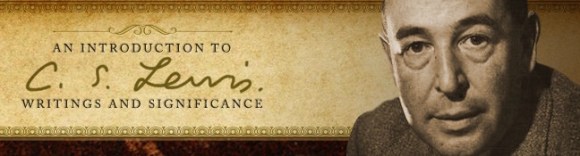
Hillsdale college is currently offering its online course, “An Introduction to C.S. Lewis: Writing and Significance” at no charge. Here is the link to the enrollment page.

In addition to being a first class college today, Hillsdale has a very distinguished past. Founded in 1844, its leadership in the anti-slavery cause allowed it to host two speeches by Frederick Douglass. The first was delivered during the Civil War itself.*

C.S. Lewis offered a fascinating twist on the injustice of slavery. In an essay entitled “Equality,” written 80 years after Douglass decried slavery at Hillsdale, Lewis advocated democracy as an imperfect philosophy. I agree with his inference that despite its shortcomings, it is the least-flawed form of government.

I am a democrat because I believe in the Fall of Man. I think most people are democrats for the opposite reason. A great deal of democratic enthusiasm descends from the ideas of people like Rousseau, who believed in democracy because they thought mankind so wise and good that everyone deserved a share in the government. The danger of defending democracy on those grounds is that they’re not true. . . . I find that they’re not true without looking further than myself. I don’t deserve a share in governing a hen-roost, much less a nation. Nor do most people—all the people who believe advertisements, and think in catchwords and spread rumours.

The real reason for democracy is . . . Mankind is so fallen that no man can be trusted with unchecked power over his fellows. Aristotle said that some people were only fit to be slaves. I do not contradict him. But I reject slavery because I see no men fit to be masters.

This is the barest example of C.S. Lewis’ keen mind. Enrolling in the course will certainly introduce participants to much, much more.

Like most online resources, this class is offered for personal growth. While a certificate is offered to those who complete the course, it doesn’t result in formal college “credit.” That said, the course could also be of great benefit to a motivated high school student.

Formal studies, even those like this one for which we set a personal pace, are worthwhile. Not only do we profit from the wisdom of the team of professors. Most of us also benefit from the discipline a course offers. Left to our own devices, most of us would not end up with the well-rounded familiarity with Lewis’ work that this class promises.

Shared Wisdom from Douglass and Lewis

One contemporary author noted a parallel thought in the writings of these two men. Thomas Sowell is a distinguished thinker and a talented writer. (Traits he shares with these two gifted authors.) On his website** Sowell has an extremely selective collection of quotations, on which he pairs the following. The first was written by Frederick Douglass and the second by C.S. Lewis.

Everybody has asked the question. . . “What shall we do with the Negro?” I have had but one answer from the beginning. Do nothing with us! Your doing with us has already played the mischief with us. Do nothing with us! If the apples will not remain on the tree of their own strength, if they are wormeaten at the core, if they are early ripe and disposed to fall, let them fall! I am not for tying or fastening them on the tree in any way, except by nature’s plan, and if they will not stay there, let them fall. And if the Negro cannot stand on his own legs, let him fall also. All I ask is, give him a chance to stand on his own legs! Let him alone! (Frederick Douglass, “What the Black Man Wants”).

Of all tyrannies, a tyranny sincerely exercised for the good of its victims may be the most oppressive. It would be better to live under robber barons than under omnipotent moral busybodies. The robber baron’s cruelty may sometimes sleep, his cupidity may at some point be satiated; but those who torment us for our own good will torment us without end for they do so with the approval of their own conscience. (C.S. Lewis, “The Humanitarian Theory of Punishment”).

I think Sowell’s connection of these two excerpts is quite perceptive. Although he is an economist by PhD, I regard him as a brilliant sociologist as well.

Education is a worthwhile pursuit. It is one embraced by Douglass, Lewis and Sowell. Hillsdale’s invitation to enroll in this course allows all of us to engage in the same meaningful exercise. After all, learning is one of the pleasures that makes life truly worth living.

_____

* You can read about Douglass’ speeches at Hillsdale College here.

** This link will take you to Sowell’s website.