When the Learnèd Deserve Gentle Ridicule

The halls of academia are a curious place. Dark wooden walls and well-worn stairways hearken back to legions of students and professors who have invested portions of their lives in the academies’ life. Some of us are drawn to the air of knowledge and residue of research that made them what they are.

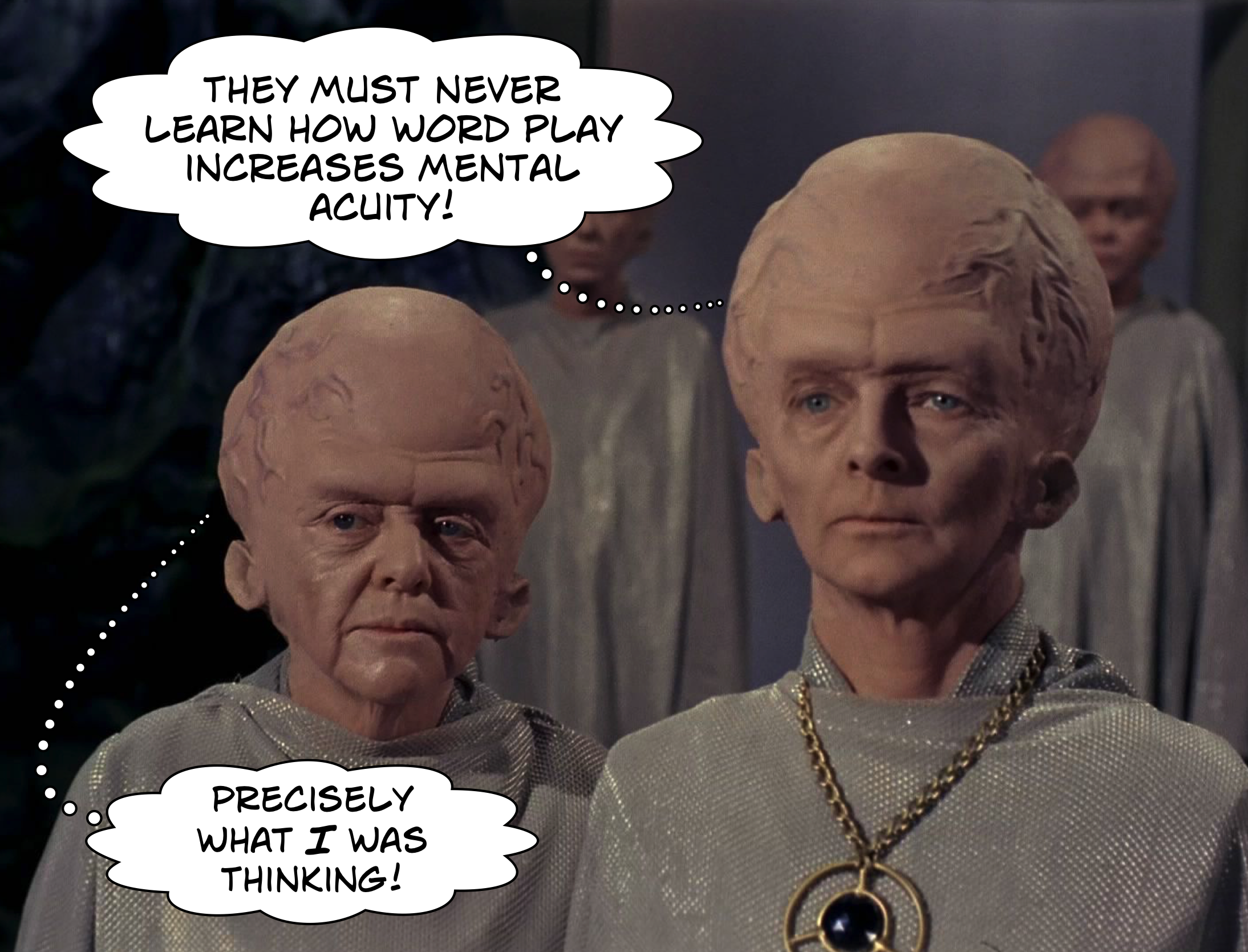
At the same time, however, many universities have become parodies of what they once were. Some self-important leaders and faculty cry out for satire and parody. As one liberal American journalist, a defender of academic elitism, admitted: “academics can be condescending and arrogant.”

Through the years I’ve known many brilliant men and women who retained their humility. Sadly, I’ve also encountered many whose view of themselves was so exaggerated that one could only respond with disbelief. Do they really believe no one sees through the façade?

Rather than write a longer column here, I want to provide a link to an unusual article I recently wrote related to this subject. If you have a sense of humor, and are not afflicted with academic grandiosity, please check it out. It appeared this past week in the latest issue of CSL: The Bulletin of the New York C.S. Lewis Society.

CSL is a small but mighty (think Reepicheep) publication. It’s worth subscribing to, even for those of us thousands of miles from their regular meetings in the Empire State.

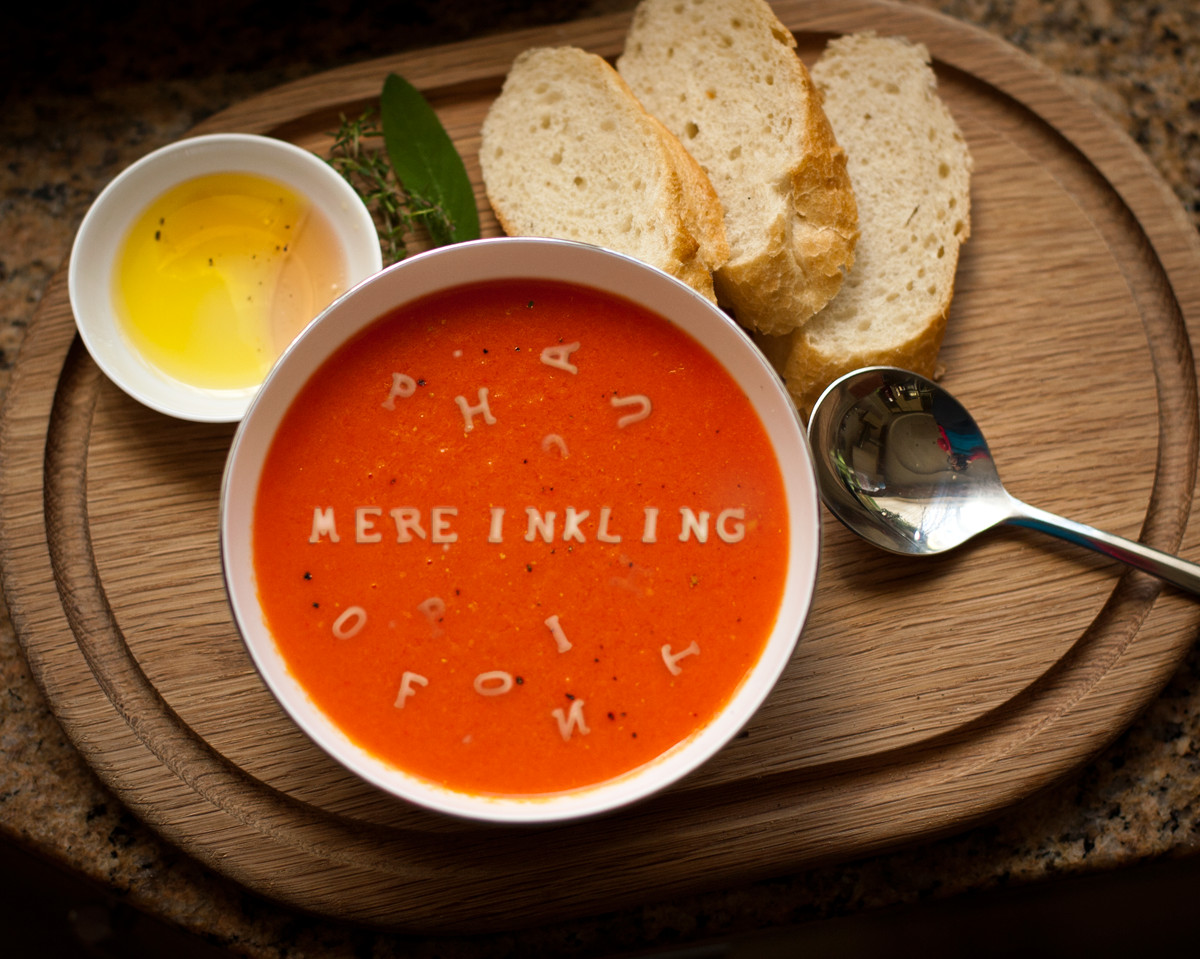
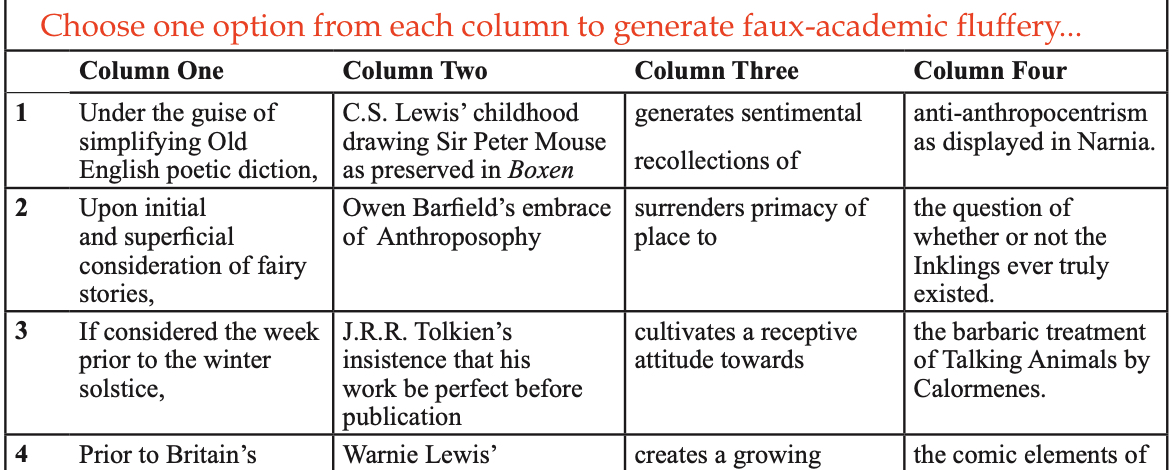
My article is brief, but it includes “the Mere Oxford Inkling Erudition Chart,” which promises countless hours of educational entertainment.

The people my satire seeks to unmask are the type of academics who attempted to make Oxford and Cambridge Universities so inhospitable to C.S. Lewis. Read this interview with one of his former student who critiques the opinions of lesser minds.

The BBC [invited him to broadcast the] talks that ultimately became Mere Christianity. The BBC was astounded by the response to these talks. As you know, Mere Christianity has never been out of print since.

He then became very unpopular with the senior faculty at Magdalen College. Magdalen was a godless college and a very famous college, very atheistical. . . . So [Lewis] got a rough ride there. He never made professor at Oxford.

So much for the civility one would expect in such environs.

You can read my modest article, “Mastering Inkling Erudition,” at this link today.

Literary Pasta

How many cans of SpaghettiOs would you need to purchase to be able to write the entire Lord of the Rings trilogy in their noodley alphabet?

What, you’ve never pondered that quandary? Well, now that the question has been posed, you may as well learn the answer.

The purveyor of this revelation is an online personality who analyzed the ratio of letters in cans of the SpaghettiOs A to Zs. He then devised a computer “program that converts books to SpaghettiOs.” [An inarguably valuable pursuit.]

It involved identifying the typical shapes of the pasta fonts.

Ah, to the solution to the puzzle. An individual seeking to replicate the Lord of the Rings would require 8,795 cans. The price would be slightly more than $2,000 and as a bonus, you would be left with more than eight million characters to devour.

Having labored to create the complex algorithms in his computer program, he has applied the versatile tool to other publications.

The King James Bible, for example, would demand 51, 214,669 cans to reproduce. At a price of approximately seventy-one billion dollars. [Editor’s note: the cost would probably be prohibitive, so don’t expect to see a physical attempt made in the near future.]

J.R.R. Tolkien was an extraordinary philologist. He loved languages, and he actually created more than one.

The creator of Middle Earth actually fashioned an alphabet for his Elven tongues. I have had my own name (by virtue of its meaning) rendered in Tengwar alphabet here.

Nevertheless, as inspired by linguistics and alphabets as he was, I doubt Tolkien would have been the least bit impressed by the canned pasta research.

In a 1956 letter, Tolkien described the process of completing his masterpiece for publication. I share the letter now, due to its reference to alphabets. However, due to its illuminating insight into the broader subject, I offer here a more extended rendition.

As ‘research students’ always discover, however long they are allowed, and careful their work and notes, there is always a rush at the end, when the last date suddenly approaches on which their thesis must be presented.

So it was with this book, and the maps. I had to call in the help of my son – the C.T. or C.J.R.T. of the modest initials on the maps – an accredited student of hobbit-lore. And neither of us had an entirely free hand.

I remember that when it became apparent that the ‘general map’ would not suffice for the final Book, or sufficiently reveal the courses of Frodo, the Rohirrim, and Aragorn, I had to devote many days, the last three virtually without food or bed, to drawing re-scaling and adjusting a large map, at which he then worked for 24 hours (6 a.m. to 6 a.m. without bed) in re-drawing just in time.

Inconsistencies of spelling are due to me. It was only in the last stages that (in spite of my son’s protests: he still holds that no one will ever pronounce Cirith right, it appears as Kirith in his map, as formerly also in the text) I decided to be ‘consistent’ and spell Elvish names and words throughout without k. There are no doubt other variations. . . .

I am, however, primarily a philologist and to some extent a calligrapher (though this letter may make that difficult to believe). And my son after me. To us far and away the most absorbing interest is the Elvish tongues, and the nomenclature based on them; and the alphabets.

My plans for the ‘specialist volume’ were largely linguistic. An index of names was to be produced, which by etymological interpretation would also provide quite a large Elvish vocabulary; this is of course a first requirement. I worked at it for months, and indexed the first two vols. (it was the chief cause of the delay of Vol iii) until it became clear that size and cost were ruinous.

Back to the noodle font. I doubt it Tolkien would have been impressed. What about his fellow Inkling, C.S. Lewis? What might he have said about the quantity of pasta-based “moveable type” required to reproduce Tolkien’s trilogy?

Allow me to take two simple words (out of context) from a letter he wrote in 1956. I think the Oxbridge don would have labeled the effort (and today’s post itself) “infinitely unimportant.”

Please forgive me if this sojourn into current trivia wasted your time. (But I hope, at least, that you enjoyed learning more about Tolkien’s linguistic and cartographic expertise.)

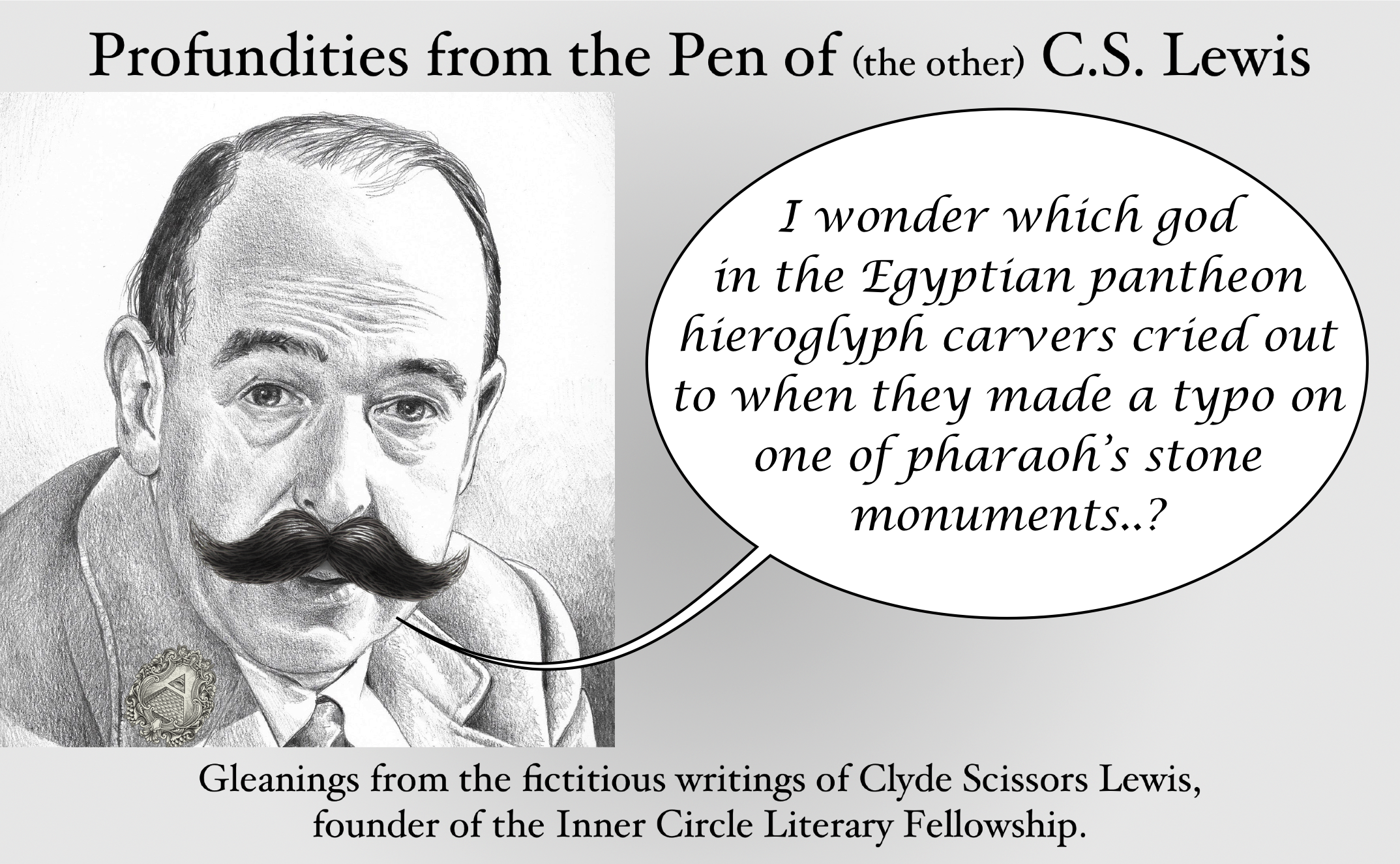
CS Lewis | Mistakes

Deep Thoughts from the Quill of the Other C.S. Lewis

Welcome to another in an occasional series of fictitious quotations from a fabricated contemporary of the great Oxbridge professor, Clive Staples Lewis.

The C.S. Lewis who authored these questionable observations, Clyde Scissors Lewis, possessed a worldview enigmatically different from that of the esteemed Christian author. Despite the fact that their two lives overlapped in a variety of ways, the similarities were superficial.

A brief biography of the lesser Lewis is available at this link.

The Other C.S. Lewis: A Brief Biography

By all means, do not confuse the wisdom of the genuine article with his shadowy counterfeit. Despite any cursory similarities between the two men, this is most definitely not the C.S. Lewis readers have come to know and love.

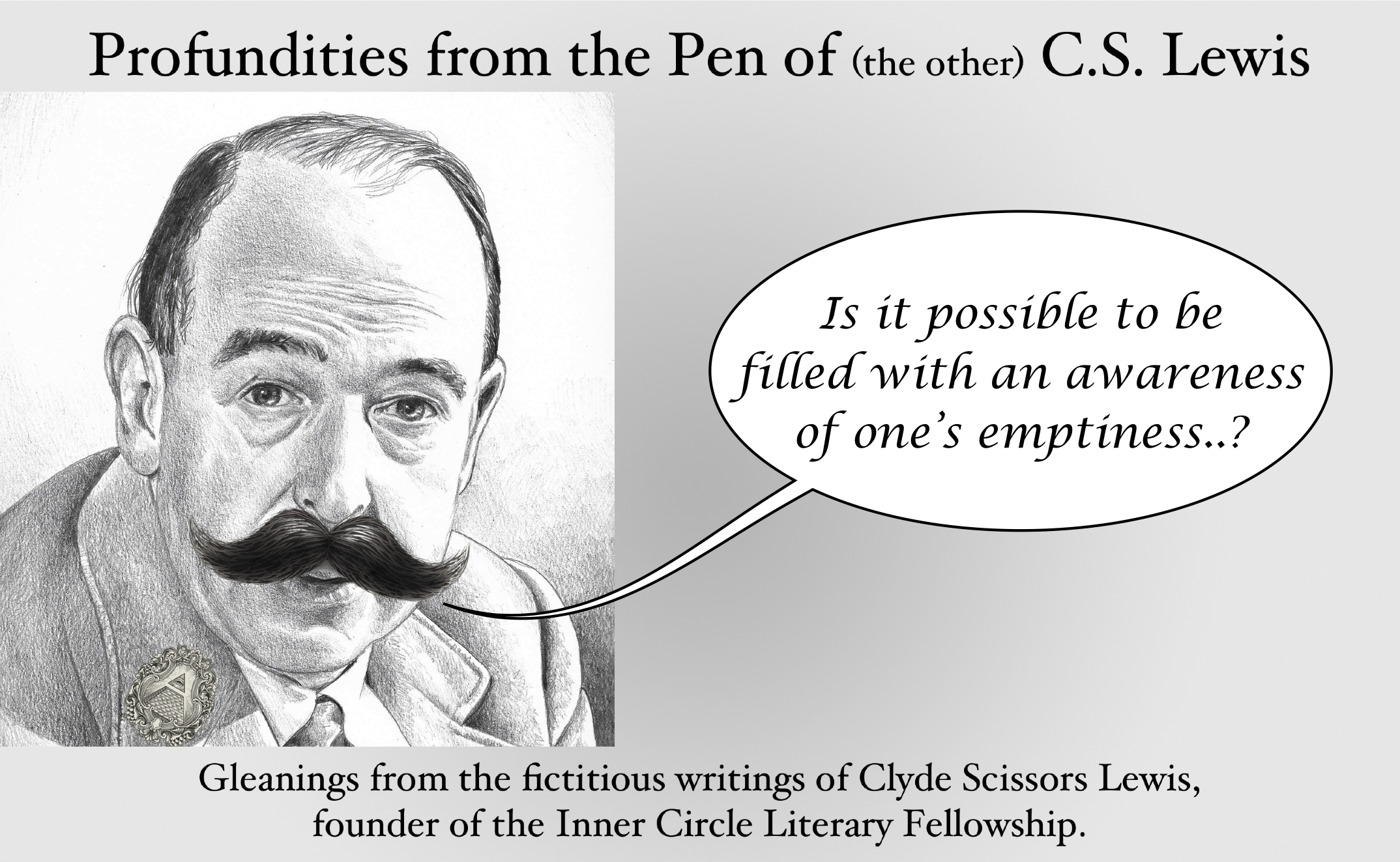
CS Lewis | Emptiness

Deep Thoughts from the Quill of the Other C.S. Lewis

Welcome to another in an occasional series of fictitious quotations from a fabricated contemporary of the great Oxbridge professor, Clive Staples Lewis.

The C.S. Lewis who authored these questionable observations, Clyde Scissors Lewis, possessed a worldview enigmatically different from that of the esteemed Christian author. Despite the fact that their two lives overlapped in a variety of ways, the similarities were superficial.

A brief biography of the lesser Lewis is available at this link.

The Other C.S. Lewis: A Brief Biography

By all means, do not confuse the wisdom of the genuine article with his shadowy counterfeit. Despite any cursory similarities between the two men, this is most definitely not the C.S. Lewis readers have come to know and love.

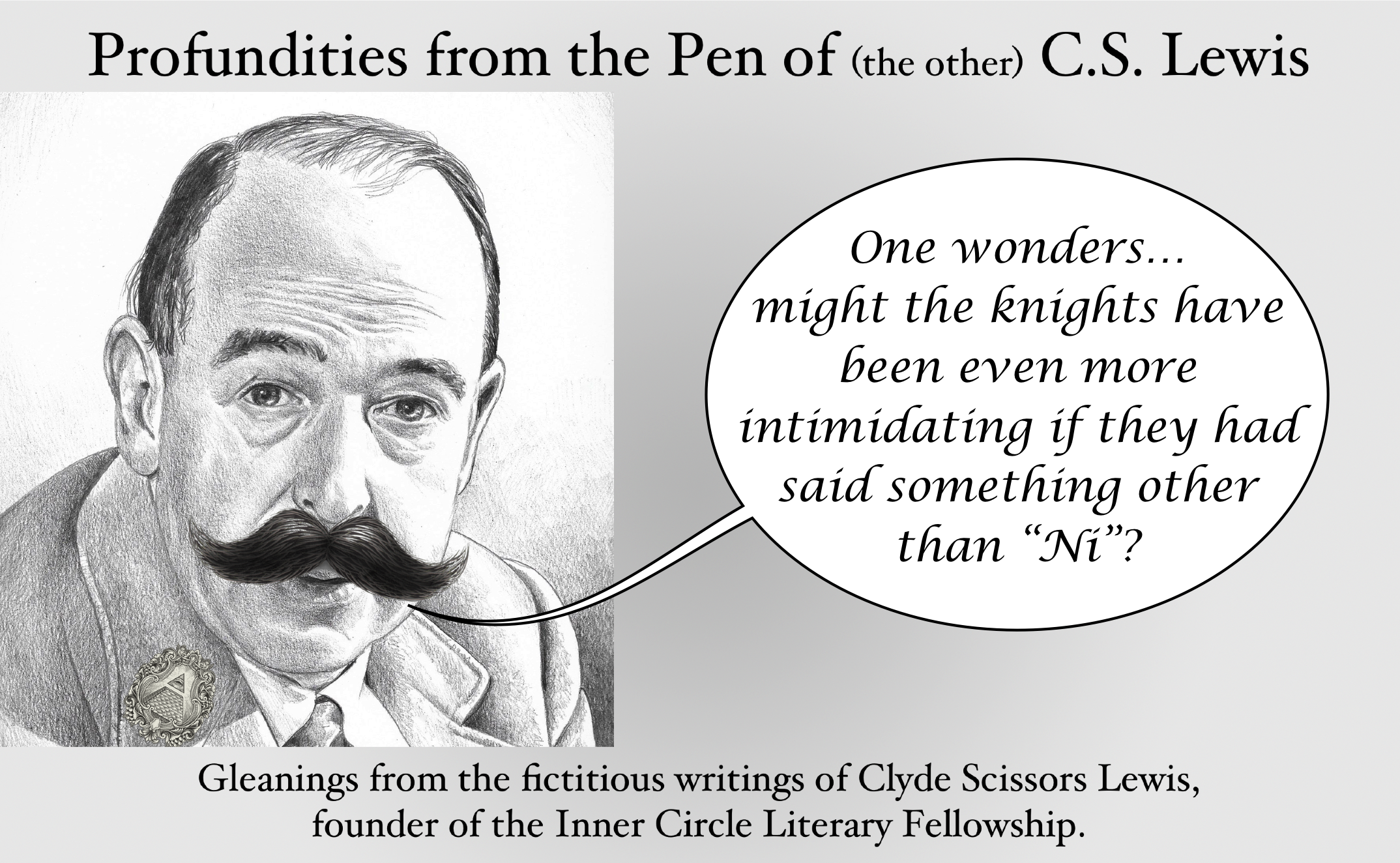
CS Lewis | Intimidation

Deep Thoughts from the Quill of the Other C.S. Lewis

Welcome to the first in an occasional series of fictitious quotations from a fabricated contemporary of the great Oxbridge professor, Clive Staples Lewis.

The C.S. Lewis who authored these questionable observations, Clyde Scissors Lewis, possessed a worldview enigmatically different from that of the esteemed Christian author. Despite the fact that their two lives overlapped in a variety of ways, the similarities were superficial.

A brief biography of the lesser Lewis is available at this link.

The Other C.S. Lewis: A Brief Biography

By all means, do not confuse the wisdom of the genuine article with his shadowy counterfeit. Despite any cursory similarities between the two men, this is most definitely not the C.S. Lewis readers have come to know and love.

Creative Definitions

Recently I read about an African Christian who was raised in a family that practiced ancestral worship. His grandfather was considered a witchdoctor, and it was expected that this young man would assume his duties.

The only problem is that when I initially viewed the passage, I read that his grandfather was a whichdoctor.

My once 20/20 vision is long gone. I still read without glasses (for the most part), but when I have yet to wash the sleep from my eyes, I encounter some surprising words.

“Whichdoctor” actually made some sense. I acknowledge it hasn’t been an English word (until now) but is so clear and so utilitarian that it cries out for recognition.

Whichdoctor: An interrogative used when attempting to ascertain which physician’s  attention an individual should be seeking. Especially useful in a hospital setting with numerous specialists. As in: Whichdoctor should I talk to, the podiatrist, the pediatrician, the pulmonologist, the psychiatrist, the pathologist, or the proctologist?

Last year I posted a column entitled “Create a Word Today.” It was inspired by an article I cited about making up useful words with pertinent definitions. I included 22 examples in my first column. They touched on a variety of subjects.

Mannekin: A boring, sedentary relative, who rarely rises from the couch.

Purrification: The activity of forgiveness and restoration that occurs when any cat makes a sincere confession of its sins.

Several were ecclesiastical in flavor.

Cathedroll: A large church led by a senior minister given to quaint and unintentionally comic humor.

Concupiscents: Hollywood’s obsession with including graphic sexual themes in all of their productions, resulting in the selling of their souls for pennies on the dollar.

And some related to the field of writing.

Manuskipped: The sad condition when the article or book into which you poured your blood, sweat and tears has been tossed into a slush pile to lie forgotten.

Proofreaper: Someone you invited to read your manuscript for misspellings who advises you to delete entire sections of your precious creation.

If you’re curious, there are 16 additional words included in the original post linked above.

So, allow me to offer here a few recent efforts, inspired by the misreading I referred to at the top of the page. How about 22 more?

But, before that, let’s look at a passage from C.S. Lewis’ autobiography, Surprised by Joy. As a person who has always appreciated a good vocabulary – and who is blessed to have grandchildren who are articulate beyond their years – I am saddened by Lewis’ youthful experience.

Reading much and mixing little with children of my own age, I had, before I went to school, developed a vocabulary which must (I now see) have sounded very funny from the lips of a chubby urchin in an Eton jacket.

When I brought out my “long words” adults not unnaturally thought I was showing off. In this they were quite mistaken. I used the only words I knew.

The position was indeed the exact reverse of what they supposed; my pride would have been gratified by using such schoolboy slang as I possessed, not at all by using the bookish language which (inevitably in my circumstances) came naturally to my tongue.

And there were not lacking adults who would egg me on with feigned interest and feigned seriousness – on and on till the moment at which I suddenly knew I was being laughed at.

Then, of course, my mortification was intense; and after one or two such experiences I made it a rigid rule that at “social functions” (as I secretly called them) I must never on any account speak of any subject in which I felt the slightest interest nor in any words that naturally occurred to me. And I kept my rule only too well . . .

Hooplaw: The two, vastly different legal disciplines dealing with (1) basketball contracts, and (2) litigation related to injuries caused by overly excited commotion.

Interdisciplinairy: The entire field of specialty studies related to the atmosphere.

Marvelouse: A creep or cad who considers himself something quite extraordinary.

Atrofee: The medical bills associated with the care of patients suffering an enduring coma.

Predilicktion: A preference for the sensation of taste over the other four basic human means of perceiving the world around us.

Ammunishun: The attitude of some activists seeking to restrict Second Amendment rights.

Megalowmaniac: The true stature of power hungry narcissists.

Gratuitruss: The unnecessary wear of a device to restrain a nonexistent hernia.

Calumknee: Malicious misrepresentations of political figures who frequently stumble.

Misscalibration: The awkward occasion when footwear retailers suggest to a young lady try on size 20 Air Jordans.

Patriought: The noble, often self-sacrificial, behavior of citizens who truly love their country.

Hypnothetically: The wide range of potentially embarrassing acts a person might be directed to perform under the influence of mesmerism.

Enlightenmint: The experience of achieve a spiritual pinnacle, accompanied by an aromatic scent.

Raspewtin: What Russia’s last Tsar should have done to Grigori.

Canonball: An elegant celebration lacking minuets, due the participants’ vows of celibacy, but not lacking in a wide selection of vinted and distilled beverages.

Immaculatte: A perfectly balanced beverage prepared by one of the world’s finest baristas.

Telegraft: Crimes committed over the phone by telemarketers, or via the airwaves and internet by televangelists.

Archietype: Ideas and symbols that recur in stories from many cultures and eras which bear a clear likeness to Archibald Andrews, who was often accompanied by his companion Jughead.

Syruptitious: The practice of slipping secrets past the unsuspecting by applying sticky sentimentality to one’s words.

Youphemism: The substitution of a mild or neutral description of someone to replace what you truly think of them.

Boulebard: The landscaped avenues of Stratford-upon-Avon by William Shakespeare.

Hagographer: An author who prefers to write the biographies of harpies rather than saints.

Admittedly, these words are not all top tier, but I challenge you to do better. If you have one or two winners, please cite them in the comments below. Oh, I just thought of another:

Religioscity: The religious devotion expressed by the residents of an urban environment.

Now I need to think about something else so I’ll be able to sleep tonight without jumbled word running through my mind.

As the sainted C.S. Lewis once described some troubled days in a boarding school while a youth:

Consciousness itself was becoming the supreme evil; sleep, the prime good. To lie down, to be out of the sound of voices, to pretend and grimace and evade and slink no more, that was the object of all desire—if only there were not another morning ahead—if only sleep could last for ever! (Surprised by Joy)

Inventing Poetry Forms

Would you like to leave your mark on literary history? Why not invent a new poetic form? It just might catch on.

If it did, you could become as famous as Adelaide Crapsey (1878-1914). She lived a privileged but brief life. Adelaide is remembered today as the creator of the American Cinquain. She also wrote a book entitled A Study in English Metrics which you can download for free.

C.S. Lewis describes the imaginative aspect of writing poetry as a creative act. “For poetry too is a little incarnation, giving body to what had been before invisible and inaudible” (Reflections on the Psalms).

LitCharts offers a description of the form itself, and notes an alternative name for the poetic invention.

The American cinquain is an unrhymed, five-line poetic form defined by the number of syllables in each line—the first line has two syllables, the second has four, the third six, the fourth eight, and the fifth two (2-4-6-8-2). They are typically written using iambs.

In the early twentieth century the American poet Adelaide Crapsey, inspired by the five-line Japanese poetic form of tanka, began to write five-line poems that followed a distinct form. This poetic form soon came to be known as an American cinquain (though it’s also sometimes referred to as a Crapseian cinquain, after its creator).

I think I’ll stick with “American.”

Oddly, one of the reasons Crapsey’s story drew me in is the fact she was the daughter of a prominent Episcopal clergyman. Algernon Sidney Crapsey (1847-1927) had aspirations of becoming a bishop, only to end up defrocked for heresy.

Writer’s Digest offers a list of 168 poetic forms, including “a few fun super new nonce forms.” I advise reviewing this listing so you don’t go to the effort of birthing your own form, only to find out that someone beat you to it.

I’ve written in the past about the benefit of writing outside of our normal styles. As a nonfiction writer, I’ve never desired to be considered a poet.

But I have enjoyed dabbling in a variety of poetic forms as a literary exercise. On occasion, I’ve actually been pleased with the results. And, due to its Inkling inspiration, my personal favorite is probably “A Foreshadowing of Epics.”

In a moment I’ll share my modest attempts at American Cinquains. But first, allow me to offer a Sijo that I wrote to introduce my Cinquains. A Sijo is “a Korean verse form related to haiku and tanka and comprised of three lines of 14-16 syllables each, for a total of 44-46 syllables.”

Immortalize your poetic memory this novel way.
Inventing a new form of poetry is easy to do.
With meter, hyperbole and rhyme – make your fame last for all time.

What follows is a medley of American Cinquains that I composed yesterday while waiting for an optometry appointment. My goal was not to awe readers, but to stretch my writing – what Chuck Palahniuk (the author of Fight Club) refers to as one’s “writing chops.”

The last story you should write is the most important story. You should start with a story that is just an amusing, entertaining, fun story to write and learn your writing chops with the least important things before you start applying them to the most important things.

I intentionally attempted to write cinquains evoking a variety of emotions. Here you will find examples that are thoughtful and frivolous, serious and sentimental.

Cudgel
Beaten by words
Angry themes beget hate
Eardrums torn by condemnation
Wounds last.

Pet dogs
Each breed a joy
Humanity’s best friends
Frolicking with unbounded joy
Precious.

Just War
Tragic option
For innocents still die
Theology deems it okay
Last choice.

Poets
Can be stuck up
Denigrating others
Counting fine prose lower than verse
Vain pride.

Dinner
Fresh fare tonight
Feasting on each choice cut
Cannibals toast missionaries
Dessert.

Comfort
Love wraps its arms
About the wayward lamb
Carried safely back to the fold
Rescued.

Try your own hand at writing an American Cinquain. Or, better yet, establish your own unique poetry form. If you promote it well – say by getting someone like Oprah to endorse it – you could one day become as famous as Adelaide Crapsey.

Dangerous Facial Hair

Beards come, and beards go. Yet humanity offers no consensus on their value. Perhaps that is because there are so many diverse styles, ranging from restrained to insane.

C.S. Lewis mentioned in passing the “biblical” style of beards in a 1939 letter to his brother Warnie.

For instance the presence of the revolving bookcase in the study has just introduced me to a book of Minto’s mother’s which is well worth studying. It is called Gems of Literature/Elegant, rare, and Suggestive

The engravings are of a sort you can probably imagine – damsels with those peculiar comic-section or peg-top legs and eyes raised to heaven and old men with what can only be called Biblical beards.

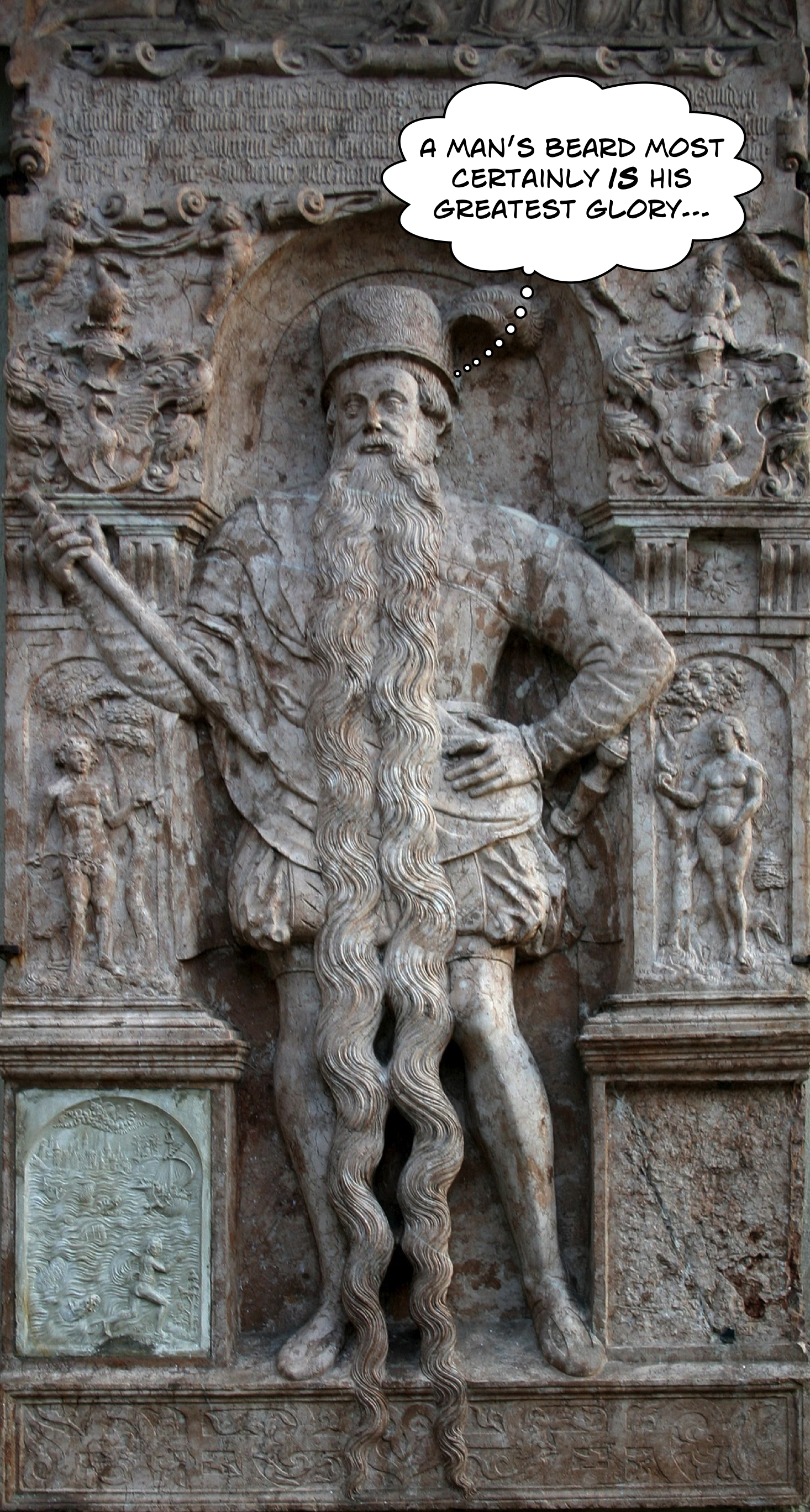
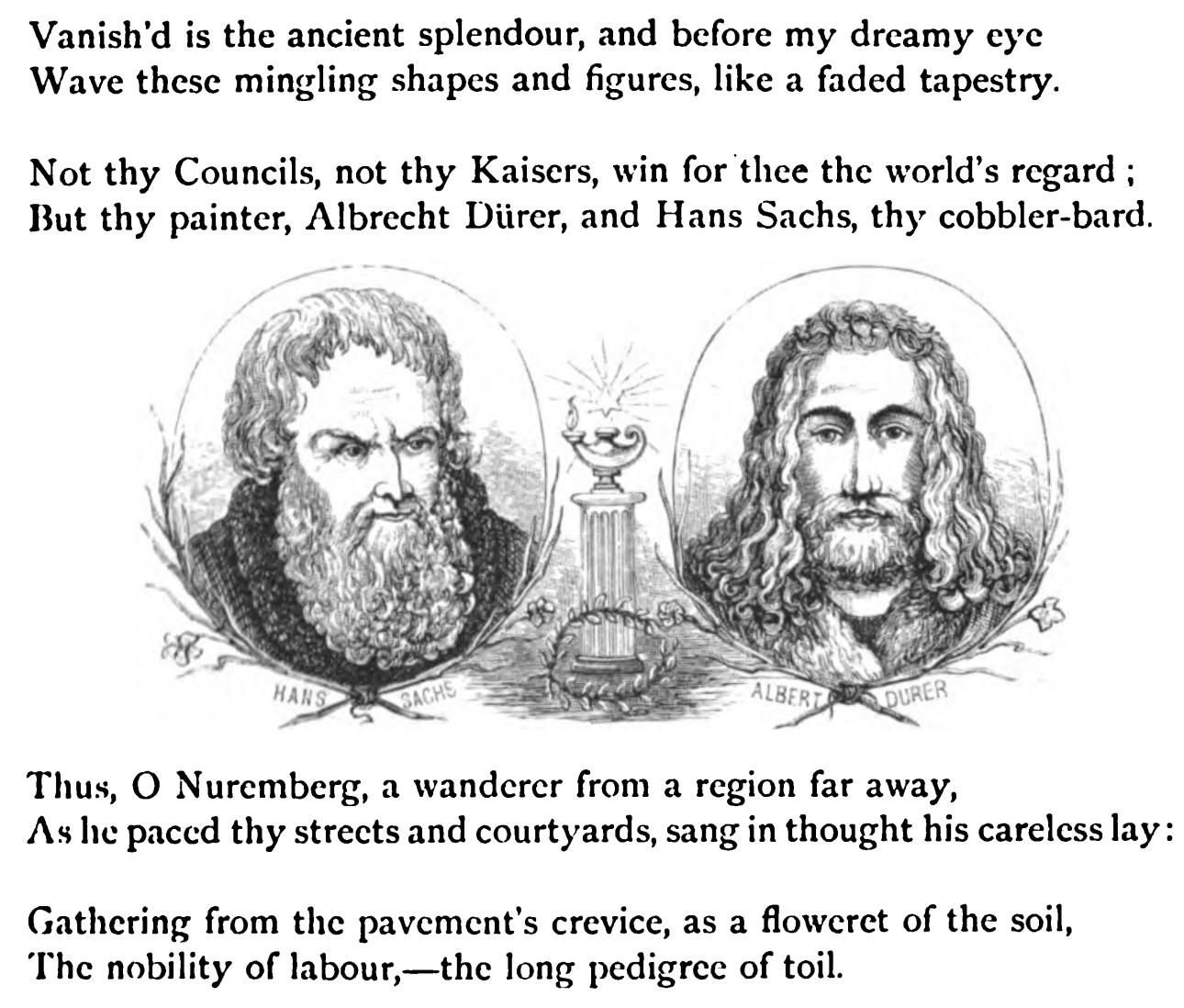
Facial hair is a personal choice. But when that choice becomes deadly, perhaps society should intervene. Take the case of Hans Steininger, a sixteenth century burgomaster in the Austrian-German city that would one day become the birthplace of Adolf Hitler.

Some mental disorder apparently compelled him to have scissors banned from his city, lest a single hair on his magnificent beard be severed. Seriously, he died because he tripped over his chin whiskers during a major fire in 1567.

Steininger usually kept his prodigious beard hair rolled up and stuffed in a pocket, but during the commotion he was running around with it hanging free. In the midst of the chaos, he managed to step on his own beard, sending him tumbling down a flight of stairs and breaking his neck…

The full-body illustration at the church shows Steininger’s beard bifurcated into two scraggly strands, stretching down past his feet. And tucked away in the local district museum is the town’s most hirsute artifact: the 450-year-old beard of Steininger.

Even in ancient times, everyone recognized an unkempt beard was a liability, particularly in combat. In The Life of Theseus, Plutarch states this was why Alexander the Great ordered his soldiers in his phalanxes to shave.

They write also that this was the reason why Alexander gave command to his captains that all the beards of the Macedonians should be shaved, as being the readiest hold for an enemy.

Although I sported a modest mustache for a short time back in the day when Tom Selleck starred as Magnum P.I., I’ve never been a big fan of facial hair. Seeing Steininger’s likeness reinforces that.

Add to that the biblical warning from Leviticus: “When a man or woman has a disease on the head or the beard, the priest shall examine the disease. And if it appears deeper than the skin, and the hair in it is yellow and thin, then the priest shall pronounce him unclean.” (Leviticus 13).

Historical Biases

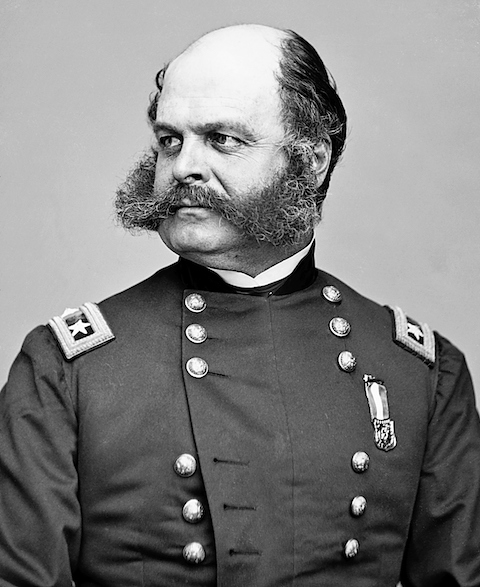
While well-maintained beards are okay, two additional (historical) factors contribute to my discomfiture. First, as a student of the American Civil War, I find myself repelled by the odd appearance choices of people such as General Ambrose Burnside. Although he gave his name to “sideburns,” that’s hardly what I would call these monstrosities. (Also called mutton chops, which is precisely what the cultured bon vivant should have adorning their cheeks.)

The second reason for my wariness is due to the affinity of too many pastors in my own denomination for beards. I doubt they wear them to wow the ladies. Perhaps they think the beards make them appear more distinguished?

Actually, I’ve become desensitized to most pastors who opt for facial hair – with one bizarre exception. To employ a cliché literally: for the life of me, I can’t understand why anyone living in the twenty-first century would opt for a “chin curtain.” I understand the Amish have an affinity for them, but who ever considered those German Anabaptists fashionable?

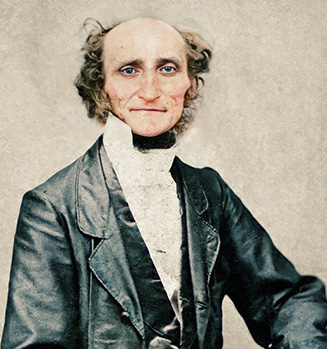
Sadly, because my church also possesses a strong Germanic strain, I’ve discovered more than one minister bearing this mark of Cain. Perhaps they hope to emulate the denomination’s first president, the Rev. Dr. C.F.W. Walther. If so, my advice is they follow his example of conscientious pastoral care, and dispense with the externals. (I will concede that his black leather suit does look rather dapper, being that the image was captured for posterity in the mid-1800s.)

C.S. Lewis & His Beard

I can forgive C.S. Lewis for aligning with the beard-faction on at least two occasions. That’s because there were extenuating circumstances.

In 1924 he wrote to his father about an illness that led to what may have been his first transgression.

My dear Papy,

I got chicken pox and am only now out of quarantine. I have of course been quite well enough to write for some time but I don’t know whether you have had this complaint and thought it better not to chance infecting you: I am told that the older you are the less likely it will be to ‘take’, but the worse if it does.

I had a pretty high temperature at the beginning and some very uncomfortable nights of intense perspiration, but it soon passed off.

The danger of cutting any of the spots on my face of course made shaving impossible till this very day and I had a fine beard. I have left the moustache which would excite ‘poor Warren’s’ envy, but I shall probably get tired of it in a few weeks. It is very stiff, and all the hairs grow in different directions and it is thicker on one side than on the other.

In a 1931 letter to his childhood friend, Arthur Greeves, he mentions offhand as he closes that he has altered his appearance.

I suppose you have heard about Warnie’s peerage – for gallantry during the recent manoeuvres. I have grown a beard – Good night.

In two letters written in 1956, C.S. Lewis would describe the illness-induced beard he had mentioned to his father.  He humorously describes its imperfections. The first was written to a young fan.

Your mother tells me you have all been having chicken pox. I had it long after I was grown up and it’s much worse if you are a man for of course you can’t shave with the spots on your face. So I grew a beard and though my hair is black the beard was half yellow and half red! You should have seen me.

The following month he shared more details with a longtime correspondent.

The Tycoon may count himself lucky to have got chickenpox before he reaches the age of shaving brushes and razors. I had it in my late 20’s and grew a beard which was part yellow and part red though my hair is black – a very striking colour scheme.

Apart from that, though, I think it a very good sort of illness on the whole. A nice long quarantine which by sentencing one to solitary confinement secures one against pupils, committees etc. But no doubt it had no such charms for you.

Seeing C.S. Lewis adorned with a beard would surely make for an odd photograph. Especially one taken in color.

Postscript

Forgive me. I’ve vented more than I intended. Wear whatever hairstyle you prefer. However, I would caution you that if your beard drags on the ground, it’s best to carry an emergency set of shears, lest you stumble during an emergency stampede.

As a treat for those who have read to the end of this column, here is an image from Gems of Literature. I suspect these were two of the “Biblical beards” to which C.S. Lewis referred.

Bonus for beard aficionados: For a curious look at a guy whose quest is to see how many facial hair variations he “can check off from the chart of facial hair types,” visit this site.

An Evolutionary Fluke

Did trees evolve from apes? An odd question, to be sure, but one humorously posed by C.S. Lewis in a letter to his father.

While this column does discuss the theory of evolution, it’s not doctrinaire. So, whatever your opinion of Darwin’s notions, read on, and you may enjoy a pleasant surprise.

C.S. Lewis, the brilliant Christian apologist was not an ironclad “evangelical” in the American sense of the word. Here in the U.S., that typically requires adherence to a handful of doctrines, usually including the affirmation of the infallibility of the Scriptural autographs and of the creation of humanity in the persons of our first parents, Adam and Eve.

As important as these matters are, very few Christians would deem them salvific, in the sense that people holding less “vigorous” views on these issues will be excluded from heaven.

C.S. Lewis was one of those who focused on the core of the Christian faith, rather than secondary doctrines. He referred to this as “mere Christianity,” and it was based on a trusting relationship with God through the Person of Jesus, God present with us in the Incarnate Word.

As for doctrines per se, like all good defenders of the faith, C.S. Lewis preferred not to get bogged down with secondary matters. This is consistent with the spirit of Paul’s advice to the young pastor, Timothy.

Remind them of these things, and charge them before God not to quarrel about words, which does no good, but only ruins the hearers. . . . Have nothing to do with foolish, ignorant controversies; you know that they breed quarrels. And the Lord’s servant must not be quarrelsome but kind to everyone . . . (2 Timothy 2:14, 23-24).

Lewis’ 1927 Evolutionary Conversation

In March of 1927, C.S. Lewis wrote one of his eclectic letters to his father in Northern Ireland. As usual, he commented on his father’s previous correspondence and shared about his current health and activities. While his relationship with his father grew strained after his mother’s untimely death while he was still a child, Lewis’ letters to his father exude familial respect framed in the context of early twentieth century British sensibilities.

That said, Lewis was always eager to share curious or silly experiences he knew would amuse his solicitor father. He takes a humorous approach, for instance, to advising his father to consult a more skilled doctor to diagnose an ailment, rather than suffering with the incomplete work of the physician he has always known, he will simply be “offer[ing] up several months of pain as a sacrifice on the altar of an old acquaintance.”

At the same time, he acknowledges his personal inclination toward doing the same, stating that “if I lived at home [I] would continue to use Gillespie all my life.” Gillespie, it turns out, ran a taxi service long favored by the family despite his bumpy transportation. “I have never regretted Gillespie and his hexagonal wheel,” Lewis shares.

He returns to his argument, however, by saying his father’s health demands the attention of a competent physician rather than relying on past ties. He concludes with an illustration based on his own brother. “Hang it all, even you wouldn’t suggest that because I’ve known Warnie a long time I ought to trust him as an interpreter on a holiday in Spain.”

C.S. Lewis proceeds to share with his father current events at Magdalen College (“we are putting up a new building”) and a recent nightmare (“it was the sense of being on the moon . . . the complete desolateness, which gave the extraordinary effect”).

The letter includes other fascinating elements, but it is time now to consider the reference to evolution.

An Absurd Age

I absolutely love the way C.S. Lewis invites us to experience the following moment. His story is so vivid, it still lives a century after the described events transpired.

We live in the most absurd age. I met a girl the other day who had been teaching in an infant school (boys and girls up to the age of six) where the infants are taught the theory of Evolution. Or rather the Headmistress’s version of it.

Simple people like ourselves had an idea that Darwin said that life developed from simple organisms up to the higher plants and animals, finally to the monkey group, and from the monkey group to man.

The infants however seem to be taught that ‘in the beginning was the Ape’ from whom all other life developed – including such dainties as the Brontosaurus and the Iguanodon.

Whether the plants were supposed to be descendants of the ape I didn’t gather. And then people talk about the credulity of the middle ages! À propos of this can you tell me who said ‘Before you begin these studies, I should warn you that you need much more faith in science than in theology.’ It was Huxley or Clifford or one of the nineteenth century scientists, I think.

Another good remark I read long ago in one of E. Nesbitt’s fairy tales –‘Grown ups know that children can believe almost anything: that’s why they tell you that the earth is round and smooth like an orange when you can see perfectly well for yourself that it’s flat and lumpy.’

Ironically, immediately after this, Lewis introduces his next subject with the words: “Almost the only interesting thing that has happened to me lately was a visit from a young German.” You see, I wasn’t misleading you when I said his letters are filled with fascinating material.

One must assume that times have changed, and that English children are no longer being taught such simplistic distortions of actual theories. But that’s not the theme of this current post. Rather, I wish to show how wonderfully entertaining a simple family letter can be – especially when it comes from the pen of C.S. Lewis.

Out of Context

Journalists quickly learn the skill of taking the words of people they dislike out of context. By doing this, they can make absolutely brilliant men and women sound like simpletons.

If the person is a public figure, with lots of material to sort through, you can find partial quotations (or obviously humorous or sarcastic remarks) that make the object of their ridicule sound like nearly anything – from a compassionate philanthropist to a conniving fascist.

That’s one reason some people who hope to tarnish the reputation of C.S. Lewis consciously avoid citing his work in its totality (or each piece in its honest context). Thus, as this article suggests, intelligent readers understand Lewis’ writing is “exceptionally good,” while some infantile critics regard it as “dodgy and unpleasant.”

(Do you appreciate my skillful use of adjectives in the previous sentence? They, of course, represent another dishonest method of undermining the arguments of people with whom one disagrees.)

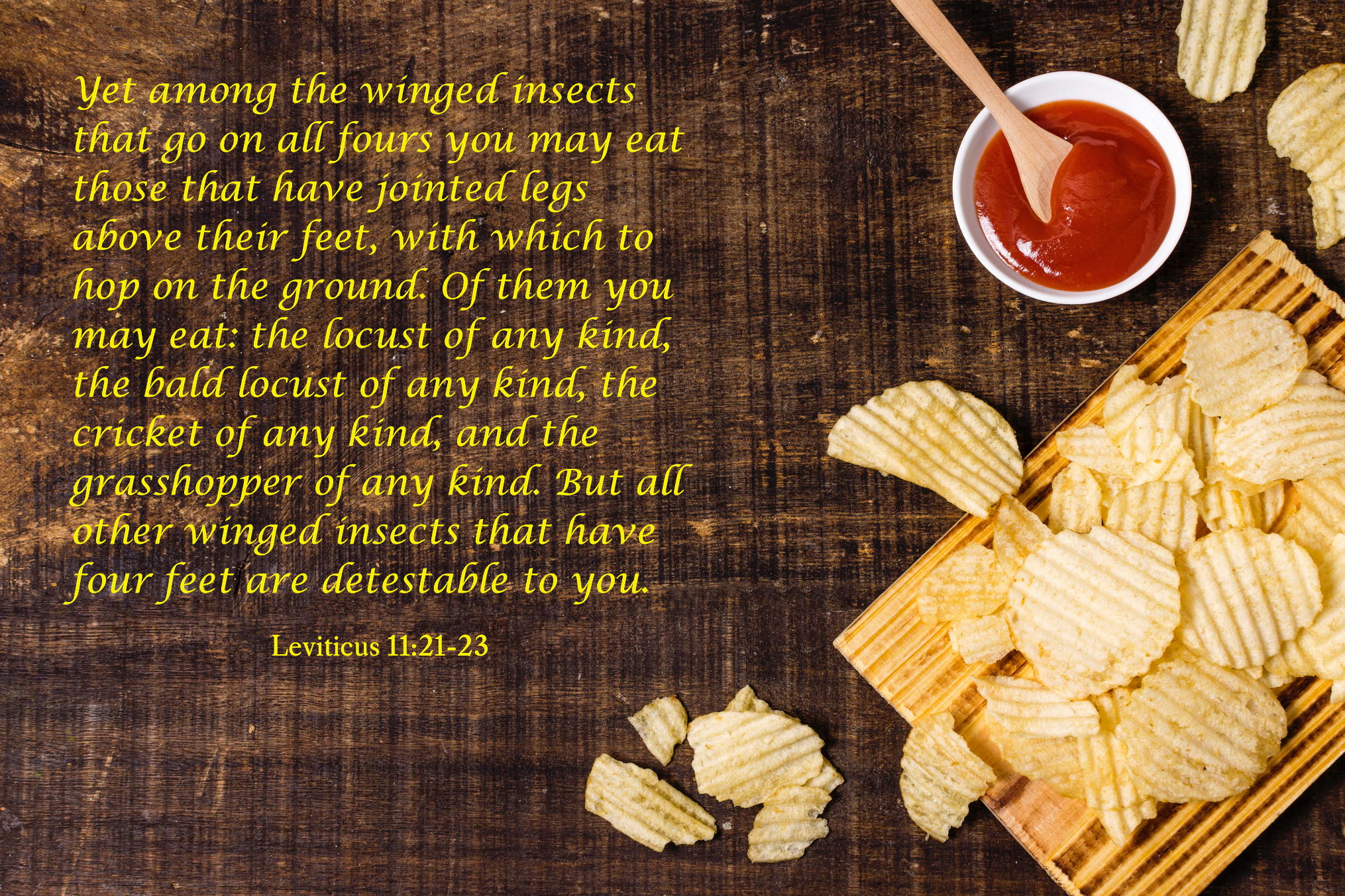
Returning to the idea of taking things out of their context, I offer the graphic (meme, if you will) that I created for the top of this column. It was inspired by “The 12 Most Inspiring Verses In The Bible” in the Babylon Bee. The brief article humorously illustrates how excising words from their context can make them sound rather bizarre.

These examples (mine included) are offered in a light-hearted way. However, the internet teems with examples of malicious attacks on God’s written Word. And many of these rely on the tried and true[false] technique of ignoring the immediate or full context to construct their strawman.

Strawmen or strawwomen are another dishonest form of argument, as “Logical Fallacies 101” explains.

Strawmen, scarecrows, and mannequins all have one thing in common: they are, by nature, flimsy objects that are easy to knock down. In the context of logical fallacies, a “straw man” argument is an argument that is framed in such a way that it is easy to “knock down” or dismantle.

How many times have you been in conversation with someone—someone who holds an opposing viewpoint to yours—who frames your position in a way that you have not? Then once they frame your position in that way, they attack it, supposing that by doing so they have won the argument?

In “Lewis on the Atheist’s Straw Man,” the author quotes a concise argument provided by C.S. Lewis “in Mere Christianity, [where] Lewis warns about over simplifying Christianity (something some people who call themselves Christians sometimes do), and the straw man Atheists often build from this. It’s definitely worth the read.

Biblical Verses that Demand Knowledge of Their Context

Admittedly, there are some passages in the Scriptures that are challenging to comprehend, apart from the whole. Intervarsity Press even has a website “Hard Sayings of the Bible,” subtitled “A Difficult Passage Explained Each Day.”

In “Encountering Difficult Passages,” the author charts a helpful course in how to discover their meaning. Here’s a sample of their sound advice:

Be extra careful with Google. I know. It’s so easy. It’s so tempting. You think, “Google tells me where to go when I’m physically lost; why can’t it help when I’m lost in the Bible?”

The problem is that Google only shows you what’s popular; it cannot differentiate between sites that provide truth and sites that provide ignorance. Avoid your natural impulse to click the first link that appears in a search. There are good websites out there to find answers, but you have to be discerning.

Some of Jesus’ own teachings were difficult for the disciples to comprehend. This was especially true of his announcement that he must die as part of the divine plan to deliver us all from the consequences of sin. When he announced the marvelous mystery of the eucharist (Lord’s Supper) he said “I am the bread of life. . . . Whoever feeds on my flesh and drinks my blood has eternal life, and I will raise him up on the last day. . . . This is the bread that came down from heaven, not like the bread the fathers ate, and died. Whoever feeds on this bread will live forever” (John 6).

While the twelve who become the Apostles continued to follow the Lord, some fell away in confusion because “When many of his disciples heard it, they said, ‘This is a hard saying; who can listen to it?’”

The Bible Truly “In Context”

Christians understand that the Incarnation, Life, Death, Resurrection and Return of Jesus Christ is the final, ultimate Word of the Bible. The Word himself, through whom all things were created, is the central, life-giving message of the holy Scriptures.

Because of this truth, we can evaluate the entire, comprehensive meaning of the Scriptures. We recognize the clear significance of those passages dealing with the Savior of humanity are vital, while those dealing with the nutritional value of locusts are rather less so.

While many people consciously practice this Christocentric reading of the God’s Word, one of its great champions was Martin Luther. If you wish to explore this subject in detail, I commend to you “All Scripture is Pure Christ: Luther’s Christocentric Interpretation in the Context of Reformation Exegesis.” You can find the entire volume in which this essay appears here.

As Martin Luther puts it, “To him who has the Son, Scripture is an open book; and the stronger his faith in Christ becomes, the more brightly will the light of Scripture shine for him.”

Christians are not Gnostics, who believe the Bible is hiding divine secrets from the uninitiated. Quite the contrary. However, the only way to truly understand the meaning of the Scriptures is to read them in their full context. And that context is Jesus, “the Lamb of God, who takes away the sin of the world!”