C.S. Lewis | Fame

Deep Thoughts from the Quill of the Other C.S. Lewis

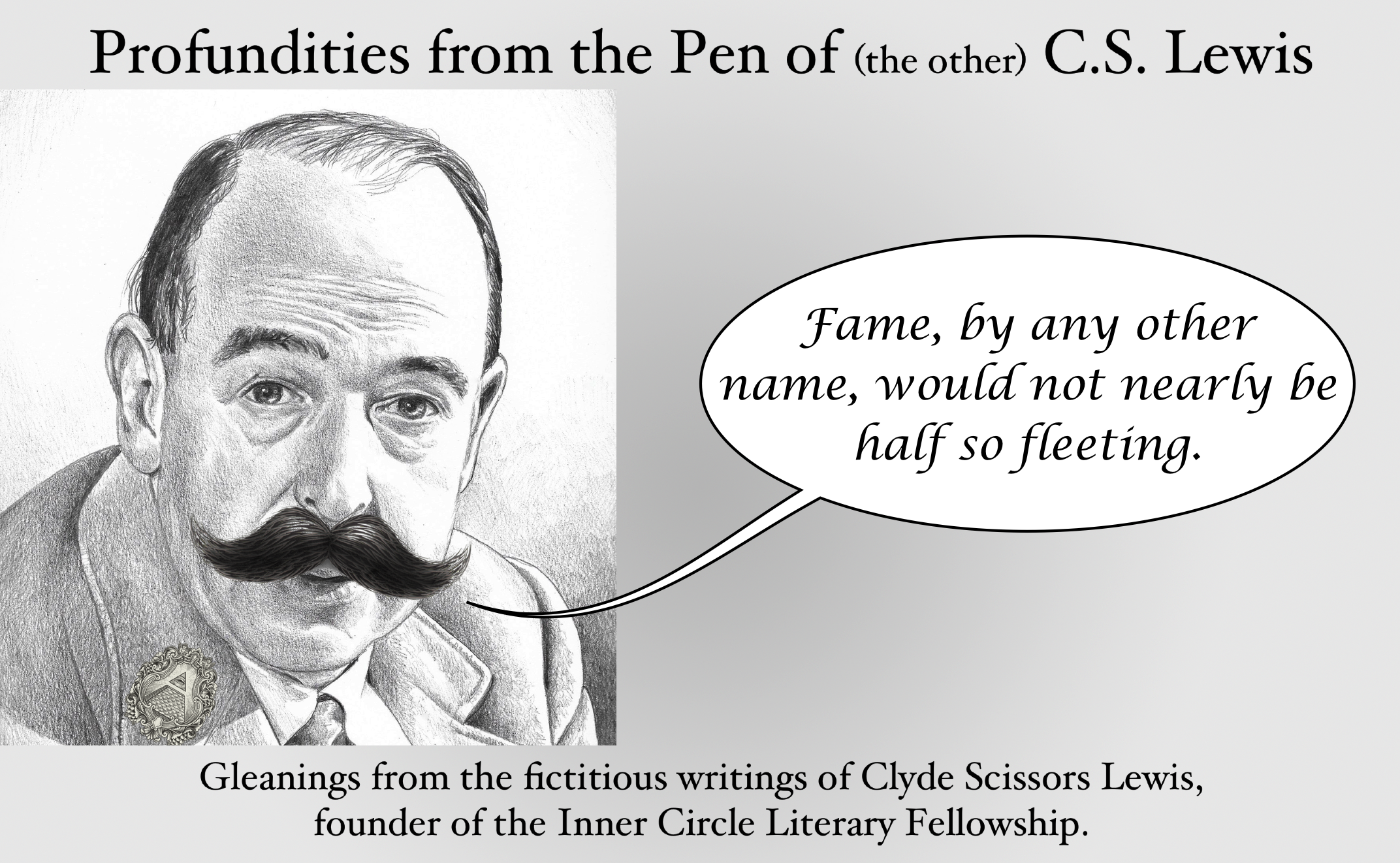
Welcome to the first in an occasional series of fictitious quotations from a fabricated contemporary of the great Oxbridge professor, Clive Staples Lewis.

The C.S. Lewis who authored these questionable observations, Clyde Scissors Lewis, possessed a worldview enigmatically different from that of the esteemed Christian author. Despite the fact that their two lives overlapped in a variety of ways, the similarities were superficial.

A brief biography of the lesser Lewis is available at this link.

The Other C.S. Lewis: A Brief Biography

By all means, do not confuse the wisdom of the genuine article with his shadowy counterfeit. Despite any cursory similarities between the two men, this is most definitely not the C.S. Lewis readers have come to know and love.

Narnian Numismatics

I’m a numismatist, and you may be one as well.

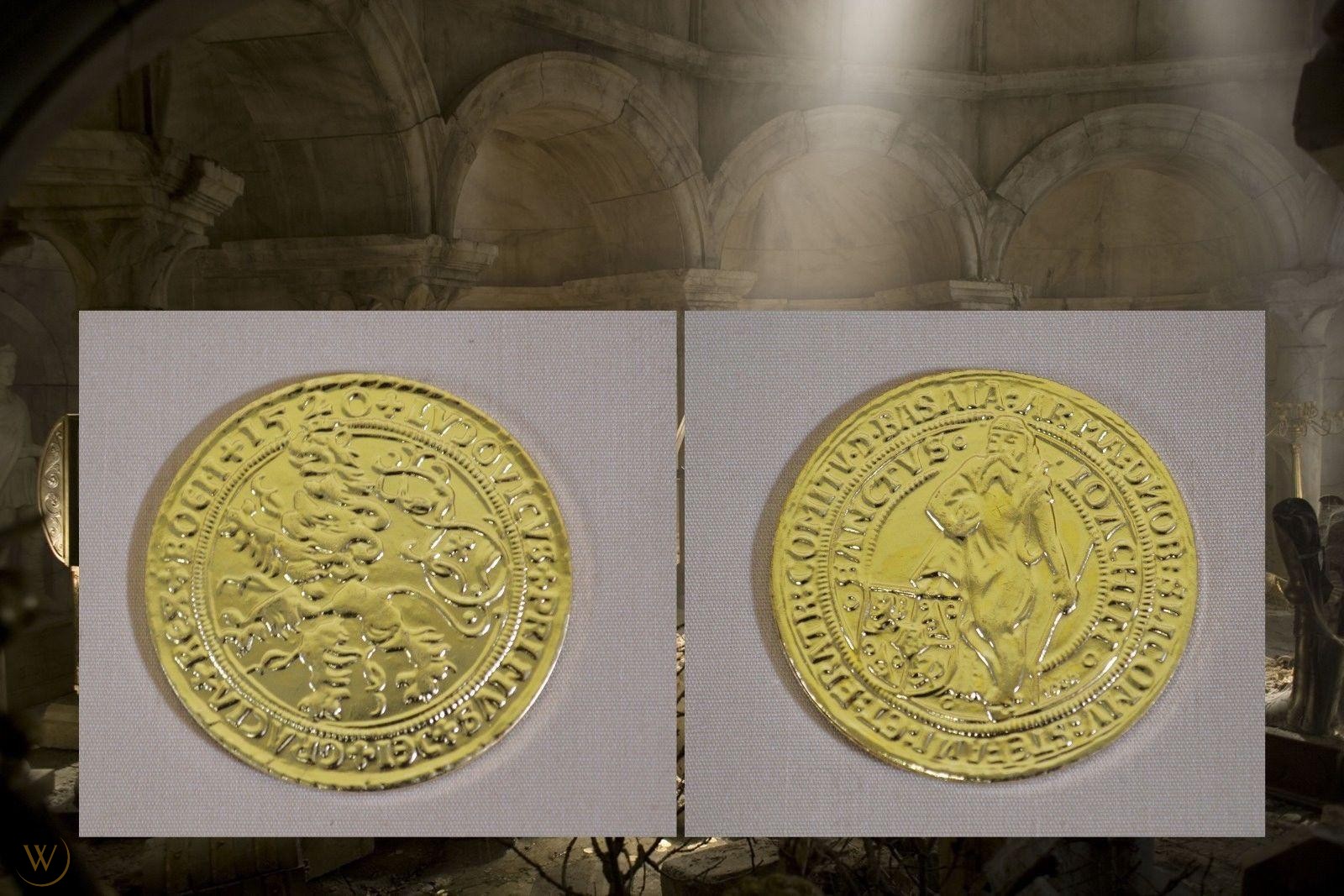
Although I haven’t actively accumulated coins for some years, I do have as a prize piece of my collection a Narnia coin used in the production of Prince Caspian (2008). Technically, since it isn’t a true, earthly coin, it is considered exonumia, but we coin collectors still recognize just how truly special these treasures are.

Speaking of treasures, that is precisely where my Narnian medallion comes from. The treasure chamber scene had a surfeit of the pieces, and some were sold in collectible frames. The obverse and reverse of the coin can be seen above. I’ve actually written about “my precious” piece of Narnia in the past but just this morning I woke up with the word “numismatist” on my mind, crying out for a Mere Inkling post. (More on this in a moment.)

First, those interested in the history of money may wish to skim a few of my other related columns. These include: inflationary currency such as German notgeld and Zimbabwe’s more recent $1,000,000 bills, a comparison of the women in the life of Constantine the Great and the prominent women in the life of C.S. Lewis, and the misspelling of the name of Jesus on a papal medallion.

Coins Have Given Way in My Life, to Words

As I said above, I awoke today with the word “numismatic” fluttering across my thoughts. And it was not alone. It was linked to the wordplay I recently discussed in “Creative Definitions.”

Before pondering where my mental gyrations on the word in question carried me, allow me to share two additional examples I scribbled out on my bedside tablet before rising to brush my teeth and begin the day.

Provocatours: excursions to politically explosive environs where travelers can accurately anticipate their guides will provide an explosively entertaining adventure.

Methics: the ethical perversion which allows people to justify creating pharmaceuticals with the primary function of destroying lives. [See chemistry teacher Walter White on “Breaking Bad.”]

From there my mind jumped to the pecuniary avarice of drug dealers as associated with the word numismatics – and it coined the related word,

Numethmatics: wherein the potential temporal gains associated with drug dealing outweighs the cost to society, oneself and an individual’s soul.

And in relatively rapid sequence came the following.

Flumismatics: when viral contagions disrupt the entire global economy.

Cluemismatics: either the determination of the financial motivations for murder mysteries or the funding required for law enforcement agencies who determine the criminals’ identities.

Numismantics: when economic theory is dominated by traditionally masculine concepts and values (e.g. profit and greed).

Numissmatics: economic theory which is strongly influenced by traditionally feminine values (e.g. charity and compassion).

If the last two culturally antiquated examples haven’t lost you, read on.

Gloomismatics: the prospect for economic survival in light of crushed hopes for the future due to unbridled inflation (e.g. the insanity of some economists and politicians who advocate simply “printing more money” to solve the problem).

Newmismatics: novel currencies and specie that seek to deceive citizens through the pretense that they actually possess some value.

Bluemismatics: the depressive condition elicited when one’s financial holdings inadequately counterbalance one’s debts; historically, applied to cabin boys in sailing days who only realized they would not be fiscally compensated for their services after the ship had left port.

Pneumismatics: pecuniary considerations based on spiritual rather an material considerations.

Numismetrics: the partly scientific, partly fanciful art of exchanging international currencies.

Nufistmatics: the shocking rise of unprovoked blindsided blows to strangers in urban jungles, frequently without any apparent desire to steal property.

Truemismatics: the actual value of monies before economists get involved in the matter.

Gluemismatics: the tight-fisted relationship misers have with their monetary hordes (see Ebenezer Scrooge, or dragons such as described by C.S. Lewis and J.R.R. Tolkien).

Nuclearmismatics: the grim cost calculation involved by world powers when weighing the “benefits” of a possible nuclear conflagration.

There were a couple of other scribblings I was unable to decipher once I was fully awake, but near the end of my meanderings, I came upon,

Zoomismatics: the financial resources required to provide a healthy environment, as close as possible to their natural habitat, for animals residing in zoological parks.

Unsurprisingly, this neologism gave rapid birth to Gnumismatics and Moomismatics . . . well, you get the idea. For the sake of my on sanity, I had to forcibly end the spontaneous exercise.

Returning to Narnia

It is fitting to end this numismatic revelry with a return to the scene for which my coin was minted. As noted earlier, it appeared in Prince Caspian. The Pevensie children have returned to Narnia, and are reawakened to their former life which had become but a dream.

Rediscovering their treasure chamber, in the now-ruins of the castle Cair Paravel (time runs differently in Narnia) is pivotal in their reawakening.

“There’s one thing,” said Lucy. “If this is Cair Paravel there ought to be a door at this end of the dais. In fact we ought to be sitting with our backs against it at this moment. You know – the door that led down to the treasure chamber.”

“I suppose there isn’t a door,” said Peter, getting up. The wall behind them was a mass of ivy.

“We can soon find out,” said Edmund . . .

They worked at the ivy with their hands and with Peter’s pocket-knife till the knife broke. After that they used Edmund’s. Soon the whole place where they had been sitting was covered with ivy; and at last they had the door cleared. “Locked, of course,” said Peter. “But the wood’s all rotten,” said Edmund. “We can pull it to bits in no time . . .

[Descending into the chamber, Peter who is bringing up the rear tells Edmund to count the steps.] “One—two—three,” said Edmund, as he went cautiously down, and so up to sixteen. “And this is the bottom,” he shouted back.

“Then it really must be Cair Paravel,” said Lucy. “There were sixteen.” Nothing more was said till all four were standing in a knot together at the foot of the stairway.

Then Edmund flashed his torch slowly round. “O—o—o—oh!!” said all the children at once. For now all knew that it was indeed the ancient treasure chamber of Cair Paravel where they had once reigned as Kings and Queens of Narnia. There was a kind of path up the middle (as it might be in a greenhouse), and along each side at intervals stood rich suits of armor, like knights guarding the treasures.

In between the suits of armor, and on each side of the path, were shelves covered with precious things – necklaces and arm rings and finger rings and golden bowls and dishes and long tusks of ivory, brooches and coronets and chains of gold, and heaps of unset stones lying piled anyhow as if they were marbles or potatoes – diamonds, rubies, carbuncles, emeralds, topazes, and amethysts. Under the shelves stood great chests of oak strengthened with iron bars and heavily padlocked.

The tale continues, as with each returning memory, the children resumed their stature and confidence as the Kings and Queens of Narnia. Their character, you see, was restored, but they remained only a year older (in Earth age) than they had been when they had previously left the wonderland.

Much to the disappointment of the dwarf Trumpkin. “Well, then – no offense,” said Trumpkin. “But, you know, the King and Trufflehunter and Doctor Cornelius were expecting – well, if you see what I mean, help. To put it in another way, I think they’d been imagining you as great warriors. As it is – we’re awfully fond of children and all that, but just at the moment, in the middle of a war – but I’m sure you understand.”

Lesser children may have filled their pockets with gold coins and diamonds and sought a return to their native land and a life of leisure. Not so these four young heroes. And, due in part to their immunity to avarice, the glory of Narnia is eventually reestablished.

C.S. Lewis & Roald Dahl

Do C.S. Lewis (1898-1963) and Roald Dahl (1916-1990) have anything in common, besides authoring books enjoyed by children?

Looking back, I must have been deprived of opportunities to read common children’s books. I recall my mom having many of Dr. Seuss’ classics, but don’t remember more advanced works such as those of Beatrix Potter or E.B. White.

I suppose that is why Roald Dahl’s name means little to me. By the time I was aware of his popular works, I was too old to appreciate them. Added to that was my intense dislike for the cinematic presentation of his Chocolate Factory, which has permanently (and probably unfairly) soured my impression of the poor man.

In Matilda, published in 1988, Dahl offers a rather curious homage to the Inklings. The young protagonist offers to her teacher the following observations.

“I like The Lion, the Witch and the Wardrobe,” Matilda said. “I think Mr. C.S. Lewis is a very good writer. But he has one failing. There are no funny bits in his books.”

“You are right there,” Miss Honey said.

“There aren’t many funny bits in Mr. Tolkien either,” Matilda said.

If you are intrigued by this brief interchange, you would probably enjoy reading “Disagreeing with Matilda on Lewis and Tolkien.”

Curiously, a number of people have offered their evaluations of Lewis and Dahl, vis-à-vis one another. Author Grudge Match: Roald Dahl vs. C.S. Lewis invited diverse contributions to the debate eight years ago on LibraryThing.

A Christian blogger offers a faith-based appraisal on an entertaining website called “Like but better.” It’s entitled “How C.S Lewis is like Roald Dahl, but better (and Aslan is like Willy Wonka, but better).”

C.S Lewis is serious about what Dahl jokes about; even as both want us to pursue a childlike wonder and joy. For Lewis these enchanted stories and our sense of wonder are small stories reflecting on the big story — the ‘myth that became history’ — the death and resurrection of Jesus.

A BBC Culture article is quite critical of Dahl, despite his popularity. The introduction to “The Dark Side of Roald Dahl” aptly describes the essay.

Roald Dahl was an unpleasant man who wrote macabre books – and yet children around the world adore them. Perhaps this shouldn’t surprise us, writes Hephzibah Anderson.

An article by a Jewish journalist refers to both of the authors discussed here. It describes his bitter introduction to the major flaws of an author whose work he enjoyed as a child. “Why I Hope My Kids Never Read Roald Dahl” is, for me, most valuable for the way in which the journalist regards the faith which underlies the tales of Narnia.

As a nerdy Jewish kid in Indiana and Tennessee in the late 1970s and 1980s, I had far better relationships with books than I did with other kids. If I liked a book, I read it again, and again and again.

And so it was with Roald Dahls “Charlie and the Chocolate Factory.” Dahl’s protagonists Charlie and later James (of the “Giant Peach”) both provided early models for how to find a better way through a hostile world where I always felt like an outsider.

Given that personal history, the announcement that Netflix has acquired Dahl’s entire catalog and plans a robust lineup of multimedia adaptations ought to feel like good news. . . .

Seeing his work still celebrated fills me with sadness, leaving me caught between attachment to something that mattered to me as a boy and commitment to the principles that, I hope, make me the man I am today.

Because I know that Roald Dahl hated Jewish people like me.

There are cases where it’s complicated to ascribe modern values to figures from the past and as a reader, my feelings, my emotions, are just not going to be consistent. I don’t share C.S. Lewis’ religious views . . . J.R.R. Tolkien’s “Lord of the Rings” trilogy is, I’m sad to say, bound up in long histories of racism.But my childhood copies of their books still occupy my shelves, some missing covers and pages, and I bought new copies for my kids and tried – with mixed success – to share my love of those stories with them. It’s hardly new for readers of one generation to struggle with the views of authors from another.But Dahl is different. He passed away in 1990, only 31 years ago. And we know he was an anti-Semite because he said so.

While I would challenge Perry’s modest critiques of the Inklings, I am delighted he is able to look beyond his adult disappointment with their imperfections to commend them to his own children. As for Dahl . . . this article reinforces my lack of regret in being unfamiliar with his work.

Enough, now, of their differences. I promised readers a surprising similarity between the two British authors.

And What Is Their Unusual Commonality?

In 1951, C.S. Lewis was approached by Prime Minister Churchill’s office to accept an honor occasionally bestowed upon renowned literary figures. He was invited to become a Commander of the Most Excellent Order of the British Empire. Lewis declined, because he felt the political implications might overshadow the nonpartisan spirit of his writings. He was, however, honored to have been offered the honour.

This decision brings us to the peculiar similarity between the two writers. It turns out that Roald Dahl also passed up the invitation to join this chivalric order.

And the two were not alone. In 2012 a list of deceased individuals who had declined related honors between 1951 and 1999 was published.

Literary names were prominent amongst those to have said no to CBEs, OBEs and knighthoods in the annual New Year or Birthday Honours list, with Dahl, Lewis, and Huxley . . . joined by fellow naysayers Eleanor Farjeon, the children’s author, the poets Philip Larkin and Robert Graves, who said no to both a CBE and a CH (Order of the Companions honour), literary critic F.R. Leavis, Booker [Prize] winner Stanley Middleton and the authors J.B. Priestley and Evelyn Waugh.

An aspiring literary historian might do well to research whether and why successful writers might be more inclined to dismiss such an honor than other British citizens. I wonder if that inclination would carry over to other nationalities or cultures.

Ultimately, I assume most writers care less about receiving honors, than having their work read. And, perchance, having their literary efforts improve the lives of one or two others along the way. [This statement inspired vigorous debate when I shared this draft with members of my critique group.]

That desire – to enrich lives – is what motivates me. I believe it is also what inspired C.S. Lewis. And I know we are not alone.

Creative Definitions

Recently I read about an African Christian who was raised in a family that practiced ancestral worship. His grandfather was considered a witchdoctor, and it was expected that this young man would assume his duties.

The only problem is that when I initially viewed the passage, I read that his grandfather was a whichdoctor.

My once 20/20 vision is long gone. I still read without glasses (for the most part), but when I have yet to wash the sleep from my eyes, I encounter some surprising words.

“Whichdoctor” actually made some sense. I acknowledge it hasn’t been an English word (until now) but is so clear and so utilitarian that it cries out for recognition.

Whichdoctor: An interrogative used when attempting to ascertain which physician’s  attention an individual should be seeking. Especially useful in a hospital setting with numerous specialists. As in: Whichdoctor should I talk to, the podiatrist, the pediatrician, the pulmonologist, the psychiatrist, the pathologist, or the proctologist?

Last year I posted a column entitled “Create a Word Today.” It was inspired by an article I cited about making up useful words with pertinent definitions. I included 22 examples in my first column. They touched on a variety of subjects.

Mannekin: A boring, sedentary relative, who rarely rises from the couch.

Purrification: The activity of forgiveness and restoration that occurs when any cat makes a sincere confession of its sins.

Several were ecclesiastical in flavor.

Cathedroll: A large church led by a senior minister given to quaint and unintentionally comic humor.

Concupiscents: Hollywood’s obsession with including graphic sexual themes in all of their productions, resulting in the selling of their souls for pennies on the dollar.

And some related to the field of writing.

Manuskipped: The sad condition when the article or book into which you poured your blood, sweat and tears has been tossed into a slush pile to lie forgotten.

Proofreaper: Someone you invited to read your manuscript for misspellings who advises you to delete entire sections of your precious creation.

If you’re curious, there are 16 additional words included in the original post linked above.

So, allow me to offer here a few recent efforts, inspired by the misreading I referred to at the top of the page. How about 22 more?

But, before that, let’s look at a passage from C.S. Lewis’ autobiography, Surprised by Joy. As a person who has always appreciated a good vocabulary – and who is blessed to have grandchildren who are articulate beyond their years – I am saddened by Lewis’ youthful experience.

Reading much and mixing little with children of my own age, I had, before I went to school, developed a vocabulary which must (I now see) have sounded very funny from the lips of a chubby urchin in an Eton jacket.

When I brought out my “long words” adults not unnaturally thought I was showing off. In this they were quite mistaken. I used the only words I knew.

The position was indeed the exact reverse of what they supposed; my pride would have been gratified by using such schoolboy slang as I possessed, not at all by using the bookish language which (inevitably in my circumstances) came naturally to my tongue.

And there were not lacking adults who would egg me on with feigned interest and feigned seriousness – on and on till the moment at which I suddenly knew I was being laughed at.

Then, of course, my mortification was intense; and after one or two such experiences I made it a rigid rule that at “social functions” (as I secretly called them) I must never on any account speak of any subject in which I felt the slightest interest nor in any words that naturally occurred to me. And I kept my rule only too well . . .

Hooplaw: The two, vastly different legal disciplines dealing with (1) basketball contracts, and (2) litigation related to injuries caused by overly excited commotion.

Interdisciplinairy: The entire field of specialty studies related to the atmosphere.

Marvelouse: A creep or cad who considers himself something quite extraordinary.

Atrofee: The medical bills associated with the care of patients suffering an enduring coma.

Predilicktion: A preference for the sensation of taste over the other four basic human means of perceiving the world around us.

Ammunishun: The attitude of some activists seeking to restrict Second Amendment rights.

Megalowmaniac: The true stature of power hungry narcissists.

Gratuitruss: The unnecessary wear of a device to restrain a nonexistent hernia.

Calumknee: Malicious misrepresentations of political figures who frequently stumble.

Misscalibration: The awkward occasion when footwear retailers suggest to a young lady try on size 20 Air Jordans.

Patriought: The noble, often self-sacrificial, behavior of citizens who truly love their country.

Hypnothetically: The wide range of potentially embarrassing acts a person might be directed to perform under the influence of mesmerism.

Enlightenmint: The experience of achieve a spiritual pinnacle, accompanied by an aromatic scent.

Raspewtin: What Russia’s last Tsar should have done to Grigori.

Canonball: An elegant celebration lacking minuets, due the participants’ vows of celibacy, but not lacking in a wide selection of vinted and distilled beverages.

Immaculatte: A perfectly balanced beverage prepared by one of the world’s finest baristas.

Telegraft: Crimes committed over the phone by telemarketers, or via the airwaves and internet by televangelists.

Archietype: Ideas and symbols that recur in stories from many cultures and eras which bear a clear likeness to Archibald Andrews, who was often accompanied by his companion Jughead.

Syruptitious: The practice of slipping secrets past the unsuspecting by applying sticky sentimentality to one’s words.

Youphemism: The substitution of a mild or neutral description of someone to replace what you truly think of them.

Boulebard: The landscaped avenues of Stratford-upon-Avon by William Shakespeare.

Hagographer: An author who prefers to write the biographies of harpies rather than saints.

Admittedly, these words are not all top tier, but I challenge you to do better. If you have one or two winners, please cite them in the comments below. Oh, I just thought of another:

Religioscity: The religious devotion expressed by the residents of an urban environment.

Now I need to think about something else so I’ll be able to sleep tonight without jumbled word running through my mind.

As the sainted C.S. Lewis once described some troubled days in a boarding school while a youth:

Consciousness itself was becoming the supreme evil; sleep, the prime good. To lie down, to be out of the sound of voices, to pretend and grimace and evade and slink no more, that was the object of all desire—if only there were not another morning ahead—if only sleep could last for ever! (Surprised by Joy)

We Found Hobbits in Our Yard

Yes, we found hobbits in our yard, when we weren’t even looking. True, I have a sign on our property welcoming “all true Narnians,” but true fans of the Oxford Inklings will recognize that hobbits are actually residents of Middle Earth.

I suppose, though, that doesn’t mean that Middle Earth’s hobbits, elves, and Ents can’t be Narnians at heart. As for dwarves and humans, they already reside in Narnia and are welcome here even if they are traveling through on their way to Valinor, in the Blessed Realm.

To be honest, it wasn’t actual hobbits we discovered. It is a small field of Eryngium planum, which is also known to botanists as Blue Hobbit, Sea Holly.

Noted for its petite size, Eryngium planum ‘Blue Hobbit’ (Sea Holly) is a compact perennial boasting a profusion of spiny, egg-shaped, purplish-blue flower heads throughout the summer.

They are produced on silver-blue stems and stand high above the basal rosette of deeply toothed, smooth textured leaves. Its beautiful texture, unique color, long-lasting flowering, easy care and remarkable qualities as cut flowers make it a favorite of florists, gardeners, bees and butterflies.

The plant’s size is the apparent premise for its popular name. I mean, there were Blue Wizards in Middle Earth, but no blue hobbits I can recall.

According to an interesting article in a Canadian newspaper, there are several plants “eagerly adopted by Tolkien fans, at least ones with a love of houseplants.”

The author describes his new acquisition named in honor of Gollum, a Stoor, which was an old breed of hobbits that preferred riversides and marshes. Gollum, of course, devolved from his life as Sméagol, due to the corrupting influence of the Ring.

Despite the name, the plant is kinda cute. Its full name is Crassula ovata ‘Gollum,’ and if you’re keeping up with your botanical Latin, or still have the tag stuck in one of your houseplants, you’ll know that Crassula ovata is the jade plant.

J.R.R. Tolkien and C.S. Lewis loved nature. And, not just from a distance. Their frequent cross country walks were of great delight to both scholars.

Lewis’ fascination with gardens began in his childhood. In his autobiography, he includes “a garden (which then seemed large)” as one of his initial “blessings” (Surprised by Joy). He also relates a pivotal experience in the development of his imagination.

Once in those very early days my brother brought into the nursery the lid of a biscuit tin which he had covered with moss and garnished with twigs and flowers so as to make it a toy garden or a toy forest. That was the first beauty I ever knew. What the real garden had failed to do, the toy garden did.

It made me aware of nature—not, indeed, as a storehouse of forms and colors but as something cool, dewy, fresh, exuberant. I do not think the impression was very important at the moment, but it soon became important in memory.

As long as I live my imagination of Paradise will retain something of my brother’s toy garden. And every day there were what we called “the Green Hills;” that is, the low line of the Castlereagh Hills which we saw from the nursery windows. They were not very far off but they were, to children, quite unattainable. They taught me longing—Sehnsucht; made me for good or ill, and before I was six years old, a votary of the Blue Flower.

The blue flower to which Lewis refers is not the Blue Hobbit. It is actually a symbol which grew to reference the Romanticism movement. Among other things, such as an emphasis on intense emotion, Romanticism fostered an idealized image of nature. In an essay about the German writer Novalis,* Norwegian-American author Hjalmar Hjorth Boyesen (1848-1895)⁑ offers the following description.

In the very first chapter we meet with all the conventional machinery of Romantic fiction: night, moonlight, dreams, and the longing for the blue flower. This blue flower is the watchword and the sacred symbol of the school. It is meant to symbolize the deep and nameless longings of a poet’s soul.

Romantic poetry invariably deals with longing; not a definite, formulated desire for some attainable object, but a dim, mysterious aspiration, a trembling unrest, a vague sense of kinship with the infinite, and a consequent dissatisfaction with every form of happiness which the world has to offer. The object of the Romantic longing, therefore, so far as it has any object, is the ideal—the ideal of happiness . . .

The blue flower, like the absolute ideal, is never found in this world . . .

The blue flower, as a metaphor, may remain out of reach, but selective breeding of cultivars has provided us with genuine examples in our modern era. And, since cultivars are named according to binomial nomenclature – which uses their scientific name, followed by a vernacular epithet – we may be introduced to more Inkling plants in the future.

I imagine both C.S. Lewis and J.R.R. Tolkien would be pleased to know that people have commemorated their literary creations with lovely flora. Learning of their existence, I’m thrilled to have Blue Hobbit spreading across our property. Perhaps it’s time to add a Gollum Jade plant to our home?


* For some reason, Romantic poet Georg Philipp Friedrich Freiherr von Hardenberg (1772- 1801), was commonly known by his pen name, Novalis, rather than his given name.

⁑ You can download a free copy of Boyesen’s Essays on German Literature at Internet Archive.

The Weight of Class Reunions

I clearly remember my mother preparing to attend her fortieth high school reunion. I was struck by the thought wow, my mom is really old!

A few days ago, I attended my own fiftieth reunion. Needless to say, the milestone was sobering.

Read on and I’ll share two insights – the first of which is widely recognized, the second thought is a personal insight to the emotional trauma that can accompany these gatherings.

As the decades advance, most such events add a moment where the names of classmates who are deceased are read. Naturally, the list continues to grow. From my class of 220, 38 are no longer alive. One can only imagine how many of the 74 graduates the steering committee couldn’t reach belong on that list as well.

Seeing the names of people you remember as energetic teenagers, who have already perished, reminds us of our own mortality. Not a single person can be sure their own name won’t appear on that memorial roster, when next the class of 1972 gathers.

Death is rarely a welcome specter, but as a Christian who is confident of the resurrection, reading those names does not elicit fear. True, I do feel some sadness, knowing that each of their families and friends have suffered deep personal loss. But I am resigned to the brevity of life in this world.

I’ve arrived at peace with the fact that we “do not know what tomorrow will bring . . . for [we] are a mist that appears for a little time and then vanishes” (James 4).

King David declared our utter dependence on God for everything, and the short duration of our earthly life.

O Lord, make me know my end and what is the measure of my days; let me know how fleeting I am! Behold, you have made my days a few handbreadths, and my lifetime is as nothing before you. Surely all mankind stands as a mere breath! (Psalm 39).

Fortunately, however, as most people have at least heard, if not (yet) believed: “For God so loved the world, that he gave his only Son, that whoever believes in him should not perish but have eternal life. For God did not send his Son into the world to condemn the world, but in order that the world might be saved through him” (John 3).

This aspect of class reunions is self-evident. The next, less so.

The Legacy of Isolation

Why is it that so many of my classmates opted to skip the reunion – when I know for a fact that a number of them still live in the local area? I suppose the cost may have discouraged some. But I recognize the most significant reason for the majority who were absent.

They felt they were never part of “the In Crowd.” They watched other people standing in the limelight, getting all of the attention, and pretending to be happy and carefree.

The truth is that adolescence is a challenge for everyone. And it’s quite possible that the most “popular” kids are actually the most angst-ridden. The people we considered safely nestled in the popular cliques were frequently stressed by their insecurities about continuing to be perceived as winners.

In many cases, the years after high school are great equalizers. And, it’s not uncommon for the people who appeared to have the easiest social paths during their teens to be the least equipped to live successful adult lives.

So far, what I’ve said is not too surprising. But here I am going to take a bit of a leap. I make no claims to being a psychologist, but as a dedicated student of humanity, and a pastor who has heard many private, personal stories, I believe this observation to be true.

While we were teenagers attending school, nearly all of us felt like we were on the fringe of our school’s social core. And the handful who didn’t could well have been nascent narcissists. Trust me, the few who experienced actual delusions of grandeur at that time, were destined to take the greatest falls as they left that insulated environment.

So, this is what I think. Most of those who choose not to attend their class reunions, lacked a feeling of truly belonging. But, on the other side of the very same coin, most of those who choose to attend those very same gatherings also felt like they were insignificant people on the periphery of what was “happening.”

The Lord of this world (Lucifer) invests a great deal of energy trying to destroy the self-image of women and men who were created in the very image of God. My prayer is that if you have read this far, you consider what I’ve written. You are precious. You have always been precious, even when you considered yourself most ugly.

Attending your next class reunion may not be something you desire to do. But, don’t allow a false perception that you are unimportant be the reason you skip the event.

C.S. Lewis wrote a superb essay on the subject of “The Inner Ring,” and the temptation people have to compromise their integrity trying to fit in. He presented it as a lecture at King’s College, University of London, in 1944. In his words, “Of all the passions, the passion for the Inner Ring is most skillful in making a man who is not yet a very bad man do very bad things.”

If you read the essay, which I heartily recommend, recognize that he was speaking to a student audience which consisted only of men. The truths he describes are applicable, of course, to both genders. Lewis’ observations certainly ring true with me.

I believe that in all men’s lives at certain periods, and in many men’s lives at all periods between infancy and extreme old age, one of the most dominant elements is the desire to be inside the local Ring and the terror of being left outside.

Keeping the Peace, Finn Style

The war in Ukraine trudges on, but the world has become safer with the imminent expansion of the North Atlantic Treaty Organization (NATO).

Recognizing the expansionist aspirations of Dictator Putin’s Russia, Sweden and Finland have decided to request formal admission to the peacekeeping alliance. Their reception has tentatively been approved, although just today another dictator, Recep Tayyip Erdogan of Turkey is threatening to “freeze” them out if they don’t support his efforts to suppress Kurdish independence.

I have my own experiences with NATO. Foremost among them was the small part I played in helping bring about the Intermediate-Range Nuclear Forces Treaty. (I even served as one of the “escort officers” for a Soviet verification team when it visited RAF Greenham Common.)

I mentioned the treaty on Mere Inkling and lauded its success.

The great thing about NATO’s cruise missiles is that they were deployed to bring the Soviet Union to the negotiating table, where the Intermediate Nuclear Forces Treaty led to the elimination of all such munitions from Europe!

Alas, this monumental treaty has expired.

It is a casualty of Russian Federation dreams to restore the Soviet Union’s former borders in Europe. Combined with the “defection” of the former Warsaw Pact nations, it is easy to understand why a suspicious Russia postures so aggressively.

Which, of course, encourages the democratic nations to draw closer in mutual defense.

How are the Finns Celebrating

Finns are different.

Not quite what you would expect. Many people – certainly most Americans, the ones who are not totally geographically ignorant – mistakenly think Finland is a Scandinavian country. Not quite. True, they are a Nordic nation, but Nordic Perspective offers an insightful discussion, replete with great maps, on the subject.

Being a Nordic people, it comes as no surprise many Finns are welcoming their entry into NATO with a beer. In fact, a brewing company named “Olaf” has opted to use the French acronym for NATO – OTAN – as a play on words. “The beer’s name is a play on the Finnish expression ‘Otan olutta,’ which means ‘I’ll have a beer…’”

Good for them. (So long as they remember to drink in moderation.)

Now, this OTAN-business raises a question in my mind. Is it merely a coincidence, or might the French have a passive aggression purpose in mind with this heteropalindrome?

After all, the headquarters of NATO had to be moved from Paris to Belgium when Charles de Gaulle withdrew from the military alliance.

Wondering about French subliminal messages got me thinking about C.S. Lewis’ thoughts on the subject. Lewis loved all people, but was no one’s fool. He understood many of the influences exerted upon culture are destructive. Decadent societies (e.g. pre-war Berlin) sow seeds that ultimately bear tragic fruit.

As the Second World War was just beginning, and Lewis’ brother Warnie had safely returned home after the Dunkirk evacuation, Lewis mentioned France in one of his 1940 letters to his veteran brother. It is quite entertaining, as long one is not an über-Francophile.

I am also working on a book sent me to review, Le Mystere de la Poesie*by a professor at Dijon, of which my feeling is “If this is typical of modern France, nothing that has happened in the last three months surprises me” – such a mess of Dadaists, Surrealists, nonsense, blasphemy and decadence, as I could hardly have conceived possible.

But one ought to have known for, now that I come to think of it, all the beastliest traits of our intelligentsia have come to them from France.

Well, that’s enough of that. It’s time to pop the tab on an OTAN and toast the NATO, and its expanding protection of world democracies.


* Volume two of The Collected Letters of C.S. Lewis has a footnote reading “This work cannot be traced.” I believe the likely object of Lewis’ disdain may have been written by André Vovard and published in 1951 in Paris and Montreal by Fides.

C.S. Lewis & Summertime

What’s your favorite season of the year? My preference is Autumn, with Spring a close second.

In the United States, Spring comes out on top. Actually, it is the preference in forty (80%) of the states. Probably due to its northern latitude, “the most popular season in the Northeast is Summer.” Unsurprisingly, Winter is the least favorite across the board, although a few hardy souls disagree. “Alaska and Vermont are the only two states that say winter is the most wonderful time of the year.”

Some years ago, Gallup published the result of polls on the subject, which are also analyzed by the ages of respondents.

Americans aged 18 to 29 are the group least likely to prefer spring (24%), while those 65 and older are most likely to prefer it (53%). Younger Americans are much more likely to prefer summer than are those in older age groups, and, in fact, summer is the top choice among this age group. [Editor: I wonder if that has anything to do with the traditional academic calendar?]

Everyone is aware of how the seasons (through length of daylight, etc.) affect our moods. In a 1914 letter to his father in Ireland, C.S. Lewis offers a curious description of the “magnificent summer” he was enjoying in England.

My mental picture of home is disturbed to a certain extent by your mention of a fire. Here, we are in the middle of a magnificent summer: day succeeds day with the same cloudless sky and parched earth, and the nights are hot and comfortless. But on the whole, fine weather is agreeable, and has, I think, a certain effect on the spirits.

At the end of September, he wrote again about the extended summer he was experiencing. It doesn’t sound like the opinion of someone whose seasonal preference was summer. “I suppose the winter has closed in at home by this time: but we are still having quite summer weather here – which I rather resent.” Sometimes, it seems, seasons do overstay their welcome.

The following year, C.S. Lewis again lamented summer’s length. In mid-November he complained to his father.

The weather here is a perfect joke, warmer than July, bright sunshine and gentle breezes. Personally I have had quite enough summer, and should not be sorry to bid it goodbye, though Kirk persistently denounces this as a most unnatural state of mind.

A year later, in 1916, Lewis’ distaste for excessive heat is seen in an October letter to his friend Arthur Greeves. One reason for this was C.S. Lewis’ passion for hiking through the countryside.

The beastly summer is at last over here, and good old Autumn colours & smells and temperatures have come back. Thanks to this we had a most glorious walk on Saturday: it was a fine cool, windy day & we set out after lunch . . .

In a poem entitled “The Day with a White Mark,” Lewis opens with vivid imagery and the notion that mood is normally related to environment and circumstances.

All day I have been tossed and whirled in a preposterous happiness:
Was it an elf in the blood? or a bird in the brain? or even part
Of the cloudily crested, fifty-league-long, loud uplifted wave
Of a journeying angel’s transit roaring over and through my heart?
My garden’s spoiled, my holidays are cancelled, the omens harden;
The plann’d and unplann’d miseries deepen; the knots draw tight.
Reason kept telling me all day my mood was out of season.
It was, too. In the dark ahead the breakers only are white.

One website offers generalized thoughts about “what your favorite season” reveals about you. For example, it says of those who share my preference:

“Delicious autumn! My very soul is wedded to it, and if I were a bird I would fly about the earth seeking the successive autumns,” George Eliot (aka Mary Ann Evans) once wrote of her affection for the fall season.

While parts of the world tend to think of spring as the season of renewal, fall is also a very good time for a fresh start. The vibrant orange colors and cooler weather of autumn appeal to your constant desire for change. The upcoming holidays inspire many to reflect back on the year that was and make plans for the year to come.

A study in England went so far as to link birth months to the frequencies of several psychiatric conditions. If it is correct, your likelihood of suffering from recurrent depressive disorder, bipolar affective disorder and even schizophrenia varies according to your birth month.

Summer does provide a welcome time for vacations and events that would be difficult to wedge into the “busier” seasons of the year. For example, it’s not too late to register for the 2022 C.S. Lewis Summer Institute. The theme is “Surprised by Love: Cultivating Intellectual Hospitality in an Age of Uncertainty.” It is slated for 28 July – 5 August 5, 2022 in Oxford.

C.S. Lewis’ Favorite Season

Last year, the United Kingdom’s National Trust* conducted a poll which determined summer (30%) as the favorite season for Brits. Curiously, for young adults, summer tied with the second overall favorite, autumn.

After autumn colour, Britons’ favourite things about the [autumn] season are spending time in nature – running, walking or cycling (13 per cent) and the weather – cold crisp days, Indian summer, or stormy days (12 per cent).

So what exactly was C.S. Lewis’ favorite season. At the end of his life he wrote the following. As he so often did, he used a familiar subject to make a profound comment about life.

Yes, autumn is really the best of the seasons; and I’m not sure that old age isn’t the best part of life. But of course, like autumn, it doesn’t last.

But then, isn’t it the flow of the seasons that makes each so welcome in turn? Charles Dickens offered just such an observation in a quote which offers a fitting end to our reflections today.

Nature gives to every time and season unique beauty; from morning to night, as  from the cradle to the grave, it’s just a succession of changes so soft and comfortable that we hardly notice the progress.


* The National Trust helps conserve sites of historic and natural significance in England, Wales, and Northern Ireland. Scotland has its own National Trust for Scotland, devoted to the same purposes.

Lewis’ good friend J.R.R. Tolkien also enjoyed autumn. In a post several years ago I shared a portion of a letter to his son where he says, “I have the autumn wanderlust upon me, and would fain be off with a knapsack on my back and no particular destination . . .” Sounds like something someone in Middle Earth might say – although, certainly not a hobbit!

C.S. Lewis, the Psalms, and Penitence

When do you feel closest to God? When you’ve been about holy business all day and are now praying at your bedside? Or, when everything in your life seems to have imploded, and you look about you helplessly, with nowhere else to turn than your heavenly Father?

In The Four Loves, C.S. Lewis provides a brilliant insight into the nature of our souls.

Man approaches God most nearly when he is in one sense least like God. For what can be more unlike than fullness and need, sovereignty and humility, righteousness and penitence, limitless power and cry for help?

This rings true as I ponder my own spiritual pilgrimage. Tribulation and suffering clear my vision of material distractions in a way that allows me to recognize more vividly my need for God’s grace. And, in relying more consciously on his mercy and compassion, I draw closer to my Lord.

It’s no accident, in my opinion, that among the Psalms of David most treasured by God’s people, are those in which he cries out to the Lord for deliverance and salvation. Verses where David places no trust in his own strength or even in God’s previous beneficence. Poetry where this anointed king acknowledges that even the drawing of his next breath depends wholly on the providence of his Creator.

Seven of David’s songs are traditionally identified as the Penitential Psalms.* The great Saint Augustine’s regard for these Psalms is revealed in the manner in which he spent his final days.

As Augustine lay dying . . . he ordered those psalms of David which are especially penitential to be copied out [for example, “Have mercy on me according to thy steadfast love . . . For I know my transgressions, and my sin is ever before me,” Psalm 51], and when he was very weak, he used to lie in bed facing the wall where the sheets of paper were put up, gazing at them and reading, and copiously and continually weeping as he read (Robert Wilken, The First Thousand Years).

Like this ancient saint, C.S. Lewis knew the Psalms – and the English language – intimately. This led to his appointment to a distinguished “Committee to Revise the Psalter” for the Anglican Book of Common Prayer. Joint service on this committee facilitated the healing of a previously strained relationship with the poet T.S. Eliot.

Lewis had largely taken on this task in order to discourage revisions, since he thought the Miles Coverdale version that had been in use for four hundred years more than adequate.

His opinion was shared by another member of the committee, T.S. Eliot, whom Lewis finally got to know. (They had met only once, very briefly, in the forties, though they had corresponded for a while about Charles Williams after their mutual friend’s death.)

The two men got along very well indeed; bygones could at last be bygones, it seems. (The Narnian: The Life and Imagination of C. S. Lewis)

One of C.S. Lewis’ books is devoted to his thoughts about various themes in the Psalms. One such theme is judgment.

The “just” judge, then, is primarily he who rights a wrong in a civil case. He would, no doubt, also try a criminal case justly, but that is hardly ever what the Psalmists are thinking of. Christians cry to God for mercy instead of justice;’ they cried to God for justice instead of injustice. The Divine Judge is the defender, the rescuer. (Reflections on the Psalms)

In the introduction to this work, Lewis explains, “This is not a work of scholarship. I am no Hebraist, no higher critic, no ancient historian, no archaeologist. I write for the unlearned about things in which I am unlearned myself.” This, readers, is not false humility. It’s the real thing.

One of his most valuable observations comes in the following passage:

What must be said, however, is that the Psalms are poems, and poems intended to be sung: not doctrinal treatises, nor even sermons. Those who talk of reading the Bible “as literature” sometimes mean, I think, reading it without attending to the main thing it is about; like reading Burke with no interest in politics, or reading the Aeneid with no interest in Rome. That seems to me to be nonsense.

But there is a saner sense in which the Bible, since it is after all literature, cannot properly be read except as literature; and the different parts of it as the different sorts of literature they are. Most emphatically the Psalms must be read as poems; as lyrics, with all the licences and all the formalities, the hyperboles, the emotional rather than logical connections, which are proper to lyric poetry.

They must be read as poems if they are to be understood; no less than French must be read as French or English as English. Otherwise we shall miss what is in them and think we see what is not (Reflections on the Psalms).

In C.S. Lewis’ monumental study of English Literature in the Sixteenth Century (Excluding Drama), Lewis does not discuss the Psalms per se. He does, however, refer to them as the occasional subjects of Renaissance writers.

The most interesting such discussion involves John Fisher (1469-1535), a Roman Catholic bishop who was executed by Henry VIII. Fisher was a scholar, whose works included Commentary on the Seven Penitential Hymns.⁑

His vernacular works include devotional treatises – a Consolation to his sister and The Ways to Perfect Religion – and sermons, a series on the Penitential Psalms, funeral orations for Henry VII, and for the Countess of Richmond, and the famous sermon against [Martin] Luther in 1521.

Fisher’s style is grave and a little diffuse, never comic (though the pulpit then admitted that excellence), mildly rhetorical, and at times really eloquent. . . . His chief weakness is that he is too leisurely he is in no hurry to end a sentence or to let an idea go. . . .

Some of the medieval sweetness and richness still hangs about the prose of Fisher . . . but for our present purpose he matters less as a literary figure than as a convenient representative of the religion in possession at the very beginning of the English Reformation. He was a bishop and died for his faith. In him we ought to find what men like Tyndale were attacking. It was not in all respects what they imagined it to be. The Pelagianism of which they implicitly accused the Roman Church is, like the antinomianism of which the Papists accused them, a figment of controversy.

Some of Fisher’s statements seem, at least to a layman, to be very close to Tyndale’s own, as when Fisher writes: ‘From the eyen of almyghty God whiche may be called his grace shyneth forth a meruaylous bryghtnes lyke as the beme that cometh from the sonne. And that lyght of grace stereth and setteth forthwarde the soules to brynge forth the fruyte of good werkes.’ (Sermon on Psalm xxxii)

And again, on Psalm li, ‘no creature of himself hath power to do good werkes without the grace and help of God’ What Tyndale would have regarded as the cloven hoof appears chiefly when Fisher is talking of penance By penance, on his view, sinners can ‘make due satysfacion’ so as to be ‘clene out of dette’ (Sermon on Psalm xxxii), and so ‘mstyfyed by the sacrament of penaunce’ that ‘God can ask no more of them’ (ibid). . . .

One merit, very unusual in that age, Fisher can claim he is hardly at all scurrilous. His attack on Luther is not, indeed, masked under those forms of politeness which are usual between theological (though not between political) opponents today. But there is hardly any real abuse, compared with More, or even with Tyndale, Fisher is almost courteous.

Many readers of Mere Inkling already possess a high regard for the Psalms. In light of the affection felt for them by saints (including C.S. Lewis) for millennia, perhaps those who do not yet appreciate them, will reconsider their appraisals.


* They are Psalms 6, 32, 38, 51, 102, 130 and 143. The opening of the first expresses a theme common to all: “O Lord, rebuke me not in your anger, nor discipline me in your wrath” (ESV).

Likewise, the beginning of Psalm 130: “Out of the depths I cry to you, O Lord! O Lord, hear my voice! Let your ears be attentive to the voice of my pleas for mercy!” (ESV).

⁑ You can download John Fisher’s Commentary in two volumes at no cost, from Internet Archive (1 and 2).

Renaissance Fashions

Although it does not relate to the topic of this post directly, the following information from the “Medieval Manuscripts Blog” of the British Library is quite interesting. It describes “Girdle Books,” which frequently included selections from the Psalms.

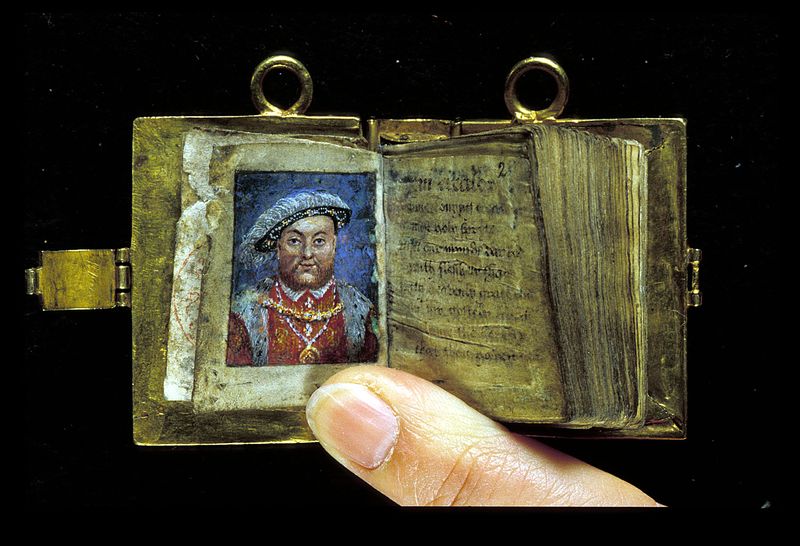
In the 16th century, it became fashionable for aristocratic women to wear miniature prayer books bound in elaborate metalwork covers hanging from their girdles (i.e. belts). These girdle books provided them with handy reading material as well as fashionable dress accessories, allowing them to display their literacy and piety to the world.

The images on the page are fascinating. Of special historical interest is one that once belonged to Anne Boleyn (shown above), a gift from her murderous husband.

A particularly luxurious example is a girdle book with covers of gold filigree . . . It contains selected Psalms in English verse, translated and apparently written out by John Croke, one of Henry VIII’s clerks in Chancery, with a portrait of Henry VIII at the beginning.

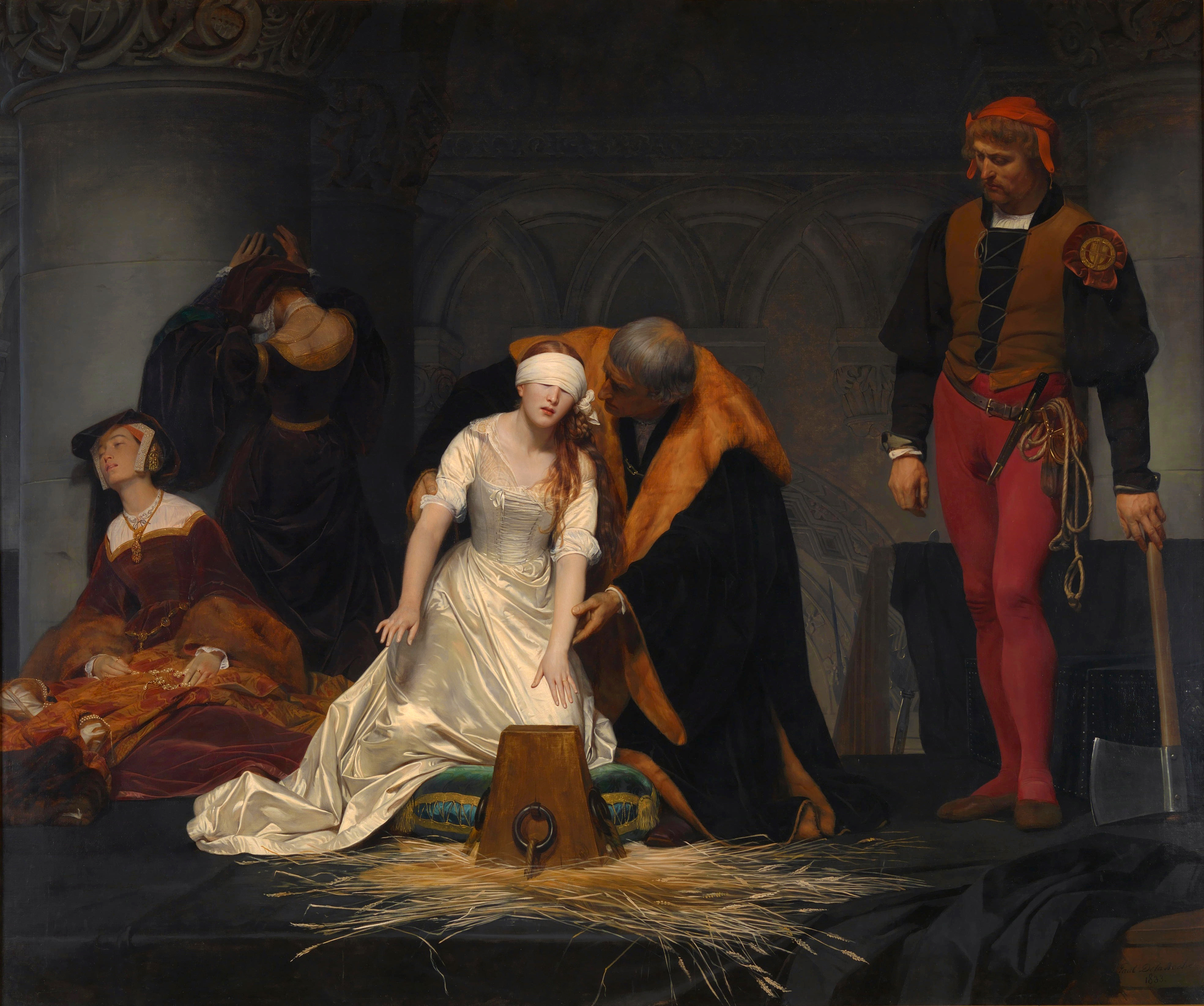
The volume is traditionally thought to have belonged to Anne Boleyn, who is said to have handed it to one of her maids of honour when she was standing on the scaffold before her execution in 1536.

C.S. Lewis, Dentistry & Bones

Visiting the dentist for a regular check-up is one thing. Going there to address a painful problem is quite another. That is a truth everyone – including Oxford’s great scholar, C.S. Lewis – understands.

Occasional comments in his letters reflect on his mixed attitude toward dentistry. In 1914 he related to his father this balanced attitude. Many readers will identify with his ironic opening.

This week I have enjoyed the doubtful privilege of having two teeth extracted, both of which had been bothering me a good deal off and on this term. The dentist, who is a thoroughly competent official, pronounced his verdict that as they had been tinkered with over and over again, and were now hopelessly rotten, they had better come out. So out they came, with gas, and I think it was a good job.

I too have “enjoyed the doubtful privilege.” Like Lewis, I appreciate the skill and care of dentists, but hold an aversion to the more painful of their interventions.

Typically, C.S. Lewis was able to use our complex attitudes toward dental work, one of the “necessary evils of life” (Surprised by Joy), to teach about larger truths. An interesting piece on the subject can be seen here.

Lewis says when we move toward God, it will be like going to the dentist. If we dodge and hesitate to move, our aches will only increase.

Lewis wouldn’t tell his mother about his toothache because he knew it meant fixing it, and that likely meant the pokes and prods of the dentist on other infected teeth. So he hid and endured the pain for a time. It didn’t help. And it doesn’t help when we hesitate to be upturn our lives for Jesus. “Our Lord is like the dentists,” Lewis says. “He will give you the full treatment.”

As Lewis learned from experience during his extractions, healthy teeth are inseparable from bone, which forms the “tooth sockets.”

Which segues into a subject of even more significance to C.S. Lewis and every other lifeform with a skeleton: bones. But before we discuss that subject, allow me to share a personal note.

A Patient’s Dilemma

The reason dentistry is on my mind comes from the fact that I recently endured the extraction of one of my molars. That initiated the involved (and expensive) process of getting a “dental implant.”

The molar had served me well for decades, even after having a root canal many years ago. Its full golden crown still shines radiantly. Sadly, one of its roots fractured, and an endodontist determined removal is the only option.

For those who will someday follow this regrettable path, we no longer have to resort to human (or animal) bone to restore our jaws after the extraction of the renegade teeth.

Yes, that’s right. The most common “grafting material” has historically been bone. While it’s possible to transplant some of your own, it usually comes from another source.

Autograft Tissue is from your own body. Allograft Tissue is donated by another – typically deceased – individual. I wonder if others find the thought of having cadaver bone added to one’s personal physiology unsettling.

I’ve been an organ donor since I was first able to sign up. Sadly, being stationed in England during the spread of the Mad Cow Disease (bovine spongiform encephalopathy) has reduced any future value for my redundant body parts.

The seriousness of the danger is revealed in the story of Sergeant Major James Alford, a Green Beret who contracted it during his military service.

Speaking of the armed forces, the military is on the leading edge of medical advances. Shortly before I required my own bone graft, I read a fascinating press release from the Veterans Affairs Health Care System. It describes a new system for using 3D printers to create “3-dimensional bioprinting of vascularized bone tissue.” This breakthrough promises to relieve the suffering of countless people with bone injuries and ailments.

For VA Ventures, the future of using 3D printing to build constructs from each patient’s own cells, matched to their anatomy and defect geometry will soon be a reality, offering customized bone tissue grafts at the point of care.

The connection between teeth and bones is one thing, but there are far more important bones in the human body than the sockets in our jaw bones.

C.S. Lewis & Bone Disease

C.S. Lewis died young; he was nearing his sixty-fifth birthday. Toward the end of his life, he suffered from osteoporosis. He describes his diagnosis in a 1957 letter.

My back turns out to be not slipped disc but osteoporosis – a spongy condition of the bones that is common in men of 75 but almost unknown at my age (58). After full investigation by a great Professor of Pathology the cause remains quite obscure.

It has passed the stage of spasms and screams (each was rather like having a tooth out with no anaesthetic and you never knew when they were coming!), but I still ache a good deal and need sleeping draughts.

As vividly as C.S. Lewis describes the pain created by his bone disease, it diminished to nothing in comparison to the suffering of his wife, Joy. She was dying of cancer resident primarily in her bones, when Lewis married her at her hospital bedside.

Although she would eventually succumb to the disease, she experienced a miraculous respite after an Anglican priest prayed for her healing as he laid his hands upon her frail, pain-racked body.

Peter Bide had laid hands on Joy and prayed for her healing because, some years earlier, he had discovered that when he did this people often were indeed healed: he possessed, it appears, what the Church calls the gift of healing.

In January 1959 an essay by Lewis appeared in the Atlantic Monthly; it was called “The Efficacy of Prayer,” and one of its early paragraphs goes like this: I have stood by the bedside of a woman whose thigh-bone was eaten through with cancer and who had thriving colonies of disease in many other bones as well. It took three people to move her in bed. The doctors predicted a few months of life, the nurses (who often know better), a few weeks. A good man laid his hands on her and prayed. A year later the patient was walking (uphill, too, through rough woodland) and the man who took the last x-rays was saying, “These bones are solid as rock. It’s miraculous.” (The Narnian: The Life and Imagination of C. S. Lewis).

Sadly, Joy’s remission was only that. She did, however, live for several years. Her relative health even allowed the couple to take a bona fide honeymoon.

During her terminal illness, Lewis resorted to a questionable practice to which many of us can personally relate. He prayed that God might spare his wife, and transfer her pain to him instead. This common prayer is fueled by the desperation and helplessness we feel as we witness the suffering of our loved ones.

On these grounds Lewis began [after her release from the hospital] to pray for Joy’s sufferings to be transferred to him. Soon thereafter, Joy’s bones began to heal, and Lewis’s began to weaken. He did not get cancer but rather osteoporosis; nevertheless, as the pain in her bones decreased, his increased.

To Sister Penelope he wrote about his worst period: “I was losing calcium just about as fast as Joy was gaining it, and a bargain (if it were one) for which I’m very thankful.” In the same conversation in which he told Coghill of his unexpected happiness, he explained that he believed that God had allowed him to accept in his body her pain: the way of exchange.

These were for him very strange times. When he still thought that, despite his osteoporosis, Joy was dying, he wrote to Dorothy Sayers . . . “Indeed the situation is not easy to describe. My heart is breaking and I was never so happy before; at any rate there is more in life than I knew about.”

But at this point he still had little hope, though he noticed that she seemed much better than the doctors told him she really was, despite her bedridden status. By November he could tell Sister Penelope that Joy was walking with a cane; a month later he could tell a godson that she “has made an almost miraculous, certainly an unexpected, recovery.”

In August 1958 he wrote to a friend to say that “my wife walks up the wooded hill behind our house”; it seems likely that the image of her doing so was what went into the Atlantic essay. “All goes amazingly well with us.” (The Narnian: The Life and Imagination of C. S. Lewis).

In the previously cited 1957 correspondence, C.S. Lewis describes a curious interplay between their two ailments. It notes a practical benefit to his own osteoporosis.

Joy is now home, home from hospital, completely bed-ridden. The cancer is ‘arrested,’ which means, I fear, hardly any hope for the long term issue, but for the moment, apparently perfect health, no pain, eating & sleeping like a child, spirits usually excellent, able to beat me always at Scrabble and sometimes in argument.

She runs the whole house from her bed and keeps a pack of women not only loving her but (what’s rarer) one another. We are crazily in love. . . .

My back turns out to be not slipped disc but osteoporosis . . . Can you realise the good side? Poor Joy, after being the sole object of pity & anxiety can now perform the truly wifely function of fussing over me – I’m in pain and sit it out – and of course the psychological effect is extremely good. It banishes all that wearisome sense of being no use. You see, I’m very willing to have osteoporosis at this price.

To recognize the grace in being the one “in need,” is a wonderful gift. Something only the mature can ever possess.

So, once again we see just how much we have in common with the creator of Narnia. We may lack his brilliance, and fall shy of his skills as a communicator . . . but his willingness to lay bare his own life, offers encouragement to us as we experience the same challenges – and joys.