Don’t be surprised, but many clergy possess keen senses of humor. Sure, there are staid, grimacing ministers who consider acting dour to be a virtue. (They’re often legalistic.) But most of the pastors and military chaplains I’ve worked beside, love to laugh. I think I’ve written enough about humor to verify that.
C.S. Lewis maintained strong bonds with a number of clergy, from a variety of denominations, and that would hardly have been true if they had lacked a sense of humor. Humor, to Lewis, is an essential part of life. He proclaims this truth from the lips of Aslan himself, as the newly created Talking Animals hear the first (accidental) joke.
“Laugh and fear not, creatures. Now that you are no longer dumb and witless, you need not always be grave. For jokes as well as justice come in with speech.” (The Magician’s Nephew)
I recently read about a fascinating incident one historian described as “perhaps the only really satisfactory practical joke in the whole history of theology.” Allow me to set the scene.
The Byzantine Empire lasted for a thousand years, before being defeated and desecrated* by Islamic armies. During the centuries surrounding its apex, it suffered from the political intrigue and competition with which we are all too familiar.
Photios I was a Byzantine scholar who was twice the Patriarch of Constantinople during the ninth century. Twice is unusual, but it was due to the machinations of emperors and empresses who meddled in the affairs of the church.
He had a troubled relationship with another priest named Ignatius, who also served two times as Patriarch. The good news is that the men were eventually reconciled and both are regarded by Orthodox Christians as saints.
The anecdote comes from the period of their rivalry. Photios, whose brilliance was widely acknowledged, and presumably envied by Ignatius, decided to pull an embarrassing public prank on his nemesis.
Photios devised a bizarre theory that human beings have two souls. His goal was to trick Ignatius into taking it seriously, whereupon Photius withdrew the thesis and admitted he had not been serious. Apparently, everyone unsatisfied with Ignatius’ leadership found it quite entertaining.
Fortunately, among clergy the humiliation of others is rarely the object of humor. Yet, sadly, I have seen it attempted. I personally repent of ever having done so myself, and regard it as sharing, along with vulgarity and blasphemy, the lowest level of “humor.”
The Wisdom of Lewis
In Reflections on the Psalms, C.S. Lewis relates something I know to be true from my own experience.
A little comic relief in a discussion does no harm, however serious the topic may be. (In my own experience the funniest things have occurred in the gravest and most sincere conversations.)
Clergy deal with serious topics, like death, quite frequently. Perhaps that is one reason a well-developed sense of humor is common among their ranks.
Skip this footnote if you want to end on a “happy” note.
* “Desecration” may sound like a harsh word to our interfaith-sensitive ears, but it is accurate here. Islam is rarely a gentle master for Christians, and it has been common to see churches and holy places seized and converted to foreign religious uses. For example, in the capital Constantinople (now called Istanbul), Orthodox Christianity’s most magnificent church, Hagia Sophia, saw much of its glorious and historic iconography destroyed when it was converted to a mosque. Many years later, in 1934, an enlightened Turkish government ended the insult, and chose to treat the holy place as a museum. Sadly, the current regressive government under Recep Tayyip Erdoğan, reversed that decision, and in 2020 the Church of Holy Wisdom was returned to its usage as a mosque.
Artificial intelligence is on the rise. It’s IQ is somewhere above 75, and presumably still climbing. And some very intelligent human beings, are issuing apocalypticwarnings.
“Mitigating the risk of extinction from A.I. should be a global priority alongside other societal-scale risks, such as pandemics and nuclear war,” reads a one-sentence statement released by the Center for AI Safety, a nonprofit organization. The open letter was signed by more than 350 executives, researchers and engineers working in A.I.
Presently, I’m more wary of Russia, China and Iran igniting an end of the world scenario.
But there is one particular aspect of artificial intelligence that intrigues me. And that is the creation of literary works by these programs, which are themselves creations of humankind.
Some people, such as copywriters, feel their livelihoods are being threatened. “My amusement turned to horror: it took ChatGPT 30 seconds to create, for free, an article that would have taken me hours to write.” (And that was clocked way back in January; no telling how quickly the AI could perform the feat today.)
Others – think teachers – are alarmed by how simply this new technology can seduce students to take self-crippling shortcuts. One article refers to this as “the elephant in the room.”
Perhaps all questions centered on AI are inherently questions of ethics, and at the forefront of many teachers’ minds is cheating and plagiarism.
Cheating and plagiarism are two separate concerns, of course. AI is capable of not only drawing together already existing material, and generating new word combinations that cannot be tracked back to any unique original source.
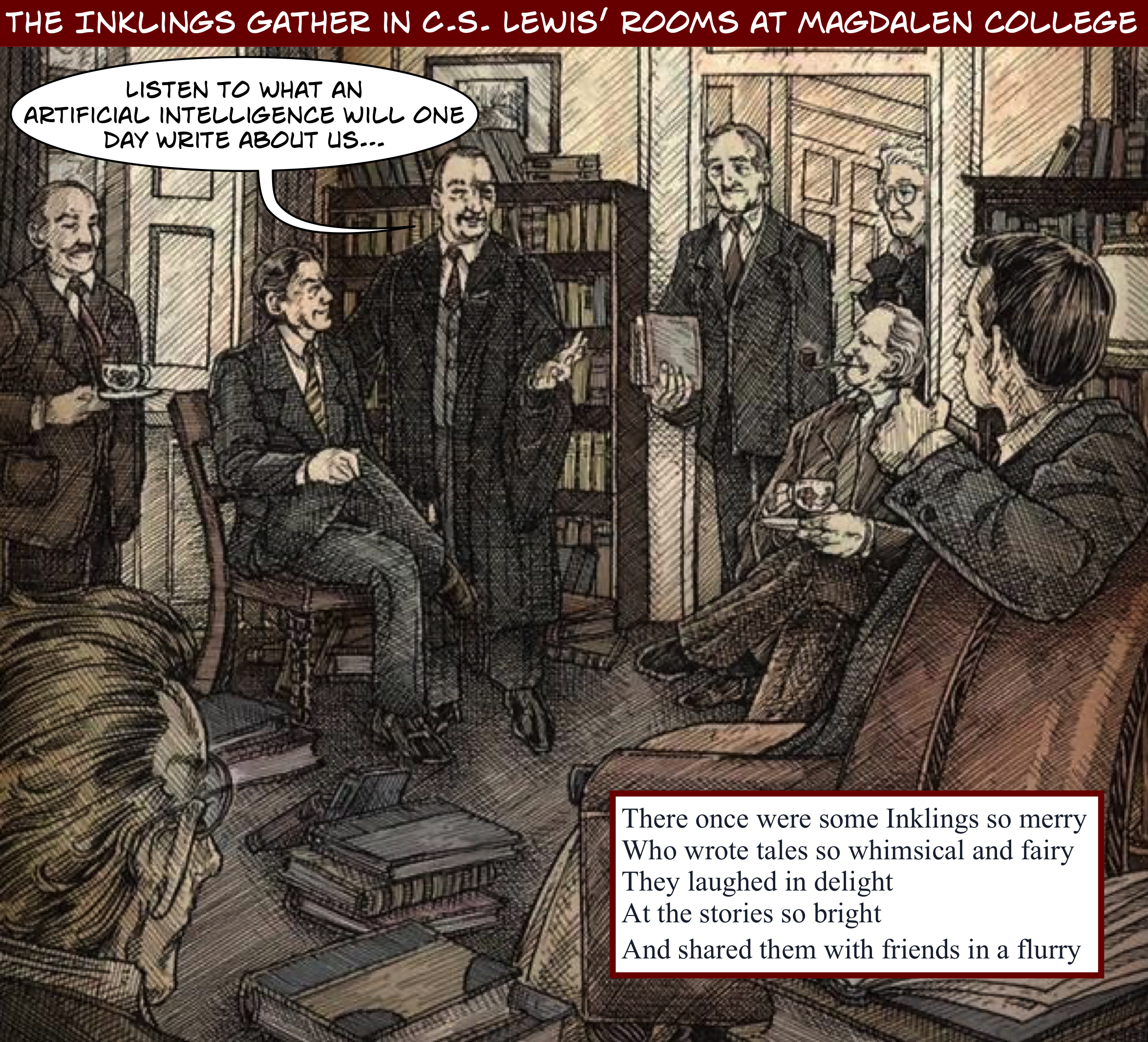
I feel confident that the Inklings would be extremely suspicious of computer-generated “literature.” Yet, at the same time, I think it is a subject they too would find intriguing.
Test-Driving AI
There are a myriad of free sites where a person can enter some basic parameters or directions and await the product of text generated by a synthetic “mind.” I share below some examples of the input—output results of my initial experiment.
I asked Open AI, creators of ChatGPT, to write two limericks, about the Oxford Inklings and C.S. Lewis, respectively.
In Oxford, the Inklings did meet, With words and with wisdom so sweet. Tolkien and Lewis, Their minds in a breeze, Inkling tales made our imaginations fleet.
⁂
C.S. Lewis, a writer so grand, In Narnia’s magical land. With Aslan the Lion, In tales that inspire, He showed us the way to understand.
Next I asked for an Inkling sonnet, followed by two haikus, addressing the Inklings as a fellowship and C.S. Lewis the individual.
In Oxford’s hallowed halls, they gathered ‘round, The Inklings, minds of genius, so profound. With ink-stained fingers, in their fellowship, They wove their tales, from wisdom’s well to sip.
Tolkien, the philologist of ancient lore, In Elvish tongues, his stories did explore. Lewis, the Christian apologist true, In Narnia’s world, he brought God’s message through.
Williams, Barfield, Dyson, and the rest, In literature and faith, they were blessed. Their words a beacon in a world so dark, Igniting minds with sparks from wisdom’s arc.
Oxford’s Inklings, their legacy remains, In timeless tales, where inspiration reigns.
⁂
Inklings’ minds aflame, Oxford’s thinkers left their mark, Words and wisdom’s claim.
⁂
C.S. Lewis penned grace, Faith and fantasy embraced, Words that still embrace.
And finally, I requested: “write a story about C.S. Lewis really traveling to Narnia.” The program has a “regenerate” button to address the same query with a fresh response. Due to their lengths, I’ve included them as “footnotes” below.
Shockingly, to me at least, it took less than 10 minutes to complete all of this. Each response, in fact, took mere seconds . . . not much longer than the time required to type the requests.
There are a growing number of companies offering AI services. Most offer free opportunities to test their wares. I decided to try one such vendor.
WriterHand declares “our tool is 100% free, allowing you to create limitless text and blog content with the assistance of artificial intelligence.” I requested of them a sonnet and haiku, as well. The first follows, with two other variants in the footnotes below.
The Oxford Inklings, a literary group Of J.R.R. Tolkien, C.S. Lewis and more Created stories that still make us droop And have us seeking out their lore.
Their works of fantasy and myth Fill our imaginations with delight We all search for the answers they lit To the depths of our inner sight.
They wrote of worlds we can explore Of knights, dragons and magical things We follow their tales and come back for more And find joy in their musings.
The Oxford Inklings have a special charm Their words bring us together in song And we are forever in their warm Enchanting arms of wonder and long.
⁂
Inklings of Oxford Stories of fantasy told Enchantment forever
As with ChatGPT, I ended by requesting a brief, fictional story. My request was for a story about:
C.S. Lewis Meeting an Actual Talking Marsupial
On a recent summer day, C.S. Lewis, the famed author of the Chronicles of Narnia series, had a very extraordinary encounter. He had the chance to meet an actual talking marsupial.
The marsupial was a small wallaby, and it was found on the grounds of Lewis’ estate. It was not long before the wallaby began speaking to Lewis in a highly sophisticated manner. The wallaby spoke in a dialect that sounded similar to English, and was even able to converse with Lewis about the various topics he enjoyed discussing.
The wallaby was quite curious about Lewis and seemed to be quite eager to learn more about him and his works. It asked numerous questions about the Narnia series and the world that Lewis had created. It seemed to be quite fascinated by the various creatures and wonders that he had described.
The wallaby seemed to be quite intelligent and even asked for Lewis’ advice on certain topics. Lewis found the wallaby’s interest in the Narnia series quite amusing and was quite impressed by its intelligence and wit.
This meeting between Lewis and the talking marsupial was one that Lewis would never forget. It was an experience that he found both fascinating and enlightening. He was amazed by the marsupial’s intelligence and ability to converse on a level that exceeded many humans.
Lewis was quite taken aback by the talking marsupial’s presence and the conversation that ensued. He was quite intrigued by the creature’s intelligence and the fact that it could understand complex topics. This experience would later serve to further inspire Lewis’ writing and help him create some of the most beloved characters in literature.
This experience between Lewis and the talking marsupial was truly extraordinary and one that will never be forgotten. It was a meeting that allowed Lewis to learn more about the creatures that inhabit his beloved Narnia and to gain a better understanding of the power of imagination and creativity.
A Final Thought from C.S. Lewis
One of C.S. Lewis’ countless correspondents was the famous British author Arthur C. Clarke. In 1954, they exchanged letters discussing the human element of literature. I suppose it’s a subject for philosophers to explore, but one wonders how clearly the “humanity” element is communicated through a nonhuman mechanism. Sadly, Lewis’ letter is not so prescient as to address our current question, but it was sufficient to raise the matter in my own thoughts.
Dear Clarke,
Human interest, yes. But that is inevitably present if the fears and hopes and wonders of the astronauts are vividly realised – e.g. as in Bedford & Cavor on the Moon [he refers here to H.G. Wells’ The First Men in the Moon] or even Crusoe on the island. And an author who can’t do that won’t mend matters by dragging in Crooks, Crutches, or Conspiracies: for the sort of story he drags in will be just as lacking in Human interest as his space story.
About ‘escapism,’ never let that flea stick in your ear. I was liberated from it once & for all when a friend said ‘These critics are v. sensitive to the least hint of Escape. Now what class of men would one expect to be thus worked-up about Escape? – Jailers.’ Turn-key critics: people who want to keep the world in some ideological prison because a glimpse at any remote prospect would make their stuff seem less exclusively important.
Fantasy & S-F. is by miles the best. Some of the most serious satire of our age appears in it. What is called ‘serious’ literature now – Dylan Thomas & Pound and all that – is really the most frivolous. All the best. Yours C.S. Lewis
The two brief stories below were generated by ChatGPT in response to the request for a story about Lewis actually visiting Narnia.
In the quiet confines of his cozy Oxford study, C.S. Lewis sat by his flickering fireplace, a manuscript of his latest book on theology resting on his desk. The clock on the wall ticked away the minutes, marking the time as late evening gave way to the inky embrace of night. Lewis’s eyes grew heavy, and he decided it was time to retire to bed.
As he settled into his comfortable bed, he couldn’t shake the feeling of restlessness that had gripped him that evening. He stared at the wardrobe across the room, the same wardrobe that had once belonged to his grandparents and had always fascinated him as a child. He closed his eyes and drifted into a dream, or so he thought.
To his astonishment, Lewis found himself standing before the wardrobe, which now seemed more magnificent than ever. It loomed like a gateway to another world, and he couldn’t resist the urge to open its creaking doors. With a sense of wonder and trepidation, he stepped inside.
Instead of feeling wood beneath his feet, Lewis’s toes sank into soft, cool earth. He looked around and found himself standing in a dense, snow-covered forest. The air was crisp and carried a scent of pine and adventure. He realized that he was in Narnia.
Before him stood a lamppost, its light casting a warm and inviting glow. Lewis recognized it from his own stories. He couldn’t help but smile, realizing that he had somehow stepped into the world he had created through his Chronicles of Narnia.
As he ventured deeper into the forest, Lewis encountered creatures of myth and magic—talking animals, fauns, and even a majestic lion named Aslan. They welcomed him with open arms, for they knew him as the one who had brought their world to life through his words.
Days turned into weeks, and Lewis explored Narnia with childlike wonder. He sailed on the Dawn Treader, encountered the White Witch, and witnessed the coronation of King Caspian. He marveled at the beauty of Narnia’s landscapes, the bravery of its inhabitants, and the profound wisdom of Aslan.
Throughout his journey, Lewis engaged in deep conversations with the creatures of Narnia, discussing matters of faith, morality, and the nature of storytelling. Each encounter enriched his understanding of the Christian faith he had embraced in the real world.
Eventually, Lewis knew that he had to return to his own world. With a heavy heart, he stood before the same lamppost where he had first arrived and closed his eyes. When he opened them again, he was back in his Oxford bedroom, the wardrobe standing silent and ordinary once more.
He sat at his desk, the manuscript still awaiting him, but now with a newfound sense of purpose and inspiration. The memories of Narnia, his journey, and the lessons he had learned would forever shape his writing and his faith.
C.S. Lewis had indeed traveled to Narnia, not in body, but in spirit and imagination, and his stories would continue to transport readers to that magical world for generations to come.
⁂
Using the “regenerate” option with the same command: “write a story about C.S. Lewis really traveling to Narnia.”
Once upon a time in the quiet town of Oxford, C.S. Lewis, the renowned author and scholar, found himself embarking on a remarkable adventure. It was a crisp, autumn evening when he was invited to attend a secret gathering by a mysterious stranger who had slipped an enigmatic note under his door. The note simply read, “Come, Narnia awaits.”
Intrigued and a bit skeptical, Lewis decided to follow the call. He put on his overcoat, grabbed his umbrella, and stepped out into the cool night. The moon was a silvery crescent in the sky, casting an eerie glow on the cobblestone streets.
As he followed the directions given in the note, Lewis found himself walking through an old, secluded part of Oxford that he had never seen before. The air seemed to grow colder, and the world around him took on an otherworldly quality. Suddenly, he stumbled upon a large, ancient wardrobe tucked away in the corner of a park.
With a sense of déjà vu, Lewis remembered writing about such a wardrobe in one of his stories. He cautiously opened the wardrobe door, half-expecting it to be filled with coats and mothballs. To his astonishment, the wardrobe seemed to stretch and expand, and he found himself tumbling headfirst into a land covered in snow and surrounded by towering fir trees.
He had arrived in Narnia.
The moment his feet touched the snowy ground, Mr. Tumnus, the faun, rushed forward with a smile and exclaimed, “Welcome, dear friend! We’ve been waiting for you.”
Lewis was both bewildered and delighted. As he explored Narnia, he met talking animals, dwarves, and even the great lion, Aslan, whom he had created in his own stories. The world he had once imagined had come to life before his eyes.
Days turned into weeks, and Lewis became a beloved member of the Narnian community. He marveled at the beauty and wonder of this magical land. He listened to the tales of its inhabitants, learned from their wisdom, and shared stories of his own.
But as all adventures must come to an end, Lewis knew he couldn’t stay in Narnia forever. With a heavy heart, he approached the wardrobe once more and stepped back into his own world, leaving Narnia behind.
Back in Oxford, Lewis couldn’t help but wonder if his journey to Narnia had been a dream or a product of his imagination. Yet, the memories were vivid, and the lessons he had learned about faith, courage, and the power of imagination remained with him for the rest of his days.
And so, the story of C.S. Lewis’s extraordinary voyage to Narnia remained a secret he carried with him, a testament to the enduring magic of literature and the boundless possibilities of the human imagination.
⁂
Variants of the sonnet and haiku produced by WriterHand follow.
The Oxford Inklings were a group of friends Whose conversations filled the air with wit and wit; Their words of wisdom still live on to this day, Their legacy of literature still stands tall and lit.
From C.S. Lewis to J.R.R. Tolkien They bantered and debated through the night; Their words and stories filled us all with joy, A source of inspiration, both dark and light.
From fantasy to science fiction, The Inklings had a way with words; Their genres and stories still stand the test of time, And their influence still continues to be heard.
The Oxford Inklings and their works Will live on in the hearts of many; Their words will inspire generations to come, A lasting legacy of literary plenty.
⁂
The Inkling’s works shine A legacy of wisdom still In our hearts, forever
⁂
The Oxford Inklings were a unique group Formed in the city of dreaming spires A gathering of friends with a shared goal To explore the depths of their desires
A fellowship of authors, poets, and more Including Tolkien, Lewis, and Williams Discussing literature, theology, and lore In the Eagle and Child’s hidden realms
From the Inklings came works of great fame The Chronicles of Narnia and The Lord of the Rings Legends of Middle Earth and tales of great shame A legacy that will last through the ages
The Oxford Inklings were a brilliant crew Inspiring writers and readers anew.
⁂
Oxford Inklings’ lore In tales of fantasy and truth Lives on forever
It is surprising how inexpensive and accessible DNA testing has become. Many readers of Mere Inkling have submitted samples ourselves. But how many of us have had our pets tested?
The science of genetics is quite recent. Gregor Mendel (1822-1884) is considered the father of such studies. As Britannica describes the history, “The word genetics was introduced in 1905 by English biologist William Bateson, who was one of the discoverers of Mendel’s work and who became a champion of Mendel’s principles of inheritance.”
Molecular genetics did not begin in earnest until 1941 . . . A major landmark was attained in 1953 when American geneticist and biophysicist James D. Watson and British biophysicists Francis Crick and Maurice Wilkins devised a double helix model for DNA structure.
The Human GenomeProject didn’t begin until 1990, and didn’t reach its goal until the new millennia. The astute reader will recognize that C.S. Lewis lived before these genetic studies reached their current status, so we should not expect comment from him on DNA per se. Nevertheless, as Francis Sellers Collins, director of the Human Genome Project (2009-2018), says his work is quite compatible with C.S. Lewis’ writings.
In fact, in a lecture at Cambridge, he described how Mere Christianity was pivotal in his conversion from agnosticism to Christianity. According to this preeminent geneticist, “even in the first few pages, all my arguments about faith just fell apart. It was breathtaking . . . Lewis remains my best teacher.”
There is some question as to whether the DNA testing market has peaked. Unsurprising, since it isn’t like tobacco, coffee or rich desserts that “addict” customers to generate repeated purchases. As Advisory Board says, “given one’s genetic data is unlikely to change, most consumers may not see a reason to purchase another DNA testing kit.”
So, how might these corporations remain profitable? Why, by expanding their offerings to the animal kingdom. One such company called Embark claims to offer the “most accurate dog DNA test available.”
Some people purchase the service to satisfy their curiosity about a pet’s breed (often a blend of several). A more valuable benefit is gaining insights into their health and traits. The oddest aspect of the process appears to be Embark’s boast that they offer “the world’s first canine relative finder.”
Like many of us, C.S. Lewis loved dogs. He didn’t, however, go so far as to worship them. I suspect that C.S. Lewis would opt out of the chance to DNA-define his pets. Best to just love them and savor their companionship.
In his essay “The Personal Heresy,” C.S. Lewis proposes an interesting argument about expressing love only to those capable of receiving it.
There is a reaction at present going on against the excessive love of pet animals. We have been taught to despise the rich, barren woman who loves her lap dog too much and her neighbor too little. It may be that when once the true impulse is inhibited, a dead poet is a nobler substitute than a live Peke, but this is by no means obvious.
You can do something for the Peke, and it can make some response to you. It is at least sentient; but most poetolaters hold that a dead man has no consciousness, and few indeed suppose that he has any which we are likely to modify.*
DNA service businesses are probably licking their lips at the prospects offered by a new market. The French are blazing a new trail for the rest of us. According to Euronews, Béziers will require pet owners to “carry a ‘genetic passport’ for their dog.”
The reason is simple. Too many dog walkers are failing to perform their civic (and humane) duty of cleaning up after their pets.
Dog excrement found on the streets would be collected and tested then sent to the police. They would match the DNA to national pet registers, locate the owner and charge them up to €122 for cleaning up the streets.
Apparently, similar efforts have been attempted in Valencia, Tel Aviv and portions of London.
It sounds like a rather extreme way to address what superficially appears to be a simple problem. But, sadly, in many places, public sanitation has declined to unbelievable depths. In San Francisco, for example, the once picturesque metropolis has voluntarily surrendered many areas to criminals and addicts who feel no compunction about defecating in public. While I can’t speak for European, Asian, African or Latin American countries, in the U.S. a similar story of decay is repeated in many urban centers.
San Franciscans can’t be criticized for not throwing money at the problem. Nevertheless, when progressive Slatemagazine reported last year on the city’s newest public toilet, they said “cities shouldn’t need $1.7 million and years of design review to build a municipal toilet.”
Not that San Francisco treats such facilities with care. One space age toilet lasted only a few days before malfunctioning. But it was expensive, stainless steel, and bore the upgraded title of “kiosk.”
A highly hyped new SF bathroom hailed as “the future of public toilets” lasted only three days into said future, as the high-tech bathroom kiosk quickly had to be relieved of its duty and found itself closed for repairs.
Since these are manufactured by a Paris-based company, perhaps they can design a canine kiosk to solve the Béziers dilemma? After all, the cost might well be equivalent to the sum of all of the DNA tests the citizens are being forced to cover.
A Final Thought about Animal DNA
Many of us, like C.S. Lewis, are pet lovers. And many also care about the suffering of other animals, domesticated and wild. There may come a day when DNA testing offers ways to enhance the lives of these other creations of God.
However, it does seem frivolous, does it not, to apply such advanced (and not inexpensive) processes for the purpose of tracking down derelict dog walkers? Or, in other judicatories, which have not yet embraced that level of surveillance, simply to attempt to track down doggie-relatives?
In the interview, Elinor Karlsson, director of vertebrate genomics at the Broad Institute in Cambridge, Massachusetts says,
With genetic tests for humans, there have been so many studies that look at whether or not a certain mutation in your genes actually leads to you developing a certain disease. There just isn’t this massive body of work on dog genomes. So many of these tests are telling owners that their dog could get a certain disease without any major studies on how likely that is to happen. The science needs to catch up.
In response to the question “what are the dangers of potentially inaccurate test results?” Lisa Moses, a veterinarian affiliated with Harvard Medical School in Boston advises,
In my veterinary practice, I’ve seen more and more people coming in with results that show their dog has a chance of developing conditions like epilepsy, heart disease, and degenerative muscular disorders, and they want to make treatment decisions right away.
They’re ready to pay for more tests or medical interventions that the dog might not actually need, that could be quite expensive, and that could be invasive for the dog. In some cases, people preemptively end their dog’s life if they think their dog is predisposed to a degenerative disease, because don’t they want their pet to suffer.
So once again we see that, as they often do, silly scenarios can lead to serious subjects.
* The passage from “The Personal Heresy” continues:
Unless you hold beliefs which enable you to obey the colophons of the old books by praying for the authors’ souls, there is nothing that you can do for a dead poet: and certainly he will do nothing for you. He did all he could for you while he lived: nothing more will ever come.
I do not say that a personal emotion towards the author will not sometimes arise spontaneously while we read; but if it does we should let it pass swiftly over the mind like a ripple that leaves no trace. If we retain it we are cosseting with substitutes an emotion whose true object is our neighbour. Hence it is not surprising that those who most amuse themselves with personality after this ghostly fashion often show little respect for it in their parents, their servants, or their wives.
“A poetic translation is always to some extent a new work of art.” C.S. Lewis English Literature in the Sixteenth Century
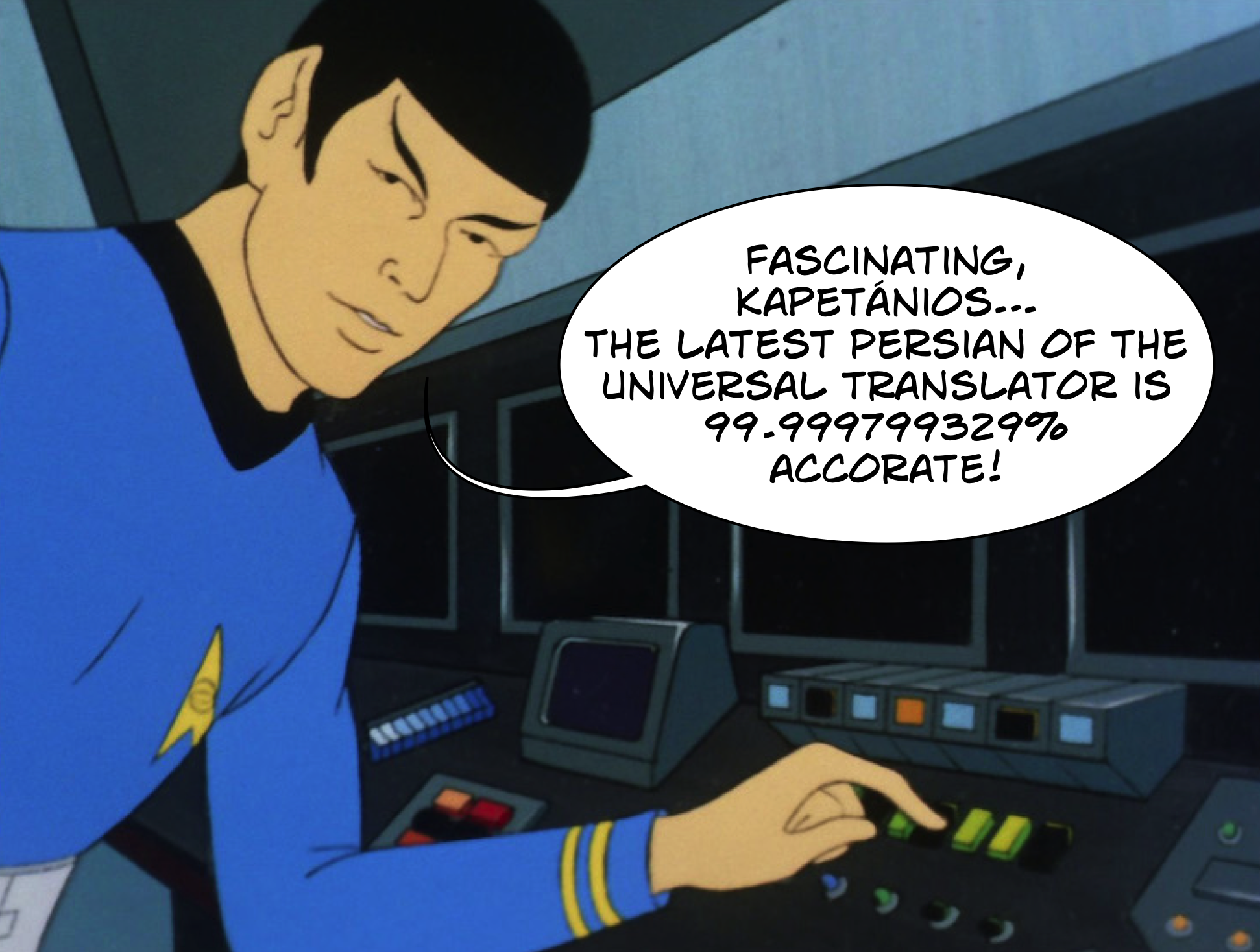
C.S. Lewis was a gifted translator. One who recognized well the challenges of skillful rendition, including the differing requirements imposed by prose and poetry. Thus, in his essay “The Literary Impact of the Authorised Version,” he offers the following insight.
No translation can preserve the qualities of its original unchanged. On the other hand, except where lyrical poetry is in question, the literary effect of any good translation must be more indebted to the original than to anything else.
In his autobiography, Surprised by Joy, C.S. Lewis describes his transformative encounter with translated poetry that introduced him to the “northern sky.” Before he became a skilled translator in his own right, he describes how a major part of his awakening,
. . . came through poetry. I had become fond of Longfellow’s “Saga of King Olaf:” fond of it in a casual, shallow way for its story and its vigorous rhythms.
But then, and quite different from such pleasures, and like a voice from far more distant regions, there came a moment when I idly turned the pages of the book and found the
unrhymed translation of Tegner’s Drapa and read
I heard a voice that cried, Balder the beautiful Is dead, is dead
I knew nothing about Balder; but instantly I was uplifted into huge regions of northern sky, I desired with almost sickening intensity something never to be described (except that it is cold, spacious, severe, pale, and remote) and then, as in the other examples, found myself at the very same moment already falling out of that desire and wishing I were back in it.
One of Lewis’ most involved explanations of the subject is found in Reflections on the Psalms. As Mere Inkling has noted in the past, C.S. Lewis was a distinguished member of a committee appointed to “revise the Psalter.” Being poetry, the Psalms demanded the proper mindset in their translators.
What must be said, however, is that the Psalms are poems, and poems intended to be sung: not doctrinal treatises, nor even sermons. . . . Most emphatically the Psalms must be read as poems; as lyrics, with all the licences and all the formalities, the hyperboles, the emotional rather than logical connections, which are proper to lyric poetry.
They must be read as poems if they are to be understood; no less than French must be read as French or English as English. Otherwise we shall miss what is in them and think we see what is not.
Some translations, unfortunately, are intentionally corrupted. I described in 2020 the Communist Chinese twisting of the Christian Scriptures. Fortunately, this sort of intentional crime is rare, and most translation efforts are well motivated. That does not mean, however, that even gifted linguists are up to every challenge.
In a letter to the editor of The Christian Century, C.S. Lewis contrasted academic and vernacular translations. Declaring that “any fool can write learned language,” he argues that clergy in particular are faced with the challenge of translating languages into prose which is understandable to the general population. He begins by demurring that he cannot respond to a request for an article written for a popular American audience.
An article on “translation” such as Dr. Pittenger suggests . . . certainly needs doing, but I could not usefully do it for Americans. The vernacular into which they would have to translate is not quite the same as that into which I have translated. Small differences, in addressing proletarians, may be all-important.
In both countries an essential part of the ordination exam ought to be a passage from some recognized theological work set for translation into vulgar English – just like doing Latin prose. Failure on this exam should mean failure on the whole exam.
It is absolutely disgraceful that we expect missionaries to the Bantus to learn Bantu but never ask whether our missionaries to the Americans or English can speak American or English. Any fool can write learned language. The vernacular is the real test.
C.S. Lewis remained an avid reader and critic until his death. In 1961, he received some translations of “modern” Greek poetry from his friend, Muriel Bradbrook (1909-1993), a Professor of English at Cambridge. After thanking her for the gift, he offers his personal response to the intercultural translations.
Dear Muriel,
What a nice thing for a man half drowned in compulsory leisure [due to poor health] . . . It has set me a problem. I find I get a good deal of pleasure out of many of these poems, but am at a loss to say why. One is not getting the “numbers” – and so far as I can judge from the notes the metres of the originals would not much please me.
Nor am I much in sympathy with many of the poets’ moods. The pleasure is like – at least rather like – what I get out of most translations of Chinese lyric. But that isn’t a solution, but merely another problem of the same sort. Anyway, thanks very much indeed.
Advice to Budding Translators
So many good works of literature remain to be translated so they can benefit those unfamiliar with their original tongue. Several years ago, I wrote a column entitled “C.S. Lewis’ School of Translation,” assembling some of the great writer’s wisdom.
I recently encountered a curiously brilliant observation on the subject of translating poetry in C.S. Lewis’ English Literature in the Sixteenth Century. Although he refers here to advising others, it would be wise for any of us who are considering the task to reflect long on Lewis’ acumen.
Most of us, I suspect, would advise a mediocre poet, if he must translate, to avoid the greater originals and choose the less, as if these would be easier. But this is probably a mistake.
The great poets have so much wealth that even if you lose two-thirds of it on the voyage home you can still be rich on the remainder: slighter art, when it loses the perfection of its original form, loses all power of pleasing.
As I think about it, this advice likely applies to prose as well. If you or I someday attempt to translate a work, we should consider working with the richest possible source material. That way, even if it loses value in the process, the quality that remains will still possess value for our translation’s readers.
C.S. Lewis and J.R.R. Tolkien are two of the countless authors who have immortalized the beauty and majesty of eagles in their books.
In Narnia, talking eagles such as Farsight serve in Aslan’s councils of war, while their speechless brethren go about their instinctual activities.
There would have been a splendid view . . . but among all those trees you could see nothing – only, every now and then, some huge pinnacle of rock above the tree-tops, and an eagle or two wheeling high up in the blue air.
“They smell battle,” said Corin, pointing at the birds. “They know we’re preparing a feed for them” (The Horse and His Boy).
Eagles feature even more prominently in Middle Earth. The sapient Great Eagles appear at various key moments, including the rescue of doomed heroes. After the One Ring has been destroyed, an eagle bears news of the defeat of Sauron to Minas Tirith. Its proclamation is voiced in poetry.
Sing now, ye people of the Tower of Anor, for the Realm of Sauron is ended for ever, and the Dark Tower is thrown down.
Sing and rejoice, ye people of the Tower of Guard, for your watch hath not been in vain, and the Black Gate is broken, and your King hath passed through, and he is victorious.
Sing and be glad, all ye children of the West, for your King shall come again, and he shall dwell among you all the days of your life.
And the Tree that was withered shall be renewed, and he shall plant it in the high places, and the City shall be blessed.
Sing all ye people!
If that sounds biblical, don’t be surprised. Although Tolkien scrupulously avoided Judeo-Christian references, so his work would not be misconstrued as allegory, the Psalms have exerted great influence on Western literature. The Lord’s entrance into the holy city is celebrated in the following words in Psalms 33 and 24.
Rejoice in the Lord, O ye righteous: for praise is comely for the upright. . . . Lift up your heads, O ye gates; and be ye lifted up, ye everlasting doors; and the King of glory shall come in. Who is this King of glory? The Lord strong and mighty, the Lord mighty in battle. Lift up your heads, O ye gates; even lift them up, ye everlasting doors; and the King of glory shall come in.
Eagles in Our Earthly Realm
My thoughts today rose toward the sky because of an eagle I encountered while enjoying nature with my border collie this morning.
I’m blessed to live in a community near the Hood Canal, one of America’s longest fjords, extending about fifty miles. Near my home, is a nesting ground for Bald Eagles, our national bird and one of the world’s grandest raptors. Their aeries, or nests, are massive.
Even after their crowded gathering to raise their young each year, we have eagles who remain in the area. It was one of these that I contemplated today.
I was almost mesmerized as I watched the creature circle around in the sky. Even with its unrivaled vision, it appeared to be above its normal hunting altitude. Rather, it looked for all the world like it was simply enjoying its nature, celebrating its eaglehood.
Such sightings are impressive, but not rare. However, one thing truly amazed me. As I watched that eagle soar for many long minutes, not once did it flap its wings. It simply danced in the thermals.
During that riveting time it neither departed its unmapped path in pursuit of food, nor tired of its aerial ecstasy. It savored the gifts of its Creator, and I vicariously experienced shalom as I rested and beheld.
The Lord is the everlasting God, the Creator of the ends of the earth. He does not faint or grow weary; his understanding is unsearchable. He gives power to the faint, and to him who has no might he increases strength. Even youths shall faint and be weary, and young men shall fall exhausted; but they who wait for the Lord shall renew their strength; they shall mount up with wings like eagles; they shall run and not be weary; they shall walk and not faint (Isaiah 40).
Thank you, Lord, for granting me this reminder – and experience – of your holy promise this day.
What would you do if tomorrow you awoke never again able to remember the births of your three children? Never to remember your marriage or your college years? How would you rebuild your life with children and a husband you no longer knew?
In Out of the Silent Planet, C.S. Lewis described a fundamental expectation we possess – “Every day in a life fills the whole life with expectation and memory.” this makes the fragility of the human brain and mind all the more sad.
The question above sounds like the plot to some novel or film, but this was a real life experience for Marcy Gregg. She has written a detailed account of the amazing story in Blank Canvas, and an account of the experience is available online at Focus on the Family.
Before you rush to read it, though, I would like to share a few thoughts about memory. Today, increasing life expectancies make senility and dementia far too familiar to families. Dismissing such disorders related to causes such as brain injuries or drug abuse, we still hear of so many cases of Alzheimer’s and other neurodegenerative diseases. Many of us have been touched by this pain, as it has destroyed the lives of people we love.
Happily, there are growing options for residences equipped with skilled nursing care trained especially for “memory care.” The problem, of course, is not just the availability, but also the significant cost. AARP reported that in 2021, “the average memory care monthly rent is $6,935 in the U.S.”
That’s significantly more than assisted living, which averages $5,380 a month, but a lot less than the $10,562 average monthly cost of a nursing home.
Since we identify our personhood so heavily with our minds, we do not like to think about things like the multiple types of amnesia. Some are terrible, and one is nearly universal. WebMD includes six in their list. The woman above experienced anterograde amnesia which they describe as the loss of “your ability to recall events that happened just before the event that caused your amnesia.” Fortunately, though not the case for Marcy, they add, “usually this affects recently made memories, not those from years ago.”
One form of amnesia listed by WebMD may come as a surprise to you, as it did to me. It is referred to as infantile or childhood amnesia. It describes how our young brains were not yet developed well enough to consolidate and store memories for retrieval. Many of us lack early memories, and rely on stories and media to fill in that long gap in our lives.
A brief article from the University of Queensland describes how “memories aren’t stored in just one part of the brain.” Differing types are stored “across different, interconnected brain regions.”
Cedars-Sinaihas “discovered two types of brain cells that play a key role in creating memories.”
“One of the reasons we can’t offer significant help for somebody who suffers from a memory disorder is that we don’t know enough about how the memory system works,” said [a] senior author of the study, adding that memory is foundational to us as human beings.
Human experience is continuous, but psychologists believe, based on observations of people’s behavior, that memories are divided by the brain into distinct events, a concept known as event segmentation.
Forgetfulness is, for most who live long enough, an unavoidable aspect of aging. But it may not be quite so bad as it appears to us, as C.S. Lewis related in a letter written several years before his death.
About forgetting things. Dr. Johnson* said “If, on leaving the company, a young man cannot remember where he has left his hat, it is nothing. But when an old man forgets, everyone says, Ah, his memory is going.”
So with ourselves. We have always been forgetting things: but now, when we do so, we attribute it to our age.
Why, it was years ago that, on finishing my work before lunch, I stopped myself only just in time from putting my cigarette-end into my spectacle case and throwing my spectacles into the fire!
Forgetfulness is a common part of human experience, but clinical amnesia is something altogether different.
Tragically, some suffer from anterograde amnesia. One of the saintly matrons at our church carries this cross, assisted by her loving daughter and son-in-law. This cruel disease prevents the retention of new memories. While it is often linked with geriatric considerations, and can affect all of one’s memories, this article from the National Library of Medicine describes a particularly tragic case in which a child “had an abrupt onset of amnesia due to a respiratory arrest at the age of 8 years.”
Cases such as this move Christians to prayer, and many others to despair. While miracles do happen, they are rarer than we desire. Ultimately the Christian hope is in a Lord who keeps his promises, and one of these is that he will come again and will take us to himself, so that where he is, we may be also (John14). And, in heaven, we will receive a new body like Christ’s resurrection body (Philippians 3).
* Samuel Johnson (1709-1784), a prolific and influential English writer, was often referred to simply as “Dr. Johnson.” Many volumes of the good doctor’s writings are available as free downloads from Internet Archive. For example, volume 7 of the 1810 collection, includes the following essay discussing human shallowness. He begins by contemplating the ability of animals to remember and to anticipate the future.
The Idler Numb. 24. Saturday, September 30, 1758.
When man sees one of the inferiour creatures perched upon a tree, or basking in the sunshine, without any apparent endeavour or pursuit, he often asks himself or his companion, On what that animal can be supposed to be thinking?
Of this question, since neither bird nor beast can answer it, we must be content to live without the resolution. We know not how much the brutes recollect of the past, or anticipate of the future; what power they have of comparing and preferring; or whether their faculties may not rest in motionless indifference, till they are moved by the presence of their proper object, or stimulated to act by corporal sensations.
I am the less inclined to these superfluous inquiries, because I have always been able to find sufficient matter for curiosity in my own species. It is useless to go far in quest of that which may be found at home; a very narrow circle of observation will supply a sufficient number of men and women, who might be asked, with equal propriety, On what they can be thinking?
It is reasonable to believe, that thought, like every thing else, has its causes and effects; that, it must proceed from something known, done, or suffered; and must produce some action or event. Yet how great is the number of those in whose minds no source of thought has ever been opened, in whose life no consequence of thought is ever discovered; who have learned nothing upon which they can reflect; who have neither seen nor felt any thing which could leave its traces on the memory; who neither foresee nor desire any change of their condition, and have therefore neither fear, hope, nor design, and yet are supposed to be thinking beings.
To every act a subject is required. He that thinks must think upon something. But tell me, ye that pierce deepest into nature, ye that take the widest surveys of life, inform me, kind shades of Malbranche [Nicolas Malebranche] and of [John] Locke, what that something can be, which excites and continues thoughts in maiden aunts with small fortunes; in younger brothers that live upon annuities; in traders retired from business; in soldiers absent from their regiments; or in widows, that have no children?
Life is commonly considered as either active or contemplative; but surely this division, how long soever it has been received, is inadequate and fallacious. There are mortals whose life is certainly not active, for they do neither good nor evil; and whose life cannot be properly called contemplative, for they never attend either to the conduct of men, or the works of nature, but rise in the morning, look round them till night: in careless stupidity, go to bed and sleep, and rise again in the morning.
Johnson’s essay continues with a discussion of the soul and its distinction from the mental processes themselves. Obviously, he is not considering the subject of amnesia, but he reminds us never to become too doctrinaire, since that “supposes what cannot be proved, that the nature of mind is properly defined.”
His purpose in the essay is not to discuss the abilities of the brain but, at least in part, to critique those who choose to be unthinking. Those who spend not a moment in reflection or contemplation.
I encourage you to read the entire essay, as it demonstrates Johnson’s brilliance. I close this extended “footnote” with a passage in his concluding section which keenly describes our common human experience with memory.
We every day do something which we forget when it is done, and know to have been done only by consequence. The waking hours are not denied to have been passed in thought; yet he that shall endeavour to recollect on one day the ideas of the former, will only turn the eye of reflection upon vacancy; he will find, that the greater part is irrevocably vanished, and wonder how the moments could come and go, and leave so little behind them.
Here at Mere Inkling our admiration for C.S. Lewis moves us to emulate some of his practices. Thus, we are avid readers and we also enjoy learning new words.
Some of us even enjoy inventing new words. No, we’re not so presumptuous as to desire to wend our ways into the dictionary. We just find this creative game to be both fun and useful for promoting mental health.
The challenge is providing rational definitions for our neologisms. These meanings can be serious or absurd; that doesn’t matter. Here are four I recently devised. (More, from years past, are available in the links I have included above.)
: Zambaloney : noun
A succulent cut of meat served only in skating rinks while the ice is being resurfaced during formal sporting competitions.
: Teguchigulper : noun
The indigenous name for the Honduran species of Chupacabra.
: Belladonut : noun
The presentation of poison derived from the perennial Atropa belladonna in appealing confectionaries. See also, doughnut.
: Sinderella : noun
The Brothers Grimm story about a beneficent stepmother who learns her two biological daughters are being terrorized by their physically beautiful yet wicked stepsister.
We’re Not Alone
If you have tried your hand at this, or at least think it’s curious, you might be surprised to learn there are online “word generators” that perform at least part of this function. Let me mention a couple before sharing some more of my own inventions.
Unfortunately, some only toss out made up words, in literary isolation. This is the case of Random Word Generator, which did, however, suggest the intriguing word “picneted.”
Nonsense Word Generator “generates nonsense words based on a frequency list of phonemes as they occur in legitimate English words.” They claim “an actual word may slip through occasionally but it should mostly generate pronounceable gibberish.”
Since gibberish isn’t what I’m after, and I haven’t yet found an artificial intelligence website offering what I seek, it’s up to human beings to fill the gap. I hope you enjoy at least one or two of my other neologisms which follow.
New Words & Apropos Definitions
: Dramadairy : noun
A business offering various products created from camelid milk. Suspense is generated by the uncertainty as to the particular species from the genus Camelus that provided the day’s primary ingredient.
: Sir Mize : proper noun
A minor noble of the Carolingian dynasty noted for his skill at accurately assessing situations despite lacking clear evidence for his hypotheses.
: Fleedom : verb
The attempt to escape restrictions imposed by an autocratic government.
: Califate : noun
The final destiny awaiting those who seek to impose their religion on others by means of violence rather than through thoughtful conversation and compassionate service.
: Hippocampus : noun
Commonly considered a region of the brain, the word originally referred to the special academies where priestesses of Taweret schooled Egypt’s hippopotami to serve Pharaoh.
: Integreation : verb
The process through which individuals or different groups are incorporated into a common whole, resulting in a truly synergistic benefit to all.
: Sinergy : noun
The crippling illusion that one should embrace diverse expressions of evil simply because they have become a standard practice under a decadent worldview.
: Laboratorinthine : adjective
Applied to extremely complex, often inescapable, research and medical facilities hosting arcane experiments on human subjects. See also, “science fiction and horror tropes.”
: Confort : noun, verb
noun : The false sense of security felt by a vulnerable individual who is being successfully deceived by a criminal. See conforter.
verb : The act of pretending to render aid or support to someone in need while laying the groundwork for a malevolent action toward them.
: Pintacostal : noun
Members of an ecstatic religious sect who allege that their ancestors arrived in America in the fifteenth century aboard one of Christopher Columbus’ smaller caravels.
: Calumknee : noun
Defamatory statements, especially directed toward athletes, related to the largest joint in a particular person’s anatomy.
: Commaraderie : noun
The collegiality felt by writers who advocate the use of the Oxford comma in lists of three or more items.
: Peripathetic : adjective
Traveling from place to place and job to job without ever finding the right fit.
: Lyberry : noun
A fruit concoction comprised of berries cleansed with minute amounts of lye water, which can be fatal if mismeasured. Not to be confused with the tragic mispronunciation of “library.”
: Indogtrination : noun
The process of training people to uncritically embrace a canine belief system and obedience to arbitrary and sometimes self-injurious commands. Antonym of catechesis.
: Banalgesic : noun
A drug designed to reduce the pain induced by participating in a banal conversation.
: Farmageddon : noun
Subterranean postapocalyptic nutrient harvesting plants specializing in either edible algae or plant-based meat alternatives (derived from algae).
: Olympipad : noun
Special edition of Apple’s iPad scheduled for release in conjunction with Olympiad XXXIV in Los Angeles in 2028.
And, as a final tribute to that great writers and saints, C.S. Lewis and J.R.R. Tolkien:
: Nearnia : noun
A fantastical world which does not require a Wardrobe to discover, but is as close as one’s own inspired imagination. See also, “Median Earth.”
I can’t answer this question for you, but I know how I want to be able to answer when I stand before our Creator.
Many Christians include corporate confession and absolution (forgiveness) as part of their regular worship. We often ask forgiveness our sins of commission and omission – the wrongs we do, and the wrongs we are responsible for when we fail to do what we should.
God forbid that any of us would actively support slavery, but . . . how little most of us do to reduce it or free people from its deadly grasp.
Save the Children states that “children account for 27% of all the human trafficking victims worldwide, and two out of every three child victims are girls.”
Sometimes sold by a family member or an acquaintance, sometimes lured by false promises of education and a “better” life – the reality is that these trafficked and exploited children are held in slave-like conditions without enough food, shelter or clothing, and are often severely abused and cut off from all contact with their families.
The children’s condition is not “slave-like;” these precious victims literally are slaves, in every cruel sense of the word. While no unenslaved person would be so ignorant as to presume they understand slavery, C.S. Lewis mentioned in a 1939 letter several torments it inflicts. At the break of the Second World War, he was reflecting on his experiences in the First.
My memories of the last war haunted my dreams for years. Military service, to be plain, includes the threat of every temporal evil; pain and death which is what we fear from sickness; isolation from those we love which is what we fear from exile: toil under arbitrary masters, injustice, humiliation, which is what we fear from slavery: hunger, thirst and exposure which is what we fear from poverty.
The most shocking part of this description from Save the Children, is the acknowledgment that the children are “sometimes sold by a family member . . .” I discussed this grim truth in my 2014 post, “Loving Prostitutes.”
In that article I express a sentiment I hope you share: “I love prostitutes because God has granted me the vision to see them as he does.”
What You & I Can Do Today
Obviously, if this subject is new to you, you can become informed. The links I’ve provided offer a good starting point.
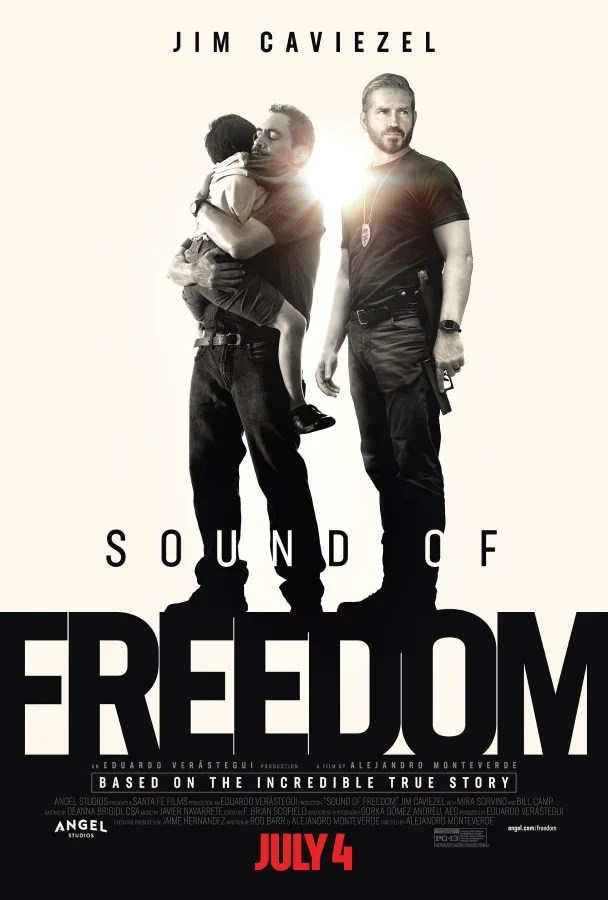
At the present moment we have a truly unique opportunity to make a contribution toward addressing this massive horror. We can support a superb, first-class film that is currently showing in hundreds of cinemas.
Sound of Freedom is a true story with a superb cast and excellent cinematography. Despite its serious subject, the film is well worth viewing while it is still in theaters. Simply by attending, and even more by encouraging family and friends to join you, we can raise the awareness of this tragedy.
Together, you and I truly can help rescue people from this fate, and promoting this message of hope and deliverance is a small step in that journey.
When faced with ugly things, the timid response is to turn away and pretend it doesn’t exist. In cases like this, particularly involving children, a cowardly response in ignoring the evil constitutes nothing less than a sin of omission.
Check with your local theaters today, and reserve a seat at a showing of Sound of Freedom. (And, for those who see this suggestion months or years after the film’s 2023 release, check it out soon on a streaming service.)
Postscript & Resources:
While I was still on active duty, the United States Department of Defense initiated a long-overdue program. In recognition that military members are literally on the “front lines” of encountering modern slavery, Combating Trafficking in Persons is an official program established to confront the crime.
The program includes provisions requiring training for all DoD personnel, civilian as well as uniformed. This site describes the various levels of training required. To actually “take” the training and testing requires login privileges. However, various resources – including some very informative videos – are available to the public.
Similarly, agencies such as INTERPOL restrict their courses to members. Nevertheless, they offer a variety of educational resources and updates on current efforts to battle this crime around the globe.
While I haven’t personally vetted the following, a number of public and governmental organizations offer free training for interested individuals. Among them are:
The Home Office in the United Kingdom hosts a site with a number of related resources. One is “A typology of modern slavery offences in the UK” which breaks “down the broad categories of modern slavery into 17 distinct types of offences identified in the UK.” No doubt, most other enlightened nations promote similar materials.
In a 1943 essay entitled “Equality,” C.S. Lewis discusses the subject of the nature of Democracy, as a form of government. His argument includes the clearest possible reason why slavery never has been, and never could be a good, or morally neutral, thing.
I am a democrat because I believe in the Fall of Man. I think most people are democrats for the opposite reason. A great deal of democratic enthusiasm descends from the ideas of people like Rousseau, who believed in democracy because they thought mankind so wise and good that everyone deserved a share in the government.
The danger of defending democracy on those grounds is that they’re not true. . . . I find that they’re not true without looking further than myself. I don’t deserve a share in governing a hen-roost, much less a nation. . . .
The real reason for democracy is . . . Mankind is so fallen that no man can be trusted with unchecked power over his fellows. Aristotle said that some people were only fit to be slaves. I do not contradict him. But I reject slavery because I see no men fit to be masters.
I know that C.S. Lewis would add his “amen” to my challenge today that each of us might look for ways to help eradicate this plague of slavery, which has cursed humanity for millennia.
“An army marches on its stomach.”* Military leaders have long recognized that it is difficult to arouse soldiers weakened by deprivation. Sadly, though, even a king of Israel could be foolish enough to ignore that and order his soldiers to fast before a battle.
While logisticians rarely receive the accolades of their peers who serve directly in combat, they have always been vital members of successful military ventures.
While they are concerned with securing and transporting all requirements, such as ammunition and medical supplies, there is a single necessary requirement for all campaigns. Without sustenance, soldiers will desert the flag and even the most steadfast will fall.
Nutritional value is the first priority. Palatability has historically been a distant afterthought. This has given rise to innumerable jokes made by veterans about the “combat rations” provided to them. While these “menus” have vastly improved in recent years, they remain fodder for much humor.
And even the most delicious food choices become monotonous when they are limited to a small range. In 2002, I visited a remote military detachment supplied with adequate pallets of Meals Ready to Eat, but begging for variety. They had hundreds of meals available, but only two or three different meal options! Civilians, in contrast, can readily purchase a far wider range of entrees.
During the Second World War, the United States invested major efforts in making the combat meals more appealing. Various candies found their way into K-rations, in addition to necessities like toilet paper and cigarettes. In a comprehensive overview of the history of rations, the U.S. Army Quartermaster Foundation points to the main reason for complaint during WWII.
Like other unpopular items, misuse was a contributing factor to the waning popularity of the K ration. Although designed to be used for a period of two or three days only, the ration occasionally subsisted troops for weeks on end. . . . Continued use reduced the acceptability and diminished the value of the ration.
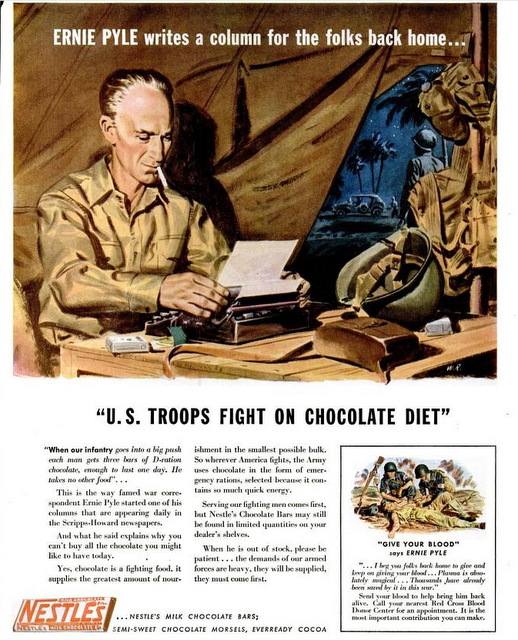
Adding confectionaries to rations made the meals more welcome. Chocolate was always a favorite, but the initial American versions left much to be desired.
My research was, in fact, prompted by a recent post on “Chocolate in WWII” in Pacific Paratrooper. (It is one of the very best military blogs on the internet.) They describe how the military approached a major American confectioner with a simple list of requirements (the last one is best appreciated by older veterans).
The Hershey Chocolate company was approached back in 1937 about creating a specially designed bar just for U.S. Army emergency rations. According to Hershey’s chief chemist, Sam Hinkle, the U.S. government had just four requests about their new chocolate bars: (1) they had to weigh 4 ounces; (2) be high in energy; (3) withstand high temperatures; (4) “taste a little better than a boiled potato.”
Sadly, many “who tried it said they would rather have eaten the boiled potato.” Well, it was the thought that counted, right?
There is a legend that during the war a German officer was confronted with American desserts and determined that the abundant resources of the United States signaled doom for the Nazi cause. The story likely has a fictional origin.
In the 1965 film Battle of the Bulge, Wehrmacht Colonel Hessler, shows his commanding general a treasure confiscated from American soldiers.
Hessler: “General, before you go, may I show you something?”
General: “What is it?”
Hessler: “A chocolate cake.”
Kohler: “Well?”
Hessler: “It was taken from a captured American private. It’s still fresh. If you will look at the wrapping, general, you will see it comes from Boston.”
Kohler: “And?”
Hessler: “General, do you realize what this means? It means that the Americans have fuel and planes to fly cake across the Atlantic Ocean. They have no conception of defeat.”
C.S. Lewis & Rations
Military rations during the First World War were more primitive than those provided twenty years later. One difference for the British is that they were granted a half gill of rum (or a pint of porter) each day.
This alcohol distribution was at the discretion of the commanding general, which meant that it was not available in the trenches. This was in the spirit of the American “General Order Number 1,” which typically applies to alcohol, and sometimes prohibits its presence throughout an entire theater. (I can personally attest to the ability of some elements, such as Special Ops, to circumvent such restrictions.)
C.S. Lewis wrote with some frequency about the rationing endured by the British public, during and after the world wars.⁑
Unfortunately, I’ve only uncovered one Lewisian reference to his own experience with military cuisine. In a 1917 letter to his father, he reveals that meals were not always appealing, even during training, prior to deploying to the war zone.
First of all came the week at Warwick, which was a nightmare. I was billeted with five others in the house of an undertaker and memorial sculptor. We had three beds between six of us, there was of course no bath, and the feeding was execrable.
The little back yard full of tomb stones, which we christened ‘the quadrangle,’ was infinitely preferable to the tiny dining room with its horse hair sofa and family photos.
When all six of us sat down to meals there together, there was scarcely room to eat, let alone swing the traditional cat round. Altogether it was a memorable experience.
A Hobbit, a Wardrobe, and a Great War describes how WWI affected C.S. Lewis and J.R.R. Tolkien. After relating a passage following Miraz’s defeat of Caspian’s force, when the momentarily defeated were “a gloomy company that huddled under the dripping trees to eat their scanty supper,” the author observes:
The military blunders, the fruitless acts of bravery, the bone-chilling rain, the meager rations: there were many days and nights just like these along the Western Front. Imaginary beasts aside, such scenes could have been lifted from the journal of any front-line soldier.
Like Tolkien, though, Lewis includes these images not for their own sake, but to provide the matrix for the moral and spiritual development of his characters . . .
Rations in Ukraine
Although the eyes of the world are riveted today on the war in Ukraine, there are currently 110 armed conflicts being monitored by the Geneva Academy. However, since Ukraine is in the news daily, it is worth noting both modern armies are employing military rations.
Apparently, Ukrainian troops have great Meals Ready to Eat (MREs). “Most importantly, when making, eating, or even talking about the food, the men seem to be genuinely happy.” The MRE link in this paragraph contains the details, including the note that “among the contents, you’ll find a small packet of dried apricots and a dark chocolate bar.”
There is also a vendor on ebay who sells what are purported to be captured Russian supplies, including a confiscated chocolate bar. The candy appears to be conventionally purchased, but could be part of an illicit chocolate conspiracy finding its way to the Russians from Latvia. “The Russian confectionery company ‘Pobeda’ ПОБЕДА has been producing chocolates, truffles, waffles and other types of sweets for more than six years in Ventspils, via a Latvian subsidiary.”
A month ago in Russia, “Pobeda” received thanks from an organization called the “Battle Brotherhood” for the fact that since the beginning of the Ukrainian war, the company has sent at least 15 tonnes of its products to Russian soldiers.
Chocolate does indeed appear to fuel armies. For a fascinating article on how chocolate can also be used to promote propaganda, check out this Ukrainian site.
Russian propaganda continues to dehumanize Ukrainians with the help of outright fakes.
Another “proof” of our apparent bloodthirstiness was the image of a chocolate bar with a remarkable name “Death of Alyoshka.” A portrait of a boy in a helmet with a mourning ribbon is placed on the wrapper of the confectionery. Propagandists claim that Ukrainians wish Russian children dead.
Become an MRE Connoisseur
If you are curious about the contents of various international MREs that are available for purchase by civilians, visit MREmountain, which began “in 2017 when people discovered the hobby of trying army rations.”
Most veterans, I suspect, would find the “hobby” of eating military rations rather peculiar. But then again, you can check out the French options, which the site labels “The best MRE in the world.” Only there, I imagine, could one discover “meals not found in any other MRE like Kebob Meatballs, Duck Confit, Deer Pate, Wild Boar.”
And, of course, France’s 24-hour ration also includes chocolat müesli, chocolate biscuits, five snack bars (at least one of which is pure chocolate), and a hot cacao packet. Yummy. It appears that les Français also consider chocolate to be a staple of modern soldiers.
* This quotation has been attributed to Napoleon and Frederick the Great. Whatever its modern origin, it is obvious starvation and its frequent companion, disease, have crippled as many armies as blade and shot.
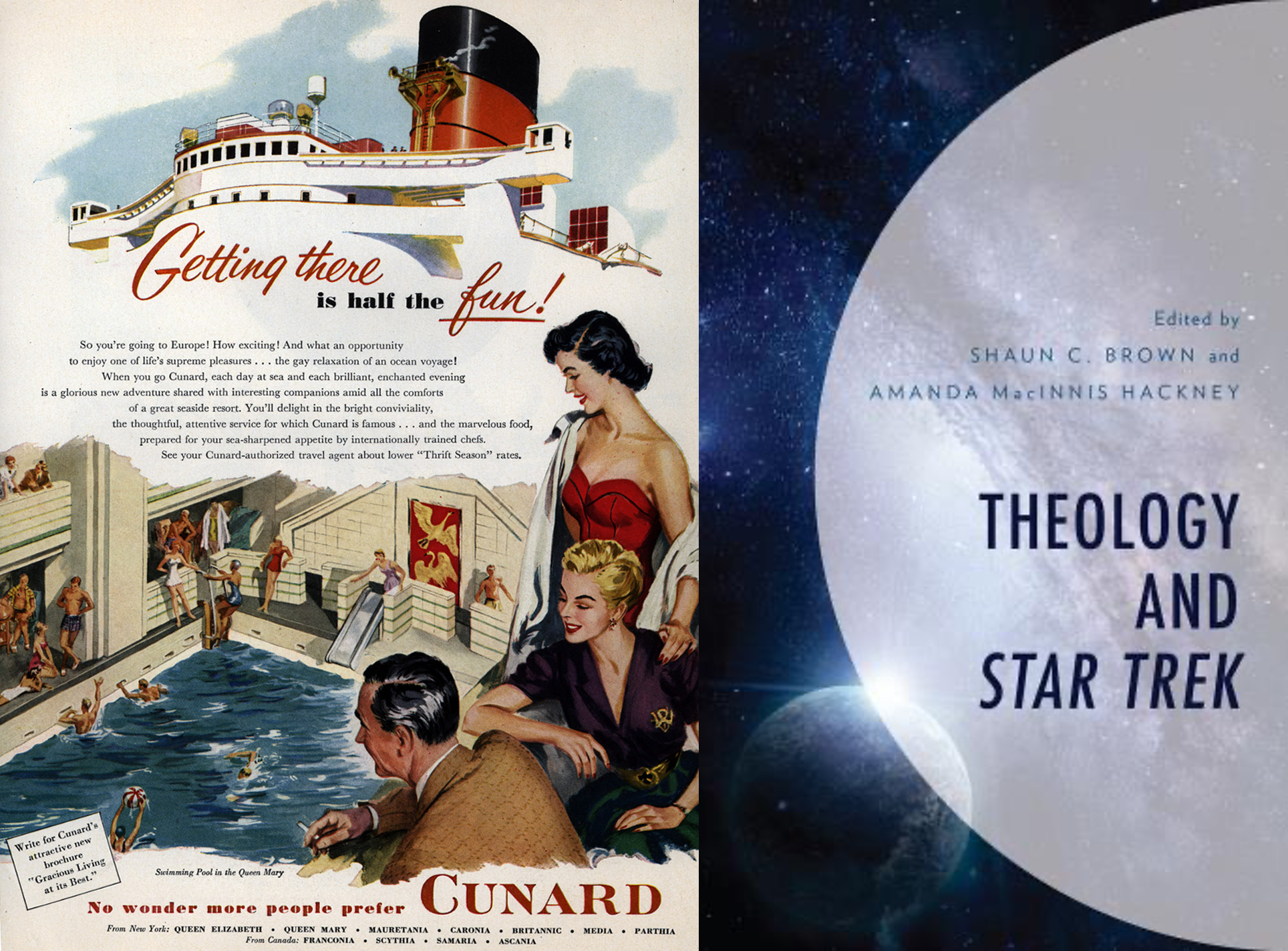
Whoever says “getting there is half the fun” is not referring to the arduous journey undertaken by writers seeking publication.
We writers – I say “we” because odds are you share my literary interests – we writers believe we have something to say that is worth hearing. Something that can genuinely benefit others.
That’s why we undertake the labor of writing, often without any financial reward. That’s why we risk revealing ourselves, becoming vulnerable to criticism and even ridicule.
This desire to share is why we invest the time and emotional energy required to imprint our thoughts and feelings on paper, literal and digital. It’s also the reason we strive to improve our literary skills. Writing well, is not easy.
Some writers enjoy the actual process of writing, but for many of us it is too akin to “work” to be considered fun. A decade ago, I wrote about “The Satisfaction of Writing.”
In the post I confessed I don’t find the writing process all that grand. It was enlightening when I realized it’s not writing I enjoy, but the “satisfaction of having written.” And, having something published multiplies that level of satisfaction, particularly when what I have written finds a home in a publication edited by others.
And that brings me to my good news.
My Recent Publication
This week I received a complimentary copy of a new volume published by Rowman & Littlefield, an academic publishing house.
Theology and Star Trek gathers a group of scholars from various religious and theological disciplines to reflect upon the connection between theology and Star Trek anew.
Among the twenty chapter essays included in the volume is one written by yours truly. In “Starfleet’s AWOL Chaplain: Why Star Trek’s Federation Lacks Chaplains,” I explore Gene Roddenberry’s firm rejection of chaplains in his fictional universe.
I have been a fan of Star Trek ever since I watched the first episode of the original series air on September 8, 1966. And I am extremely proud to have contributed a chapter to Theology and Star Trek.
Allow me to share with you an insight I gained from this experience. It has to do with the project’s extended timeline. Admittedly, part of the delay was apparently caused by the covid epidemic, but even without that interruption, it takes a long time for an academic collection such as this to finally see print.
In October of 2018, I learned about the project and submitted an initial proposal for inclusion in the book. On New Year’s Eve I received acceptance of the proposal and an invitation to submit a “manuscript of approximately 5,000 words” by the first of May 2019. Deadline was extended to June first. First draft was mailed to the co-editors. After my extensive research, the manuscript numbered an immodest 17,442 words.
On July first I accepted the invitation to abbreviate my manuscript, which might be published in some future day, in an appropriately independent version as “a short book.” Revised chapter forwarded on 11 July: “Full word count now is 5549, but since 1528 are in the endnotes, the actual text for the chapter is only 4011, of which 169 constitute the abstract.”
Nearly a year later, on June 9, 2020, I received editorial suggestions from the editors and on June 30, 2020 I submitted my edited chapter. On September 11, 2021, the editors apologized for delays and said they were sending all of the essays out for peer review. On June 11, 2022 I inquired with the editors as to whether the project may have been dropped, and was pleased to learn that it was still underway. The editor said the essays had been returned to writers to incorporate peer review comments. Since my essay had “only minor comments,” they were able to amend it without involving me.
In July 2022 we worked together online with the Index, and reviewed our bio entries for the volume. On March 17, 2023 the publisher’s proofs for Theology and Star Trek were available for our personal review of our essays. April 11, 2023 marked completion of the corrected proof copy, and we added the actual pages for each of the subjects we had added to the index. Sent my final confirmation of the indexing, noticed a minor error in my chapter that was too late to fix, and waited for the arrival of my copy of the finished work . . . which arrived slightly under five years after I asked to join the project.
Lessons learned: (1) be more conscientious about meeting the word length guidelines, (2) be patient, and (3) remain patient.
Even as I share this extended timetable, I’m conscious of the fact I am no expert on the subject. I feel a bit like the people to whom C.S. Lewis referred in a 1952 letter to his publisher, Geoffrey Bles.
I often smile when I compare my ignorance with the knowingness of some people who, on the strength of having published one book, seem to have the whole mystery of publishing, printing, & binding by heart.
Advice to Writers
If you’ve followed Mere Inkling for a while, you’re aware I occasionally offer modest writing tips.
Two years ago I wrote a post entitled “Are You an Author or an Editor?” In it I discussed some distinctions between different aspects of our writing lives. In “C.S. Lewis and the Oddities of Editors,” I highlighted that great author’s amazement at the arbitrary decisions made by editors.
In “On Choosing Between a Child and a Book,” I even addressed the delicate subject of whether an individual would prefer to leave a book, rather than a child, as their legacy. Several more articles on related subjects are linked here.
A Word of Encouragement
Sadly, many aspiring writers feel like they will never “arrive” – in terms of seeing their words in “traditional” print. We must, nevertheless, remain persistent since, if we quit writing, that end is all but guaranteed.
However, when we read widely, and physically sit down with pen or keyboard, our chance of seeing our name in print rises geometrically. When we continue to study the art of writing and when we continue to sharpen our skills by stretching beyond our comfort zones, our efforts are often rewarded.
The internet abounds with stories of people who were not published until late in life. And there are many whose work only gained fame after their deaths.
Some popular writers, including C.S. Lewis and J.R.R. Tolkien, were prolific. They enjoyed some renown during their lives, but have only grown in their popularity posthumously. Many writers have left unfinished projects which have been published after their passing. In the case of these Inklings, this effort was spearheaded by Lewis’ secretary Walter Hooper and Tolkien’s son Christopher.
Waterstones, the British bookseller, goes so far as to say “J.R.R. Tolkien is arguably one of the most posthumously-published authors there has ever been. The Silmarillion was compiled from notes he left behind, likewise The Children of Hurin and, in 2014, Tolkien’s prose translation of Beowulf was released.”
It may be unlikely that you are I will have anything published after our life ends. But, the words we pen might one day prove a blessing to others in a future family memoir.
I encourage you to continue to write, whether publishers reinforce you or not. However small your audience may seem, virtually everyone recognizes there is value in expressing ourselves in this way.
And, may the cost of your literary labors be outweighed by the satisfaction you gain as its reward.
Star Trek Postscript
Yes, if you check out the publication site, you will see that my name is listed last among all of Theology and Star Trek’scontributors. Even if this isn’t a consequence of alphabetical considerations, I’m not bothered. My simple inclusion in the volume is sufficient . . . and we struggling writers must never forget the words of Matthew 20:16.









 Mere Inkling Press