C.S. Lewis, J.R.R. Tolkien & Naomi Mitchison

Have your feelings about particular authors changed over time? C.S. Lewis’ attitude toward the work of prolific novelist Naomi Mitchison illustrates this type of progression.

Mitchison’s work possesses a direct link to another Oxford Inkling – J.R.R. Tolkien – whose Fellowship of the Ring she read in proof and favorably reviewed. Brenton Dickieson provides a priceless letter written by Tolkien to Mitchison in 1954.

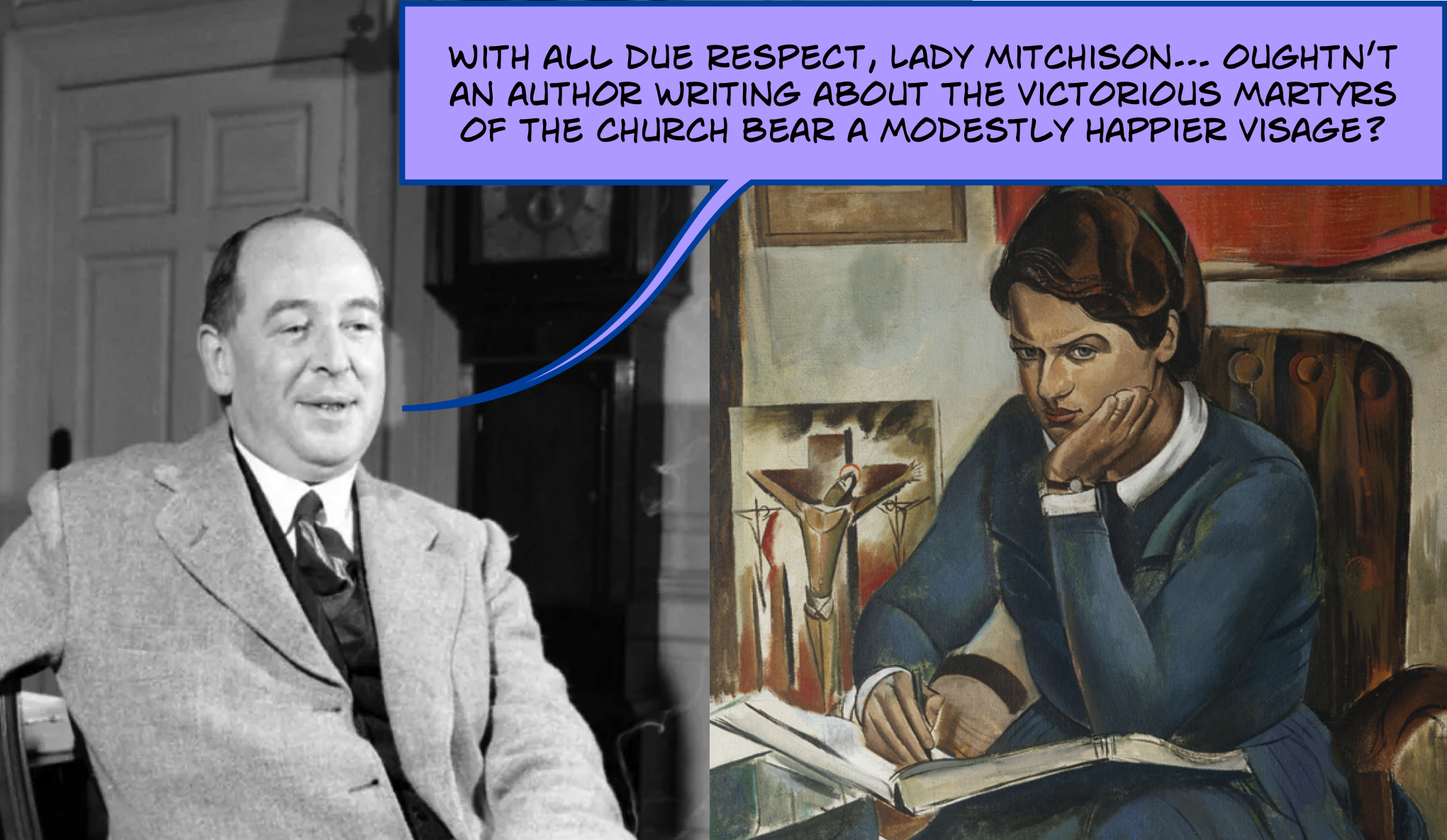
Naomi Mary Margaret Mitchison was a Scottish novelist who lived more than a century (1897 – 1999). She penned more than ninety books, primarily historical fiction, and including science fiction.

With the outbreak of the First World War, Mitchison joined a Voluntary Air Detachment in a London hospital. (Other familiar women who served in a VAD included Agatha Christie and Amelia Earhart.)

Politically she identified as a Socialist. She was sufficiently leftist that George Orwell regarded her as unsuited for writing anti-Soviet materials for the United Kingdom during the Cold War.

Mitchison’s brother, J.B.S. Haldane, did not equivocate on his radical views, announcing his position as a Marxist. He was a scientist and his atheism brought him into serious disagreement with the Christian views of C.S. Lewis. (I will devote my next post to that interaction.)

Coincidentally, artist Pauline Baynes (who also worked with C.S. Lewis and J.R.R. Tolkien), provided the illustrations for at least one of Mitchison’s children’s books, Graeme and the Dragon. This quick review offers a concise synopsis and discussion of “the charming illustrations [which] go a long way toward making this a fun read.”

An additional coincidence: the same year Lewis published The Lion, the Witch and the Wardrobe, Mitchison also published a fantasy novel for children. The Big House involves time travel and some occultic themes associated with Halloween, etc.

For a thorough synopsis of The Big House and comparison to Lewis’ Chronicles of Narnia, check out this essay from the University of Glasgow. (That reviewer’s preference is clearly for Mitchison’s more complex approach with its themes related to class struggle.)

C.S. Lewis’ Perspective on Naomi Mitchison

I cannot locate any mention of C.S. Lewis by Mitchison, but he did mention her in passing in several pieces of correspondence. In essence, he praised her skill, but was put off by her graphic use of violent imagery.

In a 1932 letter to Arthur Greeves, he writes:

I thought we had talked about Naomi Mitchison before. I have only read one (Black Sparta) and I certainly agree that it ‘holds’ one: indeed I don’t know any historical fiction that is so astonishingly vivid and, on the whole, so true.

I also thought it astonishing how, despite the grimness, she got such an air of beauty–almost dazzling beauty–into it. As to the cruelties, I think her obvious relish is morally wicked, but hardly an artistic fault for she could hardly get some of her effects without it.

But it is, in Black Sparta, a historical falsehood: not that the things she describes did not probably happen in Greece, but that they were not typical–the Greeks being, no doubt, cruel by modern standards, but, by the standards of that age, extremely humane.

She gives you the impression that the cruelty was essentially Greek, whereas it was precisely the opposite. That is, she is unfair as I should be unfair if I wrote a book about some man whose chief characteristic was that he was the tallest of the pigmies, and kept on reminding the reader that he was very short. I should be telling the truth (for of course he would be short by our standards) but missing the real point about the man–viz: that he was, by the standards of his own race, a giant. 

Still, she is a wonderful writer and I fully intend to read more of her when I have a chance.

C.S. Lewis echoed his concern in a 1942 letter to another of his regular correspondents, Sister Penelope. “I gave up Naomi Mitchison some time ago because of her dwelling on scenes of cruelty. But I recognise real imagination and a sort of beauty in the writing.”

In 1951, C.S. Lewis congratulated author Idrisyn Oliver Evans (1894–1977) on the publication of The Coming of a King; A Story of the Stone Age. Ironically, speculative fiction set in this ancient era, referred to as “Prehistoric SF,” was also the setting of works such as H.G. Wells’ Story of the Stone Age series, which you can read here. Naomi Mitchison also dabbled in the prehistoric field. Lewis wrote to Evans: 

I congratulate you. And I think it is a great thing to put that idea of the Stone Age – which is at least as likely to be the true one – into boys’ heads instead of Well’s or Naomi Mitchison’s. It’s all good. The marriage customs are amusing . . . I hope it will be a great success. 

In 1959, C.S. Lewis provided some wise counsel to a young, aspiring author. The American student was contemplating a volume about the Roman subjugation of Gaul, which Lewis encouraged.

A story about Caesar in Gaul sounds very promising. Have you read Naomi Mitchison’s The Conquered? And if not, I wonder should you? It might be too strong an influence if you did (at any rate until your own book is nearly finished). On the other hand, you may need to read it in order to avoid being at any point too like it without knowing you are doing so.

I don’t know what one should read on Gaul. Apart from archaeological finds (Torques and all that) I suppose Caesar himself is our chief evidence? He will be great fun and I hope you will enjoy yourself thoroughly.

Which side will you be on? I’m all for the Gauls myself and I hate all conquerors. But I never knew a woman who was not all for Caesar – just as they were in his life-time.

C.S. Lewis’ most significant mention of Naomi Mitchison occurs in his brief 1943 essay, “Equality.”

It delivers a brilliant discussion of the subject, one that merits full reading. He commends one of Mitchison’s insights into inequality – although, ironically, she relates it to eroticism.* (You must read it in full context to understand how it supports his independent argument.)

This last point needs a little plain speaking. Men have so horribly abused their power over women in the past that to wives, of all people, equality is in danger of appearing as an ideal. But Mrs. Naomi Mitchison has laid her finger on the real point. Have as much equality as you please – the more the better – in our marriage laws, but at some level consent to inequality, nay, delight in inequality, is an erotic necessity.

Mrs. Mitchison [in The Home and a Changing Civilization] speaks of women so fostered on a defiant idea of equality that the mere sensation of the male embrace rouses an undercurrent of resentment. Marriages are thus shipwrecked.

A final reference to Mitchison brings us back around to my early note that she reviewed Fellowship of the Ring. C.S. Lewis refers to her review in his own, suggesting that she has not gone quite far enough in her praise.

Nothing quite like it was ever done before. ‘One takes it,’ says Naomi Mitchison, ‘as seriously as Malory.’ But then the ineluctable sense of reality which we feel in the Morte d’Arthur comes largely from the great weight of other men’s work built up century by century, which has gone into it.

The utterly new achievement of Professor Tolkien is that he carries a comparable sense of reality unaided. Probably no book yet written in the world is quite such a radical instance of what its author has elsewhere called ‘sub-creation.’

Sadly, Naomi Mitchison was less enamored with the subsequent volumes in The Lord of the Rings . . . but this post has already condensed more than enough information.


* An article in Michigan Feminist Studies notes how Naomi Mitchison’s recurrent references to sexual themes distracted from broader matters throughout her literary career.

Despite Mitichison’s attempts to move the discussion of her body of work from the salacious, it is the frank and open inclusion of sexuality that continues to intrigue her critics and reviewers. Racy, heated passages of Mitchison’s historical novels inspired comment from poet W.H. Auden in the 1930s (“Monstrous Sex: The Erotic in Naomi Mitchison’s Science Fiction”).

The essay’s thesis is what one might expect in a journal devoted to contemporary feminism.

I intend to demonstrate that the ribald sexuality of Mitchison’s work registers as more than merely provocative. Sexual encounters between female characters and aliens, as well as those between women, threaten an imperialising capitalism that dictates who may be loved in a gendered, racialised order.
Fiction or Nonfiction: Which is Best?

Which is better for a person to write, fiction or nonfiction? That, of course, is an absurd question on its face. Every one recognizes nonfiction is best. (Just joking.)

Few of us are talented in the manner of C.S. Lewis — who excelled in both genres. Typically we have a knack for one or the other.

Which is best, becomes a question with a quite personal answer. And that response is determined by a number of interrelated elements. In which form are we more adept? Which do we prefer to read? For which are there greater avenues to experience publication? Through which do we receive more reward, extrinsic or intrinsic? 

Christian writers consider another, hopefully overriding, factor. What type of writing does the Lord desire us to pursue? And, it should be noted that just like the daily Christian walk, this is a dynamic matter. It can change at any given moment, depending upon how the Holy Spirit leads. Once again, C.S. Lewis offers an ideal example of this truth. God may lead us to write something factual one afternoon, imaginative the next, and perhaps poetry on the succeeding morning. 

What about the Prestige Factor?

There is a subtle prejudice among writers, I fear. While it’s natural to think that the genre most challenging to one may require additional skill or discipline, it seems to me most writers tacitly accept the notion that fiction requires more talent. 

While I personally disagree with that assessment, I understand it. After all, “facts” are readily available, and don’t rely on one’s imagination to devise. Still, good nonfiction is not inherently simpler to produce than quality fiction. (I mean, AI is proving every day that mediocrity can be reached in either genre in mere seconds.) 

As an example of this subtle prejudice, see this (quite helpful) article by promising young historical fictionist Cheyenne van Langevelde.

In an insightful article entitled “Genre ~ What Christian Writers Should be Aware of,” she introduces the subject with the following observation: 

As someone who hasn’t written nonfiction, I will not be discussing that branch of literature — though I’m sure it’s obvious how one could glorify God in their nonfiction writing. What I am going to talk about is the more challenging of the two branches: fiction.

I graduated from the University of Washington with an Editorial Journalism degree. While some argue Communication degrees are “worthless,” they may “set you up for life.” (That has certainly been my experience.)

Still, journalism doesn’t have the panache of “creative writing.” This, I suspect, is one reason that Master of Fine Arts (MFA) degrees exploded on the scene several decades ago.

When I open each issue of Poets & Writers, I’m overwhelmed by the number of ads for MFA programs, all over the globe. However, the October issue features a melancholy article titled “More MFA Programs Closing.” This is “despite all the value and prestige they bring to the university . . .”

The article cites “monetary pressures on universities and waning interest in the humanities” as major problems. Obvious to any non-MFA observer, the unbridled proliferation of MFA programs themselves might be the primary cause. 

Combine with that the evidence that a younger generation is more concerned about their prospects of making a living, and one might anticipate a further winnowing of such programs. 

For a balanced discussion of the subject, I commend “The MFA Degree: A Bad Decision?” — written by a writer who earned one, and subsequently “taught undergraduate and graduate courses in creative writing.”

I don’t believe MFA programs are inherently evil and have destroyed contemporary American literature. The majority of people teaching and taking creative writing classes are all trying to do good things. Nonetheless, I’ve begun to wonder if the MFA is, in fact, a bad decision.

It’s an interesting discussion, of value especially to those contemplating an MFA path. I leave that choice to the individual — as I leave to them the decision regarding whether to write fiction or nonfiction . . . or poetry, convincing historical fiction, satire, etc.

In order to expand their pool of prospective students, some MFA programs added “creative nonfiction” to their offerings. The focus of this genre is on training participants to consciously implement literary styles and techniques in order to make their factually accurate narratives more engaging.

While there is no doubt consciously taking these tools into consideration can improve the quality of many nonfiction works, it seems a bit exaggerated to label it “creative.” I would simply describe it as “good” or “well written” nonfiction. 

For a description of how creative nonfiction can be implemented in memoirs and essays, you might enjoy an introduction to the subject from Writers.com. You may wish to follow that up with “The Five R’s of Creative Nonfiction.” (Mere Inkling applies at least four of them.)

C.S. Lewis offered an aspiring young writer some wonderful advice in 1959. “Write about what really interests you,” he suggested, “whether it is real things or imaginary things, and nothing else.” He added the parenthetical note that “if you are interested only in writing you will never be a writer, because you will have nothing to write about . . .”

Excellent advice for the young wordsmith. I would add that for the maturing scribe it is often productive (and even fun) to experiment with a variety of genres.

Who knows? Perhaps you will follow the Inkling tradition established by C.S. Lewis and J.R.R. Tolkien, being exceptional in fiction and nonfiction alike. Best of luck to those of you who embark on this journey!

An Interstellar Accomplishment

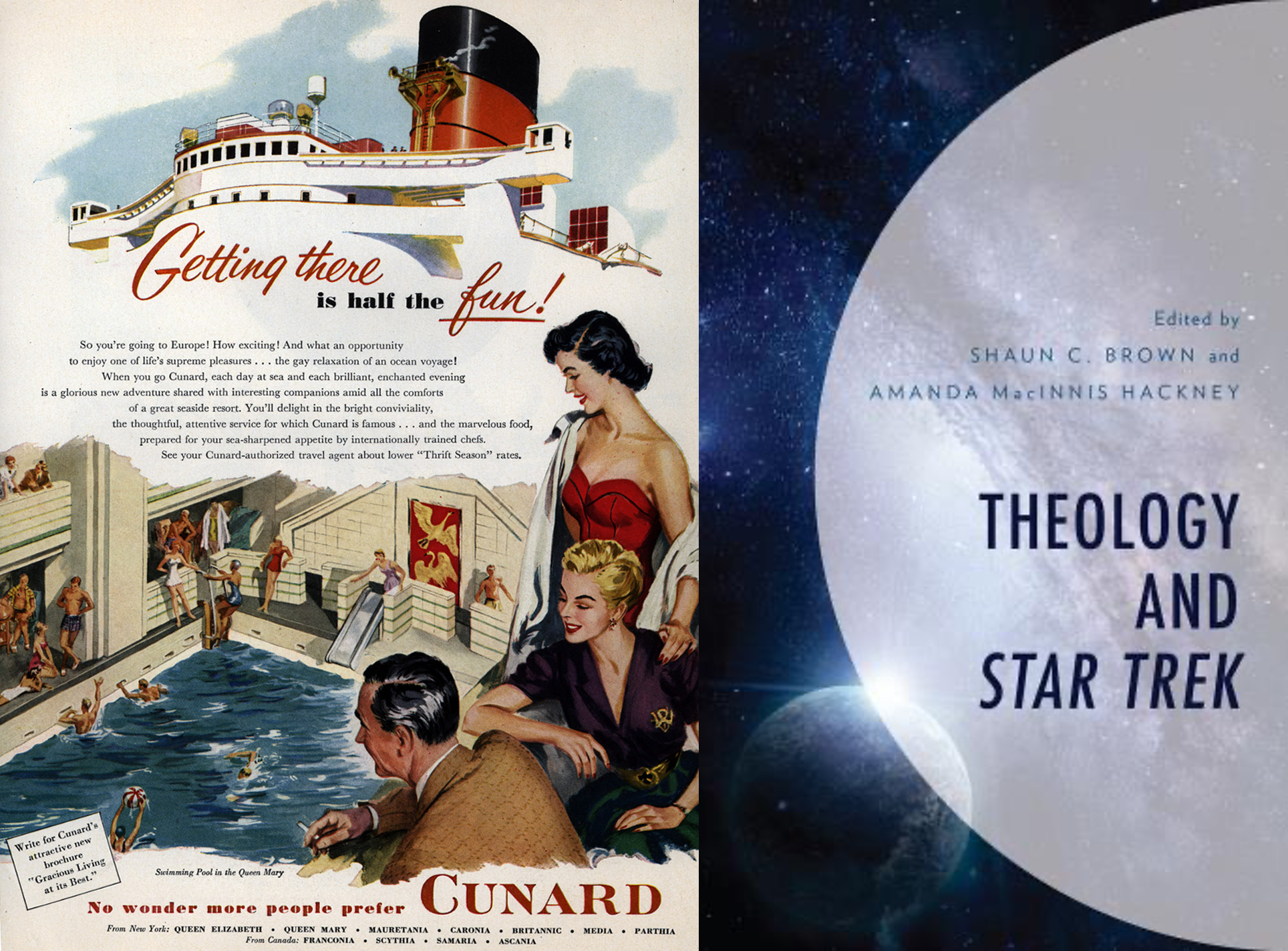
Whoever says “getting there is half the fun” is not referring to the arduous journey undertaken by writers seeking publication.

We writers – I say “we” because odds are you share my literary interests – we writers believe we have something to say that is worth hearing. Something that can genuinely benefit others.

That’s why we undertake the labor of writing, often without any financial reward. That’s why we risk revealing ourselves, becoming vulnerable to criticism and even ridicule.

This desire to share is why we invest the time and emotional energy required to imprint our thoughts and feelings on paper, literal and digital. It’s also the reason we strive to improve our literary skills. Writing well, is not easy.

Some writers enjoy the actual process of writing, but for many of us it is too akin to “work” to be considered fun. A decade ago, I wrote about “The Satisfaction of Writing.” 

In the post I confessed I don’t find the writing process all that grand. It was enlightening when I realized it’s not writing I enjoy, but the “satisfaction of having written.” And, having something published multiplies that level of satisfaction, particularly when what I have written finds a home in a publication edited by others.

And that brings me to my good news.

My Recent Publication

This week I received a complimentary copy of a new volume published by Rowman & Littlefield, an academic publishing house.

Theology and Star Trek gathers a group of scholars from various religious and theological disciplines to reflect upon the connection between theology and Star Trek anew.

Among the twenty chapter essays included in the volume is one written by yours truly. In “Starfleet’s AWOL Chaplain: Why Star Trek’s Federation Lacks Chaplains,” I explore Gene Roddenberry’s firm rejection of chaplains in his fictional universe.

I have been a fan of Star Trek ever since I watched the first episode of the original series air on September 8, 1966. And I am extremely proud to have contributed a chapter to Theology and Star Trek.

Allow me to share with you an insight I gained from this experience. It has to do with the project’s extended timeline. Admittedly, part of the delay was apparently caused by the covid epidemic, but even without that interruption, it takes a long time for an academic collection such as this to finally see print.

In October of 2018, I learned about the project and submitted an initial proposal for inclusion in the book. On New Year’s Eve I received acceptance of the proposal and an invitation to submit a “manuscript of approximately 5,000 words” by the first of May 2019. Deadline was extended to June first. First draft was mailed to the co-editors. After my extensive research, the manuscript numbered an immodest 17,442 words.

On July first I accepted the invitation to abbreviate my manuscript, which might be published in some future day, in an appropriately independent version as “a short book.” Revised chapter forwarded on 11 July: “Full word count now is 5549, but since 1528 are in the endnotes, the actual text for the chapter is only 4011, of which 169 constitute the abstract.”

Nearly a year later, on June 9, 2020, I received editorial suggestions from the editors and on June 30, 2020 I submitted my edited chapter. On September 11, 2021, the editors apologized for delays and said they were sending all of the essays out for peer review. On  June 11, 2022 I inquired with the editors as to whether the project may have been dropped, and was pleased to learn that it was still underway. The editor said the essays had been returned to writers to incorporate peer review comments. Since my essay had “only minor comments,” they were able to amend it without involving me. 

In July 2022 we worked together online with the Index, and reviewed our bio entries for the volume. On March 17, 2023 the publisher’s proofs for Theology and Star Trek were available for our personal review of our essays. April 11, 2023 marked completion of the corrected proof copy, and we added the actual pages for each of the subjects we had added to the index. Sent my final confirmation of the indexing, noticed a minor error in my chapter that was too late to fix, and waited for the arrival of my copy of the finished work . . . which arrived slightly under five years after I asked to join the project.

Lessons learned: (1) be more conscientious about meeting the word length guidelines, (2) be patient, and (3) remain patient.

Even as I share this extended timetable, I’m conscious of the fact I am no expert on the subject. I feel a bit like the people to whom C.S. Lewis referred in a 1952 letter to his publisher, Geoffrey Bles.

I often smile when I compare my ignorance with the knowingness of some people who, on the strength of having published one book, seem to have the whole mystery of publishing, printing, & binding by heart.

Advice to Writers

If you’ve followed Mere Inkling for a while, you’re aware I occasionally offer modest writing tips. 

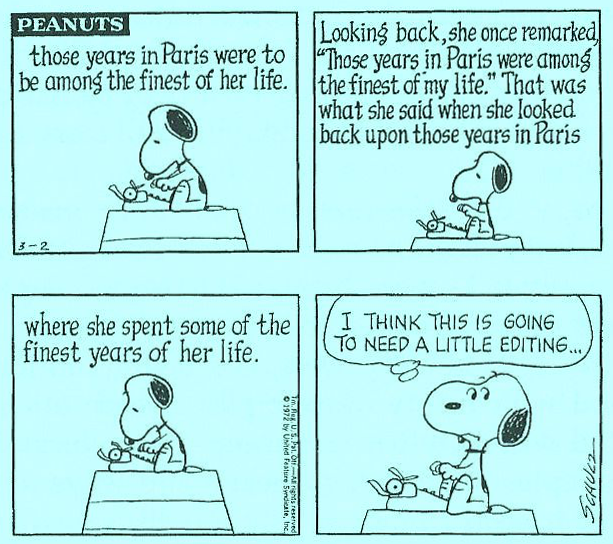
Two years ago I wrote a post entitled “Are You an Author or an Editor?” In it I discussed some distinctions between different aspects of our writing lives. In “C.S. Lewis and the Oddities of Editors,” I highlighted that great author’s amazement at the arbitrary decisions made by editors.

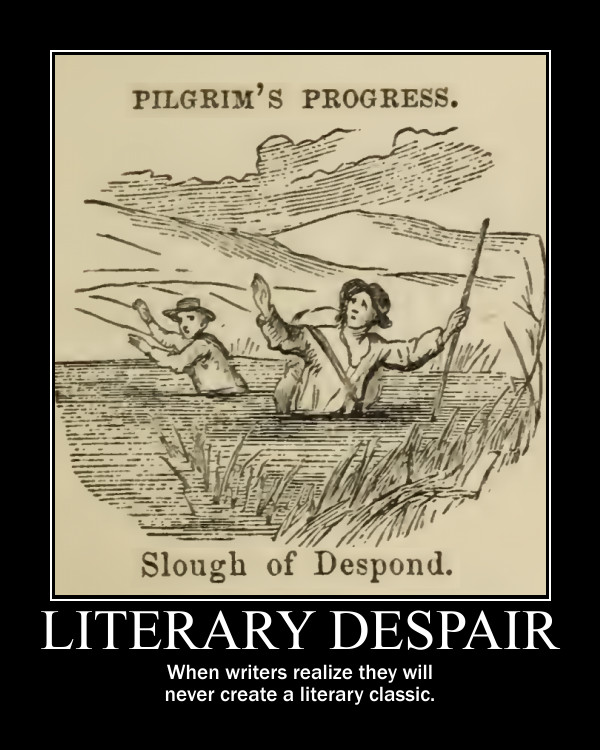
I discussed a skill I have never mastered in “Brevity & Clear Communication.” In “Does Sincerity Result in Good Writing” I discussed C.S. Lewis’ thoughts about The Pilgrim’s Progress.

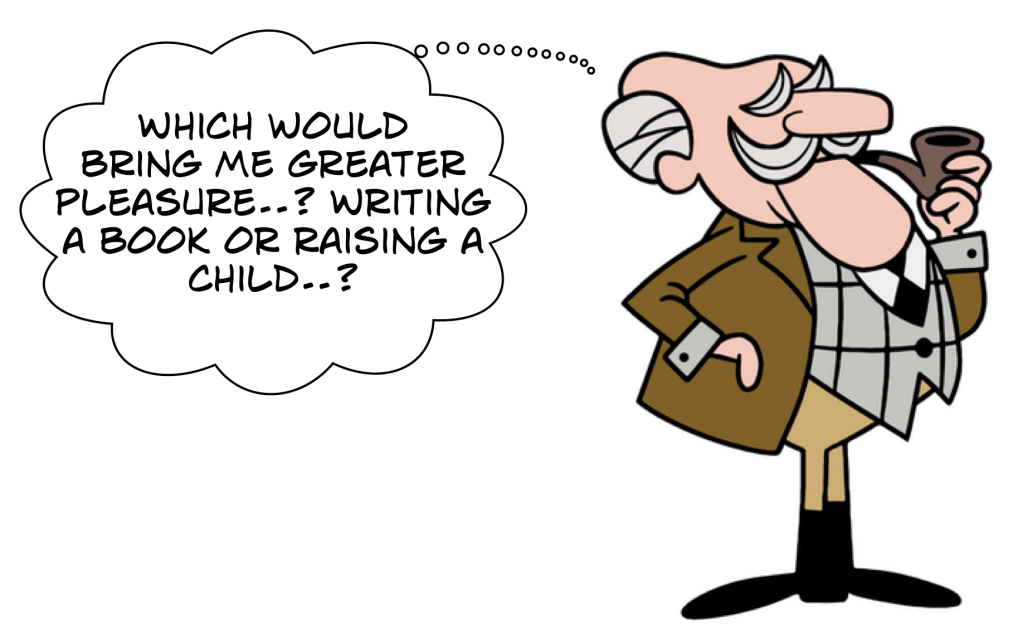
In “On Choosing Between a Child and a Book,” I even addressed the delicate subject of whether an individual would prefer to leave a book, rather than a child, as their legacy. Several more articles on related subjects are linked here.

A Word of Encouragement

Sadly, many aspiring writers feel like they will never “arrive” – in terms of seeing their words in “traditional” print. We must, nevertheless, remain persistent since, if we quit writing, that end is all but guaranteed.

However, when we read widely, and physically sit down with pen or keyboard, our chance of seeing our name in print rises geometrically. When we continue to study the art of writing and when we continue to sharpen our skills by stretching beyond our comfort zones, our efforts are often rewarded.

The internet abounds with stories of people who were not published until late in life. And there are many whose work only gained fame after their deaths.

Some popular writers, including C.S. Lewis and J.R.R. Tolkien, were prolific. They enjoyed some renown during their lives, but have only grown in their popularity posthumously. Many writers have left unfinished projects which have been published after their passing. In the case of these Inklings, this effort was spearheaded by Lewis’ secretary Walter Hooper and Tolkien’s son Christopher.

Waterstones, the British bookseller,  goes so far as to say “J.R.R. Tolkien is arguably one of the most posthumously-published authors there has ever been. The Silmarillion was compiled from notes he left behind, likewise The Children of Hurin and, in 2014, Tolkien’s prose translation of Beowulf was released.”

It may be unlikely that you are I will have anything published after our life ends. But, the words we pen might one day prove a blessing to others in a future family memoir. 

I encourage you to continue to write, whether publishers reinforce you or not. However small your audience may seem, virtually everyone recognizes there is value in expressing ourselves in this way. 

And, may the cost of your literary labors be outweighed by the satisfaction you gain as its reward.

Star Trek Postscript

Yes, if you check out the publication site, you will see that my name is listed last among all of Theology and Star Trek’scontributors. Even if this isn’t a consequence of alphabetical considerations, I’m not bothered. My simple inclusion in the volume is sufficient . . . and we struggling writers must never forget the words of Matthew 20:16.

C.S. Lewis on Brevity

Regular readers of Mere Inkling are accustomed to posts that require a bit of thinking.* This one will be different.

I opted for a simpler topic, wedged as this post will be, between two more thought-provoking subjects. Avoiding verbosity is a worthwhile goal. Admittedly, it’s harder for some of us to reach, than for others who are innately succinct.

I will simply say, to promote clear communication it is necessary to (1) strip away all extraneous words, and (2) ensure that we know what the words we use mean to our hearers or readers. (This is especially true when “preaching.”)

In terms of the meanings of words, C.S. Lewis describes the value of commonly shared or “learned” language. If a word, say “baptism,” or even something simpler, such as “tree,” meant the same thing to all—communication could be much more concise.

In the very process of eliminating from your matter all that is technical, learned, or allusive, you will discover, perhaps for the first time, the true value of learned language: namely, brevity (“Before We can Communicate”).

[Such learned language] can say in ten words what popular [common] speech can hardly get into a hundred. Your popularisation of the passage set will have to be very much longer than the original.” Alas, because we lack that united vocabulary, this we must just put up with.”

Still, Lewis would argue: let’s please keep the unnecessary extraneous explanation to a bare minimum. (It would be an easy task to whittle that sentence down, wouldn’t it? Let’s try.)

C.S. Lewis says using the fewest necessary words is (usually) best.

[If you would like to read a slightly more developed essay on this subject,
search no farther than “Brevity & Clear Communication,” which was published in 2017.]


* I was tempted to write “a bit of cognitive interaction,” but realized I’d be undermining my purpose for this simple post in my very first sentence!

Are You an Author or an Editor?

Each writer brings a unique balance of talents to the task before them. Some excel at the initial writings. Others are especially talented at sharpening their work after the first draft has been created.

Understanding where we fit on that spectrum of author or editor, can be very empowering. Knowing our strengths and non-strengths is a major step in becoming a better writer.

Andy Le Peau worked for four decades at InterVarsity Press. His excellent blog, Andy Unedited, explores “books, life, and writing.” Five years ago he penned a short post that I still find extremely enlightening.

In “Authors are Like Pioneers—Editors Are Like Settlers,” Le Peau uses that unusual analogy to explain a creative tension at play in the lives of most writers I know. And, once we understand this fluid dichotomy, I believe it makes us better writers.

Authors tend to come up with new ideas and push them forward. They like to move into literary territories not explored before. Creating something new is like a shot of caffeine to their systems.

Good editors see how to improve a book, make it read better, clearer. They don’t try to shape the book in their own image. Rather they see the good that is already there and find ways to make it even more effective, better organized, clearer.

Good writers are usually pretty decent editors. Not expert, but adequate enough to recognize ways in which their own work can be improved. That’s why we call the “first draft” a first draft.

Now, if you consider your initial draft a finished product, you are definitely not a settler!

C.S. Lewis was a gifted writer. He also knew a great deal about editing, as I’ve discussed here in the past. I’ve even described his astonishment with the practices of some editors.

Lewis was quite open to revising his own work, even after it was published. In 1959, he wrote to one of his publishers, “Yes, there is one chapter of Miracles that needs revision. The result of the revision will, I think, make it shorter rather than longer. I’ll get onto this job as soon as I can.”

My Perspective on the Writing Process

While I embrace the pioneer or settler symbolism, I expand the analogy by thinking about my own writing process. I tend to think of it in three categories, with

Researching – Writing – Editing

To this process, if we desire to actually share our work, should be added at its end, “Submitting/Publishing.” Submitting refers to presenting it for potential publication in various media. By publishing, I refer to skipping the proverbial middle person, and posting your work online or using one of the self-publishing options readily available today.

In my personal context, I regard researching as a semi-independent stage of the writing process.

This may be due to the fact I focus on nonfiction. (Fiction writers can devote meager attention to it, and get away with it—not that they should ever ignore it.)

There are two additional reasons researching earns its own place in my writing process. First, because it is in my innate nature to be thorough and accurate. Second, I simply love the process. I know I’m in the minority.

Most writers prefer to get on with the task as soon as possible. I, however, am enslaved by my inherent curiosity to learn as much as possible about the undertaking as I can, before embarking on the actual writing. (And, yes, I recognize this may be exaggerated by my mortal tendency to procrastinate.)

To maintain the original analogy, in the spirit of Leif Erikson, I think of it this way:

Explorer – Pioneer – Settler

This works well for me, and I hope this post offers some insight and encouragement to you, as well.

On Choosing Between a Child and a Book

Some people become parents and others do not. This column isn’t about the complex considerations that determine which path each individual follow. We all know people in each situation who are happy—as well as those who are dissatisfied.

I want to consider here a single reason some people choose not to have children. There are, of course, many valid reasons for not bringing children into this world, but this one struck me as particularly odd.   

Before we look at the interview question, allow me to offer a thesis that I believe most writers would agree with. Not all would concur, but don’t you think there would be strong consensus with this statement:

Raising children makes being a productive writer more challenging.

It’s pretty logical that the time spent actively parenting children leaves an author with less time to pursue their writing. Especially if they are a good mother or father.

Sure, kids provide us with some great stories and inspiration that can occasionally be worked into an article or story. But unless we’re a Dave Barry, an Erma Bombeck or a Bil Keane, people won’t line up to read about our children’s hijinks. So, if you were to balance the scales, I think we’d be hard-pressed to make the case that the addition of children to our household will make our writing more prolific.

In a recent interview with Forbes columnist Amity Shlaes, the editor of World Magazine raised this subject in an unusual way. Here is the question: “I talked with a Harvard economist years ago who said he was deliberately not having any children because he felt each child would lose him a book. You and I each have four children, and yet we’ve written books. Did you ever do a calculation like this foolish Harvard economist?”

Shales’ response was thoughtful. “Well, I’m very lucky in the husband department. He wanted lots of children and didn’t mind the work. But the main thing is: Children enrich life, they don’t impoverish it. You’d often be richer in dollars if you’d had no children, but with kids you’re richer in social capital, in happiness . . .”

It will come as no surprise that I agree with Shales’ opinion (with the substitution of “wife” in the first sentence). But the idea that struck me as rather shocking in this interchange was the reason the economist gave for opting not to have children: “because he felt each child would lose him a book.”

Wow. That is a pretty honest, and rather crass calculation. I won’t argue with his domestic equation, but it makes me shake my head. I can’t help but wonder how he will feel at the end of his life when he looks at his bookshelf of soon-to-be-forgotten titles and contemplates whether his choice was wise.

Lewis’ Personal Experience

C.S. Lewis was one of the most prolific writers. And he wrote in an expansive range of genres. It could easily be argued that his bachelorhood provided him with the time to write. That, in addition to the creative fountain provided by the Inklings made for a productive environment.

When he became a father, he was extremely conscientious. The boys were sent to private (or, in British parlance, “public”) schools after their mother’s death. However, that was the norm for children in their comfortable economic circumstances.

Lewis loved his sons, and did the best he could to be a father to them, despite his lack of confidence. Lewis was still the man who many years earlier (in 1935) wrote to his closest friend: “I theoretically hold that one ought to like children, but am shy with them in practice.” A decade later, in one of his most powerful books, Lewis confessed “I myself do not enjoy the society of small children . . . I recognize this as a defect in myself” (The Abolition of Man).

Self-awareness is a mark of intelligence and honesty. I strongly believe Lewis put the lie to his self-criticism about lacking a rapport with children, with his wonderful letters written to children.*

It could be argued that parenthood was one of the factors that affected Lewis’ literary production. Brenton Dickieson has a chart showing his annual production of books, here. Another scholar, Joel Heck, has done the world a great service by providing the definitive chronology of C.S. Lewis’ life and work, available here.

Lewis did not marry earlier in his life because he considered himself a confirmed bachelor. Joy’s unexpected arrival transformed his life.

But, even before he became a (step-)father, he would never have uttered the sentiment of the Harvard professor.

A book or a child? Which shall it be? If that is a difficult question for someone, here’s my advice: “Please just write your books; you’d probably make a lousy parent anyway.”


* C.S. Lewis was able to speak clearly to children. And, unlike so many adults, he did not speak down to them. While toddlers may have remained a mystery to him—and he never parented any—he respected children’s questions, and offered wise advice.

On putting one’s life in its proper order: “You are quite right if you mean that giving up fun for no reason except that you think it’s “good” to give it up, is all nonsense.”

And, how is this for a thoughtful, practical comment: “All schools, both here [in England] and in America, ought to teach far fewer subjects and teach them far better.”

Wise counsel to a young person (or anyone): God knows quite well how hard we find it to love Him more than anyone or anything else, and He won’t be angry with us as long as we are trying. And He will help us.”

And, one particularly inspiring comment about faith: “Anyone in our world who devotes his whole life to seeking Heaven will be like Reepicheep” in The Voyage of the Dawn Treader.

Add this Book to Your Library

No one can teach us to “write like C.S. Lewis.” The great author was definitely one of a kind.

It is possible, however, to study Lewis’ advice about writing. And that is a journey well worth taking.

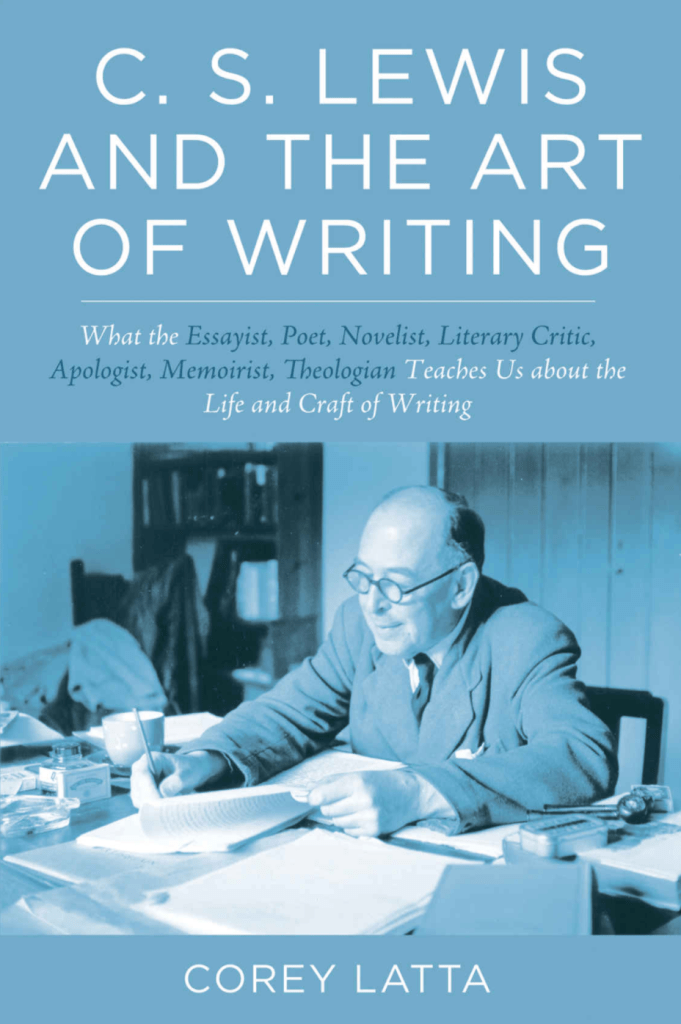
Many students of C.S. Lewis are quite curious about his advice for writing well. And, for the proverbial “limited time,” the premier study of that subject is available at an unbelievable price.

The kindle version of C. S. Lewis and the Art of Writing: What the Essayist, Poet, Novelist, Literary Critic, Apologist, Memoirist, Theologian Teaches Us about the Life and Craft of Writing is only three dollars at amazon. (Great subtitle, right?)

Coincidentally, I only recently purchased the volume for my Logos library (at a significantly higher cost). I’ve yet to read it, but it appears to be worth what I paid. Still, I don’t want any readers of Mere Inkling to miss out on this opportunity to get such a bargain.

Wipf and Stock, the publishers, regularly place a few titles from their excellent list on sale. The current offering features another book I previously purchased at full price, The Gospel According to Star Trek: The Original Crew. (I mention that, confident there is at least one other trekkie out there reading this.)

Writing about Writing

Many people who follow blogs such as Mere Inkling are bloggers themselves. It’s rare to find a writer who doesn’t also like to read. And because of the complementarity of reading and writing, books about writing always find an audience.

In my “works in progress” (research) files, I have a handful of projects related to writing. One of them is—digital drumroll—C.S. Lewis on Writing.

That’s the main reason I haven’t begun reading the book I’m recommending. While I assume our approaches to the topic will be different enough to avoid any suggestion of plagiarism, I’m reluctant to open the door to unsought influences.

I have never plagiarized, and never will. In fact, I tend to overattribute thoughts. So, eventually I will read the work, since I’m forearmed with my integrity, and I understand that, as a well-known science fiction writer once reminded me . . .

Ideas cannot be copyrighted—only the particular expressions of ideas are protected by copyright.

As the writer of “5 Things that Can’t be Copyrighted” says:

Ideas can not [sic] be copyrighted because they are not fixed into a tangible medium of expression. For a work to be copyrighted, it has to be written down, saved to a hard drive or somehow otherwise fixed.

For example, if you give a speech but fail to write it down first and it isn’t recorded, there is no copyright protection. . . . it is the expression of the idea that is protected. My “5 Things That Can’t Be Copyrighted” post is fixed, but you can certainly write your own post with the same title and idea. However, you can not use my exact words, unless, of course, you follow my CC [Creative Commons] license.

Those of you who are American can learn more about protections covered in the United States at this site. They dispel some of the myths associated with copyrights, such as whether something must be (1) “published” or (2) registered to be protected. (The answer to both is “no.”)

Someday you may have an opportunity to read C.S. Lewis on Writing by yours truly. In the meantime, don’t miss the opportunity to add C.S. Lewis and the Art of Writing to your personal library.

Does Sincerity Result in Good Writing?

Most aspiring writers are sincere. The question is, does the earnestness of their work translate into excellence? In other words, does honesty correlate to quality?

C.S. Lewis addressed this question in an essay about John Bunyan (1628-1688). Bunyan was the English writer and Puritan preacher best known for The Pilgrim’s Progress. At the outset of the allegory Bunyan attempts to “show the profit of my book,” and encourage its reading.

This book is writ in such a dialect
As may the minds of listless men affect:
It seems a novelty, and yet contains
Nothing but sound and honest gospel strains.

While C.S. Lewis respected this classic work, he argues that its value is not simply a consequence of Bunyan’s honesty.

The other thing we must not say is that Bunyan wrote well because he was a sincere, forthright man who had no literary affectations and simply said what he meant. I do not doubt that is the account of the matter that Bunyan would have given himself. But it will not do. (“The Vision of John Bunyan”)

Lewis is not, of course, challenging Bunyan’s claim to honesty. What Lewis does, in fact, is challenge a common misconception. He dismantles the excuse for any who would dismiss grammar and literary rules as unimportant because they are writing earnestly. Basically, Lewis suggests we cannot justify creating a mediocre product and by burnishing it with the declaration that “it is an outpouring of our deepest passion.”

“If [candid honesty] were the real explanation,” states Lewis, “then every sincere, forthright, unaffected man could write as well.”

And we all know that is not the case. Lewis proceeds to offer an illuminating and curious illustration. It recalls the days of the First World War when one of the responsibilities of the officers was to review the correspondence of the troops before they accidentally divulged classified military information to their family at home.

But most people of my age learned from censoring the letters of the troops, when we were subalterns [lieutenants] in the first war, that unliterary people, however sincere and forthright in their talk, no sooner take a pen in hand than cliché and platitude flow from it. The shocking truth is that, while insincerity may be fatal to good writing, sincerity, of itself, never taught anyone to write well. It is a moral virtue, not a literary talent. We may hope it is rewarded in a better world: it is not rewarded on Parnassus.*

Lewis continues, praising Bunyan’s writing.

We must attribute Bunyan’s style to a perfect natural ear, a great sensibility for the idiom and cadence of popular speech, a long experience in addressing unlettered audiences, and a freedom from bad models. I do not add ‘to an intense imagination,’ for that also can shipwreck if a man does not find the right words.

A Lesson for Modern Writers

C.S. Lewis’ keen analysis of Bunyan’s writing is more than a mere history lesson. It offers a lesson to those of us who take up the pen today. By all means, we should exercise the moral virtue of sincerity in our writing. However, we should not rest on the strength of our integrity to ensure the quality of our writing.

We should hone our skills. Likewise, we should welcome the constructive criticism of our peers, as did the Inklings themselves.

Our work will also benefit when we intently listen. Learning the idiom and cadence of our characters (real or fictional) enables them to rise alive from the page.

Lewis’ essay on Bunyan offers another suggestion I would highlight. This will be true for any writer, but I think it is of particular import to Christian authors. Lewis affirms a forthright, honest, and powerful presentation of the truth as we perceive it. He cautions against pulling our punches because we are timid about how the austere truth may be received.

For some readers the ‘unpleasant side’ of The Pilgrim’s Progress [lies] in the intolerable terror which is never far away. Indeed unpleasant is here a ludicrous understatement. The dark doctrine has never been more horrifyingly stated than in the words that conclude Part I: Then I saw that there was a way to Hell, even from the Gates of Heaven, as well as from the City of Destruction.

In my opinion the book would be immeasurably weakened as a work of art if the flames of Hell were not always flickering on the horizon. I do not mean merely that if they were not it would cease to be true to Bunyan’s own vision and would therefore suffer all the effects which a voluntary distortion or expurgation of experience might be expected to produce. I mean also that the image of this is necessary to us while we read.

The urgency, the harsh woodcut energy, the continual sense of momentousness, depend on it. We might even say that, just as Bunyan’s religious theme demanded for its vehicle this kind of story, so the telling of such a story would have required on merely artistic grounds to be thus loaded with a further significance, a significance which is believed by only some, but can be felt (while they read) by all, to be of immeasurable importance.

Keeping this in mind—that we should be faithful to the truth of what we are professing—will serve us well in the final accounting. After all, it is the compromises of the tepid of which we must beware.


* Parnassus refers to a Greek mountain associated by the ancients with Apollo, the Muses and poetry.

The Pilgrim’s Progress is available in a variety of free versions.

The Pilgrim’s Progress, an Allegory features a “Biographical Sketch of the author, by Lord Macaullay.”

In an 1834 edition, we have Bunyan’s Pilgrim’s Progress, Metrically Condensed: In Six Cantos.

The version with the most entertaining title has to be: The Pilgrim’s Progress [by John Bunyan] In Words of One Syllable.

The Child’s Pilgrim’s Progress can be downloaded in not one, but two volumes. It was published in 1860, with the preface:

No endeavour has been made in this little book to improve Bunyan’s Pilgrim’s Progress. To do so would be simply absurd. To bring prominently into view scenes supposed most attractive to children has been attempted; and, while the Dreamer’s narrative is preserved, others of less striking character have been thrown into the back ground. The quaint, simple language of the incomparable Bunyan is, for the most part, retained.

The Pilgrim’s Progress: for the Young was published in 1850. Its introduction includes commentary that echoes the theme of the post above.

John Bunyan, though a very pious and good man, was not a learned one ; for he was by trade a tinker, and had no opportunity to learn much more than to read, in his youth, and when a boy he was wild and wicked. But he made very good use afterward of what he knew ; and very diligently studied his Bible and other good books.

He was also what is called a genius, which means that he had great natural talent. He wrote many works, and one of his books, called the Pilgrim’s Progress, has been read and admired by more people than any other book except the Bible. Learned and unlearned men have read it again and again, and it has been translated into all modern languages.

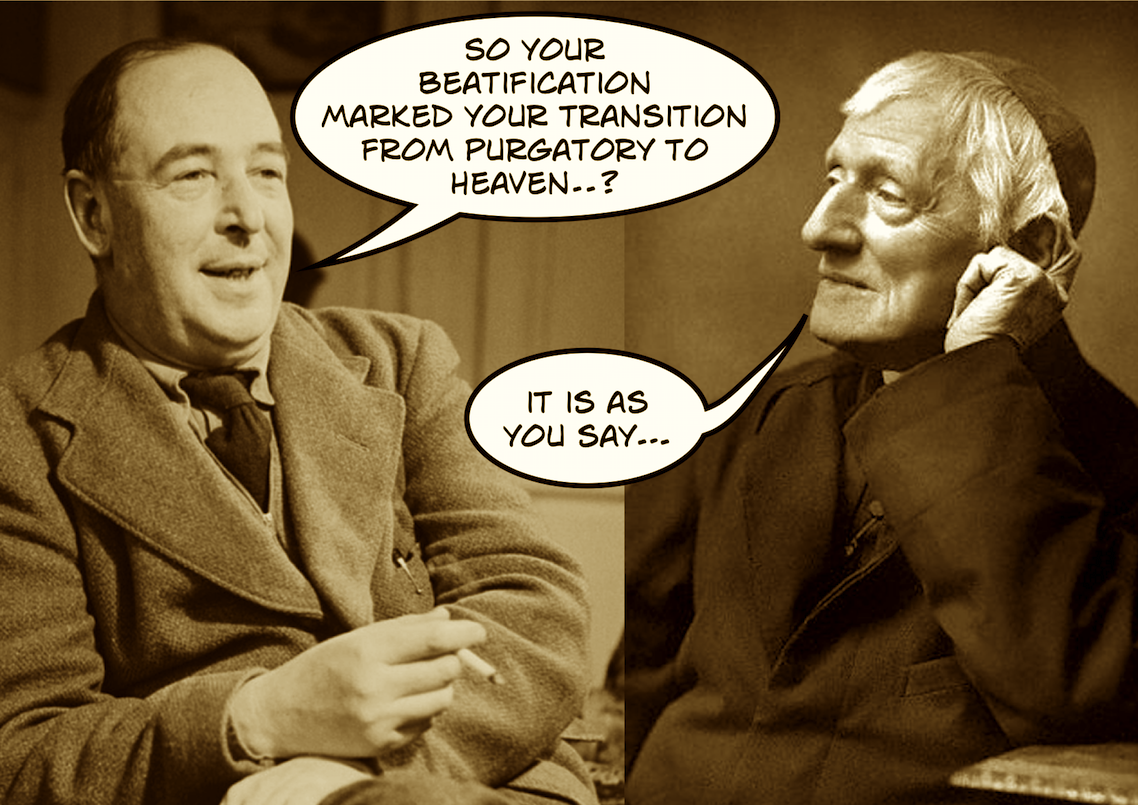
Lewis, Newman, Purgatory & Writing

csl & newman.png

Those who despise C.S. Lewis seek to eradicate his influence in the Christian Church. They care not that Lewis remains one of the most effective Christian apologists the world has ever seen. Only the Lord knows how many people (literally) have been encouraged in the faith by Lewis’ ministry.

When examining Lewis’ theology, it is necessary to keep in mind several facts. First, he often reminded his readers that he was not a theologian, simply a faithful layman. Second, he formally espoused and practice the orthodox Trinitarian faith as professed by the Anglican communion. Third, Lewis consciously sought to introduce timeless truths to his readers via reason and, more effectively, through fiction and imagination. (The Great Divorce offers a fascinating yet fully fictional exploration of how purgatory might work.)

Thus, Lewis critics will always be able to gather fuel for the foot of his stake. A primary example of this comes in Lewis’ emotive receptivity to the doctrine of purgatory. It is taught only by the Roman Catholic Church, although individuals from other denominations may also be sympathetic to it.

For example, Protestant philosopher Jerry L. Walls includes a chapter in his recent book on purgatory entitled, “C.S. Lewis and the Prospect of Mere Purgatory.”

Although not a Roman Catholic, C.S. Lewis, the most popular Christian writer of the twentieth century, believed in purgatory. This is significant because his influence in Protestant and evangelical circles is perhaps especially strong.

This chapter shows not only that Lewis believed in purgatory, but also that it is integral to his theology of salvation. It explores how he understood the doctrine by examining his comments on Roman Catholic theologians John Fisher, Thomas More, and John Henry Newman. While he was quite critical of Fisher and More, he saw in Newman the recovery of the true substance and spirit of the doctrine.

It is fair for us to acknowledge that Lewis’ understanding of justification was imperfect. Salvation comes through faith (Romans 5:1), not through penitential or purgatorial efforts. But let’s read about his position in his own words. The following comes from Letters to Malcolm: Chiefly on Prayer, which is, itself, a collection of thoughts “shared” with a fictional friend.

I believe in Purgatory.

Mind you, the Reformers had good reasons for throwing doubt on “the Romish doctrine concerning Purgatory” as that Romish doctrine had then become. . . .

The right view returns magnificently in Newman’s Dream.* There, if I remember it rightly, the saved soul, at the very foot of the throne, begs to be taken away and cleansed. It cannot bear for a moment longer “With its darkness to affront that light.” Religion has reclaimed Purgatory.

Our souls demand Purgatory, don’t they? Would it not break the heart if God said to us, “It is true, my son, that your breath smells and your rags drip with mud and slime, but we are charitable here and no one will upbraid you with these things, nor draw away from you. Enter into the joy”?

Should we not reply, “With submission, sir, and if there is no objection, I’d rather be cleaned first.”

“It may hurt, you know”

“Even so, sir.”

This is where I acknowledge Lewis’ view on justification to be deficient. Of course we would wish to be fully washed and clean before standing in our Creator’s presence. And that is precisely how we enter into his presence. Clothed not in our own filthiness and rags—but in the radiant righteousness of our Savior.

As the Apostle John wrote in his first epistle, “But if we walk in the light, as he is in the light, we have fellowship with one another, and the blood of Jesus his Son cleanses us from all sin. . . . If we confess our sins, he is faithful and just to forgive us our sins and to cleanse us from all unrighteousness” (1 John 1:7, 9)

Lewis’ greatest contribution to the Christian Church is found in his skilled apologetics based on the core essence of our faith. Lewis communicated the divine hope that is within us in his lectures, speeches and broadcasts. But it was through the written word that his inspiring words have touched the greatest number of people.

On the Subject of Writing

It is possible that Lewis was familiar with the following advice from Newman about effective writing. Certainly, he agreed with a number of the cardinal’s literary precepts. The following passage relates specifically to writing sermons, but it possesses far broader application. It comes from The Life of John Henry Cardinal Newman.

Newman’s own feeling as to the most effective way of imparting truth by writing is conveyed in the following notes, dated 1868, on the writing of sermons:

A man should be in earnest, by which I mean he should write not for the sake of writing, but to bring out his thoughts.

He should never aim at being eloquent.

He should keep his idea in view, and should write sentences over and over again till he has expressed his meaning accurately, forcibly, and in few words.

He should aim at being understood by his hearers or readers.

He should use words which are likely to be understood. Ornament and amplification will come spontaneously in due time, but he should never seek them.

He must creep before he can fly, by which I mean that humility which is a great Christian virtue has a place in literary composition.

He who is ambitious will never write well, but he who tries to say simply what he feels, what religion demands, what faith teaches, what the Gospel promises, will be eloquent without intending it, and will write better English than if he made a study of English literature.

Reading this helpful advice from Cardinal Newman reminds us we can learn valuable lessons from people with differing theology. And that truth should be quite encouraging, since none of us possess perfect doctrine.


* The full title of the work to which Lewis refers here is The Dream of Gerontius. (You can read it here.)


Free C.S. Lewis Book

bookshelvesC.S. Lewis has encouraged innumerable prominent individuals in their own faith and writing journeys. I know of no others who offer at no cost a book about his influence.

John Piper is a pleasant exception to that. In a moment I’ll provide the link where you can download a free copy of Alive to Wonder: Celebrating the Influence of C.S. Lewis.

The volume includes a number of extended excerpts from Piper’s fifty-plus books . . . passages where Lewis’ imprint is particularly vivid. For example:

The synthesis of mind and heart was embodied in C.S. Lewis. Lewis became for me in my college days what Jonathan Edwards became in my seminary days. He was a “romantic rationalist”—that was the name of a small book about Lewis that got me very excited because it summed up what I thought I was (which may be very akin to “pastor-scholar”). Lewis has had a tremendous influence on me in several ways.

Lewis embodied the fact that rigorous, precise, penetrating logic is not inimical to deep, soul-stirring feeling and vivid, lively—even playful—imagination. He combined what almost everybody today assumes are mutually exclusive terms: rationalism and poetry, cool logic and warm feeling, disciplined prose and free imagination. In shattering these old stereotypes, he freed me to think hard and to write poetry, to argue for the resurrection and to compose hymns to Christ, to smash an argument and to hug a friend, to demand a definition and to use a metaphor.

The author is chancellor of Bethlehem College & Seminary. It was founded by Bethlehem Baptist Church in Minneapolis, where Piper served as pastor for several decades.

The writer’s desiringGod website actually offers free PDF copies of many of his books and articles, even though most remain in print and available for regular purchase.

As delightful as Alive to Wonder is, most students of Lewis will find the materials from the 2013 desiringGod National Conference even more welcome. This year’s theme was “The Romantic Rationalist: God, Life, and Imagination in the Work of C.S. Lewis.”

Piper’s website includes ten keynote presentations plus an informative panel discussion, all of which are available for download in audio files. Best of all, the lineup of speakers is first-class, featuring a number of familiar names.

And, since we’re on the subject of “free books,” allow me to share another interesting website.

Forgotten Books offers approximately a million volumes, to which “subscribers” have unlimited access. What sets them apart from other “public domain aggregates,” is that they (unlike books.google.com) provide a searchable text, in a variety of epub formats.

For those who are not interested in purchasing a subscription, they offer a Free Book of the Day option in which you receive the link to one of their texts which is good for twenty-four hours.

I recently used it to add Pure English: A Treatise on Words and Phrases, or Practical Lessons in the Use of Language to my kindle library. I find the reading of dated literary books to be:

Entertaining

Educational

and, occasionally, even

Inspiring

Here are a few sample passages from Pure English. The first sounds remarkably contemporary:

The abuse to which the English language is so generally subjected must be a source of sincere regret to all who appreciate its beauties. Ours is an age of progress and civilization, and it ought to be remembered that language, is also progressive.

In a section entitled “Objectionable and Obsolete Words” we read:

Banister is a common barbarism. The proper word is baluster, or balustrade.

— Noted. In the future I will alternate between baluster and balustrade.

“Disremember,” often employed in the sense of do not remember, although given in Webster, is condemned by the critics as a low vulgarism.

— Apparently so vulgar as to have fallen out of usage completely.

Hence, authoress and poetess are superfluous. So, also, are such words as conductress, directress, inspectress, waitress, etc., all of which have recently come into current use. Perhaps the next edition of our dictionaries will, if the custom continues, be enriched by the addition of such words as writeress, officeress, carpenteress, manageress, secretaryess, treasureress, singeress, walkeress, talkeress, etc.

— How did “waitress” survive, especially in the wake of such witty sarcasm?

It is questionable taste to call a coffin a casket. The pleasing name applicable to a case for jewels does not lessen the dread of death and burial.

— I hadn’t known before the sentiment behind the adoption of the word “casket,” since it’s become so thoroughly associated with this usage that was apparently at one time novel.

If you are interested in the books I’ve mentioned above, you You can download a free copy of Alive to Wonder here, and you can sign up for the free book of the day here.