Dogs & Rescues

When we add an un-homed dog to our family, who is the true “rescuer?” In the States, we call many of our agencies placing orphaned pets “rescue centers.” But I believe most of us who have welcomed such creatures into our homes feel less pride in doing what’s noble, than we do appreciation for what these loving animals bring into our lives.

Long ago, I learned that the best way to tell about a person’s true character and compassion is to observe how they treat animals.

 Nothing I’ve witnessed in the past decades has caused me to question that conviction.

Recently I saw a quote attributed to Abraham Lincoln which expresses the same sentiment. 

While the attribution of these words to America’s sixteenth president may be questioned, they are certainly consistent with his regard for dogs . . . and, as the quotation declared, cats as well.

Four of our most recent six dogs have been rescues. All but one has been a border collie.

The latest girl who joined our family, just last year, was promoted on a Border Collie Rescue page. She appeared to be a young mix with, of all things, a dalmatian.

When we traveled to meet her, we immediately suspected she lacked any border collie DNA, but we (and our older border collie) connected with her that day and she came home with us. A year later, we’re certain she’s just, as our vet assessed, a mutt – but that’s fine with us. The picture at the top of this page shows her resting on her adoptive mom’s lap. (Many of her black spots have spread since we first got her when she resembled the victims of Cruella de Vil.)

I’ve written in the past about how C.S. Lewis loved dogs. It’s no surprise, of course, that a good-natured man of faith like Lewis would love animals.

J.R.R. Tolkien also loved dogs. They are featured in a number of his books, and a canine named Rover featured as the protagonist of his 1925 children’s story, Roverandom.

A Caution

Pay attention to how people treat animals. It is a clue to their psyche and a window into their soul. 

While some people are indifferent to animals, which is normal, there are those who treat them with cold disregard or animosity. The message of “The Link Between Cruelty to Animals and Violence Toward Humans” confirms what we all recognize intuitively.

People who hurt animals don’t stop with animals. There is an established link between cruelty to animals and violence toward humans . . .

This link makes it critically important that cruelty toward animals be taken seriously by law enforcement, and by society at large. This is for the sake of the animals themselves, and for people who are also at risk. . . .

Ample research backs up the finding that there is a direct link between acts of cruelty to animals and violence toward humans. This includes child abuse, domestic violence, elder abuse and other violent behavior.

There are good people, and bad people. Fortunately, in the case of the treatment of pets, the former outnumber the latter. One day, when Earth is made new and restored to its initial goodness, all life will once again be in harmony. As we hear in Psalm 148 and Revelation 5,

Praise the Lord from the earth,
    you great sea creatures and all deeps,
fire and hail, snow and mist,
    stormy wind fulfilling his word!
Mountains and all hills,
    fruit trees and all cedars!
Beasts and all livestock,
    creeping things and flying birds!

And I heard every creature in heaven and on earth and under the earth and in the sea, and all that is in them, saying, “To him who sits on the throne and to the Lamb
be blessing and honor and glory and might forever and ever!”

Until that day, let us each act with compassion toward the creatures that enrich our lives, particularly those who trust us to protect their welfare.

A Closing Thought

Sometimes the word “rescue” applies literally. More than one lonely and clinically depressed person has stopped contemplating the ending of their life when a gentle support animal brought light to their dark world. 

Then there is the recent case of Buford, a ranch dog who found a two-year-old boy lost in a desert wilderness and remained with him overnight until he could lead him safely home.

As for who rescues whom, count me in the camp of those who believe the gift is mutual.

C.S. Lewis & Emotions

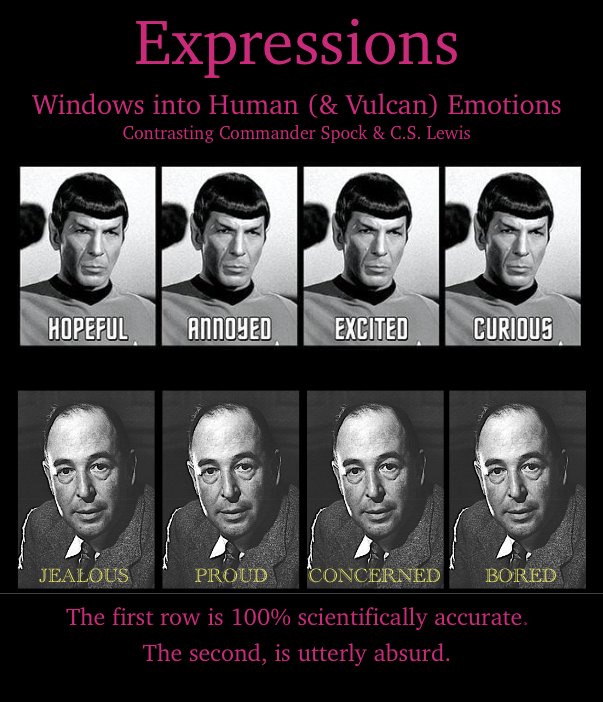
Are you one of those people who pride themselves on not being particularly emotional? Probably not, since the pendulum has swung far in the opposite direction in our current day. (Consider how few clicks a Tik Tok influencer with “flat affect” would get.)

Most of us know some people (most commonly men – forgive me the generalization) who keep their emotions under tight rein.

Back when I was a child, in the mid-twentieth century, it was not uncommon for men to “guard” their notion of masculinity by acting emotionless. And various ethnicities, including my own ancestors, possessed a reputation for being staid.

I can’t recall my Norwegian grandfather, who died when I was about ten, ever expressing truly warm sentiments. I know he must have laughed, and my grandmother had a great sense of humor, but I have no memory of it.

For some reason, many people picture C.S. Lewis as an emotionally sober intellectual. Perhaps it’s because he wrote so many profound essays. The truth is that Lewis was extremely jovial and fun-loving. I have noted some of this humor in the past.

Like most of us, C.S. Lewis’ closest friends saw him most clearly. They witnessed his jocularity in their regular gatherings. His fellow Inklings witnessed it frequently, but I don’t see how anyone can read the Chronicles of Narnia, and perceive their author as reserved, much less grave.

One reason some readers misunderstand C.S. Lewis’ exquisite sense of humor is because it is British. For Americans, for example, appreciating British humor is an acquired taste. As reported by the BBC, the wit often includes elements of “sarcasm, understatement [and] self-deprecation.”

In The Screwtape Letters, C.S. offers an insight into one of the Tempter’s tactics in undermining human nature, in terms of being fashioned in the image of our Creator.

[Englishmen] take their “sense of humour” so seriously that a deficiency in this sense is almost the only deficiency at which they feel shame. Humour is for them the all-consoling and (mark this) the all-excusing, grace of life.

Hence it is invaluable as a means of destroying shame. [. . .] A thousand bawdy, or even blasphemous, jokes do not help towards a man’s damnation so much as his discovery that almost anything he wants to do can be done, not only without the disapproval but with the admiration of his fellows, if only it can get itself treated as a Joke.

And this temptation can be almost entirely hidden from your patient by that English seriousness about Humour. Any suggestion that there might be too much of it can be represented to him as “Puritanical” or as betraying a “lack of humour.”

Lewis’ humor was on full display to his intimate friends, and uninhibitedly on display to the world in a number of his writings. But his openness didn’t end there. 

Just Like the Rest of Us:
a Person of Humor and Grief

I don’t recall anyone labeling C.S. Lewis a “humorist” – likely because his corpus is so diverse and complex – but I think a literary critic could make that case.

Ironically, I once cited an autobiographical reference in which C.S. Lewis applied that very attribute to his own father, a serious solicitor.

In contrast, C.S. Lewis would mature to the point where he was willing to expose that deepest of emotions, grief, with the entire world. In A Grief Observed, he explored his pain in the wake of his wife’s untimely passing. Joy Davidman was the precious wife this confirmed bachelor never anticipated having, and her death crippled him.

His description of his thoughts, doubts, and spiritual struggle in the aftermath has helped many others to survive the nightmare of bereavement. Curiously, for privacy C.S. Lewis initially used a pen name for the volume. (You can read about that here.)

He did not wish to have his authorship of the book distract from its subject matter. He would have known that would only be a temporary tool, since pseudonyms are nearly always uncovered. Initially, however, it was so effective that when it was published, readers recognized it could speak to Lewis’ own grief, and offered him gift copies.

T.S. Eliot was one of its first advocates for the volumes publication, and you can read that story at Faber & Faber.

A Final Lewisian Observation on Emotions

Some people view the intensity of emotions associated with events to be a measure of their validity. If my passions are aroused by an activity, we incorrectly think, it must be real!

This error is particularly dangerous when related to so-called “matters of the heart” and matters of faith. 

C.S. Lewis was cautious in both realms. We already noted his resignation to live out his life as a single man. In terms of faith, he was just as circumspect. His conversion from atheism to Christianity was long, thoughtful, and reluctant. 

And this, I found, was something I had not wanted. But to recognize the ground for my evasion was of course to recognize both its shame and its futility.

I know very well when, but hardly how, the final step was taken. I was driven to Whipsnade [Zoo] one sunny morning. When we set out I did not believe that Jesus Christ is the Son of God, and when we reached the zoo I did.

Yet I had not exactly spent the journey in thought. Nor in great emotion. “Emotional” is perhaps the last word we can apply to some of the most important events.

It was more like when a man, after long sleep, still lying motionless in bed, becomes aware that he is now awake. And it was, like that moment on top of the bus, ambiguous.

Freedom, or necessity? Or do they differ at their maximum? At that maximum a man is what he does; there is nothing of him left over or outside the act.

Certainly, many people are blessed with emotional confirmation in their spiritual lives. The obvious peril, of course, is in evaluating the veracity of something by how giddy it makes us feel. 

After all, there will always come “dark nights of the soul” when the feelings have fled . . . but Jesus, still remains.  

Divine Christmas Gifts

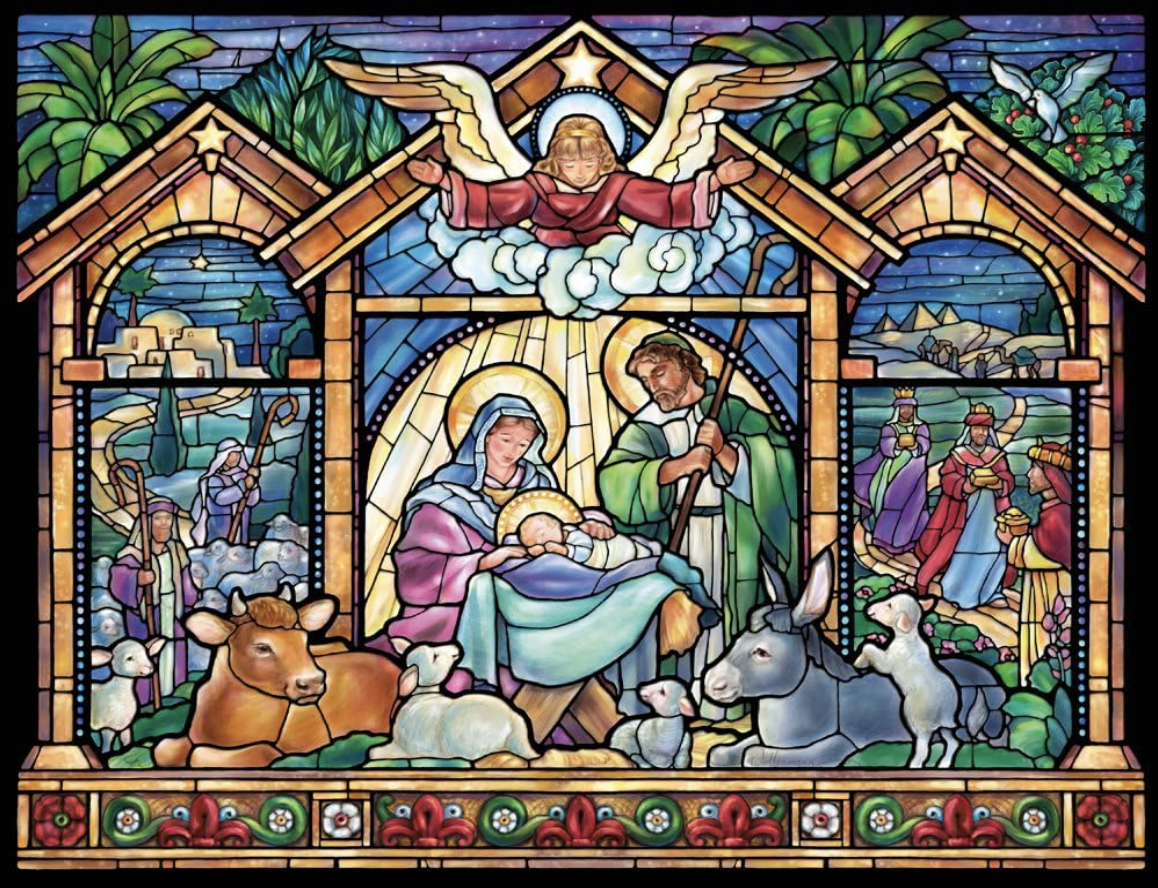
I hope everyone was pleased with the gifts they may have received during their Christmas celebrations. As grandparents, my wife and I delighted in the presence of our children and grandchildren as we celebrated together Jesus’ Nativity.

Which raises the subject of the proverbial “reason for the season.” My hope is that Mere Inkling’s friends will know the deep and lasting joy of receiving our Creator’s most precious gift.

In 1958, C.S. Lewis wrote to an American correspondent about one obstacle to receiving God’s gifts. He cited an observation by Saint Augustine that if we are too busy grasping less important things, we can miss out on what is truly priceless.

St. Augustine says “God gives where He finds empty hands.” A man whose hands are full of parcels can’t receive a gift.

Augustine was an ancient African bishop. One of his Christmas sermons has survived and remains quite inspiring sixteen centuries after it was first preached. I encourage you to bask in the glow of the following excerpt.

So then, let us celebrate the birthday of the Lord with all due festive gatherings. Let men rejoice, let women rejoice. Christ has been born, a man; he has been born of a woman; and each sex has been honored.

Now therefore, let everyone, having been condemned in the first man [Adam], pass over to the second. It was a woman who sold us death; a woman who bore us life. The likeness of the flesh of sin [Romans 8] has been born, so that the flesh of sin might be cleansed and purified.

And thus it is not the flesh that is to be faulted, but the fault that must die in order that the nature may live; because One has been born without fault, in whom the other who was at fault may be reborn.

Rejoice, you just; it is the birthday of the Justifier. Rejoice, you who are weak and sick; it is the birthday of the Savior, the Healer. Rejoice, captives; it is the birthday of the Redeemer.

Rejoice, slaves; it is the birthday of the one who makes you lords. Rejoice, free people; it is the birthday of the one who makes you free. Rejoice, all Christians; it is the birthday of Christ.

Rejoice, one and all. God’s undeserved gift to each of us, for all those willing to receive it, is forgiveness and eternal life. 

In his book The Problem of Pain, C.S. Lewis elaborates on the Augustinian analogy shared above.

Everyone has noticed how hard it is to turn our thoughts to God when everything is going well with us. We “have all we want” is a terrible saying when “all” does not include God. We find God an interruption.

As St Augustine says somewhere, “God wants to give us something, but cannot, because our hands are full – there’s nowhere for Him to put it.” Or as a friend of mine said, “We regard God as an airman regards his parachute; it’s there for emergencies but he hopes he’ll never have to use it.”

Now God, who has made us, knows what we are and that our happiness lies in Him. Yet we will not seek it in Him as long as He leaves us any other resort where it can even plausibly be looked for. While what we call “our own life” remains agreeable we will not surrender it to Him.

What then can God do in our interests but make “our own life” less agreeable to us, and take away the plausible sources of false happiness? It is just here, where God’s providence seems at first to be most cruel, that the Divine humility, the stooping down of the Highest, most deserves praise.

Remember friends, our celebration of the Messiah’s entrance into our world is not limited to a single day, or even a brief season. Every single day we can rejoice at the miracle of the Incarnation and the fact that God loved us enough to send his Son to redeem us.

Father Christmas & Crackers

J.R.R. Tolkien wrote, for his children’s enjoyment, an entertaining little story about Father Christmas’ stash of explosives. Read on to see what a mischievous polar bear did with them.

Merry Christmas. No, I’m not late in wishing you a blessed celebration of Christ’s Nativity. The church calendar recognizes Christmas is too big to celebrate just for a single day. The Inklings knew it – Christmas is a season.

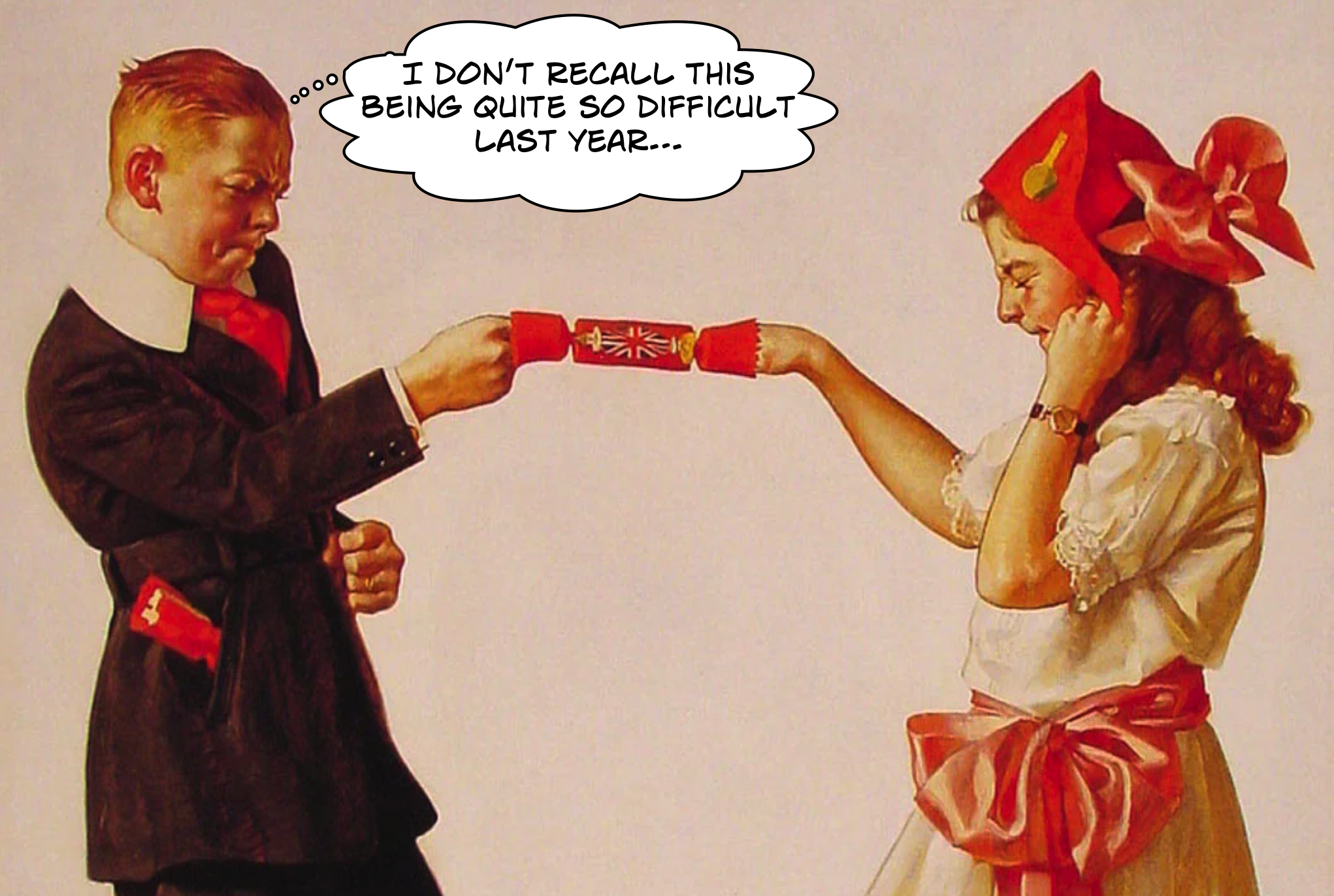
One nineteenth century invention has become a part of many families’ celebration of the season. They’re called “Christmas crackers,” and although birthed in Britain, they’ve found a home in many other countries. We adopted them as an annual tradition after living in England for several years.

Their beginning was modest. While many now lack edible treats, they were conceived as a means for selling confectionaries. Their inventor wanted to increase sales of a French treat.

For seven years he worked to develop the bon-bon into something more exciting, but it was not until he sat one evening in front of his fireplace that his great idea came to him. Watching the logs crackle, he imagined a bon-bon with a pop.

He made a coloured paper wrapper and put in it another strip of paper impregnated with chemicals which, when rubbed, created enough friction to produce a noise. He knew that bangs excited children (and were said to frighten evil spirits) – and the mottoes and poems he inserted inside the crackers amused adults (BBC).

Sadly, many of the crackers marketed today have been neutered. To improve their safety (and, no doubt, save production costs), some crackers no longer crack. They contain no “chemicals” to produce the customary bang. Seems like a misnomer to call these variants crackers, at all.

Tolkien’s Father Christmas Letters

Tolkien and his wife were blessed with four children, and they were doting parents. Each Christmas between 1920 and 1943, the famed author wrote and illustrated a pseudonymous letter to his kids. In 1976 they were posthumously published, and facsimiles of the correspondence appears in some editions of the letters.

They offer an intimate insight into the secular side of a Christian family’s celebration of the holiday (holy day). In fact, on Christmas Eve this very year, a selection from the letters was part of the Royal Carol Service, celebrated at Westminster Abbey.

The Christmas story was told in readings from Luke 2 given by The Prince of Wales and by Michael Ward. Jim Broadbent read from JRR Tolkien’s The Father Christmas Letters, and Leonie Elliot read Growing Tomorrow, a poem by Children’s Laureate Joseph Coelho commissioned specially for the service.

The following excerpt from the 1931 letter comes from the pen of Father Christmas himself. (It also features a fun notation from North Pole Bear.)

I should hardly feel it was Christmas if [the North Polar Bear] didn’t do something ridiculous. You will never guess what he did this time! I sent him down into one of my cellars – the Cracker-hole we call it – where I keep thousands of boxes of crackers (you would like to see them, rows upon rows, all with their lids off to show the kinds of colours.)

Well, I wanted 20 boxes, and was busy sorting soldiers and farm things, so I sent him; and he was so lazy he took his two Snowboys (who aren’t allowed down there) to help him. 

They started pulling crackers out of boxes, and he tried to box them (the boys’ ears I mean), and they dodged and he fell over, and let his candle fall right POOF! into my firework crackers and boxes of sparklers.

I could hear the noise, and smell the smell in the hall and when I rushed down I saw nothing but smoke and fizzing stars, and old Polar Bear was rolling over on the floor with sparks sizzling in his coat: he has quite a bare patch burnt on his back.

[NPB] It looked fine! That’s where Father Christmas spilled the gravy on my back at dinner!

The Snowboys roared with laughter and then ran away. They said it was a splendid sight – but they won’t come to my party on St. Stephen’s Day; they have had more than their share already.

The story goes on, relating the troublesome exploits of “two of the Polar Bear’s nephews” who have been visiting. However, the passage above suffices to illustrate the humor resident in the Tolkien household.

And, in light of this vignette, we just may have uncovered why modern manufacturers are forgoing the more explosive elements of Christmas crackers. No “pop,” no “poof.”

And, if you have a creative bent, consider making your own for next year!

An Author with the Heart of an Inkling

C.S. Lewis and Frederick Buechner never met, yet they are “friends” because they share so many similarities as authors writing from a Christian perspective. In terms of Buechner’s themes and range of his writings, this award winning American author and ordained Presbyterian minister may have as much in common with C.S. Lewis as his own British Inklings. So let me introduce Frederick Buechner and his writings.

Do you read primarily to relax and allow your imagination to soar? Or, do you normally select “useful” books, with the potential to be applicable to meeting the challenges of real life?

During my college years, I enjoyed scifi and fantasy. I still have a weak spot for alternative histories. But my seminary years had a subtle effect on my reading. With time always at a premium as a young pastor with a family, I had so many practical, pastoral books and journals to study, that I seldom had time for something so frivolous as “fiction.” Fortunately, semi-retirement has released me from that restrictive literary diet.

I’ve finally found some time to unpack a few of the boxes of books sitting in my garage. (The fact we moved them into the garage around 2010 would be embarrassing if it got out, so I ought not to mention it here.)

As one would expect, I’ve encountered many pleasant surprises. A number of books I had been missing have turned up, I’ve found some that are even more timely today than when they were stored, and—best of all in the minds of my adult children—I’ve been able to part with about two-thirds of the titles, and recently donated about 150 volumes to a local charity.

One of the titles I am currently reading is Frederick Buechner’s Telling Secrets. I had picked up a copy when it was highly recommended to me, only to discover it was a memoir. Being a “practical pastor” who always had too many utilitarian books to read, I set it aside . . . only to pick it up twenty years later.

And what a joyous surprise it has been. Buechner is in his nineties, and is widely respected. He has been a prolific writer, and has received numerous awards for his fictional works. Readers, particularly from the Reformed branch of Christianity have been especially fervent fans of the Presbyterian pastor and theologian. My friend, Brenton Dickieson is quite fond of Buechner and has written about him in A Pilgrim in Narnia on several occasions. He notes that Buechner quotes a number of the Inklings, including Tolkien, Williams and Lewis.

I vaguely recall the Lewis connection being one reason my fellow Air Force chaplain recommended Telling Secrets to me. But I had forgotten that the first section is entitled “The Dwarves in the Stable.” This is, of course, an allusion to an extremely momentous scene in The Final Battle, the final volume of the Chronicles of Narnia. It was originally published as an independent essay, as this entertaining post points out.

Buechner shares a dark family secret, the consequences of his father’s suicide in 1936. Listen to how movingly he describes the secret’s power:

His suicide was a secret we nonetheless tried to keep as best we could, and after a while my father himself became such a secret. There were times when he almost seemed a secret we were trying to keep from each other.

Buechner moves on to relate the suffering the family experienced during his daughter’s battle with anorexia. He shares few details, since “it is not mine to tell but hers.” Nevertheless, he describes setbacks in the struggle causing him to feel as though he “was in hell.”

I choose the term hell with some care. Hell is where there is no light but only darkness, and I was so caught up in my fear for her life, which had become in a way my life too, that none of the usual sources of light worked any more, and light was what I was starving for. . . .

I remained so locked inside myself that I was not really present with them at all. Toward the end of C.S. Lewis’s The Last Battle there is a scene where a group of dwarves sit huddled together in a tight little knot thinking that they are in a pitch black, malodorous stable when the truth of it is that they are out in the midst of an endless grassy countryside as green as Vermont with the sun shining and blue sky overhead.

The huge golden lion, Aslan himself, stands nearby with all the other dwarves “kneeling in a circle around his forepaws” as Lewis writes, “and burying their hands and faces in his mane as he stooped his great head to touch them with his tongue.” When Aslan offers the dwarves food, they think it is offal.

When he offers them wine, they take it for ditch water. “Perfect love casteth out fear,” John writes (1 John 4:18), and the other side of that is that fear like mine casteth out love, even God’s love. The love I had for my daughter was lost in the anxiety I had for my daughter.

This is just a single example of the sensitive wisdom Buechner shares throughout this grace-filled work.

After I finish Telling Secrets, I look forward to reading two of Buechner’s novels already on my shelf, Godric and Brendan. They are both historical fiction, telling the stories of two sainted monks from the twelfth and sixth centuries respectively.

I encourage any of you unfamiliar with his writings to explore his work. If an autobiography can be this good, I’m eager to take a journey through what I have no doubt will be quite an adventure in his fiction.

Buechner possesses an additional connection to C.S. Lewis, which has the potential to last centuries. He describes his decision to offer his personal papers to Wheaton College, where they are available in the archives. The theologian describes his decision in this humble manner.

Wheaton College [has] a great collection there of the manuscripts and papers of people like C.S. Lewis, G.K. Chesterton, George MacDonald, J.R.R. Tolkien, Dorothy Sayers, and the like, and because I could think of no more distinguished company than theirs among whom to have my own literary remains molder, a year earlier I had offered them everything I had stowed away over the years in cardboard boxes and scrapbooks and manila folders; and to my delight they said that they would be delighted to have it.

If you would enjoy learning more about the relationship between Buechner and the Inklings, check out this fine article; “C.S. Lewis and Frederick Buechner: Literary Expression of Faith” is available for download. It’s quite enlightening.


Bonus Insight

The second chapter of Telling Secrets is entitled “The White Tower.” Many Inkling fans will jump to the conclusion (especially after reading this post) that it is a reference to the citadel of Minas Tirith, the capital of Gondor. Like me, they would be incorrect.

Buechner is not alluding here to Tolkien’s masterpiece. On the contrary, he is referring to the central tower which was the old keep of the Tower of London. Ironically, that very keep, the White Tower, was built by a Norman monk who became the Bishop of Rochester. His name . . . Gundulf.

Buechner chose this metaphor for the human condition for the following reason.

I think here of the Tower of London. More particularly I think of that oldest part of it, known as the White Tower, which was built by William the Conqueror in the eleventh century. On the second floor of it there is a small Norman chapel called the Chapel of Saint John. It is very bare and very simple. It is built all of stone with twelve stone pillars and a vaulted ceiling.

There is a cool, silvery light that comes in through the arched windows. . . . The chapel is very silent, very still. It is almost a thousand years old. You cannot enter it without being struck by the feeling of purity and peace it gives. If there is any such thing in the world, it is a holy place.

But that is not all there is in the White Tower. Directly below the chapel is the most terrible of all the tower’s dungeons. It has a heavy oak door that locks out all light and ventilation. It measures only four feet square by four feet high so that a prisoner has no way either to stand upright in it or to lie down at full length. There is almost no air to breathe in it, almost no room to move. It is known as the Little Ease.

I am the White Tower of course. To one degree or another all of us are.

Academic Expenses

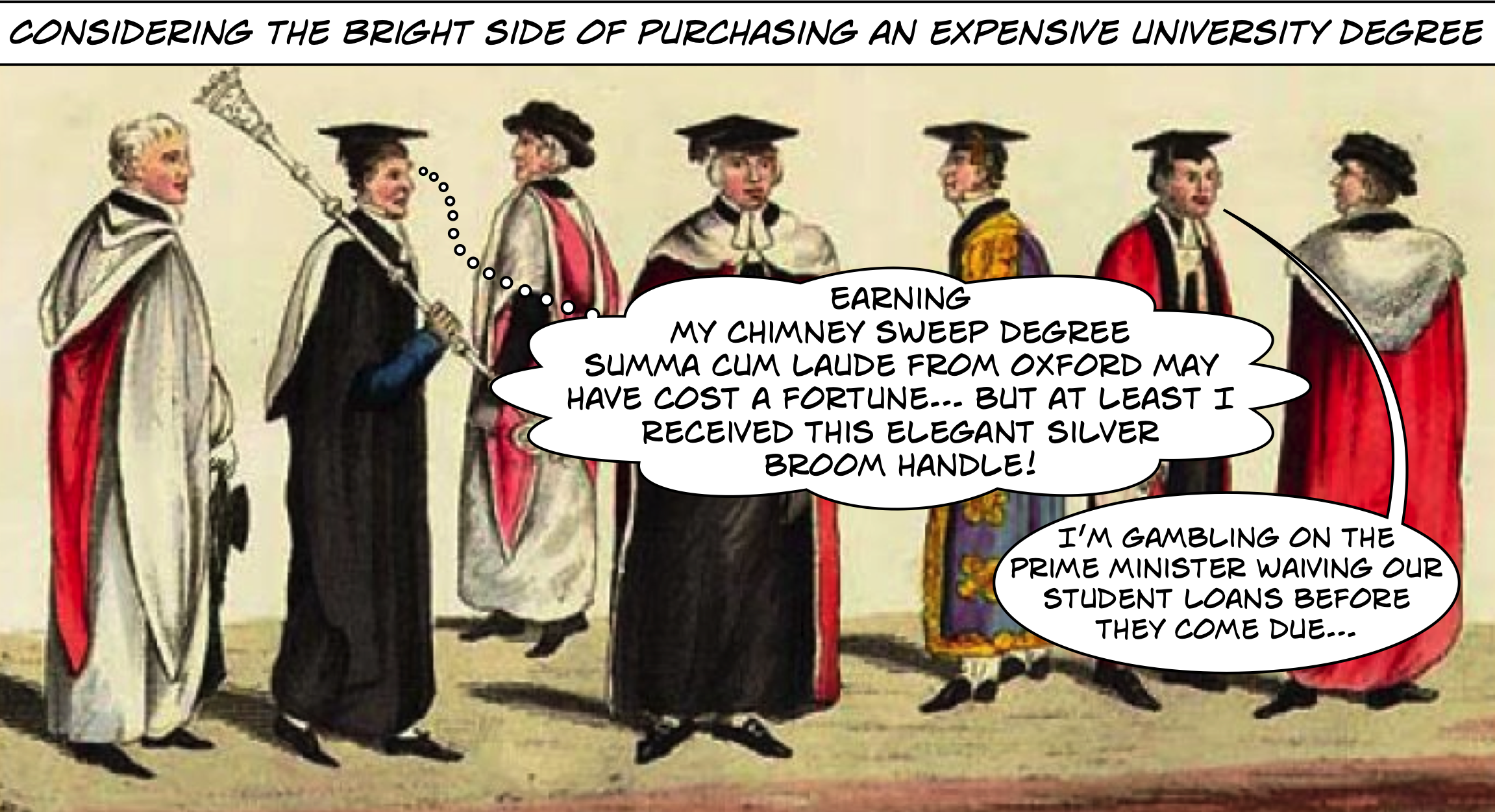
Rich people don’t need to worry about the cost of college educations. The rest of us do (or, at least, we should). C.S. Lewis could not rely on family wealth to pursue his academic dreams, and we can learn from his example.

My wife and I were the first members of our respective families to attend college. Without assistance from our parents, we did chose the most fiscally responsible path. We opted for a public university (in my own case, via “community college”) and worked as many hours a week as we could while maintaining our grades.

Even this would have been far more difficult without receiving student loans, which we diligently repaid following our graduations.

Years later, we were in a position to help our own children pursue their higher educational aspirations. Still, graduate degrees are not inexpensive, and all three of them received government-backed loans to get them to the finish line.

They have been diligently repaying that borrowed money since graduation and never complained about the debt, since no one coerced them to accept it.

Our daughter, in fact, made significant sacrifices to pay off her student loans as quickly as possible, and accomplished that goal far earlier than we imagined she would.

Here at Mere Inkling, we go to great lengths to avoid political partisanship. In addition to that, I’ve made it quite clear I have no illusions about understanding economics.

Nevertheless, it requires no genius intellect to imagine how people who sacrificed to pay off their personal debts feel about now having to (thorough their taxes) also pay off the sometimes-delinquent debts of their peers. Our middle class family is only one of presumably millions who are experiencing this personally today.

Who Paid for C.S. Lewis’ Collegiate Studies?

The world has changed much since C.S. Lewis left home for boarding school and ultimately, for the university. It was unsurprising that when his father was widowed while his sons were young, he entrusted them to schools where he assumed they would be safe, and well prepared for their future professions.

Once the boys were old enough to choose career paths, Warnie (1895-1973) pursued a military profession. Following graduation from the U.K.’s Royal Military Academy Sandhurst, he served in both World Wars. However, as one writer accurately notes, “perhaps Warnie could have accomplished far more, but his lifelong struggles with alcoholism kept him from doing so. Some have speculated Warnie’s alcoholism resulted in an earlier retirement from the military than he would have wished.”

As for the younger Lewis scion, Clive would eventually make major contributions on the faculties of both Oxford and Cambridge Universities.

Getting there took some time, and was interrupted by the First World War. After his recuperation as a seriously wounded veteran of the trenches, Lewis renewed his academic studies. Discovery Institute has an excellent article describing “C.S. Lewis and the Ceremonies at Oxford University (1917-1925).” I particularly enjoy Kathryn Lindskoog’s understatement that “Oxford University, in Lewis’s time and since, is not the best place to learn Christian humility . . .”

As a student, Lewis was reliant on continuing support from his father. Only after graduating and beginning to receive a stipend as a Fellow of Magdalen College in 1925, did Lewis consider himself financially independent. (The year prior he had received a modest salary from the college, as an employee of the College, but it was inadequate to meet his needs.)

During his college studies, despite a scholarship, he relied on his father’s generosity. His opening in a 1919 letter to his father illustrates this relationship.

Many thanks for your letter and also for the enclosed cheque for £19.12.8. That amount includes all the charges both for tuition and college expenses and may serve as a base for future calculation, tho’ of course there may be slight differences from term to term.

Still, even in the best of families, financial considerations may become a matter of concern. Five years later, as he was at the end of his life as a student, his father was wondering when he would become satisfactorily employed. (That’s a conversation replayed around the globe on a daily basis.) The first two paragraphs illustrate the theme, but you won’t be disappointed if you have the time to read the entire passage.

And now to business. The Univ. Fellowship has not been filled up. You may have read in the papers that a new ‘Chaplain Fellow’ has been elected, but that of course is a different job. If I don’t mention it, it is because there is nothing new to say about it. Just at present a new and very good vacancy at Trinity (I mean Trinity, Oxford of course) has appeared, for which an election is to be held in the summer, and I shall certainly go in for it.

As to money: I had rather you had explained in detail what you ‘don’t follow’ in my arithmetic, but I trust there is nothing seriously wrong with the figures I gave you and will proceed accordingly. What is more serious is your reference to £30 extras last year. The only part of this which I can at present identify are the extra tuition and the book bill. The former of course was purely abnormal and will not occur again. The book bill was naturally increased by my turning to a new subject.

I try to use the libraries as much as possible: but when one is reading for a particular exam there are over a hundred other people taking the same books out of the libraries – and of course there are some things one must have at command. My expenditure on books will be less in future. I have a book bill due to be paid some time soon which is under five pounds: if you will pay that I think I can undertake to find myself for books in the future – tho’ since you tell me to be frank, I will say that this may not always be easy.

The rest of the £30 you mention is, I suppose, made up by items of clothing. I presume it does not include my two suits? As to clothing, I’m afraid that even if you increase my allowance as you suggest, I cannot undertake to find myself.

I mean that my loss of the scholarship and my outlay on clothes would not be balanced by an addition of £40 or £50. I cannot see how to cut down my expenses on clothing. You know I think that it does not go to fancy waistcoats or kid gloves. And I have some ties that date from before the war!

Flannel trousers are an item that I have to repeat pretty often: they ARE ill wearing things, but if I didn’t wear them I should need suits more often than I do. On shoes I admit that I am hard and have to get a good deal of ‘soling’ done: but I am afraid this reads rather as if I were defending myself against a charge of extravagance, which you will justly reply you never made: but you must not think that. I am only trying to put down the facts of the question as they actually occur to me from day to day in order to make my conclusion more reasonable and intelligible to you.

And the conclusion is this. You ask me where £85 a term to ‘cover everything’ would be sufficient. If by ‘covering everything’ you mean covering my books, shoes, shirts, socks and other items that I have hitherto sent you, I am afraid it would not. As I said, if you wish it, I will try to undertake my own books in the future, and, at any rate to cut them down.

I will also abandon the new dinner jacket suit that was mooted, and you must not imagine that I would feel that sort of curtailment as any hardship. As for a new overcoat, the one you gave me when I left home suits and fits me so well that the question need not be considered. But I do not think that I can manage to keep myself in minor articles of clothing.

I’m afraid this may seem to you but a charter of indefinite expenses for the future. Well then, to say all, if it is too much, you must tell me so. You have done all and more than all I can expect of you, and if you tell me that these extra years are too heavy, I assure you that I shall never, even in my secret thought, criticise such a decision.

If on the other hand, you see fit to lodge £85 a year and to pay for such extras in the way of clothing, etc. as may occur, I will try to make them as little as I can. I must point out however that it is much easier to save on the big items I have mentioned – the dress suit and overcoat – than on those necessary articles which have so often to be replaced.

If you will give me a dress suit when I get a job, I ought to be able to tide over these years without any more ‘suitings’ from you at all. If, till they are over, you can lodge £85 a term and make it retrospective for the present year, while paying for my smaller articles of clothing, I think I can manage. And whether you can do this or not, I have nothing but deepest gratitude for the past.

So, once again we see that C.S. Lewis’ experiences were not all that different from our own. Most people who have accepted their parents’ financial aid during their adulthood, can identify with Lewis’ mixture of sincere gratitude and muted frustration.

Perhaps it is a very good thing that today we have so many different assistance programs for potential students. Good things, I believe, as long as they are not abused – and borrowers pay them back, as they promised.

The Right Kind of Family Love

People who are wise understand that not all forms of “love” are healthy. That’s obvious with the epidemic of faux love in today’s “hookup culture.”

But even in genuine relationships, such as families, what passes for “love” can become twisted. Even the best of motives can blind us to what’s really best for our children. This sad irony is on my mind right now, since it recently struck close to home.

The title of this post suggests that just as there is a healthy version of family love, there can also be subtle corruptions of that virtue.

Parenting is complicated. We love our children, but if we make “happiness” the primary goal we are missing the mark. This pursuit of what is more often “pleasure” than genuine joy, usually devolves into letting kids do whatever they want. Some people parent this way.

Others are willing to pay the price of helping their children learn the lessons that will lead to a truly meaningful and fulfilling life. This is love. Children raised with the first objective often end up pursuing their appetites. They seldom accomplish much in life and rarely look beyond their own desires, to see the needs of others.

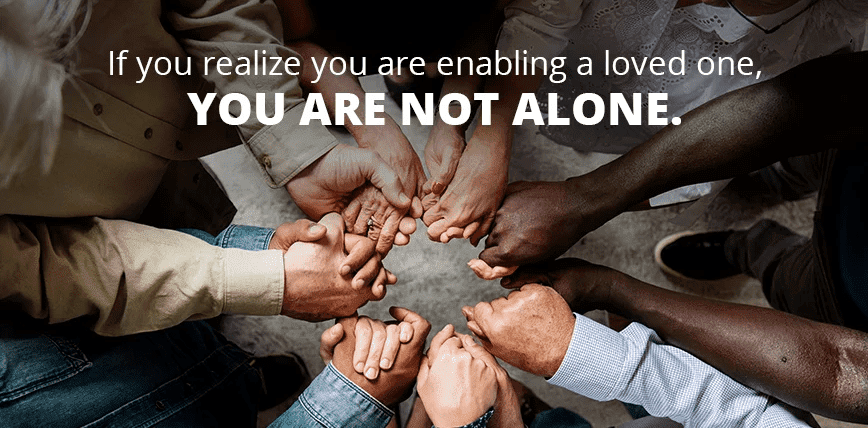
One prominent organization supporting the families of addicts shares the following epiphany.

When I first came to Al‑Anon, I spent a great deal of time wrestling with the term, “enabling.” I am a mother. Surely a mother’s role is to enable her children, is it not? It has been a struggle to understand, let alone accept, that the behavior I viewed as that of a good mother was actually unhealthy!

In his brilliant book, The Four Loves, C.S. Lewis describes how this unbalanced approach can be based in love, but results in unintended consequences.

The maternal instinct . . . is a Gift-love, but one that needs to give; therefore needs to be needed. But the proper aim of giving is to put the recipient in a state where he no longer needs our gift.

We feed children in order that they may soon be able to feed themselves; we teach them in order that they may soon not need our teaching.

Thus a heavy task is laid upon this Gift-love. It must work towards its own abdication. We must aim at making ourselves superfluous. The hour when we can say “They need me no longer” should be our reward.

But the instinct, simply in its own nature, has no power to fulfil this law. The instinct desires the good of its object, but not simply; only the good it can itself give. A much higher love – a love which desires the good of the object as such, from whatever source that good comes – must step in and help or tame the instinct before it can make the abdication.

The internationally recognized Hazelden Betty Ford Foundation offers an article on the subject entitled “Five Most Common Trademarks of Codependent and Enabling Relationships.”

The concept of codependency and enabling sounds simple and straight forward – doing for a loved one what they can and should do for themselves – but it can be incredibly difficult to tell the difference between supporting and enabling a loved one.

So what’s the difference? After all, enablers want to help their loved one, too, and codependency might feel like healthy support. But enabling allows the status quo – drinking or using drugs – to continue, whereas healthy support encourages a person to address their addiction and all of its consequences.

In contrast to this indulgent version of parenting, good parents are able to say “no” to their children, when it is necessary or appropriate. Teaching healthy behavioral boundaries early on teaches kids to make their own, healthy, decisions. Letting them take shortcuts and lie leads to disaster.

God’s divine love is inexhaustible. But God’s approval and blessing are linked to the choices we make. He does not commend self-destructive actions. He still loves, but he makes quite clear the life he desires for his children and the alternative path that leads to Death. God does not prevaricate. God does not hesitate to say “no.”

In the Book of Hebrews, the writer elaborates on this truth – that discipline (not to be confused with anger or punishment) is an evidence of genuine love.

Have you forgotten the exhortation that addresses you as sons? “My son, do not regard lightly the discipline of the Lord, nor be weary when reproved by him. For the Lord disciplines the one he loves, and chastises every son whom he receives.”

It is for discipline that you have to endure. God is treating you as sons. For what son is there whom his father does not discipline? If you are left without discipline, in which all have participated, then you are illegitimate children and not sons.

Besides this, we have had earthly fathers who disciplined us and we respected them. Shall we not much more be subject to the Father of spirits and live? For they disciplined us for a short time as it seemed best to them, but he disciplines us for our good, that we may share his holiness.

For the moment all discipline seems painful rather than pleasant, but later it yields the peaceful fruit of righteousness to those who have been trained by it (Hebrews 12).

Parental Love in Lewis’ Fiction

C.S. Lewis’ classic The Great Divorce creatively illuminates errors that can come between each of us and God’s desire to bless and redeem us, and to usher us into his heavenly presence. In an “encounter” which shows how something as wonderful as familial affection can be perverted into a grotesque distortion of true love.

You should read the entire account in Lewis’ book, but hopefully the selection below will illustrate his insight.

One of the most painful meetings we witnessed was between a woman’s Ghost and a Bright Spirit who had apparently been her brother. They must have met only a moment before we ran across them, for the Ghost was just saying in a tone of unconcealed disappointment, ‘Oh…Reginald! It’s you, is it?’ ‘Yes, dear,’ said the Spirit. ‘I know you expected someone else. Can you…I hope you can be a little glad to see even me; for the present.’

‘I did think Michael would have come,’ said the Ghost . . . ‘Well. When am I going to be allowed to see him?’

‘There’s no question of being allowed, Pam. As soon as it’s possible for him to see you, of course he will. You need to be thickened up [the unredeemed are insubstantial, thus their description as “ghosts”] a bit.’

‘How?’ said the Ghost. The monosyllable was hard and a little threatening.

‘I’m afraid the first step is a hard one,’ said the Spirit. ‘But after that you’ll go on like a house on fire. You will become solid enough for Michael to perceive you when you learn to want Someone Else besides Michael. I don’t say “more than Michael,” not as a beginning. That will come later. It’s only the little germ of a desire for God that we need to start the process.’

‘Oh, you mean religion and all that sort of thing? This is hardly the moment . . . and from you, of all people. Well, never mind. I’ll do whatever’s necessary. What do you want me to do? Come on. The sooner I begin it, the sooner they’ll let me see my boy. I’m quite ready.’

‘But, Pam, do think! Don’t you see you are not beginning at all as long as you are in that state of mind? You’re treating God only as a means to Michael. But the whole thickening treatment consists in learning to want God for His own sake.’

‘You wouldn’t talk like that if you were a mother.’

‘You mean, if I were only a mother. But there is no such thing as being only a mother. You exist as Michael’s mother only because you first exist as God’s creature. That relation is older and closer. No, listen, Pam! He also loves. He also has suffered. He also has waited a long time.’

‘If He loved me He’d let me see my boy. If He loved me why did He take Michael away from me? I wasn’t going to say anything about that. But it’s pretty hard to forgive, you know.’

‘But He had to take Michael away. Partly for Michael’s sake…’

‘I’m sure I did my best to make Michael happy. I gave up my whole life . . .’

‘Human beings can’t make one another really happy for long. And secondly, for your sake. He wanted your merely instinctive love for your child (tigresses share that, you know!) to turn into something better. He wanted you to love Michael as He understands love. You cannot love a fellow-creature fully till you love God. Sometimes this conversion can be done while the instinctive love is still gratified. But there was, it seems, no chance of that in your case. The instinct was uncontrolled and fierce and monomaniac. Ask your daughter, or your husband. Ask our own mother. You haven’t once thought of her. . . .

‘This is all nonsense—cruel and wicked nonsense. What right have you to say things like that about Mother-love? It is the highest and holiest feeling in human nature.’ ‘Pam, Pam—no natural feelings are high or low, holy or unholy, in themselves. They are all holy when God’s hand is on the rein. They all go bad when they set up on their own and make themselves into false gods.’ ‘My love for Michael would never have gone bad. Not if we’d lived together for millions of years.’

‘You are mistaken. And you must know. Haven’t you met—down there—mothers who have their sons with them, in Hell? Does their love make them happy . . ?’

‘Give me my boy. Do you hear? I don’t care about all your rules and regulations. I don’t believe in a God who keeps mother and son apart. I believe in a God of love. No one had a right to come between me and my son. Not even God. Tell Him that to His face. I want my boy, and I mean to have him. He is mine, do you understand? Mine, mine, mine, for ever and ever.’

Exercising the right kind of family love is not always easy. Due to our sinful nature, it is often corrupted. Still, striving to build a healthy (and, dare I say, holy) family is quite an adventure. A final thought from C.S. Lewis.

Since the Fall no organization or way of life whatever has a natural tendency to go right. . . . The family, like the nation, can be offered to God, can be converted and redeemed, and will then become the channel of particular blessings and graces.

But, like everything else that is human, it needs redemption. Unredeemed, it will produce only particular temptations, corruptions, and miseries. Charity begins at home: so does un-charity.

By the conversion or sanctification of family life we must be careful to mean something more than the preservation of “love” in the sense of natural affection. Love (in that sense) is not enough. Affection, as distinct from charity, is not a cause of lasting happiness. Left to its natural bent affection affection becomes in the end greedy, naggingly solicitous, jealous, exacting, timorous. It suffers agony when its object is absent—but is not repaid by any long enjoyment when the object is present. . . . The greed to be loved is a fearful thing. . . .

Must we not abandon sentimental eulogies and begin to give practical advise on the high, hard, lovely, and adventurous art of really creating the Christian family? (“The Sermon and the Lunch”).


The Responsibility of Parenting

Some of us had the sad misfortune of growing up without parents. A larger number had mothers, but absent fathers. For a few, there was a dad, but the home lacked the presence of a mother. And then there are those who were blessed with the presence of a loving mother and father.

Each of these circumstances (and there are even more, of course), generates a different dynamic in a home. I am persuaded that God’s ideal of a father and mother, joined together as a “single flesh,” is best for nurturing healthy children. Thankfully, God loves every child, and living in less than ideal situations does not mean a person will grow up handicapped.

C.S. Lewis provides an amazing example of a boy who lost his mother to disease, and was raised by an emotionally distant father. Lewis’ father resorted to sending his sons off to boarding school rather than attempting to work through their shared grief together, in their home.

As an echo of that decision, C.S. Lewis sent his own sons away to school after their mother succumbed to her own battle with cancer. The situation was different, since Joy was raising the boys alone before Lewis married her, and Lewis who had imagined he would die a bachelor, was ill-equipped to provide a suitable environment for the children once their mother died.

I would be a different man today, if I had been raised in a home with parents whose love for one another overflowed. Perhaps my own family background is the reason I kept a plaque in my office that proclaimed that “the most precious gift a father can give his children is to love their mother.”

I was thinking about parenting because of a wonderful quote I read this morning in a interview with British comedian, Ricky Gervais. He was talking about growing up in a working class family, but being unconscious of their relative poverty.

I didn’t know I was poor, because my mother knitted all my jumpers, she made our Christmas presents, did all the decorating, grew things in the garden that she then cooked. I always thought, men work hard, but women work miracles.

Now that’s certainly a humorous way to express something that is quite frequently true.

What Kind of a Parent Am I?

Not all of us are blessed to be parents. Some consciously choose that path. Others, with whom I sincerely sympathize, wish to, but are never given the opportunity.

Some men simply contribute to the physical process and go merrily on their way, often carelessly impregnating others. These individuals can be considered “biological” parents, but they are not fathers. On the other hand, a woman who feels compelled by circumstances to allow her child to be raised by others, displays the compassion of a true mother.

I’ve seen some great fathers in my day. Unfortunately, I didn’t see them while I was growing up. So I had to “learn on the job.” I consider my early years as a dad “above average,” but my later years have actually been pretty decent. It’s been far easier than for many people, because my wife brings out the best in me. I wouldn’t care to postulate what kind of dad I would be without her counsel and encouragement.

I always imagined I’d be a husband and father someday. I see that is becoming less true with each generation.

If you are considering the question of “what kind of parent” you are, I’d like to caution you about two dangers. First, don’t get cocky. You aren’t perfect, not by a long stretch. There’s definitely room for some improvement.

Second, don’t get discouraged. We can all improve as parents, even after serious stumbles. Give parenting the attention it deserves. Seek advice from those who appear more successful – and are willing to be honest about their struggles. Choose schools and social activities that reinforce your efforts to raise healthy human beings. Adding prayer to the formula is often a wise choice.

There are a vast number of parental resources available online. The best of them are framed by a biblical worldview. Many address specific contexts, while others are more general. One I just visited for the first time is Philosophy for Parents.

Holly Hamilton-Bleakley teaches philosophy at the University of San Diego. Although she hasn’t posted recently, there is a wealth of thought-provoking material on her site. The most recent addresses the challenge of “Parenting in an Age of ‘Politics-as-Destruction.’”

She confronts a concern that should be at the forefront of every parents’ concern today, saying “It’s taking everything I have to protect my family from the toxic political culture in which we find ourselves.”

One of her earliest columns posed this question: “Could Parenting be More Important than Politics?” I highly recommend the piece, which begins with a pertinent passage from a letter C.S. Lewis wrote in 1955.

Quoting Lewis: “I think I can understand that feeling about a housewife’s work being like that of Sisyphus (who was the stone rolling gentleman). But it is surely in reality the most important work in the world. What do ships, railways, miners, cars, government etc. exist for except that people may be fed, warmed, and safe in their own homes? As Dr. Johnson said, ‘To be happy at home is the end of all human endeavor’ … We wage war in order to have peace, we work in order to have leisure, we produce food in order to eat it. So your job is the one for which all others exist.”

I love this quote.  I live my life by this quote.  But I think it needs some discussion.

And the discussion she provides is excellent. Regular readers of Mere Inkling know I’m no particular fan of “philosophy,” but these articles possess practical value! Something I’m confident C.S. Lewis would also commend.

Covid’s Ancillary Destruction (Updated)

Have you severed ties with a friend or relative because you view the question of vaccination policies differently?

Apparently this tragedy is growing in frequency. Just last week, a person very, very dear to me declared that we had “come to a parting of the ways.” I pray for a restoration of the relationship when emotions cool, but for the moment, it seems I am “dead” to my sister.

She is one of the people who find themselves at one end of the vaccination spectrum. There are, of course, some who believe those who receive vaccinations are dupes, endangering their health with possibly unnecessary medicine that may have lasting side effects. At the opposite end, stand those who consider anyone unwilling to be vaccinated as tantamount to being a heartless murderer.

Sadly, those of us who lie midway along said spectrum—who understand precisely how others might arrive at those extreme positions, and call for reasonable, respectful conversation—are typically regarded with contempt by each extreme.

Ironically, my wife and I eagerly received our injections at the first possible opportunity. Yet, because our adult children (intelligent and mature, one and all) have made a different decision, we have suffered this separation from some of our extended family.

A report published this week revealed 14% of vaccinated respondents said “they ended things with friends who refused to get vaccinated.” That suggests that approximately one out of seven people are unwilling to place friendships on pause; they apparently prefer to terminate them.

“Stress from the Pandemic Can Destroy Relationships with Friends—Even Families” describes the tragedy in the following way.

The pandemic’s toll on friendships goes deeper than mere political polarization — the confusion of a mask with support for “big government.” It’s more about discovering personality differences between you and your relatives and friends, including different levels of risk-tolerance and what might seem like irrational optimism on one side vs. hysterical alarmism on the other.

At a time when many of us are losing sleep, picturing ourselves or someone we love gasping for air in a crowded emergency room, these differences are painfully relevant.

Taking these words to heart should help us all be more tolerant of our varying responses to the strain of living during this pandemic.

I hope that you have not experienced the pain of ruined relationships. And, I beg you, if you are inclined to write off friends who disagree with you on this controversial subject, please reconsider. After all, as C.S. Lewis wisely said to those who claim to be followers of Jesus, “to be a Christian means to forgive the inexcusable, because God has forgiven the inexcusable in you” (The Weight of Glory).

You Should Read This

I just finished the best article I’ve read on this subject, and commend it to you. Pastor Peter Leithart authored the provocatively titled “Why I Didn’t Get the Covid Vaccine.”

The title is a little misleading, since Leithart’s rationale is that as a covid survivor he currently has the resulting “natural immunity.”

The article is quite enlightening, however, because it is not an argument for or against the treatment per se. Rather, it is a very brief historical reminder of a perhaps more perilous ailment. He approaches the subject through the work of an Italian philosopher.

As Roberto Esposito put it in Biopolitics, political authority was traditionally the authority to kill. Under the reign of biopolitics, rulers care for and manage life. Once upon a time, the ruler bore a sword; now, a syringe.

“Body politic” is an ancient metaphor, but in biopolitical regimes the body becomes the real place “where the exercise of power [is] concentrated.” Public health takes center stage in a “limitless process of medicalization” as health care is “superimposed” on politics. It’s now the government’s job—its primary job—to keep us safe and healthy.

“Life becomes government business,” Esposito writes, and “government becomes first and foremost the governance of life.” To manage life, governments have to exercise social control, keep populations under surveillance, maintain constantly-updated databases, and, as necessary, isolate and separate sectors deemed dangerous to the corporate body.

In an article written more than a year ago, entitled “Biopolitics in the Time of Coronavirus,” the writer describes the evolution of the concept of biopolitics since the 1970s. He warned then, “Instead of worrying about the increase of surveillance mechanisms and indiscriminate control under a new state of exception, I therefore tend to worry about the fact that we already are docile, obedient biopolitical subjects.” One can only imagine what he might say today.

Back to Relationships

I am no philosopher, and it is not the purpose of this post to answer the big questions. What I believe is simple. The vaccine is good for some, but not all. And disease is terrifying, especially when it can be terminal.

Oh, and I believe one other thing. We should discuss such matters civilly. Graciously, even. Because differences of honest opinion about debatable matters are insufficient grounds for destroying lifelong relationships. After all, true friendships are precious . . . and rare.

C.S. Lewis discerned a little-known truth about the importance of friendships. One that reminds us they should not be discarded in the passion of a moment. Lewis describes here how there are eternal repercussions related to our actions. Refer to salvation, the resurrection and heaven as the “glory” God desires for all people, Lewis writes:

It may be possible for each to think too much of his own potential glory hereafter; it is hardly possible for him to think too often or too deeply about that of his neighbour. The load, or weight, or burden of my neighbour’s glory should be laid on my back, a load so heavy that only humility can carry it, and the backs of the proud will be broken. . . .

All day long we are, in some degree, helping each other to one or other of these destinations [heaven or hell].

It is in the light of these overwhelming possibilities, it is with the awe and the circumspection proper to them, that we should conduct all our dealings with one another, all friendships, all loves, all play, all politics.

There are no ordinary people. You have never met a mere mortal. Nations, cultures, arts, civilisations—these are mortal, and their life is to ours as the life of a gnat.

But it is immortals whom we joke with, work with, marry, snub, and exploit—immortal horrors or everlasting splendours (The Weight of Glory).

Update

[April 2024] When I originally posted this, I expressly shared that “I pray for a restoration of the relationship…” God has answered that prayer. My sister had been under great pressure when we had initially spoken; her youngest grandson was severely ill from the virus. Thus her quite understandable intensity in her concern about the potential role of the unvaccinated at that time.

Our meeting this week was filled with grace and healing. She was wounded not only by my children’s decisions, but also by this post itself. I had no intention to embarrass anyone, but instead to caution others about the dangers of argumentation that substitutes for discourse—which is something that to which both political parties in the United States have inexcusably contributed.

One reason for adding this update is to encourage anyone who reads this column to pursue reconciliation and healing in all of your damaged relationships. Though deeply saddened during the months of estrangement, I knew that God specializes in healing… and the Lord loves each one of us more than we will ever know. As long as you live, don’t give up hope. Keep praying and extending a humble and loving invitation to the friends and loved ones with whom you differ.

Oh, we didn’t discuss vaccinations per se, since that wasn’t the important concern. It was all about relationship.

On Choosing Between a Child and a Book

Some people become parents and others do not. This column isn’t about the complex considerations that determine which path each individual follow. We all know people in each situation who are happy—as well as those who are dissatisfied.

I want to consider here a single reason some people choose not to have children. There are, of course, many valid reasons for not bringing children into this world, but this one struck me as particularly odd.   

Before we look at the interview question, allow me to offer a thesis that I believe most writers would agree with. Not all would concur, but don’t you think there would be strong consensus with this statement:

Raising children makes being a productive writer more challenging.

It’s pretty logical that the time spent actively parenting children leaves an author with less time to pursue their writing. Especially if they are a good mother or father.

Sure, kids provide us with some great stories and inspiration that can occasionally be worked into an article or story. But unless we’re a Dave Barry, an Erma Bombeck or a Bil Keane, people won’t line up to read about our children’s hijinks. So, if you were to balance the scales, I think we’d be hard-pressed to make the case that the addition of children to our household will make our writing more prolific.

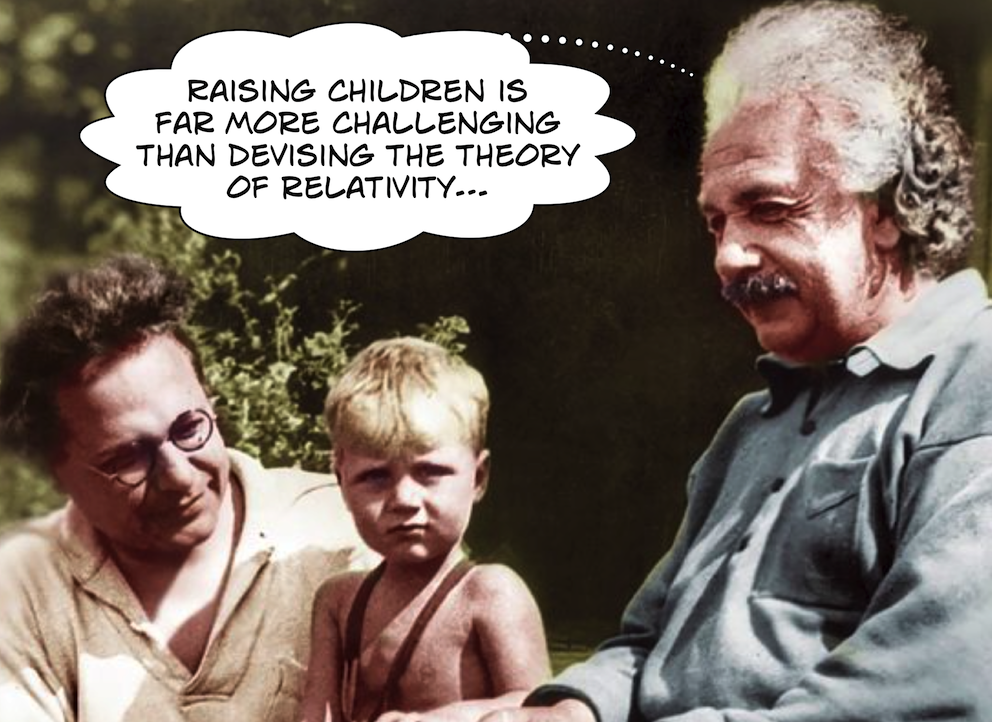
In a recent interview with Forbes columnist Amity Shlaes, the editor of World Magazine raised this subject in an unusual way. Here is the question: “I talked with a Harvard economist years ago who said he was deliberately not having any children because he felt each child would lose him a book. You and I each have four children, and yet we’ve written books. Did you ever do a calculation like this foolish Harvard economist?”

Shales’ response was thoughtful. “Well, I’m very lucky in the husband department. He wanted lots of children and didn’t mind the work. But the main thing is: Children enrich life, they don’t impoverish it. You’d often be richer in dollars if you’d had no children, but with kids you’re richer in social capital, in happiness . . .”

It will come as no surprise that I agree with Shales’ opinion (with the substitution of “wife” in the first sentence). But the idea that struck me as rather shocking in this interchange was the reason the economist gave for opting not to have children: “because he felt each child would lose him a book.”

Wow. That is a pretty honest, and rather crass calculation. I won’t argue with his domestic equation, but it makes me shake my head. I can’t help but wonder how he will feel at the end of his life when he looks at his bookshelf of soon-to-be-forgotten titles and contemplates whether his choice was wise.

Lewis’ Personal Experience

C.S. Lewis was one of the most prolific writers. And he wrote in an expansive range of genres. It could easily be argued that his bachelorhood provided him with the time to write. That, in addition to the creative fountain provided by the Inklings made for a productive environment.

When he became a father, he was extremely conscientious. The boys were sent to private (or, in British parlance, “public”) schools after their mother’s death. However, that was the norm for children in their comfortable economic circumstances.

Lewis loved his sons, and did the best he could to be a father to them, despite his lack of confidence. Lewis was still the man who many years earlier (in 1935) wrote to his closest friend: “I theoretically hold that one ought to like children, but am shy with them in practice.” A decade later, in one of his most powerful books, Lewis confessed “I myself do not enjoy the society of small children . . . I recognize this as a defect in myself” (The Abolition of Man).

Self-awareness is a mark of intelligence and honesty. I strongly believe Lewis put the lie to his self-criticism about lacking a rapport with children, with his wonderful letters written to children.*

It could be argued that parenthood was one of the factors that affected Lewis’ literary production. Brenton Dickieson has a chart showing his annual production of books, here. Another scholar, Joel Heck, has done the world a great service by providing the definitive chronology of C.S. Lewis’ life and work, available here.

Lewis did not marry earlier in his life because he considered himself a confirmed bachelor. Joy’s unexpected arrival transformed his life.

But, even before he became a (step-)father, he would never have uttered the sentiment of the Harvard professor.

A book or a child? Which shall it be? If that is a difficult question for someone, here’s my advice: “Please just write your books; you’d probably make a lousy parent anyway.”


* C.S. Lewis was able to speak clearly to children. And, unlike so many adults, he did not speak down to them. While toddlers may have remained a mystery to him—and he never parented any—he respected children’s questions, and offered wise advice.

On putting one’s life in its proper order: “You are quite right if you mean that giving up fun for no reason except that you think it’s “good” to give it up, is all nonsense.”

And, how is this for a thoughtful, practical comment: “All schools, both here [in England] and in America, ought to teach far fewer subjects and teach them far better.”

Wise counsel to a young person (or anyone): God knows quite well how hard we find it to love Him more than anyone or anything else, and He won’t be angry with us as long as we are trying. And He will help us.”

And, one particularly inspiring comment about faith: “Anyone in our world who devotes his whole life to seeking Heaven will be like Reepicheep” in The Voyage of the Dawn Treader.