Writing a Biography

What kind of writer are you? A poet, journalist, essayist or, perhaps, a minimalist? (By “minimalist” I mean someone who writes the bare minimum they have to.)

Many readers of Mere Inkling are, in fact, writers in their own right. Even ignoring the profusion of texts ricocheting around the globe (which are, in fact, literary creations), a fair number of Mere Inkling subscribers have blogs of their own.

The preeminent position of physical letters as the medium for correspondence has been usurped by email. People still write to one another, but – to the woe of the struggling United States Postal Service – they do it digitally.

More serious writers gravitate toward a varieties of genres. Often we try our hands at the sort of literature we prefer reading. That’s why I seldom write poetry. (And, when I do, it’s usually because I’m consciously stretching myself.)

My poetic skills may be limited – you can decide for yourself – but I don’t experience any of the disappointment that befell C.S. Lewis when his poetic dreams were dashed.

Poets are fine. Until they become snobs. If they treat other genres with respect, they stand on an equal footing with everyone else. But when they claim primacy for their preference, they lose me. Consider “William Faulkner Makes Us Wonder: What’s So Great About Poetry, Anyhow?

There’s a reason I can call poetry the highest form of artistic expression without thinking twice about it. And even though most Americans today don’t acknowledge the art form all that much, you’d be hard-pressed to find a sensible person who doesn’t respect or – if only from a distance – admire the magic in it.*

I guess I am one of the Americans who doesn’t possess a special reverence for poetry. And, as for “admiring the magic in it,” please. Wait, I don’t desire to offend you poets out there. Unless, of course, you consider yourself better than everyone else. In that case, consider my words a gentle rebuke (and encouragement to consider the virtue of humility).  

I hope that everyone will read on, and forgive me for maligning “the highest form of artistic expression.”

A Less Honored Literary Genre

I write nonfiction, unsurprising for someone who is basically a historian. Theologically, I neglect the conjecture of systematic theological considerations and focus on what’s usually called “practical theology.” It too, is unpretentious, and intended to make sense to “regular” people.

Recent years have found me dabbling in the memoir, or versions of autobiography, as I consider the potential value of such documents to my descendants.

One arena I’ve never really considered is biography. I suspect it would be a comfortable literary form, for a historian. I mean, you’re simply telling the story of a single life, relating facts and explaining the context of various events. That doesn’t sound too challenging, does it?

I suppose almost anyone could write a biography. The question is, could we write a good one?

Writing a Biography

I have been thinking about this subject ever since my research for my previous post introduced me to the work of David Cecil,⁑ one of the Oxford Inklings who shared the company of C.S. Lewis and J.R.R. Tolkien.

Cecil wrote several biographies. At Internet Archives you can read his lives of William Cowper, Charles Lamb, or Max Beerbohm, or his two-volume biography of Lord Melbourne (1 and 2).

If those individuals don’t tickle your proverbial fancy, you might want to look at the book that piqued my interest: An Anthology of Modern Biography. In it, Cecil explores the work of sixteen biographers. One of the chapters is his own portrayal of the evangelical Anglican cleric, John Newton (an extract from his biography of Cowper).

What intrigues me most about the volume is not the biographical material itself. Rather, it is Cecil’s very informative introduction. Here is his opening, which may whet the interest of future biographers . . . one of whom could be you?

Biography is not an important form of literary art. But it has a special interest to the student of modern literature. For it is the only new form. We can talk of modern poetry and modern novels, but these are only new variations on old forms. . . . Not so biography.

Art is primarily the expression of the artist’s creative powers; he writes to express his personal vision; he chooses as his subject that which he thinks will best exhibit his particular talent.

Now this is not true of the biographer of the past. His aim was not artistic, it was useful; he wanted to give people information. If he was a man of literary talent . . . his book was a work of art. But even if it had not been, it would not have failed. For its primary purpose had been, not to give an artistic impression, but to tell the truth.

This desire for the truth over ostentation resonates with me. But, mind you, he is referring to biographers “of the past.” Now (the book was published in 1936), other influences are at work.

But for the typical modern biographer literature comes first. Mr. Lytton Strachey writes about Queen Victoria, not in order to give us information about her, but because he thinks her life an excellent subject for a work of art. . . .

He does not set out his facts . . . complete with reference and proof, he weaves them into a story, grouping them in order and proportion that will make his picture as vivid and entertaining as possible.

Cecil’s explanation for this transformation is fascinating, and I encourage you to read it yourself, whether or not you are interested in writing a biography yourself. The book is available here, and thanks to the Public Library of India, you can download a complete copy for free.

In a 1932 letter to Arthur Greeves, C.S. Lewis contrasts biographies with the evidence from people’s daily lives. He shares with his lifelong friend a question this raises in his own minid.

It is a very consoling fact that so many books about real lives – biographies, autobiographies, letters etc. – give one such an impression of happiness, in spite of the tragedies they all contain. What could be more tragic than the main outlines of Lamb’s or Cowper’s lives?

But as soon as you open the letters of either, and see what they were writing from day to day and what a relish they got out of it, you almost begin to envy them.

Perhaps the tragedies of real life contain more consolation and fun and gusto than the comedies of literature?

Biography. Considering trying it. And, Poetry, it’s not that bad, either.


* The article does include interesting information about Faulkner. It appears his disappointed poetic dream shifted him to more productive fields. This parallels C.S. Lewis’ literary career.

For all of [Faulkner’s] achievements, his Nobel Prize for Literature, his Pulitzers and National Book Awards, his mug on a 22-cent postage stamp – the man still fell short. And it wasn’t that he dropped out of high school and did only a few semesters of college, or that he was once fired by an employer for reading on the job.

These were small missteps and shortcomings that were basically inconsequential in the long run. The larger issue is that, in his own view, William Faulkner was a failed poet. Failed.

“Maybe every novelist wants to write poetry first,” he told The Paris Review in 1956, “finds he can’t, and then tries the short story, which is the most demanding form after poetry. And, failing at that, only then does he take up novel writing.”

What you may not know is that before his first novel, Soldier’s Pay, Faulkner had written two books of poetry, Vision in Spring in 1921 and The Marble Faun in 1924. While he’d long dreamed of being taken seriously as a poet, the verse was always second-rate and not particularly significant. Eventually he abandoned his efforts as a poet to focus solely on his fiction.

⁑ In the spirit of most colonials who shook off the reigns of monarchial rule, I tend to respect the Queen as a head of state, and disregard the affectations of an aristocracy they once “lorded” it over. Thus, I can take or leave Cecil’s normative citation as “Lord David Cecil.

Looking Toward the New Year with the Inklings

If we were to ask C.S. Lewis, J.R.R. Tolkien and the rest of the Inklings for insights about a New Year, what wisdom might they share?

Read on. Mere Inkling answers that question with a few select quotations from their writings. We also include comments from several other writers associated, in spirit, with the Oxford Inklings.

While some of the pithiest of the quotations below are well represented at quotation websites, your humble host has secured the less familiar quotations through the diligent search of obscure manuscripts.

J.R.R. Tolkien:

From a holiday letter to a friend.

“There is small chance of this reaching you tomorrow Jan. 1 to wish you a Happy New Year. I hope you have plenty of food in store! It is my birthday on Jan. 3rd, and I look like spending it in the isolation of a house turned igloo; but the companionship of several bottles of what has turned out a most excellent burgundy (since I helped to select it in its infancy) will no doubt mitigate that: Clos de Tart 1949, just at its top. With that hobbit-like note I will close, wishing you and your wife and children all blessings in 1962.”

As the world conflict raged on, Tolkien wrote to his son Christopher who was serving in the Royal Air Force. “This empty year is fading into a dull grey mournful darkness: so slow-footed and yet so swift and evanescent. What of the new year and the spring? I wonder.”

Christopher Tolkien:

A scholar in his own right, Christopher devoted much of his life to editing his father’s published and unpublished works. In The End of the Third Age, he reminds us that sometimes the jobs on which we embark end up being far more involved than we anticipated. “With this book, my account of the writing of The Lord of the Rings is completed. I regret that I did not manage to keep it even within the compass of three fat volumes.

C.S. Lewis:

“What wonderful adventures we shall have, now that we are all in it together.”

“You are never too old to set another goal or dream a new dream.”

“Isn’t it funny how day by day nothing changes, but when you look back, everything is different.”

“I must keep alive in myself the desire for my true country, which I shall not find till after death; I must never let it get snowed under or turned aside; I must make it the main object of life to press on to that other country and help others to do the same.”

“If you live for the next world, you get this one in the deal; but if you live only for this world, you lose them both.”

“There are far, far better things ahead than any we leave behind.”

“I think that if God forgives us we must forgive ourselves. Otherwise, it is almost like setting up ourselves as a higher tribunal than Him.”

Charles Williams:

“I think in order to move forward into the future, you need to know where you’ve been.”

“Play and pray; but on the whole do not pray when you are playing and do not play when you are praying.”

Owen Barfield:

“. . . the poet, while creating anew, is likely to be in a sense restoring something old.”

In a short story entitled “The Devastated Area,” Barfield, a veteran of WWI, described the way a soldier can view an uncertain future. “Armistice day; the last shot; and the hushed, doubtful little group in the dug-out at 11 o’clock. He is sitting there in uniform, willing for the first time in three years to let his thoughts run on into the future. But they will go back to the past instead . . .”

Adam Fox:

In his history of English hymnody, Fox praises his nation’s people and offers timely advice regarding musical accompaniment. “It takes no long argument to prove that Hymn Singing is a national institution in Great Britain. It is so rather in the same way as cricket. . . . The singing is usually accompanied on an organ, or if there is no organ, then on a piano. The harmonium, though sometimes used for the purpose, cannot be recommended, and is falling into disuse.”

Jack A.W. Bennett:

In The Humane Medievalist, Bennett praises his friend and fellow Inkling, C.S. Lewis. Coincidentally, this essay was his own inaugural lecture as he assumed the Cambridge chair which had been created for Lewis himself. “C.S. Lewis died a year ago today, and the year has deepened not diminished our sense of loss. Those of us who had the good fortune to call him master must feel as the prentice Hoccleve felt about Chaucer: ‘Fain he would me have taught, But I was dull, and learned little or naught.’”

Lord David Cecil:

He begins his biography of Lord Melbourne with a curious sentence suggesting that even we who have lived the most average of lives, may still have great things ahead of us. “William Lamb, second son of the first Viscount Melbourne, had arrived at the age of forty-seven without achieving anything of significance in the world.”

Hugo Dyson:

Discussing the Tragedies written by Shakespeare, Dyson reminds us to recognize potential blessings in the coming year’s challenges. “Our awareness both of ourselves and of the world at large is intensified by confrontation with an unexpected or serious or painful situation. Our wits and imaginations alike grow more acute under difficulties.”

Nevill Coghill:

Referring to Chaucer’s portrayal of the Knight, Coghill describes an ongoing goal for those who will to live nobly. “There is a fundamental answer to those who want to think the Knight’s moral nature . . . was too good to be true, and so can be no better than a romantic illusion. People who think thus can never have thought about Christianity at all; that we can live up to the moral demands that it makes on us, and that at any moment we may fall into the pit that opens beneath us, does not lessen the love we are taught . . . to have, and to attempt. Christianity plainly tells us to be perfect, impossible as it seems, impossible as it proves; but this does not make that demand less real, or even less realistic . . . Coming to the aid of human imperfection, there is grace.”

A Special Bonus for Mere Inkling Readers as the Year Ends

And a few additional thoughts from writers with connections to our favorite Inklings.

George MacDonald:

“A man’s real belief is that which he lives by. What a man believes is the thing he does, not the thing he thinks.”

A reminder to trust God for his daily provision. “It is not the cares of today, but the cares of tomorrow, that weigh a man down. For the needs of today we have corresponding strength given. For the morrow we are told to trust. It is not ours yet. It is when tomorrow’s burden is added to the burden of today that the weight is more than a man can bear.”

“Past tears are present strength.”

Dorothy Sayers:

“Paradoxical as it may seem, to believe in youth is to look backward; to look forward we must believe in age.”

G.K. Chesterton:

“When it comes to life, the critical thing is whether you take things for granted or take them with gratitude.”

Joy Davidman:

“Being a fool for God was not merely alright but liberating.”

“We do not need a world in which there is nothing to be afraid of . . . Nor can we have such a world, for all our strivings; no matter pleasant and safe we make the journey, the end of it is death. What we do need is to remember that we have been redeemed from death and the fear of death, and at a rather high price too.”

Douglas Gresham:

“I am beginning to realize that every point in one’s life at which one loses everything is far more a beginning than an end, for one has lost merely the past, and one has yet to gain the future, and eternity itself.”

And, encouragement for those among us who are writers: “Don’t forget, the rejection by a publisher of a book that you’ve written is not a failure.”

One Final Bit of Wisdom for the New Year

The internet offers lots of valuable information, accessible with the click of a key. Unfortunately, a significant amount of it is unsubstantiated, and downright false. This includes the quotations attributed to various people.

Some largescale quotation “aggregators” consider attribution on other unvalidated sites sufficient justification for loading the questionable citations to their own pages. For example, check out the quotations attributed online to Lord David Cecil. Or, better yet, don’t.

During my research for this post I discovered many of them – or, at least those most beneficial to reflective minds – actually come from the pen of Richard Cecil (1748-1810), an Anglican priest. Here is a grand example of misattribution, particularly appealing to a pastor such as myself: “It requires as much reflection and wisdom to know what is not to be put into a sermon, as what is.”

We’ll close now with an apocryphal C.S. Lewis quote. Despite scores of sites attributing the following thought to Lewis, no one can find it anywhere in his work. It is, however, consistent with his wisdom, and leaves us with an optimistic truth as 2021 draws to a close.

“You can’t go back and change the beginning, but you can start where you are and change the ending.”

Amen. Lord, grant all those who read these words of wisdom, both now and during years to come, a blessed New Year.

Respecting Animals We Kill

Sometimes even a moral sluggard can say something profoundly true. I was recently visiting the uplifting site of a British pet photographer, and came across this wonderful insight:

“Until one has loved an animal a part of one’s soul remains unawakened.”

As I spent a moment reflecting on the quote, having just enjoyed a morning game with our border collie, it dawned on me these words are not only philosophically true. The more I consider them the stronger the case, it seems to me, can be made for their theological truth.

Turn the statement around. Can someone be considered spiritually awake if they have never possessed a moment of genuine affection for an animal, the pinnacle of God’s natural creation? I tend to think not.

Cultural matters certainly influence one’s connection with nature. It may be that people surviving on the edge of food sufficiency would view animals primarily as a resource. Yet even then, the best among us still possess a regard for the creatures whose lives we curtail to extend our own.

An outstanding example of this is found in a common practice among North America’s first peoples. (First Nations is the common term in Canada). Many of these people would include prayer on behalf of the prey they sought.

In the Cherokee legend “The Little Dear, Awi Usdi,” describes how hunters were taught to only take life when necessary, and to “ask pardon when an animal was killed.”

Another site explains how “Coast Salish women were forbidden from stepping over deer meat, and the men had to look away when uncovering it. All bones had to be thrown into the water, and the viscera not consumed were buried so the dogs would not eat it.”

Post-Kill Rituals: Matters of the Heart,” describes how this “ancient reverence” for hunted animals extended beyond the Americas. It concludes with a valuable thought.

Rituals aren’t a bad idea . . . But you show the utmost respect by concentrating on killing the animal quickly. Hunters’ conduct toward wildlife and nature should be consistent with their conduct toward other humans.

While Christians will necessarily overlook the religious elements of these various traditions,* those most attuned to the love of God – a Creator who viewed the “living creatures” he had fashioned and proclaimed, “it was good” – will possess at least a glimmer of reverence or affection for wildlife.

Not that Christians can’t be avid hunters. The Roman Catholic Church even has a Patron Saint for hunting. St. Hubert, pictured above, was (before his canonization, of course) a worldly nobleman. In the seventh century, Hubert had ignored invitations to attend worship on one of the holiest of days, Good Friday. Yet the Lord met him there, in the forest. His conversion occurred when he saw a vision of a crucifix while hunting. Hubert would later use his skill with a bow to draw crowds for his preaching of the Gospel.

C.S. Lewis & the Hunting of Deer

In an essay entitled “The Seeing Eye,” C.S. Lewis turns the analogy of hunting upside down. Using his own life, in which searching for God was the farthest thing from his desires, Lewis describes his conversion in a fascinating manner. It is interesting that while Lewis reveals he wasn’t desirous of faith, he was seeking honesty within his own conscience. He was also seeking truth.

I never had the experience of looking for God. It was the other way round; He was the hunter (or so it seemed to me) and I was the deer. He stalked me like a [hunter], took unerring aim, and fired. And I am very thankful that that is how the first (conscious) meeting occurred. It forearms one against subsequent fears that the whole thing was only wish fulfilment. Something one didn’t wish for can hardly be that.

But it is significant that this long-evaded encounter happened at a time when I was making a serious effort to obey my conscience. No doubt it was far less serious than I supposed, but it was the most serious I had made for a long time.

So, Who was the Author of the Initial Quote?

I began by saying even moral sluggards can occasionally make a good point. The person who drew the connection between our regard for animals and our souls is Anatole France. Not only was he a serial adulterer, he was a devout atheist. (Not all atheists are adulterers, of course, but rejecting the God of the Bible does make it a lot easier to justify one’s immorality.)

Anatole wrote some curious works ridiculing Christianity, and until I was writing this post I had completely forgotten about my 2014 post about his advocacy for Satan.

Returning to Positive Subjects . . . Like Animals

The site that used the great quotation with which we began, is excellent. It is called “Mad about Greys,” and is the work of a British photographer.

Liz Coleman does an amazing job capturing the hearts and – dare I say, souls – of the pets she shoots. Even though Surrey is quite a ways for most Mere Inkling readers to visit her studio, I encourage you to visit her website today.


* There were additional Native American beliefs and taboos. For example, “the Pentlatch and Squamish buried or hid all deer bones. The West Sanetch were not permitted to eat deer meat and fish at the same meal.”

Out of Context

Journalists quickly learn the skill of taking the words of people they dislike out of context. By doing this, they can make absolutely brilliant men and women sound like simpletons.

If the person is a public figure, with lots of material to sort through, you can find partial quotations (or obviously humorous or sarcastic remarks) that make the object of their ridicule sound like nearly anything – from a compassionate philanthropist to a conniving fascist.

That’s one reason some people who hope to tarnish the reputation of C.S. Lewis consciously avoid citing his work in its totality (or each piece in its honest context). Thus, as this article suggests, intelligent readers understand Lewis’ writing is “exceptionally good,” while some infantile critics regard it as “dodgy and unpleasant.”

(Do you appreciate my skillful use of adjectives in the previous sentence? They, of course, represent another dishonest method of undermining the arguments of people with whom one disagrees.)

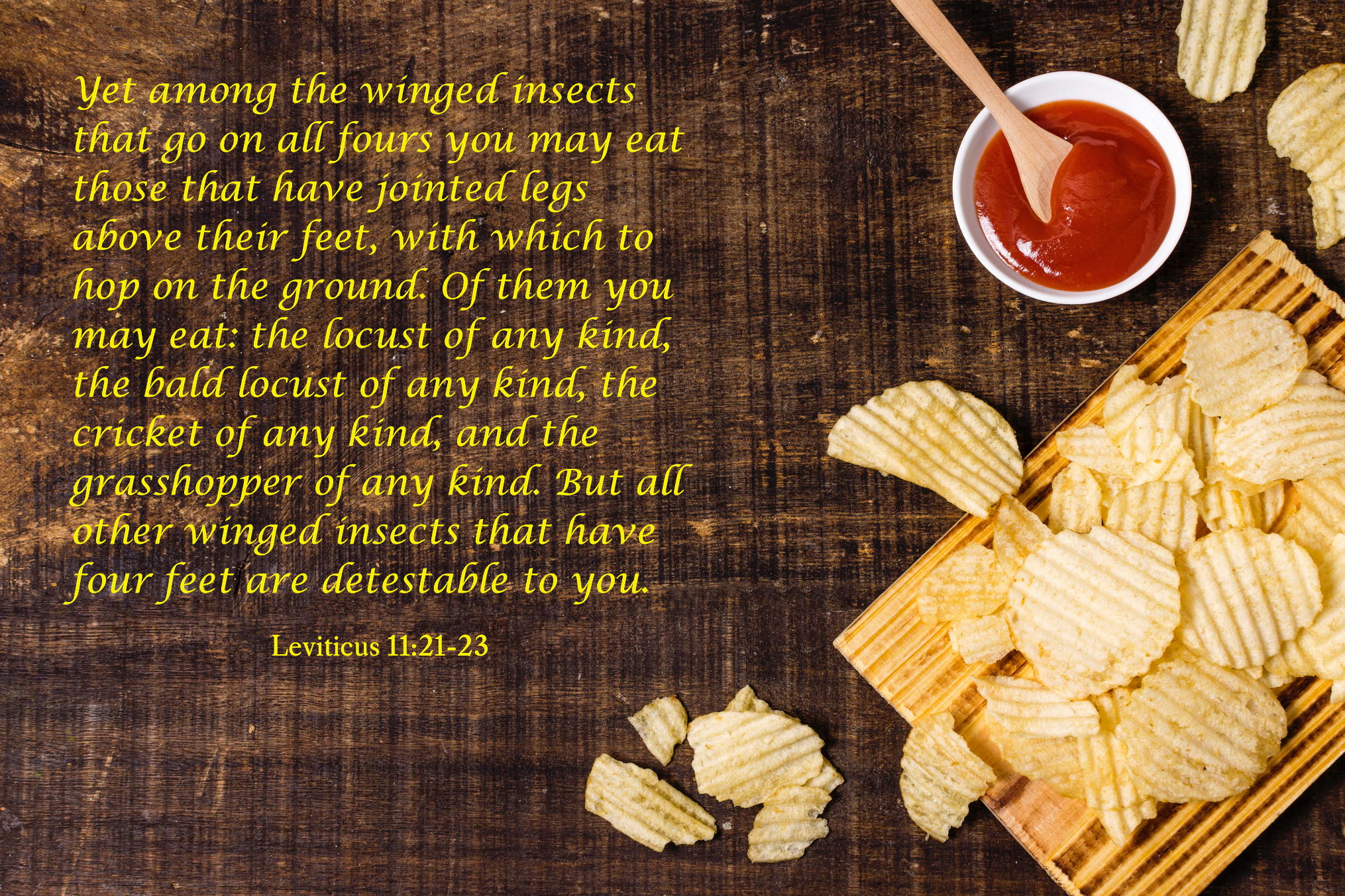
Returning to the idea of taking things out of their context, I offer the graphic (meme, if you will) that I created for the top of this column. It was inspired by “The 12 Most Inspiring Verses In The Bible” in the Babylon Bee. The brief article humorously illustrates how excising words from their context can make them sound rather bizarre.

These examples (mine included) are offered in a light-hearted way. However, the internet teems with examples of malicious attacks on God’s written Word. And many of these rely on the tried and true[false] technique of ignoring the immediate or full context to construct their strawman.

Strawmen or strawwomen are another dishonest form of argument, as “Logical Fallacies 101” explains.

Strawmen, scarecrows, and mannequins all have one thing in common: they are, by nature, flimsy objects that are easy to knock down. In the context of logical fallacies, a “straw man” argument is an argument that is framed in such a way that it is easy to “knock down” or dismantle.

How many times have you been in conversation with someone—someone who holds an opposing viewpoint to yours—who frames your position in a way that you have not? Then once they frame your position in that way, they attack it, supposing that by doing so they have won the argument?

In “Lewis on the Atheist’s Straw Man,” the author quotes a concise argument provided by C.S. Lewis “in Mere Christianity, [where] Lewis warns about over simplifying Christianity (something some people who call themselves Christians sometimes do), and the straw man Atheists often build from this. It’s definitely worth the read.

Biblical Verses that Demand Knowledge of Their Context

Admittedly, there are some passages in the Scriptures that are challenging to comprehend, apart from the whole. Intervarsity Press even has a website “Hard Sayings of the Bible,” subtitled “A Difficult Passage Explained Each Day.”

In “Encountering Difficult Passages,” the author charts a helpful course in how to discover their meaning. Here’s a sample of their sound advice:

Be extra careful with Google. I know. It’s so easy. It’s so tempting. You think, “Google tells me where to go when I’m physically lost; why can’t it help when I’m lost in the Bible?”

The problem is that Google only shows you what’s popular; it cannot differentiate between sites that provide truth and sites that provide ignorance. Avoid your natural impulse to click the first link that appears in a search. There are good websites out there to find answers, but you have to be discerning.

Some of Jesus’ own teachings were difficult for the disciples to comprehend. This was especially true of his announcement that he must die as part of the divine plan to deliver us all from the consequences of sin. When he announced the marvelous mystery of the eucharist (Lord’s Supper) he said “I am the bread of life. . . . Whoever feeds on my flesh and drinks my blood has eternal life, and I will raise him up on the last day. . . . This is the bread that came down from heaven, not like the bread the fathers ate, and died. Whoever feeds on this bread will live forever” (John 6).

While the twelve who become the Apostles continued to follow the Lord, some fell away in confusion because “When many of his disciples heard it, they said, ‘This is a hard saying; who can listen to it?’”

The Bible Truly “In Context”

Christians understand that the Incarnation, Life, Death, Resurrection and Return of Jesus Christ is the final, ultimate Word of the Bible. The Word himself, through whom all things were created, is the central, life-giving message of the holy Scriptures.

Because of this truth, we can evaluate the entire, comprehensive meaning of the Scriptures. We recognize the clear significance of those passages dealing with the Savior of humanity are vital, while those dealing with the nutritional value of locusts are rather less so.

While many people consciously practice this Christocentric reading of the God’s Word, one of its great champions was Martin Luther. If you wish to explore this subject in detail, I commend to you “All Scripture is Pure Christ: Luther’s Christocentric Interpretation in the Context of Reformation Exegesis.” You can find the entire volume in which this essay appears here.

As Martin Luther puts it, “To him who has the Son, Scripture is an open book; and the stronger his faith in Christ becomes, the more brightly will the light of Scripture shine for him.”

Christians are not Gnostics, who believe the Bible is hiding divine secrets from the uninitiated. Quite the contrary. However, the only way to truly understand the meaning of the Scriptures is to read them in their full context. And that context is Jesus, “the Lamb of God, who takes away the sin of the world!”

Christians & Retirement

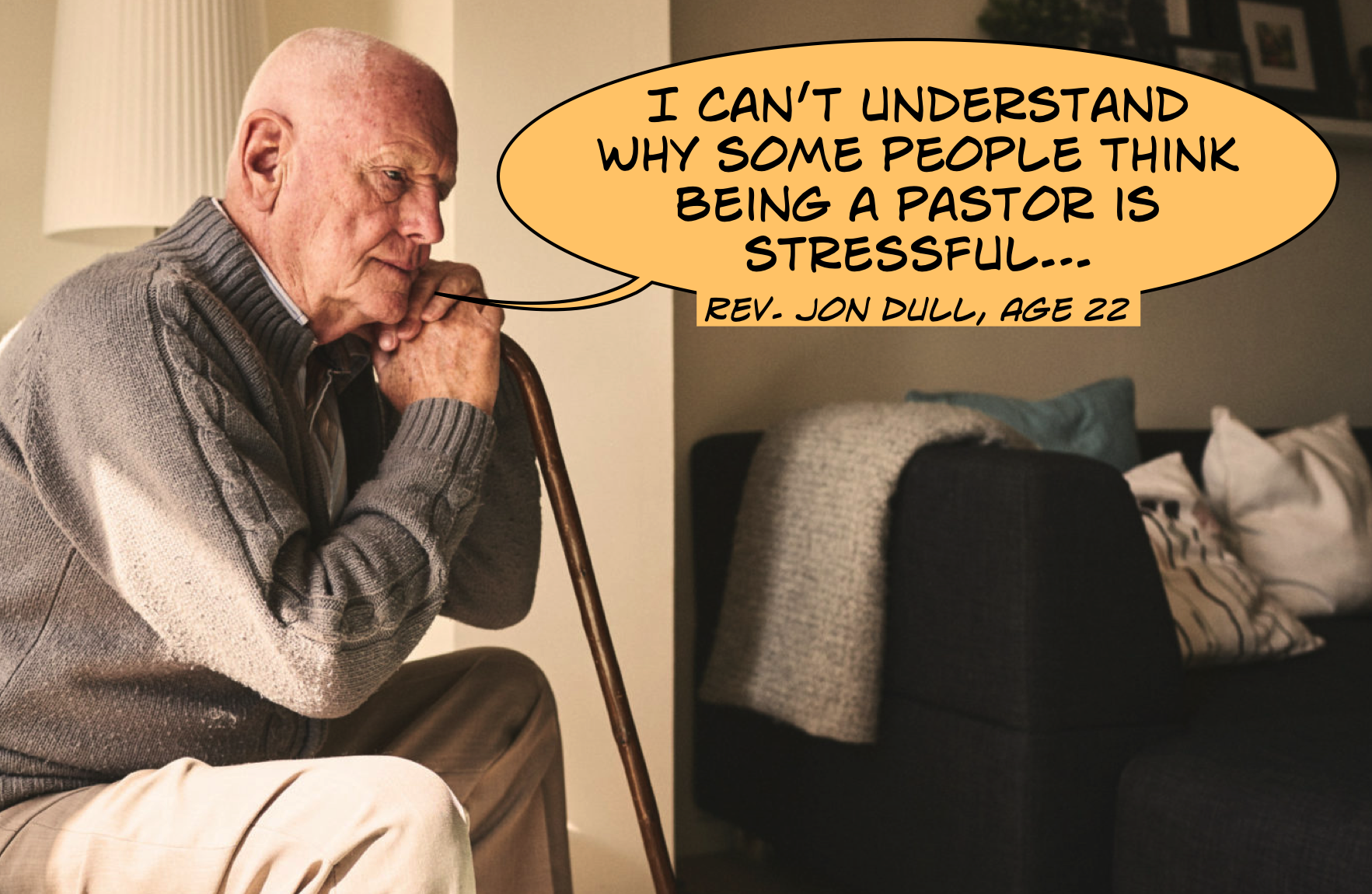
When do pastors retire? Or, in the opinion of some, can Christian pastors actually retire?

If you’re looking for answers to this question in the Bible, you will find it’s not specifically addressed. Retirement is a relatively modern concept. In earlier ages, women and men were expected to continue contributing to the family and common good as they were able, even during their winter years.

This added a type of dignity to many of their lives. It is not that the crippled or dependent were viewed as something less, but there was an expectation that as long as a person had something valuable to offer to others, it was wrong to waste it.

Pastors are in a unique position. Most believe they have been “called” by God in some manner to serve the Lord and our brothers and sisters, created in his image. If God actively calls you, does that vocation (from vocatio, calling) expire on some set timeline?

It’s curious how people refer to some arbitrary age such as sixty-five as time to retire. Many Western nations have institutionalized that rather capricious practice by determining an age at which you can begin collecting money from the government’s coffers.

Some, like the U.S., have recently adjusted that beneficent accomplishment (i.e. becoming a senior citizen eligible to receive “social security” payments), in light of increasing lifespans, and political policies not suitable for discussion among the genteel audience of Mere Inkling.

Most secularists naturally think retirement – like everything else – is about them. One financial adviser said, “Retirement is like a long vacation in Las Vegas. The goal is to enjoy it the fullest, but not so fully that you run out of money.”

C.S. Lewis described one such person in a 1921 letter to his brother. He describes a mutual friend’s in-laws as ironic.

As you will never meet them (nor indeed will I), it is no breach of confidence to touch on the grim humours of his future ‘in-laws.’ A mother . . . who has all the money but is nevertheless incapable of resisting her husband, a retired army officer, busily engaged in trying to see if his constitution will ‘keep’ by being sufficiently soaked in spirits.

This indeed has been his life work, and the devil of it is that it seems likely to ‘keep’ a good bit yet.

Semi-Retirement

The frame on my auto license says “Semi-Retired Military Chaplain.” After retiring from active duty in the Air Force, I anticipated providing “pulpit supply” for vacationing pastors and serving an occasional “vacancy.” An interim or vacancy pastor covers the months between the departure of a congregation’s pastor and the call of a new pastor. I’ve served three, one of which was more than a year long.

Now that I’m a bona fide senior, I thought my vacancy days were over. It appears, however, that God may have other plans. This week I’ve been approached by a congregation interested in calling me to serve them in that role.

Please pray that God leads them in whether or not they should formalize that call. And, please pray that I will clearly discern God’s desire in this matter. Right now it appears to be one of those “Matthew 26” moments where “the spirit indeed is willing, but the flesh is weak.”

Can Anyone Truly Retire?

So, do pastors ever really retire, in the sense of ending their ministry? The answer is an unequivocal “no.” What’s more, if you are a Christian, you don’t get to retire either.

Here’s the catch – this vocation to actively serve God all of our days doesn’t just apply to pastors. You see, all Christians are called to “let your light shine before others, so that they may see your good works and give glory to your Father who is in heaven” (Matthew 5:16).

Consider 1 Peter 2:5 where the apostle writes: “You yourselves like living stones are being built up as a spiritual house, to be a holy priesthood, to offer spiritual sacrifices acceptable to God through Jesus Christ.”

While you usually hear the truth of the “priesthood of all believers” from Protestants, the fact is that it comes directly from the Bible and applies to us all. As one prominent Roman Catholic journal puts it:

The priesthood of all believers is a call to ministry and service; it is a barometer of the quality of the life of God’s people in the body of Christ and of the coherence of our witness in the world, the world for which Christ died. . . . this teaching is a summons to faithfulness on the part of all Christians, Protestants and Catholics alike.

Retirements or Transitions?

So, whatever we would like to be true, the fact remains that retirement is not part of God’s plan for his children. But that shouldn’t trouble us. Because the Lord not only promises to give us the strength to do anything he asks of us, he also leads us into different fields of harvest at different points in our pilgrimage.

Thankfully, he doesn’t expect me to be as effective working with youth as I was in my thirties (although some of the best youth workers I’ve seen were in their seventies).

Just as I can’t rapidly deploy to a warzone with members of my flock as I once did, I possess the maturity, patience and compassion to care for those in the twilight of their lives far better than I did decades ago.

An interesting testimony to these shifts in ministry focus is found in the Old Testament. God set the tribe of Levi apart to oversee all details related to the worship of God in the Temple. But their ministry in the holy place (the Temple and the Tent of Meeting which preceded it) was of a specified duration.

And the Lord spoke to Moses, saying, “This applies to the Levites: from twenty-five years old and upward they shall come to do duty in the service of the tent of meeting. And from the age of fifty years they shall withdraw from the duty of the service and serve no more.

They minister to their brothers in the tent of meeting by keeping guard, but they shall do no service. Thus shall you do to the Levites in assigning their duties” (Numbers 8).

This passage is fascinating. At fifty, the priest step down from their ceremonial religious duties. But they do not drift off into some lazy retirement. They assume new responsibilities. A role God deemed better suited to this stage of their lives.

So too, wizened old pastors still have a role in God’s church. For some it may be serving during seasons of congregational vacancies. For others it may simply be to pray.

In a 1930 letter to his closest friend, Arthur Greeves, C.S. Lewis offers a delightful description of a “retired” pastor who is still about the business of caring for others. The fact that Lewis wrote this while an avowed atheist makes it all the more moving.

I walked as usual after lunch, dropping in on the way to see if old Foord-Kelsie would accompany me. I think I have mentioned him to you – a retired country parson of 80, who drives his own car, carpenters, and mends everyone’s wireless.

He is an irreplaceable character . . . as redolent of English country life as an old apple in a barn. He is deliciously limited: cares for no poetry but Shakespeare, distrusts all mysticism and imagination, and all overstrained moods.

Yet you could not wish him to be otherwise: and inside this almost defiantly human and mundane framework there is such tenderness of heart that one never feels it bleak.

He was in his workshop when I arrived, with shavings all about his ankles, making a cover for the font of old Headington Church.

He would not come out, and I stayed to shout conversation for fifteen minutes above the thudding and singing of his circular saw. We had a bit of everything: an outburst against Shaw, a broad story, and then, as always, onto Tristram Shandy. ‘Wonderful book–oh a wonderful book. You feel snug when you read that–you get in among them all in that little parlour. . . .’

I wish you could have seen him saying all this, bending down as he shoved a beam of wood against the saw, with one dear old wrinkled eye screwed up and held close to the work. You must hurry up and come and see me before he dies, for he of all people should be added to our stock characters.

Lewis does, indeed, portray his walking companion, the Reverend Foord-Kelcey, as a “stock character.” But he does so with evident and sincere affection.

So, our vocations do not forever remain constant. They may change over time, but God’s call on our lives does not wane.

We may approach these transitions with some trepidation. I am not ashamed to admit I do so at the present moment. I hope you will join me in seeking to hear God’s call and respond with joy and enthusiasm, just as the saints before us – “Here I am! Send me.

First the Machines Kill the Weeds

Machinery, one of the fruits of scientific research, is intended to benefit humanity. It often does. However, even machines with totally peaceful purposes – hay balers, for example – can be deadly.

Machines-run-amuck populate many dystopian novels and films. One of the most successful franchises is Terminator. Humanity is brought to the precipice of extinction, after devising machines – and their perilous companion Artificial Intelligence. The very first film, The Terminator (1984) brilliantly uses the biblical allusion “Judgement Day,” to mark the sentience of the genocidal Skynet.

Nearly forty years later, debates about weaponized autonomous systems have moved far beyond speculation. And it does not require a doctorate in computer science to recognize that given a potentially lethal machine the power to make its “own” decisions poses a deadly risk. After all, if software programs can be virally infected, and secure systems can be locked tight and held for ransom, there are no guarantees that “terminators” will not be part of our future.

We’ve seen how weapons can easily be mounted on the robotic dogs that are currently accompanying our troops.

And in a recent Air Force Magazine article, “Unmanned Flying Teammates,” we read the promise that “Robots will join the Combat Air Forces within the next decade.”

The common nomenclature for the current generation of these machines is Lethal Autonomous Weapons Systems. You can read about “slaughterbots” at the Future of Life Institute site.

Whereas in the case of unmanned military drones the decision to take life is made remotely by a human operator, in the case of lethal autonomous weapons the decision is made by algorithms alone.

Slaughterbots are pre-programmed to kill a specific “target profile.” The weapon is then deployed into an environment where its AI searches for that “target profile” using sensor data, such as facial recognition.

While the first generation of such weapons are still being designed, a genuinely wonderful new machine foreshadows what might be an ominous future.

In response to the destructive necessity for pesticides, scientists have come up with a new self-driving farm machine that avoids the need for poisons by selectively zapping individual weeds with lasers. Forbes has a great article on the subject, with the unwieldly but informative title, “Self-Driving Farm Robot Uses Lasers To Kill 100,000 Weeds An Hour, Saving Land And Farmers From Toxic Herbicides.”

The weeding machine is a beast at almost 10,000 pounds. It boasts no fewer than eight independently-aimed 150-watt lasers, typically used for metal cutting, that can fire 20 times per second.

They’re guided by 12 high-resolution cameras connected to AI systems that can recognize good crops from bad weeds. The Laserweeder drives itself with computer vision, finding the furrows in the fields, positioning itself with GPS, and searching for obstacles with LIDAR.

I applaud this invention, with one major caveat. How large a step is required between zapping weeds and burning holes through human bodies?

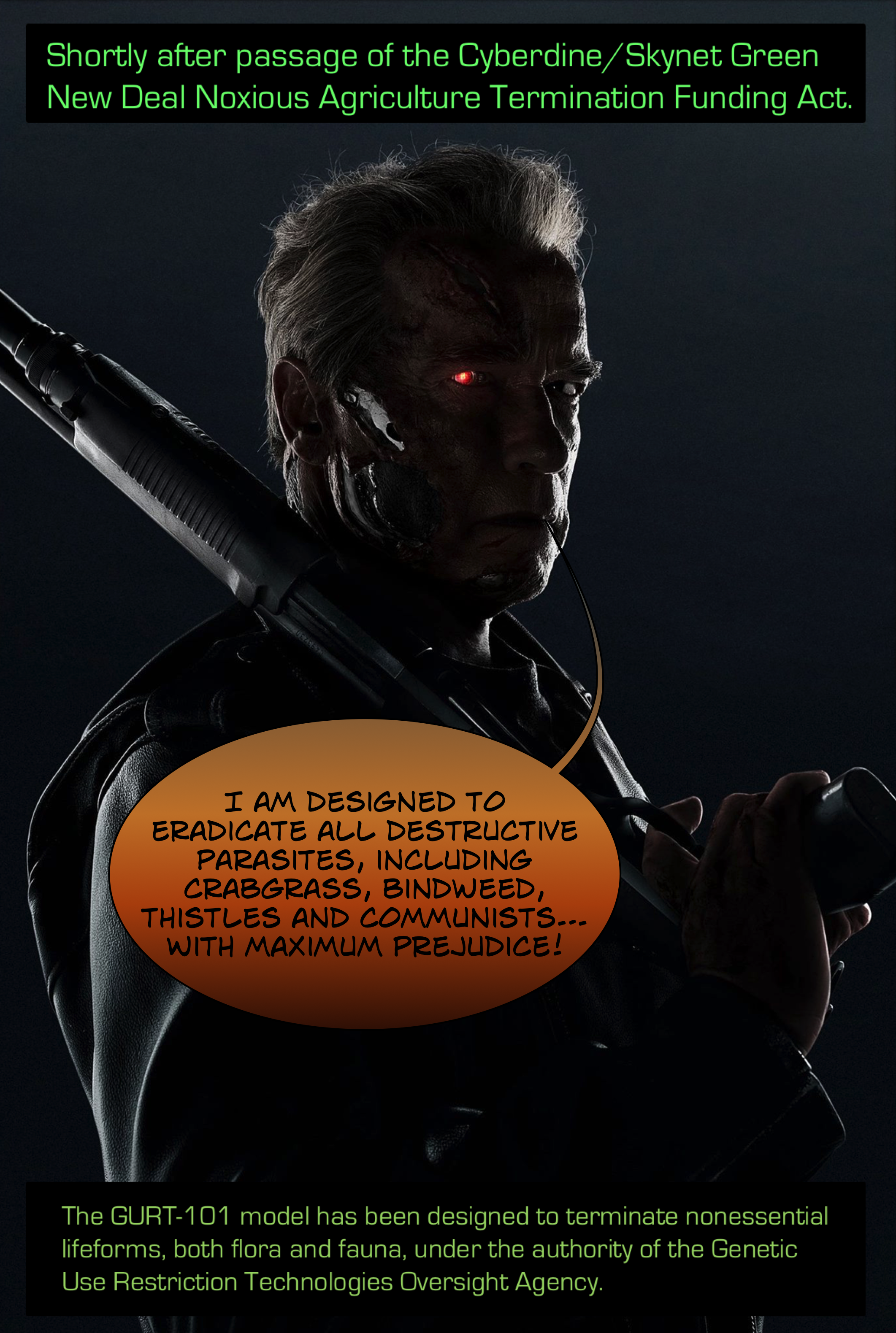
Ironically, they have even named this agricultural prototype for human-hunting machines “Terminator technology.”

Terminator technology is the genetic modification of plants to make them produce sterile seeds. They are also known as suicide seeds. Terminator’s official name – used by the UN and scientists – is Genetic Use Restriction Technologies (GURTs).

Actually, this is a very positive breakthrough in terms of increasing harvests while preserving the natural health of the earth (and the Earth). C.S. Lewis, I believe, would have welcomed this new technological achievement.

The affinity of C.S. Lewis and fellow Inkling J.R.R. Tolkien for nature is well recognized. The two WWI veterans were averse to industrialized landscapes, and much preferred bucolic images. You can see that in Lewis’ fiction, although it’s much more evident in Tolkien’s Lord of the Rings. (Even Tolkien’s truest fans must admit that some readers find his elaborate discussion of the Hobbits’ harmony with nature almost mundane.)

True science is a good thing, but one must remain vigilant against an idolatry that masks itself as science.

Beware of Scientism

C.S. Lewis’ role as a an apologist for Christianity – and for what was worthwhile in past history – brought him into more direct conflict with technology. Of course, it was not scientific advances per se of which he was wary. It was the creeping idolatry of scientism, which assumes the trappings of faith in its disciples’ eyes. Tolkien shared his concerns regarding the matter, but confronting such lies was not part of his vocation.

Lewis’ clearest exposition of humanity’s lust for progress may be his 1954 Inaugural Lecture as the Chair of Mediaeval and Renaissance Literature at Cambridge University. De Descriptione Temporum (A Description of the Times) should be read in one sitting, as it was delivered. It is included in several collections, but available online here. The quotation below offers a very small slice of his influential lecture. (Coincidentally, A Pilgrim in Narnia featured a superb column on the address just yesterday.)

[The birth of the machines] is on a level with the change from stone to bronze, or from a pastoral to an agricultural economy. It alters Man’s place in nature. . . . What concerns us . . . is its psychological effect. How has it come about that we use the highly emotive word “stagnation,” with all its malodorous and malarial overtones, for what other ages would have called “permanence”?

Why does the word “primitive” at once suggest to us clumsiness, inefficiency, barbarity? When our ancestors talked of the primitive church or the primitive purity of our constitution they meant nothing of that sort. . . . Why does “latest” in advertisements mean “best”?

Well, let us admit that these semantic developments owe something to the nineteenth-century belief in spontaneous progress which itself owes something either to Darwin’s theorem of biological evolution or to that myth of universal evolutionism which is really so different from it, and earlier. . . . But I submit that what has imposed this climate of opinion so firmly on the human mind is a new archetypal image.

It is the image of old machines being superseded by new and better ones. For in the world of machines the new most often really is better and the primitive really is the clumsy. And this image, potent in all our minds, reigns almost without rival in the minds of the uneducated. For to them, after their marriage and the births of their children, the very milestones of life are technical advances. . . .

Our assumption that everything is provisional and soon to be superseded, that the attainment of goods we have never yet had, rather than the defence and conservation of those we have already, is the cardinal business of life, would most shock and bewilder [all of those who have gone before us.]

A thought-provoking article, “The Folly of Scientism,” offers the argument of a professor of Biology, which is independent of C.S. Lewis, while echoing many of his cautions.*

Of all the fads and foibles in the long history of human credulity, scientism in all its varied guises — from fanciful cosmology to evolutionary epistemology and ethics – seems among the more dangerous, both because it pretends to be something very different from what it really is and because it has been accorded widespread and uncritical adherence.

An excellent work on this subject is available for purchase, entitled The Restoration of Man: C.S. Lewis and the Continuing Case Against Scientism. Michael Aeschliman’s excellent treatment is evidenced by the fact the 2019 version is the third edition of the title.

But why should this central civilizing truth about the “res sacra homo,” [the fact that “humanity is a sacred thing”] . . . need C.S. Lewis’s [reaffirmation]? The answer to that question is philosophical, historical, and complex, but it should not be as obscure or little understood as it is today.

Although there was never a “golden age” of civilization within historical time, this radically noble idea was often better understood in the past, even the recent past.

Back to the Robots

Wait, I just noticed some armed drones flying overhead, and what appeared to be a silhouette resembling a GURT-101 Terminator skulking through the woods outside my office . . . Perhaps I’ve already written too much.


* This article appears in The New Atlantis, where they say “Our aim is a culture in which science and technology work for, not on, human beings.”

For the Love of Words

Most writers, including the majority of bloggers, share a common affection. We love words, don’t we?

That love extends beyond mere fondness. We can find ourselves in a state of genuine wonder as we ponder definitions, etymologies (evolutions through diverse languages), and phonesthetics (how they sound). As C.S. Lewis once wrote, “Isn’t it funny the way some combinations of words can give you – almost apart from their meaning – a thrill like music?”

This is one aspect of a great article in the current issue of The Lutheran Witness.* In “For the Love of Words,” editor Roy Askins uses C.S. Lewis’ classic The Four Loves to explore the relationship we have with words. He does so from a Christian perspective shared by the Oxford don.

Words shape us in profound ways. God formed creation and continues to sustain it by the Word of His mouth. . . . Words, then, are not incidental to our lives, but form a central part and core of our identity as God’s people. It’s certainly appropriate for us to talk about “loving words.”

The very word for a lover of words – logophile – combines the Greek logos (word) with philia, which Lewis deems priceless, like “that Philia which Aristotle classified among the virtues or that Amicitia on which Cicero wrote a book.”

[Coincidentally, I have an article about ministry to those who are mourning in the current issue of The Lutheran Witness, as well. I assure you, however, that’s not why I’m citing “For the Love of Words.”] Longtime readers of Mere Inkling are well acquainted with my personal fascination with words and wordplay.

Many of you share this predilection. C.S. Lewis describes us in Studies in Words.

I am sometimes told, that there are people who want a study of literature wholly free from philology; that is, from the love and knowledge of words. Perhaps no such people exist. If they do, they are either crying for the moon or else resolving on a lifetime of persistent and carefully guarded delusion.

Literature, Lewis argues, is not simply the sum of its words. It involves the history of the words, their complex shades of meaning, and even what those very words meant to their original writers.

The Uniquely Christian Perspective

God pours out his gifts of writing quite broadly. Countless styluses, quills and pens have been wielded by talented pagans and atheists over the centuries.

Still, as Askins’ article alludes, Christians have a unique connection to words. Not only did God speak all creation into existence through his Word, but that Logos, that Word became incarnate and suffered an innocent death so that humanity might be redeemed. Askins concludes his article with a joyful truth.

When we seek to love words, then, we do not seek to love them as words in themselves. This danger we editors and writers must mark and avoid. No, we love words because in them and by them, we hear of and share God’s love for us in Christ. He alone makes words holy and precious; He alone makes words worth loving.

I love these closing words. And I strongly believe C.S. Lewis would too.


* The Lutheran Witness is the magazine of the Lutheran Church – Missouri Synod.

The Responsibility of Parenting

Some of us had the sad misfortune of growing up without parents. A larger number had mothers, but absent fathers. For a few, there was a dad, but the home lacked the presence of a mother. And then there are those who were blessed with the presence of a loving mother and father.

Each of these circumstances (and there are even more, of course), generates a different dynamic in a home. I am persuaded that God’s ideal of a father and mother, joined together as a “single flesh,” is best for nurturing healthy children. Thankfully, God loves every child, and living in less than ideal situations does not mean a person will grow up handicapped.

C.S. Lewis provides an amazing example of a boy who lost his mother to disease, and was raised by an emotionally distant father. Lewis’ father resorted to sending his sons off to boarding school rather than attempting to work through their shared grief together, in their home.

As an echo of that decision, C.S. Lewis sent his own sons away to school after their mother succumbed to her own battle with cancer. The situation was different, since Joy was raising the boys alone before Lewis married her, and Lewis who had imagined he would die a bachelor, was ill-equipped to provide a suitable environment for the children once their mother died.

I would be a different man today, if I had been raised in a home with parents whose love for one another overflowed. Perhaps my own family background is the reason I kept a plaque in my office that proclaimed that “the most precious gift a father can give his children is to love their mother.”

I was thinking about parenting because of a wonderful quote I read this morning in a interview with British comedian, Ricky Gervais. He was talking about growing up in a working class family, but being unconscious of their relative poverty.

I didn’t know I was poor, because my mother knitted all my jumpers, she made our Christmas presents, did all the decorating, grew things in the garden that she then cooked. I always thought, men work hard, but women work miracles.

Now that’s certainly a humorous way to express something that is quite frequently true.

What Kind of a Parent Am I?

Not all of us are blessed to be parents. Some consciously choose that path. Others, with whom I sincerely sympathize, wish to, but are never given the opportunity.

Some men simply contribute to the physical process and go merrily on their way, often carelessly impregnating others. These individuals can be considered “biological” parents, but they are not fathers. On the other hand, a woman who feels compelled by circumstances to allow her child to be raised by others, displays the compassion of a true mother.

I’ve seen some great fathers in my day. Unfortunately, I didn’t see them while I was growing up. So I had to “learn on the job.” I consider my early years as a dad “above average,” but my later years have actually been pretty decent. It’s been far easier than for many people, because my wife brings out the best in me. I wouldn’t care to postulate what kind of dad I would be without her counsel and encouragement.

I always imagined I’d be a husband and father someday. I see that is becoming less true with each generation.

If you are considering the question of “what kind of parent” you are, I’d like to caution you about two dangers. First, don’t get cocky. You aren’t perfect, not by a long stretch. There’s definitely room for some improvement.

Second, don’t get discouraged. We can all improve as parents, even after serious stumbles. Give parenting the attention it deserves. Seek advice from those who appear more successful – and are willing to be honest about their struggles. Choose schools and social activities that reinforce your efforts to raise healthy human beings. Adding prayer to the formula is often a wise choice.

There are a vast number of parental resources available online. The best of them are framed by a biblical worldview. Many address specific contexts, while others are more general. One I just visited for the first time is Philosophy for Parents.

Holly Hamilton-Bleakley teaches philosophy at the University of San Diego. Although she hasn’t posted recently, there is a wealth of thought-provoking material on her site. The most recent addresses the challenge of “Parenting in an Age of ‘Politics-as-Destruction.’”

She confronts a concern that should be at the forefront of every parents’ concern today, saying “It’s taking everything I have to protect my family from the toxic political culture in which we find ourselves.”

One of her earliest columns posed this question: “Could Parenting be More Important than Politics?” I highly recommend the piece, which begins with a pertinent passage from a letter C.S. Lewis wrote in 1955.

Quoting Lewis: “I think I can understand that feeling about a housewife’s work being like that of Sisyphus (who was the stone rolling gentleman). But it is surely in reality the most important work in the world. What do ships, railways, miners, cars, government etc. exist for except that people may be fed, warmed, and safe in their own homes? As Dr. Johnson said, ‘To be happy at home is the end of all human endeavor’ … We wage war in order to have peace, we work in order to have leisure, we produce food in order to eat it. So your job is the one for which all others exist.”

I love this quote.  I live my life by this quote.  But I think it needs some discussion.

And the discussion she provides is excellent. Regular readers of Mere Inkling know I’m no particular fan of “philosophy,” but these articles possess practical value! Something I’m confident C.S. Lewis would also commend.

Free Books Offered Monthly

Would you like to receive free books for the simple exchange of a short, honest review of them? If so, join me at LibraryThing. Best of all, they offer additional benefits for readers (and writers).

You may already have a free account there, since they offer a book cataloging system connecting you to fellow readers, which appeals to many book lovers.

They also offer TinyCat, which is a sophisticated cataloging system designed for small libraries. And it is free for personal use! I don’t have the time to input my own library, despite all of their tools for making that easy, but it could well work for you. [Warning: if your library includes more than 20,000 items, it may be a tad too large.]

Requesting a book for review is simple. Each month they list a bunch of new, mostly self-published titles that are available. You express your interest and they distribute the quantity that are available. You can see current offerings here: LibraryThing Early Reviewers.

The truth is that I rarely request a title. The vast majority are fiction, while my tastes strongly lean toward nonfiction. Even there, available time restricts my interests to a handful of topics. Still, I wrote a review about a book I received entitled  A Curmudgeon’s Guide to Postmodern Times: Aphorisms. (I am a sucker for thought-provoking maxims, especially if they are witty.) More on my review in a moment.

In the past I’ve written book reviews for military and theological journals. Most publications offer specific guidelines as to what they desire in a review. If you opt to ignore these, you are wasting everyone’s time. Most online sites are more tolerant.

Writing Book Reviews

Writing effective reviews is an art in itself. To do it well requires some conscious effort. To simply describe something as “good” or “boring” is basically not worth the effort. You need to think about what you, as a potential reader, are interested in knowing about a title before you invest your time and money in procuring it.

It appears there are hundreds of online sites describing the process. This one from Grammarly is a quick, clear read. One piece of their advice relates directly to my latest review.

Remember that you’re reviewing a book that another human poured their heart and soul into to write. Express your honest opinion, but don’t be nasty about it.

That sentiment is similar to one I just read in an old magazine I was perusing.

Concerning satire, I’ve always followed the rule laid down by an old college professor: “I only pick on those I love.” If I have trouble loving someone, it’s better if I refrain from jokes, satire, and teasing.

C.S. Lewis & the Art of Reviewing Books

If one were to tally all the reviews that have been written about the works of C.S. Lewis, their number might rival the grains of sand spread around the world’s beaches.*

It is unsurprising that Lewis, being a professor of English literature, wrote a significant number of book reviews himself. Some of the most notable are gathered in Image and Imagination. While the volume includes a number of valuable essays, it is the collection of his published book reviews which are of interest to us today.

You see, in Image and Imagination we encounter ten of his reviews written about books authored by his fellow Inklings. These include Owen Barfield, J.R.R. Tolkien and Charles Williams. The volume is edited by Walter Hooper, who ably introduces each of the reviews, and provides unique insight. For example, he notes C.S. Lewis’ ongoing debate with Owen Barfield about anthroposophy.

Barfield’s conversion to Anthroposophy . . . marked the beginning of . . . the ‘Great War’ between [the two friends]. . . . While the ‘Great War’ had ended years before, the problem Lewis faced in reviewing Romanticism Comes of Age is that it contains in the Introduction and other places Barfield’s ‘case’ for Anthroposophy (“Who Gaf Me Drink?”).

Lewis’ review of the culmination of the Lord of the Rings is worth the full price of the collection. Doesn’t the following ring true?

The other excellence is that no individual, and no species, seems to exist only for the sake of the plot. All exist in their own right and would have been worth creating for their mere flavour even if they had been irrelevant.

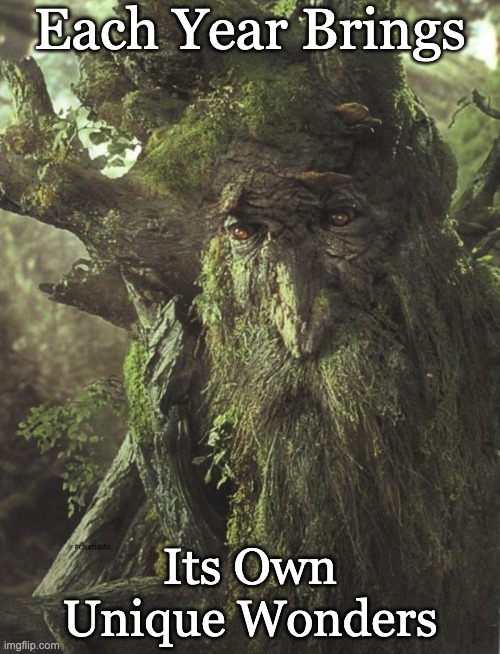
Treebeard would have served any other author (if any other could have conceived him) for a whole book. His eyes are ‘filled up with ages of memory and long, slow, steady thinking.’

Through those ages his name has grown with him, so that he cannot now tell it; it would, by now, take too long to pronounce. When he learns that the thing they are standing on is a hill, he complains that this is but ‘a hasty word’ for that which has so much history in it (“The Dethronement of Power”).

On My Review of the Curmudgeon’s Concerns

My recent review (to which I referred above) was not easy to write. What made it difficult was my mixed opinion of the aphorisms chosen for the publication. Most were quite interesting, and a few were downright brilliant. The problem was the strong bias of the author when he addressed two “controversial” topics – politics and religion.

Unlike Mark Twain, to whom I refer in the review, this author forsakes humor when he deplores subjects with which he disagrees. Twain made it clear how he stood, but usually in a manner that left even his opponents entertained. This particular book is much more “curmudgeonly,” in that some of it is delivered in an ill-tempered, alienating manner.

If you are curious in seeing how I threaded the needle of honestly reviewing a book with problematic material, you can read it here. While praising many aspects of the book, I did make one critical observation related to an aphorism related to The Chronicles of Narnia.

Greene even invokes my favorite author to mischaracterize Christianity. “C.S. Lewis depicted God as a lion. The lion, of course, is a predator.” So much for agnus dei and Aslan’s manifestation as a lamb.

A Final Encouragement

If you are a writer, or an aspiring writer, consider writing some book reviews. It can provide a more welcoming entrée into the publishing world than other features. Write it in a style similar to the reviews they normally run, and be sure to read any guidelines they provide for contributions. As with other submissions, it’s best to query first. Best of luck!


* The World Atlas estimate of 2.5 to 10 sextillions may suggest this estimate of Lewisian reviews may be hyperbole. But at least I did not refer to the number of stars, which is estimated at 10 to 200 sextillion.

Create a Word Today

What could possibly be more fun than making up a witty new word?

Well, to be honest, lots of things. But inventing words is still an enjoyable creative exercise. I made up several in less than an hour this evening, while half-watching an old movie. A few may be lame, but I hope you will discover one or two you enjoy.

I’ve touched on the subject of inventing words in the past. But this approach involves a different process.

This article from The Guardian asks, “English speakers already have over a million words at our disposal – so why are we adding 1,000 new ones a year to the lexicon?” That’s certainly a fair question. However, it doesn’t pertain to my thoughts here. I’m not attempting to birth any neologisms. These are simply humorous tweaks to existing words. A form of wordplay.

I got the idea when I read a short article, “The Best Made Up Words Ever,” by Bill Bouldin.* He admits to including a number of words from an online site I won’t name here (due to its preponderance of vulgar terms). While Bouldin doesn’t indicate which examples are his own contributions, and which are reproduced, I found a couple of the words quite entertaining.

The first of these reminded me of many group meetings where we consider all sorts of opportunities and possibilities.
Blamestorming – The act of attempting to identify the person who is most at fault for a plan’s failure.

As a pastor I couldn’t resist modifying this gem.
Sinergy – When performing two bad acts make you feel as guilty as if you had committed three.

This one struck home since it’s a play on one of the words in the title of the Narnian classic, The Lion, the Witch and the Wardrobe.
Chairdrobe – A chair on which one piles clothes that belong in the closet. Not to be confused with a floordrobe.

The final example will resonate with everyone who enjoys reading and writing.
“Illiteration – The mistaken impression that you know more about rhetorical devices than you really do.

At the risk of revealing myself to be an illiterator, I’ve included below some of the words I conjured up during an idle hour. I don’t claim any are masterpieces, but you may find one or two that bring a smile to your face. And, who doesn’t need an extra smile during these trying times?

My Initial Experiment

Caution: Before proceeding, keep in mind these are not real words. As genuine and utilitarian as they may appear, I advise you not to use them in conversation or composition. They are offered by Mere Inkling purely for entertainment purposes. Feel free to add some of your own in a comment.

Miscellaneous Vocabulary

Subbatical: the period when some temp like you is hired to fill in for some privileged person who has a job that has sent him or her off for an extended paid vacation.

Dippididude: Confused men who use hair gel designed for young girls and women.

Cemetarry: The unwillingness of some people to ponder the reality of their own mortality.

Mannekin: A boring, sedentary relative, who rarely rises from the couch.

Candlelablouse: The name for candlesticks with multiple arms in the homes of prudes.

Carnivirus: Individuals who strive to draw blood from those who view the coronavirus and its implications differently than they do.

Brigadeer: A domineering deer who tries to order all the other members of its herd around (antlers optional).

Altruistick: Actions that appear on the surface to be selfless, but include a hidden agenda.

Monumentill: Descriptor for someone of little worth who builds a significant reputation with the sole purpose of lining their pockets.

Blasphemee: An individual’s personal inability to consistently observe the Second Commandment.

Concupiscents: Hollywood’s obsession with including graphic sexual themes in all of their productions, resulting in the selling of their souls for pennies on the dollar.

Cathedroll: A large church led by a senior minister given to quaint and unintentionally comic humor.

Cadaversary, pl., cadaversaries: A member of the endless hordes of the undead during a zombie apocalypse.

Writing Vocabulary

Literasee: The capacity of one’s imagination to visualize what you are reading.

Bloggrr: An essentially angry person, given to writing unbridled tirades on various digital formats.

Gerdprocessing: When whatever you are typing just doesn’t work, and causes you severe heartburn instead.

Manuskipped: The sad condition when the article or book into which you poured your blood, sweat and tears has been tossed into a slush pile to lie forgotten.

Editteen: The maturity level of the editor who did not recognize the merits of your manuscript and rejected it without comment.

Subliminil: When the word you are reading or writing possesses no hidden or subconscious message.

Proofreaper: Someone you invited to read your manuscript for misspellings who advises you to delete entire sections of your precious creation.

Skulldigory: Misbehavior by the English professor, Digory Kirke, who, as a child, introduced evil into Narnia.

I will close now with two words that cat-lovers may find objectionable. If you are a devoted feline-fancier, you are advised to cease reading now.

Lucifur: The anonymous leader of that faction of felines devoted to serving evil.

Purrification: The activity of forgiveness and restoration that occurs when any cat makes a sincere confession of its sins.


* This columnist cites various words from the Bouldin’s piece, and others from a book entitled The Emotionary: a Dictionary of Words That Don’t Exist for Feelings That Do.