Poetry for Geeks

csl ipadThe word “Geeks,” we know, is no longer an insult. It often refers to those über-intelligent folks who author the invisible “codes” that make computer software work.

Their mystical incantations make the modern world go round.

Two years ago some creative programmers decided to invent a new genre of poetry. It’s called “code poetry,” and they’ve published a collection entitled code {poems}.

It’s an intriguing genre, but the examples I’ve read suggest that you need to have at least an elementary understanding of programming languages to truly appreciate the poems. Consider “Dailygrind.”

DAILYGRIND

by Paul Illingworth (// Java)

import java.util.Date;

public class DailyGrind {


   public static final void main(String[] args) {


        boolean its_time_to_go_home = false;


         boolean away_the_hours = true;


        while (away_the_hours) {


              Date now = new Date();


               its_time_to_go_home = now.getHours() > 17


                         && now.getMinutes() > 30;


              if (its_time_to_go_home) {


                   break;


               }


      try {


                   Thread.sleep(60000);


               } catch (InterruptedException e) {


                   // ignore


               }


          }


     }


}

As I understand it, the code needs to (1) be functional (i.e. it has to actually work on a computer), and to (2) possess a lyrical essence.

Boasting no programming skills, I find it rather confusing. Then again, I’ve been confused by other examples of atypical poetry. I guess I’m a poor judge on the matter.

C.S. Lewis, on the other hand, was an expert on nearly all things literary. Although he died before the development of the internet, I would be curious to see how he would measure this novel approach to verse.

Although he was little praised for his poetic forays, Lewis penned a number of poems. Some are sprinkled throughout his writings, and others were compiled after his passing by Walter Hooper. The collection Poems is quite enjoyable. And Hooper’s preface to the collection is very informative.

He relates a delightful example of Lewis’ poetic admission that he found a particular poetic image particularly inappropriate.

The fact that he did not publish these poems during his lifetime suggests that Lewis was hesitant about their publication. He knew his poems were very unlike most contemporary verse. Because of this, he could not be certain of the reaction of his readers. The answer is not far to seek. In the poem, “A Confession,” Lewis says with ironical disappointment:

I am so coarse, the things the poets see

Are obstinately invisible to me.

For twenty years I’ve stared my level best

To see if evening—any evening—would suggest

A patient etherized upon a table;

In vain. I simply wasn’t able.

Lewis found Mr Eliot’s comparison of an evening to a patient on an operating table unpleasant, one example of the decay of proper feelings. He mistrusted, in fact, the free play of mere immediate experience. He believed, rather, that man’s attitudes and actions should be governed by, what he calls in the same poem, Stock Responses (e.g. love is sweet, death bitter, and virtue lovely).

Man must, for his own safety and pleasure, be taught to copy the Stock Responses in hopes that he may, by willed imitation, make the proper responses. He found this perfectly summed up in Aristotle’s “We learn how to do things by doing the things we are learning to do.”

Returning to the question of what Lewis might have thought of code poetry, I suspect he would be just as mystified as I am. Still, depending on how each individual poem resonates with the stock responses to which Hooper alludes . . . perhaps Lewis would embrace some of them as worthy expressions of a genuinely poetic heart.

_____

The T.S. Eliot poem to which Lewis was responding, “The Love Song of J. Alfred Prufrock,” was published in 1915. If you are up to the challenge of interpreting it, you can read it here.

Misspelling Jesus

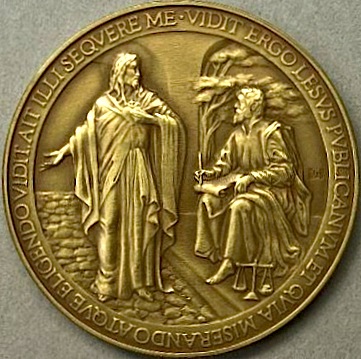
LesusTalk about embarrassing. In a nation that considers God to be its sovereign ruler, it seems rather inexcusable to misspell the name of Jesus.

And yet, that’s precisely what the Vatican has done.

Even more humbling, the error occurred on a very public medium—the principality’s coinage. And, if that was not enough to generate finger-pointing within the Curia, the coins bearing the defective spelling were minted to celebrate the first anniversary of Francis’ assumption of the papal throne.

Having collected coins since I was a young boy, I’m quite familiar with the frequency of minting errors. Typically they are caused by mistakes at the mint itself, where there is a mis-strike or a flaw in one of the dies. (I own a couple of ancient Roman “mules” where the mint workers accidentally used the mismatched obverses and reverses when they struck a particular piece.)

The legend (text) on the aforementioned medallions incorrectly reads “Lesus.” It seems to me that Western sources have mistakenly perceived this as the incorrect substitution of an “L” for the “J.”

The truth is . . . the inscription is in Latin, in which case it is actually an “I” that should appear in place of the “L.” If this is correct, Jesus’ name would be rendered IESUS.*

In actuality, the magnitude of this error was less significant than initially reported. It affected an anniversary medallion, rather than common, everyday coinage that would find its way into the hands of the masses. Also, the mistake was discovered early enough that only a handful of the medals were released; the “lucky” recipients are sure to see the worth of these treasures increase many times over, as their rarity causes the value of the medals to escalate.

Unlike Islam, which forbids images of Allah and Muhammad, Christianity has found iconography related to Jesus to be inspirational, throughout its two millennia history.

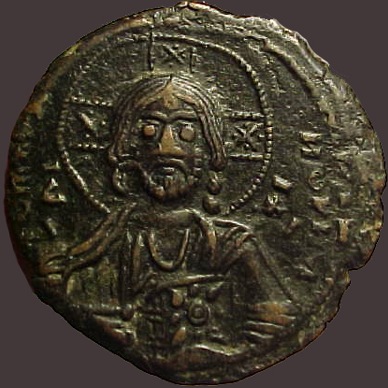
The Lord’s face has appeared on numerous coins throughout the years, and there is an entire series of Byzantine issues that cannot be specifically attributed to individual rulers because they did not include their own likeness or name, preferring to yield their place of honor to Christ.

In a 1942 letter to a nun with whom he corresponded, C.S. Lewis shared a poem he had written. I relate it here because of the exquisite reference to religious portraiture on coinage.

From all my lame defeats and oh! much more

From all the victories I have seemed to score;

From cleverness shot forth in Thy behalf,

At which, while angels weep, the audience laugh;

From all my proofs of Thy divinity,

Thou, who would’st give no sign, deliver me.

Thoughts are but coins. Let me not trust, instead

Of Thee, the thumb-worn image of Thy head;

From every thought, even from my thoughts of Thee,

Oh thou fair Silence! fall and set me free.

Lord of the straight way and the needle’s eye,

Take from me all my trumpery lest I die.

A Thought for Writers

Everyone who has ever written something read by others understands the importance of proofreading. This is true for digital media such as emails. It’s even more true for print publications that cannot be easily amended.

That said, we can consider ourselves fortunate that our typographical mistakes are not inscribed for all time on precious metals.

_____

* Iesus in the nominative case. It’s more commonly seen as Iesu, and my Latin is too rusty to know how it should correctly be rendered in this inscription.

Confusing Creeds

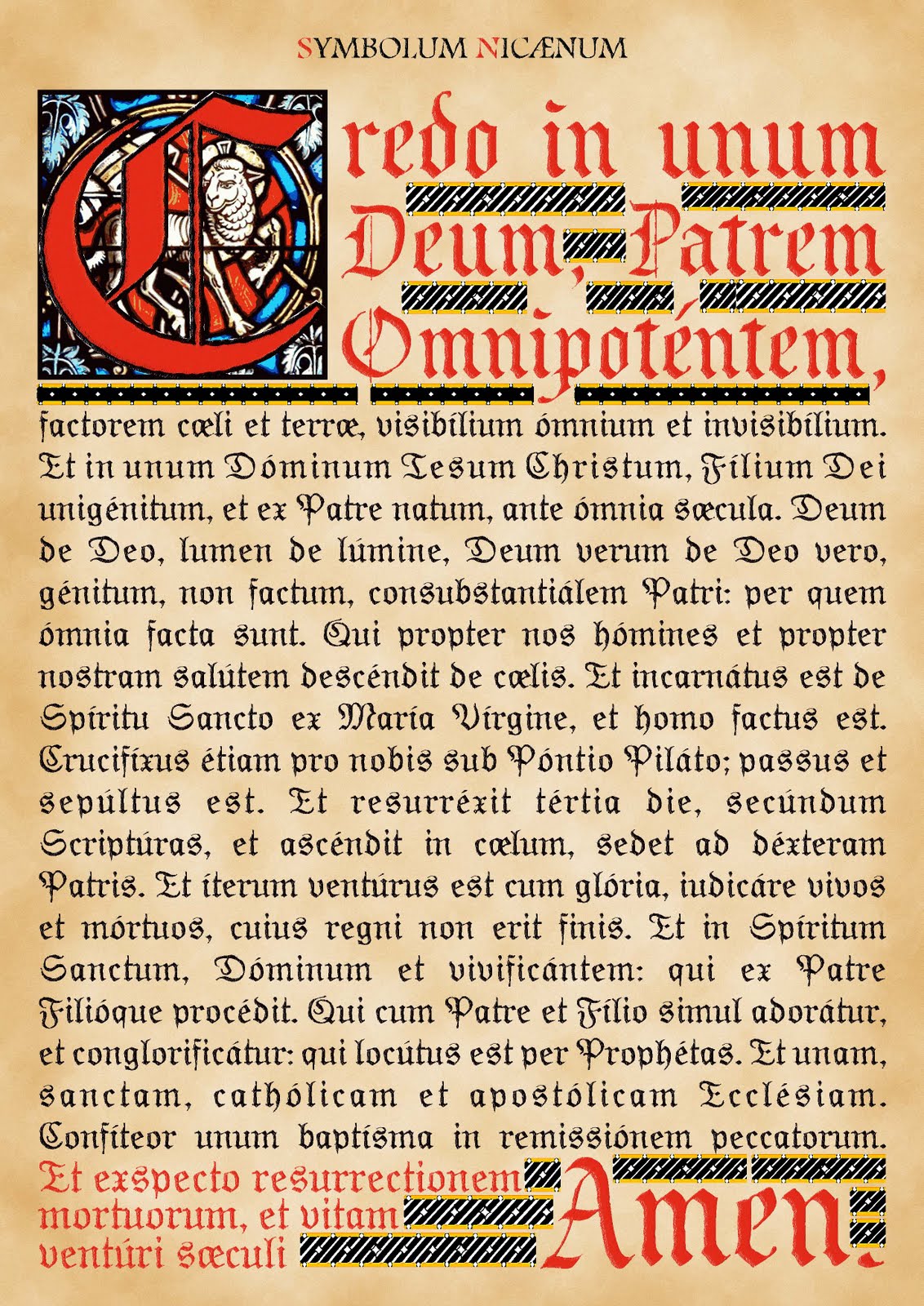
Nicene CreedThere are a couple of sentences in the traditional translation of the basic Christian creeds (statements of faith) that lead to confusion.

Due to the literary examples below, Christian readers may find the following discussion more interesting than non-Christians—but everyone interested in clarity versus confusion should find something intriguing.

The creeds offer a prime example of why it is absolutely crucial to ensure that gradual shifts in language do not undermine or blur the intended meaning of a given sentence. To illustrate, consider this line from the Nicene Creed.

. . . [Jesus] who for us men and for our salvation came down from heaven and was incarnate by the Holy Spirit of the virgin Mary and was made man. (1662, Anglican Book of Common Prayer).*

The potential confusion here lies in the archaic usage of the word “of.” Whose Holy Spirit are we referring to? Mary’s innate holiness and purity? The educated Christian may stumble over that dated phrase—which is still used in some denominations—but a person not acquainted with the doctrine of the Trinity might easily misinterpret it as a Maryological, rather than Christological, confession.

Let’s consider two more recent translations, and note how the first restores the intent of the original writers. The second of these commonly used translations reflects the hand(s) of “politically correct” revisers.

For us and for our salvation he [Jesus] came down from heaven: by the power of the Holy Spirit he became incarnate from the Virgin Mary, and was made man. (1975 International Consultation on English Texts version).

For us and for our salvation he came down from heaven, was incarnate of the Holy Spirit and the Virgin Mary and became truly human. (1988, English Language Liturgical Consultation version).

We will consider a second example momentarily, but let’s first look at something C.S. Lewis wrote about reflecting on the importance of the creeds. He noted that too often we rattle through the words without considering their significance. This is unfortunate.

In an essay entitle “On Forgiveness,” Lewis describes a personal epiphany and offers counsel to those tempted to take familiar words for granted.

We say a great many things in church (and out of church too) without thinking of what we are saying. For instance, we say in the Creed “I believe in the forgiveness of sins.” I had been saying it for several years before I asked myself why it was in the Creed. At first sight it seems hardly worth putting in. “If one is a Christian,” I thought “of course one believes in the forgiveness of sins. It goes without saying.”

But the people who compiled the Creed apparently thought that this was a part of our belief which we needed to be reminded of every time we went to church. And I have begun to see that, as far as I am concerned, they were right. To believe in the forgiveness of sins is not so easy as I thought. Real belief in it is the sort of thing that easily slips away if we don’t keep on polishing it up.

As usual, the Oxford don was correct. However, just as good translations possess the power to inspire, so too poor or antiquated translations exercise the ability to confuse.

Here is the promised second example.

And the third day he rose again according to the Scriptures . . . (1662).

Ah, I understand, think the uncatechized, the Bible teaches us that Jesus rose from the dead on Easter. Well, yes it does, but that is not the sense in which the second phrase is intended. Here, “according to the Scriptures,” means that Jesus’ life, death and resurrection were all accomplished in accordance with the promises of the Word of God.

In other words, “just as was promised in the Garden of Eden and foretold by the prophets, Jesus won victory when he rose from the grave in accordance with the loving plan of God the Father.” The newer versions make that fact only slightly clearer.

On the third day he rose again in accordance with the Scriptures . . . (1975 and 1988).

Perhaps a future revision will replace “in accordance with,” using something like “as foretold in” or “fulfilling the scriptural promises.”

Some of us worship in congregations using a variant of the seventeenth century creed, but at least we can take comfort in the fact that most of them have at least replaced “And he shall come again with glory to judge both the quick and the dead” with “both the living an the dead.” After all, we wouldn’t want people to think that one’s salvation is dependent upon their speed.

_____

* This slightly contemporized version of the creed has already remedied the terribly confusing term “Holy Ghost,” which evokes images of disembodied souls and hauntings.

Chinese Complexity

Chinese ChroniclesSome people consider “writing” difficult. It’s not. When you add the adverb “well,” it does become much rarer. Still, writing in English is not challenging at all when you compare it to the hurdle traditional Chinese authors face.

One of the most popular television programs in the People’s Republic of China is essentially a “spelling bee.” During a recent episode the studio audience was embarrassed by the fact only one-third of them were able to correctly write “gan ga,” which means “embarrassed.”

Chinese ComplexThe problem is apparently two-fold. First, Chinese characters are “complex.” That’s why I selected that very word to include here.

The most comprehensive Chinese dictionary, Zhonghua Zihai, was compiled in 1994. It includes 85,568 characters. When compared to the Latin alphabet of 26 characters, it’s no surprise that a poll in China found 99% of the population admitting they forget how to write words. (To be fair, I’m not sure we could find even 1% in the West claiming that they never forget how to spell a word.)

The second reason for the growing national writing crisis in China is the amazing phenomenon called pinyin. Pinyin is the official phonetic system for transcribing the sound of Chinese characters into Latin script. It was created in 1958 by mainland China and has been adopted by the Republic of China as well.

The influence of pinyin has grown dramatically with the advent of computing, and many young Chinese have become dependent on the shortcut. Some educators have labeled the crippling practice “a type of social disease.”

Fortunately for aspiring Chinese authors, knowing a meager 4,000 distinct characters makes one “functionally” literate. Still, even that seems rather daunting. I’ll no longer take for granted my good fortune in having a mere 26 characters to strive to master.

C.S. Lewis offered some fascinating observations about the Chinese worldview. While he discussed the subject in a variety of places, he presents his thoughts most extensively in The Abolition of Man. He finds the concept of “Tao” a useful corollary to what Christians usually refer to as Natural Law.

The Chinese also speak of a great thing (the greatest thing) called the Tao. It is the reality beyond all predicates, the abyss that was before the Creator Himself. It is Nature, it is the Way, the Road. It is the Way in which the universe goes on, the Way in which things everlastingly emerge, stilly and tranquilly, into space and time. It is also the Way which every man should tread in imitation of that cosmic and supercosmic progression, conforming all activities to that great exemplar.

“In ritual,” say the Analects, “it is harmony with Nature that is prized.” The ancient Jews likewise praise the Law as being “true.” This conception in all its forms, Platonic, Aristotelian, Stoic, Christian, and Oriental alike, I shall henceforth refer to for brevity simply as “the Tao.”

Some of the accounts of it which I have quoted will seem, perhaps, to many of you merely quaint or even magical. But what is common to them all is something we cannot neglect. It is the doctrine of objective value, the belief that certain attitudes are really true, and others really false, to the kind of thing the universe is and the kind of things we are.

Although the following story does not relate to C.S. Lewis directly, it offers an interesting insight into the subject of this post. It appears in the book Remembering C.S. Lewis: Recollections of Those who Knew Him, and refers to J.A. Smith, one of Lewis’ fellow professors at Magdalen.

“At the Breakfast Table” was written by another member of the faculty, Adam Fox. Both men knew Lewis well, since they were part of a breakfast foursome in the Common Room at the college.

Now J.A. had fallen into the way of speculating on odd little problems, which apparently assailed him in bed when sleep deserted him. I remember him coming down one morning and telling us that he had been thinking in the night what a dreadful thing it would be for a learned Chinese to go blind. I do not know if the other members of the party knew why it would be more dreadful for a Chinese than for any other learned person.

I had no idea, but I knew my place, and when I asked why this was so, it appeared, according to J.A., that many of the ideograms that make Chinese writing so beautiful conveyed meaning to the eye but had no sound attached to them. Reading in Chinese was in part at least like looking at a picture book, and for that reason, of course, a blind man is fatally handicapped.

As an epilogue of sorts, I can’t resist including one of my favorite Chinese characters. Perhaps you’ll enjoy it also.

Chinese Verbose

Ironically, since it required sixty-four strokes, the word zhé fell from common usage around the fifth century.

Free C.S. Lewis Book

bookshelvesC.S. Lewis has encouraged innumerable prominent individuals in their own faith and writing journeys. I know of no others who offer at no cost a book about his influence.

John Piper is a pleasant exception to that. In a moment I’ll provide the link where you can download a free copy of Alive to Wonder: Celebrating the Influence of C.S. Lewis.

The volume includes a number of extended excerpts from Piper’s fifty-plus books . . . passages where Lewis’ imprint is particularly vivid. For example:

The synthesis of mind and heart was embodied in C.S. Lewis. Lewis became for me in my college days what Jonathan Edwards became in my seminary days. He was a “romantic rationalist”—that was the name of a small book about Lewis that got me very excited because it summed up what I thought I was (which may be very akin to “pastor-scholar”). Lewis has had a tremendous influence on me in several ways.

Lewis embodied the fact that rigorous, precise, penetrating logic is not inimical to deep, soul-stirring feeling and vivid, lively—even playful—imagination. He combined what almost everybody today assumes are mutually exclusive terms: rationalism and poetry, cool logic and warm feeling, disciplined prose and free imagination. In shattering these old stereotypes, he freed me to think hard and to write poetry, to argue for the resurrection and to compose hymns to Christ, to smash an argument and to hug a friend, to demand a definition and to use a metaphor.

The author is chancellor of Bethlehem College & Seminary. It was founded by Bethlehem Baptist Church in Minneapolis, where Piper served as pastor for several decades.

The writer’s desiringGod website actually offers free PDF copies of many of his books and articles, even though most remain in print and available for regular purchase.

As delightful as Alive to Wonder is, most students of Lewis will find the materials from the 2013 desiringGod National Conference even more welcome. This year’s theme was “The Romantic Rationalist: God, Life, and Imagination in the Work of C.S. Lewis.”

Piper’s website includes ten keynote presentations plus an informative panel discussion, all of which are available for download in audio files. Best of all, the lineup of speakers is first-class, featuring a number of familiar names.

And, since we’re on the subject of “free books,” allow me to share another interesting website.

Forgotten Books offers approximately a million volumes, to which “subscribers” have unlimited access. What sets them apart from other “public domain aggregates,” is that they (unlike books.google.com) provide a searchable text, in a variety of epub formats.

For those who are not interested in purchasing a subscription, they offer a Free Book of the Day option in which you receive the link to one of their texts which is good for twenty-four hours.

I recently used it to add Pure English: A Treatise on Words and Phrases, or Practical Lessons in the Use of Language to my kindle library. I find the reading of dated literary books to be:

Entertaining

Educational

and, occasionally, even

Inspiring

Here are a few sample passages from Pure English. The first sounds remarkably contemporary:

The abuse to which the English language is so generally subjected must be a source of sincere regret to all who appreciate its beauties. Ours is an age of progress and civilization, and it ought to be remembered that language, is also progressive.

In a section entitled “Objectionable and Obsolete Words” we read:

Banister is a common barbarism. The proper word is baluster, or balustrade.

— Noted. In the future I will alternate between baluster and balustrade.

“Disremember,” often employed in the sense of do not remember, although given in Webster, is condemned by the critics as a low vulgarism.

— Apparently so vulgar as to have fallen out of usage completely.

Hence, authoress and poetess are superfluous. So, also, are such words as conductress, directress, inspectress, waitress, etc., all of which have recently come into current use. Perhaps the next edition of our dictionaries will, if the custom continues, be enriched by the addition of such words as writeress, officeress, carpenteress, manageress, secretaryess, treasureress, singeress, walkeress, talkeress, etc.

— How did “waitress” survive, especially in the wake of such witty sarcasm?

It is questionable taste to call a coffin a casket. The pleasing name applicable to a case for jewels does not lessen the dread of death and burial.

— I hadn’t known before the sentiment behind the adoption of the word “casket,” since it’s become so thoroughly associated with this usage that was apparently at one time novel.

If you are interested in the books I’ve mentioned above, you You can download a free copy of Alive to Wonder here, and you can sign up for the free book of the day here.

The Bible’s Songbook

psalmistI experienced an embarrassing moment many years ago while taking a broadcasting media course at seminary. I had used a passage from the Psalms as the basis for an assigned devotional, and when the professors (from several different seminary faculties) critiqued it, a distinguished professor dismissively pointed out that I had mispronounced the word “psalm” itself!

I had foolishly pronounced the “l” sound in the word (the way I’d always heard it pronounced). I don’t know whether any of the other students were as ignorant as I, but no one denied that the condescending correction was correct.

The first thing I did upon returning home was grab my dictionary to see if the doctor of theology was right. It turned out, of course, that he was right with how to pronounce the word [i.e. sahm] . . . but he was definitely wrong about how to properly correct a student.

On a more positive note, the Psalms are the foundation and epitome of worship music for Jews and Christians alike. One could read a Psalm each day and since there are one hundred and fifty, when you returned to the first psalm five months after beginning, it would be utterly fresh.

C.S. Lewis enjoyed the Psalms. The following passage comes from a letter written in 1940.

My enjoyment of the Psalms has been greatly increased lately. The point has been made before, but let me make it again: what an admirable thing it is in the divine economy that the sacred literature of the world should have been entrusted to a people whose poetry, depending largely on parallelism, should remain poetry in any language you translate it into.

And glorious poetry it is. The beauty of the songs extends far beyond the family “Lord is my shepherd . . .” And yet, it would be impossible to comprehend the number of grieving souls that have been comforted with the words “Even though I walk through the valley of the shadow of death, I will fear no evil, for you are with me; your rod and your staff, they comfort me.”

Most Christian traditions greatly value the Psalms, and many include them as a portion of the regular service or liturgy. And individuals who include them in the personal devotions are never disappointed.

C.S. Lewis included them in his prayer and devotion. In fact, he enjoyed the Psalms so much that in 1958 he wrote a book entitled Reflections on the Psalms. There he proclaims, “The most valuable thing the Psalms do for me is to express that same delight in God which made David dance.”

The Church has added an immense repertoire to the Psalms during the past two millennia, but they will never be replaced. In fact, many inspired songs owe a major debt to the Psalms themselves. This includes the Odes of Solomon, the first (post-Psalms) Christian hymnal (composed circa 100 A.D.).

Speaking of the Odes, I wrote a thesis on them many years ago, and have been considering writing a book about these treasures. Perhaps I’ll share more about them in the future.

_____

The lovely window pictured above is from a church in Fringford, England. David was likely a bit younger when most of the psalms he composed were written.

Powerful Names

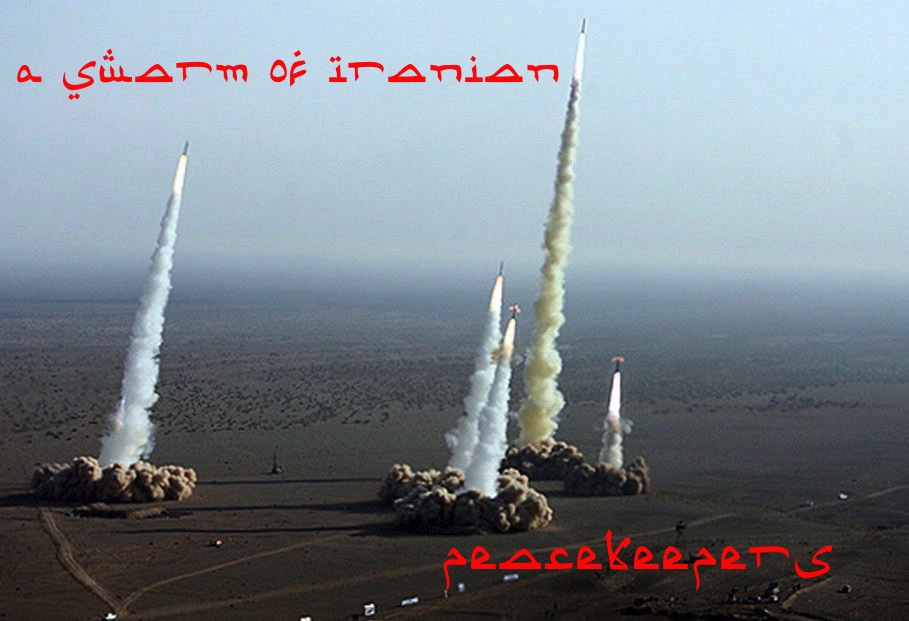
missilesIt’s all in the name. The person who succeeds in naming (or labeling) something wields great power.

Whether it be a concrete object, or an idea, the power to name carries the power to shape perceptions.

Philosophically, we might agree that:

“That which we call a rose by any other name would smell as sweet” (Juliet, Romeo and Juliet).

But, if we are perfectly honest, calling it “skunk cabbage” might affect our perception of its aroma.

A classic example of the power of naming comes from the era of Norse exploration. In the ninth century, Vikings began settling in the inhospitably named “Iceland.” The island was majestic, and its spectacular glaciers and volcanoes still allowed room for extremely fertile farmsteads.

Less than a century and a half later, Erik the Red was exiled from Iceland. He sailed west and established the first colony on a much larger island that he enticingly named Greenland. Erik’s brilliant advertising ploy was quite effective, and hundreds of settlers joined him in the much harsher climes to Iceland’s west.

The specific appellations which led me to ponder the power that resides in naming once again,* actually came from a much more modern source—weaponry.

Military leaders have a knack for generating striking names. Often they are brilliant; occasionally they completely miss the mark. In either case, it’s curious to note the message their choice of nomenclature seeks to emphasize. Consider for a moment two different American missiles.

The AGM-114 Hellfire and the LGM-118A Peacekeeper

The reader naturally assumes the purpose of the former is to rain sulfur and brimstone down on the enemy, while the mission of the latter is to benignly maintain peace. One suspects, however, that being at the epicenter of either explosive device would be equally disastrous.

Another example we might consider is a bit more controversial, but fascinating nonetheless. Consider these labels for movements involved in the abortion debate.

Self-Preferred  ||  Used by Opponents  ||  Used by the Media

Pro-Choice  ||  Pro-Abortion  ||  Pro-Choice

Pro-Life  ||  Anti-Choice  ||  Anti-Abortion

It doesn’t require a brilliant intellect to comprehend the tone each of these labels evokes. Nor should it come as a surprise how the mainstream media tends to line up in the debate.

It’s all in the name. The person who succeeds in naming something wields great power.

C.S. Lewis was a master of language. He knew names exercise significant influence on how things are perceived. In the following passage from “The Humanitarian Theory of Punishment,” he describes how a powerful word—in this case “mercy”—can be dangerously misleading when applied to something inimical to itself.

Mercy, detached from Justice, grows unmerciful. That is the important paradox. As there are plants which will flourish only in mountain soil, so it appears that Mercy will flower only when it grows in the crannies of the rock of Justice: transplanted to the marshlands of mere Humanitarianism, it becomes a man-eating weed, all the more dangerous because it is still called by the same name as the mountain variety.

In another essay, “‘Bulverism:’ or, the Foundation of 20th Century Thought,” Lewis actually coins a word which has found favor with a literate subculture. The peculiar word he created conveys a sense of obtuse, opinionated self-smugness. (Yes, I may be reading just a little bit into “Bulverism,” but I really don’t think so. The aristocratic or remote sounding surname “Bulver,” the “ism” suffix and, of course, the “Bul” prefix all combine to engender an odd and unappealing impression.)

The subject Lewis addresses in this work is the unwillingness of disagreeing parties to honestly debate the merits of an issue. Instead, they rush to employ the invalid (and terribly effective) ad hominem approaches that characterize so much of modern politics.

C.S. Lewis is so talented (and ingenious) that he provides us with a biographical note on the fictional creator of the deficient form of “debate” prevalent in the modern era. “The modern method [of argument],” Lewis begins, “is to assume without discussion [your opponent] is wrong and then distract his attention from this (the only real issue) by busily explaining how he became so silly.”

In the course of the last fifteen years I have found this vice so common that I have had to invent a name for it. I call it “Bulverism.” Some day I am going the write the biography of its imaginary inventor, Ezekiel Bulver, whose destiny was determined at the age of five when he heard his mother say to his father—who had been maintaining that two sides of a triangle were together greater than the third—“Oh, you say that because you are a man.”

“At that moment,” E. Bulver assures us, “there flashed across my opening mind the great truth that refutation is no necessary part of argument. Assume your opponent is wrong, and then explain his error, and the world will be at your feet. Attempt to prove that he is wrong or (worse still) try to find out whether he is wrong or right, and the national dynamism of our age will thrust you to the wall.” That is how Bulver became one of the makers of the Twentieth Century.

. . . Bulverism is a truly democratic game in the sense that all can play it all day long, and that it gives no unfair privilege to the small and offensive minority who reason.

Sadly, Bulver’s disciples continue to increase, rather than diminish.

Since it was military missiles that initially got me thinking about the subject of the power of naming, it might be fitting to end with a few more evocative labels. They certainly elicit a wide range of impressions.

Condor: Argentina’s avian contribution

Piranha: Tiny but vicious and straight from Brazil’s Amazon

Velvet Glove: Canada’s mixed message

Sky Sword: China’s blending of the ancient and modern

Apache: French, which confuses this American veteran**

Meteor: A European offering sure to land hard if it doesn’t disappear in the atmosphere

Martel: Anglo-French venture they surely don’t want Islamists to think is a tribute to Charles Martel, Hero of the Battle of Tours***

V-1 Flying Bomb: Got to Hand it to the Germans for straight-forward labeling.

Rhinemaidens (Rheintöchter): There’s apparently Teutonic Poetry as well

Fateh: Iran’s “Conqueror”

Zelzal: Iran’s “Earthquake”

Sejjil: Iran’s “Baked Clay” (well we can’t expect all the Persian names to be winners)

Jericho: From Israel where we know whose walls tumbled down

Spike: Israeli and probably not a reference to Jael and the Book of Judges****

Hatf: Pakistani “Vengeance” (derived from the gentle sword of Muhammad)

Hyunmoo: Korea’s mythical “Guardian of the Northern Sky” (mayhap a reference to their aggressive northern neighbor)

Penguin: Those Norwegians really know how to frighten their enemies

Malakhit (Малахит): Just one of Russia’s curiously named explosives in their “mineral missile series”

Umkhonto: South African “Spear” from the Zulu tongue

The Brits are uniquely creative when it comes to naming missiles. They include: Blowpipe, Brimstone, Green Cheese, Rapier, Sea Skua and, of course, Fairey Fireflash and it’s less intimidating companion Fairey Stooge.

For some reason, I find a missile named “Green Cheese” particularly disconcerting. Whoever named that specific weapon was devilishly clever. If I were a world leader, I’d surrender immediately, rather than face a foe confident enough in their military prowess to use that sort of twisted culinary nomenclature for their armaments.

______

* I have written on the subject of personal names in the past.

** It just may translate as “Ruffian,” but I don’t think I want to go there, since it hints at political incorrectness.

*** It’s actually a combination of the missile’s guidance options: Missile, Anti-Radiation, Television. I’m sure the parallel with the Frankish defender of the Christian Church is a mere coincidence.

**** The fourth chapter of the Book of Judges.

Ending ALL CAPS

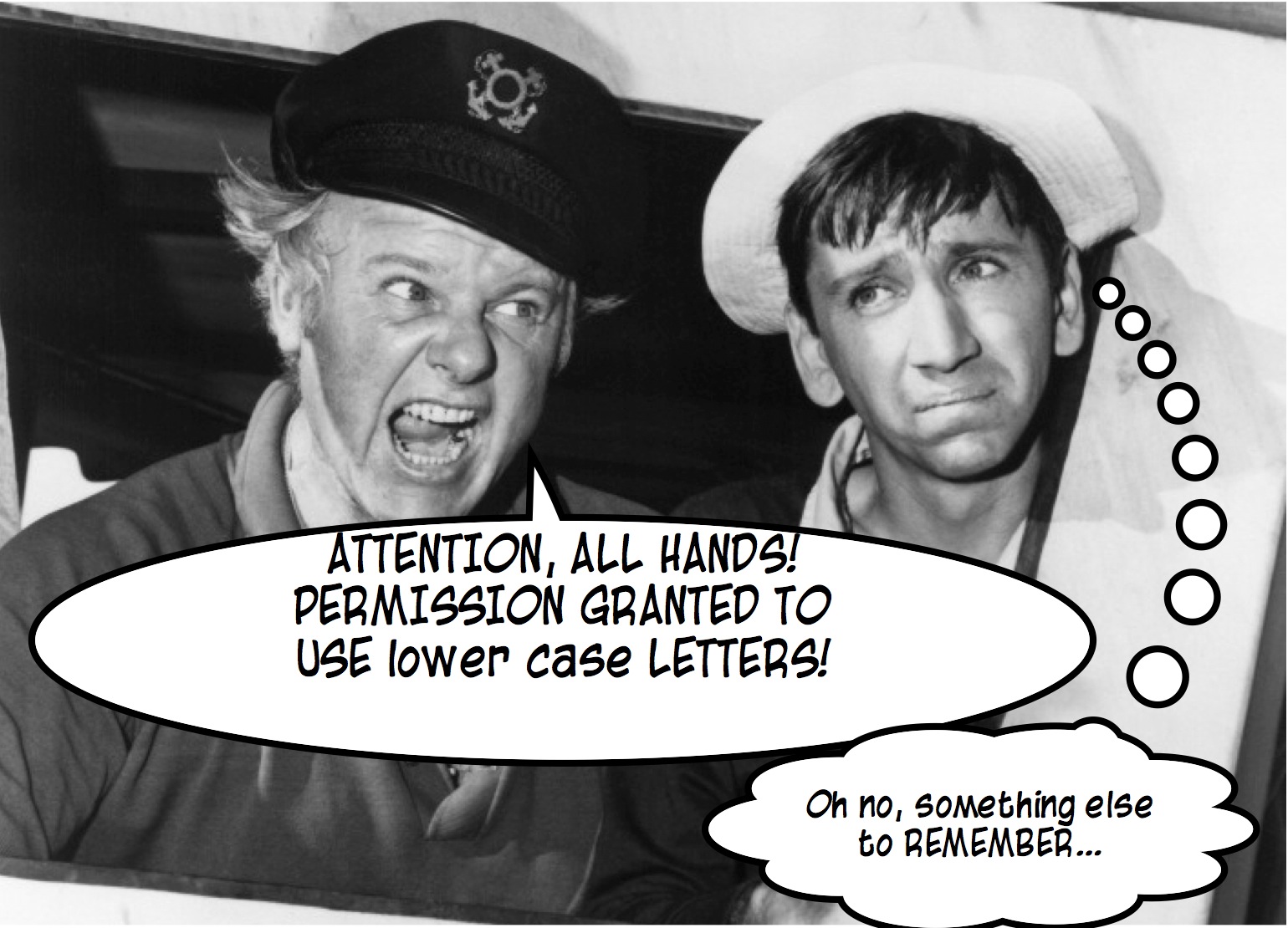
gilliganThe United States Navy finally realized what everyone else long ago recognized—writing in ALL CAPS is obsolete.

Only the most novice users of the internet type in all caps. After all, people quickly learn that it is tantamount to “shouting,” and considered rude behavior.

The occasional word or phrase may properly be rendered in CAPS, in order to emphasize it when italics are not available, BUT WRITING EVERYTHING IN CAPITAL LETTERS IS SURELY TO BE AVOIDED.

The advent of the computer has freed us from the limited conventions forced upon us by typewriters. For emphasis, we lacked boldface and italic fonts (unless one had access to an IBM Selectric or one of its clones).

Back in the “olden days,” we had to be satisfied with unsightly underlining. Surprisingly, many people today seem unaware that underlining is obsolete . . . but that’s a subject for another day.

Returning to the use of all capital letters. Earlier this year, the Navy caught up with the rest of the universe’s practice and changed their official policies which required CAPITALIZATION in internal, official messages.

It was wonderfully fitting that the official memorandum read:

AUTHORIZED TO USE STANDARD, MIXED-CASE CHARACTERS IN THE BODY OF ORGANIZATIONAL MESSAGES.

However, lest any sailors get carried away with this modern fad, the message continued:

RECOMMEND CONTINUE TO USE UPPER CASE IN LINES BEFORE REMARKS.

As a retired military chaplain I love the following (unattributed) quotation from an article on the subject.

“If an ancillary benefit is that sailors reading message traffic no longer feel they’re being screamed at . . . that is a good thing too,” said a Navy official. The official insisted the move was not an example of the service going soft.

Well, we certainly couldn’t have that!

I’m not aware of any places where C.S. Lewis resorts to the use of capital letters to emphasize anything. But in searching for just such a thing, I came across a fascinating passage in the introduction to his English Literature in the Sixteenth Century.

Lewis’ descriptions are always vivid and his description of “ruthless emphasis” does not disappoint.

The rough outline of our literary history in the sixteenth century is not very difficult to grasp. At the beginning we find a literature still medieval in form and spirit. . . . Their prose is clumsy, monotonous, garrulous; their verse either astonishingly tame and cold or, if it attempts to rise, the coarsest fustian. In both mediums we come to dread a certain ruthless emphasis; bludgeon-work. Nothing is light, or tender, or fresh. All the authors write like elderly men. The mid-century is an earnest, heavy-handed, commonplace age: a drab age.*

The use of all caps strikes me as akin to “bludgeon-work.” Not nearly so graceful as occasional italics or the even more skillful manipulation of the English language itself in order to emphasize its message.

At least we can take some small comfort in the fact that the Navy has joined the “mixed-case” twenty-first century. I assume there remain a handful of holdouts in the Admiralty, but eventually these old salts will retire, and the new day of “upper and lower case diversity” will have fully dawned.

_____

* If you are interested in seeing the rest of Lewis’ thoughts about “the rough outline of our literary history in the sixteenth century,” read on.

Then, in the last quarter of the century, the unpredictable happens. With startling suddenness we ascend. Fantasy, conceit, paradox, colour, incantation return. Youth returns. The fine frenzies of ideal love and ideal war are readmitted. Sidney, Spenser, Shakespeare, Hooker—even, in a way, Lyly—display what is almost a new culture: that culture which was to last through most of the seventeenth century and to enrich the very meanings of the words England and Aristocracy. Nothing in the earlier history of our period would have enabled the sharpest observer to foresee this transformation.

Obstreperous Language

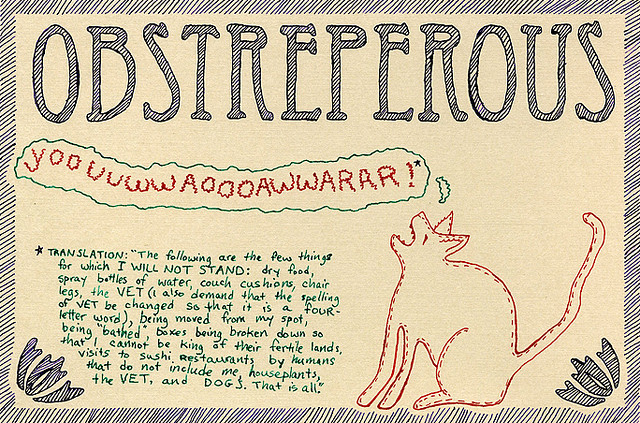
obstreperous

© Stella Belikiewicz and used by permission.

Despite my many shortcomings, I do “pride” myself on possessing a rather considerable vocabulary. My 97th percentile score of the GRE* reinforced my impression that I knew a lot about words.

One technique which has increased my vocabulary is to never let an unknown word pass by without making an effort to learn its meaning. This is simple when I’m working at the computer. If I’m unsure of a definition, I immediately look it up in an online dictionary such as this.

Very rarely do I “guess” at a meaning, based upon its context. This mainly occurs if I’m listening to the radio while I’m driving, and I don’t have recourse to a dictionary. Even then I try to impress the new word on my memory so that I can research it when I return home.

The word in this column’s title motivated me to discuss the importance of accurately understanding word definitions. When I encountered “obstreperous,” it rang vague bells of recollection. And, I was able to discern the word’s general meaning from the context of the article. While some readers of Mere Inkling are already familiar with its meaning—and perhaps use it in daily conversations—allow me to share the context in which I encountered it.

I was reading an article in a military journal about the “battle over ballistic missiles” which was fought inside the Air Force as the manned-bombers-only mindset had to be breached so the United States could advance into the ICBM age. The champions of the two positions were two successive Air Force Chiefs of Staff, Thomas White and Curtis LeMay.

White struggled with how to control the obstreperous LeMay. He knew he didn’t have the political power to force LeMay out, nor could he outwait his [Strategic Air Command] chief. LeMay received his fourth star in 1951 at age 44, which made him the youngest four-star U.S. general since Ulysses S. Grant.**

I’m rarely content with possessing an amorphous definition of a word, so I looked it up. My general impressions of its meaning were confirmed, and I added another word to my personal vocabulary. (The fact that I may never use it beyond its appearance in this post is irrelevant.) Here’s the dictionary entry:

ob·strep·er·ous [uhb-strep-er-uhs]

adjective

1. resisting control or restraint in a difficult manner; unruly.

2. noisy, clamorous, or boisterous: obstreperous children.

Parents give their children a precious gift by encouraging the growth of their own vocabularies. In the pre-computer days, we had a dictionary not far away when we had dinner, and it wasn’t uncommon for it to find its way to the table during our conversations.

Consciously adding new words to our vocabulary is a skill especially vital to writers.

C.S. Lewis wrote about how common usage of familiar words requires no contextual definition. However, he warns of the danger of accepting subjective “definitions” offered outside the context of credible dictionaries.

When we leave the dictionaries we must view all definitions with grave distrust. It is the greatest simplicity in the world to suppose that when, say, Dryden defines wit or Arnold defines poetry, we can use their definition as evidence of what the word really meant when they wrote.

The fact that they define it at all is itself a ground for scepticism. Unless we are writing a dictionary, or a text-book of some technical subject, we define our words only because we are in some measure departing from their real current sense. Otherwise there would be no purpose in doing so. . . .

The word wit will illustrate this. We . . . find old critics giving definitions of it which are contradicted not only by other evidence but out of the critics’ own mouths. Off their guard they can be caught using it in the very sense their definition was contrived to exclude.

A student who should read the critical debate of the seventeenth century on wit under the impression that what the critics say they mean by wit is always, or often, what they really mean by wit would end in total bewilderment.

He must understand that such definitions are purely tactical. They are attempts to appropriate for one side, and to deny to the other, a potent word. You can see the same “war of positions” going on today.

A certain type of writer begins “The essence of poetry is” or “All vulgarity may be defined as,” and then produces a definition which no one ever thought of since the world began, which conforms to no one’s actual usage, and which he himself will probably have forgotten by the end of the month. (Studies in Words)

I find it rather fitting to include this passage from Lewis, with its martial imagery, in a column inspired by a description of a surly advocate of massive nuclear bombing as the best deterrence of World War III.

Writers, particularly those attempting to be persuasive, are wise to ponder Lewis’ wise counsel. We cannot surrender the battlefield to those who would revise the clear and historic meanings of words in an effort “to appropriate for one side, and to deny to the other, a potent word.”

_____

* The Graduate Record Exam is a standardized test used as part of the admission process for many university graduate programs in the United States. We won’t be discussing my mathematics score here . . .

** If the source article interests you, you can read it at Air Force Magazine.

The artwork above is copyrighted by its creator, Stella Belikiewicz, and used with her permission.

Writing Life Scripts

ben hurI was shaped by the heroic religious films of the 1950s and 60s. The powerful messages of epic movies like Ben Hur, Quo Vadis and The Robe planted within my young Christian heart an awareness of nobility and radical self-sacrifice.

About twenty years ago, I spent a year doing graduate work in education. One of my Educational Psychology classes was taught by a professor who was a devotee of Transactional Analysis. I don’t recall too much about TA, aside from one of its principles that resonated with me.

It’s a concept called Life Scripts. Without going into great detail, it is an often subconscious notion of how we “think” our lives will or should play out. It’s adjusted throughout our lives, but the basic theme is established when we are quite young.*

A recent article says “script is broadly understood as a series of decisions, formed as coping strategies in childhood, which continue to shape the life course outside of awareness.”**

It was only as an adult that I realized just how significant an impression these virtuous stories made on me. I recalled the countless times I lay in bed at night rehearsing the story of The Robe. I was the unbelieving Roman soldier, converted by the gentle witness of the wrongfully persecuted Christians.*** Ultimately, I took my stand with them, defending them and voluntarily laying down my life for Christ.

That same plot line still echoes through my mind and soul.

I consider myself blessed to have been exposed to such positive influences while my self identity was being shaped. And I pray for children today whose parents allow them to be exposed (at terribly vulnerable ages!) to violent, fearful and morally ambiguous influences.

Those precious minds and hearts are scarred by the vulgarity and immorality that are endemic in modern cinema, television and music. May God have mercy on them.

C.S. Lewis lived during the era when the virtuous dramas such as those named above were at the peak of their influence.

In a diary entry from the mid-1920s, he mentions Quo Vadis in passing. He is describing his weekend schedule.

Saturday 22 April: Got up about 6.30 and did the same jobs as yesterday. Was settled to work by 9.5 o’clock and put in an excellent morning . . . Sheila Gonner—jolly child—came to tea. Dorothy is to come back tomorrow: so we shall no longer be servantless. At her request I lent her my crib to Tacitus’ History for her sister Rose— I wonder what makes her imagine that she would like it? Possibly early Christian novels of the Quo Vadis type. Worked again after tea, and from supper till ten o’clock, finishing Herodotus. The last few pages of the IXth Book I now read for the first time, having got tired of it on my first reading . . .

I find this diary passage intriguing, in the way that Lewis posits a reader’s potential interest in classical literature as arising from their exposure to ancient Rome via contemporary novels. That’s precisely where my own lifelong fascination with the Roman empire was born.

If you’ve never seen these three movies, I commend them to you. I would also encourage you to consider reading one or all of the novels. They are available for free download in various digital formats.

Quo Vadis

Ben Hur

The Robe

_____

* I’m a pastor and historian, not a psychologist, so I don’t pretend to understand all of the implications. Because of that, I don’t endorse TA as a fully valid theory. What’s more, in our fallen world it’s obvious that many early “life scripts” can be based on wounds inflicted on neglected or abused children. In such cases, particularly where the scripts are destructive, we are not “destined” to live out a tragedy. By the grace of God, even the saddest of stories can be redeemed and “rewritten” into tales of hope and wonder.

** From “Script or Scripture?” by Jo Stuthridge in Life Scripts edited by Richard Erskine (Karnac Books, 2010).

*** It didn’t hurt that the main Christian disciple in the film was the lovely and chaste Diana, played by the British actress Jean Simmons. But that’s another story, and it’s important to note that these life scripts are pre-pubescent creations, so they are motivated by much deeper impulses than hormones. As the previously footnoted quotation referred to them, they are fundamentally “coping strategies” for survival in the calm (or frequently turbulent) world in which children find themselves.