Tesla & the Inklings

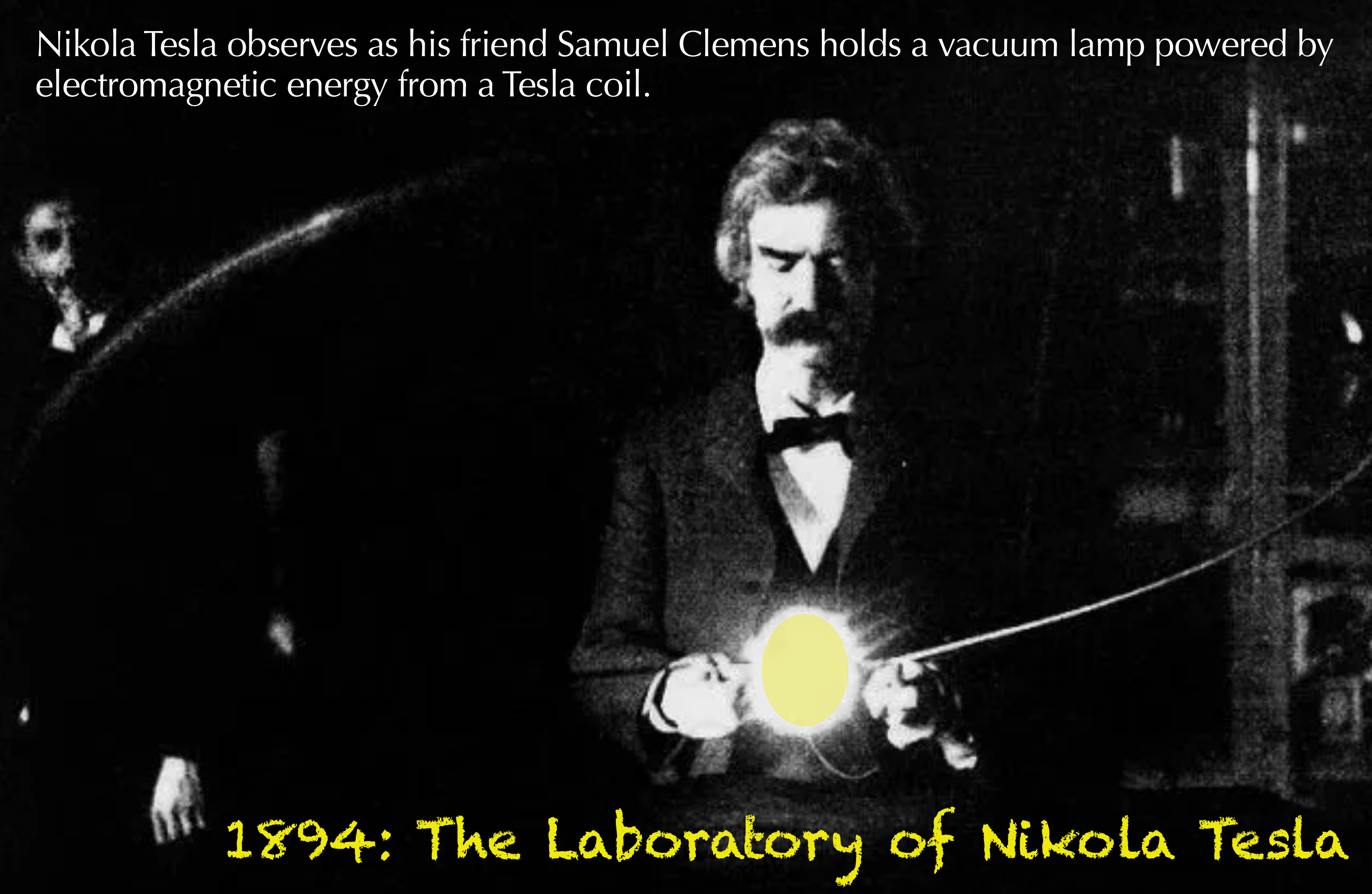
I recently uncovered a curious connection between C.S. Lewis and Tesla. (Not the current target of anarchist vandalism, the scientist.) While researching scientists living in the early twentieth century, a photograph of Tesla and his friend Mark Twain ignited my curiosity as to whether or not there might have been any connection between Lewis and Tesla.

C.S. Lewis (1898 – 1963) and Nikola Tesla (1856 – 1943) never met or corresponded. And yet, they do possess a rather tenuous, speculative connection.

Their connection isn’t based on any similarities. Tesla was a radically innovative scientist. Lewis was a grounded literary master who was wisely suspicious of misplaced faith in scientism. 

Despite the fact Tesla’s father and uncle were both Serbian Orthodox priests, and he maintained an interest in various religious traditions throughout his life, his adult beliefs were eclectic.

Lewis, the grandson of a Church of Ireland priest, went through a period of atheism before returning to Christianity as a devout member of the Anglican communion.

So, how might the two men have been connected? Before exploring the notion that they shared a mysterious source of inspiration, consider the application of a modern theory.

Six Degrees of Separation

Various experiments have supported the idea that people (in Western nations, at least) find it “truly possible to trace a social connection between any two random people within just six steps” (This is far more refined than the overlapping of lifespans as discussed here.)

But the pressing question remained: Why six? The answer has finally been revealed in a paper published in the journal Physical Review X. The study authors include researchers from Israel, Spain, Italy, Russia, Slovenia, and Chile. 

For an academic study of the phenomenon check out “Why Are There Six Degrees of Separation in a Social Network?

Even without the existence of social media, which some have argued may reduce “6 Degrees of Separation [to] 2,” I uncovered a pair of paths connecting Tesla and Lewis.

The first example is the more “direct,” but the second includes as an intermediate link, a writer of great importance to C.S. Lewis.

Nikola Tesla (1856 – 1943)
Had as a friend who visited his laboratory, and later invited the inventor to attend his daughter’s wedding

Mark Twain (1835 – 1910)
Who, after offering a scathing indictment of British colonialism, officially introduced to deliver a 1900 speech in New York…

Winston Churchill (1874 – 1965)
Who offered “the honour of becoming a Commander of the Most Excellent Order of the British Empire (CBE)” to…

C.S. Lewis (1898 – 1963)
one of the most renowned scholars to ever teach at Oxford and Cambridge.

And an alternate path:

Nikola Tesla (1856 – 1943)
Had as a friend who visited his laboratory, and later invited the inventor to attend his daughter’s wedding…

Mark Twain (1835 – 1910)
Who maintained a longtime literary and personal friendship with…

George MacDonald (1824 – 1905)
Who received as a gift A Speech and Two Poems with a personal letter from Irish poet…

William Butler Yeats (1865 – 1939)
Who, on more than one occasion, entertained in his home

C.S. Lewis (1898 – 1963)
who, coincidentally, regarded the very same George MacDonald as one of his greatest mentors.

Tracking down these relationship paths was not that difficult. It was actually fun. If I wasn’t so busy, I would create a few more examples.

Was there Another Connection?

Nikola Tesla (Никола Тесла) was a Serbian-American inventor and futurist. His design of the alternating current (AC) electricity system was a breakthrough. As noted above, he was not a credal Christian. In “A Machine to End War,” he described his beliefs in the following manner.

To me, the universe is simply a great machine which never came into being and never will end. The human being is no exception . . . Man, like the universe, is a machine. . . . what we call “soul “ or “spirit,” is nothing more than the sum of the functionings of the body. When this functioning ceases, the “soul” or the “spirit” ceases likewise.

The possible connection between Tesla and the Inklings, postulated by a sensationalist Anglican priest, is offered in Secrets of Rennes Le Chateau. The author, R. Lionel Fanthorpe, an Anglican priest who believes “there are as many roads to the loving God of all mankind as there are individual human beings,” has written about many offbeat subjects. 

In the aforementioned work, he references passages from J.R.R. Tolkien, C.S. Lewis, Charles Williams and George MacDonald as writers whose fiction may “contain hints about the Rennes-le-Château enigma.” He immediately follows this discussion with the case of “another contemporary of theirs [who] was one of the strangest and most brilliant men” of his age, Nikola Tesla.

He ends the chapter with the question, “what if the enigma with which all our Men of Mystery seem to have been involved was some form of superior communication? But communication with what? Or with whom?”

I doubt there is any connection in the source of the inspiration experienced by the Inklings, Tesla and the church at Rennes-le-Château. That said, it is an odd place of worship, due to the renovations made by its eccentric Roman Catholic priest, François-Bérenger Saunière (1852 – 1917).

Among the alterations made was the addition of a holy water font resting on the back of a devil or demon. That certainly qualifies as a “mysterious” decision. A mystery with which the Inklings bear no connection. 

Ultimately, Fanthorpe’s odd musings are illusory. Better to dismiss them and focus on the actual connection between C.S. Lewis and Nikola Tesla – one documented through the Six Degrees of Separation model.
C.S. Lewis, the Brothers Grimm & Snow White

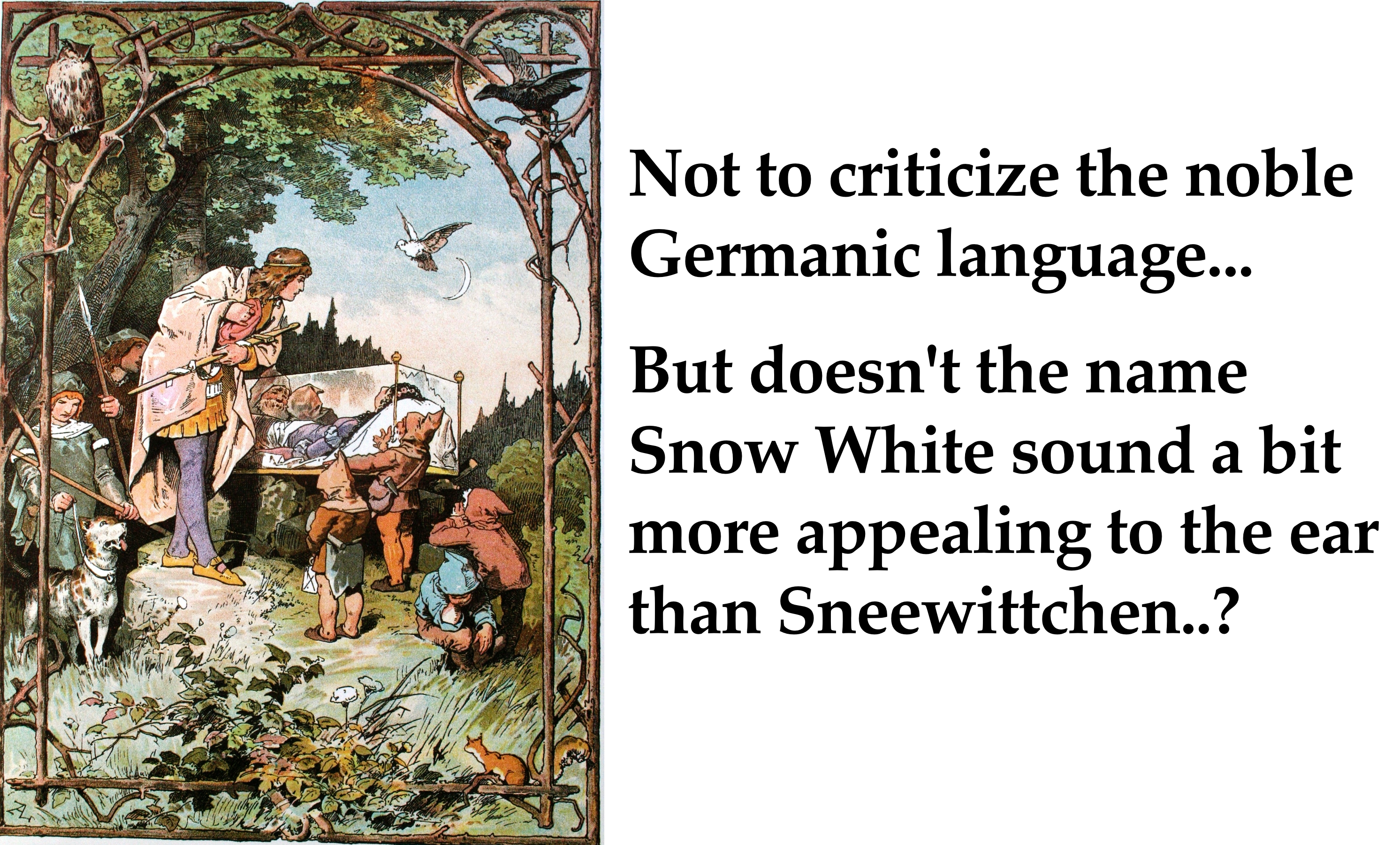
You may blame the recent cinematic debacle that is Snow White on a declining Film Studio or the Brothers Grimm, but C.S. Lewis is innocent.

That’s not to say the Grimms didn’t have an influence on the great Oxbridge professor, a subject we’ll explore momentarily. But it was the German folk tales published by academics Jacob and Wilhelm Grimm who published the classic fairy tales that Walt Disney mined so effectively. 

They also popularized CinderellaHansel and GretelLittle Red Riding HoodThe Princess and the Frog, and Rapunzel. Disney began the transformation of these tales into visual treasures as early as 1921 when he founded Laugh-O-Gram Studio in Kansas City, Missouri.

In addition to films, over the years Walt gleaned memorable Grimm stories for a multitude of cartoon shorts, including The Brave Little Tailor and The Four Musicians of Bremen.

Obviously, Walt Disney himself respected the source material for the stories and wielded his editorial prerogative in an appropriate manner. Tragically, the same cannot be said for his corporate heirs. Likewise, the Brothers Grimm bear no culpability in this area.

C.S. Lewis, J.R.R. Tolkien & Snow White

The truth is, although Lewis and Tolkien appreciated literary fairy tales, neither of the preeminent Inklings were enamored with Disney’s animated treatment of the stories. Curiously, the two distinguished dons actually attended the theater together to view the trailblazing novelty that was Snow White.

They were particularly disappointed with the dwarves, seeing just how different they were from the genuine legends about them. Lewis even wrote “Dwarfs ought to be ugly of course, but not in that way.” Atlas Obscura has an entertaining article about their “movie date” and notes some of the elements they also enjoyed in the feature.

In his lectures published as A preface to Paradise lost, C.S. Lewis elaborates on his response to the Disney version of the tale.

That strange blend of genius and vulgarity, the film of Snow-White, will illustrate the point. There was good unorginality in the drawing of the Queen. She was the very archetype of all beautiful, cruel queens: the thing one expected to see, save that it was truer to type than one dared to hope for.

There was bad originality in the bloated, drunken, low-comedy faces of the dwarfs. Neither the earthiness, the avarice, nor the wisdom of true dwarfs was there, but an imbecility of arbitrary invention.

But in the scene where Snow-White wakes in the woods both the right originality and the right unoriginality were used together. The good unoriginality lay in the use of small, delicate animals as comforters, in the true Märchen [fairy tale] style. The good originality lay in letting us at first mistake their eyes for the eyes of monsters.

If you want to read more about the subject, you can do no better than read Joe Christopher’s article on the subject.

For an interesting argument that fellow Brit G.K. Chesterton would have loved Snow White for the very reason that moved the Inklings to criticize it, see “Tolkien and Lewis disliked Snow White. You know who wouldn’t have?

C.S. Lewis & Grimm’s Fairy Tales

Like his friend, J.R.R. Tolkien, C.S. Lewis was a champion of classical fairy tales. Neither was apologetic for it, although Lewis admitted to being shy about it when he was young. In an essay titled “On Three Ways of Writing For Children,” he wrote,

When I was ten, I read fairy tales in secret and would have been ashamed if I had been found doing so. Now that I am fifty I read them openly. When I became a man I put away childish things, including the fear of childishness and the desire to be very grown up.

In a great post called “Old Enough For Fairy Tales: C.S. Lewis’ “The Chronicles of Narnia” the writer describes this distinction to which Lewis alludes.

The Chronicles of Narnia are not children’s stories. They are fairy tales—but that is precisely why they are not children’s stories. If you can’t understand, you haven’t been listening. Go back and read the quote from Lewis’ essay again. Children are not the only audience for fairy tales.

In 1954, C.S. Lewis apologized to a German professor for being unable to understand the nuances of his volume on philosophy. In doing so, he referred to his youthful reading of the Brothers Grimm in their original German (available at Internet Archive).

I look forward to reading the book (when the translation arrives! My German is wretched, and what there is of it belongs chiefly to the libretto of the Ring and Grimm’s Märchen – works whose style and vocabulary you very possibly do not closely follow).

If you are in the mood for reading Grimm’s Fairy tales today, and your German is sadly lacking, Project Gutenberg has just the translation for you . . . as long as you can read English.


Addendum [added 10 April 2025]

The Brothers Grimm were far more than simply folklorists. They were respected professors at the University of Göttingen. They were devout Christians and worked with other prominent Germans. 

Goethe assisted them at a crucial moment in collecting their tales, and the philosopher Friedrich Schleiermacher provided copyediting assistance. Jacob’s work on German mythology had a pronounced influence on the composer Richard Wagner (World Magazine).

They also began compiling the Deutsches Wörterbuch (Germany dictionary) in 1838, with the first volumes published in 1854. It was the first dictionary to include historical usages of each word, preceding the Oxford English Dictionary, which was initiated in 1857 with its first edition published in 1884.


Bonus Trivia: The dwarves were unnamed until their debut on Broadway in 1912. And on that day they were christened Blick, Flick, Glick, Plick, Snick, Whick and Quee.

Pilfering Tolkien Linguistics

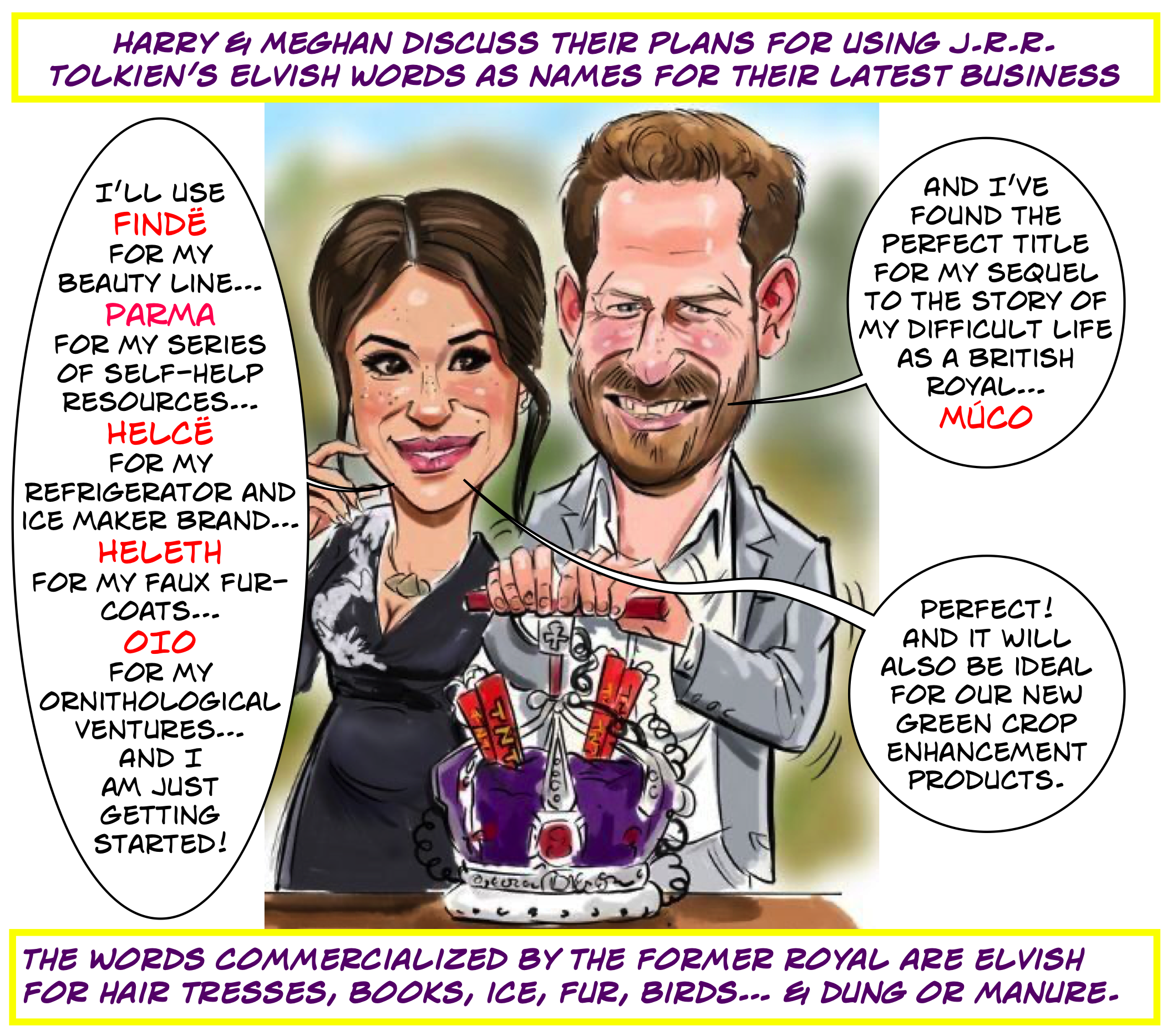
When a great author, say of the magnitude of J.R.R. Tolkien, creates ingenious new words, and even entire languages, there are several common reactions. Most readers simply respond with silent awe. Others are inspired to emulate their efforts. A small number reuse those very words as a sincere homage

And a handful of “admirers” go so far as to “appropriate” the words themselves, for their personal benefit.

C.S. Lewis, no mean linguist himself, recognized his friend Tolkien’s brilliance. In his preface to That Hideous Strength he praised Tolkien’s yet-to-be-published Silmarillion. In a 1951 letter he mentions misspelling the word Numenor.

My Numinor was a mispelling: it ought to be Numenor. The private mythology to which it belongs grew out of the private language which Tolkien had invented: a real language with roots and sound-laws such as only a great philologist could invent.

He says he found that it was impossible to invent a language without at the same time inventing a mythology.

J.R.R. Tolkien was an internationally renowned philologist, and his impressive skill is one of the great wonders we encounter in Middle Earth. A number of words from his created languages – particularly his ethereal Elvish tongues – have been lifted to be used in commercial activities unconnected to Tolkien’s interests.

For example, Palantir. This was the word for the “seeing stone,” which played a prominent role in The Two Towers. In light of Tolkien’s love of nature, and corresponding suspicion of technological advancement, it is especially odd that the company adopting this label is on the leading edge of Artificial Intelligence.

Perhaps Tolkien’s dread would have been dispelled by one of Palantir’s disarming mottos: “We believe in augmenting human intelligence, not replacing it.”

A combat veteran of WWI, like his fellow Inkling C.S. Lewis, Tolkien was appalled by war’s horrors. Even in the War of the Rings, with its moments of glorious heroism and sacrifice, the bloody heart of Mars remains nearly invincible. Because of this mixed attitude toward war, some have wondered how he would have felt about a defense (i.e. military) corporation adopting one of his creations.

Andúril was the name of the most important weapon forged in Middle Earth. It was actually reforged from the broken fragments of Narsil, the longsword which defeated Sauron by severing the One Ring from his hand.

While this description from the Anduril company resonates with our modern ear, I am not convinced that it sounds very Tolkienesque. Anduril: “Transforming defense capabilities with advanced technology. The battlefield has changed. How we deter & defend needs to change too.”

For an article about a billionaire investor who is consumed by mining Tolkien’s tomes for the businesses he founds (PayPal excepted), check out “The hidden logic of Peter Thiel’s ‘Lord of the Rings’-inspired company names.”

C.S. Lewis’ Unconscious Sharing

In a 1965 letter, written after Lewis’ death, Tolkien commented on how his friend had used subtle variations of several Elvish words in several of his fictional works.

Tolkien says Lewis “had the peculiarity that he liked to be read to. All that he knew of my ‘matter’ was what his capacious but not infallible memory retained from my reading to him as sole audience.” Thus, he surmises that:

C.S. Lewis was one of the only three persons who have so far read all or a considerable part of my ‘mythology’ of the First and Second Ages, which had already been in the main lines constructed before we met. . . . His spelling numinor is a hearing error, aided, no doubt, by his association of the name with Latin nūmennūmina, and the adjective ‘numinous.’

Lewis was, I think, impressed by ‘the Silmarillion and all that,’ and certainly retained some vague memories of it and of its names in mind. For instance, since he had heard it, before he composed or thought of Out of the Silent Planet, I imagine that Eldil is an echo of the Eldar; in Perelandra ‘Tor and Tinidril’ are certainly an echo, since Tuor and Idril, parents of Eärendil, are major characters in ‘The Fall of Gondolin,’ the earliest written of the legends of the First Age. But his own mythology (incipient and never fully realized) was quite different.

An Entertaining Diversion

Years ago I linked to an entertaining game that plays on the linguistic eloquence and mystery Tolkien exhibited in naming his characters. I was delighted to see now that it is still available online.

Antidepressants or Tolkien challenges players – you can play solo, but it’s more fun with others – to guess if a given word is an antidepressant drug or the name of one of Tolkien’s characters. Don’t expect to score 100%, but do expect to smile at some of the examples.

Tinker Bell, the Inklings, and Disney

Poor Tinker Bell. The political prejudices of our day have caught up with the sparkling fairy, and relegated her to a significantly reduced presence in the Disney universe.

Inside the Magic reported “Tinker Bell seems to have left Walt Disney World and is now on her way back to Neverland following a recent change at Walt Disney World Resort.” You can read the tragic tale on their site.

. . . once more, Disney’s animated classic, Peter Pan (1953), is under scrutiny, with Disney issuing a statement regarding Captain Hook and Tinker Bell as characters with potential concerns.

Linking poor Tink to a murderous pirate seems a bit of a stretch, and she has not been fully banished, but she has definitely been demoted. According to TMZ, Disney alleges the company’s “own people felt she wasn’t a good role model for girls in the 21st century.”

Well, eventually she too will be in the public domain, like Mickey Mouse. Actually, her literary portrait as introduced in the play, coincidentally just entered the public domain this year (2024)!

However, should you reside in the United Kingdom, beware that in 1988, the copyright holder, Great Ormond Street Hospital, was granted the rights to Peter Pan “in perpetuity.”

The Creator of Tinker Bell & Peter Pan

Tinker Bell is one of the most memorable characters in Neverland, the creation of James Matthew Barrie (1860-1937). He was a prolific Scottish writer and is best known for his 1911 novel, Peter and Wendy – which initially debuted in the form of a stage play in 1904, as Peter Pan; or, the Boy Who Wouldn’t Grow Up.

Peter Pan was actually introduced to the world as a baby in The Little White Bird. Tinker Bell does not appear in the novel, but the following description of J.M. Barrie’s fairy mythology is quite fanciful.

One of the great differences between the fairies and us is that they never do anything useful. When the first baby laughed for the first time, his laugh broke into a million pieces, and they all went skipping about. That was the beginning of fairies.

They look tremendously busy, you know, as if they had not a moment to spare, but if you were to ask them what they are doing, they could not tell you in the least. They are frightfully ignorant, and everything they do is make-believe.

They have a postman, but he never calls except at Christmas with his little box, and though they have beautiful schools, nothing is taught in them; the youngest child being chief person is always elected mistress, and when she has called the roll, they all go out for a walk and never come back.

It is a very noticeable thing that, in fairy families, the youngest is always chief person, and usually becomes a prince or princess; and children remember this, and think it must be so among humans also, and that is why they are often made uneasy when they come upon their mother furtively putting new frills on the basinette.

Barrie continues, describing how infants are simply following fairy “ways” when they misbehave, and they naturally experience “exasperation, because we don’t understand [them], though [they are] talking an intelligible language . . . fairy.”

Returning to the person of Tinker Bell herself, she outgrew her supporting role as, in the words of her creator, “a common fairy.” She was literally a tinker, who died following the departure of Wendy and her brothers from Neverland. 

Presumably, some of the gatekeepers at Disney would have preferred that the affection of the crowds had not restored her to life. 

The Inklings

The Imaginative Conservative offers an interesting take on C.S. Lewis’ view of fairies. I quote a portion related to our present subject.

Lewis treats the subject of fairies in . . . The Discarded Image. . . . After explaining the medieval understanding of the heavens and planetary systems, Lewis turns to what he calls the Longaevi. He avoids the term “fairies” because it is “tarnished by pantomime and bad children’s books with worse illustrations.” (Probably referring to Barrie’s popular play and Princess Mary’s Gift Book – the book from which Elsie and Frances clipped the pictures they used in their fake photos.)

Jane Douglass, an American actress and playwright, contributed a fascinating essay to C.S. Lewis at the Breakfast Table, and Other Reminiscences. One wonderful portion of “An Enduring Friendship” describes Lewis’ thoughts about the possible dramatization of The Lion, the Witch, and the Wardrobe

C.S. Lewis deemed the prospect absurd on its face, saying “I believe plays should be plays, poems, poems, novels, novels, stories, stories, and certainly the book you mention is pure narrative.” So much for a partially surviving 1967 series, the 1979 animation, the 1988 BBC television series, and the cinematic version(s) which began in 2005. Oh, and there is the matter of the impending Netflix telling which remains a closely guarded secret. Douglass continued with a reference to Disney.

He repeated his dread of such things as radio and television apparatus and expressed his dislike of talking films. I said I quite understood this, and that nothing would distress me more than that he should think that I had in mind anything like the Walt Disney shows; I hoped nobody had suggested the book to Mr. Disney.

This seemed to relieve Mr. Lewis to such an extent that I thought perhaps Mr. Disney had been after the book, but of course I did not ask. And in his usual generous way, Mr. Lewis said, “Too bad we didn’t know Walt Disney before he was spoiled, isn’t it?”

Author Jim Denney has a nice article on “What C.S. Lewis and J.R.R. Tolkien Thought of Walt Disney” in which he describes parallels between the live of Lewis and Disney and concludes, “you might think that, with all that C.S. Lewis and Walt Disney had in common, they might have been mutual admirers – but that was not the case.”

Disney’s Snow White and the Seven Dwarfs debuted in the United States in 1937 and in the United Kingdom in 1938. . . . A few months later, Lewis went to see it again, this time with his good friend (and fellow Oxford professor) J.R.R. Tolkien.

Coincidentally, Tolkien’s first novel The Hobbit had been published in September 1937, just three months before the American debut of Snow White.

Their greatest disappointment was in Disney’s utterly comical take on dwarves and the absence of the slightest air of “the mythic nobility of the dwarves from Germanic folklore.”

Although Snow White is itself a fairy tale, fairy characters are not to be found in the film. In the same way, J.R.R. Tolkien referred to the Lord of the Rings as a “fairy story” for adults, yet they do not appear to dwell in Middle Earth.

In fact, according to The Encyclopedia of Arda, “the name ‘Faerie’ belongs to an early period of Tolkien’s writings, and is never seen in The Lord of the Rings, but it does survive in a single usage in the earlier book The Hobbit.” And even in that case, it refers not to a population, but to a place.

On the Effect of Tinker Bell

Tinker Bell’s significance in the world is not confined to literature, or the interests of children. There is a brilliant application of her legend which has been transposed into the psychological realm. 

It’s call the “Tinker Bell Effect,” and “Be(lie)ve It or Not,” from Psychology Today, offers the following description.

One theory manifesting connections among belief, psychology, and mythology is the Tinkerbell effect named for the fairy Tinker Bell of Peter Pan whose resuscitation depends upon the audience expressing their belief in fairies through clapping . . .

The Tinkerbell effect refers to those things that exist only through imaginative acts and because people believe in them. The Reverse Tinkerbell effect maintains that, somewhat paradoxically, the more people believe in something the more likely it is to disappear. 

In their article, the psychologists parenthetically offer an additional application of Tinker Bell’s nature to their area of study. (It actually appears in the paragraph above, where I replaced it with an ellipsis.)

(because she is so small that she can only hold one feeling at a time, Tinkerbell is also a model for mood disorders and difficulties with emotional self-regulation)

Fascinating. It seems to me this insight opens the door to further literary exploration of the Tinker Bell Phenomenon that would be of interest to writers and literary critics alike. I close with my proposal for a new label for an ancient plague afflicting fictional works. If it interests any scholars among you, I invite you to develop it further and claim it as your own.

Tinker Bell (var. Tinkerbell) Crippling Character Creation Complete Content Complexity Phenomenon: The invention of fictional characters who lack depth and bear no resemblance to real people. Literary tropes that are often referred to as one-dimensional or “flat” characters. (See nearly all Marvel supervillains.)

P.S. – Feel free to abbr. the admittedly verbose proposed title; keeping in mind most readers prefer brief reads.

Tortured Writing & the Inklings

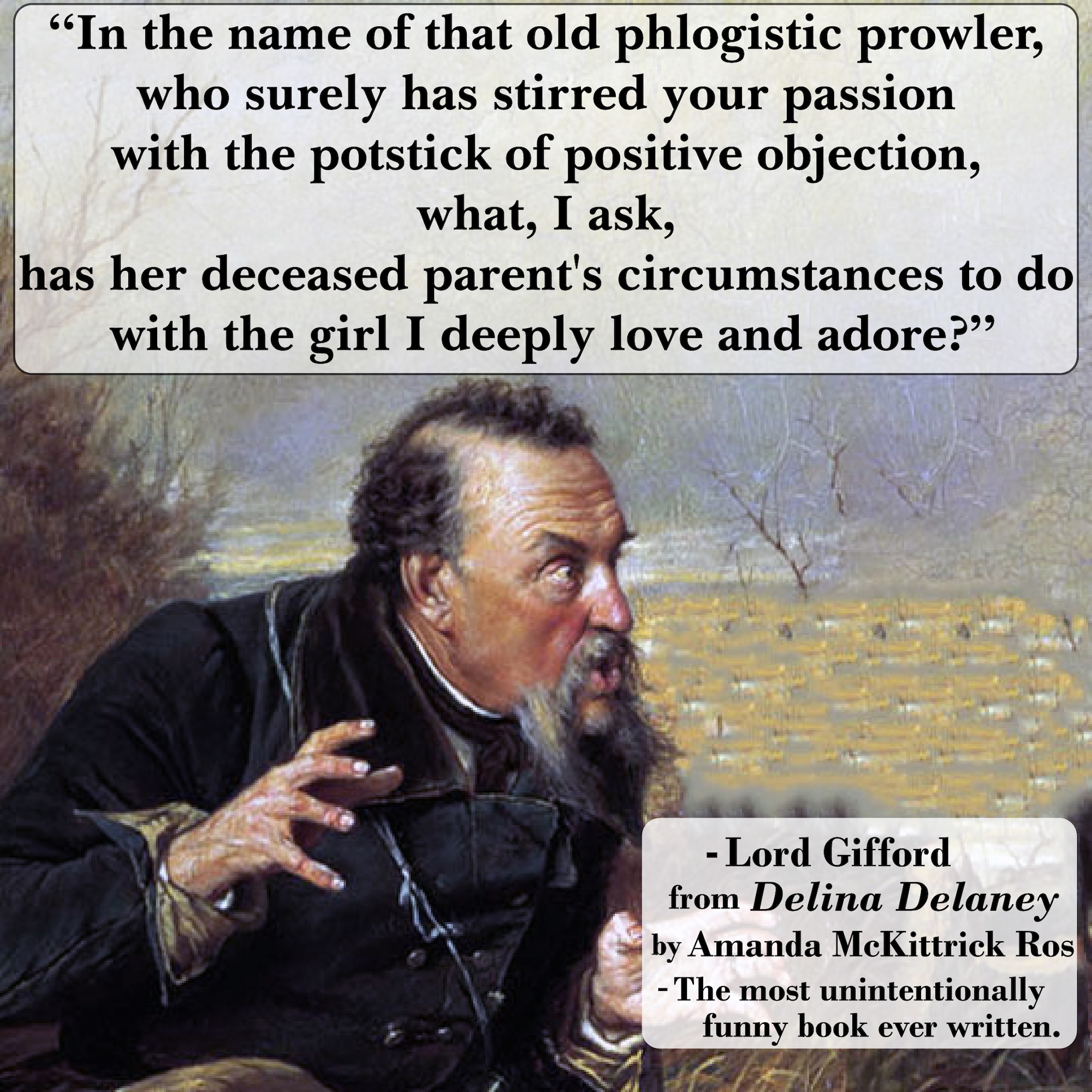
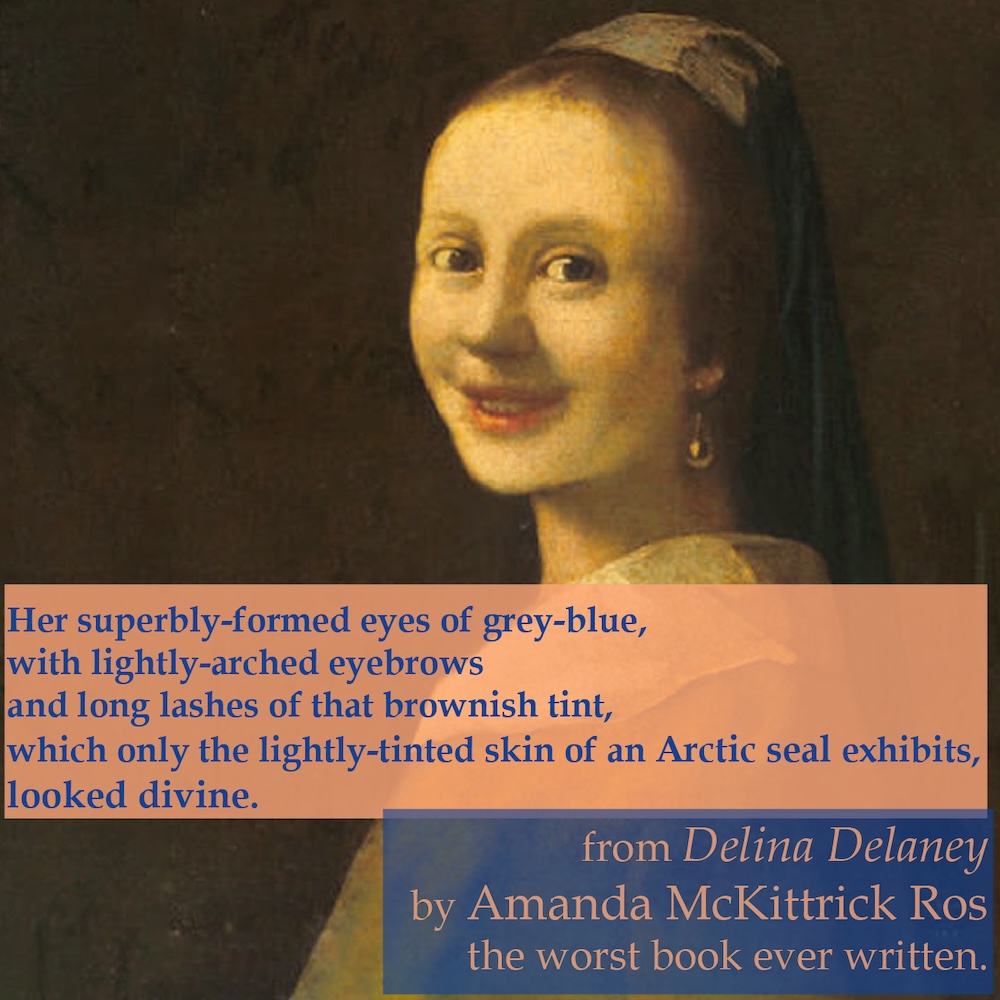
Amanda McKittrick Ros (1860-1939) was an Irish poet and novelist beloved by the Oxford Inklings. “Beloved” here is used in the sense of treasured for its distinctiveness, rather than admired for its artistry.

An article about Ros in Smithsonian Magazine is subtitled: “Amanda McKittrick Ros predicted she would achieve lasting fame as a novelist. Unfortunately, she did.”

So how is it that a writer described by the Oxford Companion to Irish Literature (OCIL) as authoring “unconscious comedy of a very high order” came to occupy a special place within the company of C.S. Lewis, J.R.R. Tolkien and their literary fellows? Why did they begin reading her works as a sort of contest, with the challenge of neither laughing nor smiling as they did so?

It was not because her mother (or she herself) christened her after a character in The Children of the Abbey, published in 1796. (Her initial name was “Anna.”)

No, it was due to an intrinsic element of her frequently alliterative artistry, described by OCIL in the following manner.

She published two sentimental romances, Irene Iddlesleigh (1897) and Delina Delany (1898), both in an idiosyncratic manner that provides unconscious comedy of a very high order. . . .

Most of her published writings appeared posthumously as a result of literary curiosity.

Many writers would agree that writing comedy is quite challenging. Comedy Crowd is devoted to helping writers gain some skill in this arena, and if you take a moment to check out their video about failed puns – after you finish reading this post – you won’t be disappointed. 

As one commenter on SleuthSayers puts it, “. . . writing humor isn’t easy. It’s even dangerous: trying to be funny and failing would be almost as bad as being funny when you’re trying to be serious.” Sadly, the worst of these options proved to be the fortune of poor Amanda.

Even her native Northern Ireland Library Authority confesses that her “writing style can only be described as elaborate, melodramatic, using startling descriptions with mixed metaphors and inappropriate alliteration with the result being unintentionally hilarious.”

In her collection “Poems of Puncture,” I came across a piece titled “Reverend Goliath Ginbottle.” Being a reverend myself, I eagerly listened to a LibriVox recording of the poem (which you can download for free from Internet Archive), and I was not disappointed. Her description of this “viper of vanity” and her joy at his ultimate judgment was delightfully colorful. Or, should you prefer to hear a diatribe against a corrupt lawyer, listen to Mickey Monkeyface McBlear, who bore “a mouth like a moneybox.”

TV Tropes has an article about Ros which attributes a dozen tropes to her pen.

In the Style of: Aldous Huxley noted that Ros wrote in the 16th century style of Euphuism. Susan Sontag decades later stated that Euphuism was the progenitor of camp, which would explain why literary greats found her writing so hilarious.

Those curious about euphuism can read John Lyly’s Euphues: the Anatomy of Wit; Euphues and His England which is filled with delights unnumbered. Originally two volumes, the books were published in the sixteenth century.

C.S. Lewis was a serious enough “fan” of Ros’ writings to share his affection for them with Cambridge Classicist Nan Dunbar. C.S. Lewis scholar Joel Heck has written a worthwhile article about the ongoing friendship between the two professors.

For a detailed study of the literary relationship between Amanda McKittrick Ros and the Inklings, I highly recommend the article by Anita Gorman and Leslie R. Mateer which appeared in Mythlore.

As they describe, even before the Inklings added occasional readings of her work to their gatherings, as early as 1907 there was in Oxford a society devoted to weekly readings of her works. The authors pose, and then proceed to answer, the following question.

What . . . impelled C.S. Lewis and his mates to read aloud Ros’s work? Yes, the improbable plots, silly characters, and nonexistent themes may have played a role, but were those enough to captivate the Inklings and to give rise to Delina Delaney dinners and Amanda Ros societies?

After all, many writers have written improbable plots about improbable people, and these writers have enjoyed short-lived reputations, if any reputations at all. Yet Amanda lives on.

For Those with Stout Constitutions

Mere Inkling offers one final look back at the transcendent poetry of Amanda McKittrick Ros. This infamous selection can be found at the aptly named Pity the Readers: Horribly Excellent Writing website.

“Visiting Westminster Abbey”
(from Fumes of Formation)

Holy Moses! Have a look!
Flesh decayed in every nook!
Some rare bits of brain lie here,
Mortal loads of beef and beer,

Some of whom are turned to dust,
Every one bids lost to lust;
Royal flesh so tinged with ‘blue’
Undergoes the same as you.

These morose words bring to mind another verse, composed in the form of a song by the artists of Monty Python. It appeared on Monty Python’s Contractual Obligation Album as “Decomposing Composers.”

They’re decomposing composers.
There’s nothing much anyone can do.
You can still hear Beethoven,
But Beethoven cannot hear you. . . .

Verdi and Wagner delighted the crowds
With their highly original sound.
The pianos they played are still working,
But they’re both six feet underground.

They’re decomposing composers.
There’s less of them every year.
You can say what you like to Debussy,
But there’s not much of him left to hear.

Yes, similarly morbid verse, but offered here to provide a sharp contrast between types of humor. Monty Python is the epitome of Camp, which according to Susan Sontag,

sees everything in quotation marks. It’s not a lamp, but a “lamp;” not a woman, but a “woman.” To perceive Camp in objects and persons is to understand Being-as-Playing-a-Role. It is the farthest extension, in sensibility, of the metaphor of life as theater.

Although Sontag notes “one must distinguish between naïve and deliberate Camp,” she argues the “pure examples of Camp are unintentional.” She considers self-conscious efforts, such as Noel Coward (and presumably Monty Python as well) as “usually less satisfying.”

Another perspective offers a helpful dichotomy to distinguish between “intentionality: whether camp deliberately cultivated (‘high’ camp) is the same to that of the unintentional kind (‘low’ camp).”

Personally, I often enjoy high (nonvulgar) camp humor – witty silliness that scoffs at life’s peculiarities. As for unintentional, “low” camp such as we find in Ros, I typically feel a flash of guilt at hurting (even posthumously) the feelings of a writer. Most of us writers are, after all, a sensitive and vulnerable breed.


The enlightening illustrations accompanying this article are from Amanda McKittrick Ros Society Promotional Memes, ably captained by Dan Morgan.

Do People Say You’re Crazy?

First of all, they may be right. If everyone tells you you’re crazy, you should be concerned. Especially if those you trust the most are convinced you’re unhinged, you should probably be evaluated by a psychiatrist.

However, even when you are 100%, bona fide sane, you may have to deal with the misperception that there is something off kilter in your perceptions or behavior. It happened to me.

I’m not too concerned, since there are even maniacs out there who consider C.S. Lewis to be a tad daft due to his counter-cultural (i.e., Christian) views.

In an article measuring his legacy a half century after his death, James Como said, Lewis’ “long and unrelenting resistance [to civilization’s decline] yields a commanding perspective that is not only not cultural, not only not trans-cultural, not only not merely counter-cultural, but almost anti-cultural; in a word it is supra-cultural . . .”

Surely Lewis’s sharp-shooter’s application of the phrase “enemy-occupied territory” to Western culture must come to mind.  Of course, from inside the culture, it is Lewis who must seem crazy: if not quite as febrile as  Jeremiah out there in the wilderness, surely close enough?  And so his genius – the application of his transcending individuality – is to present us with a choice: in or out?  We, with Lewis, might escape, leaving the Zeitgeist behind.

I’m with Lewis, which I understand makes me suspect in the eyes of the worldly. But it’s not my faith that has caused me to be labeled as crazy for many decades, even by family members whose love for me is beyond question.

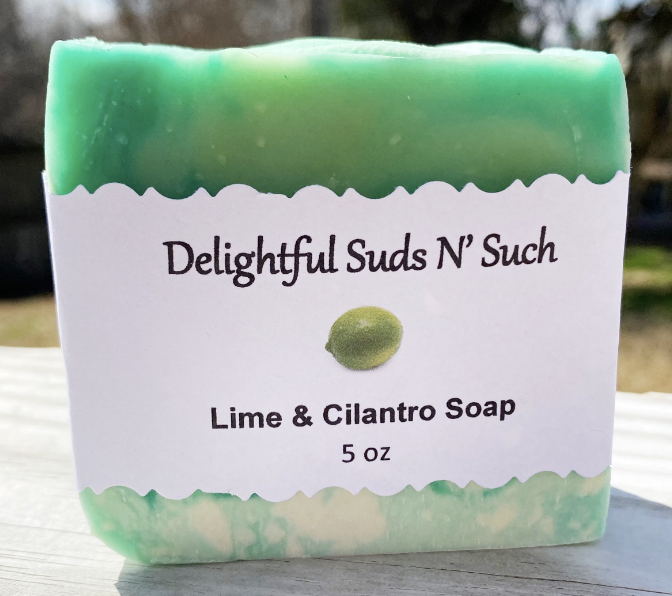
It’s all about that despicable herb some people sickeningly regard as delicious – cilantro. As early as I can remember, I would sometimes have a meal where I found a dish had been contaminated by soap. It was horrible. Not just unpalatable, but inedible.

Everyone would praise the food and call me crazy. Especially when I told them why it tasted so bad. It was because it tasted like the chefs had grated a bar of soap over the meal. They would all laugh, look at each other with that “he can’t be serious” expression, and resume their dinner. Meanwhile, I’d basically go hungry, since I was unwilling to eat the perfectly “good” food.

After many years, as an adult, I finally was able to analyze the problem and identify the culprit as cilantro. This did not, unfortunately, restore my mental credibility. Now everyone was certain I was insane, because the whole world knows cilantro is delicious! My case was weakened by the fact that I thought the seeds of the plant, coriander, were just fine. Ahah! That inconsistency proved to them that I was faking my dislike for some unknown reason.

During the decades that followed, I would try to avoid the herb. Occasionally I would bite into something only to unexpectedly encounter the dreaded flavor of a bar of soap. If it was minor, like mixed very lightly into the salsa, I could force myself to ignore, but it was still there, robbing me of the opportunity to really savor my meal.

If I mentioned that I had tasted the cleansing residue, I’d get the familiar quizzical looks and drop the subject. Until one glorious day when one of the other people at the table said, “it tastes like soap to me too.” And I learned they too had lived under the stigma of being a nutcase.

Over the years (I’m not young), I encountered a number of like spirits who shared my alleged dementia. I delighted in assuring them they were not alone. Like most people who truly are crazy, we had learned to try to mask our aberrant tastes and blend in with the cilantro-enamored masses . . . lest we be treated as outcasts.

Still, I wondered why only a small number of people shared my experience, when the taste is so pronounced it can taste literally like biting into a bar of Ivory.

Thank God, I was finally rescued by genetic scientists. Per Brittanica, “for those cilantro-haters for whom the plant tastes like soap, the issue is genetic. These people have a variation in a group of olfactory-receptor genes that allows them to strongly perceive the soapy-flavored aldehydes in cilantro leaves.”

And, in a related article, they warn about one member of the aldehyde-family you will want to steer clear of: “formaldehyde (HCHO), also called methanal, an organic compound, the simplest of the aldehydes.”

Pure formaldehyde is a colourless, flammable gas with a strong pungent odour. It is extremely irritating to the mucous membranes and is associated with certain types of cancer in humans and other animals. Formaldehyde is classified as a human carcinogen (cancer-causing substance).

Cilantrophiles be warned. It may be cilantro is just a gateway aldehyde. Now who’s the crazy one? The lesson – don’t be hasty in judging the mental acuity of others. (With the single exception for contemporary Americans, who feel compelled to say the absolute worst about anyone who has different political opinions.)

On a serious note, actual mental illness is no joke. Whether it’s genetic, accidental, or degenerative, it can destroy the life of the victim and all those who care about them. If you don’t have any acquaintances suffering in this manner, there are plenty of places you can volunteer to serve these various communities.

Providing love and encouragement to others is always admirable. When we do so for those unable to “repay” us in any way, it’s doubly rewarding. Jesus had something to say about that, and you can read it in Matthew’s Gospel.

C.S. Lewis & Summertime

What’s your favorite season of the year? My preference is Autumn, with Spring a close second.

In the United States, Spring comes out on top. Actually, it is the preference in forty (80%) of the states. Probably due to its northern latitude, “the most popular season in the Northeast is Summer.” Unsurprisingly, Winter is the least favorite across the board, although a few hardy souls disagree. “Alaska and Vermont are the only two states that say winter is the most wonderful time of the year.”

Some years ago, Gallup published the result of polls on the subject, which are also analyzed by the ages of respondents.

Americans aged 18 to 29 are the group least likely to prefer spring (24%), while those 65 and older are most likely to prefer it (53%). Younger Americans are much more likely to prefer summer than are those in older age groups, and, in fact, summer is the top choice among this age group. [Editor: I wonder if that has anything to do with the traditional academic calendar?]

Everyone is aware of how the seasons (through length of daylight, etc.) affect our moods. In a 1914 letter to his father in Ireland, C.S. Lewis offers a curious description of the “magnificent summer” he was enjoying in England.

My mental picture of home is disturbed to a certain extent by your mention of a fire. Here, we are in the middle of a magnificent summer: day succeeds day with the same cloudless sky and parched earth, and the nights are hot and comfortless. But on the whole, fine weather is agreeable, and has, I think, a certain effect on the spirits.

At the end of September, he wrote again about the extended summer he was experiencing. It doesn’t sound like the opinion of someone whose seasonal preference was summer. “I suppose the winter has closed in at home by this time: but we are still having quite summer weather here – which I rather resent.” Sometimes, it seems, seasons do overstay their welcome.

The following year, C.S. Lewis again lamented summer’s length. In mid-November he complained to his father.

The weather here is a perfect joke, warmer than July, bright sunshine and gentle breezes. Personally I have had quite enough summer, and should not be sorry to bid it goodbye, though Kirk persistently denounces this as a most unnatural state of mind.

A year later, in 1916, Lewis’ distaste for excessive heat is seen in an October letter to his friend Arthur Greeves. One reason for this was C.S. Lewis’ passion for hiking through the countryside.

The beastly summer is at last over here, and good old Autumn colours & smells and temperatures have come back. Thanks to this we had a most glorious walk on Saturday: it was a fine cool, windy day & we set out after lunch . . .

In a poem entitled “The Day with a White Mark,” Lewis opens with vivid imagery and the notion that mood is normally related to environment and circumstances.

All day I have been tossed and whirled in a preposterous happiness:
Was it an elf in the blood? or a bird in the brain? or even part
Of the cloudily crested, fifty-league-long, loud uplifted wave
Of a journeying angel’s transit roaring over and through my heart?
My garden’s spoiled, my holidays are cancelled, the omens harden;
The plann’d and unplann’d miseries deepen; the knots draw tight.
Reason kept telling me all day my mood was out of season.
It was, too. In the dark ahead the breakers only are white.

One website offers generalized thoughts about “what your favorite season” reveals about you. For example, it says of those who share my preference:

“Delicious autumn! My very soul is wedded to it, and if I were a bird I would fly about the earth seeking the successive autumns,” George Eliot (aka Mary Ann Evans) once wrote of her affection for the fall season.

While parts of the world tend to think of spring as the season of renewal, fall is also a very good time for a fresh start. The vibrant orange colors and cooler weather of autumn appeal to your constant desire for change. The upcoming holidays inspire many to reflect back on the year that was and make plans for the year to come.

A study in England went so far as to link birth months to the frequencies of several psychiatric conditions. If it is correct, your likelihood of suffering from recurrent depressive disorder, bipolar affective disorder and even schizophrenia varies according to your birth month.

Summer does provide a welcome time for vacations and events that would be difficult to wedge into the “busier” seasons of the year. For example, it’s not too late to register for the 2022 C.S. Lewis Summer Institute. The theme is “Surprised by Love: Cultivating Intellectual Hospitality in an Age of Uncertainty.” It is slated for 28 July – 5 August 5, 2022 in Oxford.

C.S. Lewis’ Favorite Season

Last year, the United Kingdom’s National Trust* conducted a poll which determined summer (30%) as the favorite season for Brits. Curiously, for young adults, summer tied with the second overall favorite, autumn.

After autumn colour, Britons’ favourite things about the [autumn] season are spending time in nature – running, walking or cycling (13 per cent) and the weather – cold crisp days, Indian summer, or stormy days (12 per cent).

So what exactly was C.S. Lewis’ favorite season. At the end of his life he wrote the following. As he so often did, he used a familiar subject to make a profound comment about life.

Yes, autumn is really the best of the seasons; and I’m not sure that old age isn’t the best part of life. But of course, like autumn, it doesn’t last.

But then, isn’t it the flow of the seasons that makes each so welcome in turn? Charles Dickens offered just such an observation in a quote which offers a fitting end to our reflections today.

Nature gives to every time and season unique beauty; from morning to night, as  from the cradle to the grave, it’s just a succession of changes so soft and comfortable that we hardly notice the progress.


* The National Trust helps conserve sites of historic and natural significance in England, Wales, and Northern Ireland. Scotland has its own National Trust for Scotland, devoted to the same purposes.

Lewis’ good friend J.R.R. Tolkien also enjoyed autumn. In a post several years ago I shared a portion of a letter to his son where he says, “I have the autumn wanderlust upon me, and would fain be off with a knapsack on my back and no particular destination . . .” Sounds like something someone in Middle Earth might say – although, certainly not a hobbit!

Create a Word Today

What could possibly be more fun than making up a witty new word?

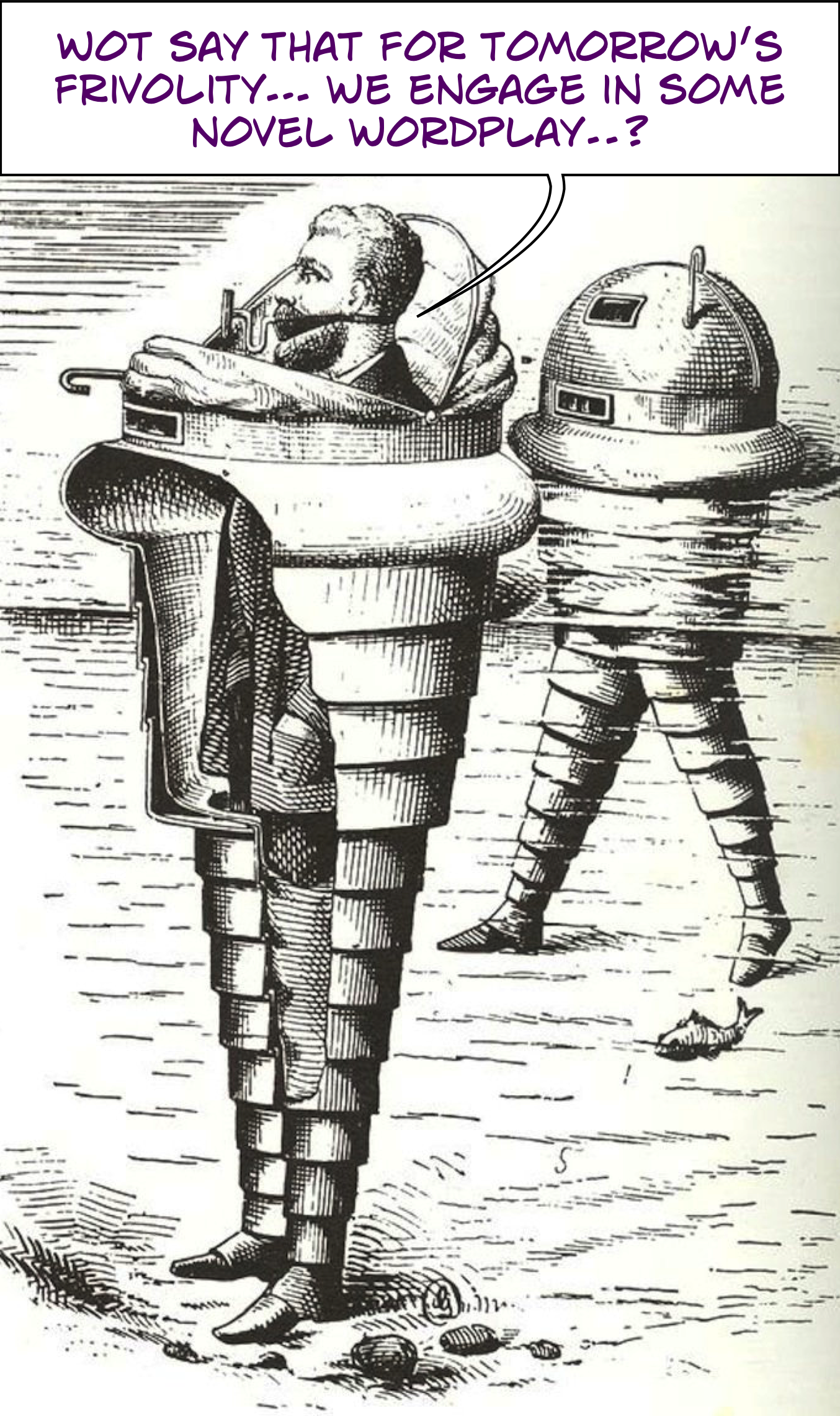
Well, to be honest, lots of things. But inventing words is still an enjoyable creative exercise. I made up several in less than an hour this evening, while half-watching an old movie. A few may be lame, but I hope you will discover one or two you enjoy.

I’ve touched on the subject of inventing words in the past. But this approach involves a different process.

This article from The Guardian asks, “English speakers already have over a million words at our disposal – so why are we adding 1,000 new ones a year to the lexicon?” That’s certainly a fair question. However, it doesn’t pertain to my thoughts here. I’m not attempting to birth any neologisms. These are simply humorous tweaks to existing words. A form of wordplay.

I got the idea when I read a short article, “The Best Made Up Words Ever,” by Bill Bouldin.* He admits to including a number of words from an online site I won’t name here (due to its preponderance of vulgar terms). While Bouldin doesn’t indicate which examples are his own contributions, and which are reproduced, I found a couple of the words quite entertaining.

The first of these reminded me of many group meetings where we consider all sorts of opportunities and possibilities.
Blamestorming – The act of attempting to identify the person who is most at fault for a plan’s failure.

As a pastor I couldn’t resist modifying this gem.
Sinergy – When performing two bad acts make you feel as guilty as if you had committed three.

This one struck home since it’s a play on one of the words in the title of the Narnian classic, The Lion, the Witch and the Wardrobe.
Chairdrobe – A chair on which one piles clothes that belong in the closet. Not to be confused with a floordrobe.

The final example will resonate with everyone who enjoys reading and writing.
“Illiteration – The mistaken impression that you know more about rhetorical devices than you really do.

At the risk of revealing myself to be an illiterator, I’ve included below some of the words I conjured up during an idle hour. I don’t claim any are masterpieces, but you may find one or two that bring a smile to your face. And, who doesn’t need an extra smile during these trying times?

My Initial Experiment

Caution: Before proceeding, keep in mind these are not real words. As genuine and utilitarian as they may appear, I advise you not to use them in conversation or composition. They are offered by Mere Inkling purely for entertainment purposes. Feel free to add some of your own in a comment.

Miscellaneous Vocabulary

Subbatical: the period when some temp like you is hired to fill in for some privileged person who has a job that has sent him or her off for an extended paid vacation.

Dippididude: Confused men who use hair gel designed for young girls and women.

Cemetarry: The unwillingness of some people to ponder the reality of their own mortality.

Mannekin: A boring, sedentary relative, who rarely rises from the couch.

Candlelablouse: The name for candlesticks with multiple arms in the homes of prudes.

Carnivirus: Individuals who strive to draw blood from those who view the coronavirus and its implications differently than they do.

Brigadeer: A domineering deer who tries to order all the other members of its herd around (antlers optional).

Altruistick: Actions that appear on the surface to be selfless, but include a hidden agenda.

Monumentill: Descriptor for someone of little worth who builds a significant reputation with the sole purpose of lining their pockets.

Blasphemee: An individual’s personal inability to consistently observe the Second Commandment.

Concupiscents: Hollywood’s obsession with including graphic sexual themes in all of their productions, resulting in the selling of their souls for pennies on the dollar.

Cathedroll: A large church led by a senior minister given to quaint and unintentionally comic humor.

Cadaversary, pl., cadaversaries: A member of the endless hordes of the undead during a zombie apocalypse.

Writing Vocabulary

Literasee: The capacity of one’s imagination to visualize what you are reading.

Bloggrr: An essentially angry person, given to writing unbridled tirades on various digital formats.

Gerdprocessing: When whatever you are typing just doesn’t work, and causes you severe heartburn instead.

Manuskipped: The sad condition when the article or book into which you poured your blood, sweat and tears has been tossed into a slush pile to lie forgotten.

Editteen: The maturity level of the editor who did not recognize the merits of your manuscript and rejected it without comment.

Subliminil: When the word you are reading or writing possesses no hidden or subconscious message.

Proofreaper: Someone you invited to read your manuscript for misspellings who advises you to delete entire sections of your precious creation.

Skulldigory: Misbehavior by the English professor, Digory Kirke, who, as a child, introduced evil into Narnia.

I will close now with two words that cat-lovers may find objectionable. If you are a devoted feline-fancier, you are advised to cease reading now.

Lucifur: The anonymous leader of that faction of felines devoted to serving evil.

Purrification: The activity of forgiveness and restoration that occurs when any cat makes a sincere confession of its sins.


* This columnist cites various words from the Bouldin’s piece, and others from a book entitled The Emotionary: a Dictionary of Words That Don’t Exist for Feelings That Do.

Peculiarities of the German Language

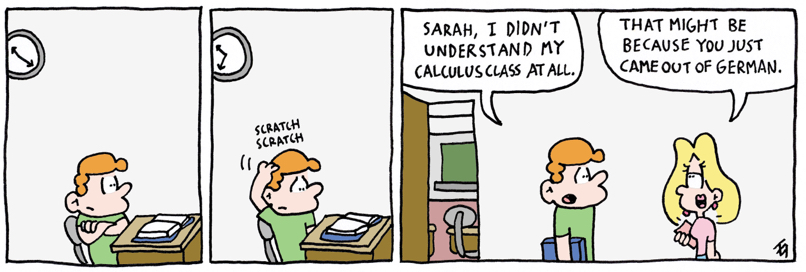
Mark Twain wrote some entertaining travelogues about his overseas travel. In A Tramp Abroad, he relates a conversation he and a friend had with an American who had been studying veterinary medicine in Germany. The expatriate complains about how long his studies have taken – nearly two years – and proclaims how good it is to hear his native tongue.

The student’s most humorous words relate to his impression of the German language. It’s unusual in its nineteenth century phrasing. However, he does note one rather common opinion in his earthy observation.

“I spotted you for my kind [fellow Americans] the minute I heard your clack. . . .” The young fellow hooked his arm into the Reverend’s, now, with the confiding and grateful air of a waif who has been longing for a friend, and a sympathetic ear, and a chance to lisp once more the

sweet accents of the mother tongue, — and then he limbered up the muscles of his mouth and turned himself loose, — and with such a relish!

Some of his words were not Sunday-school words, so I am obliged to put blanks where they occur. . . . “when I heard you fellows gassing away in the good old American language, I’m – if it wasn’t all I could do to keep from hugging you! My tongue’s all warped with trying to curl it around these forsaken wind-galled nine-jointed, German words here; now I tell you it’s awful good to lay it over a Christian word once more and kind of let the old taste soak in. . . .

“I’m learning to be a horse-doctor! I like that part of it, you know, but ____ these people, they won’t learn a fellow in his own language, they make him learn in German; so before I could tackle the horse-doctoring I had to tackle this miserable language.”

And, as if mastering German wasn’t difficult enough in itself, he continues:

“First-off, I thought it would certainly give me the botts, but I don’t mind it now. I’ve got it where the hair’s short, I think; and dontchuknow, they made me learn Latin, too. Now between you and me, I wouldn’t give a ____ for all the Latin that was ever jabbered; and the first thing I calculate to do when I get through, is to just sit down and forget it. ’Twon’t take me long . . .”

I don’t intend to offend Germans for the challenge their language poses to some. (In fact, one set of my grand-parents named Vonderohe originally came from Pomerania.) But the nature of agglutinative languages is so alien to most of us that the very length of the glued-together words becomes daunting.

Since I’m not a linguist, I had to research to discover as I wrote this post that German is not a truly agglutinative language. It merely uses agglutination. Apparently, the distinction involves distinctions with which most non-linguists need not concern themselves. We can be satisfied with the simplified definition provided by Glottopedia.org – “Agglutinating language is a language which has a morphological system in which words as a rule are polymorphemic and where each morpheme corresponds to a single lexical meaning.”

In truth, it’s quite logical to make new words by stringing them together. Most English compound words are a combination of two elements. Longer Germanic words seem more common. Kraftfahrzeug-Haftpflichtversicherung, for example, sounds “nine-jointed,” but is actually only two words, meaning motor vehicle liability insurance.

C.S. Lewis and the German Language

C.S. Lewis was multilingual, and studied German while relatively young. He and his wife used every language as a source when playing Scrabble.

Nevertheless, Lewis was quite modest about his grasp of German. In 1954, while thanking a German professor for the offer of a philosophy book he had written, Lewis wrote,

I look forward to reading the book (when the translation arrives! My German is wretched, and what there is of it belongs chiefly to the libretto of the Ring and Grimm’s Märchen – works whose style and vocabulary you very possibly do not closely follow).

The following year Lewis wrote once again to Helmut Kuhn. This time it was to thank him for a review Lewis’ works. Lewis said, “it certainly seems to me that your grasp of the whole situation in which I have written and of the relation of my ideas both to it and to each other, goes far beyond any criticism I have yet had.” Before he makes that noteworthy statement, Lewis makes a playful comment relating to the presumed dignity implicit in the German language itself.

To be written about in the German language is, for an Englishman, a grave temptation to spiritual pride. The sentences are so massive and the words so long that, even if the content were less flattering than it is in your article, the subject can hardly resist feeling that he must be a much weightier phenomenon than he had ever supposed!

Eucestoda Words: Well Worth a Postscript

Germans are an accomplished, literate people who take pride in their language. They have gone so far as to coin a word that specifically identifies these sometimes lengthy compound words. Germans call them bandwurmwörter, which literally means “tapeworm words.” (Mark Twain would have delighted in knowing that.)

Friedrich Akademie, an education website, devotes a page on their website to “Beautiful German Tapeworm Words.”

Tapeworm words . . . what a fascinatinglyinventivesemanticnovelty!

The Good, Bad & Ugly of Dendroglyphs

Have you ever carved your initials, or some other pictograph (perhaps a heart?) in the bark of a tree? I never thought much about such things until I learned about the key role played by their bark in a tree’s health. Now I tend to consider this arboreal graffiti* as unfortunate.

I haven’t found any reference in C.S. Lewis to such carvings. However, I suspect that due to his love of nature and hiking, he would discourage the wounding of trees in this way. And there is another reason I believe the Inklings would be wary of this practice. More on that in a moment.

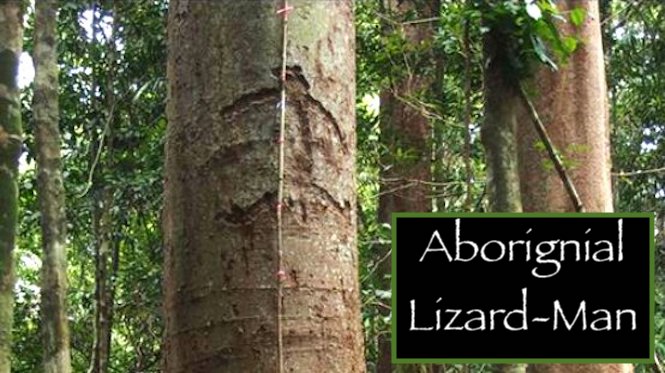
Tree carvings can actually record history for preliterate peoples. I even learned a new word, the meaning of which is easy to decipher from its parts—dendroglyphs. Not all tree scars are considered dendroglyphs. Just those, as Brittanica says, “the dendroglyph [is] an engraving on a living tree trunk. Carved in the usual geometric style, dendroglyphs featured clan designs or made references to local myths. They were used to mark the graves of notable men or to indicate the perimeters of ceremonial grounds.”⁑

One unique people group living “at the edge of the world” faced the fate of most pacifists who are not protected by a benign power. The Moriori lost their island home to the Māori people to whom they were related. Some of their stories survive, partly due to their dendroglyphs.

An academic article on the subject of dendroglyphs is available here.

Dendroglyphs are distinct from scarred trees, the former being decorative marks cut into the bark or heartwood of living trees, while the latter result from resource use, such as bark removal for making implements, obtaining native honey or hunting. A further distinction can be made between two types of dendroglyphs: Indigenous dendroglyphs and dendrograffiti.

Indigenous dendroglyphs are a form of visual expression that reflects affiliation with the land and special cultural association with the landscape and its resources. Dendrograffiti are carvings made by land users, such as shepherds and pastoralists, and often display names, dates, symbols and images that mark boundaries, communications and light entertainment.”

The image above comes from an ancient Australian tree. You can read more about it here, but this is the myth it portrays:

The tale behind the tree has been passed on for generations. It’s the story of two Western Yalanji men who have gone over into Eastern Yalanji country and tried to get a woman. . . . The family of the girl they were trying to take pursued the men.

The Western Yalanji men were chased and speared. One of the men that got speared . . . became a lizard, crawled up the tree and became that carving.

History aside, cutting bark should be avoided in general. And, should you visit a national forest in the United States, be forewarned—“carving into trees is illegal in all national forests!” As the National Park Service pleads: “please respect the law, the trees, and your fellow public land users by not carving words, initials, or anything into tree bark!”

Other Places Where Dendroglyphs are Dangerous

The United States isn’t the only place where a person desiring to mark a tree with a blade should be cautious. This activity is generally inadvisable in both Narnia and Middle Earth.

At Narnia’s very creation, Aslan bestowed sentience on some of the trees of that blessed land. “After Aslan gave certain animals the gift to speech, he declared to the Narnian creatures; “Be walking trees. Be talking beasts. Be divine waters.”

And their creator loved their company. Later we read: “Aslan stood in the center of a crowd of creatures who had grouped themselves round him in the shape of a half-moon. There were Tree-Women there and Well-Women (Dryads and Naiads as they used to be called in our world) who had stringed instruments . . .”

Yet, as gentle as these dryads were, the Witch was able to deceive some of their number. As Tumnus warns the children, “the woods are full of her spies, even some of the trees are on her side.” Still, most continued to follow Aslan, and some of these dryads were among the stone statues restored to life by their lord.

In one of The Last Battle’s saddest scenes, King Tirian is addressed by a tree nymph who warns that Aslan’s imposter is cutting down the forest.

King Tirian and the two Beasts knew at once that she was the nymph of a beech tree. “Justice, Lord King!” she cried. “Come to our aid. Protect your people. They are felling us in Lantern Waste. Forty great trunks of my brothers and sisters are already on the ground.”

“What, Lady! Felling Lantern Waste? Murdering the talking trees?” cried the King, leaping to his feet and drawing his sword. “How dare they? And who dares it? Now by the Mane of Aslan—”

“A-a-a-h,” gasped the Dryad, shuddering as if in pain—shuddering time after time as if under repeated blows. Then all at once she fell sideways as suddenly as if both her feet had been cut from under her. For a second they saw her lying dead on the grass and then she vanished. They knew what had happened. Her tree, miles away, had been cut down.

Narnia is not the only land where trees are damaged at one’s risk. J.R.R. Tolkien populated Middle Earth with amazing creatures. Among these were the Ents.

Ents are not actual trees. They are ancient “shepherds of the trees,” who care for the forests. (The Entwives preferred to care for smaller plants, such as gardens.)

When the hobbits awake Treebeard, he mistakes them for little orcs and is prepared to crush them. Orcs, after all, are destructive by nature and always deserving of a good stomping. When they explain their quest and inform the ancient Ent of Saruman’s burning of their forests near Isengard, he calls on his brethren who respond to the threat.

Treebeard is pleased and says, “Indeed I have not seen them roused like this for many an age. We Ents do not like being roused; and we never are roused unless it is clear to us that our trees and our lives are in great danger.”

I can almost hear Treebeard calling out now, “the Ents are going to war.”

We’ll close now with the marching song of the Ents, and let these words provide a sharp warning to those among us who might contemplate violating trees in the future.

Though Isengard be strong and hard, as cold as stone and bare as bone,
We go, we go, we go to war, to hew the stone and break the door;
For bole and bough are burning now, the furnace roars—we go to war!
To land of gloom with tramp of doom,
with roll of drum, we come, we come;
To Isengard with doom we come!


* I came up with the term “arboreal graffiti” myself, but was pleased to find that other creative minds have also used it online. This post on the subject offers an interesting twist, and is well worth the quick read.

⁑ This quotation is taken from their article on Australian aboriginal art.