Theological Humor

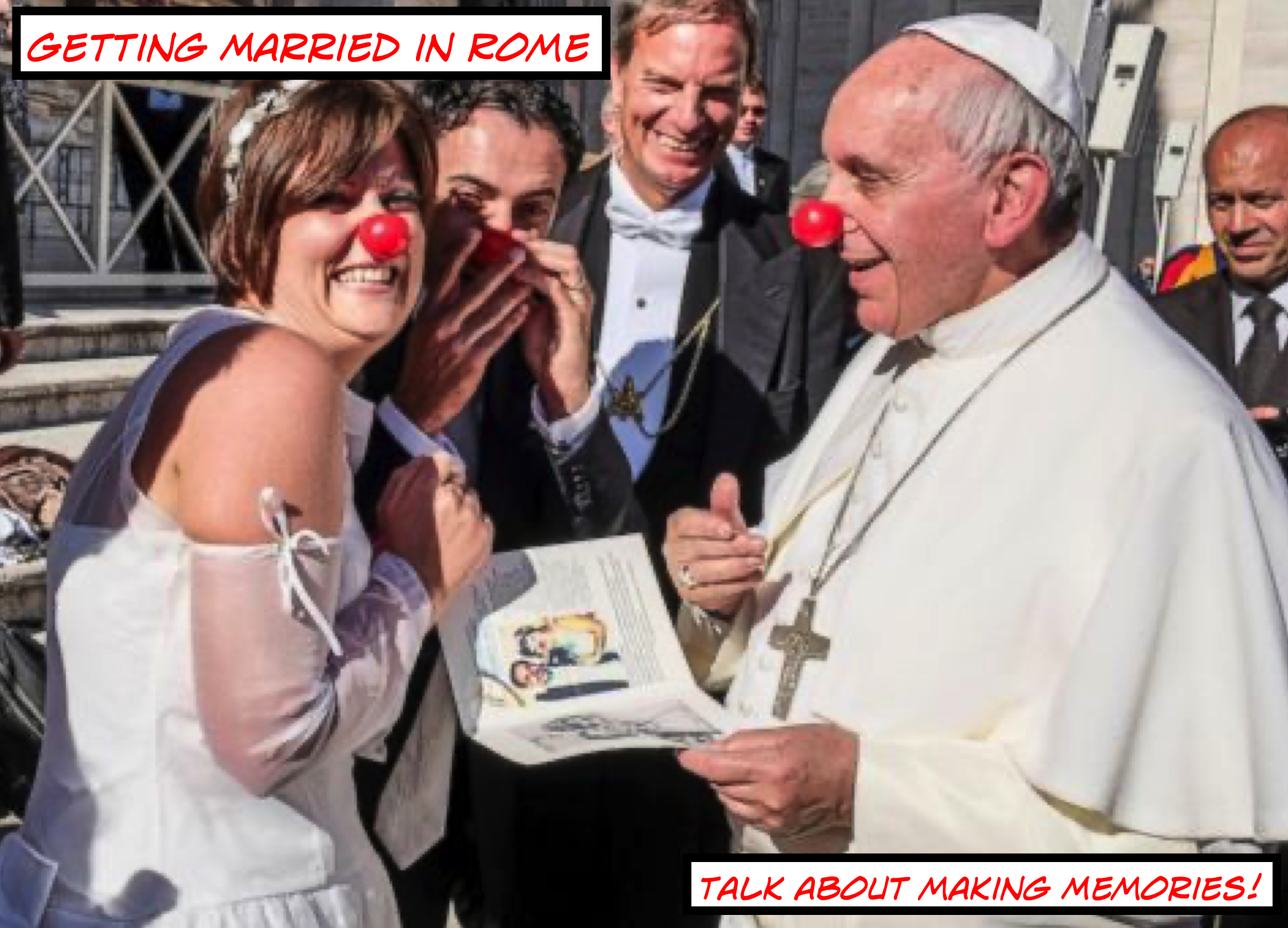
Pope Francis jokes with a newlywed couple in Rome.

Don’t be surprised, but many clergy possess keen senses of humor. Sure, there are staid, grimacing ministers who consider acting dour to be a virtue. (They’re often legalistic.) But most of the pastors and military chaplains I’ve worked beside, love to laugh. I think I’ve written enough about humor to verify that.

C.S. Lewis maintained strong bonds with a number of clergy, from a variety of denominations, and that would hardly have been true if they had lacked a sense of humor. Humor, to Lewis, is an essential part of life. He proclaims this truth from the lips of Aslan himself, as the newly created Talking Animals hear the first (accidental) joke.

“Laugh and fear not, creatures. Now that you are no longer dumb and witless, you need not always be grave. For jokes as well as justice come in with speech.” (The Magician’s Nephew)

I recently read about a fascinating incident one historian described as “perhaps the only really satisfactory practical joke in the whole history of theology.” Allow me to set the scene.

The Byzantine Empire lasted for a thousand years, before being defeated and desecrated* by Islamic armies. During the centuries surrounding its apex, it suffered from the political intrigue and competition with which we are all too familiar.

Photios I was a Byzantine scholar who was twice the Patriarch of Constantinople during the ninth century. Twice is unusual, but it was due to the machinations of emperors and empresses who meddled in the affairs of the church.

He had a troubled relationship with another priest named Ignatius, who also served two times as Patriarch. The good news is that the men were eventually reconciled and both are regarded by Orthodox Christians as saints.

The anecdote comes from the period of their rivalry. Photios, whose brilliance was widely acknowledged, and presumably envied by Ignatius, decided to pull an embarrassing public prank on his nemesis.

Photios devised a bizarre theory that human beings have two souls. His goal was to trick Ignatius into taking it seriously, whereupon Photius withdrew the thesis and admitted he had not been serious. Apparently, everyone unsatisfied with Ignatius’ leadership found it quite entertaining.

Fortunately, among clergy the humiliation of others is rarely the object of humor. Yet, sadly, I have seen it attempted. I personally repent of ever having done so myself, and regard it as sharing, along with vulgarity and blasphemy, the lowest level of “humor.” 

The Wisdom of Lewis

In Reflections on the Psalms, C.S. Lewis relates something I know to be true from my own experience.

A little comic relief in a discussion does no harm, however serious the topic may be. (In my own experience the funniest things have occurred in the gravest and most sincere conversations.) 

Clergy deal with serious topics, like death, quite frequently. Perhaps that is one reason a well-developed sense of humor is common among their ranks.


Skip this footnote if you want to end on a “happy” note.

* “Desecration” may sound like a harsh word to our interfaith-sensitive ears, but it is accurate here. Islam is rarely a gentle master for Christians, and it has been common to see churches and holy places seized and converted to foreign religious uses. For example, in the capital Constantinople (now called Istanbul), Orthodox Christianity’s most magnificent church, Hagia Sophia, saw much of its glorious and historic iconography destroyed when it was converted to a mosque. Many years later, in 1934, an enlightened Turkish government ended the insult, and chose to treat the holy place as a museum. Sadly, the current regressive government under Recep Tayyip Erdoğan, reversed that decision, and in 2020 the Church of Holy Wisdom was returned to its usage as a mosque.

A Bible Translation for Slaves

Only three copies of an abridged Bible printed in the United Kingdom remain in existence. To some, their very existence is scandalous. To others, they evidence the desire of Christians to promote spiritual liberation, even for those shackled by human chains.

The sole copy held in North America is in the possession of Fisk University in Nashville, Tennessee. Fisk is one of the United States’ distinguished  Historically Black Colleges & Universities (HBCUs), and was founded only six months after the end of the Civil War by the American Missionary Association.

Prior to returning the volume to Fisk, this extremely rare Bible was on loan to the Museum of the Bible in Washington, D.C.* During its exhibition there, the museum described it thusly:⁑

The Slave Bible, as it would become known, is a missionary book. It was originally published in London in 1807 on behalf of the Society for the Conversion of Negro Slaves, an organization dedicated to improving the lives of enslaved Africans toiling in Britain’s lucrative Caribbean colonies.

They used the Slave Bible to teach enslaved Africans how to read while at the same time introducing them to the Christian faith.

A Liberty Fund essay on the volume describes the thought process behind the editing. “The unknown editors intended to steer clear of any revolutionary verses that might spark interest in the idea of liberty,” they say.

For example, the selections from Genesis include the first three chapters, which cover the creation of the world and Adam and Eve in Eden but omits chapter four, which tells the story of Cain and Abel and the first murder.

Even an abbreviated Bible, however, retains the power to communicate a divine message. When C.S. Lewis discussed whether the Bible will become fashionable for secular literary study, he said the challenge would come in the fact that it is, in fact, sacred.

Unless the religious claims of the Bible are again acknowledged, its literary claims will, I think, be given only “mouth honour” and that decreasingly. For it is, through and through, a sacred book.

Most of its component parts were written, and all of them were brought together, for a purely religious purpose (“The Literary Impact of the Authorised Version”).

Because of that, I believe that C.S. Lewis would agree with me that this translation (stunted though it is) would retain the power to enlighten its readers. After all, we are not considering a version of the Bible to which human words have been added. What remains is still inspired. 

But in most parts of the Bible everything is implicitly or explicitly introduced with “Thus saith the Lord.” It is, if you like to put it that way, not merely a sacred book but a book so remorselessly and continuously sacred that it does not invite, it excludes or repels, the merely aesthetic approach. . . .

It demands incessantly to be taken on its own terms: it will not continue to give literary delight very long except to those who go to it for something quite different. I predict that it will in the future be read as it always has been read, almost exclusively by Christians (“The Literary Impact of the Authorised Version”).

Thus, I believe the missionaries who devised this edited version of the Scriptures did so with good intent. They would, I am sure, have preferred to deliver to their enslaved hearers the complete Word. However, in cases where slaveowners would bar the Bible altogether because of its themes of rescue, freedom, and the judgment of the powerful, the missionaries compromised their desires.

They deemed the benefits outweighed the compromise. The benefits being the opportunity to learn to read, and even more importantly, the Light that would still shine through the portions of God’s Word to which these precious souls would have access.

As C.S. Lewis noted in a 1952 letter, “it is Christ Himself, not the Bible, who is the true word of God. The Bible, read in the right spirit and with the guidance of good teachers, will bring us to Him.” And, upon making their compromise, these formerly barred missionaries would gain access to those who might otherwise never meet humanity’s Savior, who is the Word incarnate.

So, in order to provide at least a portion of the true Bible, they risked violating the New Testament precedent established in the Book of Revelation.

I warn everyone who hears the words of the prophecy of this book: if anyone adds to them, God will add to him the plagues described in this book, and if anyone takes away from the words of the book of this prophecy, God will take away his share in the tree of life and in the holy city, which are described in this book (22:18-19).

This is a fascinating subject, the various attitudes toward the education of people held in bondage. Various books have been written on the subject, and numerous primary sources describe the differing opinions all those involved. The perspective of “freemen” is particularly poignant. A freeman (or freedman), is a person who has been delivered from a state of slavery.

In the biblical sense, as defined in the International Standard Bible Encyclopedia, it is “one who was born a slave and has received freedom” and is commonly used to describe those who were delivered from “bondage to sin [and] presented with spiritual freedom by the Lord.”

For he who was called in the Lord as a bondservant is a freedman of the Lord. Likewise he who was free when called is a bondservant of Christ (1 Corinthians 7:22).

As we used to pray in the liturgy of my childhood – Grant this, O Lord, unto us all!

Online Resources for Further Reflection

Internet Archive not only offers many public domain works for free download. They also host many great texts that you can “borrow” online. Your local library remains a great place, but they probably don’t offer the following books related to this subject.

“When I can read my title clear:” Literacy, Slavery, and Religion in the Antebellum South

Masters & Slaves in the House of the Lord: Race and Religion in the American South, 1740-1870

Memoir of Mrs. Chloe Spear, a Native of Africa, who was Enslaved in Childhood, and Died in Boston, January 3, 1815

And, even more exciting, there are some period writings you can read and even download. A quick search turned up a copy of The Duty of Masters: a Sermon, Preached in the Presbyterian Church, in Danville, Kentucky. In 1846, the Rev. John C. Young devoted a significant portion of his message to the responsibility of slaveowners to promote literacy.

The duty of attending to the religious improvement of our servants comprises among others two important particulars – teaching and encouraging them to read God’s word, and inducing them to attend his worship. Many have avowed the doctrine that it is not right to teach servants to read the Bible – and in some of the States their instruction is prohibited by law.

Our posterity will doubtless wonder how so monstrous a doctrine could ever prevail to any great extent in a Christian land; and how good men could ever delude themselves into the belief that such a doctrine was consistent with the first principles of that gospel which is sent to the bond as well as the free, and which requires all who receive it to impart a knowledge of it to the utmost of their ability to all who have it not.

Amazingly, you can even download your own copy of Select Parts of the Holy Bible for the Use of the Negro Slaves in the British West-India Islands from Internet Archives. Determine for yourself whether it was better to share with the captives in the British West Indies these “select parts” or to ignore their plight altogether. A wise man once wrote:

The Church exists for nothing else but to draw men into Christ, to make them little Christs. If they are not doing that, all the cathedrals, clergy, missions, sermons, even the Bible itself, are simply a waste of time.

God became Man for no other purpose. It is even doubtful, you know, whether the whole universe was created for any other purpose (Mere Christianity).


* Coincidentally, the Museum of the Bible will also be hosting a live performance this summer of C.S. Lewis’ “The Horse and His Boy.” Check out the promo on their site to see how they creatively present the equine stars of the book on stage!

⁑ Yes, I understand that the “-ly” appended to “thus” is superfluous, since the word itself is an adverb, but it just sounds so right to my (as C.S. Lewis might appreciate) dinosaur ears.

The picture above, “Reading the Scriptures,” was painted in 1874 by Thomas Waterman Wood. 

Timothy Keller & C.S. Lewis

The spiritual legacy of C.S. Lewis continues to bear abundant fruit. And, although his humility would prevent him from accepting it, Lewis shares credit in the blessings being passed on to new generations by those whose lives he directly touched.

Some of these gifted Gospel communicators have publicly praised Lewis for his role in their own conversions or moments of deeper epiphany into the work of our Creator. 

One such Christian leader was Timothy Keller, who recently died at the age of 72. Although he was just a few years older than me, Keller and I shared a number of traits. Raised Lutheran, we accepted the truths about Jesus’s work as kids, but it wasn’t until our young adulthood that we were confronted with the fact that trusting Christ as a loving Savior falls far short of taking up our own crosses and following him as Lord.

It’s no accident that our mutual spiritual awakenings coincided with our introduction to the writings of C.S. Lewis during our collegiate years. Both of us became pastors, although the paths of ministry we followed differed, as befits children of a heavenly Father who guides each of his children as the unique person he has created them to be. 

Keller was ordained in the Presbyterian tradition, and devoted most of his energy to helping the Christian Church establish a far more intentional ministry in cities. I was ordained in the Lutheran branch of the Body of Christ, and served much of my ministry as a military chaplain. Both of us were pastors in evangelical, Scripture-affirming denominations within our respective traditions.

I’m sure there are other parallels, such as both being married since the mid-70s and having three kids, but the last similarity I wish to note is that we both have writing as part of our vocations. Not that I would compare my own modest talents to Keller’s.

Tim Keller was a prolific author. And the influence of C.S. Lewis on his thinking, and writing, is pervasive in Keller’s work. Last year The Evangelical Christian Publishers Association presented him with the prestigious “Pinnacle Award.”

Timothy Keller has written more than 35 books, published by a variety of companies, with some co-authored by his wife Kathy.  His published body of work represents a variety of categories including apologetics, biblical studies, theology, prayer, devotionals, marriage, Bible study, the Church, and cultural engagement – with sales exceeding 7.5 million units and translated into more than 25 languages.

Keller’s prodigious literary output is one reason he has been likened to C.S. Lewis. Another obvious reason is the subject matter, particularly the prominent place occupied by Christian apologetics.

Like Lewis, Keller was an avid reader. This trait provided the foundation for both authors’ literary contributions to Christian thinking. “A Reading List to Understand Tim Keller” includes a number of the works of great importance to him.

Read This Twice, which gathers book endorsements found on the internet, provides a list of 64 books endorsed by Tim Keller. What makes this curious site special is they provide quotations for his recommendations and the sources from which they are gleaned. Oddly, the aggregator appears to lean heavily on contemporary Twitter sources. Consequently, it includes not a single book written by C.S. Lewis himself, belying the Inkling’s seminal influence on Keller.

The endorsement website also offers access to book recommendations on subjects of a visitor’s choice, compliments of Sona. Sona, as a caution to those among us who are wary of artificial intelligence, is an “AI-driven book recommendation assistant that makes it easy for you to discover your next read. Just provide your specific preferences, and [she] will quickly search through a large database of books to offer you options that closely align with your request.” The invitation closes with: “Try ‘Sona’ and enjoy a seamless, personalized book-finding experience.”

In “Remembering Tim Keller – Today’s C.S. Lewis,” the writer plays with his title.

It is often said that Dr. Timothy Keller, who died last Friday at his home in Manhattan, was this generation’s C.S. Lewis. The dust jacket for The Reason for God says so.

Tim would have had none of it. He just wasn’t that kind of person. I remember sitting down with him after yet another remarkable talk that he had delivered, sparkling with ideas and insight, with lots more to explore, and all he wanted to talk about was his kids and how great they were. Tim was a simple child of God with, like all of us, the normal joys and worries in life.

And yet . . . that impact! It was enormous. Although it might be an overstatement to ascribe C.S. Lewis status to his contribution, it would only be a slight overstatement.

Tim Keller certainly shared some of C.S. Lewis’ righteous qualities, but some writers are adamant about acknowledging their distinctions. A fellow Presbyterian pastor has a great post on this subject titled “Tim Keller is NOT this generation’s C.S. Lewis.” The author persuasively argues that their vocations were too different to make such a claim. 

But please, can we not call him another C.S. Lewis?  Any time we call a great person “another” anybody, we are doing disservice to both figures.  Lewis’ vocation was to serve as a man of letters who wove his faith into his writing.  Keller’s vocation is to be a pastor and equipper who employs writing as but one of his tools.

There are even some conservative Reformed authorities who view Keller (and C.S. Lewis) with suspicion. According to Christian Network Europe “Laurens van der Tang . . . wrote in De Wachter Sions (The Watchman of Sion) . . . that the books of Christian writers, such as Lewis, Dietrich Bonhoeffer and Tim Keller” may possess positive elements but are incomplete. “He argues that they did not pay enough attention to man’s death state, the need for repentance and God’s holy wrath on sin.”

He concludes that “distancing is appropriate” and that these “authors cannot replace theologians from the Reformation or the Dutch Second Reformation.” Also, the Dutch Rev. A. Schreuder writes that “whoever reads the works of the Big Three misses the ultimate point of the personal appropriation of salvation.”

Fortunately, such opinions are in the minority. Most Christians find all three writers inspiring. As this very article reports, “the combination of reason, feeling and imagination is also why Christians in many different surveys indicate that they see Lewis . . . as one of the most influential theologians of the 20th century.”

A glance at virtually any one of Keller’s books will reveal at least one reference to the writings of C.S. Lewis. In Shaped by the Gospel, he references four of Lewis’ books and essays. In his book On Death, Keller discusses that when we stand in God’s very presence – a joy he even now knows – and alludes to a powerful metaphor offered by C.S. Lewis in The Weight of Glory.

C.S. Lewis says if these lower reaches of the stream of God’s glory are so intoxicating, what will it be like to drink from the fountainhead?

The Atlantic published a poignant essay by Keller as he faced his impending death. “Growing My Faith in the Face of Death: I spent a lifetime counseling others before my diagnosis. Will I be able to take my own advice?”

The subtitle says it all. It’s a challenge many Christians one day face, and it is particularly sobering for pastors. In the article, Keller relates an acutely tragic conversation.

A significant number of believers in God find their faith shaken or destroyed when they learn that they will die at a time and in a way that seems unfair to them. Before my diagnosis, I had seen this in people of many faiths. One woman with cancer told me years ago, “I’m not a believer anymore—that doesn’t work for me. I can’t believe in a personal God who would do something like this to me.” Cancer killed her God.

Yes, reality and the suffering consequences of the Fall may have shattered the spectral image of her god (lower case “g”), but I hope that through the ministry of Keller and others that unfortunate woman came to know the true God before she stood in his presence.

For I am sure that neither death nor life, nor angels nor rulers, nor things present nor things to come, nor powers, nor height nor depth, nor anything else in all creation, will be able to separate us from the love of God in Christ Jesus our Lord (Romans 8).

Timothy Keller, like C.S. Lewis before him, who served as one of Keller’s mentors, left us with a treasure trove of edifying literature. In the past I’ve often been too busy to read much of Keller’s work. However, as of now I am in the process of rectifying that problem. If you join me in that journey, I’m sure neither of us will be disappointed.

A Portuguese Pope & C.S. Lewis

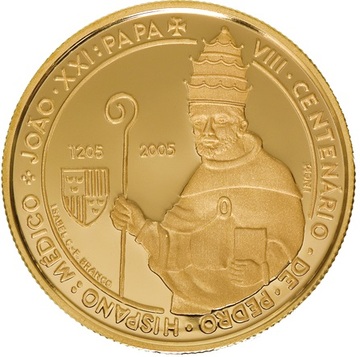
A few days ago marked the anniversary of the 1277 death of Pope John XXI. I knew nothing about this particular Pontiff, but the mention I read described his passing due to the collapse of the ceiling of his residence. That piqued my interest, but the following forced me to spend some time researching to learn more: “The name was a mistake – there was never a John XX.”

One of the very few email lists I’ve never regretted signing up for is “Today in Christian History” produced by Christianity Today.

Each day it provides brief notes about several historical events that happened on that particular day. Most of the notes describe historically watershed incidents. Others are simply curious, though they were naturally momentous to those involved.

The opening of this post offers an example from the latter category. Unlike the reign of Pope Francis, who ascended a decade ago and has indicated he has no intention of “retiring” before death (as did his humble predecessor Benedict XVI), the unfortunate John XXI sat on the papal throne for a mere nine months.

Despite this brief reign, there are several interesting things about Pedro Julião. (I’ll save the one I regard as most important for last.)

First of all, John XXI was Portuguese. Hailing from the Iberian Peninsula, he represents no less than 50% of the popes who came from Portugal. The first, Damasus I (305-84), came from the Roman province of Lusitania, which included a portion of Spain in addition to modern Portugal.

One paradox of the Papacy is that the Pope is the Bishop of the diocese of Rome, presiding over a physical geographic locale, while he is simultaneously the Bishop of the “Holy See,” meaning that he serves as the episcopal head of the entire international Roman Catholic communion.

Due to the physical location of the Roman Patriarchate, it is unsurprising that a majority of the individuals who have followed Saint Peter as Pontiff have been Italian. World Population Review says 217 of the 266 Popes have been from Italy. “A distant second is France, which has had a total of 16 popes.”

J.R.R. Tolkien was a truly devout Roman Catholic, but C.S. Lewis recognized that the church headquartered in Rome was merely one part of the Body of Christ whose unity he argued was founded in an understanding of the Mere Christianity Lewis propounded. Much to Tolkien’s chagrin, his good friend Lewis never converted to Roman Catholicism.

Roman Catholics still seek C.S. Lewis’ imprimatur. One prominent Roman Catholic apologist, Joe Heschmeyer, has a personal blog delightfully titled Shameless Popery. (I highly respect truth in advertising like his website exhibits.) In “C.S. Lewis’ Surprising Argument for the Papacy,” he argues that Lewis’ argument for a traditional view of marriage offers support to the rationale for papal authority.

Unlike some Protestants, C.S. Lewis was not tempted to construct a strawman out of the papacy. In an interesting passage from his monumental history of English Literature in the Sixteenth Century, he emphasizes the shared legacy of Roman Catholicism and robust Protestantism. 

To be sure, there are standards by which the early Protestants could be called “puritanical;” they held adultery, fornication, and perversion for deadly sins. But then so did the Pope. If that is puritanism, all Christendom was then puritanical together.

In much the same way that C.S. might argue that “all Christendom” shared not only a common moral awareness, but also a mutual understanding of God’s self-revealed Triune nature.

In addition to being a rare specimen as a Portuguese Pope, John XXI studied medicine and is thought to have been a noteworthy pharmacologist. In fact, the apartment in the papal palace in Viterbo which collapsed on him was constructed so he would have a quiet place in which to pursue his medical studies.

Second, as already mentioned, another peculiar thing about John XXI, is the choice of his papal name. There never was a Pope John XX. One would imagine the church bureaucracy would keep accurate records of these sorts of things. Even more strangely, there is more than one explanation for why Pedro Julião became John XXI at his consecration.

According to Brittanica “Marianus Scotus and other 11th-century historians mistakenly believed that there had been a pope named John between antipope Boniface VII and the true John XV.” Consequently, “they mistakenly numbered the real popes John XV to XIX as John XVI to XX” requiring that they subsequently be “renumbered XV to XIX.” Yet, for some reason, “John XXI and John XXII continue to bear numbers that they themselves formally adopted on the assumption that there had indeed been 20 Johns before them.”

As a result, the title John XX presumably remains available for any future Bishop of Rome who might wish to further confuse the matter. We may have to wait until the Parousia to learn the full facts in this convoluted matter.

A third distinctive of John XXI is that he rescinded a very common sense decree established by his predecessor Gregory X, only two years prior to John’s ascension. (Actually, Adrian V was elected pope between the two, but Ottobuono de’ Fieschi died shortly after his election, before he could even be ordained to the priesthood. (There must be another interesting tale there.)

Returning to the story of the rescinded canon . . . Apparently there was a long papal vacancy (nearly three years) before Gregory X was elected. To avoid such predicaments in the future, at the Second Council of Lyon Gregory pushed for this sensible rule: if the new pope is not elected in a reasonable time frame, encouragement would be provided to the conclave by having their episcopal meals and other rewards gradually diminish!

The entire, fascinating “constitution” is available at Eternal World Television Network. Here is the essence:

We learn from the past how heavy are the losses sustained by the Roman church in a long vacancy, how perilous it is . . . We intend in no way to detract from [previous rules primarily instituted by Pope Alexander III], but to supply by the present constitution what experience has shown to be missing.

If, which God forbid, within three days after the cardinals have entered the said conclave, the church has not been provided with a shepherd, they are to be content for the next five days, every day both at dinner and supper, with one dish only. If these days also pass without the election of a pope, henceforth only bread, wine and water are to be served to the cardinals until they do provide a pope.

While the election is in process, the cardinals are to receive nothing from the papal treasury, nor any other revenue coming from whatever source to the church while the see is vacant.

For some unrevealed reason, John XXI revoked this rule, and it was back to business as usual. The decision to do so was one of John’s few official acts.

C.S. Lewis, Once Again

One reason Christians of all denominational traditions find much to appreciate in C.S. Lewis comes from the fact he was much more interested in edifying believers than tearing them down. He preferred to promote Christian unity over division.

One of his close friends, with whom he carried on a long term correspondence was a Benedictine monk named Bede Griffiths. Ironically, while Griffiths became renowned for his embrace of elements of Hindu spirituality, the priest appeared less tolerant of C.S. Lewis’ Protestant doctrines. In a letter from 1936, Lewis’ frustration on that score comes through loud and clear.

One of the most important differences between us is our estimate of the importance of the differences. You, in your charity, are anxious to convert me: but I am not in the least anxious to convert you.

You think my specifically Protestant beliefs a tissue of damnable errors: I think your specifically Catholic beliefs a mass of comparatively harmless human tradition which may be fatal to certain souls under special conditions, but which I think suitable for you. . . .

As well – who wants to debate with a man who begins by saying that no argument can possibly move him? Talk sense, man! With other Catholics I find no difficulty in deriving much edification from religious talk on the common ground: but you refuse to show any interest except in differences.

These words were written (1) privately, to a friend, (2) in the form of an extemporaneous letter, and (3) tinged with the frustration of returning to a familiar “debate” with a recalcitrant disputant.

Fortunately, however, we possess an essay written by Lewis on the same subject which was composed in the opposite context. It was intentionally composed for a general audience, written in C.S. Lewis’ natural painstakingly logical and clear literary voice, and composed in his conciliatory spirit with a focus on affirming what is shared and illuminating – but not dwelling upon – differences.

In 1944 C.S. Lewis penned an essay entitled “Christian Reunion.” Sadly, it was never completed for publication during his lifetime. This brief work reveals his deeper thoughts on interdenominational distinctives, and the overriding unity Christians possess through our relationship in Jesus Christ. It is written primarily to a Roman Catholic audience, in a respectful and genuinely compassionate tone.

A Pilgrim in Narnia has provided the universal (“catholic” with a small “c”) Church a great service in reproducing the full text of the essay here.

Dr. Dickieson also provides a concise and helpful introduction. I offer only a selection from Lewis’ essay here, as befits the nature of our current discussion.

I know no way of bridging this gulf [between the major Christian traditions]. Nor do I think it the business of the private layman to offer much advice on bridge-building to his betters. My only function as a Christian writer is to preach “mere Christianity” not ad clerum [to the clergy] but ad populum [to the people].

Any success that has been given me has, I believe, been due to my strict observance of those limits. By attempting to do otherwise I should only add one more recruit (and a very ill qualified recruit) to the ranks of the controversialists. After that I should be no more use to anyone.

When therefore we find a certain heavenly unity existing between really devout persons of differing creeds – a mutual understanding and even a power of mutual edification which each may lack towards a lukewarm member of his own denomination – we must ascribe this to the work of Christ . . . 

Ultimately, C.S. Lewis’ reservations about Roman Catholicism rested where they do for most thinking Christians who belong to other denominations. Its focus can be distilled down to a “disagreement about the seat and nature of doctrinal Authority.” Although he does not expressly state the conviction here that Scripture supersedes the ultimate weight of a single opinion, say of someone such as Pope John XXI, that is the concern.

We will end with C.S. Lewis’ astute analysis of the two parts of the Christian family as they view one another across the proverbial Tiber. In doing so, I offer the fruits of my own recent theological quest. Precipitated by a contemporarily trivial event during the thirteenth century, it culminated in another deep draught from the wisdom of C.S. Lewis.

The difficulty that remains . . . is our disagreement about the seat and nature of doctrinal Authority. The real reason, I take it, why you cannot be in communion with us is not your disagreement with this or that particular Protestant doctrine, so much as the absence of any real “Doctrine,” in your sense of the word, at all.

It is, you feel, like asking a man to say he agrees not with a speaker but with a debating society.

And the real reason why I cannot be in communion with you is not my disagreement with this or that Roman doctrine, but that to accept your Church means, not to accept a given body of doctrine, but to accept in advance any doctrine your Church hereafter produces. It is like being asked to agree not only to what a man has said but to what he’s going to say.

Postscript

As an illustration of the C.S. Lewis’ point about authority resting in the current “successor of Peter,” consider the decisions rendered by Gregory X and John XXI about papal enclaves. It seems to me that the first admonition about not indulging those in attendance was wiser than the subsequent decision to restore the earlier policies. But then, that may simply be due to the fact that I’m a Protestant. Unless the rules have been revised since John’s passing, I assume most Roman Catholics would agree that he was led by the Holy Spirit in reversing the decree of the Second Council of Lyon.

The Church at War

Why would Christian Scriptures commend people for waging war? War, after all, is nearly universally condemned – even as it remains a relentless curse in various corners of our world.

One young pastor was “charged” with a duty that belongs, by biblical extension, to all believers. “This charge I entrust to you [that] you may wage the good warfare, holding faith and a good conscience” (1 Timothy 1).

The reason followers of Jesus are encouraged to actively train for and engage in war is because our enemies are not other human beings. We discussed this fact in our last conversation, as we considered the theological concept of the Church Militant.

To call the Body of Christ “militant” is misleading to those who don’t understand spiritual warfare, the fact that “we do not wrestle against flesh and blood, but against . . . the cosmic powers over this present darkness . . .” (Ephesians 6).

Unfortunately, because all of us are imperfect (i.e. fallen), Christians can sometimes fail to distinguish between our true enemies and those who witlessly follow their banner. For an excellent discussion of this, from a Roman Catholic perspective, I recommend you read “The Church Militant or the Church Belligerent?

Another worthwhile read is “G.K. Chesterton and the March of the Church Militant.” There, Joseph Pearce shares Chesterton’s vivid description about how Gothic cathedrals visualize the martial aspect of the Christian Church.

The truth about Gothic [architecture] is, first, that it is alive, and second, that it is on the march. It is the Church Militant; it is the only fighting architecture.

All its spires are spears at rest; and all its stones are stones asleep in a catapult. In that instant of illusion, I could hear the arches clash like swords as they crossed each other. The might and numberless columns seemed to go swinging by like the huge feet of imperial elephants.

The graven foliage wreathed and blew like banners going into battle; the silence was deafening with all the mingled noises of a military march; the great bell shook down, as the organ shook up its thunder.

The thirsty-throated gargoyles shouted like trumpets from all the roofs and pinnacles as they passed; and from the lectern in the core of the cathedral the eagle of the awful evangelist crashed his wings of brass (“The Architect of Spears”).

As a master of words and wit, Chesterton’s writing rarely disappoints. You can download a free copy of The Man Who was Chesterton, which includes this essay, from Internet Archive.

C.S. Lewis did more to equip us for spiritual warfare with The Screwtape Letters than a thousand clergy with a hundred thousand sermons. As one Baptist theologian summed it up in an article about spiritual warfare:

On the subject of spiritual warfare, Lewis is a helpful guide. I’ll remember what he taught: There is an enemy. He seeks my destruction. And this is war.

There is a brilliant quote about this supernatural confrontation, ascribed (apparently in error) to the historical Martin Luther.

If I profess, with the loudest voice and the clearest exposition, every portion of the truth of God except precisely that little point which the world and the devil are at that moment attacking, I am not confessing Christ, however boldly I may be professing Christianity.

Where the battle rages the loyalty of the soldier is proved; and to be steady on all the battle-field besides is mere flight and disgrace to him if he flinches at that one point.

C.S. Lewis echoes this sentiment in The Magician’s Nephew. When Aslan questions the humble man whom he would crown the first King of Narnia, he poses a query which reveals the man’s courage and humility.

“And if enemies came against the land (for enemies will arise) and there was war, would you be the first in the charge and the last in the retreat?”

“Well, sir,” said the Cabby very slowly, “a chap don’t exactly know till he’s been tried. I dare say I might turn out ever such a soft ’un. Never did no fighting except with my fists. I’d try – that is, I ’ope I’d try – to do my bit.”

“Then,” said Aslan, “you will have done all that a King should do.”

If anyone would follow Christ, neutrality is not an option. Though some temporary retreats are inevitable, in God’s strength, we are empowered to continue our (in reality, the Lord’s) advance.

The battlelines are drawn, and they are real. As C.S. Lewis proclaimed in “Christianity and Culture” – “There is no neutral ground in the universe. Every square inch, every split second is claimed by God, and counterclaimed by Satan.”


The image above, “Livonian Sword Brother” (a member of a military monastic order) was created by JLazarusEB and is used here in compliance with the Creative Commons CC BY-NC-ND 3.0 License.

Thoughts on the Church Militant

C.S. Lewis understood better than most the spiritual warfare that rages, unseen for the most part, around all human beings.

And, as veterans of the bloody trenches of the First World War, Lewis and his good friend J.R.R. Tolkien had learned more than they desired about the tactics and sheer violence of combat.

Many of those wartime lessons translated directly into a spiritual context. However, I recently realized how poorly the concept of immobile trenches relates to our challenge to take up our crosses and follow our Savior.

You see, the Christian life is many things, but there is one thing discipleship never is – static. As theologian Tilemann Heshusius (1527-1588) wrote: “Christian soldiers always either advance or retreat.”

In battle there is nearly always an ebb and a flow, as forces advance on one front and temporarily shift back on another. In his essay “The World’s Last Night,” C.S. Lewis observes “In battle men save their lives sometimes by advancing and sometimes by retreating.” The same is true for the Christian life in general. We are either advancing, or falling back. Our relationship with God is not stagnant.

The New Testament includes many military metaphors and allusions, intended to equip us for victory in our spiritual battles.

The Apostle Paul refers to believers as “fellow soldiers.” In a letter to a young pastor, he extols the model of the soldier, who keeps his focus on the mission.

Share in suffering as a good soldier of Christ Jesus. No soldier gets entangled in civilian pursuits, since his aim is to please the one who enlisted him.

Then there is the familiar passage which uses the image of the “whole armor of God” to describe in detail how Christians are to be prepared for faithful service. You can read the entire passage here.

These military accoutrements are necessary because “we do not wrestle against flesh and blood, but against the rulers, against the authorities, against the cosmic powers over this present darkness, against the spiritual forces of evil in the heavenly places” (Ephesians 6:12).

This is the reason one aspect of the Christian Church’s nature has been described as the “Church Militant.” This describes the Church battling evil while awaiting Christ’s return, for the Final Judgment, when it will become the “Church Triumphant.” The former is the context for familiar hymns such as “Onward Christian Soldiers,” composed by a prolific Anglican priest in the nineteenth century.

Onward, Christian soldiers,
   marching as to war,
With the cross of Jesus
   going on before!

Christ, the royal Master,
leads against the foe;
Forward into battle,
see his banner go!
     . . .

At the sign of triumph
   Satan’s host doth flee;
On, then, Christian soldiers,
   on to victory!

Hell’s foundations quiver
   at the shout of praise;
Brothers, lift your voices,
   loud your anthems raise.

The WWI trenches are the archetype of static, immobile frontlines. Disease festered, and morale decayed like the muck sucking at the soldiers’ boots. As recognized by sixteenth century theologians and C.S. Lewis alike, wars are rarely won simply by maintaining a defensive position. Movement is an essential element of warfare.

Hopefully more of that movement consists of advances against the enemy, than retreats. But we will consider that aspect of spiritual war in our next post.

Until Then

Those interested in learning more about military strategy, particularly as explored by another veteran of the War to End All Wars, Sir B.H. Liddell Hart,* like Lewis and Tolkien, returned home to Britain from the front lines, as a casualty. (Britannica states more than a third of the British forces became casualties, in contrast to 76% of Russians, 73% of French, and 8% of Americans.)

Liddell Hart’s wisdom extends beyond the battlefield itself.

The downfall of civilized states tends to come not from the direct assaults of foes, but from internal decay combined with the consequences of exhaustion in war (“The Objective in War,” a lecture delivered in 1952 to the United States Naval War College).


* Sir Basil Henry Liddell Hart (1895-1970) was a military historian and theoretician. A number of his works are in the public domain and available for free download from Internet Archives. These include A Greater than Napoleon, Scipio Africanus and Why Don’t We Learn from History?

History in Retrospect

This title, “History in Retrospect,” is of course redundant. There is no other way to consider history than by looking back at the past – from our current vantage point.

That is why it’s impossible to view history completely objectively. Since each of us measures things from our personal worldview, the same event means vastly dissimilar things to different people.

When people are hyper-partisan, they are incapable of reasoning with others who view events differently. The history of the United States is currently the subject of intense (too often extremist) debate by its citizens. Balanced people, the type I prefer talking to, admit the shortcomings in our history, and praise the accomplishments.

There are those, sadly, who believe their nation can have done no wrong. There are others who relish condemning the country’s imperfections. Those in the latter camp remind me of the prejudice exhibited by Nathanael, one of Jesus’ future disciples, when he dismissed his brother’s enthusiasm about the Messiah with the words “can anything good come out of Nazareth?” (John 1).

C.S. Lewis was a gifted writer and academic. He was also a historian, especially an expert in literary history. His volume in the Oxford History of English Literature reflects that fact quite clearly.

Lewis was not only brilliant, in many ways he revealed great wisdom. Listen to these remarks about history from a letter he wrote to one of his casual correspondents in 1952.

You are not the kind of correspondent who is a ‘nuisance:’ if you were you would not be now thinking you are one – That kind never does.

But don’t send me any newspaper cuttings. I never believe a word said in the papers.

The real history of a period (as we always discover a few years later) has very little to do with all that, and private people like you and me are never allowed to know it while it is going on.

Educated originally as a “journalist,” I’m forced to agree completely with Lewis. Every word in print today is suspect. Those who do not read critically are on dangerous ground. And, of course, it’s not just newspapers and journals that demand caution. Digital media are even worse.

For that reason, we should never pretend any publication is 100% reliable. However, one magazine that I believe honestly strives toward that goal, is World Magazine. I appreciate the fact that it approaches subjects from my own theistic (Christian) worldview. By default, that makes it makes it untrustworthy to those who possess an anti-Christian worldview.

The open-minded individuals I referred to above, ever a minority, are willing (even eager) to read articles written by people from a range of perspectives. And it is for you, the honest and inquisitive people, that I suggest you consider adding World to your reading list.

Andrée Seu Peterson, recently wrote a provocative article discussing a recurrent historical phenomenon. It is entitled “A gathering in Switzerland: Little-known meetings can have massive outcomes.”

Down through history there have been little conferences attended by small numbers of elites that have quietly changed the world while the rest of mankind was going about its mundane business unawares. . . .

In June of 1494 King Ferdinand II of Aragon, Queen Isabella I of Castille, and King John II of Portugal drew a demarcation line like a vertical knife edge running from North to South poles, trampling established communities as it divided the Western world between Spain and Portugal.

People falling on one side of the line would henceforth speak Spanish and people on the other side would speak Portuguese.

Echoes of C.S. Lewis’ cautions about the “inner ring!”

Considering the “End of History”

History is defined in a variety of ways. To avoid politically charged definitions, let’s turn to a source in that most-neutral nation, Switzerland. In the description of their doctoral program in the field, the Universität Basel says “history examines past events, processes and structures [and] is both a cultural studies and a social sciences discipline.”

The point being that history relates to humanity, rather than our planet as an entirety. Thus, history won’t end with death of our solar system “in about 5 billion years [when] the sun will run out of hydrogen.” Even the most optimistic advocates of a starfaring future for humanity would likely admit history will end long before that.

Christians, on the other hand, foresee a future history without end. Yes, this earth will pass away, but our Creator has promised a new heaven and a new earth that will not echo the perishable nature of our fallen world.

In light of this conviction, Peterson includes a sobering observation in her essay about history.

People living in the Stone Age didn’t know they were living in the Stone Age. People alive at the time the monks in Ireland furiously copied Greek and Latin Bible manuscripts as fast as the Huns and Visigoths could torch the libraries of Europe didn’t know they were living through the near destruction of Western civilization. Such things are clear only in hindsight.

No Christian pretends to know the day of Christ’s return. In fact, Jesus expressly said “concerning that day and hour no one knows, not even the angels of heaven . . . Therefore you also must be ready, for the Son of Man is coming at an hour you do not expect” (Matthew 24).

Speculation about the Day of the Lord has rarely been beneficial. Suffice it to know that we should remain, at every possible moment, “ready.”

C.S. Lewis wrote another letter in 1952 which addresses this principle. His friend Don Giovanni Calabria (1873-1954), who was canonized by John Paul II in 1999, had written to Lewis sharing his impression that the day of the Lord’s return was drawing nearer.

Lewis reminded the priest of something Calabria already knew quite well. And it’s something well worth being reminded of today.

The times we live in are, as you say, grave: whether ‘graver than all others in history’ I do not know. But the evil that is closest always seems to be the most serious: for as with the eye so with the heart, it is a matter of one’s own perspective.

However, if our times are indeed the worst, if That Day is indeed now approaching, what remains but that we should rejoice because our redemption is now nearer and say with St John: ‘Amen; come quickly, Lord Jesus.’

Meanwhile our only security is that The Day may find us working each one in his own station and especially (giving up dissensions) fulfilling that supreme command that we love one another.

Lewis closes his letter with an affectionate prayer and promise, worthy of emulation in our own lives. “Let us ever pray for each other.” A sentiment I share with you.

An Author with the Heart of an Inkling

C.S. Lewis and Frederick Buechner never met, yet they are “friends” because they share so many similarities as authors writing from a Christian perspective. In terms of Buechner’s themes and range of his writings, this award winning American author and ordained Presbyterian minister may have as much in common with C.S. Lewis as his own British Inklings. So let me introduce Frederick Buechner and his writings.

Do you read primarily to relax and allow your imagination to soar? Or, do you normally select “useful” books, with the potential to be applicable to meeting the challenges of real life?

During my college years, I enjoyed scifi and fantasy. I still have a weak spot for alternative histories. But my seminary years had a subtle effect on my reading. With time always at a premium as a young pastor with a family, I had so many practical, pastoral books and journals to study, that I seldom had time for something so frivolous as “fiction.” Fortunately, semi-retirement has released me from that restrictive literary diet.

I’ve finally found some time to unpack a few of the boxes of books sitting in my garage. (The fact we moved them into the garage around 2010 would be embarrassing if it got out, so I ought not to mention it here.)

As one would expect, I’ve encountered many pleasant surprises. A number of books I had been missing have turned up, I’ve found some that are even more timely today than when they were stored, and—best of all in the minds of my adult children—I’ve been able to part with about two-thirds of the titles, and recently donated about 150 volumes to a local charity.

One of the titles I am currently reading is Frederick Buechner’s Telling Secrets. I had picked up a copy when it was highly recommended to me, only to discover it was a memoir. Being a “practical pastor” who always had too many utilitarian books to read, I set it aside . . . only to pick it up twenty years later.

And what a joyous surprise it has been. Buechner is in his nineties, and is widely respected. He has been a prolific writer, and has received numerous awards for his fictional works. Readers, particularly from the Reformed branch of Christianity have been especially fervent fans of the Presbyterian pastor and theologian. My friend, Brenton Dickieson is quite fond of Buechner and has written about him in A Pilgrim in Narnia on several occasions. He notes that Buechner quotes a number of the Inklings, including Tolkien, Williams and Lewis.

I vaguely recall the Lewis connection being one reason my fellow Air Force chaplain recommended Telling Secrets to me. But I had forgotten that the first section is entitled “The Dwarves in the Stable.” This is, of course, an allusion to an extremely momentous scene in The Final Battle, the final volume of the Chronicles of Narnia. It was originally published as an independent essay, as this entertaining post points out.

Buechner shares a dark family secret, the consequences of his father’s suicide in 1936. Listen to how movingly he describes the secret’s power:

His suicide was a secret we nonetheless tried to keep as best we could, and after a while my father himself became such a secret. There were times when he almost seemed a secret we were trying to keep from each other.

Buechner moves on to relate the suffering the family experienced during his daughter’s battle with anorexia. He shares few details, since “it is not mine to tell but hers.” Nevertheless, he describes setbacks in the struggle causing him to feel as though he “was in hell.”

I choose the term hell with some care. Hell is where there is no light but only darkness, and I was so caught up in my fear for her life, which had become in a way my life too, that none of the usual sources of light worked any more, and light was what I was starving for. . . .

I remained so locked inside myself that I was not really present with them at all. Toward the end of C.S. Lewis’s The Last Battle there is a scene where a group of dwarves sit huddled together in a tight little knot thinking that they are in a pitch black, malodorous stable when the truth of it is that they are out in the midst of an endless grassy countryside as green as Vermont with the sun shining and blue sky overhead.

The huge golden lion, Aslan himself, stands nearby with all the other dwarves “kneeling in a circle around his forepaws” as Lewis writes, “and burying their hands and faces in his mane as he stooped his great head to touch them with his tongue.” When Aslan offers the dwarves food, they think it is offal.

When he offers them wine, they take it for ditch water. “Perfect love casteth out fear,” John writes (1 John 4:18), and the other side of that is that fear like mine casteth out love, even God’s love. The love I had for my daughter was lost in the anxiety I had for my daughter.

This is just a single example of the sensitive wisdom Buechner shares throughout this grace-filled work.

After I finish Telling Secrets, I look forward to reading two of Buechner’s novels already on my shelf, Godric and Brendan. They are both historical fiction, telling the stories of two sainted monks from the twelfth and sixth centuries respectively.

I encourage any of you unfamiliar with his writings to explore his work. If an autobiography can be this good, I’m eager to take a journey through what I have no doubt will be quite an adventure in his fiction.

Buechner possesses an additional connection to C.S. Lewis, which has the potential to last centuries. He describes his decision to offer his personal papers to Wheaton College, where they are available in the archives. The theologian describes his decision in this humble manner.

Wheaton College [has] a great collection there of the manuscripts and papers of people like C.S. Lewis, G.K. Chesterton, George MacDonald, J.R.R. Tolkien, Dorothy Sayers, and the like, and because I could think of no more distinguished company than theirs among whom to have my own literary remains molder, a year earlier I had offered them everything I had stowed away over the years in cardboard boxes and scrapbooks and manila folders; and to my delight they said that they would be delighted to have it.

If you would enjoy learning more about the relationship between Buechner and the Inklings, check out this fine article; “C.S. Lewis and Frederick Buechner: Literary Expression of Faith” is available for download. It’s quite enlightening.


Bonus Insight

The second chapter of Telling Secrets is entitled “The White Tower.” Many Inkling fans will jump to the conclusion (especially after reading this post) that it is a reference to the citadel of Minas Tirith, the capital of Gondor. Like me, they would be incorrect.

Buechner is not alluding here to Tolkien’s masterpiece. On the contrary, he is referring to the central tower which was the old keep of the Tower of London. Ironically, that very keep, the White Tower, was built by a Norman monk who became the Bishop of Rochester. His name . . . Gundulf.

Buechner chose this metaphor for the human condition for the following reason.

I think here of the Tower of London. More particularly I think of that oldest part of it, known as the White Tower, which was built by William the Conqueror in the eleventh century. On the second floor of it there is a small Norman chapel called the Chapel of Saint John. It is very bare and very simple. It is built all of stone with twelve stone pillars and a vaulted ceiling.

There is a cool, silvery light that comes in through the arched windows. . . . The chapel is very silent, very still. It is almost a thousand years old. You cannot enter it without being struck by the feeling of purity and peace it gives. If there is any such thing in the world, it is a holy place.

But that is not all there is in the White Tower. Directly below the chapel is the most terrible of all the tower’s dungeons. It has a heavy oak door that locks out all light and ventilation. It measures only four feet square by four feet high so that a prisoner has no way either to stand upright in it or to lie down at full length. There is almost no air to breathe in it, almost no room to move. It is known as the Little Ease.

I am the White Tower of course. To one degree or another all of us are.

C.S. Lewis & the Playful God

When my grandchildren were younger, we played a game where everything would be “normal” and I would without warning say “you don’t need to be afraid of me, because I’m not…” [transformational pause, followed with a growl] “… an ogre!”

The kids would squeal and hightail it for cover where they were safe while I briefly lumbered about for a moment. It was much fun, and if Jesus tarries, perhaps I’ll play a similar game with their children.

I recently read an interesting article about Martin Luther’s understanding of God’s playfulness. You can read the entire article here: “Deus Ludens: God at Play in Luther’s Theology.”

Finally, and perhaps most importantly, Luther knows a kind of unstructured play, especially between parents and children, that may involve . . . a kind of pretending which then gives way to the revelation of reality.

C.S. Lewis was a confirmed bachelor when he was surprised by encountering Joy, who would become his wife. He did a commendable job as a stepfather after her death, but wasn’t well equipped for the job.

In The Abolition of Man, Lewis confessed “I myself do not enjoy the society of small children . . . I recognize this as a defect in myself.” Yet he did enjoy other forms of play – of the mental and imaginary varieties – that many young people also savor.

One pastor encourages us to apply Lewis’ observation to ourselves.

Do you recognize that an inability to enjoy children is not representative of a defect in the children, but of a defect in us? I hope that you do. And if not, I hope that you will.

In “C.S. Lewis on Pretending,” the author touches on this theme. After quoting the following passage from Mere Christianity, he writes, “Lewis is drawing out two key elements of change. The role of imagination in faith. The necessity of visionary faith for change.”

Very often the only way to get a quality in reality is to start behaving as if you had it already. That is why children’s games are so important. They are always pretending to be grown-ups – playing soldiers, playing shop.

But all the time, they are hardening their muscles and sharpening their wits so that the pretence of being grown-up helps them grow up in earnest.”

Poet Malcolm Guite challenges (accurately, in my opinion) Lewis’ self-diagnosed disconnect from children.

That Lewis could write immortal children’s tales in late middle age, and weave into those tales such truth and vision that the children who first read them at 8 or 9 keep returning to them in adult life and finding more and more, is a sign that he retained to the end, ‘the child within,’ to borrow George Macdonald’s phrase. And yet in those very stories he provides for both children and grown-ups some very searching truths about what it is both to be a child and to grow up.

Other Christians have identified with Lewis’ challenge. One pastor repeated Lewis’ words about his “defect,” admitted he felt similarly, and responded:

Do you recognize that an inability to enjoy children is not representative of a defect in the children, but of a defect in us? I hope that you do. And if not, I hope that you will.

Because children, just like the poor, offer us another unique opportunity to see what it means to live inside God’s kingdom.

Like it or not, children are going to be who they are. With zero nuance or subtlety, they are going to be consistent – the authentic version of themselves – in every situation.

Ironically, despite his supposed handicap, C.S. Lewis directly blessed more children than it would be possible to number. The follow article, “A Playful Romp with God,” reveals an excellent example of his accomplishment.

The first time I encountered this scene – as an adult, reading the Narnia books to my own kids – I cried. The possibility that God might laugh, romp, and play with his children stopped me in my tracks. How could such a scandalous thing be true?

Growing up, I never heard a word about God laughing, joking, or doing anything for fun. No one invited me to imagine the Jesus of the Gospels smiling, much less goofing around with his disciples, playing hide-and-seek with the children who flocked to him, or basking in the sunshine on a gorgeous summer day.

The list of characteristics I associated with God – omniscience, holiness, transcendence, righteousness – did not include playfulness.

The writer of these words is not alone. Too many people have been raised with the image of a stern, humorless Christ. That’s one of the reasons I am so pleased with the new series, “The Chosen.”

While they may carry the image of Jesus’ playfulness a bit too far – who can say – it is a truly refreshing and convincing portrayal of the Lamb who came to lay down his life as a sacrifice for each of us.

C.S. Lewis portrays this aspect of God brilliantly in The Lion, the Witch, and the Wardrobe. After his resurrection, Aslan reveals himself first to Susan and Lucy. And, rather than rush off to prepare Narnia for the approaching battle with the Witch . . . he plays.

“Oh, children,” said the Lion, “I feel my strength coming back to me. Oh, children, catch me if you can!” He stood for a second, his eyes very bright, his limbs quivering, lashing himself with his tail. Then he made a leap high over their heads and landed on the other side of the Table.

Laughing, though she didn’t know why, Lucy scrambled over it to reach him. Aslan leaped again. A mad chase began. Round and round the hilltop he led them, now hopelessly out of their reach, now letting them almost catch his tail, now diving between them, now tossing them in the air with his huge and beautifully velveted paws and catching them again, and now stopping unexpectedly so that all three of them rolled over together in a happy laughing heap of fur and arms and legs.

It was such a romp as no one has ever had except in Narnia; and whether it was more like playing with a thunderstorm or playing with a kitten Lucy could never make up her mind. And the funny thing was that when all three finally lay together panting in the sun the girls no longer felt in the least tired or hungry or thirsty.

Do we have a playful God? If you still think not, you have my sympathy, my prayers, and my encouragement to read this helpful article, “The Role of Laughter in the Christian Life,” written by the author of Surprised by Laughter: The Comic World of C.S. Lewis.

Resurrection Bodies, Angels & C.S. Lewis

And just what will those heavenly bodies be like..? And what about those angels..?

Among the many things that Christians look forward to, as an unearned gift from God, is a new body. This resurrected body will not be like our old (i.e. former) body… but it will be similar to the bodies of our first parents, Eve and Adam. So, in a sense, one might say it’s a bit like that old, old (i.e. original) body.

Sadly, there’s a lot of unnecessary confusion about what awaits us after death. While the Lord doesn’t give us all the details (which we wouldn’t be able to comprehend right now anyway), he does make the big picture clear. Here are some facts (based on the Scriptures as interpreted for 2,000 years within the orthodox Christian faith).

1.  You can’t do enough good works to deserve to enter heaven. It’s all about God’s mercy and grace.

If you think you can be good enough to get there on your own . . . sorry. If you therefore don’t think it matters at all how you live… you will end up just as sorry.

2. In heaven, God’s redeemed will not be incorporeal spirits. We’ll have bodies, just as our Maker intended from the day he breathed life into Adam’s lungs. Christians affirm belief in the “resurrection of the body.”

As to the nature of the bodies, God doesn’t leave us ignorant. One of the best New Testament descriptions is found in First Corinthians.

Even the Old Testament prophet Job proclaimed the wonders of a bodily resurrection when, in his own flesh, he would see the Lord.

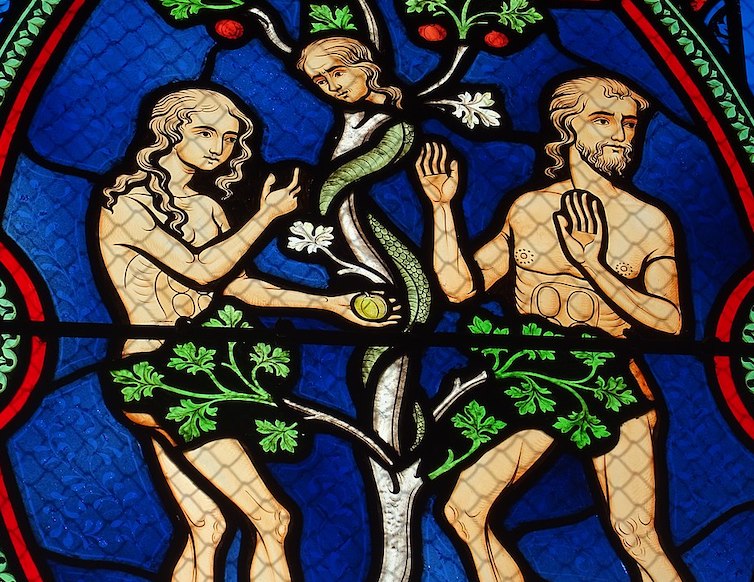
God’s written word includes more about our resurrection bodies. One, from the letter to the Christians in Philippi, says, “the Lord Jesus Christ . . . will transform our lowly body to be like his glorious body.” This verse, like the stained glass image above, inspires me to wonder what that body will be like. Like Jesus’ own resurrection body, we learn.

Perhaps also like humanity’s unfallen human bodies portrayed here in colored glass. If the artist’s vision is accurate, I’m eager to welcome back the hair that once adorned my head, and to enjoy those stunningly defined abs, that I unfortunately never possessed.

Writing to his friend Arthur Greeves, Lewis clarified the biblical definition of resurrection.

I agree that we don’t know what a spiritual body is. But I don’t like contrasting it with (your words) “an actual, physical body.” This suggests that the spiritual body wd. be the opposite of “actual” – i.e. some kind of vision or imagination. And I do think most people imagine it as something that looks like the present body and isn’t really there.

Our Lord’s eating the boiled fish seems to put the boots on that idea, don’t you think? I suspect the distinction is the other way round—that it is something compared with which our present bodies are half real and phantasmal. (19 August 1947)

3. Human beings never become angels. One of most common mistakes about heaven is that people (“good” ones, at least) become angels after they die. They don’t. Period. Angels are angels and people are people – two separate beings, each with their own nature. Angels are majestic, most certainly, but they were not blessed like humanity to be created in the very image of God.

And never forget, not all angels are good. Those fallen ones, in fact, no longer merit their identification as angels. Better to label them as what they’ve become, demons.

As for people being intrinsically distinct from angels, C.S. Lewis wrote a poem that contrasts angelic and human personhood.

On Being Human by C. S. Lewis

Angelic minds, they say, by simple intelligence
Behold the Forms of nature. They discern
Unerringly the Archetypes, all the verities
Which mortals lack or indirectly learn.
Transparent in primordial truth, unvarying,
Pure Earthness and right Stonehood from their clear,
High eminence are seen; unveiled, the seminal
Huge Principles appear.

The Tree-ness of the tree they know – the meaning of
Arboreal life, how from earth’s salty lap
The solar beam uplifts it; all the holiness
Enacted by leaves’ fall and rising sap;

But never an angel knows the knife-edged severance
Of sun from shadow where the trees begin,
The blessed cool at every pore caressing us
– An angel has no skin.

They see the Form of Air; but mortals breathing it
Drink the whole summer down into the breast.
The lavish pinks, the field new-mown, the ravishing
Sea-smells, the wood-fire smoke that whispers Rest.
The tremor on the rippled pool of memory
That from each smell in widening circles goes,
The pleasure and the pang – can angels measure it?
An angel has no nose.

The nourishing of life, and how it flourishes
On death, and why, they utterly know; but not
The hill-born, earthy spring, the dark cold bilberries.
The ripe peach from the southern wall still hot
Full-bellied tankards foamy-topped, the delicate
Half-lyric lamb, a new loaf’s billowy curves,
Nor porridge, nor the tingling taste of oranges.
– An angel has no nerves.

Far richer they! I know the senses’ witchery
Guards us like air, from heavens too big to see;
Imminent death to man that barb’d sublimity
And dazzling edge of beauty unsheathed would be.
Yet here, within this tiny, charmed interior,
This parlour of the brain, their Maker shares
With living men some secrets in a privacy
Forever ours, not theirs.

Heaven will be wondrous. Not only will we get to worship the One who created and redeemed us, there is so much more we have to look forward to. Enjoying a new, unflawed body . . . hobnobbing with angels who sang to celebrate Christ’s Nativity . . . and waiting in line to enjoy a beverage with C.S. Lewis.


The picture above is of a stained glass window in the Basilica of Our Lady of the Children in Châteauneuf-sur-Cher, France. Olive Titus, CC BY 2.0, via Wikimedia Commons