Chinese Complexity

Chinese ChroniclesSome people consider “writing” difficult. It’s not. When you add the adverb “well,” it does become much rarer. Still, writing in English is not challenging at all when you compare it to the hurdle traditional Chinese authors face.

One of the most popular television programs in the People’s Republic of China is essentially a “spelling bee.” During a recent episode the studio audience was embarrassed by the fact only one-third of them were able to correctly write “gan ga,” which means “embarrassed.”

Chinese ComplexThe problem is apparently two-fold. First, Chinese characters are “complex.” That’s why I selected that very word to include here.

The most comprehensive Chinese dictionary, Zhonghua Zihai, was compiled in 1994. It includes 85,568 characters. When compared to the Latin alphabet of 26 characters, it’s no surprise that a poll in China found 99% of the population admitting they forget how to write words. (To be fair, I’m not sure we could find even 1% in the West claiming that they never forget how to spell a word.)

The second reason for the growing national writing crisis in China is the amazing phenomenon called pinyin. Pinyin is the official phonetic system for transcribing the sound of Chinese characters into Latin script. It was created in 1958 by mainland China and has been adopted by the Republic of China as well.

The influence of pinyin has grown dramatically with the advent of computing, and many young Chinese have become dependent on the shortcut. Some educators have labeled the crippling practice “a type of social disease.”

Fortunately for aspiring Chinese authors, knowing a meager 4,000 distinct characters makes one “functionally” literate. Still, even that seems rather daunting. I’ll no longer take for granted my good fortune in having a mere 26 characters to strive to master.

C.S. Lewis offered some fascinating observations about the Chinese worldview. While he discussed the subject in a variety of places, he presents his thoughts most extensively in The Abolition of Man. He finds the concept of “Tao” a useful corollary to what Christians usually refer to as Natural Law.

The Chinese also speak of a great thing (the greatest thing) called the Tao. It is the reality beyond all predicates, the abyss that was before the Creator Himself. It is Nature, it is the Way, the Road. It is the Way in which the universe goes on, the Way in which things everlastingly emerge, stilly and tranquilly, into space and time. It is also the Way which every man should tread in imitation of that cosmic and supercosmic progression, conforming all activities to that great exemplar.

“In ritual,” say the Analects, “it is harmony with Nature that is prized.” The ancient Jews likewise praise the Law as being “true.” This conception in all its forms, Platonic, Aristotelian, Stoic, Christian, and Oriental alike, I shall henceforth refer to for brevity simply as “the Tao.”

Some of the accounts of it which I have quoted will seem, perhaps, to many of you merely quaint or even magical. But what is common to them all is something we cannot neglect. It is the doctrine of objective value, the belief that certain attitudes are really true, and others really false, to the kind of thing the universe is and the kind of things we are.

Although the following story does not relate to C.S. Lewis directly, it offers an interesting insight into the subject of this post. It appears in the book Remembering C.S. Lewis: Recollections of Those who Knew Him, and refers to J.A. Smith, one of Lewis’ fellow professors at Magdalen.

“At the Breakfast Table” was written by another member of the faculty, Adam Fox. Both men knew Lewis well, since they were part of a breakfast foursome in the Common Room at the college.

Now J.A. had fallen into the way of speculating on odd little problems, which apparently assailed him in bed when sleep deserted him. I remember him coming down one morning and telling us that he had been thinking in the night what a dreadful thing it would be for a learned Chinese to go blind. I do not know if the other members of the party knew why it would be more dreadful for a Chinese than for any other learned person.

I had no idea, but I knew my place, and when I asked why this was so, it appeared, according to J.A., that many of the ideograms that make Chinese writing so beautiful conveyed meaning to the eye but had no sound attached to them. Reading in Chinese was in part at least like looking at a picture book, and for that reason, of course, a blind man is fatally handicapped.

As an epilogue of sorts, I can’t resist including one of my favorite Chinese characters. Perhaps you’ll enjoy it also.

Chinese Verbose

Ironically, since it required sixty-four strokes, the word zhé fell from common usage around the fifth century.

Facebook the Discourager

facebookIt turns out networking on the dominant digital community, Facebook, may have a gloomy downside. A recent study of young adults found that the more time they spent on Facebook, the sadder they became. (A link to the peer-reviewed study appears below.)

The researchers ominously warn, “On the surface, Facebook provides an invaluable resource for fulfilling the basic human need for social connection. Rather than enhancing well-being, however, these findings suggest that Facebook may undermine it.”

Most readers of Mere Inkling possess social networking accounts. In light of that fact, we will have a gut reaction to this allegation, invariably based upon our own experience.

Some will assume, I don’t get depressed reading posts on Facebook, so that study must be wrong.

Others may think, I can see how everyone’s reports on their achievements could discourage a friend whose life isn’t progressing nearly as well. In fact, some of us may have read about the accomplishments of our peers and felt a nagging pang that we don’t quite measure up.

To be fair, the problem doesn’t lie with Facebook per se, it’s a consequence of the human condition. No matter how self-confident a person appears, there is a seed of insecurity within each of us. Christians would trace it back to humanity’s fall, but whatever its source, we innately recognize that we are not the true masters of our own destiny.

Even if we make every choice afforded us correctly, there are accidents, diseases, whims of genetic imperfection and assorted other things that remind us of our vulnerabilities.

It is not actually our insecurity that creates the dynamic where Facebook can become a great discourager. The cause is more insidious than a mere awareness of our own dependency.

The reason we are saddened by the success and happiness of others—even those we love—is due to envy. That’s an ugly word, and it’s not something we want to foster in our lives. In fact, whenever it rears its head, we strive to crush it with our heel.

The truth is that most of us subconsciously experience this feeling far more often than we are aware. It could, for example, be as simple as longing for a sporty new car or muscular new truck like the one that just passed us on the road . . . or wishing that our makeup accented our features or our clothes flattered our bodies as nicely as someone we passed on the sidewalk.

Envy can be especially evident at events like high school class reunions. As the decades pass, it becomes simpler to contrast the (external) accomplishments of classmates who once shared seemingly equal opportunities.

You can find envy everywhere, even (God forbid) in churches. That’s why James included the following in his letter to the Church.

My brothers, show no partiality as you hold the faith in our Lord Jesus Christ, the Lord of glory. For if a man wearing a gold ring and fine clothing comes into your assembly, and a poor man in shabby clothing also comes in, and if you pay attention to the one who wears the fine clothing and say, “You sit here in a good place,” while you say to the poor man, “You stand over there,” or, “Sit down at my feet,” have you not then made distinctions among yourselves and become judges with evil thoughts?

Listen, my beloved brothers, has not God chosen those who are poor in the world to be rich in faith and heirs of the kingdom, which he has promised to those who love him? But you have dishonored the poor man. (James 2:1-7, ESV).

In an essay entitled “Democratic Education,” C.S. Lewis noted, “Envy is insatiable. The more you concede to it the more it will demand.” Lewis also included it in his description of the damned.

We must picture Hell as a state where everyone is perpetually concerned about his own dignity and advancement, where everyone has a grievance, and where everyone lives the deadly serious passions of envy, self-importance, and resentment. (The Screwtape Letters).

Facebook doesn’t cause us to envy, it merely offers us the frequent opportunity to hear about the joys of others and wish we experienced the same. (Far be it from us to ponder the fact that our acquaintances seldom write about their own disappointments, insecurities, or worries.)

There’s really only one way to reduce the influence of envy in our lives. It comes from understanding how truly precious—how intensely loved—we are, by our Creator. When we understand that he loved each of us so deeply that he was willing to allow his only begotten Son to die in our place . . . only then can we comprehend that we need envy nothing.

Confident in that merciful love, the murderer Paul of Tarsus was able to rest in God’s forgiveness and write:

I have learned in whatever situation I am to be content. I know how to be brought low, and I know how to abound. In any and every circumstance, I have learned the secret of facing plenty and hunger, abundance and need. I can do all things through him who strengthens me. (Philippians 4:11b-13).

_____

The study, “Facebook Use Predicts Declines in Subjective Well-Being in Young Adults,” is available through the Public Library of Science here.

Return to Narnia

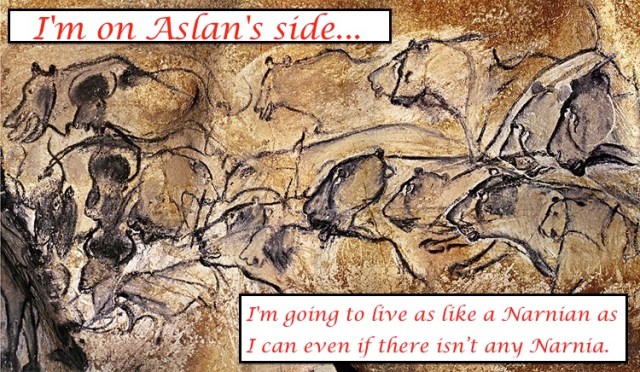
Chauvet Quote

Great news for all fans of Narnia—after a three year delay, it’s just been announced that they will be making a film based on The Silver Chair!

Voyage of the Dawn Treader was released in 2010, although it seems to many of us even more time has passed. And, due to the vagaries of film making, the fourth title in the series may not see the screen until 2018. However, there is additional good news too.

Most fans will be happy to learn that the new partner in the production is Mark Gordon. Among the films and shows Gordon has produced are Saving Private Ryan, The Patriot, Speed, The Day After Tomorrow and Grey’s Anatomy. Gordon is quoted as saying:

Like many readers, both young and old, I am a huge fan of C.S. Lewis’ beautiful and allegorical world of Narnia. These fantasy stories inspire real-world passion among millions of devoted fans around the world. As we prepare to bring the next book to life, we are humbled and excited to contribute to the outstanding legacy of Narnia.

Lewis’ son, Doug Gresham, will continue to work on the project, and strive to maintain fidelity to the author’s vision.

The Silver Chair offers a fascinating tale, much of which takes place in a subterranean realm. I’m certain the cinematography will be spectacular.

The story marks the return of Eustace Scrubb and the addition of a classmate, Jill Pole. The other major character—aside from Aslan, of course—is Puddleglum, a taciturn Marsh-wiggle. (We named the pond on our property in his honor, enjoying the alliteration.)

As the script is written, I’m most concerned about how Puddleglum will be portrayed. He’s not a cartoon character, although much that he says in utter seriousness comes across as slightly silly.

Much of the “humor” comes from the fact that Puddleglum is the archetypal pessimist, as I’ll illustrate in a moment. I just hope they don’t pursue the all too common path of setting him up as comic relief (à la Jar Jar Binks).

Puddleglum, in fact, is the hero of the story. He leads the young children on their dangerous mission to locate the son and heir of King Caspian (who we met in the two previous films). Here are a few quotations from the courageous Marsh-wiggle.

Good morning Guests . . . Though when I say good I don’t mean it won’t probably turn to rain or it might be snow, or fog, or thunder. You didn’t get any sleep, I daresay.

. . . but I’d better not tell you that story. It might lower your spirits, and that’s a thing I never do.

The bright side of it is . . . that if we break our necks getting down the cliff, then we’re safe from being drowned in the river.

Life isn’t all fricasseed frogs and eel pie.

In the climatic confrontation with the Queen of the Underland, Puddleglum champions the truth in this amazing scene.

One word, Ma’am . . . All you’ve been saying is quite right, I shouldn’t wonder. I’m a chap who always liked to know the worst and then put the best face I can on it. So I won’t deny any of what you said. But there’s one more thing to be said, even so. Suppose we have only dreamed, or made up, all those things–trees and grass and sun and moon and stars and Aslan himself. Suppose we have. Then all I can say is that, in that case, the made-up things seem a good deal more important than the real ones. Suppose this black pit of a kingdom of yours is the only world. Well, it strikes me as a pretty poor one.

And that’s a funny thing, when you come to think of it. We’re just babies making up a game, if you’re right. But four babies playing a game can make a play-world which licks your real world hollow. That’s why I’m going to stand by the play world.

I’m on Aslan’s side even if there isn’t any Aslan to lead it. I’m going to live as like a Narnian as I can even if there isn’t any Narnia. So, thanking you kindly for our supper, if these two gentlemen and the young lady are ready, we’re leaving your court at once and setting out in the dark to spend our lives looking for Overland. Not that our lives will be very long, I should think; but that’s a small loss if the world’s as dull a place as you say.

Simply rereading these words has whet my hunger for the new addition to the Narnian cinematic canon. May it arrive soon.

During the next few years, as a script is written, the cast is chosen and the various scenes are filmed and edited, join me in offering an occasional prayer that the movie’s producers will both remain true to Lewis’ message, and produce a film worthy of the novel upon which it is based.

Writing Life Scripts

ben hurI was shaped by the heroic religious films of the 1950s and 60s. The powerful messages of epic movies like Ben Hur, Quo Vadis and The Robe planted within my young Christian heart an awareness of nobility and radical self-sacrifice.

About twenty years ago, I spent a year doing graduate work in education. One of my Educational Psychology classes was taught by a professor who was a devotee of Transactional Analysis. I don’t recall too much about TA, aside from one of its principles that resonated with me.

It’s a concept called Life Scripts. Without going into great detail, it is an often subconscious notion of how we “think” our lives will or should play out. It’s adjusted throughout our lives, but the basic theme is established when we are quite young.*

A recent article says “script is broadly understood as a series of decisions, formed as coping strategies in childhood, which continue to shape the life course outside of awareness.”**

It was only as an adult that I realized just how significant an impression these virtuous stories made on me. I recalled the countless times I lay in bed at night rehearsing the story of The Robe. I was the unbelieving Roman soldier, converted by the gentle witness of the wrongfully persecuted Christians.*** Ultimately, I took my stand with them, defending them and voluntarily laying down my life for Christ.

That same plot line still echoes through my mind and soul.

I consider myself blessed to have been exposed to such positive influences while my self identity was being shaped. And I pray for children today whose parents allow them to be exposed (at terribly vulnerable ages!) to violent, fearful and morally ambiguous influences.

Those precious minds and hearts are scarred by the vulgarity and immorality that are endemic in modern cinema, television and music. May God have mercy on them.

C.S. Lewis lived during the era when the virtuous dramas such as those named above were at the peak of their influence.

In a diary entry from the mid-1920s, he mentions Quo Vadis in passing. He is describing his weekend schedule.

Saturday 22 April: Got up about 6.30 and did the same jobs as yesterday. Was settled to work by 9.5 o’clock and put in an excellent morning . . . Sheila Gonner—jolly child—came to tea. Dorothy is to come back tomorrow: so we shall no longer be servantless. At her request I lent her my crib to Tacitus’ History for her sister Rose— I wonder what makes her imagine that she would like it? Possibly early Christian novels of the Quo Vadis type. Worked again after tea, and from supper till ten o’clock, finishing Herodotus. The last few pages of the IXth Book I now read for the first time, having got tired of it on my first reading . . .

I find this diary passage intriguing, in the way that Lewis posits a reader’s potential interest in classical literature as arising from their exposure to ancient Rome via contemporary novels. That’s precisely where my own lifelong fascination with the Roman empire was born.

If you’ve never seen these three movies, I commend them to you. I would also encourage you to consider reading one or all of the novels. They are available for free download in various digital formats.

Quo Vadis

Ben Hur

The Robe

_____

* I’m a pastor and historian, not a psychologist, so I don’t pretend to understand all of the implications. Because of that, I don’t endorse TA as a fully valid theory. What’s more, in our fallen world it’s obvious that many early “life scripts” can be based on wounds inflicted on neglected or abused children. In such cases, particularly where the scripts are destructive, we are not “destined” to live out a tragedy. By the grace of God, even the saddest of stories can be redeemed and “rewritten” into tales of hope and wonder.

** From “Script or Scripture?” by Jo Stuthridge in Life Scripts edited by Richard Erskine (Karnac Books, 2010).

*** It didn’t hurt that the main Christian disciple in the film was the lovely and chaste Diana, played by the British actress Jean Simmons. But that’s another story, and it’s important to note that these life scripts are pre-pubescent creations, so they are motivated by much deeper impulses than hormones. As the previously footnoted quotation referred to them, they are fundamentally “coping strategies” for survival in the calm (or frequently turbulent) world in which children find themselves.

The Anguish of Suicide

suicideI was present at the scene of a suicide last night.

In my capacity as a volunteer chaplain with a local law enforcement agency, I was riding with a police officer. We were the initial first responders to arrive.

At the end of a rather uneventful shift, we received an urgent call to respond to a shooting. Naturally, I can’t reveal any details about the event beyond mentioning it involved a firearm. It was probably terribly similar to how you would imagine it to be.

To see a life so sadly cast aside is too sad for words. Contemplating the days ahead for those who loved the deceased is sobering. Their lives will never be the same, and that is the universal legacy bequeathed to family and friends by those who end their own lives. God have mercy on them.

C.S. Lewis understood how despair could drive a person to contemplate this irreversible choice. In a letter to a deeply grieving husband who had lost his wife, Lewis relates how suicide would never provide a genuine resolution to the pain caused by the loss.

One way or another the thing [romantic love] had to die. Perpetual springtime is not allowed. You were not cutting the wood of life according to the grain. There are various possible ways in which it could have died though both the parties went on living.

You have been treated with a severe mercy. You have been brought to see (how true & how very frequent this is!) that you were jealous of God. So from us you have been led back to us and God; it remains to go on to God and us.

She was further on than you [in Christian faith], and she can help you more where she now is than she could have done on earth.*

You must go on. That is one of the many reasons why suicide is out of the question. (Another is the absence of any ground for believing that death by that route would reunite you with her. Why should it? You might be digging an eternally unbridgeable chasm. Disobedience is not the way to get nearer to the obedient.)

There’s no other man, in such affliction as yours, to whom I’d dare write so plainly. And that, if you can believe me, is the strongest proof of my belief in you and love for you. To fools and weaklings one writes soft things. (A Severe Mercy by Sheldon Vanauken)

Vanauken, the recipient of the letter, had this response to Lewis’ challenging words: “After this severe and splendid letter, I loved Lewis like a brother. A brother and father combined.”

He continued by explaining how the letter had dispelled any consideration of suicide. “If I had been tempted at all to break my promise to Davy [his wife] about following her by [his] own act, the temptation vanished after one horrified look at Lewis’s ‘eternally unbridgeable chasm.’”

It will take some time for me to “process” my experience last evening. But, having seen death in the past, I found it less traumatic than many others would have.

And, of course, I never knew the person who chose to no longer breathe . . . or smile . . . or dream. I only became “acquainted” with them as I spoke to their spouse in the hours that followed. Sadly, because of a tragic choice, in this world they are merely a memory now.

Naturally, to those who knew and loved them, the vacuum created by their passing cannot be completely filled. Moreover, the wounds caused by the grim nature of their death by choice, will leave permanent scars.

The fact is that during the course of their lives, many people—quite possibly the majority of human beings—consider the possibility that suicide could end the pain they feel. But we must tirelessly remind them, and ourselves, that suicide is a permanent “solution” to temporary circumstances.**

_____

* Lewis is referring to the concept that the saints (i.e. all believers) currently in the presence of the Lord may have the ability to intercede on behalf of those of us who are still “living.” The best way for Protestants to understand this may be by considering this line of thought: (1) we don’t hesitate to ask our sisters and brothers in Christ to pray for us, (2) we believe that God has already given eternal life to his disciples (meaning that even the departed remain alive), thus (3) it is not illogical that children of God now in his presence would be able to intercede for us in heaven.

Traditional Protestant reticence with this understanding is based in the concept most clearly espoused in I Timothy 2:5. Lewis, of course, was a Protestant himself, but Anglicans are among the minority of Protestants who affirm this practice.

** This is not to belittle the intense agony caused by chronic emotional suffering, but I believe there is a path that leads not to death, but to healing and life. If you have suicidal feelings, I strongly encourage you to seek out a skilled Christian counselor. (Not all clergy possess the necessary training, or the faith itself, to provide an adequate lifeline in these situations.)

If you’re unable to find a pastor in your local area, you can contact me at chaplainstroud at mereinkling dot com and I will attempt to get you in touch with a compassionate minister in your local community.

Autistic Considerations

Bill & Barbara ChristopherMost of us have a friend, loved one, or acquaintance affected by autism. I’m not sure if this would have been accurate a generation ago.

And I’m not merely referring to the lack of proper diagnosis of the problem. There are numerous reports that its frequency is increasing.

Autism is not necessarily debilitating. In minor cases it’s barely noticeable. Like many problems, its severity is manifested across a wide spectrum.

I have autism on my mind now, as the new school year approaches and my wife sets up her special education classroom. She’s excited about the return of her precious kids. It’s wonderful how so many of them make amazing process both in academics and social abilities.

The return of school, however, is not the primary reason for my current thoughts. I’m writing an article I hope to submit to an Autism magazine, inspired by a recent interview I conducted.

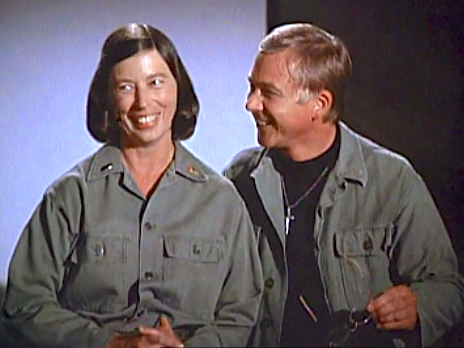
I was privileged to speak at length with the father of a severely autistic son who will be known to many readers of Mere Inkling. William Christopher, who played Father Mulcahy on M*A*S*H, has been a prominent spokesman for autism concerns for many years. (A link to the article appears below.)

Along with his wife Barbara, Christopher wrote a book entitled Mixed Blessings. It recounted their early struggles providing Ned with everything he needed to make his life as full as it could possibly be. Due to their diligence and deep love for their son, Ned continues to enjoy his active life today.

They embody the noble type of earnest love C.S. Lewis describes in The Four Loves. There he says that true love is gift-love, not seeking increased dependence on itself, but liberating the beloved to become as independent as they possibly can.

The maternal instinct . . . is a Gift-love, but one that needs to give; therefore needs to be needed. But the proper aim of giving is to put the recipient in a state where he no longer needs our gift. We feed children in order that they may soon be able to feed themselves; we teach them in order that they may soon not need our teaching.

Thus a heavy task is laid upon this Gift-love. It must work towards its own abdication. We must aim at making ourselves superfluous. The hour when we can say “They need me no longer” should be our reward. But the instinct, simply in its own nature, has no power to fulfil this law.

The instinct desires the good of its object, but not simply; only the good it can itself give. A much higher love—a love which desires the good of the object as such, from whatever source that good comes—must step in and help or tame the instinct before it can make the abdication.

This despite the counsel of one early specialist who advised them that since Ned was adopted they should just take him and trade him in for a child who wasn’t defective. Yes, someone really said that to them.

If I end up publishing the article, I’ll mention it again for those who might be interested in reading it. In the meantime, the extensive interview appears in the current issue of a journal I edit for military chaplains, called Curtana: Sword of Mercy.

When we look at a list of autistic traits, it’s normal to recognize some of them in ourselves. That shouldn’t surprise us, since most of these traits are completely “normal” in various degrees.

It is a commonplace practice to perform posthumous diagnoses of well known figures, based upon detailed descriptions of their behaviors. In that vein, I found online lists that included the following personages as possibly autistic: Thomas Jefferson, Albert Einstein, James Joyce, Stanley Kubrick, Lewis Carroll, and Hans Christian Andersen.

Oh, and there’s another name I discovered in one article. The writer suggested that C.S. Lewis’ social preferences suggest that he too suffered the mild version of autism, typically called “Asperger’s Syndrome.”

I don’t intend to discuss that now, but I wanted to share a fascinating concept I encountered while researching for this column. In Autism, Art and Children: The Stories We Draw, I read the following about imaginary worlds like Narnia and Middle Earth:

It is this element of world building that forms a bridge between the impersonal character of research and clinical observations and the individual young artists with autism in whom our interest especially lies.

Sacks (1995) points out the importance of fantasy worlds to some individuals with autism . . . this predilection for alternate worlds is frequently encountered in many high-functioning people with autism . . . such high-functioning individuals with autism “describe a great fondness for, almost an addiction to, alternative worlds, imaginary worlds such as those of C.S. Lewis and Tolkien, or worlds they imagine themselves.”

Illustrating such world-building activities by an entire family (two parents and their son), all of whom have autism, Sacks remarks, “They have spent years constructing an imaginary world with its own landscapes and geography (endlessly mapped and drawn), its own languages, currency, laws, and customs—a world in which fantasy and rigidity play equal parts.”

This creative activity is of particular interest, for many of the children we have met have individual fantasies in alternative worlds that play major roles in their lives and activities.

I find this analysis captivating. I am utterly fascinated by the construction of imaginary settings. That’s one reason I love the alternate history genre, as it combines the familiar with elements that have transformed them into something inherently different.

I must confess I’ve occupied many an idle hour imaging new worlds. I’ve even invested a fair amount of time in world-building myself—for an alternative history for which I still compile notes and ideas, despite the fact it’s unlikely to ever be written. I don’t attribute this to autism, but it serves as another example of just how much all of us have in common.

The fact is none of us is perfectly healthy—physically, emotionally, psychologically, or spiritually. We are who we are. We can strive to improve many aspects of our lives (and the wellbeing of others), but attaining perfection is impossible in this life.

In the meantime, we can be grateful for wonderful people like Barbara and Bill Christopher, who have courageously shared their own journey to aid us in ours. Their willingness to forsake their rightful shield of privacy and step out into the glare of the public—for our benefit—reveals both their love for their children and their generosity towards strangers.

_____

The wonderful photograph at the top of the column features Bill and Barbara Christopher. Barbara had a guest role as a nurse in “Dear Mildred,” during which the two of them sang a duet.

The interview with Bill Christopher can be downloaded for free in the current issue of Curtana: Sword of Mercy, which is available here.

C.S. Lewis Shrugged

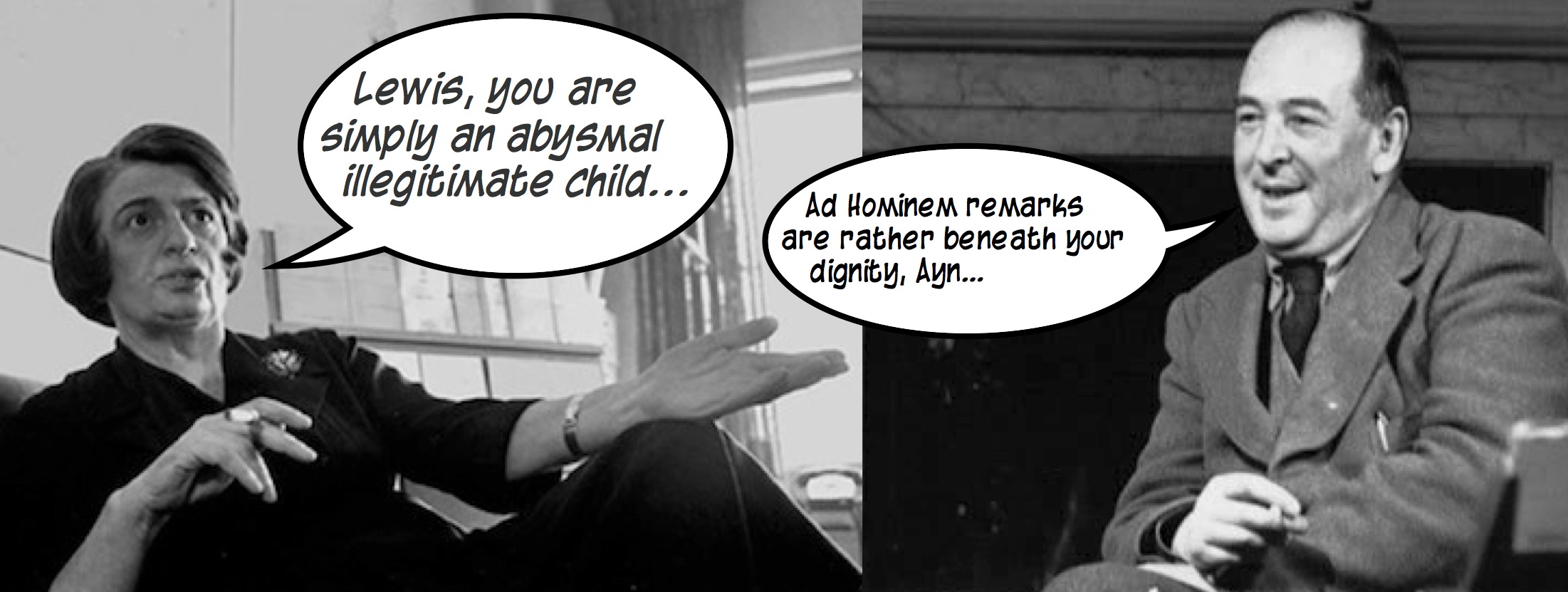
csl & randI just watched another documentary about the controversial Ayn Rand, who wrote Atlas Shrugged. The program, “Ayn Rand & the Prophecy of Atlas Shrugged,” claimed that book is the number one selling hardcover in history (following the Bible, of course).

Although I haven’t read it, I witness it’s growing influence as it becomes more frequently referenced in political discussions. It is a favorite (sometimes even referred to as the “gospel”) of Libertarians.

Rand was a Soviet refugee, and much of what she anticipated, has come to pass. Unbridled government regulations, she predicted, would strangle creativity and production. The welfare state would collapse upon itself as it eroded the incentive to work. In her call for less government interference and oversight, she echoes the concerns of growing numbers of Americans on both the left and the right.

This reflects a reversal of her argument’s reception when it was published. In 1957, the dystopian novel apparently did not receive a single positive review. After William F. Buckley published a scathingly negative review, she never spoke to him again.*

And that raises one of the problems with Rand’s work. In actuality, this flaw is a failing common to all literature. It is difficult to separate what is written from its author. This is especially true when the person who wields the pen possesses a unique or outlandish personality. This was certainly the case with Rand. One of her primary goals was to be provocative.

The title of this column was inspired by a recent post I read entitled, “Ayn Rand Really, Really hated C.S. Lewis.” You can read it at First Things.

In the article, Matthew Schmitz provides excerpts of Rand’s underlining and marginalia (notes) in her copy of Lewis’ Abolition of Man. His opening paragraph says it all, though. [Warning: Those offended by rude language should skip the next paragraph.]

Ayn Rand was no fan of C.S. Lewis. She called the famous apologist an “abysmal bastard,” a “monstrosity,” a “cheap, awful, miserable, touchy, social-meta­physical mediocrity,” a “pickpocket of concepts,” and a “God-damn, beaten mystic.” (I suspect Lewis would have particularly relished the last of these.)

Lewis’ indomitable spirit, as hinted at in Schmitz’ parenthetical comment, is precisely what inspired the title of my post.

So, why am I discussing Rand’s work at all, if she so despised Lewis? Well, because I want to explore just why she was so offended by his philosophy.

There is great irony present here. While Rand devotees and serious Christians would share many fears about oppressive governments . . . they are ill-suited allies.

Despite this commonality, the basic reasons for distrusting secular institutions, and more expressly, their solutions to the problem are diametrically opposed.

For Lewis, the atheist turned Christian apologist, hope comes only from God, not from a laissez faire government. While most Christians do not believe in the “coerced compassion” of unlimited taxation to support people unwilling** to work, we utterly disagree with Rand’s elevation of selfishness as virtue.

And that last phrase is not hyperbole. Rand actually wrote a book entitled The Virtue of Selfishness. She viewed altruism as inherently illogical, and thus, essentially immoral.

So, it’s no surprise she disliked Lewis. He had been delivered from a self-centered worldview, and recognized that we have been created by a loving Father for a grand, and eternal purpose.

In the Christian worldview, selfishness provides evidence of our corruption by the Fall. Our disobedience—our selfish desire to have things our way—is at the root of humanity’s problems.

Altruism, giving of oneself for the welfare of another without anticipation of benefit, is—for the disciple of Jesus—a genuine virtue.

We’ll end this brief discussion of a complex subject with a passage from C.S. Lewis. It is a discussion of altruism (in the context of Moral Law) drawn from Mere Christianity. One can only imagine what Ayn Rand would write in the margins, but I’ll take my stand with Lewis.

Some of the letters I have had show that a good many people find it difficult to understand just what this Law of Human Nature, or Moral Law, or Rule of Decent Behaviour is. For example, some people wrote to me saying, “Isn’t what you call the Moral Law simply our herd instinct and hasn’t it been developed just like all our other instincts?”

Now I do not deny that we may have a herd instinct: but that is not what I mean by the Moral Law. We all know what it feels like to be prompted by instinct—by mother love, or sexual instinct, or the instinct for food. It means that you feel a strong want or desire to act in a certain way. And, of course, we sometimes do feel just that sort of desire to help another person: and no doubt that desire is due to the herd instinct. But feeling a desire to help is quite different from feeling that you ought to help whether you want to or not.

Supposing you hear a cry for help from a man in danger. You will probably feel two desires—one a desire to give help (due to your herd instinct), the other a desire to keep out of danger (due to the instinct for self-preservation).

But you will find inside you, in addition to these two impulses, a third thing which tells you that you ought to follow the impulse to help, and suppress the impulse to run away.

Now this thing that judges between two instincts, that decides which should be encouraged, cannot itself be either of them. You might as well say that the sheet of music which tells you, at a given moment, to play one note on the piano and not another, is itself one of the notes on the keyboard. The Moral Law tells us the tune we have to play: our instincts are merely the keys.

Another way of seeing that the Moral Law is not simply one of our instincts is this. If two instincts are in conflict, and there is nothing in a creature’s mind except those two instincts, obviously the stronger of the two must win. But at those moments when we are most conscious of the Moral Law, it usually seems to be telling us to side with the weaker of the two impulses. You probably want to be safe much more than you want to help the man who is drowning: but the Moral Law tells you to help him all the same.

And surely it often tells us to try to make the right impulse stronger than it naturally is? I mean, we often feel it our duty to stimulate the herd instinct, by waking up our imaginations and arousing our pity and so on, so as to get up enough steam for doing the right thing. But clearly we are not acting from instinct when we set about making an instinct stronger than it is. The thing that says to you, “Your herd instinct is asleep. Wake it up,” cannot itself be the herd instinct. The thing that tells you which note on the piano needs to be played louder cannot itself be that note.

_____

* “Big Sister is Watching You,” written by a former atheist Soviet spy turned Quaker capitalist, is available online here.

** By “unwilling,” I am referring to people capable of supporting themselves, but consciously choosing to live off of the produce of others. While some Christians feel morally compelled to support even these, most would follow the guidance found in II Thessalonians 3:

As for other matters, brothers and sisters, pray for us that the message of the Lord may spread rapidly and be honored, just as it was with you. And pray that we may be delivered from wicked and evil people, for not everyone has faith. . . . May the Lord direct your hearts into God’s love and Christ’s perseverance. . . .

In the name of the Lord Jesus Christ, we command you, brothers and sisters, to keep away from every believer who is idle and disruptive and does not live according to the teaching you received from us. For you yourselves know how you ought to follow our example. We were not idle when we were with you, nor did we eat anyone’s food without paying for it.

On the contrary, we worked night and day, laboring and toiling so that we would not be a burden to any of you. We did this, not because we do not have the right to such help, but in order to offer ourselves as a model for you to imitate.

For even when we were with you, we gave you this rule: “The one who is unwilling to work shall not eat.” We hear that some among you are idle and disruptive. They are not busy; they are busybodies. Such people we command and urge in the Lord Jesus Christ to settle down and earn the food they eat.

Discipline or Abuse?

beltDiscipline is not a bad thing. In fact, it’s a necessary thing, if you understand it in terms of correction or protection (its true purposes).

Sadly, the very word has been contaminated by its association with something diametrically opposed to discipline—abuse. It is extremely common for abusers to try to hide their crimes under the once untainted label of discipline.

Here is biblical wisdom: “My son, do not despise the Lord’s discipline or be weary of his reproof, for the Lord reproves him whom he loves, as a father the son in whom he delights” (Proverbs 3:11-12).

And, a testimony from the Psalmist that discipline’s role is to protect. “Blessed is the man whom you discipline, O Lord, and whom you teach out of your law, to give him rest from days of trouble, until a pit is dug for the wicked” (Psalm 94:12-13).

C.S. Lewis elaborates on this truth in “A Preface to ‘Paradise Lost.’”

Discipline, while the world is yet unfallen, exists for the sake of what seems its very opposite—for freedom, almost for extravagance. The pattern deep hidden in the dance, hidden so deep that shallow spectators cannot see it, alone gives beauty to the wild, free gestures that fill it, just as the decasyllabic norm gives beauty to all the licences and variations of the poet’s verse. The happy soul is, like a planet, a wandering star; yet in that very wandering (as astronomy teaches) invariable; she is eccentric beyond all predicting, yet equable in her eccentricity.

It is precisely because of this, the genuinely noble and affectionate character of genuine discipline that I was so deeply repulsed (and moved) by the following story. It comes from the fine journal, First Things.

A friend who corresponds with prisoners on death row sends one prisoner’s poem describing the horrific abuse he endured as a child. He tells her that most of the men on death row with him suffered that kind of abuse. The poem, titled “Spare the Rod” and addressed to his father, begins with the story of his sister’s beatings, and continues:

Then came a son to intercede,

a five-year-old you caused to bleed;

he would not flee your spit and roar,

you smashed his face into the floor.

And those were just the better years.

It ends:

What shall you find at heaven’s gate?

What shall be a father’s fate

who reveled in his children’s screams

who haunts them still in all their dreams?

You took your children meek and mild,

and beat them feral, stomped them wild.

You’ve now moved on to spar with God,

Who spares the child and breaks the rod.

Reading to Children

grandparent readingAs a father whose military service required extended separations from my children, I wish technology had been about three decades more advanced than it was while I was in uniform.

As a grandfather who has most of his grandkids living hours away, I’m grateful to be alive during an era when we can still nurture close relationships despite geographic separation.

There are many wonderful ways to keep in touch across the miles. And, a new program adds a wonderful touch to the time proven joy of reading to our children. It’s called Kindoma, and more about it momentarily.

It’s a little known secret that there are few—very few—activities children love more than reading with a loved one. It’s not just about the book, it’s also about relationships and bonding.

C.S. Lewis had an interesting relationship with children. As a bachelor academic, he was not around them all that much. And when he wrote The Abolition of Man in 1943—before becoming a step-father—Lewis confessed “I myself do not enjoy the society of small children . . . I recognize this as a defect in myself—just as a man may have to recognize that he is tone deaf or colour blind.”

Eight years earlier, at the modest age of thirty-seven, he wrote to a good friend, “I theoretically hold that one ought to like children, but am shy with them in practice.” Lewis isn’t alone in possessing this unfortunate trait, which from my observation [political incorrectness alert] is more common among men than women. Of course, in our increasingly equalitarian culture it does seem that character flaw is becoming a bit more gender-balanced.

Then there is the fact that many of us who dearly love our young progeny, enjoy the children of our friends, and hold genuine compassion for young ones suffering in any variety of miserable conditions . . . do not particularly seek out the company of children. From my personal perspective, I feel like I “expend” all of my (admittedly finite) kid-patience with my own kin and the offspring of my friends. I don’t have a surplus left after spending a significant amount of time with the (precious) little ones.

And, like Lewis, “I recognize this as a defect in myself.”

At the same time as I admire teachers who can pour themselves into little ones, and I am absolutely dumbfounded by people who prefer working with young teenagers, I recognize that the world works well when some of us are better equipped to work with adults also . . . so the entire spectrum of learners is served.

Recognizing our own prejudices is a prerequisite to suppressing or evicting them. Lewis, of course, was extremely concerned about children and their upbringing, particularly their education.

Returning to the subject of how to nurture relationships with children through the intercontinental reading of books, technology has made the miraculous possible.

Kindoma is novel in the sense that it allows you to read the book together (either the child or the adult can be the actual “reader”) while you actually turn the pages of the etext together! So you get the genuine experience of reading together.

The creator of the program holds a PhD in Computer Science. So he’s not merely an idea guy (like me) who comes up with a slew of amazing concepts but doesn’t have the scientific skill to make them reality.

The program is currently available for ipod and ipad. I’m sure it’s just a matter of time before it is ported to other operating systems. Since I still use “regular” desk and lap-top computers, I haven’t experimented with it myself. The app itself is free. I’m unsure about their revenue stream, whether it will come from ads, or purchase of access to a specific library, but it’s definitely worth checking out.

The brief link below offers an introduction to the tool. I hope that you will use it if applicable to your situation, and pass it on to others you know who might benefit from it. (In the meantime, I’m thinking about approaching my wife about us making that ipad purchase I’ve been pondering.)

A Narnian Madlib

EVO-WWI-064-01060I got to savor one of the joys of being a grandpa today, watching over two of my five lovely granddaughters while their parents traveled to an important business meeting.

Naturally, we had fun playing, drawing, tossing a ball for their German shepherd, building things, cleaning up their room (not quite so “fun”) and—since it’s summer—playing with water balloons (extremely fun, even though I got drenched).

We also did a madlib, one of those “phrasal templates” popularized by Roger Price and Leonard Stern in the 1950s. These simple word games are entertaining and educational. And, even for novice writers, they’re not too challenging to compose. After all, the stories themselves are by nature brief and rather superficial.

Today I even set my granddaughters in front of an episode of The Powerpuff Girls so I could write a short scene from Narnia for them. You’ll find it below.

I had forgotten how much fun we had with madlibs when our own children were young. We made many up on the spur of the moment, and laughed at the silly combinations of word that resulted. The process, as most readers know, involves randomly selecting a series of words for inclusion in the narrative. With a lack of imagination, the readings can fall a bit flat, but typically you end up with some (accidentally) witty wordplay.

One of the benefits of madlibs is how they can be used more than once. While the outline of the story remains the same, of course, the choices made by readers generate amazing diversity.

Most madlibs are admittedly rather juvenile. That’s because they are written for juveniles. They rely on providing specific types of words, such as nouns or adjectives. Theoretically, you could devise a madlib as complex or sophisticated as you desire. For example, an entertaining tale certainly could doubtless be woven by including random selections for the following word choices.

____________ prime number

____________ copular verb

____________ Napoleonic regimental commander

____________ homograph

____________ life stage of a butterfly (other than larva or pupa)

____________ ditransitive verb

____________ type of psychosis

____________ infielder for 1874 Chicago White Stockings

____________ gerund

____________ rare earth mineral

____________ monotransitive verb

____________ early kabbalist (other than Bahye ben Asher ibn Halawa)

____________ type of arachnid with blue coloration

____________ free predictive

____________ reciprocal pronoun

____________ chemical process (other than esterification)

Unfortunately, I don’t have time to write the story accompanying this worthy list, but if you should write it, I’d love to read it.

There are a number of fan sites online that generate madlibs. I won’t recommend any since the ones I’ve glanced at today are merely advertising collections for sale. (I also found the examples I experimented with to be rather feeble . . . even weaker than the story I wrote today in a single hour.)

You will search in vain if you’re seeking a C.S. Lewis reference to madlibs. However, he was a master wordsmith, who recognized well their power, and greatly loved humor. The following passage, from “Prudery and Philology,”
refers to the versatility and weight of language, and includes a valuable caution.

We are sometimes told that everything in the world can come into literature. This is perhaps true in some sense. But it is a dangerous truth unless we balance it with the statement that nothing can go into literature except words, or (if you prefer) that nothing can go in except by becoming words. And words, like every other medium, have their own
proper powers and limitations.

The brief tale below is not pretentious, so you need not fear it exceeding its limitation. It simply is what it is . . . one grandfather’s passing literary adventure with his grandchildren.

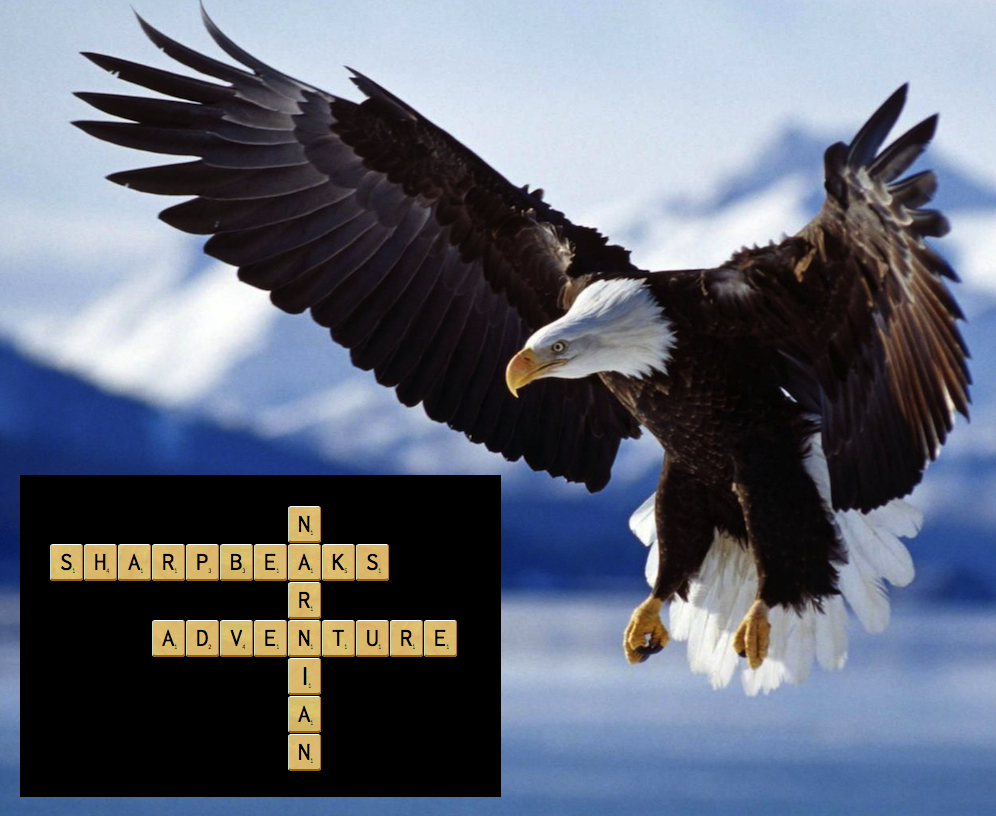
It you like “Sharpbeak’s Narnian Adventure,” you’re welcome to download a PDF copy of the story I’ve appended to the end of the column. It’s 100% free, and I’m not trying to sell a collection of madlibs after hooking you. Besides, if I was trying to make a profit off of anything including the word “Narnian,” I have no doubt lawyers would be descending upon me in droves.

The Words You Will Need

____________ adjective

____________ animal

____________ adjective

____________ adjective

____________ something  you drink

____________ color

____________ adverb

____________ adjective

____________ adjective

____________ meal time

____________ adjective

____________ adjective

____________ adjective

____________ adjective

____________ plural noun

____________ plural noun

____________ adjective

____________ adjective

____________ adjective

____________ animal

____________ adjective

____________ food

____________ food

____________ food

____________ place

____________ adverb

____________ adjective

____________ place

____________ number

____________ plural relative

____________ verb

____________ adjective

____________ plural monster

The Story Into Which You Insert Your Words

Once upon a time, when Narnia was still young, a/an ____________, young eagle named Sharpbeak decided to set out for an adventure. A wise ____________ climbed his ____________ tree to talk to him before he left. He crawled into the eagle’s ____________ nest and said, “That was a long climb. I’m thirsty. May I have a cup of ____________?”

As the two friends watched the sun set over the ____________ mountains, the eagle said ____________, “I wonder what’s on the other side of those mountains?”

His ____________ companion warned him, “Beware of the ____________ giants in the north. They like nothing better than to eat us Talking Animals for ____________ or even for a snack. Sharpbeak promised he would avoid the giants.

Then his friend said, “Don’t forget that there are also ____________ dragons living on some of the mountaintops. They don’t appreciate ____________ visitors. If you surprise them, they may blast you with a ____________ burst of their ___________ flames. And definitely don’t disturb their treasure of ____________ and ____________.”

The eagle said, “I’ll be sure to watch out for dragons when I go on my ____________ adventure.”

“Oh,” added Sharpbeak’s friend, “I wouldn’t advise you to fly over the ____________ ocean either. What if you flew as far as you could, and you didn’t find a/an ____________ island where you could land?” The eagle looked worried. His wise friend added, “If you ever find yourself in dangerous circumstances, remember that you can call on Aslan to protect you. I heard that once he once allowed a timid ____________ to walk safely across a stormy lake without sinking.”

“My,” said Sharpbeak, “that would be a terrible thing.” He looked up at the ____________ stars, twinkling in the sky. The two friends had spoken long into the night. “I didn’t realize it was so late,” he said. All I have to offer you to eat is ____________ and ____________.”

“That would be nice,” said his friend. He reached into his pocket and said, “and we could have this ____________ for dessert. But, after we eat I had better scurry home to my ____________, since I can’t imagine sleeping in a tree. I mean, if a storm comes up, you have the wind blowing ____________ and ___________ rain pouring down in torrents. I’m much happier living in a ____________ with my ____________ ____________. While you go on your journey, I will stay home and ____________.”

The two friends gave each other a big hug. The eagle’s feathers tickled his friend, who said, “May Aslan watch over you during your travels.”

The next morning the ____________ eagle soared off to begin his adventure. Sharpbeak would be sure to avoid all of the giants, dragons and ____________ along the way. But that’s a story for another day.

Epilogue

Those of you curious about how my granddaughters’ story turned out, should read on.

Once upon a time, when Narnia was still young, a big, young eagle decided to go off for an adventure. A wise deer climbed his pink tree to talk to him before he left. He crawled into the eagle’s fuzzy nest and said, “That was a long climb. I’m thirsty. May I have a cup of juice?

As the two friends watched the sun set over the blue mountains, the eagle said roughly, “I wonder what’s on the other side of those mountains?”

His wide companion warned him, “Beware of the cold giants in the north. They like nothing better than to eat us Talking Animals for breakfast or even for a snack.” Sharpbeak promised he would avoid the giants.

Then his friend said, “Don’t forget that there are also hairy dragons living on some of the mountaintops. They don’t appreciate old visitors. If you surprise them, they may blast you with a soft burst of their speedy flames. And definitely don’t disturb their treasure of trash cans and flowers.”

The eagle said, “I’ll be sure to watch out for dragons when I go on my fun adventure.”

“Oh,” added his friend, “and I wouldn’t advise you to fly out over the heavy ocean either. What if you flew as far as you could, and you didn’t find a dark island where you could land?” The eagle looked worried. His wise friend added, “If you ever find yourself in dangerous circumstances, remember that you can call on Aslan to protect you. I heard that once he once allowed a timid bunny to walk safely across a stormy lake without sinking.”

“My,” said the eagle, “that would be a terrible thing.” He looked up at the watery stars, twinkling in the sky. The two friends had spoken long into the night. “I didn’t realize it was so late,” he said. “All I have to offer you to eat is noodles and cheese.”

“That would be nice,” said his friend. He reached into his pocket and said, “and we could have this snack bar for dessert. But, after we eat I had better scurry home to my fairgrounds, since I can’t imagine sleeping in a tree. I mean, if a storm comes up, you have the wind blowing bravely and messy rain pouring down in torrents. I’m much happier living in a playground with my ten sisters. While you go on your journey, I will stay home and dance.”

The two friends gave each other a big hug. The eagle’s feathers tickled his friend, who said, “May Aslan watch over you during your travels.”

The next morning the brown eagle soared off to begin his adventure. He would be sure to avoid all of the giants, dragons and dinosaurs along the way. But that’s a story for another day.

Downloadable Version

Here’s the story. On the PDF, it is preceded by a list of the type of words required to fill in the various blanks.

Narnian Madlib