
Abusing Puppies

henriPuppies are cute and cuddly, but leave it to a French king to carry that fact to absurd lengths.

One might think owning 2,000 lap dogs is a bit overmuch. Not so Henri III (1551-1589). It would seem that after the first thousand, it might become difficult to recall all of their names, but that didn’t deter Henri.

He so loved his puppies that he used them as a form of adornment, regularly wearing them in a small basket suspended around his neck.

And, amazingly, it appears none of his courtiers mentioned that it looked quite silly. Who knows, he may have established a temporary fad, not unlike the purse puppies used by some modern celebrities to increase attention to themselves.

Puppies are on my mind now, because my wife and I have “reserved” a border collie from a recent litter.

Some readers will recall the grief we experienced when a dog we rescued a year ago, died due to an onslaught of seizures, one after the other. Lyric’s tragic passing, at a young age, was so much more difficult than the loss of our previous three who had lived well into their geriatric years.

It’s taken us a year to be willing to consider adding another dog to our family. We still have Foxy, who we rescued about eight years ago, during our final military tour in California. We decided it would be much easier for her if we added a puppy to our family this time.

I’ll write more about our puppy in the future. For now I’ll end with the “teaser” that we’re naming her after one of the Greek Muses.

C.S. Lewis loved dogs, although apparently not enough to wear them like jewelry.

In 1916, he corresponded with his friend Arthur Greeves about adding a puppy to the latter’s family. His first mention, as Greeves was contemplating the decision, reveals Lewis’ emphasis on the wellbeing of the dog over its master’s preferences.

I think you are very wise not to take that puppy from K. Unless you are a person with plenty of spare time and real knowledge, it is a mistake to keep dogs–and cruel to them.

Greeves proceeded with the adoption, as Lewis appends a postscript to his next letter, written a week later.

Poor puppy!! What a life it’ll have! I shall poison it in kindness when I come home!

In a subsequent letter, the same month, Lewis offers advice about naming the puppy that I was delighted to read. It suggests that he would approve of our decision for the name of the new addition to our family.

In the meantime, whatever name we bestowed on our new puppy, she would never need to worry about being traipsed around on display like a fashion accessory. We’ll leave that to French kings and egocentric divas.

Distant Fathers

miceChildren don’t get to choose their parents. They aren’t able to select loving parents in contrast to abusers. They can’t  express any preference about being in a home with a mom and a dad committed to them, and to one another.

But the home into which children are born matters a great deal in the direction and shape of their entire life.

It doesn’t take a genius to acknowledge that some settings are healthier than others. The ideal context (which very few of us are blessed to experience) is a home where mom and dad keep their vows to one another, and devote themselves to placing their children in the forefront of their concerns.

Those of us who are people of faith recognize a third pillar to this structure. There is spousal love, parental love, and love of God. When you have all three, you are fortunate indeed.

Sadly, for many, one or both parents are absent. They may be physically present (as my own alcoholic father was) but they are disengaged . . . unconnected . . . absent. I believe that when they are physically present but not really there, they often teach their children worse lessons than they would have learned if they were literally gone. But that’s a conversation for another day.

A study some months ago reveals that the absence of fathers during childhood can actually affect the brain of the child. Yes, you read that right—it can physically affect their brains.

In the study Dr. Gobbi and her colleagues compared social activity and brain anatomy between the two groups . . . the first, raised with both parents, and the second,  that had been raised only by their mothers. The results showed that mice raised without a father demonstrated abnormal social interactions.

This group of subjects also showed more aggressive patterns of behavior in comparison with their counterparts raised with both parents. In addition, these effects were stronger for female offspring. Interestingly females raised without fathers also had a greater sensitivity to the stimulant drug–amphetamine.*

Before continuing, it’s important to note that these experiments were conducted on animals . . . mice, to be precise. While we don’t normally think of mice as paternalistic creatures, neuroscientists assure us that these results are significant.

“Although we used mice, the findings are extremely relevant to humans,” claims Dr. Gabriella Gobbi, a researcher of the Mental Illness and Addiction Axis at the RI-MUHC, senior author and an associate professor at the Faculty of Medicine at McGill University. “We used California mice which, like in some human populations, are monogamous and raise their offspring together.”

California mice? Monogamous? Who would have thought!

Whether you place much stock in this scientific research or not, most honest individuals acknowledge the significance our father and mother share in our early formation.

C.S. Lewis’ loss of his mother and the great distance between himself and his father greatly impacted the development of his personality. Lewis goes so far as to make this confession in Surprised by Joy: “With the cruelty of youth I allowed myself to be irritated by traits in my father which, in other elderly men, I have since regarded as lovable foibles.”

Elsewhere, Lewis writes longingly of the intimate relationship he longed to have had with his own father. Describing the source of author George MacDonald’s guiding inspiration in life, he writes:

An almost perfect relationship with his father was the earthly root of all his wisdom. From his own father, he said, he first learned that Fatherhood must be at the core of the universe. He was thus prepared in an unusual way to teach that religion in which the relation of Father and Son is of all relations the most central. (George MacDonald: An Anthology).

I did not have that sort of relationship with my own father. I strove to give it as a gift to my children though. And today, while I continue to be their dad, I am acutely aware of the kind of grandfather I am.

Whether it truly affects those developing minds or not, I am committed to caring for each of them as well as is humanly possible.

_____

* You can read the quoted article in The Neuropsychotherapist here. The abstract for the original research is available here.


Death by Crocodile

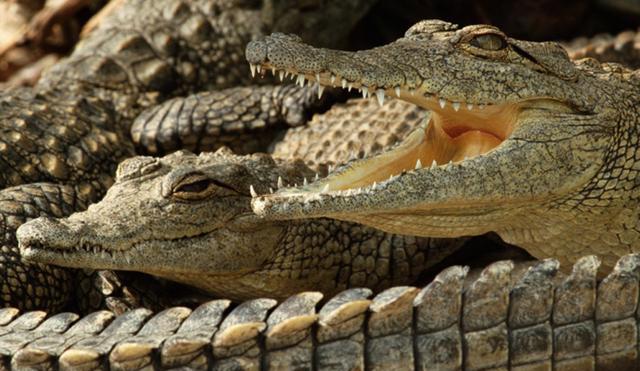
200350761-001Suicide is always a tragedy. Many families have been touched by its pain.

The moral implications of this are vast, of course, and not the topic of this column. Today I am more intrigued by the modes that people select as they act on their suicidal impulses (or long-deliberated decisions).

As a pastor and military chaplain, I have worked with families in the aftermath of suicide. As a volunteer law enforcement chaplain, I have responded to the actual event.

Life is precious. It should never be squandered. Contrary to the notions of reincarnationists, “it is appointed for man to die once, and after that comes judgment” (Hebrews 9:27). That judgment need not be feared, for those sheltered in the mercy of God. Still, I doubt the Lord desires to see us ushered into his presence for that judgment by our own hand.

Even the darkest of lives can be rescued and recreated with new hope. That’s the testimony of many people, like Joni Eareckson Tada, who became a quadriplegic at only seventeen.

There are diverse ways people choose to end their days on earth.

Some European countries have made the passing a gentle, numbing for the most part, painless transition. In their euthanasia clinics, powerful drugs can be used to simply suppress one’s breathing until they “fall asleep” permanently.

Others make drug concoctions of their own, and some die in agony because of miscalculation, or are “rescued” to live debilitated by their failed attempt.

Some, for twisted macho reasons perhaps, decide to go out with a literal bang. Here too the attempt can fail and leave the individual in a horrific condition. And, even when it is “successful,” it leaves a sickening aftermath.

Perhaps the worst of all are those who desire to leave a “mark” on this “cruel world” as they depart. They may lash out at people they know—or even strangers—seeking to leave a lasting scar as a memory. Most of these people are likely insane. Not so the fanatic “suicide bombers.” Those disciples of evil comprehend what they are doing. The magnitude of their vile acts do not escape them.

Not the Why, but the How

As I said above, I’m not thinking today about the reasons a person would end their life. I am wondering about the means they choose to do so.

I was shocked by the recent suicide by a sixty-five year old Thai woman who calmly removed her shoes and then leapt into a ten-foot-deep pond which is home to more than a thousand crocodiles. A dozen were on her immediately.

I cannot stand to watch nature shows that portray crocodiles viciously dragging antelopes or zebras to their grim deaths. Just thinking of this woman’s final moments leaves me in emotional disbelief.

C.S. Lewis hinted at humanity’s archetypal antipathy to crocodiles. In a 1949 letter he wrote:

I don’t think the idea that evil is an illusion helps. Because surely it is a (real) evil that the illusion of evil should exist. When I am pursued in a nightmare by a crocodile the pursuit and the crocodile are illusions: but it is a real nightmare, and that seems a real evil.

Just as shocking as this poor woman’s death itself, is the fact that a decade ago another woman committed suicide at the Samutprakarn Crocodile Farm and Zoo in the same way.

The only reason I can conceive of for a person choosing such a terrible manner of death, is that they believed they deserved to suffer. Aside from that, only insanity can provide an answer.

For those who believe their guilt for real or imagined sins demands such a path, I have a life-saving alternative. There is One who can forgive those crimes and failings, and offer us a new beginning.

In the same passage from Hebrews cited above, we read the following good news.

[Jesus] has appeared once for all at the end of the ages to put away sin by the sacrifice of himself. And just as it is appointed for man to die once, and after that comes judgment, so Christ, having been offered once to bear the sins of many, will appear a second time, not to deal with sin but to save those who are eagerly waiting for him.

Share this hope with your friends and family—especially with those you know who may be contemplating the untimely end of their lives.

_____

I have written on the subject of suicide in the past. If you are interested in considering the subject from a different perspective, please read “The Anguish of Suicide.”

Misnaming Kids

baby namesWhy do they do it? I’m sure they considered it witty. They may have laughed as they inscribed his name on the birth certificate of their newborn son. (I doubt he shared the humor of the moment.)

Let’s think about this for just a moment. If your family name was Lemon, a totally respectable and not uncommon name, would you give your child a first name that is also a citrus?

That’s what I encountered as I completed the current issue of the military chaplaincy journal that I edit. One of the American Civil War chaplains I mentioned in the current issue of Curtana: Sword of Mercy bore the striking name “Orange V. Lemon.”

Really? Yes, really.

It reminded me of a quaint Canadian television series that my dad used to enjoy, The Red Green Show. His parents should have known that one color in a person’s name is sufficient.

Still, the temptation to be silly is irresistible to some people. Years ago I knew an attorney whose last name was Cain. Her parents had named her Candy, of course. Peculiar names are so common today, of course, that there are myriads of internet repositories for them.

Names are more important than many of us realize. I’ve written in the past about how my wife and I followed the biblical example of choosing our children’s names based on their meanings.

Even if that approach doesn’t appeal to a parents, there are an almost unlimited number of options that would not subject their children to unwanted attention.

Fortunately, when we get older, we have some control over what we are called. I was “Robbie” in my childhood, and graduated to “Rob” as soon as I could. “Robert’s” always been fine with me, since it’s my given name and what I expect someone I’ve never met to call me. “Bob,” however, is not okay. There’s nothing wrong with “Bob,” except that I’ve never been one. And when someone greets me as such it projects a very false familiarity.

Curiously, I recall reading in the Oxford dictionary of names that more primitive nicknames for Robert included Hob, Dob and Nob. So I suppose I should count my blessings when addressed as Bob.

C.S. Lewis chose his own name. Many people are surprised when they learn that he went by the name of Jack. How, they wonder, could one get “Jack” out of “Clive Staples?” Good question.

Lewis was not enamored with the name Clive. When he was only four, he decided to use the name of a pet dog that had been killed by an early motorist. The pet’s name was a human-friend designation, “Jacksie.” His brother Warren relates the event thusly, in his 1966 collection of Lewis’ letters.

Then, in the course of one holiday, my brother made the momentous decision to change his name. Disliking “Clive”, and feeling his various baby-names to be beneath his dignity, he marched up to my mother, put a forefinger on his chest, and announced “He is Jacksie.” He stuck to this next day and thereafter, refusing to answer to any other name: Jacksie it had to be, a name contracted to Jacks and then to Jack. So to his family and his intimate friends, he was Jack for life: and Jack he will be for the rest of this book.

It’s fascinating that Lewis’ family acquiesced to his demand, but it took. One small consequence, of course, is that this gifted writer is known today as “C.S.” rather than by his full names.

As for faithful Orange, I don’t know if he adopted any other name during his lifetime. He may have been quite content. It certainly did not prevent him from enjoying a meaningful life. He became a Methodist pastor and served as chaplain with the 36th Indiana Infantry.

Lemming Legends

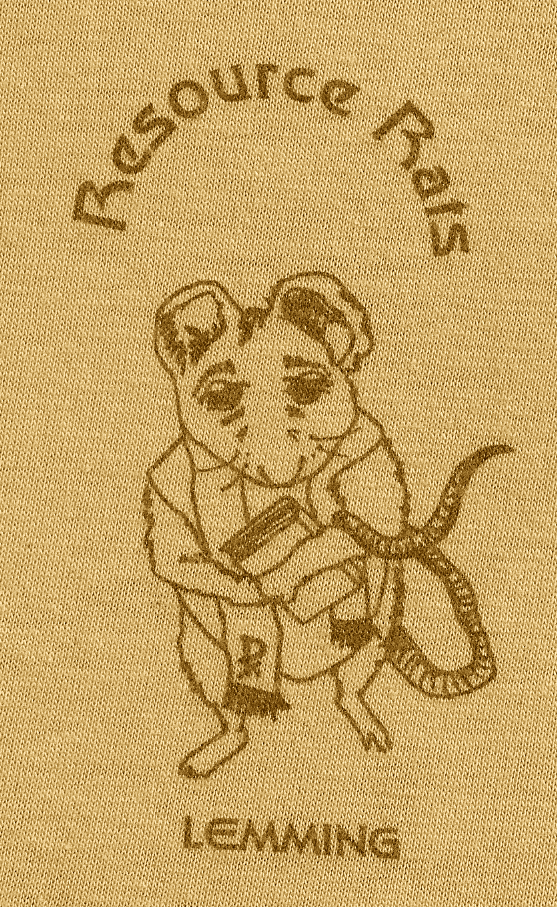
lemmingThe closest camaraderie I ever experienced in my life, was on the staff of the USAF Chaplain School. A sign of our esprit de corps was seen in the nicknames we gave one another. Mine was Lemming. (Not too dashing, I know, but read on and you’ll see why it was bestowed with affection and respect.)

Those of us who worked on “Air Staff” projects (for the Chief of Chaplains) were in the Resource Division. Probably because we were always rushing (scurrying?) around responding to emergencies, the other chaplains called us the “Resource Rats.” We were close indeed, and our energies and creativity was magnified by our synergy . . . just like the Inklings.

We embraced the label, and before we knew it each of us had been identified as a particular member of the rodent family. We had a rabbit, hamster, beaver, squirrel and fudged a bit with a ferret and a weasel. Among assorted other “rats,” I was nicknamed—you didn’t choose your identity, your friends awarded it to you—Lemming.

They called me Lemming because I had a unique duty on the team. One of my duties was to do a little bit of “ghostwriting” for the Chief of Chaplains. Some would consider it an honor, but trust me, due to the general for whom I wrote the first year, it was anything but.

Why a Lemming? Well, because whenever a tasking came down I would dutifully march off in obedience . . . even if it meant marching right off of a cliff. Like the humble Lemming, I accepted my fate, and made the best of it.

We all know their tragic story. When the Lemming burrows become overcrowded, a large number of them will sacrificially gather together and march to the sea. There, those who did not perish in catastrophic falls, nobly swim out to sea so that their relatives back in the warren can once again devote themselves to overpopulating their habitat.

I was proud of the appellation. I wore the name (literally, on the shirt logo pictured above) as a badge of honor. Until . . . until I discovered it was all based on a lie.

Lemmings, we have learned, do not suffer from periodic mass suicidal impulses. The common myth is based on an insidious 1958 “nature film” made by Disney. I have no idea why they would compromise their flawless reputation for scientific accuracy in their naturalist media, but in White Wilderness, they cast all integrity aside. (And now I know why C.S. Lewis and J.R.R. Tolkien were wary of the machinations and shadowy motives of Walt Disney Studios.)

With utter disregard to the reputation of these clever arctic creatures, the film showed (supposed) members of the Scandinavian clans eagerly casting themselves to their deaths. However, their bizarre behavior was manipulated by cinematic chicanery.

It turns out that not only did Disney pull the lemmings out of their normal habitat for filming—since they were too intelligent to voluntarily leap to their death, they were thrown off of the cliff from a modified turntable! Ghastly.

Learning that lemmings will not march knowingly (and stupidly) to their own demise has actually made me a bit prouder to bear the title. I mean, it’s one thing as a member of the armed forces to risk your life in the defense of your nation. It’s quite another to commit suicide because a general thought one of your commas was in the wrong place. But that’s a story for another day.

Civilized Savages

civilization-and-savageryWhat are the proper criteria for determining who is civilized? If you asked a score of people, you would probably end up with twenty different opinions.

In continuing my research about America’s first woman chaplain, I encountered an early American teaching resource that offered great insight into education during the early nineteenth century.

Some of it was quaint—“goats were made as profitable to the farmer as sheep.”

Some of it was insightful—“In America the Grecian architecture is prevailing, as it is better adapted than the Gothic to small buildings, and does not require splendid edifices to display its beauty.”

The text, Peter Parley’s Universal History, on the Basis of Geography, was used in schools and homes.

After finding confirmation of the point I was researching, I couldn’t resist skimming through the volume. Out of its myriad lessons, the one that got me thinking most seriously was a discussion of relative levels of civilization.

At the end of each lesson, several questions are posed. In this case:

Questions: What would you observe in traveling through other countries? What of people in a savage state? What of people in the barbarous state? What of people in the civilized state? What of people in the highest state of civilization?

Preceding these questions is the lesson proper, from which I now quote passages that correspond to the questions just listed.

In some countries the people live in huts built of mud or sticks, and subsist by hunting with bow and arrow. These are said to be in the savage state . . .

In some countries the people live in houses partly of stone and mud. They have few books, no churches or meeting-houses, and worship idols. . . . These are said to be in the barbarous state . . .

In some countries the inhabitants live in tolerable houses, and the rich have fine palaces. The people have many ingenious arts, but the schools are poor, and but a small portion are taught to read and write. . . . which may be called a civilized state.

In many parts of Europe, and in the United States, the people live in good houses; they have good furniture, many books, good schools, churches, meeting-houses, steamboats and railroads. These are in the highest state of civilization.

It appears that Peter Parley (the pseudonym of Samuel Griswold Goodrich) considered two factors to be the clearest measures of civilization—the quality of a society’s domiciles, and the access to learning and increase in literacy.

These are not inappropriate measures, although the latter dwarfs the former in significance.

I realize these lessons are intended for elementary education, so I don’t fault Goodrich for failing to address the subject from a more philosophical or mature angle. Nevertheless, I could not help wondering whether the societies that have attained the “highest state of civilization” are truly the least barbaric.

In some ways, the societies that have attained the loftiest technological levels might also be considered among the most savage.

I don’t have the time or inclination to pursue this thought any further in Mere Inkling, but I offer it to you. Some readers will agree that it merits reflections and others will consider it absurd.

Before moving on the Inklings, though, I wish to share a pertinent bit of wisdom from economist Thomas Sowell. “Each new generation born is in effect an invasion of civilization by little barbarians, who must be civilized before it is too late.”

C.S. Lewis thought, and wrote, a great deal about civilization. In English Literature in the Sixteenth Century there is a delightful remark, made in passing, that it is possible to retreat from civilization, once attained.

From the varied excellence of the fourteenth century to the work of the early sixteenth it is a history of decay; so that in turning from the Scotch poetry of the age to the English we pass from civilization to barbarism.

I end with a longer citation from C.S. Lewis which connects uniquely with the mindset with which Goodrich penned his textbook. Lewis also affirms true education, and the advancement of humanity towards that for which it was created, as the genuine mark of civilization.

One of the most dangerous errors instilled into us by nineteenth-century progressive optimism is the idea that civilization is automatically bound to increase and spread. The lesson of history is the opposite; civilization is a rarity, attained with difficulty and easily lost. The normal state of humanity is barbarism, just as the normal surface of our planet is salt water. Land looms large in our imagination of the planet and civilization in our history books, only because sea and savagery are, to us, less interesting.

And if you press to know what I mean by civilization, I reply “Humanity,” by which I do not mean kindness so much as the realization of the human idea. Human life means to me the life of beings for whom the leisured activities of thought, art, literature, conversation are the end, and the preservation and propagation of life merely the means. That is why education seems to me so important: it actualizes that potentiality for leisure, if you like for amateurishness, which is man’s prerogative.

You have noticed, I hope, that man is the only amateur animal; all the others are professionals. They have no leisure and do not desire it. When the cow has finished eating she chews the cud; when she has finished chewing she sleeps; when she has finished sleeping she eats again. She is a machine for turning grass into calves and milk—in other words, for producing more cows. The lion cannot stop hunting, nor the beaver building dams, nor the bee making honey. When God made the beasts dumb He saved the world from infinite boredom, for if they could speak they would all of them, all day, talk nothing but shop. (“Our English Syllabus”).

_____

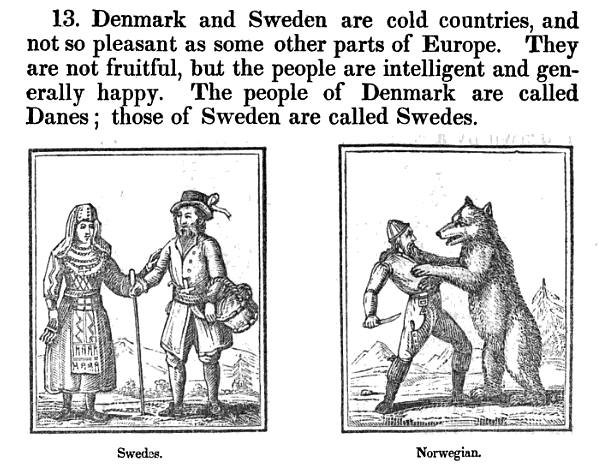
An illustration from the book, which taught generations of Americans that the heirs of the Vikings were still a picturesque and virile people.

scandinavians

Beware of Moths

mothI try not to hate moths. They’re obviously not so pretty as butterflies, but I remind myself that’s not their fault. They’re a nuisance around the porch lights on summer evenings, but that’s instinct, not choice.

I strive to see the best in moths, like C.S. Lewis, who was able to capitalize on their impulsiveness in his 1933 poem, “The Naked Seed.”

Oh, thou that art unwearying, that dost neither sleep

      Nor slumber, who didst take

All care for Lazarus in the careless tomb, oh keep

      Watch for me till I wake.

If thou think for me what I cannot think, if thou

      Desire for me what I

Cannot desire, my soul’s interior Form, though now

      Deep-buried, will not die,

—No more than the insensible dropp’d seed which grows

      Through winter ripe for birth

Because, while it forgets, the heaven remembering throws

      Sweet influence still on earth,

—Because the heaven, moved moth-like by thy beauty, goes

      Still turning round the earth.

I really want to give moths the benefit of the doubt . . . but that’s become virtually impossible since I learned some of them are vampiric!

Before we consider their blood-sucking rituals, I want to share a traumatic moth encounter my wife and I experienced several years ago when we lived in Eastern Washington.

We had a huge fragrant collection of plants that ran across nearly the whole of the front of our house. There was a bush at the far end, and some delightful quail nested there. The flowers brought us other welcome guests. Hummingbirds would crowd around them as sun was setting, and savor their nectars.

We loved watching them hover near the blooms, and wondered precisely what species of hummingbirds they were, since they were slightly smaller than the ones we were accustomed to.

One day I was getting a close up view of their activity and I saw something that shattered my sense of reality. Instead of a beak, these hummingbirds had tongues that curled and uncurled, not unlike those “party horns” that children blow at celebrations.

My wife said I had to be imagining what I’d seen. I assured her that I hadn’t seen anything like this in the scifi shows I regularly watched, and I was pretty sure that these abominations weren’t hummingbirds.

Eventually I persuaded her to look for herself, and she too was aghast at the question of what they might be. Some of you already know, because you’ve had the misfortune of growing up where these creepy things thrive. For the rest of you—the fortunate ones who’ve been spared the curse of hemaris sphinx moths—let me assure you, their maladapted proboscises are grotesque.

I thought they were the worst thing the world of the moths had to offer. (Well, aside from the 1961 Japanese film “Mothra.”)

That’s what I thought, until recently, when I learned that some misbegotten moths had followed mosquitoes in their descent into parasitical evil by drinking the blood of other creatures.

The calyptra moths are another proof of the fall. No longer do they flutter around from plant to plant, seeking sustenance as a proper herbivore. The aptly named “vampire moth” has chosen to adapt its proboscis to pierce the skin of other animals such as buffaloes . . . and human beings.

In the equal opportunity world of the corruption of the natural order, while female mosquitoes drink blood, it is male moths that do so. Apparently, they’ve already infested Malaysia, the Urals and Southern Europe. Now they are adjusting to the climate of Scandinavia. The question arises, where can be we safe from these monsters?

Returning to C.S. Lewis, he records an incident that occurred in Narnia involving mistaken identity.

It is a very funny thing that the sleepier you are, the longer you take about getting to bed; especially if you are lucky enough to have a fire in your room. Jill felt she couldn’t even start undressing unless she sat down in front of the fire for a bit first. And once she had sat down, she didn’t want to get up again. She had already said to herself about five times, “I must go to bed,” when she was startled by a tap on the window.

She got up, pulled the curtain, and at first saw nothing but darkness. Then she jumped and started backward, for something very large had dashed itself against the window, giving a sharp tap on the glass as it did so. A very unpleasant idea came into her head—“Suppose they have giant moths in this country! Ugh!”

But then the thing came back, and this time she was almost sure she saw a beak, and that the beak had made the tapping noise. “It’s some huge bird,” thought Jill. “Could it be an eagle?” She didn’t very much want a visit even from an eagle, but she opened the window and looked out. Instantly, with a great whirring noise, the creature alighted on the window-sill and stood there filling up the whole window, so that Jill had to step back to make room for it. It was the Owl. (The Silver Chair).

Fortunately for Jill, and the rest of the children who visited Narnia, there is no record of them ever encountering giant moths . . . vampire moths . . . or moths deceptively impersonating hummingbirds.

_____

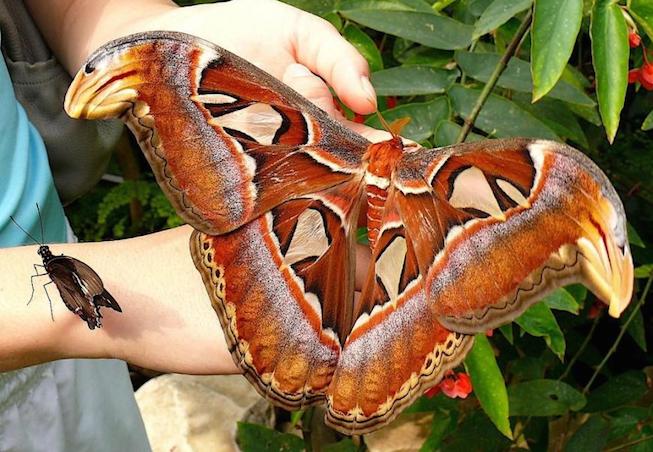
Note: The monster moth pictured above is not (to my knowledge) a blood or flesh eater. But I still wouldn’t want one that size landing on my shoulder.

Beware of Overtoun Bridge

overtounDo not take your dog to Scotland. And, if perchance you do, by all means avoid the Overtoun Estate.

Its relatively short span masks its danger. The waters flow fifty feet below it’s arch, and they carry echoes of a terrible mystery.

What is it about the Overtoun Bridge that causes dogs to leap over its parapet to their deaths on the rocks below?

Before considering that question, it is worth noting how dearly dogs love to go for walks with their people. This comes as no surprise to those who have had dogs as members of their families.

Some people who have never lived with dogs, however, are unaware of just how powerful this drive is. There is but one thing a dog loves more than a good walk—and that is a good meal. (For a dog, a “good” meal is any and all meals.) In fact, some canines love walking so very much that they would willingly delay their repast if able to precede it with a vigorous hike.

C.S. Lewis was an avid walker. He often undertook long sight-seeing hikes with friends. And, during different periods of his life, he enjoyed the company of a canine companion.

In January of 1940 Lewis describes one such trek to his brother. Warnie, a “regular” officer in the British military had been recalled to active duty and dispatched to France. He describes an inter-species encounter his dog Bruce had recently experienced during an Oxford walk.

It seems almost brutal to describe a January walk taken without you in a letter to you, but I suppose “concealment is in vain. . . .” I was coming home from a walk and had just reached the Bourdillon’s hedge when I saw Bruce standing across the path with his head erect and his tail wagging furiously.

There is a very slight bend to the right in that path just after the Bourdillon’s, so that I could not see what he was looking at. Presently a cloud of steam in the frosty air appeared to descend towards him-to be followed by the long grave face of the mushroom-white horse who lives in that field.

Dog continued looking up and horse’s head leaned down till their noses almost touched: then they withdrew with every mark of mutual esteem. Now that I have at last written it down it hardly seems worth much: but it was an odd sight at the time.

Curiously, two months earlier (writing to Warnie) he had alluded in passing to the fact he was frequently accompanied by a pet on his walks.

Wednesday I lunched in College and attended a College Meeting, which was over by about 3.30-after that the rare pleasure of a dogless stroll & tea in our own rooms, glancing through Mammy’s old copy of the Water Babies, and after dinner the unusual pleasure of an evening to myself.

There is something about having a dog accompany one on a walk that makes it an even richer experience. Observing their frenetic joy at discovering some new scent is vicariously exhilarating.

When walking in certain locales, leashes may be required. Certain impetuous dogs demand their use even when not mandated. However, most people who accompany dogs on their explorations would prefer to leave them free to range a bit, if given a choice.

And it precisely this freedom that poses such a danger to those who enjoy the Scottish countryside and dare to cross the Overtoun Bridge.

Apparently, since the 1950s, more than fifty dogs have lunged to their deaths over the edge of the bridge. A 2006 article in the Daily Mail reports that during a six month period the previous year “Five dogs jumped to their deaths. All of the deaths have occurred at virtually the same spot, between the final two parapets on the right-hand side of the bridge, and almost all have been on clear, sunny days.”

Strangely, there are even several cases where dogs who had survived the terrible fall proceeded to dive from the same location during a subsequent crossing. Lacking nine lives, it is assumed their luck did not hold on the second occasion.

Due to the frequency of these “suicides,” the Scottish Society for the Prevention of Cruelty to Animals sent a scientist to investigate the cause of the heartbreaking phenomenon. He determined it was nothing that the dogs could see or hear that would account for their fatal actions.

Various theories have been posed. Some attribute it to ghosts or the fact that “In Celtic mythology, Overtoun is known as ‘the thin place’—an area in which heaven and earth are reputed to be close.”

Psychic Mary Armour took her own [psychic?] labrador for a walk along the bridge to test the theory. However, she reported no unusual sensations. “Animals are hyper-sensitive to the spirit world, but I didn’t feel any adverse energy.” In fact, Mary said she experienced a feeling of “pure calmness and serenity” but admitted that her dog did pull her towards the right-hand side of the structure. (Daily Mail, 17 October 2006).

The SPCA investigator eventually concluded the most likely cause for the suicidal impulses of the canines was the scent of mink musk from the valley below. Apparently to some dogs the lure is irresistible, and they cast aside their normal wariness to leap into the unknown.

Whether or not this is the true cause of the mishaps or not remains debated. Some, for example, attribute the suicidal impulses to “picking up on suicidal or depressed feelings of their owners.”

Whatever the cause, it is probably wise to avoid the risk and steer very clear of Overtoun Bridge if you value the life of your dog. Still, when traveling to Scotland it may well be wise to leave your dog in the care of a family member or an approved kennel.

Choosing Patience

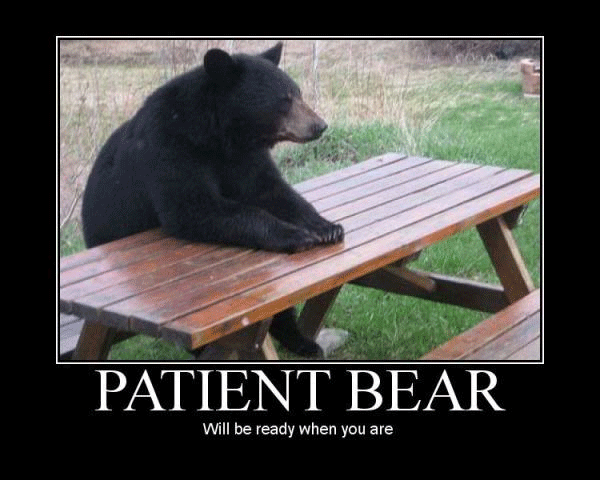
patient bearI got up very early this morning to attend a meeting that had been rescheduled from its regular monthly date. I was happy with myself for remembering the change in date, as I drove to the sunrise gathering of a group of fellow chaplains.

I felt great—until I learned after arriving that our rescheduled meeting had been rescheduled. There I was, all alone . . . and primed for a bit of unseemly disappointment with having risen more than two hours earlier my normal routine, for an aborted purpose.

Because that sort of reaction is not foreign to my nature, I was pleasantly surprised when I didn’t feel that way. Oh, for the briefest of moments (literally, less than a half a minute) I experienced what some might consider a mild case of “upset,” but it immediately gave way to my thoughts of how I could most constructively use the “extra hours” I had received.

The most amazing part of all is that I did not even have to consciously think, how can I put the best construction on this? It just happened.

Now, I’m uncertain whether this positive response was due to my increasing age, or to my growing sanctification. I suspect it’s a combination of the two. It’s such a calm and healthy way to respond to unwelcome events that I wish everyone was able to enjoy it as their norm. Thank you, Lord, for gracing me with this gift for the fall and winter decades of my life.

Being able to see the good in a seeming disappointment, is akin to possessing the virtue of patience. I once made the mistake of praying for “patience.” It was during my college days, and learning to be more patient proved quite painful; it was primarily taught to me by being deluged with a near-infinite number of things which demanded my patience. Quite painful.

In a letter C.S. Lewis wrote to Don Giovanni Calabria in 1948, he says, “We ought to give thanks for all fortune: if it is ‘good,’ because it is good, if ‘bad’ because it works in us patience, humility and the contempt of this world and the hope of our eternal country.”

This is precisely the attitude I wish to experience in my own life.

And, sometimes its fruit is easy to recognize. For example, the cancellation of today’s meeting gifted me with the time required to compose this post itself. And, for that, I am genuinely grateful.

Poet-olatry: Poetry Misperceived

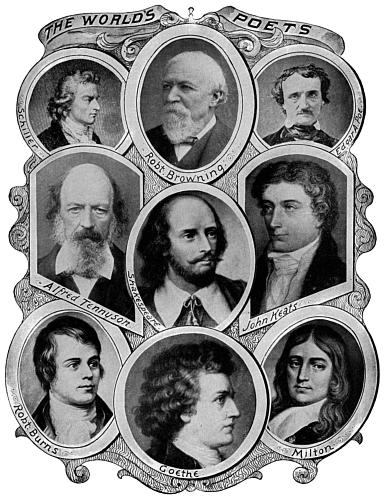
poetsWhen does our appreciation of a particular writer border on literary idolatry? Well, not idolatry proper, since even shrines like Poet’s Corner at Westminster Abbey don’t endorse “worship.”

We naturally appreciate the memory of those whose work has contributed to our lives. And that’s fine. But when we begin to focus more on them, than on the real, breathing people around us, our priorities are skewed.

In 1989, Hollywood released a film entitled “Dead Poet’s Society.” It was nominated for an Oscar for Best Picture, and ironically won the Oscar for Best Writing. In the movie, an English teacher awakens his moribund students to literature, and the more reflective aspects of life.

At last week’s writers meeting, we were introducing ourselves to a visitor, and as part of that process, mentioned the type of writing each of us pursues. I listed several genres and concluded with the words “but I’m not a poet.”

A member of the group immediately “corrected” me, since I have, in fact, written several poems during the past couple of years. Well, I guess I should get used to saying something like, “I don’t consider myself a poet.”

Poetry, some poets insinuate, carries a more artistic air than other, pedestrian genres. Fiction, of course, has its own advocates, and they too occasionally look down on folks like me who typically muddle around in the nonfiction worlds history and religion.*

In the following paragraphs, C.S. Lewis offers some provocative thoughts about how we should rightly feel toward departed writers. His argument is really about how we must not neglect our duty to living humanity by focusing on those who are “gone.”

A special treat in the selection is his coining of the word which inspires the title of this post.

There is a reaction at present going on against the excessive love of pet animals. We have been taught to despise the rich, barren woman who loves her lap dog too much and her neighbor too little.

It may be that when once the true impulse is inhibited, a dead poet is a nobler substitute than a live Peke, but this is by no means obvious. You can do something for the Peke, and it can make some response to you. It is at least sentient; but most poetolaters hold that a dead man has no consciousness, and few indeed suppose that he has any which we are likely to modify.

Unless you hold beliefs which enable you to obey the colophons of the old books by praying for the authors’ souls, there is nothing that you can do for a dead poet: and certainly he will do nothing for you.

He did all he could for you while he lived: nothing more will ever come. I do not say that a personal emotion towards the author will not sometimes arise spontaneously while we read; but if it does we should let it pass swiftly over the mind like a ripple that leaves no trace.

If we retain it we are cosseting with substitutes an emotion whose true object is our neighbour. Hence it is not surprising that those who most amuse themselves with personality after this ghostly fashion often show little respect for it in their parents, their servants, or their wives. (The Personal Heresy).**

Lewis alleges our emotional “bonds” with departed writers are fruitless, imaginary, and perhaps even detrimental. I agree that when they displace our connections with living people, it is tragic.

While I rarely disagree with the Magister Lewis, I will in this case. I would make an exception to his argument—in a single sense. For Christians, our filial affection for a departed Christian writer, is a unique case. The distinction being the fact, that in light of the resurrection, and the gift of eternal life, we are not talking about others who are permanently severed from a genuine relationship with us.

On the contrary, there are many other disciples of Jesus living today who feel a powerful connection to writers like Lewis himself. And, with all eternity ahead, there should be ample time for each of us to enjoy his company, and thank him for the blessing he bequeathed to us through his work.

Postscript:

I recognize that it may be in questionable taste, but the subject of departed artists reminds me of a humorous song from Monty Python’s Flying Circus. It’s called “Decomposing Composers,” and the modestly disconcerting lyrics are rendered in a somber, classical manner. If interested, you can listen to it here.

_____

* I intentionally refer to “religion” as nonfiction, since I regard it to be just that. (And also because I know that pushes some people’s buttons.)

** Last year I approached this same passage by Lewis from a different perspective. If you would like to read some thoughts related to pet fads, check them out here.