The Lion’s Command

crowned lionI recently had a few free moments while waiting for a flight, and I decided to revisit that enjoyable childhood treasure, Aesop’s Fables. It had been many years since I explored them, and I found the following tale particularly entertaining.

Aesop may have been a fable himself. Aristotle refers to him as an historical figure, but since Aesop supposedly lived three centuries before the philosopher’s day, he had already transformed into a legend.

Plutarch describes Aesop’s death as occurring when he was thrown from a cliff during a failed diplomatic mission. Presumably after insulting the city of Delphi, they accused him of stealing some temple items. (Perhaps he tried to be too witty for his own good.)

Whether he was an actual person or not, the anecdotes that have accreted around his name have entertained countless generations. On now to the story that captured my imagination.

The Kingdom of the Lion

The beasts of the field and forest had a Lion as their king. He was neither wrathful, cruel, nor tyrannical, but just and gentle as a king could be. During his reign he made a royal proclamation for a general assembly of all the birds and beasts, and drew up conditions for a universal league, in which the Wolf and the Lamb, the Panther and the Kid, the Tiger and the Stag, the Dog and the Hare, should live together in perfect peace and amity.

The Hare said, “Oh, how I have longed to see this day, in which the weak shall take their place with impunity by the side of the strong.” And after the Hare said this, he ran for his life.

The Moral: Saying something does not make it so. (Aesop’s Fables).

Although Aesop’s Lion bears a resemblance to C.S. Lewis’ own vision, he is no Aslan. Both are the kings of their respective domains. Both dictate that there be peace among their subjects.

Aslan alone, though, can make this pacific vision reality. And, because sin had entered Narnia, he had to do it by creating a new Narnia. The amazing story of the conclusion of the temporary and inauguration of the eternal is told in The Last Battle. The original plan, recorded in The Magician’s Nephew, was that the creatures live in divine harmony.

The chosen beasts who remained were now utterly silent, all with their eyes fixed intently upon the Lion. The cat-like ones gave an occasional twitch of the tail but otherwise all were still. For the first time that day there was complete silence . . .

The Lion, whose eyes never blinked, stared at the animals as hard as if he was going to burn them up with his mere stare. And gradually a change came over them. The smaller ones— the rabbits, moles, and such-like— grew a good deal larger. The very big ones— you noticed it most with the elephants— grew a little smaller. Many animals sat up on their hind legs. Most put their heads on one side as if they were trying very hard to understand.

The Lion opened his mouth, but no sound came from it; he was breathing out, a long, warm breath; it seemed to sway all the beasts as the wind sways a line of trees. Far overhead from beyond the veil of blue sky which hid them the stars sang again; a pure, cold, difficult music. Then there came a swift flash like fire (but it burnt nobody) either from the sky or from the Lion itself, and every drop of blood tingled in the children’s bodies, and the deepest, wildest voice they had ever heard was saying:

“Narnia, Narnia, Narnia, awake. Love. Think. Speak. Be walking trees. Be talking beasts.”

Such love and harmony would not last. Just as in our own world, selfishness and idolatry came to reign. Lewis recognized sin’s corruption cannot be bandaged. It needs to be excised. A broken vessel can be repaired, but it can never regain the purity of its origin without miraculous intervention.

That’s why Christians—who believe in the “resurrection of the (physical) body”—know that these restored bodies will be new.

There are heavenly bodies and earthly bodies, but the glory of the heavenly is of one kind, and the glory of the earthly is of another. There is one glory of the sun, and another glory of the moon, and another glory of the stars; for star differs from star in glory.

So is it with the resurrection of the dead. What is sown is perishable; what is raised is imperishable. It is sown in dishonor; it is raised in glory. It is sown in weakness; it is raised in power. It is sown a natural body; it is raised a spiritual body. . . . The first man [Adam] was from the earth, a man of dust; the second man [Christ] is from heaven.

As was the man of dust, so also are those who are of the dust, and as is the man of heaven, so also are those who are of heaven. Just as we have borne the image of the man of dust, we shall also bear the image of the man of heaven. (First Corinthians 15:40f).

Just as Aesop’s lion commanded, and Lewis’ Aslan ordained, the Messianic age will one day arrive. And when it does, “The wolf and the lamb shall graze together; the lion shall eat straw like the ox, and dust shall be the serpent’s food” (Isaiah 65:25).

The Moral: When God says something, that does make it so.

Trusting Serpents

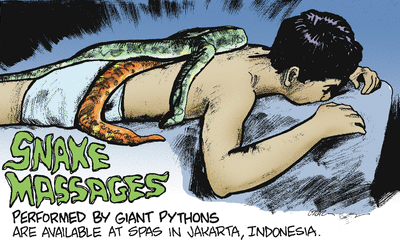
snake massageI try very hard not to be overly critical of foreign practices that initially strike me as rather odd. Instead, I attempt to understand what these activities mean in the culture where they are practiced.

Yet, for the life of me (as my mother would say), I can’t fathom why Indonesians want to have snakes give them “massages.” And, even though only a fraction of their people submit to this peculiar activity, there are apparently enough candidates for spas to offer the serpentine service.

I imagine that the snakes do indeed rub, flex and squeeze their clients, since pythons are “constrictors,” and it’s in their nature to want to circle—suffocate—crush—and devour their prey.

Ironically, this fact, compliments of Ripley’s Believe It or Not, follows in the wake of a recent news report about another man who thought he would be fine getting a shoulder massage from an apparently “undomesticated” python.

BALI, Indonesia (AP) — A python strangled a security guard near a luxury hotel on Indonesia’s resort island of Bali on Friday, and then escaped into nearby bushes following the deadly attack, police and a hotel employee who witnessed the incident said. The incident happened around 3 a.m. as the 15-foot-long python was slithering across a road near the Bali Hyatt hotel . . .

The victim, Ambar Arianto Mulyo, was a 59-year-old security guard at a nearby restaurant. He had offered to help capture the snake, which had apparently been spotted several times before near the hotel . . . Mulyo managed to secure the snake’s head and tail and put it on his shoulders, but the python wrapped itself around his body and strangled him . . .

People watching the incident were unable or unwilling to help and called the police, who came but failed to save the man. The python escaped into nearby bushes, and police were still searching for it.

The Associated Press story ends with the lame attempt to calm those who are inclined to suffer from ophidiophobia. “Deadly attacks on adult humans by pythons are rare, but have been documented before.”

Pardon me, but that’s not quite sufficient reassurance for even those of us without a snake phobia. I remember hearing from my wife about my young daughter’s class being introduced to a sizeable serpent some years ago during a fieldtrip. As everyone watched the handler manipulating its head and frontal coils, it was surreptitiously beginning to caress my little girl with its tail!*

If the Indonesian practice of python-massage crosses the Pacific, you won’t find me visiting the spa for a back rub. I understand they probably only employ well-fed, six-foot-long “baby” pythons, but I still choose to pass.

C.S. Lewis has a wonderful comment about trust. He says the true test of how deeply we believe something is the magnitude of the risk we are willing to take related to our trust in it.

You never know how much you really believe anything until its truth or falsehood becomes a matter of life and death to you. It is easy to believe a rope to be strong and sound as long as you are merely using it to cord a box. But suppose that you had to hang by that rope over a precipice. Wouldn’t you then first discover how much you really trusted it? . . . Only a real risk tests the reality of a belief. (A Grief Observed).

I don’t care how many herpetologists or masseuses assure that pythons can safely massage my bared body . . . I’m learning from the example of that poor Balinese guard who fell for the python’s trick, thinking that he held the upper hand.

_____

* Yes, snakes actually do have tails. It’s only one of their slithering secrets.

Coffee or Tea for C.S. Lewis and Me

Screenshot 2014-02-03 22.27.31The older I grow, the more important coffee becomes. Spending the last past two weekends ensconced in the doctoral program of a Midwestern seminary near the polar vortex has merely reinforced that fact.

Coffee versus tea. It is the perennial international battle between caffeinated beverages. C.S. Lewis, famously, weighed in on the side of tea. (That’s no surprise, given the historic hold Camellia sinensis’ on British taste buds.)

One of Lewis’ most frequently quoted aphorisms is, after all: “You can never get a cup of tea large enough or a book long enough to suit me.”

In Studies in Medieval and Renaissance Literature Lewis alludes to this cultural preference. In a passage discussing different ways of experiencing foreign customs, he describes the quintessential “bad tourist.”

One man carries his Englishry abroad with him and brings it home unchanged. Wherever he goes he consorts with the other English tourists. By a good hotel he means one that is like an English hotel. He complains of the bad tea where he might have had excellent coffee.

Despite their preference for tea, as the quotation above reveals that many Brits enjoy a good cup of coffee. Lewis himself loved a good cup at appropriate moments. In a 1939 letter to his brother Warnie, he mentions his need for a caffeine jolt prior to proctoring examinations.

My colleague Bone asked me to lunch with him at St John’s prior to an afternoon’s invigilation. I’ve known him quite good company: on this occasion, however, he spoke in almost a whisper and very seldom, and while other people were eating all round us (this was in John’s) nothing arrived for us till I was ‘nearly sick’ with hunger and embarrassment.

When at last we’d had some chicken another pause ensued, during which, almost in desperation for something to say, I asked him for the cheese, only to be told in sepulchral tones that there was a sweet coming. It came. Another pause.

Desperate for my coffee, I said presently that I supposed I’d better be getting along: my host, after pondering this for a minute or two, replied yes, he supposed I had. On our way out he stopped at the other end of the table and introduced me to a jolly old man as his father Sir Muirhead Bone. Now can it be that the mere paternal presence explains the whole business? One can imagine such things! Anyway I went off to my 3 hours’ invigilating without any coffee.

While we’re considering the role of coffee in the life of the Oxford don, I thought it might be an interesting exercise to search the Chronicles of Narnia to see if the drink is mentioned there. I uncovered several, the last of which is particularly delightful.

From The Horse and His Boy.

By the time Shasta had finished his porridge, the Dwarf’s two brothers (whose names were Rogin and Bricklethumb) were putting the dish of bacon and eggs and mushrooms, and the coffee pot and the hot milk, and the toast, on the table. It was all new and wonderful to Shasta for Calormene food is quite different. He didn’t even know what the slices of brown stuff were, for he had never seen toast before. He didn’t know what the yellow soft thing they smeared on the toast was, because in Calormen you nearly always get oil instead of butter.

And the house itself was quite different from the dark, frowsty, fish-smelling hut of Arsheesh and from the pillared and carpeted halls in the palaces of Tashbaan. The roof was very low, and everything was made of wood, and there was a cuckoo-clock and a red-and -white checked tablecloth and a bowl of wild flowers and little curtains on the thick-paned windows. It was also rather troublesome having to use dwarf cups and plates and knives and forks.

This meant that helpings were very small, but then there were a great many helpings, so that Shasta’s plate or cup was being filled every moment, and every moment the Dwarfs themselves were saying, “Butter please ,” or “Another cup of coffee ,” or “I’d like a few more mushrooms,” or “What about frying another egg or so?” And when at last they had all eaten as much as they possibly could the three Dwarfs drew lots for who would do the washing-up, and Rogin was the unlucky one.

From Prince Caspian.

They breakfasted at last in another of the dark cellars of Aslan’s How. It was not such a breakfast as they would have chosen, for Caspian and Cornelius were thinking of venison pasties, and Peter and Edmund of buttered eggs and hot coffee, but what everyone got was a little bit of cold bear-meat (out of the boys’ pockets), a lump of hard cheese, an onion, and a mug of water. But, from the way they fell to, anyone would have supposed it was delicious.

From The Silver Chair.

Breakfast was scrambled eggs and toast and Eustace tackled it just as if he had not had a very large supper in the middle of the night. “I say, Son of Adam,” said the Faun, looking with a certain awe at Eustace’s mouthfuls. “There’s no need to hurry quite so dreadfully as that. I don’t think the Centaurs have quite finished their breakfasts yet.”

“Then they must have got up very late,” said Eustace. “I bet it’s after ten o’clock.”

“Oh no,” said Orruns. “They got up before it was light.”

“Then they must have waited the dickens of a time for breakfast,” said Eustace.

“No, they didn’t,” said Orruns. “They began eating the minute they awoke.”

“Golly!” said Eustace. “Do they eat a very big breakfast?”

“Why, Son of Adam, don’t you understand? A Centaur has a man-stomach and a horse-stomach . And of course both want breakfast. So first of all he has porridge and pavenders and kidneys and bacon and omelette and cold ham and toast and marmalade and coffee and beer.

“And after that he attends to the horse part of himself by grazing for an hour or so and finishing up with a hot mash, some oats, and a bag of sugar. That’s why it’s such a serious thing to ask a Centaur to stay for the weekend. A very serious thing indeed.”

I occasionally wonder what it would have been like to have shared a pint with Lewis at the Eagle and Child. Magnificent, to be sure.

But perhaps better still would have been to share a conversation in his study or home over a simple cup of coffee (or tea). After all, just as a good meal establishes the mood for jovial discussion, so too can a soothing warm “brew” whet one’s desire to share an intimate conversation.

A Song has Ended

lyric christmasSix months of life with someone you love, is too brief. Far too brief.

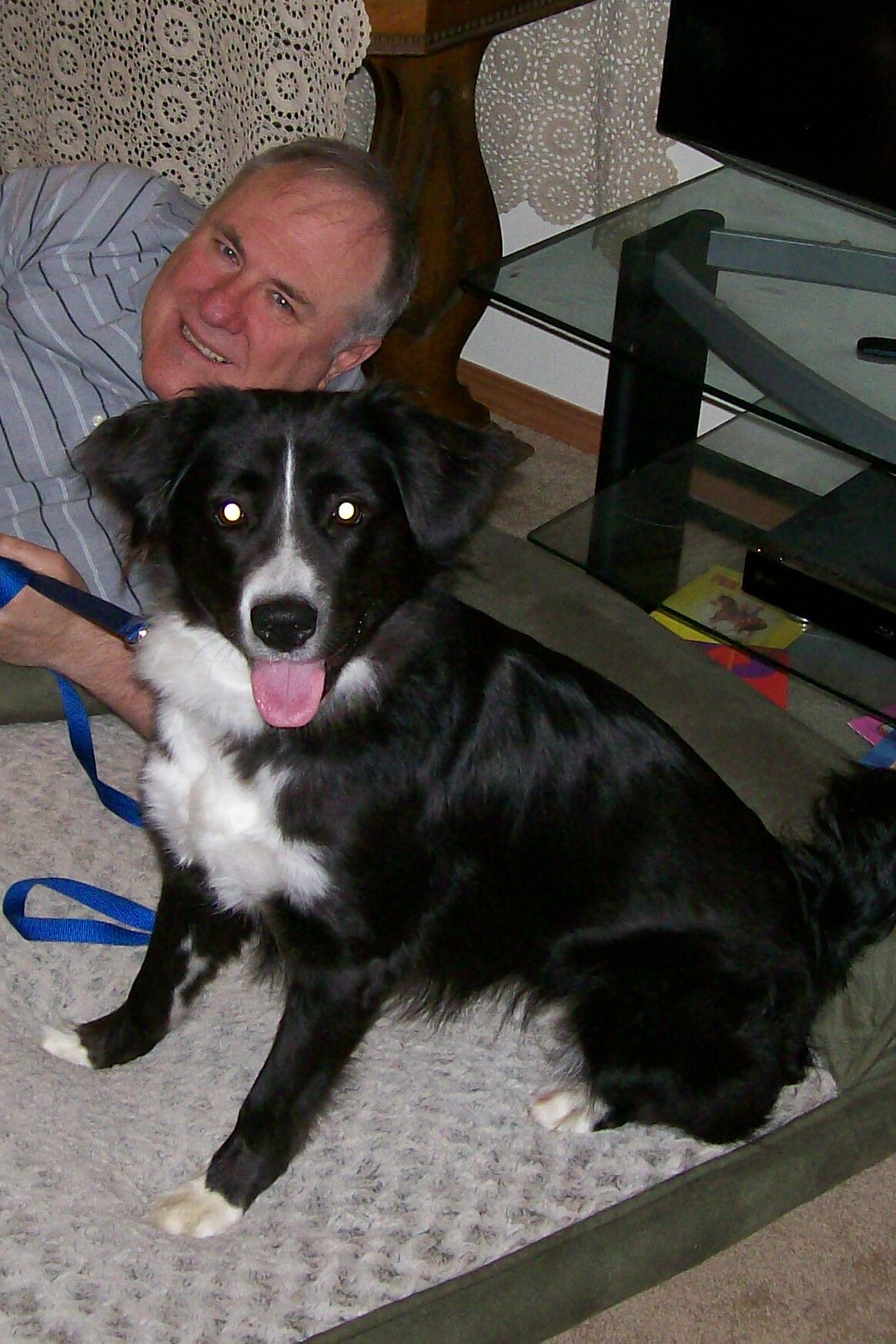
Only last June I invited you to share our joy with the adoption into our family of Lyric, a border collie mix.

Tragically, last night the precious girl passed away. And our family is now dealing with the shock and grief that are such a painful (but inescapable) part of loving the pets who join our families.

After Lyric had been with us for several months, we saw evidence (excessive salivation and frantic, happy racing around the house) of a health concern. When we later witnessed a seizure that lasted just a minute or two, it was nearly as traumatic to us as it was to her. That feeling of helplessness is horrible, isn’t it?

Visits to the vet resulted in the suspicion that it may have been caused by the mushrooms that grow abundantly in the Pacific Northwest forest where we live. (This has been a particularly favorable year to all forms of fungi, and this is a fairly common cause of canine seizures.)

We took precautions to minimize her exposure to that source, but she had several more seizures, weeks apart. Our two vets said that if she experienced a “cluster” of seizures, there were some drugs we could try. However, we never saw any indications of that, so we remained in a monitoring status.

Tragically, late last night, while lying beside me as I was writing, she began what became a relentless series of attacks on her system. She briefly stabilized between each seizure, but they grew longer and more severe. Finally, her strong heart (mercifully) surrendered, and she was gone.

C.S. Lewis was writing about the death (and resurrection) of human beings in his essay “Some Thoughts,” but his words about the alien nature of death resonate with what I am feeling today.

Of all men, we hope most of death [as in, not being the end of all, but a passage to an even more real life]; yet nothing will reconcile us to—well, its unnaturalness. We know that we were not made for it; we know how it crept into our destiny as an intruder; and we know Who has defeated it.

Because Our Lord is risen we know that on one level it is an enemy already disarmed; but because we know that the natural level also is God’s creation we cannot cease to fight against the death which mars it, as against all those other blemishes upon it, against pain and poverty, barbarism and ignorance. Because we love something else more than this world we love even this world better than those who know no other.

Animals, of course, don’t share humanity’s souls. But when you gaze into those love-filled, adoring eyes of your dog, only someone spiritually blind would fail to recognize there is a precious spark within.

I have written in the past about the possibility of God restoring our pets to us in heaven. I won’t belabor that possibility here. After all, it’s merely conjecture. But, in these moments of grief, many find some small comfort in the possibility of God restoring to life these beloved, and innocent, victims of humanity’s disobedience in the Garden.

I began my first post about Lyric with these words:

Last night a new member joined our family. Her name is musical. We didn’t choose it; her previous family did. But we think it fits and she’ll live up to it.

It was for far too short a time, but Lyric definitely did live up to the beauty of her name.

Face to Face with God

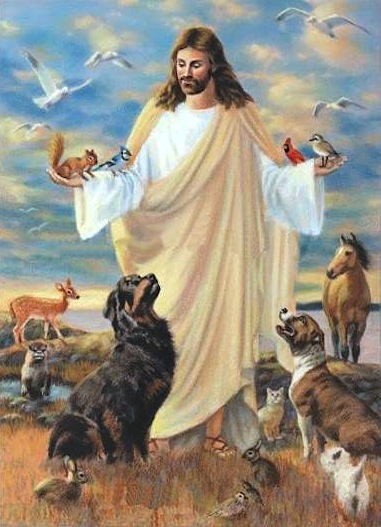
Jesus with animalsA recent letter to the editor of Lutheran Witness includes a delightful example of the wondrous glory of childhood simplicity.

When our four-year-old son . . . saw a bird outside the window, he commented “I wish I were a bird with wings so I could fly up to heaven and talk to Jesus.” [His parents] asked what he would say to Jesus if he were a bird. His simple reply . . . “Tweet, tweet.”

How gloriously innocent. So unpretentious and joyously pure. I think this captures the essence of what Jesus was referring to when he said “Truly, I say to you, unless you turn and become like children, you will never enter the kingdom of heaven. Whoever humbles himself like this child is the greatest in the kingdom of heaven” (Matthew 18:3-4, ESV).

C.S. Lewis discussed the innocence of children in his essay “The Abolition of Man.” He is discussing the monolithic power of society, or government, in reshaping what it means to be human. God preserve us from those who would redefine and eradicate the very qualities of humanity Jesus praised.

Human nature will be the last part of Nature to surrender to Man. The battle will then be won. . . . But who, precisely, will have won it? For the power of Man to make himself what he pleases means, as we have seen, the power of some men to make other men what they please. . . .

Hitherto the plans of educationalists have achieved very little of what they attempted and indeed, when we read them—how Plato would have every infant “a bastard nursed in a bureau,” and Elyot would have the boy see no men before the age of seven and, after that, no women, and how Locke wants children to have leaky shoes and no turn for poetry—we may well thank the beneficent obstinacy of real mothers, real nurses, and (above all) real children for preserving the human race in such sanity as it still possesses.

But the man-moulders of the new age will be armed with the powers of an omnicompetent state and an irresistible scientific technique: we shall get at last a race of conditioners who really can cut out all posterity in what shape they please.

When you and I stand in the presence of God, our adult words will vary. We’ll all drop to our knees—some in adoration, others perhaps in fear—but what will we say?

I can imagine some of the words that will come to our lips.

“Thank you.”

“Why did you allow . . ?”

“I love you.”

“I despise you because . . ?”

“Hallelujah.”

Or, perhaps, “Why did you delay so long?”*

I suspect we will probably be speechless. Certainly, at first. There’s a song that captures well the mystery that awaits us when we find ourselves face to face with our Creator. It’s more in spirit with the response of the young child who simply tweeted out his greeting to God.

Surrounded by Your Glory, what will my heart feel?

Will I dance for you, Jesus? Or in awe of You, be still?

Will I stand in Your presence, or to my knees will I fall?

Will I sing ‘Hallelujah!’? Will I be able to speak at all?

I can only imagine! I can only imagine!

We used to sing this song at chapel services in southwest Asia. I have often thought it would be very meaningful to record this song in my own voice, to be played at my own funeral (should the Lord tarry).

That’s not nearly as morbid as some might think. It’s a song of praise, awe and wonder, in my rendition I would end it with the words “I no longer imagine,” for my faith in God will have given way to sight.

_____
* The answer to that question is actually found in the Scriptures. From the third chapter of Peter’s second epistle:

This is now the second letter that I am writing to you, beloved. In both of them I am stirring up your sincere mind by way of reminder, that you should remember the predictions of the holy prophets and the commandment of the Lord and Savior through your apostles, knowing this first of all, that scoffers will come in the last days with scoffing, following their own sinful desires. They will say, “Where is the promise of his coming? For ever since the fathers fell asleep, all things are continuing as they were from the beginning of creation.” For they deliberately overlook this fact, that the heavens existed long ago, and the earth was formed out of water and through water by the word of God, and that by means of these the world that then existed was deluged with water and perished. But by the same word the heavens and earth that now exist are stored up for fire, being kept until the day of judgment and destruction of the ungodly.

But do not overlook this one fact, beloved, that with the Lord one day is as a thousand years, and a thousand years as one day. The Lord is not slow to fulfill his promise as some count slowness, but is patient toward you, not wishing that any should perish, but that all should reach repentance. But the day of the Lord will come like a thief, and then the heavens will pass away with a roar, and the heavenly bodies will be burned up and dissolved, and the earth and the works that are done on it will be exposed.

Since all these things are thus to be dissolved, what sort of people ought you to be in lives of holiness and godliness, waiting for and hastening the coming of the day of God, because of which the heavens will be set on fire and dissolved, and the heavenly bodies will melt as they burn! But according to his promise we are waiting for new heavens and a new earth in which righteousness dwells.

Return to Narnia

Chauvet Quote

Great news for all fans of Narnia—after a three year delay, it’s just been announced that they will be making a film based on The Silver Chair!

Voyage of the Dawn Treader was released in 2010, although it seems to many of us even more time has passed. And, due to the vagaries of film making, the fourth title in the series may not see the screen until 2018. However, there is additional good news too.

Most fans will be happy to learn that the new partner in the production is Mark Gordon. Among the films and shows Gordon has produced are Saving Private Ryan, The Patriot, Speed, The Day After Tomorrow and Grey’s Anatomy. Gordon is quoted as saying:

Like many readers, both young and old, I am a huge fan of C.S. Lewis’ beautiful and allegorical world of Narnia. These fantasy stories inspire real-world passion among millions of devoted fans around the world. As we prepare to bring the next book to life, we are humbled and excited to contribute to the outstanding legacy of Narnia.

Lewis’ son, Doug Gresham, will continue to work on the project, and strive to maintain fidelity to the author’s vision.

The Silver Chair offers a fascinating tale, much of which takes place in a subterranean realm. I’m certain the cinematography will be spectacular.

The story marks the return of Eustace Scrubb and the addition of a classmate, Jill Pole. The other major character—aside from Aslan, of course—is Puddleglum, a taciturn Marsh-wiggle. (We named the pond on our property in his honor, enjoying the alliteration.)

As the script is written, I’m most concerned about how Puddleglum will be portrayed. He’s not a cartoon character, although much that he says in utter seriousness comes across as slightly silly.

Much of the “humor” comes from the fact that Puddleglum is the archetypal pessimist, as I’ll illustrate in a moment. I just hope they don’t pursue the all too common path of setting him up as comic relief (à la Jar Jar Binks).

Puddleglum, in fact, is the hero of the story. He leads the young children on their dangerous mission to locate the son and heir of King Caspian (who we met in the two previous films). Here are a few quotations from the courageous Marsh-wiggle.

Good morning Guests . . . Though when I say good I don’t mean it won’t probably turn to rain or it might be snow, or fog, or thunder. You didn’t get any sleep, I daresay.

. . . but I’d better not tell you that story. It might lower your spirits, and that’s a thing I never do.

The bright side of it is . . . that if we break our necks getting down the cliff, then we’re safe from being drowned in the river.

Life isn’t all fricasseed frogs and eel pie.

In the climatic confrontation with the Queen of the Underland, Puddleglum champions the truth in this amazing scene.

One word, Ma’am . . . All you’ve been saying is quite right, I shouldn’t wonder. I’m a chap who always liked to know the worst and then put the best face I can on it. So I won’t deny any of what you said. But there’s one more thing to be said, even so. Suppose we have only dreamed, or made up, all those things–trees and grass and sun and moon and stars and Aslan himself. Suppose we have. Then all I can say is that, in that case, the made-up things seem a good deal more important than the real ones. Suppose this black pit of a kingdom of yours is the only world. Well, it strikes me as a pretty poor one.

And that’s a funny thing, when you come to think of it. We’re just babies making up a game, if you’re right. But four babies playing a game can make a play-world which licks your real world hollow. That’s why I’m going to stand by the play world.

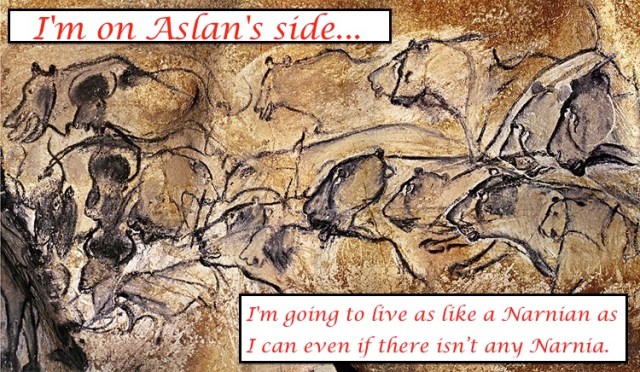
I’m on Aslan’s side even if there isn’t any Aslan to lead it. I’m going to live as like a Narnian as I can even if there isn’t any Narnia. So, thanking you kindly for our supper, if these two gentlemen and the young lady are ready, we’re leaving your court at once and setting out in the dark to spend our lives looking for Overland. Not that our lives will be very long, I should think; but that’s a small loss if the world’s as dull a place as you say.

Simply rereading these words has whet my hunger for the new addition to the Narnian cinematic canon. May it arrive soon.

During the next few years, as a script is written, the cast is chosen and the various scenes are filmed and edited, join me in offering an occasional prayer that the movie’s producers will both remain true to Lewis’ message, and produce a film worthy of the novel upon which it is based.

Obstreperous Language

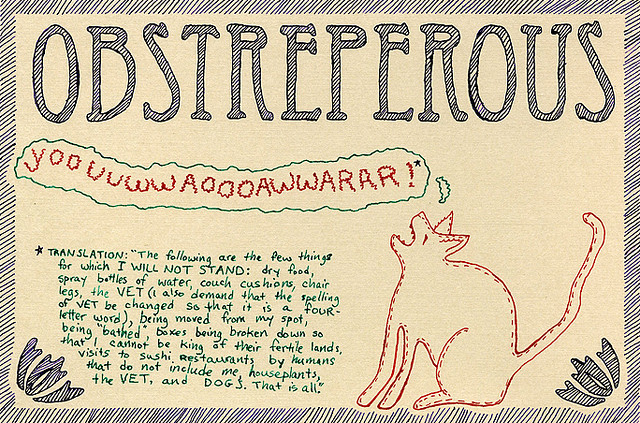
obstreperous

© Stella Belikiewicz and used by permission.

Despite my many shortcomings, I do “pride” myself on possessing a rather considerable vocabulary. My 97th percentile score of the GRE* reinforced my impression that I knew a lot about words.

One technique which has increased my vocabulary is to never let an unknown word pass by without making an effort to learn its meaning. This is simple when I’m working at the computer. If I’m unsure of a definition, I immediately look it up in an online dictionary such as this.

Very rarely do I “guess” at a meaning, based upon its context. This mainly occurs if I’m listening to the radio while I’m driving, and I don’t have recourse to a dictionary. Even then I try to impress the new word on my memory so that I can research it when I return home.

The word in this column’s title motivated me to discuss the importance of accurately understanding word definitions. When I encountered “obstreperous,” it rang vague bells of recollection. And, I was able to discern the word’s general meaning from the context of the article. While some readers of Mere Inkling are already familiar with its meaning—and perhaps use it in daily conversations—allow me to share the context in which I encountered it.

I was reading an article in a military journal about the “battle over ballistic missiles” which was fought inside the Air Force as the manned-bombers-only mindset had to be breached so the United States could advance into the ICBM age. The champions of the two positions were two successive Air Force Chiefs of Staff, Thomas White and Curtis LeMay.

White struggled with how to control the obstreperous LeMay. He knew he didn’t have the political power to force LeMay out, nor could he outwait his [Strategic Air Command] chief. LeMay received his fourth star in 1951 at age 44, which made him the youngest four-star U.S. general since Ulysses S. Grant.**

I’m rarely content with possessing an amorphous definition of a word, so I looked it up. My general impressions of its meaning were confirmed, and I added another word to my personal vocabulary. (The fact that I may never use it beyond its appearance in this post is irrelevant.) Here’s the dictionary entry:

ob·strep·er·ous [uhb-strep-er-uhs]

adjective

1. resisting control or restraint in a difficult manner; unruly.

2. noisy, clamorous, or boisterous: obstreperous children.

Parents give their children a precious gift by encouraging the growth of their own vocabularies. In the pre-computer days, we had a dictionary not far away when we had dinner, and it wasn’t uncommon for it to find its way to the table during our conversations.

Consciously adding new words to our vocabulary is a skill especially vital to writers.

C.S. Lewis wrote about how common usage of familiar words requires no contextual definition. However, he warns of the danger of accepting subjective “definitions” offered outside the context of credible dictionaries.

When we leave the dictionaries we must view all definitions with grave distrust. It is the greatest simplicity in the world to suppose that when, say, Dryden defines wit or Arnold defines poetry, we can use their definition as evidence of what the word really meant when they wrote.

The fact that they define it at all is itself a ground for scepticism. Unless we are writing a dictionary, or a text-book of some technical subject, we define our words only because we are in some measure departing from their real current sense. Otherwise there would be no purpose in doing so. . . .

The word wit will illustrate this. We . . . find old critics giving definitions of it which are contradicted not only by other evidence but out of the critics’ own mouths. Off their guard they can be caught using it in the very sense their definition was contrived to exclude.

A student who should read the critical debate of the seventeenth century on wit under the impression that what the critics say they mean by wit is always, or often, what they really mean by wit would end in total bewilderment.

He must understand that such definitions are purely tactical. They are attempts to appropriate for one side, and to deny to the other, a potent word. You can see the same “war of positions” going on today.

A certain type of writer begins “The essence of poetry is” or “All vulgarity may be defined as,” and then produces a definition which no one ever thought of since the world began, which conforms to no one’s actual usage, and which he himself will probably have forgotten by the end of the month. (Studies in Words)

I find it rather fitting to include this passage from Lewis, with its martial imagery, in a column inspired by a description of a surly advocate of massive nuclear bombing as the best deterrence of World War III.

Writers, particularly those attempting to be persuasive, are wise to ponder Lewis’ wise counsel. We cannot surrender the battlefield to those who would revise the clear and historic meanings of words in an effort “to appropriate for one side, and to deny to the other, a potent word.”

_____

* The Graduate Record Exam is a standardized test used as part of the admission process for many university graduate programs in the United States. We won’t be discussing my mathematics score here . . .

** If the source article interests you, you can read it at Air Force Magazine.

The artwork above is copyrighted by its creator, Stella Belikiewicz, and used with her permission.

Government & Baboons

I recently read an interesting article about battling terrorism from an international base in Djibouti. Many African nations have joined those from Europe and North America in trying to protect vulnerable villages from the ravages of violent extremism.

However, as readers of Mere Inkling know, we don’t deal with political matters here. Everyday life, yes. Writing and self-expression, of course. Faith, definitely. Imagination, most certainly. Current events are also on the table for consideration, insofar as they relate to the aforementioned subjects.

Politics though, as a subject in and of itself, is not on the Mere Inkling menu.

With that in mind, I want to share a passage from the Air Force magazine article. In a description of “a recent personnel recovery mission in Ethiopia,” it says,

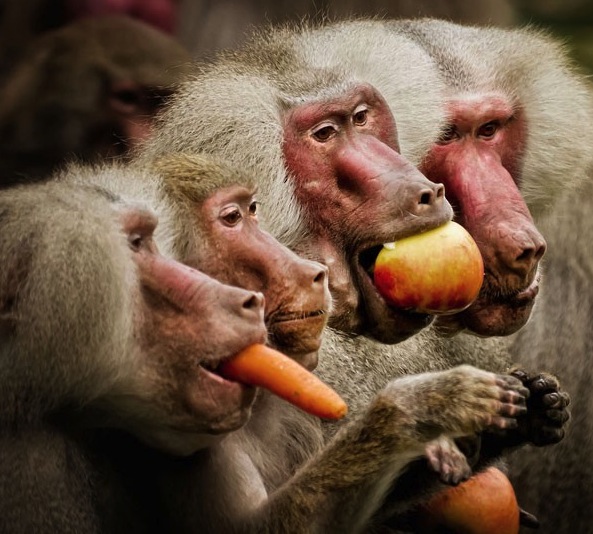
The HC-130s landed at night on a pitch-black airstrip, but first had to make a “clearing pass” to scare a congress of baboons and a pod of hippopotamuses off the runway.

Quite a picture. However, the image itself only made part of the impression left on me by this sentence. More lasting was the reminder of what a group of baboons is called.

C.S. Lewis wrote a fascinating essay about government entitled “Democratic Education.” One of many of its many kernels of wisdom is this: “Democracy demands that little men should not take big ones too seriously; it dies when it is full of little men who think they are big themselves.”

Returning to the subject of animals, the second chapter of Genesis tells us,

Now out of the ground the Lord God had formed[f] every beast of the field and every bird of the heavens and brought them to the man to see what he would call them. And whatever the man called every living creature, that was its name. The man gave names to all livestock and to the birds of the heavens and to every beast of the field.

So, Adam named the animals, and I imagine that after her creation, Eve helped her husband refine some of those appellations. What I don’t know is this—exactly who decided how we label groups of the same species?

I would point out how apropos baboons being referred to as a “congress” is . . . except for two considerations. (1) The connection would be lost on many readers whose governments have parliaments, and (2) It turns out this is actually an error. The actual word for baboon bands is a “troop.” So much for their unfortunate association with an organization that has lost the confidence of nine out of ten Americans.

Here are a few of the familiar and unfamiliar collective nouns for a variety of animals, with some brief comments and questions.

Lions | Pride – Aptly named!

Prairie Dogs | Coterie – I never considered prairie dogs snobbish.

Kittens | Intrigue – I should have learned that from simple observation.

Finches | Charm – They really do, don’t they?

Wombats | Wisdom – Wisdom to Aussies, a mystery to me.

Pekingese | Pomp – Well, perhaps just slightly elitist.

Cobras | Quiver – Logical, given the prospect of meeting a group of vipers.

Peacocks | Ostentation – Much nicer than the “pride” option.

Barracudas | Battery – Same as electric eels, I suppose.

Crows | Murder – A term familiar to most literary folk.

Bullfinches | Bellowing – Huh? Sounds more hippopotamusish.

Cows | Kine – Have to thank the medieval English for this one.

Seabirds | Wreck – Beware when they fly overhead.

Bacteria | Culture – And what kind of civilization have they ever built?

Deer | Gang – Must be the teenagers, before they become a herd.

Cockroaches | Intrusion – Accurate, repulsive and ominous.

Guillemots | Bazaar – What’s a guillemot, and what is it selling?

Cormorants | Gulp – Didn’t their momma’s teach them to chew?

Cheetahs | Coalition – Wouldn’t “a ‘sprint’ of cheetahs” sound better?

Woodpeckers | Descent – Am I missing something here?

Clams | Bed – Not much else to do in the clam-world.

Turtledoves | Pitying – Meaning they take pity on us, not vice versa.

Bobolinks | Chain – Cute, but lost on Americans where they’re known as reedbirds or ricebirds.

Snails | Walk – Someone’s lacking a bit in creativity here.

Ravens | Unkindness – Speaking of unkind, who labeled them this?

Flamingoes | Stand – Come on now, isn’t that a bit obvious?

Giraffe | Tower – I guess the flamingoes aren’t the only ones.

Lice | Flock – That is way too nice a word for those vermin!

Alligators | Congregation – As a pastor, I simply don’t want to go there.

This is way too much fun, but I’d better stop now so I can revisit this theme in a year or so. Until then, if you learn who gave that unkind name to groups of ravens, let me know.

A Narnian Madlib

EVO-WWI-064-01060I got to savor one of the joys of being a grandpa today, watching over two of my five lovely granddaughters while their parents traveled to an important business meeting.

Naturally, we had fun playing, drawing, tossing a ball for their German shepherd, building things, cleaning up their room (not quite so “fun”) and—since it’s summer—playing with water balloons (extremely fun, even though I got drenched).

We also did a madlib, one of those “phrasal templates” popularized by Roger Price and Leonard Stern in the 1950s. These simple word games are entertaining and educational. And, even for novice writers, they’re not too challenging to compose. After all, the stories themselves are by nature brief and rather superficial.

Today I even set my granddaughters in front of an episode of The Powerpuff Girls so I could write a short scene from Narnia for them. You’ll find it below.

I had forgotten how much fun we had with madlibs when our own children were young. We made many up on the spur of the moment, and laughed at the silly combinations of word that resulted. The process, as most readers know, involves randomly selecting a series of words for inclusion in the narrative. With a lack of imagination, the readings can fall a bit flat, but typically you end up with some (accidentally) witty wordplay.

One of the benefits of madlibs is how they can be used more than once. While the outline of the story remains the same, of course, the choices made by readers generate amazing diversity.

Most madlibs are admittedly rather juvenile. That’s because they are written for juveniles. They rely on providing specific types of words, such as nouns or adjectives. Theoretically, you could devise a madlib as complex or sophisticated as you desire. For example, an entertaining tale certainly could doubtless be woven by including random selections for the following word choices.

____________ prime number

____________ copular verb

____________ Napoleonic regimental commander

____________ homograph

____________ life stage of a butterfly (other than larva or pupa)

____________ ditransitive verb

____________ type of psychosis

____________ infielder for 1874 Chicago White Stockings

____________ gerund

____________ rare earth mineral

____________ monotransitive verb

____________ early kabbalist (other than Bahye ben Asher ibn Halawa)

____________ type of arachnid with blue coloration

____________ free predictive

____________ reciprocal pronoun

____________ chemical process (other than esterification)

Unfortunately, I don’t have time to write the story accompanying this worthy list, but if you should write it, I’d love to read it.

There are a number of fan sites online that generate madlibs. I won’t recommend any since the ones I’ve glanced at today are merely advertising collections for sale. (I also found the examples I experimented with to be rather feeble . . . even weaker than the story I wrote today in a single hour.)

You will search in vain if you’re seeking a C.S. Lewis reference to madlibs. However, he was a master wordsmith, who recognized well their power, and greatly loved humor. The following passage, from “Prudery and Philology,”
refers to the versatility and weight of language, and includes a valuable caution.

We are sometimes told that everything in the world can come into literature. This is perhaps true in some sense. But it is a dangerous truth unless we balance it with the statement that nothing can go into literature except words, or (if you prefer) that nothing can go in except by becoming words. And words, like every other medium, have their own
proper powers and limitations.

The brief tale below is not pretentious, so you need not fear it exceeding its limitation. It simply is what it is . . . one grandfather’s passing literary adventure with his grandchildren.

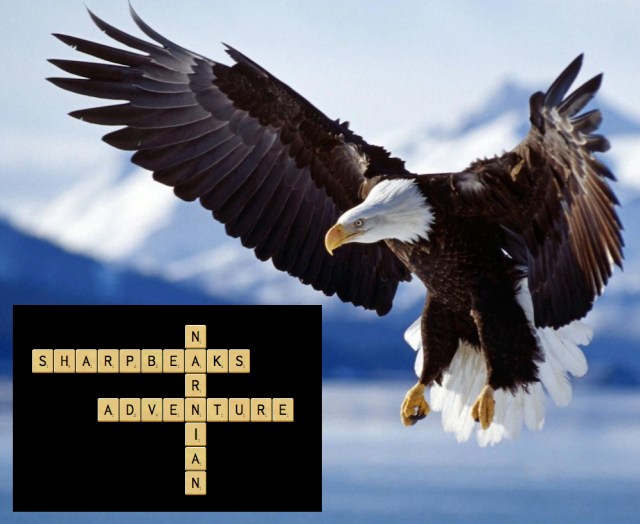
It you like “Sharpbeak’s Narnian Adventure,” you’re welcome to download a PDF copy of the story I’ve appended to the end of the column. It’s 100% free, and I’m not trying to sell a collection of madlibs after hooking you. Besides, if I was trying to make a profit off of anything including the word “Narnian,” I have no doubt lawyers would be descending upon me in droves.

The Words You Will Need

____________ adjective

____________ animal

____________ adjective

____________ adjective

____________ something  you drink

____________ color

____________ adverb

____________ adjective

____________ adjective

____________ meal time

____________ adjective

____________ adjective

____________ adjective

____________ adjective

____________ plural noun

____________ plural noun

____________ adjective

____________ adjective

____________ adjective

____________ animal

____________ adjective

____________ food

____________ food

____________ food

____________ place

____________ adverb

____________ adjective

____________ place

____________ number

____________ plural relative

____________ verb

____________ adjective

____________ plural monster

The Story Into Which You Insert Your Words

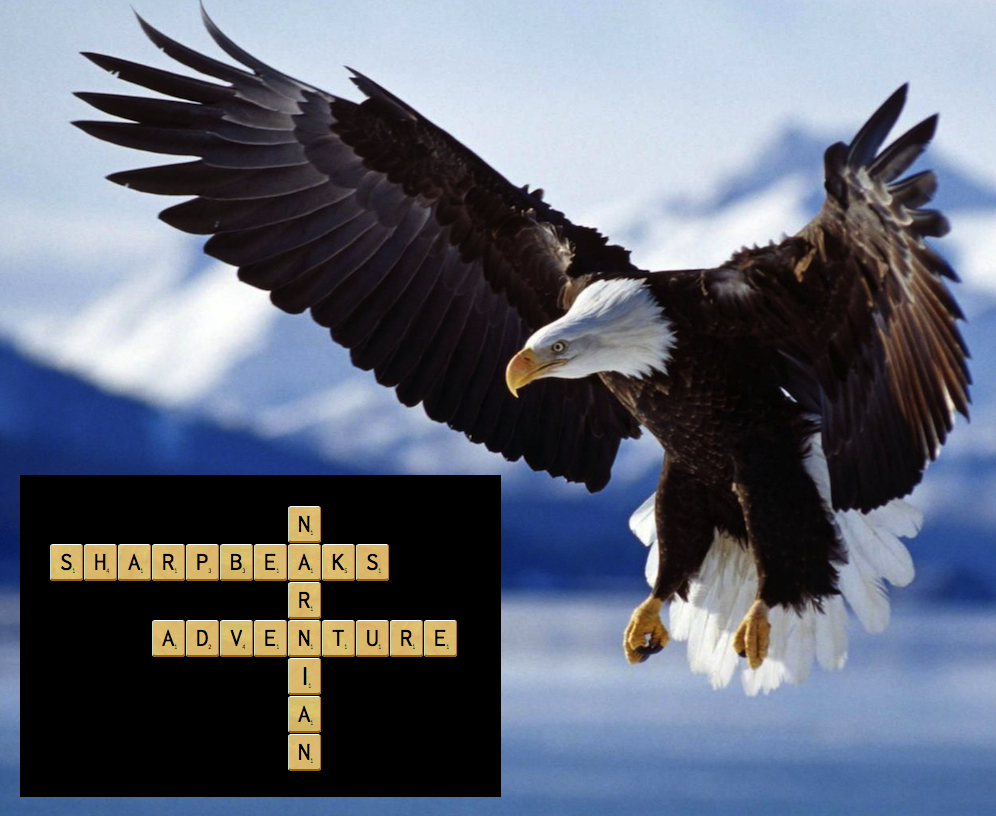
Once upon a time, when Narnia was still young, a/an ____________, young eagle named Sharpbeak decided to set out for an adventure. A wise ____________ climbed his ____________ tree to talk to him before he left. He crawled into the eagle’s ____________ nest and said, “That was a long climb. I’m thirsty. May I have a cup of ____________?”

As the two friends watched the sun set over the ____________ mountains, the eagle said ____________, “I wonder what’s on the other side of those mountains?”

His ____________ companion warned him, “Beware of the ____________ giants in the north. They like nothing better than to eat us Talking Animals for ____________ or even for a snack. Sharpbeak promised he would avoid the giants.

Then his friend said, “Don’t forget that there are also ____________ dragons living on some of the mountaintops. They don’t appreciate ____________ visitors. If you surprise them, they may blast you with a ____________ burst of their ___________ flames. And definitely don’t disturb their treasure of ____________ and ____________.”

The eagle said, “I’ll be sure to watch out for dragons when I go on my ____________ adventure.”

“Oh,” added Sharpbeak’s friend, “I wouldn’t advise you to fly over the ____________ ocean either. What if you flew as far as you could, and you didn’t find a/an ____________ island where you could land?” The eagle looked worried. His wise friend added, “If you ever find yourself in dangerous circumstances, remember that you can call on Aslan to protect you. I heard that once he once allowed a timid ____________ to walk safely across a stormy lake without sinking.”

“My,” said Sharpbeak, “that would be a terrible thing.” He looked up at the ____________ stars, twinkling in the sky. The two friends had spoken long into the night. “I didn’t realize it was so late,” he said. All I have to offer you to eat is ____________ and ____________.”

“That would be nice,” said his friend. He reached into his pocket and said, “and we could have this ____________ for dessert. But, after we eat I had better scurry home to my ____________, since I can’t imagine sleeping in a tree. I mean, if a storm comes up, you have the wind blowing ____________ and ___________ rain pouring down in torrents. I’m much happier living in a ____________ with my ____________ ____________. While you go on your journey, I will stay home and ____________.”

The two friends gave each other a big hug. The eagle’s feathers tickled his friend, who said, “May Aslan watch over you during your travels.”

The next morning the ____________ eagle soared off to begin his adventure. Sharpbeak would be sure to avoid all of the giants, dragons and ____________ along the way. But that’s a story for another day.

Epilogue

Those of you curious about how my granddaughters’ story turned out, should read on.

Once upon a time, when Narnia was still young, a big, young eagle decided to go off for an adventure. A wise deer climbed his pink tree to talk to him before he left. He crawled into the eagle’s fuzzy nest and said, “That was a long climb. I’m thirsty. May I have a cup of juice?

As the two friends watched the sun set over the blue mountains, the eagle said roughly, “I wonder what’s on the other side of those mountains?”

His wide companion warned him, “Beware of the cold giants in the north. They like nothing better than to eat us Talking Animals for breakfast or even for a snack.” Sharpbeak promised he would avoid the giants.

Then his friend said, “Don’t forget that there are also hairy dragons living on some of the mountaintops. They don’t appreciate old visitors. If you surprise them, they may blast you with a soft burst of their speedy flames. And definitely don’t disturb their treasure of trash cans and flowers.”

The eagle said, “I’ll be sure to watch out for dragons when I go on my fun adventure.”

“Oh,” added his friend, “and I wouldn’t advise you to fly out over the heavy ocean either. What if you flew as far as you could, and you didn’t find a dark island where you could land?” The eagle looked worried. His wise friend added, “If you ever find yourself in dangerous circumstances, remember that you can call on Aslan to protect you. I heard that once he once allowed a timid bunny to walk safely across a stormy lake without sinking.”

“My,” said the eagle, “that would be a terrible thing.” He looked up at the watery stars, twinkling in the sky. The two friends had spoken long into the night. “I didn’t realize it was so late,” he said. “All I have to offer you to eat is noodles and cheese.”

“That would be nice,” said his friend. He reached into his pocket and said, “and we could have this snack bar for dessert. But, after we eat I had better scurry home to my fairgrounds, since I can’t imagine sleeping in a tree. I mean, if a storm comes up, you have the wind blowing bravely and messy rain pouring down in torrents. I’m much happier living in a playground with my ten sisters. While you go on your journey, I will stay home and dance.”

The two friends gave each other a big hug. The eagle’s feathers tickled his friend, who said, “May Aslan watch over you during your travels.”

The next morning the brown eagle soared off to begin his adventure. He would be sure to avoid all of the giants, dragons and dinosaurs along the way. But that’s a story for another day.

Downloadable Version

Here’s the story. On the PDF, it is preceded by a list of the type of words required to fill in the various blanks.

Narnian Madlib

Newest Pet Craze

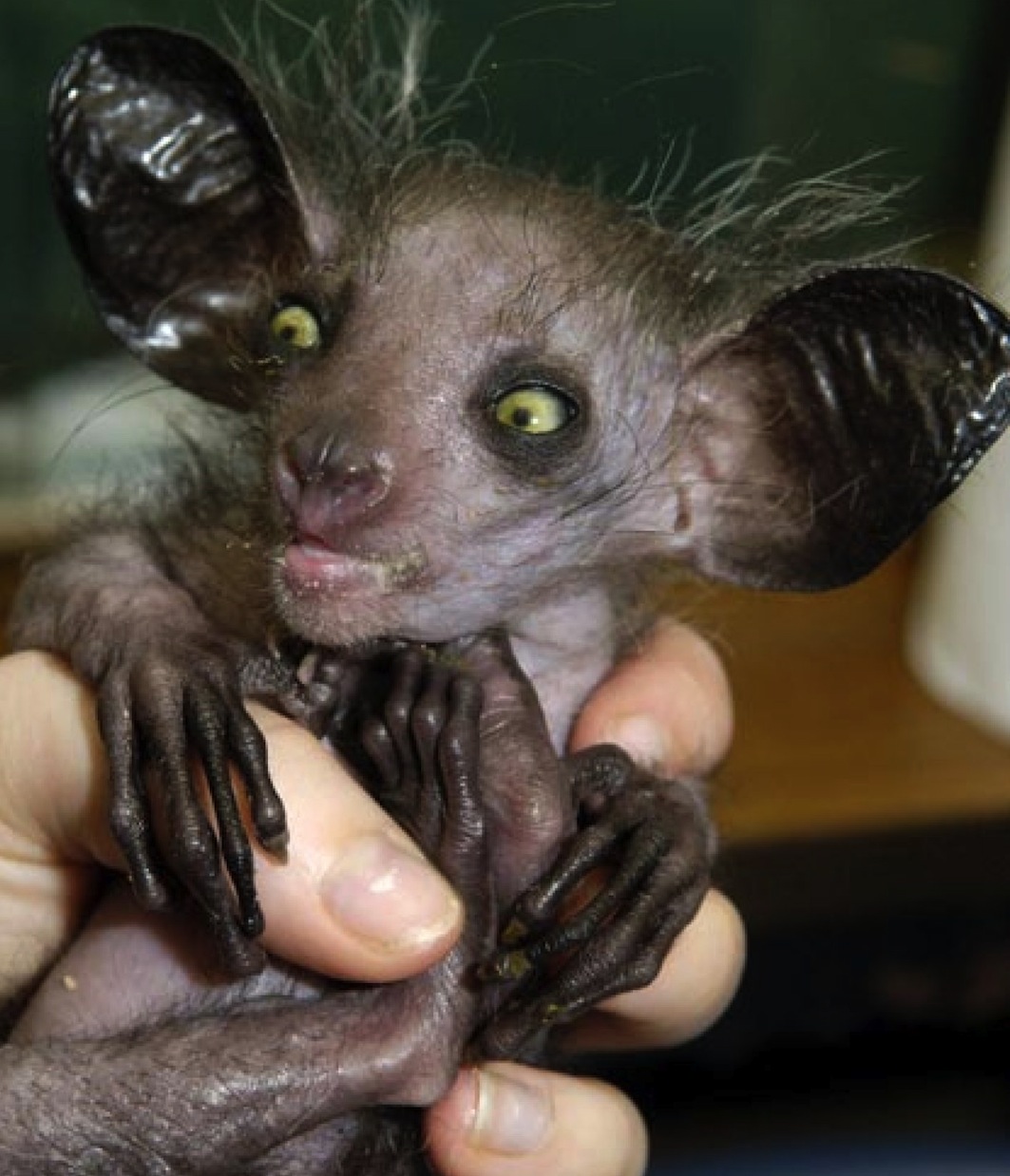
aye-aye 1Have you seen pictures of these delightful little creatures? They’re called Aye-ayes, and they are widely distributed across the jungles of Madagascar. (Any genetic link between aye-ayes and Gollum remains unconfirmed.)

The International Union for Conservation of Nature has classified these harmless mammals as “Near Threatened.” So, helping them reproduce, as an aye-aye breeder, may also keep the species from becoming extinct.

Actually, I don’t believe you can import Aye-ayes as pets—unless you’re one of those rich or famous people to whom the laws for regular people don’t apply. But, if it is possible to adopt an aye-aye, I offer the following pros and cons for your consideration.

Pro: Some people think they look cuddly.

Con: Some people think they look creepy.

Pro: They don’t demand attention all day long.

Con: They’re nocturnal and might keep you up at night.

Pro: People will think you’re on the cutting edge.

Con: People will think you’re one odd cookie.

Pro: They have tiny mouths.

Con: They are omnivores, and eat other animals.

Pro: Most people consider them exotic animals.

Con: They clearly resemble devilish gremlins.

Pro: Daubentonia madagascariensis are lemurs.

Con: They’re not nearly as cute as their lemur cousins.

Pro: In an emergency, they’re edible.

Con: In an emergency, they’re edible.

Pro: Aye-ayes may reveal God’s imagination & humor.

Con: Aye-ayes just may have a less heavenly origin.

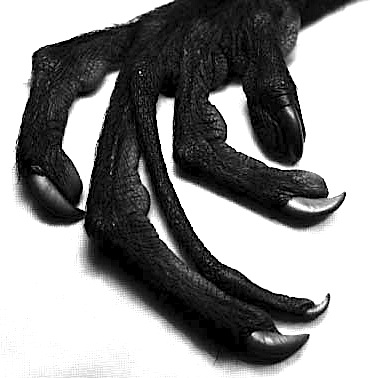
aye-aye 3The picture to the right, a close up view of the aye-aye’s “hand” lends credence to the last conjecture, above. It also evokes nightmarish memories of a story that traumatized my youth, “The Monkey’s Paw.”

You can either read it here, or view a recent treatment of it here.

C.S. Lewis acknowledges the danger posed by possessing too much love—an idolatrous affection—for pets. Of course, there are other things we can love that way with even less justification than an animal.

There is a reaction at present going on against the excessive love of pet animals. We have been taught to despise the rich, barren woman who loves her lap dog too much and her neighbor too little. It may be that when once the true impulse is inhibited, a dead poet is a nobler substitute than a live Peke, but this is by no means obvious.

You can do something for the Peke, and it can make some response to you. It is at least sentient; but most poetolaters hold that a dead man has no consciousness, and few indeed suppose that he has any which we are likely to modify. Unless you hold beliefs which enable you to obey the colophons of the old books by praying for the authors’ souls, there is nothing that you can do for a dead poet: and certainly he will do nothing for you.

He did all he could for you while he lived: nothing more will ever come. I do not say that a personal emotion towards the author will not sometimes arise spontaneously while we read; but if it does we should let it pass swiftly over the mind like a ripple that leaves no trace. If we retain it we are cosseting with substitutes an emotion whose true object is our neighbour.

Hence it is not surprising that those who most amuse themselves with personality after this ghostly fashion often show little respect for it in their parents, their servants, or their wives. (“The Personal Heresy: A Controversy”).

Yes, as Lewis so ably points out, it’s far more important to care about the personhood of our neighbor today . . . rather than a departed writer. (Coincidentally, Lewis would object with equal eloquence to Lewisolatry.)

If we cannot express our goodwill to other people, it’s better directed towards dogs and aye-ayes than someone departed from this world.

Which brings us back to the subject at hand. These furry little creature may not be the objects of the latest pet craze now, but it may be possible for you to initiate a new fad!

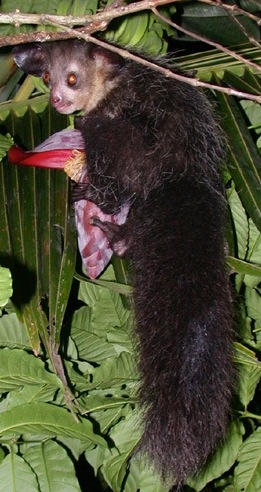
To make that possibility a bit more likely, allow me to close this column with a picture of a lovely aye-aye in its natural habitat. Now, that’s an animal one could easily consider cute and cuddly (as long as it keeps its paws to itself).

Ksukol ocasatý (Daubentonia madagascariensis)