Jews Following Jesus

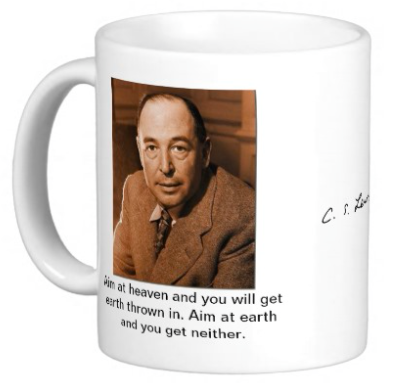
interfaithJewish poetry is breathtaking. The Psalms have nourished people of faith, as well as secularists, for millennia. C.S. Lewis wrote this about the providence of God in using the Jewish people as his conduit for blessing the world.

My enjoyment of the Psalms has been greatly increased lately. The point has been made before, but let me make it again: what an admirable thing it is in the divine economy that the sacred literature of the world should have been entrusted to a people whose poetry, depending largely on parallelism, should remain poetry in any language you translate it into.

He alluded to this in a letter to Sister Penelope, an Anglican nun and writer. In 1941 she sent him a copy of her new book, Windows on Jerusalem: A Study in the Mystery of Redemption. Lewis responded with gratitude. (Contemporary authors will find the detail of Lewis’ informal critique of her book illustrative of what he brought to the meetings of the Inklings.)

Thank you very much for the book. It has given me real help. What I particularly enjoy in all your work, specially this, is the avoidance of that curious drabness which characterises so many ‘little books on religion.’ Partly it is due to your Hebraic background which I envy you: partly, no doubt, to deeper causes.

Things that particularly pleased me were the true meanings of Beloved (p. 8) and Son (p. 9), the whole account of the Transfiguration (pp. 16 et seq), the passage on Sacrifice (p. 32), the passage ‘This was a shock’ (on p. 35), on our inability to understand sin (41 and 47), the very important bit about Hebrew & Roman ideas of ransom (52, 53): the really splendid account of how God can’t help deceiving the devil (56) and the allegorical close. There are, in fact, a good many Gifford Lectures and other such weighty tomes out of which I’ve got less meat (and indeed less efficient cookery!).

Judaism & Christianity

Jews and Christians have a complex relationship. This is even more true for Jewish people who come to accept Jesus as the promised Messiah. For most Jews, this automatically results in their expulsion from the Jewish community. However, for a growing number, there is a more gracious attitude developing.

A recent survey conducted by the Pew Research Center revealed some interesting statistics. Note the percentage of United States Jews considering the following to be essential:

Remembering the Holocaust – 73%

Leading an Ethical & Moral Life – 69%

Caring about Israel – 43%

Having a Good Sense of Humor – 42%

Observing Jewish Law – 19%

Here is the most surprising part of the survey. Thirty-four percent of American Jews consider believing Jesus is the Messiah, is compatible with being Jewish.

Let me repeat that . . . 34% of Jews in the United States (35% of the ultra-Orthodox Jews) believe that “Messianic Jews” remain Jewish.

I find that amazing. I also find it encouraging, since it’s consistent with the understanding of the Jews in first century Judea who worshipped beside the followers of Jesus in Jerusalem until its fall.

Some years ago I heard a lecture by a prominent Jewish theologian who described how historical Judaism rarely rejected those who considered any particular rabbi to be the Messiah. Apparently this remains true today, as some modern Jews, for example, consider  Menachem Mendel Schneerson (1902-1994) to be the Messiah.

Returning to the case of Jesus of Nazareth, the improving attitude is encouraging to see. In part, because most Messianic Jews say accepting Jesus as the Messiah has made them more Jewish. By that, most mean that they now practice the traditions of their Jewish heritage more faithfully than they previously did.

Following his conversion, C.S. Lewis grew in his positive consideration of the Jewish faith and people. In 1933, as Hitler’s hatred for Judaism became more evident, he wrote in a letter:

I might agree that the Allies are partly to blame, but nothing can fully excuse the iniquity of Hitler’s persecution of the Jews, or the absurdity of his theoretical position. Did you see that he said “The Jews have made no contribution to human culture and in crushing them I am doing the will of the Lord.”

Now as the whole idea of the “Will of the Lord” is precisely what the world owes to the Jews, the blaspheming tyrant has just fixed his absurdity for all to see in a single sentence, and shown that he is as contemptible for his stupidity as he is detestable for his cruelty. For the German people as a whole we ought to have charity: but for dictators, “Nordic” tyrants and so on . . .

All of the civilized people of the world share Lewis’ revulsion with Hitler and his agenda. In that we definitely agree with the vast majority of Jews who regard “Remembering the Holocaust” as something essential.

Postscript:

As positive a sign as the 34% support of Messianic Jews remaining Jewish is, the survey includes a more sobering corollary. Exactly twice that number, 68%, agreed that you can remain Jewish even if you don’t believe in the existence of God. Shocking. But that’s a subject for another day.

Poet-olatry: Poetry Misperceived

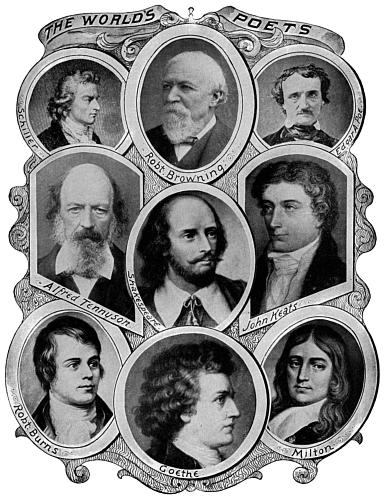
poetsWhen does our appreciation of a particular writer border on literary idolatry? Well, not idolatry proper, since even shrines like Poet’s Corner at Westminster Abbey don’t endorse “worship.”

We naturally appreciate the memory of those whose work has contributed to our lives. And that’s fine. But when we begin to focus more on them, than on the real, breathing people around us, our priorities are skewed.

In 1989, Hollywood released a film entitled “Dead Poet’s Society.” It was nominated for an Oscar for Best Picture, and ironically won the Oscar for Best Writing. In the movie, an English teacher awakens his moribund students to literature, and the more reflective aspects of life.

At last week’s writers meeting, we were introducing ourselves to a visitor, and as part of that process, mentioned the type of writing each of us pursues. I listed several genres and concluded with the words “but I’m not a poet.”

A member of the group immediately “corrected” me, since I have, in fact, written several poems during the past couple of years. Well, I guess I should get used to saying something like, “I don’t consider myself a poet.”

Poetry, some poets insinuate, carries a more artistic air than other, pedestrian genres. Fiction, of course, has its own advocates, and they too occasionally look down on folks like me who typically muddle around in the nonfiction worlds history and religion.*

In the following paragraphs, C.S. Lewis offers some provocative thoughts about how we should rightly feel toward departed writers. His argument is really about how we must not neglect our duty to living humanity by focusing on those who are “gone.”

A special treat in the selection is his coining of the word which inspires the title of this post.

There is a reaction at present going on against the excessive love of pet animals. We have been taught to despise the rich, barren woman who loves her lap dog too much and her neighbor too little.

It may be that when once the true impulse is inhibited, a dead poet is a nobler substitute than a live Peke, but this is by no means obvious. You can do something for the Peke, and it can make some response to you. It is at least sentient; but most poetolaters hold that a dead man has no consciousness, and few indeed suppose that he has any which we are likely to modify.

Unless you hold beliefs which enable you to obey the colophons of the old books by praying for the authors’ souls, there is nothing that you can do for a dead poet: and certainly he will do nothing for you.

He did all he could for you while he lived: nothing more will ever come. I do not say that a personal emotion towards the author will not sometimes arise spontaneously while we read; but if it does we should let it pass swiftly over the mind like a ripple that leaves no trace.

If we retain it we are cosseting with substitutes an emotion whose true object is our neighbour. Hence it is not surprising that those who most amuse themselves with personality after this ghostly fashion often show little respect for it in their parents, their servants, or their wives. (The Personal Heresy).**

Lewis alleges our emotional “bonds” with departed writers are fruitless, imaginary, and perhaps even detrimental. I agree that when they displace our connections with living people, it is tragic.

While I rarely disagree with the Magister Lewis, I will in this case. I would make an exception to his argument—in a single sense. For Christians, our filial affection for a departed Christian writer, is a unique case. The distinction being the fact, that in light of the resurrection, and the gift of eternal life, we are not talking about others who are permanently severed from a genuine relationship with us.

On the contrary, there are many other disciples of Jesus living today who feel a powerful connection to writers like Lewis himself. And, with all eternity ahead, there should be ample time for each of us to enjoy his company, and thank him for the blessing he bequeathed to us through his work.

Postscript:

I recognize that it may be in questionable taste, but the subject of departed artists reminds me of a humorous song from Monty Python’s Flying Circus. It’s called “Decomposing Composers,” and the modestly disconcerting lyrics are rendered in a somber, classical manner. If interested, you can listen to it here.

_____

* I intentionally refer to “religion” as nonfiction, since I regard it to be just that. (And also because I know that pushes some people’s buttons.)

** Last year I approached this same passage by Lewis from a different perspective. If you would like to read some thoughts related to pet fads, check them out here.

Coffee or Tea for C.S. Lewis and Me

Screenshot 2014-02-03 22.27.31The older I grow, the more important coffee becomes. Spending the last past two weekends ensconced in the doctoral program of a Midwestern seminary near the polar vortex has merely reinforced that fact.

Coffee versus tea. It is the perennial international battle between caffeinated beverages. C.S. Lewis, famously, weighed in on the side of tea. (That’s no surprise, given the historic hold Camellia sinensis’ on British taste buds.)

One of Lewis’ most frequently quoted aphorisms is, after all: “You can never get a cup of tea large enough or a book long enough to suit me.”

In Studies in Medieval and Renaissance Literature Lewis alludes to this cultural preference. In a passage discussing different ways of experiencing foreign customs, he describes the quintessential “bad tourist.”

One man carries his Englishry abroad with him and brings it home unchanged. Wherever he goes he consorts with the other English tourists. By a good hotel he means one that is like an English hotel. He complains of the bad tea where he might have had excellent coffee.

Despite their preference for tea, as the quotation above reveals that many Brits enjoy a good cup of coffee. Lewis himself loved a good cup at appropriate moments. In a 1939 letter to his brother Warnie, he mentions his need for a caffeine jolt prior to proctoring examinations.

My colleague Bone asked me to lunch with him at St John’s prior to an afternoon’s invigilation. I’ve known him quite good company: on this occasion, however, he spoke in almost a whisper and very seldom, and while other people were eating all round us (this was in John’s) nothing arrived for us till I was ‘nearly sick’ with hunger and embarrassment.

When at last we’d had some chicken another pause ensued, during which, almost in desperation for something to say, I asked him for the cheese, only to be told in sepulchral tones that there was a sweet coming. It came. Another pause.

Desperate for my coffee, I said presently that I supposed I’d better be getting along: my host, after pondering this for a minute or two, replied yes, he supposed I had. On our way out he stopped at the other end of the table and introduced me to a jolly old man as his father Sir Muirhead Bone. Now can it be that the mere paternal presence explains the whole business? One can imagine such things! Anyway I went off to my 3 hours’ invigilating without any coffee.

While we’re considering the role of coffee in the life of the Oxford don, I thought it might be an interesting exercise to search the Chronicles of Narnia to see if the drink is mentioned there. I uncovered several, the last of which is particularly delightful.

From The Horse and His Boy.

By the time Shasta had finished his porridge, the Dwarf’s two brothers (whose names were Rogin and Bricklethumb) were putting the dish of bacon and eggs and mushrooms, and the coffee pot and the hot milk, and the toast, on the table. It was all new and wonderful to Shasta for Calormene food is quite different. He didn’t even know what the slices of brown stuff were, for he had never seen toast before. He didn’t know what the yellow soft thing they smeared on the toast was, because in Calormen you nearly always get oil instead of butter.

And the house itself was quite different from the dark, frowsty, fish-smelling hut of Arsheesh and from the pillared and carpeted halls in the palaces of Tashbaan. The roof was very low, and everything was made of wood, and there was a cuckoo-clock and a red-and -white checked tablecloth and a bowl of wild flowers and little curtains on the thick-paned windows. It was also rather troublesome having to use dwarf cups and plates and knives and forks.

This meant that helpings were very small, but then there were a great many helpings, so that Shasta’s plate or cup was being filled every moment, and every moment the Dwarfs themselves were saying, “Butter please ,” or “Another cup of coffee ,” or “I’d like a few more mushrooms,” or “What about frying another egg or so?” And when at last they had all eaten as much as they possibly could the three Dwarfs drew lots for who would do the washing-up, and Rogin was the unlucky one.

From Prince Caspian.

They breakfasted at last in another of the dark cellars of Aslan’s How. It was not such a breakfast as they would have chosen, for Caspian and Cornelius were thinking of venison pasties, and Peter and Edmund of buttered eggs and hot coffee, but what everyone got was a little bit of cold bear-meat (out of the boys’ pockets), a lump of hard cheese, an onion, and a mug of water. But, from the way they fell to, anyone would have supposed it was delicious.

From The Silver Chair.

Breakfast was scrambled eggs and toast and Eustace tackled it just as if he had not had a very large supper in the middle of the night. “I say, Son of Adam,” said the Faun, looking with a certain awe at Eustace’s mouthfuls. “There’s no need to hurry quite so dreadfully as that. I don’t think the Centaurs have quite finished their breakfasts yet.”

“Then they must have got up very late,” said Eustace. “I bet it’s after ten o’clock.”

“Oh no,” said Orruns. “They got up before it was light.”

“Then they must have waited the dickens of a time for breakfast,” said Eustace.

“No, they didn’t,” said Orruns. “They began eating the minute they awoke.”

“Golly!” said Eustace. “Do they eat a very big breakfast?”

“Why, Son of Adam, don’t you understand? A Centaur has a man-stomach and a horse-stomach . And of course both want breakfast. So first of all he has porridge and pavenders and kidneys and bacon and omelette and cold ham and toast and marmalade and coffee and beer.

“And after that he attends to the horse part of himself by grazing for an hour or so and finishing up with a hot mash, some oats, and a bag of sugar. That’s why it’s such a serious thing to ask a Centaur to stay for the weekend. A very serious thing indeed.”

I occasionally wonder what it would have been like to have shared a pint with Lewis at the Eagle and Child. Magnificent, to be sure.

But perhaps better still would have been to share a conversation in his study or home over a simple cup of coffee (or tea). After all, just as a good meal establishes the mood for jovial discussion, so too can a soothing warm “brew” whet one’s desire to share an intimate conversation.

Following Your Heart

trust your heartI read a lot. That’s no surprise, and it’s true of most readers of Mere Inkling. We read a lot.

It is not easy to resist the temptation to pass on many more of the profound insights I encounter on my literary meanderings. I am encouraged there are so many brilliant people in the world who understand what it means live life with integrity and influence in this new millennium.

I want to share a comment taken from a recent interview with Steven James.* He has authored more than thirty books, and won a number of awards. Since most of my reading is nonfiction, I confess I’m not familiar with his writings, but based on the interview I am quite intrigued about his work.

James was asked: “Are non-Christian books and movies more often either manic or depressant?”

That’s a nicely provocative question. There are certainly many examples that could justify either response. In his response, James identifies one of the lies that has come to dominate Western thinking—that there is no ultimate, objective truth.

Building upon that underlying premise, we see the inevitable consequence. Today’s governing philosophy has become one of personal freedom and choice. Nothing (certainly not a nonexistent agreement on right and wrong) can stem the resultant  moral and ethical chaos.

“To thine own self be true,” reads one of Shakespeare’s best recalled lines. Its power arises from the fact it resonates with our deepest desires. Don’t impose your standards on me, our flesh cries out, I will be the master of my own destiny. Of course we wouldn’t want to be untrue to our own conscience. The part that is so often left out here, is the need to pursue truth (Truth).

The Book of Proverbs includes the following maxim: “Every way of a man is right in his own eyes . . .” (We prefer to dispense with the second part of the wisdom saying: “. . . but the Lord weighs the heart.”)

What, you may be wondering, was James’ response to the interview question. Trust me, it was worth the wait.

Some movies and books say life is just terrible now: Slit your wrists. Disney on the other hand is: Follow your dreams and everything will be wonderful in the end. This whole idea of follow your heart—that’s not Christian either. Rapists follow their hearts. Pedophiles are true to themselves.

Nazis pursued their dreams. The Bible says that the heart’s deceitful above all things. Why would you want to follow something deceitful? We believe you should follow something greater than your heart, that you need Someone else to inform your dreams. We turn to God.

Point made. Nihilistic films aside, even the sentimental, idealistic, “positive” types of entertainment are fundamentally flawed. Neither reflects reality. And, while the poisoned fruit of the former may be more apparent in its corruption than the latter, the produce of unrealistic optimism is also tainted.

C.S. Lewis describes the untrustworthiness of personal desires, consciences and hearts.

“If our heart condemn us, God is greater than our heart.” And equally, if our heart flatter us, God is greater than our heart.

I sometimes pray not for self-knowledge in general but for just so much self-knowledge at the moment as I can bear and use at the moment; the little daily dose. Have we any reason to suppose that total self-knowledge, if it were given us, would be for our good?

Children and fools, we are told, should never look at half-done work; and we are not yet, I trust, even half-done. You and I wouldn’t at all stages, think it wise to tell a pupil exactly what we thought of his quality. It is much more important that he should know what to do next. . . . The unfinished picture would so like to jump off the easel and have a look at itself! (Letters to Malcolm).

This isn’t all bad news, of course. As Lewis says, we are freed from depending on our hearts—the emotions of the moment—for our understanding. We no longer need to be “tossed about by the waves” of circumstance.

In the scriptural passage Lewis cites, we are reminded that “God is greater than our hearts.” He alone deserves to be the “Someone else” who “informs our dreams” and reveals to us reality. And, the wonderful result is that when we listen to God, we learn just how deeply he loves us.

_____

* The interview was entitled “Truth Teller,” and appears in the 14 December 2013 issue of World magazine.

Iceland’s Real Elves

warrior elvesI’ve always wanted to visit Iceland.

Not simply because it’s the most sparsely populated country in Europe . . . even though I’m not big on crowds.

Not simply because of its spectacular glaciers and volcanic activity . . . even though these natural wonders inspire genuine awe.

Not simply because it is home to the world’s most ancient parliamentary democracy . . . even though I believe representative democracy is the best sort of government available.

Not simply because they colonized Greenland, from which the Norse were the first Europeans to discover the Americas . . . even though Leif Erikson deserves the accolades rendered to others.

Not simply because 40,000 of my fellow citizens are of Icelandic descent . . . even though I’m pleased they have contributed to our national “melting pot.”

Not simply because Iceland’s tenth largest city is called Fjarðabyggð . . . even though that vivid name is sure to capture the imagination of any writer.

Not simply because the Icelandic alphabet actually includes a runic letter (Þ, þ) named thorn . . . even though this too makes the nation of Iceland unique.

And, not simply because J.R.R. Tolkien and his friend C.S. Lewis established a group called Kolbitar which was devoted to reading Icelandic and Norse sagas. The word itself means “coal biter” and refers to those in a harsh environment drawing so close to the fire’s warmth they can almost bite the coals.

When the Lord of the Rings (as a work in progress) was being in read at meetings of the Inklings, one of the groups members at some point blurted out, “Oh no, not another –– elf!” [I only mention this here because that impetuous comment is often incorrectly attributed to Lewis—a genuine fan of Tolkien’s masterpiece. It was actually voiced by Hugo Dyson, another WWI veteran who taught English at Merton College.]

In the past, all of these reasons have contributed to my curiosity about the Land of Ice, but now I have added one more reason to someday visit.

It turns out that some Icelanders believe that elves, called by them Huldufólk (hidden folk), are real!

The elves have a large enough human constituency, that they are able to block highway construction due to the impact on the local Huldufólk!

Technically, the preservation of the elvish solitude is only the secondary concern in the lawsuits, the first being protection of one of Iceland’s numerous lava fields. Iceland’s Supreme Court has vacillated on the case, which can only raise the ire of any elves that may reside there.

elf houseIf the proponents of the reality of the Huldufólk are right, there remains one shortcoming to the Icelandic elves. Apparently, if the elf homes that dot the countryside are any indication, the northern island breed are a diminutive race. As in tiny, what Americans would think of more as a gnome or perhaps even a fairy.

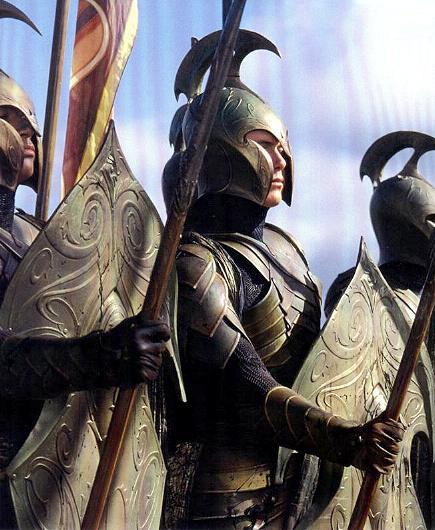
My problem is that I’ve been spoiled by J.R.R. Tolkien’s version of the elvish races. I see them a tall, noble, and wise. The kind of folk you’d want for a friend, if you could get past the aloofness that is apparently characteristic of beings who live centuries rather than decades.

I fear that these Icelandic elves are (pardon me, any Huldufólk who may be reading this) a rather inferior lot. More like leprechauns than warriors. If you live in Iceland and can correct my errors about the hidden folk there, please contact me. Even better if you happen to know some elves personally.

Having Our Writing Criticized

roeShould literary critics look down on authors whose work proves popular with “common” people? Is it appropriate for the literary elite to smirk dismissively whenever the prose of a writer outside their circle resonates with the masses?

These, my friends, are rhetorical questions. The answer to both is “no,” and if you believe otherwise, you probably won’t find yourself too comfortable with the opinions shared here at Mere Inkling.

I believe each piece of literature, regardless of its source, should be judged on its own merits. Not all genres appeal to all people. And not all writers compose their works with equal skill. Nevertheless, it is possible for even a poor miner to strike gold.

Likewise, an accomplished writer is not infallible. Even a master wildcatter can sink a dry well.

I’ve been writing an article about Civil War chaplain who became one of America’s most popular writers during the nineteenth century. In fact, many years his novels outsold the works of Samuel Clemens himself.

And yet, despite his success—or possibly, because average people enjoyed his stories—he received an extraordinary amount of criticism from the literary establishment.

I’m going to share his insights about writing in a moment, but  before doing so, I want to draw a parallel with one of the twentieth century’s most gifts authors. C.S. Lewis was loved by common women and men of Britain and other English-speaking countries. And yet, this very popularity undermined his standing in the world of academia and, I daresay, literary snobbery.

Lewis describes this condescending mindset in a 1939 essay entitled, “High Brows and Low Brows.”

The great authors of the past wrote to entertain the leisure of their adult contemporaries, and a man who cared for literature needed no spur and expected no good conduct marks for sitting down to the food provided for him.

Boys at school were taught to read Latin and Greek poetry by the birch, and discovered the English poets as accidentally and naturally as they now discover the local cinema. Most of my own generation, and many, I hope, of yours, tumbled into literature in that fashion.

Of each of us some great poet made a rape when we still wore Eton collars. Shall we be thought immodest if we claim that most of the books we loved from the first were good books and our earliest loves are still unrepented? If so, that very fact bears witness to the novelty of the modern situation; to us, the claim that we have always liked Keats is no prouder than the claim that we have always liked bacon and eggs. For there are changes afoot.

I foresee the growth of a new race of readers and critics to whom, from the very outset, good literature will be an accomplishment rather than a delight, and who will always feel, beneath the acquired taste, the backward tug of something else which they feel merit in resisting.

Such people will not be content to say that some books are bad or not very good; they will make a special class of “lowbrow” art which is to be vilified, mocked, quarantined, and sometimes (when they are sick or tired) enjoyed. They will be sure that what is popular must always be bad, thus assuming that human taste is naturally wrong, that it needs not only improvement and development but veritable conversion.

For them a good critic will be, as the theologians say, essentially a “twice-born” critic, one who is regenerate and washed from his Original Taste. They will have no conception, because they have had no experience, of spontaneous delight in excellence.

I confess I’ve sometimes felt slightly embarrassed when in the presence of a group of people singing the praises of authors of fiction popular among the well-educated. Sometimes I don’t even recognize their names, much less have an idea of what they have written.

Part of my “handicap” rises from the fact that I’m by and large a non-fiction sort of guy. As seminary I was less enraptured by abstract “systematic theology” than the time-proven lessons learned during the Church’s two millennia history. Likewise, I found “practical theology” far more beneficial. After all, I was being equipped not to be a theologian per se, but to become a shepherd entrusted with the cura animarum (the cure of souls).

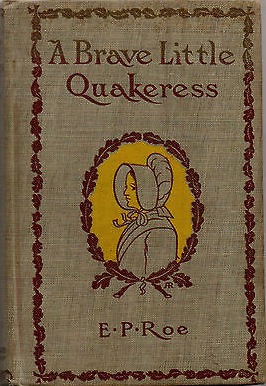
In that spirit, valuing history and lessons I could put into practice as a pastor and writer, I have been researching the legacy of Edward Payson Roe (1838-1888). He was a Presbyterian pastor who served as a chaplain in the Union cavalry, and later as a military hospital chaplain.

After the war, Roe served a congregation, and eventually turned his energies to writing wholesome fiction. He played a key role in helping many suspicious Protestants realize that, like manna, fiction was neither good nor bad. It’s effects depended on the use to which it was put. Roe proved quite popular with readers. Less so with the literary establishment.

The following account comes from an essay about his life solicited by one of the prominent magazines of his day. It is well worth reading, touching as it does on a broad range of subjects, including international copyrights and the vagaries of publishing in the late 1800s. Most precious, though, are the echoes of Roe’s humility and his realistic understanding of the vocation of writing.

“While writing my first story, I rarely thought of the public, the characters and their experiences absorbing me wholly. When my narrative was actually in print, there was wakened a very deep interest as to its reception. I had none of the confidence resulting from the gradual testing of one’s power or from association with literary people, and I also was aware that, when published, a book was far away from the still waters of which one’s friends are the protecting headlands.

“That I knew my work to be exceedingly faulty goes without saying; that it was utterly bad, I was scarcely ready to believe. Dr. Field, noted for his pure English diction and taste, would not publish an irredeemable story, and the constituency of the New York ‘Evangelist’ is well known to be one of the most intelligent in the country.

“Friendly opinions from serial readers were reassuring as far as they went, but of course the great majority of those who followed the story were silent. A writer cannot, like a speaker, look into the eyes of his audience and observe its mental attitude toward his thought. If my memory serves me, Mr. R.R. Bowker was the earliest critic to write some friendly words in the ‘Evening Mail;’ but at first my venture was very generally ignored.

Then some unknown friend marked an influential journal published in the interior of the State and mailed it so timely that it reached me on Christmas eve. I doubt if a book was ever more unsparingly condemned than mine in that review, whose final words were, ‘The story is absolutely nauseating.’ In this instance and in my salad days I took pains to find out who the writer was, for if his view was correct I certainly should not engage in further efforts to make the public ill.

“I discovered the reviewer to be a gentleman for whom I have ever had the highest respect as an editor, legislator, and honest thinker. My story made upon him just the impression he expressed, and it would be very stupid on my part to blink the fact. Meantime, the book was rapidly making for itself friends and passing into frequent new editions. Even the editor who condemned the work would not assert that those who bought it were an aggregation of asses. People cannot be found by thousands who will pay a dollar and seventy-five cents for a dime novel or a religious tract.

“I wished to learn the actual truth more sincerely than any critic to write it, and at last I ventured to take a copy to Mr. George Ripley, of the New York ‘Tribune.’ ‘Here is a man,’ I thought, ‘whose fame and position as a critic are recognized by all. If he deigns to notice the book, he will not only say what he thinks, but I shall have much reason to think as he does.’ Mr. Ripley met the diffident author kindly, asked a few questions, and took the volume. A few weeks later, to my great surprise, he gave over a column to a review of the story. Although not blind to its many faults, he wrote words far more friendly and inspiring than I ever hoped to see; it would seem that the public had sanctioned his verdict

“From that day to this these two instances have been types of my experience with many critics, one condemning, another commending. There is ever a third class who prove their superiority by sneering at or ignoring what is closely related to the people. Much thought over my experience led to a conclusion which the passing years confirm: the only thing for a writer is to be himself and take the consequences. Even those who regard me as a literary offender of the blackest dye have never named imitation among my sins.

“As successive books appeared, I began to recognize more and more clearly another phase of an author’s experience. A writer gradually forms a constituency, certain qualities in his book appealing to certain classes of minds. In my own case, I do not mean classes of people looked at from the social point of view. A writer who takes any hold on popular attention inevitably learns the character of his constituency. He appeals, and minds and temperaments in sympathy respond. Those he cannot touch go on their way indifferently; those he offends may often strike back. This is the natural result of any strong assertion of individuality.

“Certainly, if I had my choice, I would rather write a book interesting to the young and to the common people, whom Lincoln said ‘God must love, since He made so many of them.’ The former are open to influence; the latter can be quickened and prepared for something better. As a matter of fact, I find that there are those in all classes whom my books attract, others who are repelled, as I have said.

“It is perhaps one of the pleasantest experiences of an author’s life to learn from letters and in other ways that he is forming a circle of friends, none the less friendly because personally unknown. Their loyalty is both a safeguard and an inspiration. On one hand, the writer shrinks from abusing such regard by careless work; on the other, he is stimulated and encouraged by the feeling that there is a group in waiting who will appreciate his best endeavor.

“While I clearly recognize my limitations, and have no wish to emulate the frog in the fable, I can truthfully say that I take increasing pains with each story, aiming to verify every point by experience—my own or that of others. Not long since, a critic asserted that changes in one of my characters, resulting from total loss of memory, were preposterously impossible. If the critic had consulted Ribot’s ‘Diseases of Memory,’ or some experienced physician, he might have written more justly.

“I do not feel myself competent to form a valuable opinion as to good art in writing, and I cannot help observing that the art doctors disagree woefully among themselves. Truth to nature and the realities, and not the following of any school or fashion, has ever seemed the safest guide. I sometimes venture to think I know a little about human nature. My active life brought me in close contact with all kinds of people; there was no man in my regiment who hesitated to come to my tent or to talk confidentially by the campfire, while scores of dying men laid bare to me their hearts. I at least know the nature that exists in the human breast.

“It may be inartistic, or my use of it all wrong. That is a question which time will decide, and I shall accept the verdict. Over twelve years ago, certain oracles, with the voice of fate, predicted my speedy eclipse and disappearance. Are they right in their adverse judgment? I can truthfully say that now, as at the first, I wish to know the facts in the case. The moment an author is conceited about his work, he becomes absurd and is passing into a hopeless condition. If worthy to write at all, he knows that he falls far short of his ideals; if honest, he wishes to be estimated at his true worth, and to cast behind him the mean little Satan of vanity. If he walks under a conscious sense of greatness, he is a ridiculous figure, for beholders remember the literary giants of other days and of his own time, and smile at the airs of the comparatively little man. On the other hand, no self-respecting writer should ape the false deprecating ‘’umbleness’ of Uriah Heep. In short, he wishes to pass, like a coin, for just what he is worth.

“Mr. Matthew Arnold was ludicrously unjust to the West when he wrote, ‘The Western States are at this moment being nourished and formed, we hear, on the novels of a native author called Roe.’ Why could not Mr. Arnold have taken a few moments to look into the bookstores of the great cities of the West, in order to observe for himself how the demand of one of the largest and most intelligent reading publics in the world is supplied? He would have found that the works of Scott and Dickens were more liberally purchased and generally read than in his own land of ‘distinction.’ He should have discovered when in this country that American statesmen (?) are so solicitous about the intelligence of their constituents that they give publishers so disposed every opportunity to steal novels describing the nobility and English persons of distinction; that tons of such novels have been sold annually in the West, a thousand to one of the ‘author called Roe.’

“The simple truth in the case is that in spite of this immense and cheap competition, my novels have made their way and are being read among multitudes of others. No one buys or reads a book under compulsion; and if any one thinks that the poorer the book the better the chance of its being read by the American people, let him try the experiment. When a critic condemns my books, I accept that as his judgment; when another critic and scores of men and women, the peers of the first in cultivation and intelligence, commend the books, I do not charge them with gratuitous lying. My one aim has become to do my work conscientiously and leave the final verdict to time and the public. I wish no other estimate than a correct one; and when the public indicate that they have had enough of Roe, I shall neither whine nor write.”

_____

If you are interested in learning more about E.P. Roe, check out my article in the new issue (4.2) of Curtana: Sword of Mercy which was published online just last week.

Annual Encouragement

2013Our grandparents never dreamed a single person could touch as many other people as we now take for granted in our digital age. If you had told them that in a single year, you could interact with people from 140 different nations—and all from the comfort of your own home—they would have had you institutionalized.

Yet, that’s precisely what we do today. And what may be even odder, we consider it commonplace.

Readers who are familiar with the “wordpress community” know that the arrival of the new year includes a welcome ritual. We receive a congratulatory note on our blogging accomplishments during the previous year.

In addition to various statistical notes, the report identifies particularly successful posts. For example, a couple of years ago I wrote “Lessons Taught by Onions,” and for some peculiar reason it continues to draw visitors every single month.

At the top of this post I have reproduced what many of us regard as the most intriguing aspect of the report–revealing where your readers reside. As a novice blogger it’s a wonderful feeling when we first see something we’ve written read by people in a foreign land.

Over the years it’s fascinating to see how the list of visitors grows.

Some countries are tough to reach. This year I finally had a visitor or two from the People’s Republic of China and Mongolia . . . a couple of those challenging lands.

I still haven’t been able to penetrate North Korea. But then, that’s no surprise since they only have one computer with international access, and I don’t publish the type of material that would be of interest to the resident of the presidential palace.

As the new year begins, it’s good to be encouraged by others for one’s past performance. Most of us require a bit of encouragement now and then.

Speaking of encouraging, in a 1956 letter, C.S. Lewis expresses appreciation to a writer who enjoyed his book, Till We Have Faces.

It was nice of you to write about Till We Have Faces (I originally called it Bareface, but the publishers vetoed that because they said people would think it was a ‘Western’!), and a most needed encouragement to me, for it has so far had a more hostile reception from the critics than any book I ever wrote. Not that critics really matter very much. The real question is how the book goes 10 or 15 years after publication.

Encouragement is always welcome, and never more so than in the wake of abundant discouragement.

And then, of course, there is the feigned or teasing sort of encouragement that can only be offered by someone we trust. Someone we know regards us with affection. In that light, I couldn’t resist including the following passage from a letter Lewis wrote in 1951.

All well here except myself, who have a bad cold; but I’m off to Ireland I hope on Friday for a fortnight, which may shift it. (Warnie in his usual way of encouragement, reads me paragraphs from the paper at breakfast about liners wind bound in the Mersey and waves 6 ½ feet high off the Irish coast.)

I must confess that with a large and literate family, I receive more than my share of just this sort of “encouragement.” And I welcome it.

In the meantime, however, the annual report of Mere Inkling’s popularity does inspire me to press on with my self-imposed pace of two columns a week. I warmly invite you to continue the journey alongside me.

Chocolate Mushrooms

mushroomThat’s right, chocolate mushrooms. And it gets worse.

Some flavors are not intended to ever be combined. Years ago, some friends who knew I loved chocolate and despised mushrooms found the perfect gift for me. Chocolates shaped like mushrooms.

There was only one small problem. The chocolates were actually mushroom-flavored. Imagine a chocolate bar melted into a can of cream of mushroom soup, and you get the idea.

Even people like my wife who love both distinct tastes, couldn’t stomach the blend.

Well, a new product has entered the market and it immediately reminded me of that unsavory fiasco.

A company in Hawaii has capitalized on merging two very flavors that are popular in many locales but just sound a wee bit incompatible. They have taken the delectable taste and gentle crunch of macadamia nuts and accented them with the aromatic zest of spam.

That’s right. Spam-flavored macadamia nuts. They sound irresistible, don’t they?

Probably not. But then, most readers of Mere Inkling aren’t in the target audience of Hamakua Macadamia Nut Company. The fact is—and those of us who’ve experienced the joy of living in the Pacific and Micronesia know this well—there are vast numbers of people who absolutely love spam.

I actually don’t have an objection to either of these products . . . individually. Spam casserole was a staple in the home of my youth, and I can eat it with pleasure today. Macadamias still seem a bit exotic and shipping costs make them a bit pricier than most of their competition, but they taste great.

Two wonderful flavors. Logic tells us that if they are both good alone, they’ll be even better together!

But some things were never meant to be combined.

Then again, some different qualities are magnificent when they are brought together. This is especially true when it comes to the art of writing.

Evelyn Underhill, a gifted author in her own right, composed a letter to C.S. Lewis in 1938 praising him for his recently released Out of the Silent Planet.

It is so seldom that one comes across a writer of sufficient imaginative power to give one a new slant on reality: & this is just what you seem to me to have achieved. And what is more, you have not done it in a solemn & oppressive way but with a delightful combination of beauty, humour & deep seriousness. I enjoyed every bit of it, in spite of starting with a decided prejudice against “voyages to Mars.”

“Beauty, humor, and deep seriousness . . .” Traits those of us who love Lewis’ work have come to expect. In great quantity. And we are not disappointed.

Good writing can excel in a single dimension. Great writing, it seems to me, earns that appellation by weaving together a variety of strong “flavors.”

It’s like comparing a superb violin solo to a flawless symphony. Part of the wonder of the latter is the skill with which each disparate element combines into a glorious whole.

Or, returning to the culinary realm with which we began, powerful writing properly combines distinct flavors that complement one another . . . such as chocolate and peanut butter, or spam and . . . Well, I trust I’ve made my point.

Chinese Complexity

Chinese ChroniclesSome people consider “writing” difficult. It’s not. When you add the adverb “well,” it does become much rarer. Still, writing in English is not challenging at all when you compare it to the hurdle traditional Chinese authors face.

One of the most popular television programs in the People’s Republic of China is essentially a “spelling bee.” During a recent episode the studio audience was embarrassed by the fact only one-third of them were able to correctly write “gan ga,” which means “embarrassed.”

Chinese ComplexThe problem is apparently two-fold. First, Chinese characters are “complex.” That’s why I selected that very word to include here.

The most comprehensive Chinese dictionary, Zhonghua Zihai, was compiled in 1994. It includes 85,568 characters. When compared to the Latin alphabet of 26 characters, it’s no surprise that a poll in China found 99% of the population admitting they forget how to write words. (To be fair, I’m not sure we could find even 1% in the West claiming that they never forget how to spell a word.)

The second reason for the growing national writing crisis in China is the amazing phenomenon called pinyin. Pinyin is the official phonetic system for transcribing the sound of Chinese characters into Latin script. It was created in 1958 by mainland China and has been adopted by the Republic of China as well.

The influence of pinyin has grown dramatically with the advent of computing, and many young Chinese have become dependent on the shortcut. Some educators have labeled the crippling practice “a type of social disease.”

Fortunately for aspiring Chinese authors, knowing a meager 4,000 distinct characters makes one “functionally” literate. Still, even that seems rather daunting. I’ll no longer take for granted my good fortune in having a mere 26 characters to strive to master.

C.S. Lewis offered some fascinating observations about the Chinese worldview. While he discussed the subject in a variety of places, he presents his thoughts most extensively in The Abolition of Man. He finds the concept of “Tao” a useful corollary to what Christians usually refer to as Natural Law.

The Chinese also speak of a great thing (the greatest thing) called the Tao. It is the reality beyond all predicates, the abyss that was before the Creator Himself. It is Nature, it is the Way, the Road. It is the Way in which the universe goes on, the Way in which things everlastingly emerge, stilly and tranquilly, into space and time. It is also the Way which every man should tread in imitation of that cosmic and supercosmic progression, conforming all activities to that great exemplar.

“In ritual,” say the Analects, “it is harmony with Nature that is prized.” The ancient Jews likewise praise the Law as being “true.” This conception in all its forms, Platonic, Aristotelian, Stoic, Christian, and Oriental alike, I shall henceforth refer to for brevity simply as “the Tao.”

Some of the accounts of it which I have quoted will seem, perhaps, to many of you merely quaint or even magical. But what is common to them all is something we cannot neglect. It is the doctrine of objective value, the belief that certain attitudes are really true, and others really false, to the kind of thing the universe is and the kind of things we are.

Although the following story does not relate to C.S. Lewis directly, it offers an interesting insight into the subject of this post. It appears in the book Remembering C.S. Lewis: Recollections of Those who Knew Him, and refers to J.A. Smith, one of Lewis’ fellow professors at Magdalen.

“At the Breakfast Table” was written by another member of the faculty, Adam Fox. Both men knew Lewis well, since they were part of a breakfast foursome in the Common Room at the college.

Now J.A. had fallen into the way of speculating on odd little problems, which apparently assailed him in bed when sleep deserted him. I remember him coming down one morning and telling us that he had been thinking in the night what a dreadful thing it would be for a learned Chinese to go blind. I do not know if the other members of the party knew why it would be more dreadful for a Chinese than for any other learned person.

I had no idea, but I knew my place, and when I asked why this was so, it appeared, according to J.A., that many of the ideograms that make Chinese writing so beautiful conveyed meaning to the eye but had no sound attached to them. Reading in Chinese was in part at least like looking at a picture book, and for that reason, of course, a blind man is fatally handicapped.

As an epilogue of sorts, I can’t resist including one of my favorite Chinese characters. Perhaps you’ll enjoy it also.

Chinese Verbose

Ironically, since it required sixty-four strokes, the word zhé fell from common usage around the fifth century.

Free C.S. Lewis Book

bookshelvesC.S. Lewis has encouraged innumerable prominent individuals in their own faith and writing journeys. I know of no others who offer at no cost a book about his influence.

John Piper is a pleasant exception to that. In a moment I’ll provide the link where you can download a free copy of Alive to Wonder: Celebrating the Influence of C.S. Lewis.

The volume includes a number of extended excerpts from Piper’s fifty-plus books . . . passages where Lewis’ imprint is particularly vivid. For example:

The synthesis of mind and heart was embodied in C.S. Lewis. Lewis became for me in my college days what Jonathan Edwards became in my seminary days. He was a “romantic rationalist”—that was the name of a small book about Lewis that got me very excited because it summed up what I thought I was (which may be very akin to “pastor-scholar”). Lewis has had a tremendous influence on me in several ways.

Lewis embodied the fact that rigorous, precise, penetrating logic is not inimical to deep, soul-stirring feeling and vivid, lively—even playful—imagination. He combined what almost everybody today assumes are mutually exclusive terms: rationalism and poetry, cool logic and warm feeling, disciplined prose and free imagination. In shattering these old stereotypes, he freed me to think hard and to write poetry, to argue for the resurrection and to compose hymns to Christ, to smash an argument and to hug a friend, to demand a definition and to use a metaphor.

The author is chancellor of Bethlehem College & Seminary. It was founded by Bethlehem Baptist Church in Minneapolis, where Piper served as pastor for several decades.

The writer’s desiringGod website actually offers free PDF copies of many of his books and articles, even though most remain in print and available for regular purchase.

As delightful as Alive to Wonder is, most students of Lewis will find the materials from the 2013 desiringGod National Conference even more welcome. This year’s theme was “The Romantic Rationalist: God, Life, and Imagination in the Work of C.S. Lewis.”

Piper’s website includes ten keynote presentations plus an informative panel discussion, all of which are available for download in audio files. Best of all, the lineup of speakers is first-class, featuring a number of familiar names.

And, since we’re on the subject of “free books,” allow me to share another interesting website.

Forgotten Books offers approximately a million volumes, to which “subscribers” have unlimited access. What sets them apart from other “public domain aggregates,” is that they (unlike books.google.com) provide a searchable text, in a variety of epub formats.

For those who are not interested in purchasing a subscription, they offer a Free Book of the Day option in which you receive the link to one of their texts which is good for twenty-four hours.

I recently used it to add Pure English: A Treatise on Words and Phrases, or Practical Lessons in the Use of Language to my kindle library. I find the reading of dated literary books to be:

Entertaining

Educational

and, occasionally, even

Inspiring

Here are a few sample passages from Pure English. The first sounds remarkably contemporary:

The abuse to which the English language is so generally subjected must be a source of sincere regret to all who appreciate its beauties. Ours is an age of progress and civilization, and it ought to be remembered that language, is also progressive.

In a section entitled “Objectionable and Obsolete Words” we read:

Banister is a common barbarism. The proper word is baluster, or balustrade.

— Noted. In the future I will alternate between baluster and balustrade.

“Disremember,” often employed in the sense of do not remember, although given in Webster, is condemned by the critics as a low vulgarism.

— Apparently so vulgar as to have fallen out of usage completely.

Hence, authoress and poetess are superfluous. So, also, are such words as conductress, directress, inspectress, waitress, etc., all of which have recently come into current use. Perhaps the next edition of our dictionaries will, if the custom continues, be enriched by the addition of such words as writeress, officeress, carpenteress, manageress, secretaryess, treasureress, singeress, walkeress, talkeress, etc.

— How did “waitress” survive, especially in the wake of such witty sarcasm?

It is questionable taste to call a coffin a casket. The pleasing name applicable to a case for jewels does not lessen the dread of death and burial.

— I hadn’t known before the sentiment behind the adoption of the word “casket,” since it’s become so thoroughly associated with this usage that was apparently at one time novel.

If you are interested in the books I’ve mentioned above, you You can download a free copy of Alive to Wonder here, and you can sign up for the free book of the day here.