Damnable Typos & the Bible

While the title of this post will be shocking to some, it’s far less scandalous than the typographical error discussed below. Due to two misprints appearing in a 1641 edition of the King James Bible (KJV), the publication has been labeled the “Wicked Bible.”

Translating the Scriptures is a necessary, and demanding, task. The early editions of the KJV (which was preceded by the Wycliffe Bible) reveal how vulnerable the words themselves were to being altered during the typesetting process.

I’ve written about this subject a number of times during the past decade, and even devoted a column to “C.S. Lewis’ School of Translation,” which is about something even more important than merely translating words. There I quote one of the great author’s deepest hopes.

What I want is to be the founder of a school of ‘translation . . .’ Where are my successors? (correspondence, 7 October 1945).

Returning to the seventeenth century book with its unfortunate errors, we witness an example of how even a solid translation can be derailed by careless (or malevolent) typesetters.

The magnitude of the mistake discovered in this particular edition caused its suppression, and most copies were destroyed. While some still exist in private hands, only fifteen remain in public collections. One of these made its way to New Zealand before being identified in 2018.

A Truly Scandalous Misprint

It would be one thing if a printer accidently dropped the final “e” from “breathe,” leaving the word “breath.” Even substituting an errant “w” for the “b,” would create an alternate word that would greatly muddle a passage . . . but still not appear remotely “wicked.” 

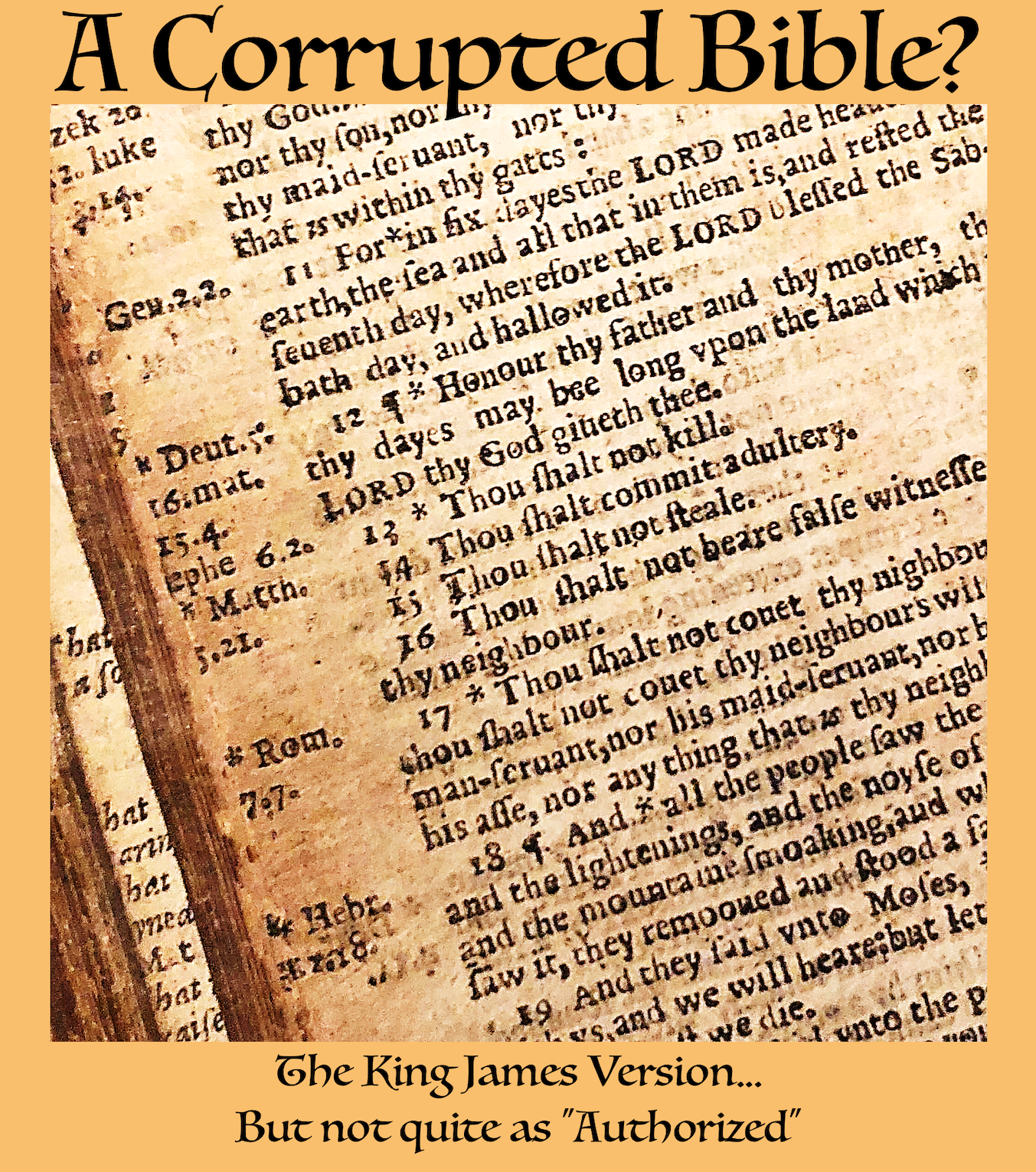
However, a 1631 mistake in an English Bible literally turned a passage – one of the Ten Commandments, no less – on its head. Rather than reading “Thou shalt not commit adultery,” this edition declares, “Thou shalt commit adultery” (Exodus 20:14).

The consequences of this disaster were significant, particularly for His Majesty’s official printers. In Cyprianus Anglicanus by royalist priest Peter Heylyn (1599-1662), we learn the details. (You can download a free facsimile of the volume which includes many other fascinating facts.) The passage related to the misbegotten tome reads as follows:

His Majesties Printers, at or about this time [1632], had committed a scandalous mistake in our English Bibles, by leaving out the word Not in the Seventh Commandment.

His Majesty being made acquainted with it by the Bishop of London, Order was given for calling the Printers into the High-Commission where upon the Evidence of the Fact, the whole Impression was called in, and the Printers deeply fined, as they justly merited.

Reports of Cases in the Courts of Star Chamber and High Commission, penned by Samuel Rawson Gardiner in 1886, includes a detailed account of the court’s findings. (Due to their uniqueness, I have transposed the full account, as found in two sections, as a footnote below.) One passage describes a second “gross error.”

. . . showed the two grossest errors, vizt. “Shalt commit adultery” and “great asse:” for “shalt not commit adultery” and “greatnesse…”

The second of these blunders occurs in Deuteronomy 5:24, which properly reads “Behold, the Lord our God hath shewed us his glory and his greatness.” (It should be noted that the word asse would most commonly be associated with donkeys.)

The magnitude of these mistakes can only be understood when one recognizes how reverentially the Scriptures were regarded at this time. C.S. Lewis would suggest that during an age when the Bible has been relegated to historic literature, it is difficult for us to comprehend the seriousness of this matter.

It is very generally implied that those who have rejected its theological pretensions nevertheless continue to enjoy it as a treasure house of English prose. It may be so. There may be people who, not having been forced upon familiarity with it by believing parents, have yet been drawn to it by its literary charms and remained as constant readers.

But I never happen to meet them. Perhaps it is because I live in the provinces. But I cannot help suspecting, if I may make an Irish bull, that those who read the Bible as literature do not read the Bible. (“The Literary Impact of the Authorised Version”).

In “Challenges in Printing Early English Bibles,” you can read about other Bibles featuring noteworthy mistakes. In two, “peacemakers” become “placemakers,” and “murmurers” are transformed into “murderers.” Another example, in the very first edition of the KJV, finds Jesus’ ancestor Ruth referred to by the male pronoun, due to the accidental dropping of an “s.”

More troubling is another early KJV Bible where “the text of Psalm 14 [reads], “The fool hath said in his heart there is a God,” rather than “The fool hath said in his heart there is no God.”

Worst of all, in terms of blasphemous connotations, would likely be the so-called “Judas Bible.”

In the 1609 Geneva Bible, the typesetters mistakenly replaced Jesus’s name with that of Judas. John 6:67 reads: “From that time many of his disciples went back, and walked no more with him. Then said Judas unto the twelve, Will ye also go away?”

Fortunately, modern editions of the Jewish and Christian Scriptures undergo thorough proofreading, so this sort of error is rare today. Still, typos will persist as long as the remotest possibility of error exists.

Those among us who have sought to have our writing published by traditional publishers may relate to the example with which we end. C.S. Lewis and J.R.R. Tolkien and even Mark Twain faced challenges working with some of their editors and publishers.

With all of the printing mishaps in the early English Bible, it is only appropriate that one of the editions was called “The Printers Bible.”

This text, published in about 1702, takes its name from a typesetting error found in Psalm 119, which should have read “Princes have per­secuted me without a cause” but was mistakenly printed as “Printers have persecuted me.”


Full references from Reports of Cases in the Courts of Star Chamber and High Commission by Samuel Rawson Gardiner (1886).

Mr Barker the printer. There is a cause begunne against him for false printeing of the Bible in divers places of it, in the Edition of 1631, vizt., in the 20 of Exod[us], “Thou shalt committ adultery”; and in the fifte of Deut[eronomy] “The Lord has shewed his glory, and his great asse”; and for divers other faults; and that they had printed it in very bad paper. And the Bishop of London showed that this would undoe the trade, and was a most dishonorable thing; that they of the church of Rome are soe carefull, that not a word or letter is to be found amisse in their Ladie’s Psalter and other superstitious books; and that we should not be soe carefull in printinge the sacred Scriptures; and that they in Holland, at Amsterdam, had gott up an English presse, and had printed the Bible in better paper, and with a better letter, and can undersell us 18d. in a Bible. Mr Barker and his partners endeavored in partt to excuse themselves, and had advocates to speake for them, and were willing to submitt, and promised to amend their faults; but the Court would not remitt their offense, but the cause was ordered to goe on.

The Printers having answered move the Court to passe by their oversight being the fault of the workmen but the King’s Advocate desired they might make their defense legally and the cause to go onto hearing: and that he might have liberty to put in additional articles against them. The Bishop of London would have the Church sett upright in her reputacion, that we are as carefull in printeing the Bible as they are of their Jesus’ psalter : and whereas the Printers say this is stirred up by the malice of one man against them; The Bishop saith he stirred not till the Bible was sould into his house, bought by his footman: and he saith the printinge is soe bbad and the paper too that, if it be not mended shortlie, they wilbe put downe by those of Amsterdam and their trade spoyled, and showed for the two grossest errors, vizt. “Shalt commit adultery” and “great asse:” for “shalt not commit adultery” and “greatnesse…” The Arch Bishop of Canterbury saith, that the Printers that print for his Matie have a very profitable place, and therefore should be more carefull. I knew the tyme when greater care was had about printeing, the Bibles especiallie, good compositors and the best correctors were gotten being grave and learned men, and the paper and letter rare and faire every way of the best; but now the paper is naught, the composers boyes, and the correctors unlearned: There is a farmer and he makes the benefit, and careth for nothing about it. They heretofore spent their whole time in printeing, but these looke to gaine, gaine, gaine, then they are not to be commended: Well, let them looke to it: and let the cause proceed, saith the ArchBishop. London. “There was a great deale of doo between you of this Citty and those of Cambridge heretofore about the priviledge of printeing the Bible and psalms which they of Cambridge claymed; then the Bible was exactlie printed, now you have forced the Cambridg printer to an agreement, now noe bible is right printed.

[It appears this volume itself would have benefited from having more diligent “correctors.” Perhaps most curiously, two spellings of the word printing – “printinge” and “printeing” – appear in this publication.]
CS Lewis | Mistakes

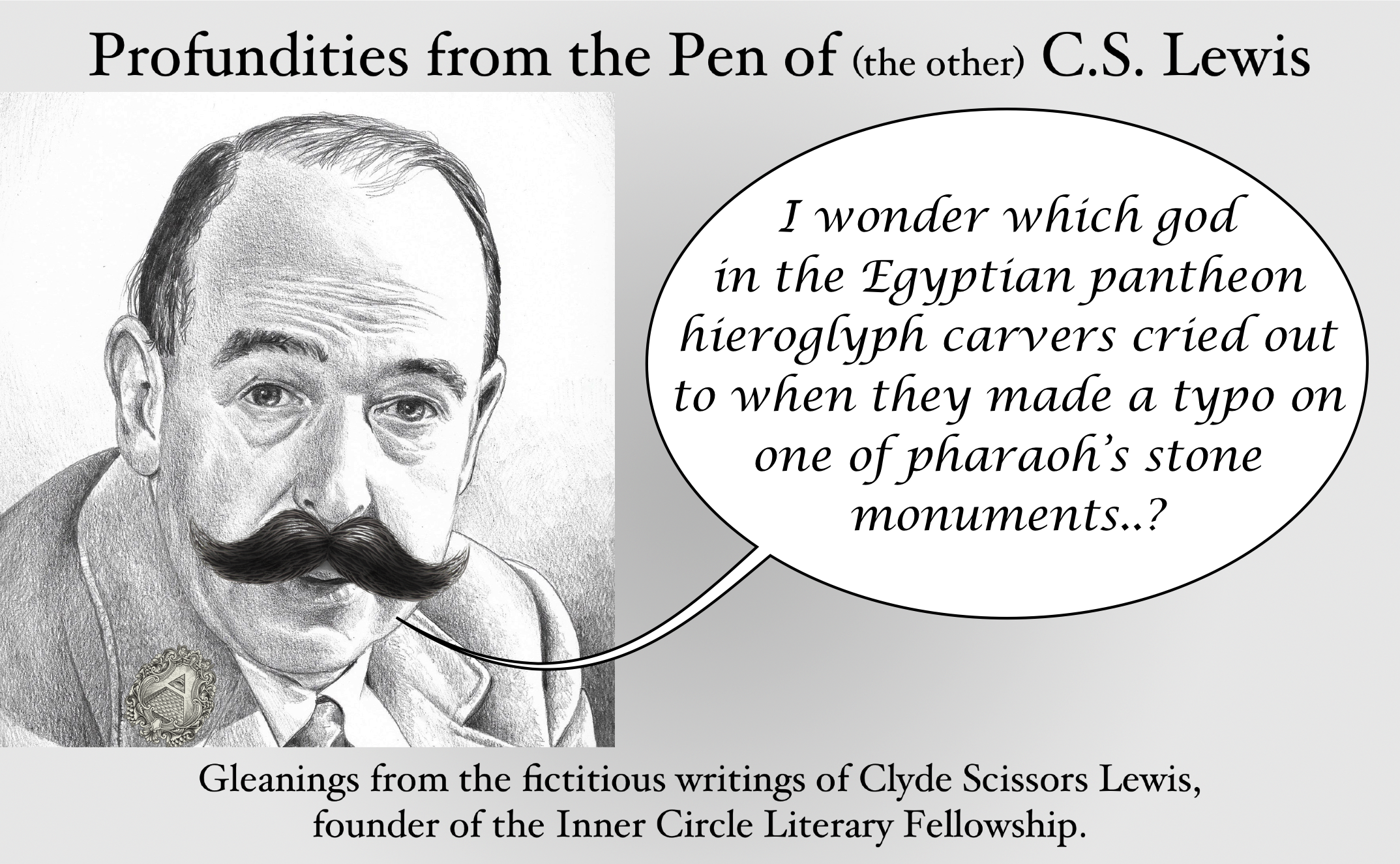
Deep Thoughts from the Quill of the Other C.S. Lewis

Welcome to another in an occasional series of fictitious quotations from a fabricated contemporary of the great Oxbridge professor, Clive Staples Lewis.

The C.S. Lewis who authored these questionable observations, Clyde Scissors Lewis, possessed a worldview enigmatically different from that of the esteemed Christian author. Despite the fact that their two lives overlapped in a variety of ways, the similarities were superficial.

A brief biography of the lesser Lewis is available at this link.

The Other C.S. Lewis: A Brief Biography

By all means, do not confuse the wisdom of the genuine article with his shadowy counterfeit. Despite any cursory similarities between the two men, this is most definitely not the C.S. Lewis readers have come to know and love.

Beware of Publishers

You can write a masterpiece, only to have it ruined by an inattentive publisher.

It would be bad enough if they filled your retelling of Romeo and Juliet with typos, what if you had just penned the ultimate authority on grammar, or perhaps, spelling?

Last month, British lexicographer Susie Dent released Word Perfect, a “brilliant linguistic almanac.” Unfortunately, the wrong (pre-proofed) version was published, and it was anything but “perfect.”

Although thoroughly embarrassed, Dent was gracious in regard to the error. “To be fair to my publishers, Covid has caused an extraordinary rush on pushing books through the production process, and in many ways it has been a laudable achievement getting anything published at all.”

Many of Mere Inkling’s readers are also writers. Some are fortunate enough to have professional publishers. Dent reminds us that we should not take them for granted, despite their occasional shortcomings.

C.S. Lewis was, of course, quite a prolific writer. This led to his interaction with a variety of different editors. Lewis freely expressed appreciation for a job well done, as I noted in his praise of a French translation of his work.

Lewis was also quite comfortable in discussing precisely how his writings should appear in print. In another post, I described his conversation with a publisher about the presentation of a Shakespearean quotation.

Similarly, Lewis possessed an awareness of the importance of the covers chosen for his books. And he lamented the quality of the paper dictated by wartime rationing.

Mere Inkling has included many other references to publishers in the past, although I am still searching for an ancient roman reference to Cave Scribae.*

Publishers and editors are often the targets of disaffected writers. If you have never seen Mark Twain’s delightful sketches on the subject, don’t shut down your computer before checking my post on the subject.

It would be good to pray that our personal attitudes towards publishers reflect those of C.S. Lewis and Susie Dent rather than Samuel Clemens, since Twain once summarized his attitude in this tragic manner:

If ever a publisher gets a non-terminable contract with an author, that author can never buy his freedom from that slavery on any terms. A publisher is by nature so low and vile that he—that he—well from the bottom of my heart I wish all publishers were in hell.


* Cave Scribae translates to “Beware of the Scribes.” It’s a reference to the ancient practice of publishers having scribes reproduce individual copies of a new work for sale or distribution. Since each copy was technically “unique,” one can only guess how many errors must have slipped surreptitiously into the duplicates.

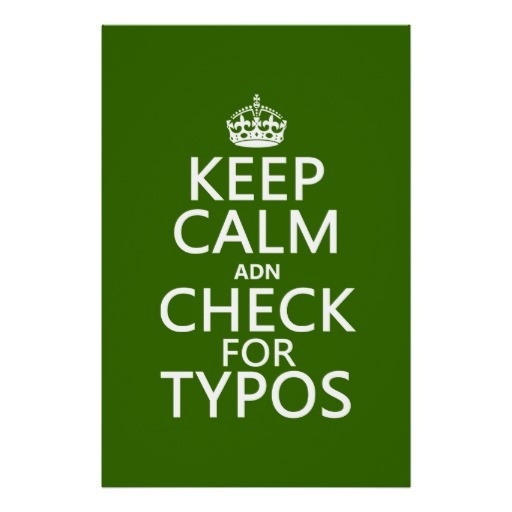
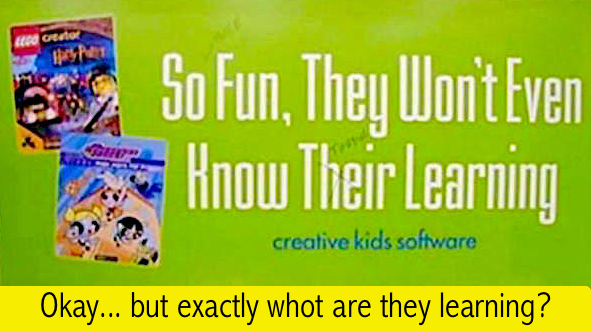
As for the illustration at the top of this column, there are countless examples of similar mistakes online. They are particularly alarming when they come from “educational” institutions. This one, from Oregon State University, offers a variation of the error illustrated above: “Many people know there learning style…”

C.S. Lewis and Typos

typos

Who among us has lived a life free of typographical errors? When we learned to type (or “keyboard”), our typing speed was influenced by the number of incorrect characters we included.

Even worse, some infernal source birthed the idea of “autocorrect,” which is occasionally useful for documents, but just as frequently deadly for emails and texts.

Lewis’ own books have included a number of typographical errors. Arend Smilde, a Dutch scholar and translator, has noted a fair number of them on his valuable website.

The truth is, it is possible for errors to creep in whenever original manuscripts are copied.

Even with the Scriptures, existing manuscripts include various minor variations, since the autographs have been lost to history.

This fact necessitates the need for “textual criticism,” and many earnest biblical scholars have devoted their lives to discerning the original text. (“Criticism” in this use, does not connote negativity. It simply refers to study, such as with “literary criticism.”)

Textual criticism diverges significantly from the so-called “higher criticisms” which frequently result in confusion and doubt.* Comparing actual texts is fundamental to the study of all literary creations.

C.S. Lewis wrote a brilliant essay entitled “Modern Theology and Biblical Criticism,” which is currently known as “Fern-Seed and Elephants.” In it, he distinguishes between the various types of criticism and affirms textual examination as utterly valid.

We think that different elements in this sort of theology have different degrees of strength. The nearer it sticks to mere textual criticism . . . the more we are disposed to believe in it. And of course, we agree that passages almost verbally identical cannot be independent. It is as we glide away from this into reconstructions of a subtler and more ambitious kind that our faith in the method waivers; and our faith in Christianity is proportionally corroborated.

The sort of statement that arouses our deepest scepticism is the statement that something in a Gospel cannot be historical because it shows a theology or an ecclesiology too developed for so early a date. For this implies that we know, first of all, that there was any development in the matter, and secondly, how quickly it proceeded.

When books are published, errors slink in. This generates errata, which are presumably corrected in any subsequent editions of the work. (It dawns on me that I’ve never seen an erratum, noting there is only one mistake in the work.)

The Genesis of Today’s Thoughts

Curiously, the article that led me to think about textual errors involves the substitution of an i for an e. The result is that for centuries, people mistakenly believed that Rome had a “Little Temple of Ridicule.” The notion was that the ancient Romans so loved humor, that they “went so far as to erect a ridiculi aedicula, or chapel of laughter.” This curious article is well worth reading (hint: it has something to do with Hannibal’s retreat).

It’s not that the idea of humor shouldn’t be celebrated. On the contrary, laughter features broadly in C.S. Lewis’ works. In a letter written shortly after his marriage to Joy, he alludes to Dante’s portrait of heaven. It is an image Lewis affirmed, and one that I happily anticipate.

Of course Heaven is leisure (“there remaineth a rest for the people of God”): but I picture it pretty vigorous too as our best leisure really is. Man was created “to glorify God and enjoy Him forever.”

Whether that is best pictured as being in love, or like being one of an orchestra who are playing a great work with perfect success, or like surf bathing, or like endlessly exploring a wonderful country or endlessly reading a glorious story—who knows? Dante says Heaven “grew drunken with its universal laughter.”


* For an informative discussion of the different forms of criticism, see this conversation. In response to the question “How is it, then, that the Higher Criticism has become identified in the popular mind with attacks upon the Bible and the supernatural character of the Holy Scriptures?” the author writes:

Some of the most powerful exponents of the modern Higher Critical theories have been Germans, and it is notorious to what length the German fancy can go in the direction of the subjective and of the conjectural. For hypothesis-weaving and speculation, the German theological professor is unsurpassed.

Some of the men who have been most distinguished as the leaders of the Higher Critical movement in Germany and Holland have been men who have no faith in the God of the Bible, and no faith in either the necessity or the possibility of a personal supernatural revelation.

Beavers Beware

russian-typoA mere 375,000 rubles buys a fair amount of publicity in Russia; just be sure to proofread the product.

This Christmas season one Russian charity hoped to encourage readers to live good lives, but instead they published a brochure that encouraged beaver genocide.

Beavers are particularly vulnerable rodents. They are quite gentle, and even Talking Beavers are poorly equipped to defend themselves.

The lovely scene on the leaflet featured an innocent girl gazing into a snow globe. Emblazoned above it was supposed to read “Do Good.” Instead, the Russian words spelled out “Exterminate Beavers!”

It just bears out the maxim, “proofread before you publish.” In this case, one could easily add: “if the work is translated, make sure the proofreader understands both languages.”

Some errors are especially heinous.

C.S. Lewis recognized the importance of proofreading.

He was sometimes the victim of inadequate editorial review. So it comes as no surprise that he preferred to see galleys (the uncorrected typeset proofs) of his work before actual publication.

The following reference from a letter in which Lewis attributes the need for such as due to his own poor penmanship, rather than the carelessness of others. This is typical of his generosity, since part of the duties of editors (and pharmacists, for that matter) is to be able to decipher the scribblings of authors (and physicians). Mark Twain did not share Lewis’ grace in this matter.

When his friend Dorothy Sayers died in 1958, Lewis was unable to attend the funeral in London. He was, however, honored to write a panegyric for the service, which was read by one of the bishops in attendance. Following the event, Sayer’s son, Anthony Fleming thanked Lewis and asked if he might include the eulogy in possible collection.

Dear Mr. Fleming

Thank you for your most kind letter. I am relieved to find that the little speech has pleased those whose approval at such a time matters most—it is so easy to go wrong in a thing of that kind and so to give offence.

I am perfectly willing that it should be printed, but please ask whoever sees to it to be sure and let me see a proof. Even if printers made no mistakes, my villainous writing nearly always leads to some.

Lewis, of course, was referring to a literal manuscript, a document written by hand. One assumes that the Russian publisher was given a typescript, so they could not use “villainous writing” as an excuse for their error.

Still, I suspect they were given the text in one language, English perhaps, and asked to translate it for publication. In that case, who actually is responsible for the mistake?

I choose not to worry about attributing liability in this matter. I’m content to use this winter mistake to remind me of the importance of proofreading.

Oh, and on behalf of all of the beavers in Russia, I am relieved to know they will not be distributing these murderous words.