Books Enjoyed by C.S. Lewis

Reading is not only one of life’s pleasures, the content and ethos of what we read, subtly influences the shape of our very lives.

C.S. Lewis loved books with genuine passion. While many people only perceive books as compilations of information or as sources of fleeting entertainment, he knew them as far more. Only someone sharing Lewis’ affection and wisdom will identify with the following passage from his essay “An Experiment in Criticism.”

The man who is contented to be only himself, and therefore less a self, is in prison. My own eyes are not enough for me, I will see through those of others. Reality, even seen through the eyes of many, is not enough. I will see what others have invented. . . .

Literary experience heals the wound, without undermining the privilege, of individuality. There are mass emotions which heal the wound; but they destroy the privilege. In them our separate selves are pooled and we sink back into sub-individuality.

But in reading great literature I become a thousand men and yet remain myself. Like the night sky in the Greek poem, I see with a myriad eyes, but it is still I who see. Here, as in worship, in love, in moral action, and in knowing, I transcend myself; and am never more myself than when I do.

Lewis scholar and emeritus professor of English, Dale J. Nelson, has been providing a wonderful service in recent years as he explores the books which found a place in C.S. Lewis’ personal library. “Jack and the Bookshelf” is a continuing series which appears in CSL, journal of the New York C.S. Lewis Society. Founded in 1969, the organization “is the oldest society for the ​appreciation and discussion of C.S. Lewis in the world.”

Nelson’s task of editorially archiving C.S. Lewis’ library is complemented by the work of our mutual friend, Dr. Brenton Dickieson. In a “comment” praising Dickieson’s compilation of “C.S. Lewis’ Teenage Bookshelf,” Nelson offers a commendation with which I fully concur.

Thank you for assembling that list of books . . . I’d encourage Lewis’s admirers to take their appreciation of CSL to the next step and delve into the things he liked to read throughout his life.

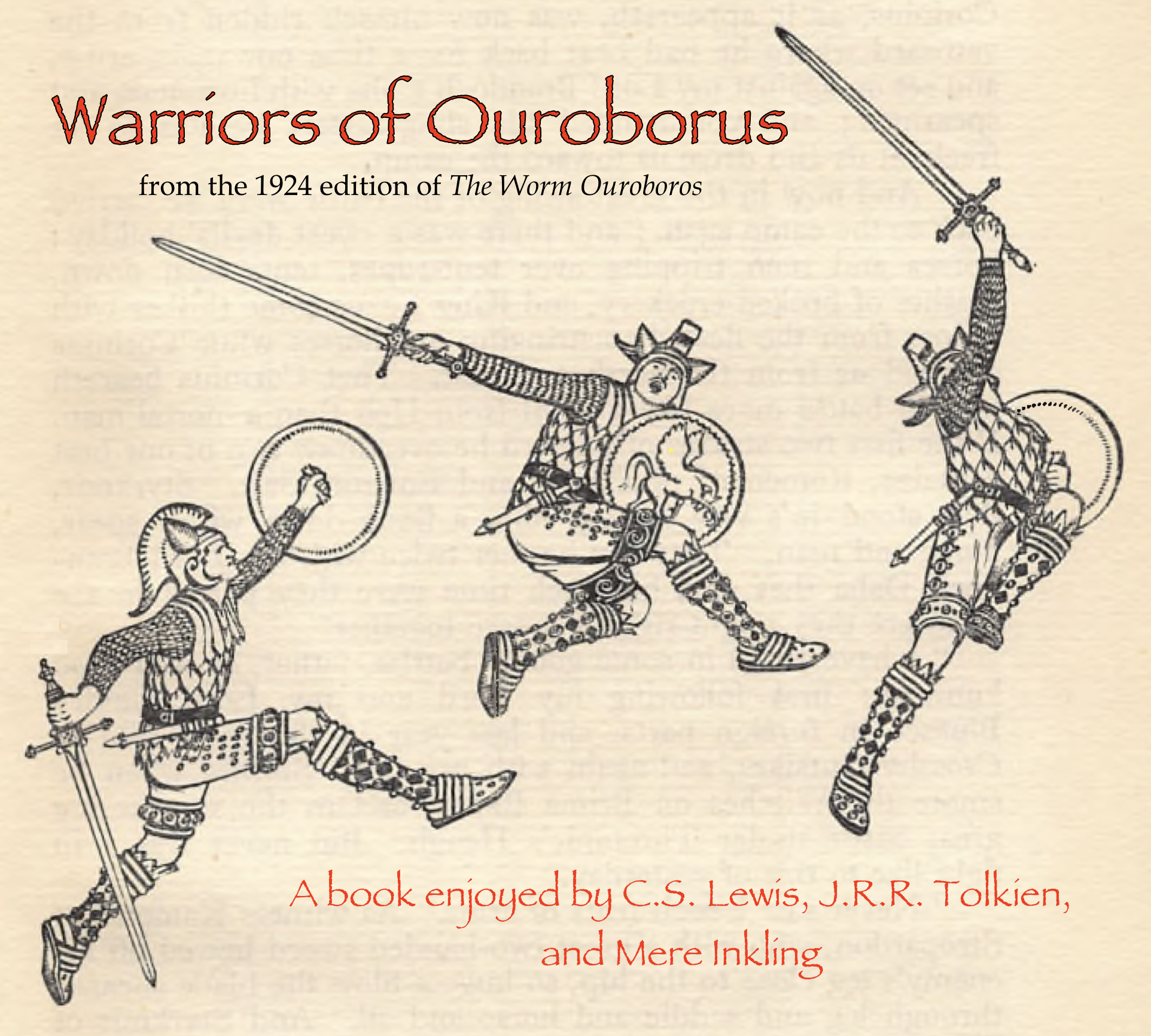
Nelson’s contribution to the December 2023 issue is the fifty-ninth in his series, and discusses a fantasy work titled The Worm Ouroboros by E.R. Eddison. Eddison (1882-1945) was a Norse scholar, and his fascination with mountains combined with that, to resonate with Lewis’ passion for northernness.

Dr. Nelson, who has added an array of science fiction to his own academic work, possesses superb credentials for exploring the connection between Lewis and Eddison. 

Nelson relates that, at C.S. Lewis’ invitation, Eddison attended two gatherings of the Inklings. At the second, Eddison – who relished critiques of his works in progress, as do many serious writers – read from a project which would not be published due to his death the following year.

Eddison’s themes more closely resembled J.R.R. Tolkien’s than Lewis’ own. In Nelson’s words, both “Tolkien and Eddison wrote masterpieces of heroic fantasy whose values differed markedly.” 

Another distinction is that while Tolkien’s Lord of the Rings has maintained its mythic rigor, Eddison’s oeuvre feels rather anchored to the formative years of the genre, prior to the so-called Golden Age of science fiction (and fantasy).

If you would like to read this book, which was enjoyed by both Lewis and Tolkien, you can download a copy of it at Internet Archive. If you enjoy dwarves, goblins, manticores and hippogriffs, you are unlikely to be disappointed.


Some Fresh Words

Here at Mere Inkling our admiration for C.S. Lewis moves us to emulate some of his practices. Thus, we are avid readers and we also enjoy learning new words.

Some of us even enjoy inventing new words. No, we’re not so presumptuous as to desire to wend our ways into the dictionary. We just find this creative game to be both fun and useful for promoting mental health.

The challenge is providing rational definitions for our neologisms. These meanings can be serious or absurd; that doesn’t matter. Here are four I recently devised. (More, from years past, are available in the links I have included above.)

: Zambaloney : noun

A succulent cut of meat served only in skating rinks while the ice is being resurfaced during formal sporting competitions.

: Teguchigulper : noun

The indigenous name for the Honduran species of Chupacabra.

: Belladonut : noun

The presentation of poison derived from the perennial Atropa belladonna in appealing confectionaries. See also, doughnut. 

: Sinderella : noun

The Brothers Grimm story about a beneficent stepmother who learns her two biological daughters are being terrorized by their physically beautiful yet wicked stepsister.

We’re Not Alone

If you have tried your hand at this, or at least think it’s curious, you might be surprised to learn there are online “word generators” that perform at least part of this function. Let me mention a couple before sharing some more of my own inventions.

Unfortunately, some only toss out made up words, in literary isolation. This is the case of Random Word Generator, which did, however, suggest the intriguing word “picneted.”

Nonsense Word Generator “generates nonsense words based on a frequency list of phonemes as they occur in legitimate English words.” They claim “an actual word may slip through occasionally but it should mostly generate pronounceable gibberish.”

Since gibberish isn’t what I’m after, and I haven’t yet found an artificial intelligence website offering what I seek, it’s up to human beings to fill the gap. I hope you enjoy at least one or two of my other neologisms which follow.

New Words & Apropos Definitions 

: Dramadairy : noun

A business offering various products created from camelid milk. Suspense is generated by the uncertainty as to the particular species from the genus Camelus that provided the day’s primary ingredient.

: Sir Mize : proper noun

A minor noble of the Carolingian dynasty noted for his skill at accurately assessing situations despite lacking clear evidence for his hypotheses.

: Fleedom : verb

The attempt to escape restrictions imposed by an autocratic government.

: Califate : noun

The final destiny awaiting those who seek to impose their religion on others by means of violence rather than through thoughtful conversation and compassionate service.

: Hippocampus : noun

Commonly considered a region of the brain, the word originally referred to the special academies where priestesses of Taweret schooled Egypt’s hippopotami to serve Pharaoh.

: Integreation : verb

The process through which individuals or different groups are incorporated into a common whole, resulting in a truly synergistic benefit to all.

: Sinergy : noun

The crippling illusion that one should embrace diverse expressions of evil simply because they have become a standard practice under a decadent worldview.

: Laboratorinthine : adjective

Applied to extremely complex, often inescapable, research and medical facilities hosting arcane experiments on human subjects. See also, “science fiction and horror tropes.”

: Confort : noun, verb

noun : The false sense of security felt by a vulnerable individual who is being successfully deceived by a criminal. See conforter.

verb : The act of pretending to render aid or support to someone in need while laying the groundwork for a malevolent action toward them.

: Pintacostal : noun

Members of an ecstatic religious sect who allege that their ancestors arrived in America in the fifteenth century aboard one of Christopher Columbus’ smaller caravels.

: Calumknee : noun

Defamatory statements, especially directed toward athletes, related to the largest joint in a particular person’s anatomy.

: Commaraderie : noun

The collegiality felt by writers who advocate the use of the Oxford comma in lists of three or more items.

: Peripathetic : adjective

Traveling from place to place and job to job without ever finding the right fit.

: Lyberry : noun

A fruit concoction comprised of berries cleansed with minute amounts of lye water, which can be fatal if mismeasured. Not to be confused with the tragic mispronunciation of “library.”

: Indogtrination : noun

The process of training people to uncritically embrace a canine belief system and obedience to arbitrary and sometimes self-injurious commands. Antonym of catechesis.

: Banalgesic : noun

A drug designed to reduce the pain induced by participating in a banal conversation.

: Farmageddon : noun

Subterranean postapocalyptic nutrient harvesting plants specializing in either edible algae or plant-based meat alternatives (derived from algae).

: Olympipad : noun

Special edition of Apple’s iPad scheduled for release in conjunction with Olympiad XXXIV in Los Angeles in 2028.

And, as a final tribute to that great writers and saints, C.S. Lewis and J.R.R. Tolkien:

: Nearnia : noun

A fantastical world which does not require a Wardrobe to discover, but is as close as one’s own inspired imagination. See also, “Median Earth.”

A Suggestion for Your Personal Library

prayer

I just added a rare C.S. Lewis book to my library for a very reasonable price, and you can too. But you might want to hurry, since this volume will probably never be reprinted.

The small book is entitled Beyond the Bright Blur. It’s contents will be familiar to you if you have read Lewis’ final book, Letters to Malcolm: Chiefly on Prayer. That is because the former is a prepublication printing of chapters fifteen through seventeen from Letters to Malcolm.

It was published under unique circumstances, and it is thought that only 350 copies were printed in 1963 by Harcourt, Brace & World.

The title of Beyond the Bright Blur is taken from what would appear as letter fifteen in the complete volume. The “bright blur” to which Lewis refers is our imperfect, abstract and remote impression of “God.” He argues that to engage in genuine conversation with our Creator, we must dispel this fabrication.

What happens to me if I try to [approach prayer] “simply,” is the juxtaposition of two “representations” or ideas or phantoms. One is the bright blur in the mind which stands for God. The other is the idea I call “me.”

But I can’t leave it at that, because I know—and it’s useless to pretend I don’t know—that they are both phantasmal. The real I has created them both—or, rather, built them up in the vaguest way from all sorts of psychological odds and ends.

Very often, paradoxically, the first step [in genuine prayer] is to banish the “bright blur”—or, in statelier language, to break the idol.

Lewis’ candid sharing about his personal pilgrimage in prayer is just part of the treasure that is Letters to Malcolm. It is must reading. But, its priceless message is not the subject of this post.

Beyond the Bright Blur, this modest yet sturdy (hardback) tome, stands complete as it is. And it was expressly designed for a small audience. As the flyleaf states, “This limited edition is published as a New Year’s greeting to friends of the author and his publisher.”

The complete book would not be published until 1964, after Lewis had joined his wife Joy in the presence of our Lord. It is quite fitting that the final pages describe the author’s thoughts about the nature of heaven. It concludes with his final glorious epiphany that “Joy is the serious business of Heaven.”

Consider Adding this Gem to Your Own Library

I know that most readers of Mere Inkling share my affection for literature . . . along with my own affection for literature incarnated in its own natural state, physical books.

The wonderful thing is that adding this particular treasure to your personal collection is within your reach. While the price varies due to the respective booksellers and the condition of each copy, AbeBooks.com often include copies for less than forty dollars.

Occasionally an inscribed volume appears on the market, with a corresponding surcharge in the price. As I write this, the copy presented to the poet John Ciardi (1916-86) is available for purchase. While he’s most famous for his translation of The Divine Comedy, he also co-authored a collection of limericks with Isaac Asimov!

The posting says the volume includes his signature on the front end paper and “a paragraph [underlined] in the text in red ink.” Still, a truly unique volume such as this is quite a bargain at less than two hundred dollars—especially if you are a fan of Ciardi.

I suspect Ciardi received his copy as a gift from the publisher. I haven’t found any evidence that he and C.S. Lewis were acquainted. I did, however, uncover one utterly trivial connection between the two. It appears the two shared an illustrator for some of their American editions. Roger Hane, the cover illustrator for the 1970 Collier-Macmillan edition of the Chronicles of Narnia, also illustrated Ciardi’s undated The Morality of Poetry.


Navy Nerds

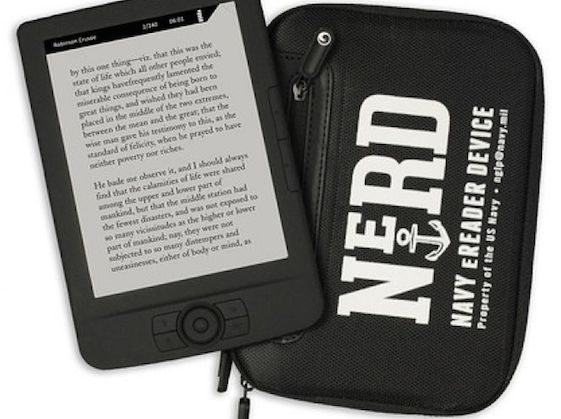
nerdEvery once in a while, the military has a good idea. Sure, they have a knack for technological breakthroughs in warfare . . . but what about other fields? The NAVY NeRD answers that question in the affirmative.

NeRD stands for Navy eReader Device.

Well-informed readers of Mere Inkling are already aware of the growing intensity of international cyberwarfare. It is no joke, and lives are at stake.

Draconian policies are in place to avoid the contamination of the military computer system by innocently transferred viruses. Since virtually all digital platforms allow for the transfer of data, they are potentially dangerous.

Because of that, even ereaders have been off limits in certain environments. Now, however, someone has thought outside the proverbial box and come up with a solution to that problem.

The United States Navy has devised a novel ereader that comes loaded with 300 titles, but has no ports or wireless connectivity to allow for inadvertent viral transfers.

The selection of books sounds pretty well rounded. Some public domain classics, and a number of contemporary best sellers like A Game of Thrones. Fans of J.R.R. Tolkien will be delighted to know the readers also include The Lord of the Rings.

Reading is a productive way to spend one’s free time during a lengthy period at sea. Even for those not prone to opting for it when faced with all the distractions ashore.

During WWII, C.S. Lewis wrote a letter to a former student who was serving in the Navy, “out of reach of libraries.” It acknowledges the perennial problem of sailors—lack of space for personal property. The letter was written in response to a request from Michael Rayner Thwaites for reading recommendations. Thwaites was an Australian poet and military intelligence officer.

A man who has already your linguistic training might well, I think, begin the Anglo Saxon on his own. You will need E. Wardale Old English Grammar. . . . For texts, the ordinary beginning is first Sweet’s Anglo Saxon Primer and then his Old English Reader. But you, being a classic might well, after a dip in the Primer go on to King Alfred’s trans. of Boethius De Consolatione Philosophiae . . .

Whether you can begin O.E. poetry on your own I don’t know. But try getting . . . Beowulf: and with it Clark Hall’s trans. ed. by Wrenn with preface by Tolkien . . . This edition is essential for it is Tolkien’s part of metre wh. is essential. (O.E. verse uses both quality and accent, and your ear is prob. ruined, as mine was, by the false way they teach Latin metre at schools–drastic re-education is required. . . .

As to modern literature. You must not start out to study it ‘as it reveals man’s hesitant advance to the idea of a God-created world’. Don’t you see you are laying down in advance what a phenomenon is to reveal before you have examined the phenomenon? It may reveal that: it may not. You have to find out. I don’t think I can lay down any v. definite course of reading.

All I can point out is that while you are in the navy and out of reach of libraries and new publications, this is the proper time for solid reading through the big (i.e. long) authors, critical works and histories of lit. can come later. Now is the time for Chaucer, Malory, Spenser, Sidney, Shakespeare, Dryden, Pope, Swift, Johnson, Fielding, Richardson, Cowper, Scott, Wordsworth, Byron, Dickens etc etc.

If you usually keep two books of widely different period and type going together (e.g. Faerie Queene & Tom Jones) you won’t get bored. I myself always index a good book when I read it for the first time noting (a) Linguistic phenomena. (b) Good & bad passages. (c) Customs: meal times, social classes, what they read etc. (d) Moral ideas.

All this reading, tho’ dedicated ad Dei gloriam in the long run must not be infected by any immediate theological, ethical, or philosophic reference. Your first job is simply the reception of all this work with your imagination & emotions. Each book is to be read for the purpose the author meant it to be read for: the story as a story, the joke as a joke.

Back to the NeRD

The Navy is making 385 devices at first, with more to follow, with five being sent to each submarine in the Navy to be shared among the crew.

That’s only the start, of course. One would anticipate that even for a military crew (for example, 155 personnel on a Trident sub), a mere five mini-libraries would prove insufficient. (No offense intended; yours truly is a veteran himself.)

Libraries & Imagination

librarycardI just got a new library card. It’s emblazoned with the word “Imagination.” While that would be boring news to most, to people who value reading, it’s noteworthy. Some might wonder, why did he wait until he was nearly sixty to get a library card. That’s because there is more to the story.

I happen to live “across the water” from one of the most literacy-loving communities in the United States—Seattle. (“Across the water” means that the quickest way to get to Seattle is by taking one of our scenic, but outrageously expensive, ferries, across Puget Sound.)

Our relatively small county has superb libraries of our own, but they can’t hope to match the holdings of Seattle’s grandiose institutions. Personally, I am not enticed by the sheer volume of volumes available there. I desire access to their abundant research resources, most notably access to historic newspapers.

The great news is that Kitsap County, where I am blessed to reside, maintains reciprocal library privileges with Seattle! When I made a trip to the metropolis to enroll, not only did they expeditiously process my information, the library pulled open a drawer with a dozen colorful options and said, “which card would you like?” (Now, I see how sheltered a life I live; I didn’t know some libraries actually offered members a choice of what image they want to embellish their cards.)

I selected the one bearing the iconic image of the Space Needle. (I actually visited the Space Needle during the World’s Fair . . . but that’s a story for another day.)

Only after I selected it because of the picture, did I realize each card carried the imprint of a single word. “Imagination,” the librarian said, “a good choice.” A very good choice, I thought to myself. Since I place an extremely high value on that ephemeral trait.

Libraries, I’m afraid, are undervalued today. It’s good to see them continuing to provide a valuable service to our communities. Reading is vital to civilization, growth and culture.

C.S. Lewis enjoyed the family library in the home of his youth, and in one of his boarding schools experienced the library not only as a vestibule of knowledge, but also as a place of refuge. The upper classmen of the school subjected the younger boys to relentless hazing, but the library was off limits to their abusive behaviors.*

The other undisguised blessing of the Coll [Wyvern College] was “the Gurney,” the school library; not only because it was a library, but because it was sanctuary. As the Negro used to become free on touching English soil, so the meanest boy was “un-faggable” once he was inside the Gurney.

It was not, of course, easy to get there. In the winter terms if you were not on the list for “Clubs” you had to go out for a run. In summer you could reach sanctuary of an afternoon only under favorable conditions. You might be put down for Clubs, and that excluded you. Or there might be either a House match or a Coll match which you were compelled to watch. Thirdly, and most probably, on your way to the Gurney you might be caught and fagged for the whole afternoon.

But sometimes one succeeded in running the gauntlet of all these dangers; and then— the books, silence, leisure, the distant sound of bat and ball (“Oh the brave music of a distant drum”), bees buzzing at the open windows, and freedom. In the Gurney I found Corpus Poeticum Bo reale and tried, vainly but happily, to hammer out the originals from the translation at the bottom of the page. There too I found Milton, and Yeats, and a book on Celtic mythology, which soon became, if not a rival, yet a humble companion, to Norse. (Surprised by Joy).

While this passage described the library as a glorious sanctuary, it also reveals a tragic snapshot of the bullying that is endemic to many schools. Since I don’t wish to end these thoughts on a negative image, allow me to offer another revelation from Lewis. In a brief essay, he praises imagination, while acknowledging its limitations.

It must not be supposed that I am in any sense putting forward the imagination as the organ of truth. We are not talking of truth, but of meaning: meaning which is the antecedent condition both of truth and falsehood, whose antithesis is not error but nonsense.

I am a rationalist. For me, reason is the natural organ of truth; but imagination is the organ of meaning. Imagination, producing new metaphors or revivifying old, is not the cause of truth, but its condition. It is, I confess, undeniable that such a view indirectly implies a kind of truth or rightness in the imagination itself. (“Bluspels and Flalansferes: A Semantic Nightmare”).

“Producing new metaphors or revivifying old . . .” What an apt description of the wonders of imagination. And this insight is only one of the countless gems of wisdom I have gratefully received from C.S. Lewis.

_____

* In the language of the school the “Bloods” were the sadistic elites. The youngest and most vulnerable were labeled “fags,” and their mistreatment (forced menial drudgery) was called “fagging.”

Those interested in seeing all five of the Seattle Library options for their new cards, you can do so here.

Recycling Literature

recycled pageMany subscribers to Mere Inkling share a common trait with C.S. Lewis. Like your humble blogger, you are lovers of books. We don’t need to apologize for it; it’s in our DNA.

We carry that astonishing gene that manifests itself in a passion for the written word. (It’s frequently inherited from a parent who possessed the same ardor.)

If you’re one of this corpus of literary addicts, you just nod your head in agreement whenever you hear Lewis’ oft-quoted, “You can never get a cup of tea large enough or a book long enough to suit me.”

If you love books, if you don’t mind owning copies that others before you have enjoyed, and if you are on a tight budget, you might want to join me in becoming a customer of Better World Books.

[I have no interest in this nonprofit organization other than genuinely commending them to you as a wonderful source of inexpensive books. Most books have been officially removed from library collections . . . and require new homes. The “profits” are directed towards libraries and literacy programs.]

Many of us have enjoyed walking through rows of books on sale in local settings. This is a little like that, except that you can do digital searches and they have tons more titles available. (Literally.)

One of my recent purchases was Latin for the Illiterati. I purchased it the same day I bought The Anchor Book of Latin Quotations (for a secret project I’m working on).

Latin for the Illiterati includes “common phrases and familiar sayings,” that the reader is now able to decipher when encountered in classical literature. References do not have to be ancient to be included. For example, “salus populi suprema lex esto,” which means “the welfare of the people is the supreme law.” (But I didn’t need to translate that for you residents of Missouri, since it’s your own state motto.)

Quick test, which state has this as its motto? “Vox audita perit, litera scripta manet,” which means “the voice that is heard perishes, the letter that is written remains.” Actually, I cheated a bit, I don’t think it is any government’s motto, but it certainly is a truism that will resonate with readers!

C.S. Lewis valued rereading good books. In a 1915 letter, he wrote, “There is something awfully nice about reading a book again, with all the half-unconscious memories it brings back.”

In that same spirit, the following year he wrote to the same friend, “You really lose a lot by never reading books again.”

As I said, he was explicitly referring to revisiting a work already read. Nevertheless, I believe he would agree with the broader sense of his words . . . that it is a sad thing to see a book destined never to be read again.

Whether or not I am correct is irrelevant. The fact is that there are hundreds of thousands of books awaiting new homes. I don’t doubt that many of them “deserve” to be recycled for their raw materials. However, I also believe that the majority of them remain capable of teaching and inspiring. After all, litera scripta manet, right?

Our Personal Libraries

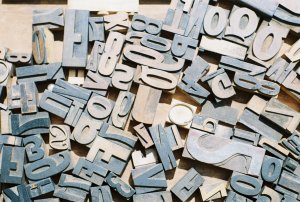
printing lettersWhat a blessing it is to live in an age when even the most modest home can treasure its personal library. Public libraries are a community boon, but because of the printing press, books are no longer restricted to the homes of the wealthy.

Books—or, more properly the reading of books—has a direct correlation to human intelligence, knowledge and (occasionally) even to wisdom itself.

In 1905, at the age of seven, C.S. Lewis moved with his family into a large home in the countryside. It was so spacious, in fact that in his autobiography Surprised by Joy, Lewis says, “to a child it seemed less like a house than a city.”

Lewis proceeds to describe the “mansion,” and its most notable feature . . . the profusion of books.

The New House is almost a major character in my story. I am a product of long corridors, empty sunlit rooms, upstairs indoor silences, attics explored in solitude, distant noises of gurgling cisterns and pipes, and the noise of wind under the tiles.

I am a product . . . of endless books. My father bought all the books he read and never got rid of any of them. There were books in the study, books in the drawing room, books in the cloakroom, books (two deep) in the great bookcase on the landing, books in a bedroom, books piled as high as my shoulder in the cistern attic, books of all kinds reflecting every transient stage of my parents’ interest, books readable and unreadable, books suitable for a child and books most emphatically not. Nothing was forbidden me. In the seemingly endless rainy afternoons I took volume after volume from the shelves. I had always the same certainty of finding a book that was new to me as a man who walks into a field has of finding a new blade of grass.

I’m privileged to own a large library. It’s not a matter of pride. It’s a matter of joy. Like Lewis, and most readers of Mere Inkling, I love books. And, like most bibliophiles, I am fascinated by numerous things related to books.

While attending college I worked for a small publisher. I was able to do a bit of writing, but most of the job involved using an enormous Linotype Phototypesetting machine and pasting up the projects. It was an interesting process, which is now long obsolete.

letterpress

Nevertheless, due to my love for books, reinforced by my own experience as a “printer’s devil,”* I have an affection for items related to publishing. I recently purchased several items from a family business called Type-tiques.

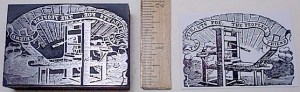
They offer a wide range of reasonably priced letterpress printer’s blocks which look wonderful on bookshelves and literary desktops.**

I also recently accepted an offer for ten free letterpress bookmarks from Peach Farm Studio. You can read about their promotion here. (Since my comment there is still awaiting “moderation,” I’m unsure of the status of the project, but I’ll keep you posted.)

___

* Just a note that, should you be unfamiliar with the term “printer’s devil,” it’s simply trade parlance for the shop’s apprentice or flunkey.

** When my wife proofread this, she asked if I literally meant “literary desktops.” Then she motioned towards my own book-laden desk and queried, “and where will you put them?” Fortunately, I have lots of shelves!

Treasuring Books

Most of us love and respect books, don’t we? We take care of our literary treasures, and the more deeply we are attached to a particular volume, the better we treat it.

Many of us are reluctant to loan out the books which line our shelves like so many gems, resting in a jeweler’s pristine cases. When we do agree to share them, we’re afraid they may never find their way home. And, when they eventually return to our welcoming grasp, they sometimes bear the scars of their sojourn in the paws of others who do not esteem them as they ought to. Page corners may be scored. Coffee or tea stains may have “embellished” the text. Bindings may have been carelessly mistreated. And, unbelievably, the borrowers are likely to be unaware of how they have abused the tome’s dignity and disfigured its beauty.

Speaking honestly, my own bookshelves are in constant disarray, and too many of my books still remain unpacked after our move into our retirement home. But I am absolutely serious about how painful I find it to witness the mistreatment of books by those ignorant of their value.

C.S. Lewis loved books. He recognized their power. He embraced their wonder. And—most wonderfully for us—he penned a number of classics that will continue to inspire readers for generations.

Yet, as much as Lewis treasured books, he took his own creations for granted. This changed in December of 1954, when he received a precious package from his publisher. Among his Christmas gifts that year were specially bound copies of Surprised by Joy and Mere Christianity. Receipt of the thoughtful present opened his eyes to an interesting notion. On the twenty-second day of the month, he wrote:

I never had a handsomer present. . . . Perhaps these two charming volumes will teach me at last to have for the bodies of my own books the same reverence I have for the bodies of all other books. For it is a curious fact that I never can regard them as being really books; the boards and print, in however mint a condition, remain a mere pretense behind which one sees the scratchy, inky old manuscript.

I daresay that those writers among us can relate to Lewis’ mindset. Even with the pride that accompanies having books or articles in print, our work somehow seems “different” than the other published materials we invariably respect. This is due in large part, I believe, to their familiarity. Writers, better than most, understand what familiarity breeds. We know these works that flowed from our own consciousness and sweat . . . we know them intimately. And we are keenly aware that if given another opportunity, there are parts of them we would even now edit to be clearer, sharper, and more eloquent.

I never cease to be surprised by the humility of new writers who almost whisper their accomplishments to others. It’s as though they are embarrassed . . . that they assume their friends would consider them braggarts if they spoke with the pride they genuinely feel about their work. Some of us hold onto our rejection letters. (I do.) How much better though, to print out high quality copies of articles or devotions we’ve written and place them in a prominent binder or display located near our keyboard.

Who knows, I may actually follow my own advice and do something like that. Sadly, I don’t have a grateful publisher eager to prepare special editions for me. Nevertheless, I’m glad Lewis did. I learned from his insight that whenever we release our literary progeny to the world, they merit the same degree of respect and affection that we book-lovers bestow so generously on the works of others.

___

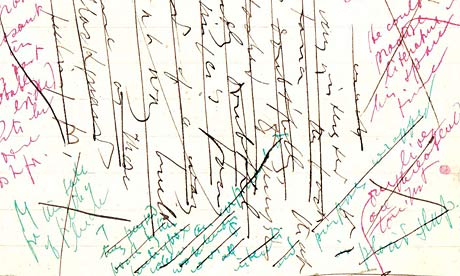
Postscript: The image above is an actual manuscript page from James Joyce’s Ulysses. (It makes me feel much more confident about my own initial scribblings.)