C.S. Lewis, the Brothers Grimm & Snow White

You may blame the recent cinematic debacle that is Snow White on a declining Film Studio or the Brothers Grimm, but C.S. Lewis is innocent.

That’s not to say the Grimms didn’t have an influence on the great Oxbridge professor, a subject we’ll explore momentarily. But it was the German folk tales published by academics Jacob and Wilhelm Grimm who published the classic fairy tales that Walt Disney mined so effectively. 

They also popularized CinderellaHansel and GretelLittle Red Riding HoodThe Princess and the Frog, and Rapunzel. Disney began the transformation of these tales into visual treasures as early as 1921 when he founded Laugh-O-Gram Studio in Kansas City, Missouri.

In addition to films, over the years Walt gleaned memorable Grimm stories for a multitude of cartoon shorts, including The Brave Little Tailor and The Four Musicians of Bremen.

Obviously, Walt Disney himself respected the source material for the stories and wielded his editorial prerogative in an appropriate manner. Tragically, the same cannot be said for his corporate heirs. Likewise, the Brothers Grimm bear no culpability in this area.

C.S. Lewis, J.R.R. Tolkien & Snow White

The truth is, although Lewis and Tolkien appreciated literary fairy tales, neither of the preeminent Inklings were enamored with Disney’s animated treatment of the stories. Curiously, the two distinguished dons actually attended the theater together to view the trailblazing novelty that was Snow White.

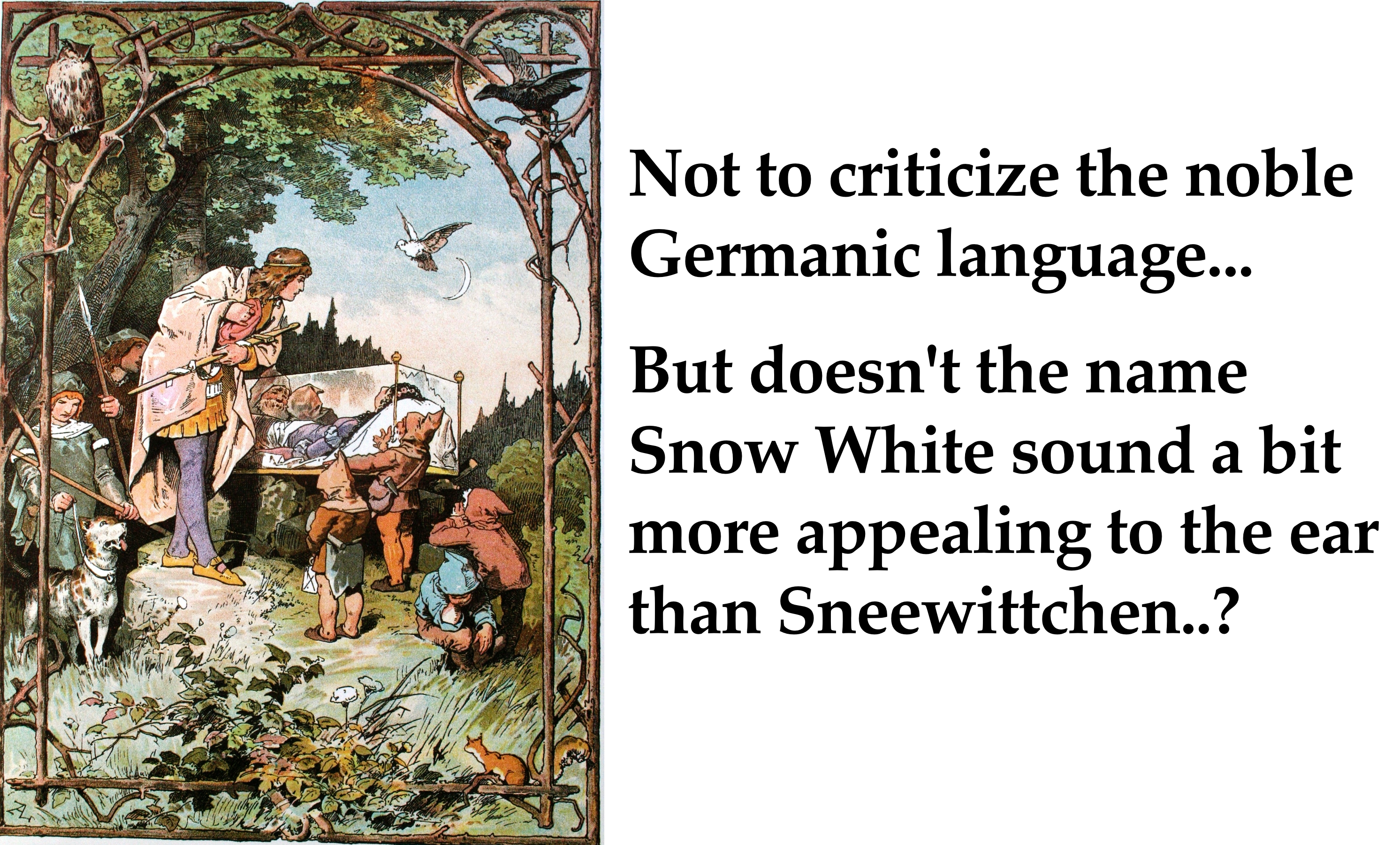
They were particularly disappointed with the dwarves, seeing just how different they were from the genuine legends about them. Lewis even wrote “Dwarfs ought to be ugly of course, but not in that way.” Atlas Obscura has an entertaining article about their “movie date” and notes some of the elements they also enjoyed in the feature.

In his lectures published as A preface to Paradise lost, C.S. Lewis elaborates on his response to the Disney version of the tale.

That strange blend of genius and vulgarity, the film of Snow-White, will illustrate the point. There was good unorginality in the drawing of the Queen. She was the very archetype of all beautiful, cruel queens: the thing one expected to see, save that it was truer to type than one dared to hope for.

There was bad originality in the bloated, drunken, low-comedy faces of the dwarfs. Neither the earthiness, the avarice, nor the wisdom of true dwarfs was there, but an imbecility of arbitrary invention.

But in the scene where Snow-White wakes in the woods both the right originality and the right unoriginality were used together. The good unoriginality lay in the use of small, delicate animals as comforters, in the true Märchen [fairy tale] style. The good originality lay in letting us at first mistake their eyes for the eyes of monsters.

If you want to read more about the subject, you can do no better than read Joe Christopher’s article on the subject.

For an interesting argument that fellow Brit G.K. Chesterton would have loved Snow White for the very reason that moved the Inklings to criticize it, see “Tolkien and Lewis disliked Snow White. You know who wouldn’t have?

C.S. Lewis & Grimm’s Fairy Tales

Like his friend, J.R.R. Tolkien, C.S. Lewis was a champion of classical fairy tales. Neither was apologetic for it, although Lewis admitted to being shy about it when he was young. In an essay titled “On Three Ways of Writing For Children,” he wrote,

When I was ten, I read fairy tales in secret and would have been ashamed if I had been found doing so. Now that I am fifty I read them openly. When I became a man I put away childish things, including the fear of childishness and the desire to be very grown up.

In a great post called “Old Enough For Fairy Tales: C.S. Lewis’ “The Chronicles of Narnia” the writer describes this distinction to which Lewis alludes.

The Chronicles of Narnia are not children’s stories. They are fairy tales—but that is precisely why they are not children’s stories. If you can’t understand, you haven’t been listening. Go back and read the quote from Lewis’ essay again. Children are not the only audience for fairy tales.

In 1954, C.S. Lewis apologized to a German professor for being unable to understand the nuances of his volume on philosophy. In doing so, he referred to his youthful reading of the Brothers Grimm in their original German (available at Internet Archive).

I look forward to reading the book (when the translation arrives! My German is wretched, and what there is of it belongs chiefly to the libretto of the Ring and Grimm’s Märchen – works whose style and vocabulary you very possibly do not closely follow).

If you are in the mood for reading Grimm’s Fairy tales today, and your German is sadly lacking, Project Gutenberg has just the translation for you . . . as long as you can read English.


Addendum [added 10 April 2025]

The Brothers Grimm were far more than simply folklorists. They were respected professors at the University of Göttingen. They were devout Christians and worked with other prominent Germans. 

Goethe assisted them at a crucial moment in collecting their tales, and the philosopher Friedrich Schleiermacher provided copyediting assistance. Jacob’s work on German mythology had a pronounced influence on the composer Richard Wagner (World Magazine).

They also began compiling the Deutsches Wörterbuch (Germany dictionary) in 1838, with the first volumes published in 1854. It was the first dictionary to include historical usages of each word, preceding the Oxford English Dictionary, which was initiated in 1857 with its first edition published in 1884.


Bonus Trivia: The dwarves were unnamed until their debut on Broadway in 1912. And on that day they were christened Blick, Flick, Glick, Plick, Snick, Whick and Quee.

Tinker Bell, the Inklings, and Disney

Poor Tinker Bell. The political prejudices of our day have caught up with the sparkling fairy, and relegated her to a significantly reduced presence in the Disney universe.

Inside the Magic reported “Tinker Bell seems to have left Walt Disney World and is now on her way back to Neverland following a recent change at Walt Disney World Resort.” You can read the tragic tale on their site.

. . . once more, Disney’s animated classic, Peter Pan (1953), is under scrutiny, with Disney issuing a statement regarding Captain Hook and Tinker Bell as characters with potential concerns.

Linking poor Tink to a murderous pirate seems a bit of a stretch, and she has not been fully banished, but she has definitely been demoted. According to TMZ, Disney alleges the company’s “own people felt she wasn’t a good role model for girls in the 21st century.”

Well, eventually she too will be in the public domain, like Mickey Mouse. Actually, her literary portrait as introduced in the play, coincidentally just entered the public domain this year (2024)!

However, should you reside in the United Kingdom, beware that in 1988, the copyright holder, Great Ormond Street Hospital, was granted the rights to Peter Pan “in perpetuity.”

The Creator of Tinker Bell & Peter Pan

Tinker Bell is one of the most memorable characters in Neverland, the creation of James Matthew Barrie (1860-1937). He was a prolific Scottish writer and is best known for his 1911 novel, Peter and Wendy – which initially debuted in the form of a stage play in 1904, as Peter Pan; or, the Boy Who Wouldn’t Grow Up.

Peter Pan was actually introduced to the world as a baby in The Little White Bird. Tinker Bell does not appear in the novel, but the following description of J.M. Barrie’s fairy mythology is quite fanciful.

One of the great differences between the fairies and us is that they never do anything useful. When the first baby laughed for the first time, his laugh broke into a million pieces, and they all went skipping about. That was the beginning of fairies.

They look tremendously busy, you know, as if they had not a moment to spare, but if you were to ask them what they are doing, they could not tell you in the least. They are frightfully ignorant, and everything they do is make-believe.

They have a postman, but he never calls except at Christmas with his little box, and though they have beautiful schools, nothing is taught in them; the youngest child being chief person is always elected mistress, and when she has called the roll, they all go out for a walk and never come back.

It is a very noticeable thing that, in fairy families, the youngest is always chief person, and usually becomes a prince or princess; and children remember this, and think it must be so among humans also, and that is why they are often made uneasy when they come upon their mother furtively putting new frills on the basinette.

Barrie continues, describing how infants are simply following fairy “ways” when they misbehave, and they naturally experience “exasperation, because we don’t understand [them], though [they are] talking an intelligible language . . . fairy.”

Returning to the person of Tinker Bell herself, she outgrew her supporting role as, in the words of her creator, “a common fairy.” She was literally a tinker, who died following the departure of Wendy and her brothers from Neverland. 

Presumably, some of the gatekeepers at Disney would have preferred that the affection of the crowds had not restored her to life. 

The Inklings

The Imaginative Conservative offers an interesting take on C.S. Lewis’ view of fairies. I quote a portion related to our present subject.

Lewis treats the subject of fairies in . . . The Discarded Image. . . . After explaining the medieval understanding of the heavens and planetary systems, Lewis turns to what he calls the Longaevi. He avoids the term “fairies” because it is “tarnished by pantomime and bad children’s books with worse illustrations.” (Probably referring to Barrie’s popular play and Princess Mary’s Gift Book – the book from which Elsie and Frances clipped the pictures they used in their fake photos.)

Jane Douglass, an American actress and playwright, contributed a fascinating essay to C.S. Lewis at the Breakfast Table, and Other Reminiscences. One wonderful portion of “An Enduring Friendship” describes Lewis’ thoughts about the possible dramatization of The Lion, the Witch, and the Wardrobe

C.S. Lewis deemed the prospect absurd on its face, saying “I believe plays should be plays, poems, poems, novels, novels, stories, stories, and certainly the book you mention is pure narrative.” So much for a partially surviving 1967 series, the 1979 animation, the 1988 BBC television series, and the cinematic version(s) which began in 2005. Oh, and there is the matter of the impending Netflix telling which remains a closely guarded secret. Douglass continued with a reference to Disney.

He repeated his dread of such things as radio and television apparatus and expressed his dislike of talking films. I said I quite understood this, and that nothing would distress me more than that he should think that I had in mind anything like the Walt Disney shows; I hoped nobody had suggested the book to Mr. Disney.

This seemed to relieve Mr. Lewis to such an extent that I thought perhaps Mr. Disney had been after the book, but of course I did not ask. And in his usual generous way, Mr. Lewis said, “Too bad we didn’t know Walt Disney before he was spoiled, isn’t it?”

Author Jim Denney has a nice article on “What C.S. Lewis and J.R.R. Tolkien Thought of Walt Disney” in which he describes parallels between the live of Lewis and Disney and concludes, “you might think that, with all that C.S. Lewis and Walt Disney had in common, they might have been mutual admirers – but that was not the case.”

Disney’s Snow White and the Seven Dwarfs debuted in the United States in 1937 and in the United Kingdom in 1938. . . . A few months later, Lewis went to see it again, this time with his good friend (and fellow Oxford professor) J.R.R. Tolkien.

Coincidentally, Tolkien’s first novel The Hobbit had been published in September 1937, just three months before the American debut of Snow White.

Their greatest disappointment was in Disney’s utterly comical take on dwarves and the absence of the slightest air of “the mythic nobility of the dwarves from Germanic folklore.”

Although Snow White is itself a fairy tale, fairy characters are not to be found in the film. In the same way, J.R.R. Tolkien referred to the Lord of the Rings as a “fairy story” for adults, yet they do not appear to dwell in Middle Earth.

In fact, according to The Encyclopedia of Arda, “the name ‘Faerie’ belongs to an early period of Tolkien’s writings, and is never seen in The Lord of the Rings, but it does survive in a single usage in the earlier book The Hobbit.” And even in that case, it refers not to a population, but to a place.

On the Effect of Tinker Bell

Tinker Bell’s significance in the world is not confined to literature, or the interests of children. There is a brilliant application of her legend which has been transposed into the psychological realm. 

It’s call the “Tinker Bell Effect,” and “Be(lie)ve It or Not,” from Psychology Today, offers the following description.

One theory manifesting connections among belief, psychology, and mythology is the Tinkerbell effect named for the fairy Tinker Bell of Peter Pan whose resuscitation depends upon the audience expressing their belief in fairies through clapping . . .

The Tinkerbell effect refers to those things that exist only through imaginative acts and because people believe in them. The Reverse Tinkerbell effect maintains that, somewhat paradoxically, the more people believe in something the more likely it is to disappear. 

In their article, the psychologists parenthetically offer an additional application of Tinker Bell’s nature to their area of study. (It actually appears in the paragraph above, where I replaced it with an ellipsis.)

(because she is so small that she can only hold one feeling at a time, Tinkerbell is also a model for mood disorders and difficulties with emotional self-regulation)

Fascinating. It seems to me this insight opens the door to further literary exploration of the Tinker Bell Phenomenon that would be of interest to writers and literary critics alike. I close with my proposal for a new label for an ancient plague afflicting fictional works. If it interests any scholars among you, I invite you to develop it further and claim it as your own.

Tinker Bell (var. Tinkerbell) Crippling Character Creation Complete Content Complexity Phenomenon: The invention of fictional characters who lack depth and bear no resemblance to real people. Literary tropes that are often referred to as one-dimensional or “flat” characters. (See nearly all Marvel supervillains.)

P.S. – Feel free to abbr. the admittedly verbose proposed title; keeping in mind most readers prefer brief reads.

Mickey Mouse Is Now Ours

He’s no Reepicheep, but the earliest iteration of Mickey Mouse just became public property!

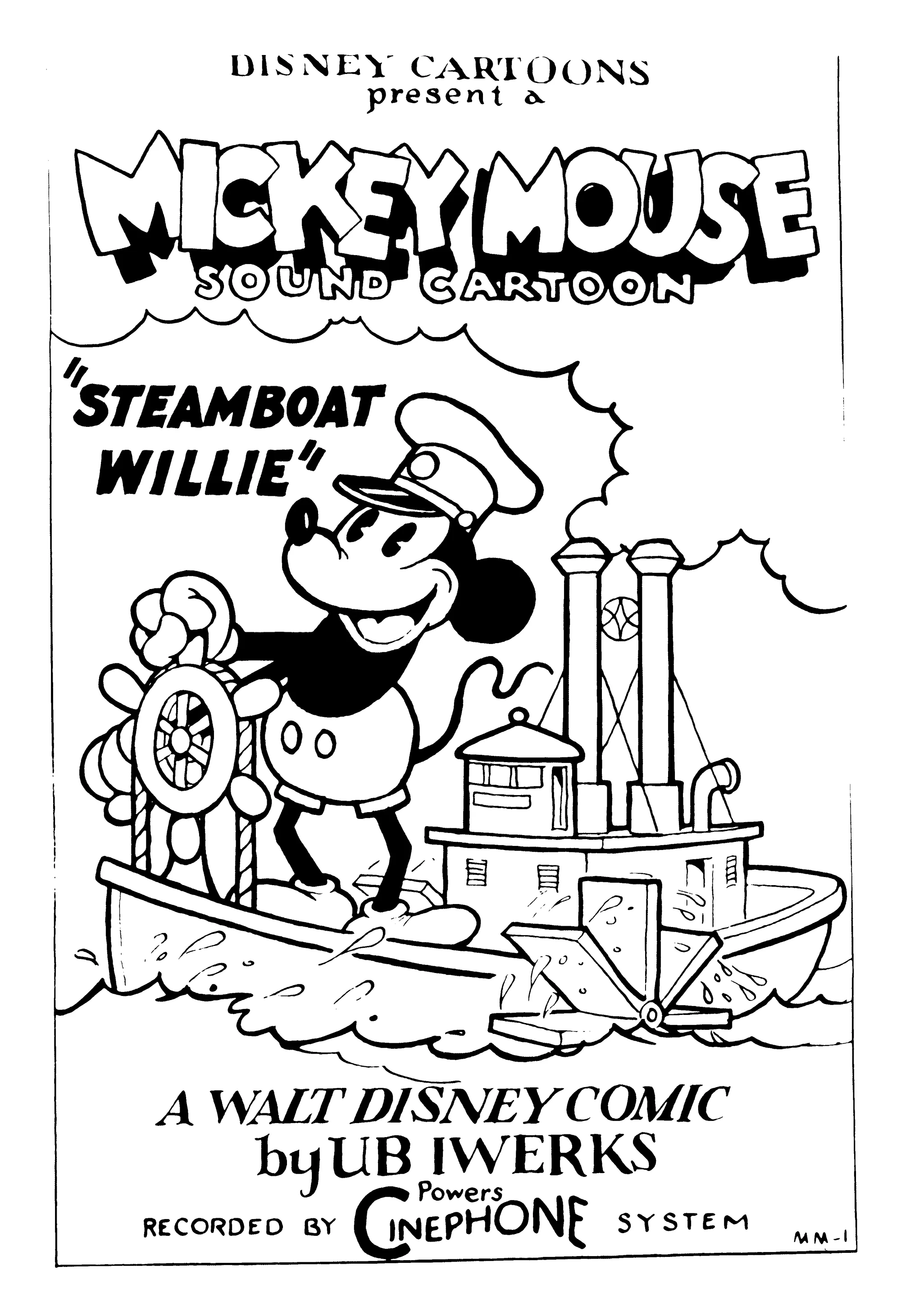
One of the little-heralded New Year’s Day events was the entry of the Steamboat Willie version of Mickey into public domain. Now anyone who desires can use the image without infringing on Disney’s copyrights.

Actually, my headline is not 100% accurate. As I just noted, it’s the earliest version of the most famous mouse in the world. However, the rodent’s name, and his subsequent graphic version remains protected. That’s because while copyrights eventually expire, trademarks don’t.

Therefore, as reported in Fortune magazine, “current artists and creators will be able to make use of Mickey, but with major limits. It is only the more mischievous, rat-like, non-speaking boat captain in ‘Steamboat Willie’ that has become public.”

The 1928 poster advertising Mickey’s cinematic debut comes from a great article at Animation Scoop. Without comparing measurements of Mickey’s initial and contemporary snouts, it doesn’t appear to me the public domain version is that much more “rat-like.”

As for differences between the two . . . well, I’m not an attorney, but it appears Mickey’s onscreen persona in 1928 wasn’t wearing his standard white gloves. The poster, nevertheless, shows a Mickey closely resembling the cartoon mouse who was part of many of our childhoods. As noted in the Fortune piece:

Not every feature or personality trait a character displays is necessarily copyrightable, however, and courts could be busy in the coming years determining what’s inside and outside Disney’s ownership.

My question, and perhaps one of you intelligent readers can answer this, is about the image’s “name.” His full name, with his surname “Mouse,” is undebatably trademarked. Can a person legally use the name “Mickey” with the 1928 likeness? My guess is that the first name is not restricted, no matter how much Disney protests.

Speaking of Disney, a company which has become a disappointment in recent years, the Inklings were not big fans. If you are interested in learning more about the Inklings’ opinion about Disney Studios, check out author Jim Denney’s “What C.S. Lewis and J.R.R. Tolkien Thought of Walt Disney.”

After identifying a number of parallels in their lives, he explores the irony that “you might think that, with all that C.S. Lewis and Walt Disney had in common, they might have been mutual admirers—but that was not the case.”

And, there is always another option. As Britannica reminds us, Mickey wasn’t even his original name. Walt’s first choice (vetoed by his wife) was “Mortimer.”

That’s it for today. Now I’m off to write a book about Mickey’s alliance with Reepicheep. Oh wait, Reepicheep won’t be in the public domain until after I’m enjoying heaven with my Lord, and with the Christian members of the Inklings.

And, even if one could pair the two up for an adventure, they wouldn’t prove compatible. The reason should be obvious, but for an enjoyable exploration of that subject, I commend to you, “Reepicheep and Mickey.” 

Lemming Legends

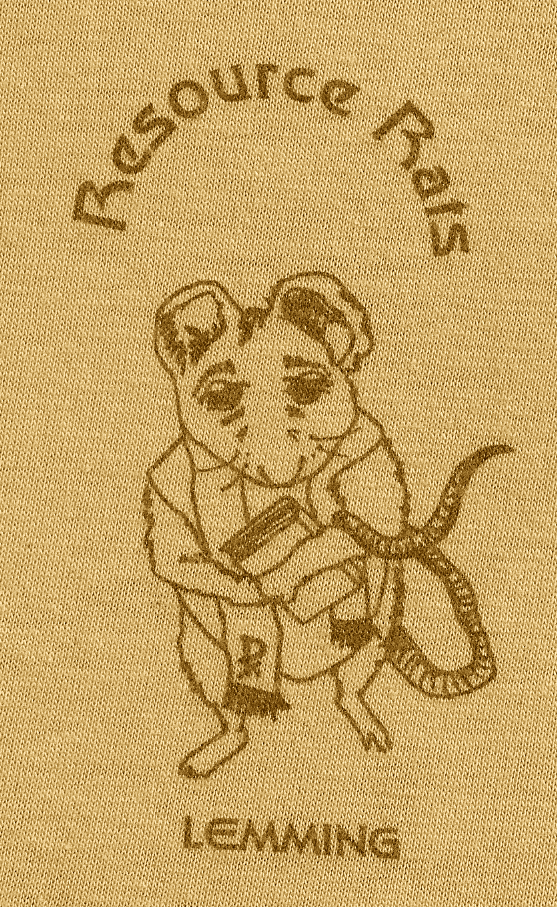
lemmingThe closest camaraderie I ever experienced in my life, was on the staff of the USAF Chaplain School. A sign of our esprit de corps was seen in the nicknames we gave one another. Mine was Lemming. (Not too dashing, I know, but read on and you’ll see why it was bestowed with affection and respect.)

Those of us who worked on “Air Staff” projects (for the Chief of Chaplains) were in the Resource Division. Probably because we were always rushing (scurrying?) around responding to emergencies, the other chaplains called us the “Resource Rats.” We were close indeed, and our energies and creativity was magnified by our synergy . . . just like the Inklings.

We embraced the label, and before we knew it each of us had been identified as a particular member of the rodent family. We had a rabbit, hamster, beaver, squirrel and fudged a bit with a ferret and a weasel. Among assorted other “rats,” I was nicknamed—you didn’t choose your identity, your friends awarded it to you—Lemming.

They called me Lemming because I had a unique duty on the team. One of my duties was to do a little bit of “ghostwriting” for the Chief of Chaplains. Some would consider it an honor, but trust me, due to the general for whom I wrote the first year, it was anything but.

Why a Lemming? Well, because whenever a tasking came down I would dutifully march off in obedience . . . even if it meant marching right off of a cliff. Like the humble Lemming, I accepted my fate, and made the best of it.

We all know their tragic story. When the Lemming burrows become overcrowded, a large number of them will sacrificially gather together and march to the sea. There, those who did not perish in catastrophic falls, nobly swim out to sea so that their relatives back in the warren can once again devote themselves to overpopulating their habitat.

I was proud of the appellation. I wore the name (literally, on the shirt logo pictured above) as a badge of honor. Until . . . until I discovered it was all based on a lie.

Lemmings, we have learned, do not suffer from periodic mass suicidal impulses. The common myth is based on an insidious 1958 “nature film” made by Disney. I have no idea why they would compromise their flawless reputation for scientific accuracy in their naturalist media, but in White Wilderness, they cast all integrity aside. (And now I know why C.S. Lewis and J.R.R. Tolkien were wary of the machinations and shadowy motives of Walt Disney Studios.)

With utter disregard to the reputation of these clever arctic creatures, the film showed (supposed) members of the Scandinavian clans eagerly casting themselves to their deaths. However, their bizarre behavior was manipulated by cinematic chicanery.

It turns out that not only did Disney pull the lemmings out of their normal habitat for filming—since they were too intelligent to voluntarily leap to their death, they were thrown off of the cliff from a modified turntable! Ghastly.

Learning that lemmings will not march knowingly (and stupidly) to their own demise has actually made me a bit prouder to bear the title. I mean, it’s one thing as a member of the armed forces to risk your life in the defense of your nation. It’s quite another to commit suicide because a general thought one of your commas was in the wrong place. But that’s a story for another day.

New Beauty Each Day

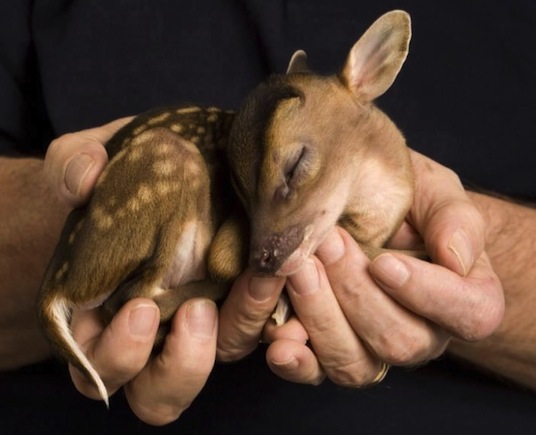
fawnI woke this morning to a scene from Disney.

Looking out the window, with my coffee perking in the background, God blessed me with fabulous scene. A pregnant doe, lying on the ground to rest her weary legs, was peacefully grazing on our lawn. (Echoes of gentle Faline.)

As if that vision were not spectacular enough, a few yards to her side a small bunny hopped about, nibbling on the same grass. (We seeded our lawn with clover to provide a welcoming meal for just such visitors.) The rabbit was alone, although we watched it frolic with its siblings just the other day. (Might they be the children of carefree Thumper?)

Completing the scene were a bevy robins and sparrows. They hopped around the pair, in a wonderful display of original nature’s harmony, which will one day be restored.

The wolf shall dwell with the lamb,

   and the leopard shall lie down with the young goat,

and the calf and the lion and the fattened calf together;

   and a little child shall lead them.

The cow and the bear shall graze;

   their young shall lie down together;

   and the lion shall eat straw like the ox.

                     Isaiah 11:6-7, ESV

The Creator of Narnia understood the essence of this peace as well as anyone. C.S. Lewis revealed that just as nature was created at peace, so too the new creation would mark a restoration of that purity. As Lewis writes in Miracles, Nature “is to be redeemed. The ‘vanity’ to
which she was subjected was her disease, not her essence. She will be cured, but cured in character: not tamed (Heaven forbid) . . .”

For the present time, however, we must be content to appreciate brief glimpses of that promise . . . just as I am now, as I write. (Yes, the doe is still resting mere feet from my window.)

Precious moments like this are something to be savored. A sweet foretaste of the feast to come.

_____

The full context of Lewis’ words from Miracles follows. In this passage he warns us not to worship what is created, but only its Creator.

You must have tasted, however briefly, the pure water from beyond the world before you can be distinctly conscious of the hot, salty tang of Nature’s current. To treat her as God, or as Everything, is to lose the whole pith and pleasure of her. Come out, look back, and then you will see . . . this astonishing cataract of bears, babies, and bananas: this immoderate deluge of atoms, orchids, oranges, cancers, canaries, fleas, gases, tornadoes and toads.

How could you ever have thought that this was the ultimate reality? How could you ever have thought that it was merely a stage-set for the moral drama of men and women? She is herself. Offer her neither worship nor contempt. Meet her and know her. If we are immortal, and if she is doomed (as the scientists tell us) to run down and die, we shall miss this half-shy and half-flamboyant creature, this ogress, this hoyden, this incorrigible fairy, this dumb witch.

But the theologians tell us that she, like ourselves, is to be redeemed. The “vanity” to which she was subjected was her disease, not her essence. She will be cured, but cured in character: not tamed (Heaven forbid) nor sterilised. We shall still be able to recognise our old enemy, friend, play-fellow and foster-mother, so perfected as to be not less, but more, herself. And that will be a merry meeting.