C.S. Lewis & Kindness

People don’t get along as well as they used to. In the past you could chalk up that sort of observation to the speaker being of the senior variety, and simply complaining about how things are not like the mythical “good old days.”

But today it appears to be a universally acknowledged tragedy. The social fabric previous generations took for granted – national tapestries that were once knit together with such care to promote beauty and harmony – have frayed and torn.

And I don’t perceive this dreadful condition as limited to the United States. Nor do I believe that it’s simply limited to the realm of politics . . . although it is most certainly manifest in that contentious realm. 

Sadly, there is a shortage of truly kind people. Benjamin Franklin hinted at this when he penned, “he that has done you a kindness will be more ready to do you another, than he whom you yourself have obliged.” Essentially, kind people are the ones who act kindly. Rings true, doesn’t it?

It’s not only in politics where kindness is in a shortage. C.S. Lewis described the dilemma in “The Decline of Religion”

The decline of “religion” is no doubt a bad thing for the “World.” By it all the things that made England a fairly happy country are, I suppose, endangered: the comparative purity of her public life, the comparative humanity of her police, and the possibility of some mutual respect and kindness between political opponents.

But I am not clear that it makes conversions to Christianity rarer or more difficult: rather the reverse. It makes the choice more unescapable. When the Round Table is broken every man must follow either Galahad or Mordred: middle things are gone.

The increasing rarity of kindness doesn’t mark its demise. It will never become extinct while a single soul is kind. As the Greek storyteller Aesop declared twenty-five centuries ago, “no act of kindness, no matter how small is ever wasted.”

A Hopeful Note

Kindness may be hard-pressed in our current day, but the battle isn’t lost. 

The grinch graphic above is the creation of the Random Acts of Kindness Foundation. Their worthwhile goal is to encourage and support lives of kindness. One of their resources, “The Science of Kindness,” describes their uplifting purpose.

And, if you want to experience and emanate not only kindness, the best place to look is to our Creator. Knowing God and trusting the atoning work of Jesus fills us with the very Holy Spirit of our Lord.

As C.S. Lewis discovered when he ceased running away from God while pursuing the empty promises of atheism, the Lord’s desire for humanity is purely good. “The fruit of the Spirit is love, joy, peace, patience, kindness, goodness, faithfulness, gentleness, self-control . . .” (Galatians 5).

God as the Author of Creation

Satan is powerless versus Christians, especially those who know he exists. Yet, vis-à-vis unbelievers, he “prowls around like [an invisible] lion, seeking someone to devour” (1 Peter 5). Christian “immunity” to Lucifer’s power, if not his temptations, is due to the indwelling presence of God’s Holy Spirit.

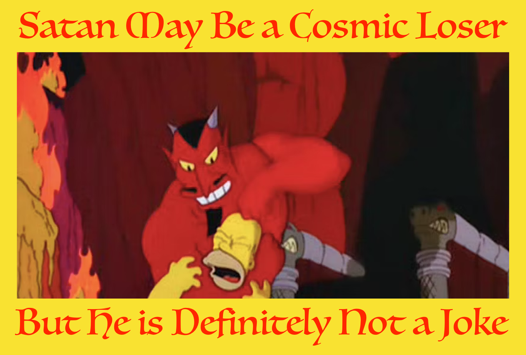
Still, for every human being, whatever their personal belief, the Devil is no mere cartoon, with whom to be trifled. I discussed this briefly in my previous post, “Only God Can Create,” which you might want to read before continuing here.

As for humanity’s vulnerability to the Devil’s influence, the consensus in paradoxically-labeled “enlightened” cultures is that he doesn’t even exist. Sadly, this cosmic lie even tricks self-described “Christians.”

This illusion plays directly into his purposes, as C.S. Lewis described in The Screwtape Letters. Screwtape, a senior demon, instructs his protégée Wormwood in the preferred method of dispelling human wariness about Evil.

The fact that “devils” are predominantly comic figures in the modern imagination will help you. If any faint suspicion of your existence begins to arise in his mind, suggest to him a picture of something in red tights, and persuade him that since he cannot believe in that (it is an old textbook method of confusing them) he therefore cannot believe in you.

Ironically, the populations of less Westernized cultures possess some immunity to this deception. Even in their traditional religions, there is a keen awareness of the existence of evil presences. In the words of The African Study Bible, “we Africans understand instinctively the stories of angelic visitations, spiritual warfare, and demonic oppression that are in the Bible.”

Christians believe in God, not the Devil. While the Scriptures attest to the personal identity of this fallen angel, acknowledgment of his existence is not salvific (i.e. it is not essential to salvation). Thus, C.S. Lewis is correct in his 1944 essay “Answers to Questions on Christianity” when he writes:

No reference to the Devil or devils is included in any Christian Creeds, and it is quite possible to be a Christian without believing in them. I do believe such beings exist, but that is my own affair.

Supposing there to be such beings, the degree to which humans were conscious of their presence would presumably vary very much. I mean, the more a man was in the Devil’s power, the less he would be aware of it, on the principle that a man is still fairly sober as long as he knows he’s drunk. It is the people who are fully awake and trying hard to be good who would be most aware of the Devil. It is when you start arming against Hitler that you first realize your country is full of Nazi agents.

Of course, they don’t want you to believe in the Devil. If devils exist, their first aim is to give you an anaesthetic – to put you off your guard. Only if that fails, do you become aware of them.

On the Matter of Creative Power

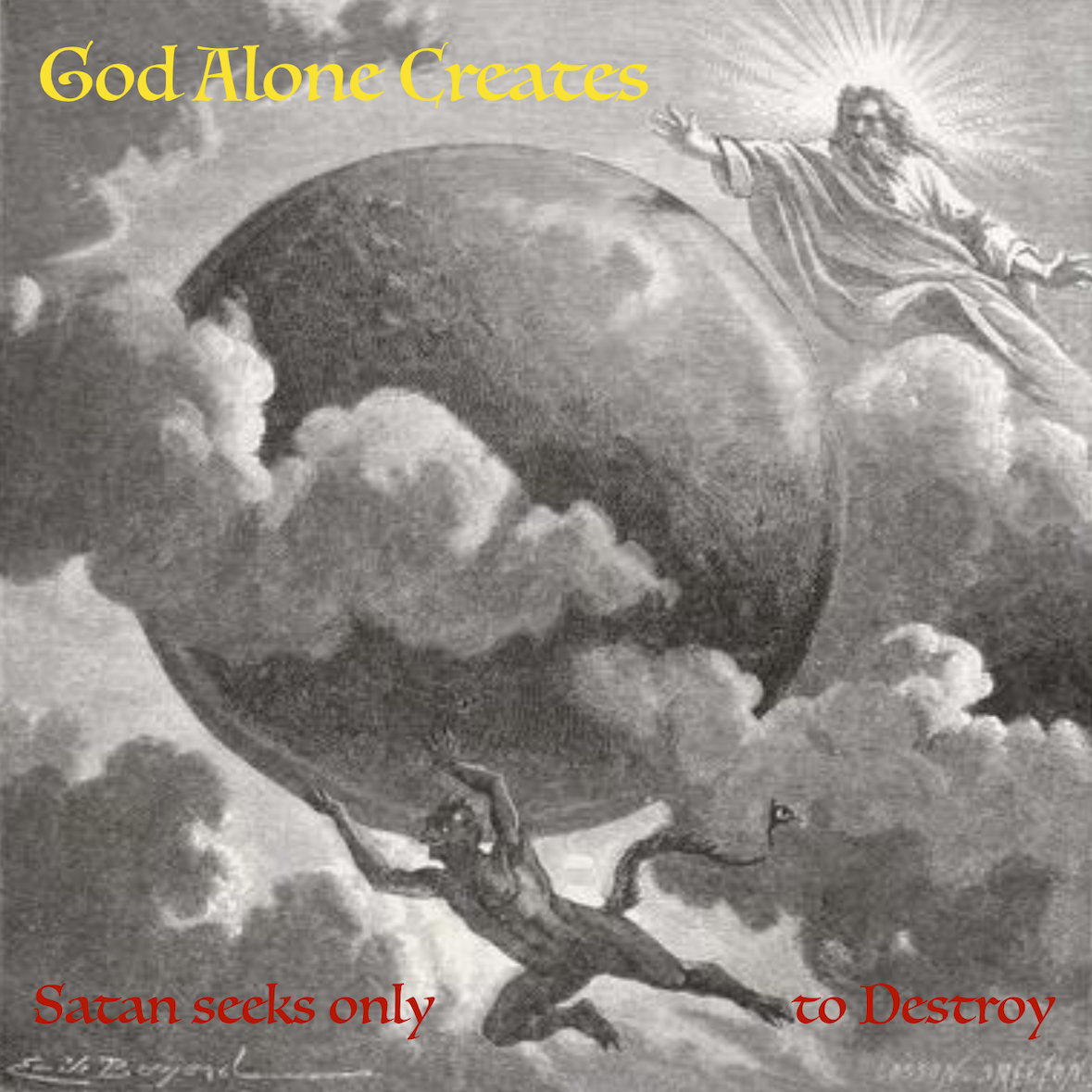
Only God can create. That was the core message of our previous discussion. C.S. Lewis recognized, as do biblically-grounded believers, that Satan is merely a sinful, fallen being, little different from humanity in that regard. This truth shatters the pagan philosophy of dualism, or the misguided notion that two equal and opposite forces (e.g. good and evil) exist in some sort of equilibrium. 

In “The Seeing Eye,” C.S. Lewis described the way in which God is beyond his creation. 

Looking for God – or Heaven – by exploring space is like reading or seeing all Shakespeare’s plays in the hope that you will find Shakespeare as one of the characters . . . Shakespeare is in one sense present at every moment in every play. But he is never present in the same way as Falstaff or Lady Macbeth. . . .

If there were an idiot who thought plays existed on their own, without an author . . . our belief in Shakespeare would not be much affected by his saying, quite truly, that he had studied all the plays and never found Shakespeare in them. . . .

My point is that, if God does exist, He is related to the universe more as an author is related to a play than as one object in the universe is related to another. If God created the universe, He created space-time, which is to the universe as the metre is to a poem or the key is to music.

To look for Him as one item within the framework which He Himself invented is nonsensical. If God – such a God as any adult religion believes in – exists, mere movement in space will never bring you any nearer to Him or any farther from Him than you are at this very moment. You can neither reach Him nor avoid Him by travelling to Alpha Centauri or even to other galaxies.

Mark Twain’s Divinized Satan

I had intended to mention Samuel Clemens in my previous article, as one who advanced the assertion that Satan possesses creative ability. Whether Twain regarded the Devil as an actual entity is certainly debatable. What is undeniable, however, is his devoted defense of Lucifer.

As Twain famously wrote in his autobiographical writings, “But who prays for Satan? Who, in eighteen centuries, has had the common humanity to pray for the one sinner that needed it most?” 

Mark Twain was (in)famous for his atheism, or his agnostic antipathy of the Christian understanding of our Creator. Not content to disbelieve, Samuel Clemens actively worked to undermine Christian faith. One of his books, Letters from the Earth, had to be printed posthumously, due its irreverent (or blasphemous) nature.

It bears a superficial resemblance to C.S. Lewis’ amazing Screwtape Letters – insofar as both fictional works present themselves as demonic correspondence. 

The similarity ends there. While Lewis provides keen insight into Evil’s tactics in wreaking havoc in human lives, Twain’s letters present Satan in a positive, even noble, light.

Letters from the Earth is only one of Mark Twain’s anti-Christian works. The Mysterious Stranger is one of his most bizarre. It evidences his long-term preoccupation with Satan, in that it was composed (in various versions) between 1897 and 1908.

The first serious rendition, The Chronicle of Young Satan, was completed in 1900. I mention it here because there is a scene in which the Devil “creates” a miniature world. Obviously it errs in attributing to Lucifer the power to create life – but to its credit, it does reveal Satan as a capricious, vain, cruel, and compassionless lord.

In 1985 a claymation film was released titled The Adventures of Mark Twain. It features the mock scene from Chronicle of Young Satan. It is quite disturbing. However, if one is curious about the subject, and wishes to be forearmed regarding such deceptions, you can view the excerpt here.

Especially for those who do choose to view Twain’s portrayal of the Devil in his fictional “youth,” I desire to end our current discussion on a positive note.

Claymation was also the medium for a long-lived Christian television series. Davey & Goliath, the story of a regular kid and his dog, ran between 1964 and 1975. Many of the episodes can be seen here.

And finally (and forever), we can celebrate with C.S. Lewis the wonder that this world we currently inhabit will not be God’s sole creation. In fact, because of Jesus’ redemptive sacrifice, we can look forward to a new cosmos, untainted by sin.

The New Testament writers speak as if Christ’s achievement in rising from the dead was the first event of its kind in the whole history of the universe. He is the “first fruits”, the “pioneer of life”.

He has forced open a door that has been locked since the death of the first man. He has met, fought, and beaten the King of Death. Everything is different because He has done so. This is the beginning of the New Creation: a new chapter in cosmic history has opened (Miracles).

Only God Can Create

Satan has many disciples in this world. Some know him by other names, or worship him in spirit without recognizing his actual existence (e.g. Mammon). The irony, of course, is that the Devil is simply a posturer, or in modern parlance, a poser. And the presence of the Holy Spirit makes any single Christian more than his match.

A prime evidence of Satan’s weakness is that he is a mere created being, without any creative powers of his own. Although some would grant the Adversary a glory he does not own, the truth is that since his expulsion from Heaven, he has devolved into the Great Pretender.

C.S. Lewis never pretended to be a theologian (for whatever authority that debatable title might convey). Instead, he was a brilliant disciple of Jesus with a sincere desire to follow the teachings of the Scriptures. Lewis certainly wasn’t infallible (and he has many critics who delight in pointing out that obvious fact).

Nevertheless, Lewis’ private insights on the subject of Lucifer’s noncreative limitation are right on the biblical target. Responding to a question posed by a reader, Lewis offered his opinion. 

Dear Mrs [Belle] Allen, I think it would be dangerous to suppose that Satan had created all the creatures that are disagreeable or dangerous to us for (a) those creatures, if they could think, would have just the same reason for thinking that we were created by Satan. (b) I don’t think evil, in the strict sense, can create.

It can spoil something that Another has created. Satan may have corrupted other creatures as well as us. Part of the corruption in us might be the unreasoning horror and disgust we feel at some creatures quite apart from any harm they can do us. (I can’t abide a spider myself.) (correspondence, 11 January 1954).

No, God alone creates . . . and redeems. The impotent Devil can never create, or rescue. His utter corruption results in an admittedly powerful spiritual being (a fallen angel) who is devoted to twisting, breaking, tainting, warping, spoiling, corrupting, rotting, perverting, and ruining all that God loves.

Granted, in our fallen world, Satan can fashion an abomination from some preexisting thing he corrupts – for example, Ophiocordyceps unilateralis the parasitic fungus that turns ants into zombies – but he can never create something out of nothing. These poor abominations are an excellent example of what Lewis referred to when he described the “horror and disgust we feel at some creatures . . .”

Meanwhile, Human Beings Can Create

Well, not exactly “create” on the creatio ex nihilo (created out of nothing) sense. Only God can do that, as he did when he spoke all things into existence. Just as Aslan echoed, when he sang Narnia into being in Lewis’ Chronicles.

“And God said, ‘Let there be light,’ and there was light” (Genesis 1).

“In the beginning was the Word [Logos], and the Word was with God, and the Word was God. . . . All things were made through him . . .” (John 1)

The Lion was pacing to and fro about empty land and singing his new song. It was softer and more lilting than the song by which he had called up the stars and the sun; a gentle, rippling music. And as he walked and sang the valley grew green with grass. It spread out from the Lion like a pool. It ran up the sides of the little hills like a wave” (The Magician’s Nephew)

As for humans like you and me being able to create, that is one of God’s most precious gifts to us. In truth, we use elements already created by the Lord: clay and stone to sculpt, pigments to paint, quill and ink to write.

The Inklings understood this creative impulse quite well. They not only understood it; they lived it. 

Like Christians before and since, they recognized that our creative capacity is based in the fact that we are created imago Dei, in the image of God.

Many people mistakenly believe J.R.R. Tolkien coined the word subcreation (or sub-creation, for the hyphen-infatuated). He certainly applied it for the first time to the intentional creation of what the Oxford English Dictionary calls “the action or process of creating a fully realized and internally consistent imaginary (or ‘secondary’) world.” 

Subcreation may be considered a form of “creation by a created being.” But even the most talented of writers and artists should remember this truth, stated by a Canadian astrophysicist: “God did not grant to the devil or any of his creatures the power to create.”

There is much more to consider on this subject, but Mere Inkling readers will need to wait until my next post, when we will conclude our discussion of this fascinating matter. 

There are two equal and opposite errors into which our race can fall about the devils. One is to disbelieve in their existence. The other is to believe, and to feel an excessive and unhealthy interest in them.

They themselves are equally pleased by both errors, and hail a materialist or a magician with the same delight. (The Screwtape Letters).


The image above is based on the work of Émile Bayard (1837-1891), a French illustrator who was born in Cairo, Egypt.

Short-term Sale on C.S. Lewis Study

C.S. Lewis was a champion of the historic version of the atonement wherein Jesus pays the price for our disobedience, and by his sacrificial death offers us eternal life though faith in him.

There is an excellent new book that is temporarily on sale for a mere three dollars in the Kindle format. (This low price is not due to its value, but to the occasional sales offered by publisher Wipf and Stock.) Check it out right now, because the sale ends on 24 September.

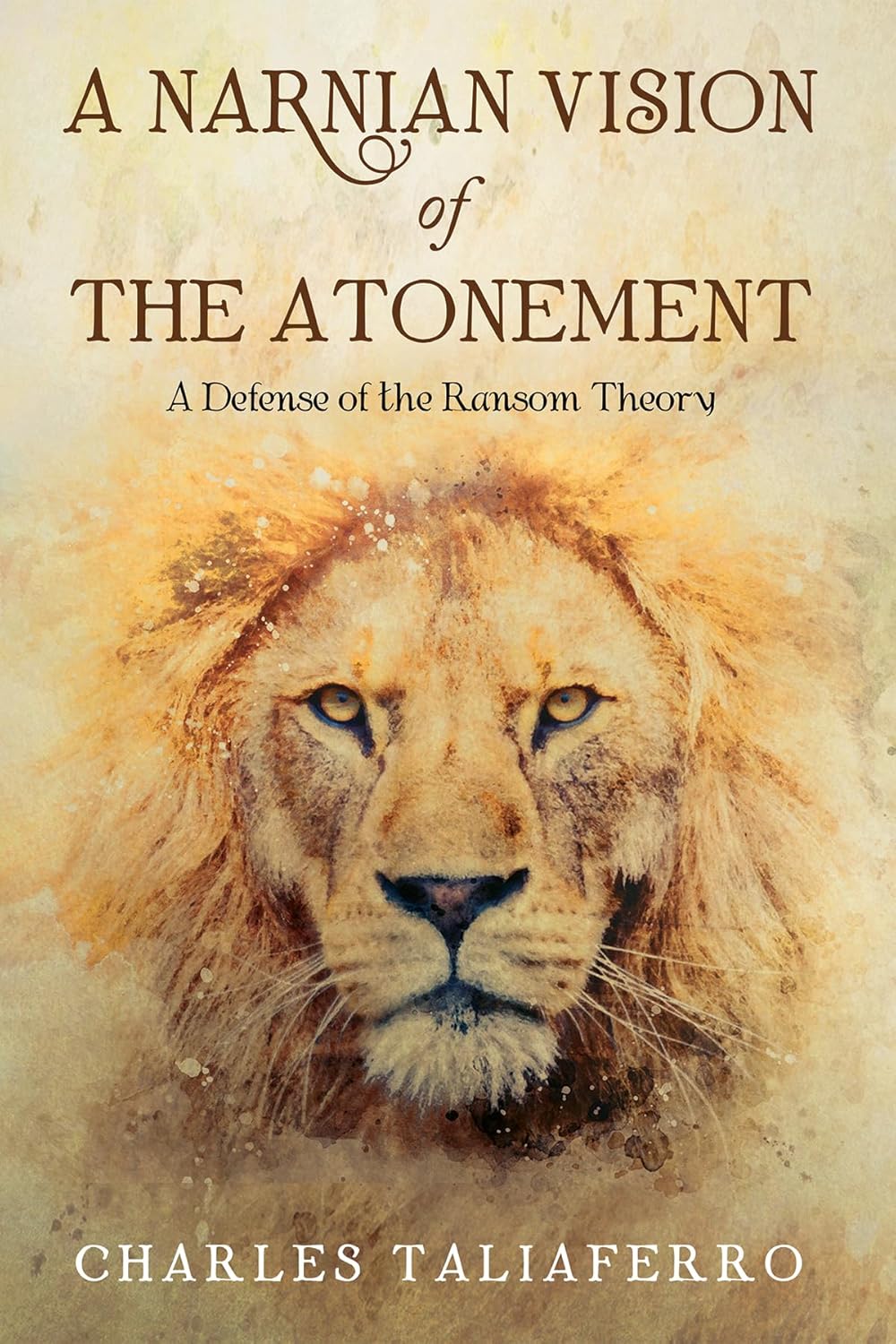
A Narnian Vision of the Atonement: A Defense of the Ransom Theory  was written by Charles Taliaferro, Professor Emeritus of Philosophy at St. Olaf College.

I’m enjoying the volume right now, although “philosophy” per se is far from my passion. But Jesus of Nazareth is. And I am passionate, as well, about the work of Yeshua’s disciple, C.S. Lewis. And Jesus and Lewis are the central characters in Taliaferro’s book.

He makes the subject of doctrine and philosophy quite accessible. I find this especially beneficial in his chapter on “the Ransom Theory and Rival Accounts of the Atonement.” Whereas some theologians are dismissive of the earliest Christian view of the atonement, this volume argues that it is far from incompatible with modern emphases (e.g. the Exemplar Model).

Since the early medieval era (roughly, the eleventh century), theories of the atonement have been any version except the ransom theory. In this chapter we will consider a host of them. I will be painting with a broad brush, with minimal references, in an effort to favorably sketch these accounts.

Afterwards, I will suggest that these accounts are not only compatible with the ransom theory, the ransom theory can provide important support for these so-called rivals.

I strongly commend this volume – especially at this unbelievable price – to anyone interested in C.S. Lewis’ faith or even in basic historic Christianity.

I will close with a wonderful passage from a letter C.S. Lewis wrote in 1954. Discussing theodicy, why God allows the suffering of innocents, Lewis offers this profound insight, inspired by Hebrews 2:10, and, it seems to me, 2 Corinthians 12:9.

Do you know, the suffering of the innocent is less of a problem to me v. often than that of the wicked. It sounds absurd; but I’ve met so many innocent sufferers who seem to be gladly offering their pain to God in Christ as part of the Atonement, so patient, so meek, even so at peace, and so unselfish that we can hardly doubt they are being, as St. Paul says, “made perfect by suffering.”

On the other hand I meet selfish egoists in whom suffering seems to produce only resentment, hate, blasphemy, and more egoism. They are the real problem (11 November 1954).

The Atonement – the restoration of humanity’s proper relationship with our Creator – is the greatest of miracles. And, A Narnian Vision of the Atonement, can help us to better celebrate its wonders.

Damnable Typos & the Bible

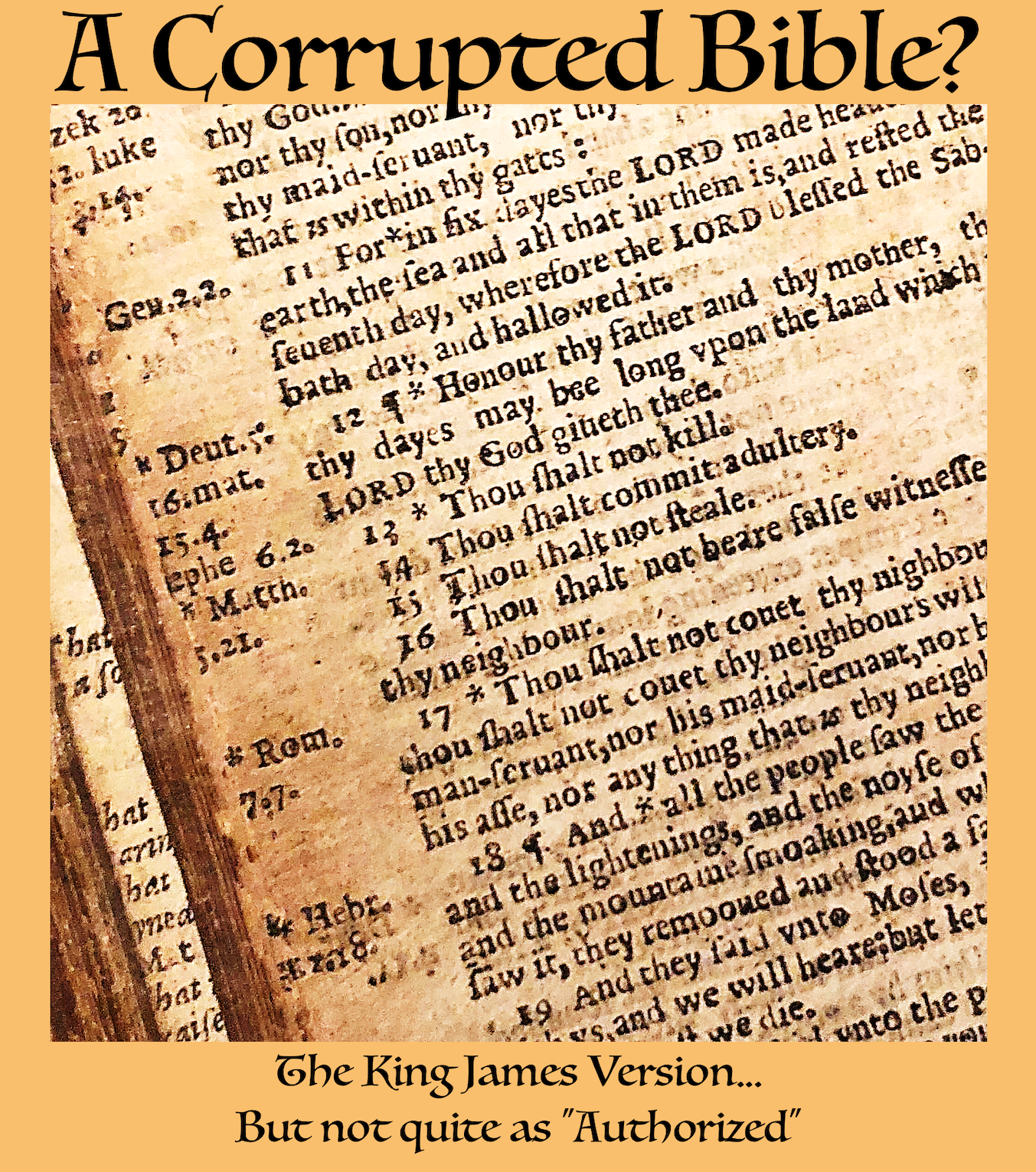
While the title of this post will be shocking to some, it’s far less scandalous than the typographical error discussed below. Due to two misprints appearing in a 1641 edition of the King James Bible (KJV), the publication has been labeled the “Wicked Bible.”

Translating the Scriptures is a necessary, and demanding, task. The early editions of the KJV (which was preceded by the Wycliffe Bible) reveal how vulnerable the words themselves were to being altered during the typesetting process.

I’ve written about this subject a number of times during the past decade, and even devoted a column to “C.S. Lewis’ School of Translation,” which is about something even more important than merely translating words. There I quote one of the great author’s deepest hopes.

What I want is to be the founder of a school of ‘translation . . .’ Where are my successors? (correspondence, 7 October 1945).

Returning to the seventeenth century book with its unfortunate errors, we witness an example of how even a solid translation can be derailed by careless (or malevolent) typesetters.

The magnitude of the mistake discovered in this particular edition caused its suppression, and most copies were destroyed. While some still exist in private hands, only fifteen remain in public collections. One of these made its way to New Zealand before being identified in 2018.

A Truly Scandalous Misprint

It would be one thing if a printer accidently dropped the final “e” from “breathe,” leaving the word “breath.” Even substituting an errant “w” for the “b,” would create an alternate word that would greatly muddle a passage . . . but still not appear remotely “wicked.” 

However, a 1631 mistake in an English Bible literally turned a passage – one of the Ten Commandments, no less – on its head. Rather than reading “Thou shalt not commit adultery,” this edition declares, “Thou shalt commit adultery” (Exodus 20:14).

The consequences of this disaster were significant, particularly for His Majesty’s official printers. In Cyprianus Anglicanus by royalist priest Peter Heylyn (1599-1662), we learn the details. (You can download a free facsimile of the volume which includes many other fascinating facts.) The passage related to the misbegotten tome reads as follows:

His Majesties Printers, at or about this time [1632], had committed a scandalous mistake in our English Bibles, by leaving out the word Not in the Seventh Commandment.

His Majesty being made acquainted with it by the Bishop of London, Order was given for calling the Printers into the High-Commission where upon the Evidence of the Fact, the whole Impression was called in, and the Printers deeply fined, as they justly merited.

Reports of Cases in the Courts of Star Chamber and High Commission, penned by Samuel Rawson Gardiner in 1886, includes a detailed account of the court’s findings. (Due to their uniqueness, I have transposed the full account, as found in two sections, as a footnote below.) One passage describes a second “gross error.”

. . . showed the two grossest errors, vizt. “Shalt commit adultery” and “great asse:” for “shalt not commit adultery” and “greatnesse…”

The second of these blunders occurs in Deuteronomy 5:24, which properly reads “Behold, the Lord our God hath shewed us his glory and his greatness.” (It should be noted that the word asse would most commonly be associated with donkeys.)

The magnitude of these mistakes can only be understood when one recognizes how reverentially the Scriptures were regarded at this time. C.S. Lewis would suggest that during an age when the Bible has been relegated to historic literature, it is difficult for us to comprehend the seriousness of this matter.

It is very generally implied that those who have rejected its theological pretensions nevertheless continue to enjoy it as a treasure house of English prose. It may be so. There may be people who, not having been forced upon familiarity with it by believing parents, have yet been drawn to it by its literary charms and remained as constant readers.

But I never happen to meet them. Perhaps it is because I live in the provinces. But I cannot help suspecting, if I may make an Irish bull, that those who read the Bible as literature do not read the Bible. (“The Literary Impact of the Authorised Version”).

In “Challenges in Printing Early English Bibles,” you can read about other Bibles featuring noteworthy mistakes. In two, “peacemakers” become “placemakers,” and “murmurers” are transformed into “murderers.” Another example, in the very first edition of the KJV, finds Jesus’ ancestor Ruth referred to by the male pronoun, due to the accidental dropping of an “s.”

More troubling is another early KJV Bible where “the text of Psalm 14 [reads], “The fool hath said in his heart there is a God,” rather than “The fool hath said in his heart there is no God.”

Worst of all, in terms of blasphemous connotations, would likely be the so-called “Judas Bible.”

In the 1609 Geneva Bible, the typesetters mistakenly replaced Jesus’s name with that of Judas. John 6:67 reads: “From that time many of his disciples went back, and walked no more with him. Then said Judas unto the twelve, Will ye also go away?”

Fortunately, modern editions of the Jewish and Christian Scriptures undergo thorough proofreading, so this sort of error is rare today. Still, typos will persist as long as the remotest possibility of error exists.

Those among us who have sought to have our writing published by traditional publishers may relate to the example with which we end. C.S. Lewis and J.R.R. Tolkien and even Mark Twain faced challenges working with some of their editors and publishers.

With all of the printing mishaps in the early English Bible, it is only appropriate that one of the editions was called “The Printers Bible.”

This text, published in about 1702, takes its name from a typesetting error found in Psalm 119, which should have read “Princes have per­secuted me without a cause” but was mistakenly printed as “Printers have persecuted me.”


Full references from Reports of Cases in the Courts of Star Chamber and High Commission by Samuel Rawson Gardiner (1886).

Mr Barker the printer. There is a cause begunne against him for false printeing of the Bible in divers places of it, in the Edition of 1631, vizt., in the 20 of Exod[us], “Thou shalt committ adultery”; and in the fifte of Deut[eronomy] “The Lord has shewed his glory, and his great asse”; and for divers other faults; and that they had printed it in very bad paper. And the Bishop of London showed that this would undoe the trade, and was a most dishonorable thing; that they of the church of Rome are soe carefull, that not a word or letter is to be found amisse in their Ladie’s Psalter and other superstitious books; and that we should not be soe carefull in printinge the sacred Scriptures; and that they in Holland, at Amsterdam, had gott up an English presse, and had printed the Bible in better paper, and with a better letter, and can undersell us 18d. in a Bible. Mr Barker and his partners endeavored in partt to excuse themselves, and had advocates to speake for them, and were willing to submitt, and promised to amend their faults; but the Court would not remitt their offense, but the cause was ordered to goe on.

The Printers having answered move the Court to passe by their oversight being the fault of the workmen but the King’s Advocate desired they might make their defense legally and the cause to go onto hearing: and that he might have liberty to put in additional articles against them. The Bishop of London would have the Church sett upright in her reputacion, that we are as carefull in printeing the Bible as they are of their Jesus’ psalter : and whereas the Printers say this is stirred up by the malice of one man against them; The Bishop saith he stirred not till the Bible was sould into his house, bought by his footman: and he saith the printinge is soe bbad and the paper too that, if it be not mended shortlie, they wilbe put downe by those of Amsterdam and their trade spoyled, and showed for the two grossest errors, vizt. “Shalt commit adultery” and “great asse:” for “shalt not commit adultery” and “greatnesse…” The Arch Bishop of Canterbury saith, that the Printers that print for his Matie have a very profitable place, and therefore should be more carefull. I knew the tyme when greater care was had about printeing, the Bibles especiallie, good compositors and the best correctors were gotten being grave and learned men, and the paper and letter rare and faire every way of the best; but now the paper is naught, the composers boyes, and the correctors unlearned: There is a farmer and he makes the benefit, and careth for nothing about it. They heretofore spent their whole time in printeing, but these looke to gaine, gaine, gaine, then they are not to be commended: Well, let them looke to it: and let the cause proceed, saith the ArchBishop. London. “There was a great deale of doo between you of this Citty and those of Cambridge heretofore about the priviledge of printeing the Bible and psalms which they of Cambridge claymed; then the Bible was exactlie printed, now you have forced the Cambridg printer to an agreement, now noe bible is right printed.

[It appears this volume itself would have benefited from having more diligent “correctors.” Perhaps most curiously, two spellings of the word printing – “printinge” and “printeing” – appear in this publication.]

C.S. Lewis, Liturgy & a Dash of Theology

C.S. Lewis wrote: “There is no subject in the world (always excepting sport) on which I have less to say than liturgiology” (Letters to Malcolm: Chiefly on Prayer).

In Christian usage, the word “liturgy” – derived from leitourgia, and translated “work of the people” or “work for the people” – corresponds to the public worship service.

For some, “liturgy” is regarded as a negative word. It may evoke, in such cases, a sense of sterile ritual or what the Scriptures refer to (in the King James Version) as “vain repetitions” (Matthew 6). The irony is that human beings generally prefer familiarity, and almost all worship is essentially liturgical. 

Nondenominational churches sometimes claim they do not possess a liturgy. In truth, every nonspontaneous worship experience possesses liturgical elements. They may be simple – a welcome or greeting followed by music, prayer, the reading of a Bible passage, often followed by some form of sermon or reflection. Oh, and for American Protestants at least, it appears most consider “announcements” are essential to worship services.

The particular elements vary, but the “liturgical” aspects, normally occur in the same sequence at regular services.

C.S. Lewis was a faithful member of the Church of England. He was also respectful of tradition, and genuinely content with the Book of Common Prayer. While he did not prefer conventional church hymnody, he acknowledged that it blessed others. In “The Classical Anglicanism of C.S. Lewis,” the author says Lewis challenged “the assumptions of a liberal theology which undermined the Church’s confidence in its proclamation” of the Gospel. However, he continues, Lewis “was no reactionary.”

C.S. Lewis loved the simplicity of church worship in its unostentatious form. That was one reason he faithfully attended services at his modest local parish. He referred to himself as a “very ordinary layman.” This was his humble confession, although there was precious little about the scholar that was “ordinary.” Still, he was reticent to comment on ecclesiastical subjects where he possessed no expertise. Thus his complacency with time proven liturgical matters, and his academic disinterest in commenting on them formally.

This, of course, did not apply to theological truths such as the doctrinal core of “Mere Christianity.” C.S. Lewis was deeply troubled by challenges to historic Christian orthodoxy. His devotion to the faith he had once rejected forced him to come to its defense when theologians diverged from “the path of life” (Psalm 16).

In 1959, C.S. Lewis delivered an address now entitled “Fern Seed and Elephants.” It is profound. [You can listen to a reading of “Fern Seed and Elephants” at C.S. Lewis Essays.]

Invited to speak to some clergy about the threat of liberal theologies undermining the Christian faith, Lewis begins by acknowledging his lack of formal theological training.

I am a sheep, telling shepherds what only a sheep can tell them. And now I begin my bleating.

Many of us who have attended seminary, can attest to his fear that what passes for illumination is too often the opposite.

I find in these theologians a constant use of the principle that the miraculous does not occur. Thus any statement put into our Lord’s mouth by the old texts, which, if he had really made it, would constitute a prediction of the future, is taken to have been put in after the occurrence which it seemed to predict.

This is very sensible if we start by knowing that inspired prediction can never occur. Similarly in general, the rejection as unhistorical of all passages which narrate miracles is sensible if we start by knowing that the miraculous in general never occurs.

Now I do not here want to discuss whether the miraculous is possible. I only want to point out that this is a purely philosophical question. Scholars, as scholars, speak on it with no more authority than anyone else. The canon ‘If miraculous, then unhistorical’ is one they bring to their study of the texts, not one they have learned from it.

If one is speaking of authority, the united authority of all the biblical critics in the world counts here for nothing. On this they speak simply as men; men obviously influenced by, and perhaps insufficiently critical of, the spirit of the age they grew up in.

In Lewis’ The Great Divorce, he describes just such a theologian. If you would like to read my article on this subject, “Confused Clerics: The Landlord’s Stewards in C.S. Lewis’s The Pilgrim’s Regress,” just click on the article’s title.

C.S. Lewis ends his essay “Fern Seeds and Elephants” with a sort of apology. Yet, despite his reluctance to venture into the ecclesiastical realm, he shares the compulsion of the Prophet Jeremiah to speak truth. The prophet, who suffered greatly for his faithfulness, said “If I say, ‘I will not mention [God], or speak any more in his name,’ there is in my heart as it were a burning fire shut up in my bones, and I am weary with holding it in, and I cannot” (Jeremiah 20).

Missionary to the priests of one’s own church is an embarrassing role; though I have a horrid feeling that if such mission work is not soon undertaken the future history of the Church of England is likely to be short.

More Liturgical Wisdom from C.S. Lewis

C.S. Lewis did not begin his vocation as a voice of reason for the clergy when he wrote this essay. On the contrary, his concern for the erosion of sound theology began much earlier. A decade earlier he weighed in on a public discussion of arbitrary liturgical changes in the church. Lewis’ concerns at that time remain valid, more than seventy years later.

Sir,– I agree with Dean Hughes that the connection of belief and liturgy is close, but doubt if it is ‘inextricable.’ I submit that the relation is healthy when liturgy expresses the belief of the Church, morbid when liturgy creates in the people by suggestion beliefs which the Church has not publicly professed, taught, and defended.

If the mind of the Church is, for example, that our fathers erred in abandoning the Romish invocations of saints and angels, by all means let our corporate recantation, together with its grounds in scripture, reason and tradition be published, our solemn act of penitence be performed, the laity re-instructed, and the proper changes in liturgy be introduced.

What horrifies me is the proposal that individual priests should be encouraged to behave as if all this had been done when it has not been done.

One correspondent compared such changes to the equally stealthy and (as he holds) irresistible changes in a language. But that is just the parallel that terrifies me, for even the shallowest philologist knows that the unconscious linguistic process is continually degrading good words and blunting useful distinctions. Absit omen!

Whether an ‘enrichment’ of liturgy which involves a change of doctrine is allowable, surely depends on whether our doctrine is changing from error to truth or from truth to error. Is the individual priest the judge of that? (Church Times, 1 July 1949).

In The Screwtape Letters, an experienced devilish tempter is training a subordinate. In Letter XVI, he discusses attending a church with which his target “is not wholly pleased.”

Laying aside the matter of the futility of ever finding a perfect church – after all, they are made up of people – the letter cautions us about some of the criticisms related to the topic at hand. Since many aspects of Screwtape’s vile advice relate to our own vulnerabilities, I will close with an admittedly lengthy excerpt from the correspondence.

My dear Wormwood, You mentioned casually in your last letter that the patient has continued to attend one church, and one only, since he was converted, and that he is not wholly pleased with it. May I ask what you are about? Why have I no report on the causes of his fidelity to the parish church? Do you realise that unless it is due to indifference it is a very bad thing?

Surely you know that if a man can’t be cured of churchgoing, the next best thing is to send him all over the neighbourhood looking for the church that ‘suits’ him until he becomes a taster or connoisseur of churches. The reasons are obvious. In the first place the parochial organisation should always be attacked, because, being a unity of place and not of likings, it brings people of different classes and psychology together in the kind of unity the Enemy [in Screwtape’s case, the Enemy to whom he refers, is God] desires. The congregational principle, on the other hand, makes each church into a kind of club, and finally, if all goes well, into a coterie or faction.

In the second place, the search for a ‘suitable’ church makes the man a critic where the Enemy wants him to be a pupil. . . . [One nearby congregation boasts a] Vicar is a man who has been so long engaged in watering down the faith to make it easier for a supposedly incredulous and hard-headed congregation that it is now he who shocks his parishioners with his unbelief, not vice versa. He has undermined many a soul’s Christianity. His conduct of the services is also admirable. In order to spare the laity all ‘difficulties’ he has deserted both the lectionary and the appointed psalms and now, without noticing it, revolves endlessly round the little treadmill of his fifteen favourite psalms and twenty favourite lessons. . . .

[While encouraging church shopping], all the purely indifferent things – candles and clothes and what not – are an admirable ground for our activities. We have quite removed from men’s minds what that pestilent fellow Paul used to teach about food and other unessentials – namely, that the human without scruples should always give in to the human with scruples.

You would think they could not fail to see the application. You would expect to find the ‘low’ churchman genuflecting and crossing himself lest the weak conscience of his ‘high’ brother should be moved to irreverence, and the ‘high’ one refraining from these exercises lest he should betray his ‘low’ brother into idolatry.

And so it would have been but for our ceaseless labour. Without that the variety of usage within the Church of England might have become a positive hotbed of charity and humility.

George MacDonald’s Poetry

George MacDonald (1824-1905) was a prolific Scot writer. His legacy was amplified due to his influence on G.K. Chesterton and C.S. Lewis. (He was also a friend of Mark Twain.) An essay, originally presented as a speech by G.K. Chesterton, is available online.

Chesterton goes so far as to say, “if to be a great man is to hold the universe in one’s head or heart, Dr. MacDonald is great. No man has carried about with him so naturally heroic an atmosphere.” Listen to his description of that special type of literature that inspired many Inklings, chiefly C.S. Lewis and J.R.R. Tolkien.

Many religious writers have written allegories and fairy tales, which have gone to creating the universal conviction that there is nothing that shows so little spirituality as an allegory, and nothing that contains so little imagination as a fairy tale. But from all these Dr. MacDonald is separated by an abyss of profound originality of intention.

The difference is that the ordinary moral fairy tale is an allegory of real life. Dr. MacDonald’s tales of real life are allegories, or disguised versions, of his fairy tales.

It is not that he dresses up men and movements as knights and dragons, but that he thinks that knights and dragons, really existing in the eternal world, are dressed up here as men and movements.

C.S. Lewis, for his part, praised MacDonald as instrumental in tilling the soil for his eventual conversion to Christianity. He was on the defensive, since the writers which most inspired him shared a common flaw – they were Christians.

All the books were beginning to turn against me. Indeed, I must have been as blind as a bat not to have seen, long before, the ludicrous contradiction between my theory of life and my actual experiences as a reader.

George MacDonald had done more to me than any other writer; of course it was a pity he had that bee in his bonnet about Christianity. He was good in spite of it.

Chesterton had more sense than all the other moderns put together; bating, of course, his Christianity. Johnson was one of the few authors whom I felt I could trust utterly; curiously enough, he had the same kink. Spenser and Milton by a strange coincidence had it too (Surprised by Joy).

Lewis would actually come to edit a selection of MacDonald’s passages for an edifying anthologyThis post includes a link for downloading a copy of George MacDonald: An Anthology.

This week I was reading one of MacDonald’s excellent essays, which appears in The Imagination and Other Essays. I intend to discuss some of his thoughts on age and writing soon. Although I am not an aficionado of poetry – despite having composed poetry from time to time, including quintains, I turned to another of MacDonald’s books.

On to His Poetry

I decided to follow up MacDonald’s brilliant essay with a dip into his poetry. Fortunately, Internet Archive allows you to freely download a complete copy of MacDonald’s Scotch Songs and Ballads, published in 1893. My conscience forces me, however, to provide a single caveat. Be forewarned that the tome is not suited for those intimidated by pronounced dialects.

Before looking at one of his poems in its entirety, allow me to share with you a passage from “The Waesome Carl” which I particularly enjoyed (due to its portrait of a preacher). 

The minister wasna fit to pray
And lat alane to preach;
He nowther had the gift o’ grace
Nor yet the gift o’ speech!
He mind’t him o’ Balaäm’s ass,
Wi’ a differ we micht ken:
The Lord he opened the ass’s mou,
The minister opened’s ain!
He was a’ wrang, and a’ wrang,
And a’thegither a’ wrang;
There wasna a man aboot the toon
But was a’thegither a’ wrang!
The puir precentor couldna sing,
He gruntit like a swine . . .

Not that I claim able to decipher it all, but my impression is that it’s not especially flattering. It is definitely entertaining. And I humbly think I interpret it significantly more accurately than Google’s online translator, which provided the following version.

The minister was not fit to pray
And lat alane to preach;
He nowther had the gift o’ grace
Nor yet the gift o’ speech!
He mind’t him o’ Balaam’s ass,
Wi’ a differ we micht ken:
The Lord he opened the ass’s mou,
The minister opened his eyes!
He was a’ wrang, and a’ wrang,
And a’thegither a’wrang;
There was a man aboot the toon
But thegither was wrong!
The puir precentor couldna sing,
He grunted like a swine. . .

Using the Dictionars o the Scots Leid, you can make perfect sense of the words about which you may be uncertain. (Thank you, Scotland.)

Dialects are interesting things indeed. I will close with another of MacDonald’s poems. I submit it for (1) those who comprehend the dialect, (2) those who deem precious their Scottish ancestry, (3) those with an affinity for Connor MacLeod, and (4) those who simply enjoy a challenge.

Nannie Braw

I like ye weel upo Sundays, Nannie,
I’ yer goon and yer ribbons and a’;
But I like ye better on Mondays, Nannie,
Whan ye’re no sae buskit and braw.

For whan we’re sittin sae douce, Nannie,
Wi’ the lave o’ the worshippin fowk,
That aneth the haly hoose, Nannie,
Ye micht hear a moudiwarp howk,

It will come into my heid, Nannie,
O’ yer braws ye are thinkin a wee;
No alane o’ the Bible-seed, Nannie,
Nor the minister nor me!

Syne hame athort the green, Nannie,
Ye gang wi’ a toss o’ yer chin;
And there walks a shadow atween ‘s, Nannie,
A dark ane though it be thin!

But noo, whan I see ye gang, Nannie,
Eident at what’s to be dune,
Liltin a haiveless sang, Nannie,
I wud kiss yer verra shune!

Wi’ yer silken net on yer hair, Nannie,
I’ yer bonnie blue petticoat,
Wi’ yer kin’ly arms a’ bare, Nannie,
On yer ilka motion I doat.

For, oh, but ye’re canty and free, Nannie,
Airy o’ hert and o’ fit!
A star-beam glents frae yer ee, Nannie–
O’ yersel ye’re no thinkin a bit!

Fillin the cogue frae the coo, Nannie,
Skimmin the yallow ream,
Pourin awa the het broo, Nannie,
Lichtin the lampie’s leme,

Turnin or steppin alang, Nannie,
Liftin and layin doon,
Settin richt what’s aye gaein wrang, Nannie,
Yer motion’s baith dance and tune!

I’ the hoose ye’re a licht and a law, Nannie,
A servan like him ‘at’s abune:
Oh, a woman’s bonniest o’ a’, Nannie,
Doin what maun be dune!

Cled i’ yer Sunday claes, Nannie,
Fair kythe ye to mony an ee;
But cled i’ yer ilka-day’s, Nannie,
Ye draw the hert frae me!

Addendum:

For those interested in pursuing this linguistic subject, I just came across a delightful 1896 collection of works you can download for free. Legends of the Saints: in the Scottish Dialect of the Fourteenth Century is “edited from the unique manuscript in the University Library, Cambridge.”


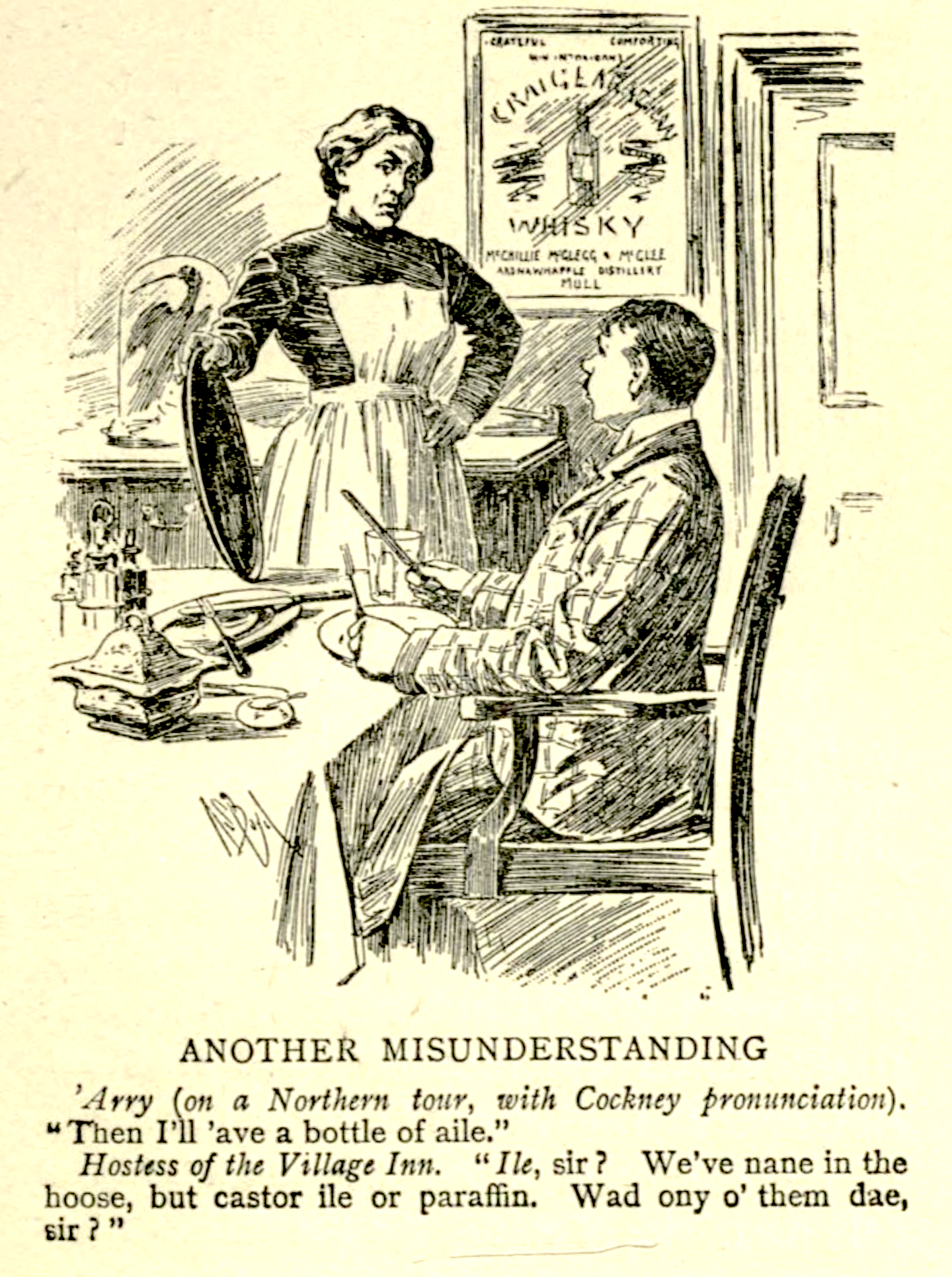
The cartoon above comes from Mr. Punch in the Highlands which was published “with 140 illustrations” more than a century ago. You can download your personal copy of humorous work at Internet Archive.

Do Lay People Think?

Attending seminary was shocking. Having grown up in Lutheran communities with a high view of the Scriptures, I anticipated entering an environment where I would grow in my knowledge and regard for God’s word. A setting consistent with our Reformation theology which confessed “Sola Scriptura,” the Scriptures alone, as the ultimate authority for doctrine and life.

I was amazed at the theology taught by a few of the faculty who were disciples of Bultmann’s radically skeptical interpretation of Christianity.

One morning I was in the seminary cafeteria – the aptly named Diet of Worms – commiserating over this situation with several other students who shared my astonishment. I said something to the effect of “Is Lutheranism what liberal theologians think, or what the majority of Confessionally-grounded lay people in the pews think?”

Apparently one of the New Testament professors had overheard our conversation. He could not resist walking over, leaning over our table, and asking – “Do lay people think?”

I’ve never forgotten the vanity and unintentional irony in that rhetorical comment. As I recall, it elicited a complicit chuckle from the entourage of liberal students already falling under his spell.

The greatest Christian apologist of the twentieth century, C.S. Lewis, was neither a cleric nor a theologian. Lewis described himself as “a very ordinary layman of the Church of England” (Mere Christianity). In the same work he expressed his lifelong position. Since he was not theologically trained, he was constrained from making authoritative declarations about complex matters.

I am only a layman, and at this point we are getting into deep water. I can only tell you, for what it is worth, how I, personally, look at the matter.

Pastors & Theologians, What are they Good For?

Some will answer that question echoing the words of the 1970 classic by the Temptations: “absolutely nothing.”

In an over-reaction to the errors of the medieval Papacy, some Protestants threw out all of the legitimate practices which had developed in the early church, including the ordination of pastors. The anti-clerical communities vary in their attitudes toward higher education for “teachers and elders,” but rarely regard such studies as necessary, or even a plus.

Most denominations, however, have maintained an awareness that having future pastors devote several years to biblical and theological studies is vital to the church’s wellbeing. Add to that additional subjects such as counseling and homiletics – skills that are essential – and you should get well-rounded pastors. 

Sadly, there are plenty of exceptions. I have written about wolves in sheep’s clothing in the past. Still, discerning students attending trustworthy seminaries invariably become better equipped to fulfill the demands of pastoral ministry. Check out “The Relevance of Theological Education” in the (free) journal Themelios which is published by the Gospel Coalition. Themelios is the Greek word for “foundation.” The article begins:

Most theological students have doubts at some time about the usefulness of their theological training. Some of these doubts are justified, since most theological courses leave plenty of room for improvement. But some of our doubts reflect a lack of understanding of the purpose and function of theological training.

What about Lay People?

Before the word “lay” became associated with distinguishing the mass of people from those within particular professions, it originated to distinguish the believing “laity” who adhere to a faith from clergy of that tradition.

Are clergy holier than laypeople? Definitely not. However, in the Christian faith we acknowledge that they are expected to live with greater moral integrity than those they serve. 

“Not many of you should become teachers, my brothers, for you know that we who teach will be judged with greater strictness” (James 3:1).

It is quite sobering for those who take God’s word seriously. In Paul’s letter to Titus we read a relatively explicit description of the requirements for pastors. 

“This is why I left you in Crete, so that you might . . . appoint elders in every town as I directed you – if anyone is above reproach, the husband of one wife, and his children are believers and not open to the charge of debauchery or insubordination. For an overseer, as God’s steward, must be above reproach.

“He must not be arrogant or quick-tempered or a drunkard or violent or greedy for gain, but hospitable, a lover of good, self-controlled, upright, holy, and disciplined. He must hold firm to the trustworthy word as taught, so that he may be able to give instruction in sound doctrine . . .” (Titus 1).

Different Roles

The inspiration for my post on this subject is an article I read in the 2024 Logos Bible Software Seminary Guide. A PhD theologian wrote “Do Theological Writers Need Theological Education?” which answered its own question in its subtitle: “Yes and No.” The writer states that degrees are most definitely not required.

There is nothing sacrosanct about sitting in a classroom . . . You can be educated through other means, with diligent reading being at the top of the list.

Simultaneously, he defends the values of a solid education. I love the way that he responds to the way some people denigrate theological education (because I’ve met more of these folks than I can number).

Today’s many populists might beg to differ. They mock “edumucation” and deride the arrogant eggheads who get too much of it. They flout the norms of academic discourse . . . they seem proud of their misspellings.

It’s not as if there is no truth at all in their complaints: educated people do indeed often give in to arrogance. But it’s not at all clear to me that arrogance about one’s ignorance is any better.

I concur. I’m against arrogance altogether – along with C.S. Lewis. “Lewis on Intellectual Pride” speaks directly to the question I’ve addressed herein. Discussing Lewis’ warnings about pursuing academia, the author says:

Why is intellectual arrogance so quick to rise within us? It makes us feel important. We understand more than others (we think). That makes us better than the ignorant masses (we boast).

Martin Luther described the centrality of God’s self-revelation in determining who is most fit to teach. And that has nothing to do with an individual’s ecclesiastical status.

The Bible is alive, it speaks to me; it has feet, it runs after me; it has hands, it lays hold of me. . . . A simple layman armed with Scripture is to be believed above a pope or a cardinal without it.

So, returning to the question with which I began, do lay people think? I am as scandalized by those very words as I was when I first heard them voiced. That particular professor is no longer alive. But, sadly, his prideful thinking remains with us today. And it’s not only evident in religion; humanity is plagued by an intelligentsia that dismisses the “lay” views of common people across the board. 

The actual truth is that education has its values, and its limitations. And there are innumerable laymen and women who possess wisdom on nearly every subject which is superior to the supposed “experts.” Yes, esteemed doctor of de-supernaturalized theology, lay people can indeed comprehend and share the wisdom of God.

Suffering Caused by Labeling Children

Kids are often cruel, dishing out insults and rude nicknames to those they deem “different.” Sadly, not everyone outgrows this ugly behavior. As C.S. Lewis wrote in The Four Loves,

We hear a great deal about the rudeness of the rising generation. I am an oldster myself and might be expected to take the oldsters’ side, but in fact I have been far more impressed by the bad manners of parents to children than by those of children to parents.

I recently discovered an artist whose music reveals the pain caused by this cruelty. In “Not My Name,” Matt Sassano describes how we can move beyond the wounds of our past. For we all understand these hurtful words possess power.

These are the scars
     that I’m forced to live with,
These are the scars
     that mark me as a misfit . . .

Who among us does not bear scars from past struggles? Who among us has never been ridiculed by others?

Despite having a loving mother who sheltered me from much of life’s traumas, I bear my own scars. That’s one reason this song powerfully resonated with me. 

But there is a stronger reason I am touched by “Not My Name.” It’s because, as a pastor I have seen far, far too many women and men who remain buried beneath their pain.

I found healing in God’s grace. The scars now cause me little discomfort, though the memories remain. And I have found healing often begins when people who have endured life’s onslaughts learn they are not alone. 

This man shares a heart just like their own.

These are the scars
     that I am forced to live with
So pick me apart
I won’t fit the mold that you fit
But thеre’s a warrior inside me
That you playеd a part in building
Because you made me understand.

About staying strong when you’ve fought so long
In a world that tells you you don’t belong
Living in the shadow of all your flaws
Where it’s hard to be seen for who you are.

And, the emotionally and spiritually wounded can see how someone suffering like them can proclaim this liberating truth:

So label me
Call me by my pain
That’s not my name
That’s not my name.

I’m so much more
     than your throw away
That’s not my name
That’s not my name. . . .

You won’t sentence me
Your words are dead to me
I know my suffering
     is not my identity.

As impressed as I was with this song, it means all the more now that I learned something about Sassano’s life.

The Sins of the Father

A short biography reveals some of the reason for Sassano’s plaintive spirit. 

He was the son of an unfit pastor, whose anger and abuse crushed his childhood faith. His search for meaning “was intensified by the experience of living with two disabilities: Cerebral Palsy and dyscalculia (which impairs brain functions like navigation and mathematics).

“I spent much of my early life in and out of doctor’s offices and disability meetings, which led me to struggle with my self-perception and self-esteem.”

It is this tragic youth which directly inspires his video “Dear God.” Released in 2022, it reminds me of the lamentations we find in the Scriptures, particularly the Psalms and Jeremiah. In Madeleine L’Engle’s forward to C.S. Lewis’  lamentations in A Grief Observed, she expresses gratitude for his honest treatment of grief’s violence. 

I am grateful to Lewis for the honesty of his journal of grief, because it makes quite clear that the human being is allowed to grieve, that it is normal, it is right to grieve, and the Christian is not denied this natural response to loss.

I am grateful, too, to Lewis for having the courage to yell, to doubt, to kick at God . . . This is a part of healthy grief not often encouraged. It is helpful indeed that C.S. Lewis, who has been such a successful apologist for Christianity, should have the courage to admit doubt about what he has so superbly proclaimed. It gives us permission to admit our own doubts, our own angers and anguishes, and to know that they are part of the soul’s growth.

The video amplifies the power of the lyrics of “Dear God.” So, do watch it.

I’ve got questions, confessions
I just want peace of mind
Time’s fading and I’m waiting
For something I can’t find
I am overwhelmed
Can I endure this hell?
No way to break the spell
I’ll spill my heart again

Dear God
I’ve lost the will to fight
Please give me a sign
I’m empty inside
Got no strength to carry on
The plague has multiplied
It’s eating me alive
How can I survive?
Dear God

Much like C.S. Lewis’ book describing the loss of his wife, Sassano’s songs can help bring healing to those in similar pain. Even if you don’t need to listen to these songs . . . trust me, there is someone you know and care about, who does!

Father Christmas & Crackers

J.R.R. Tolkien wrote, for his children’s enjoyment, an entertaining little story about Father Christmas’ stash of explosives. Read on to see what a mischievous polar bear did with them.

Merry Christmas. No, I’m not late in wishing you a blessed celebration of Christ’s Nativity. The church calendar recognizes Christmas is too big to celebrate just for a single day. The Inklings knew it – Christmas is a season.

One nineteenth century invention has become a part of many families’ celebration of the season. They’re called “Christmas crackers,” and although birthed in Britain, they’ve found a home in many other countries. We adopted them as an annual tradition after living in England for several years.

Their beginning was modest. While many now lack edible treats, they were conceived as a means for selling confectionaries. Their inventor wanted to increase sales of a French treat.

For seven years he worked to develop the bon-bon into something more exciting, but it was not until he sat one evening in front of his fireplace that his great idea came to him. Watching the logs crackle, he imagined a bon-bon with a pop.

He made a coloured paper wrapper and put in it another strip of paper impregnated with chemicals which, when rubbed, created enough friction to produce a noise. He knew that bangs excited children (and were said to frighten evil spirits) – and the mottoes and poems he inserted inside the crackers amused adults (BBC).

Sadly, many of the crackers marketed today have been neutered. To improve their safety (and, no doubt, save production costs), some crackers no longer crack. They contain no “chemicals” to produce the customary bang. Seems like a misnomer to call these variants crackers, at all.

Tolkien’s Father Christmas Letters

Tolkien and his wife were blessed with four children, and they were doting parents. Each Christmas between 1920 and 1943, the famed author wrote and illustrated a pseudonymous letter to his kids. In 1976 they were posthumously published, and facsimiles of the correspondence appears in some editions of the letters.

They offer an intimate insight into the secular side of a Christian family’s celebration of the holiday (holy day). In fact, on Christmas Eve this very year, a selection from the letters was part of the Royal Carol Service, celebrated at Westminster Abbey.

The Christmas story was told in readings from Luke 2 given by The Prince of Wales and by Michael Ward. Jim Broadbent read from JRR Tolkien’s The Father Christmas Letters, and Leonie Elliot read Growing Tomorrow, a poem by Children’s Laureate Joseph Coelho commissioned specially for the service.

The following excerpt from the 1931 letter comes from the pen of Father Christmas himself. (It also features a fun notation from North Pole Bear.)

I should hardly feel it was Christmas if [the North Polar Bear] didn’t do something ridiculous. You will never guess what he did this time! I sent him down into one of my cellars – the Cracker-hole we call it – where I keep thousands of boxes of crackers (you would like to see them, rows upon rows, all with their lids off to show the kinds of colours.)

Well, I wanted 20 boxes, and was busy sorting soldiers and farm things, so I sent him; and he was so lazy he took his two Snowboys (who aren’t allowed down there) to help him. 

They started pulling crackers out of boxes, and he tried to box them (the boys’ ears I mean), and they dodged and he fell over, and let his candle fall right POOF! into my firework crackers and boxes of sparklers.

I could hear the noise, and smell the smell in the hall and when I rushed down I saw nothing but smoke and fizzing stars, and old Polar Bear was rolling over on the floor with sparks sizzling in his coat: he has quite a bare patch burnt on his back.

[NPB] It looked fine! That’s where Father Christmas spilled the gravy on my back at dinner!

The Snowboys roared with laughter and then ran away. They said it was a splendid sight – but they won’t come to my party on St. Stephen’s Day; they have had more than their share already.

The story goes on, relating the troublesome exploits of “two of the Polar Bear’s nephews” who have been visiting. However, the passage above suffices to illustrate the humor resident in the Tolkien household.

And, in light of this vignette, we just may have uncovered why modern manufacturers are forgoing the more explosive elements of Christmas crackers. No “pop,” no “poof.”

And, if you have a creative bent, consider making your own for next year!