Chocolate Mushrooms

mushroomThat’s right, chocolate mushrooms. And it gets worse.

Some flavors are not intended to ever be combined. Years ago, some friends who knew I loved chocolate and despised mushrooms found the perfect gift for me. Chocolates shaped like mushrooms.

There was only one small problem. The chocolates were actually mushroom-flavored. Imagine a chocolate bar melted into a can of cream of mushroom soup, and you get the idea.

Even people like my wife who love both distinct tastes, couldn’t stomach the blend.

Well, a new product has entered the market and it immediately reminded me of that unsavory fiasco.

A company in Hawaii has capitalized on merging two very flavors that are popular in many locales but just sound a wee bit incompatible. They have taken the delectable taste and gentle crunch of macadamia nuts and accented them with the aromatic zest of spam.

That’s right. Spam-flavored macadamia nuts. They sound irresistible, don’t they?

Probably not. But then, most readers of Mere Inkling aren’t in the target audience of Hamakua Macadamia Nut Company. The fact is—and those of us who’ve experienced the joy of living in the Pacific and Micronesia know this well—there are vast numbers of people who absolutely love spam.

I actually don’t have an objection to either of these products . . . individually. Spam casserole was a staple in the home of my youth, and I can eat it with pleasure today. Macadamias still seem a bit exotic and shipping costs make them a bit pricier than most of their competition, but they taste great.

Two wonderful flavors. Logic tells us that if they are both good alone, they’ll be even better together!

But some things were never meant to be combined.

Then again, some different qualities are magnificent when they are brought together. This is especially true when it comes to the art of writing.

Evelyn Underhill, a gifted author in her own right, composed a letter to C.S. Lewis in 1938 praising him for his recently released Out of the Silent Planet.

It is so seldom that one comes across a writer of sufficient imaginative power to give one a new slant on reality: & this is just what you seem to me to have achieved. And what is more, you have not done it in a solemn & oppressive way but with a delightful combination of beauty, humour & deep seriousness. I enjoyed every bit of it, in spite of starting with a decided prejudice against “voyages to Mars.”

“Beauty, humor, and deep seriousness . . .” Traits those of us who love Lewis’ work have come to expect. In great quantity. And we are not disappointed.

Good writing can excel in a single dimension. Great writing, it seems to me, earns that appellation by weaving together a variety of strong “flavors.”

It’s like comparing a superb violin solo to a flawless symphony. Part of the wonder of the latter is the skill with which each disparate element combines into a glorious whole.

Or, returning to the culinary realm with which we began, powerful writing properly combines distinct flavors that complement one another . . . such as chocolate and peanut butter, or spam and . . . Well, I trust I’ve made my point.


Up in Smoke

hookahsI have the misfortune of living in one of the two states that has legalized the growing, distribution, use and promotion of marijuana.

The fauna and (natural) flora of Washington are scenic beyond compare. But in order to enjoy them, I am forced to live in a location where what was inconceivable a decade ago has become commonplace.

This week, in my small town of nine thousand, they opened our first “hookah lounge.” Although the owner’s initial license only allows the sale and on premises use of various tobaccos and other weeds, it’s no secret the owner is eager to expand his offerings.

My purpose here is not, however, to debate the merits of legalizing cannabis. I want to share with you the utterly apropos name of this hookah palace. It is called “Up in Smoke.”

While I’m sure the entrepreneur thought he concocted a brilliant play on words for his establishment, I cannot help but shake my head at the irony.

After all, what does the phrase actually mean? The expression isn’t truly an “idiom,” since the words are quite straight forward. It means what it says, referring to something of potential value that has been burned and is now lost, spoiled or wasted. Of course, the last of those synonyms also has another connection to the world of drugs.

I suspect the actual meaning of the phrases pass right over the head of the owner. He certainly misses the irony, or he would not adorn his establishment with that moniker.

I assume the purveyor of lung destroying inhalants is consciously referencing the 1978 film by this name, that glorifies the drugged induced stupors of Cheech and Chong. (Not a pinnacle of cinematic achievement.)

The saddest thing about using drugs for “recreation,” or distraction from the responsibilities of life, is that it often results in lives going up in smoke. While marijuana itself is apparently used “recreationally” by many successful people, with little negative impact, that’s far from true for all who “inhale.”

As I try to recall every individual I’ve personally known who used the drug, I’m unable to think of a single person who stopped there and did not at least experiment with some other drug. From my subjective experience, it definitely proved to be a “gateway” drug.

While none of these acquaintances became what would traditionally be labeled an “addict,” I can think of several tremendously talented and gifted people who never lived up to their potential. And I attribute at least part of that regret to being distracted from school and employment as young adults.

Similarly, of all of the people I’ve counseled regarding drug-related struggles during the past three decades, I’m hard-pressed to recall a single one who did not begin his or her narcotic journey with the ubiquitous weed.

Drugs, of course, are not the only diversions that cause us to miss out on the full experience that life offers. As C.S. Lewis wrote:

We are half-hearted creatures, fooling about with drink and sex and ambition when infinite joy is offered us, like an ignorant child who wants to go on making mud pies in a slum because he cannot imagine what is meant by the offer of a holiday at the sea. We are far too easily pleased. (The Weight of Glory)

I’m not casting stones here. I too waste far too much time and energy with fruitless distractions. In doing so, I watch part of my own life go up in smoke. Still, I doubt I’ll ever experience the slightest temptation to waste the briefest moment of my life . . . in an ill-named hookah den.

Hitler Versus C.S. Lewis

hitler“Meme.” A ubiquitous word among younger generations, but a concept still rather foreign to many who are slightly more “mature.”

The word was introduced by Richard Dawkins in 1976 and means an idea or social behavior that is transmitted by repetition “in a manner analogous to the biological transmission of genes.” Dawkins echoed the sound of “gene,” using the Greek word mimeisthai (to imitate).

Some memes are quite comical. Other quickly grow wearisome (remember the “dancing baby?”).

One I find particularly creative is a scene of Hitler in his bunker during the final days of the Third Reich. The dialog is in German, and the ingenuity is manifest in all of the hilarious subtitles that people create to coincide with the actions of the characters.

I’m sure there are many tasteless examples (to be avoided), but during the last few years I’ve viewed a couple of dozen and found most quite entertaining.

When I discovered a website that allows you to create your own version, I couldn’t resist. And, of course, I could think of no subject better suited to coinciding with Hitler’s demise than the heroic work of C.S. Lewis. In just a moment I’ll share a link to my film “adaptation.”

Lewis, of course, was a patriot who volunteered for the British army and served on the frontlines. He was seriously wounded. (He was not a Christian at the time.)

During the Second World War, Lewis supported the war effort from home. He provided tremendous encouragement to his countrymen via well-received talks broadcast on BBC. And this is the inspiration for my “take” on the Hitler Bunker meme.

His sequel to The Screwtape Letters, “Screwtape Proposes a Toast,” mentions the madman by name. Portraying the demons at the banquet as feasting on the souls of the damned, Screwtape complains:

. . . it would be vain to deny that the human souls on whose anguish we have been feasting tonight were of pretty poor quality. Not all the most skilful cookery of our tormentors could make them better than insipid.

Oh to get one’s teeth again into a Farinata, a Henry VIII, or even a Hitler! There was real crackling there; something to crunch; a rage, an egotism, a cruelty only just less robust than our own. It put up a delicious resistance to being devoured.

Curiously, in English Literature in the Sixteenth Century, Lewis mentioned how Hitler could be viewed in a humorous light.

The mixture of farce and terror would be incredible if we did not remember that boys joked most about flogging under Keate, and men joked most about gallows under the old penal code. It is apparently when terrors are over that they become too terrible to laugh at; while they are regnant they are too terrible to be taken with unrelieved gravity. There is nothing funny about Hitler now.

Lewis’ point, accurate I believe, is that in the terror of the experience itself, humor can provide some relief. Laughing in ridicule at the source of the horror can help to preserve our sanity. Only in the aftermath—once the threat has been dispatched—can we allow the true magnitude of the carnage to be comprehended. And, in that moment, there is nothing at all that is funny.

Of course, years later, when the sights and smells of Dachau are no longer recalled by the living, things shift once again. (Very few of those tragic victims or liberating heroes remain.) When the scarred battlefields have been covered with velvet grass, and it was no longer even “dad’s war,” but now “grandpa’s” or even “great-grandpa’s,” the bitterness has grown stale.

Today, it is natural to scorn and laugh at the tragic dictator who caused so much sorrow. He was a pitiful human being, and without minimizing his crimes, it is fitting that he be ridiculed once again.

History Proves Lewis True

The fact that at a certain point it becomes acceptable to ridicule a monster, is the premise behind the hilarious film “The Producers.” If you’ve never seen it, by all means take a moment to watch the theme song, “Springtime for Hitler.” For a cinematic example of Hitler-ridicule, there may be none finer than that “musical” (overlooking the tasteless burlesque costumes).

Of course, true to Lewis’ maxim, ridicule was also heaped upon the “Bohemian Corporal” during the war itself.

The classic example would be Charlie Chaplin’s celebrated “The Great Dictator.” (In addition to starring in the film, Chaplin wrote, directed and produced the movie. Oh, and he also co-composed the music.) The film was made in 1940, while war already raged, but prior to the entry of the United States.

Chaplin’s movie confirms Lewis’ contention that we should not joke about such matters while the wounds are raw. We learn from Chaplin’s My Autobiography, that in the post-war realization of the depth of Hitler’s evil, he regretted treating him with such levity. “Had I known of the actual horrors of the German concentration camps, I could not have made The Great Dictator, I could not have made fun of the homicidal insanity of the Nazis.”

[Best if viewed in the order presented, beginning with the external link to my parody.]

A Visit to the Cinema

Hitler Versus C.S. Lewis (by Mere Inkling)

Click this link: http://meemsy.com/v/12897

Springtime for Hitler and Germany” from The Producers

Charlie Chaplin’s Version of the German Dictator

The Three Stooges actually beat Chaplin to the screen with their short, “You Nazty Spy!” The sequel, “I’ll Never Heil Again” was released the following year.

A Scene from Nazty Spy

A Brief Clip from I’ll Never Heil Again

And finally, returning full circle to the original meme in which I participated, I was surprised to discover a version of it in which Hitler views the trailer for the 2012 Three Stooges movie. (Apparently, despite their rather disrespectful treatment of him, according to this meme der fuhrer was a fan!) And with that, today’s Hitler cinema will close.

Thanksgiving in London

thanksgiving ukHappy Thanksgiving. I extend this wish and my goodwill to all readers of Mere Inkling, whatever your nationality.

I recognize that many countries have similar days, during which the population pauses to offer thanks to God for all of their blessings. Whatever its name, a nationwide recognition that we owe gratitude to God’s divine provision is a good thing.

I was thinking today, as I often do, about our years in the United Kingdom, and the hospitality of St. Paul’s Cathedral in London. Each year they open their doors on Thanksgiving as hosts to a wonderful service for “expatriates.”

Although Thanksgiving is a civil, rather than ecclesial celebration, it revolves around prayer. Simple logic says without Someone to “thank,” there could be no thanksgiving.

However, on the civic or “patriotic” side of the ceremony, we expect to see military honor guards and sing various familiar anthems.

And St. Paul’s offers a gracious welcome. Since Britain is “ahead” of the United States in terms of the clock, I actually saw photographs from today’s service already posted to their website. While online, I also saw something I didn’t recall from my visits there. It’s likely I saw it in the nineties, but I found it inspirational to read about the American Memorial Chapel.

St Paul’s Cathedral has a long-standing connection with the American people. At the east end of the Cathedral behind the High Altar is the American Memorial Chapel.

This part of the building was destroyed during the Blitz of World War II and as part of the post-war restoration it was decided that the people of Britain should commemorate the 28,000 Americans who were killed on their way to, or stationed in, the UK during the Second World War. Their names are recorded in the 500-page roll of honour encased behind the high altar. This was presented by General Eisenhower in 1951 and a page of the book is turned every day.

The American Chapel was designed by Stephen Dykes Bower and constructed by Godfrey Allen, Surveyor to the Fabric 1931-1956. The images that adorn its wood, metalwork and stained glass include depictions of the flora and fauna of North America and references to historical events. The three chapel windows date from 1960. They feature themes of service and sacrifice, while the insignia around the edges represent the American states and the US armed forces. The limewood panelling incorporates a rocket—a tribute to America’s achievements in space.

In a 1952 letter Lewis illustrates a post-war British opinion about Americans. Many Europeans—Lewis included—had been extremely grateful to the United States for massive amounts of aid sent there to assist with rebuilding. Most American’s are shocked to learn that in many parts of Europe, rationing continued long after the war. (It ceased in 1946 in American, and 1954 in the United Kingdom.)

As you say, we shall no doubt have large numbers of Americans in England for the Coronation, and some of them may not be a good advertisement for your country; but it is an odd thing that I have noticed, that since the war, the type of American visitor we have had is much nicer on the whole than that which came to us between the wars.

I suppose it is that, owing to the drop in sterling, we are now getting the Americans of modest means. And it has been my experience that the rich of any country are usually the least attractive specimens of the nation.

Curiously, Lewis had second thoughts about how his words might be read, and he added his own footnote to the paragraph.

There are very important exceptions. Also, on further thought, I don’t believe much in “French, American, or English people.” There are only individuals really.

In a world that often seems increasingly hostile, it’s encouraging to see the goodwill shared by some members of the international community.

And that is one treasure for which I am very thankful today.

_____

The photograph above features the bald eagle above the American Memorial Chapel altar in St. Paul’s Cathedral.

Worshiping Thor

thorI have a confession to make. One that is particularly awkward for a pastor.

The current success of the recent films about the Norse god of thunder have reminded me of one of the “errors” of my youth.

As a young boy I discovered great delight in reading comic books. And among all of the countless Marvel and DC titles I read during my youth, none was more precious to me than Thor. I never really “worshiped” him, of course, but I was enraptured by his saga.

I loved the comic, and it was difficult to wait each long, long month for the next issue to be published. I followed Thor’s adventures with intense devotion. An intense loyalty that was probably inappropriate since it was directed towards a pagan deity.

To make matters worse, the part of the magazine that appealed most to me was not the contemporary escapades of the otherworldly hero. The feature that most captivated my imagination was a smaller story included in each issue and entitled “Tales of Asgard.”

These stories were terribly brief, only five short pages, and didn’t introduce contemporary terrestrial or interstellar villains. Instead, they recounted the historic tales of Norse myth and religion. Their very earthiness—their historical authenticity—impressed me far more profoundly than did the 1960s superhero fare so commonplace during that era.

In fact, in Thor’s two cinematic blockbusters, I find the same to hold true. I find the mythological elements, the portions of the story set in Asgard far more captivating than the familiar, run of the mill heroic landscape of Midgard (Earth).*

I doubt  I am alone in my appreciation of the mythical over the scientific or magical elements. In the preface to The Pilgrim’s Regress, C.S. Lewis wrote, “When allegory is at its best, it approaches myth, which must be grasped with the imagination, not with the intellect.”

C.S. Lewis wrote a great deal about the power of myth. Like his close friend, J.R.R. Tolkien, author of Lord of the Rings, Lewis brought myth to life in The Chronicles of Narnia. In 1944, Lewis wrote an essay entitled “Myth Became Fact.” In it he explores the notion that in a sense Christianity too, is a myth—with one distinction from all of the rest.

Now as myth transcends thought, Incarnation transcends myth. The heart of Christianity is a myth which is also a fact. The old myth of the Dying God, without ceasing to be myth comes down from the heaven of legend and imagination to the earth of history. It happens—at a particular date, in a particular place, followed by definable historical consequences.

We pass from a Balder or an Osiris, dying nobody knows when or where, to a historical Person crucified (it is all in order) under Pontius Pilate. By becoming fact it does not cease to be myth: that is the miracle.

I began by saying I was making a confession of sorts. In truth, fascination with myth is nothing to be ashamed of. Lewis describes how it was precisely his own interest in such matters that played a primary role in his conversion to Christianity. In a 1931 letter to his friend Arthur Greeves, he describes the incipient process. These words foreshadow the message of the essay referred to above.

Now what [Hugo] Dyson and Tolkien showed me was this: that if I met the idea of sacrifice in a Pagan story I didn’t mind it at all: again, that if I met the idea of a god sacrificing himself to himself . . . I liked it very much and was mysteriously moved by it: again, that the idea of the dying and reviving god (Balder, Adonis, Bacchus) similarly moved me provided I met it anywhere except in the Gospels.

The reason was that in Pagan stories I was prepared to feel the myth as profound and suggestive of meanings beyond my grasp even tho’ I could not say in cold prose “what it meant.” Now the story of Christ is simply a true myth: a myth working on us in the same way as the others, but with this tremendous difference that it really happened: and one must be content to accept it in the same way, remembering that it is God’s myth where the others are men’s myths: i.e. the Pagan stories are God expressing Himself through the minds of poets, using such images as He found there, while Christianity is God expressing Himself through what we call “real things.”

Therefore it is true, not in the sense of being a “description” of God (that no finite mind could take in) but in the sense of being the way in which God chooses to (or can) appear to our faculties. The “doctrines” we get out of the true myth are of course less true: they are translations into our concepts and ideas of that which God has already expressed in a language more adequate, namely the actual incarnation, crucifixion, and resurrection.

Does this amount to a belief in Christianity? At any rate I am now certain (a) That this Christian story is to be approached, in a sense, as I approach the other myths. (b) That it is the most important and full of meaning. I am also nearly certain that it really happened.

The awareness that a mind so brilliant (and sanctified) as Lewis’ recognized the value of myth comforts me. I guess, in retrospect, that my youth was not entirely misspent reading those amazing stories. Thor still occupies a special place in my life journey, albeit not in a pantheon.

_____

* There are nine worlds in Norse cosmology. Midgard lies between the noble worlds of Asgard, Vanaheim and Alfheim . . . and Jotunheim, home of the frost giants, Svartalfheim, realm of the Dark Elves, and Muspelheim, abode of the Fire Giants and demons.

Adoption = Love

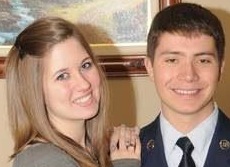
coupleToday marks a very special day in our family, the anniversary of our oldest grandchild’s adoption into our family.

While seven of our grandkids are aged seven and younger, Andrew is an amazing young man who has already married a lovely young woman. My wife and I are terribly proud of the path he is on, which has taken him to Japan, where he is promoting peace as a member of the United States Air Force.

While we all naturally love children physically “born into” our families, there is a singular affection—a consciously chosen and active love—we extend to those we adopt.

Delores and I seriously investigated international adoption during my assignment to Korea in the late eighties. Unfortunately, the doors closed, and it was not to be. We believe strongly in the importance and delight of adoption.

Although adoptions bring a few unique challenges to the family mix, there is no stress free recipe for parenting. Every successful formula involves a number of the same ingredients. Among them, patience and forgiveness need to be poured out in considerable quantity.

I wish to commend each of you readers who have adopted a child, or helped others to do so. And I also pray for God’s blessing upon each of you who are foster parents.

Finally, I offer a prayer for each of you who are, yourself, adopted. May your relationship with your parents fulfill all of the hopeful dreams that were held by all on the day that you entered your “new” family.

C.S. Lewis knew a great deal about adoption. He recognized how ill-prepared he was to become a step-father and ultimately a widowed single parent. In a 1957 letter he wrote:

I have married a lady suffering from cancer. I think she will weather it this time: after that, life under the sword of Damocles. Very little chance (not exactly none) of a permanent escape. I acquire two schoolboy stepsons. My brother and I have been coping with them for their Christmas holidays. Nice boys, but gruelling work for 2 old bachelors! I’m dead tired now.

In his biography, Jack’s Life, Douglas Gresham, one of those “nice boys,” described the situation after the death of his mother, Joy.

Jack also had a new responsibility to take care of, two teenage stepsons, each presenting the typical problems associated with growing up, though each in his own unique way. As was typical of the man he had become, Jack did everything he could to help these two young men. He knew all too well from his own life’s experiences how difficult their lives had been and tried hard to do the best he could for them.

A closing thought, as we all return to our other tasks and diversions. Christians see themselves as adopted. While all humanity is created in the wondrous image of God, entrance into the community of faith, the family of God, comes through faith in his only begotten Son. Because of Jesus’ life, death and resurrection, we are able to rightly call God, “Father.”

I’m overjoyed to be adopted into that holy family. And that adoption didn’t occur because I was smart, or handsome, or witty, or praiseworthy in any way. I was adopted solely because of the mercy and love of God.

And that divine adoption provides the perfect model for us to emulate in our world today.

Clay Hearts

clay heartHonesty compels us to admit that we have clay feet. We are merely mortal, and our origin from the clay of the earth is a reminder that we are imperfect.

Stumbling due to our feet of mud is one thing. Far worse, we earthen vessels also have hearts of clay. Our affections are fickle, and too often we fail to fulfill our vows to those who have made themselves vulnerable by entrusting to us their own love.

I doubt any of us have been untouched by the pain of transient love. The ideal we long for . . . the vision we dream about . . . and the lasting intimacy we pray for often seem so very fleeting.

Saddest, to me, are those relationships that have lasted many years, where the once glowing light has dimmed and the comforting warmth has dissipated.

That is the story of a remarkable, Oscar-nominated animation I would like to commend to you. Head Over Heels is a unique 10-minute claymation film about a broken marriage and how it comes “unbroken.”

C.S. Lewis did not marry until late in life. The personal experience of marriage, of course, modified some of his bachelor perceptions about the holy estate.

Nevertheless, having been married for thirty-seven years myself, I continue to be amazed by just how perceptive Lewis was throughout his writing life. Consider the following from The Four Loves.

Lewis discusses the importance and glory of passion consecrated by marital vows, but he does not pretend that it does not wax and wane. Nor does he imagine that even between wife and husband, a focus on the passion in their relationship is without potential hazards.

Discussing erotic love (one of the four he describes), Lewis warns:

But Eros, honoured without reservation and obeyed unconditionally, becomes a demon. And this is just how he claims to be honoured and obeyed. . . . Of all loves he is, at his height, most god-like; therefore most prone to demand our worship. Of himself he always tends to turn “being in love” into a sort of religion.

Theologians have often feared, in this love, a danger of idolatry. I think they meant by this that the lovers might idolise one another. That does not seem to me to be the real danger; certainly not in marriage. The deliciously plain prose and businesslike intimacy of married life render it absurd. So does the Affection in which Eros is almost invariably clothed.

Even in courtship I question whether anyone who has felt the thirst for the Uncreated, or even dreamed of feeling it, ever supposed that the Beloved could satisfy it. As a fellow-pilgrim pierced with the very same desire, that is, as a Friend, the Beloved may be gloriously and helpfully relevant; but as an object for it—well (I would not be rude), ridiculous. The real danger seems to me not that the lovers will idolise each other but that they will idolise Eros himself.

I believe Lewis has identified something profound here. The utter familiarity, the nakedness of our souls, that is part of any genuine marriage precludes anyone sane person from idolizing their partner. We, after all, are more familiar than any other human being with their feet of clay.

However, if we succumb to the snares of Eros, cast wide across television, literature, cinema and internet, we doom ourselves. True love will not cohabit with this counterfeit.

An uncritical attention to the physical seldom results in happiness. As Lewis so accurately says, “For Eros may unite the most unsuitable yokefellows; many unhappy, and predictably unhappy, marriages were love-matches.”

The good news, celebrated by Head Over Heels, is that even when love fades away, there is still hope. Just as clay-footed human beings can experience resurrection, so too our clay-hearted relationships can be restored and blaze with renewed joy.

Poetry for Geeks

csl ipadThe word “Geeks,” we know, is no longer an insult. It often refers to those über-intelligent folks who author the invisible “codes” that make computer software work.

Their mystical incantations make the modern world go round.

Two years ago some creative programmers decided to invent a new genre of poetry. It’s called “code poetry,” and they’ve published a collection entitled code {poems}.

It’s an intriguing genre, but the examples I’ve read suggest that you need to have at least an elementary understanding of programming languages to truly appreciate the poems. Consider “Dailygrind.”

DAILYGRIND

by Paul Illingworth (// Java)

import java.util.Date;

public class DailyGrind {


   public static final void main(String[] args) {


        boolean its_time_to_go_home = false;


         boolean away_the_hours = true;


        while (away_the_hours) {


              Date now = new Date();


               its_time_to_go_home = now.getHours() > 17


                         && now.getMinutes() > 30;


              if (its_time_to_go_home) {


                   break;


               }


      try {


                   Thread.sleep(60000);


               } catch (InterruptedException e) {


                   // ignore


               }


          }


     }


}

As I understand it, the code needs to (1) be functional (i.e. it has to actually work on a computer), and to (2) possess a lyrical essence.

Boasting no programming skills, I find it rather confusing. Then again, I’ve been confused by other examples of atypical poetry. I guess I’m a poor judge on the matter.

C.S. Lewis, on the other hand, was an expert on nearly all things literary. Although he died before the development of the internet, I would be curious to see how he would measure this novel approach to verse.

Although he was little praised for his poetic forays, Lewis penned a number of poems. Some are sprinkled throughout his writings, and others were compiled after his passing by Walter Hooper. The collection Poems is quite enjoyable. And Hooper’s preface to the collection is very informative.

He relates a delightful example of Lewis’ poetic admission that he found a particular poetic image particularly inappropriate.

The fact that he did not publish these poems during his lifetime suggests that Lewis was hesitant about their publication. He knew his poems were very unlike most contemporary verse. Because of this, he could not be certain of the reaction of his readers. The answer is not far to seek. In the poem, “A Confession,” Lewis says with ironical disappointment:

I am so coarse, the things the poets see

Are obstinately invisible to me.

For twenty years I’ve stared my level best

To see if evening—any evening—would suggest

A patient etherized upon a table;

In vain. I simply wasn’t able.

Lewis found Mr Eliot’s comparison of an evening to a patient on an operating table unpleasant, one example of the decay of proper feelings. He mistrusted, in fact, the free play of mere immediate experience. He believed, rather, that man’s attitudes and actions should be governed by, what he calls in the same poem, Stock Responses (e.g. love is sweet, death bitter, and virtue lovely).

Man must, for his own safety and pleasure, be taught to copy the Stock Responses in hopes that he may, by willed imitation, make the proper responses. He found this perfectly summed up in Aristotle’s “We learn how to do things by doing the things we are learning to do.”

Returning to the question of what Lewis might have thought of code poetry, I suspect he would be just as mystified as I am. Still, depending on how each individual poem resonates with the stock responses to which Hooper alludes . . . perhaps Lewis would embrace some of them as worthy expressions of a genuinely poetic heart.

_____

The T.S. Eliot poem to which Lewis was responding, “The Love Song of J. Alfred Prufrock,” was published in 1915. If you are up to the challenge of interpreting it, you can read it here.

Misspelling Jesus

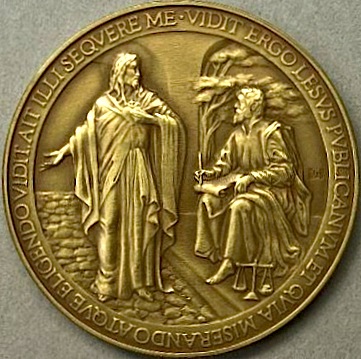
LesusTalk about embarrassing. In a nation that considers God to be its sovereign ruler, it seems rather inexcusable to misspell the name of Jesus.

And yet, that’s precisely what the Vatican has done.

Even more humbling, the error occurred on a very public medium—the principality’s coinage. And, if that was not enough to generate finger-pointing within the Curia, the coins bearing the defective spelling were minted to celebrate the first anniversary of Francis’ assumption of the papal throne.

Having collected coins since I was a young boy, I’m quite familiar with the frequency of minting errors. Typically they are caused by mistakes at the mint itself, where there is a mis-strike or a flaw in one of the dies. (I own a couple of ancient Roman “mules” where the mint workers accidentally used the mismatched obverses and reverses when they struck a particular piece.)

The legend (text) on the aforementioned medallions incorrectly reads “Lesus.” It seems to me that Western sources have mistakenly perceived this as the incorrect substitution of an “L” for the “J.”

The truth is . . . the inscription is in Latin, in which case it is actually an “I” that should appear in place of the “L.” If this is correct, Jesus’ name would be rendered IESUS.*

In actuality, the magnitude of this error was less significant than initially reported. It affected an anniversary medallion, rather than common, everyday coinage that would find its way into the hands of the masses. Also, the mistake was discovered early enough that only a handful of the medals were released; the “lucky” recipients are sure to see the worth of these treasures increase many times over, as their rarity causes the value of the medals to escalate.

Unlike Islam, which forbids images of Allah and Muhammad, Christianity has found iconography related to Jesus to be inspirational, throughout its two millennia history.

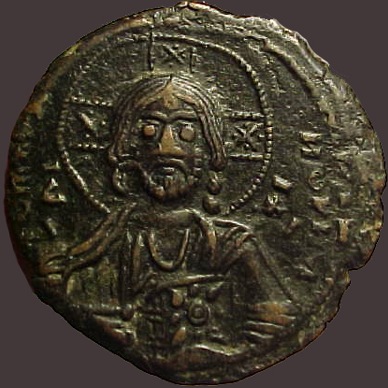
The Lord’s face has appeared on numerous coins throughout the years, and there is an entire series of Byzantine issues that cannot be specifically attributed to individual rulers because they did not include their own likeness or name, preferring to yield their place of honor to Christ.

In a 1942 letter to a nun with whom he corresponded, C.S. Lewis shared a poem he had written. I relate it here because of the exquisite reference to religious portraiture on coinage.

From all my lame defeats and oh! much more

From all the victories I have seemed to score;

From cleverness shot forth in Thy behalf,

At which, while angels weep, the audience laugh;

From all my proofs of Thy divinity,

Thou, who would’st give no sign, deliver me.

Thoughts are but coins. Let me not trust, instead

Of Thee, the thumb-worn image of Thy head;

From every thought, even from my thoughts of Thee,

Oh thou fair Silence! fall and set me free.

Lord of the straight way and the needle’s eye,

Take from me all my trumpery lest I die.

A Thought for Writers

Everyone who has ever written something read by others understands the importance of proofreading. This is true for digital media such as emails. It’s even more true for print publications that cannot be easily amended.

That said, we can consider ourselves fortunate that our typographical mistakes are not inscribed for all time on precious metals.

_____

* Iesus in the nominative case. It’s more commonly seen as Iesu, and my Latin is too rusty to know how it should correctly be rendered in this inscription.

Confusing Creeds

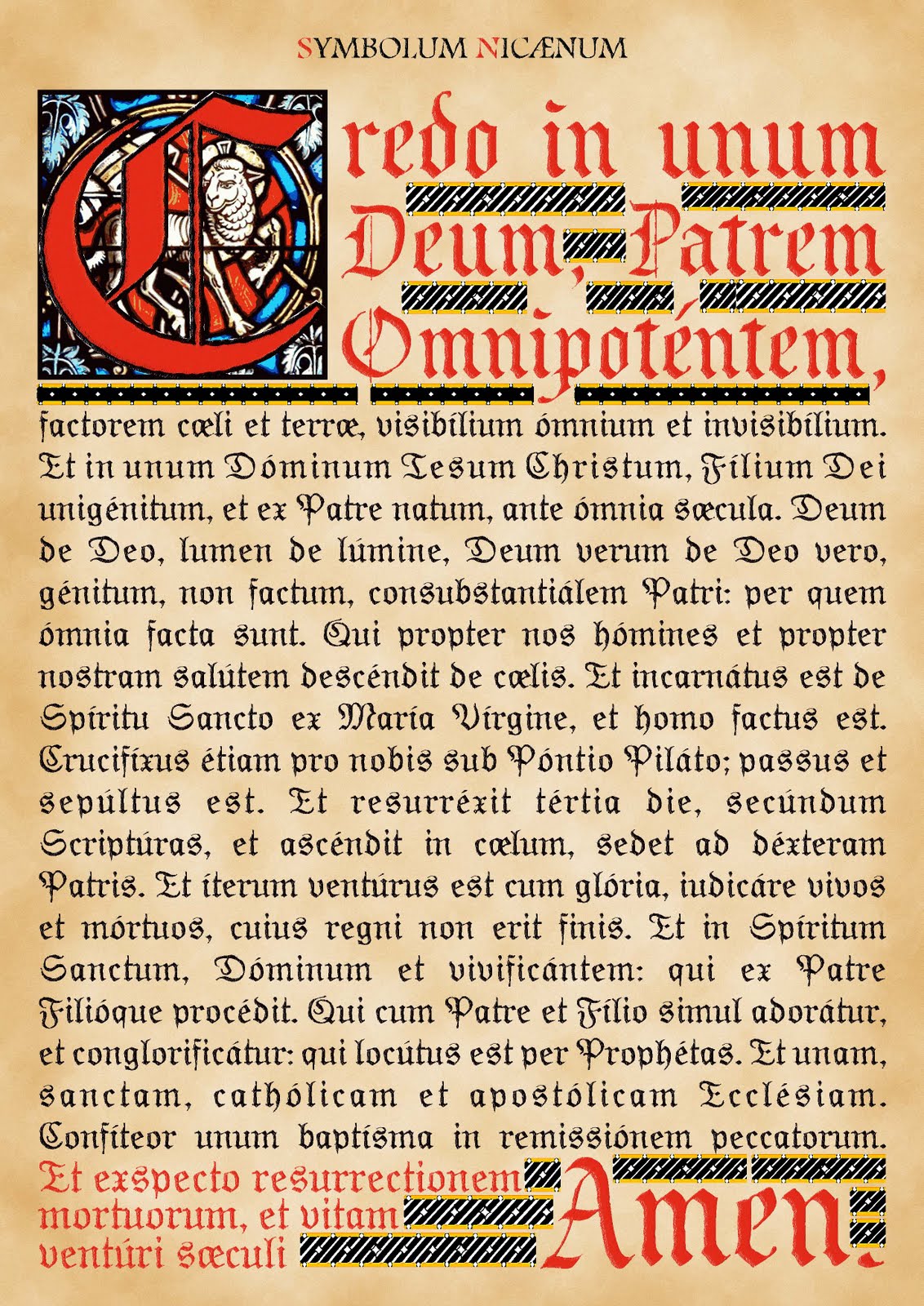
Nicene CreedThere are a couple of sentences in the traditional translation of the basic Christian creeds (statements of faith) that lead to confusion.

Due to the literary examples below, Christian readers may find the following discussion more interesting than non-Christians—but everyone interested in clarity versus confusion should find something intriguing.

The creeds offer a prime example of why it is absolutely crucial to ensure that gradual shifts in language do not undermine or blur the intended meaning of a given sentence. To illustrate, consider this line from the Nicene Creed.

. . . [Jesus] who for us men and for our salvation came down from heaven and was incarnate by the Holy Spirit of the virgin Mary and was made man. (1662, Anglican Book of Common Prayer).*

The potential confusion here lies in the archaic usage of the word “of.” Whose Holy Spirit are we referring to? Mary’s innate holiness and purity? The educated Christian may stumble over that dated phrase—which is still used in some denominations—but a person not acquainted with the doctrine of the Trinity might easily misinterpret it as a Maryological, rather than Christological, confession.

Let’s consider two more recent translations, and note how the first restores the intent of the original writers. The second of these commonly used translations reflects the hand(s) of “politically correct” revisers.

For us and for our salvation he [Jesus] came down from heaven: by the power of the Holy Spirit he became incarnate from the Virgin Mary, and was made man. (1975 International Consultation on English Texts version).

For us and for our salvation he came down from heaven, was incarnate of the Holy Spirit and the Virgin Mary and became truly human. (1988, English Language Liturgical Consultation version).

We will consider a second example momentarily, but let’s first look at something C.S. Lewis wrote about reflecting on the importance of the creeds. He noted that too often we rattle through the words without considering their significance. This is unfortunate.

In an essay entitle “On Forgiveness,” Lewis describes a personal epiphany and offers counsel to those tempted to take familiar words for granted.

We say a great many things in church (and out of church too) without thinking of what we are saying. For instance, we say in the Creed “I believe in the forgiveness of sins.” I had been saying it for several years before I asked myself why it was in the Creed. At first sight it seems hardly worth putting in. “If one is a Christian,” I thought “of course one believes in the forgiveness of sins. It goes without saying.”

But the people who compiled the Creed apparently thought that this was a part of our belief which we needed to be reminded of every time we went to church. And I have begun to see that, as far as I am concerned, they were right. To believe in the forgiveness of sins is not so easy as I thought. Real belief in it is the sort of thing that easily slips away if we don’t keep on polishing it up.

As usual, the Oxford don was correct. However, just as good translations possess the power to inspire, so too poor or antiquated translations exercise the ability to confuse.

Here is the promised second example.

And the third day he rose again according to the Scriptures . . . (1662).

Ah, I understand, think the uncatechized, the Bible teaches us that Jesus rose from the dead on Easter. Well, yes it does, but that is not the sense in which the second phrase is intended. Here, “according to the Scriptures,” means that Jesus’ life, death and resurrection were all accomplished in accordance with the promises of the Word of God.

In other words, “just as was promised in the Garden of Eden and foretold by the prophets, Jesus won victory when he rose from the grave in accordance with the loving plan of God the Father.” The newer versions make that fact only slightly clearer.

On the third day he rose again in accordance with the Scriptures . . . (1975 and 1988).

Perhaps a future revision will replace “in accordance with,” using something like “as foretold in” or “fulfilling the scriptural promises.”

Some of us worship in congregations using a variant of the seventeenth century creed, but at least we can take comfort in the fact that most of them have at least replaced “And he shall come again with glory to judge both the quick and the dead” with “both the living an the dead.” After all, we wouldn’t want people to think that one’s salvation is dependent upon their speed.

_____

* This slightly contemporized version of the creed has already remedied the terribly confusing term “Holy Ghost,” which evokes images of disembodied souls and hauntings.