Literary Martial Arts

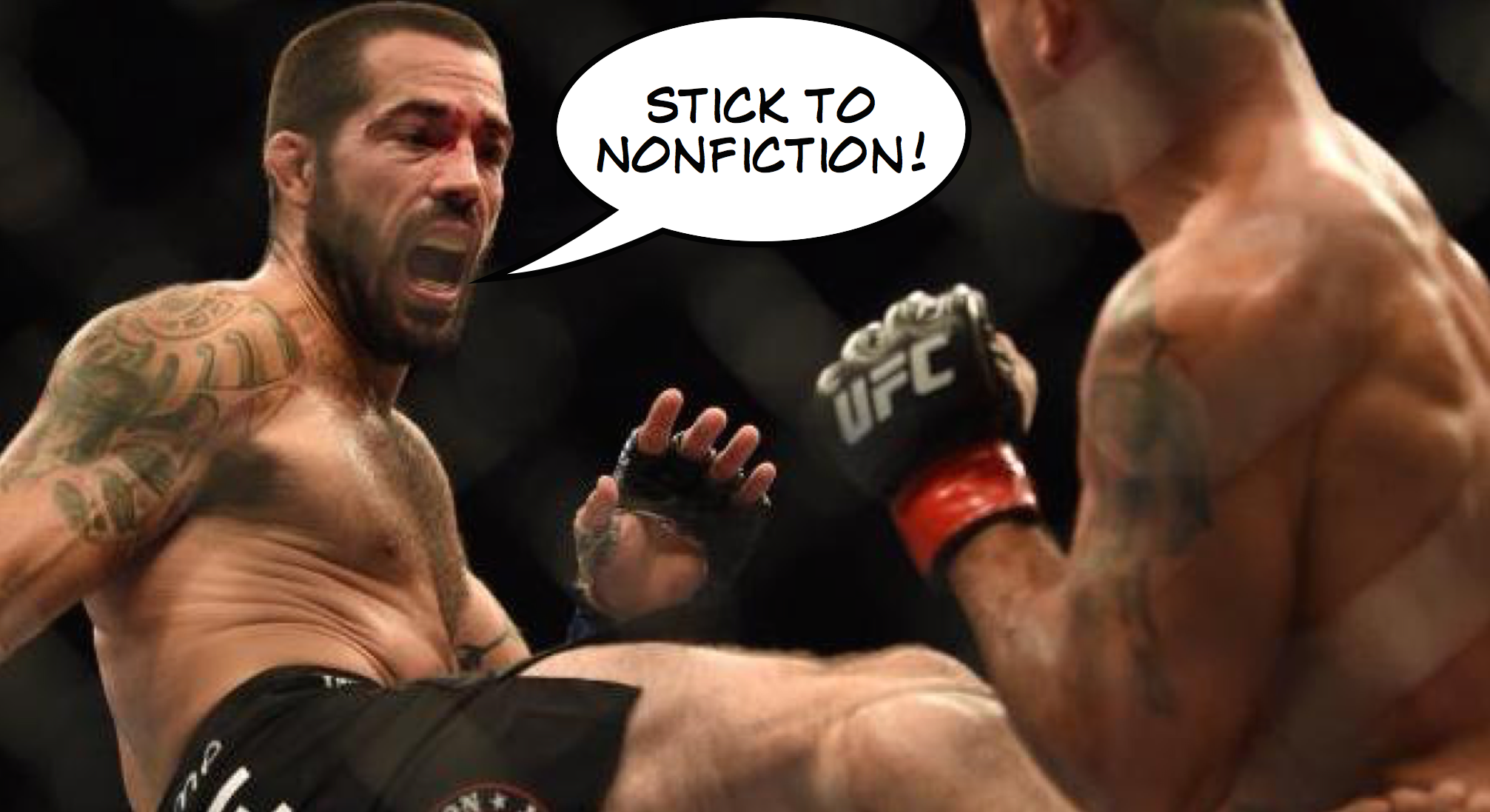
nonficOne of the lowest moments in my writing life occurred when a creative writing professor advised me to “stick with nonfiction.” Oh, she said it gently, but it still struck me with the power of a mixed martial arts (MMA) hammerfist.

I was majoring in editorial journalism at the University of Washington. Attempting to expand my scope, I took a short story writing course. It was a mistake.

I thought I had done adequately during the course. I was even moderately pleased with a couple of my stories. The instructor, on the other hand, well let’s just say she was not impressed with my effort.

She was right. At the time, my ear for good fiction was quite immature. I do not claim that it’s particularly well developed today, but I have written a story about a medieval pilgrimage that I hope to unveil in a year or two.

I was reminded of my literature professor’s grim assessment as I recently read an interview with a pastor, who is also a lawyer, and happens to be a writer as well. His name is Randy Singer.

Singer describes the similarity of his professions by saying “They all require skills in persuasion, in telling stories to illustrate things.” I guess he’s right.

The difference being that pastors tell true stories, authors of fiction write imaginary stories, and attorneys weave tales that lie somewhere in between.

The part of the interview, which appeared in World Magazine, that I found particularly insightful was this:

When your only desire is to tell the story so people don’t even notice the wording, at that point you’ve become a fiction author.

Singer’s description struck me with the force of an MMA ridge hand (a reverse knife-hand). When I came to, I finally knew why composing fiction does not come naturally to me.

I love words too much. Too much to sacrifice them simply for the sake of the story. Oh, I value the message also, but getting there is half the fun.

Although I don’t love words to the degree many poets lust after them, I still possess an affection that does not allow me to view them through purely utilitarian lenses.

To add insult to his literary injury, Singer adds the following, in response to the question of what he learned while writing several successful novels.

Third, to be less verbose and let the action carry the story instead of thinking, “What are some really flowery and cool phrases and words that I can weave into this?”

That’s enough, friend. You made your point. I would have responded a bit more colorfully and fragrantly, but I hear you.

Singer doesn’t cite C.S. Lewis in the interview, but his counsel is consistent with that of the Oxford don. Lewis advised using clear and concrete language, “so as to make quite clear what you mean and make sure your sentence couldn’t mean anything else.” (Personal Correspondence, 1956).

Similarly, Lewis would always argue for the words not to draw attention to themselves. Essentially, they need to get out of the way so the message can come through. “Don’t use adjectives which merely tell us how you want us to feel about the things you are describing. I mean, instead of telling us a thing was “terrible,” describe it so that we’ll be terrified.”

It’s wisdom like that which causes us to recognize C.S. Lewis as the brilliant, gifted, creative, versatile and anointed writer that he was.

As for Singer, perhaps I’ll have to check out one of his legal thrillers. The latest is set in antiquity, with a Roman jurist defending Paul before Nero. Should be quite interesting. Not so good as a nonfiction account of such a trial would be . . . but probably worth reading.


Adopting a Puppy

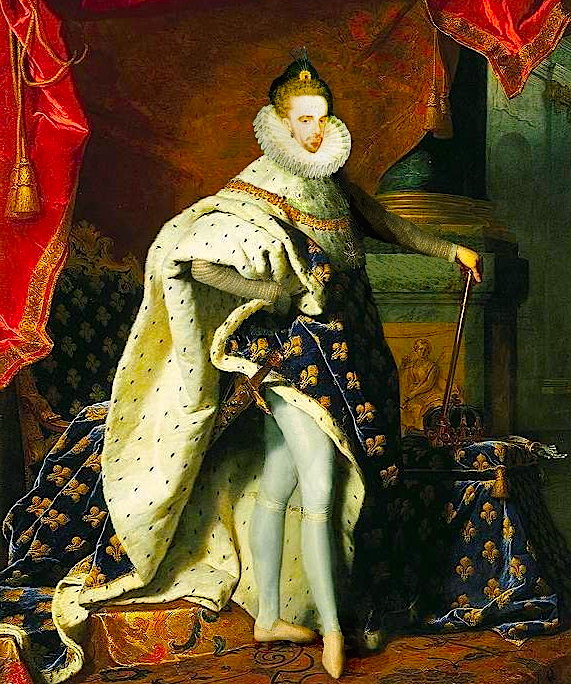
calliI recently described Henri III’s torture of puppies during his reign. The clown actually wore them, as an adornment!

In that same column, I mentioned that we were adopting a new puppy . . . and she has arrived in our home!

Getting a puppy marks a departure from our normal pattern. Our last three border collies (including the mature lady who still graces our manse) were all “rescues.”

However, we did not feel that Foxy was up to adjusting to another mature dog, since she lost Lyric last winter and her other (long-lived) sister, Tanner.

In my post about Henri III, I shared comments from two letters that C.S. Lewis wrote a century ago to one of his closest friends. Arthur Greeves had gotten a puppy, and Lewis reminded him of the responsibilities of the human member of that relationship.

Lewis wrote that it was cruel, “Unless you are a person with plenty of spare time and real knowledge, it is a mistake to keep dogs . . .”

In a subsequent letter, Lewis advised Greeves on how to choose a name for his puppy.

How’s the poor, miserable, ill-fated, star-crossed, hapless, lonely, neglected, misunderstood puppy getting along? What are you going to call him, or rather, to speak properly, how hight he? Don’t give him any commonplace name, and above all let it suit his character & appearance. Something like Sigurd, Pelleas or Mars if he is brisk and warlike, or Mime, Bickernocker or Knutt if he is ugly and quaint.

We had already chosen the name for our puppy before I found this quotation. But I think Lewis would have approved.

We named our new little girl after one of the Greek Muses, who inspired literature and the arts. Her name is Calli.

If you’re knowledgeable in mythological matters, you will recognize that it’s our nickname for Calliope, the Muse of epic poetry.

Being more of a historian than a poet, I wanted to use the name Clio, who is the Muse of History. Calli fits her better though.

Calliope is a wonderful, musical name though, since she was the chief Muse, and her name literally means “beautiful-voiced.” What a lovely name. I hope Calli learns to sing, like our first border collie, Lady. Lady would accompany my wife as she played the piano. It was quite entertaining.

If you have read this far, you too are likely a pet lover. If you have a dog, cat, rabbit, lemur or whatever, of your own, may the Lord bless it with a long and healthy life . . . just as we pray for our own little Calli.

Martian Tribute to C.S. Lewis

Malacandra CraterMere Inkling recently named a crater on Mars, in honor of C.S. Lewis. The crater’s name is Malacandra, which was the name for the red planet in the first volume of Lewis’ Space Trilogy, Out of the Silent Planet.

The naming of Malacandra Crater was done through an organization preparing the map which will be used by the Mars One Mission. Mars One is the optimistic international effort to establish a permanent human settlement on the red planet, beginning in 2024.

The über-adventurous (or foolhardy) are able to apply today for consideration to become an astronaut.

The crater naming project is not sponsored by the International Astronomical Union (IAU). Instead, it is coordinated by Uwingu, a for profit company that has a goal of raising $10,000,000 for grants to scientists and educators promoting space exploration.

Due to its limited* budget, Mere Inkling was only able to name a small crater. However, it’s not the expense, it’s the thought that counts.

In addition to Malacandra Crater, I named the impact mark directly to its south in honor of my grandchildren. The process allows one to include a dedication for each named crater. For theirs, I wrote:

Stroud Crater is named in honor of the brilliant grandchildren of Rob & Delores Stroud. Andrew, Ariana, Dominic, Arabelle, Rachel, Rebecca, Kaelyn & Asher. Whether they grow up to be astrophysicists, veterinarians or educators, we know they will all make this world a better place. Soli Deo Gloria.

The tiny basins named above lie in Aurorae Chaos. It’s a rugged neighborhood, but there are surprisingly few craters in the immediate vicinity. I’m always seeking opportunities to encourage my grandchildren to study science, and I hope this will pique their interests, both now and in the years to come.

C.S. Lewis is not primarily known today as a writer of science fiction, but his series (also known as the Cosmic Trilogy, or the Ransom Trilogy, after its protagonist) is quite good. In fact, it was the very first of Lewis’ works I ever read. I was introduced to them by a Christian friend during my college years.

Several influences converged to move Lewis to venture into science fiction. In 1938, he thanked a friend for his praise of Out of the Silent Planet, and wrote:

You are obviously much better informed than I about this type of literature and the only one I can add to your list is Voyage to Arcturus by David Lyndsay (Methuen) which is out of print but a good bookseller will probably get you a copy for about 5 to 6 shillings. It is entirely on the imaginative and not at all on the scientific wing.

What immediately spurred me to write was Olaf Stapledon’s Last and First Men and an essay in J. B. S. Haldane’s Possible Worlds both of which seemed to take the idea of such travel seriously and to have the desperately immoral outlook which I try to pillory in Weston.

I like the whole interplanetary idea as a mythology and simply wished to conquer for my own (Christian) point of view what has always hitherto been used by the opposite side. I think Wells’ 1st Men in the Moon the best of the sort I have read.**

Lewis then appends a comment referring to the other planets in our solar system, but intriguing in light of the recent discovery of numerous planets throughout the galaxy. “The more astronomy we know the less likely it seems that other planets are inhabited: even Mars has practically no oxygen.”

One of Lewis often overlooked science fiction short stories, “Ministering Angels,” is set on Mars. It begins in the following way.

The Monk, as they called him, settled himself on the camp chair beside his bunk and stared through the window at the harsh sand and black-blue sky of Mars. He did not mean to begin his ‘work’ for ten minutes yet. Not, of course, the work he had been brought there to do. He was the meteorologist of the party, and his work in that capacity was largely done; he had found out whatever could be found out.

There was nothing more, within the limited radius he could investigate, to be observed for at least twenty-five days. And meteorology had not been his real motive. He had chosen three years on Mars as the nearest modern equivalent to a hermitage in the desert.

He had come there to meditate: to continue the slow, perpetual rebuilding of that inner structure which, in his view, it was the main purpose of life to rebuild. And now his ten minutes’ rest was over. He began with his well-used formula. ‘Gentle and patient Master, teach me to need men less and to love thee more.’ Then to it. There was no time to waste.

There were barely six months of this lifeless, sinless, unsuffering wilderness ahead of him. Three years were short . . . but when the shout came he rose out of his chair with the practised alertness of a sailor.

The Botanist in the next cabin responded to the same shout with a curse. His eye had been at the microscope when it came. It was maddening. Constant interruption. A man might as well try to work in the middle of Piccadilly as in this infernal camp. And his work was already a race against time. Six months more . . . and he had hardly begun.

The flora of Mars, these tiny, miraculously hardy organisms, the ingenuity of their contrivances to live under all but impossible conditions—it was a feast for a lifetime. He would ignore the shout. But then came the bell. All hands to the main room.
(“Ministering Angels,” Of Other Worlds: Essays and Stories).

Malacandra Crater may be a small feature on a vast and curious planet, but it is a tribute to an author of immense and lasting talent.

_____

* i.e. nonexistent

** The following titles mentioned by Lewis are available for free digital download:

Voyage to Arcturus

Last and First Men

The First Men in the Moon

Abusing Puppies

henriPuppies are cute and cuddly, but leave it to a French king to carry that fact to absurd lengths.

One might think owning 2,000 lap dogs is a bit overmuch. Not so Henri III (1551-1589). It would seem that after the first thousand, it might become difficult to recall all of their names, but that didn’t deter Henri.

He so loved his puppies that he used them as a form of adornment, regularly wearing them in a small basket suspended around his neck.

And, amazingly, it appears none of his courtiers mentioned that it looked quite silly. Who knows, he may have established a temporary fad, not unlike the purse puppies used by some modern celebrities to increase attention to themselves.

Puppies are on my mind now, because my wife and I have “reserved” a border collie from a recent litter.

Some readers will recall the grief we experienced when a dog we rescued a year ago, died due to an onslaught of seizures, one after the other. Lyric’s tragic passing, at a young age, was so much more difficult than the loss of our previous three who had lived well into their geriatric years.

It’s taken us a year to be willing to consider adding another dog to our family. We still have Foxy, who we rescued about eight years ago, during our final military tour in California. We decided it would be much easier for her if we added a puppy to our family this time.

I’ll write more about our puppy in the future. For now I’ll end with the “teaser” that we’re naming her after one of the Greek Muses.

C.S. Lewis loved dogs, although apparently not enough to wear them like jewelry.

In 1916, he corresponded with his friend Arthur Greeves about adding a puppy to the latter’s family. His first mention, as Greeves was contemplating the decision, reveals Lewis’ emphasis on the wellbeing of the dog over its master’s preferences.

I think you are very wise not to take that puppy from K. Unless you are a person with plenty of spare time and real knowledge, it is a mistake to keep dogs–and cruel to them.

Greeves proceeded with the adoption, as Lewis appends a postscript to his next letter, written a week later.

Poor puppy!! What a life it’ll have! I shall poison it in kindness when I come home!

In a subsequent letter, the same month, Lewis offers advice about naming the puppy that I was delighted to read. It suggests that he would approve of our decision for the name of the new addition to our family.

In the meantime, whatever name we bestowed on our new puppy, she would never need to worry about being traipsed around on display like a fashion accessory. We’ll leave that to French kings and egocentric divas.

Marrying a Writer

museA recent episode of the series Castle illustrated something all of the spouses of writers know—they are wed to peculiar people.

The premise for the program, currently in its seventh season, is that a mystery novelist accompanies homicide detectives in New York City on their investigations.

Despite his frequently outlandish theories, Richard Castle often contributes significantly to solving the crimes. His counterpart is Kate Beckett, the senior detective who leads the team.

The two of them recently wed, which led to the following exchange while they were on their honeymoon, which doubled as a homicide investigation at a frontier “dude ranch.”

Faced with complex evidence, Castle says, “That’s why we approach this as writers.”

Beckett responds with a comment representative of literary spouses. “So we procrastinate and we make things up?”

Ouch.

That strikes a bit close to home. The second element—making things up—can be construed by our nimble minds as an actual compliment. Yes, we do think creatively and out of the mundane box. Thank you very much.

On the other hand, the procrastination label . . . well, speaking for myself, it fits far too well.

Writing, after all, is not simple. Even poor writing requires effort. And, if one hopes to write well . . . it requires time, skill and practice.

Few can sit down at the keyboard and imperiously command their “muse” or inspiration to be at hand. This is true for all authors, including Christian writers who seek guidance from the Holy Spirit.

The simple fact is, however, that if we waited until we felt fully inspired, most of us would accomplish little.

In my own case, I sincerely attribute anything good that I might write to the Lord. The chaff comes from me. I won’t presume to guess what small percentage of the words are wheat, but I will confess that I am most productive when I discipline myself to write. And, this discipline typically involves a self-imposed deadline.

Thus the reason for the graphic at the head of the page. I have recognized in the fall of life, as I seek to pursue my writing avocation more seriously, that “The deadline is my Muse.”

Beckett knows very well that her fictional husband often requires a deadline to complete his novels.

My wife sees the same principle at work when I request her urgent proofreading of something I’ve waited too long to complete.

C.S. Lewis had ample experience with deadlines himself. And he knew well that even a required submission date could not guarantee literary production. In 1958 he wrote to his editor, Jocelyn Gibb, saying that he may, or may not, be able to provide a contribution to an upcoming edition of The Psalms as Poetry.

Dear Gibb, Thanks for the book, a very nice bit of work. I’ll try to re-read Miracles for mis-prints while I’m in Ireland, where my wife and I go tomorrow. When is deadline for your Fifty-Two? Not that I’m sure I can pump anything up anyway.

He did manage to provide a contribution, which he later included as part of the introductory chapter for Reflections on the Psalms.

I’m not certain whether Lewis wrote those pages simply because inspiration compelled him to . . . or if the issue deadline provided a little supplemental motivation. I suspect it was the latter.

To any writers out there who never require the encouragement of a deadline—consider yourself uniquely blessed!

To the masses who share my battle with the plague of procrastination, you have my sympathy. Still, after pausing for just a moment to commiserate, let’s get back to the pleasant labor of writing, and the thrill of “making things up.”

Bill Cosby Redux

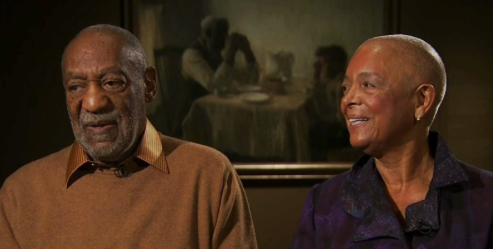
Bill & CamilleIn light of recent revelations, my daughter urged me to delete my recent post about Bill Cosby.

As the extensive evidence of a sordid past have been coming to light, albeit accusations rather than substantiated facts, the propriety of that original post falls into question.

For the time being, I am disposed to leaving it up. For several reasons. I could say one is the notion of “innocent until proven guilty,” but that’s not true. Despite statutes of limitations, the accumulating evidence, quite sadly, appears indisputable.

On the subject of innocence, I admit to confused sentiments. As a Christian, who accepts the historic doctrine of “original sin,” I confess at every worship service that I too am a hopeless sinner, in dire need of God’s grace and mercy. What’s more, as a Christian who believes we cannot earn forgiveness, I point not to my own ragged good works, but rely wholly on the grace—the undeserved love—of God.

C.S. Lewis recognized that mercy is the only solution for our guilt. In “The Humanitarian Theory of Punishment,” he wrote these words:

The essential act of mercy was to pardon; and pardon in its very essence involves the recognition of guilt and ill-desert in the recipient. If crime is only a disease which needs cure, not sin which deserves punishment, it cannot be pardoned.

I am quite conscious of my own deep need for pardon. Thus, I am ever wary of condemning those whose heart I cannot know.

The second reason for my reticence in removing this post, is that much of it remains true. The Bill Cosby who offered our family genuine laughter and wholesome entertainment, was apparently not identical with the real man.

But then I pause to wonder how many celebrities are truly consistent with their public persona? And, in light of the fact that we all have our failures and sometimes grievous sins, why should we expect them to be transparent and vulnerable to greater emotional violence than they all already receive?

My comments below were written with the understanding I possessed two short months ago. They were heartfelt at that time, and they illustrate in a clear way how perception is not always reality. Perhaps they can serve as a sort of a caution to others who are prone to investing too much trust in people they do not genuinely know.

Another reason I am inclined to leave the post up for the time being, is that there may be a value in preserving the quality of the artist’s work, even when we have been disappointed by the artist himself.

As an example of this, during a sketch on the last episode of Saturday Night Live, Michael Che criticized the actor’s vile behavior, but ended his scripted “newscast” with a thought that I believe represents the view of many.

“I don’t know how to feel about [networks cancelling The Cosby Show] because I don’t know Bill Cosby, but Cliff Huxtable practically raised me. I love that dude, and the only thing he ever tried to sneak while people were asleep is a hoagie. So while I may never forgive Bill Cosby, hopefully someday I can forgive Dr. Huxtable.”

It’s that Bill Cosby, the idealized, honorable, ever-witty, and doting father, that I remind my wife of. And I remain flattered by that.

Meanwhile, I pray for Bill and Camille Cosby. I pray for the victims of his offenses. I pray for the victims of some of those very women who, in likely turn, have wounded others because of their own emotional and spiritual injuries.

Sin is powerful. It’s effects cascade from life to life. But sin and evil do not have the final word. That is left to the Word incarnate, who has redeemed this fallen world. The Lord who heals our wounds and offers the glorious promise that one day . . .

He will wipe away every tear from their eyes, and death shall be no more, neither shall there be mourning, nor crying, nor pain anymore, for the former things have passed away. (Revelation 21.4).

Misplaced Trust

trustingWhy do some nurses kill? Most people attracted to the nursing profession possess deep reservoirs of compassion for others. And yet, every once in a while we read about a nurse intentionally taking the life of a patient.

Today’s case comes from Italy, where a forty-two year old nurse is under investigation for thirty-eight possible cases of murder. And we are not talking about the ending of a life that some would term euthanasia.

Poggiali did not overdose them to end their suffering. She did it simply because they irritated her. She, or their relatives, bothered her.

One troubling aspect of the case could only happen today. Authorities have actually found a photograph on her phone where she is standing beside a deceased patient giving a “thumbs up” sign. (The article didn’t indicate whether this was a sickening “selfie,” or if there is another person at the hospital with a similarly demented sense of humor.

When people we implicitly trust violate our faith in them, it is jarring. We struggle to comprehend things when . . .

Medical professionals intentionally cause injury . . .

Clergy behave immorally, particularly when they attempt to justify it from the pulpit . . .

Police victimize rather than protect . . .

Teachers care more about themselves than their students . . .

Soldiers display cowardice rather than courage . . .

There is some good news here. It is precisely because these breaches of our expectations are the rare exception, that we are shocked by them. For the most part, people entrusted by the public with authority or power honor that trust.

(Let’s exclude, for our discussion here, the case of politicians, where that supposition would be hotly debated. As Lewis in his essay “Equality” wrote, “Mankind is so fallen that no man can be trusted with unchecked power over his fellows.”)

Our trust in people who occupy special positions goes so far as to be illogical. For example, we tend to think of actors or actresses as possessing the traits of various characters they have portrayed.

We laugh at the joke, “I’m not a doctor, but I play one on TV.” Yet, we’re still tempted to ask the person how we can best deal with our persistent cough or chronic rash.

We think of television cops as believing in law and order, but if we seriously considered the matter, we would recognize just how foolish that is. They are no more, or less, likely than anyone else in Hollywood to be law abiding.

An ongoing scandal reveals just how disorienting it can be to have our illusions shattered. It is the case of Stephen Collins. In the popular Seventh Heaven series, he played the ideal father. A pastor, no less. We mourn for the lives he has injured, and we subconsciously grieve our own disillusionment.

The solution to the problem is not in ceasing to trust others. Life from that perch would result in paranoia and alienation.

No, I think that it still makes sense to trust—within limits. I am willing to extend my trust to someone in a respected profession who I have just met. That is based on the profession’s self-policing of standards.* Most require minimal education and competence standards, and have mechanisms for decertifying those who violate professional ethics.

Still, when time allows, the best advice is probably to “trust and verify.” The time I take to verify whether the person’s credentials or claims are true corresponds to the importance of what I’m entrusting to them. I would leave my car with a mechanic far sooner than I would entrust my child to a babysitter.

Returning to the case with which we began, we assume that a hospital is one of the safest places to be. And, even in light of the latest tragedy, this remains true.

For every one nurse tempted to end a complainer’s life early, there are a hundred thousand** who are striving to prolong the lives of their charges.

Trusting should not only be viewed as something we extend to others. Each of us would do well to ponder for a few moments just how trustworthy we are. This is especially true for those of us in privileged or respected professions. However, it is no exaggeration to say that the measure of any woman or man is determined by the degree to which they have earned the trust of others.

Lewis writes about the nature of trust, as it relates to friendship. It doesn’t relate to trust imbued in societal roles, but rather in the trust that exists where a relationship is already present. Still, he expertly describes the interplay between mind and heart, when it comes to trust. And this explains, in part, why the betrayal of our trust causes us so much anguish, in mind and soul.

To love involves trusting the beloved beyond the evidence, even against much evidence. No man is our friend who believes in our good intentions only when they are proved. No man is our friend who will not be very slow to accept evidence against them. Such confidence, between one man and another, is in fact almost universally praised as a moral beauty, not blamed as a logical error. And the suspicious man is blamed for a meanness of character, not admired for the excellence of his logic. (“On Obstinacy in Belief”).

_____

* The fact that some “professions” don’t have any mandatory requirements or standards, means that I remain wary when I meet people sporting those titles. For example, in America it’s possible to “ordain” oneself (or buy a meaningless diploma or certificate online). Thus, when someone tells me they are a minister, I am eager to learn more (about their education, congregation, accountability, etc.). There are far too many hucksters out there to take a person’s word for it that they are a genuine minister of God.

** Perhaps a slight exaggeration, but I’d like to continue believing that the ratio is something wonderful like that, 1:100,000. Then again, if I think of it literally, in terms of how many are “tempted” to expedite the passing of an inconsiderate and ungrateful patient, I imagine the numbers might be rather less encouraging.

A Symbol of Death & Life

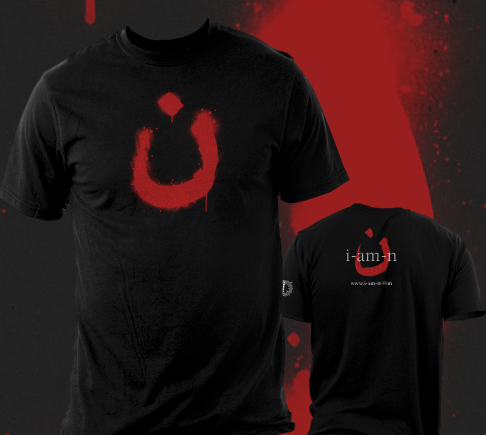
nن – Arabic letter nun (n)

You may never have seen this symbol or, if you did, its foreign context may not have impressed it on your mind.

This Arabic letter is now being used to mark people for persecution and death. Yet, at the very same moment, this same symbol is also being transformed into an emblem that stands for courage and life.

The Islamic State has martyred or enslaved many Christians. Survivors have had all of their property stolen from them and been marked for death if they do not reject Christ and embrace the Muslim religion.

They have gone throughout the neighborhoods of their new conquests and placed this mark, the nun, on homes to mark them for evacuation or death. The “N” stands for “Nazarene,” referring to Jesus’ home town.

With the passage of time, we will likely see once again the truth proclaimed by Tertullian, that the blood of the martyrs is the seed of the church. In the meantime, everyone of good will (Christian, Jew, Muslim, Agnostic alike) should rally to the support of the suffering.

We do not yet know the magnitude of the atrocities committed by ISIS/ISIL. Like Nazi concentration camps, the complete story will not be revealed until the sites of the horror are liberated from their vile control. And, like the Mogen David (Star of David) which marked its bearers as Jews, the nun marks its bearers as Christians and targets of militant Islam.

C.S. Lewis recognized the horror of Nazism early on. In 1933 he wrote about the cruelty, and stupidity of Hitler’s attack on Judaism.

Did you see that [Hitler] said “The Jews have made no contribution to human culture and in crushing them I am doing the will of the Lord.” Now as the whole idea of the “Will of the Lord” is precisely what the world owes to the Jews, the blaspheming tyrant has just fixed his absurdity for all to see in a single sentence, and shown that he is as contemptible for his stupidity as he is detestable for his cruelty.

One can only imagine what Lewis would write about the leaders of Islamofascism today.

There are a number of organizations that support Christians currently experiencing violent persecution. None, however, approaches this work from the same perspective of Voice of the Martyrs. I wholeheartedly commend their labors to you.

They are currently offering shirts emblazoned with the letter nun. They are even more important as a witnessing tool, than as a fundraiser. Please read more about them here and share the link with your friends. Also, please take a few minutes to explore their website once you are there.

To boldly state “I am N” is to identify with the oppressed. It is to show the world you understand that each disciple of Jesus must be prepared to take up his or her own cross. Dying for one’s faith in Jesus is not a myth; it is a daily reality.

The ن symbol, intended as a mark of derision, humiliation and rejection, has assumed a new meaning. It has become a mark of hope, courage, and deliverance.

What the persecutors in Iraq and Syria intended to be a label of death has been transformed by the Holy Spirit and the faithfulness of Christians into a symbol of life.

Distant Fathers

miceChildren don’t get to choose their parents. They aren’t able to select loving parents in contrast to abusers. They can’t  express any preference about being in a home with a mom and a dad committed to them, and to one another.

But the home into which children are born matters a great deal in the direction and shape of their entire life.

It doesn’t take a genius to acknowledge that some settings are healthier than others. The ideal context (which very few of us are blessed to experience) is a home where mom and dad keep their vows to one another, and devote themselves to placing their children in the forefront of their concerns.

Those of us who are people of faith recognize a third pillar to this structure. There is spousal love, parental love, and love of God. When you have all three, you are fortunate indeed.

Sadly, for many, one or both parents are absent. They may be physically present (as my own alcoholic father was) but they are disengaged . . . unconnected . . . absent. I believe that when they are physically present but not really there, they often teach their children worse lessons than they would have learned if they were literally gone. But that’s a conversation for another day.

A study some months ago reveals that the absence of fathers during childhood can actually affect the brain of the child. Yes, you read that right—it can physically affect their brains.

In the study Dr. Gobbi and her colleagues compared social activity and brain anatomy between the two groups . . . the first, raised with both parents, and the second,  that had been raised only by their mothers. The results showed that mice raised without a father demonstrated abnormal social interactions.

This group of subjects also showed more aggressive patterns of behavior in comparison with their counterparts raised with both parents. In addition, these effects were stronger for female offspring. Interestingly females raised without fathers also had a greater sensitivity to the stimulant drug–amphetamine.*

Before continuing, it’s important to note that these experiments were conducted on animals . . . mice, to be precise. While we don’t normally think of mice as paternalistic creatures, neuroscientists assure us that these results are significant.

“Although we used mice, the findings are extremely relevant to humans,” claims Dr. Gabriella Gobbi, a researcher of the Mental Illness and Addiction Axis at the RI-MUHC, senior author and an associate professor at the Faculty of Medicine at McGill University. “We used California mice which, like in some human populations, are monogamous and raise their offspring together.”

California mice? Monogamous? Who would have thought!

Whether you place much stock in this scientific research or not, most honest individuals acknowledge the significance our father and mother share in our early formation.

C.S. Lewis’ loss of his mother and the great distance between himself and his father greatly impacted the development of his personality. Lewis goes so far as to make this confession in Surprised by Joy: “With the cruelty of youth I allowed myself to be irritated by traits in my father which, in other elderly men, I have since regarded as lovable foibles.”

Elsewhere, Lewis writes longingly of the intimate relationship he longed to have had with his own father. Describing the source of author George MacDonald’s guiding inspiration in life, he writes:

An almost perfect relationship with his father was the earthly root of all his wisdom. From his own father, he said, he first learned that Fatherhood must be at the core of the universe. He was thus prepared in an unusual way to teach that religion in which the relation of Father and Son is of all relations the most central. (George MacDonald: An Anthology).

I did not have that sort of relationship with my own father. I strove to give it as a gift to my children though. And today, while I continue to be their dad, I am acutely aware of the kind of grandfather I am.

Whether it truly affects those developing minds or not, I am committed to caring for each of them as well as is humanly possible.

_____

* You can read the quoted article in The Neuropsychotherapist here. The abstract for the original research is available here.


Bill Cosby & Me

cosby[Do not read this post without also reading “Bill Cosby Redux,” which was written two months later.]

One of the finest compliments my wife ever paid me was saying, “You remind me of Bill Cosby.”

She tells me that’s one of the reasons she married me thirty-eight years ago. And she also says it’s still true today.

I owe a lot to Bill Cosby. He has modeled (for several generations now), how humor highlights the most precious aspects of our human lives. He also showed us how a real man works hard to accomplish his goals, and keeps the promises he makes.

And now, approaching the winter of his life, Cosby continues to inspire.

My wife and I have always wanted to see him perform. This summer that dream came true.

He offered the audience two full hours of good natured (healthy) laughter with an ample dose of self-introspection as well.

Cosby began his performance (at one of our Washington State fairgrounds) by commenting on our lovely weather. He noted that every other time he had spoken outdoors that it had poured. He suggested that there was something demented about Washingtonians wanting to watch entertainers on stage being drenched while they are handling microphone and other electrical devices.

I refer to Cosby’s presentation as a “performance,” but it was far more than that. It is no exaggeration to say that it was like being invited to an intimate family gathering. One where everyone has gathered around—and the audience was filled with people of all ages—to hear their witty patriarch weave delightful stories about their shared past and mysteries of life.

Bill Cosby embodies the truth spoken by C.S. Lewis in The Screwtape Letters: “Humour is . . . the all-consoling and . . . the all-excusing, grace of life.” Cosby is, in a sense, an ambassador of humor. Or, even, a physician of humor, whose words carry the power to heal.

In mere minutes he made us all, albeit temporarily, his family. (Another reason for me to be proud my wife likens me to this gifted story-teller.)

I’ve always liked Cosby. I was introduced to him on a vinyl album my family had. We probably owned several, over the years, but this one was his debut album, recorded live in 1963.

As a young Christian, I was particularly captivated by his three sketches about Noah. (If you’ve never heard the routine, check out my note at the bottom of this column.) Only today, in the fall season of my own life, does it dawn on me just how profound an effect his comedy had on me.

I believe that was the first time I became aware that matters of faith could be funny. Not diminished by ridicule, but uplifted by laughter. It was okay to enjoy discussing serious matters, by highlighting some of their humorous aspects.

In a world where so many of faith’s spokespersons were dour and humorless, seeds of mirth were planted in my life. Thank you, Bill.

Those seeds have born fruit. They have never undermined my recognition of the authority and trustworthiness of the Scriptures. But, at the same time, they have opened my eyes to the warmth and wonder of the Creator who spoke the cosmos into existence.

Cosby engaged us with an exploration of humanity’s creation, and moved on into a delightful conversation about the differences between men and women. He spoke about his beloved Camille and his children in ways the entire audience connected to. His deep affection for his family resonates even as he uses them as a comedic foil (actually, the majority of his humor is self-deprecating).

Here’s a simple truth. A winsome witness to the faith, who can laugh with one of America’s finest humorists about their beliefs, will win far more “converts” than someone who does not know the joy that comes from being God’s child.

For those unfamiliar with Bill Cosby, allow me to offer a note about only a few of his many accomplishments.

He served for four years as a hospital corpsman in the United States Navy.

He attended Temple University on a track scholarship, where he also played fullback on the football team.

He has an earned doctorate (not the “honorary” type that adorns many public figures). Doctor Cosby earned his Doctor of Education degree in 1976 from the University of Massachusetts Amherst.

On the amazing espionage series, I Spy, Cosby became the first African-American to co-star in a dramatic series. (I remember being riveted to the show, identifying more with Cosby’s thoughtful portrayal than with the shallower, flashier persona of Robert Culp.) Apparently, many recognized Cosby’s acting prowess—he won three consecutive Emmy Awards during the show’s run.

Cosby’s acting prowess was proven repeatedly through television accomplishments, most notably The Cosby Show, which overwhelmed its competition.

He is a gifted musician and has recorded a dozen music albums.

He is also a skilled writer, and has written a dozen books.

He is a genuine family man, whose devotion to his wife, children and grandchildren is unquestioned. He also has gracefully born the pain of losing his only son quite tragically.

He has courageously confronted some of the serious issues facing the poor in the world’s most prosperous nation. He has put his talents and treasures where his words are, seeking to reinforce the value of education in communities where far too many condemn themselves to poverty by dropping out of school.

Bill Cosby is an amazing man. He is a person to be respected, and heeded.

I can think of no better compliment from the woman I love than hearing that I remind her of him.

_____

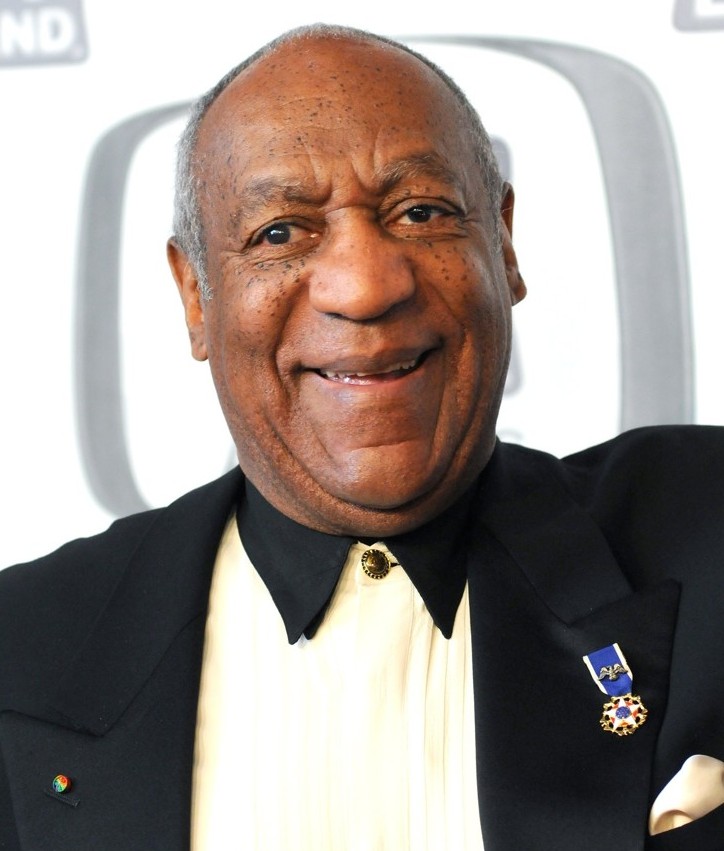
In the picture above, Cosby is wearing his Presidential Medal of Freedom, awarded to him in 2002.

If you’ve never heard Cosby’s account of God’s conversation with Noah, your life is incomplete. Fortunately, you can remedy that sad situation by viewing a brief version of it here.

If you’re interested in a brief survey of Cosby’s impact, this clip provides an excellent introduction.