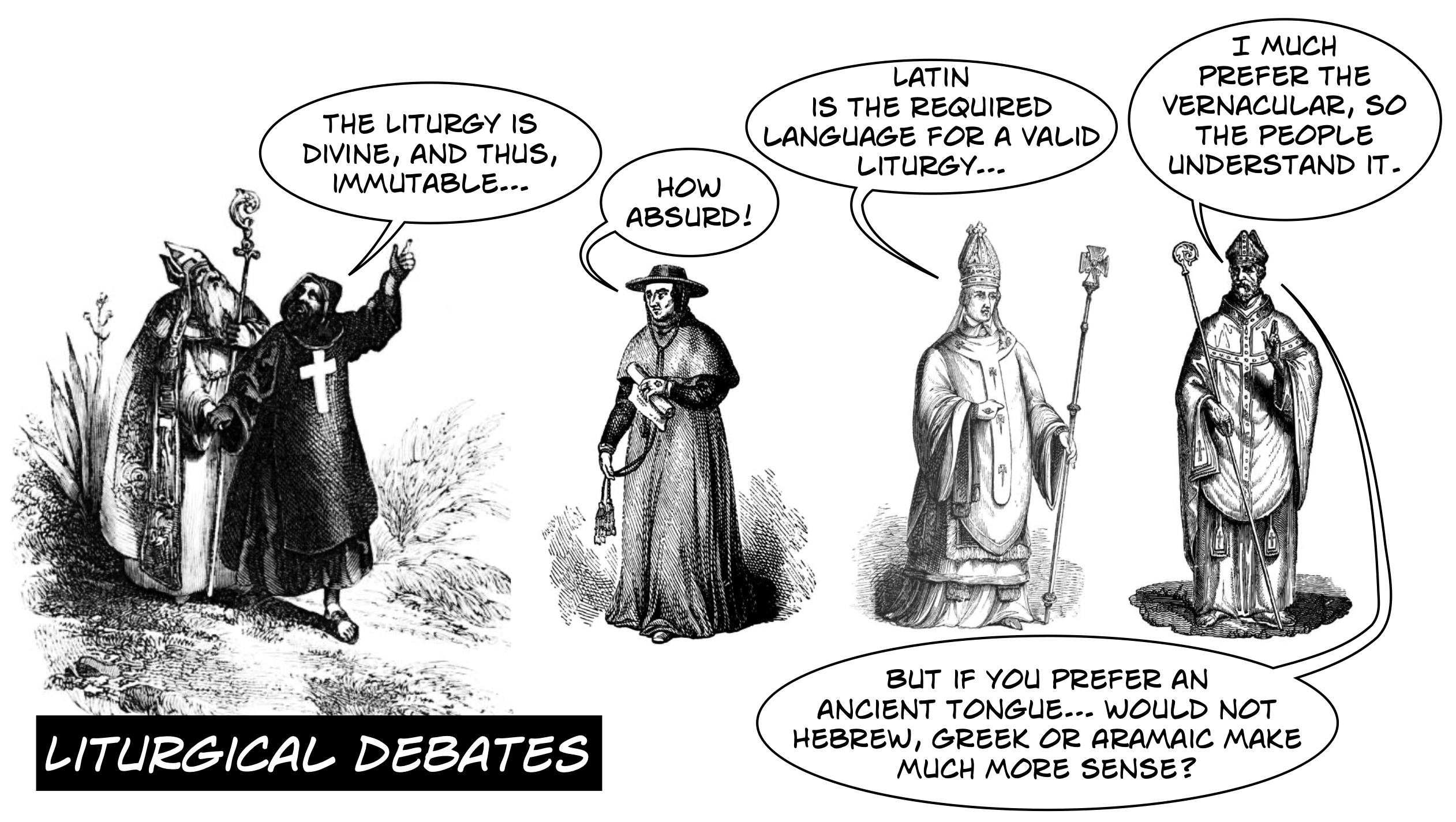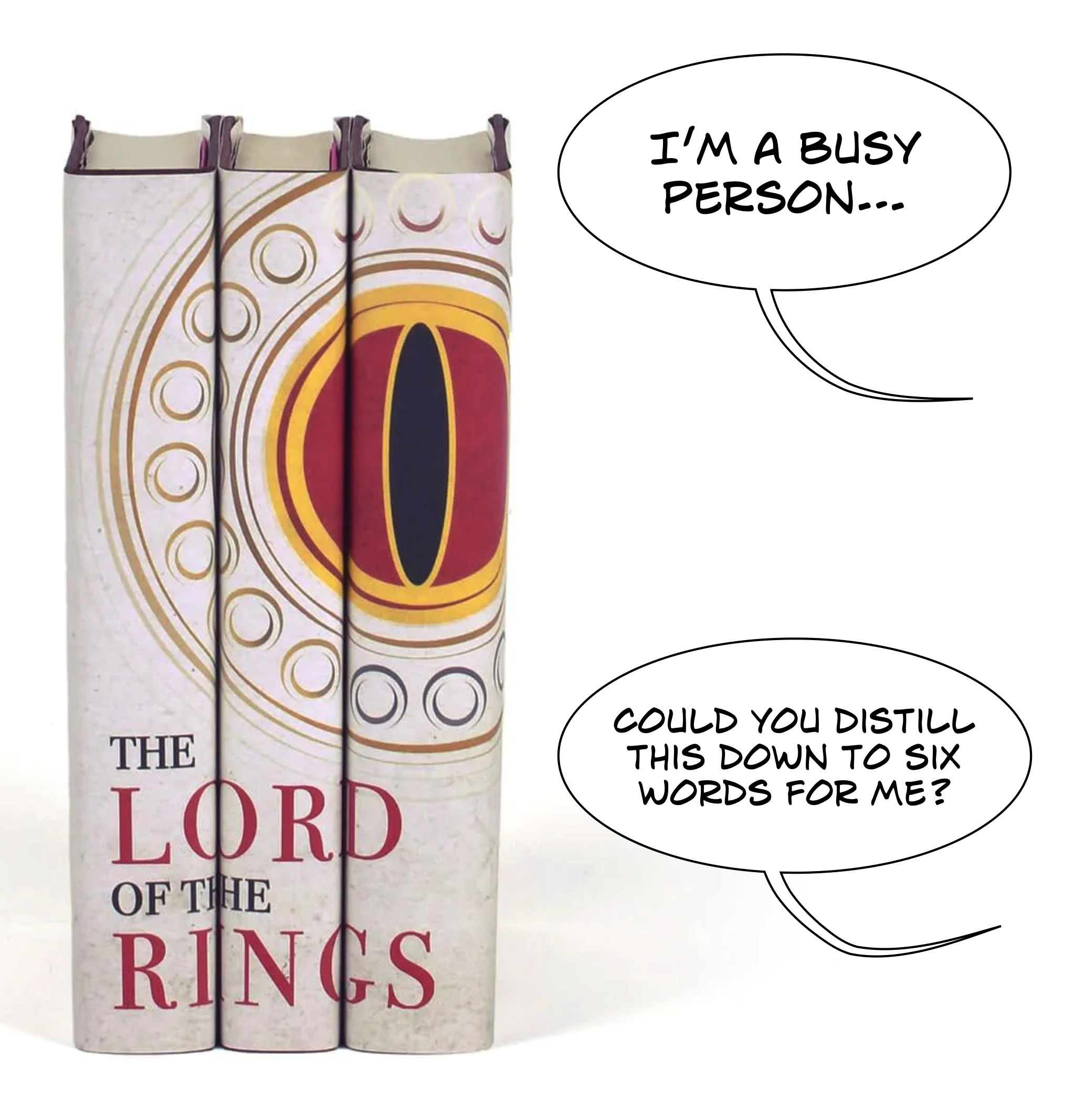
C.S. Lewis & Medicine

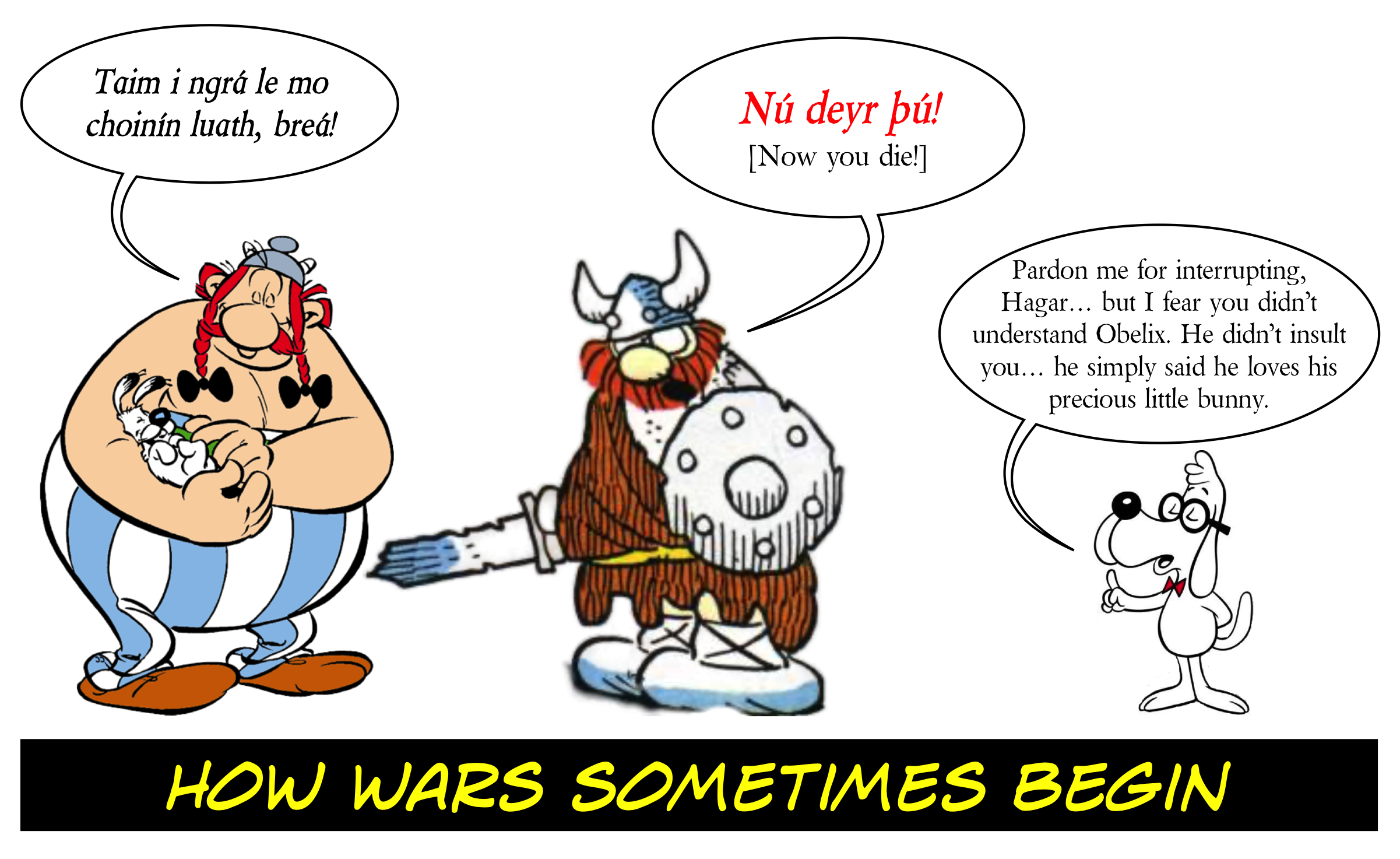
[I originally penned this post in 2020, but delayed its publication due to failing in my attempt to secure permission to receive this perfect illustration. Five years later, AI allowed me to create the image shown above. Since the message remains pertinent, I’m offering my thoughts on this subject today.]

Medicines are precious. Right now we are seeing the release of the first antiviral drugs devised to protect us from the covid plague. The trials have been positive, and now the caregivers on the frontlines are receiving these protective injections.

Unfortunately, some so-called medicines are not effective. They can even be harmful. That’s the case with “patent medicines” hawked by shysters lying about their results. Originally the term was positive. According to one museum, “patent medicines originally referred to medications whose ingredients had been granted government protection for exclusivity.”

Sadly, though, “the recipes of most 19th century patent medicines were not officially patented. Most producers (often small family operations) used ingredients quite similar to their competitors—vegetable extracts laced with ample doses of alcohol.

In a previous post, I shared Lewis’ view of God’s role in healing.

In his essay entitled “Miracles,” C.S. Lewis described during World War II the Christian viewpoint that God is the author of healing. After discussing the natural order of creation, he argues that God is at work in restoring the health of the those who are ailing.

In 1962, Lewis commiserated with a correspondent complaining about the number of pills she needed to take. He acknowledges the problem, and then points to a very positive corollary.

Yes, and one gets bored with the medicines too–besides always wondering ‘Did I remember to take them after breakfast?’ and then wondering whether the risk of missing a dose or the risk of an over dose is the worst!

Yes, one gets sick of pills. But thank God we don’t live in the age of horrible medicines such as our grandparents had to swallow.

In A Grief Observed, Lewis used an illustration of physical pain to explore the emotional pain caused by his sorrow at his wife’s passing.

I once read the sentence “I lay awake all night with a toothache, thinking about the toothache and about lying awake.” That’s true to life. Part of every misery is, so to speak, the misery’s shadow or reflection: the fact that you don’t merely suffer but have to keep on thinking about the fact that you suffer. I not only live each endless day in grief, but live each day thinking about living each day in grief.

In some ways, psychological suffering is particularly painful. The mentally ill have historically been ostracized. For all of the neurological discoveries that have been made in recent years, the human brain remains a mystery.

Fortunately, medical science has experienced some success formulating medicines that are helpful in treating mental disorders. One problem, however, is that (like nearly all meds) psychological formulas occasionally produce extreme side effects.

C.S. Lewis’ primary experience of psychological suffering came through grief. Tweaking Optimism, a great blog, has gathered a number of Lewis’ thoughts on mental anguish. One passage he cites from The Problem of Pain aptly contrasts physical and mental suffering.

Mental pain is less dramatic than physical pain, but it is more common and frequently more difficult to bear. The common attempt to conceal mental pain increases the burden: it is easier to say “My tooth is aching” than to say “My heart is broken.”

In the same book, Lewis lifts up the truth about suffering. In cases where no cure can bring relief, he beautifully describes various ways to survive journeying through the valley.

When pain is to be born, a little courage helps more than much knowledge, a little human sympathy more than much courage, and the least tincture of the love of God more than all.

C.S. Lewis’ Prescription for Christians Today

We live in an uncertain and turbulent time. Only God knows how long this world will last, but he has promised to deliver from death and hell those who call on his name. Thus, Jesus’ followers need not live in dread or despair.

We live with hope, and look forward with enthusiasm to our Lord’s return. It is to that glorious day, the Parousia, that Lewis refers in his essay “The World’s Last Night.”

The doctrine of the Second Coming, then, is not to be rejected because it conflicts with our favorite modern mythology. It is, for that very reason, to be the more valued and made more frequently the subject of meditation. It is the medicine our condition especially needs.

An Entertaining Tolkien “Game”

The inspiration for this revisitation of Lewis’ thoughts about medicine came from a fun website I recently encountered. Some creative soul noticed the similarity between two dissimilar matters—antidepressant medications and residents of Middle Earth.

The game offers 24 words, and you are challenged to identify the group into which it falls. Is it the name of a pharmaceutical, or is it one of the characters created by J.R.R. Tolkien? One name is a giveaway, but you may find many of the others rather difficult to discern.

Kudos to anyone who gets over twenty correct. (I almost did . . . well, if sixteen is close.) Have fun, and learn something, at the very same time!
Antidepressants or Tolkien Character?

Do Not Read the Bible

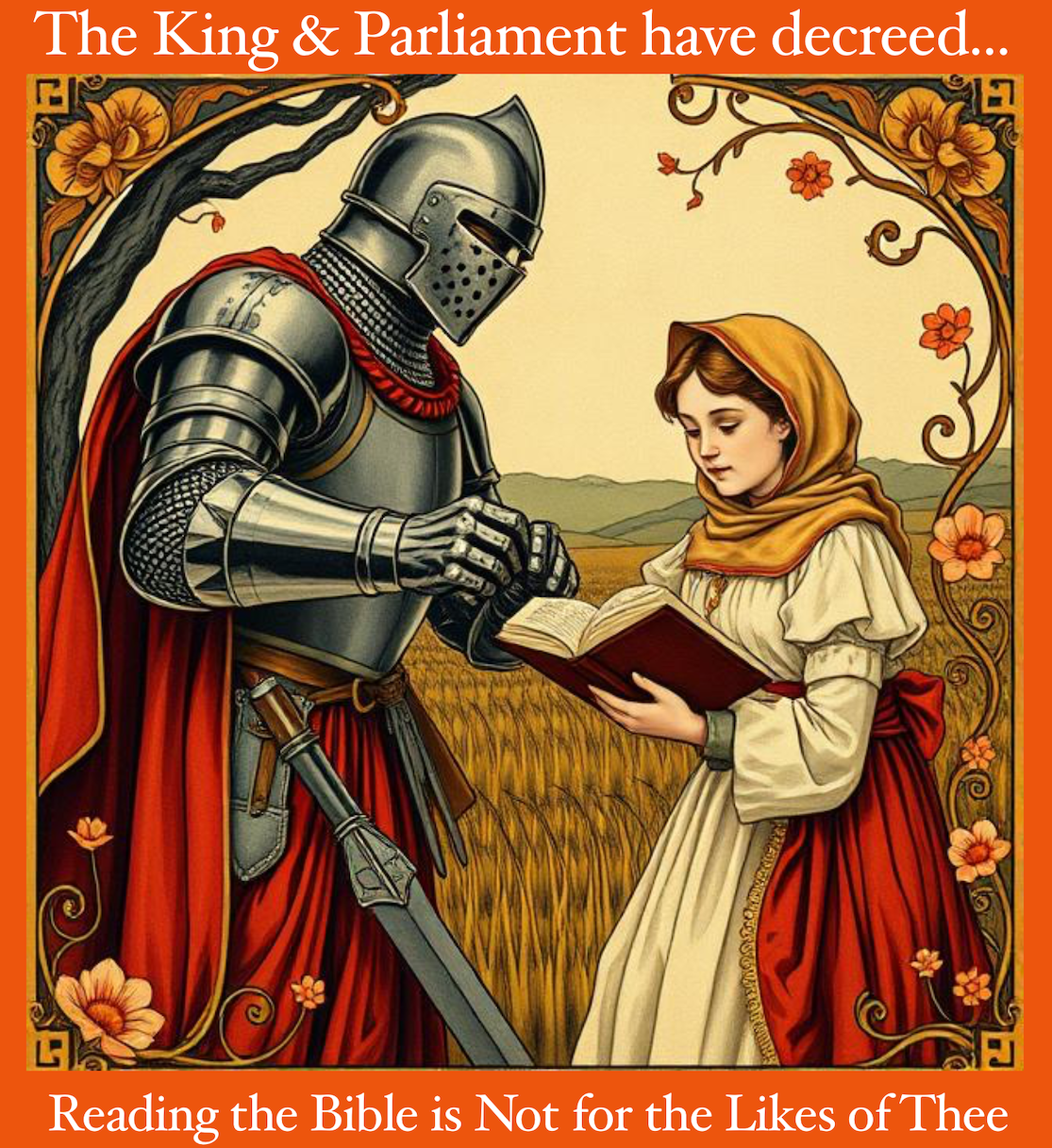
How would you respond if the government prohibited you from reading the Holy Scriptures? That was the situation in Great Britain when the Parliament passed the ironically named “Act for the Advancement of True Religion.”

Nearly five centuries ago, on May 12, 1543, Britain’s enlightened politicians and bishops determined that people of the “lower sort” needed to be protected from reading and interpreting the Bible themselves. 

Just sixty-one years later, King James VI/I would commission the translation of the Authorized Version, making God’s Word more accessible to all who could read English. William Tyndale (c. 1494 – 1536) had actually translated a fair portion of the Scriptures a decade prior to Parliament’s restrictive law. For this, and similar “Protestant” sins, Tyndale was strangled and burned at the stake in Belgium.

Even the so-called Great Bible had been authorized by Henry VIII in 1539. The approval decreed “one book of the bible of the largest volume in English, and the same set up in some convenient place within the said church that ye have care of, whereas your parishioners may most commodiously resort to the same and read it [emphasis mine].”

Nevertheless, not all of the powers that be apparently agreed with making the text of the Bible accessible to the common folk. We will consider this category of “inadequates” momentarily.

First let’s consider the distaste expressed by some for any modern translation of the Scriptures. (If you’ve ever attended a Bible study group you have probably encountered at least one person who insists on using the true KJV, despite the archaic language.

C.S. Lewis addressed this reticence for clear translations in an essay entitled “Christian Apologetics.” It was originally presented to Anglican priests and youth leaders in 1945.

“Do we not already possess,” [some will say] “in the Authorised Version the most beautiful rendering which any language can boast?” Some people whom I have met go even further and feel that a modern translation is not only unnecessary but even offensive.

They cannot bear to see the time-honoured words altered; it seems to them irreverent. There are several answers to such people. In the first place the kind of objection which they feel to a new translation is very like the objection which was once felt to any English translation at all.

Dozens of sincerely pious people in the sixteenth century shuddered at the idea of turning the time-honoured Latin of the Vulgate into our common and (as they thought) ‘barbarous’ English. A sacred truth seemed to them to have lost its sanctity when it was stripped of the polysyllabic Latin, long heard at Mass and at Hours, and put into . . . language steeped in all the commonplace associations of the nursery, the inn, the stable, and the street.

The Biblically Unworthy

So, who were these “lower sort” of individuals deemed unsuited for reading the Scriptures already translated into their native tongue? Well, they included “women, artificers, apprentices, journeymen, serving-men of the rank of yeoman and under, husbandmen and laborers.” Women of the gentry class were allowed an exception, being able to read the Scriptures, but only in private.

Fortunately, the law was short-lived. Henry’s son, Edward VI/I would have it repealed in the Treason Act of 1547. (Of course, this goodwill did not prevent Edward from condemning the translations of the aforementioned martyr, William Tyndale.)

Who Should Read the Bible?

The short answer is “everyone.” Yet the fact exists that some individuals are susceptible to confusion – or even to intentional twisting of the clear meaning of God’s Word. So, while the Scriptures should be accessible to all, it is wise to guide children and the easily-confused in their studies. After all, what we all desire is honest understanding and enlightenment.

This direct access is one reason Martin Luther, William Tyndale and others labored so tirelessly to translate the Bible into the vernacular. Cheerfully, “believers no longer had to read Latin [or Greek, Hebrew or Aramaic] to understand the word of God.”

As for those who would directly attempt to distort God’s inspired words, a clear example is found in the New World version paraphrase invented by Jehovah’s Witnesses. Another example, which I have discussed in the past, is the distorted abomination created by the Chinese Communist Party

There are also “abbreviated” versions of the Bible, which contain properly translated passages, but leave out passages that challenge preconceived positions. This would include Thomas Jefferson’s cut and paste Bible and an edition of the Scriptures developed for teaching slaves to read.


If you are interested in receiving daily notes about Christian history such as the one which prompted this post, visit the Christian History Institute.

Gathering Palms & Preparing for War

The Christian church has just celebrated Palm Sunday, and I recalled one of my favorite memories in preparing for the journey through Holy Week.

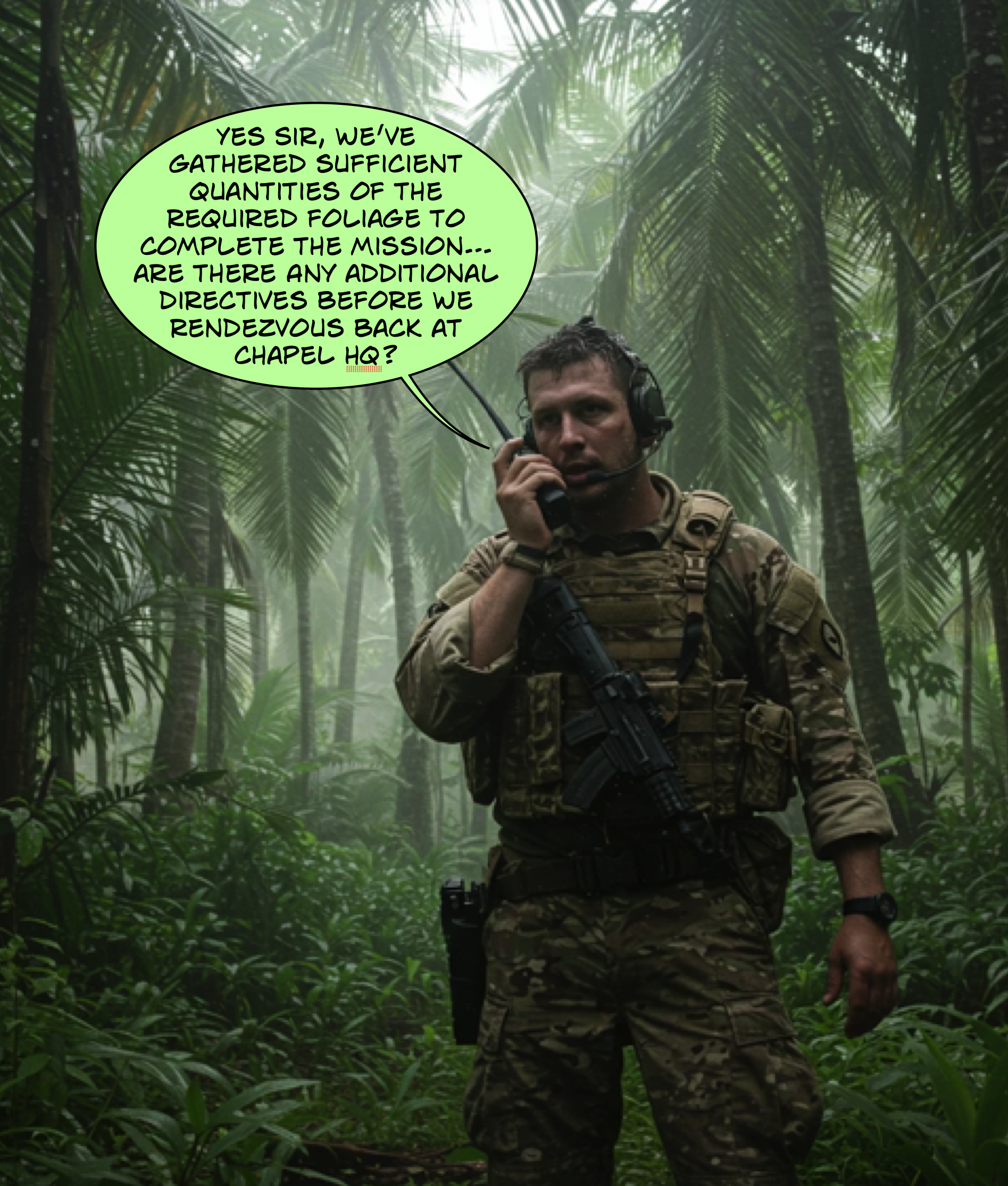
When I was stationed in Guam a few years ago (in the nineties), I enjoyed the annual tradition of gathering all of the palms to decorate the chapel and provide for worshippers in our very own jungle. Each year the chaplains and chaplain assistants, our whole team, would spend half a day gathering leaves that would put to shame any stateside palms.

Taking place in a tropical jungle, the event was sweaty, but fun. Good fellowship and even some seasonal early-Easter music. Fortunately, this didn’t take place during the typhoon season, as when the island was smashed by Super Typhoon Paka during our residency.

Jungles are fascinating places. Because the word possesses some rather ominous and even threatening overtones, a number of years ago they were rechristened “rainforests.” Even though most are tropical, there are temperate rainforests, such as in the Olympic National Forest, whose mountains I admire daily from our backyard.

C.S. Lewis alluded to the negative connotation of jungles in his study of “Vivisection,” with its repudiation of animal cruelty.

In justifying cruelty to animals we put ourselves also on the animal level. We choose the jungle and must abide by our choice.

A Modern Use for Jungles

In recent years, the jungles of Guam have been put to a military use. Unsurprisingly, soldiers and their Marine, Navy and Air Force cousins, must be prepared to do their jobs in a wide range of environments. That results in the existence of a variety of training settings, tuned to the specific needs of particular career fields.

For example, I served as the Wing Chaplain at Fairchild AFB where the USAF trains its pilots and aircrew members how to survive when they find themselves in unfriendly settings. Survival, Evasion, Resistance and Escape (SERE) training saves lives.

Anyway, not long ago the Air Force established a Jungle Agile Combat Employment (JACE) Course in, of all places, Guam.

This new course took knowledge from the U.S. Marine Corps Jungle Warfare Training Center and the Lightning Academy in Hawaii and tweaked it for non-combatant career fields to be prepared under the USAF’s Agile Combat Employment (ACE) concept.

This is part of America’s shift in focus to the threats in the Pacific theater. China has never renounced, and constantly proclaims, its intent to force the Republic of China (Taiwan) into their fascist empire. Of course, the fate of Hong Kong reveals just how unbenevolent the so-called People’s Republic is when it comes to maintaining any semblance of democratic freedoms. 

C.S. Lewis, of course, had much to say about the tragedies of fascism and war. However, that is not the focus of this reflection. Instead, the theme of this post reflects two thoughts. 

The less important idea, to which I have paradoxically devoted the most space, is the value of memories. Guam occupies a very special place in my family’s history, in part because all three of our kids were there during their teens. Lifechanging events occurred there.

And it was the wonderful people, military friends and wonderful Chamorro residents that made the most lasting impressions. Remembering the harvesting of palms, and recently learning about the jungle training course turned my thoughts back to that Micronesian paradise.

What’s Truly Vital

The infinitely more important message in this post is to acknowledge the holiest of seasons in which we find ourselves. Beginning with Palm Sunday’s celebration of the joy experienced by God’s people as they welcomed their Messiah into Jerusalem, we have the opportunity now to also join together with Jesus and our brothers and sisters in the faith as we:
~ commemorate the institution of the Lord’s Supper on Maundy Thursday,
~ contemplate the despair of the disciples as they stood at the foot of the cross as Jesus breathed his last mortal breath on Good Friday, and
~ celebrate in awe and wonder how our Savior rose from the grave and encouraged his disciples before ascending to Heaven and resuming his place at the right hand of God the Father. 

Christ’s atoning death, and his glorious resurrection, give us hope in the depths of our despair. And his promised return ensures us that there truly will come a day when we need never again prepare for war – or ever taste the pain of death.

We do well to heed C.S. Lewis’ encouragement to his friend Don Giovanni Calabria in 1948, when the priest was distraught over the troubles transpiring around the world.

Tomorrow [Easter] we shall celebrate the glorious Resurrection of Christ. I shall be remembering you in the Holy Communion. Away with tears and fears and troubles!

United in wedlock with the eternal Godhead Itself, our nature ascends into the Heaven of Heaven. So it would be impious to call ourselves “miserable.”

On the contrary, Man is a creature whom the Angels – were they capable of envy – would envy. Let us lift up our hearts! At some future time perhaps even these things it will be a joy to recall.

Literary Translators Beware

Translating literature from one language to another is a valuable, yet often undervalued, skill. It breaks the linguistic shackles restricting the benefits of good books to those literate in the language in which they are composed.

You can think of it this way. Without the dedicated efforts of translators, someone familiar only with English – e.g. as is, sadly, the case with most Americans – could never read the works of ancient Greeks or Romans. Asian philosophy such as the Four Books and Five Classics of Confucianism would be virtually unknown in the West.

Even contemporary literature from most of the world would be beyond our access. And, obviously, God’s written Word would only be accessible to those who mastered Hebrew, Aramaic, and Greek.

While C.S. Lewis is seldom thought of as a translator, it was indeed one of his talents. That doesn’t mean he devoted serious energy to translation. That was not his vocation. On the contrary, in 1945 he wrote: “People praise me as a ‘translator,’ but what I want is to be the founder of a school of ‘translation.’” (I discussed this a number of years ago in “C.S. Lewis’ School of Translation.”)

Dedicated translators have played an invaluable role throughout recorded history. A number of people still make translation their life’s labor. Yet, there are dark clouds on their horizon.

Is there a Future for Translation by Human Beings?

A recent literary journal alerted me to advances in artificial intelligence, which now jeopardize the future of professional translators. 

Back in 2023, an article in Forbes compared the respective advantages and challenges of the two methods. They accurately identified one distinction between a truly fluent human and an artificial substitute.

Language is complex, and culturally specific expressions such as idioms and metaphors, as well as ambiguous or ungrammatical sentences and other context-dependent word choices, can be challenging for AI algorithms.

Unsurprisingly, that same year the American Translators Association offered a more critical opinion in “Machine Translation vs. Human Translation: Will Artificial Intelligence Replace the World’s Second Oldest Profession?

We already mentioned that computers don’t possess our human capacity to comprehend meaning. The creative process, especially when it comes to translation, is the pinnacle of meaning. Human translators translate meaning, not words. The art of translation is understanding the meaning of the original text and then transforming it into something that communicates the same message (or evokes the intended emotion) but might not superficially look like an exact equivalent. . . .

But both now and then, professional translators are here to stay. Equipped with unique human skill and a toolbox full of tech, they’re ready to continue helping the world navigate the tricky business of multilingual communication – transporting messages appropriately, creatively, consistently, and securely to whatever audience you aim to reach. 

In short: machine translation can help when it doesn’t count, but professional human translation is there for you when it does.

Related to expressly literary translations, in contrast to mundane subject matter, the current issue of Poets & Writers contains a piece titled “AI Threatens Literary Translation.” When a European subsidiary of Simon & Schuster announced they would begin limited use of AI for this purpose,

Reactions rose in a flurry: Writers, publishers, and translators contended that AI would produce “bland” work. They lamented the possibility of lost jobs. The European Council of Literary Translators’ Associations resisted the standardization of an idiosyncratic process, stating that the imagination, understanding, and creativity that translation demands are “intrinsically human.”

This informative essay acknowledges that “AI isn’t new to translation either. Literary translators sometimes input segments of their source text into AI-based technologies . . . to generate ideas for particularly thorny passages. But these tools have to be used ‘very carefully . . . because the translations it produces are error-ridden and devoid of flow or beauty.’”

A Quick Experiment with AI Translation

Before completing this post I took a brief (less than ten minute) excursion to ChatGPT to experiment with their translation tool.

The results appear below (all produced in a mere handful of minutes). First I asked the AI to compose a sonnet on the subject of translation. Then I requested translations of that sonnet in five different languages. I have included the sonnet and the final two lines of each translation below.

You can perform a more elaborate experiment yourself, especially if you are familiar with more than one language. This would enable you to compare the accuracy of the translation. Or, perhaps one might take a translated version and translate that back into the original language, to see how closely it relates to the starting point.

In my experiment, the AI was constrained by needing to maintain the original’s form as a sonnet. I assume that if it were simply a literal translation, it may have modified the vocabulary and grammar. Each translation included footnotes. To illustrate how elaborate some of these notes were, I’ve reproduced those which appeared with the translation into Aramaic.

Frankly, if this is what these early AI prototypes are capable of, it appears to me that professional translators may truly have something to be worried about.

The Sonnet

In languages vast, where meanings hide and shift,
A translator’s art gives voice to what is known.
Through words, they bridge the gap, a timely gift,
To carry thought from one to others’ throne.

The rhythm, tone, and essence all must stay,
Though words may bend, they still must hold their grace.
A careful hand must guide the text’s relay,
To keep its heart while moving through time and space.

Yet oft the meaning’s lost in fleeting sound,
Or tangled in the strings of foreign speech.
But still they strive, where words and thoughts are bound,
To bring the message close, within our reach.

A translation’s not just words that blend –
It’s worlds revealed, with meaning without end.

~ Latin ~

Translatio non est solum verba iuncta –
Sed mundi patent, et mens non est puncta.

~ Old English ~

Nis anginn of wordum gemenged anum –
Ac worulda onwreah, and andgit ne swylt.

~ Classical Greek ~

Οὐ γάρ μόνον λέξεις αἱ μεταφράσεις,
ἀλλὰ κόσμοι φαίνονται, ἄνοια οὐδέποτε.

~ Middle Egyptian ~

𓏏𓂋 𓅓𓏏 𓊪 𓏏𓏤 𓆑𓏏 𓊵𓏤,
t r mt ḏbꜥ t ft ḏbꜥ
(“A translation’s not just words that blend –”)

𓂋 𓅓𓏏 𓆑𓏏 𓊵𓏤 𓏏𓏏𓀀.
r mt ft ḏbꜥ t t
(“It’s worlds revealed, with meaning without end.”)

~ Classical Aramaic ~

ܬܪܓܡܐ ܠܐ ܗܘܐ ܒܠܚܘܕ ܡܠܐ ܕܡܬܚܠܛܢ,
ܐܠܐ ܥܠܡܐ ܡܬܓܠܝܢ، ܘܡܕܡ ܠܐ ܚܒܠ.

Notes on the Translation:
1. Classical Aramaic Grammar & Style: The sentence structure follows Classical Aramaic syntax as used in ancient texts. Some phrases had to be adapted poetically since direct translations of modern concepts do not always exist.
2. Vocabulary Adjustments: “Translator” = ܡܬܪܓܡܢܐ (metargemana), a direct and historically accurate term. “Translation” is expressed as ܗܫܬܘܪܬܐ (hishtorta), meaning “interpretation, explanation.” “Essence” is translated as ܡܗܘܬܐ (mehutā), meaning “nature, essence.” “To bridge the gap” = ܡܫܬܪܝܢ ܓܦܐ (meshatrin gapé), literally meaning “to stretch wings” (a poetic expression).
3. Preserving the Poetic Flow: The rhythm and parallel structure of the original sonnet were carefully kept. Adjustments were made for metrical and phonetic balance in Aramaic.
4. This version captures the spiritual and poetic depth of the original while remaining faithful to the Classical Aramaic linguistic style.
5. Would you like an audio recording or a version in Syriac script for authenticity? Let me know how you’d like to refine it!

And all of this in ten minutes. Unfathomable . . .

God as the Author of Creation

Satan is powerless versus Christians, especially those who know he exists. Yet, vis-à-vis unbelievers, he “prowls around like [an invisible] lion, seeking someone to devour” (1 Peter 5). Christian “immunity” to Lucifer’s power, if not his temptations, is due to the indwelling presence of God’s Holy Spirit.

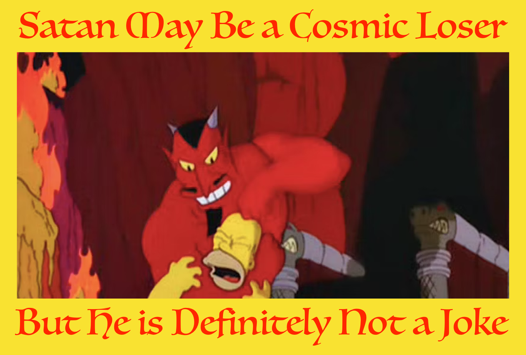
Still, for every human being, whatever their personal belief, the Devil is no mere cartoon, with whom to be trifled. I discussed this briefly in my previous post, “Only God Can Create,” which you might want to read before continuing here.

As for humanity’s vulnerability to the Devil’s influence, the consensus in paradoxically-labeled “enlightened” cultures is that he doesn’t even exist. Sadly, this cosmic lie even tricks self-described “Christians.”

This illusion plays directly into his purposes, as C.S. Lewis described in The Screwtape Letters. Screwtape, a senior demon, instructs his protégée Wormwood in the preferred method of dispelling human wariness about Evil.

The fact that “devils” are predominantly comic figures in the modern imagination will help you. If any faint suspicion of your existence begins to arise in his mind, suggest to him a picture of something in red tights, and persuade him that since he cannot believe in that (it is an old textbook method of confusing them) he therefore cannot believe in you.

Ironically, the populations of less Westernized cultures possess some immunity to this deception. Even in their traditional religions, there is a keen awareness of the existence of evil presences. In the words of The African Study Bible, “we Africans understand instinctively the stories of angelic visitations, spiritual warfare, and demonic oppression that are in the Bible.”

Christians believe in God, not the Devil. While the Scriptures attest to the personal identity of this fallen angel, acknowledgment of his existence is not salvific (i.e. it is not essential to salvation). Thus, C.S. Lewis is correct in his 1944 essay “Answers to Questions on Christianity” when he writes:

No reference to the Devil or devils is included in any Christian Creeds, and it is quite possible to be a Christian without believing in them. I do believe such beings exist, but that is my own affair.

Supposing there to be such beings, the degree to which humans were conscious of their presence would presumably vary very much. I mean, the more a man was in the Devil’s power, the less he would be aware of it, on the principle that a man is still fairly sober as long as he knows he’s drunk. It is the people who are fully awake and trying hard to be good who would be most aware of the Devil. It is when you start arming against Hitler that you first realize your country is full of Nazi agents.

Of course, they don’t want you to believe in the Devil. If devils exist, their first aim is to give you an anaesthetic – to put you off your guard. Only if that fails, do you become aware of them.

On the Matter of Creative Power

Only God can create. That was the core message of our previous discussion. C.S. Lewis recognized, as do biblically-grounded believers, that Satan is merely a sinful, fallen being, little different from humanity in that regard. This truth shatters the pagan philosophy of dualism, or the misguided notion that two equal and opposite forces (e.g. good and evil) exist in some sort of equilibrium. 

In “The Seeing Eye,” C.S. Lewis described the way in which God is beyond his creation. 

Looking for God – or Heaven – by exploring space is like reading or seeing all Shakespeare’s plays in the hope that you will find Shakespeare as one of the characters . . . Shakespeare is in one sense present at every moment in every play. But he is never present in the same way as Falstaff or Lady Macbeth. . . .

If there were an idiot who thought plays existed on their own, without an author . . . our belief in Shakespeare would not be much affected by his saying, quite truly, that he had studied all the plays and never found Shakespeare in them. . . .

My point is that, if God does exist, He is related to the universe more as an author is related to a play than as one object in the universe is related to another. If God created the universe, He created space-time, which is to the universe as the metre is to a poem or the key is to music.

To look for Him as one item within the framework which He Himself invented is nonsensical. If God – such a God as any adult religion believes in – exists, mere movement in space will never bring you any nearer to Him or any farther from Him than you are at this very moment. You can neither reach Him nor avoid Him by travelling to Alpha Centauri or even to other galaxies.

Mark Twain’s Divinized Satan

I had intended to mention Samuel Clemens in my previous article, as one who advanced the assertion that Satan possesses creative ability. Whether Twain regarded the Devil as an actual entity is certainly debatable. What is undeniable, however, is his devoted defense of Lucifer.

As Twain famously wrote in his autobiographical writings, “But who prays for Satan? Who, in eighteen centuries, has had the common humanity to pray for the one sinner that needed it most?” 

Mark Twain was (in)famous for his atheism, or his agnostic antipathy of the Christian understanding of our Creator. Not content to disbelieve, Samuel Clemens actively worked to undermine Christian faith. One of his books, Letters from the Earth, had to be printed posthumously, due its irreverent (or blasphemous) nature.

It bears a superficial resemblance to C.S. Lewis’ amazing Screwtape Letters – insofar as both fictional works present themselves as demonic correspondence. 

The similarity ends there. While Lewis provides keen insight into Evil’s tactics in wreaking havoc in human lives, Twain’s letters present Satan in a positive, even noble, light.

Letters from the Earth is only one of Mark Twain’s anti-Christian works. The Mysterious Stranger is one of his most bizarre. It evidences his long-term preoccupation with Satan, in that it was composed (in various versions) between 1897 and 1908.

The first serious rendition, The Chronicle of Young Satan, was completed in 1900. I mention it here because there is a scene in which the Devil “creates” a miniature world. Obviously it errs in attributing to Lucifer the power to create life – but to its credit, it does reveal Satan as a capricious, vain, cruel, and compassionless lord.

In 1985 a claymation film was released titled The Adventures of Mark Twain. It features the mock scene from Chronicle of Young Satan. It is quite disturbing. However, if one is curious about the subject, and wishes to be forearmed regarding such deceptions, you can view the excerpt here.

Especially for those who do choose to view Twain’s portrayal of the Devil in his fictional “youth,” I desire to end our current discussion on a positive note.

Claymation was also the medium for a long-lived Christian television series. Davey & Goliath, the story of a regular kid and his dog, ran between 1964 and 1975. Many of the episodes can be seen here.

And finally (and forever), we can celebrate with C.S. Lewis the wonder that this world we currently inhabit will not be God’s sole creation. In fact, because of Jesus’ redemptive sacrifice, we can look forward to a new cosmos, untainted by sin.

The New Testament writers speak as if Christ’s achievement in rising from the dead was the first event of its kind in the whole history of the universe. He is the “first fruits”, the “pioneer of life”.

He has forced open a door that has been locked since the death of the first man. He has met, fought, and beaten the King of Death. Everything is different because He has done so. This is the beginning of the New Creation: a new chapter in cosmic history has opened (Miracles).

Only God Can Create

Satan has many disciples in this world. Some know him by other names, or worship him in spirit without recognizing his actual existence (e.g. Mammon). The irony, of course, is that the Devil is simply a posturer, or in modern parlance, a poser. And the presence of the Holy Spirit makes any single Christian more than his match.

A prime evidence of Satan’s weakness is that he is a mere created being, without any creative powers of his own. Although some would grant the Adversary a glory he does not own, the truth is that since his expulsion from Heaven, he has devolved into the Great Pretender.

C.S. Lewis never pretended to be a theologian (for whatever authority that debatable title might convey). Instead, he was a brilliant disciple of Jesus with a sincere desire to follow the teachings of the Scriptures. Lewis certainly wasn’t infallible (and he has many critics who delight in pointing out that obvious fact).

Nevertheless, Lewis’ private insights on the subject of Lucifer’s noncreative limitation are right on the biblical target. Responding to a question posed by a reader, Lewis offered his opinion. 

Dear Mrs [Belle] Allen, I think it would be dangerous to suppose that Satan had created all the creatures that are disagreeable or dangerous to us for (a) those creatures, if they could think, would have just the same reason for thinking that we were created by Satan. (b) I don’t think evil, in the strict sense, can create.

It can spoil something that Another has created. Satan may have corrupted other creatures as well as us. Part of the corruption in us might be the unreasoning horror and disgust we feel at some creatures quite apart from any harm they can do us. (I can’t abide a spider myself.) (correspondence, 11 January 1954).

No, God alone creates . . . and redeems. The impotent Devil can never create, or rescue. His utter corruption results in an admittedly powerful spiritual being (a fallen angel) who is devoted to twisting, breaking, tainting, warping, spoiling, corrupting, rotting, perverting, and ruining all that God loves.

Granted, in our fallen world, Satan can fashion an abomination from some preexisting thing he corrupts – for example, Ophiocordyceps unilateralis the parasitic fungus that turns ants into zombies – but he can never create something out of nothing. These poor abominations are an excellent example of what Lewis referred to when he described the “horror and disgust we feel at some creatures . . .”

Meanwhile, Human Beings Can Create

Well, not exactly “create” on the creatio ex nihilo (created out of nothing) sense. Only God can do that, as he did when he spoke all things into existence. Just as Aslan echoed, when he sang Narnia into being in Lewis’ Chronicles.

“And God said, ‘Let there be light,’ and there was light” (Genesis 1).

“In the beginning was the Word [Logos], and the Word was with God, and the Word was God. . . . All things were made through him . . .” (John 1)

The Lion was pacing to and fro about empty land and singing his new song. It was softer and more lilting than the song by which he had called up the stars and the sun; a gentle, rippling music. And as he walked and sang the valley grew green with grass. It spread out from the Lion like a pool. It ran up the sides of the little hills like a wave” (The Magician’s Nephew)

As for humans like you and me being able to create, that is one of God’s most precious gifts to us. In truth, we use elements already created by the Lord: clay and stone to sculpt, pigments to paint, quill and ink to write.

The Inklings understood this creative impulse quite well. They not only understood it; they lived it. 

Like Christians before and since, they recognized that our creative capacity is based in the fact that we are created imago Dei, in the image of God.

Many people mistakenly believe J.R.R. Tolkien coined the word subcreation (or sub-creation, for the hyphen-infatuated). He certainly applied it for the first time to the intentional creation of what the Oxford English Dictionary calls “the action or process of creating a fully realized and internally consistent imaginary (or ‘secondary’) world.” 

Subcreation may be considered a form of “creation by a created being.” But even the most talented of writers and artists should remember this truth, stated by a Canadian astrophysicist: “God did not grant to the devil or any of his creatures the power to create.”

There is much more to consider on this subject, but Mere Inkling readers will need to wait until my next post, when we will conclude our discussion of this fascinating matter. 

There are two equal and opposite errors into which our race can fall about the devils. One is to disbelieve in their existence. The other is to believe, and to feel an excessive and unhealthy interest in them.

They themselves are equally pleased by both errors, and hail a materialist or a magician with the same delight. (The Screwtape Letters).


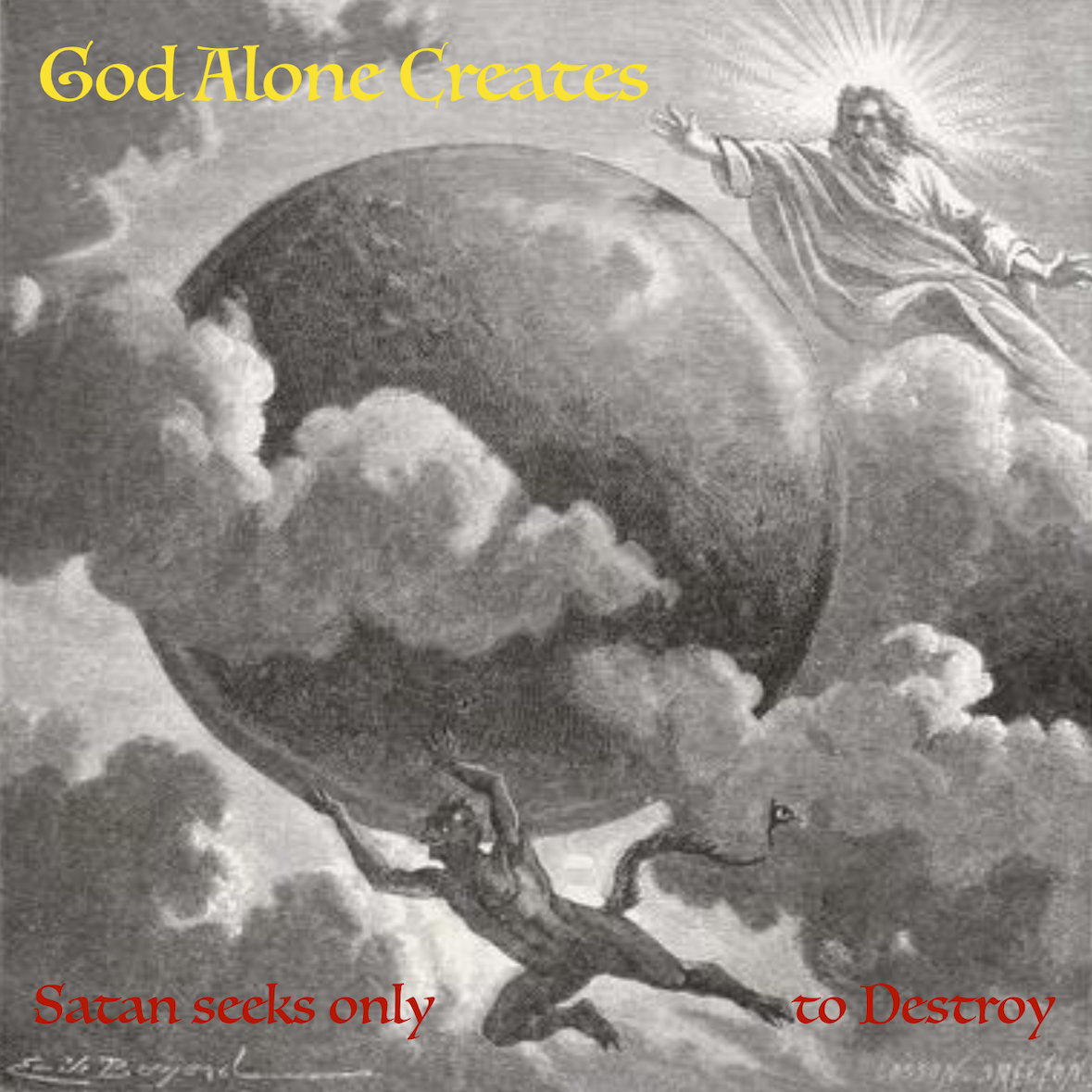
The image above is based on the work of Émile Bayard (1837-1891), a French illustrator who was born in Cairo, Egypt.

Damnable Typos & the Bible

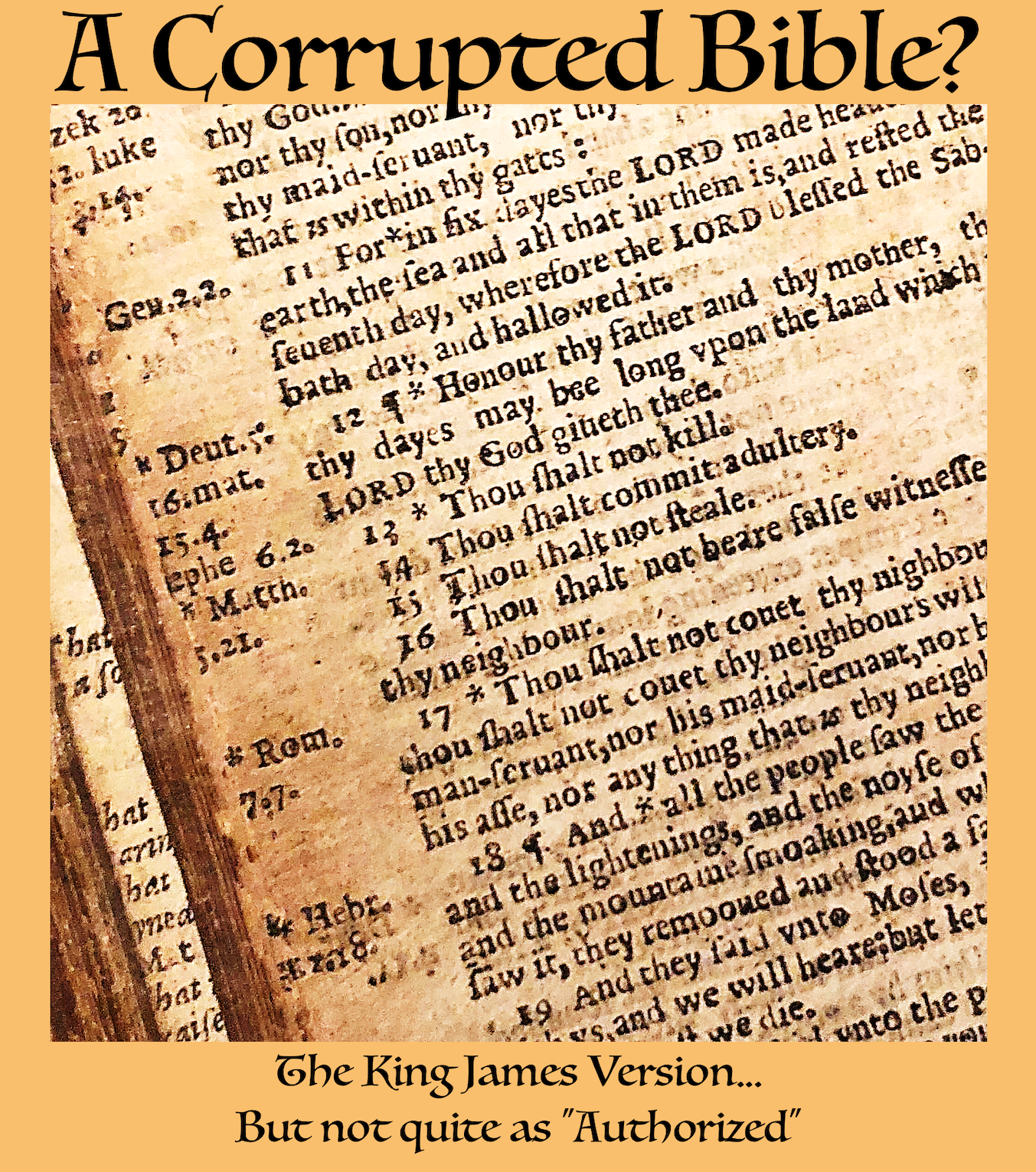
While the title of this post will be shocking to some, it’s far less scandalous than the typographical error discussed below. Due to two misprints appearing in a 1641 edition of the King James Bible (KJV), the publication has been labeled the “Wicked Bible.”

Translating the Scriptures is a necessary, and demanding, task. The early editions of the KJV (which was preceded by the Wycliffe Bible) reveal how vulnerable the words themselves were to being altered during the typesetting process.

I’ve written about this subject a number of times during the past decade, and even devoted a column to “C.S. Lewis’ School of Translation,” which is about something even more important than merely translating words. There I quote one of the great author’s deepest hopes.

What I want is to be the founder of a school of ‘translation . . .’ Where are my successors? (correspondence, 7 October 1945).

Returning to the seventeenth century book with its unfortunate errors, we witness an example of how even a solid translation can be derailed by careless (or malevolent) typesetters.

The magnitude of the mistake discovered in this particular edition caused its suppression, and most copies were destroyed. While some still exist in private hands, only fifteen remain in public collections. One of these made its way to New Zealand before being identified in 2018.

A Truly Scandalous Misprint

It would be one thing if a printer accidently dropped the final “e” from “breathe,” leaving the word “breath.” Even substituting an errant “w” for the “b,” would create an alternate word that would greatly muddle a passage . . . but still not appear remotely “wicked.” 

However, a 1631 mistake in an English Bible literally turned a passage – one of the Ten Commandments, no less – on its head. Rather than reading “Thou shalt not commit adultery,” this edition declares, “Thou shalt commit adultery” (Exodus 20:14).

The consequences of this disaster were significant, particularly for His Majesty’s official printers. In Cyprianus Anglicanus by royalist priest Peter Heylyn (1599-1662), we learn the details. (You can download a free facsimile of the volume which includes many other fascinating facts.) The passage related to the misbegotten tome reads as follows:

His Majesties Printers, at or about this time [1632], had committed a scandalous mistake in our English Bibles, by leaving out the word Not in the Seventh Commandment.

His Majesty being made acquainted with it by the Bishop of London, Order was given for calling the Printers into the High-Commission where upon the Evidence of the Fact, the whole Impression was called in, and the Printers deeply fined, as they justly merited.

Reports of Cases in the Courts of Star Chamber and High Commission, penned by Samuel Rawson Gardiner in 1886, includes a detailed account of the court’s findings. (Due to their uniqueness, I have transposed the full account, as found in two sections, as a footnote below.) One passage describes a second “gross error.”

. . . showed the two grossest errors, vizt. “Shalt commit adultery” and “great asse:” for “shalt not commit adultery” and “greatnesse…”

The second of these blunders occurs in Deuteronomy 5:24, which properly reads “Behold, the Lord our God hath shewed us his glory and his greatness.” (It should be noted that the word asse would most commonly be associated with donkeys.)

The magnitude of these mistakes can only be understood when one recognizes how reverentially the Scriptures were regarded at this time. C.S. Lewis would suggest that during an age when the Bible has been relegated to historic literature, it is difficult for us to comprehend the seriousness of this matter.

It is very generally implied that those who have rejected its theological pretensions nevertheless continue to enjoy it as a treasure house of English prose. It may be so. There may be people who, not having been forced upon familiarity with it by believing parents, have yet been drawn to it by its literary charms and remained as constant readers.

But I never happen to meet them. Perhaps it is because I live in the provinces. But I cannot help suspecting, if I may make an Irish bull, that those who read the Bible as literature do not read the Bible. (“The Literary Impact of the Authorised Version”).

In “Challenges in Printing Early English Bibles,” you can read about other Bibles featuring noteworthy mistakes. In two, “peacemakers” become “placemakers,” and “murmurers” are transformed into “murderers.” Another example, in the very first edition of the KJV, finds Jesus’ ancestor Ruth referred to by the male pronoun, due to the accidental dropping of an “s.”

More troubling is another early KJV Bible where “the text of Psalm 14 [reads], “The fool hath said in his heart there is a God,” rather than “The fool hath said in his heart there is no God.”

Worst of all, in terms of blasphemous connotations, would likely be the so-called “Judas Bible.”

In the 1609 Geneva Bible, the typesetters mistakenly replaced Jesus’s name with that of Judas. John 6:67 reads: “From that time many of his disciples went back, and walked no more with him. Then said Judas unto the twelve, Will ye also go away?”

Fortunately, modern editions of the Jewish and Christian Scriptures undergo thorough proofreading, so this sort of error is rare today. Still, typos will persist as long as the remotest possibility of error exists.

Those among us who have sought to have our writing published by traditional publishers may relate to the example with which we end. C.S. Lewis and J.R.R. Tolkien and even Mark Twain faced challenges working with some of their editors and publishers.

With all of the printing mishaps in the early English Bible, it is only appropriate that one of the editions was called “The Printers Bible.”

This text, published in about 1702, takes its name from a typesetting error found in Psalm 119, which should have read “Princes have per­secuted me without a cause” but was mistakenly printed as “Printers have persecuted me.”


Full references from Reports of Cases in the Courts of Star Chamber and High Commission by Samuel Rawson Gardiner (1886).

Mr Barker the printer. There is a cause begunne against him for false printeing of the Bible in divers places of it, in the Edition of 1631, vizt., in the 20 of Exod[us], “Thou shalt committ adultery”; and in the fifte of Deut[eronomy] “The Lord has shewed his glory, and his great asse”; and for divers other faults; and that they had printed it in very bad paper. And the Bishop of London showed that this would undoe the trade, and was a most dishonorable thing; that they of the church of Rome are soe carefull, that not a word or letter is to be found amisse in their Ladie’s Psalter and other superstitious books; and that we should not be soe carefull in printinge the sacred Scriptures; and that they in Holland, at Amsterdam, had gott up an English presse, and had printed the Bible in better paper, and with a better letter, and can undersell us 18d. in a Bible. Mr Barker and his partners endeavored in partt to excuse themselves, and had advocates to speake for them, and were willing to submitt, and promised to amend their faults; but the Court would not remitt their offense, but the cause was ordered to goe on.

The Printers having answered move the Court to passe by their oversight being the fault of the workmen but the King’s Advocate desired they might make their defense legally and the cause to go onto hearing: and that he might have liberty to put in additional articles against them. The Bishop of London would have the Church sett upright in her reputacion, that we are as carefull in printeing the Bible as they are of their Jesus’ psalter : and whereas the Printers say this is stirred up by the malice of one man against them; The Bishop saith he stirred not till the Bible was sould into his house, bought by his footman: and he saith the printinge is soe bbad and the paper too that, if it be not mended shortlie, they wilbe put downe by those of Amsterdam and their trade spoyled, and showed for the two grossest errors, vizt. “Shalt commit adultery” and “great asse:” for “shalt not commit adultery” and “greatnesse…” The Arch Bishop of Canterbury saith, that the Printers that print for his Matie have a very profitable place, and therefore should be more carefull. I knew the tyme when greater care was had about printeing, the Bibles especiallie, good compositors and the best correctors were gotten being grave and learned men, and the paper and letter rare and faire every way of the best; but now the paper is naught, the composers boyes, and the correctors unlearned: There is a farmer and he makes the benefit, and careth for nothing about it. They heretofore spent their whole time in printeing, but these looke to gaine, gaine, gaine, then they are not to be commended: Well, let them looke to it: and let the cause proceed, saith the ArchBishop. London. “There was a great deale of doo between you of this Citty and those of Cambridge heretofore about the priviledge of printeing the Bible and psalms which they of Cambridge claymed; then the Bible was exactlie printed, now you have forced the Cambridg printer to an agreement, now noe bible is right printed.

[It appears this volume itself would have benefited from having more diligent “correctors.” Perhaps most curiously, two spellings of the word printing – “printinge” and “printeing” – appear in this publication.]

C.S. Lewis, Liturgy & a Dash of Theology

C.S. Lewis wrote: “There is no subject in the world (always excepting sport) on which I have less to say than liturgiology” (Letters to Malcolm: Chiefly on Prayer).

In Christian usage, the word “liturgy” – derived from leitourgia, and translated “work of the people” or “work for the people” – corresponds to the public worship service.

For some, “liturgy” is regarded as a negative word. It may evoke, in such cases, a sense of sterile ritual or what the Scriptures refer to (in the King James Version) as “vain repetitions” (Matthew 6). The irony is that human beings generally prefer familiarity, and almost all worship is essentially liturgical. 

Nondenominational churches sometimes claim they do not possess a liturgy. In truth, every nonspontaneous worship experience possesses liturgical elements. They may be simple – a welcome or greeting followed by music, prayer, the reading of a Bible passage, often followed by some form of sermon or reflection. Oh, and for American Protestants at least, it appears most consider “announcements” are essential to worship services.

The particular elements vary, but the “liturgical” aspects, normally occur in the same sequence at regular services.

C.S. Lewis was a faithful member of the Church of England. He was also respectful of tradition, and genuinely content with the Book of Common Prayer. While he did not prefer conventional church hymnody, he acknowledged that it blessed others. In “The Classical Anglicanism of C.S. Lewis,” the author says Lewis challenged “the assumptions of a liberal theology which undermined the Church’s confidence in its proclamation” of the Gospel. However, he continues, Lewis “was no reactionary.”

C.S. Lewis loved the simplicity of church worship in its unostentatious form. That was one reason he faithfully attended services at his modest local parish. He referred to himself as a “very ordinary layman.” This was his humble confession, although there was precious little about the scholar that was “ordinary.” Still, he was reticent to comment on ecclesiastical subjects where he possessed no expertise. Thus his complacency with time proven liturgical matters, and his academic disinterest in commenting on them formally.

This, of course, did not apply to theological truths such as the doctrinal core of “Mere Christianity.” C.S. Lewis was deeply troubled by challenges to historic Christian orthodoxy. His devotion to the faith he had once rejected forced him to come to its defense when theologians diverged from “the path of life” (Psalm 16).

In 1959, C.S. Lewis delivered an address now entitled “Fern Seed and Elephants.” It is profound. [You can listen to a reading of “Fern Seed and Elephants” at C.S. Lewis Essays.]

Invited to speak to some clergy about the threat of liberal theologies undermining the Christian faith, Lewis begins by acknowledging his lack of formal theological training.

I am a sheep, telling shepherds what only a sheep can tell them. And now I begin my bleating.

Many of us who have attended seminary, can attest to his fear that what passes for illumination is too often the opposite.

I find in these theologians a constant use of the principle that the miraculous does not occur. Thus any statement put into our Lord’s mouth by the old texts, which, if he had really made it, would constitute a prediction of the future, is taken to have been put in after the occurrence which it seemed to predict.

This is very sensible if we start by knowing that inspired prediction can never occur. Similarly in general, the rejection as unhistorical of all passages which narrate miracles is sensible if we start by knowing that the miraculous in general never occurs.

Now I do not here want to discuss whether the miraculous is possible. I only want to point out that this is a purely philosophical question. Scholars, as scholars, speak on it with no more authority than anyone else. The canon ‘If miraculous, then unhistorical’ is one they bring to their study of the texts, not one they have learned from it.

If one is speaking of authority, the united authority of all the biblical critics in the world counts here for nothing. On this they speak simply as men; men obviously influenced by, and perhaps insufficiently critical of, the spirit of the age they grew up in.

In Lewis’ The Great Divorce, he describes just such a theologian. If you would like to read my article on this subject, “Confused Clerics: The Landlord’s Stewards in C.S. Lewis’s The Pilgrim’s Regress,” just click on the article’s title.

C.S. Lewis ends his essay “Fern Seeds and Elephants” with a sort of apology. Yet, despite his reluctance to venture into the ecclesiastical realm, he shares the compulsion of the Prophet Jeremiah to speak truth. The prophet, who suffered greatly for his faithfulness, said “If I say, ‘I will not mention [God], or speak any more in his name,’ there is in my heart as it were a burning fire shut up in my bones, and I am weary with holding it in, and I cannot” (Jeremiah 20).

Missionary to the priests of one’s own church is an embarrassing role; though I have a horrid feeling that if such mission work is not soon undertaken the future history of the Church of England is likely to be short.

More Liturgical Wisdom from C.S. Lewis

C.S. Lewis did not begin his vocation as a voice of reason for the clergy when he wrote this essay. On the contrary, his concern for the erosion of sound theology began much earlier. A decade earlier he weighed in on a public discussion of arbitrary liturgical changes in the church. Lewis’ concerns at that time remain valid, more than seventy years later.

Sir,– I agree with Dean Hughes that the connection of belief and liturgy is close, but doubt if it is ‘inextricable.’ I submit that the relation is healthy when liturgy expresses the belief of the Church, morbid when liturgy creates in the people by suggestion beliefs which the Church has not publicly professed, taught, and defended.

If the mind of the Church is, for example, that our fathers erred in abandoning the Romish invocations of saints and angels, by all means let our corporate recantation, together with its grounds in scripture, reason and tradition be published, our solemn act of penitence be performed, the laity re-instructed, and the proper changes in liturgy be introduced.

What horrifies me is the proposal that individual priests should be encouraged to behave as if all this had been done when it has not been done.

One correspondent compared such changes to the equally stealthy and (as he holds) irresistible changes in a language. But that is just the parallel that terrifies me, for even the shallowest philologist knows that the unconscious linguistic process is continually degrading good words and blunting useful distinctions. Absit omen!

Whether an ‘enrichment’ of liturgy which involves a change of doctrine is allowable, surely depends on whether our doctrine is changing from error to truth or from truth to error. Is the individual priest the judge of that? (Church Times, 1 July 1949).

In The Screwtape Letters, an experienced devilish tempter is training a subordinate. In Letter XVI, he discusses attending a church with which his target “is not wholly pleased.”

Laying aside the matter of the futility of ever finding a perfect church – after all, they are made up of people – the letter cautions us about some of the criticisms related to the topic at hand. Since many aspects of Screwtape’s vile advice relate to our own vulnerabilities, I will close with an admittedly lengthy excerpt from the correspondence.

My dear Wormwood, You mentioned casually in your last letter that the patient has continued to attend one church, and one only, since he was converted, and that he is not wholly pleased with it. May I ask what you are about? Why have I no report on the causes of his fidelity to the parish church? Do you realise that unless it is due to indifference it is a very bad thing?

Surely you know that if a man can’t be cured of churchgoing, the next best thing is to send him all over the neighbourhood looking for the church that ‘suits’ him until he becomes a taster or connoisseur of churches. The reasons are obvious. In the first place the parochial organisation should always be attacked, because, being a unity of place and not of likings, it brings people of different classes and psychology together in the kind of unity the Enemy [in Screwtape’s case, the Enemy to whom he refers, is God] desires. The congregational principle, on the other hand, makes each church into a kind of club, and finally, if all goes well, into a coterie or faction.

In the second place, the search for a ‘suitable’ church makes the man a critic where the Enemy wants him to be a pupil. . . . [One nearby congregation boasts a] Vicar is a man who has been so long engaged in watering down the faith to make it easier for a supposedly incredulous and hard-headed congregation that it is now he who shocks his parishioners with his unbelief, not vice versa. He has undermined many a soul’s Christianity. His conduct of the services is also admirable. In order to spare the laity all ‘difficulties’ he has deserted both the lectionary and the appointed psalms and now, without noticing it, revolves endlessly round the little treadmill of his fifteen favourite psalms and twenty favourite lessons. . . .

[While encouraging church shopping], all the purely indifferent things – candles and clothes and what not – are an admirable ground for our activities. We have quite removed from men’s minds what that pestilent fellow Paul used to teach about food and other unessentials – namely, that the human without scruples should always give in to the human with scruples.

You would think they could not fail to see the application. You would expect to find the ‘low’ churchman genuflecting and crossing himself lest the weak conscience of his ‘high’ brother should be moved to irreverence, and the ‘high’ one refraining from these exercises lest he should betray his ‘low’ brother into idolatry.

And so it would have been but for our ceaseless labour. Without that the variety of usage within the Church of England might have become a positive hotbed of charity and humility.

Improve Your Writing with a Brevity Exercise

While we are unlikely to become another J.R.R. Tolkien or C.S. Lewis, it is quite possible to improve our literary skills.

There are numerous ways to strengthen our writing. One of my favorites is to “stretch” my abilities by engaging in exercises that push me far beyond my nonfiction comfort zone. More on the details in a moment.

C.S. Lewis prized brevity and clarity. Most readers do. I’ve written about this in “C.S. Lewis on brevity.” Before that, I had discussed brevity as a factor of “clear communication,” while focusing on the value of common semantics to avoid confusion.

I encourage you to read “In Defense of the Fairy Tale: C.S. Lewis’s Argument for the Value and Importance of the Fairy Tale.” The author cites Lewis’ reason for choosing the fairy tale as his genre for Narnia.

[Lewis] describes the invention process for the Chronicles of Narnia as first coming in mental images, “a faun carrying an umbrella, a queen on a sledge, a magnificent lion.” Next came the selection of a form in which to tell the story, one absent of a love interest or close psychology.

The form excluding these was the fairy tale. Lewis tells us that he fell in love with the form itself, “its brevity, its severe restraints on description, its flexible traditionalism, its inflexible hostility to all analysis, digression, reflections and ‘gas’” and the very limitations of the vocabulary.

He concludes, “I wrote fairy tales because the Fairy Tale seemed the ideal Form for the stuff I had to say,” not unlike the stone selected by the sculptor or the sonnet by the poet.

While I share the passage above at some length, my focus here is on Lewis’ observation that fairy tales are inherently “brief.” The fairy tale was, indeed, the “ideal Form” for C.S. Lewis’ classic stories from Narnia.

Even Briefer Genres

As a brevity-challenged individual (common for pastors), I like writing exercises able to make a dent in my innate verbosity. And what shorter option might one explore than a genre limited to a half dozen words?

Before embarking on my current challenge, let me give you a bit of background on the Six Word Story.

As Mark Twain famously wrote, “I didn’t have time to write a short letter, so I wrote a longer one instead.” Intense Minimalism provides similar inspiration from other earlier writers.

“Not that the story need be long, but it will take a long while to make it short.”
Henry David Thoreau,
“It is my ambition to say in ten sentences what others say in a whole book.”
Friedrich Nietzsche
“If I had more time, I would have written a shorter letter.”
Marcus Tullius Cicero (a predecessor of Samuel Clemens)
And back again to Mark Twain:
“If you want me to give you a two-hour presentation, I am ready today.  If you want only a five-minute speech, it will take me two weeks to prepare.”

C.S. Lewis was capable of writing long personal tomes to family and intimate friends. His correspondence with casual friends – such as Americans who sometimes sent food gifts during Britain’s post-WWII rationing – tended to be warm, but short. This was particularly true when his brother Warnie was not available to assist with his correspondence, as the following letters attest.

20th. January 1948
Dear Mr. Howard, This is really very handsome of you, and you could hardly have sent a more welcome gift. I have only to call your attention to the so-called ‘Superfine’ paper on which I am replying to give you some idea of the luxury of writing on a decent paper at last. But I’m afraid there is something which even American generosity cannot supply me with: an article called TIME, which was the cause of my previous letter! (its brevity I mean)

25th August 1949
Dear Dr. Allen Yet once again hearty thanks for a fine parcel which has arrived in excellent condition to-day. I don’t know how we should get on without you. My brother who drives the typewriter is away and my hand is nearly dropping off from letter writing, so you’ll forgive brevity – and the horrible scrawl! I’m none the less grateful inside!

Six Word Stories were popularized in the United States through association with Ernest Hemingway. However, it is an urban legend to credit him with this poignant example: “For sale, Baby shoes, Never worn.”

MasterClass offers a helpful lesson at “How to Write an Unforgettable Six-Word Story.” They actually suggest that you can drop a few of these into your writing day to renew your energy.  

Like other forms of short stories or flash fiction, a six-word story allows a reader to consume an entire narrative in just a moment’s time. If you’re trying to get in some short, but challenging, bursts of writing practice throughout your day, try writing six-word stories. These bite-sized narratives are fast and fun.

As for telling any sort of satisfying “story” in six words, it’s a bit of an hyperbole. However, that hasn’t stopped a number of people from making a literal career of promoting the genre. At the forefront of the movement is Six Word Memoirs.

Christians have likewise joined the club. For example, Six-Word Lessons to Discover Missional Living: 100 Lessons to Align Every Believer with the Mission of Jesus is volume  forty-three in “The Six-Word Lessons Series.”

Prior to learning about these companies, I thought it be fun to suggest that one you compose Six Words about the Christian Life. Still, since an idea can’t be copyrighted, you’re still free to market your own works in this genre.

Some of My Modest “Attempts”

One subgenre of Six Word Stories is Six Word Biographies. One website applies this to biblical personages. Among them:

Mary
“Behold the handmaid of the Lord.”
Esther
“For such a time as this.”

To which I dare to add: 

Jephthah (Judges 11-12)
“Rash vows bring about terrible tragedies.”
Jehosheba (Exodus 1-2)
“Moses’ mother, eclipsed by her daughter.”
Abednego (Daniel 1-3)
“I survived the fiery furnace too.”

Now, allow me to apply the technique to several other people. 

Jeanne d’Arc
“Heroic innocent, visionary warrior, martyred saint.”

Walt Disney
“Gifted Kingdom maker, buried, rolling over”

Grigori Rasputin
“Poisoned, shot, drowned, and ultimately, damned.”

George Washington
“Soldier, statesman, who shunned the throne.”

Bozo
“Dated humor, creepy antics, Krusty cosmetics.”

And, I close now with my personal favorite.

Larry Norman
“He was only visiting this planet.”

A half century hasn’t diminished the power of Norman’s message. (The titular lyrics are in the “Reader’s Digest” track on the record linked here.)

Errors that Seem to be True (Angels)

Many people have been taught so little about biblical Truth that they believe many errors. For example, many people (and no offense intended if you are among them) mistakenly believe that when people die, they become angels.

That connection is so blatantly contrary to the fact that angels who “see the face [of God] who is in heaven” are completely different creations than the Sons of Adam and Daughters of Eve who are actually human beings, created in the image of God.

In his preface to The Screwtape Letters, C.S. Lewis alludes to how this confusion is reinforced by humanity’s lack of familiarity with angels in their true or natural (for them) form. While there are clear examples in the Bible where God has his angels appear in the likeness of human beings (e,g. before Sodom’s judgment and at the empty tomb), there are also times when their celestial radiance is not disguised (i.e. when the shepherds are informed about birth of the Savior or in John’s visions as recorded in the Book of Revelation).

[Angels] are given human form because man is the only rational creature we know. Creatures higher in the natural order than ourselves, either incorporeal or animating bodies of a sort we cannot experience, must be represented symbolically if they are to be represented at all (Screwtape Letters).

Nevertheless, this myth permeates the thinking of our secular culture. Once, some years past, a pastor friend was relating to me that one of his distant relatives had recently died. He said it comforted him to know that she was now an angel. I started to chuckle in response to his humorous way of lightening his own mood, until I realized he wasn’t joking. This poor, genuinely compassionate minister had been tricked by the spirit of this world into buying into a lie.

C.S. Lewis famously said that anything worth reading once is worth reading again. I’m clearing out some magazines from several years ago, and rereading insightful articles as I go. In a short piece about a complex subject, “What Happens to the Dead?” Ryan Pemberton makes a troubling comment.

Pop culture has done more to shape modern views about death than biblical teaching has.

The brevity of the article prevents the author from exploring other subjects, but his observation is applicable to a wide array of concerns.

I’m confident I could state, without fear of contradiction, that contemporary culture has done more to shape modern views about marriage than biblical teaching has. And, adding only a few additional examples, more about . . . justice . . . demons . . . love . . . mental health . . . responsibility . . . heaven . . . labor . . . creation . . . and Jesus himself.

It’s Not All Bad

It should be admitted that not all contemporary insights have been 100% misguided. One area where modern sensibilities have restored balance to truthful thinking is in the area of care for the environment. Ignoring extreme notions about nature being more important than human life, we can applaud the work of Christian environmentalists who have helped restore a biblical (i.e. true) view of the world around us.

Reacting to twisted notions that humanity’s “dominion” over the earth allows for nature’s misuse and abuse, these men and women helped open our eyes to the fact that God calls us to be trustworthy stewards in our care of, and appreciation for, this amazing world he has made.

The Inklings, C.S. Lewis and J.R.R. Tolkien, in particular, possessed a profound love for nature. Their general antipathy to the ugly and polluting trappings of industrialization are grounded in their belief that the world God created was truly “good.” With that came the recognition that man does little to enhance, and much to undermine, that initial goodness.

When two ideas clash, go with the one that is correct. And, when one of those authorities is the Word of the Creator of all that exists, well, isn’t it obvious which is the right choice?

Angels & People

For more on the angelic subject with which we began, check out the provocatively titled “People Aren’t Downgraded to Angels When They Die.” As the author there so rightly explains,

When Christians die, heaven does not “get another angel.” We cannot become angels any more than we can become giraffes or ocean waves or stars. We are people and will remain so after this present life. God did not make a mistake when he made us human.