Be an Inkling

Lemming Critique

Do you invite others to critique your writing before you publish it? If you want to be successful, you definitely should.

I never cease to be amazed at how presumptuous some writers are. I’m referring to those who deny their work could be improved by having others offer suggestions for improving it.

When I reflect on the fact that C.S. Lewis and J.R.R. Tolkien subjected their own work to the critical eyes (and ears) of their peers, I realize I must do no less.

Just as their involvement in the Inklings made them better authors, in the same way our participating in writing or critiquing fellowship is vital to our advancing in the art.

Lewis recognized this early in life. Long before the birth of the Inklings, he exchanged “works in progress” with his lifelong friend, Arthur Greeves.

Lewis went so far as to declare, in a 1916 letter to Greeves: “It is impossible to write one’s best if nobody else ever has a look at the result.”

Benefits of Writing Fellowships

Some profitable results that come from participating in a support group are obvious. Depending on the group, your compatriots identify places where your writing is not as clear as you intend it to be. Some participants may also be good copy editors, and willing to share their skills.

Then there are the proverbial “grammar Nazis” whose contributions are actually valuable, if you desire to write well. (Of course, the comments of others are only suggestions, and all writers are free to implement, or dismiss, the advice.)

In longer works, your writing companions can help you identify when your pace is erratic or your story is going off track. It’s not uncommon for them to offer worthwhile ideas that would never have come to you if you relied solely on your own cranium.

Another benefit comes from gaining new insights into the writing life. For example, one of my writing partners made this observation that continues to guide me. Discussing how frequently I digress to extinguish any possibility of misunderstanding, he said, “The instinct of the journalist is to be concise. The instinct of the historian is to be thorough. You’re a historian.” Realizing that I invariably default to the latter, the historian, helps me to consciously attempt to temper that orientation. (I know, I don’t succeed too well with that, but just imagine what my writing would be like if I surrendered unconditionally to my innate inclination.)

Encouraging Others

Participating in a writing collective means we never have to be isolated, alone with words destined never to be seen by another human eye. At the very least, we share them with our friends. And, potentially, the collaborative process helps see them through to publication

It is well known that without C.S. Lewis’ persistent encouragement, Tolkien’s Lord of the Rings and The Hobbit would never have seen print.

Lewis revealed his nature as an encourager early in his life. The quotation above comes, in fact, from a letter when he is challenging Greeves to continue faithfully sending his work for Lewis to comment upon.

I do really want to see something of yours, and you must know that it is impossible to write one’s best if nobody else ever has a look at the result.

However, I told you I would proceed to serious measures, so here is my manifesto. I, Clive Staples Lewis, student, do hereby give notice that unless some literary composition of Arthur Greeves be in my possession on or before midnight on the last night of June in the year nineteen hundred and sixteen, I shall discontinue from that date forward, all communication to the said Arthur Greeves of every kind, manner, and description whatsoever, until such composition or compositions be forwarded. ‘So there’ as the children say. Now let us go on.

This amusing passage reminds us of two final things. First, if we have difficulty connecting with a local writing group, remember that we are not limited by geographic proximity. (Never truer than in today’s wired world.)

A second lesson is that, as in most human relations, humor makes good things even better. Oh, how the halls of Magdalen College and the Eagle and Child must have echoed with their laughter.

C.S. Lewis and Punditry

chesterton-sanity

Odds are that you, kind reader of Mere Inkling, are a pundit. While the overpaid professionals who overpopulate the media would like for us to think being a pundit requires possessing special knowledge or expertise, that’s simply not true.

Any of us who make comments or pass judgments in an authoritative manner can rightly be deemed a pundit. If you are simply a commonplace critic, you probably qualify for the title. All the more so if you publish your thoughts.

If the recent elections proved anything, they revealed there may well be more pundits per cubic acre in the modern world, than there are bees.

Recently I came across a peculiar essay, written by a writer with whom I’m totally unfamiliar. David Harsanyi is a senior editor of The Federalist, although this article appeared in National Review. Presumably he is a conservative, but of the atheist variety. (No wonder I haven’t read any of his work.)

At any rate, he’s a journalist who describes his “line of work” as “punditry.” Punditry as we have noted, has become all the rage in our modern era. I’m debating though whether adding it to one’s resume would be beneficial. It appears that receiving the validation of a punditry paycheck is the best gauge for making that determination.

As soon as people had the leisure time to develop their senses of humor, the seeds of punditry were planted, and many a silver tongued cynic has reaped the harvest. The past has known people who offered social criticism with a dash of wit (typically of the sarcastic variety).

An admirable example of such was G.K. Chesterton (1874-1936). Chesterton differed from Harsanyi in that he was also a philosopher and poet, not merely a journalist. Most notably, Chesterton was also a Christian.

C.S. Lewis held Chesterton in very high regard, and included his book The Everlasting Man among the top ten titles which had influenced his professional and philosophical thought. You can download an audio copy of that text here.

There is a great essay here that explores the influence of Chesterton’s essay “Ethics of Elfland” on the Inklings.

Jerk Logic

Returning to the article with which I began, “Jerk Logic” is the title of Bersanyi’s essay. He began with a question that more people should probably ask themselves.

Am I a jerk? You may find this an odd question for a person to ask himself. But when you’re in my line of work—which, broadly speaking, is called punditry—complete strangers on social media have little compunction about pointing out all your disagreeable character traits.

I found his article interesting for several reasons. He’s candid about some of the booby traps that endanger those who dare to write about controversial subjects. He offers a confession about just how soul-scarring the past election has been for some who have followed its permutations closely.

The 2016 election, I’m afraid, has convinced me that the joke is definitely on me. But after taking meticulous inventory of my actions over the past year or so, I am forced to acknowledge that perhaps, on occasion, some of my behavior might be construed as wantonly unpleasant. Long story short, I am a jerk . . . with an explanation.

Another thing I enjoyed in the brief piece is how he turned to a personality inventory (similar to the Myers Briggs Type Indicator) to assess his potential jerk quotient.

As I learned more about my personality type, I began feeling sorry for everyone in my almost certainly beleaguered family. While we pride ourselves on “inventiveness and creativity” and “unique perspective and vigorous intellect,” Logicians can also be “insensitive,” “absent-minded,” and “condescending.”

The essay concludes with a justification for a modest amount of jerkiness when living the life of a journalist, and especially a pundit.

As a writer, it’s incumbent on me to be clinically unpleasant and prickly when focusing on self-aggrandizing do-gooders or abusers of power or those who pollute our culture with garbage. One can make arguments in good faith while still being downright disagreeable. So I make no apologies for being disliked. There’s nothing wrong with being hated by the right people.

There are, in fact, far too many journalists overly concerned about being shunned. As a young critic writing his first reviews for a wire agency, I sometimes wrestled with an existential question: “Who am I to say these horrible things about people who are far more successful and powerful than I am?” Nowadays I ask myself: “How exactly can I say more horrible things about these people who shouldn’t be more successful or powerful than any of us?”

A skeptical and contrarian disposition is not only useful if you want to be a decent pundit, but indispensable if you want to be a good journalist on any beat.

I wonder whether Chesterton would think of this as an indispensable journalistic trait. He did, after all, have an honest view of the overall profession. “Journalism largely consists in saying ‘Lord Jones is dead’ to people who never knew Lord Jones was alive.” (The Wisdom of Father Brown)

I did find a fascinating description of the press provided by Chesterton in “The Boy.” It was published in 1909 in All Things Considered . . . and echoes true a century later.

But the whole modern world, or at any rate the whole modern Press, has a perpetual and consuming terror of plain morals. Men always attempt to avoid condemning a thing upon merely moral grounds.

If I beat my grandmother to death to-morrow in the middle of Battersea Park, you may be perfectly certain that people will say everything about it except the simple and fairly obvious fact that it is wrong.

Some will call it insane; that is, will accuse it of a deficiency of intelligence. This is not necessarily true at all. You could not tell whether the act was unintelligent or not unless you knew my grandmother. Some will call it vulgar, disgusting, and the rest of it; that is, they will accuse it of a lack of manners. Perhaps it does show a lack of manners; but this is scarcely its most serious disadvantage.

Others will talk about the loathsome spectacle and the revolting scene; that is, they will accuse it of a deficiency of art, or æsthetic beauty. This again depends on the circumstances: in order to be quite certain that the appearance of the old lady has definitely deteriorated under the process of being beaten to death, it is necessary for the philosophical critic to be quite certain how ugly she was before.

Another school of thinkers will say that the action is lacking in efficiency: that it is an uneconomic waste of a good grandmother. But that could only depend on the value, which is again an individual matter.

The only real point that is worth mentioning is that the action is wicked, because your grandmother has a right not to be beaten to death. But of this simple moral explanation modern journalism has, as I say, a standing fear. It will call the action anything else—mad, bestial, vulgar, idiotic, rather than call it sinful.

Amen. Evil acts today are nearly always attributed to some shortcoming or flaw such as insanity (e.g. individual acts) or delusional indoctrination (e.g. jihadism). While these are sometimes contributing factors, Chesterton rightly assessed the base cause.

Sadly, by affirming that fact, I expect that I too will be going on some people’s “jerk” list. They may consider me contrarian, but I’m simply striving to be honest.


Free Book on C.S. Lewis’ Humor

lindvallIf you want a great volume on C.S. Lewis’ humor to your library—for free—get over to Amazon and download the Kindle version of Surprised by laughter: The Comic World of C.S. Lewis right now.

I recently posted a column on Lewis’ humor, and referenced this very volume by Professor Terry Lindvall.

You never know how long these Amazon sales will last, so do hurry to secure your copy.

This volume is sure to answer any question you have about C.S. Lewis’ use of humor.

One caution, however, which the author includes at the close of his Acknowledgements. Provoking laughter within the confines of the faith community may have consequences . . .

If any cleric or monk speaks jocular words, such as provoke laughter, let him be anathema.

ORDINANCE, SECOND COUNCIL OF CONSTANCE, 1418

Get your copy here.

C.S. Lewis & Humor – a 100% Politics Free Post

csl-humorHumor is an essential element of human existence. C.S. Lewis recognized that our very nature was molded to incorporate joy and laughter.

In a great article on the subject, “The Role of Laughter in the Christian Life,” Terry Lindvall introduces the subject with the story of an early Christian monk who wrote this truth.

In the fourth century, a monk named Evagrius identified key temptations against living the Christian life. He named eight of them, and they became the eight deadly sins. Now we know that Pope Gregory the Great reduced them to seven to fit them in with the symbolic biblical number.

But unfortunately the sin that Gregory conflated into sloth was the sin of sadness. Sadness in the face of God’s grace and mercy was a denial of faith and hope.

But it isn’t the vice that concerns me. It is its corresponding virtue, what Evagrius identified as the blessing of hilaritas as essential to Christian living, even if you were an ascetic monk and especially if you are a lawyer or accountant.

Amen. We can all, whatever our vocation, do with an extra dose of hilaritas. After all, it’s good for your health.

I highly commend Lindvall’s entertaining article, which you can read online here or download as a pdf here.

It is filled with references to C.S. Lewis, as one would expect from the author of Surprised by Laughter: The Comic World of C.S. Lewis.

One particularly beneficial section of the article is his discussion of the four types of laughter mentioned by Screwtape in his epistles.

If you don’t have access to your copy of The Screwtape Letters, the following quotation will provide the context for Lindvall’s remarks.

Because Screwtape is a devil, viewing God as the “Enemy,” his viewpoint is reversed. Keep that in mind as you read.

I divide the causes of human laughter into Joy, Fun, the Joke Proper, and Flippancy. You will see the first among friends and lovers reunited on the eve of a holiday. Among adults some pretext in the way of Jokes is usually provided, but the facility with which the smallest witticisms produce laughter at such a time shows that they are not the real cause. What that real cause is we do not know.

Something like it is expressed in much of that detestable art which the humans call Music, and something like it occurs in Heaven—a meaningless acceleration in the rhythm of celestial experience, quite opaque to us. Laughter of this kind does us no good and should always be discouraged. Besides, the phenomenon is of itself disgusting and a direct insult to the realism, dignity, and austerity of Hell . . .

But flippancy is the best of all. In the first place it is very economical. Only a clever human can make a real Joke about virtue, or indeed about anything else; any of them can be trained to talk as if virtue were funny.

Among flippant people the Joke is always assumed to have been made. No one actually makes it; but every serious subject is discussed in a manner which implies that they have already found a ridiculous side to it. If prolonged, the habit of Flippancy builds up around a man the finest armour-plating against the Enemy that I know, and it is quite free from the dangers inherent in the other sources of laughter.

It is a thousand miles away from joy: it deadens, instead of sharpening, the intellect; and it excites no affection between those who practise it,

So, a wise person will savor joy and fun, along with jokes proper that are offered in good taste. But they will remain wary of flippancy, from which more ill than good usually flows.

Have a joy-filled life.

Dangerous Clowns

clownsThe latest concern here in the United States, aside from who will be our next president, involves “scary clowns.” And this bizarre meme got me thinking about clowndom in its broader expressions.

The current worry comes from people dressing up in sometimes morbid variations of clown attire. It’s not quite so bad as “It,” Stephen King’s 1990 miniseries about a demonic counterfeit.

It, by the way, has been updated lest the current generation be deprived of its arguable glories. The new film is in post-production and is due for release next fall.

Anyway, this film is only one of a legion of movies and cable productions that portray clowns in an ominous light.

So, it appears that the public is primed to expect the worst when people decide to dress up like jesters and do odd things in suspicious places at strange hours.

Expressed that way, there’s no reason people shouldn’t be concerned. After all, one of the most familiar elements of the criminal ensemble is a mask.

I sincerely hope that this fad doesn’t result in any serious problems. However, even if 99 out of 100 people are simply donning the make-up to be silly . . . that still leaves the 1%.

Attitudes Towards Clowns

I’ve never cared much about clowns, one way or the other. I’ve never considered them particularly eerie or entertaining.

I learned listening to the radio this week that I have that in common with Michael Medved.

Medved is a talented radio personality who coincidentally is a renowned film critic. Today, because of this media attention related to these harlequin lurkers, Medved was questioned about his attitude towards clowns.

He shared that he doesn’t particularly care one way or the other, but his family did have a negative experience many years ago. He related how one of his brothers was able to attend a taping of the San Diego expression of the “Bozo the Clown” program. Curiously, the stage for the broadcast was in Tijuana, but that’s another story.

Readers of Medved’s and my generation will immediately know who Bozo was. (To be distinguished from Bonzo, who was tucked into his blankets by President Reagan long ago.)

Returning to the clown . . . it turns out that Medved’s brother was frightened by the appearance of Bozo, and began crying. That drew the immediate attention of the actor in the intimidating suit, who said—probably in a low, threatening whisper, through the façade of the painted smile—“That’s a Bozo no-no . . .” Pretty creepy.

C.S. Lewis and Clowns

It just so happened that it was time for my next blog column. I wondered if there might be some connection I might draw with the Oxford don, or some bit of wisdom I might be able to apply to the subject at hand with minimal logical gymnastics.

It turns out I needn’t have been concerned. Here’s a wonderful description of Lewis, written the year after his death by his close friend, J.R.R. Tolkien.

C.S.L. of course had some oddities and could sometimes be irritating. He was after all and remained an Irishman of Ulster. But he did nothing for effect; he was not a professional clown, but a natural one, when a clown at all.

He was generous-minded, on guard against all prejudices, thought a few were too deep-rooted in his native background to be observed by him.

That his literary opinions were ever dictated by envy (as in the case of T.S. Eliot) is a grotesque calumny. After all it is possible to dislike Eliot with some intensity even if one has no aspirations to poetic laurels oneself.

I like that description of Lewis. As someone who is usually among the first to usher humor into a conversation or situation, I would like to think I might be described in a similar way. Not a “professional clown,” seeking to gain attention and praise. But a “natural one” who promotes laughter, good humor, and emotional health.

Those results are, I assume, the goals of all true clowns.

As for those who work to transform this image of merrymaking into something sinister . . . we can only hope and pray, that the trend exhausts itself soon.

And, at No Extra Cost

If you have never seen Bozo, you owe it to yourself to learn what your parents and grandparents called “entertainment” back in the day! (Trust me, you’ll never be the same.)


A Better Wig

wigHow important is honesty? When is it okay to fudge on the truth? If the main point is valid, how necessary is it to keep all of the details straight?

I just read a bizarre story that got me thinking about this subject. A director of Senior Services in Rhode Island wanted to promote snow removal assistance for the elderly, and couldn’t rustle up a suitable “Cranston Senior Home Resident” to be featured during a news report.

So, she did the next best thing. She manufactured one.

The only apparent flaw in her plan was forgetting that such facilities also have male residents. So, the bus driver she pressed into the role had to don a wig, makeup and earrings. (Perhaps she just thought that an elderly female would elicit greater sympathy.

At any rate, her nefarious plot was revealed when local television viewers did not fall for the questionable disguise. The coup de grâce, or the punch line as you may read it, came in the pronouncement of the salon owner who prepped the man for his debut.

“I probably would have given him a better wig if I had known.”

You see, the problem wasn’t the misrepresentation. The error was in not doing it persuasively.

I suppose this odd story struck me as timely (even though it apparently occurred this past winter) because we in the United States are currently suffering in the midst of a lengthy presidential primary season. (No comments, please, on whether any of the candidates might benefit from wearing “a better wig.”)

C.S. Lewis & the Subject of Deception

C.S. Lewis thought a great deal about the subjects of truth, and deception. For much of his life, well into adulthood, he was deceived by sirens who denied the reality of a loving God.

One of his accurate observations is that deception must be reasonable to be successful.

Nothing can deceive unless it bears a plausible resemblance to reality. (“An Experiment in Criticism”)

Obviously, the incident above did not pass the plausibility standard.

In the same essay, Lewis declared scenarios that represent imaginary realities as being innocent of deception.

No one can deceive you unless he makes you think he is telling the truth. The un-blushingly romantic has far less power to deceive than the apparently realistic. Admitted fantasy is precisely the kind of literature which never deceives at all. Children are not deceived by fairy-tales; they are often and gravely deceived by school-stories. Adults are not deceived by science-fiction; they can be deceived by the stories in the women’s magazines. (“An Experiment in Criticism”).

We would be inclined today to add “men’s magazines” as an equally disingenuous source. I believe Lewis was referring to the kind of story that manipulates one’s emotions and exaggerates reality to provoke the desired response.

Self-Deception as a Danger

As a Christian, Lewis reflected in great depth on how prone you and I are to deceiving ourselves. Some of this self-deception is not intentional. In correspondence with an American acquaintance he discussed Martin Buber’s book, I and Thou.

What I had not yet thought about was your objection, that he ignores the Me. You are probably right. He might even have said that just as the Thou is deeper than the Me, so the I is deeper than the Me. For I believe self consciousness to be full of deception and that the object I call me and think about (both in my moments of pride and in my moments of humility) is very different from the I who think about it.

I agree with Lewis that we are often unaware of aspects of our own personality. And, unfortunately, we are prone to misperceiving what we do observe. This is not a conscious twisting of the truth to our own benefit, as in proclaiming that we are exceptional and never fail.

johariThis raises the question of our self-awareness. The Johari Window is a simple resource that illustrates the four aspects of our identity, based on two axes—what is known/unknown and by whom the traits are recognized.

You can see how it works out in this simple diagram. And you can read a brief description of the tool here.

It seems evident that one key to living with integrity and enjoying greater happiness is to be honest in all of our dealings. Honest with others. And honest with ourselves.

It was good to be reminded once again of that vital truth.

_____

Here’s a piece of Lewisian trivia. The collection of essays available in the United States as God in the Dock was originally published in the United Kingdom with the title Undeceptions. Ironically, the British reference in the American version of the title still creates confusion for those who don’t realize “in the dock” refers to a person who is on trial.

A Trivial Windstorm

bellsIt’s amazing what we can accomplish during a multi-day power outage. Over the Thanksgiving holiday I learned a few new religious tidbits you may find interesting as well.

Several years ago I obtained a copy of Catéchic, “the Catholic trivia game” by Tyco®. While the power was out, I read all 1,000 trivia questions. It proved to be an interesting diversion.

The question of whether or not considering trivialities is a waste of time was addressed by C.S. Lewis at the outset of WWII.

Every Christian who comes to a university must at all times face a question compared with which the questions raised by the war are relatively unimportant. He must ask himself how it is right, or even psychologically possible, for creatures who are every moment advancing either to heaven or to hell, to spend any fraction of the little time allowed them in this world on such comparative trivialities as literature or art, mathematics or biology. (The Weight of Glory)

Lewis’ point is well made. When we contrast the matters which occupy our minds and energies with the things we ignore—including our eternal destiny and whether we are drawing closer to our Creator or drifting farther from him—the things of this world grow dim.

Perhaps that will be slightly less true in the case of trivia gleaned from the history of the largest denomination in the Christian Church.

Test Your Knowledge

A few questions were dated, not surprising I suppose, since the game was copyrighted in 1991. What was surprising is why they would choose to include questions about the names of prominent American archbishops of that decade, knowing it would date the product.

Question: Who is the Archbishop of San Antonio, Texas?

Answer: Archbishop Patrick Flores

Comment: He was historic, being the first Roman Catholic bishop of Mexican American heritage, and service as archbishop was lengthy (1979-2004), but the question as posed has passed its expiration date.

Name the Native American woman who may soon be canonized.

Blessed Kateri Tekakwitha

Tekakwitha (1656-1680) was canonized in 2012 and led a tragically short but interesting life. She was an Algonquin-Mohawk, the first Native American to be canonized.

Most other questions remain valid.

What is the name of Emperor Constantine’s decree that legalized Christianity in the Roman Empire in 313 A.D.?

The Edict of Milan

Bravo. As a student of ancient history and a Constantinian numismatist, I am pleased to see this vital moment in church history acknowledged.

Was St. Francis of Assisi a priest?

No

Good one! Most of us who’ve studied medieval history would probably get that right, but I assume the majority of Christians (Protestants, Catholic and Orthodox) would likely err on the side of ordaining Francis.

Which pope authorized the use of torture during the Inquisition?

Innocent IV

The irony of his chosen papal name is almost torturous. Admittedly, it was an improvement on his given name, Sinibaldo Fieschi.

A fair number of questions about ecclesiastical paraphernalia appear. To advance in the game, it helps to know your patens, piscina, and cinctures from your purificators, pyxes and cruets.

Is a “stermutatory” a piece of furniture found in a church?

No. A stermutatory is something that makes you sneeze.

That said, if some of the pews have grown so musty that they aggravate worshipers’ allergies, wouldn’t they qualify?

Some of the trivia provides arcane information sure to surprise one’s peers.

What is a cardinal who observers believe may have a chance of becoming pope called?

Papabile.

Nice to know . . . Now I just have to think of a way to work that into a typical conversation.

Seriously, using a word like this to show off one’s knowledge of obscure things reminds me of a passage I read many years ago attributed to St. Hereticus.* It offers satirical advice on how to upstage others in religious conversations.

The Superior Knowledge Gambit (not for beginners). Easier to illustrate than explain:

Opponent: I think my interpretation of the church has full historical precedent in Augustine.

Self: (starting hesitantly, but gradually gaining assurance until the final words are spoken with complete authority, in an ex cathedra tone of voice): But surely, much as I admire your exposition, really now, which interpretation of Augustine’s do you mean? There are at least five (eyes to the ceiling for a brief moment of counting), yes five . . . (pause, then confidently) There are at least five interpretations of the church in Augustine’s extant writings. (Give ever so slightly more emphasis to the word “extant.”)

. . .

Help from St. Augustine. A quiet yet forceful way of demonstrating superiority when Augustine is under discussion is to pronounce his name in contrary fashion to the pronunciation of Opponent. Make a point of emphasizing the contrast, so that it will be apparent that you know you are right, and that not even for politeness’ sake will you pronounce the name incorrectly as Opponent is doing. Either,

Opponent: . . . leading ideas in Augustine.”

Self: Augustine may have said that on one or two occasions, but . . .

Or,

Opponent (usually an Anglican in this case): . . . leading ideas in Augustine.

Self:Augustine may have said that on one or two occasions, but the whole Augustinian tradition, following, as I believe, the essential Augustine himself . . .

In this second gambit, it is advisable to maneuver the conversation into a discussion of “the Augustinian tradition” as indicated, so that when Opponent refers to it, as he must, without pronouncing it “the Augustinian tradition,” you can smile deprecatingly, to indicate your point has been made.

Well, that is enough trivia for one day. In my next post I’ll discuss some more substantial literary and theological concerns that emerge in the questions. Until then, one final trifle to entertain.

What 1975 film tells the story of King Arthur’s search for the Holy Grail as a comedy?

Monty Python and the Holy Grail

Some Python humor is too irreverent (or even blasphemous**) for my tastes, but this historic fantasy is one of my guilty pleasures. (I especially love the Killer Rabbit of Caerbannog which can only be dispatched by the “holy hand grenade of Antioch.”)

_____

* The Collected Writings of St. Hereticus by Robert McAfee Brown. An irreverent look at many aspects of ecumenical life in the mid twentieth century.

** Some (perhaps much) of the Python corpus leans towards vulgarity, but if you still enjoy the humor—and you are offended by blatant blasphemy, avoid reading the lyrics to their song, “All Things Dull and Ugly.”

There is a more positive connection between Monty Python and C.S. Lewis, however. John Cleese recorded The Screwtape Letters in 1995, lending his voice to the devilish “author” of the correspondence.

Bill Cosby & Me

cosby[Do not read this post without also reading “Bill Cosby Redux,” which was written two months later.]

One of the finest compliments my wife ever paid me was saying, “You remind me of Bill Cosby.”

She tells me that’s one of the reasons she married me thirty-eight years ago. And she also says it’s still true today.

I owe a lot to Bill Cosby. He has modeled (for several generations now), how humor highlights the most precious aspects of our human lives. He also showed us how a real man works hard to accomplish his goals, and keeps the promises he makes.

And now, approaching the winter of his life, Cosby continues to inspire.

My wife and I have always wanted to see him perform. This summer that dream came true.

He offered the audience two full hours of good natured (healthy) laughter with an ample dose of self-introspection as well.

Cosby began his performance (at one of our Washington State fairgrounds) by commenting on our lovely weather. He noted that every other time he had spoken outdoors that it had poured. He suggested that there was something demented about Washingtonians wanting to watch entertainers on stage being drenched while they are handling microphone and other electrical devices.

I refer to Cosby’s presentation as a “performance,” but it was far more than that. It is no exaggeration to say that it was like being invited to an intimate family gathering. One where everyone has gathered around—and the audience was filled with people of all ages—to hear their witty patriarch weave delightful stories about their shared past and mysteries of life.

Bill Cosby embodies the truth spoken by C.S. Lewis in The Screwtape Letters: “Humour is . . . the all-consoling and . . . the all-excusing, grace of life.” Cosby is, in a sense, an ambassador of humor. Or, even, a physician of humor, whose words carry the power to heal.

In mere minutes he made us all, albeit temporarily, his family. (Another reason for me to be proud my wife likens me to this gifted story-teller.)

I’ve always liked Cosby. I was introduced to him on a vinyl album my family had. We probably owned several, over the years, but this one was his debut album, recorded live in 1963.

As a young Christian, I was particularly captivated by his three sketches about Noah. (If you’ve never heard the routine, check out my note at the bottom of this column.) Only today, in the fall season of my own life, does it dawn on me just how profound an effect his comedy had on me.

I believe that was the first time I became aware that matters of faith could be funny. Not diminished by ridicule, but uplifted by laughter. It was okay to enjoy discussing serious matters, by highlighting some of their humorous aspects.

In a world where so many of faith’s spokespersons were dour and humorless, seeds of mirth were planted in my life. Thank you, Bill.

Those seeds have born fruit. They have never undermined my recognition of the authority and trustworthiness of the Scriptures. But, at the same time, they have opened my eyes to the warmth and wonder of the Creator who spoke the cosmos into existence.

Cosby engaged us with an exploration of humanity’s creation, and moved on into a delightful conversation about the differences between men and women. He spoke about his beloved Camille and his children in ways the entire audience connected to. His deep affection for his family resonates even as he uses them as a comedic foil (actually, the majority of his humor is self-deprecating).

Here’s a simple truth. A winsome witness to the faith, who can laugh with one of America’s finest humorists about their beliefs, will win far more “converts” than someone who does not know the joy that comes from being God’s child.

For those unfamiliar with Bill Cosby, allow me to offer a note about only a few of his many accomplishments.

He served for four years as a hospital corpsman in the United States Navy.

He attended Temple University on a track scholarship, where he also played fullback on the football team.

He has an earned doctorate (not the “honorary” type that adorns many public figures). Doctor Cosby earned his Doctor of Education degree in 1976 from the University of Massachusetts Amherst.

On the amazing espionage series, I Spy, Cosby became the first African-American to co-star in a dramatic series. (I remember being riveted to the show, identifying more with Cosby’s thoughtful portrayal than with the shallower, flashier persona of Robert Culp.) Apparently, many recognized Cosby’s acting prowess—he won three consecutive Emmy Awards during the show’s run.

Cosby’s acting prowess was proven repeatedly through television accomplishments, most notably The Cosby Show, which overwhelmed its competition.

He is a gifted musician and has recorded a dozen music albums.

He is also a skilled writer, and has written a dozen books.

He is a genuine family man, whose devotion to his wife, children and grandchildren is unquestioned. He also has gracefully born the pain of losing his only son quite tragically.

He has courageously confronted some of the serious issues facing the poor in the world’s most prosperous nation. He has put his talents and treasures where his words are, seeking to reinforce the value of education in communities where far too many condemn themselves to poverty by dropping out of school.

Bill Cosby is an amazing man. He is a person to be respected, and heeded.

I can think of no better compliment from the woman I love than hearing that I remind her of him.

_____

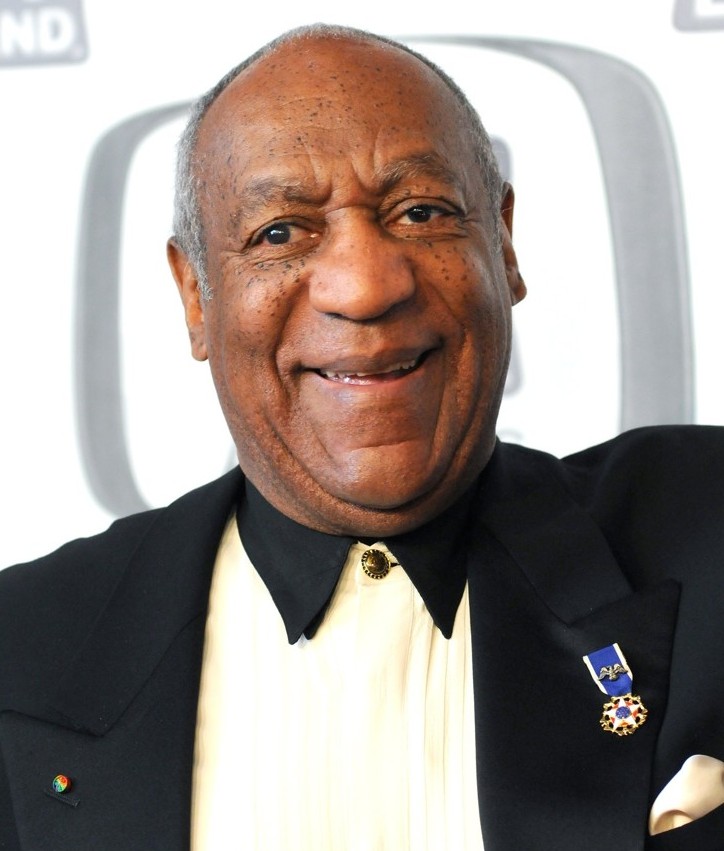
In the picture above, Cosby is wearing his Presidential Medal of Freedom, awarded to him in 2002.

If you’ve never heard Cosby’s account of God’s conversation with Noah, your life is incomplete. Fortunately, you can remedy that sad situation by viewing a brief version of it here.

If you’re interested in a brief survey of Cosby’s impact, this clip provides an excellent introduction.

Volcano Hurricane

volcanoVolcano hurricane. An epic disaster film! No sharks, but copious amounts of lava flung by gale force winds across the globe. And all from the mind of a six year old boy.

Imaginations are great. They are one of the most precious gifts of God (which makes it all the more tragic when the human imagination is diverted towards carnal ends).

The minds of young boys, thankfully, have yet to turn to such lamentable matters. Their innocence shields them from the worst of human corruption. They, instead, are consumed with thoughts of spiders and other things that creep out girls . . . and especially their moms.

Our almost-seven-year-old grandson was here for the weekend with his family. We had a wonderful time. We had actually found the ideal book to include as part of his birthday celebration: How to Convince Your Parents You Can Care for a Pet Tarantula. Perfect.

Young male imaginations seem to revolve around things that shock—and also things that gross others out.

Our kids have trained their own children well. For example, they always excuse themselves when they experience flatulence. It’s a natural experience, of course, and as we mature, adults learn to ignore potentially embarrassing moments related to it. That’s part of becoming “civilized.”

Six year olds . . . not so much. Our grandson properly excuses himself, but he typically does so in the midst of enthusiastic laughter. It’s as though he relishes just how uncultured the moment seems.

During this particular visit, he leaped into my lap in a semi-ninja attack. As we wrestled, there was a minor explosion. Not quite volcanic, but close enough. He apologized, amidst great hilarity. “Sorry about my little gas,” he added.

And here’s where I made the mistake. I reinforced his innate boyhood grossness by saying, “little! . . . that sounded like it was a buffalo!”

Not quite the right thing to say, since it simply encouraged the precocious guy. But what I can say . . . time may change a boy into a man, but in most of us . . . somewhere deep in the recesses of our psyches . . . that boyhood irreverence lingers.

Not that I enjoy the crass “body humor” that pervades so much comedy (on tv and film). I steadfastly avoid it. It insults my mind and viewing it constitutes a total waste of time. Still, with my grandson wrapped in my arms, laughing away, it all seemed so genuine and innocently funny.

Of course, I recognize one needed to be there—and probably to also be related by bloodline to the participants—to find any humor in the moment. But it certainly seemed funny to us.

C.S. Lewis and Children

I was thinking about that moment as I sat down to write this post. I intended to focus on the amazing imaginations of children, and my grandson’s current preoccupation with gigantic volcanoes.

But whim or muse redirected the column. In the end, it turns out to be a reflection on the simple pleasure that we adults experience when we interact with kids. Especially when they are children who are precious to us.

I wish that C.S. Lewis had been able to experience that joy. He wasn’t. His awkwardness with children is well known. Most attribute it to the early passing of his mother, and the emotional distance his father maintained from his sons.

In a 1935 letter he wrote to a close friend, “I theoretically hold that one ought to like children, but am shy with them in practice.”

In The Abolition of Man he was even more forthcoming, sharing that, “I myself do not enjoy the society of small children: . . . I recognize this as a defect in myself.”

So, Lewis recognized his discomfort with children as a shortcoming. It was something he wished could be dispelled. Unfortunately, we can’t simply wish (or pray) away our ingrained personality traits. We’re lucky if we can tame them or reshape them.

We work hard to strengthen our positive traits and the wise deny nourishment to their weaker qualities. People often use the analogy of wearing off one’s rough edges, and that’s an apt image.

Lewis’ reticence with children makes his creation of Narnia all the more wondrous. The Chronicles of Narnia have captivated the hearts and imaginations of innumerable children, and adults alike. Certainly Lewis was correct when he wrote the following in “On Stories.”

No book is really worth reading at the age of ten which is not equally (and often far more) worth reading at the age of fifty—except, of course, books of information. The only imaginative works we ought to grow out of are those which it would have been better not to have read at all.

With his marriage, late in life, Lewis became a step-father. He did the very best he could, but was conscious of just how ill-equipped he was to raise Douglas and David. Both became successful men. Doug shares his parents’ love of Christ, and helps direct the course of various Lewisian projects today.

Allow me to close with another evidence of the greatness of C.S. Lewis. He was able to rise far above his innate uneasiness with children. In fact, his fabled correspondence included many children who had written to him seeking his attention. In 1951 he wrote to one of them, saying:

I am glad you all liked The Lion. A number of mothers, and still more, schoolmistresses, have decided that it is likely to frighten children, so it is not selling very well. But the real children like it, and I am astonished how some very young ones seem to understand it. I think it frightens some adults, but v[ery] few children.

Lewis did not disappoint the many children who wrote to him during those terribly busy years. Nor do his writings disappoint us today. Unlike the transience of youthful volcano hurricanes, Lewis’ legacy will forever remain alive in the imaginations of child and adult alike.

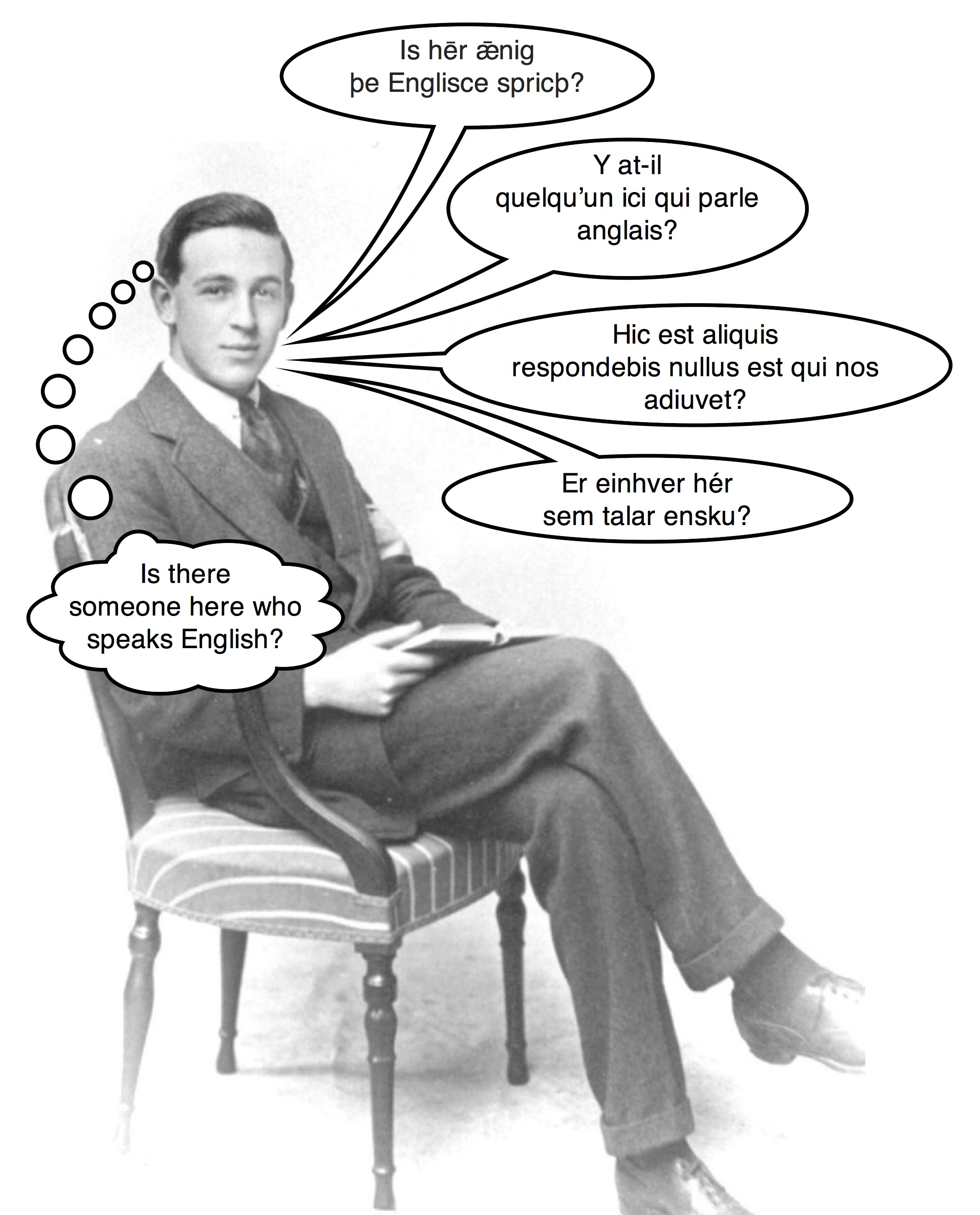
C.S. Lewis’ Bilingualism

csl bilingualHow many extremely intelligent and well educated people do you know . . . who can actually communicate with those of us possessing normal human intelligence?

That talent is a rarity.

And it is precisely what makes C.S. Lewis such an unusual man. He was brilliant. Yet he could communicate with the common person—even the child—just as easily as he conversed with his fellow university dons.

Lewis, of course, could comprehend a number of languages, so he was more than merely “bilingual.” But that is not exactly the sense in which I am using the word today. I mean it in the sense of my opening paragraphs. It is the ability to communicate (even with the same “language”) to distinctly different groups who would normally not be able to readily understand one another.

In an interview that appeared in Christianity Today, Detroit pastor Christopher Brooks was asked about the challenges of urban ministry.

How have you included both righteousness and justice in your setting?

I think about C.S. Lewis, who had the challenge of building the bridge between the culture of Oxford and Cambridge and the culture of the church. These cultures were worlds apart by his time, but he was bilingual, in a sense: able to speak the language of Oxford to the church and the language of the church to the intellectuals and naturalists.

One of the titles for ancient Roman priests that was adopted by their Christian successors is “pontifex.” It means “bridge-maker.” The Pontifex Maximus was, of course, referred to the greatest of these offices.

In light of Brooks’ words about Lewis as building bridges between elite academia and Christianity, I have added that dimension to my view of him. C.S. Lewis, Pontifex Maximus. (I doubt it would make him happy, so I’ll keep it under wraps . . . and probably never mention it again.) But I am genuinely happy about his skill in building these bridges of understanding.

Before signing off, a special treat. If you call someone who speaks two languages “bilingual,” and someone who speaks three “trilingual,” what do you call someone who only speaks one language? Why, an American, of course.

That joke would not be as funny if it were not so sadly true. While the rest of the world almost assumes that people know at least two languages, most Americans stumble their way through the study of a second language for two or three years and never develop a comfort level with it. But that’s a story for another day.