Vodka the Opiate

ApolloIn our troubled world, some disappointed souls seek solace in a bottle. There are also corrupt governments that steer their people toward such destructive distractions to draw their attention from their rulers’ crimes.

Such, sadly, is the current state of Russia.

I have long felt a compassion and affinity for Russia. Even when it was the Soviet Union, I knew that the Russian people did not want the world to end in a nuclear conflagration.

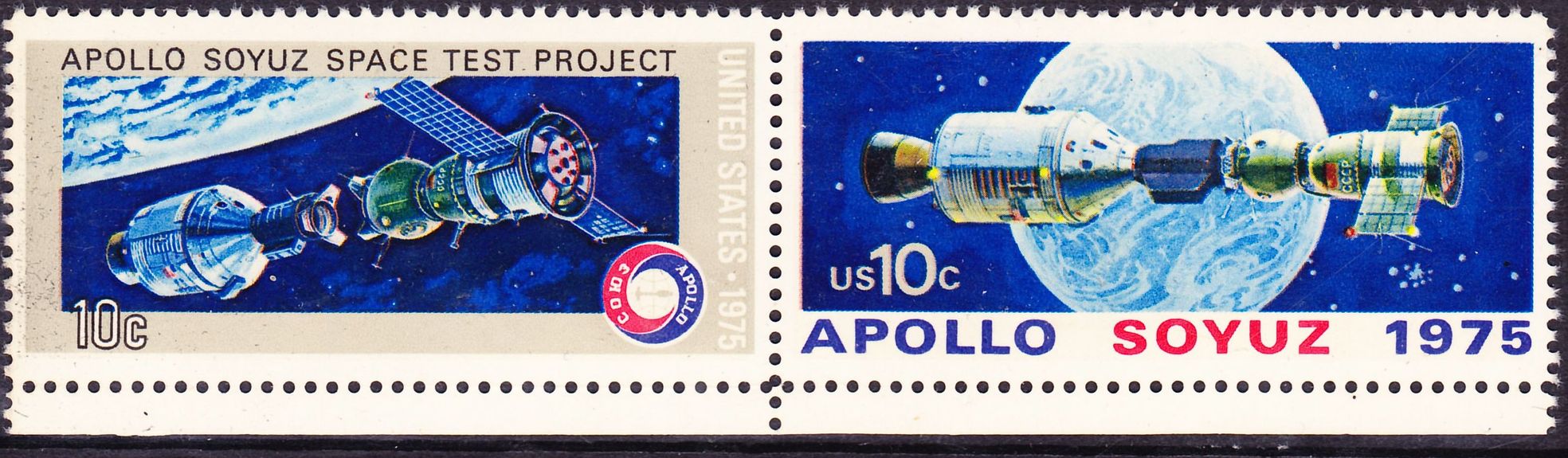
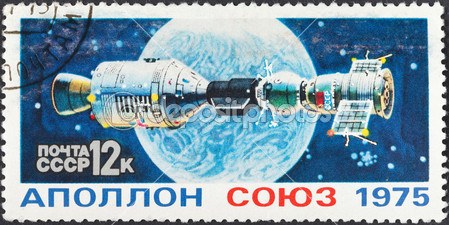
For many years I displayed the dual Soviet and American stamps issued to commemorate the docking of the Soyuz and Apollo spacecraft. I saw that event as a promise of the peace and cooperation that might someday exist between our nations. A peaceful, even warm, relationship that would be a blessing to the entire world.

I thought that day might have arrived with the end of the Soviet Union and the restoration of a Russian nation.

Unfortunately, democracy was not to prevail—at least at this moment—in that historic land. Russia ended up with the worst elements of capitalism. They got the West’s privileged (i.e. rich) classes who hoarded the nation’s wealth. And, the Russian version was even harsher. The masses have been left with dreams unfulfilled, and an oligarchy living in luxury.

As the people begin to awaken to the injustice, their leaders turn to a proven means of dulling human thought—alcohol. And, since we are talking about Russia, that means vodka. I found this analysis by David Satter quite interesting.

The Putin regime needs an end to sanctions—not because they are crippling in themselves but because, in combination with the growing crisis of the economy and the unpredictable trajectory of the war [in eastern Ukraine], they could help lead to the destabilization of Russia. . . . It is a measure of the government’s concern that it has cut the price of vodka. . . . This is a transparent attempt to use vodka to tranquilize the population.
SoyuzWhile I will continue to pray for the people of Russia, this description of Putin’s strategy reminded me of the oft-quoted Communist adage that “religion is the opiate of the masses.”

Marx or Lewis?

Karl Marx was right, in that manmade “religion” can be used to blind people to their surroundings.

Marx, however, did not understand Christianity. Because Jesus of Nazareth dispels all illusion and enables us to truly comprehend reality.

C.S. Lewis referred to Marx’s slander in his book, The Problem of Pain.

Those who reject Christianity will not be moved by Christ’s statement that poverty is blessed. But here a rather remarkable fact comes to my aid. Those who would most scornfully repudiate Christianity as a mere ‘opiate of the people’ have a contempt for the rich, that is, for all mankind except the poor.

They regard the poor as the only people worth preserving from ‘liquidation,’ and place in them the only hope for the human race. But this is not compatible with a belief that the effects of poverty on those who suffer it are wholly evil; it even implies that they are good.

The Marxist thus finds himself in real agreement with the Christian in those two beliefs which Christianity paradoxically demands–that poverty is blessed and yet ought to be removed.

Lewis aptly describes the hypocrisy of the elite who live with the comforts they supposedly disdain. In contrast, he affirms Christ’s own words about how the least are the greatest in the Kingdom of God.

Far from serving as a debilitating opiate, Christianity moves people to overcome the trials of this world. It motivates them to care for the less fortunate. It is active, not passive and resigned.

Unlike a mind-dulling spirit, Christianity calls us to forgive even our enemies and extend to them a hand of peace.

Who knows if lowering the price of vodka will distract the Russian people from the disastrous direction of their ruling regime. I hope not.

I pray that Russia will seize instead the promise bequeathed them in their Christian heritage. So that, following in the footsteps of the Prince of Peace, they might become an example of national righteousness for the rest of us, whose homelands have their own deep imperfections.

_____

Satter’s editorial, which appeared in the Wall Street Journal, is available here.
Norse Linguistic Invasion

vik
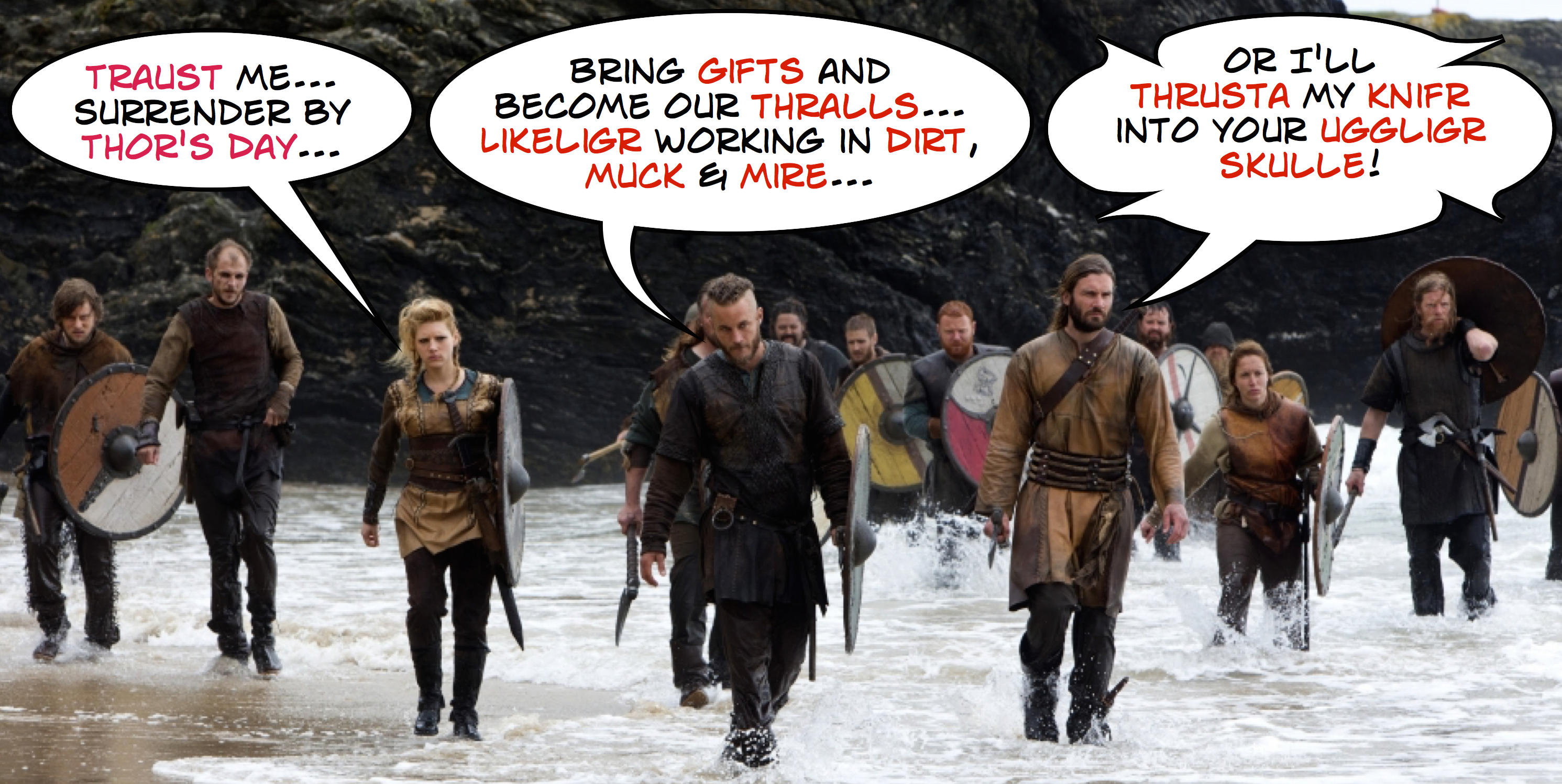
The initial Viking incursions into England were violent, but they left a colorful linguistic legacy in their wake.

Victims of the onslaught, like the unfortunate monks of Lindisfarne, paid a steep price, but the Norse eventually became farmers and craftsmen like the people they initially displaced.

Their contribution to the British gene pool was small, as was their donation to the English language, but it was not insignificant.

Some of the words fit the Viking mystique. Klubba becomes club (as in the weapon, not the association). Rannsaka may have initially meant searching the house for something like your missing keys, but the English experienced it as ransack. And slatra transfers into slaughter. The original word means “to butcher,” and one wonders if it originally applied to meal preparation. It so, the decades of Norse raids modified that focus.

Other adopted words arose from the more peaceful pursuits of the Scandinavians. Bylög meant the laws of the village and became bylaw. Law itself comes from the Norse lag. Husband, skill, thrift, litmus and loan have Viking roots. Those who enjoy a great slice of beef can thank them for their “steak” as well, since steik was their term for frying meat.

The Inkling Affection for the Sagas

J.R.R. Tolkien was actually a Professor of Anglo-Saxon at Oxford. He founded a society devoted to the study of Icelandic and Norse sagas called Kolbitar (Coalbiters).* C.S. Lewis joined him in the group, which preceded the development of the Inklings fellowship.

As a young student, Lewis was attracted to Norse myth and experimented with writing his contribution to the tales. He penned over 800 lines of a massive epic he entitled “Loki Bound.” Only fragments have survived, but the following passage is especially intriguing. In it, Loki criticizes Odin for the manner in which he created humanity.

Odin! And who art thou to make a soul

And force it into being? Who art thou

To bring forth men to suffer in the world

Without their own desire? Remember this,

In all the universe the harshest law,

No soul must ever die: it can but change

Its form and thro’ the myriad years

Must still drag on for aye its weary course,

Enduring dreadful things for thy caprice.

The echoes of teenaged angst are clear in this tirade. The words describe (well, I believe) the fatalistic despair of many people. Fortunately, this young man eventually encountered the One who rescues us from “harshest law” and “dreadful things” that are the lot of fallen mortals.

A Few More Norse>English Words

Here are some more of the seven score words that are identified as having a Scandinavian origin.

An interesting collection of verbs include: bark, blunder, choose, crawl, glitter, race, scare, stagger, stammer and whirl.

The following words associated with people: Guest, kid, lad, oaf, foot, leg, skin, freckles, ill, and weak.

The gamut of emotions: anger, awe, and happy.

And, without their Norse contribution, who knows what we would call these articles today.

axle   ~   window   ~   cake   ~   bag

glove   ~   mug   ~   plow   ~   link

they   ~   trust   ~   same   ~   gift

and even Hell

One final example, as quoted in the source of the comprehensive list of Norse words.

Even though the gun wasn’t invented until centuries after the Viking era, the word comes from Old Norse. The most common usage was in the female name Gunnhildr: gunn and hildr both can translate as “war” or “battle.” Only truly [ferocious] Vikings named their infant daughters “Warbattle.”

_____

*You can read a bit more about Kolbitar here. I have also mentioned Kolbitar in this column.


Pacifism as an Enemy of Peace 

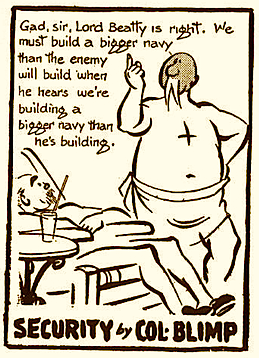
blimp 01The literary careers of C.S. Lewis and George Orwell overlapped in some interesting ways.* Today we will consider a rather odd British personality mentioned by each of them in wartime essays, Colonel Blimp.

Colonel Blimp was a cartoon figure, inspired by a conversation between two military officers who were arguing that “cavalry” officers should continue to wear spurs even when they migrated into tanks.**

At one time the cartoon was so popular that Lewis wrote:

It may well be that the future historian, asked to point to the most characteristic expression of the English temper in the period between the two wars, will reply without hesitation, “Colonel Blimp.” (“Blimpophobia”).

The good colonel echoes similar foolish notions as he blusters about in a caricature of pompous military commanders. Blimp is retired, but harangues all within earshot about the wisest course for the nation.

Orwell wrote derisively of the military and imperialistic middle class, that he called “the Blimps.” He drew the label from the “colonel with his bull neck and diminutive brain, like a dinosaur.” (“The Lion and the Unicorn”).***

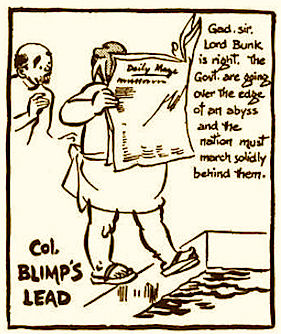
blimp 02The cartoon above illustrates how Colonel Blimp is certain he has the solution to winning the arms race. The frame to the right shows that he believes his wisdom extends beyond the military to politics in general.

Timely Advice from C.S. Lewis

In “Blimpophobia,” Lewis offers advice which proves apropos for our modern age. Today, as fanatical barbarians seek to destroy civilization, enlightened nations and individuals must be vigilant.

One dimension of that vigilance involves walking the fine line between unbridled nationalism and self-absorbed pacifism. When he wrote, Lewis was worried about the anti-war sentiment that threatened to undermine Britain’s response to the Nazis.

Lewis, a wounded combat veteran of the Great War, recognized the truth of the Colonel Blimp caricature. He said something veterans recognize even more clearly than civilians. There is an overabundance of preening and stupidity in the military.

The infection of a whole people with Blimpophobia would have been impossible but for one fact—the fact that seven out of every ten men who served in the last war, emerged from it hating the regular army much more than they hated the Germans. How mild and intermittent was our dislike of “Jerry” compared with our settled detestation of the Brass Hat, the Adjutant, the Sergeant-Major, the regular Sister, and the hospital Matron!

Now that I know more (both about hatred and about the army) I look back with horror on my own state of mind at the moment when I was demobilized. I am afraid I regarded a Brass Hat and a Military Policeman as creatures quite outside the human family.

Still, he said we cannot allow that sad truth to cause us to deny the requirement to maintain a strong defense. “A nation convulsed with Blimpophobia will refuse to take necessary precautions and will therefore encourage her enemies to attack her.”

C.S. Lewis warned his countrymen of the dangers military-phobia during the Second World War. And—among the war-weary nations of the free world battling jihadism—we are wise to heed his wise words today.

The future of civilization depends on the answer to the question, “Can a democracy be persuaded to remain armed in peacetime?” If the answer to that question is No, then democracy will be destroyed in the end. But “to remain armed” here means “to remain effectively armed”. A strong navy, a strong air force, and a reasonable army are the essentials. If they cannot be had without conscription, then conscription must be endured. (C.S. Lewis, “Blimpophobia”).

_____

* In “A Literary Phobia,” I compared some advice they offered to writers. The counsel in question sounds similar on the surface, but actually differs. In “Orwellian Advice,” I contrast the two authors in much greater detail.

** Blimp’s creator, David Low, resided in London but was actually a New Zealander.

*** You can read Orwell’s 1941 essay, “The Lion and the Unicorn,” here.

Slippery Crimes

willeIn the hierarchy of criminals within the penitentiary system, murderers are feared, crime lords respected, and pedophiles despised. Where, one wonders, did the butter forgers rank?

Alongside Machine Gun Kelly, and my namesake, the Birdman of Alcatraz, the Pen at Leavenworth housed violators of the Oleomargarine Act of 1886. Notorious, they were not.

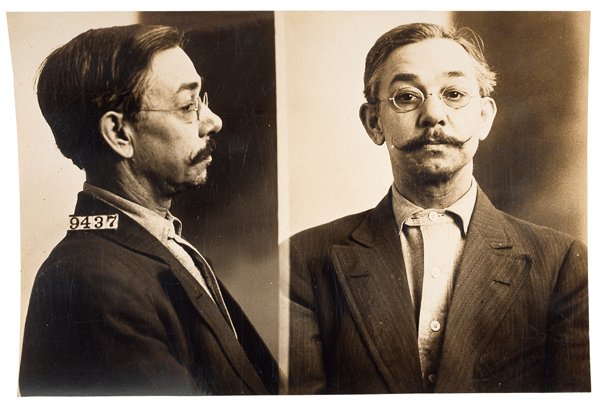
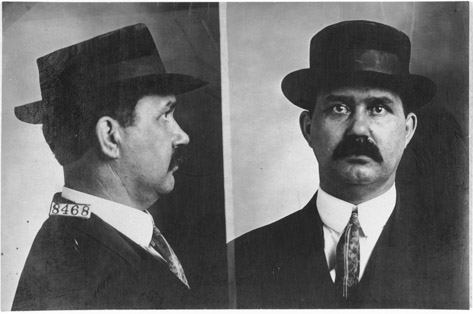
Take a look at Chuck Wille’s mug shot above. I wonder what bank robbers and car thieves thought of his dandy mustache.

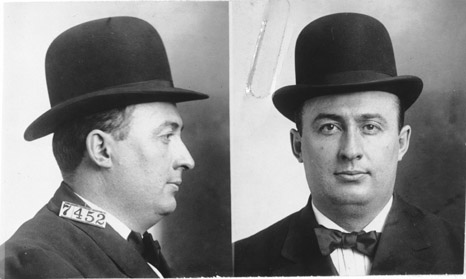
wirthJoe Wirth, pictured to the right, looks more like a vaudeville comedian than a hardened criminal. I can easily imagine naive people being duped by someone who appeared as unthreatening as Wirth.

mcmonigleJohn McMonigle, prisoner 8468, was not deterred by his stint in prison. He was sent to Leavenworth twice, due to an encore violation of the oleomargarine law.

The word oleomargarine probably sounds alien to most young people. They know what margarine is—well, some of them do—but the oleo part likely sounds more like a cookie than a butter substitute.

Oleomargarine was made from beef fat. A chemical compound of olein and margarine. Olein is “a colorless to yellowish, oily, water-insoluble liquid, C57 H104 O6.” How appetizing!

Most people today opt for margarine made from refined vegetable oils, but even today animal “by-products” can find their way into margarine products.

I recall growing up when oleo was still part of the American lexicon. My mother used it as a sort of synonym for margarine. That faded as I grew, but persisted long enough for me to vividly remember it.

Washington State was one of those with a strong dairy industry. Such locations drew clear demarcations between butter and its “substitutes.” The dairy organizations vigorously challenged the “unnatural” competition.

The primary battle line was whether or not oleo could colored to make it appear more like the food it was replacing. You see, in its natural state it doesn’t look nearly as tasty as when a yellow coloring was kneaded into it.

Congress taxed the invention differently. Ten cents a pound for the yellow version, but only .25 cents (1/4 of a cent) per pound for the raw version. Amazingly, this tax did not end until 1951. Homemakers would color their own oleomargarine to get their unsuspecting children to eat the stuff.

Nowadays, some people prefer margarine to butter. And, even when it was inferior to current standards, if butter was unavailable, most people would be delighted to have access to the alternative.

Meanwhile, at the beginning of the twentieth century, 32 states—with strong dairy lobbies—banned the coloring of margarine by businesses.

Naturally, where there is a law, there will be lawbreakers. Presumably private citizens were able to continue camouflaging the material in the secrecy of their own homes. The three criminals on this page violated the Oleomargarine Act. And they paid for their illicit marketeering.

C.S. Lewis & Margarine

Regular readers of Mere Inkling may be wondering how in the world this subject connects with the Oxford don.

Lewis wrote a wonderful essay, entitled “Religion: Reality or Substitute?” You can find it in the Christian Reflections collection, edited by Walter Hooper.

The message of the essay is that we cannot completely trust our own experiences. Some people, he says, are inclined to think that the spiritual realm is a sort of “substitute” for reality, rather than real itself. Among the vibrant illustrations he provides for this is the following.

‘Substitutes’ suggest wartime feeding. Well, there too I have an example. During the last war, as at present, we had to eat margarine instead of butter. When I began doing so I couldn’t tell the difference between them. For the first week or so, I would have said, ‘You may call the margarine a substitute if you like, but it is actually just as good as the real thing.’ But by the end of the war I could never again have mistaken one for the other and I never wanted to see margarine again.

This is different from the previous examples because here I started knowing which, in fact, was the substitute. But the point is that mere immediate taste did not at first confirm this bit of knowledge. It was only after long experience that the margarine revealed itself to my senses as the inferior.

Lewis’ essay argues that “There is nothing we cannot be made to believe or disbelieve,” so it is necessary that we place our truth (faith) in something more reliable than our own impressions.

Lewis is right. Just as there have been secular criminals who sought to profit off of the misrepresentation of oleomargarine, there are religious hypocrites and vermin who desire to deceive people about divine truths.

The deepest purpose of all things dark, is to draw people away from the Light. Evil seeks to substitute the lie for the Truth. It has been this way ever since our first parents resided in the Garden.

Whether one prefers butter or margarine, is left to individual taste, and of little consequence. However, whether we choose to consign ourselves to death, when freely offered Life, is something of eternal consequence.

_____

The criminal masterminds cited here are identified further at the National Archives page subtitled, “Crimes against Butter.”


Inkling Chivalry

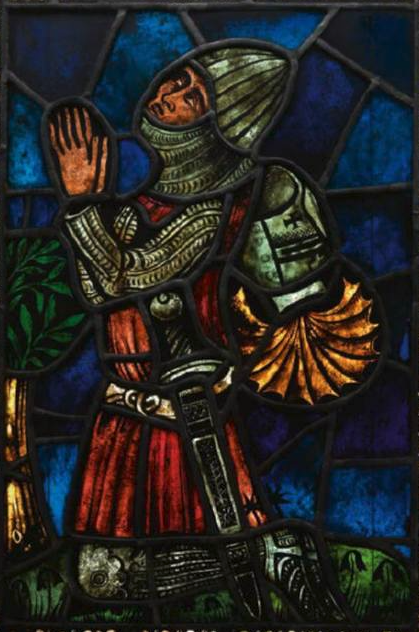
praying knightJ.R.R. Tolkien and C.S. Lewis practiced what they preached.

While most people are content to sit back while others battle for just causes. Sadly, cowardice appears to outweigh bravery in our modern age. We have, Lewis says, “having grown up among the ruins of the chivalrous tradition . . .” (“The Necessity of Chivalry”).

Lewis and Tolkien, by contrast, were genuine heroes. Peaceful academics by nature, each of them responded to their nation’s call to defend their homeland against the Huns.

In the world of the modern university—inhospitable to those who would defend the veracity of the Scriptures—each man counted the cost, and willingly bore the ridicule of skeptics and secularists.

Not only were these two Inklings paragons of courage, they engaged in their battles with a code of chivalry. Neither desired the destruction of their foes. Instead, they sought the preservation of truth, justice, peace and mercy.

Chivalry is a concept alien to the modern era. In an age when there is so little mercy and forgiveness, it seems a more and more archaic notion each day.

Yet, chivalry is not dead.

Both of these men not only modeled the virtue, they imbued their works with its spirit. The heroes of Middle Earth and Narnia are chivalrous almost to a fault. And the spiritual heirs of both fictional domains, still yearn to be chivalrous in their own lives.

So, precisely what is it? As Lewis begins his essay on the subject, he writes, “The word chivalry has meant at different times a good many different things—from heavy cavalry to giving a woman a seat in a train.”

Lewis considers the “double demand it makes on human nature” through an exploration of the Middle Ages.

The knight is a man of blood and iron, a man familiar with the sight of smashed faces and the ragged stumps of lopped-off limbs; he is also a demure, almost a maidenlike, guest in hall, a gentle, modest, unobtrusive man. He is not a compromise or happy mean between ferocity and meekness; he is fierce to the nth and meek to the nth.

Gentle toward the innocent and vulnerable. Relentless versus evil.

What, you may ask, is the relevance of this ideal to the modern world? It is terribly relevant. It may or may not be practicable—the Middle Ages notoriously failed to obey it—but it is certainly practical; practical as the fact that men in a desert must find water or die.

We live in a violent world, and the beheading of even children suggest things are growing worse. So, more than ever, Lewis tells us, we need chivalrous people like Lancelot, who combined these conflicting qualities. We need gentle men, like Lewis and Tolkien, who are willing to lay aside their books to face the specter of war on the front lines.

Lewis forcefully describes the three divisions of humanity bereft of chivalry.

If we cannot produce Launcelots, humanity falls into two sections—those who can deal in blood and iron but cannot be “meek in hall”, and those who are “meek in hall” but useless in battle—for the third class, who are both brutal in peace and cowardly in war, need not here be discussed. When this dissociation of the two halves of Launcelot occurs, history becomes a horribly simple affair.

Lewis wrote the essay during the Second World War. He and others among the Inklings had stood in the gap during the “war to end all wars.” Now he was observing a glimmer of hope in the witness of a successive generation doing its part.

Launcelot is not yet irrecoverable. To some of us this war brought a glorious surprise in the discovery that after twenty years of cynicism and cocktails the heroic virtues were still unimpaired in the younger generation and ready for exercise the moment they were called upon.

In the face of the contemporary ferocity of global terrorism, we see many young men and women following their example. Surely, they are a minority among the population, but we are all deeply fortunate they exist.

Our prayers should accompany those of all nationalities who are courageous enough to face the blade of modern barbarians. And our prayer should be that they are not merely brave, but also meek.

Parachute Optional

c141Under what circumstances would you tell an airman that pulling their rip cord if they exit the plane is optional? I never knew of any until I read an article about resupply missions to the South Pole.

The current issue of Air Force Magazine includes a fascinating article about resupplying McMurdo Station and a second temporary site at the Pole itself. Because of the extreme cold, 100 degrees below zero Fahrenheit (that’s -73.333 degrees Celsius), any airman who accidentally fell from the plane as the pallets were dropped, could not expect to be rescued before freezing to death.

Parachute-laden crewmen standing near open doors of a C-141B Starlifter during a midwinter Antarctic airdrop in 1983 were told they could pull the D-ring ripcord if they fell overboard—or just not bother. The chance of being safely recovered in the darkness and [bone-freezing] temperatures was practically nonexistent.

Putting things in historical perspective, we can consider the fate of WWI pilots in Germany. Theirs was the first nation to provide standard parachutes, and during the first 70 bail outs, a third of the pilots perished. With those statistics, one wonders how many airmen followed the “just not bother” course of action and chose to remain with their plunging aircraft.

C.S. Lewis had a friend named Leo Baker who had served in France as a pilot of the 80th Squadron of the Royal Air Force. The two combat veterans hit it off because of shared interests, including their mutual love of poetry. Here is how Lewis initially described Baker to his lifelong friend, Arthur Greeves, in 1920.

You ask about Baker, and I hardly know how to describe him. He was at a mixed school of a very modern type, where everyone seems to have written, painted and composed. He is so clairvoyant that in childhood “he was afraid to look round the room for fear of what he might see.” He got a decoration in France for doing some work in an aeroplane over the lines under very deadly fire: but he maintains that he did nothing, for he was “out of his body” and could see his own machine with “someone” in it, “roaring with laughter.” He has a bad heart.

He was a conscientious objector, but went to the war “because this degradation and sin might be just the very sacrifice which was demanded of him.” He maintains that everything in Algernon Blackwood [writer of ghost stories] is quite possible: and though the particular cases may be fictitious, “things of that sort” are quite common. He is engaged to be married.

In appearance, he is about my height, with very fair hair, glasses, remarkable eyes and according to the Minto [Janie Moore], rather like you. I like and admire him very much, though at times I have doubts on his sanity.

Like Lewis, Baker had been seriously wounded during the war. He was awarded the Distinguished Flying Cross. Fortunately, it appears he did not have to rely on a primitive parachute. Or, if he did, he was one of the fortunate survivors.

Returning to Antarctica for just a moment, it seems that South Pole mission would have been an exciting adventure in which to share. Terrifying too, perhaps. Fortunately, like Lewis and Baker (and Tolkien, as well), all of the service members returned home safely, mission accomplished.

_____

The picture above is a military photograph of a pair of Emperor penguins observing an American C-141 resupply mission during the summer months.

Sanctified Languages

petrusOne major difference between Christianity and Islam is their view of language. For the Muslim, Arabic is the language by which the Quran is to be known. For the Christian, there is a great impulse to translate the Scriptures into every tongue in the world.

In Islamic worship, the Quran is properly recited only in Arabic, whether the individual understands Arabic or not. This is similar to the way that most Hindus chant mantras in ancient Sanskrit.

A parallel can be drawn with the medieval practice in the Western branches of Christianity where Latin continued to be used for worship, even after it lost its role as the shared language.

The fact, however, that the Bible had even been translated into Latin was due to the Christian desire to make God’s word accessible to all people. Jerome, an early Christian theologian, became a linguistic scholar with the goal of translating the Vulgate, into the common language of his day.

It would have been a great shock to him, and to Pope Damasus I who commissioned his effort, to see the Latin so ingrained in the church’s usage that their heirs in leadership lost sight of the desire to bring the Lord’s words directly to the people so that all could understand them.

One of the great successes of the Reformation was the successful translation and distribution of the Scriptures into the vernacular of various language groups. Martin Luther’s translation, in fact, standardized the German language which had evolved into several different dialects.

Coincidentally, Lutherans have remained at the forefront of Bible translation, and Lutheran Bible Translators continue that vital work today. They currently have twenty-two Bible translations in process. LBT works in conjunction with Wycliffe Bible Translators, which is an even larger organization.

C.S. Lewis delivered a lecture at the University of London entitled “The Literary Impact of The Authorised Version.” In one portion he addressed the influence of the King James translation on the English language. While not nearly so pronounced as Luther’s on German, it is measurable.

The history of the Authorised Version has been told so often that I will not attempt to re-tell it, and its beauties praised so lavishly that I will not praise them. Instead, I will proceed at once to its influence as an English book. I shall attempt to define that influence, for I think there has been misunderstanding about it and even a little exaggeration.

Lewis’ argument is that the Bible has a profound influence on English literature, the particular translation, less so.

Ideally, all Christians would understand Hebrew and Greek, and be able to read the Scriptures in their original languages. However, there is no stigma in reading a translation. In fact, there are small pockets of people who do not understand the history of the Bible who believe that one particular translation (i.e. the King James Version) is the only authoritative text.

Sadly, I once saw an advertisement in a newspaper inviting worshipers that read: “Are you tired of people changing the Authorized Version of God’s Word with Greek and other languages? If so, come and join us at . . .”

Fortunately, the vast majority of Jesus’ disciples celebrate the translation of God’s word of life into every language spoken today.

Meanwhile, memorization of the Quran in Arabic (even when that is not the reciter’s actual language) remains highly regarded in Islam. Arabic has been regarded as so holy, in fact, that there was great reluctance to contaminate the Quran by using a printing press.

During the Ottoman Empire, until 1729, printing anything in Arabic was a crime. Somewhat ironically, the first printing utilizing Arabic movable type was done by Pope Julius II in the first decade of the sixteenth century. It was created for the benefit of Christians living in Arabic lands.

To provide a powerful illustration of a Christian validation of the authentic inspiration and power of God’s words—in any language—we turn once again to the German reformer.

Since it becomes Christians then to make good use of the Holy Scriptures as their one and only book and it is a sin and a shame not to know our own book or to understand the speech and words of our God, it is a still greater sin and loss that we do not study languages, especially in these days when God is offering and giving us men and books and every facility and inducement to this study, and desires his Bible to be an open book. . . .

In proportion then as we value the gospel, let us zealously hold to the languages. For it was not without purpose that God caused his Scriptures to be set down in these two languages alone—the Old Testament in Hebrew, the New in Greek. Now if God did not despise them but chose them above all others for his word, then we too ought to honor them above all others. St. Paul declared it to be the peculiar glory and distinction of Hebrew that God’s word was given in that language, when he said in Romans 3, “What advantage or profit have those who are circumcised? Much indeed. To begin with, God’s speech is entrusted to them. . . .”

Similarly, the Greek language too may be called sacred, because it was chosen above all others as the language in which the New Testament was to be written, and because by it other languages too have been sanctified as it spilled over into them like a fountain through the medium of translation. (Martin Luther, “To the Councilmen of Germany”).

_____

The image above is an illuminated “P” which begins the name Petrus (Peter). The manuscript is displayed in Malmesbury Abbey in England, but was originally transcribed in Belgium circa 1400.

Adopting a Puppy

calliI recently described Henri III’s torture of puppies during his reign. The clown actually wore them, as an adornment!

In that same column, I mentioned that we were adopting a new puppy . . . and she has arrived in our home!

Getting a puppy marks a departure from our normal pattern. Our last three border collies (including the mature lady who still graces our manse) were all “rescues.”

However, we did not feel that Foxy was up to adjusting to another mature dog, since she lost Lyric last winter and her other (long-lived) sister, Tanner.

In my post about Henri III, I shared comments from two letters that C.S. Lewis wrote a century ago to one of his closest friends. Arthur Greeves had gotten a puppy, and Lewis reminded him of the responsibilities of the human member of that relationship.

Lewis wrote that it was cruel, “Unless you are a person with plenty of spare time and real knowledge, it is a mistake to keep dogs . . .”

In a subsequent letter, Lewis advised Greeves on how to choose a name for his puppy.

How’s the poor, miserable, ill-fated, star-crossed, hapless, lonely, neglected, misunderstood puppy getting along? What are you going to call him, or rather, to speak properly, how hight he? Don’t give him any commonplace name, and above all let it suit his character & appearance. Something like Sigurd, Pelleas or Mars if he is brisk and warlike, or Mime, Bickernocker or Knutt if he is ugly and quaint.

We had already chosen the name for our puppy before I found this quotation. But I think Lewis would have approved.

We named our new little girl after one of the Greek Muses, who inspired literature and the arts. Her name is Calli.

If you’re knowledgeable in mythological matters, you will recognize that it’s our nickname for Calliope, the Muse of epic poetry.

Being more of a historian than a poet, I wanted to use the name Clio, who is the Muse of History. Calli fits her better though.

Calliope is a wonderful, musical name though, since she was the chief Muse, and her name literally means “beautiful-voiced.” What a lovely name. I hope Calli learns to sing, like our first border collie, Lady. Lady would accompany my wife as she played the piano. It was quite entertaining.

If you have read this far, you too are likely a pet lover. If you have a dog, cat, rabbit, lemur or whatever, of your own, may the Lord bless it with a long and healthy life . . . just as we pray for our own little Calli.

Abusing Puppies

henriPuppies are cute and cuddly, but leave it to a French king to carry that fact to absurd lengths.

One might think owning 2,000 lap dogs is a bit overmuch. Not so Henri III (1551-1589). It would seem that after the first thousand, it might become difficult to recall all of their names, but that didn’t deter Henri.

He so loved his puppies that he used them as a form of adornment, regularly wearing them in a small basket suspended around his neck.

And, amazingly, it appears none of his courtiers mentioned that it looked quite silly. Who knows, he may have established a temporary fad, not unlike the purse puppies used by some modern celebrities to increase attention to themselves.

Puppies are on my mind now, because my wife and I have “reserved” a border collie from a recent litter.

Some readers will recall the grief we experienced when a dog we rescued a year ago, died due to an onslaught of seizures, one after the other. Lyric’s tragic passing, at a young age, was so much more difficult than the loss of our previous three who had lived well into their geriatric years.

It’s taken us a year to be willing to consider adding another dog to our family. We still have Foxy, who we rescued about eight years ago, during our final military tour in California. We decided it would be much easier for her if we added a puppy to our family this time.

I’ll write more about our puppy in the future. For now I’ll end with the “teaser” that we’re naming her after one of the Greek Muses.

C.S. Lewis loved dogs, although apparently not enough to wear them like jewelry.

In 1916, he corresponded with his friend Arthur Greeves about adding a puppy to the latter’s family. His first mention, as Greeves was contemplating the decision, reveals Lewis’ emphasis on the wellbeing of the dog over its master’s preferences.

I think you are very wise not to take that puppy from K. Unless you are a person with plenty of spare time and real knowledge, it is a mistake to keep dogs–and cruel to them.

Greeves proceeded with the adoption, as Lewis appends a postscript to his next letter, written a week later.

Poor puppy!! What a life it’ll have! I shall poison it in kindness when I come home!

In a subsequent letter, the same month, Lewis offers advice about naming the puppy that I was delighted to read. It suggests that he would approve of our decision for the name of the new addition to our family.

In the meantime, whatever name we bestowed on our new puppy, she would never need to worry about being traipsed around on display like a fashion accessory. We’ll leave that to French kings and egocentric divas.

The World’s End

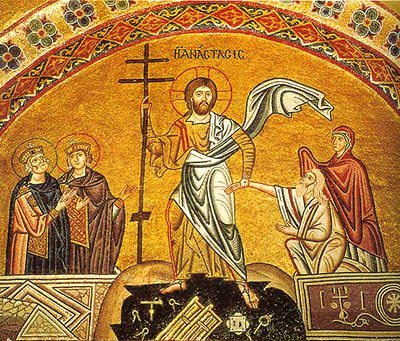
christ arisenMany years ago, while attending seminary, I was invited to preach at a Pentecostal congregation in my home town. One of the conversations I had that day taught me more about the importance of sound biblical preaching than every homiletics course I ever took (combined).

Lutherans, I must admit, are not big advocates of “end times” concerns. The reasons for this are far too complicated to address in a brief column now. Ironically, however, although we confess our confidence that Jesus “will come again to judge the living and the dead” every week, we seldom talk about the details of that arrival.

At the aforementioned service, I did preach on the second coming of the Messiah. And, to distill it down to a single message, I suggested that the Scriptures teach us to live in a sort of tension. We should live with a conscious awareness and urgency that the parousia could happen at any moment . . . and, prepare for the future as though the return of Christ (and subsequent new creation) will not take place for another thousand years.

Shortly after the service ended, a woman approached me and shared how she “wished she could have heard that sermon thirty years earlier.” She related how different her life would have been.

She said in her youth she had longed to attend college, but she never did . . . because she knew Jesus would return before she graduated.

When she and her husband bought a home, she wished the property had some fruit trees, but she never planted any . . . because she knew Jesus would return before they bore fruit.

Saddest of all, she told me that when her children were born, she never raised them to become mature adults . . . because she knew Jesus would return before they grew into the men and women they became.

Nearly forty years later I am more convinced than ever that living with the “tension” I described is the proper course of disciples of Jesus.

So, how does this work out in reality?

While a few of us know people who become so preoccupied with the end of the world that their lives go askew, it’s the other error to which most of us are prone. We tend to think that the return of Christ bears little or no connection to the age in which we live.

We are so preoccupied with our present responsibilities and dreams that we invest precious little time in contemplating how these things will matter in the scope of eternity.

I highly recommend to you a recent article on this subject that will remedy this dilemma. Andrée Seu Peterson, a gifted writer I have commended before at Mere Inkling, reminds us all of the fact that Jesus’ second coming may be just around the corner. Andrée writes:

Who would have thought that after centuries of modernity, beheading would once again be a means of persecuting the people of God? Does it not send a chill up our spine to read all about it in Revelation 20:4 even as we hear about it on CNN? “Then I saw thrones, and seated on them were those to whom the authority to judge was committed. Also I saw the souls of those who had been beheaded for the testimony of Jesus.”

C.S. Lewis famously described two errors people fall into when considering the occult. Either we get caught up in unhealthy expressions of the supernatural, or we dismiss the reality of demons and their destructive agenda altogether.

I believe humanity’s impulsive nature makes us vulnerable to the same extremes when it comes to the final days of the world we call home.

I strongly encourage you to read Peterson’s article here, as a timely reminder that you were created for far more wonderful and amazing things than we can ever know in this life. Even the best this world offers is but a hint and a foretaste of what awaits those who trust in God.