Who Said That?

thoms and lewisWho said that? It’s a question people ask when they recall a familiar saying and don’t remember the source.

Occasionally when we are reminded of the source, we shake our heads and think that’s right; how could I have forgotten!

At other times though, discovering the source of the maxim doesn’t help at all. It could be because the proverb is anonymous, or it might be due to the fact that it’s originator was not particularly well known.

That’s the case of the following statement, which is familiar to many Christians.

“Be careful how you live; you will be the only Bible some people ever read.”

When I thought of this phrase several weeks ago, I had a bit of trouble tracking it down. I actually found it on a number of sites, but the problem was that the author’s name was so unfamiliar it was almost always misspelled.

He was usually cited as “William Toms.” Yet I was pretty sure the saying hadn’t originated, however, with an Irish footballer.*

Just when I assumed I had encountered a clichéd brick wall, I stumbled upon the truth. Like so many classic maxims, the quotation did indeed originate from the British Isles.

The British writer William J. Thoms penned this thoughtful maxim, and it isn’t the only wise thing he wrote.

William John Thoms (1803 – 1885) was a British writer credited with coining the term “folklore” in the 1840s. Thoms’ investigation of folklore and myth led to a later career of debunking longevity myths. Hence, he is an early advocate of “validation research” when examining demographics.

Several of Thoms’ works are available online. They include:

C.S. Lewis had more in common with Thoms than simply being British and engaging in literary pursuits. The two men shared an interest in simple tales that intrigued and inspired men and women through the ages.

It was Thoms, in fact, who in 1846 introduced into English the term “folklore.”

A shared interest in legends and even the supernatural, suggests that the two may well have enjoyed one another’s company, had their lives intersected.

Sadly, Thoms’ desire to compile a comprehensive “Folk-Lore of England” was never realized, as this superb article describes.

The two scholars shared another trait of bookish people. (“Bookish,” by the way, is a compliment here at Mere Inkling.) Neither man sought out the frivolities of popular society. They were both content to socialize with similar minds in more intimate community. The following description of Thoms, from the Dictionary of National Biography,could just as naturally have been written about Lewis.

Thoms went little into society, but at congenial resorts, such as the ‘Cocked Hat Club,’ he was remarkable for a ready play of wit and an almost inexhaustible fund of humorous anecdote and reminiscence.

Can’t you just picture the Cocked Hat Club meeting at one table in the Eagle and Child while the Inklings shared their own warm friendship at their table at the other end of the pub?

_____

* Not that I follow English football, but I learned an athlete by that name played forward for Plymouth Argyle and Manchester United.

** The Book of the Court, published in 1838 with the second edition, linked here, printed six years later, has the delightful, if rather lengthy, subtitle: Exhibiting the History, Duties, and Privileges of the Several Ranks of the English Nobility and Gentry, Particularly of the Great Officers of State and members of the Royal Household; Including Vaious Forms of Court Etiquette, Tables of Precedency, Rules to be Observed at Levers and Drawing Rooms, Etc.
Tolkien’s Inspiration

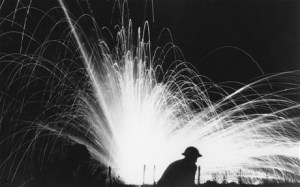
night patrolThe poetry of a dead veteran spoke to me today. He was a close friend of J.R.R. Tolkien, and in a sense his life lives on in the descriptions of Middle Earth.

In a recent column my Canadian friend Brenton Dickieson, introduced me to one of the many poets whose lives tragically ended on the battlefields of WWI.

Professor Dickieson describes the context of a new film about the impact of the war on J.R.R. Tolkien. It is called Tolkien’s Great War. It is based on the book Tolkien and the Great War: The Threshold of Middle-earth.

You will find a link to the half hour documentary below, and I strongly—yes, strongly—encourage you to watch it. It is quite moving.

Like most members of their generation, Tolkien and C.S. Lewis were deeply moved by the horrors of the First World War. Both served on the front lines, in the grim trenches, during the bloody conflict. And they lost friends. I’ve written in the past about their military service, including posts herehere, and here.

The Deceased Poet

The documentary describes the untimely deaths of two of Tolkien’s closest friends during the war. One of them, Geoffrey Bache Smith, was a poet.

Following his death, Tolkien gathered together his writings and published them as a tribute to his friend. It was one of the earliest contributions to a wealth of soldier’s poetry that would deluge grieving Europeans by the close of the conflict.

Due to the brevity of his life, the collection, published as A Spring Harvest, is short. Tolkien also penned an introduction to the work which is equally Spartan. The literary austerity is fitting, given the sad reason for the volume’s brevity. The introduction, in full, reads:

The poems of this book were written at very various times, one (“Wind over the Sea”) I believe even as early as 1910, but the order in which they are here given is not chronological beyond the fact that the third part contains only poems written after the outbreak of the war. Of these some were written in England (at Oxford in particular), some in Wales and very many during a year in France from November 1915 to December 1916, which was broken by one leave in the middle of May.

“The Burial of Sophocles,” which is here placed at the end, was begun before the war and continued at odd times and in various circumstances afterwards; the final version was sent me from the trenches.

Beyond these few facts no prelude and no envoi is needed other than those here printed as their author left them.

J.R.R.T., 1918.

The poems themselves run the gamut of emotions. This is unsurprising, given that some were born during the idyll dreams of youth, while others were forged by the anvil of war.

The limited press run of the book has made it difficult to find. Fortunately, it is now available for free via Project Gutenberg.

While the poems include the familiar references to the “old gods” so common to the period, there are also some moving references to a more Christian ethos.

Creator Spiritus

The wind that scatters dying leaves

And whirls them from the autumn tree

Is grateful to the ship that cleaves

With stately prow the scurrying sea.

Heedless about the world we play

Like children in a garden close:

A postern bars the outward way

And what’s beyond it no man knows:

For careless days, a life at will,

A little laughter, and some tears,

These are sufficiency to fill

The early, vain, untroubled years,

Till at the last the wind upheaves

His unimagined strength, and we

Are scattered far, like autumn leaves,

Or proudly sail, like ships at sea.

Tolkien and Smith formed half of the T.C.B.S., a communion knit together during the school years. The war would cut that number in half, as poignantly described in Tolkien and the Great War. The first of the companions had already died, and five months later Smith was spending the final moments of his own life encouraging his friend to press on, whatever might befall him.

Before reading Smith’s “So We Lay Down the Pen,” consider his final letter to Tolkien. He wrote it as he prepared to lead a night scout through dead man’s land at the front. It was dangerous duty which did indeed, that very evening, cost him his life.

My chief consolation is that if I am scuppered [ambushed and killed] tonight—I am off on duty in a few minutes—there will still be left a member of the great T.C.B.S. to voice what I dreamed and what we all agreed upon. For the death of one of its members cannot, I am determined, dissolve the T.C.B.S.

Death can make us loathsome and helpless as individuals, but it cannot put an end to the immortal four! A discovery I am going to communicate to Rob before I go off tonight. And do you write it also to Christopher. May God bless you my dear John Ronald and may you say things I have tried to say long after I am not there to say them if such be my lot.

Yours ever,

G.B.S.

Tolkien compiled Smith’s poems as a tribute. And, when he wrote his masterpieces, there is a profound sense in which he truly did say things his friends had tried to say, long after they were not there to say them.

So We Lay Down the Pen

So we lay down the pen,

So we forbear the building of the rime,

And bid our hearts be steel for times and a time

Till ends the strife, and then,

When the New Age is verily begun,

God grant that we may do the things undone.


Enlarging C.S. Lewis’ Vocabulary

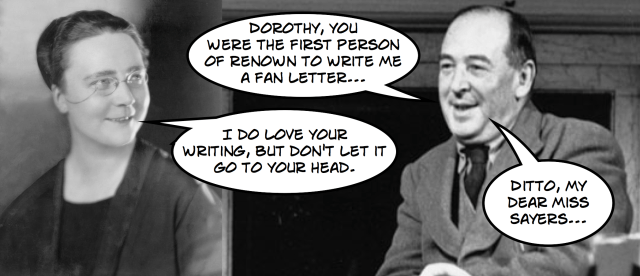
csl sayersCan you imagine receiving a compliment like this from C.S. Lewis? Your work “even enlarged my vocabulary.”

Shocking . . . but another writer did receive that rare praise.

In 1954, Lewis wrote a lengthy letter to his friend Dorothy Sayers, praising her recent publication of Introductory Papers on Dante. Lewis’ opening sentence reveals his delight. “Your Introductory Papers have given me a regular feast.”

Lewis specifically comments on a number of insights he found particularly worthwhile. And remember, Lewis was an expert on Dante in his own right.

One evidence that Lewis’ praise is sincere, and not mere flattery, comes in his comment that “every essay and nearly every page enriched me.” Not every page, mind you, but very nearly every one of them.

Offering Gentle Criticism

Consistent with the nature of friendly literary criticism (like one receives in a healthy writers group), Lewis does offer some specific advice on how to strengthen a specific point that he regards as overemphasized. In this case it relates to a classical Latin phrase.

At one point Lewis expresses awe about a portion of the book, and then immediately proceeds to make an enjoyable comment about the limitations of the English language.

P. 52 is a blaze of (just) splendour. (Drat our homophones: by just I don’t mean ‘nothing but,’ I mean ‘justified,’ ‘veracious.’)

Toward the close of his letter, Lewis raises a profound notion about our perception of humor. He cautions Sayers, in her interpretation of Dante’s Comedy, not to read it directly through the lens of our own day. “I’ve a feeling that in handling particular passages you are too certain that whatever is comic to us was, and was meant to be, comic at the time.” He continues:

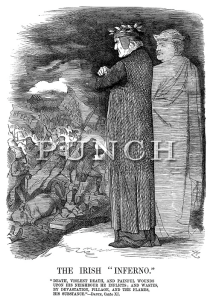
Because, as any one can see even from the old Punches,* nothing changes so quickly as the sense of humour: so that in reading any old book there is nothing we are less sure of than which places wd. welcome a smile. And oughtn’t we to start by a recognition that our generation (yours & mine) was quite abnormally ‘tickle o’ the sere’** (already the young people are less so).

A Poetic Postscript

Lewis ends his letter to Sayers with some advice for her subsequent work with Dante. He courteously writes, “Don’t give me the next set, I’ll buy it.”

Then he makes a suggestion to protect her from the spurious criticisms of ignorant literary critics. (Note that he doesn’t use the choice descriptive in a vulgar sense common today, but in more classical sense of extreme foolishness.)

And do put in an essay on D. as ‘poet’ in the old, narrowest sense—his sheer poeticalness. Otherwise we shall have some ass saying that because you like so many other qualities, you are oblivious to that.

_____

* Punch Magazine was published in England until 1992. The 1881 image below is inspired by Dante’s Inferno, and applied to the violence in Ireland.

** Easily made to laugh. From Hamlet: “The clown shall makes those laugh whose lungs are tickle o’ the sere.” The seare, or sere, was part of the trigger of old matchlock guns, so arranged that the slightest movement would make the gun discharge. Lungs, then, “tickle o’ the sere,” are those easily moved to laughter.

punch dante

Is Fantasy Foolish?

lion of lyonSome of the smartest people around dismiss reading fantasy as a crazy waste of time. At the same time, many of the most brilliant people I know love nothing more than passing from their mundane lives through a magical wardrobe into a land of wonder.

On a recent episode of the television series Castle, the eponymous Richard Castle,* a best-selling author and private eye, has a great line. Castle is defending his hyperactive imagination (which frequently leads to the solving of the crime of the week).

A suspect calls him “reality-challenged.”

To which he responds, “I prefer fantasy-augmented.”

Now, there’s a description that would fit most readers of Mere Inkling. We’re “fantasy-augmented.”

It would also fit most of the Oxford Inklings. Not all of them, of course. Some of them, like C.S. Lewis’ brother Warnie, were more oriented towards factual, historical literature.

The fantasists among their ranks were not lacking as writers of nonfiction either.

However, it was the fact that they were “fantasy-augmented” that has led to the inclusion of several of their members in the first ranks of twentieth century writers.

Narnia and Middle Earth are as real to many people today as Ogre, Latvia, Humpty Do, Australia, Llanfairpwllgwyngyllgogerychwyrndrobwllllantysiliogogogoch, Wales, and Frankenstein, Missouri. (Perhaps more real!)

In 1936, C.S. Lewis wrote a letter to Charles Williams, praising his recent novel.**

A book sometimes crosses ones path which is so like the sound of ones native language in a strange country that it feels almost uncivil not to wave some kind of flag in answer.

I have just read your Place of the Lion and it is to me one of the major literary events of my life–comparable to my first discovery of George Macdonald, G. K. Chesterton, or Wm. Morris.

The following day, Williams wrote a letter of his own to C.S. Lewis. It began:

My dear Mr Lewis, If you had delayed writing another 24 hours our letters would have crossed. It has never before happened to me to be admiring an author of a book while he at the same time was admiring me. My admiration for the staff work of the Omnipotence rises every day. To be exact, I finished on Saturday looking—too hastily—at proofs of your Allegorical Love Poem.

William’s reference to coincidence is poetic. He doesn’t rely on the timeworn “divine Providence,” which is so prevalent in literature of the eighteenth and nineteenth centuries.

Returning to Lewis’ missive, we learn exactly how Williams’ fantasy so deeply impressed him.

A book sometimes crosses ones path which is so like the sound of ones native language in a strange country that it feels almost uncivil not to wave some kind of flag in answer. I have just read your Place of the Lion and it is to me one of the major literary events of my life—comparable to my first discovery of George Macdonald, G.K. Chesterton, or Wm. Morris.

There are layers and layers—first the pleasure that any good fantasy gives me: then, what is rarely (tho’ not so very rarely) combined with this, the pleasure of a real philosophical and theological stimulus: thirdly, characters: fourthly, what I neither expected nor desired, substantial edification.

It’s unlikely that any of us should ever author a work that would equally impress C.S. Lewis. Still, what a grand goal for any fantasy-augmented writer to strive for!

_____

* Castle is played by Nathan Fillion, who captained the spacecraft “Serenity,” in a delightful series entitled Firefly.

** You can download The Place of the Lion in a variety of formats at ManyBooks.

The illustration above is used with the permission of its creator, Charis Tsevis.


Metaphysical Poetry (it’s better than it sounds)

quarlesI had to add the parenthetical comment to the title of this column or it would have been dismissed on its surface by readers like me. Although I dabble at poetry myself, I never voluntarily choose that genre for reading. And metaphysics? As a practical pastoral theologian, I have little interest in abstract philosophies.

I have just discovered metaphysical poetry, and it is quite intriguing.

How well read are you? Do you read broadly, deeply, or both? Unfortunately, most of us restrict our reading to a rather narrow scope. This is due to two factors.

First of all is our lack of time. Few enjoy the leisure hours to indulge in the sheer pleasure of reading simply for joy.

A second dilemma arises from the deluge of new books being published every day.

It is tempting to retreat in the spirit of C.S. Lewis to the classics, and not waste our time on a volume until it has proven its worth by remaining in print. Alas, digital technology devastates that metric, since even the most worthless tripe can remain in virtual print indefinitely.

As a semi-retired pastor, I enjoy more time than I did when I was serving full time, but I still limit my reading primarily to theology, history, current events, and anything related to C.S. Lewis. I seldom have time to explore the treasure of literature that is freely available to us.

I recently spent some time doing just that.

I read some writing advice from the pen of Francis Quarles (1592-1644) who is best known for his book Emblems. It is representative of a genre (called “emblem books”) that flourished in Europe during the sixteenth and seventeenth centuries. Here are two enjoyable observations:

If thou desire to make the best advantage of the muses, either by reading, to benefit thy selfe, or by writing, others, keep a peacefull soul in a temperate body: a full belly makes a dull brain; and a turbulent spirit, a distracted judgement: the muses starve in a cook’s shop, and a lawyer’s study. (LXXIX).

If thou intend thy writings for the publique view, lard them not too much with the choice lines of another author, lest thou lose thy own gravy: what thou hast read and digested being delivered in thy owne stile becomes thine: it is more decent to weare a plaine suit of one entire cloth, than a gaudy garment checquered with divers richer fragments. (XCVII).

Lewis was, of course, intimately acquainted with Quarles’ work. Like everyone else, however, he was more influenced by the literary contribution of John Donne (1572-1631). Like Quarles, Donne is considered one of the English “metaphysical poets.”

These writers offered used “conceits,” which were similar to analogies, but compared things that were clearly different from one another. It requires significant skill to convince a reader of the similarities of things that are deeply unlike one another.

In his essay “Dante’s Similes,” Lewis discusses the subject in detail.

It will be easily seen in what sense Dante’s similes are ‘metaphysical.’ The connexion between the two members is real, ontological, intelligible, and the material need not be in itself beautiful or may be even grotesque—as when Time is represented as a tree growing downwards with its roots in a vase which is the Primum Mobile (Paradiso, XXVII, 118). And this certainly connects them, in one way, with what literary critics call ‘Metaphysical’ conceits, meaning the conceits used by Donne and his followers.

But there are only two points of contact—first, the difficult and (at first sight) unpoetical nature of the material, and, secondly, the intellectual rather than emotional connexion between this material and the thing compared with it. The spirit in which they are used is not the same in Donne and in Dante. In Donne, the connexion, though intellectual as in Dante, is as momentary, as incapable of life beyond the immediate context, as the connexions in Homer or Virgil.

It may be true that Donne cannot court a mistress without bringing in scholastic philosophy, law, chemistry, and cosmography. But he has no interest in these things except as toys and does not care in the least what place they have, if any, in the real universe—if, indeed, there is a real universe outside the present emotion. The longer you look at Donne’s comparison of the lovers to the compasses, the less alike they will seem, and the more certain you will become that the innumerable differences between them are a more interesting and fruitful field for thought than the single analogy.

But in the greatest Dantesque similes, the longer you look the greater the likeness becomes and the more fruitful in thoughts that are interesting as long as you live. This, of course, is no disparagement to Donne: a witty love song, whether salacious or saturnine, is not meant to be chewed over like the great Comedy which made its author lean. If I seem to be breaking a butterfly upon a wheel, it is only because I want to avoid a misunderstanding which would hinder our reading both of the great and of the little poet.

Sample Their Works (for free)

If you are able to carve out a few hours of your time to delight in the rich banquet provided by the three writers mentioned above, visit these links to download their books in the digital version of your choice.

Francis Quarles’ Emblems

(This edition is elegantly illustrated!)

The Poems of John Donne

(Volume I)

The Divine Comedy of Dante Alighieri

_____

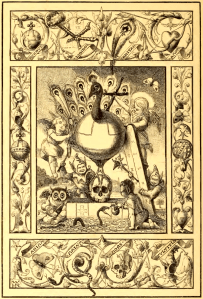
The elaborate image at the top of this column is one of the illustrations found in the copy of Emblems linked to above.

Free C.S. Lewis Course

hillsdaleA free college course about C.S. Lewis? Too good to be true? No, it’s for real . . . and it’s offered by a well respected American College that traces its roots back more than 170 years. (Note, for the Europeans reading this, that makes it quite mature here in North America.)

Hillsdale college is currently offering its online course, “An Introduction to C.S. Lewis: Writing and Significance” at no charge. Here is the link to the enrollment page.

In addition to being a first class college today, Hillsdale has a very distinguished past. Founded in 1844, its leadership in the anti-slavery cause allowed it to host two speeches by Frederick Douglass. The first was delivered during the Civil War itself.*

C.S. Lewis offered a fascinating twist on the injustice of slavery. In an essay entitled “Equality,” written 80 years after Douglass decried slavery at Hillsdale, Lewis advocated democracy as an imperfect philosophy. I agree with his inference that despite its shortcomings, it is the least-flawed form of government.

I am a democrat because I believe in the Fall of Man. I think most people are democrats for the opposite reason. A great deal of democratic enthusiasm descends from the ideas of people like Rousseau, who believed in democracy because they thought mankind so wise and good that everyone deserved a share in the government. The danger of defending democracy on those grounds is that they’re not true. . . . I find that they’re not true without looking further than myself. I don’t deserve a share in governing a hen-roost, much less a nation. Nor do most people—all the people who believe advertisements, and think in catchwords and spread rumours.

The real reason for democracy is . . . Mankind is so fallen that no man can be trusted with unchecked power over his fellows. Aristotle said that some people were only fit to be slaves. I do not contradict him. But I reject slavery because I see no men fit to be masters.

This is the barest example of C.S. Lewis’ keen mind. Enrolling in the course will certainly introduce participants to much, much more.

Like most online resources, this class is offered for personal growth. While a certificate is offered to those who complete the course, it doesn’t result in formal college “credit.” That said, the course could also be of great benefit to a motivated high school student.

Formal studies, even those like this one for which we set a personal pace, are worthwhile. Not only do we profit from the wisdom of the team of professors. Most of us also benefit from the discipline a course offers. Left to our own devices, most of us would not end up with the well-rounded familiarity with Lewis’ work that this class promises.

Shared Wisdom from Douglass and Lewis

One contemporary author noted a parallel thought in the writings of these two men. Thomas Sowell is a distinguished thinker and a talented writer. (Traits he shares with these two gifted authors.) On his website** Sowell has an extremely selective collection of quotations, on which he pairs the following. The first was written by Frederick Douglass and the second by C.S. Lewis.

Everybody has asked the question. . . “What shall we do with the Negro?” I have had but one answer from the beginning. Do nothing with us! Your doing with us has already played the mischief with us. Do nothing with us! If the apples will not remain on the tree of their own strength, if they are wormeaten at the core, if they are early ripe and disposed to fall, let them fall! I am not for tying or fastening them on the tree in any way, except by nature’s plan, and if they will not stay there, let them fall. And if the Negro cannot stand on his own legs, let him fall also. All I ask is, give him a chance to stand on his own legs! Let him alone! (Frederick Douglass, “What the Black Man Wants”).

Of all tyrannies, a tyranny sincerely exercised for the good of its victims may be the most oppressive. It would be better to live under robber barons than under omnipotent moral busybodies. The robber baron’s cruelty may sometimes sleep, his cupidity may at some point be satiated; but those who torment us for our own good will torment us without end for they do so with the approval of their own conscience. (C.S. Lewis, “The Humanitarian Theory of Punishment”).

I think Sowell’s connection of these two excerpts is quite perceptive. Although he is an economist by PhD, I regard him as a brilliant sociologist as well.

Education is a worthwhile pursuit. It is one embraced by Douglass, Lewis and Sowell. Hillsdale’s invitation to enroll in this course allows all of us to engage in the same meaningful exercise. After all, learning is one of the pleasures that makes life truly worth living.

_____

* You can read about Douglass’ speeches at Hillsdale College here.

** This link will take you to Sowell’s website.

Publishing Troubles

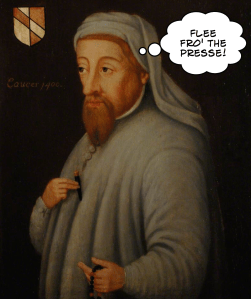
chaucerDespite C.S. Lewis’ vast experience as an author, even he was abused by publishers to the point where he could simply echo Chaucer in saying, “Flee from the Press!”



Print on demand technology has delivered a stout, but not debilitating, blow to traditional publishers. They still possess a significant amount of influence.

And—like all power—that which is wielded by publishers can be used for either good or evil.

We can thank many different publishers for making the works of Lewis, J.R.R. Tolkien and their fellow Inklings available to us. We would be wrong, however, to assume these relationships were without their stresses.

John H. McCallum was an American editor with whom Lewis worked. McCallum worked at Harcourt, Brace & World.

A piece of correspondence from 1960 reveals how complex the publishing world remained even to a veteran such as Lewis.

McCallum had sought permission to publish Lewis’ latest work, and the Cambridge professor had sought to accommodate that request. Unfortunately, he had negotiated a contract that restricted him from doing so. He begins his letter of explanation with an apology for having taken so long to respond.

Dear Mac

‘Why the heck can’t C.S.L. have the civility to answer a letter?’ I don’t blame you, but it wasn’t exactly my fault. Like a fool, I dealt direct with C.U.P. [Cambridge University Press] for Studies in Words instead of working through [his regular literary agent] Curtis Brown: chiefly because I regarded this book as too academic to be of any serious commercial value.

And like a double fool I’ve let them take it up so that I’m not free to arrange for an American edn. with anyone else.

The delay in answering you is due to the fact that I’ve been all this time trying to get out of them whether this is exactly what my contract with them means. It is. But of all the impenetrable block heads! Their answer—the correspondence was long and infuriating—dealt with every question under the sun except the one I had asked (besides being unintelligible and contradictory).

I am sorry about all this. How well Chaucer advised us ‘Flee fro the Presse’!

Yours Lewis, C.S.

Dealing with publishers today remains challenging. They are, in a sense, gatekeepers. One of their roles is to prevent undeserving works from seeing print. Unfortunately, because literary tastes are utterly subjective, they bar many worthwhile manuscripts as well.

For that reason, we can be thankful that digital publishing allows quality works that would formerly have been overlooked to find their audience. The price of that boon, however, is that we must sometimes wade through major quantities of dregs to savor fine writing.

The majority of writers, given the opportunity, would prefer to be published by traditional publishing houses. There is no way around the fact that this adds a degree of status to most books. A recent poll supports this notion. It found among those published traditionally, “32% of respondents said the prestige of having a deal with a traditional publisher was important to them, while a further 54% said it was one of the appealing aspects of a traditional publishing deal.”

If we should ever seek “publication” for our own work, it is good to remember that the publishing business could puzzle even as gifted a writer as C.S. Lewis. If the author of so many impressive books could be mystified by it, it’s no wonder it seems labyrinthine to the likes of us.

Perhaps Chaucer’s advice, offered more than 500 years ago, really does ring just as true today.

Easter, Updike & Lewis

updikeHappy Easter Monday. Even if you do not believe Jesus has risen from the dead, I sincerely hope you are experiencing a special season of hope and peace.

For Christians, however, the bodily resurrection of Jesus is not an optional doctrine.

The Scriptures affirm the truth that, “. . . if Christ has not been raised, then our preaching is in vain and your faith is in vain. . . . if Christ has not been raised, your faith is futile and you are still in your sins. Then those also who have fallen asleep in Christ have perished. If in Christ we have hope in this life only, we are of all people most to be pitied” (1 Corinthians 15:14-19, ESV).

John Updike (1932-2009) recognized this truth and wrote an oft-quoted poem about it.*

“Seven Stanzas at Easter”

Make no mistake: if he rose at all

It was as His body;

If the cell’s dissolution did not reverse, the molecule reknit,

The amino acids rekindle,

The Church will fall.

It was not as the flowers,

Each soft spring recurrent;

It was not as His Spirit in the mouths and fuddled eyes of the

Eleven apostles;

It was as His flesh; ours.

The same hinged thumbs and toes

The same valved heart

That—pierced—died, withered, paused, and then regathered

Out of enduring Might

New strength to enclose.

Let us not mock God with metaphor,

Analogy, sidestepping, transcendence,

Making of the event a parable, a sign painted in the faded

Credulity of earlier ages:

Let us walk through the door.

The stone is rolled back, not papier-mache,

Not a stone in a story,

But the vast rock of materiality that in the slow grinding of

Time will eclipse for each of us

The wide light of day.

And if we have an angel at the tomb,

Make it a real angel,

Weighty with Max Planck’s quanta, vivid with hair, opaque in

The dawn light, robed in real linen

Spun on a definite loom.

Let us not seek to make it less monstrous,

For our own convenience, our own sense of beauty,

Lest, awakened in one unthinkable hour, we are embarrassed

By the miracle,

And crushed by remonstrance.

Updike & Lewis

Poetry and faith were not the only interests shared by Updike and C.S. Lewis. Both men were literary critics, as well as authors in their own right. Updike’s description of his approach to criticism echoes many of the same principles displayed by Lewis.

1. Try to understand what the author wished to do, and do not blame him for not achieving what he did not attempt.

2. Give enough direct quotation—at least one extended passage—of the book’s prose so the review’s reader can form his own impression, can get his own taste.

3. Confirm your description of the book with quotation from the book, if only phrase-long, rather than proceeding by fuzzy précis.

4. Go easy on plot summary, and do not give away the ending.

5. If the book is judged deficient, cite a successful example along the same lines, from the author’s œuvre or elsewhere. Try to understand the failure. Sure it’s his and not yours?**

Updike wrote, “I read C.S. Lewis for comfort and pleasure,” praise that has been included in advertising campaigns. A fuller account of his appreciation for Lewis’ work comes in the following passage, from Conversations with John Updike.

The provableness of God is a subject Updike may have mused upon during the many Sunday mornings he has spent in church. Updike is a lifelong churchgoer. He was raised a Lutheran, became a Congregationalist during his first marriage, and has recently joined the Episcopal church.

“I don’t see anything else around really addressing, for me, one’s basic sense of dread and strangeness other than the Christian church,” he said. “I’ve written maybe all too much about religion here and there. But there have been times when I read a lot of theology. The year I spent in England [after graduation from Harvard] I was very nervous and frightened, standing more or less on the threshold of my adult life and career, if any.

“One of the ways I assuaged my anxiety was to read a lot of G.K. Chesterton and C.S. Lewis, some Kierkegaard, and when I moved to New England, I read a lot of Karl Barth. My intensive theology reading extends from about the age of 22 to, say, 30. I get great pleasure out of reading theology.”

Reading Theology

Updike was correct. Contemplating holy matters can certainly be pleasurable. That is true even when we are chewing on complex subjects, difficult to digest. After all, “everyone who lives on milk is unskilled in the word of righteousness, since he is a child. But solid food is for the mature, for those who have their powers of discernment trained by constant practice to distinguish good from evil” Hebrews 5:13-14, ESV).

The resurrection of Jesus may be one of these truths not simple for all to believe. I pray for those who find this a challenge. But, God forbid that any of us should reject the most significant event in human history, “Lest, awakened in one unthinkable hour, we are embarrassed by the miracle, and crushed by remonstrance.”

_____

* For the interesting story of how this poem won first place in a competition at his church, you can read his pastor’s recollections here.

** Updike’s list concludes with these words: “To these concrete five might be added a vaguer sixth, having to do with maintaining a chemical purity in the reaction between product and appraiser. Do not accept for review a book you are predisposed to dislike, or committed by friendship to like. Do not imagine yourself a caretaker of any tradition, an enforcer of any party standards, a warrior in any ideological battle, a corrections officer of any kind. Never, never . . . try to put the author ‘in his place,’ making of him a pawn in a contest with other reviewers. Review the book, not the reputation. Submit to whatever spell, weak or strong, is being cast. Better to praise and share than blame and ban. The communion between reviewer and his public is based upon the presumption of certain possible joys of reading, and all our discriminations should curve toward that end.”

Avoiding Gadzookeries

gadzookeryWriting quality historical fiction is challenging. This is especially true if one wishes to avoid the common crutch that a talented writer of the last century first labeled “gadzookery.”

And just what is this faux pas we should avoid when writing about the past? Well, it relates most directly to the dialog placed on the lips of historical figures. The offensive technique involves the overuse of archaic expressions or phrases. (Some would argue it includes any use of any archaisms.)

If the word gadzookery sounds a tad, how shall I put it, “goofy” to you, you may prefer using another word that means the same thing: “tushery.” Tushery was coined by Robert Louis Stevenson. Way back in the nineteenth century.

Gadzookery is a newer version, insulting the same lazy writing technique. I believe it may have been coined by Rosemary Sutcliff (1920-1992). Sutcliff’s historical influence has exerted a literary influence on my life second only to C.S. Lewis.*

The article about Sutcliff in The Oxford Encyclopedia of Children’s Literature praises her work, saying, “She carefully creates dialogue in her novels that recollects the speech of a bygone era without falling into what she termed ‘gadzookery.’”

Having tested the waters of historical fiction myself, I know this to be far more difficult that it may sound.

Sutcliff had several things in common with C.S. Lewis. Both wrote for adults and for children. (It was her young adult series about the decline of Roman influence in Britain that sparked my own lifelong interest in Rome.)

Both authors also received the Carnegie Medal for their work. When Lewis was awarded his, he received a congratulatory letter from Pauline Baynes, who had illustrated several of his books. He responded quite graciously.

Dear Miss Baynes, Very nice to hear from you again, and thanks for sending on the book, which I have returned to Lane. Thanks for your congratulations on the Carnegie, but is it not rather ‘our’ Medal? I’m sure the illustrations were taken into consideration as well as the text. I am well, and as happy as a man can be whose wife is desperately ill.

Although C.S. Lewis had married, quite late in life, the two authors were alike in spending most of their life single. Sutcliff, in fact, lived with her parents during most of her life, having suffered crippling arthritis as a child. She did not resent remaining unmarried. In a 1992 interview she said,

Beatrix Potter wrote all her gorgeous stories when she was very lonely and not very happy—after she married, she never wrote another thing. Nothing worth reading, anyway.

Another similarity between the two was that they both fell under the powerful sway of myth during their childhoods. They used their familiarity with its rich echoes to imbue their own work with themes that flowed far beyond the familiar channels travelled by other writers.

Each of them took their readers seriously, and refused to speak down to them. That is why they share one more quality I wish to mention in closing—their high standards. Neither Lewis nor Sutcliff could tolerate poor writing. And their finely tuned skills meant neither ever needed to resort to gadzookery.

______

* Excepting, of course, the Bible itself, which is literature of an entirely different sort. I don’t consider it fair to compare mortal writers, no matter how inspired, to a volume I regard as God’s written word.

Navy Nerds

nerdEvery once in a while, the military has a good idea. Sure, they have a knack for technological breakthroughs in warfare . . . but what about other fields? The NAVY NeRD answers that question in the affirmative.

NeRD stands for Navy eReader Device.

Well-informed readers of Mere Inkling are already aware of the growing intensity of international cyberwarfare. It is no joke, and lives are at stake.

Draconian policies are in place to avoid the contamination of the military computer system by innocently transferred viruses. Since virtually all digital platforms allow for the transfer of data, they are potentially dangerous.

Because of that, even ereaders have been off limits in certain environments. Now, however, someone has thought outside the proverbial box and come up with a solution to that problem.

The United States Navy has devised a novel ereader that comes loaded with 300 titles, but has no ports or wireless connectivity to allow for inadvertent viral transfers.

The selection of books sounds pretty well rounded. Some public domain classics, and a number of contemporary best sellers like A Game of Thrones. Fans of J.R.R. Tolkien will be delighted to know the readers also include The Lord of the Rings.

Reading is a productive way to spend one’s free time during a lengthy period at sea. Even for those not prone to opting for it when faced with all the distractions ashore.

During WWII, C.S. Lewis wrote a letter to a former student who was serving in the Navy, “out of reach of libraries.” It acknowledges the perennial problem of sailors—lack of space for personal property. The letter was written in response to a request from Michael Rayner Thwaites for reading recommendations. Thwaites was an Australian poet and military intelligence officer.

A man who has already your linguistic training might well, I think, begin the Anglo Saxon on his own. You will need E. Wardale Old English Grammar. . . . For texts, the ordinary beginning is first Sweet’s Anglo Saxon Primer and then his Old English Reader. But you, being a classic might well, after a dip in the Primer go on to King Alfred’s trans. of Boethius De Consolatione Philosophiae . . .

Whether you can begin O.E. poetry on your own I don’t know. But try getting . . . Beowulf: and with it Clark Hall’s trans. ed. by Wrenn with preface by Tolkien . . . This edition is essential for it is Tolkien’s part of metre wh. is essential. (O.E. verse uses both quality and accent, and your ear is prob. ruined, as mine was, by the false way they teach Latin metre at schools–drastic re-education is required. . . .

As to modern literature. You must not start out to study it ‘as it reveals man’s hesitant advance to the idea of a God-created world’. Don’t you see you are laying down in advance what a phenomenon is to reveal before you have examined the phenomenon? It may reveal that: it may not. You have to find out. I don’t think I can lay down any v. definite course of reading.

All I can point out is that while you are in the navy and out of reach of libraries and new publications, this is the proper time for solid reading through the big (i.e. long) authors, critical works and histories of lit. can come later. Now is the time for Chaucer, Malory, Spenser, Sidney, Shakespeare, Dryden, Pope, Swift, Johnson, Fielding, Richardson, Cowper, Scott, Wordsworth, Byron, Dickens etc etc.

If you usually keep two books of widely different period and type going together (e.g. Faerie Queene & Tom Jones) you won’t get bored. I myself always index a good book when I read it for the first time noting (a) Linguistic phenomena. (b) Good & bad passages. (c) Customs: meal times, social classes, what they read etc. (d) Moral ideas.

All this reading, tho’ dedicated ad Dei gloriam in the long run must not be infected by any immediate theological, ethical, or philosophic reference. Your first job is simply the reception of all this work with your imagination & emotions. Each book is to be read for the purpose the author meant it to be read for: the story as a story, the joke as a joke.

Back to the NeRD

The Navy is making 385 devices at first, with more to follow, with five being sent to each submarine in the Navy to be shared among the crew.

That’s only the start, of course. One would anticipate that even for a military crew (for example, 155 personnel on a Trident sub), a mere five mini-libraries would prove insufficient. (No offense intended; yours truly is a veteran himself.)