A Song Joined Our Family

lyricLast night a new member joined our family. Her name is musical. We didn’t choose it; her previous family did. But we think it fits and she’ll live up to it.

Her name is Lyric.

We adopted Lyric through the agency of DRAW Rescue.

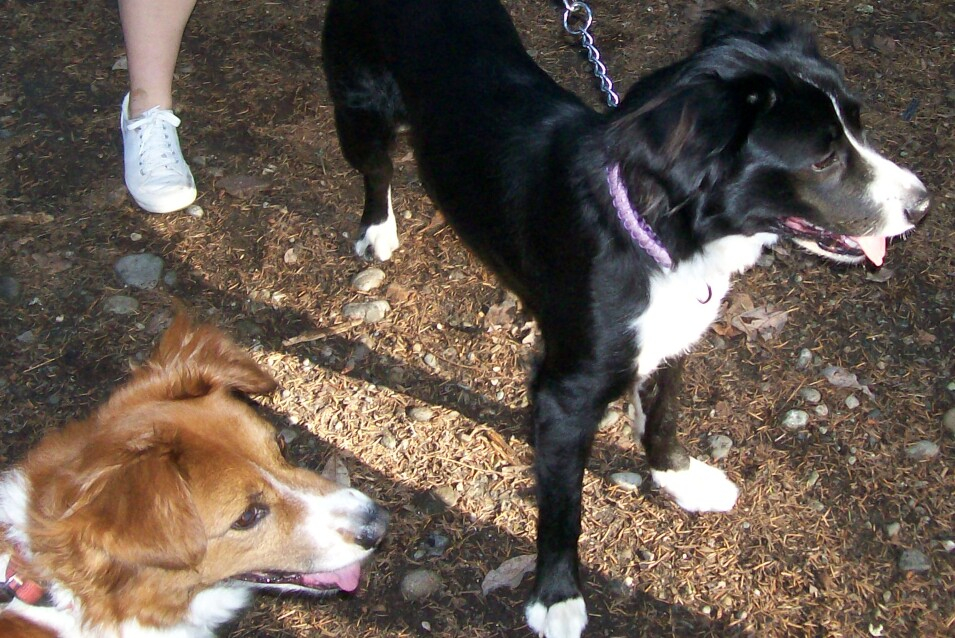
The picture above shows black and white Lyric at her first meeting with her new sister, Foxy. (We didn’t name Foxy either; she joined our family when we “rescued” her from a California shelter six years ago.)

The two girls are getting along quite well their first full day together, but those of you with more than one pet know that it takes a little bit of time to sort things out when a new member joins the family.

Lyric is our third consecutive rescue pet. Although she’s younger than the others who came to us in the past, adopting a rescue dog isn’t the same thing as getting a puppy. You don’t enjoy the same cuddly acceptance. Many rescued dogs are quite wary of human beings—especially men.

It takes time and patience to bond. To let them know that they’re safe and they are now in their “forever home.” Some, like Lyric, benefit from interim stays with gracious foster parents. But their move to your home is still just part of their unstable life until the day when they “forget” about all the previous transitions and just know they are home.

C.S. Lewis talks about this longing for a home in Till We Have Faces. Psyche is describing her desire to find that place where she truly belongs.

Somewhere else there must be more of it. Everything seemed to be saying, Psyche come! But I couldn’t (not yet) come and I didn’t know where I was to come to. It almost hurt me. I felt like a bird in a cage when the other birds of its kind are flying home. . . .”

The sweetest thing in all my life has been the longing— to reach the Mountain, to find the place where all the beauty came from . . . my country, the place where I ought to have been born. Do you think it all meant nothing, all the longing? The longing for home? For indeed it now feels not like going, but like going back.”

Although the myth he’s retelling in this book has nothing to do with adopting pets, the following passage also relates (by dramatic extension) to the situation of “rescued” animals who join you with a legacy of previous relationships (not all of them good).

“Where shall we ever be safe if we’re not safe here? This is my home, Maia. And you won’t understand the wonder and glory of my adventure unless you listen to the bad part.

If you are in a position to share your home with a pet, I probably don’t need to tell you there are many, very many of them who need homes today. If you’re up to the extra challenge of adopting a rescued animal who comes with often unknown “baggage,” just contact one of your local rescue agencies.

These organizations are almost always run by volunteers who are motivated solely by their compassion for these innocent creatures who can no longer be cared for by their owners or—more tragically, have been discarded by those who should have cared for them. (Some, of course, are strays who were never in a human family.) I’m proud to say my nephew and his wife provide a foster home for rescued dogs in Seattle.

Whatever their background . . . the “bad part” of their story, you can be instrumental in “rehabilitating” them. And, trust me, they will reward you with more love than you could ever imagine.

Now, even if you’re not prepared to take in one of these lovely creatures, you can still help. Your local rescue organizations and shelters welcome any contributions you make—either in kind or in cash. You can check your phonebook for local rescues. Or, check out one of these websites which can connect you to many of these groups.

Adopt a Pet

Petfinder

Rescue Me (Dogs)

This column turned into more than I intended it to be. Originally I set out to simply celebrate Lyric’s entrance to our family. Now I realize that her blessing just may encourage the adoption of another cat or dog. And that would be a wonderful thing indeed.

In closing, let’s consider another passage from C.S. Lewis, the creator of Narnia. In a letter he wrote in 1955, he mentions the importance of home.

As Dr. [Samuel] Johnson said, “To be happy at home is the end of all human endeavour.” (1st to be happy to prepare for being happy in our own real home hereafter; 2nd in the meantime to be happy in our houses.)

These words remind us that the happiness we know in our earthly homes is only a foretaste of the joy we can know when we ultimately take our place in the eternal home prepared for us by our Creator.

Perhaps on that day we’ll be welcomed not only by our loved ones who have preceded us, but also by the pets we have loved during this mortal life. That would certainly be a magnificent thing . . . but that’s a discussion for another day.

To Tweet or Not to Tweet

platypusI have a twitter account I’ve never used. I had attended a ministry conference where the featured speaker encouraged all of the pastors to harness the power of this cutting edge technology.

I dutifully returned home, established an account, and realized there were very few things I wanted to say in 140 characters or less. One hundred and forty words . . . now you’re talking. But a mere seven score letters . . . I don’t think so.

I know there are many positive things about brevity. In our hectic world, it’s become an absolute necessity. Still, some things—to be expressed more clearly and (dare I say it, “entertainingly”)—demand more than two and a half sentences.

I was recently reading an article entitled “Tweets Before Twitter,” and it gave me cause to reconsider the prospect of using twitter to share worthwhile ideas. It described “ingenious brevity inspired 150 years ago by telegrams. . . . when people had to pay as much as $1 per Morse-coded word to dispatch a cable overseas, only a robber baron could afford to be loquacious.”

Now, that’s a sobering thought, especially since one of the dollars of that era would likely translate into about $214.17 today (by rough estimate). With that incentive, many telegraphs employed cryptic shorthand similar to the increasingly familiar terminology of the tweetworld.

However, one example they cited was different. It did not rely on learning a new language of contemporary abbreviations. Instead, it appealed to a much older language, Latin. Here’s the example they reported.

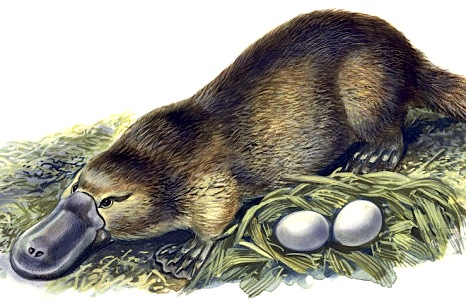
Monotremes oviparous, ovum meroblastic.

Translation: In the 19th century one of the greatest scientific debates was whether the platypus laid eggs, a fact that zoologist William Hay Caldwell was finally able to confirm in 1884. Here he uses Latin to cable his discovery from Australia to the British Association for the Advancement of Science. Since Latin had words for high-level scientific concepts, Caldwell could condense an entire paper into one brief sentence, letting colleagues know that platypus embryos develop like birds instead of mammals.

If I could remember the Latin I studied back in high school . . . And, if the people I was tweeting could read what I was saying . . . I just might reconsider my decision not to tweet. But I regard that event highly unlikely.

For now I’ll remain more than content to post a couple of times a week to Mere Inkling, in the hopes that a few of my words prove helpful or entertaining.

Finally, although the great unknown of platypus parenting was discovered in 1884, I’ve been pondering another mystery of the Ornithorhynchus anatinus. Why was it, that C.S. Lewis failed to include these wondrous creatures in Narnia? Perhaps it was because their semi-aquatic nature meant they would be of little value in the battles that marked the events recorded in the Chronicles? I have little doubt that despite the absence of their mention, Narnia’s waters teemed with their frolicking duck bills, otter feet and beaver tails.

Beware of Beavers

beaverIt’s rather ironic that after my last post on the peaceful harmony of wildlife I would choose to post on the subject of increasing violence among once peaceful forest mammals.

Beavers—of all the unlikely creatures—have apparently been growing more aggressive.

That’s a far cry from the gentle domestic rodents C.S. Lewis introduced us to in The Lion, the Witch and the Wardrobe. Just consider the politeness of Mr. and Mrs. Beaver when the Pevensie children are meeting Aslan for the first time:

“Go on,” whispered Mr. Beaver.

“No,” whispered Peter, “you first.”

“No, Sons of Adam before animals,” whispered Mr. Beaver back again.

As if we needed another reminder that we’re not in Narnia, reports out of Belarus indicate that beaver attacks are on the rise. In the most serious attack, a sixty year old man was actually slain by one of the web-footed amphibians. Accounts said a major artery in his leg was sliced by its “razor-sharp teeth.”

A frightening picture indeed.

Well, worrisome certainly . . . until we hear the rest of the story.

It turns out the fisherman was assaulting the poor little animal. While we must remain considerate of the grief of the sportsman’s family, it appears he was driving past the beaver—which was presumably minding its own woodland business—when he decided it would be fun to grab it and force it to pose for a picture with him.

Apparently—make note of this lest you inadvertently arouse a beaver’s ire—since they are predominantly nocturnal, beavers become disoriented and irritable when forced to pose for portraits during the daytime.

It’s one thing to enjoy nature’s wildness from a distance. Quite another to interpose ourselves and expect undomesticated beasts to behave with good manners. After all, as we learned when Aslan created Narnia, he didn’t civilize all of the furry beavers:

He was going to and fro among the animals. And every now and then he would go up to two of them (always two at a time) and touch their noses with his. He would touch two beavers among all the beavers, two leopards among all the leopards, one stag and one deer among all the deer, and leave the rest. (The Magician’s Nephew).

New Beauty Each Day

fawnI woke this morning to a scene from Disney.

Looking out the window, with my coffee perking in the background, God blessed me with fabulous scene. A pregnant doe, lying on the ground to rest her weary legs, was peacefully grazing on our lawn. (Echoes of gentle Faline.)

As if that vision were not spectacular enough, a few yards to her side a small bunny hopped about, nibbling on the same grass. (We seeded our lawn with clover to provide a welcoming meal for just such visitors.) The rabbit was alone, although we watched it frolic with its siblings just the other day. (Might they be the children of carefree Thumper?)

Completing the scene were a bevy robins and sparrows. They hopped around the pair, in a wonderful display of original nature’s harmony, which will one day be restored.

The wolf shall dwell with the lamb,

   and the leopard shall lie down with the young goat,

and the calf and the lion and the fattened calf together;

   and a little child shall lead them.

The cow and the bear shall graze;

   their young shall lie down together;

   and the lion shall eat straw like the ox.

                     Isaiah 11:6-7, ESV

The Creator of Narnia understood the essence of this peace as well as anyone. C.S. Lewis revealed that just as nature was created at peace, so too the new creation would mark a restoration of that purity. As Lewis writes in Miracles, Nature “is to be redeemed. The ‘vanity’ to
which she was subjected was her disease, not her essence. She will be cured, but cured in character: not tamed (Heaven forbid) . . .”

For the present time, however, we must be content to appreciate brief glimpses of that promise . . . just as I am now, as I write. (Yes, the doe is still resting mere feet from my window.)

Precious moments like this are something to be savored. A sweet foretaste of the feast to come.

_____

The full context of Lewis’ words from Miracles follows. In this passage he warns us not to worship what is created, but only its Creator.

You must have tasted, however briefly, the pure water from beyond the world before you can be distinctly conscious of the hot, salty tang of Nature’s current. To treat her as God, or as Everything, is to lose the whole pith and pleasure of her. Come out, look back, and then you will see . . . this astonishing cataract of bears, babies, and bananas: this immoderate deluge of atoms, orchids, oranges, cancers, canaries, fleas, gases, tornadoes and toads.

How could you ever have thought that this was the ultimate reality? How could you ever have thought that it was merely a stage-set for the moral drama of men and women? She is herself. Offer her neither worship nor contempt. Meet her and know her. If we are immortal, and if she is doomed (as the scientists tell us) to run down and die, we shall miss this half-shy and half-flamboyant creature, this ogress, this hoyden, this incorrigible fairy, this dumb witch.

But the theologians tell us that she, like ourselves, is to be redeemed. The “vanity” to which she was subjected was her disease, not her essence. She will be cured, but cured in character: not tamed (Heaven forbid) nor sterilised. We shall still be able to recognise our old enemy, friend, play-fellow and foster-mother, so perfected as to be not less, but more, herself. And that will be a merry meeting.

Crimes Against Animals

ferretYou may already have seen this picture which has spread like wildfire across the internet. I’m ashamed to say I shared the common initial response to the story—laughter at the foolishness of consumers looking for bargains. Fortunately, as I learned more of the facts of the deeper crime committed here became apparent, and the humor was displaced by sympathy.

So, just what does this image show? Apparently in Argentina, some criminals have devised a very profitable type of deception. They sell cute toy poodles at a fraction of typical prices.

The only problem with this transaction, is that when owners take their puppies in for vaccinations, the veterinarians have to break the news to them that what they really purchased is not a poodle . . . but a ferret.

How in the world could someone confuse the two, you doubtless wonder. After all, one is Canis lupus familiaris (canine) and the other is Mustela putorius furo (weasel)!

The thieves go to extremes to camouflage their crime. In addition to grooming their fur in similar ways, apparently they abbreviate the poor creatures lives by loading them with steroids as soon as they are born. This adds bulk to disguise the slinky build of these crepuscular mammals that are closely related to polecats. [Don’t feel bad, I had to look up “crepuscular” myself; it refers to animals most active during dawn and twilight hours.]

From the photo you can see the “subtle” differences. I suppose the vendor could explain some of them away with comments like “the muzzle of really young puppies always looks slightly pointed, until they mature.”

While I despise theft, I can chuckle at the thought of someone’s jaw dropping at the news of how they were duped—but I do not regard as at all humorous the suffering inflicted on those innocent creatures.

I don’t own one of the estimated 800,000 domestic ferrets that are part of American families. That doesn’t prevent me, though, from being angered by the cruelty of man toward a species with which humanity has enjoyed a cooperative relationship since before the days of Caesar Augustus. (Augustus shipped ferrets to the Balearic Islands to control a rabbit infestation in 6 BC.)

Some readers might consider my concern for mere weasels as misguided. I believe they are wrong. As C.S. Lewis wrote to a correspondent in 1956:

I think God wants us to love Him more, not to love creatures (even animals) less. We love everything in one way too much (i.e. at the expense of our love for Him) but in another way we love everything too little. No person, animal, flower, or even pebble, has ever been loved too much—i.e. more than every one of God’s works deserves.

It should come as no surprise that the creator of Narnia gave much thought to humanity’s relationship with the other creatures with which the Lord has populated our world. God in the Dock includes his fine essay on “Vivisection.”

After weighing the arguments for and against experimentation on animals, Lewis suggests that our justifications for doing so are often dehumanizing.

The reason why we do not dare [to strongly object to experimentation on higher life forms in the animal kingdom] is that the other side has in fact won. And though cruelty even to beasts is an important matter, their victory is symptomatic of matters more important still.

The victory of vivisection marks a great advance in the triumph of ruthless, non-moral utilitarianism over the old world of ethical law; a triumph in which we, as well as animals, are already the victims, and of which Dachau and Hiroshima mark the more recent achievements. In justifying cruelty to animals we put ourselves also on the animal level. We choose the jungle and must abide by our choice.

I pray that the Argentinean authorities are able to dismantle this abominable trade. And I also hope they will not only prosecute the perpetrators of the crime for theft . . . but for the far more morally corrupt crime of cruelty to animals as well.

Orwellian Advice

cls orwellThe title of this post is slightly misleading. In truth, it does contains advice from Eric Arthur Blair (1903-1950) whose pen name was George Orwell. However, because of the impact of his two dystopian classics, Nineteen Eighty-Four and Animal Farm, the author’s name has actually become a true English adjective . . . one that might suggest I’m alluding to futuristic or totalitarian matters.

Or·well·i·an [awr-wel-ee-uhn] means something that resembles his literary work, especially as described in the aforementioned novel and novella. (Within the Christian literary community, “Lewisian” is common shorthand for referring to C.S. Lewis . . . but that word is unlikely to ever find its way into standard dictionaries.)

Despite the enormous (and eternal) differences between Orwell and Lewis, they did have something significant in common. More about that in a moment.

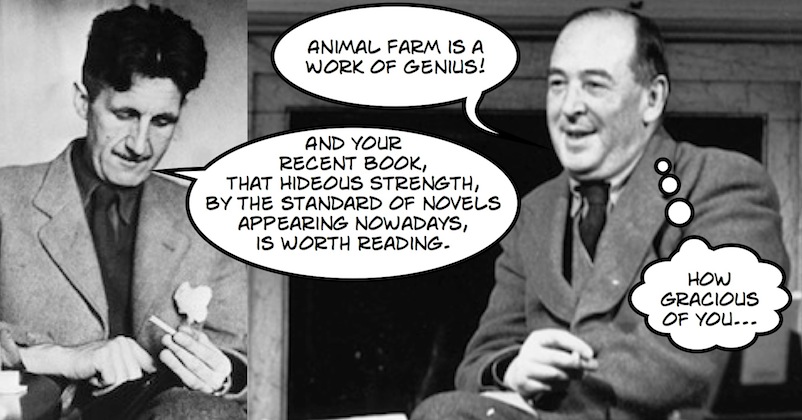
As the graphic I created above reveals (from actual quotations), Lewis had a better opinion of Orwell’s work than vice versa. Orwell disliked Lewis and resented the fact that he was popular among many common people. He particularly disliked Lewis’ traditional (evangelical) Christianity. In his review of That Hideous Strength, Orwell dismissed the biblically based supernatural as a version of “magic.”

Much is made of the fact that the scientists are actually in touch with evil spirits, although this fact is known only to the inmost circle. Mr. Lewis appears to believe in the existence of such spirits, and of benevolent ones as well. He is entitled to his beliefs, but they weaken his story . . .

Orwell was one of those “professing” Christians who is accurately labeled a hypocrite. He was a communing member of the Church of England, and advocated a Judeo-Christian moral code, but did not believe in an afterlife. The following letter, written to Eleanor Jaques in 1932, reveals his hypocrisy.

It seems rather mean to go to HC [Holy Communion] when one doesn’t believe, but I have passed myself off for pious & there is nothing for it but to keep up with the deception.

In a comment to my last post, a good friend of Mere Inkling, Brenton Dickieson at A Pilgrim in Narnia, reminded me of a thought-provoking essay on English written by Orwell. His essay, “Politics and the English Language,” addresses a number of problems with the language. He considers dying metaphors, verbal false limbs, pretentious diction, and meaningless words.

A Similarity in the Two Writers’ Advice

Orwell’s goal is “the scrapping of every word or idiom which has outworn its usefulness. It has nothing to do with correct grammar and syntax, which are of no importance so long as one makes one’s meaning clear, or with the avoidance of Americanisms, or with having what is called a ‘good prose style.’”  [As irritating as I imagine most Europeans find Americanisms!] Writers of fiction will enjoy the way Orwell explains the challenge of “showing, not telling.”

What is above all needed is to let the meaning choose the word, and not the other way around. In prose, the worst thing one can do with words is surrender to them. When you think of a concrete object, you think wordlessly, and then, if you want to describe the thing you have been visualizing you probably hunt about until you find the exact words that seem to fit it.

When you think of something abstract you are more inclined to use words from the start, and unless you make a conscious effort to prevent it, the existing dialect will come rushing in and do the job for you, at the expense of blurring or even changing your meaning. Probably it is better to put off using words as long as possible and get one’s meaning as clear as one can through pictures and sensations. Afterward one can choose—not simply accept—the phrases that will best cover the meaning, and then switch round and decide what impressions one’s words are likely to make on another person.

This last effort of the mind cuts out all stale or mixed images, all prefabricated phrases, needless repetitions, and humbug and vagueness generally. But one can often be in doubt about the effect of a word or a phrase, and one needs rules that one can rely on when instinct fails. I think the following rules will cover most cases:

1. Never use a metaphor, simile, or other figure of speech which you are used to seeing in print.

2. Never use a long word where a short one will do.

3. If it is possible to cut a word out, always cut it out.

4. Never use the passive where you can use the active.

5. Never use a foreign phrase, a scientific word, or a jargon word if you can think of an everyday English equivalent.

6. Break any of these rules sooner than say anything outright barbarous.

These rules sound elementary, and so they are, but they demand a deep change of attitude in anyone who has grown used to writing in the style now fashionable.

Students of Lewis will note in the final passage the parallel with advice he provided to a correspondent in 1956. Although the context is different—Orwell’s is a formal essay and Lewis’ a casual correspondence written to a child, the similarities are significant. Lewis would have been familiar with Orwell’s essay, composed a decade before his letter, but the resemblance between their words is better attributed to shared literary philosophies and the self-evident nature of the principles. Lewis identified five important considerations when writing.

1. Always try to use language so as to make quite clear what you mean and make sure [your] sentence couldn’t mean anything else.

2. Always prefer the plain, direct word to the long, vague one. Don’t implement promises, but keep them.

3. Never use abstract nouns when concrete ones will do. If you mean “More people died” don’t say “Mortality rose.”

4. Don’t use adjectives which merely tell us how you want us to feel about the things you are describing. I mean, instead of telling us a thing was “terrible,” describe it so that we’ll be terrified. Don’t say it was “delightful;” make us say “delightful” when we’ve read the description. You see, all those words (horrifying, wonderful, hideous, exquisite) are only like saying to your readers, “Please, will you do my job for me?”

5. Don’t use words too big for the subject. Don’t say “infinitely” when you mean “very;” otherwise you’ll have no word left when you want to talk about something really infinite.

Whatever the two authors thought about the other, they certainly shared some similar views on the subject of effective writing. And, I think we can assume with confidence that Lewis would concur with Orwell’s final rule. Under no circumstances should we resort to barbarity! For, as Lewis wrote in The Four Loves, “Who does not prefer civility to barbarism?”

____

If you are interested in reading Orwell’s “Politics and the English Language” in its entirety, you can find it here.

Saintly Newspaper Clippings

stfrancisMy brother, sister and I have nearly finished the somber task of going through my father’s possessions. We distributed many items to various family members, but the local charities have probably benefited most, as we cleared out the three bedroom home.

Sadly, my mother died nearly twenty years ago. My sister inherited her cedar chest, but had left it in our father’s house. As she prepared to take it home, we discovered some interesting items, including forty pictures my father had sent home during his 1967-68 tour in Vietnam.

We also found a Bible my mother had used when she attended studies. She was born in the generation which would never dare to highlight passages or scribble in the margins. Thus, the Bible bears no evidence it ever belonged to her . . . aside from some inspiring bookmarks, and a few newspaper clippings she had found meaningful.

One of the quotations that I too found particularly edifying, came from the pen of a Roman Catholic priest named Francis de Sales:

Do not look forward to what might happen tomorrow; the same everlasting Father who cares for you today will take care of you tomorrow and every day. Either He will shield you from suffering or he will give you the unfailing strength to bear it. Be at peace, then, and put aside all anxious thoughts and imaginations.

Francis was a post-Reformation Bishop of Geneva who was noted for his gentle approach toward religious divisions—in an era when such moderation was extremely rare. He is known for writings on spiritual growth (in Roman Catholic parlance, “spiritual formation”).

Although I have not read it, his book Introduction to the Devout Life comes highly recommended, and is available for free download here. I suspect even agnostics could enjoy it for its historical value.

By all accounts, Francis led a chaste and humble life, much like his namesake, Francis of Assisi. (Both men were canonized by their Church.)

Speaking of the first St. Francis, I have always wondered why no Pope ever honored his legacy by assuming his name. I suppose this is because his most prominent characteristics are not those most Popes seek to emulate. The assumption of Francis’ name by the new Pope, I believe, bodes well for his papacy. If he follows in the footsteps of Francis of Assisi, he cannot stray too far afield.

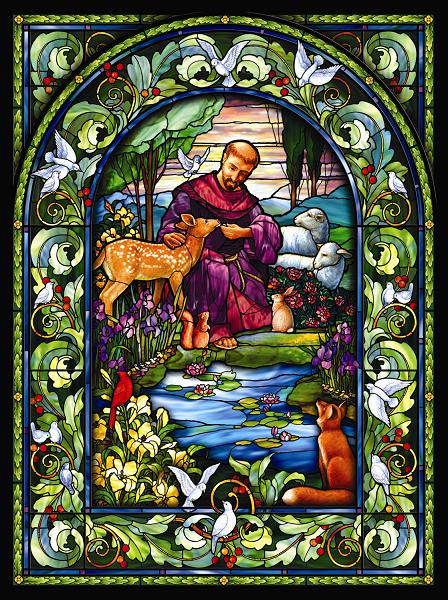
C.S. Lewis appreciated the thirteenth-century saint who began life as a self-indulged soldier and ended it living under a strict vow of poverty. Francis’ celebrated affection for animals—he is considered their “patron saint”—could not help but endear the monk to the creator of Narnia. Each year, many Christians participate in Roman Catholic and Anglican ceremonies for the blessing of animals on Saint Francis’ feast day.

In The Four Loves, Lewis discusses the nature of our physical body. He notes that there are several competing perspectives about our corporeal constitution, with the extremes either demeaning or glorifying humanity’s material nature. Lewis suggests that a metaphor created by Saint Francis provides a more biblical view.

Man has held three views of his body. First there is that of those ascetic Pagans who called it the prison or the “tomb” of the soul, and of Christians like Fisher to whom it was a “sack of dung,” food for worms, filthy, shameful, a source of nothing but temptation to bad men and humiliation to good ones. Then there are the Neo-Pagans (they seldom know Greek), the nudists and the sufferers from Dark Gods, to whom the body is glorious.

But thirdly we have the view which St. Francis expressed by calling his body “Brother Ass.” All three may be—I am not sure—defensible; but give me St. Francis for my money. Ass is exquisitely right because no one in his senses can either revere or hate a donkey. It is a useful, sturdy, lazy, obstinate, patient, lovable and infuriating beast; deserving now the stick and now a carrot; both pathetically and absurdly beautiful. So the body. There’s no living with it till we recognise that one of its functions in our lives is to play the part of buffoon.

Yes, I have to live for a while yet in this donkey of a shell, which illustrates daily the wisdom of the Apostle Paul who wrote that the spirit is willing but the flesh is weak . . . and short-sighted . . . and lazy . . . and stubborn . . .

This body, my flesh, argues that I should spend my day worrying about tomorrow. But the Holy Spirit speaks a more hopeful word. A promise. As God inspired Francis de Sales to eloquently proclaim: “Do not look forward to what might happen tomorrow; the same everlasting Father who cares for you today will take care of you tomorrow and every day.”

Echoes of Narnia

garrelsI just met an amazing new artist. Well, not literally.

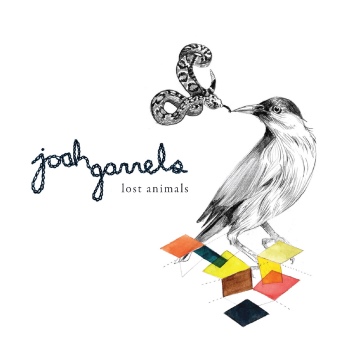
I met him, figuratively speaking, through his innovative music. And, although he is “new” to me, he’s been recording for more than a decade. His name is Josh Garrels, and in a moment, I’ll introduce you to two examples of his lyrical poetry.

The reason I first checked out his work was because I received word that he is giving away his music! Amazing, isn’t it? Right now you can download any of his albums for free. However . . . oh, there’s a string attached, you’re thinking . . . he is requesting that you make a donation to aid the suffering in the war-ravaged Democratic Republic of the Congo. So there’s really no string at all, since it’s merely a suggestion, and the gift would be tax deductible anyway. The albums are free. Garrels doesn’t want a penny from us. But he does want us to consider aiding the 70 million struggling people of the Congo.

Despite the Congo being the eleventh largest country in the world, few Westerners follow the terrible news flowing from the wounded nation. For the next two weeks, one hundred percent of the “tips” received for Garrels’ albums will go to World Relief—for their work saving precious lives and bringing peace to the hopeless.

In listening to some of Garrels’ music, I was reminded of the versatility of C.S. Lewis, who wrote so skillfully in so many different genres. I’m not sure how to describe Garrels’ songs; perhaps they defy categorization. It’s not the music I typically listen to . . . but the depth of his lyrics have won me over. Consider the following two songs. I’ll share the lyrics here, and then offer links to each of them below. I encourage you to read the words first and then listen to the music.

“Slip Away”

Hold on, before I slip away

The flames gone dark, I am afraid

How strong is flesh and blood

I cannot can take back what I’ve done

To you, my sweetest friend

I betrayed you, I walked away again

Hold on, before I slip away

The flame’s gone dark, I am afraid

How strong is flesh and blood

I cannot take back what I’ve done

To you, my sweetest friend

I betrayed you, I walked away again

Now all that’s left, is what might have been

Please forgive me, before we reach the end

Please forgive me, before we reach the end

And—for a delightful tale composed in the spirit of Narnia, be sure to listen to “Rabbit and the Bear.” Much of its imagery is shared with the homeland of the Chronicles of Narnia, but it’s clearly the Bible that provides both “composers” with their strongest inspiration.

“Rabbit & the Bear”

Run, run so fast

Over fields and grass

At last, at last

We escaped from the trap

With the rabbit and the bear

And the sparrows of the air

Come one, come all

The hunter is gone

And this is our chance

To crawl under the wire

Through the darkest wood

On up to the mountain of fire

Where everything is free

In the light of the sun

Where every creature sings

Oh Lord, you rescued us all

Don’t listen to the snake

For he lies and he takes

Your hope, your faith

Away from you

But when the lion comes around

With his claw and his crown

Follow, follow

His every move

After you’ve listened to these two pieces, I encourage you to visit this site and download his albums—for free. And, if you feel so inclined, I add my voice to Garrels’ in encouraging you to support World Vision’s vital work in the Congo.

Malapropistic Entertainment

marshianWhenever I have an appointment with a doctor, I try to remember to bring along my own magazine or (better yet) the current writing project with which I’m wrestling. Unfortunately, I’m often in a hurry, and sometimes forget . . . which means I need to rely on that odd potpourri of dated magazines that typically migrate to medical waiting rooms.

This week found me in precisely this precarious predicament. I arrived rather early in my dentist’s office, and it turned out that he was slightly behind schedule. Not the best of circumstances. I approached the magazine rack with trepidation.

To my delight I saw a Reader’s Digest with a cover article about “Fifty Dumb Boss Stories.” Having worked for my share of dullards, I thought this should be entertaining. The fact that it included comments from Dwight Schrute of The Office made it just that much more promising.

I wasn’t disappointed. Among the many silly acts recorded in the article were a collection of malaprops voiced by witless bosses. Here are a few:

The Greek pyramids weren’t built in a day.

Spurt me out an email.

Let’s not put the horse before the cart.

We’re not preparing the report because it would be an exercise in fertility.

And my personal favorite, the elegantly mixed metaphor: “It’s not rocket surgery!” Nor is it, I suspect, brain science.

Most of us appreciate humor—even when it’s unintended. C.S. Lewis, in Reflections on the Psalms, wrote: “A little comic relief in a discussion does no harm, however serious the topic may be. (In my own experience the funniest things have occurred in the gravest and most sincere conversations.)”

Now, before ending this post, I need to point out one more truth. Dimwitted bosses aren’t the only people who stumble over words and meld images better left autonomous. Every one of us has occasionally experienced the proverbial “slip of the tongue,” and sometimes with quite entertaining results. Jokes—whether intentional or accidental—can all be appreciated. As the newly created Talking Animals of Narnia are told by Aslan:

“Laugh and fear not, creatures. Now that you are no longer dumb and witless, you need not always be grave. For jokes as well as justice come in with speech.” (The Magician’s Nephew).

Beware of Zoolatry

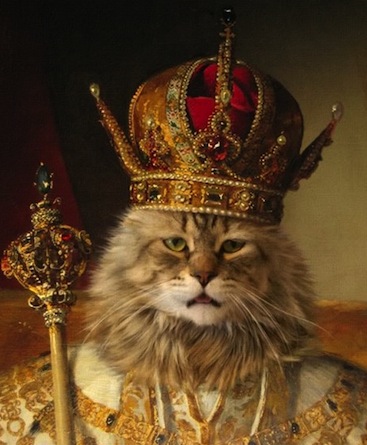
royal catWhen my wife and I dated, I praised her beautiful cat when I visited her home. The cat maintained that imperial posture and attitude that is common in virtually all felines. And that came as no surprise, since she was an Egyptian Mau, one of the most ancient of breeds. She passed on long decades ago, but her haughty, regal bearing is etched in my memory.

I thought of her today when I read the following in the December issue of First Things, in the executive editor’s column.

Wandering around the American Kennel Club’s big “Meet the Breeds” event with my two youngest children recently, I saw a big banner in the cat section proclaiming that a particular breed had been considered a god by an ancient civilization. Of course, our understanding of the genuine religious impulses of ancient religions has increased, but still, one of the gifts the Jewish people have brought the world is that no one who knows about the God of Abraham, Isaac, and Jacob is the least bit tempted to worship cats.

I mean, would you want to worship a murderous narcissistic psychopath? This is not an image of God to make anyone happy. If you’re going to worship an animal, why not the Border Collie, frantically eager to please, or the loving, soulful-eyed Lab? Or the alert and protective German Shepherd? Or the indomitable Saint Bernard? Or the classic loyal and even-tempered mutt?

I don’t intend to offend any cat lovers by repeating this observation—my son has an affectionate tabby he rescued as a kitten while a senior in high school, that’s welcome in our home anytime. Still, as an unrepentant dog person, and “papa” to a rescued border collie, the words above brought a smile to me.

C.S. Lewis painted a graphic image of one animal-headed deity. It was Tash, the god of the Calormenes. In The Last Battle, we see that in Narnia, the reality behind the lifeless image can be most terribly revealed.

In the shadow of the trees on the far side of the clearing something was moving. It was gliding very slowly Northward. At a first glance you might have mistaken it for smoke, for it was grey and you could see things through it. But the deathly smell was not the smell of smoke. Also, this thing kept its shape instead of billowing and curling as smoke would have done. It was roughly the shape of a man but it had the head of a bird; some bird of prey with a cruel, curved beak. It had four arms which it held high above its head, stretching them out Northward as if it wanted to snatch all Narnia in its grip; and its fingers—all twenty of them—were curved like its beak and had long, pointed, bird-like claws instead of nails. It floated on the grass instead of walking, and the grass seemed to wither beneath it. . . .

The others watched it for perhaps a minute, until it streamed away into the thicker trees on their right and disappeared. Then the sun came out again, and the birds once more began to sing. Everyone started breathing properly again and moved. They had all been still as statues while it was in sight. “What was it?” said Eustace in a whisper. “I have seen it once before,” said Tirian. “But that time it was carved in stone and overlaid with gold and had solid diamonds for eyes. It was when I was no older than thou, and had gone as a guest to The Tisroc’s court in Tashbaan. He took me into the great temple of Tash. There I saw it, carved above the altar.”

“Then that—that thing—was Tash?” said Eustace.

In our world, idolatry has certainly evolved since it’s pantheistic and zoolatrous beginnings. Today we are tempted by material indulgences and corruptions aplenty. While few of us impute divinity to animals or objects of stone or wood, we don’t have to look far to find something we deem worthy of adoration.

Our favorite idol is neither beast nor mammon. It is ourselves. As C.S. Lewis wrote in The Problem of Pain:

This act of self-will on the part of the creature, which constitutes an utter falseness to its true creaturely position, is the only sin that can be conceived as the Fall. For the difficulty about the first sin is that it must be very heinous, or its consequences would not be so terrible, and yet it must be something which a being free from the temptations of fallen man could conceivably have committed. The turning from God to self fulfils both conditions. It is a sin possible even to Paradisal man, because the mere existence of a self—the mere fact that we call it “me”—includes, from the first, the danger of self-idolatry. Since I am I, I must make an act of self-surrender, however small or however easy, in living to God rather than to myself. This is, if you like, the “weak spot” in the very nature of creation, the risk which God apparently thinks worth taking.

Now, this is a sin to which I frequently find myself succumbing. I far too often think first about my own desires and appetites . . . only later (if ever) becoming concerned with the needs of my neighbor.

No, it’s neither cat nor dog that needs to be evicted from the throne in my soul reserved for my Creator—it’s me.