C.S. Lewis & Assassinations

The brilliant author C.S. Lewis died on the same day that an American president was assassinated. The violent death of John F. Kennedy in November of 1963 eclipsed Lewis’ own passing, so many people were unaware of it for some time. Yet on that autumn day, both Camelot and Narnia lost their inspirations.

Unfortunately, Kennedy’s shooting was not the only political assassination that was connected in a manner to C.S. Lewis’ life. Archduke Franz Ferdinand Carl Ludwig Joseph Maria of Austria was the heir apparent to the throne of Austria-Hungary. A nineteen year old political activist cold-bloodedly murdered the archduke and his wife, Sofie.

Franz and Sophie had married for love, despite her inadequate social rank, which resulted in a morganatic marriage. In recent years such unions have become more common, but at the time, it was a serious matter. The archduke was forced by his uncle, the emperor, to accept that their descendants would never have a right to the throne.

In a convoluted fashion, Ferdinand’s death nearly led to C.S. Lewis’ own. The 1914 assassination was the spark that set the globe on fire during the First World War. And, during that grim conflict, C.S. Lewis was severely wounded by an artillery shell that killed friends standing nearby.

The Causes and Impact of Political Assassinations” was published by the Combating Terrorism Center at West Point. It begins with the fact that “political assassinations have been part of social reality since the emergence of communal social frameworks . . .” And so, since social frameworks will forever exist, they continue.

Humanity’s Violent History

Assassination has been a relatively common practice throughout human history. This shouldn’t surprise anyone who knows the sad story of Abel and his angry brother, Cain. 

Philip II of Macedon, the father of Alexander the Great, was killed attending the wedding of his daughter Cleopatra (no, not that Cleopatra). Later Cleopatra, as a widow, would be assassinated herself by one of her unsuccessful suitors.

Three centuries later, Julius Caesar was murdered by the political elite of Rome, who feared his growing influence. And in 453, one of Rome’s greatest enemies, Attila the Hun, was arguably murdered on his wedding night by his new bride, Ildico.

Several assassinations are recorded in the Bible. Over such a lengthy and turbulent historical period, that is unsurprising. The two excerpts below have links to the fuller accounts.

[Canaanite general] Sisera fled away on foot to the tent of Jael, the wife of Heber the Kenite, for there was peace between Jabin the king of Hazor and the house of Heber the Kenite. And Jael came out to meet Sisera and said to him, “Turn aside, my lord; turn aside to me; do not be afraid.” So he [entered] the tent, and she covered him with a rug. . . . And he said to her, “Stand at the opening of the tent, and if any man comes and asks you, ‘Is anyone here?’ say, ‘No.’” But Jael the wife of Heber took a tent peg, and took a hammer in her hand. Then she went softly to him and drove the peg into his temple until it went down into the ground while he was lying fast asleep from weariness (Judges 4).

Joab took Amasa by the beard with his right hand to kiss him. But Amasa did not observe the sword that was in Joab’s hand. So Joab struck him with it in the stomach and spilled his entrails to the ground without striking a second blow, and he died (2 Samuel 20).

As a sort of counterbalance to these “positive” instances – elimination of Israel’s enemies – you may want to read about King David’s condemnation of the assassinations of his political rivals, men to whom he would have extended mercy. When two brothers sought a reward for murdering King Ish-bosheth, Saul’s son, David declared “when wicked men have killed a righteous man in his own house on his bed, shall I not now require his blood at your hand and destroy you from the earth?” (2 Samuel 4).

All told, however, there was much violence in the ancient world. As C.S. Lewis’ wife, Joy Davidman, wrote in Smoke on the Mountain: An Interpretation of the Ten Commandments in Terms of Today:

How the ancient Jews did slaughter! They killed in hot blood and in cold; they killed for loot, for God, and for fun. . . . The tribes killed . . . by political assassination as when Ehud stabbed King Eglon in his fat belly . . . [The graphic story of Eglon’s assassination is detailed in Judges 3.]

Another historically consequential assassination occurred in the year 661, when Muhammad’s son-in-law Ali ibn Abi Talib was slain with a poison-coated sword while praying in the Great Mosque of Kufa. This incident caused Islam to separate into two major denominations, and Sunni-Shia relations continue to be contentious.

In the modern era, political murders remain unabated. Vladimir Putin  may be the current master of the deadly art. Even discounting the growing number of “suicides” among his advisers and generals following his ill-advised invasion of Ukraine, we have the case of Alexei Navalny. Navalny was one of Putin’s critics who in 2020 survived poisoning with Novichok nerve agent. Nevertheless, imprisoned in the arctic, he later died under extremely suspicious circumstances. 

In the western hemisphere, the recent attempted assassination of former President Donald Trump invites a review of the danger of serving in that particular office. Despite the (obvious) risk of inviting non-Americans to mock the United States, consider a few facts.

  • Since 1789 (when the office was established) we have had 45 presidents
  • Four sitting presidents have been assassinated while in office
  • Three other presidents (one while in office) were wounded in assassination attempts

Assassination During the Protestant Reformation

In C.S. Lewis’ landmark tome English Literature in the Sixteenth Century, recalls a peculiar passage from the History of the Reformation of Religion within the Realm of Scotland. The author, John Knox refers to the murder of Scotland’s last pre-Reformation Roman Catholic cardinal. It would be more than four centuries before the Pope appointed another.

In the cast of [Knox’s] mind, too, there is something not unlike Tacitus’ sombre pungency, though Knox’s humour, as becomes a countryman of Dunbar, is more boisterous and ferocious.

Sometimes, indeed, it is so ferocious that we should not recognize it at all if we were not told; as when after describing the murder of Cardinal Beaton down to the last grim detail of packing the corpse in salt (‘the wether was hote’) he proceeds, ‘These things we wreat mearelie: but we wold that the reader should observe Goddis just judgementis.’

He was apparently afraid lest the fun of the thing might lead us to forget that even an assassination may have its serious side.

Quite true. An assassination, even of a despised ruler such as Adolf Hitler, remains a serious matter.
Following C.S. Lewis’ Military Example

Like his friend J.R.R. Tolkien, and many of the British men of their generation, C.S. Lewis served in the grim battlefields of the First World War. (However, since Lewis was actually Irish, he could not be drafted, and instead volunteered to serve.)

In recent years a number of books have appeared related to the military service of the Inklings. In A Hobbit, a Wardrobe, and a Great War, the author introduces his discussion with a succinct summary.

For a generation of men and women, [WWI] brought the end of innocence – and the end of faith. Yet for two extraordinary authors and friends, J.R.R. Tolkien and C.S. Lewis, the Great War deepened their spiritual quest. Both men served as soldiers on the Western Front, survived the trenches, and used the experience of that conflict to shape their Christian imagination. . . .

By the time of the Armistice, more than nine million soldiers lay dead and roughly thirty-seven million wounded. On average, there were about 6,046 men killed every day of the war, a war that lasted 1,566 days. In Great Britain, almost six million men—a quarter of Britain’s adult male population – passed through the ranks of the army. About one in eight perished. Tolkien and Lewis might easily have been among their number.

In 1939, a correspondent inquired if Lewis was going to reassume his commission in the army for the new conflict, and he responded with sentiments I have heard voiced by a number of other combat veterans.

No, I haven’t joined the Territorials. I am too old. It would be hypocrisy to say that I regret this. My memories of the last war haunted my dreams for years.

C.S. Lewis proceeded to graphically explain the cost of serving under such pressure. 

Military service, to be plain, includes the threat of every temporal evil: pain and death which is what we fear from sickness: isolation from those we love which is what we fear from exile: toil under arbitrary masters, injustice and humiliation, which is what we fear from slavery: hunger, thirst, cold and exposure which is what we fear from poverty.

I’m not a pacifist. If it’s got to be, it’s got to be. But the flesh is weak and selfish and I think death would be much better than to live through another war.

A new announcement from the United States’ Department of Defense brought Lewis’ situation to mind. It appears that due to a number of factors – not least of which the emphasis on Diversity, Equity and Inclusion,* which (imo) has discouraged veterans from encouraging their children to serve in the armed forces – some services are repeatedly falling short of their recruiting goals. 

In light of the fact that the world is inarguably growing more dangerous – the Doomsday Clock is set at “90 seconds to midnight” – it is alarming that we are unable to fully staff our shrunken military.

Just today my sixteen year old grandson expressed concerns about the resumption of a draft. I could not muster a persuasive argument that it won’t happen. Ironically, the last time the U.S. involuntarily conscripted troops was 1972, the year I turned eighteen. Oh, in the process of including a link to the Selective Service Sytem, I was surprised to learn that a “Medical Draft is in Standby Mode.” 

It is designed to be implemented in connection with a national mobilization in an emergency, and then only if Congress and the President approve the plan and pass and sign legislation to enact it. . . .

[The plan will] provide a fair and equitable draft of doctors, nurses, medical technicians and those with certain other health care skills if, in some future emergency, the military’s existing medical capability proved insufficient and there is a shortage of volunteers. . . .

[If implemented, the plan will] begin a mass registration of male and female health care workers between the ages of 20 and 45. . . . HCPDS [the innocuously named Health Care Personnel Delivery System] would provide medical personnel from a pool of 3.4 million doctors, nurses, specialists and allied health professionals in more than 60 fields of medicine.

No Draft Yet

Since we are not currently at war, the specter of a draft remains ephemeral. Still, the shortage of volunteers has led to a variety of initiatives, such as lowering service qualification standards. These efforts have proven inadequate, resulting in the aforementioned announcement.

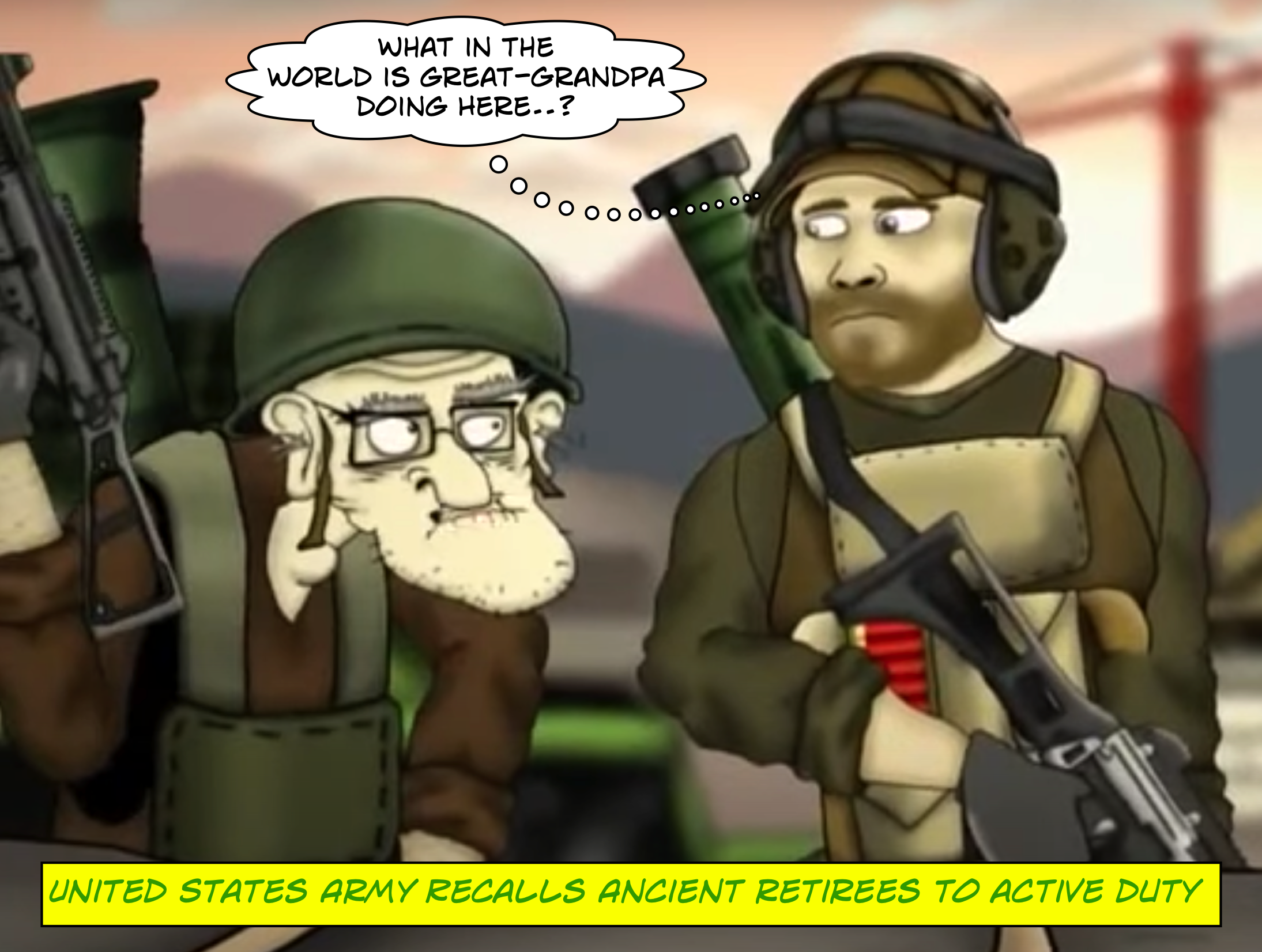
Both the Army and the Air Force have begun Retiree Recalls. Yes, that is just what it sounds like. People who have actually retired from the armed forces, normally after 20+ years of active duty, are being recalled to serve again. 

When I heard this news I was stunned. It is legally possible for the military to recall former members via a tiered process, but the first thing that came to my mind was my favorite high school teacher. He had served in Viet Nam as a draftee and finished his enlistment. He once told me that he felt safe, having survived, because now he was in the same call-up status as a “pregnant nun.” (Rather hyperbolic, but comforting to him.)

Fortunately, the current recalls are all voluntary. Only retirees whose personal circumstances make the offer appealing, will respond. As the Air Force Times reports, “Regret retiring? Here’s your shot at a second chance in the Air Force.”

I suspect that even vets who enjoyed their military service will be inclined to consider redonning the uniform as “too much of a good thing.” And if they witnessed the bloody horrors of war, as seen by C.S. Lewis, returning to the ranks would be even less tempting.

Since I, myself, have no desire to resume the demands of military life, I haven’t researched the age requirements for the Air Force recall program. Like Lewis, “I am too old.” 

But amazingly, depending on individual factors, the Army is willing to recall retired volunteers up to the age of seventy. That’s not a typo. As someone reaching that very milestone this summer, I can’t imagine returning to work side-by-side with troops half a century younger than me. 

Now, I pray for peace, knowing that being prepared for war is one way to increase that likelihood. So, I hope the military can throw off some of its political shackles and return to its necessary focus.

Furthermore, like C.S. Lewis, I have a pragmatic view of the effects of war. In “Learning in War-Time,” Lewis summarized the effects of military service during a war. As always, his insights are profound.

What does war do to death? It certainly does not make it more frequent: 100 per cent of us die, and the percentage cannot be increased. . . . Does it increase our chances of painful death? I doubt it. . . .

Does it decrease our chances of dying at peace with God? I cannot believe it. If active service does not persuade a man to prepare for death, what conceivable concatenation of circumstances would?


* This reference is to the convoluted and inequitable DEI philosophy and program(s) being mandated today. In truth, most people value diversity, and all people of goodwill believe in the importance of equity and inclusion. Along with Martin Luther King, Jr., they long for a day when people are not “judged by the color of their skin, but by the content of their character.”

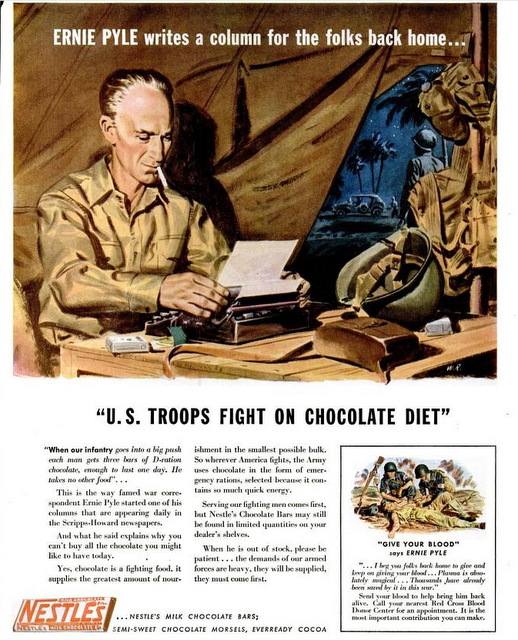
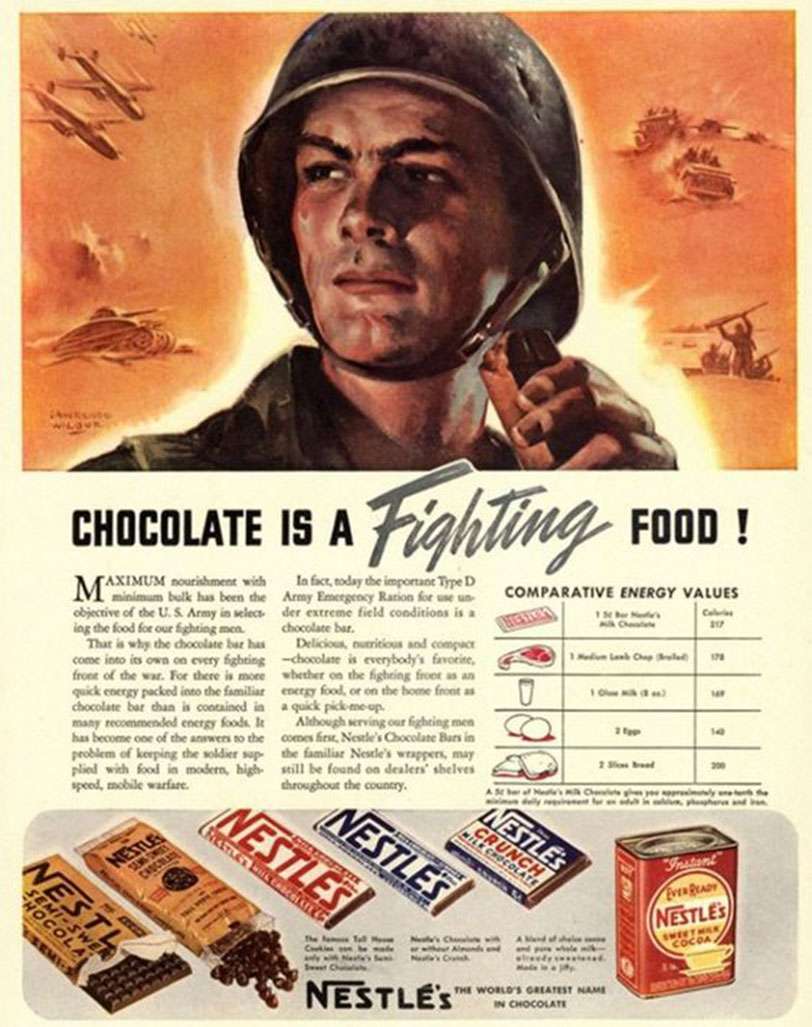
Chocolate Fuels Armies

“An army marches on its stomach.”* Military leaders have long recognized that it is difficult to arouse soldiers weakened by deprivation. Sadly, though, even a king of Israel could be foolish enough to ignore that and order his soldiers to fast before a battle.

While logisticians rarely receive the accolades of their peers who serve directly in combat, they have always been vital members of successful military ventures.

While they are concerned with securing and transporting all requirements, such as ammunition and medical supplies, there is a single necessary requirement for all campaigns. Without sustenance, soldiers will desert the flag and even the most steadfast will fall.

Nutritional value is the first priority. Palatability has historically been a distant afterthought. This has given rise to innumerable jokes made by veterans about the “combat rations” provided to them. While these “menus” have vastly improved in recent years, they remain fodder for much humor.

And even the most delicious food choices become monotonous when they are limited to a small range. In 2002, I visited a remote military detachment supplied with adequate pallets of Meals Ready to Eat, but begging for variety. They had hundreds of meals available, but only two or three different meal options! Civilians, in contrast, can readily purchase a far wider range of entrees.

During the Second World War, the United States invested major efforts in making the combat meals more appealing. Various candies found their way into K-rations, in addition to necessities like toilet paper and cigarettes. In a comprehensive overview of the history of rations, the U.S. Army Quartermaster Foundation points to the main reason for complaint during WWII.

Like other unpopular items, misuse was a contributing factor to the waning popularity of the K ration. Although designed to be used for a period of two or three days only, the ration occasionally subsisted troops for weeks on end. . . . Continued use reduced the acceptability and diminished the value of the ration.

Adding confectionaries to rations made the meals more welcome. Chocolate was always a favorite, but the initial American versions left much to be desired.

My research was, in fact, prompted by a recent post on “Chocolate in WWII” in Pacific Paratrooper. (It is one of the very best military blogs on the internet.) They describe how the military approached a major American confectioner with a simple list of requirements (the last one is best appreciated by older veterans).

The Hershey Chocolate company was approached back in 1937 about creating a specially designed bar just for U.S. Army emergency rations. According to Hershey’s chief chemist, Sam Hinkle, the U.S. government had just four requests about their new chocolate bars: (1) they had to weigh 4 ounces; (2) be high in energy; (3) withstand high temperatures; (4) “taste a little better than a boiled potato.”

Sadly, many “who tried it said they would rather have eaten the boiled potato.” Well, it was the thought that counted, right?

There is a legend that during the war a German officer was confronted with American desserts and determined that the abundant resources of the United States signaled doom for the Nazi cause. The story likely has a fictional origin.

In the 1965 film Battle of the Bulge, Wehrmacht Colonel Hessler, shows his commanding general a treasure confiscated from American soldiers.

Hessler: “General, before you go, may I show you something?”

General: “What is it?”

Hessler: “A chocolate cake.”

Kohler: “Well?”

Hessler: “It was taken from a captured American private. It’s still fresh. If you will look at the wrapping, general, you will see it comes from Boston.”

Kohler: “And?”

Hessler: “General, do you realize what this means? It means that the Americans have fuel and planes to fly cake across the Atlantic Ocean. They have no conception of defeat.”

C.S. Lewis & Rations

Military rations during the First World War were more primitive than those provided twenty years later. One difference for the British is that they were granted a half gill of rum (or a pint of porter) each day.

This alcohol distribution was at the discretion of the commanding general, which meant that it was not available in the trenches. This was in the spirit of the American “General Order Number 1,” which typically applies to alcohol, and sometimes prohibits its presence throughout an entire theater. (I can personally attest to the ability of some elements, such as Special Ops, to circumvent such restrictions.)

C.S. Lewis wrote with some frequency about the rationing endured by the British public, during and after the world wars.⁑

Unfortunately, I’ve only uncovered one Lewisian reference to his own experience with military cuisine. In a 1917 letter to his father, he reveals that meals were not always appealing, even during training, prior to deploying to the war zone.

First of all came the week at Warwick, which was a nightmare. I was billeted with five others in the house of an undertaker and memorial sculptor. We had three beds between six of us, there was of course no bath, and the feeding was execrable.

The little back yard full of tomb stones, which we christened ‘the quadrangle,’ was infinitely preferable to the tiny dining room with its horse hair sofa and family photos.

When all six of us sat down to meals there together, there was scarcely room to eat, let alone swing the traditional cat round. Altogether it was a memorable experience.

A Hobbit, a Wardrobe, and a Great War describes how WWI affected C.S. Lewis and J.R.R. Tolkien. After relating a passage following Miraz’s defeat of Caspian’s force, when the momentarily defeated were “a gloomy company that huddled under the dripping trees to eat their scanty supper,” the author observes:

The military blunders, the fruitless acts of bravery, the bone-chilling rain, the meager rations: there were many days and nights just like these along the Western Front. Imaginary beasts aside, such scenes could have been lifted from the journal of any front-line soldier.

Like Tolkien, though, Lewis includes these images not for their own sake, but to provide the matrix for the moral and spiritual development of his characters . . .

Rations in Ukraine

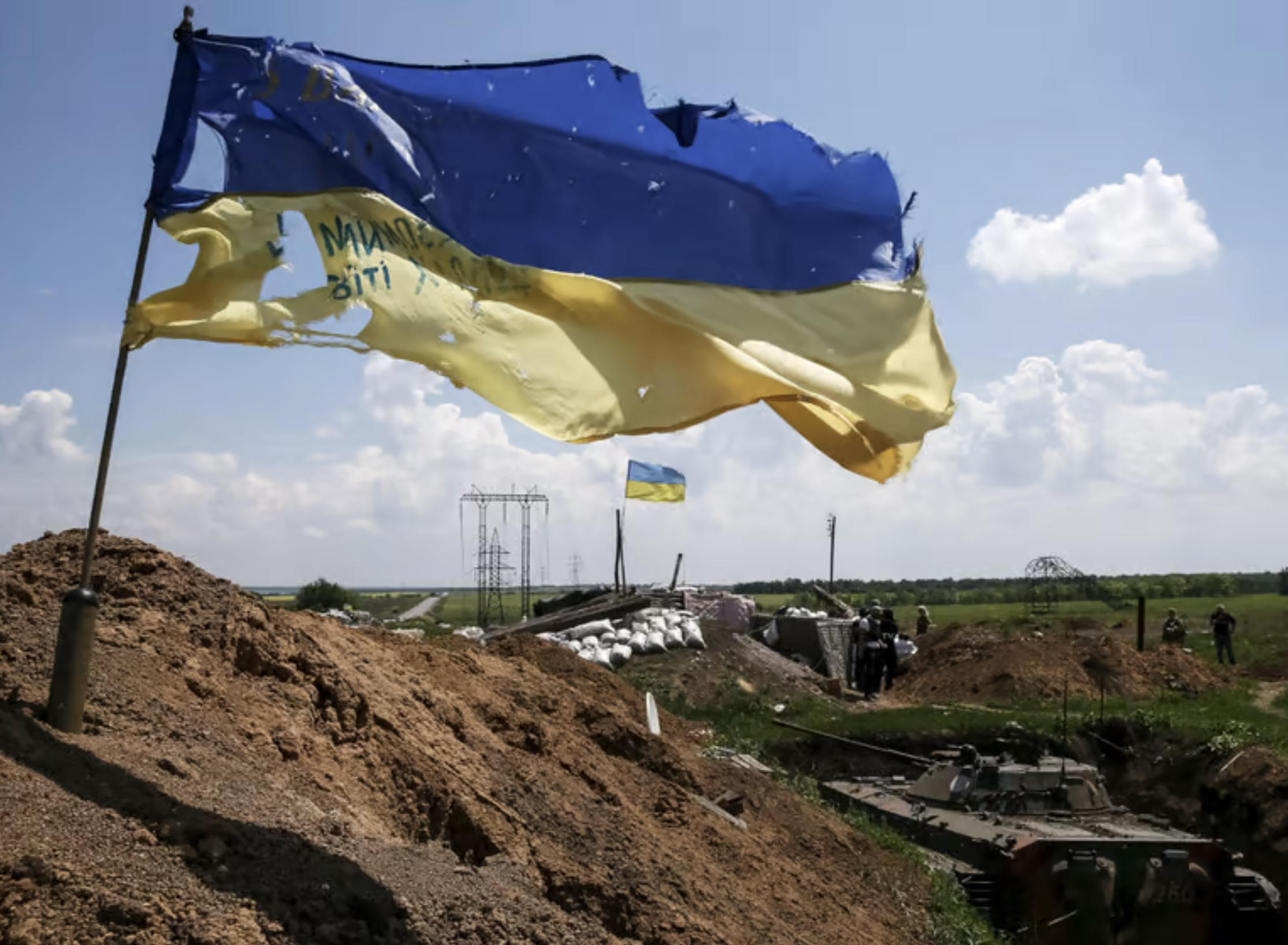
Although the eyes of the world are riveted today on the war in Ukraine, there are currently 110 armed conflicts being monitored by the Geneva Academy. However, since Ukraine is in the news daily, it is worth noting both modern armies are employing military rations.

Apparently, Ukrainian troops have great Meals Ready to Eat (MREs). “Most importantly, when making, eating, or even talking about the food, the men seem to be genuinely happy.” The MRE link in this paragraph contains the details, including the note that “among the contents, you’ll find a small packet of dried apricots and a dark chocolate bar.”

There is also a vendor on ebay who sells what are purported to be captured Russian supplies, including a confiscated chocolate bar. The candy appears to be conventionally purchased, but could be part of an illicit chocolate conspiracy finding its way to the Russians from Latvia. “The Russian confectionery company ‘Pobeda’ ПОБЕДА has been producing chocolates, truffles, waffles and other types of sweets for more than six years in Ventspils, via a Latvian subsidiary.”

A month ago in Russia, “Pobeda” received thanks from an organization called the “Battle Brotherhood” for the fact that since the beginning of the Ukrainian war, the company has sent at least 15 tonnes of its products to Russian soldiers.

Chocolate does indeed appear to fuel armies. For a fascinating article on how chocolate can also be used to promote propaganda, check out this Ukrainian site.

Russian propaganda continues to dehumanize Ukrainians with the help of outright fakes.

Another “proof” of our apparent bloodthirstiness was the image of a chocolate bar with a remarkable name “Death of Alyoshka.” A portrait of a boy in a helmet with a mourning ribbon is placed on the wrapper of the confectionery. Propagandists claim that Ukrainians wish Russian children dead.

Become an MRE Connoisseur

If you are curious about the contents of various international MREs that are available for purchase by civilians, visit MREmountain, which began “in 2017 when people discovered the hobby of trying army rations.”

Most veterans, I suspect, would find the “hobby” of eating military rations rather peculiar. But then again, you can check out the French options, which the site labels “The best MRE in the world.” Only there, I imagine, could one discover “meals not found in any other MRE like Kebob Meatballs, Duck Confit, Deer Pate, Wild Boar.”

And, of course, France’s 24-hour ration also includes chocolat müesli, chocolate biscuits, five snack bars (at least one of which is pure chocolate), and a hot cacao packet. Yummy. It appears that les Français also consider chocolate to be a staple of modern soldiers.


* This quotation has been attributed to Napoleon and Frederick the Great. Whatever its modern origin, it is obvious starvation and its frequent companion, disease, have crippled as many armies as blade and shot.

⁑ “Mock Goose and Other Dishes of the War-Rations Diet” offers some interesting thoughts on this subject.

Thoughts on the Church Militant

C.S. Lewis understood better than most the spiritual warfare that rages, unseen for the most part, around all human beings.

And, as veterans of the bloody trenches of the First World War, Lewis and his good friend J.R.R. Tolkien had learned more than they desired about the tactics and sheer violence of combat.

Many of those wartime lessons translated directly into a spiritual context. However, I recently realized how poorly the concept of immobile trenches relates to our challenge to take up our crosses and follow our Savior.

You see, the Christian life is many things, but there is one thing discipleship never is – static. As theologian Tilemann Heshusius (1527-1588) wrote: “Christian soldiers always either advance or retreat.”

In battle there is nearly always an ebb and a flow, as forces advance on one front and temporarily shift back on another. In his essay “The World’s Last Night,” C.S. Lewis observes “In battle men save their lives sometimes by advancing and sometimes by retreating.” The same is true for the Christian life in general. We are either advancing, or falling back. Our relationship with God is not stagnant.

The New Testament includes many military metaphors and allusions, intended to equip us for victory in our spiritual battles.

The Apostle Paul refers to believers as “fellow soldiers.” In a letter to a young pastor, he extols the model of the soldier, who keeps his focus on the mission.

Share in suffering as a good soldier of Christ Jesus. No soldier gets entangled in civilian pursuits, since his aim is to please the one who enlisted him.

Then there is the familiar passage which uses the image of the “whole armor of God” to describe in detail how Christians are to be prepared for faithful service. You can read the entire passage here.

These military accoutrements are necessary because “we do not wrestle against flesh and blood, but against the rulers, against the authorities, against the cosmic powers over this present darkness, against the spiritual forces of evil in the heavenly places” (Ephesians 6:12).

This is the reason one aspect of the Christian Church’s nature has been described as the “Church Militant.” This describes the Church battling evil while awaiting Christ’s return, for the Final Judgment, when it will become the “Church Triumphant.” The former is the context for familiar hymns such as “Onward Christian Soldiers,” composed by a prolific Anglican priest in the nineteenth century.

Onward, Christian soldiers,
   marching as to war,
With the cross of Jesus
   going on before!

Christ, the royal Master,
leads against the foe;
Forward into battle,
see his banner go!
     . . .

At the sign of triumph
   Satan’s host doth flee;
On, then, Christian soldiers,
   on to victory!

Hell’s foundations quiver
   at the shout of praise;
Brothers, lift your voices,
   loud your anthems raise.

The WWI trenches are the archetype of static, immobile frontlines. Disease festered, and morale decayed like the muck sucking at the soldiers’ boots. As recognized by sixteenth century theologians and C.S. Lewis alike, wars are rarely won simply by maintaining a defensive position. Movement is an essential element of warfare.

Hopefully more of that movement consists of advances against the enemy, than retreats. But we will consider that aspect of spiritual war in our next post.

Until Then

Those interested in learning more about military strategy, particularly as explored by another veteran of the War to End All Wars, Sir B.H. Liddell Hart,* like Lewis and Tolkien, returned home to Britain from the front lines, as a casualty. (Britannica states more than a third of the British forces became casualties, in contrast to 76% of Russians, 73% of French, and 8% of Americans.)

Liddell Hart’s wisdom extends beyond the battlefield itself.

The downfall of civilized states tends to come not from the direct assaults of foes, but from internal decay combined with the consequences of exhaustion in war (“The Objective in War,” a lecture delivered in 1952 to the United States Naval War College).


* Sir Basil Henry Liddell Hart (1895-1970) was a military historian and theoretician. A number of his works are in the public domain and available for free download from Internet Archives. These include A Greater than Napoleon, Scipio Africanus and Why Don’t We Learn from History?

Ukrainian War Poetry

In the heat of war, bullets are not the only weapons piercing the air. Words too are wielded as weapons. And some of those martial messages take the form of poetry.

C.S. Lewis thought and wrote much about poetry. In his monumental study, English Literature in the Sixteenth Century, he offers this curious insight. “Great subjects do not make great poems; usually, indeed, the reverse.”

Certainly, countless refrains have been penned about historical events and noteworthy personages. But the poetry that seems to speak directly to the emotions is typically unencumbered by dramatic or political reference.

That does not mean poetry and conflict do not possess an intimate bond. One of the tragedies of the First World War was, in fact, that so many promising young poets were cut down in their youth. These brief biographical notes introduce readers to several of them.

C.S. Lewis was a veteran of the grim trench warfare himself. Although most “professional poets” don’t consider his work praiseworthy, I do. I once wrote a post on the subject and included a poem which includes the following stanza.

Long leagues on either hand the trenches spread
And all is still; now even this gross line
Drinks in the frosty silences divine
The pale, green moon is riding overhead.

Voices of Ukraine

The current conflict raging in Europe carries echoes of the past century. Among those reverberations we hear war-inspired lyrics. Some seek to stir patriotic passions. Others consider the universal grief spawned by scenes of mangled mortality.

Five years ago, a collection of poetry entitled Words for War: New Poems from Ukraine was published. It chronicled the Euromaidan Revolution, also called the “Revolution of Dignity,” which possesses direct links to today’s war, and preceded Russia’s annexation of Crimea.

Borys Humenyuk fought during that revolution, and appears to be in uniform today, as well. Presumably he will write more about today’s war, once Russia has been repelled and Ukraine’s sovereignty has been reaffirmed. In the meantime, he is likely reexperiencing the moment he captured in these words almost ten years ago.

When you shoot
Even when it’s at night and you don’t see the enemy’s face
Even when night hides the enemy from you and you from the enemy
And embraces each of you as her own
You smell like gunpowder
Your hands, face, hair, clothing, shoes —
No matter how much you wash them —
    smell of gunpowder
They smell of war
You smell of war
You and war are one.

It is poignant how the suffering birthed by war is also capable of giving voice to such moving sentiments.

Would that war should end. The loss of such heartrending words would be small price to pay.


After publishing this column, I received correspondence from Ukrainian poet, Vyacheslav Konoval, inviting me to share one of his poems. I offer the following, which I found particularly poignant. And I encourage you to visit Slava’s personal website at All Poetry.

Dog Day

Staggering, a drop of dew falls from the green grass,
fog, and even acrid smog, covers the ground,
the cylinder was torn on all sides, so it was gas.

Ragged camouflage with holes,
the Red Sea swallows the corpses
Are they in the field, cartridges without controls?

The tire blazed, moaned and tire finished,
here is the hostility, aggressive appetite has not diminished,
the enemy turned into fertilizer.

A stray dog ​​howls,
recites prayers with a hoarse voice,
stares at the torn soldier’s jaws,
the enemies have made their choice.

Anachronistic Military Imagery

Peace is almost universally valued. Ironically, it cannot be achieved without holding militaristic forces at bay. And preventing them from crushing the weak, requires that a more “benevolent” be strong enough to stand up to the international bullies.

If there is no champion for those unable to defend themselves, the wolves tear their prey apart and the only limits placed on their appetites are the threats posed by other predators. The fate of the small ranges from domination by ruthless powers to domination by less ruthless overlords.

If there is no benevolent “superpower,” or if it is viewed as feeble and indecisive, the Third Reichs of the world will reign.

Historically, imperialistic agendas have been checked by other empires or alliances. Some alliances are small, such as the North American Aerospace Defense Command (NORAD) which includes only Canada and the U.S. Others are intercontinental, such as the North Atlantic Treaty Organization (NATO), with its thirty members. Further growth of this alliance is at the heart of global tensions as this post is published.

The alliances I have mentioned are established for mutual defense. NATO has not secreted away a covert plan for world domination.

My thoughts turn to the possibility of war because (in view of many) the power of the United States is waning. Wolves are licking their proverbial chops, eager to expand their spheres of influence.

Even as we pray that God would preserve Europe from conflict around Ukraine, remember that there are nations where civil wars have raged for generations. God have mercy.

War & Peace

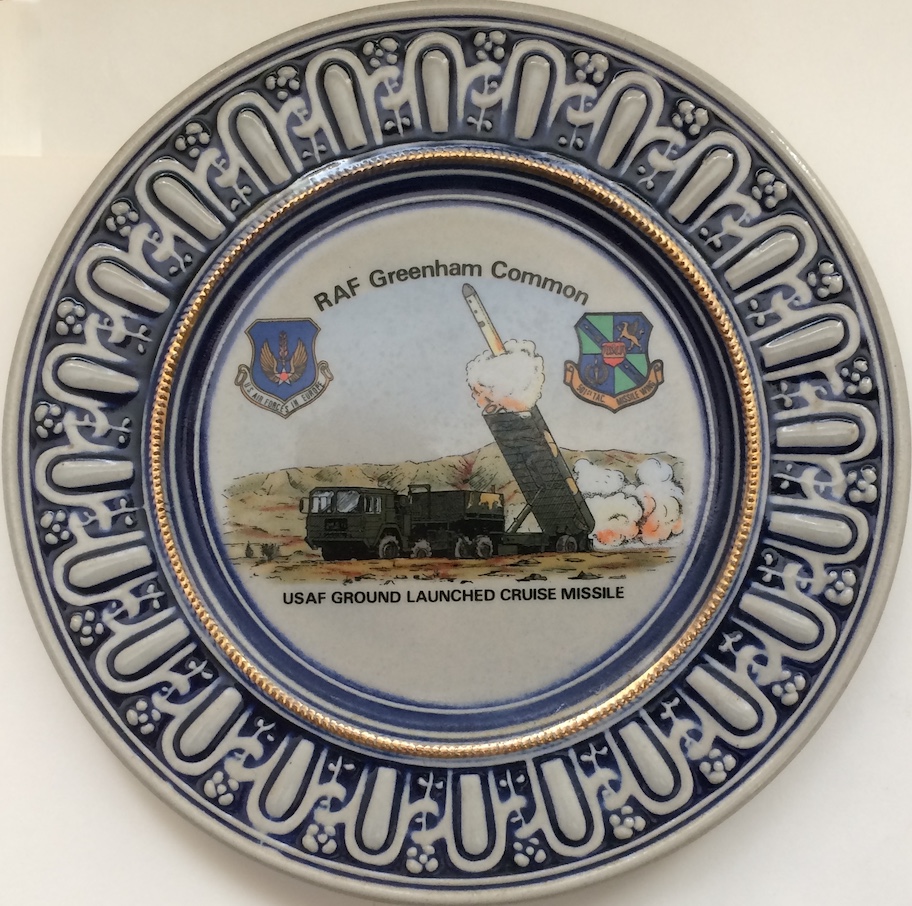
The “collectable plate” pictured at the top of this post was purchased by my mother when she visited our family in the U.K. in 1990. A decade after my retirement from the USAF, I am still unpacking some of the boxes I accumulated during decades, and after my mom’s passing, this souvenir joined the archives.

It really is beautifully ornate. Such an attractive setting for an awesomely combative image.

Lest they be misperceived as “conventional” weapons, it should be noted that Ground Launched Cruise Missiles were expressly devised to deliver intermediate range nuclear explosives. Deadly.

The great thing about NATO’s cruise missiles is that they were deployed to bring the Soviet Union to the negotiating table, where the Intermediate Nuclear Forces Treaty led to the elimination of all such munitions from Europe!

Combining military and peace imagery has a long tradition. I wrote about “Powerful Names” and how Iran chose the classic name “Peacekeeper” for one of its deadly missiles. But you can find in my post many other, stranger labels. (I’m still confused why the Brits named of their 1950s missiles “Green Cheese.”)

My assignment at Royal Air Force Greenham Common was a joy. And it was a genuine privilege to be part of a mission that literally made the world a safer place.

I hope all people who desire lasting peace will join me in supporting the allied nations of democratic countries as they counterbalance the world’s totalitarians. And if they can combine the power of necessary arms with artistry that celebrates the pastimes of peace, all the better.

C.S. Lewis worked his own magic combining frightening images with peaceful pursuits. Included in the ranks of Aslan’s army, after all, we see not only cute badgers and prickly hedgehogs. Fierce (even beastly) satyrs are found in the ranks of Good. (Think super-gross, goat-faced fauns . . . with axes). Still, when they are aligned in the ranks beside Narnia, they appear noble. I can even imagine them, during seasons of peace, tilling the soil and tending the orchards.

We will close with a piece of trivia about Narnian warriors. In the books, the Minotaurs (nasty creatures these), are all portrayed in a negative light. They are among the troops of the White Witch celebrating Aslan’s death. However, in the films they have been redeemed and some fight beside Aslan and Narnia’s kings. C.S. Lewis’ son, Doug Gresham, explained the change in an interview:

There are several reasons for that. Firstly, we felt that we needed to show that in Narnia as here, old foes can be forgiven and can reconcile and work together, given the will to do so. Secondly, that in Narnia as also it is here, a common adversary will bring even the worst of enemies together and unite them.

Also, that the shapes and colours of a species’ body do not necessarily denote their character, that just because someone is a Minotaur does not have to mean that they are all bad. Finally, we kind of like Minotaurs.

First the Machines Kill the Weeds

Machinery, one of the fruits of scientific research, is intended to benefit humanity. It often does. However, even machines with totally peaceful purposes – hay balers, for example – can be deadly.

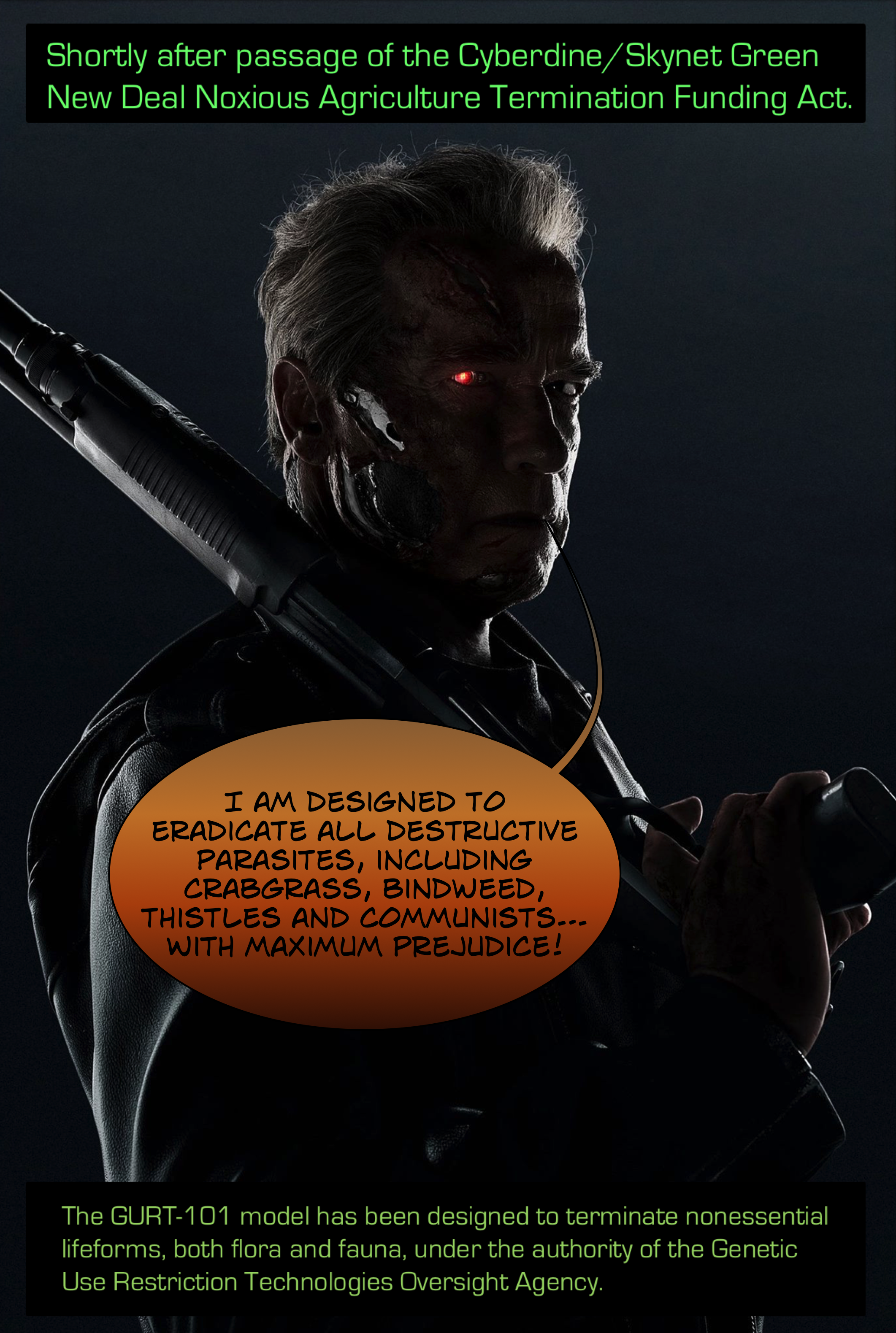
Machines-run-amuck populate many dystopian novels and films. One of the most successful franchises is Terminator. Humanity is brought to the precipice of extinction, after devising machines – and their perilous companion Artificial Intelligence. The very first film, The Terminator (1984) brilliantly uses the biblical allusion “Judgement Day,” to mark the sentience of the genocidal Skynet.

Nearly forty years later, debates about weaponized autonomous systems have moved far beyond speculation. And it does not require a doctorate in computer science to recognize that given a potentially lethal machine the power to make its “own” decisions poses a deadly risk. After all, if software programs can be virally infected, and secure systems can be locked tight and held for ransom, there are no guarantees that “terminators” will not be part of our future.

We’ve seen how weapons can easily be mounted on the robotic dogs that are currently accompanying our troops.

And in a recent Air Force Magazine article, “Unmanned Flying Teammates,” we read the promise that “Robots will join the Combat Air Forces within the next decade.”

The common nomenclature for the current generation of these machines is Lethal Autonomous Weapons Systems. You can read about “slaughterbots” at the Future of Life Institute site.

Whereas in the case of unmanned military drones the decision to take life is made remotely by a human operator, in the case of lethal autonomous weapons the decision is made by algorithms alone.

Slaughterbots are pre-programmed to kill a specific “target profile.” The weapon is then deployed into an environment where its AI searches for that “target profile” using sensor data, such as facial recognition.

While the first generation of such weapons are still being designed, a genuinely wonderful new machine foreshadows what might be an ominous future.

In response to the destructive necessity for pesticides, scientists have come up with a new self-driving farm machine that avoids the need for poisons by selectively zapping individual weeds with lasers. Forbes has a great article on the subject, with the unwieldly but informative title, “Self-Driving Farm Robot Uses Lasers To Kill 100,000 Weeds An Hour, Saving Land And Farmers From Toxic Herbicides.”

The weeding machine is a beast at almost 10,000 pounds. It boasts no fewer than eight independently-aimed 150-watt lasers, typically used for metal cutting, that can fire 20 times per second.

They’re guided by 12 high-resolution cameras connected to AI systems that can recognize good crops from bad weeds. The Laserweeder drives itself with computer vision, finding the furrows in the fields, positioning itself with GPS, and searching for obstacles with LIDAR.

I applaud this invention, with one major caveat. How large a step is required between zapping weeds and burning holes through human bodies?

Ironically, they have even named this agricultural prototype for human-hunting machines “Terminator technology.”

Terminator technology is the genetic modification of plants to make them produce sterile seeds. They are also known as suicide seeds. Terminator’s official name – used by the UN and scientists – is Genetic Use Restriction Technologies (GURTs).

Actually, this is a very positive breakthrough in terms of increasing harvests while preserving the natural health of the earth (and the Earth). C.S. Lewis, I believe, would have welcomed this new technological achievement.

The affinity of C.S. Lewis and fellow Inkling J.R.R. Tolkien for nature is well recognized. The two WWI veterans were averse to industrialized landscapes, and much preferred bucolic images. You can see that in Lewis’ fiction, although it’s much more evident in Tolkien’s Lord of the Rings. (Even Tolkien’s truest fans must admit that some readers find his elaborate discussion of the Hobbits’ harmony with nature almost mundane.)

True science is a good thing, but one must remain vigilant against an idolatry that masks itself as science.

Beware of Scientism

C.S. Lewis’ role as a an apologist for Christianity – and for what was worthwhile in past history – brought him into more direct conflict with technology. Of course, it was not scientific advances per se of which he was wary. It was the creeping idolatry of scientism, which assumes the trappings of faith in its disciples’ eyes. Tolkien shared his concerns regarding the matter, but confronting such lies was not part of his vocation.

Lewis’ clearest exposition of humanity’s lust for progress may be his 1954 Inaugural Lecture as the Chair of Mediaeval and Renaissance Literature at Cambridge University. De Descriptione Temporum (A Description of the Times) should be read in one sitting, as it was delivered. It is included in several collections, but available online here. The quotation below offers a very small slice of his influential lecture. (Coincidentally, A Pilgrim in Narnia featured a superb column on the address just yesterday.)

[The birth of the machines] is on a level with the change from stone to bronze, or from a pastoral to an agricultural economy. It alters Man’s place in nature. . . . What concerns us . . . is its psychological effect. How has it come about that we use the highly emotive word “stagnation,” with all its malodorous and malarial overtones, for what other ages would have called “permanence”?

Why does the word “primitive” at once suggest to us clumsiness, inefficiency, barbarity? When our ancestors talked of the primitive church or the primitive purity of our constitution they meant nothing of that sort. . . . Why does “latest” in advertisements mean “best”?

Well, let us admit that these semantic developments owe something to the nineteenth-century belief in spontaneous progress which itself owes something either to Darwin’s theorem of biological evolution or to that myth of universal evolutionism which is really so different from it, and earlier. . . . But I submit that what has imposed this climate of opinion so firmly on the human mind is a new archetypal image.

It is the image of old machines being superseded by new and better ones. For in the world of machines the new most often really is better and the primitive really is the clumsy. And this image, potent in all our minds, reigns almost without rival in the minds of the uneducated. For to them, after their marriage and the births of their children, the very milestones of life are technical advances. . . .

Our assumption that everything is provisional and soon to be superseded, that the attainment of goods we have never yet had, rather than the defence and conservation of those we have already, is the cardinal business of life, would most shock and bewilder [all of those who have gone before us.]

A thought-provoking article, “The Folly of Scientism,” offers the argument of a professor of Biology, which is independent of C.S. Lewis, while echoing many of his cautions.*

Of all the fads and foibles in the long history of human credulity, scientism in all its varied guises — from fanciful cosmology to evolutionary epistemology and ethics – seems among the more dangerous, both because it pretends to be something very different from what it really is and because it has been accorded widespread and uncritical adherence.

An excellent work on this subject is available for purchase, entitled The Restoration of Man: C.S. Lewis and the Continuing Case Against Scientism. Michael Aeschliman’s excellent treatment is evidenced by the fact the 2019 version is the third edition of the title.

But why should this central civilizing truth about the “res sacra homo,” [the fact that “humanity is a sacred thing”] . . . need C.S. Lewis’s [reaffirmation]? The answer to that question is philosophical, historical, and complex, but it should not be as obscure or little understood as it is today.

Although there was never a “golden age” of civilization within historical time, this radically noble idea was often better understood in the past, even the recent past.

Back to the Robots

Wait, I just noticed some armed drones flying overhead, and what appeared to be a silhouette resembling a GURT-101 Terminator skulking through the woods outside my office . . . Perhaps I’ve already written too much.


* This article appears in The New Atlantis, where they say “Our aim is a culture in which science and technology work for, not on, human beings.”

C.S. Lewis and the Horrors of War

The world is weeping today for the bloody collapse of a nascent democracy in Asia.

But not only are tears falling; prayers are rising. And history has shown us repeatedly that out of the ashes of suffering, God can raise a phoenix.*

Afghanistan is today a land of terror. Yet, even as the Taliban tightens its merciless grip on a population that for much of a generation has enjoyed a taste of freedom, it is not as if the darkness will ultimately triumph. War is not eternal. And for those who look to God for deliverance, even death does not have the final word.

Some familiar words in the Book of Ecclesiastes remind us of the fact wars ultimately end.

For everything there is a season, and a time for every matter under heaven:
a time to be born, and a time to die . . .
a time to weep, and a time to laugh;
a time to mourn, and a time to dance . . .
a time for war, and a time for peace (Ecclesiastes 3).

While these words are of little or no comfort to those in the midst of the terror. And these innocent people are the ones we must do everything possible to help—especially the children, in which group I most certainly include the young girls forced into sexual slavery through involuntary marriages to the victorious terrorists.

“For everything there is a season, and a time for every matter under heaven . . . a time for war, and a time for peace.” Let us all pray that the season of peace comes soon.

Surviving War’s Cauldron and Discovering New Life

C.S. Lewis entered the trenches of World War One as a confirmed agnostic. His childhood faith had been extinguished before he embarked for the battlefield.

Seriously wounded in the conflict, Lewis emerged from the carnage with a conviction there was no God.

As we all continue to pray for the people of Afghanistan, I found an encouraging article that may offer some hope that God can—ultimately—rebuild something out of broken rubble. Even as we continue to intercede now for the suffering, and seek God’s protection of those who are in acute danger, I encourage you to read this story.

Jeremiah Braudrick was similar in some ways to C.S. Lewis. His story is available in a brief Guideposts article linked here. Allow me to share the article’s beginning, in the hope that you will read his story.

For much of my life, I have assumed that I was a spiritual failure. . . .

Wind back the clock 12 years. I was transitioning to civilian life after eight years of military service, including combat duty in Afghanistan. My marriage was falling apart. I’d pretty much abandoned my faith during my time in the service. I suffered from depression. I was convinced God saw me as a worthless failure, and I agreed.

You know what pulled me out of all that? A quote I saw on Facebook. It was one of those random inspirational quotes people post. It read: “I have found (to my regret) that the degrees of shame and disgust which I actually feel at my own sins do not at all correspond to what my reason tells me about their comparative gravity.”

The language was complicated and formal, like something an Oxford don would write. I heard a simple message: Maybe my feelings of spiritual worthlessness weren’t the final word about me. Maybe I wasn’t the best judge of God’s attitude. Maybe I had a chance after all.

The author’s name? C. S. Lewis. Was that the same C. S. Lewis who wrote the Chronicles of Narnia books I’d read as a child . . ? It was like he knew exactly what I felt and exactly what I needed to hear.

Braudrick’s story of redemption and hope continues today. I encourage you to visit his website after reading his Guideposts story.

There you will find his post entitled “C.S. Lewis Goes to War: Some Silver-Linings in Chaos and Unrest,” which was written nearly a year ago. He describes how Lewis’ wartime experiences transformed him.

His pessimism did not plague his life for long however, as his atheistic façade began to encounter cracks . . . After suffering his wounds, Lewis found himself breathing in the English countryside on a train ride to London where he was sent to heal. Staring out of the window, in both physical and mental recovery, he recognized a slight spiritual opening.

“I think I never enjoyed anything so much as that scenery – all the white in the hedges, and the fields so full of buttercups that in the distance that seemed to be of solid gold,” he wrote a friend. “You see the conviction is gaining ground on me that after all Spirit does exist. I fancy that there is something right outside time and place . .  You see how frankly I admit that my views have changed.”

The wounded and strident atheist, after surviving humankind’s bloodiest war, saw beauty and was receptive to the spiritual, perhaps, for the first time as a young adult.

Lewis was not yet a Christian, theism being a waystation in his conversion, but he had encountered Light in the midst of the darkness. Sadly, that was not the experience of all (as “Wilfred Owen, C.S. Lewis, and the ‘Great War’” illustrates).

Let it be our prayer that those suffering today might follow the same path to the One who is the Light, the Way, the Truth and the Life.


* Yes, I realize the phoenix was a pre-Christian myth, but the early church sometimes used it as a symbol of the resurrection. You can see that in Lactantius, and Clement of Rome.

C.S. Lewis, Writing and Lust

We’re accustomed to hearing the word “lust” used in a positive manner, such as “she has a lust for life.”

You might even see this in the context of writing. C.S. Lewis himself did this. In 1948, in a letter to an American pastor, he apparently answers a query about what inspires him to write. “The ‘incentive’ for my books has always been the usual one—an idea and then an itch or lust to write.”

I resonate with Lewis’ response. Some idea dawns on me—usually arising from something I’m reading—and then I get the desire to put my own twist on it and share the original idea with others.

This post is no different. I have been working on the military chaplaincy journal that I edit, and I was reading the poetry of a British chaplain from the First World War. Rev. G.A. Studdert Kennedy (1883-1929) was an Anglican priest. He was awarded the Military Cross due to his “disregard for his own safety in attending to the wounded under heavy fire.” The award also noted his Gospel contribution to the harsh life of WWI trenches. “He searched shell holes for our own and enemy wounded, assisting them to the dressing station, and his cheerfulness and endurance had a splendid effect upon all ranks in the front line trenches, which he constantly visited.”

You can read many of his poems in past issues of Curtana: Sword of Mercy, which is available for free download here.

After reading some of his poetry, I turned for the first time to one of his postwar books. It was entitled “Lies!” and addresses a litany of deceptions that plague the world. Included among these deceits is “the lie of lust.”

In the following excerpt, he refers to writing prurient literature which can guarantee a market. It is echoed by a later comment I read from a writer who said she had to write erotic novels to supplement her preferred titles, just so she could make a living. She used a pen name, of course, for the smut.

You can follow Chaplain Kennedy’s argument in the excerpt which follows. Since it is rather lengthy, I will highlight the reference to writing by using a boldface font. Kennedy contrasts in this passage the conflict between humanity’s sinfulness and our call to holiness, the struggle the Apostle Paul describes so succinctly in the seventh chapter of Romans.

“For I do not do the good I want, but the evil I do not want is what I keep on doing. Now if I do what I do not want, it is no longer I who do it, but sin that dwells within me.”

Here is Kennedy’s argument:

But lust in a man is obscene and filthy because it is unnatural. It becomes cruel and debased. It does not proceed to the making of children naturally and cleanly; it descends to unmentionable and disgusting things. The report on the German atrocities in Belgium* provides a kind of horror-chamber in which we can see what lust can bring men to. As one reads that awful document a kind of hot shame comes over one, and makes one sweat for sorrow over sin.

The sting of that shame lies in the fact that one is dreadfully conscious that the root of that disgusting horror is there in one’s own soul. Have you never felt a ghastly doubt rising up in your mind when you read such things? Now what am I reading this for? Is it purely because I want to hate it . . ?

Write a book about the cruelties and debaucheries of a Nero or a Rasputin, and it will sell. There is an appeal in it which thousands, nay, which all men feel, which all men would answer, if the other force within them failed. But the horror of it, the shame for it, is, thank God, as real, more real, than the appeal. There is human history: the war between the appeal and the repulsion of sin: the war between the monkey and the man.

There are thousands of writers, artists, playwrights, musicians, who are making their fortunes out of the appeal to the animal in man. It is the best paying business in the world. Yet, if there is anything that human experience makes certain, it is that there is no end to the journey a man makes in answer to that appeal except damnation, the utter loss of all that makes life good. Lust cannot satisfy a man, because he needs Love. Lust is unnatural in man, it leaves one side of his nature out, and sooner or later that neglected side has its revenge, and turns life’s sweetness bitter to his taste. Then in his despair he will descend in search of new sensations to things which men cannot mention, or even think of without shame. That is the way of it with all men if the great force fail that leads them upward from the animal to the human and divine (Lies! published in 1919).⁑

C.S. Lewis on Carnality

As noted, Lewis was able to use the word “lust” in its muted, nonliteral sense. He was also able to address it literally, and to challenge the hold it exerts on so many lives. In “Religion: Reality or Substitute?” C.S. Lewis vividly described how lust is an enemy.

If we wish to be rational, not now and then, but constantly, we must pray for the gift of Faith, for the power to go on believing not in the teeth of reason but in the teeth of lust and terror and jealousy and boredom and indifference that which reason, authority, or experience, or all three, have once delivered to us for truth.

In a more metaphorical manner, in the Great Divorce Lewis uses the surprising image of a foreboding ruddy lizard to portray the sinister nature of lust.  

I saw coming towards us a Ghost who carried something on his shoulder. Like all the Ghosts, he was unsubstantial, but they differed from one another as smokes differ. Some had been whitish; this one was dark and oily. What sat on his shoulder was a little red lizard, and it was twitching its tail like a whip and whispering things in his ear. As we caught sight of him he turned his head to the reptile with a snarl of impatience. “Shut up, I tell you!” he said. It wagged its tail and continued to whisper to him. He ceased snarling, and presently began to smile.

The encounter which follows is amazing. I won’t spoil it by describing how it ends, but I will once again encourage you to read what is one of my favorite novels. The Great Divorce is about the separation between Heaven and Hell, and explains how a loving God could allow some of his creation to choose a path away from him.

And a Bonus Insight from Dorothy Sayers

Lewis and Sayers were friends, and they deeply respected one another’s work. In 1943, Lewis wrote to Sayers congratulating her on her recently published The Other Six Deadly Sins. He said, “it is one of the few things which I find, within its limits, perfect—i.e. there is nothing one would wish added or removed or altered.” High praise.

Sayers brilliantly strips away some of the euphemisms that mask and confuse candid discussions about sin. This is how she begins what was originally delivered as a public address:

Perhaps the bitterest commentary on the way in which Christian doctrine has been taught in the last few centuries is the fact that to the majority of people the word “immorality” has come to mean one thing and one thing only. The name of an association like yours is generally held to imply that you are concerned to correct only one sin out of those seven which the Church recognizes as capital.

By a hideous irony, our shrinking reprobation of that sin has made us too delicate so much as to name it, so that we have come to use for it the words which were made to cover the whole range of human corruption. A man may be greedy and selfish; spiteful, cruel, jealous, and unjust; violent and brutal; grasping, unscrupulous, and a liar; stubborn and arrogant; stupid, morose, and dead to every noble instinct—and still we are ready to say of him that he is not an immoral man. I am reminded of a young man who once said to me with perfect simplicity: “I did not know there were seven deadly sins: please tell me the names of the other six.”

About the sin called Luxuria or Lust, I shall therefore say . . . that it is a sin, and that it ought to be called plainly by its own name, and neither huddled away under a generic term like immorality, nor confused with love.

The book sounds like it’s well worth reading. It has been out of print for eighty years⁂ but it appears to have been reproduced in toto by this website. (I plan to read the essay as soon as I get this post uploaded!)


* Over 800 civilians were killed by German troops as they advanced through neutral Belgium in 1914. A short describing of these events can be found at this British Library site.

⁑ You can download free copies of Chaplain Kennedy’s books at Internet Archive: Lies! or a collection of his poetry in Rough Rhymes of a Padre.

⁂ A single used copy is currently available via amazon, for the modest price of $287.36, with the comforting notation that the shipping is free.

C.S. Lewis & Hyperbole

This is the most amazing post you will ever read about hyperbole. Well, until you write one yourself and use even more exaggerated adjectives.

Hyperbole is a curious rhetorical device, a frequent element of satire. Unfortunately, hyperbole is too often employed in a sloppy way (e.g. “he was the worst politician ever”). Yet, in skillful hands it can be quite effective. For example, in English Literature in the Sixteenth Century, when Lewis discusses poet Michael Drayton,* he writes:

When he speaks simply as any lover he can sometimes outsoar all the sonneteers except Shakespeare. . . . Yet again, and in quite a different vein, that of towering hyperbole, Drayton (this time with no rival at all, neither Shakespeare nor any other) sets up the seamark beyond which poetry in that kind has never gone nor could go:

And Queens hereafter shall be glad to live
Upon the almes of thy superfluous prayse.

If he had never written another verse, these two would secure him that praise which is due to men who have done some one thing to perfection.

I was thinking about hyperbole after coming across a wonderful quote by Erasmus of Rotterdam⁑  about his contemporary, the reformer Martin Luther. Though they shared many concerns, they parted company on how best to reform the Roman Catholic Church. Erasmus objected to Luther’s tendency to take every disagreement to extremes, and he named the Wittenberg professor “Doctor Hyperbolicus.”

It reminded me of one of our sons. As a youngster, he suffered from that common childhood disease, excessive summa hyperbolism. Everything was either the best thing ever, or the worst thing he’d ever encountered. Sometimes I referred to him as the “King of Hyperbole,” which was hyperbole on my own part. He was more like a Duke of Hyperbole.

John Colet⁂ was another English scholar discussed in Lewis’ longest work. Colet was a theologian, and a strong advocate of biblically-grounded morality. As we frequently find, Lewis’ assessment is informative, and entertaining.

Colet is, in fact, a declamatory moralist. By calling him declamatory I do not at all mean that he is insincere, but that his methods are those of the declamation; repetition, hyperbole, and a liberal use of emotional adjectives. The morality he wishes to enforce is harsh and ascetic. . . .

The truth is that Colet is a Platonist at heart and has really little interest in the temporal and mutable world below the moon. . . . A cloistered perfectionist, who happens to be also a rhetorician, often says, not exactly more than he means, but more than he understands. He leaves out the reservations: he has really no idea of the crudely literal applications which will be made. (English Literature in the Sixteenth Century)

Hyperbole in Lewis’ Personal Life

The First World War began in 1914. It was a conflict which would cost ten million military lives. C.S. Lewis himself would be counted among a greater number, who suffered terrible wounds during combat. At the beginning of the conflict, Lewis gently chided his father for embracing a growing British fear.

My dear Papy, You have surpassed yourself. The popular press . . . remarks on the possibility of an invasion: the idea, after being turned over in your mind, appears in your next letter, clothed as “it is absolutely certain that he is going to invade England” Surely . . . this is rather hyperbole?

The one thing that Britain can depend upon is her fleet: and in any case Germany has her hands full enough. You will perhaps say that I am living in a fool’s paradise. “Maybe thon.” But, providing it only be a paradise is that not preferable to a wise and calculating inferno? Let us have wisdom by all means, so long as it makes us happy: but as soon as it runs against our peace of mind, let us throw it away and “carpe diem.” I often wonder how you came to have such a profound and genuine philosopher for your son, don’t you?

In a 1949 letter he explains to a correspondent that the Gospel claims to Christ’s divinity were not hyperbolic appellations.

The Jews may have had their own use of hyperbole but the last direction in wh. they would have used it was to deify a man. The absolute chasm which they put between Jahveh and His creatures was just the thing that cut them off from Pagans.

No other race could have told the stories they told about Moses & Elijah and yet left these persons absolutely, sheerly human. What was Jesus condemned for by the Sanhedrin? Surely His declaration “I am etc.” must have been recorded right?

And, finally, a quotation C.S. Lewis selected for inclusion in his anthology of George MacDonald’s writings.

“But how,” says a man, who is willing to recognize the universal neighborhood, but finds himself unable to fulfill the bare law toward the woman even whom he loves best—“How am I then to rise into that higher region, that empyrean of love?” And, beginning straightaway to try to love his neighbor, he finds that the empyrean of which he spoke is no more to be reached in itself than the law was to be reached in itself. . . .

The man who will love his neighbor can do so by no immediately operative exercise of the will. It is the man fulfilled of God from whom he came and by whom he is, who alone can as himself love his neighbor who came from God too and is by God too. The mystery of individuality and consequent relation is deep as the beginnings of humanity, and the questions thence arising can be solved only by him who has, practically at least, solved the holy necessities resulting from his origin. In God alone can man meet man. . . .

It is possible to love our neighbor as ourselves. Our Lord never spoke hyperbolically. (Unspoken Sermons, First Series, “Love Thy Neighbor”)

I am absolutely convinced C.S. Lewis is one of the most outstanding Christian writers in history. That’s not hyperbole. If anything, it is a vast understatement.


* A selection of the poetry of Michael Drayton (1563-1631) is available at Internet Archive. The introduction to the collection begins, “no poet is more thoroughly English than Michael Drayton.”

⁑ Desiderius Erasmus Roterodamus (1466-1536) was a Dutch humanist who shared many concerns about the state of the Roman Catholic Church with Luther. However, he disliked Luther’s roughshod response and chose to attempt to accomplish some amount of reform from within. His early epistles are available in this free volume.

⁂ For more about John Colet (1467-1519), you might download this biography.