C.S. Lewis & Medicine

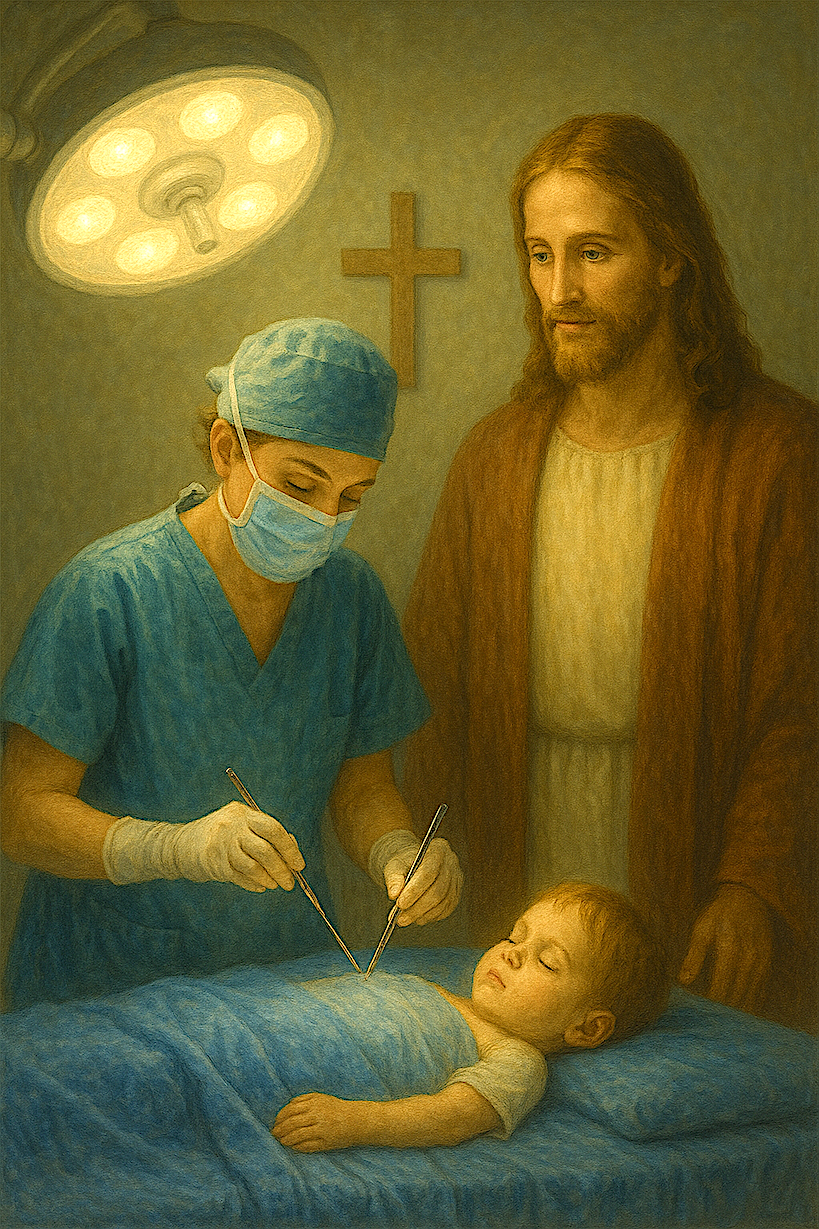
[I originally penned this post in 2020, but delayed its publication due to failing in my attempt to secure permission to receive this perfect illustration. Five years later, AI allowed me to create the image shown above. Since the message remains pertinent, I’m offering my thoughts on this subject today.]

Medicines are precious. Right now we are seeing the release of the first antiviral drugs devised to protect us from the covid plague. The trials have been positive, and now the caregivers on the frontlines are receiving these protective injections.

Unfortunately, some so-called medicines are not effective. They can even be harmful. That’s the case with “patent medicines” hawked by shysters lying about their results. Originally the term was positive. According to one museum, “patent medicines originally referred to medications whose ingredients had been granted government protection for exclusivity.”

Sadly, though, “the recipes of most 19th century patent medicines were not officially patented. Most producers (often small family operations) used ingredients quite similar to their competitors—vegetable extracts laced with ample doses of alcohol.

In a previous post, I shared Lewis’ view of God’s role in healing.

In his essay entitled “Miracles,” C.S. Lewis described during World War II the Christian viewpoint that God is the author of healing. After discussing the natural order of creation, he argues that God is at work in restoring the health of the those who are ailing.

In 1962, Lewis commiserated with a correspondent complaining about the number of pills she needed to take. He acknowledges the problem, and then points to a very positive corollary.

Yes, and one gets bored with the medicines too–besides always wondering ‘Did I remember to take them after breakfast?’ and then wondering whether the risk of missing a dose or the risk of an over dose is the worst!

Yes, one gets sick of pills. But thank God we don’t live in the age of horrible medicines such as our grandparents had to swallow.

In A Grief Observed, Lewis used an illustration of physical pain to explore the emotional pain caused by his sorrow at his wife’s passing.

I once read the sentence “I lay awake all night with a toothache, thinking about the toothache and about lying awake.” That’s true to life. Part of every misery is, so to speak, the misery’s shadow or reflection: the fact that you don’t merely suffer but have to keep on thinking about the fact that you suffer. I not only live each endless day in grief, but live each day thinking about living each day in grief.

In some ways, psychological suffering is particularly painful. The mentally ill have historically been ostracized. For all of the neurological discoveries that have been made in recent years, the human brain remains a mystery.

Fortunately, medical science has experienced some success formulating medicines that are helpful in treating mental disorders. One problem, however, is that (like nearly all meds) psychological formulas occasionally produce extreme side effects.

C.S. Lewis’ primary experience of psychological suffering came through grief. Tweaking Optimism, a great blog, has gathered a number of Lewis’ thoughts on mental anguish. One passage he cites from The Problem of Pain aptly contrasts physical and mental suffering.

Mental pain is less dramatic than physical pain, but it is more common and frequently more difficult to bear. The common attempt to conceal mental pain increases the burden: it is easier to say “My tooth is aching” than to say “My heart is broken.”

In the same book, Lewis lifts up the truth about suffering. In cases where no cure can bring relief, he beautifully describes various ways to survive journeying through the valley.

When pain is to be born, a little courage helps more than much knowledge, a little human sympathy more than much courage, and the least tincture of the love of God more than all.

C.S. Lewis’ Prescription for Christians Today

We live in an uncertain and turbulent time. Only God knows how long this world will last, but he has promised to deliver from death and hell those who call on his name. Thus, Jesus’ followers need not live in dread or despair.

We live with hope, and look forward with enthusiasm to our Lord’s return. It is to that glorious day, the Parousia, that Lewis refers in his essay “The World’s Last Night.”

The doctrine of the Second Coming, then, is not to be rejected because it conflicts with our favorite modern mythology. It is, for that very reason, to be the more valued and made more frequently the subject of meditation. It is the medicine our condition especially needs.

An Entertaining Tolkien “Game”

The inspiration for this revisitation of Lewis’ thoughts about medicine came from a fun website I recently encountered. Some creative soul noticed the similarity between two dissimilar matters—antidepressant medications and residents of Middle Earth.

The game offers 24 words, and you are challenged to identify the group into which it falls. Is it the name of a pharmaceutical, or is it one of the characters created by J.R.R. Tolkien? One name is a giveaway, but you may find many of the others rather difficult to discern.

Kudos to anyone who gets over twenty correct. (I almost did . . . well, if sixteen is close.) Have fun, and learn something, at the very same time!

Antidepressants or Tolkien Character?

C.S. Lewis & Gluttony

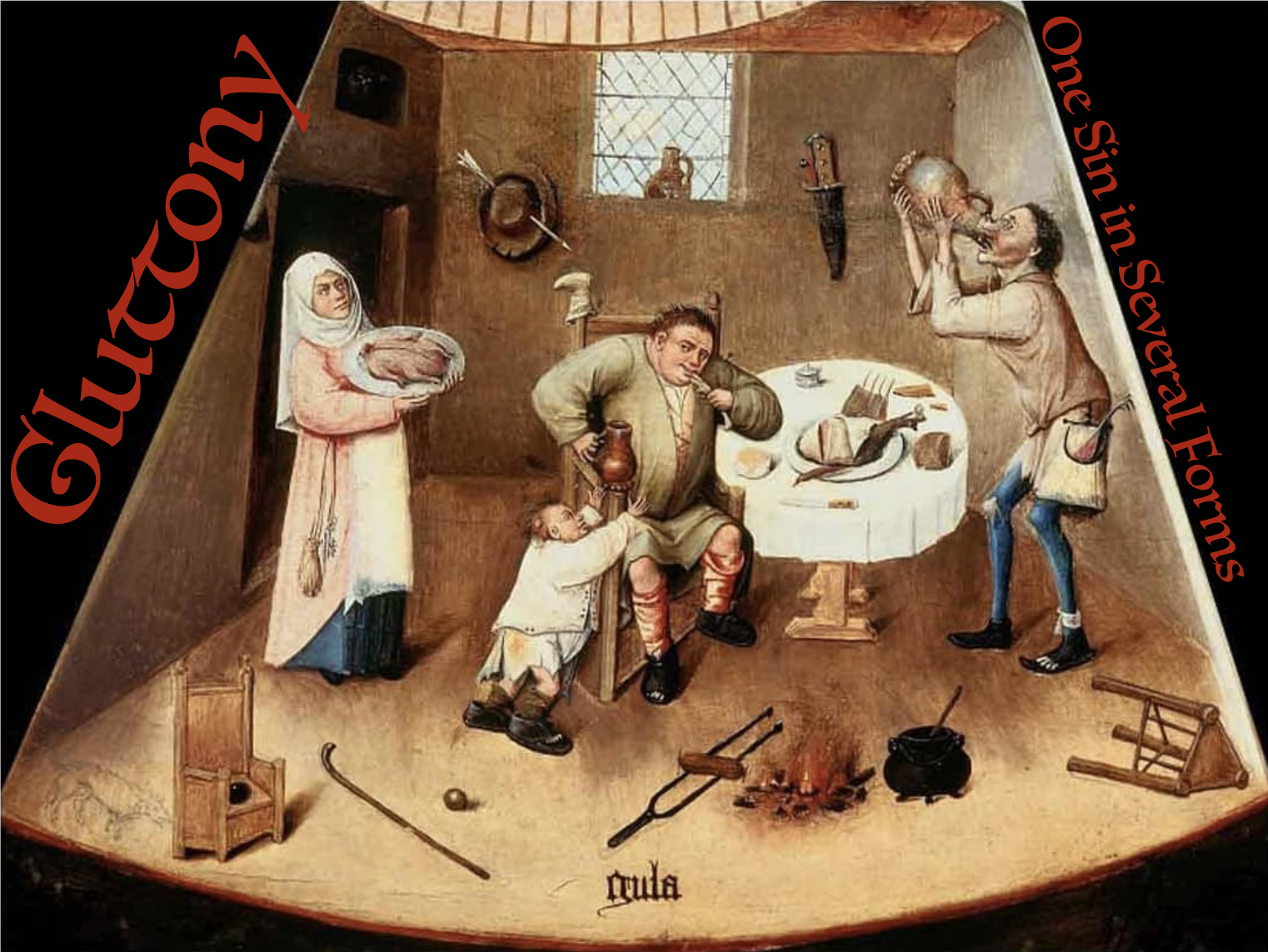
Gluttony. If you were guilty of committing this sin, would you admit it? How, in fact, can we determine whether we (much less someone else) is a glutton? 

And, even if we do fit the description of a glutton, is it all that bad? I mean, it’s not like it is nearly as bad as any of the other so-called “seven deadly sins,” right?

Perhaps C.S. Lewis can offer some illumination on this subject? Our investigation could lead us to a curious, yet edifying, discovery. Just as it enlightened the author of “Ok Google, Who’s Fatter, Me or C.S. Lewis?

Like many of us, in his prime C.S. Lewis did not consider himself beset with the problem of gluttony. Historically, people have been more physically active when they are young – at least that was true before “addiction” to screens, keyboards and game controls became endemic.

Even a quarter century ago this trend was being seriously studied, as in “Computer Use and Physical Inactivity in Young Adults: Public Health Perils and Potentials of New Information Technologies,” which appeared in the Annals of Behavioral Medicine.

As the capacities of the new information technologies for delivering targeted, tailored health behavior change programs are developed, the issues for physical activity promotion will become particularly salient.

The emerging paradox is that this new behavior setting for physical activity program delivery is also a setting that strongly promotes long periods of sedentariness.

C.S. Lewis, obviously, lived prior to the ravages of this plague. Yet, he was not immune to the temptations of the Seven Eight Deadly Sins, as identified by the Desert Father Evagrius Ponticus.

As already mentioned, C.S. Lewis did not consider himself particularly vulnerable to gluttony. This is illustrated by a witty (and fascinating) postscript to a letter written to his lifelong friend Arthur Greeves in 1930.

P.S. When I said that your besetting sin was Indolence and mine Pride I was thinking of the old classification of the seven deadly sins: They are Gula (Gluttony), Luxuria (Unchastity), Accidia (Indolence), Ira (Anger), Superbia (Pride), Invidia (Envy), Avaricia (Avarice).

Accidia, which is sometimes called Tristicia (despondence) is the kind of indolence which comes from indifference to the good – the mood in which though it tries to play on us we have no string to respond.

Pride, on the other hand, is the mother of all sins, and the original sin of Lucifer – so you are rather better off than I am. You at your worst are an instrument unstrung: I am an instrument strung but preferring to play itself because it thinks it knows the tune better than the Musician.

GULA – J.A.G.
LUXURIA – J.A.G., C.S.L.
ACCIDIA – J.A.G.
IRA – C.S.L.
SUPERBIA – C.S.L.
INVIDIA – C.S.L.
AVARICIA – (neither, I hope)

Two decades later, C.S. Lewis would make a related observation in a letter to his friend Don Giovanni Calabria. Apologizing for the delay of his correspondence, Lewis wrote:

Nothing else was responsible for it except the perpetual labour of writing and (lest I should seem to exonerate myself too much) a certain Accidia [sloth], an evil disease and, I believe, of the Seven Deadly Sins that one which in me is the strongest – though few believe this of me.

Gluttony is Not Synonymous with Being Overweight

I meet few people who do not wish that they weighed a few pounds less than they do. That would include the elder C.S. Lewis. Listen to his self-description in a letter to a young admirer in 1954.

Self-effacing, as always, he said he was nothing special to behold: “I’m tall, fat, rather bald, red-faced, double-chinned, black-haired, have a deep voice, and wear glasses for reading . . .” (I hope this is not the only dimension of Lewis that I come to resemble more as the years pass by.)

The United Kingdom and Ireland have an historically odd manner of assessing a person’s weight. I suspect there is a bit of intentional obfuscation involved when they use the archaic measurement of “stone” rather than pounds or kilograms. 

As Britannica says, “the stone is still commonly used in Britain to designate the weights of people and large animals.” Ironically, babies are not weighed this way, presumably because few of them weigh a full stone – fourteen pounds – at birth.

In the military it was important to remain below your maximum allowable weight. This becomes a problem for a fair number of folks (a dilemma with which I’m personally familiar).

Due to the aforementioned problem with sedentary activities, meeting these height and weight guidelines has become a serious issue for many young recruits.

Still, gluttony is not synonymous with weighing more than is healthy for us. Not so, according to a great column at Intellectual Takeout.

It’s typical to associate gluttony with overconsumption, or, an excess of food or drink. But according to C.S. Lewis, that’s only one form the vice takes. The broader definition of gluttony is any inordinate desire related to food or drink. That includes overconsumption, but it also includes overselectivity regarding the type or quality of food and drink.

Derek Rishmawy discusses this Lewisian distinction as well. 

I have to admit that I struggle with gluttony. Yet those who know me probably wouldn’t suspect it. Indeed, I’m tempted to deny it myself because I don’t tend to have a weight issue . . . All the same, this is a sin I’m beginning to realize I need to be increasingly watchful against.

Of course, that confession only makes sense when you understand that there’s more than one way of being a glutton. I’ll let C.S. Lewis explain what I mean.

He cites Screwtape’s letter to his demonic protégé reveling in one of the seldom noticed “victories” of humanity’s Enemy.

One of the great achievements of the last hundred years has been to deaden the human conscience on that subject, so that by now you will hardly find a sermon preached or a conscience troubled about it in the whole length and breadth of Europe.

This has largely been effected by concentrating all our efforts on gluttony of Delicacy, not gluttony of Excess. Your patient’s mother . . . She would be astonished . . . to learn that her whole life is enslaved to this kind of sensuality, which is quite concealed from her by the fact that the quantities involved are small.

But what do quantities matter, provided we can use a human belly and palate to produce querulousness, impatience, uncharitableness, and self-concern? (The Screwtape Letters)

Now, there is something for us to examine in our own lives.

As for those troubled by their physical weight (be it higher or lower than they would like), I discovered an entertaining site where you can find out how much you would weigh on any of the other planets in our solar system.

Exploratorium lifted my spirits by informing me that on Mars I would weigh a mere 96.1 pounds! And best of all, that’s less than seven stone!


The illustration above is based on a detail from The Seven Deadly Sins and the Four Last Things painted c. 1500 by Hieronymus Bosch.

How Precious, Is Memory

What would you do if tomorrow you awoke never again able to remember the births of your three children? Never to remember your marriage or your college years? How would you rebuild your life with children and a husband you no longer knew?

In Out of the Silent Planet, C.S. Lewis described a fundamental expectation we possess – “Every day in a life fills the whole life with expectation and memory.” this makes the fragility of the human brain and mind all the more sad.

The question above sounds like the plot to some novel or film, but this was a real life experience for Marcy Gregg. She has written a detailed account of the amazing story in Blank Canvas, and an account of the experience is available online at Focus on the Family

Before you rush to read it, though, I would like to share a few thoughts about memory. Today, increasing life expectancies make senility and dementia far too familiar to families. Dismissing such disorders related to causes such as brain injuries or drug abuse, we still hear of so many cases of Alzheimer’s and other neurodegenerative diseases. Many of us have been touched by this pain, as it has destroyed the lives of people we love. 

Happily, there are growing options for residences equipped with skilled nursing care trained especially for “memory care.” The problem, of course, is not just the availability, but also the significant cost. AARP reported that in 2021, “the average memory care monthly rent is $6,935 in the U.S.”

That’s significantly more than assisted living, which averages $5,380 a month, but a lot less than the $10,562 average monthly cost of a nursing home.

Since we identify our personhood so heavily with our minds, we do not like to think about things like the multiple types of amnesia. Some are terrible, and one is nearly universal. WebMD includes six in their list. The woman above experienced anterograde amnesia which they describe as the loss of “your ability to recall events that happened just before the event that caused your amnesia.” Fortunately, though not the case for Marcy, they add, “usually this affects recently made memories, not those from years ago.‌”

One form of amnesia listed by WebMD may come as a surprise to you, as it did to me. It is referred to as infantile or childhood amnesia. It describes how our young brains were not yet developed well enough to consolidate and store memories for retrieval. Many of us lack early memories, and rely on stories and media to fill in that long gap in our lives.‌

A brief article from the University of Queensland describes how “memories aren’t stored in just one part of the brain.” Differing types are stored “across different, interconnected brain regions.”

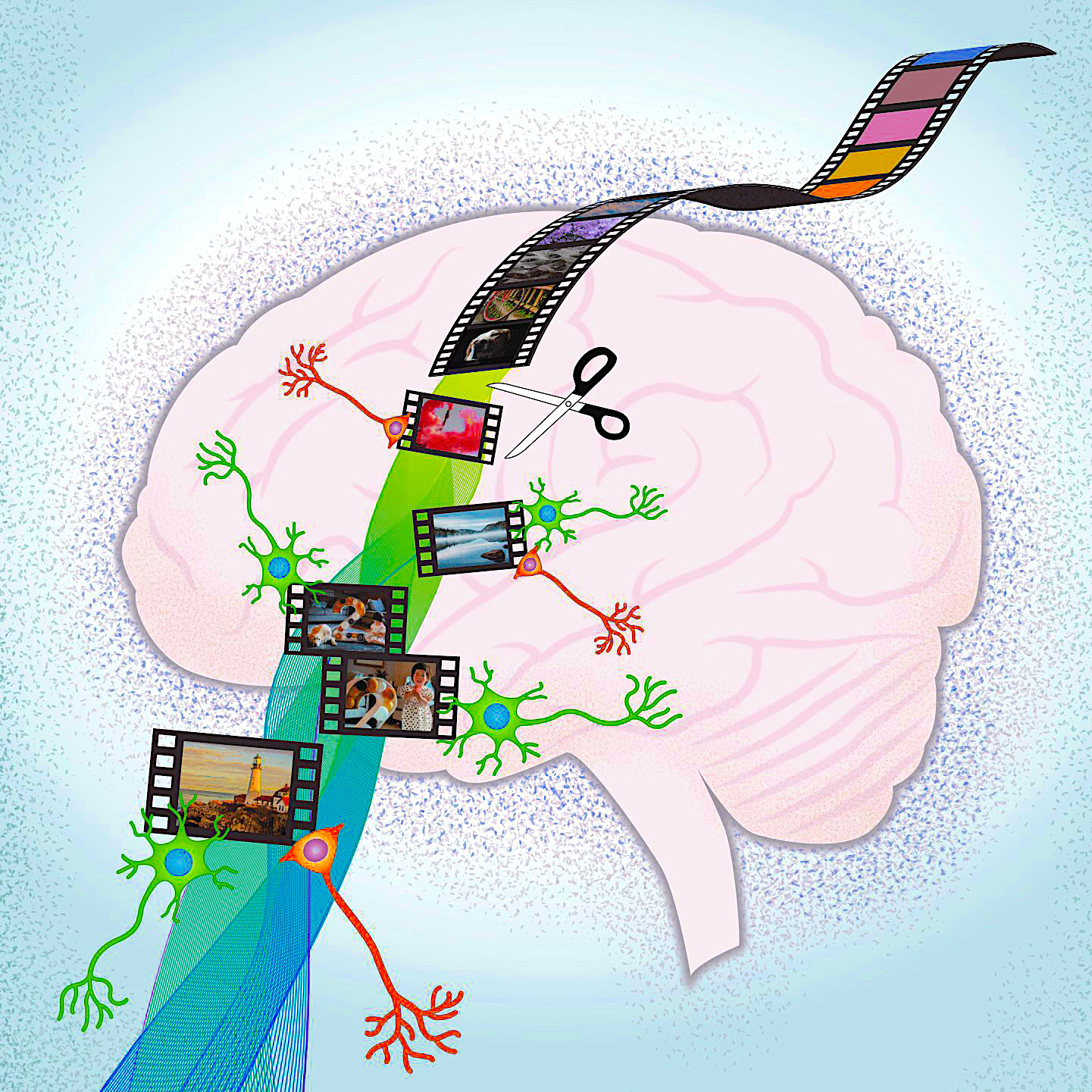
Cedars-Sinai has “discovered two types of brain cells that play a key role in creating memories.”

“One of the reasons we can’t offer significant help for somebody who suffers from a memory disorder is that we don’t know enough about how the memory system works,” said [a] senior author of the study, adding that memory is foundational to us as human beings.

Human experience is continuous, but psychologists believe, based on observations of people’s behavior, that memories are divided by the brain into distinct events, a concept known as event segmentation.

Forgetfulness is, for most who live long enough, an unavoidable aspect of aging. But it may not be quite so bad as it appears to us, as C.S. Lewis related in a letter written several years before his death.

About forgetting things. Dr. Johnson* said “If, on leaving the company, a young man cannot remember where he has left his hat, it is nothing. But when an old man forgets, everyone says, Ah, his memory is going.”

So with ourselves. We have always been forgetting things: but now, when we do so, we attribute it to our age.

Why, it was years ago that, on finishing my work before lunch, I stopped myself only just in time from putting my cigarette-end into my spectacle case and throwing my spectacles into the fire!

Forgetfulness is a common part of human experience, but clinical amnesia is something altogether different.

Tragically, some suffer from anterograde amnesia. One of the saintly matrons at our church carries this cross, assisted by her loving daughter and son-in-law. This cruel disease prevents the retention of new memories. While it is often linked with geriatric considerations, and can affect all of one’s memories, this article from the National Library of Medicine describes a particularly tragic case in which a child “had an abrupt onset of amnesia due to a respiratory arrest at the age of 8 years.”

Cases such as this move Christians to prayer, and many others to despair. While miracles do happen, they are rarer than we desire. Ultimately the Christian hope is in a Lord who keeps his promises, and one of these is that he will come again and will take us to himself, so that where he is, we may be also (John 14). And, in heaven, we will receive a new body like Christ’s resurrection body (Philippians 3).


* Samuel Johnson (1709-1784), a prolific and influential English writer, was often referred to simply as “Dr. Johnson.” Many volumes of the good doctor’s writings are available as free downloads from Internet Archive. For example, volume 7 of the 1810 collection, includes the following essay discussing human shallowness. He begins by contemplating the ability of animals to remember and to anticipate the future.

The Idler
Numb. 24. Saturday, September 30, 1758.

When man sees one of the inferiour creatures perched upon a tree, or basking in the sunshine, without any apparent endeavour or pursuit, he often asks himself or his companion, On what that animal can be supposed to be thinking?

Of this question, since neither bird nor beast can answer it, we must be content to live without the resolution. We know not how much the brutes recollect of the past, or anticipate of the future; what power they have of comparing and preferring; or whether their faculties may not rest in motionless indifference, till they are moved by the presence of their proper object, or stimulated to act by corporal sensations.

I am the less inclined to these superfluous inquiries, because I have always been able to find sufficient matter for curiosity in my own species. It is useless to go far in quest of that which may be found at home; a very narrow circle of observation will supply a sufficient number of men and women, who might be asked, with equal propriety, On what they can be thinking?

It is reasonable to believe, that thought, like every thing else, has its causes and effects; that, it must proceed from something known, done, or suffered; and must produce some action or event. Yet how great is the number of those in whose minds no source of thought has ever been opened, in whose life no consequence of thought is ever discovered; who have learned nothing upon which they can reflect; who have neither seen nor felt any thing which could leave its traces on the memory; who neither foresee nor desire any change of their condition, and have therefore neither fear, hope, nor design, and yet are supposed to be thinking beings.

To every act a subject is required. He that thinks must think upon something. But tell me, ye that pierce deepest into nature, ye that take the widest surveys of life, inform me, kind shades of Malbranche [Nicolas Malebranche] and of [John] Locke, what that something can be, which excites and continues thoughts in maiden aunts with small fortunes; in younger brothers that live upon annuities; in traders retired from business; in soldiers absent from their regiments; or in widows, that have no children?

Life is commonly considered as either active or contemplative; but surely this division, how long soever it has been received, is inadequate and fallacious. There are mortals whose life is certainly not active, for they do neither good nor evil; and whose life cannot be properly called contemplative, for they never attend either to the conduct of men, or the works of nature, but rise in the morning, look round them till night: in careless stupidity, go to bed and sleep, and rise again in the morning.

Johnson’s essay continues with a discussion of the soul and its distinction from the mental processes themselves. Obviously, he is not considering the subject of amnesia, but he reminds us never to become too doctrinaire, since that “supposes what cannot be proved, that the nature of mind is properly defined.” 

His purpose in the essay is not to discuss the abilities of the brain but, at least in part, to critique those who choose to be unthinking. Those who spend not a moment in reflection or contemplation.

I encourage you to read the entire essay, as it demonstrates Johnson’s brilliance. I close this extended “footnote” with a passage in his concluding section which keenly describes our common human experience with memory.

We every day do something which we forget when it is done, and know to have been done only by consequence. The waking hours are not denied to have been passed in thought; yet he that shall endeavour to recollect on one day the ideas of the former, will only turn the eye of reflection upon vacancy; he will find, that the greater part is irrevocably vanished, and wonder how the moments could come and go, and leave so little behind them.

Healing Laughter in Our World & Narnia

If you are like me, you could benefit from a rich, genuine laugh right about now. Las year was stressful on all of us, and many are wary the new year may not be dramatically better.

For many of us, humor is an integral part of our lives. In our extended family, it is an ever ready tool for lifting the spirits of others. Just the other day our son and his six-year-old son dropped by, and as they entered the front door I said, “enter, most welcome king and prince.” Without missing a proverbial beat, my grandson responded, “I’m the king, and he’s the prince.” It was a hilarious, spontaneous moment. My wife and I are deeply blessed because our lives are filled with these moments.

We have all heard about the healing powers of laughter. One Mayo Clinic article on the subject, “Stress Relief from Laughter? It’s No Joke,” lists a number of short- and long-term benefits. For example:

Laughter enhances your intake of oxygen-rich air, stimulates your heart, lungs and muscles, and increases the endorphins that are released by your brain. . . . [It can] improve your immune system. Negative thoughts manifest into chemical reactions that can affect your body by bringing more stress into your system and decreasing your immunity.

By contrast, positive thoughts can actually release neuropeptides that help fight stress and potentially more-serious illnesses. [And laughter can] relieve pain . . . by causing the body to produce its own natural painkillers.

Since laughter has indisputable mental—and physical—benefits, promoting it is a worthwhile avocation. That effort is complicated by the fact our individual sense(s) of humor differ significantly. For example, some people find slapstick humor wildly funny. I find it funny (in the sense of “odd”), that they consider it witty.

On the other hand, some people appreciate the “subtleties” of so-called British humor. Many of my relatives have never understood how much I have enjoyed Monty Python. To them, the Python approach is bizarre and unpalatable. Meanwhile, they enjoyed the clumsy stumblings of Jerry Lewis.*

Ricky Gervais, an English comedian who has met great success on both sides of the pond, wrote an interesting piece for Time. He offers very thoughtful observations on “The Difference Between American and British Humour.” Having lived in the United Kingdom, and counting some Brits as friends today, the following comment rings true with me.

There’s a received wisdom in the U.K. that Americans don’t get irony. This is, of course, not true. But what is true is that they don’t use it all the time. It shows up in the smarter comedies but Americans don’t use it as much socially as Brits.

We use it as liberally as prepositions in every day speech. We tease our friends. We use sarcasm as a shield and a weapon. We avoid sincerity until it’s absolutely necessary. We mercilessly [verbally assault] people we like or dislike basically.

And ourselves. This is very important. Our brashness and swagger is laden with equal portions of self-deprecation. This is our license to hand it out.

Perhaps my affinity for British humor comes from a flaw in my personal psyche, I mean, an innate appreciation for irony.

Another consideration is whether laughter is genuine or feigned. The latter presumably produces no positive results. Researchers in Japan conducted some laughter studies. One professor noted that honest laughter reaches down to a person’s diaphragm. He devised a machine to measure it.

Sensors placed near the diaphragm transmit waves to a computer screen, and these waves apparently reflect not only the intensity of a subject’s laughter but also its sincerity. A genuine laugh, straight from the heart, weighs in at 5 or more “aHs” per second –the “aH” (read “aha” in Japanese) being the unit of measurement Kimura devised in his quest to quantify laughter. Fake laughter makes no waves. The sensors ignore it, and the graph-lines on the screen remain unmoved.

Most of us, I suspect, can usually tell the difference between sincere responses, be they simple chuckles or raucous belly laughs, and the fake stuff. Fortunately, the inauthentic laughter is rarely malicious. An interesting dissertation entitled “The Meaningless Laugh,” explores laughter’s use to ease tension and “cover-up,” or mask, true opinions. It seems to me that insincere laughter has much in common with “white lies.”

Humor in the Life of C.S. Lewis

C.S. Lewis had a healthy sense of humor. Laughter abounded at gatherings of the Inklings. In light of Gervais’ comment about the British propensity for “teasing our friends,” check out “C.S. Lewis Compared J.R.R. Tolkien to What?

Our sense of humor is shaped and refined (or dulled) throughout our lives. An interesting letter from 1914, before Lewis was scarred in the trenches of the First World War, reveals his entertainment preferences as a young man.  

Last week I was up with these people to the Coliseum: and, though of course (which by the way I see no prospect of) I had sooner have gone to some musical thing, yet I enjoyed myself. The Russian Ballet–and especially the music to it–was magnificent, and G.P. Huntley* in a new sketch provoked some laughter.

The rest of the show trivial & boring as music halls usually are. At ‘Gastons’ however, I have no lack of entertainment, having been recently introduced to Chopin’s Mazurkas, & Beethoven’s ‘Sonate Pathétique.’

The mature Lewis made a profound observation about humor in Reflections on the Psalms.

A little comic relief in a discussion does no harm, however serious the topic may be. (In my own experience the funniest things have occurred in the gravest and most sincere conversations.)

I have found this to be true in my own life and ministry. In the words of the Mayo Clinic piece, “Laughter can also make it easier to cope with difficult situations. It also helps you connect with other people” even during the most trying of times.

Can Laughter Be Dangerous?

We all recognize that when humor is pursued at the expense of others, it is often destructive. Sarcasm is a dangerous, and often cruel, weapon. Healthy laughter, though, possesses a divine quality.

Laughter can, in fact, be such a positive thing that even the Tempter Screwtape⁂ warns his protégé to undermine it. (Remember, when reading Screwtape, that since Screwtape, the fictional writer of the infernal advice, serves the Devil, and thus the language is reversed.)

I am specially glad to hear that the two new friends have now made [your patient] acquainted with their whole set. All these, as I find from the [infernal] record office, are thoroughly reliable people; steady, consistent scoffers and worldlings who without any spectacular crimes are progressing quietly and comfortably towards Our Father’s house.

You speak of their being great laughers. I trust this does not mean that you are under the impression that laughter as such is always in our favour. The point is worth some attention. I divide the causes of human laughter into Joy, Fun, the Joke Proper, and Flippancy.

You will see the first among friends and lovers reunited on the eve of a holiday. Among adults some pretext in the way of Jokes is usually provided, but the facility with which the smallest witticisms produce laughter at such a time shows that they are not the real cause. What that real cause is we do not know.

Something like it is expressed in much of that detestable art which the humans call Music, and something like it occurs in Heaven—a meaningless acceleration in the rhythm of celestial experience, quite opaque to us. Laughter of this kind does us no good and should always be discouraged. Besides, the phenomenon is of itself disgusting and a direct insult to the realism, dignity, and austerity of Hell (The Screwtape Letters).

As to whether or not laughter can nudge a person towards a negative end, Screwtape singles out flippancy.

But flippancy is the best of all. In the first place it is very economical. Only a clever human can make a real Joke about virtue, or indeed about anything else; any of them can be trained to talk as if virtue were funny. Among flippant people the Joke is always assumed to have been made. No one actually makes it; but every serious subject is discussed in a manner which implies that they have already found a ridiculous side to it.

If prolonged, the habit of Flippancy builds up around a man the finest armour-plating against the Enemy that I know, and it is quite free from the dangers inherent in the other sources of laughter. It is a thousand miles away from joy: it deadens, instead of sharpening, the intellect; and it excites no affection between those who practise it (The Screwtape Letters).

Forewarned about the potential pitfalls of unhealthy humor, we can choose to avoid it. Meanwhile, we can rejoice with laughter that our Creator has bestowed upon us the ability to laugh.

C.S. Lewis celebrated this gift in his echo of our own creation in the story of Narnia’s birth. From the very first day, laughter was meant to resound throughout the world.

“Creatures, I give you yourselves,” said the strong, happy voice of Aslan. “I give to you forever this land of Narnia. I give you the woods, the fruits, the rivers. I give you the stars and I give you myself. The Dumb Beasts whom I have not chosen are yours also. Treat them gently and cherish them but do not go back to their ways lest you cease to be Talking Beasts. For out of them you were taken and into them you can return. Do not so.”

“No, Aslan, we won’t, we won’t,” said everyone. But one perky jackdaw added in a loud voice, “No fear!” and everyone else had finished just before he said it so that his words came out quite clear in a dead silence; and perhaps you have found out how awful that can be—say, at a party.

The Jackdaw became so embarrassed that it hid its head under its wing as if it were going to sleep. And all the other animals began making various queer noises which are their ways of laughing and which, of course, no one has ever heard in our world.

They tried at first to repress it, but Aslan said: “Laugh and fear not, creatures. Now that you are no longer dumb and witless, you need not always be grave. For jokes as well as justice come in with speech.”

So they all let themselves go. And there was such merriment that the Jackdaw himself plucked up courage again and perched on the cab-horse’s head, between its ears, clapping its wings, and said: “Aslan! Aslan! Have I made the first joke? Will everybody always be told how I made the first joke?”

“No, little friend,” said the Lion. “You have not made the first joke; you have only been the first joke.” Then everyone laughed more than ever; but the Jackdaw didn’t mind and laughed just as loud till the horse shook its head and the Jackdaw lost its balance and fell off, but remembered its wings (they were still new to it) before it reached the ground.

Laughter is a gift from God. I believe it is one of his best.


* The warm appreciation of comedian Jerry Lewis (1926-2017) by the French has always been a mystery to me. Talk about different ways to view humor. An interesting discussion of that enigmatic fact is found in “Why France Understood Jerry Lewis as America Never Did.”

Jerry Lewis was always a subject of a deep trans-Atlantic misunderstanding, one that triggered sarcasm in the United States, and bewilderment in France. While some Americans felt embarrassed by this contortionist comic, the French embraced Mr. Lewis’s humor as both an abstract art and social satire of American life.

Americans mocked the French for falling for this crass clown, while the French couldn’t understand why Mr. Lewis’s genius was not obvious to his compatriots.

⁑ George Patrick Huntley (1868–1927) was an Irish actor, known for comic performances in the theatre and the music halls.

⁂ The fictional author of C.S. Lewis’ book, The Screwtape Letters. Screwtape, the senior Tempter serves his master, the Devil. He refers to him as “Our Father Below,” accordingly.


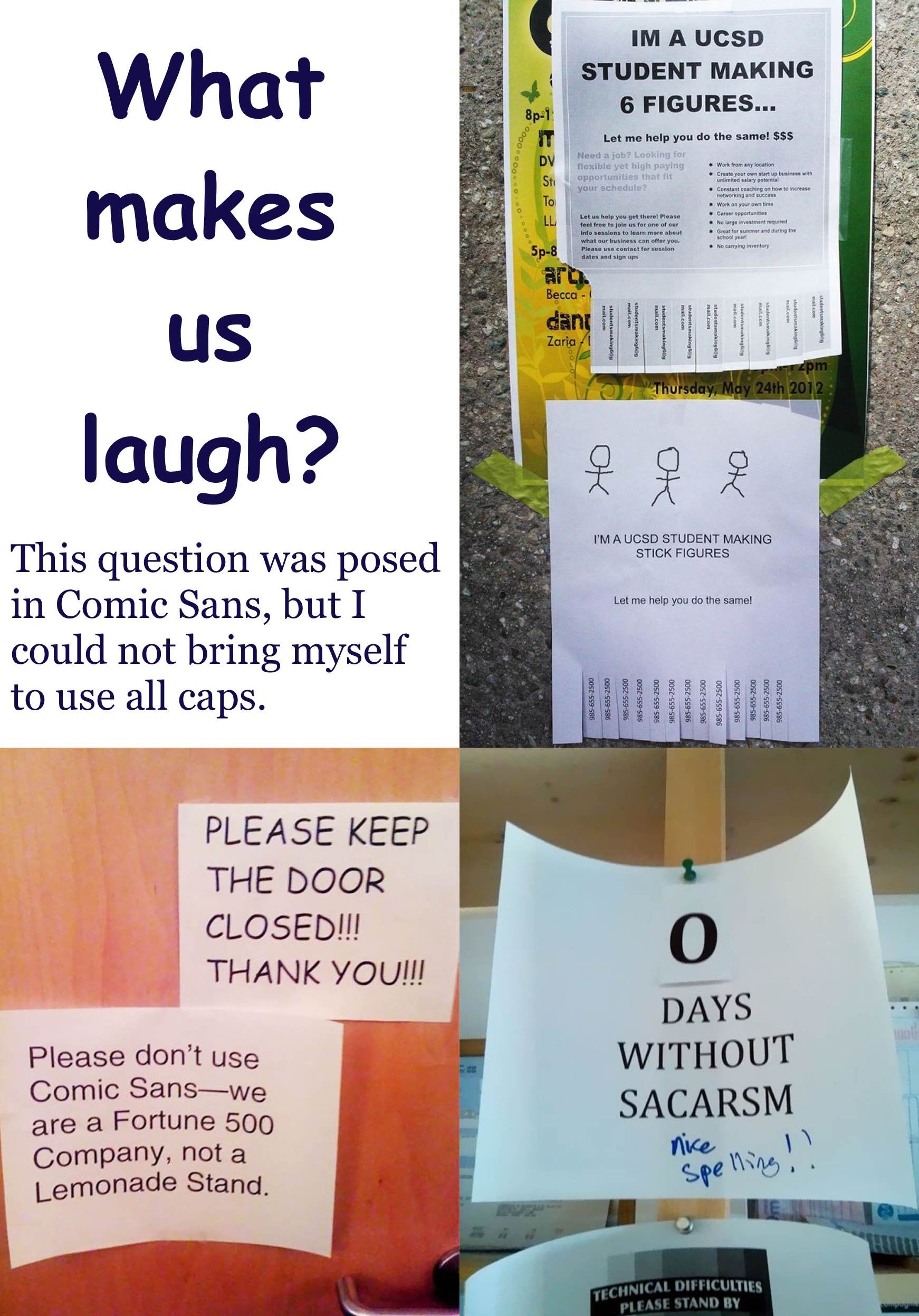
The graphic above comes from the blog of a very talented writer and producer. Mitch Teemley included in a recent post at The Power of Story. I agree with my friend that “laughter has healing properties.” If you believe the same, you absolutely need to spend a few minutes reading his hilarious post.

C.S. Lewis & Scrabble

scrabble

It’s not uncommon for people who love words to also enjoy the game Scrabble.

The word game, born in 1933, is quite popular. In fact, the Hasbro company claims “today the SCRABBLE game is found in three of every five American homes.”

The game made enough of an impact in New York City, that the neighborhood where it was conceived is adorned with the distinctive Scrabblesque street sign shown above.

C.S. Lewis was also a fan of the game. He and his wife Joy played the game regularly. But they modified the rules, to allow for their particular intellects. Doug Gresham, their son, describes this in The Magic Never Ends: The Life and Works of C.S. Lewis.

They played word games with each other. They had their own rather unique rules for Scrabble. They would take one board and both sets of letters from two Scrabble sets. And then they would proceed to play Scrabble, allowing all known languages, whether factual or fictional, and they would fill the whole board with words.

Jack, Joy & Their Love of Words

The third volume of The Collected Letters of C.S. Lewis includes two references to the way Scrabble became a familiar feature of their married life. In the first, written in July of 1957, he describes the situation at the beginning of Joy’s remission.

It is fascinating in several ways. It describes Lewis’ own declining health and the manner in which God had used it to be a blessing in their relationship. The shock, however, comes in Lewis’ confession about who was the Scrabble champion at The Kilns.

Joy is now home, home from hospital, completely bed-ridden. The cancer is ‘arrested,’ which means, I fear, hardly any hope for the long term issue, but for the moment, apparently perfect health, no pain, eating & sleeping like a child, spirits usually excellent, able to beat me always at Scrabble and sometimes in argument.

She runs the whole house from her bed and keeps a pack of men not only loving her but (what’s rarer) one another.

We are crazily in love.

My back turns out to be not slipped disc but osteoporosis–a spongy condition of the bones that is common in men of 75 but almost unknown at my age (58). After full investigation by a great Professor of Pathology the cause remains quite obscure. It has passed the stage of spasms and screams (each was rather like having a tooth out with no anaesthetic and you never knew when they were coming!), but I still ache a good deal and need sleeping draughts.

Can you realise the good side? Poor Joy, after being the sole object of pity & anxiety can now perform the truly wifely function of fussing over me–I’m in pain and sit it out–and of course the psychological effect is extremely good. It banishes all that wearisome sense of being no use. You see, I’m very willing to have osteoporosis at this price.

The fact that Jack and Joy were truly “crazily in love,” made the brevity of their life together all the more poignant and precious. In July of 1960, Lewis wrote to inform a friend of Joy’s passing.

Dear Mrs Gebbert, Alas, you will never send anything ‘for the three of us’ again, for my dear Joy is dead. Until within ten days of the end we hoped, although noticing her increasing weakness, that she was going to hold her own, but it was not to be.

Last week she had been complaining of muscular pains in her shoulders, but by Monday 11th seemed much better, and on Tuesday, though keeping her bed, said she felt a great improvement; on that day she was in good spirits, did her ‘crossword puzzle’ with me, and in the evening played a game of Scrabble.

At quarter past six on Wednesday morning, the 13th, my brother, who slept over her, was wakened by her screaming and ran down to her. I got the doctor, who fortunately was at home, and he arrived before seven and gave her a heavy shot.

At half past one I took her into hospital in an ambulance. She was conscious for the short remainder of her life, and in very little pain, thanks to drugs; and died peacefully in my company about 10.15 the same night.

I could not wish that she had lived, for the cancer had attacked the spine, which might have meant several days of suffering, and that she was mercifully spared.

You will understand that I have no heart to write more, but I hope when next I send a letter it will be a less depressing one.

This letter suggests that Joy’s final evening in this world was a happy one. It was filled with warm and family domesticity. Under the circumstances, who could hope for more. As Lewis writes, it would only be for our own selfishness that we would wish to prolong the suffering of those we love.

I would be curious to learn whether Lewis ever again played Scrabble during those final few years of his own life. I suspect that it would have been too painful. Best to recall the game in light of the affectionate competition the two of them shared.

Dishonest Diagnoses

x-ray.png

Do you prefer honesty—or would you rather hear something that makes you feel good?

It’s pleasant to hear things that feel positive, but that feeling is fleeting, and potentially devastating, when we have heard a lie.

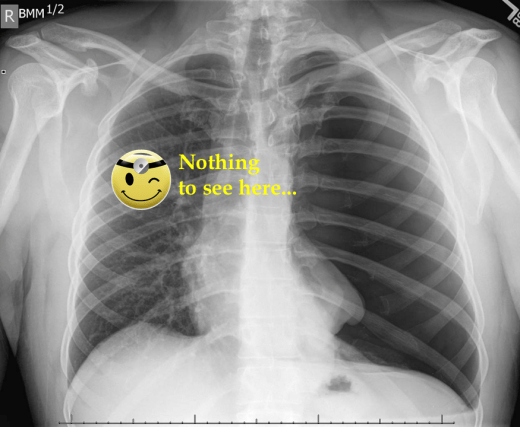
In a recent column devoted to a comedian who passed away two decades ago, I encountered a joke that probes this problem. Henny Youngman poses a dilemma, and solves it with the worldly solution. In the following one-line joke, he proposes an alternative to unwelcome news.

When I told my doctor I couldn’t afford an operation, he offered to touch up my X-rays.

If only it were so simple to change bad news to good. The truth may not always be welcome, but it is nearly always preferable to believing a lie. Sadly, avoiding discomfort by telling people what they want to hear, has become a modern plague.

Well, “modern” isn’t the best word. This dishonesty has been around for a long time, and it will persist until the Parousia. The Apostle Paul described it to a younger pastor by saying, “having itching ears [people] will accumulate for themselves teachers to suit their own passions, and will turn away from listening to the truth . . .” (2 Timothy 4:3-4)

That’s one reason that certain religious messages are more popular than others. They “promise” you that if you follow their teachings, there are only good times ahead.

An Honest Diagnosis

In contrast to these lies, the truth admits life is not always perfect. The truth acknowledges that doing right is often more difficult than going with the flow.

But trading the truth for the lie is dangerous. One can be approaching a sheer precipice, requiring swift avoidance. But if we heed the voices saying “all is well,” we may blindly step into oblivion.

C.S. Lewis described the way that Satan would like to have us deluded about our real condition and circumstances. In the Screwtape Letters, a senior demon offers evil counsel to a junior devil assigned as a tempter.

How much better for us if all humans died in costly nursing homes amid doctors who lie, nurses who lie, friends who lie, as we have trained them, promising life to the dying, encouraging the belief that sickness excuses every indulgence, and even, if our workers know their job, withholding all suggestion of a priest lest it should betray to the sick man his true condition.

If you are one of the minority who welcome the truth, however challenging, I commend you.

If you find yourself preferring those who encourage you to be comfortable and complacent about who you are and how things presently are, I encourage you to listen to other (more honest) voices. Voices that encourage you to become a better woman or man today than you were yesterday. Voices that call you to the true path God is laying out before you.

In the long run, altered x-rays will never help us to recover from the illnesses of body, mind and soul that assail us. Only the Truth is able to set us free.

Titles You Don’t Want


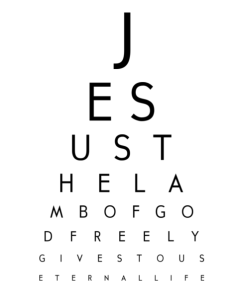
eyechartThe world’s oldest man just died—and I’m not looking forward to ever becoming one of his successors. I mean, I understand the sentiments of non-Christians who quip that any day on this side of the grass is a good one, but I would only be interested in staying around here that long if I still had a keen mind and good health.

I’m not sure most of the people who eventually earn those titles have either. This gentleman was 111, and in the picture of him receiving his Guinness certificate, he actually looks like he had already expired. I mean, no offense, just a statement of simple fact.

As for his state of mind, I’m a bit more optimistic. Apparently when asked a while ago how he had lived so long, he responded, “because I haven’t died yet.” Assuming that was tongue in cheek (I recognize that is merely an assumption), he had retained his sense of humor. A good sign.

I don’t think ultra-long longevity is all it’s cracked up to be. I remember my 92 year old grandmother (my only relative who lived to be “elderly”) telling me that she was ready to go to heaven. She was in a nursing home, but not in pain, and still witty.

She said, “Robbie, I’ll miss you and everyone who is still here, but if you live long enough, more of the people you love are already in heaven than remaining here.” She had been widowed for three decades. And, unbeknownst to us at the time, three of her four children would follow her within three years of her own passing.

I am not eager to die, of course. And, unlike Polycarp, the bishop of second-century Smyrna, I’m certainly not zealous about the possibility of someday being martyred.

Still, God-willing, when I’ve come to the end of my appointed days I will make that transition peacefully, as is appropriate for a child of God who has been blessed with a full life.

When death is seen as a dark end—a soundless void—it’s understandable that many would resist it to the “bitter” end. That theme has been common in literature and cinema.

In a comic light, a character on Parks and Recreation exhibits the desire to live as long as humanly possible. He exercises without pause and takes every vitamin that exists in horse-pill doses. Soon after Chris Traeger was introduced to the show, he shared his view of life:

I take care of my body above all else. Diet, exercise, supplements, positive thinking. Scientists believe that the first human being who will live 150 years has already been born. I believe I am that human being.

Humorous. And, a respectable goal perhaps, if not driven by deep fear.

I don’t share Traeger’s goal of being the first human to reach 150. Nor, as we considered at the outset of our discussion, do I long to gain the title of World’s Oldest Man.

And I take comfort that I find myself, once again, in the comfortable camp of C.S. Lewis. In his essay “Is Progress Possible?” Lewis wrote:

Progress means movement in a desired direction, and we do not all desire the same things for our species. In “Possible Worlds” Professor Haldane pictured a future in which Man, foreseeing that Earth would soon be uninhabitable, adapted himself for migration to Venus by drastically modifying his physiology and abandoning justice, pity and happiness.

The desire here is for mere survival. Now I care far more how humanity lives than how long. Progress, for me, means increasing goodness and happiness of individual lives. For the species, as for each man, mere longevity seems to me a contemptible ideal.

More important, we believe, is the quality than the quantity, of our lives.

Autistic Considerations

Bill & Barbara ChristopherMost of us have a friend, loved one, or acquaintance affected by autism. I’m not sure if this would have been accurate a generation ago.

And I’m not merely referring to the lack of proper diagnosis of the problem. There are numerous reports that its frequency is increasing.

Autism is not necessarily debilitating. In minor cases it’s barely noticeable. Like many problems, its severity is manifested across a wide spectrum.

I have autism on my mind now, as the new school year approaches and my wife sets up her special education classroom. She’s excited about the return of her precious kids. It’s wonderful how so many of them make amazing process both in academics and social abilities.

The return of school, however, is not the primary reason for my current thoughts. I’m writing an article I hope to submit to an Autism magazine, inspired by a recent interview I conducted.

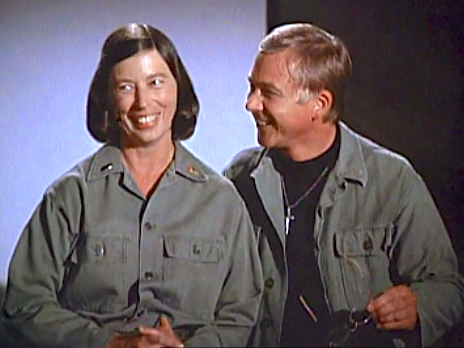
I was privileged to speak at length with the father of a severely autistic son who will be known to many readers of Mere Inkling. William Christopher, who played Father Mulcahy on M*A*S*H, has been a prominent spokesman for autism concerns for many years. (A link to the article appears below.)

Along with his wife Barbara, Christopher wrote a book entitled Mixed Blessings. It recounted their early struggles providing Ned with everything he needed to make his life as full as it could possibly be. Due to their diligence and deep love for their son, Ned continues to enjoy his active life today.

They embody the noble type of earnest love C.S. Lewis describes in The Four Loves. There he says that true love is gift-love, not seeking increased dependence on itself, but liberating the beloved to become as independent as they possibly can.

The maternal instinct . . . is a Gift-love, but one that needs to give; therefore needs to be needed. But the proper aim of giving is to put the recipient in a state where he no longer needs our gift. We feed children in order that they may soon be able to feed themselves; we teach them in order that they may soon not need our teaching.

Thus a heavy task is laid upon this Gift-love. It must work towards its own abdication. We must aim at making ourselves superfluous. The hour when we can say “They need me no longer” should be our reward. But the instinct, simply in its own nature, has no power to fulfil this law.

The instinct desires the good of its object, but not simply; only the good it can itself give. A much higher love—a love which desires the good of the object as such, from whatever source that good comes—must step in and help or tame the instinct before it can make the abdication.

This despite the counsel of one early specialist who advised them that since Ned was adopted they should just take him and trade him in for a child who wasn’t defective. Yes, someone really said that to them.

If I end up publishing the article, I’ll mention it again for those who might be interested in reading it. In the meantime, the extensive interview appears in the current issue of a journal I edit for military chaplains, called Curtana: Sword of Mercy.

When we look at a list of autistic traits, it’s normal to recognize some of them in ourselves. That shouldn’t surprise us, since most of these traits are completely “normal” in various degrees.

It is a commonplace practice to perform posthumous diagnoses of well known figures, based upon detailed descriptions of their behaviors. In that vein, I found online lists that included the following personages as possibly autistic: Thomas Jefferson, Albert Einstein, James Joyce, Stanley Kubrick, Lewis Carroll, and Hans Christian Andersen.

Oh, and there’s another name I discovered in one article. The writer suggested that C.S. Lewis’ social preferences suggest that he too suffered the mild version of autism, typically called “Asperger’s Syndrome.”

I don’t intend to discuss that now, but I wanted to share a fascinating concept I encountered while researching for this column. In Autism, Art and Children: The Stories We Draw, I read the following about imaginary worlds like Narnia and Middle Earth:

It is this element of world building that forms a bridge between the impersonal character of research and clinical observations and the individual young artists with autism in whom our interest especially lies.

Sacks (1995) points out the importance of fantasy worlds to some individuals with autism . . . this predilection for alternate worlds is frequently encountered in many high-functioning people with autism . . . such high-functioning individuals with autism “describe a great fondness for, almost an addiction to, alternative worlds, imaginary worlds such as those of C.S. Lewis and Tolkien, or worlds they imagine themselves.”

Illustrating such world-building activities by an entire family (two parents and their son), all of whom have autism, Sacks remarks, “They have spent years constructing an imaginary world with its own landscapes and geography (endlessly mapped and drawn), its own languages, currency, laws, and customs—a world in which fantasy and rigidity play equal parts.”

This creative activity is of particular interest, for many of the children we have met have individual fantasies in alternative worlds that play major roles in their lives and activities.

I find this analysis captivating. I am utterly fascinated by the construction of imaginary settings. That’s one reason I love the alternate history genre, as it combines the familiar with elements that have transformed them into something inherently different.

I must confess I’ve occupied many an idle hour imaging new worlds. I’ve even invested a fair amount of time in world-building myself—for an alternative history for which I still compile notes and ideas, despite the fact it’s unlikely to ever be written. I don’t attribute this to autism, but it serves as another example of just how much all of us have in common.

The fact is none of us is perfectly healthy—physically, emotionally, psychologically, or spiritually. We are who we are. We can strive to improve many aspects of our lives (and the wellbeing of others), but attaining perfection is impossible in this life.

In the meantime, we can be grateful for wonderful people like Barbara and Bill Christopher, who have courageously shared their own journey to aid us in ours. Their willingness to forsake their rightful shield of privacy and step out into the glare of the public—for our benefit—reveals both their love for their children and their generosity towards strangers.

_____

The wonderful photograph at the top of the column features Bill and Barbara Christopher. Barbara had a guest role as a nurse in “Dear Mildred,” during which the two of them sang a duet.

The interview with Bill Christopher can be downloaded for free in the current issue of Curtana: Sword of Mercy, which is available here.

Human Filth

washI’m writing this from lovely Saint Louis. It’s a “far piece” from my home in Puget Sound, but I love it here. My wife and I spent two years just across the Mississippi, at Scott Air Force Base.

I’m here to begin study for my Doctor of Ministry degree, and it’s off to a grand beginning. As I said, I like Saint Louis, and Concordia Seminary has a first class faculty.

The only problem about coming here was precisely that . . . the process of getting here.

I hate flying these days. This trip was particularly trying. I wasn’t troubled by the fact that both my first flight and my connection were more than an hour behind their scheduled departures. (Although they were.) Nor was I troubled by being selected (once again) for a full body scan. (Must be due to using my military ID rather than a driver’s license that could more easily be counterfeited.)

Nor was it because the airline misplaced my luggage and was reluctant to give me an overnight toiletry kit until I insisted that although a hotel would offer me a toothbrush, what I really wanted to ensure I had the first day of class was deodorant. (They got the last laugh by giving me a bar of Lady Speed Stick; let me assure you that the elegant Powder Fresh scent turned more than one head that day in class.)

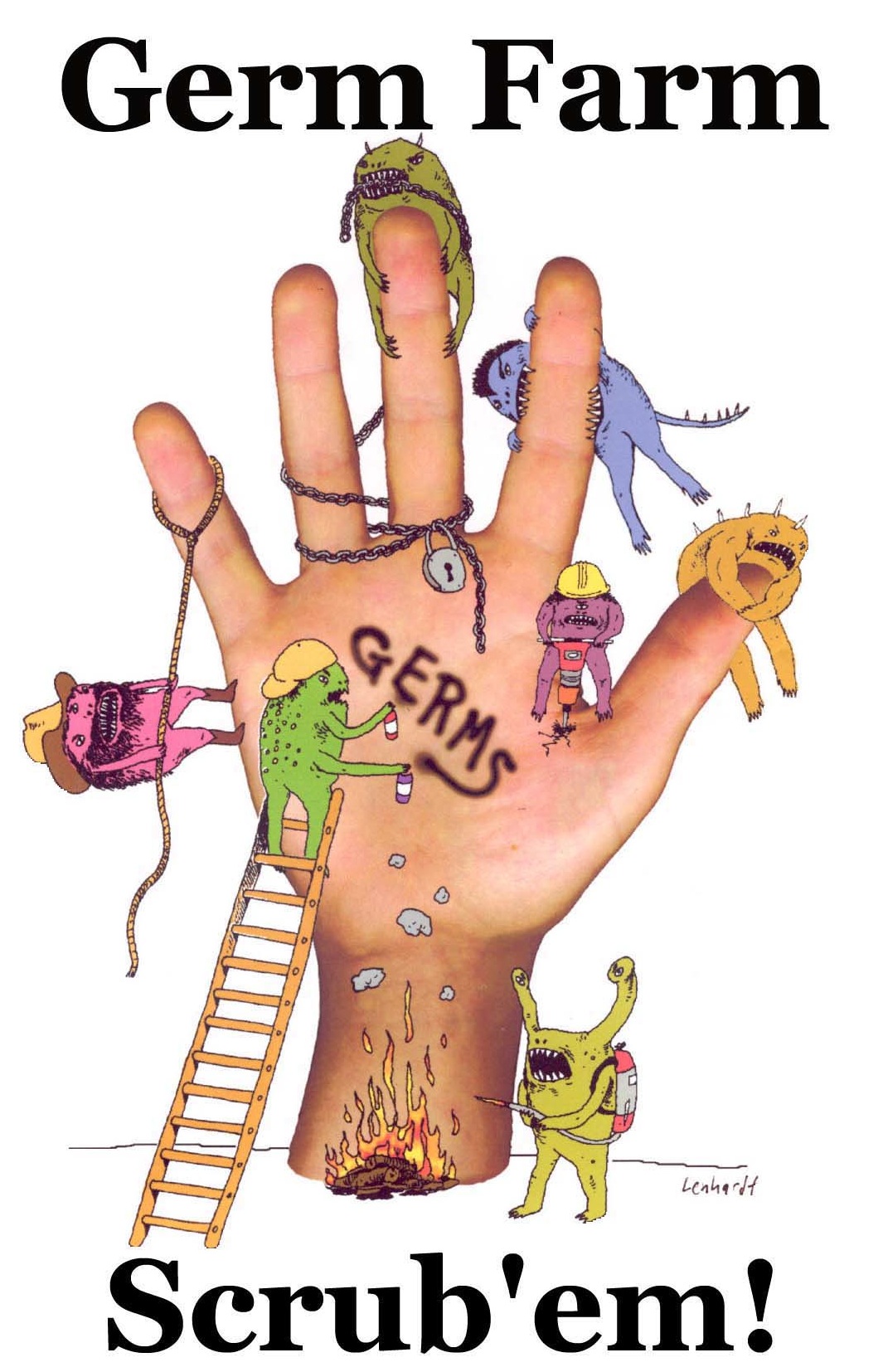
No, what really disturbed me as I traveled was encountering filthy people in the restrooms I used as I traveled across the continent. By filthy, I mean those disgusting people who choose not to wash their hands. When I observe 50% of the men exiting the bathroom without pausing to use one of the many available sinks, it’s all I can do not to say something. It makes me want to call up their aged parents and ask how they managed to raise such a disgusting son.

I love animals, and just this week I’ve seen dogs, cats, rabbits and deer grooming themselves. They have better manners and hygiene than the pigs I’m talking about here. Yes, they are disgusting enough for me to refer to them as swine . . .  although pigs are only being true to their nature, when homo sapiens are supposed to possess a higher character.

C.S. Lewis was writing about the shortcomings of only doing what is right because it is mandated, but it has a slight bearing on the disgust I’ve described above.

We do not wish either to be, or to live among, people who are clean or honest or kind as a matter of duty: we want to be, and to associate with, people who like being clean and honest and kind. The mere suspicion that what seemed an act of spontaneous friendliness or generosity was really done as a duty subtly poisons it. (English Literature in the Sixteenth Century).

While Lewis is certainly correct that insincerity strips kindness and honesty of their virtuous essence—when it comes to cleanliness, I’m willing to settle for the “forced” variety!

Well, enough about human filth. I just needed to get that out of my system. Parents, please teach your children better than this. And ladies, please don’t dispel my naïve notion that 100% of women clean up after using their facilities.

Please forgive me for this disgusting post, and I promise that my next column will be much more pleasant and edifying.

Humor & Health

I had to have blood drawn today for an upcoming physical exam. It’s not one of my favorite things to do, but I consciously try not to allow my feelings to negatively affect the caregivers who provide these essential procedures for our wellbeing. (Trust me, dentists especially are sorely in need of our appreciation.) I often try to add a little smile to their day employing a touch of light humor.

Today, for example, I was repeating a blood test I had already accomplished earlier this week. When the corpsman (Naval hospital) asked which arm I said, “you better take it out of my left arm . . . they weren’t happy with the numbers in the sample they got from my right.”

Now, a modest joke like that won’t make it into any comedians’ monologues, but it did inspire a chuckle from the four of us in the lab at that moment.

It reminded me of getting my flu shot last year and having my choice of four different corpsmen to administer it. Each had a waiting line. I could only imagine what it was like to be puncturing one anonymous arm after another for eight hours. Most “victims” silent, but many grimacing and some feeling compelled to describe to you just how much they hate shots.

Three of the corpsmen were normal sized human beings. But the fourth was a behemoth. The seams of his uniform were near to bursting due to his extraordinary musculature. I doubt he was on steroids, but his massive figure could have fit into the offensive line of any team in the NFL. And, for some mysterious reason, his waiting line was the shortest.

When I approached him to receive my vaccination, I ventured (in a voice loud enough for his companions to hear): “I chose you because you look like you’re gentle.” Everyone got a laugh out of that, and I felt pleased at having momentarily brightened their day.

My kids are always wary when I make comments like this. They recognize that every time we open our mouths, it’s a gamble. We can achieve our goal, and elicit someone’s precious smile . . . or we can make a fool of ourselves.

As a grandfather, I have the added “protection” of not having too much expected of me, in the wittiness department. By the grace of God, I’m still in possession of the bulk of my mental capacities. I imagine that, should I live long enough, most of my attempts at humor may grow rather lame. But, if there remains any cultural respect for our elders, even these attempts will be recognized for what they are—goodwill. And, as such, there are those from whom they will still elicit a smile.

We should not be afraid of humor, especially in its most humble and intimate forms. Woven amidst the threads of our daily conversations, it enriches life.

C.S. Lewis recognized this quite well. In The Magician’s Nephew, which recounts the creation of Narnia, Aslan says to the newly anointed animals: “Laugh and fear not, creatures. Now that you are no longer dumb and witless, you need not always be grave. For jokes as well as justice come in with speech.”

Lewis notes something in Reflections on the Psalms that I too have found to be true. “A little comic relief in a discussion does no harm, however serious the topic may be. (In my own experience the funniest things have occurred in the gravest and most sincere conversations.)”

Because of this, it’s not uncommon when we sit with those who have lost a loved one, to find that the conversation often drifts towards those happy and humorous moments that were shared with the departed. I’ve heard much healing laughter in the still sorrowing presence of the grieving. And, whether the words or thoughts evoke bold laughter or simple smiles, I tend to consider them a good thing indeed.