C.S. Lewis, Apologues & Allegories

It has been argued that C.S. Lewis wrote apologues, but I humbly disagree.

An “apologue,” you see, is defined as “a moral fable, especially one with animals as characters.” From that core definition, it makes sense to some that works such as The Chronicles of Narnia might be described as apologues.  

However, this term is usually applied to much simpler, more concise stories –  short moral fables (think Aesop) rather than an extended tales. “Apologue” is a vastly insufficient label for what J.R.R. Tolkien described as subcreation. Narnia is not a fable, it is a world.

Years ago I compared Aesop’s brief “The Kingdom of the Lion,” with C.S. Lewis’ brilliant vision of Aslan.

In “The Lion’s Command,” I identified a virtuous parallel between the brief regent in the fable and the well-developed protagonist of Narnia. In the Chronicles, Narnia’s hero is nothing other than the Alpha and Omega, reigning over its creation and preserving his kingdom to its ultimate culmination.

In “C.S. Lewis and the Art of the Apologue,” Samuel Joeckel argues that “The Screwtape Letters and The Great Divorce might be read as pure apologues, while Lewis’s other works of mythopoeia contain elements of the apologue.” This is an intriguing proposal, which has not gained much traction. Of course, Joeckel’s point that “elements” of apologue are present is certainly true, but that would be so when considering the work of numerous authors.

If not an Apologue, might Narnia be an Allegory?

An interesting article about parables contrasts parables and apologues in the following manner.

Another story style that is related to parables is the apologue. Apologues are short stories that are intended to convey a lesson, and they often use animals as characters. . . . Unlike parables, which generally have realistic scenarios, apologues allow an element of fantasy while maintaining a moral point.

The same article describes differences between parables and apologues as contrasted with allegories, such as George Orwell’s Animal Farm.

Parables are not the only type of story that present a moral lesson. Allegories are stories or poems where different elements are designed to convey abstract or spiritual meaning. . . . Allegories and parables are related in their use of symbolic language.

The difference is, in essence, one of complexity. While parables (and apologues) normally focus on a single lesson, allegories feature broader elements fleshing out a more elaborate lesson or message. 

Allegories are more metaphorical and often involve characters representing abstract ideas, and the symbolism can be deeply complex. However, parables are more direct, with a simple narrative that usually involves a human character facing a moral dilemma or the consequences of a bad decision (“Allegory Vs. Parable”). 

Allegory vs Apologue,” offers a similar distinction between these two literary exercises. 

Allegory and apologue are both forms of extended metaphor that use symbolic characters and events to convey a deeper meaning. However, there are some important distinctions between the two. . . .

Apologue, on the other hand, is a more general term that refers to any story or fable that teaches a moral lesson. Unlike allegory, apologue does not necessarily have a hidden meaning . . .

C.S. Lewis challenges the notion that allegories possess “hidden” themes. In his preface to The Pilgrim’s Regress, he argues that true allegories do not mask their message. 

People . . . suppose that allegory is a disguise, a way of saying obscurely what could have been said more clearly. But in fact all good allegory exists not to hide but to reveal; to make the inner world more palpable by giving it an (imagined) concrete embodiment.

In The Allegory of Love: A Study of Medieval Tradition, C.S. Lewis describes the unique goal of this literary device. 

The function of allegory is not to hide but to reveal, and it is properly used only for that which cannot be said, or so well said, in literal speech.

The inner life, and specially the life of love, religion, and spiritual adventure, has therefore always been the field of true allegory; for here there are intangibles which only allegory can fix and reticences which only allegory can overcome. 

In an essay about the author of The Faerie Queene, “Edmund Spenser, 1552–99,” Lewis lauds the path allegories pursue to illumine readers.

We shall understand it best (though this may seem paradoxical) by not trying too hard to understand it. Many things – such as loving, going to sleep, or behaving unaffectedly – are done worst when we try hardest to do them. Allegory is not a puzzle.

With C.S. Lewis’ genuine appreciation for good allegory, it is unsurprising that some readers are tempted to label The Chronicles of Narnia as such. After all, too brief and far too elaborate to be a collection of mere apologues, it seems logical. Yet, Lewis himself dispelled that conclusion. His opinion is expressed clearly in the following passage from a letter written in 1958.

If Aslan represented the immaterial Deity in the same way in which Giant Despair represents Despair [in The Pilgrim’s Progress], he would be an allegorical figure.

In reality however he is an invention giving an imaginary answer to the question, “What might Christ become like, if there really were a world like Narnia and He chose to be incarnate and die and rise again in that world as He actually has done in ours?” This is not allegory at all.

No, the Chronicles offer no mere allegory. Aslan and Narnia are something altogether more rare and precious . . . and uniquely inspiring.


Bonus:

For those inclined to see how the AI at ChatGPT might compose an analogue, consider the following examples. I offered three brief prompts and amazingly swift apologues. 

Certainly! Here’s an apologue in the style of ancient Roman moral tales – think Aesop with a Roman flavor (e.g., Phaedrus) – explaining why the porcupine is hard to get along with. This style uses simple characters, a brief narrative, and a moral at the end.

Apologue: The Porcupine and the Burrowers

Characters:
~ Porcupine (Hystrix)
~ Mole (Talpa)
~ Hedgehog (Erinaceus)
Moralitas at the end.

In the time when the earth still whispered secrets to beasts, a bitter winter approached. The animals who dwelt below ground gathered to find warmth together.

The Mole, who dug deep and dark tunnels, said, “Let us share one chamber, and none shall freeze.”

The Hedgehog, with bristles soft enough in the cold, agreed. “We are small and spined, but kindred in spirit.”

Then came the Porcupine, bristling with long, sharp quills. “I seek shelter,” he said. “Let me in.”

The others, though wary, welcomed him. “There is warmth in many bodies, if none poke too hard.”

But when the Porcupine curled to sleep, his quills pricked every side of the burrow. The Mole winced. The Hedgehog bled. They shifted, gave him space – but no space was enough.

“Friend Porcupine,” said the Mole, “can you not soften your stance?”

The Porcupine replied, “My quills are my nature. I mean no harm, yet I cannot change.”

So, one by one, the others left, seeking colder but safer places.

The Porcupine remained, alone in warmth – but with no friend near.

Moralitas:
He who cannot bend his nature to spare his neighbors must be content with solitude, for warmth of company is given only to those who wound not.

Having delivered the moral of the fable, the AI was so thoughtful as to ask: “Would you like a Latin version of the apologue as well?”

~ ~ ~ ~ ~ ~ ~

Certainly! Here is an apologue in the style of C.S. Lewis – reminiscent of his storytelling in The Screwtape LettersThe Chronicles of Narnia, and The Pilgrim’s Regress. Lewis often used allegory and fable to convey theological or philosophical arguments through richly imagined, morally charged tales.

Apologue: The Two Gardens

In an ancient land that bordered both silence and song, there lived two brothers: Eldarion and Ruckus.

Their father, the Keeper of Harmony, was a master gardener who tended to two great gardens, each grown from a different seed of music.

One garden was called Lyrion, and it bloomed with strange and delicate flowers. Trees sang there – not with words, but with symphonies. The air was always filled with the faint sound of strings, like something half-remembered from a dream. This was the realm of Classica, the music that had deep roots and slow unfolding blossoms.

The other garden, Thundra, was younger, wilder. Vines twisted with fire, and great drums beat like the hearts of giants. Flames leapt from the leaves when touched. This was the realm of Rocka, born of storm and impulse. It throbbed with noise and power.

One day, the father called his sons. “Each of you shall choose a garden to tend,” he said. “But take heed: a garden grows into the likeness of its gardener.”

Eldarion, quiet and curious, chose Lyrion. He studied the old scores carved into the bark of the elder trees. He listened for the faintest cadences hidden in the wind. His garden grew slowly, but with order and depth. Some who visited said they heard truth in its song – though they could not explain it.

Ruckus chose Thundra. He brought iron tools and thunderous machines. He shouted into the wind and danced among the fire-vines. His garden grew quickly, wildly, and it drew many visitors who loved its power. But the soil became hard, and the songs repeated themselves. At night, when the fire died, there was silence – and the silence frightened him.

Years passed.

One evening, Ruckus visited his brother’s garden. It was still and strange, yet somehow more alive. The music there did not grab the ear – it waited, like a cathedral waits for a footstep.

“I do not understand this,” said Ruckus.

“You’re not meant to at first,” Eldarion said gently. “But if you sit long enough, you may find it is not music you hear – but yourself.”

Moral:
Not all noise is music, and not all music is noise. That which is deep may not dazzle, but it endures.

~ ~ ~ ~ ~ ~ ~

Certainly! Here’s an apologue in the style of C.S. Lewis, with his characteristic blend of gentle allegory, rational argument, and spiritual insight. Think of something akin to The Great Divorce or The Pilgrim’s Regress – a story that carries philosophical weight through symbolic characters and a clear moral undercurrent.

Apologue: The Library of the Lantern

There was once a Traveller who came upon an ancient Library, tucked between the hills of two realms: Factland, where the roads were straight and numbered, and Fablemere, where the paths curled like ivy and sometimes moved when you weren’t looking.

The Traveller, weary from debate and burdened with questions, was greeted by an old librarian named Lucidus, who wore a cloak woven from both parchment and ink.

“You may read whatever you like here,” said Lucidus. “But I warn you: some shelves are straight, others crooked – and both are true.”

The Traveller began in the Hall of Records, where volumes bore names like The History of the WorldNatural LawsThe Mind Explained, and Economics in Twelve Systems. The books were hard, clear, and bright like winter ice. Every sentence pointed like an arrow, and the Traveller felt smarter with every page. “Here,” he thought, “is what I came for: answers.”

But after a time, the light grew harsh, and the words – though sharp – offered no rest. He felt he had learned much, and yet not grown.

So he wandered next into the Chamber of Tales. Here were strange books that spoke of dragons and dying stars, of heroes who were cowards and cowards who became saints. The logic bent like a rainbow, and the truth came sideways.

At first he scoffed. “These things never happened!”

Lucidus appeared beside him and said quietly, “No – but they always happen.”

So the Traveller read on. And he wept when the fox died, and laughed when the king made a fool of himself. He saw his pride in the villain and his longing in the wandering knight. He saw the world as it might be – and in doing so, saw more clearly what the world was.

Time passed. The Traveller read from both wings of the library, sometimes walking the marble floors of Factland, sometimes lying on the mossy rugs of Fablemere. One sharpened his mind; the other softened his heart. One taught him how things work; the other, why they matter.

At last, he approached Lucidus.

“Which was truer?” the Traveller asked. “The world I could measure, or the one I could feel?”

Lucidus smiled. “Ah. One is the lamp, the other the flame. But both are needed to see.”

Moral:
Fiction teaches the soul what nonfiction explains to the mind – and wisdom lives where both meet.

This proved to be a very interesting exercise, indeed.
Writing a Biography

What kind of writer are you? A poet, journalist, essayist or, perhaps, a minimalist? (By “minimalist” I mean someone who writes the bare minimum they have to.)

Many readers of Mere Inkling are, in fact, writers in their own right. Even ignoring the profusion of texts ricocheting around the globe (which are, in fact, literary creations), a fair number of Mere Inkling subscribers have blogs of their own.

The preeminent position of physical letters as the medium for correspondence has been usurped by email. People still write to one another, but – to the woe of the struggling United States Postal Service – they do it digitally.

More serious writers gravitate toward a varieties of genres. Often we try our hands at the sort of literature we prefer reading. That’s why I seldom write poetry. (And, when I do, it’s usually because I’m consciously stretching myself.)

My poetic skills may be limited – you can decide for yourself – but I don’t experience any of the disappointment that befell C.S. Lewis when his poetic dreams were dashed.

Poets are fine. Until they become snobs. If they treat other genres with respect, they stand on an equal footing with everyone else. But when they claim primacy for their preference, they lose me. Consider “William Faulkner Makes Us Wonder: What’s So Great About Poetry, Anyhow?

There’s a reason I can call poetry the highest form of artistic expression without thinking twice about it. And even though most Americans today don’t acknowledge the art form all that much, you’d be hard-pressed to find a sensible person who doesn’t respect or – if only from a distance – admire the magic in it.*

I guess I am one of the Americans who doesn’t possess a special reverence for poetry. And, as for “admiring the magic in it,” please. Wait, I don’t desire to offend you poets out there. Unless, of course, you consider yourself better than everyone else. In that case, consider my words a gentle rebuke (and encouragement to consider the virtue of humility).  

I hope that everyone will read on, and forgive me for maligning “the highest form of artistic expression.”

A Less Honored Literary Genre

I write nonfiction, unsurprising for someone who is basically a historian. Theologically, I neglect the conjecture of systematic theological considerations and focus on what’s usually called “practical theology.” It too, is unpretentious, and intended to make sense to “regular” people.

Recent years have found me dabbling in the memoir, or versions of autobiography, as I consider the potential value of such documents to my descendants.

One arena I’ve never really considered is biography. I suspect it would be a comfortable literary form, for a historian. I mean, you’re simply telling the story of a single life, relating facts and explaining the context of various events. That doesn’t sound too challenging, does it?

I suppose almost anyone could write a biography. The question is, could we write a good one?

Writing a Biography

I have been thinking about this subject ever since my research for my previous post introduced me to the work of David Cecil,⁑ one of the Oxford Inklings who shared the company of C.S. Lewis and J.R.R. Tolkien.

Cecil wrote several biographies. At Internet Archives you can read his lives of William Cowper, Charles Lamb, or Max Beerbohm, or his two-volume biography of Lord Melbourne (1 and 2).

If those individuals don’t tickle your proverbial fancy, you might want to look at the book that piqued my interest: An Anthology of Modern Biography. In it, Cecil explores the work of sixteen biographers. One of the chapters is his own portrayal of the evangelical Anglican cleric, John Newton (an extract from his biography of Cowper).

What intrigues me most about the volume is not the biographical material itself. Rather, it is Cecil’s very informative introduction. Here is his opening, which may whet the interest of future biographers . . . one of whom could be you?

Biography is not an important form of literary art. But it has a special interest to the student of modern literature. For it is the only new form. We can talk of modern poetry and modern novels, but these are only new variations on old forms. . . . Not so biography.

Art is primarily the expression of the artist’s creative powers; he writes to express his personal vision; he chooses as his subject that which he thinks will best exhibit his particular talent.

Now this is not true of the biographer of the past. His aim was not artistic, it was useful; he wanted to give people information. If he was a man of literary talent . . . his book was a work of art. But even if it had not been, it would not have failed. For its primary purpose had been, not to give an artistic impression, but to tell the truth.

This desire for the truth over ostentation resonates with me. But, mind you, he is referring to biographers “of the past.” Now (the book was published in 1936), other influences are at work.

But for the typical modern biographer literature comes first. Mr. Lytton Strachey writes about Queen Victoria, not in order to give us information about her, but because he thinks her life an excellent subject for a work of art. . . .

He does not set out his facts . . . complete with reference and proof, he weaves them into a story, grouping them in order and proportion that will make his picture as vivid and entertaining as possible.

Cecil’s explanation for this transformation is fascinating, and I encourage you to read it yourself, whether or not you are interested in writing a biography yourself. The book is available here, and thanks to the Public Library of India, you can download a complete copy for free.

In a 1932 letter to Arthur Greeves, C.S. Lewis contrasts biographies with the evidence from people’s daily lives. He shares with his lifelong friend a question this raises in his own minid.

It is a very consoling fact that so many books about real lives – biographies, autobiographies, letters etc. – give one such an impression of happiness, in spite of the tragedies they all contain. What could be more tragic than the main outlines of Lamb’s or Cowper’s lives?

But as soon as you open the letters of either, and see what they were writing from day to day and what a relish they got out of it, you almost begin to envy them.

Perhaps the tragedies of real life contain more consolation and fun and gusto than the comedies of literature?

Biography. Considering trying it. And, Poetry, it’s not that bad, either.


* The article does include interesting information about Faulkner. It appears his disappointed poetic dream shifted him to more productive fields. This parallels C.S. Lewis’ literary career.

For all of [Faulkner’s] achievements, his Nobel Prize for Literature, his Pulitzers and National Book Awards, his mug on a 22-cent postage stamp – the man still fell short. And it wasn’t that he dropped out of high school and did only a few semesters of college, or that he was once fired by an employer for reading on the job.

These were small missteps and shortcomings that were basically inconsequential in the long run. The larger issue is that, in his own view, William Faulkner was a failed poet. Failed.

“Maybe every novelist wants to write poetry first,” he told The Paris Review in 1956, “finds he can’t, and then tries the short story, which is the most demanding form after poetry. And, failing at that, only then does he take up novel writing.”

What you may not know is that before his first novel, Soldier’s Pay, Faulkner had written two books of poetry, Vision in Spring in 1921 and The Marble Faun in 1924. While he’d long dreamed of being taken seriously as a poet, the verse was always second-rate and not particularly significant. Eventually he abandoned his efforts as a poet to focus solely on his fiction.

⁑ In the spirit of most colonials who shook off the reigns of monarchial rule, I tend to respect the Queen as a head of state, and disregard the affectations of an aristocracy they once “lorded” it over. Thus, I can take or leave Cecil’s normative citation as “Lord David Cecil.

Understanding the Bible

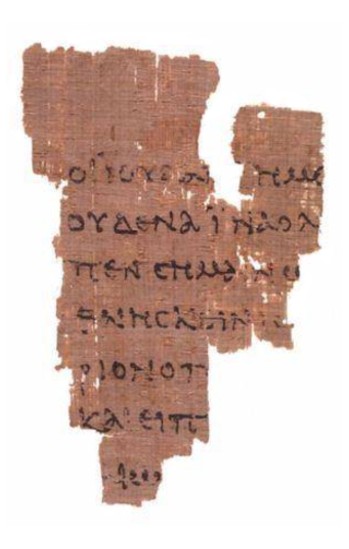
P52_recto

True or False? The Bible is so simple to understand that studying how to read it is just a waste of time.

Obviously, the answer to that question is a resounding “False.” While some might argue with me, every serious student of the Scriptures knows that probing its depths requires a variety of skills beyond simple faith.

Well, “simple faith” actually is essential for understanding God’s word, but it requires more than simply possessing faith to comprehend its meaning. If that were not true, then everyone being trained in seminaries and colleges to help others explore God’s word are wasting their time.

Exegesis—the focused study of biblical texts—is a core subject for Bible students. It goes deeper than secular “Bible as Literature” courses, and strives to interpret each passage as faithfully as possible. After all, Christians believe these words are inspired.

In 1952 C.S. Lewis wrote a letter in which he noted the value of knowledgeable instructors in understanding the Bible.

It is Christ Himself, not the Bible, who is the true word of God. The Bible, read in the right spirit and with the guidance of good teachers, will bring us to Him.

Bible Study Magazine had an exceptionally good issue several months ago. They provide online access to some of their articles, but sadly, not to the essay I wish to cite. It was written by Karen Jobes, a retired professor of “New Testament and Exegesis” from Wheaton College and Graduate School. She writes:

Different cultures’ writings function in particular ways and settings, and a given literary genre is signaled by textual clues—stock phrases or forms recognizable to anyone familiar with the literature of a given culture.

Jobes begins her article with an example. “Imagine you’re sitting down to read . . . The book in your hands begins, ‘Once upon a time.’” Western readers would know immediately what to anticipate in the pages that follow.

Then she raises a curious question. “Now imagine you’re a student taking a physics course. If your textbook began, ‘Once upon a time,’ you’d no doubt be confused by the phrase and wonder how you should understand it in a scientific context.”

Her article discusses the importance of properly recognizing the genre of what we are reading. This is a concept quite familiar to most readers of Mere Inkling. But what is unfamiliar to many, who have not had opportunity to study biblical exegesis, are the genres and guiding principles employed by Old and New Testament writers.

Reading the Gospels

In two brief pages, Dr. Jobes explains a fundamental principle that we spent weeks discussing in my seminary courses. Knowing the genre of the biblical text is the key to understanding it. Let’s look at the Gospels.

Mark . . . identifies his text as evangelion (“good news,” Mark 1:1), picking up the term Jesus himself used to describe his message (Mark 1:15). The early church came to refer to all four accounts of Jesus’ life using the same term, which survives today in English as “gospel,” a literary genre unique to accounts about Jesus.

The author points out a similarity between the Gospels and “an ancient Greek genre called bioi (“lives”). Rather than provide a day-by-day journal, these “biographies” focus on what is truly important in the perception of the writer.* John offers the prime Christian example of this, in devoting nearly forty percent of his Gospel to the final ten days of Jesus’ life.

C.S. Lewis’ Rules for Exegesis

Hundreds of people sought advice from the Oxford professor. Many asked questions about various Bible passages and religious doctrines. Lewis did his best to point them in the right direction, all the while explaining that he was not a trained theologian.

Within his letters, we find examples of his advice about how to understand the meaning of the Scriptures. “I take it as a first principle that we must not interpret any one part of Scripture so that it contradicts other parts, and specially we must not use an apostle’s teaching to contradict that of Our Lord.” He also wrote:

The two things one must not do are (a) to believe on the strength of Scripture or on any other evidence that God is in any way evil (In Him is no darkness at all) (b) to wipe off the slate any passage which seems to show that He is.

Behind the shocking passage be sure there lurks some great truth which you don’t understand. If one ever does come to understand it, one sees that it is good and just and gracious in ways we never dreamed of. Till then it must just be left on one side.

But why are baffling passages left in at all? Oh, because God speaks not only for us little ones but for the great sages and mystics who experience what we can only read about, and to whom all the words have therefore different (richer) contents.

Would not a revelation which contained nothing that you and I did not understand, be for that very reason rather suspect? To a child it would seem a contradiction to say both that his parents made him and God made him, yet we see how both can be true.

We began with a question, so it’s fitting to end with one.

True or False? Understanding the Bible is so challenging that we should postpone reading it until we become experts at exegesis?

The answer to this question is as obvious as the one with which we began. Don’t delay reading the Scriptures. Immerse yourself in God’s word. But, if you long to know them better, invest some time in learning how to best understand their full meaning.

_____

* In his biographical collection entitled Parallel Lives, the Greek philosopher and historian Plutarch (c. 46 – c. 122) expressly described the bioi genre.

In writing the Lives of Alexander the Great and of Cæsar the conqueror of Pompeius, which are contained in this book, I have before me such an abundance of materials, that I shall make no other preface than to beg the reader, if he finds any of their famous exploits recorded imperfectly, and with large excisions, not to regard this as a fault.

I am writing biography, not history; and often a man’s most brilliant actions prove nothing as to his true character, while some trifling incident, some casual remark or jest, will throw more light upon what manner of man he was than the bloodiest battle, the greatest array of armies, or the most important siege.

Therefore, just as portrait painters pay most attention to those peculiarities of the face and eyes, in which the likeness consists, and care but little for the rest of the figure, so it is my duty to dwell especially upon those actions which reveal the workings of my heroes’ minds, and from these to construct the portraits of their respective lives, leaving their battles and their great deeds to be recorded by others.

The parchment shown above is the earliest copy of the Gospel According to John. Included on the recto (front) are John 18:32-33.

Chocolate Mushrooms

mushroomThat’s right, chocolate mushrooms. And it gets worse.

Some flavors are not intended to ever be combined. Years ago, some friends who knew I loved chocolate and despised mushrooms found the perfect gift for me. Chocolates shaped like mushrooms.

There was only one small problem. The chocolates were actually mushroom-flavored. Imagine a chocolate bar melted into a can of cream of mushroom soup, and you get the idea.

Even people like my wife who love both distinct tastes, couldn’t stomach the blend.

Well, a new product has entered the market and it immediately reminded me of that unsavory fiasco.

A company in Hawaii has capitalized on merging two very flavors that are popular in many locales but just sound a wee bit incompatible. They have taken the delectable taste and gentle crunch of macadamia nuts and accented them with the aromatic zest of spam.

That’s right. Spam-flavored macadamia nuts. They sound irresistible, don’t they?

Probably not. But then, most readers of Mere Inkling aren’t in the target audience of Hamakua Macadamia Nut Company. The fact is—and those of us who’ve experienced the joy of living in the Pacific and Micronesia know this well—there are vast numbers of people who absolutely love spam.

I actually don’t have an objection to either of these products . . . individually. Spam casserole was a staple in the home of my youth, and I can eat it with pleasure today. Macadamias still seem a bit exotic and shipping costs make them a bit pricier than most of their competition, but they taste great.

Two wonderful flavors. Logic tells us that if they are both good alone, they’ll be even better together!

But some things were never meant to be combined.

Then again, some different qualities are magnificent when they are brought together. This is especially true when it comes to the art of writing.

Evelyn Underhill, a gifted author in her own right, composed a letter to C.S. Lewis in 1938 praising him for his recently released Out of the Silent Planet.

It is so seldom that one comes across a writer of sufficient imaginative power to give one a new slant on reality: & this is just what you seem to me to have achieved. And what is more, you have not done it in a solemn & oppressive way but with a delightful combination of beauty, humour & deep seriousness. I enjoyed every bit of it, in spite of starting with a decided prejudice against “voyages to Mars.”

“Beauty, humor, and deep seriousness . . .” Traits those of us who love Lewis’ work have come to expect. In great quantity. And we are not disappointed.

Good writing can excel in a single dimension. Great writing, it seems to me, earns that appellation by weaving together a variety of strong “flavors.”

It’s like comparing a superb violin solo to a flawless symphony. Part of the wonder of the latter is the skill with which each disparate element combines into a glorious whole.

Or, returning to the culinary realm with which we began, powerful writing properly combines distinct flavors that complement one another . . . such as chocolate and peanut butter, or spam and . . . Well, I trust I’ve made my point.