Suffering Caused by Labeling Children

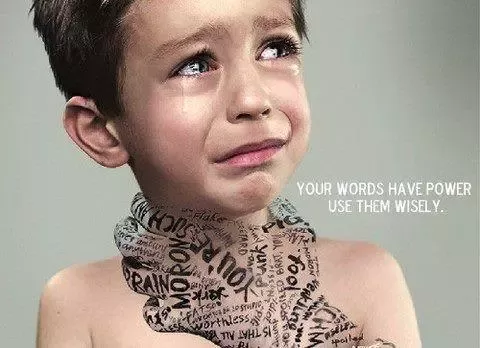
Kids are often cruel, dishing out insults and rude nicknames to those they deem “different.” Sadly, not everyone outgrows this ugly behavior. As C.S. Lewis wrote in The Four Loves,

We hear a great deal about the rudeness of the rising generation. I am an oldster myself and might be expected to take the oldsters’ side, but in fact I have been far more impressed by the bad manners of parents to children than by those of children to parents.

I recently discovered an artist whose music reveals the pain caused by this cruelty. In “Not My Name,” Matt Sassano describes how we can move beyond the wounds of our past. For we all understand these hurtful words possess power.

These are the scars
     that I’m forced to live with,
These are the scars
     that mark me as a misfit . . .

Who among us does not bear scars from past struggles? Who among us has never been ridiculed by others?

Despite having a loving mother who sheltered me from much of life’s traumas, I bear my own scars. That’s one reason this song powerfully resonated with me. 

But there is a stronger reason I am touched by “Not My Name.” It’s because, as a pastor I have seen far, far too many women and men who remain buried beneath their pain.

I found healing in God’s grace. The scars now cause me little discomfort, though the memories remain. And I have found healing often begins when people who have endured life’s onslaughts learn they are not alone. 

This man shares a heart just like their own.

These are the scars
     that I am forced to live with
So pick me apart
I won’t fit the mold that you fit
But thеre’s a warrior inside me
That you playеd a part in building
Because you made me understand.

About staying strong when you’ve fought so long
In a world that tells you you don’t belong
Living in the shadow of all your flaws
Where it’s hard to be seen for who you are.

And, the emotionally and spiritually wounded can see how someone suffering like them can proclaim this liberating truth:

So label me
Call me by my pain
That’s not my name
That’s not my name.

I’m so much more
     than your throw away
That’s not my name
That’s not my name. . . .

You won’t sentence me
Your words are dead to me
I know my suffering
     is not my identity.

As impressed as I was with this song, it means all the more now that I learned something about Sassano’s life.

The Sins of the Father

A short biography reveals some of the reason for Sassano’s plaintive spirit. 

He was the son of an unfit pastor, whose anger and abuse crushed his childhood faith. His search for meaning “was intensified by the experience of living with two disabilities: Cerebral Palsy and dyscalculia (which impairs brain functions like navigation and mathematics).

“I spent much of my early life in and out of doctor’s offices and disability meetings, which led me to struggle with my self-perception and self-esteem.”

It is this tragic youth which directly inspires his video “Dear God.” Released in 2022, it reminds me of the lamentations we find in the Scriptures, particularly the Psalms and Jeremiah. In Madeleine L’Engle’s forward to C.S. Lewis’  lamentations in A Grief Observed, she expresses gratitude for his honest treatment of grief’s violence. 

I am grateful to Lewis for the honesty of his journal of grief, because it makes quite clear that the human being is allowed to grieve, that it is normal, it is right to grieve, and the Christian is not denied this natural response to loss.

I am grateful, too, to Lewis for having the courage to yell, to doubt, to kick at God . . . This is a part of healthy grief not often encouraged. It is helpful indeed that C.S. Lewis, who has been such a successful apologist for Christianity, should have the courage to admit doubt about what he has so superbly proclaimed. It gives us permission to admit our own doubts, our own angers and anguishes, and to know that they are part of the soul’s growth.

The video amplifies the power of the lyrics of “Dear God.” So, do watch it.

I’ve got questions, confessions
I just want peace of mind
Time’s fading and I’m waiting
For something I can’t find
I am overwhelmed
Can I endure this hell?
No way to break the spell
I’ll spill my heart again

Dear God
I’ve lost the will to fight
Please give me a sign
I’m empty inside
Got no strength to carry on
The plague has multiplied
It’s eating me alive
How can I survive?
Dear God

Much like C.S. Lewis’ book describing the loss of his wife, Sassano’s songs can help bring healing to those in similar pain. Even if you don’t need to listen to these songs . . . trust me, there is someone you know and care about, who does!

Can We Ignore Modern Slavery?

I can’t answer this question for you, but I know how I want to be able to answer when I stand before our Creator. 

Many Christians include corporate confession and absolution (forgiveness) as part of their regular worship. We often ask forgiveness our sins of commission and omission – the wrongs we do, and the wrongs we are responsible for when we fail to do what we should.

God forbid that any of us would actively support slavery, but . . . how little most of us do to reduce it or free people from its deadly grasp.

In Britain, the National Society for the Prevention of Cruelty to Children, founded in 1884, recognizes modern slavery as one of the world’s greatest challenges. As they say: “Any child is at risk of child trafficking.”

Save the Children states that “children account for 27% of all the human trafficking victims worldwide, and two out of every three child victims are girls.”

Sometimes sold by a family member or an acquaintance, sometimes lured by false promises of education and a “better” life – the reality is that these trafficked and exploited children are held in slave-like conditions without enough food, shelter or clothing, and are often severely abused and cut off from all contact with their families.

The children’s condition is not “slave-like;” these precious victims literally are slaves, in every cruel sense of the word. While no unenslaved person would be so ignorant as to presume they understand slavery, C.S. Lewis mentioned in a 1939 letter several torments it inflicts. At the break of the Second World War, he was reflecting on his experiences in the First.

My memories of the last war haunted my dreams for years. Military service, to be plain, includes the threat of every temporal evil; pain and death which is what we fear from sickness; isolation from those we love which is what we fear from exile: toil under arbitrary masters, injustice, humiliation, which is what we fear from slavery: hunger, thirst and exposure which is what we fear from poverty.

The most shocking part of this description from Save the Children, is the acknowledgment that the children are “sometimes sold by a family member . . .” I discussed this grim truth in my 2014 post, “Loving Prostitutes.”

In that article I express a sentiment I hope you share: “I love prostitutes because God has granted me the vision to see them as he does.”

What You & I Can Do Today

Obviously, if this subject is new to you, you can become informed. The links I’ve provided offer a good starting point.

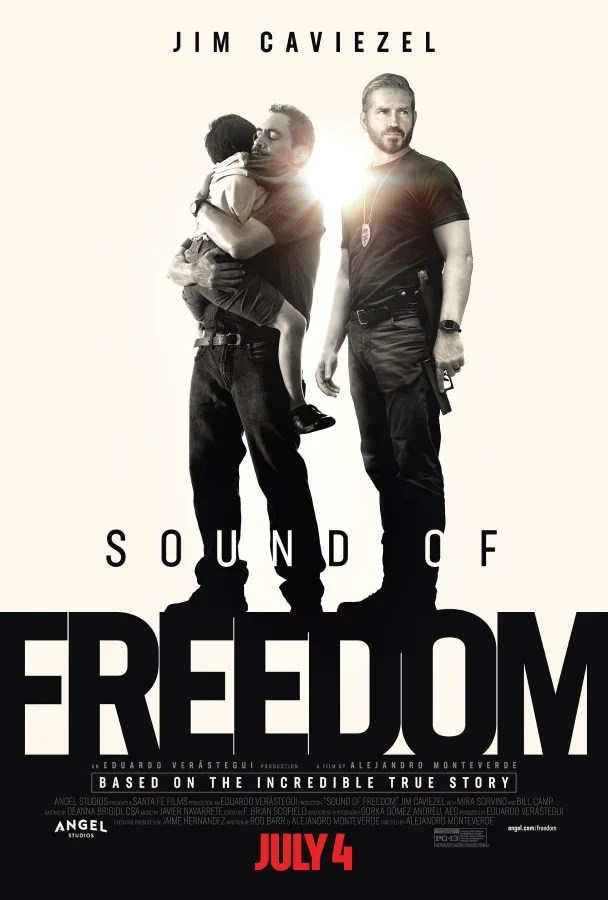
At the present moment we have a truly unique opportunity to make a contribution toward addressing this massive horror. We can support a superb, first-class film that is currently showing in hundreds of cinemas. 

Sound of Freedom is a true story with a superb cast and excellent cinematography. Despite its serious subject, the film is well worth viewing while it is still in theaters. Simply by attending, and even more by encouraging family and friends to join you, we can raise the awareness of this tragedy.

Together, you and I truly can help rescue people from this fate, and promoting this message of hope and deliverance is a small step in that journey. 

When faced with ugly things, the timid response is to turn away and pretend it doesn’t exist. In cases like this, particularly involving children, a cowardly response in ignoring the evil constitutes nothing less than a sin of omission. 

Check with your local theaters today, and reserve a seat at a showing of Sound of Freedom. (And, for those who see this suggestion months or years after the film’s 2023 release, check it out soon on a streaming service.)

Postscript & Resources:

While I was still on active duty, the United States Department of Defense initiated a long-overdue program. In recognition that military members are literally on the “front lines” of encountering modern slavery, Combating Trafficking in Persons is an official program established to confront the crime.

The program includes provisions requiring training for all DoD personnel, civilian as well as uniformed. This site describes the various levels of training required. To actually “take” the training and testing requires login privileges. However, various resources – including some very informative videos – are available to the public.

Similarly, agencies such as INTERPOL restrict their courses to members. Nevertheless, they offer a variety of educational resources and updates on current efforts to battle this crime around the globe.

While I haven’t personally vetted the following, a number of public and governmental organizations offer free training for interested individuals. Among them are: 

the U.S. Department of Homeland Security, and the Office for Victims of Crime. The U.S. Institute Against Human Trafficking lists six free classes, several of which offer certificates of completion.

The Home Office in the United Kingdom hosts a site with a number of related resources. One is “A typology of modern slavery offences in the UK” which breaks “down the broad categories of modern slavery into 17 distinct types of offences identified in the UK.” No doubt, most other enlightened nations promote similar materials.

In a 1943 essay entitled “Equality,” C.S. Lewis discusses the subject of the nature of Democracy, as a form of government. His argument includes the clearest possible reason why slavery never has been, and never could be a good, or morally neutral, thing.

I am a democrat because I believe in the Fall of Man. I think most people are democrats for the opposite reason. A great deal of democratic enthusiasm descends from the ideas of people like Rousseau, who believed in democracy because they thought mankind so wise and good that everyone deserved a share in the government.

The danger of defending democracy on those grounds is that they’re not true. . . . I find that they’re not true without looking further than myself. I don’t deserve a share in governing a hen-roost, much less a nation. . . .

The real reason for democracy is . . . Mankind is so fallen that no man can be trusted with unchecked power over his fellows. Aristotle said that some people were only fit to be slaves. I do not contradict him. But I reject slavery because I see no men fit to be masters.

I know that C.S. Lewis would add his “amen” to my challenge today that each of us might look for ways to help eradicate this plague of slavery, which has cursed humanity for millennia.

C.S. Lewis & the Playful God

When my grandchildren were younger, we played a game where everything would be “normal” and I would without warning say “you don’t need to be afraid of me, because I’m not…” [transformational pause, followed with a growl] “… an ogre!”

The kids would squeal and hightail it for cover where they were safe while I briefly lumbered about for a moment. It was much fun, and if Jesus tarries, perhaps I’ll play a similar game with their children.

I recently read an interesting article about Martin Luther’s understanding of God’s playfulness. You can read the entire article here: “Deus Ludens: God at Play in Luther’s Theology.”

Finally, and perhaps most importantly, Luther knows a kind of unstructured play, especially between parents and children, that may involve . . . a kind of pretending which then gives way to the revelation of reality.

C.S. Lewis was a confirmed bachelor when he was surprised by encountering Joy, who would become his wife. He did a commendable job as a stepfather after her death, but wasn’t well equipped for the job.

In The Abolition of Man, Lewis confessed “I myself do not enjoy the society of small children . . . I recognize this as a defect in myself.” Yet he did enjoy other forms of play – of the mental and imaginary varieties – that many young people also savor.

One pastor encourages us to apply Lewis’ observation to ourselves.

Do you recognize that an inability to enjoy children is not representative of a defect in the children, but of a defect in us? I hope that you do. And if not, I hope that you will.

In “C.S. Lewis on Pretending,” the author touches on this theme. After quoting the following passage from Mere Christianity, he writes, “Lewis is drawing out two key elements of change. The role of imagination in faith. The necessity of visionary faith for change.”

Very often the only way to get a quality in reality is to start behaving as if you had it already. That is why children’s games are so important. They are always pretending to be grown-ups – playing soldiers, playing shop.

But all the time, they are hardening their muscles and sharpening their wits so that the pretence of being grown-up helps them grow up in earnest.”

Poet Malcolm Guite challenges (accurately, in my opinion) Lewis’ self-diagnosed disconnect from children.

That Lewis could write immortal children’s tales in late middle age, and weave into those tales such truth and vision that the children who first read them at 8 or 9 keep returning to them in adult life and finding more and more, is a sign that he retained to the end, ‘the child within,’ to borrow George Macdonald’s phrase. And yet in those very stories he provides for both children and grown-ups some very searching truths about what it is both to be a child and to grow up.

Other Christians have identified with Lewis’ challenge. One pastor repeated Lewis’ words about his “defect,” admitted he felt similarly, and responded:

Do you recognize that an inability to enjoy children is not representative of a defect in the children, but of a defect in us? I hope that you do. And if not, I hope that you will.

Because children, just like the poor, offer us another unique opportunity to see what it means to live inside God’s kingdom.

Like it or not, children are going to be who they are. With zero nuance or subtlety, they are going to be consistent – the authentic version of themselves – in every situation.

Ironically, despite his supposed handicap, C.S. Lewis directly blessed more children than it would be possible to number. The follow article, “A Playful Romp with God,” reveals an excellent example of his accomplishment.

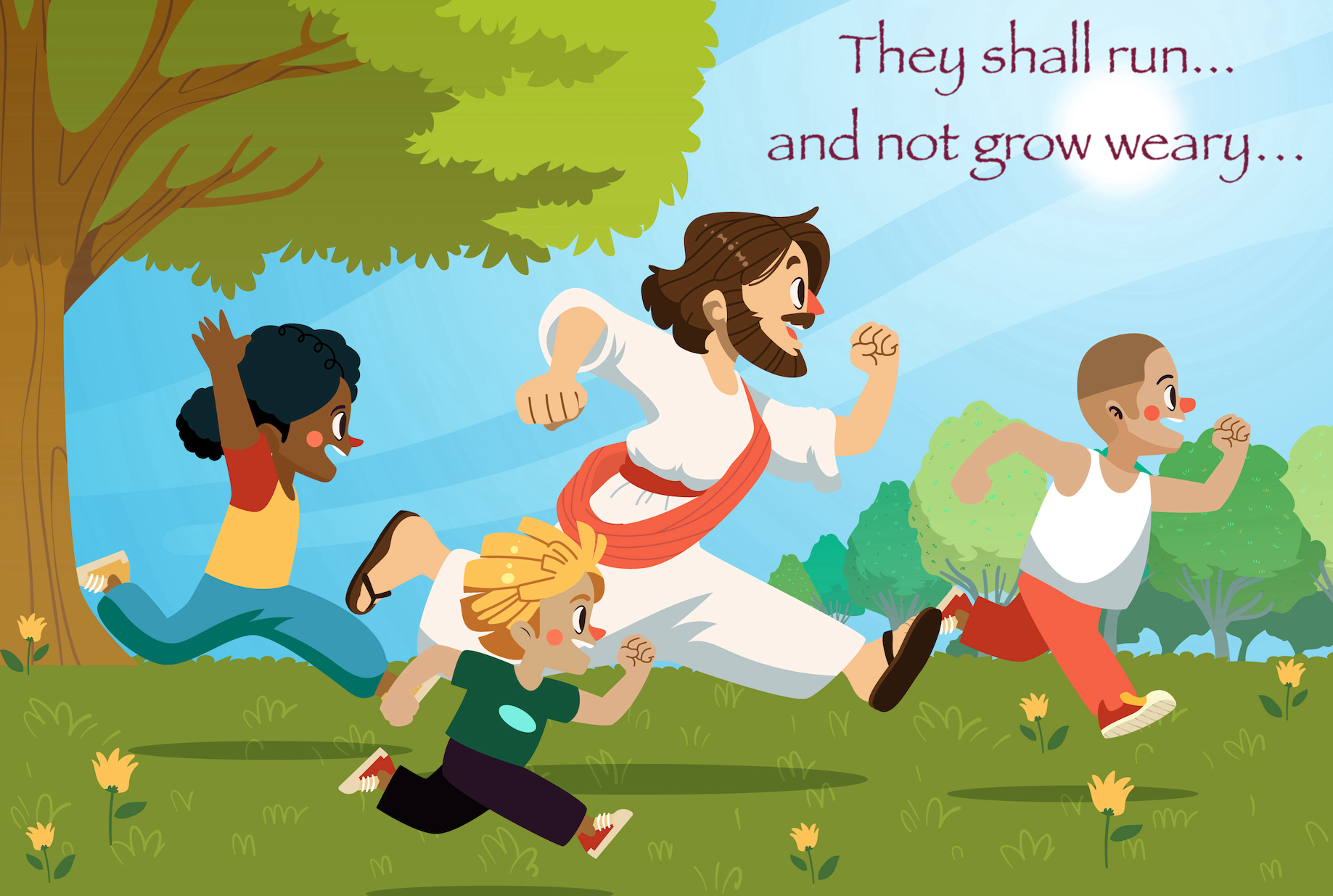
The first time I encountered this scene – as an adult, reading the Narnia books to my own kids – I cried. The possibility that God might laugh, romp, and play with his children stopped me in my tracks. How could such a scandalous thing be true?

Growing up, I never heard a word about God laughing, joking, or doing anything for fun. No one invited me to imagine the Jesus of the Gospels smiling, much less goofing around with his disciples, playing hide-and-seek with the children who flocked to him, or basking in the sunshine on a gorgeous summer day.

The list of characteristics I associated with God – omniscience, holiness, transcendence, righteousness – did not include playfulness.

The writer of these words is not alone. Too many people have been raised with the image of a stern, humorless Christ. That’s one of the reasons I am so pleased with the new series, “The Chosen.”

While they may carry the image of Jesus’ playfulness a bit too far – who can say – it is a truly refreshing and convincing portrayal of the Lamb who came to lay down his life as a sacrifice for each of us.

C.S. Lewis portrays this aspect of God brilliantly in The Lion, the Witch, and the Wardrobe. After his resurrection, Aslan reveals himself first to Susan and Lucy. And, rather than rush off to prepare Narnia for the approaching battle with the Witch . . . he plays.

“Oh, children,” said the Lion, “I feel my strength coming back to me. Oh, children, catch me if you can!” He stood for a second, his eyes very bright, his limbs quivering, lashing himself with his tail. Then he made a leap high over their heads and landed on the other side of the Table.

Laughing, though she didn’t know why, Lucy scrambled over it to reach him. Aslan leaped again. A mad chase began. Round and round the hilltop he led them, now hopelessly out of their reach, now letting them almost catch his tail, now diving between them, now tossing them in the air with his huge and beautifully velveted paws and catching them again, and now stopping unexpectedly so that all three of them rolled over together in a happy laughing heap of fur and arms and legs.

It was such a romp as no one has ever had except in Narnia; and whether it was more like playing with a thunderstorm or playing with a kitten Lucy could never make up her mind. And the funny thing was that when all three finally lay together panting in the sun the girls no longer felt in the least tired or hungry or thirsty.

Do we have a playful God? If you still think not, you have my sympathy, my prayers, and my encouragement to read this helpful article, “The Role of Laughter in the Christian Life,” written by the author of Surprised by Laughter: The Comic World of C.S. Lewis.

Creative Definitions

Recently I read about an African Christian who was raised in a family that practiced ancestral worship. His grandfather was considered a witchdoctor, and it was expected that this young man would assume his duties.

The only problem is that when I initially viewed the passage, I read that his grandfather was a whichdoctor.

My once 20/20 vision is long gone. I still read without glasses (for the most part), but when I have yet to wash the sleep from my eyes, I encounter some surprising words.

“Whichdoctor” actually made some sense. I acknowledge it hasn’t been an English word (until now) but is so clear and so utilitarian that it cries out for recognition.

Whichdoctor: An interrogative used when attempting to ascertain which physician’s  attention an individual should be seeking. Especially useful in a hospital setting with numerous specialists. As in: Whichdoctor should I talk to, the podiatrist, the pediatrician, the pulmonologist, the psychiatrist, the pathologist, or the proctologist?

Last year I posted a column entitled “Create a Word Today.” It was inspired by an article I cited about making up useful words with pertinent definitions. I included 22 examples in my first column. They touched on a variety of subjects.

Mannekin: A boring, sedentary relative, who rarely rises from the couch.

Purrification: The activity of forgiveness and restoration that occurs when any cat makes a sincere confession of its sins.

Several were ecclesiastical in flavor.

Cathedroll: A large church led by a senior minister given to quaint and unintentionally comic humor.

Concupiscents: Hollywood’s obsession with including graphic sexual themes in all of their productions, resulting in the selling of their souls for pennies on the dollar.

And some related to the field of writing.

Manuskipped: The sad condition when the article or book into which you poured your blood, sweat and tears has been tossed into a slush pile to lie forgotten.

Proofreaper: Someone you invited to read your manuscript for misspellings who advises you to delete entire sections of your precious creation.

If you’re curious, there are 16 additional words included in the original post linked above.

So, allow me to offer here a few recent efforts, inspired by the misreading I referred to at the top of the page. How about 22 more?

But, before that, let’s look at a passage from C.S. Lewis’ autobiography, Surprised by Joy. As a person who has always appreciated a good vocabulary – and who is blessed to have grandchildren who are articulate beyond their years – I am saddened by Lewis’ youthful experience.

Reading much and mixing little with children of my own age, I had, before I went to school, developed a vocabulary which must (I now see) have sounded very funny from the lips of a chubby urchin in an Eton jacket.

When I brought out my “long words” adults not unnaturally thought I was showing off. In this they were quite mistaken. I used the only words I knew.

The position was indeed the exact reverse of what they supposed; my pride would have been gratified by using such schoolboy slang as I possessed, not at all by using the bookish language which (inevitably in my circumstances) came naturally to my tongue.

And there were not lacking adults who would egg me on with feigned interest and feigned seriousness – on and on till the moment at which I suddenly knew I was being laughed at.

Then, of course, my mortification was intense; and after one or two such experiences I made it a rigid rule that at “social functions” (as I secretly called them) I must never on any account speak of any subject in which I felt the slightest interest nor in any words that naturally occurred to me. And I kept my rule only too well . . .

Hooplaw: The two, vastly different legal disciplines dealing with (1) basketball contracts, and (2) litigation related to injuries caused by overly excited commotion.

Interdisciplinairy: The entire field of specialty studies related to the atmosphere.

Marvelouse: A creep or cad who considers himself something quite extraordinary.

Atrofee: The medical bills associated with the care of patients suffering an enduring coma.

Predilicktion: A preference for the sensation of taste over the other four basic human means of perceiving the world around us.

Ammunishun: The attitude of some activists seeking to restrict Second Amendment rights.

Megalowmaniac: The true stature of power hungry narcissists.

Gratuitruss: The unnecessary wear of a device to restrain a nonexistent hernia.

Calumknee: Malicious misrepresentations of political figures who frequently stumble.

Misscalibration: The awkward occasion when footwear retailers suggest to a young lady try on size 20 Air Jordans.

Patriought: The noble, often self-sacrificial, behavior of citizens who truly love their country.

Hypnothetically: The wide range of potentially embarrassing acts a person might be directed to perform under the influence of mesmerism.

Enlightenmint: The experience of achieve a spiritual pinnacle, accompanied by an aromatic scent.

Raspewtin: What Russia’s last Tsar should have done to Grigori.

Canonball: An elegant celebration lacking minuets, due the participants’ vows of celibacy, but not lacking in a wide selection of vinted and distilled beverages.

Immaculatte: A perfectly balanced beverage prepared by one of the world’s finest baristas.

Telegraft: Crimes committed over the phone by telemarketers, or via the airwaves and internet by televangelists.

Archietype: Ideas and symbols that recur in stories from many cultures and eras which bear a clear likeness to Archibald Andrews, who was often accompanied by his companion Jughead.

Syruptitious: The practice of slipping secrets past the unsuspecting by applying sticky sentimentality to one’s words.

Youphemism: The substitution of a mild or neutral description of someone to replace what you truly think of them.

Boulebard: The landscaped avenues of Stratford-upon-Avon by William Shakespeare.

Hagographer: An author who prefers to write the biographies of harpies rather than saints.

Admittedly, these words are not all top tier, but I challenge you to do better. If you have one or two winners, please cite them in the comments below. Oh, I just thought of another:

Religioscity: The religious devotion expressed by the residents of an urban environment.

Now I need to think about something else so I’ll be able to sleep tonight without jumbled word running through my mind.

As the sainted C.S. Lewis once described some troubled days in a boarding school while a youth:

Consciousness itself was becoming the supreme evil; sleep, the prime good. To lie down, to be out of the sound of voices, to pretend and grimace and evade and slink no more, that was the object of all desire—if only there were not another morning ahead—if only sleep could last for ever! (Surprised by Joy)

The Right Kind of Family Love

People who are wise understand that not all forms of “love” are healthy. That’s obvious with the epidemic of faux love in today’s “hookup culture.”

But even in genuine relationships, such as families, what passes for “love” can become twisted. Even the best of motives can blind us to what’s really best for our children. This sad irony is on my mind right now, since it recently struck close to home.

The title of this post suggests that just as there is a healthy version of family love, there can also be subtle corruptions of that virtue.

Parenting is complicated. We love our children, but if we make “happiness” the primary goal we are missing the mark. This pursuit of what is more often “pleasure” than genuine joy, usually devolves into letting kids do whatever they want. Some people parent this way.

Others are willing to pay the price of helping their children learn the lessons that will lead to a truly meaningful and fulfilling life. This is love. Children raised with the first objective often end up pursuing their appetites. They seldom accomplish much in life and rarely look beyond their own desires, to see the needs of others.

One prominent organization supporting the families of addicts shares the following epiphany.

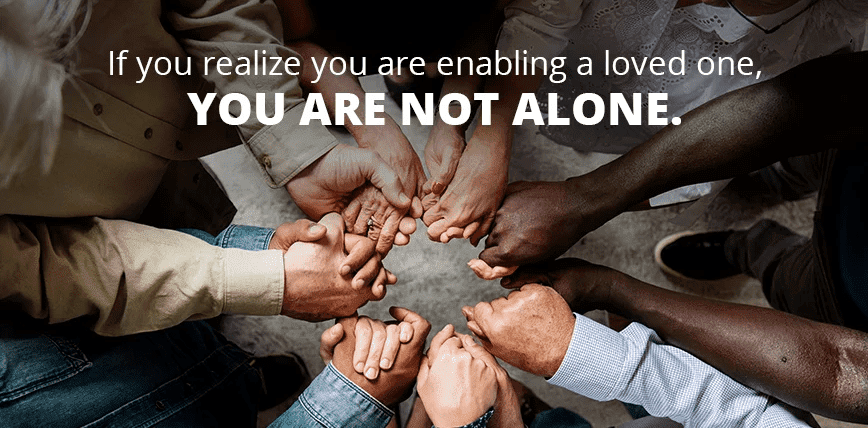
When I first came to Al‑Anon, I spent a great deal of time wrestling with the term, “enabling.” I am a mother. Surely a mother’s role is to enable her children, is it not? It has been a struggle to understand, let alone accept, that the behavior I viewed as that of a good mother was actually unhealthy!

In his brilliant book, The Four Loves, C.S. Lewis describes how this unbalanced approach can be based in love, but results in unintended consequences.

The maternal instinct . . . is a Gift-love, but one that needs to give; therefore needs to be needed. But the proper aim of giving is to put the recipient in a state where he no longer needs our gift.

We feed children in order that they may soon be able to feed themselves; we teach them in order that they may soon not need our teaching.

Thus a heavy task is laid upon this Gift-love. It must work towards its own abdication. We must aim at making ourselves superfluous. The hour when we can say “They need me no longer” should be our reward.

But the instinct, simply in its own nature, has no power to fulfil this law. The instinct desires the good of its object, but not simply; only the good it can itself give. A much higher love – a love which desires the good of the object as such, from whatever source that good comes – must step in and help or tame the instinct before it can make the abdication.

The internationally recognized Hazelden Betty Ford Foundation offers an article on the subject entitled “Five Most Common Trademarks of Codependent and Enabling Relationships.”

The concept of codependency and enabling sounds simple and straight forward – doing for a loved one what they can and should do for themselves – but it can be incredibly difficult to tell the difference between supporting and enabling a loved one.

So what’s the difference? After all, enablers want to help their loved one, too, and codependency might feel like healthy support. But enabling allows the status quo – drinking or using drugs – to continue, whereas healthy support encourages a person to address their addiction and all of its consequences.

In contrast to this indulgent version of parenting, good parents are able to say “no” to their children, when it is necessary or appropriate. Teaching healthy behavioral boundaries early on teaches kids to make their own, healthy, decisions. Letting them take shortcuts and lie leads to disaster.

God’s divine love is inexhaustible. But God’s approval and blessing are linked to the choices we make. He does not commend self-destructive actions. He still loves, but he makes quite clear the life he desires for his children and the alternative path that leads to Death. God does not prevaricate. God does not hesitate to say “no.”

In the Book of Hebrews, the writer elaborates on this truth – that discipline (not to be confused with anger or punishment) is an evidence of genuine love.

Have you forgotten the exhortation that addresses you as sons? “My son, do not regard lightly the discipline of the Lord, nor be weary when reproved by him. For the Lord disciplines the one he loves, and chastises every son whom he receives.”

It is for discipline that you have to endure. God is treating you as sons. For what son is there whom his father does not discipline? If you are left without discipline, in which all have participated, then you are illegitimate children and not sons.

Besides this, we have had earthly fathers who disciplined us and we respected them. Shall we not much more be subject to the Father of spirits and live? For they disciplined us for a short time as it seemed best to them, but he disciplines us for our good, that we may share his holiness.

For the moment all discipline seems painful rather than pleasant, but later it yields the peaceful fruit of righteousness to those who have been trained by it (Hebrews 12).

Parental Love in Lewis’ Fiction

C.S. Lewis’ classic The Great Divorce creatively illuminates errors that can come between each of us and God’s desire to bless and redeem us, and to usher us into his heavenly presence. In an “encounter” which shows how something as wonderful as familial affection can be perverted into a grotesque distortion of true love.

You should read the entire account in Lewis’ book, but hopefully the selection below will illustrate his insight.

One of the most painful meetings we witnessed was between a woman’s Ghost and a Bright Spirit who had apparently been her brother. They must have met only a moment before we ran across them, for the Ghost was just saying in a tone of unconcealed disappointment, ‘Oh…Reginald! It’s you, is it?’ ‘Yes, dear,’ said the Spirit. ‘I know you expected someone else. Can you…I hope you can be a little glad to see even me; for the present.’

‘I did think Michael would have come,’ said the Ghost . . . ‘Well. When am I going to be allowed to see him?’

‘There’s no question of being allowed, Pam. As soon as it’s possible for him to see you, of course he will. You need to be thickened up [the unredeemed are insubstantial, thus their description as “ghosts”] a bit.’

‘How?’ said the Ghost. The monosyllable was hard and a little threatening.

‘I’m afraid the first step is a hard one,’ said the Spirit. ‘But after that you’ll go on like a house on fire. You will become solid enough for Michael to perceive you when you learn to want Someone Else besides Michael. I don’t say “more than Michael,” not as a beginning. That will come later. It’s only the little germ of a desire for God that we need to start the process.’

‘Oh, you mean religion and all that sort of thing? This is hardly the moment . . . and from you, of all people. Well, never mind. I’ll do whatever’s necessary. What do you want me to do? Come on. The sooner I begin it, the sooner they’ll let me see my boy. I’m quite ready.’

‘But, Pam, do think! Don’t you see you are not beginning at all as long as you are in that state of mind? You’re treating God only as a means to Michael. But the whole thickening treatment consists in learning to want God for His own sake.’

‘You wouldn’t talk like that if you were a mother.’

‘You mean, if I were only a mother. But there is no such thing as being only a mother. You exist as Michael’s mother only because you first exist as God’s creature. That relation is older and closer. No, listen, Pam! He also loves. He also has suffered. He also has waited a long time.’

‘If He loved me He’d let me see my boy. If He loved me why did He take Michael away from me? I wasn’t going to say anything about that. But it’s pretty hard to forgive, you know.’

‘But He had to take Michael away. Partly for Michael’s sake…’

‘I’m sure I did my best to make Michael happy. I gave up my whole life . . .’

‘Human beings can’t make one another really happy for long. And secondly, for your sake. He wanted your merely instinctive love for your child (tigresses share that, you know!) to turn into something better. He wanted you to love Michael as He understands love. You cannot love a fellow-creature fully till you love God. Sometimes this conversion can be done while the instinctive love is still gratified. But there was, it seems, no chance of that in your case. The instinct was uncontrolled and fierce and monomaniac. Ask your daughter, or your husband. Ask our own mother. You haven’t once thought of her. . . .

‘This is all nonsense—cruel and wicked nonsense. What right have you to say things like that about Mother-love? It is the highest and holiest feeling in human nature.’ ‘Pam, Pam—no natural feelings are high or low, holy or unholy, in themselves. They are all holy when God’s hand is on the rein. They all go bad when they set up on their own and make themselves into false gods.’ ‘My love for Michael would never have gone bad. Not if we’d lived together for millions of years.’

‘You are mistaken. And you must know. Haven’t you met—down there—mothers who have their sons with them, in Hell? Does their love make them happy . . ?’

‘Give me my boy. Do you hear? I don’t care about all your rules and regulations. I don’t believe in a God who keeps mother and son apart. I believe in a God of love. No one had a right to come between me and my son. Not even God. Tell Him that to His face. I want my boy, and I mean to have him. He is mine, do you understand? Mine, mine, mine, for ever and ever.’

Exercising the right kind of family love is not always easy. Due to our sinful nature, it is often corrupted. Still, striving to build a healthy (and, dare I say, holy) family is quite an adventure. A final thought from C.S. Lewis.

Since the Fall no organization or way of life whatever has a natural tendency to go right. . . . The family, like the nation, can be offered to God, can be converted and redeemed, and will then become the channel of particular blessings and graces.

But, like everything else that is human, it needs redemption. Unredeemed, it will produce only particular temptations, corruptions, and miseries. Charity begins at home: so does un-charity.

By the conversion or sanctification of family life we must be careful to mean something more than the preservation of “love” in the sense of natural affection. Love (in that sense) is not enough. Affection, as distinct from charity, is not a cause of lasting happiness. Left to its natural bent affection affection becomes in the end greedy, naggingly solicitous, jealous, exacting, timorous. It suffers agony when its object is absent—but is not repaid by any long enjoyment when the object is present. . . . The greed to be loved is a fearful thing. . . .

Must we not abandon sentimental eulogies and begin to give practical advise on the high, hard, lovely, and adventurous art of really creating the Christian family? (“The Sermon and the Lunch”).

The Responsibility of Parenting

Some of us had the sad misfortune of growing up without parents. A larger number had mothers, but absent fathers. For a few, there was a dad, but the home lacked the presence of a mother. And then there are those who were blessed with the presence of a loving mother and father.

Each of these circumstances (and there are even more, of course), generates a different dynamic in a home. I am persuaded that God’s ideal of a father and mother, joined together as a “single flesh,” is best for nurturing healthy children. Thankfully, God loves every child, and living in less than ideal situations does not mean a person will grow up handicapped.

C.S. Lewis provides an amazing example of a boy who lost his mother to disease, and was raised by an emotionally distant father. Lewis’ father resorted to sending his sons off to boarding school rather than attempting to work through their shared grief together, in their home.

As an echo of that decision, C.S. Lewis sent his own sons away to school after their mother succumbed to her own battle with cancer. The situation was different, since Joy was raising the boys alone before Lewis married her, and Lewis who had imagined he would die a bachelor, was ill-equipped to provide a suitable environment for the children once their mother died.

I would be a different man today, if I had been raised in a home with parents whose love for one another overflowed. Perhaps my own family background is the reason I kept a plaque in my office that proclaimed that “the most precious gift a father can give his children is to love their mother.”

I was thinking about parenting because of a wonderful quote I read this morning in a interview with British comedian, Ricky Gervais. He was talking about growing up in a working class family, but being unconscious of their relative poverty.

I didn’t know I was poor, because my mother knitted all my jumpers, she made our Christmas presents, did all the decorating, grew things in the garden that she then cooked. I always thought, men work hard, but women work miracles.

Now that’s certainly a humorous way to express something that is quite frequently true.

What Kind of a Parent Am I?

Not all of us are blessed to be parents. Some consciously choose that path. Others, with whom I sincerely sympathize, wish to, but are never given the opportunity.

Some men simply contribute to the physical process and go merrily on their way, often carelessly impregnating others. These individuals can be considered “biological” parents, but they are not fathers. On the other hand, a woman who feels compelled by circumstances to allow her child to be raised by others, displays the compassion of a true mother.

I’ve seen some great fathers in my day. Unfortunately, I didn’t see them while I was growing up. So I had to “learn on the job.” I consider my early years as a dad “above average,” but my later years have actually been pretty decent. It’s been far easier than for many people, because my wife brings out the best in me. I wouldn’t care to postulate what kind of dad I would be without her counsel and encouragement.

I always imagined I’d be a husband and father someday. I see that is becoming less true with each generation.

If you are considering the question of “what kind of parent” you are, I’d like to caution you about two dangers. First, don’t get cocky. You aren’t perfect, not by a long stretch. There’s definitely room for some improvement.

Second, don’t get discouraged. We can all improve as parents, even after serious stumbles. Give parenting the attention it deserves. Seek advice from those who appear more successful – and are willing to be honest about their struggles. Choose schools and social activities that reinforce your efforts to raise healthy human beings. Adding prayer to the formula is often a wise choice.

There are a vast number of parental resources available online. The best of them are framed by a biblical worldview. Many address specific contexts, while others are more general. One I just visited for the first time is Philosophy for Parents.

Holly Hamilton-Bleakley teaches philosophy at the University of San Diego. Although she hasn’t posted recently, there is a wealth of thought-provoking material on her site. The most recent addresses the challenge of “Parenting in an Age of ‘Politics-as-Destruction.’”

She confronts a concern that should be at the forefront of every parents’ concern today, saying “It’s taking everything I have to protect my family from the toxic political culture in which we find ourselves.”

One of her earliest columns posed this question: “Could Parenting be More Important than Politics?” I highly recommend the piece, which begins with a pertinent passage from a letter C.S. Lewis wrote in 1955.

Quoting Lewis: “I think I can understand that feeling about a housewife’s work being like that of Sisyphus (who was the stone rolling gentleman). But it is surely in reality the most important work in the world. What do ships, railways, miners, cars, government etc. exist for except that people may be fed, warmed, and safe in their own homes? As Dr. Johnson said, ‘To be happy at home is the end of all human endeavor’ … We wage war in order to have peace, we work in order to have leisure, we produce food in order to eat it. So your job is the one for which all others exist.”

I love this quote.  I live my life by this quote.  But I think it needs some discussion.

And the discussion she provides is excellent. Regular readers of Mere Inkling know I’m no particular fan of “philosophy,” but these articles possess practical value! Something I’m confident C.S. Lewis would also commend.

On Choosing Between a Child and a Book

Some people become parents and others do not. This column isn’t about the complex considerations that determine which path each individual follow. We all know people in each situation who are happy—as well as those who are dissatisfied.

I want to consider here a single reason some people choose not to have children. There are, of course, many valid reasons for not bringing children into this world, but this one struck me as particularly odd.   

Before we look at the interview question, allow me to offer a thesis that I believe most writers would agree with. Not all would concur, but don’t you think there would be strong consensus with this statement:

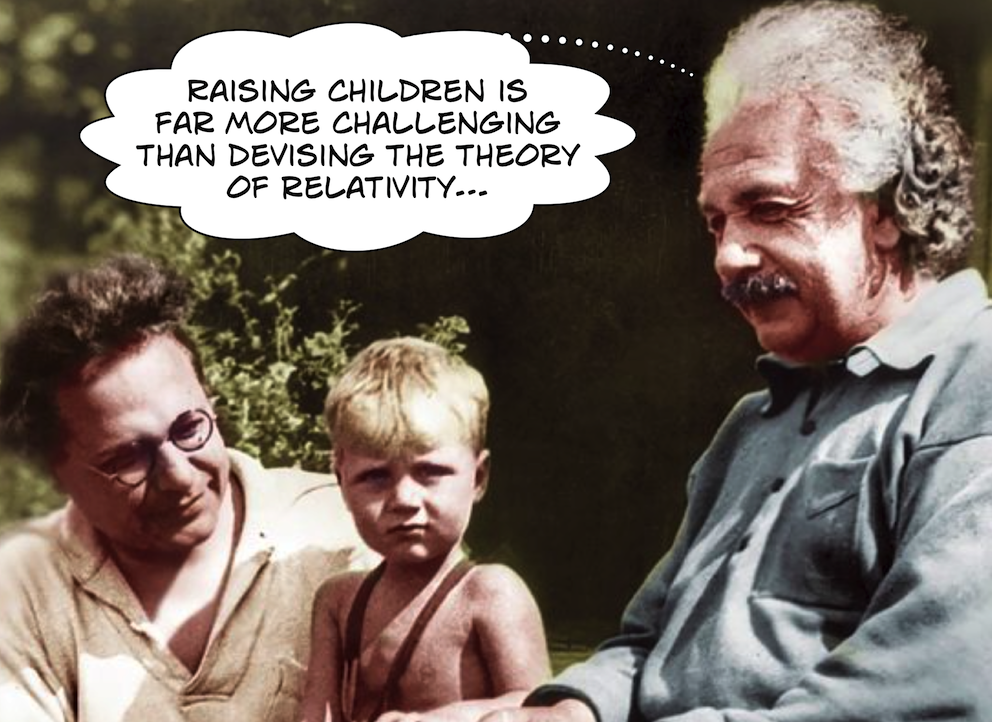
Raising children makes being a productive writer more challenging.

It’s pretty logical that the time spent actively parenting children leaves an author with less time to pursue their writing. Especially if they are a good mother or father.

Sure, kids provide us with some great stories and inspiration that can occasionally be worked into an article or story. But unless we’re a Dave Barry, an Erma Bombeck or a Bil Keane, people won’t line up to read about our children’s hijinks. So, if you were to balance the scales, I think we’d be hard-pressed to make the case that the addition of children to our household will make our writing more prolific.

In a recent interview with Forbes columnist Amity Shlaes, the editor of World Magazine raised this subject in an unusual way. Here is the question: “I talked with a Harvard economist years ago who said he was deliberately not having any children because he felt each child would lose him a book. You and I each have four children, and yet we’ve written books. Did you ever do a calculation like this foolish Harvard economist?”

Shales’ response was thoughtful. “Well, I’m very lucky in the husband department. He wanted lots of children and didn’t mind the work. But the main thing is: Children enrich life, they don’t impoverish it. You’d often be richer in dollars if you’d had no children, but with kids you’re richer in social capital, in happiness . . .”

It will come as no surprise that I agree with Shales’ opinion (with the substitution of “wife” in the first sentence). But the idea that struck me as rather shocking in this interchange was the reason the economist gave for opting not to have children: “because he felt each child would lose him a book.”

Wow. That is a pretty honest, and rather crass calculation. I won’t argue with his domestic equation, but it makes me shake my head. I can’t help but wonder how he will feel at the end of his life when he looks at his bookshelf of soon-to-be-forgotten titles and contemplates whether his choice was wise.

Lewis’ Personal Experience

C.S. Lewis was one of the most prolific writers. And he wrote in an expansive range of genres. It could easily be argued that his bachelorhood provided him with the time to write. That, in addition to the creative fountain provided by the Inklings made for a productive environment.

When he became a father, he was extremely conscientious. The boys were sent to private (or, in British parlance, “public”) schools after their mother’s death. However, that was the norm for children in their comfortable economic circumstances.

Lewis loved his sons, and did the best he could to be a father to them, despite his lack of confidence. Lewis was still the man who many years earlier (in 1935) wrote to his closest friend: “I theoretically hold that one ought to like children, but am shy with them in practice.” A decade later, in one of his most powerful books, Lewis confessed “I myself do not enjoy the society of small children . . . I recognize this as a defect in myself” (The Abolition of Man).

Self-awareness is a mark of intelligence and honesty. I strongly believe Lewis put the lie to his self-criticism about lacking a rapport with children, with his wonderful letters written to children.*

It could be argued that parenthood was one of the factors that affected Lewis’ literary production. Brenton Dickieson has a chart showing his annual production of books, here. Another scholar, Joel Heck, has done the world a great service by providing the definitive chronology of C.S. Lewis’ life and work, available here.

Lewis did not marry earlier in his life because he considered himself a confirmed bachelor. Joy’s unexpected arrival transformed his life.

But, even before he became a (step-)father, he would never have uttered the sentiment of the Harvard professor.

A book or a child? Which shall it be? If that is a difficult question for someone, here’s my advice: “Please just write your books; you’d probably make a lousy parent anyway.”


* C.S. Lewis was able to speak clearly to children. And, unlike so many adults, he did not speak down to them. While toddlers may have remained a mystery to him—and he never parented any—he respected children’s questions, and offered wise advice.

On putting one’s life in its proper order: “You are quite right if you mean that giving up fun for no reason except that you think it’s “good” to give it up, is all nonsense.”

And, how is this for a thoughtful, practical comment: “All schools, both here [in England] and in America, ought to teach far fewer subjects and teach them far better.”

Wise counsel to a young person (or anyone): God knows quite well how hard we find it to love Him more than anyone or anything else, and He won’t be angry with us as long as we are trying. And He will help us.”

And, one particularly inspiring comment about faith: “Anyone in our world who devotes his whole life to seeking Heaven will be like Reepicheep” in The Voyage of the Dawn Treader.

C.S. Lewis & Ice Cream

ice cream

What is your favorite dessert? I envy you if it’s something like kale or chia seeds. For me it’s a toss-up between chocolate chip cookies and brownies. However, for my wife, nothing else comes close to ice cream.

A recent study revealed some interesting facts about ice cream and those addicted to it. They say “consuming an entire pint of ice cream was once an act cloaked in shame, conducted from the privacy of one’s couch . . . Now some, even the waistline conscious, are unabashedly eating a whole pint in one sitting. From the container.”

Apparently half of all Americans have done just this. Well, they may have used bowls and sat somewhere other than their couch, but they have devoured a savory pint in one sitting. Unsurprisingly, forty percent felt guilty afterward. However, only ten percent felt sick.

Although there is little evidence C.S. Lewis was susceptible to the temptations of ice cream, he did enjoy its cousin. In a 1920 letter to his father, he describes some recent walking trips during which he enjoyed some exquisite clotted cream. Clotted cream was especially popular before refrigeration became an everyday luxury.

As you see, we have not yet moved: indeed the weather has not encouraged us to set out, though it has not prevented us from a great deal of walking. . . . You need not have any fears about our cuisine here. Remember we are almost in Devon and the clotted cream of the country is a host in itself: also–shades of Oldie–the real ‘Deevonshire’ cider in every thatched and sanded pub.

A few miles away is a little fishing town called Watchet, which saw at least one interesting scene in its obscure history: it was here that Coleridge and the Wordsworths slept (or ‘lay’ as they would have said) on the first night of their walking tour.

In All My Road Before Me, his diary from the mid-twenties, he mentions several times enjoying another cream-based delight.

We then motored back to town to a civilian club of which W[arnie] is a member, where he had provided a royal feast of the sort we both liked: no nonsense about soup and pudding, but a sole each, cutlets with green peas, a large portion of strawberries and cream, and a tankard of the local beer which is very good.

So we gorged like Roman Emperors in a room to ourselves and had good talk.

While there are few improvements I think can be made to the Narnian tales, I do have one. The White Witch, as we know, presides over a snow-covered world where Mr. Tumnus sadly says “it is always winter, but never Christmas.”

Thus, it seems quite evident Queen Jadis could just as easily have bewitched Edmund with ice cream, as with Turkish delight. (Perhaps she didn’t wish to offer it to him because frozen dairy delicacies were her own secret delight.)

Modern Creamery Temptations

We have noted that some people feel remorseful after eating a “large” portion of ice cream. Marketers attempt to assuage such guilt by offering an increasing array of “low-cal” options. They may be better for us than the real thing, but I’ll leave that to the experts to justify. It seems to me if they taste just as good and are less bad for us, they’re worth considering.

There must be something to this line of thought. The afore-cited article compares the sales growth of regular ice cream companies (single digit) and Halo Top low calorie ice cream (555% from 2016 to 2017).

Most people have only enjoyed ice cream from domesticated cattle. The more adventurous have eaten ice cream prepared from the milk of sheep, goats, and other lactating creatures. There are also non-dairy alternatives, but in a civilized world these should rightly go by other names. PETA praises them, so they may well be worth a taste test (just don’t pretend they are the genuine article).

People have experimented with buffalo, yak, and even human ice cream (promoted in London).

Still, even the most curious people would have to draw the line at using cockroach milk, which isn’t milk proper, but is touted by some as the next “SuperFood Trend.” Speaking for myself—and with confidence, for C.S. Lewis as well—I say, “No, thanks.”


Postscript

While the following excerpt from “On Three Ways of Writing for Children” does not offer any insight into Lewis’ relationship with ice cream, it does reveal something he found distasteful in alternative approaches to writing for children.

I think there are three ways in which those who write for children may approach their work; two good ways and one that is generally a bad way.

I came to know of the bad way quite recently and from two unconscious witnesses. One was a lady who sent me the MS of a story she had written in which a fairy placed at a child’s disposal a wonderful gadget. I say ‘gadget’ because it was not a magic ring or hat or cloak or any such traditional matter.

It was a machine, a thing of taps and handles and buttons you could press. You could press one and get an ice cream, another and get a live puppy, and so forth.

I had to tell the author honestly that I didn’t much care for that sort of thing. She replied “No more do I, it bores me to distraction. But it is what the modern child wants.”

My other bit of evidence was this. In my own first story I had described at length what I thought a rather fine high tea given by a hospitable faun to the little girl who was my heroine. A man, who has children of his own, said, “Ah, I see how you got to that. If you want to please grown-up readers you give them sex, so you thought to yourself, ‘That won’t do for children, what shall I give them instead? I know! The little blighters like plenty of good eating.’”

In reality, however, I myself like eating and drinking. I put in what I would have liked to read when I was a child and what I still like reading now that I am in my fifties.

The lady in my first example, and the married man in my second, both conceived writing for children as a special department of ‘giving the public what it wants.’

Children are, of course, a special public and you find out what they want and give them that, however little you like it yourself.

Rewarding Destructive Behaviors

monopoly

It is almost too obvious to require saying: you reinforce the behaviors you reward. Why then, would any society intentionally train its youth to be dishonest?

One justification I’ve heard, more and more frequently in recent years, is that it’s all about winning—coming out on top. The motto of these folks is “do whatever it takes to win.” Yet this is a recipe for a disastrous life. In the words of Jesus: “what does it profit a man if he gains the whole world and loses or forfeits himself?” (Luke 9:25)*

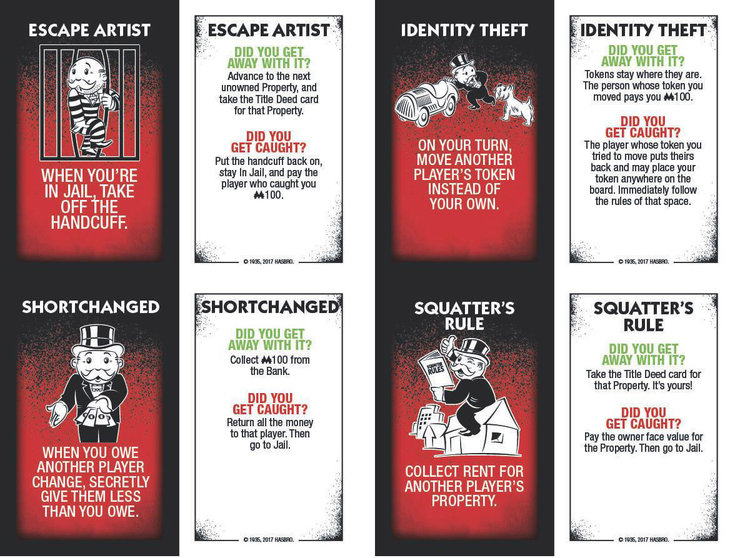
Our recreational choices say a lot about us and our values. Digital options have reduced the influence of board games, so one perennial favorite has devised a strategy to regain its market share.

Monopoly is based on accumulating wealth and, for the merciless, crushing one’s competitors. Some might argue that the capitalism which provides the basis for the game is corrupt in and of itself. Still, Monopoly has always had clear rules that governed actions.

But some players cheated. Capitalizing on this sinister impulse, Monopoly has created a new “Cheaters Edition.” Yes, you read that right.

Christian publications have announced the game’s arrival. The current issue of Citizen notes that even though cheating is actively encouraged in the game, negative consequences are also possible.

Mind you, it’s not that anything goes. Cheat successfully and you get rewarded; get caught and you get punished.

Even the “secular” Bloomberg review of the new game acknowledges the moral confusion of the product, closing its report with:

Clearly this begs some deeper philosophical questions about modern life and the future of morality and humanity, but, wait, did you just land on Boardwalk? Yes, I definitely always had a hotel on there! Trust me.

Nurturing Healthy Behaviors

One does not have to be a parent to recognize this wisdom of this Proverb: “Train up a child in the way he should go; even when he is old he will not depart from it” (Proverbs 22:6).

In fact, even pet “owners” know the necessity of training (e.g. housebreaking) our canine and feline family members.

Many games highlight positive choices, consciously or subconsciously reinforcing good. The simplest and most common method for this process comes not in a board game or a digital alternative. It is found in verbal praise.

There is ongoing debate about the value of praise. It’s clear that insincere or mechanistic praise would be of insignificant worth, and potentially dangerous. Some psychologists go so far as to state that “Positive reinforcement can undercut a child’s intrinsic motivation.”

C.S. Lewis understood that we cannot manufacture our own motivations.

I cannot, by direct moral effort, give myself new motives. After the first few steps in the Christian life we realise that everything which really needs to be done in our souls can be done only by God (Mere Christianity).

Despite this truth, it is also argued that our character can be shaped, in a sense, by consciously and repeatedly choosing to do what is right. Gradually then, by God’s grace, obedience may gradually give way to a more honest and natural motivation as the positive paths become our normal, well-traveled path.

This is not simply a “Christian” concern. The philosopher Aristotle noted “Good habits formed during youth make all the difference.” (What do you think Aristotle would think about the Cheater’s Edition of Monopoly?)

C.S. Lewis would doubtless concur with Aristotle. I assume most of Mere Inkling’s readers agree with the ancient wisdom as well.

A final thought. This cheater’s edition of Monopoly probably possesses less power to damage lives than Hasbro’s Ouijà board game. But that’s a subject for another day


* In Matthew 16 we read the more familiar “For what will it profit a man if he gains the whole world and forfeits his soul? Or what shall a man give in return for his soul?”

cheat card

An Experiment with C.S. Lewis

cheep

Few authors are so gifted that even in their casual, never-intended-to-be-published moments they continuously offer brilliant insights into life.

Of course, here at Mere Inkling we know that C.S. Lewis is one of those few.

I decided to attempt an experiment with this post. It’s motivated by the fact that I’m spending the week watching over three of my grandkids (the youngest of whom is two, and wailing right now . . . be back in a moment. That’s resolved for now, although he wants his sisters to play UNO now, according to his shifting infantile rules.)

For my experiment, I am selecting random pages in Lewis’ three volumes of correspondence. The letters were not written for publication, but I hypothesize that each page will contain some insight or wisdom that merits deeper reflection. I won’t provide the discussion here, I’ll simply select a quotation I believe meets the requirement. (Pagination is from my Kindle copies, so it may be off a bit from the print edition.)

Volume I Page 111

In 1915, Lewis describes to his father a veteran who has recuperated quickly and is in very good spirits. This foreshadows Lewis’ own wounds he will receive in the same military theater.

That Gerald Smythe of whom I told you, who lost an arm in the war, was staying with us last week. He is really wonderful: he has only been out of bed about a month and is going back to the front again next week. It does one good to see a person thoroughly cheerful under circumstances like his, and actually eager to be there again. Even in so short a time he has learnt to be quite independant, and can cut his food, light his pipe, and dress–tho’ how a man can tie a tie with one arm, I don’t know.

Page 333

In 1917 he describes to his friend Arthur Greeves the difference between prose and poetry.

You have started the question of prose style in your letter and ask whether it is anything more than the ‘literal meaning of the words’. On the contrary it means less–it means the words themselves. For every thought can be expressed in a number of different ways: and style is the art of expressing a given thought in the most beautiful words and rythms of words. For instance a man might say ‘When the constellations which appear at early morning joined in musical exercises and the angelic spirits loudly testified to their satisfaction’. Expressing exactly the same thought, the Authorised Version says ‘When the morning stars sang together and all the sons of God shouted for joy.’

Volume II Page 111

In a 1933 letter to Greeves, Lewis shares how he has set his expectations low for the reception of his second literary undertaking, based on his first effort.

I had an extremely kind letter from Reid about the book. I think it is going to be at least as big a failure as Dymer, and am consequently trying to take to heart all the things I wrote you when you were bowled over by Reid’s decision on your first novel–not entirely without success. How goes the detective story? [Note: the Reid here is Greeve’s friend, the novelist Forrest Reid (1875–1947).]

Page 333

In a 1940 letter to his brother Warnie during the latter’s convalescence, Lewis recalls how relaxing how recuperating under medical care comprised some of his fondest memories related to his military service!

I trust it has proved a time worthy to be added to your rich store of blessed periods in sick rooms, ‘san’s,46 and hospitals-pleasant backwaters whence one drowsily hears the roar of the main stream going past. They are certainly among the nicest recollections I have of school and army. One such I spent at Le Tréport with the now probably abolished complaint of ‘Trench Fever’ very early in 1918;47 of specially blessed memory since it was there I first began to conceive that beer was not an utterly unpleasant drink. As my experiments were being made with bottled Bass, it is a little odd that such a result was reached. I remember too nice solitary walks on the ‘front’ of that empty watering place: which, mixed with recollections of the Olderfleet48 in winter and the not disagreeable feebleness of a convalescent’s first walks, increase the general ‘backwater’ feeling.

Volume III Page 111

In a 1951 letter to Dom Bede Griffiths, he relates that only by appreciating things in their proper order (i.e. subordinate to their Creator) can they be truly enjoyed. A keen insight into the nature of idolatry.

it seems to me, the subordination of Nature is demanded if only in the interests of Nature herself. All the beauty of nature withers when we try to make it absolute. Put first things first and we get second things thrown in: put second things first & we lose both first and second things. We never get, say, even the sensual pleasure of food at its best when we are being greedy.

Page 333

In a 1953 letter to a young girl who had sent him drawings of some of Narnia’s characters, Lewis’ extends his appreciation and relates a quaint personal peculiarity.

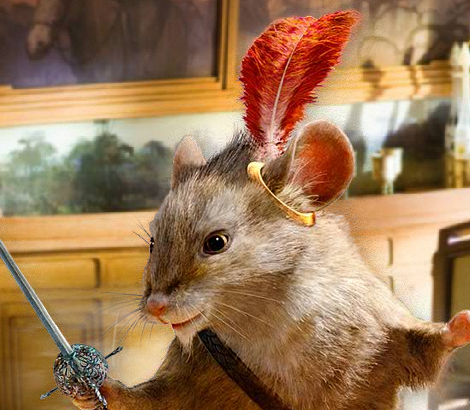
Reepicheep in your coloured picture has just the right perky, cheeky expression. I love real mice. There are lots in my rooms in College but I have never set a trap. When I sit up late working they poke their heads out from behind the curtains just as if they were saying, ‘Hi! Time for you to go to bed. We want to come out and play.’

That review of letters was fun, and hopefully you enjoyed portions of it as well. It was certainly a good choice for me with no fewer than eight or nine interruptions during its course. Well, the dinosaur shaped chicken nuggets are about ready to come out of the oven, so it’s time to conclude.