Priceless Letters

letterHow precious is a single letter?

If it is eagerly anticipated correspondence from a close friend or loved one, it may be invaluable.

Telephones and email have diminished the impact offered by the contents of an individual message, yet even now we value the touch of the written word shared by our soul mates across the miles.

Prior to the invention of the internet, and before the cost of international calls grew reasonable, I spent a year in the Republic of Korea, far from my wife and three young children. Naturally, like all military members serving far from home—even during times of peace—I missed them terribly.

While many wonderful things happened during the course of that year, and lifelong friendships were born, the highlight of each day was a visit to the installation post office. And, due to the faithfulness of my mother, sister and wife, I was greeted nearly every day by one or more handwritten messages of love and encouragement.

So important were these bonds that, prior to my departure, Delores and I covenanted to write one another every single day. A promise we both kept. In addition, I promised to write each of my three children their own letter each week. One evidence of the impact of those letters was the seamless reunion our family experienced when I returned after a year away.

In the even more distant past, this means of communication was even more vital. As little as a century ago, when individuals and families emigrated from their homelands they recognized the sad truth that they would probably never see their loved ones again.

Think about that for a moment. Saying “goodbye” usually meant “I will never see you again in this life.” How precious those missives must have been when they found their way between intimate companions!

Eighty-five years ago, C.S. Lewis was carrying on an active correspondence with the dearest friend from his youth, Arthur Greeves.

In the 1930s, the two men were corresponding on a weekly basis. Lewis opened one of his letters with the following paragraph to gently reprimand Greeves for allowing other responsibilities to delay his writing.

July 8th 1930

My dear Arthur,

Your letters get later and later every week. If you write on Monday the first week, on Tuesday the second week, and so on, then in seven weeks you will be writing on Monday again: but you will have written one letter less than you should.

In a year you will have written eight letters less, that is thirty six pages. Assuming that we both live thirty years more you will in that time have cheated me out of one thousand and eighty pages. Why, oh why, do you do these things?

As I said, the “reprimand” is gentle, even humorous, but it is sincere. It reveals just how meaningful each piece of his friend’s correspondence was to Lewis.

Many of us can relate to Lewis’ experience. We know firsthand how a smile comes to our lips and our pulse quickens when we find a message from a close companion.

I wanted to share this thought with each of you today for two reasons. First, I thought it might remind you of those whose words have encouraged and supported you in the past.

My second motivation is more important. I would like to suggest that you pause to consider just how important your letters are to others.

There are thousands of reasons for not scheduling (and guarding) time to write letters. Life is busy. The distractions vying for our attention are certainly more numerous, and loud, than they were in decades past.

Still, reminded of the value of the gift we offer when we write, perhaps it is time to shuffle our priorities.


An Impious C.S. Lewis

csl glassWhen C.S. Lewis was contacted for permission to publish a recent sermon in a distinguished collection, he confessed an “impious” hope.

Lewis, of course, was not a pastor. He was instead a highly regarded professor. Nevertheless, due to his mastery of public speaking, and his unapologetic faith, he was invited to preach on a number of occasions.

This particular sermon had been delivered at St Mary the Virgin in Oxford, on 22 October 1939. The Student Christian Movement had already published it in pamphlet format with the title The Christian in Danger.*

Lewis ends a lengthy 1940 letter to his brother Warnie by mentioning the request, almost as an afterthought.

Did I tell you that someone wants to include that St Mary’s sermon of mine in a collection of (save the mark**) Famous Sermons?

Famous English Sermons would be published by Thomas Nelson in London later that year. The anthology was edited by Ashley Sampson, who had asked Lewis to write his volume The Problem of Pain.

Lewis’ modest “impiety” was revealed in the rest of his announcement to his brother. He confesses to that common human fear of being upstaged by the other works in the collection.

I am divided between gratification and a fear that I shall be merely made a fool of by appearing in the same book as Bede, Latimer, Donne, Taylor etc. However, let’s hope that I shall be divided from them by some good 19th century duds!—but I grow impious.

How easy it is to relate to Lewis’ concern. As I moved from assignment to assignment during my military career, I subconsciously hoped I was relieving someone who had left room for me to excel . . . and, simultaneously, that as I left my recent assignment my performance would not be outshined by my successor.

Better, in my mind, to be proceeded and followed by 20th century duds. (Forgive me, Lord.)

I doubt C.S. Lewis and I are the only people to have shared that impious thought.

Still, recognizing the impiety is the beginning of purging it. I tried to make it a practice to pray for those who followed in my ministry wake. That they would be successful, and that the men and women entrusted to our spiritual care would be blessed by their ministries.

I must confess, though, that when my literary work has been placed in direct juxtaposition to that of others, I have not been so eager for theirs to be better received than my own contributions. Not that I wish upon anyone that they would be a dud, but merely that their eloquence not put my own humble efforts to shame.

_____

* The sermon is found in The Weight of Glory with the title “Learning in War-Time.”

** “Save the mark” is an exclamation that connotes a sense something is unbelievable. It can even be dismissive, but that would not be the sense in which Lewis uses it here, since it is obvious he regards the request as a humbling honor.

Obscenic Words

paskalevThere is something obscene about the title of some recent recordings of a Norwegian/Bulgarian musician. He labeled the collection “Obscenic Sessions.”

Now, I realize that English may be his third or fourth language, but surely someone involved in the project knew that obscenic is not really a word. And, if a person is attempting to coin a new word, there are more creative ways than simply changing the ending of an adjective to alter it into another adjective. (I suppose there is a slim chance it’s either a Norwegian or Bulgarian word, but I suspect not.)

There’s something else about the collection that also strikes me as potentially obscene. Apparently the music was recorded during a live performance at an actual Anglican church. The full title reads: “Obscenic Sessions Live From St. Margaret’s Of Antioch (Liverpool, UK).”

Why, I wonder, would a priest allow his sanctuary to be used for obscenic sessions? Certainly no Christian congregation could be that desperate for income. They could, however, be proving their open-mindedness by hosting just such an event . . . but that’s another matter.

Now, I am aware that the use of the neologisms may simply be provocative. There might not be anything at all that’s edgy about the music or performance. I wasn’t there, and I haven’t taken the time to read the lyrics to all of the music.

Returning to the subject of coining new words, it’s a rather tricky venture. You have to be just creative or witty enough to do it well. Falling short of that is either completely confusing, or simply lame.

Some people have a knack for this. Lewis Carroll, for example, created a handful of words in a single literary piece that have remained vibrant for many years. In his 1871 Through the Looking Glass, he included the nonsense poem, “Jabberwocky.” Some of the words Carroll created as nonce words—intended for a single use—have lived on beyond their appearance in the poem.

Not long ago, as a matter of fact, I read about someone “chortling.” That would not have been possible before Carroll minted this means of communication. “Mimsy” and others have found their way into dictionaries, as well.

We have written in the past about the Bandersnatch on these very pages. C.S. Lewis described J.R.R. Tolkien’s stubborn resistance to editorial suggestions by saying “you might as well try to influence a bander-snatch.”

Returning to the music of Mr. Paskalev, if his music is more uplifting than the adjective implies, I wish him the best of luck in his career. However, if it is truly obscenic (in the sense the root of that word implies) I wish him an epiphany that will transform his work. And, finally, in light of the picture above (from his official website), I suggest that he try to get a little more rest.

Norse Linguistic Invasion

vik
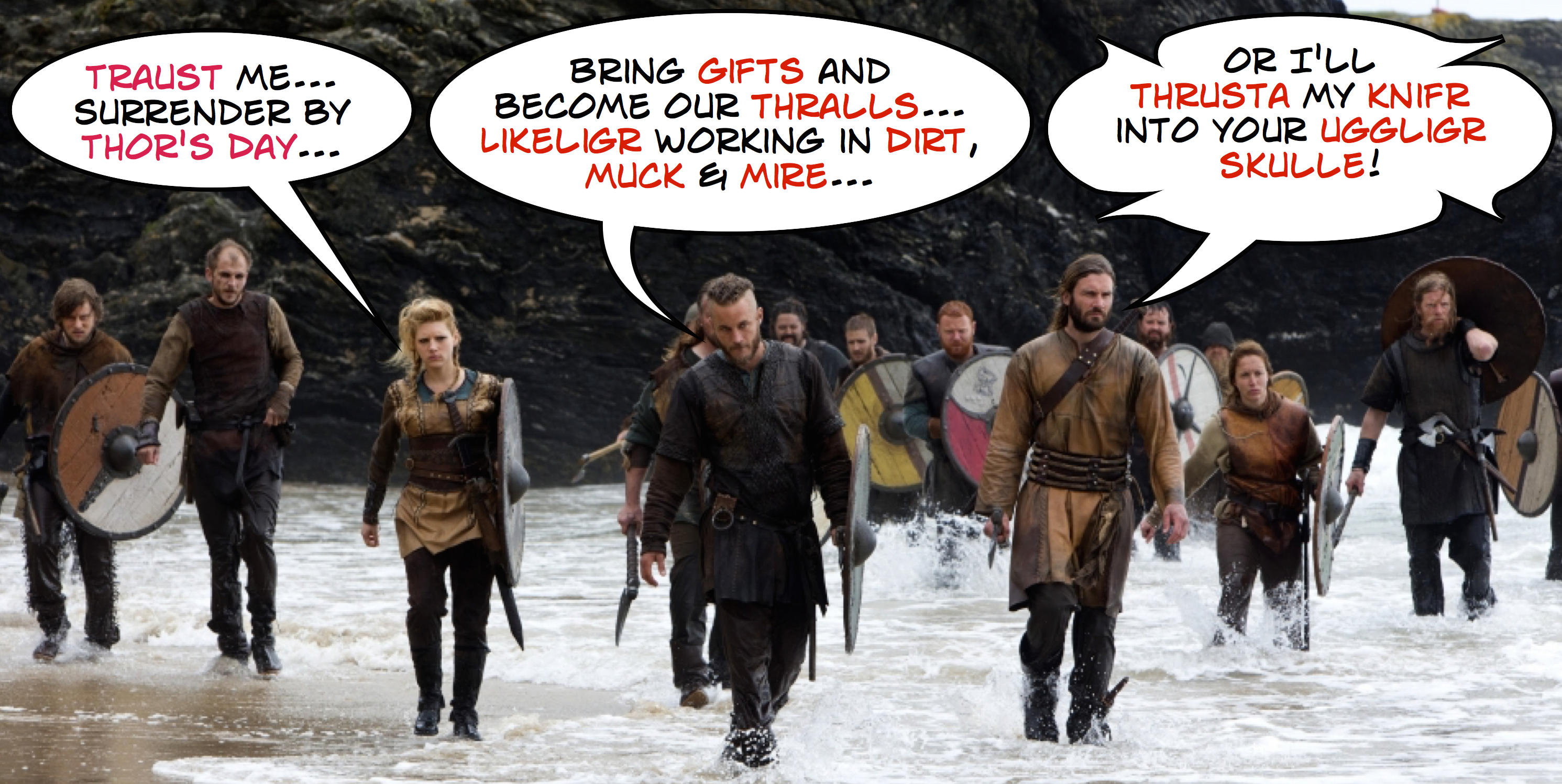
The initial Viking incursions into England were violent, but they left a colorful linguistic legacy in their wake.

Victims of the onslaught, like the unfortunate monks of Lindisfarne, paid a steep price, but the Norse eventually became farmers and craftsmen like the people they initially displaced.

Their contribution to the British gene pool was small, as was their donation to the English language, but it was not insignificant.

Some of the words fit the Viking mystique. Klubba becomes club (as in the weapon, not the association). Rannsaka may have initially meant searching the house for something like your missing keys, but the English experienced it as ransack. And slatra transfers into slaughter. The original word means “to butcher,” and one wonders if it originally applied to meal preparation. It so, the decades of Norse raids modified that focus.

Other adopted words arose from the more peaceful pursuits of the Scandinavians. Bylög meant the laws of the village and became bylaw. Law itself comes from the Norse lag. Husband, skill, thrift, litmus and loan have Viking roots. Those who enjoy a great slice of beef can thank them for their “steak” as well, since steik was their term for frying meat.

The Inkling Affection for the Sagas

J.R.R. Tolkien was actually a Professor of Anglo-Saxon at Oxford. He founded a society devoted to the study of Icelandic and Norse sagas called Kolbitar (Coalbiters).* C.S. Lewis joined him in the group, which preceded the development of the Inklings fellowship.

As a young student, Lewis was attracted to Norse myth and experimented with writing his contribution to the tales. He penned over 800 lines of a massive epic he entitled “Loki Bound.” Only fragments have survived, but the following passage is especially intriguing. In it, Loki criticizes Odin for the manner in which he created humanity.

Odin! And who art thou to make a soul

And force it into being? Who art thou

To bring forth men to suffer in the world

Without their own desire? Remember this,

In all the universe the harshest law,

No soul must ever die: it can but change

Its form and thro’ the myriad years

Must still drag on for aye its weary course,

Enduring dreadful things for thy caprice.

The echoes of teenaged angst are clear in this tirade. The words describe (well, I believe) the fatalistic despair of many people. Fortunately, this young man eventually encountered the One who rescues us from “harshest law” and “dreadful things” that are the lot of fallen mortals.

A Few More Norse>English Words

Here are some more of the seven score words that are identified as having a Scandinavian origin.

An interesting collection of verbs include: bark, blunder, choose, crawl, glitter, race, scare, stagger, stammer and whirl.

The following words associated with people: Guest, kid, lad, oaf, foot, leg, skin, freckles, ill, and weak.

The gamut of emotions: anger, awe, and happy.

And, without their Norse contribution, who knows what we would call these articles today.

axle   ~   window   ~   cake   ~   bag

glove   ~   mug   ~   plow   ~   link

they   ~   trust   ~   same   ~   gift

and even Hell

One final example, as quoted in the source of the comprehensive list of Norse words.

Even though the gun wasn’t invented until centuries after the Viking era, the word comes from Old Norse. The most common usage was in the female name Gunnhildr: gunn and hildr both can translate as “war” or “battle.” Only truly [ferocious] Vikings named their infant daughters “Warbattle.”

_____

*You can read a bit more about Kolbitar here. I have also mentioned Kolbitar in this column.


Easter, Updike & Lewis

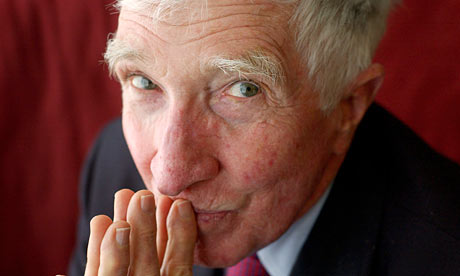
updikeHappy Easter Monday. Even if you do not believe Jesus has risen from the dead, I sincerely hope you are experiencing a special season of hope and peace.

For Christians, however, the bodily resurrection of Jesus is not an optional doctrine.

The Scriptures affirm the truth that, “. . . if Christ has not been raised, then our preaching is in vain and your faith is in vain. . . . if Christ has not been raised, your faith is futile and you are still in your sins. Then those also who have fallen asleep in Christ have perished. If in Christ we have hope in this life only, we are of all people most to be pitied” (1 Corinthians 15:14-19, ESV).

John Updike (1932-2009) recognized this truth and wrote an oft-quoted poem about it.*

“Seven Stanzas at Easter”

Make no mistake: if he rose at all

It was as His body;

If the cell’s dissolution did not reverse, the molecule reknit,

The amino acids rekindle,

The Church will fall.

It was not as the flowers,

Each soft spring recurrent;

It was not as His Spirit in the mouths and fuddled eyes of the

Eleven apostles;

It was as His flesh; ours.

The same hinged thumbs and toes

The same valved heart

That—pierced—died, withered, paused, and then regathered

Out of enduring Might

New strength to enclose.

Let us not mock God with metaphor,

Analogy, sidestepping, transcendence,

Making of the event a parable, a sign painted in the faded

Credulity of earlier ages:

Let us walk through the door.

The stone is rolled back, not papier-mache,

Not a stone in a story,

But the vast rock of materiality that in the slow grinding of

Time will eclipse for each of us

The wide light of day.

And if we have an angel at the tomb,

Make it a real angel,

Weighty with Max Planck’s quanta, vivid with hair, opaque in

The dawn light, robed in real linen

Spun on a definite loom.

Let us not seek to make it less monstrous,

For our own convenience, our own sense of beauty,

Lest, awakened in one unthinkable hour, we are embarrassed

By the miracle,

And crushed by remonstrance.

Updike & Lewis

Poetry and faith were not the only interests shared by Updike and C.S. Lewis. Both men were literary critics, as well as authors in their own right. Updike’s description of his approach to criticism echoes many of the same principles displayed by Lewis.

1. Try to understand what the author wished to do, and do not blame him for not achieving what he did not attempt.

2. Give enough direct quotation—at least one extended passage—of the book’s prose so the review’s reader can form his own impression, can get his own taste.

3. Confirm your description of the book with quotation from the book, if only phrase-long, rather than proceeding by fuzzy précis.

4. Go easy on plot summary, and do not give away the ending.

5. If the book is judged deficient, cite a successful example along the same lines, from the author’s œuvre or elsewhere. Try to understand the failure. Sure it’s his and not yours?**

Updike wrote, “I read C.S. Lewis for comfort and pleasure,” praise that has been included in advertising campaigns. A fuller account of his appreciation for Lewis’ work comes in the following passage, from Conversations with John Updike.

The provableness of God is a subject Updike may have mused upon during the many Sunday mornings he has spent in church. Updike is a lifelong churchgoer. He was raised a Lutheran, became a Congregationalist during his first marriage, and has recently joined the Episcopal church.

“I don’t see anything else around really addressing, for me, one’s basic sense of dread and strangeness other than the Christian church,” he said. “I’ve written maybe all too much about religion here and there. But there have been times when I read a lot of theology. The year I spent in England [after graduation from Harvard] I was very nervous and frightened, standing more or less on the threshold of my adult life and career, if any.

“One of the ways I assuaged my anxiety was to read a lot of G.K. Chesterton and C.S. Lewis, some Kierkegaard, and when I moved to New England, I read a lot of Karl Barth. My intensive theology reading extends from about the age of 22 to, say, 30. I get great pleasure out of reading theology.”

Reading Theology

Updike was correct. Contemplating holy matters can certainly be pleasurable. That is true even when we are chewing on complex subjects, difficult to digest. After all, “everyone who lives on milk is unskilled in the word of righteousness, since he is a child. But solid food is for the mature, for those who have their powers of discernment trained by constant practice to distinguish good from evil” Hebrews 5:13-14, ESV).

The resurrection of Jesus may be one of these truths not simple for all to believe. I pray for those who find this a challenge. But, God forbid that any of us should reject the most significant event in human history, “Lest, awakened in one unthinkable hour, we are embarrassed by the miracle, and crushed by remonstrance.”

_____

* For the interesting story of how this poem won first place in a competition at his church, you can read his pastor’s recollections here.

** Updike’s list concludes with these words: “To these concrete five might be added a vaguer sixth, having to do with maintaining a chemical purity in the reaction between product and appraiser. Do not accept for review a book you are predisposed to dislike, or committed by friendship to like. Do not imagine yourself a caretaker of any tradition, an enforcer of any party standards, a warrior in any ideological battle, a corrections officer of any kind. Never, never . . . try to put the author ‘in his place,’ making of him a pawn in a contest with other reviewers. Review the book, not the reputation. Submit to whatever spell, weak or strong, is being cast. Better to praise and share than blame and ban. The communion between reviewer and his public is based upon the presumption of certain possible joys of reading, and all our discriminations should curve toward that end.”

Pacifism as an Enemy of Peace 

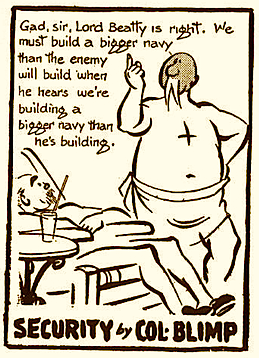
blimp 01The literary careers of C.S. Lewis and George Orwell overlapped in some interesting ways.* Today we will consider a rather odd British personality mentioned by each of them in wartime essays, Colonel Blimp.

Colonel Blimp was a cartoon figure, inspired by a conversation between two military officers who were arguing that “cavalry” officers should continue to wear spurs even when they migrated into tanks.**

At one time the cartoon was so popular that Lewis wrote:

It may well be that the future historian, asked to point to the most characteristic expression of the English temper in the period between the two wars, will reply without hesitation, “Colonel Blimp.” (“Blimpophobia”).

The good colonel echoes similar foolish notions as he blusters about in a caricature of pompous military commanders. Blimp is retired, but harangues all within earshot about the wisest course for the nation.

Orwell wrote derisively of the military and imperialistic middle class, that he called “the Blimps.” He drew the label from the “colonel with his bull neck and diminutive brain, like a dinosaur.” (“The Lion and the Unicorn”).***

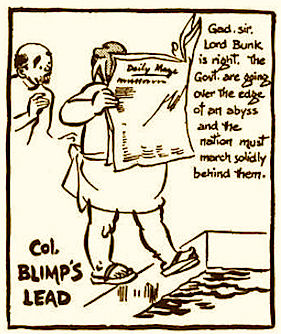
blimp 02The cartoon above illustrates how Colonel Blimp is certain he has the solution to winning the arms race. The frame to the right shows that he believes his wisdom extends beyond the military to politics in general.

Timely Advice from C.S. Lewis

In “Blimpophobia,” Lewis offers advice which proves apropos for our modern age. Today, as fanatical barbarians seek to destroy civilization, enlightened nations and individuals must be vigilant.

One dimension of that vigilance involves walking the fine line between unbridled nationalism and self-absorbed pacifism. When he wrote, Lewis was worried about the anti-war sentiment that threatened to undermine Britain’s response to the Nazis.

Lewis, a wounded combat veteran of the Great War, recognized the truth of the Colonel Blimp caricature. He said something veterans recognize even more clearly than civilians. There is an overabundance of preening and stupidity in the military.

The infection of a whole people with Blimpophobia would have been impossible but for one fact—the fact that seven out of every ten men who served in the last war, emerged from it hating the regular army much more than they hated the Germans. How mild and intermittent was our dislike of “Jerry” compared with our settled detestation of the Brass Hat, the Adjutant, the Sergeant-Major, the regular Sister, and the hospital Matron!

Now that I know more (both about hatred and about the army) I look back with horror on my own state of mind at the moment when I was demobilized. I am afraid I regarded a Brass Hat and a Military Policeman as creatures quite outside the human family.

Still, he said we cannot allow that sad truth to cause us to deny the requirement to maintain a strong defense. “A nation convulsed with Blimpophobia will refuse to take necessary precautions and will therefore encourage her enemies to attack her.”

C.S. Lewis warned his countrymen of the dangers military-phobia during the Second World War. And—among the war-weary nations of the free world battling jihadism—we are wise to heed his wise words today.

The future of civilization depends on the answer to the question, “Can a democracy be persuaded to remain armed in peacetime?” If the answer to that question is No, then democracy will be destroyed in the end. But “to remain armed” here means “to remain effectively armed”. A strong navy, a strong air force, and a reasonable army are the essentials. If they cannot be had without conscription, then conscription must be endured. (C.S. Lewis, “Blimpophobia”).

_____

* In “A Literary Phobia,” I compared some advice they offered to writers. The counsel in question sounds similar on the surface, but actually differs. In “Orwellian Advice,” I contrast the two authors in much greater detail.

** Blimp’s creator, David Low, resided in London but was actually a New Zealander.

*** You can read Orwell’s 1941 essay, “The Lion and the Unicorn,” here.

Professor Bob Dylan

dylanCan you imagine having singer Bob Dylan as your high school history teacher?

According to a recent interview,* it could have happened.

Still actively touring in his seventies and considered an American musical icon. I was stunned to hear what he said about another path his life may have taken. The interviewer posted the remark this way:

Bob Dylan: His True Calling

“If I had to do it all over again, I’d be a schoolteacher—probably teach Roman history or theology.”

I didn’t realize he and I had so much in common! When I did my undergrad studies in history, I took every Roman history course the University of Washington offered. As for theology . . . well, having become a pastor, my interest in the study of God’s revelation of himself to the world is a given.

Can you imagine Dylan lecturing on apotheosis in the early empire? [Apotheosis is the elevation of a person to godhood, and was a formal event after the death of some emperors. The emperors themselves knew it was a farce, of course. Seneca wrote that emperor Vespasian, on his deathbed, actually said, “Alas, I think I’m becoming a God.”]

Bob Dylan’s interest in spiritual matters is genuine. He has high praise in the interview for Billy Graham. “This guy was rock ‘n’ roll personified. He filled football stadiums before Mick Jagger did.”

In 1979, Dylan released the first of three “Christian” albums, “Slow Train Coming.” It has a number of great pieces, and I listen to the album at least once a month. One song, “Gotta Serve Somebody,” won him the Grammy that year for “Best Male Vocalist.” It’s lyrics are sobering, and everyone should hear it at least once.

And, Speaking of C.S. Lewis

Well, we weren’t actually. But, here at Mere Inkling we usually do.

These two men bear some obvious parallels. They are masters of words. Poets extraordinaire. Lewis and Dylan both possess enviable creative imaginations. Each has accumulated a vast legacy in their work, which will continue to inspire for many generations to come.

I also learned this on the internet—they share the same Myers-Briggs personality type. At least, this site claims they are both INFPs. (I’m an ENTJ myself, a common personality aggregate for pastors.)

And, they had at least one more thing in common. They knew that in this life, there is no such thing as spiritual neutrality. When we ultimately stand before the throne of our Creator, it will not suffice to say, “Well, I didn’t do anything truly evil.”

In a moment we will listen to Dylan’s ballad about the choice before us. First, though, consider how Lewis uses the imagery of the war engulfing the world in the 1940s to describe this truth.

Why is God landing in this enemy-occupied world in disguise and starting a sort of secret society to undermine the devil? Why is He not landing in force, invading it? Is it that He is not strong enough? Well, Christians think He is going to land in force; we do not know when. But we can guess why He is delaying. He wants to give us the chance of joining His side freely. I do not suppose you and I would have thought much of a Frenchman who waited till the Allies were marching into Germany and then announced he was on our side.

God will invade. But I wonder whether people who ask God to interfere openly and directly in our world quite realize what it will be like when He does. When that happens, it is the end of the world.

When the author walks on to the stage the play is over. God is going to invade, all right: but what is the good of saying you are on His side then, when you see the whole natural universe melting away like a dream and something else—something it never entered your head to conceive—comes crashing in; something so beautiful to some of us and so terrible to others that none of us will have any choice left? For this time it will be God without disguise; something so overwhelming that it will strike either irresistible love or irresistible horror into every creature.

It will be too late then to choose your side. There is no use saying you choose to lie down when it has become impossible to stand up. That will not be the time for choosing; it will be the time when we discover which side we really have chosen, whether we realized it before or not. Now, today, this moment, is our chance to choose the right side. God is holding back to give us that chance. It will not last forever. We must take it or leave it. (Mere Christianity).

Now, as promised, “Gotta Serve Somebody.”

_____

*You can read the entire interview in the current issue of AARP The Magazine, available here.

Fleeting Fame

fameIt’s likely that the names of 98.6% of authors who top the bestseller charts today will be unremembered a century from now.

This weekend I posted the latest issue of Curtana: Sword of Mercy, a journal I edit about military chaplains. (If you are interested in checking it out, you can download a free copy here.)

The current issue includes an interesting article about two chaplains from Vermont who served during the War of 1812. (For international readers, that was the war following the winning of America’s independence when they British got their revenge—they captured our national capital and burned the capitol.)

In the biographical portion of the article, the author included a final summary of the life of one of the chaplains. Solomon Aiken (1758-1833) left his civilian pulpit to serve soldiers and sailors.

Aiken was quite prominent in his day. Not only was he a well known preacher and writer, he actually served as a member of Vermont’s legislature. Yet, I doubt that even Vermonters would recognize his name today.

Here is the quotation from a nineteenth century tribute published after his passing.

Mr. Aiken enjoyed uncommon health and vigor. He never took a particle of medicine, or lost a relish for food, until his final and brief sickness—a pleurisy fever. He possessed peculiar power as a logician, and was very popular as a preacher. He was kind-hearted and benevolent, almost to a fault. But it is chiefly as a political writer that Mr. Aiken is remembered. He was sent as a representative for two years, by the town of Dracut. He published several sermons and pamphlets, chiefly upon political themes, which excited much attention in their season.

The words that seized my attention were the conclusion, “. . . which excited much attention in their season.”

“In their season . . .” That season must have been brief, since the history was written just twenty years after Aiken’s death. By then his works had either withered or, more optimistically, gone to seed. In either case, their day was passed.

Translating that to our modern era, where things become obsolete almost as soon as they are envisioned, it would imply that our “season” of fame or reputation will last little more than a handful of months. And that, of course, assumes that a person actually achieves some level of renown.

Fame is fleeting. It has always been so, and the good Reverend Aiken is simply another example of that truth.

Thank God (literally) that there is more to life than notoriety.

C.S. Lewis is one of the 1.4% whose fame lasts. His has not diminished; it continues to grow. Just a year ago, on the fiftieth anniversary of his death, he was honored by having a plaque dedicated in Poet’s Corner in Westminster Abbey.

Lewis never sought fame, as the following discussion from his essay “The Weight of Glory” clearly reveals.

I turn next to the idea of glory. There is no getting away from the fact that this idea is very prominent in the New Testament and in early Christian writings. Salvation is constantly associated with palms, crowns, white robes, thrones, and splendour like the sun and stars. All this makes no immediate appeal to me at all, and in that respect I fancy I am a typical modern.

Glory suggests two ideas to me, of which one seems wicked and the other ridiculous. Either glory means to me fame, or it means luminosity. As for the first, since to be famous means to be better known than other people, the desire for fame appears to me as a competitive passion and therefore of hell rather than heaven. As for the second, who wishes to become a kind of living electric light bulb?

When I began to look into this matter I was stocked to find such different Christians as Milton, Johnson and Thomas Aquinas taking heavenly glory quite frankly in the sense of fame or good report. But not fame conferred by our fellow creatures—fame with God, approval or (I might say) “appreciation’ by God.

And then, when I had thought it over, I saw that this view was scriptural; nothing can eliminate from the parable the divine accolade, “Well done, thou good and faithful servant.” With that, a good deal of what I had been thinking all my life fell down like a house of cards.

This exceptional work merits consideration not only by people of faith. It invites all honest readers to gaze within themselves at their deepest yearnings.

Another passage from C.S. Lewis that relates strongly to the subject at hand comes from The Great Divorce. You can read the entire passage here, but the heart of it is this. Lewis views a simple woman, presently in heaven, receiving magnificent praise and celebration. He naturally assumes she must have been some well known saint.

He is, however, informed that she lived an obscure life, despite the fact that she touched countless nondescript people and animals with her compassion. Lewis’ heavenly guide is rather surprised that the Oxford professor has overlooked a simple truth:

Fame in heaven “and fame on Earth are two quite different things.”

Only the second will last.

Oxymoronic Misunderstanding

guardian angelOxymoron is a great word. Too bad so few people understand what it means.

In America, at least, nine times out of ten you will hear it misused. Most folks seem to think it means a “contradiction in terms.”

One common example is “military intelligence.” Perhaps I am sensitive to it, being a veteran, but I would enjoy never again hearing people guffaw at that term.

In actuality, the oxymoron is a much more sophisticated rhetorical device.

An oxymoron is the combination of two incongruous words or images to create a unique effect. Often it hints of irony. For example, “she was a poor little rich girl.”

Further examples suggest complex circumstances. “Cruel kindness” and “making haste slowly,” are quite intriguing. The context would provide greater illumination, but these phrases suggest a painful treatment given in love . . . and urgency, tempered by caution.

Another example, apropos for an age in which zombies have become so popular, is the phrase “living death.” Reanimated corpses aside, this oxymoron is extremely powerful.

It evokes the sense of a person’s life having become deathlike in some way. Perhaps it is physical, emotional, psychological or spiritual. In any case, drawing together life and death in this epigram is provocative.

In his most vulnerable work, A Grief Observed, C.S. Lewis describes humanity itself as an oxymoron. Most certainly, he uses the word appropriately.

Sometimes, Lord, one is tempted to say that if you wanted us to behave like the lilies of the field you might have given us an organization more like theirs. But that, I suppose, is just your grand experiment. Or no; not an experiment, for you have no need to find things out. Rather, your grand enterprise. To make an organism which is also a spirit; to make that terrible oxymoron, a ‘spiritual animal.’

Lewis’ point is well taken. That the Creator of the cosmos would make flesh bound human beings with a spiritual nature that allows him to describe as made in his own image, is incomprehensible.

Animals are animals. That is what modern secularists argue that we are. Yet it is evident to the vast majority of humans throughout all times and cultures, that we are unlike beasts. For we possess a spirit. And we are, accordingly, that unique thing among all beings—a spiritual animal.

So peculiar are we in the universe that even the angels themselves—spirits, never “animals”—are curious about the nature of our redemption. As Peter writes in his first epistle:

Concerning this salvation, the prophets who prophesied about the grace that was to be yours searched and inquired carefully, inquiring what person or time the Spirit of Christ in them was indicating when he predicted the sufferings of Christ and the subsequent glories.

It was revealed to them that they were serving not themselves but you, in the things that have now been announced to you through those who preached the good news to you by the Holy Spirit sent from heaven, things into which angels long to look.

From one oxymoron to another, I hope that this new year brings you many blessings. Most especially, I pray that if you have not already experienced this wondrous miracle which amazes even the angels of heaven . . . that you would come to know God’s love.

Sanctified Languages

petrusOne major difference between Christianity and Islam is their view of language. For the Muslim, Arabic is the language by which the Quran is to be known. For the Christian, there is a great impulse to translate the Scriptures into every tongue in the world.

In Islamic worship, the Quran is properly recited only in Arabic, whether the individual understands Arabic or not. This is similar to the way that most Hindus chant mantras in ancient Sanskrit.

A parallel can be drawn with the medieval practice in the Western branches of Christianity where Latin continued to be used for worship, even after it lost its role as the shared language.

The fact, however, that the Bible had even been translated into Latin was due to the Christian desire to make God’s word accessible to all people. Jerome, an early Christian theologian, became a linguistic scholar with the goal of translating the Vulgate, into the common language of his day.

It would have been a great shock to him, and to Pope Damasus I who commissioned his effort, to see the Latin so ingrained in the church’s usage that their heirs in leadership lost sight of the desire to bring the Lord’s words directly to the people so that all could understand them.

One of the great successes of the Reformation was the successful translation and distribution of the Scriptures into the vernacular of various language groups. Martin Luther’s translation, in fact, standardized the German language which had evolved into several different dialects.

Coincidentally, Lutherans have remained at the forefront of Bible translation, and Lutheran Bible Translators continue that vital work today. They currently have twenty-two Bible translations in process. LBT works in conjunction with Wycliffe Bible Translators, which is an even larger organization.

C.S. Lewis delivered a lecture at the University of London entitled “The Literary Impact of The Authorised Version.” In one portion he addressed the influence of the King James translation on the English language. While not nearly so pronounced as Luther’s on German, it is measurable.

The history of the Authorised Version has been told so often that I will not attempt to re-tell it, and its beauties praised so lavishly that I will not praise them. Instead, I will proceed at once to its influence as an English book. I shall attempt to define that influence, for I think there has been misunderstanding about it and even a little exaggeration.

Lewis’ argument is that the Bible has a profound influence on English literature, the particular translation, less so.

Ideally, all Christians would understand Hebrew and Greek, and be able to read the Scriptures in their original languages. However, there is no stigma in reading a translation. In fact, there are small pockets of people who do not understand the history of the Bible who believe that one particular translation (i.e. the King James Version) is the only authoritative text.

Sadly, I once saw an advertisement in a newspaper inviting worshipers that read: “Are you tired of people changing the Authorized Version of God’s Word with Greek and other languages? If so, come and join us at . . .”

Fortunately, the vast majority of Jesus’ disciples celebrate the translation of God’s word of life into every language spoken today.

Meanwhile, memorization of the Quran in Arabic (even when that is not the reciter’s actual language) remains highly regarded in Islam. Arabic has been regarded as so holy, in fact, that there was great reluctance to contaminate the Quran by using a printing press.

During the Ottoman Empire, until 1729, printing anything in Arabic was a crime. Somewhat ironically, the first printing utilizing Arabic movable type was done by Pope Julius II in the first decade of the sixteenth century. It was created for the benefit of Christians living in Arabic lands.

To provide a powerful illustration of a Christian validation of the authentic inspiration and power of God’s words—in any language—we turn once again to the German reformer.

Since it becomes Christians then to make good use of the Holy Scriptures as their one and only book and it is a sin and a shame not to know our own book or to understand the speech and words of our God, it is a still greater sin and loss that we do not study languages, especially in these days when God is offering and giving us men and books and every facility and inducement to this study, and desires his Bible to be an open book. . . .

In proportion then as we value the gospel, let us zealously hold to the languages. For it was not without purpose that God caused his Scriptures to be set down in these two languages alone—the Old Testament in Hebrew, the New in Greek. Now if God did not despise them but chose them above all others for his word, then we too ought to honor them above all others. St. Paul declared it to be the peculiar glory and distinction of Hebrew that God’s word was given in that language, when he said in Romans 3, “What advantage or profit have those who are circumcised? Much indeed. To begin with, God’s speech is entrusted to them. . . .”

Similarly, the Greek language too may be called sacred, because it was chosen above all others as the language in which the New Testament was to be written, and because by it other languages too have been sanctified as it spilled over into them like a fountain through the medium of translation. (Martin Luther, “To the Councilmen of Germany”).

_____

The image above is an illuminated “P” which begins the name Petrus (Peter). The manuscript is displayed in Malmesbury Abbey in England, but was originally transcribed in Belgium circa 1400.