Gathering Palms & Preparing for War

The Christian church has just celebrated Palm Sunday, and I recalled one of my favorite memories in preparing for the journey through Holy Week.

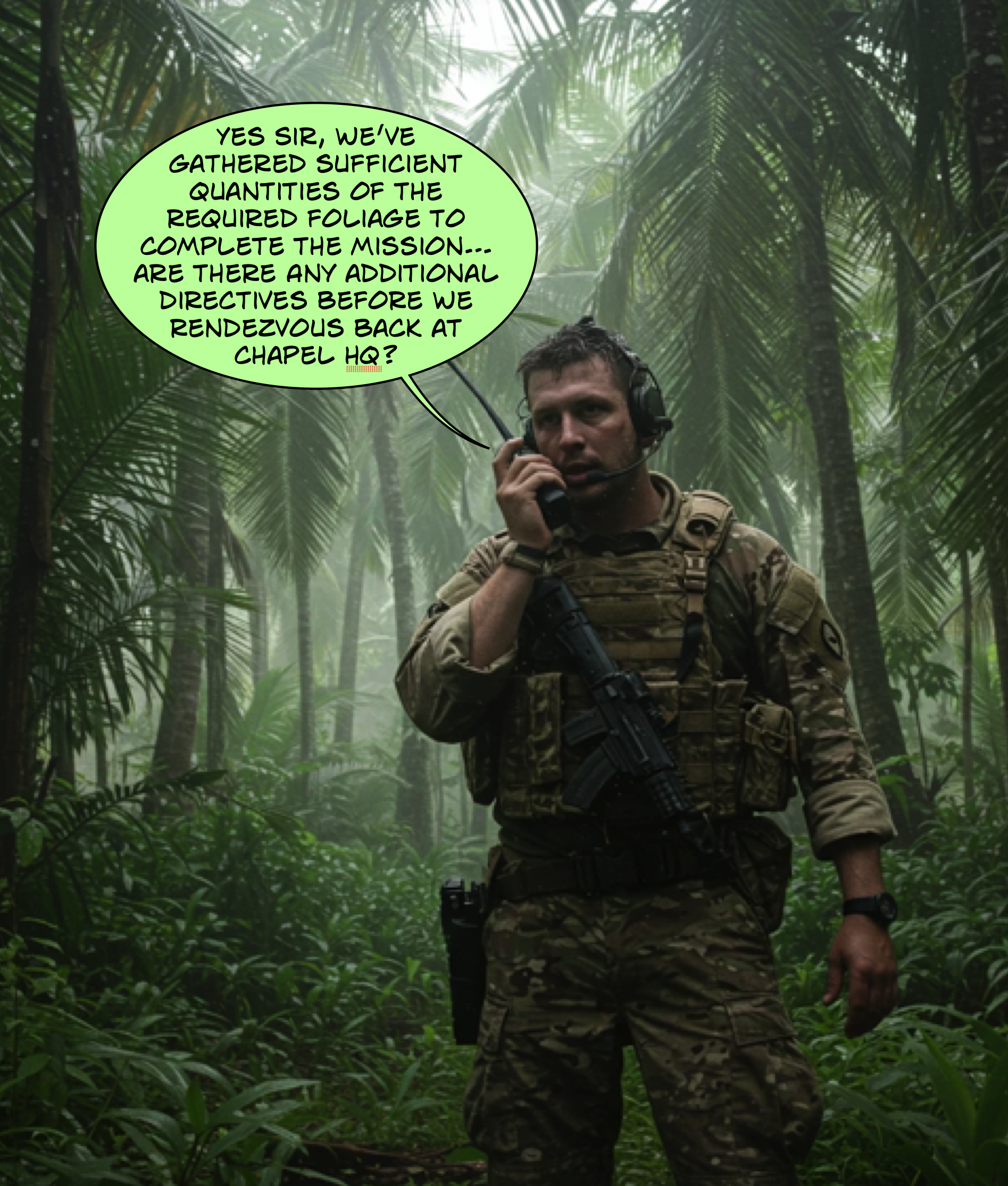
When I was stationed in Guam a few years ago (in the nineties), I enjoyed the annual tradition of gathering all of the palms to decorate the chapel and provide for worshippers in our very own jungle. Each year the chaplains and chaplain assistants, our whole team, would spend half a day gathering leaves that would put to shame any stateside palms.

Taking place in a tropical jungle, the event was sweaty, but fun. Good fellowship and even some seasonal early-Easter music. Fortunately, this didn’t take place during the typhoon season, as when the island was smashed by Super Typhoon Paka during our residency.

Jungles are fascinating places. Because the word possesses some rather ominous and even threatening overtones, a number of years ago they were rechristened “rainforests.” Even though most are tropical, there are temperate rainforests, such as in the Olympic National Forest, whose mountains I admire daily from our backyard.

C.S. Lewis alluded to the negative connotation of jungles in his study of “Vivisection,” with its repudiation of animal cruelty.

In justifying cruelty to animals we put ourselves also on the animal level. We choose the jungle and must abide by our choice.

A Modern Use for Jungles

In recent years, the jungles of Guam have been put to a military use. Unsurprisingly, soldiers and their Marine, Navy and Air Force cousins, must be prepared to do their jobs in a wide range of environments. That results in the existence of a variety of training settings, tuned to the specific needs of particular career fields.

For example, I served as the Wing Chaplain at Fairchild AFB where the USAF trains its pilots and aircrew members how to survive when they find themselves in unfriendly settings. Survival, Evasion, Resistance and Escape (SERE) training saves lives.

Anyway, not long ago the Air Force established a Jungle Agile Combat Employment (JACE) Course in, of all places, Guam.

This new course took knowledge from the U.S. Marine Corps Jungle Warfare Training Center and the Lightning Academy in Hawaii and tweaked it for non-combatant career fields to be prepared under the USAF’s Agile Combat Employment (ACE) concept.

This is part of America’s shift in focus to the threats in the Pacific theater. China has never renounced, and constantly proclaims, its intent to force the Republic of China (Taiwan) into their fascist empire. Of course, the fate of Hong Kong reveals just how unbenevolent the so-called People’s Republic is when it comes to maintaining any semblance of democratic freedoms. 

C.S. Lewis, of course, had much to say about the tragedies of fascism and war. However, that is not the focus of this reflection. Instead, the theme of this post reflects two thoughts. 

The less important idea, to which I have paradoxically devoted the most space, is the value of memories. Guam occupies a very special place in my family’s history, in part because all three of our kids were there during their teens. Lifechanging events occurred there.

And it was the wonderful people, military friends and wonderful Chamorro residents that made the most lasting impressions. Remembering the harvesting of palms, and recently learning about the jungle training course turned my thoughts back to that Micronesian paradise.

What’s Truly Vital

The infinitely more important message in this post is to acknowledge the holiest of seasons in which we find ourselves. Beginning with Palm Sunday’s celebration of the joy experienced by God’s people as they welcomed their Messiah into Jerusalem, we have the opportunity now to also join together with Jesus and our brothers and sisters in the faith as we:
~ commemorate the institution of the Lord’s Supper on Maundy Thursday,
~ contemplate the despair of the disciples as they stood at the foot of the cross as Jesus breathed his last mortal breath on Good Friday, and
~ celebrate in awe and wonder how our Savior rose from the grave and encouraged his disciples before ascending to Heaven and resuming his place at the right hand of God the Father. 

Christ’s atoning death, and his glorious resurrection, give us hope in the depths of our despair. And his promised return ensures us that there truly will come a day when we need never again prepare for war – or ever taste the pain of death.

We do well to heed C.S. Lewis’ encouragement to his friend Don Giovanni Calabria in 1948, when the priest was distraught over the troubles transpiring around the world.

Tomorrow [Easter] we shall celebrate the glorious Resurrection of Christ. I shall be remembering you in the Holy Communion. Away with tears and fears and troubles!

United in wedlock with the eternal Godhead Itself, our nature ascends into the Heaven of Heaven. So it would be impious to call ourselves “miserable.”

On the contrary, Man is a creature whom the Angels – were they capable of envy – would envy. Let us lift up our hearts! At some future time perhaps even these things it will be a joy to recall.

An Interstellar Accomplishment

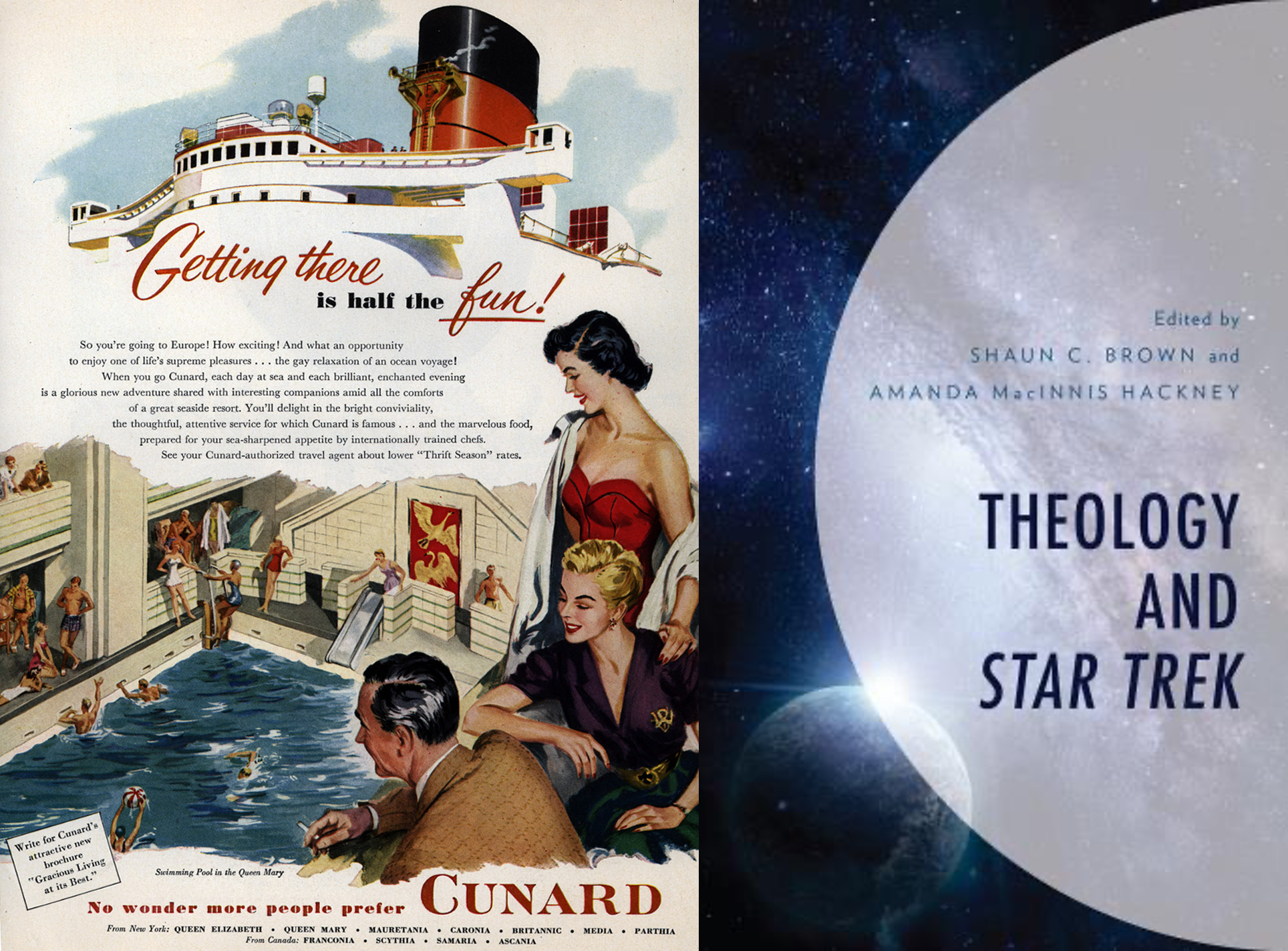
Whoever says “getting there is half the fun” is not referring to the arduous journey undertaken by writers seeking publication.

We writers – I say “we” because odds are you share my literary interests – we writers believe we have something to say that is worth hearing. Something that can genuinely benefit others.

That’s why we undertake the labor of writing, often without any financial reward. That’s why we risk revealing ourselves, becoming vulnerable to criticism and even ridicule.

This desire to share is why we invest the time and emotional energy required to imprint our thoughts and feelings on paper, literal and digital. It’s also the reason we strive to improve our literary skills. Writing well, is not easy.

Some writers enjoy the actual process of writing, but for many of us it is too akin to “work” to be considered fun. A decade ago, I wrote about “The Satisfaction of Writing.” 

In the post I confessed I don’t find the writing process all that grand. It was enlightening when I realized it’s not writing I enjoy, but the “satisfaction of having written.” And, having something published multiplies that level of satisfaction, particularly when what I have written finds a home in a publication edited by others.

And that brings me to my good news.

My Recent Publication

This week I received a complimentary copy of a new volume published by Rowman & Littlefield, an academic publishing house.

Theology and Star Trek gathers a group of scholars from various religious and theological disciplines to reflect upon the connection between theology and Star Trek anew.

Among the twenty chapter essays included in the volume is one written by yours truly. In “Starfleet’s AWOL Chaplain: Why Star Trek’s Federation Lacks Chaplains,” I explore Gene Roddenberry’s firm rejection of chaplains in his fictional universe.

I have been a fan of Star Trek ever since I watched the first episode of the original series air on September 8, 1966. And I am extremely proud to have contributed a chapter to Theology and Star Trek.

Allow me to share with you an insight I gained from this experience. It has to do with the project’s extended timeline. Admittedly, part of the delay was apparently caused by the covid epidemic, but even without that interruption, it takes a long time for an academic collection such as this to finally see print.

In October of 2018, I learned about the project and submitted an initial proposal for inclusion in the book. On New Year’s Eve I received acceptance of the proposal and an invitation to submit a “manuscript of approximately 5,000 words” by the first of May 2019. Deadline was extended to June first. First draft was mailed to the co-editors. After my extensive research, the manuscript numbered an immodest 17,442 words.

On July first I accepted the invitation to abbreviate my manuscript, which might be published in some future day, in an appropriately independent version as “a short book.” Revised chapter forwarded on 11 July: “Full word count now is 5549, but since 1528 are in the endnotes, the actual text for the chapter is only 4011, of which 169 constitute the abstract.”

Nearly a year later, on June 9, 2020, I received editorial suggestions from the editors and on June 30, 2020 I submitted my edited chapter. On September 11, 2021, the editors apologized for delays and said they were sending all of the essays out for peer review. On  June 11, 2022 I inquired with the editors as to whether the project may have been dropped, and was pleased to learn that it was still underway. The editor said the essays had been returned to writers to incorporate peer review comments. Since my essay had “only minor comments,” they were able to amend it without involving me. 

In July 2022 we worked together online with the Index, and reviewed our bio entries for the volume. On March 17, 2023 the publisher’s proofs for Theology and Star Trek were available for our personal review of our essays. April 11, 2023 marked completion of the corrected proof copy, and we added the actual pages for each of the subjects we had added to the index. Sent my final confirmation of the indexing, noticed a minor error in my chapter that was too late to fix, and waited for the arrival of my copy of the finished work . . . which arrived slightly under five years after I asked to join the project.

Lessons learned: (1) be more conscientious about meeting the word length guidelines, (2) be patient, and (3) remain patient.

Even as I share this extended timetable, I’m conscious of the fact I am no expert on the subject. I feel a bit like the people to whom C.S. Lewis referred in a 1952 letter to his publisher, Geoffrey Bles.

I often smile when I compare my ignorance with the knowingness of some people who, on the strength of having published one book, seem to have the whole mystery of publishing, printing, & binding by heart.

Advice to Writers

If you’ve followed Mere Inkling for a while, you’re aware I occasionally offer modest writing tips. 

Two years ago I wrote a post entitled “Are You an Author or an Editor?” In it I discussed some distinctions between different aspects of our writing lives. In “C.S. Lewis and the Oddities of Editors,” I highlighted that great author’s amazement at the arbitrary decisions made by editors.

I discussed a skill I have never mastered in “Brevity & Clear Communication.” In “Does Sincerity Result in Good Writing” I discussed C.S. Lewis’ thoughts about The Pilgrim’s Progress.

In “On Choosing Between a Child and a Book,” I even addressed the delicate subject of whether an individual would prefer to leave a book, rather than a child, as their legacy. Several more articles on related subjects are linked here.

A Word of Encouragement

Sadly, many aspiring writers feel like they will never “arrive” – in terms of seeing their words in “traditional” print. We must, nevertheless, remain persistent since, if we quit writing, that end is all but guaranteed.

However, when we read widely, and physically sit down with pen or keyboard, our chance of seeing our name in print rises geometrically. When we continue to study the art of writing and when we continue to sharpen our skills by stretching beyond our comfort zones, our efforts are often rewarded.

The internet abounds with stories of people who were not published until late in life. And there are many whose work only gained fame after their deaths.

Some popular writers, including C.S. Lewis and J.R.R. Tolkien, were prolific. They enjoyed some renown during their lives, but have only grown in their popularity posthumously. Many writers have left unfinished projects which have been published after their passing. In the case of these Inklings, this effort was spearheaded by Lewis’ secretary Walter Hooper and Tolkien’s son Christopher.

Waterstones, the British bookseller,  goes so far as to say “J.R.R. Tolkien is arguably one of the most posthumously-published authors there has ever been. The Silmarillion was compiled from notes he left behind, likewise The Children of Hurin and, in 2014, Tolkien’s prose translation of Beowulf was released.”

It may be unlikely that you are I will have anything published after our life ends. But, the words we pen might one day prove a blessing to others in a future family memoir. 

I encourage you to continue to write, whether publishers reinforce you or not. However small your audience may seem, virtually everyone recognizes there is value in expressing ourselves in this way. 

And, may the cost of your literary labors be outweighed by the satisfaction you gain as its reward.

Star Trek Postscript

Yes, if you check out the publication site, you will see that my name is listed last among all of Theology and Star Trek’scontributors. Even if this isn’t a consequence of alphabetical considerations, I’m not bothered. My simple inclusion in the volume is sufficient . . . and we struggling writers must never forget the words of Matthew 20:16.

Timothy Keller & C.S. Lewis

The spiritual legacy of C.S. Lewis continues to bear abundant fruit. And, although his humility would prevent him from accepting it, Lewis shares credit in the blessings being passed on to new generations by those whose lives he directly touched.

Some of these gifted Gospel communicators have publicly praised Lewis for his role in their own conversions or moments of deeper epiphany into the work of our Creator. 

One such Christian leader was Timothy Keller, who recently died at the age of 72. Although he was just a few years older than me, Keller and I shared a number of traits. Raised Lutheran, we accepted the truths about Jesus’s work as kids, but it wasn’t until our young adulthood that we were confronted with the fact that trusting Christ as a loving Savior falls far short of taking up our own crosses and following him as Lord.

It’s no accident that our mutual spiritual awakenings coincided with our introduction to the writings of C.S. Lewis during our collegiate years. Both of us became pastors, although the paths of ministry we followed differed, as befits children of a heavenly Father who guides each of his children as the unique person he has created them to be. 

Keller was ordained in the Presbyterian tradition, and devoted most of his energy to helping the Christian Church establish a far more intentional ministry in cities. I was ordained in the Lutheran branch of the Body of Christ, and served much of my ministry as a military chaplain. Both of us were pastors in evangelical, Scripture-affirming denominations within our respective traditions.

I’m sure there are other parallels, such as both being married since the mid-70s and having three kids, but the last similarity I wish to note is that we both have writing as part of our vocations. Not that I would compare my own modest talents to Keller’s.

Tim Keller was a prolific author. And the influence of C.S. Lewis on his thinking, and writing, is pervasive in Keller’s work. Last year The Evangelical Christian Publishers Association presented him with the prestigious “Pinnacle Award.”

Timothy Keller has written more than 35 books, published by a variety of companies, with some co-authored by his wife Kathy.  His published body of work represents a variety of categories including apologetics, biblical studies, theology, prayer, devotionals, marriage, Bible study, the Church, and cultural engagement – with sales exceeding 7.5 million units and translated into more than 25 languages.

Keller’s prodigious literary output is one reason he has been likened to C.S. Lewis. Another obvious reason is the subject matter, particularly the prominent place occupied by Christian apologetics.

Like Lewis, Keller was an avid reader. This trait provided the foundation for both authors’ literary contributions to Christian thinking. “A Reading List to Understand Tim Keller” includes a number of the works of great importance to him.

Read This Twice, which gathers book endorsements found on the internet, provides a list of 64 books endorsed by Tim Keller. What makes this curious site special is they provide quotations for his recommendations and the sources from which they are gleaned. Oddly, the aggregator appears to lean heavily on contemporary Twitter sources. Consequently, it includes not a single book written by C.S. Lewis himself, belying the Inkling’s seminal influence on Keller.

The endorsement website also offers access to book recommendations on subjects of a visitor’s choice, compliments of Sona. Sona, as a caution to those among us who are wary of artificial intelligence, is an “AI-driven book recommendation assistant that makes it easy for you to discover your next read. Just provide your specific preferences, and [she] will quickly search through a large database of books to offer you options that closely align with your request.” The invitation closes with: “Try ‘Sona’ and enjoy a seamless, personalized book-finding experience.”

In “Remembering Tim Keller – Today’s C.S. Lewis,” the writer plays with his title.

It is often said that Dr. Timothy Keller, who died last Friday at his home in Manhattan, was this generation’s C.S. Lewis. The dust jacket for The Reason for God says so.

Tim would have had none of it. He just wasn’t that kind of person. I remember sitting down with him after yet another remarkable talk that he had delivered, sparkling with ideas and insight, with lots more to explore, and all he wanted to talk about was his kids and how great they were. Tim was a simple child of God with, like all of us, the normal joys and worries in life.

And yet . . . that impact! It was enormous. Although it might be an overstatement to ascribe C.S. Lewis status to his contribution, it would only be a slight overstatement.

Tim Keller certainly shared some of C.S. Lewis’ righteous qualities, but some writers are adamant about acknowledging their distinctions. A fellow Presbyterian pastor has a great post on this subject titled “Tim Keller is NOT this generation’s C.S. Lewis.” The author persuasively argues that their vocations were too different to make such a claim. 

But please, can we not call him another C.S. Lewis?  Any time we call a great person “another” anybody, we are doing disservice to both figures.  Lewis’ vocation was to serve as a man of letters who wove his faith into his writing.  Keller’s vocation is to be a pastor and equipper who employs writing as but one of his tools.

There are even some conservative Reformed authorities who view Keller (and C.S. Lewis) with suspicion. According to Christian Network Europe “Laurens van der Tang . . . wrote in De Wachter Sions (The Watchman of Sion) . . . that the books of Christian writers, such as Lewis, Dietrich Bonhoeffer and Tim Keller” may possess positive elements but are incomplete. “He argues that they did not pay enough attention to man’s death state, the need for repentance and God’s holy wrath on sin.”

He concludes that “distancing is appropriate” and that these “authors cannot replace theologians from the Reformation or the Dutch Second Reformation.” Also, the Dutch Rev. A. Schreuder writes that “whoever reads the works of the Big Three misses the ultimate point of the personal appropriation of salvation.”

Fortunately, such opinions are in the minority. Most Christians find all three writers inspiring. As this very article reports, “the combination of reason, feeling and imagination is also why Christians in many different surveys indicate that they see Lewis . . . as one of the most influential theologians of the 20th century.”

A glance at virtually any one of Keller’s books will reveal at least one reference to the writings of C.S. Lewis. In Shaped by the Gospel, he references four of Lewis’ books and essays. In his book On Death, Keller discusses that when we stand in God’s very presence – a joy he even now knows – and alludes to a powerful metaphor offered by C.S. Lewis in The Weight of Glory.

C.S. Lewis says if these lower reaches of the stream of God’s glory are so intoxicating, what will it be like to drink from the fountainhead?

The Atlantic published a poignant essay by Keller as he faced his impending death. “Growing My Faith in the Face of Death: I spent a lifetime counseling others before my diagnosis. Will I be able to take my own advice?”

The subtitle says it all. It’s a challenge many Christians one day face, and it is particularly sobering for pastors. In the article, Keller relates an acutely tragic conversation.

A significant number of believers in God find their faith shaken or destroyed when they learn that they will die at a time and in a way that seems unfair to them. Before my diagnosis, I had seen this in people of many faiths. One woman with cancer told me years ago, “I’m not a believer anymore—that doesn’t work for me. I can’t believe in a personal God who would do something like this to me.” Cancer killed her God.

Yes, reality and the suffering consequences of the Fall may have shattered the spectral image of her god (lower case “g”), but I hope that through the ministry of Keller and others that unfortunate woman came to know the true God before she stood in his presence.

For I am sure that neither death nor life, nor angels nor rulers, nor things present nor things to come, nor powers, nor height nor depth, nor anything else in all creation, will be able to separate us from the love of God in Christ Jesus our Lord (Romans 8).

Timothy Keller, like C.S. Lewis before him, who served as one of Keller’s mentors, left us with a treasure trove of edifying literature. In the past I’ve often been too busy to read much of Keller’s work. However, as of now I am in the process of rectifying that problem. If you join me in that journey, I’m sure neither of us will be disappointed.

Please Shorten that Sermon

How long should a sermon be? There’s no universal answer to that question – unless you opt for the Holy Spirit gambit and claim you or your pastor preach inerrantly as the Spirit dictates.

The truth is, I can tell a lot about a person’s religious background or current preferences by their honest answer. That’s one of the first lessons a military chaplain learns. Different traditions possess vastly different expectations about sermon lengths.

There are plenty of individual exceptions to the rule, of course. But let me throw out a couple generalizations. People in mainline churches think the sweet spot is around 15 minutes. For many, 12 would be even more desirable, although most can tolerate 20 minutes before beginning incessant time checks on their watches or other devices. In the minds of some, brevity is next to godliness.

For many evangelicals, particularly pentecostals and more fundamentalist communions, a 15 minute sermon is an oxymoron. Anything less than half an hour is simply a devotion or meditation, and any preacher worthy of the title should be able to preach a 45 minute sermon without working up a sweat.

So, in the case of a chaplain preaching for two to three different congregations on a Sunday morning, you would need to tailor your sermons differently for various congregations. Otherwise, if you attempted to strike a happy medium, you ran the risk of having your evangelicals feeling shortchanged and your mainline protestants with eyes glazing over.

Recognizing these differences is helpful, lest we slip into that normal misconception that our assumptions/experiences/logic are shared by others. One evangelical seminary professor, clearly writing for others from a similar tradition as his own, illustrates my point.

The average sermon length, according to one poll, ranges 20 to 28 minutes. If this statistic is accurate, it is a telling indicator of the spiritual depth of today’s churches. Many churches have already discontinued their evening services. With the trend of reducing the length of Sunday morning sermons, our generation is receiving less than half the biblical teaching our parents sat under.

The better a person understands the Word of God, the more they will grow spiritually. . . . I find it difficult to believe that current pastors and their 20 minute sermon-ettes can reach any level of comparable depth to the 80 minutes (or more) pastors used to be given (between the morning and evening services).

I have been pondering this subject not because my own pastor’s sermons are too long. Actually, a few days ago the delightful newsnote, “Today in Christian History,” featured an intriguing note. It is one of Christianity Today’s free newsletters.

It described an incipient Crusade that was derailed before it set out, due to too much of a good thing (too much preaching).

September 26, 1460: Pope Pius II assembles European leaders, then delivers a three-hour sermon to inspire them to launch a new crusade against the Turks. The speech works, but then another speaker, Cardinal Bessarion, adds a three-hour sermon of his own. After six hours of preaching, the European princes lose all interest in the cause; they never mount the called-for crusade.

This is precisely the sort of event I cannot resist learning more about. In short, Pius was a talented orator who had written popular erotic literature during his pre-papal years. Bessarion was a Greek priest who coordinated the effort of Byzantine Emperor John VIII Palaeologus to reunite the Eastern and Western churches to protect Constantinople from the Turks. In 1463, a decade after the city fell to the Ottomans, Bessarion was appointed the Latin Patriarch of Constantinople.

If only Cardinal Bessarion had preached a shorter sermon, perhaps the glorious Hagia Sophia would still resound with the praise of Christ.

How to Measure Sermons

One of the worst ways to weigh a sermon, to consider its worth, is by considering its duration. There is nothing intrinsically better about a sermon that lasts 20 minutes than one of half that length. Barring extremes (e.g. Pius’ and Bassarion’s extended monologues or some jargon-laced, religious pop message modeled after fleeting modern commercials), duration matters little.

I think we could all agree that it is the substance of the message which is shared, that matters. This is where the Holy Spirit leads the way. The sermon should be based on God’s truths. It should be tailored to meet the needs of its particular hearers. And it should be timely, attuned to this specific moment.

Unfortunately, we do tend to associate sermons with extended lectures. In a 1962 letter to one of his regular correspondents, Lewis responds to her question about animals and heaven. After explaining his view, he concludes the letter with an apologetic “But this is turning into a sermon!” In truth, his comments are of the ideal duration to address the question at hand.

And that – an ideal length for the specific context – is the goal for which all preachers should strive.

A Mere Inkling Bonus

I’ve written about the importance of listening to sermons in the past. It includes an entertaining account of C.S. Lewis’ boredom during some of the sermons in his home parish. You can also read here about Lewis’ own experiences as a preacher.

One of C.S. Lewis’ rewarding essays is entitled “The Sermon and the Lunch.” Lewis uses the occasion of a sermon to explore the nature of family. The pastor offers a textbook endorsement of the importance of family, where “we can fling aside the weary disguises of the outer world and be ourselves.” Thereupon, he quickly loses the congregation’s attention.

Lewis’ own thoughts are distracted by his awareness of the pastor’s own family. Having been a guest in the home, Lewis knows the family dynamics fall far short of the ideal he is presenting. However, it is not hypocrisy which disturbs him. It is the fallacious premise upon which the sermon is based. You can read the entire essay at the link on its title in the previous paragraph, or you can listen to a reading of the essay on the link below. Here, however, is the reason for Lewis’ discomfort.

The memory of that lunch worries me during the last few minutes of the sermon. I am not worried by the fact that the Vicar’s practice differs from his precept. That is, no doubt, regrettable, but it is nothing to the purpose. As Dr. Johnson said, precept may be very sincere (and, let us add, very profitable) where practice is very imperfect, and no one but a fool would discount a doctor’s warnings about alcoholic poisoning because the doctor himself drank too much.

What worries me is the fact that the Vicar is not telling us at all that home life is difficult and has, like every form of life, its own proper temptations and corruptions. He keeps on talking as if ‘home’ were a panacea, a magical charm which of itself was bound to produce happiness and virtue. The trouble is not that he is insincere but that he is a fool. He is not talking from his own experience of family life at all: he is automatically reproducing a sentimental tradition – and it happens to be a false tradition. That is why the congregation have stopped listening to him.

Inkling Action Figures

Have you ever dreamt of having an action figure made in your honor? No, neither have I.

Well, that was until I saw this picture of product knockoffs published last week by The Power of Story.

One of the characters portrayed above raised the notion in my mind because of the counterfeit’s “name.” No, it wasn’t the muscular hero with the S emblazoned on his chest (even though my family frequently reminds me that I am “special”).

The figure that inspired me was Robert Cop. Not because I wore a police uniform for seven years (as a volunteer chaplain for the Kitsap County Sheriff’s Office). But because Robert is my own name.

By the way, the Social Security Administration says that it’s still the 80th most popular boy’s name in America (down from 29th twenty years ago). For those curious about the frequency of their own names, I’ll provide a link to the SSA website below.*

“Robert” was number three in the 1950s when I received it (superseded only by James and Michael). That’s not to suggest frequency of usage bears any significance. One could easily argue that having a less common name makes a person more “special.”

Take C.S. Lewis, for example. His full name was Clive Staples Lewis—Clive came from Major-General Robert Clive (1725-1774) and Staples was a great-grandmother’s family name.

In fact, Lewis published his two early poetic works, (Spirits in Bondage in 1919 and Dymer in 1926) under the name Clive Hamilton, using his mother’s original surname.

Later, Lewis chose to use his first two initials for publication and official purposes. To his family and friends, however, he was always known as “Jack.” This oddity was a consequence of his conscious decision as a very young (and, apparently, precocious) child to choose his own name.

In his ‘Memoir’ of his brother, Warren – or ‘Warnie’ as he was known – said that when Clive was about four years old he “made the momentous decision to change his name. Disliking ‘Clive’…he marched up to my mother, put a forefinger on his chest, and announced ‘He is Jacksie.’ He stuck to this next day, and thereafter . . . a name contracted to Jacks and then to Jack” (C.S. Lewis: Apostle to the Sceptics).

C.S. Lewis also, like most of us, had a variety of nicknames. I’ve written about some of them here.

Inkling Action Figures

Sure, heroic characters from Narnia and Middle Earth have been memorialized as action figures. Many have even made it into the hallowed halls of Lego figurines.

But where are their creators (or subcreators, to use Tolkien’s parlance)? I know I’m not alone in yearning for some great Inkling figures. (And I’m confident there must be at least two or three other potential customers.)

Just think of all the dynamic action poses a creative manufacturer could include. You could have C.S. Lewis lecturing at a podium. Or J.R.R. Tolkien busy at his desk working on his translation of Beowulf.

You might pose Charles Williams proofreading a volume of the Oxford English Dictionary. Or Owen Barfield conscientiously administrating C.S. Lewis’ estate. What about Hugo Dyson lecturing about Shakespeare on a 1960s television soundstage?

And these exciting scenes around the campus environment are merely the beginning. Can you imagine a group of them seated around a table at the Eagle and Child pub? Or, getting them off of their bums [British usage], you could pose them in the midst of one of their thrilling walks.

Seriously, several of the Inklings did exhibit heroic actions that would provide forceful images. Take Tolkien and Lewis, for example, during their combat service during the First World War.

Warnie Lewis was a veteran as well, and a career Royal Army officer to boot. Nevill Coghill served in the artillery during the First World War, and occasional member Christopher Tolkien was in the Royal Air Force during the second global conflict.

In one of his essays, Lewis described the use of particular things for alternative purposes. In making his case, he illustrates it with several examples. One is apropos here. And, although he would never have dreamed of it being applied to him personally, I believe it fits the manner in which many of us regard him and his friend Tolkien.

You can use a poet, not as a poet, but as a saint or hero; and if your poet happens to have been a saintly or heroic man as well as a poet you may even be acting wisely. (The Personal Heresy).

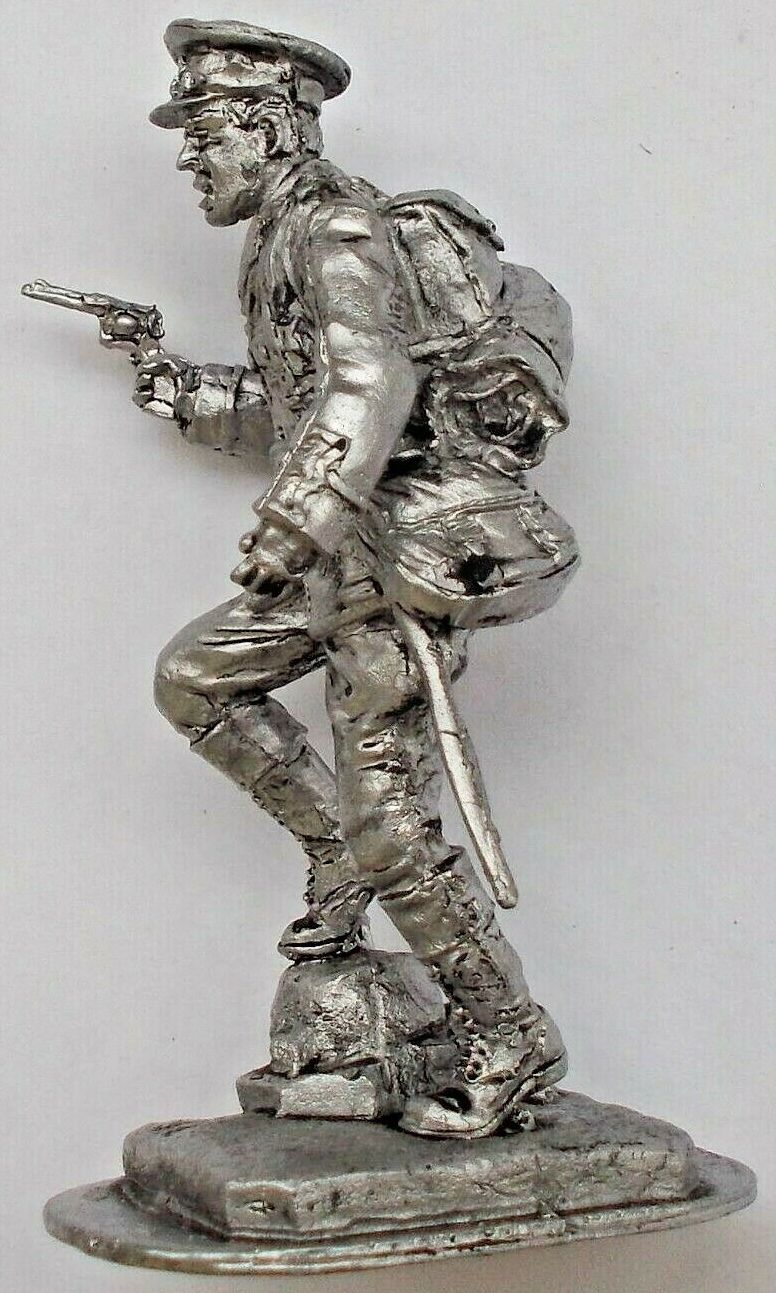
Both men were talented writers. Each was a sincere disciple of Jesus. And both responded to their nation’s call to face the horrors of the Western Front. In light of their service, it seems a skillful designer could base exciting Tolkien and Lewis figurines on something like this generic WWI British officer.

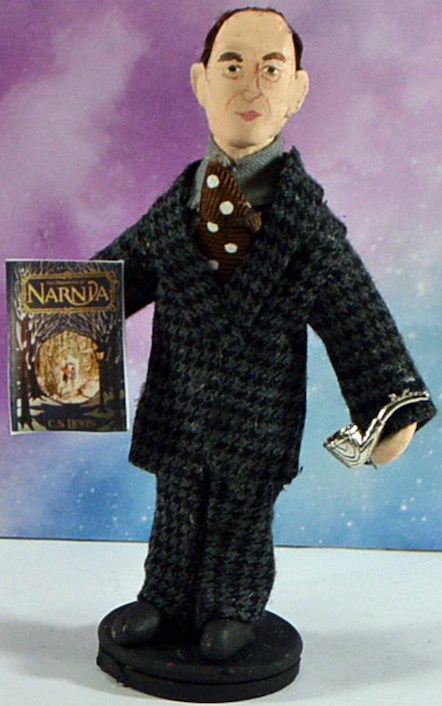
Just do everyone a favor, please don’t use a doll as a template for my literary and spiritual hero.

After all, real heroes are not always cuddly. But they are definitely epic! Just like Robert Cop and Special Man.


* If you are curious about where your first name ranks in popularity, now or during various decades back to the 1880s, you can find out here.

Epitaphs & C.S. Lewis

Have you already decided on an epitaph for your headstone? Or are you trusting others to sum up your life in familiar, traditional words of relationship? C.S. Lewis was of the opinion that a unique sentiment was most appropriate for such occasions.

My own decision has been made by default. At the present time I’m leaning towards simply using a military marker. They look distinguished, and the money that is saved can benefit the living, or perhaps one of the charities we support.

Basically, they have name, rank (I just want “Chaplain” instead of “Lieutenant Colonel”), dates and sometimes a very short personalized element. I think I’ll opt for the simple “Christian cross” which is familiar to those who have visited military cemeteries. I am tempted though, to use the agnus dei, even though it is listed as the official emblem of the United Moravian Church.

Due to the religious diversity (and confusion) in the United States, the Veterans Administration offers a theological smorgasbord of options. You can see the seventy-five options currently available here.

They include established American faiths such as Zoroastrianism and the Tenrikyo Church as well as more contemporary favorites Wicca and Eckankar (which claimed not to be a religion when I encountered its missionaries during my college years). Not to be ignored, are Humanism and its sibling, Atheism. For those preferring ethnic options, we have the Medicine Wheel, ancestor worship (African Ancestral Traditionalist), and the Hammer of Thor.

How Much Should an Epitaph Say?

I’ve seen some headstones that record only a name. Leaves only questions. Some give a brief observation, such as Boot Hill’s marker for Dan Dowd who perished in 1884. It records single word, “Hanged.”*

There are a few longer epitaphs, such as this one, sounding almost like an apology. “Here lies George Johnson hanged by mistake 1882. He was right we was wrong. But we strung him up and now he’s gone.” Sadly, they learned too late the horse they assumed he had stolen, was purchased legally.

In New Hampshire, there is a headstone with a 150 word inscription. Apparently, the woman’s husband had quite an axe to grind with a local congregation.

Caroline H., Wife of Calvin Cutter, M.D. Murdered by the Baptist Ministry and Baptist Churches As follows: Sep’t. 28, 1838; aged 33 She was accused of lying in church meeting by the Rev. D. D. Pratt and Deacon Albert Adams. Was condemned by the church unheard. She was reduced to poverty by Deacon William Wallace. When an exparte council was asked of the Milford Baptist Church, by the advice of their committee, George Raymond, Calvin Averill, and Andrew Hutchinson They voted not to receive any communication on the subject. The Rev. Mark Carpenter said he thought as the good old Deacon said, “We’ve got Cutter down and it’s best to keep him down.” The intentional and malicious destruction of her character And happiness as above described destroyed her life. Her last words upon the subject were “Tell the Truth and The Iniquity will come out.”

C.S. Lewis’ Epitaph

Lewis wrote a moving epitaph for his wife, Joy Davidman. It was based upon one he had written for his good friend Charles Williams. The phrase “Lenten Lands” was used by his stepson David Gresham, as the title of his story of his parents’ marriage.

Here the whole world (stars, water, air,
And field, and forest, as they were
Reflected in a single mind)
Like cast off clothes was left behind
In ashes, yet with hopes that she,
Re-born from holy poverty,
In Lenten lands, hereafter may
Resume them on her Easter Day.

To adorn C.S. Lewis’ own grave, his brother Warnie opted for simpler verse. It was taken from a passage in Shakespeare’s King Lear.

“Men must endure their going hence.”

C.S. Lewis wrote another noteworthy epigraph. It was in a poem by that very name. It was originally published in 1949 in Time and Tide magazine. It has been included in the collection of Lewis Poems as a stanza in “Epigrams and Epitaphs.” He shared it with his fellow poet, Ruth Pitter when it was first written, writing “I append my latest Short, your most obliged C.S. Lewis.”

My grave my pillory, by this blabbing stone
Forbidden to rest unknown,
I feel like fire my neighbours’ eyes, because
All here know what I was.
Think, stranger, of that moment when I too
First, and forever, knew.

In 2013, C.S. Lewis received the great honor of having a memorial stone placed in Poet’s Corner of Westminster Abbey. The inscription was chosen from one of his talks.

I believe in Christianity as I believe that the Sun has risen,
not only because I see it but because by it I see everything else.

I began with the question of what each of us might hope is inscribed as the legacy of our life. In truth, I don’t care if my marker even bears my name, since the Lord knows me as a member of his flock. But what I would like to see gracing my passing, are the words, “Well done, good and faithful servant” (Matthew 25:23).


The photograph adorning this post comes from side-by-side monuments for two Yale chemists. You can read the curious story about them, and the reason for the “Etc.” that adorns the second. Apparently it was added by the family at a later date, since they regarded “Nobel Laureate” as insufficient.

* The most famous epitaph in Arizona’s Boot Hill Cemetery reads “Here lies Lester Moore. Four slugs from a 44. No Les. No More.”

Saved by a Misspelling

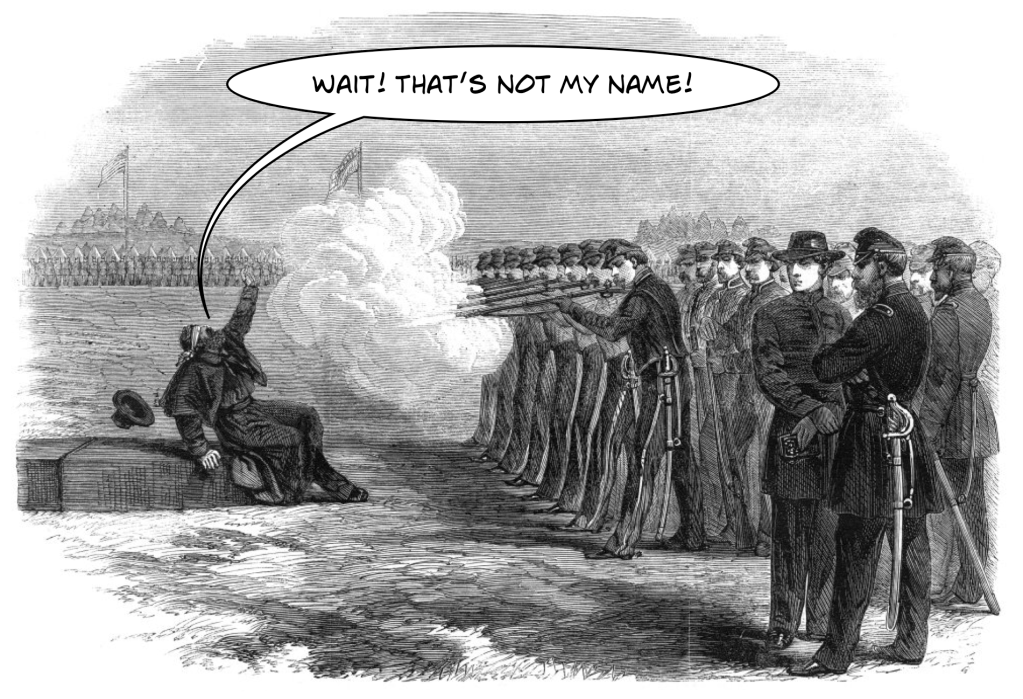
Recently I came across a sad record from the American Civil War. It described a too-common occasion during the later years of the war—the execution of Union deserters. Yet this story was unique. One of the three men sentenced to death, was spared. And this wonder occurred because of a simple misspelling.

As we know, most misspellings are inconsequential, while others are significant, such as making a mistake with the Lord’s name.

On New Year’s Day in 1960 The Times Educational Supplement published a letter from C.S. Lewis on the subject of spelling.

Nearly everything I have ever read about spelling reform assumes from the outset that it is necessary for us all to spell alike. Why? We got on for centuries without an agreed common orthography. Most men of my age remember censoring the letters of soldiers and know that even the wildest idiosyncrasies of spelling hardly ever made them unintelligible

In the case of the Civil War deserter, the misspelled name was not significant. Everyone in the regiment knew the three guilty parties. After their initial arrests, the men had escaped from confinement, and then been recaptured. Not once, but twice.

According to the regimental history of the Sixth Connecticut Infantry, the circumstances followed a common pattern.

Volunteering having partially subsided in the State, and as the government was in need of more troops, drafting commenced in other States as well as in Connecticut. The Sixth received about 200 men in October; some were conscripts and others drafted men, as but few volunteered for the service. Their advent was not hailed with much pleasure or satisfaction by the old regiment, as they claimed that “forced” men would not fight and could not be trusted in case of an emergency.

Some were vile roughs and were frequently in the guard house; while others manifested a disposition to do their duty, and did make very good soldiers. Three of the substitutes deserted from the regiment while on picket . . . (The Old Sixth Regiment by Charles K. Cadwell)

The three deserters shared a common background, and were destined for a common fate.

[Following their first escape] they were tried for desertion before a court martial . . . found guilty and sentenced to be shot to death by musketry. They were then chained hand and foot to a post inside of the provost quarters; and, notwithstanding these precautions, together with a strong guard, they succeeded in getting away again.

They took a boat near the pier and made off; but while in Warsaw Sound near the shore, their boat grounded and they were captured by a picket boat from the gunboat Patapsco. They were very bold, ingenious men, and their skill and perseverance might have won them honor if rightly applied. The culprits were Germans by birth: privates Henry Schumaker, of Co. C, Henry Stark, of Co. E, and Gustav Hoofan, of Co. B. (The Old Sixth)

The execution was conducted in the traditional, solemn manner of the era. However, one of the condemned soldiers would survive another day.

[Two of] the prisoners were taken from their cells at about two o-clock, placed in army wagons and seated on the coffins in which they were to be buried. . . . The funeral escort, consisting of a corporal and eight men, marched to funeral music, with arms reversed.

Slowly the procession proceeded to the appointed place; the square was formed on three sides, and the victims were driven around once that all might see them and avoid their fate. They maintained a calm demeanor to all, except as they passed our regiment they took off their caps several times to their old comrades. On reaching the end of the square they were assisted to alight from the wagons, the coffins were placed on the ground, the culprits sitting down upon them while the Provost Marshal read the charges, findings and sentence.

After a short prayer by the priest they were blindfolded and their hands tied behind them and made to kneel upon their coffins, facing the center of the square. The firing party came up and were halted at six paces distant, when, at a signal from Capt. Babcock, they fired and the victims fell upon their coffins. . . . They lay just as they had fallen till the whole command marched past them on the way to camp, when they were put into the coffins and buried. (The Old Sixth)

Only two of the three deserters had perished in the fusillade that riddled their bodies. Gustav Hoofan survived. Alternative spellings in Civil War records were common. In the rosters as maintained by the National Park Service, Hoofan’s name was also spelled Hoffan and Hofen. The unfamiliarity of Hoofan’s name—combined with the mercy of a commander—were his salvation.

In the case of the [the third deserter] an error was discovered in writing his name, the name Hoofan having been written Hoffman by the Judge Advocate. Col. Duryee wishing to be merciful to the full extent consistent with duty, availed himself of this technical error and protested against his execution. This protest was allowed, and he was saved from death and ordered to return to duty with his regiment. The man was more than pleased at this announcement, but the Judge Advocate, a lieutenant of the Eighty-fifth Pennsylvania regiment, was severely censured in general orders for his inexcusable carelessness and fatal error. (The Old Sixth)

I was unable to ascertain what eventually became of Private Hoofan. Apparently he completed the rest of this service commitment and returned to civilian life with a profound sense of gratitude.

C.S. Lewis’ Thoughts on Spelling

I shared above the beginning of Lewis’ letter to The Times Educational Supplement. The remainder of it is well worth reading. It is clear that he regarded the communication of information (i.e. the actual function of writing) to be far more important than the execution of arbitrary rules.

Printing houses will always have, as they have now, their own rules, whether authors like them or not. Scholars, who know the ancestry of the words they use, will generally spell them accordingly. A few hard words will still have to be learned by everyone. But for the rest, who would be a penny the worse if though and tho, existence and existance, sieze, seize and seeze were all equally tolerated?

If our spelling were either genuinely phonetic or genuinely etymological, or if any reform that made it either the one or the other were worth the trouble, it would be another matter.

As things are, surely Liberty is the simple and inexpensive ‘Reform’ we need? This would save children and teachers thousands of hours’ work. It would also force those to whom applications for jobs are made to exercise their critical faculties on the logic and vocabulary of the candidate instead of tossing his letter aside with the words “can’t even spell.”

It’s so refreshing to see that even a renowned scholar can exercise such common sense.

Books on the Battlefield

war book.png

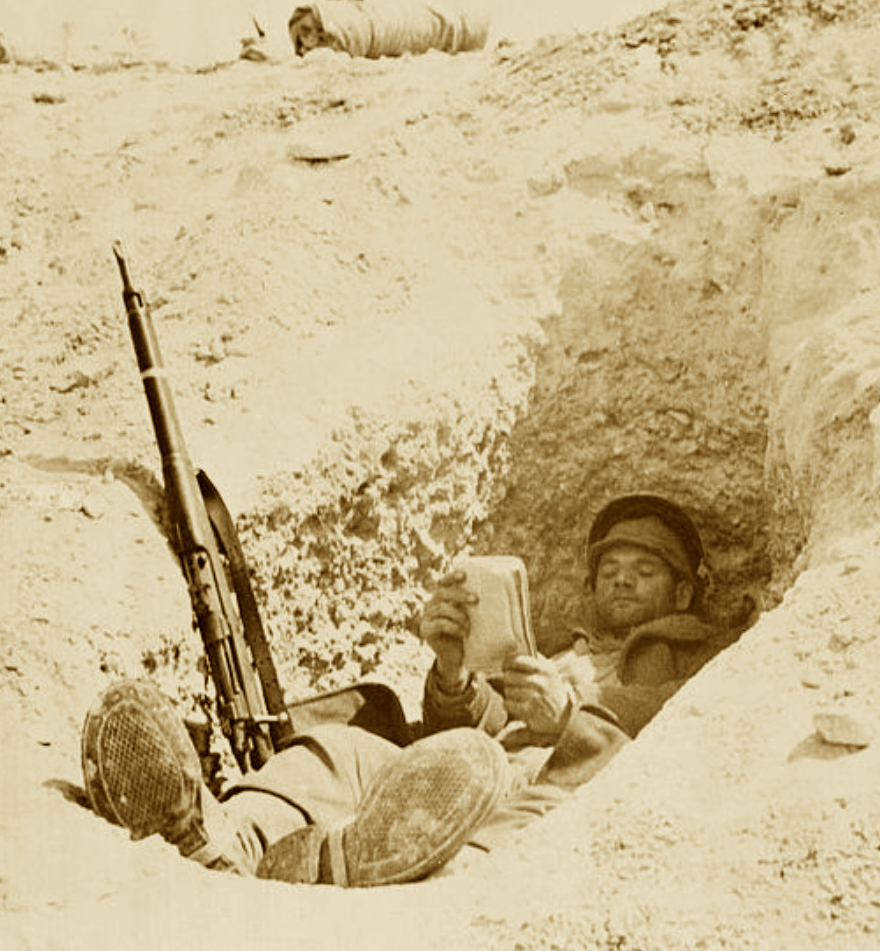
Some would say “only a fool would bring a book to a gunfight.” That might be true if the person carried the book in lieu of a firearm, but the fact is many varieties of literature accompany soldiers to war.

When Edward Bulwer-Lytton wrote “the pen is mightier than the sword,” he offered a powerful insight into how ultimate victory hinges more on knowledge and ideas than on direct violence. Of course, he didn’t mean that in a personal conflict between two combatants a quill could best a saber.

Even those who’ve never been to war realize warriors need to have their bodies, minds and spirits renewed in order to be at their best when their lives hang in the balance. Bodies are taken care of by providing healthy sustenance, swift medical attention, and opportunities to remain fit.

Minds and spirits overlap somewhat, but for the latter, most of the world’s militaries send chaplains to accompany the men and women “in harm’s way.” Spiritual encouragement often comes even more readily from their fellow military members.

Wartime is, surprising no one, an optimal time for people to consider their spiritual wellbeing and contemplate their eternal destiny. Still, that does not make true the adage “there are no atheists in foxholes.”

That said, war zones are places where the fields are literally “white unto harvest” (Luke 4).

It is no accident copies of the Bible have accompanied Christians to war since the first printed copies were available.

During the American Civil War, personal Bibles and religious tracts were widely distributed. It was not uncommon for a soldier to send a particularly meaningful tract home to his family. In addition to chaplains, numerous ministries today work to ensure no service member who desires a Bible is without one.

Reading for the Mind

It would be wrong to think religious works dominate the literature available to military members dispatched to war. Most locations offer access to numerous publications, and even the internet. The Department of Defense even provides access to the nonpartisan Stars and Stripes, which offers some of its headline articles here.

And then there are books. Books of all genres, though perhaps, tilted towards thrillers and sports subjects. Soldiers pass their books around, and for many lucky enough to serve in a garrison type of setting, there is often a library.

Yes, a real library—except that the books are typically all available for free. This is due in large part to the generosity of publishers. During the Second World War, the Council on Books in Wartime, founded by publishers and others, provided over 120 million paperbacks in their Armed Services Editions. (The classic titles sold for an average of six cents.) The Council’s slogan was, “books are weapons in the war of ideas.”

So, military folks read lots of books overseas. In fact, here is a photo of yours truly reading one of my favorite authors (David Drake) while I was on a flight between Pakistan and Afghanistan back in 2002.

I was delighted recently when rereading C.S. Lewis’ autobiography to see that I was following in his footsteps. Lewis is discussing how actual books, and not merely periodicals, can accompany us on our journeys. He refers briefly to his war experiences.

Soon too we gave up the magazines; we made the discovery (some people never make it) that real books can be taken on a journey and that hours of golden reading can so be added to its other delights.

(It is important to acquire early in life the power of reading sense wherever you happen to be. I first read Tamburlaine while traveling from Larne to Belfast in a thunderstorm, and first read Browning’s Paracelsus by a candle which went out and had to be relit whenever a big battery fired in a pit below me, which I think it did every four minutes all that night.) (Surprised by Joy)

I would not equate our two situations. After all, a comfortable C-130 (even when making “combat” landings and take-offs) can hardly be compared to a muddy WWI trench.

But, like nearly all of Mere Inkling’s audience, I do share C.S. Lewis’ joy at knowing books need never be far from our hand. Whether it be on holiday, in the hospital, or even in prison (God forbid), we can always find some pleasure and peace in reading.


Postscript:

During Desert Storm, I helped ship thousands of donated books to troops on the front lines. Unfortunately, there was a problem with the clothing worn by most of the women on the covers. We learned the Saudis were destroying some of the books, deeming them pornography.

As a result, our book processors began tearing the cover off of every book featuring a woman. As a compromise, I offered to become an informal “Saudi censor.” With a large black marker, I was able to suitably cover up elements of the female anatomy that would have presumably offended our Middle East allies.

Despite my misgivings about “defacing” the covers, I felt it was less destructive than removing the entire cover. I’ll leave it to you to be the judge.

C.S. Lewis Compared J.R.R. Tolkien to What?

polyps

These two great Oxford giants were good friends. As such, they accepted each other’s eccentricities. But that doesn’t mean that they couldn’t find humor in those peculiarities.

The Inklings were notorious for their candid critiques and their not-so-subtle teasing of one another. That’s what we all do with our good friends, right?

It’s humor offered not to wound, but to gently discombobulate our companion. And it’s success is measured in the laughter generated among colleagues who share goodwill.

I recently came across a reference, however, where Lewis may have transgressed the bounds of propriety. I leave the assessment of that fact to you.

In a 1947 letter to Margaret Douglas, who had recently lost her mother, Lewis offers warm words of consolation. In addition, he briefly references two publications that she had apparently alluded to in her own letter. The first was his Preface to Essays Presented to Charles Williams, which he refers to as the memoir. The second is Tolkien’s sequel to The Hobbit, which would become The Lord of the Rings.

Dear Miss Douglas, Accept my deepest sympathy on the death of your mother: for I think the bond between you was unusually close. You have one great consolation which few bereaved people have—a clear conscience towards the dead.

It was apparent that you were spending yourself largely upon her. I remember her very vividly, and much admired that blend of the playful and the stately, of which only old ladies have the secret.

I am so glad that you approved of the memoir. Professor Tolkien’s second Hobbit is still unfinished: he works like a coral insect you know!

With all good wishes, yours sincerely, C. S. Lewis

Just How Unflattering is the Comparison?

To compare Tolkien to a minute sea creature of sedentary nature may not, at first read, seem offensive. One might wonder though whether it is quite so innocuous as it might appear.

The National Ocean Service, here in the U.S. provides an answer to the frequently posed question, “are corals animals or plants?” Like Lewis, we already know the answer to that—“a coral insect you know!”—but their colorful description illuminates said insect in a curious manner.

Corals actually comprise an ancient and unique partnership, called symbiosis, that benefits both animal and plant life in the ocean. Corals are animals, though, because they do not make their own food, as plants do. Corals have tiny, tentacle-like arms that they use to capture their food from the water and sweep it into their inscrutable mouths.

I wasn’t aware that they had tentacles. And I don’t think I want to know what makes their mouths “inscrutable.” However, the description adds one more element that I certainly don’t recall from my childhood science classes . . . it’s what the tiny creatures that create such lovely exoskeletons are called.

Most structures that we call “coral” are, in fact, made up of hundreds to thousands of tiny coral creatures called polyps. Each soft-bodied polyp—most no thicker than a nickel—secretes a hard outer skeleton of limestone (calcium carbonate) that attaches either to rock or the dead skeletons of other polyps.

Either I never knew the zoological definition of the word polyp, or it’s been pushed aside in my mind by the more common pathological meaning of the word. It just makes the association of someone with these “columnar bod[ied] . . . mouth and tentacles” oddities seem even more disturbing.

Fortunately, it’s obvious Lewis wasn’t equating the creator of Middle Earth with invertebrate coelenterates. The creator of Narnia was simply likening Tolkien’s publication pace to the secretion rate of the polyps that populate the corals themselves.

Over the years, some of my best friends have labeled me in what an outsider might regard as an unflattering way. While I taught at USAF Chaplain School, my teammates called me “Lemming.” (On occasion, they still do.) The reference had nothing to do with me following the crowd . . . and everything to do with being directed to march off any number of cliffs.

I doubt that Lewis ever shared this association with Tolkien himself. It’s likely that he freely associated the idea at the moment he wrote it, and never thought about it again.

That was one of Lewis’ gifts, being able to use creative analogies to make his points. It is simply one of his talents I would love to share.

And, as for Lewis’ use of the word “insect” here, he is obviously alluding to the polyp’s small size. It would not surprise me to learn that there is an archaic British precedent for such usage. Or, is it just possible that he knew the proper word for the creature, and was too cultured to use it in this context? Perhaps we will never know.

coralpolyp.jpg

C.S. Lewis and Military Service

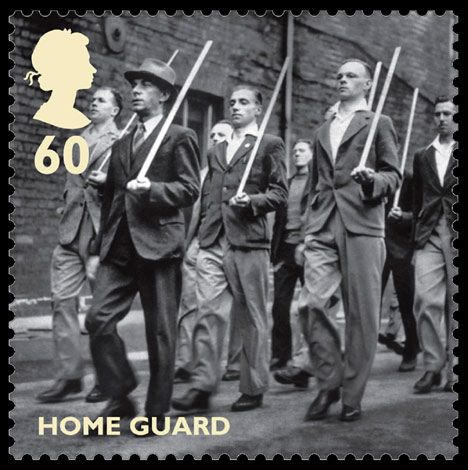
home guard stamp

If you were going to enlist in the military, which branch of the armed forces would you choose? And why?

The choice would have great consequences. The simple fact is that despite their similar charters, not all branches are created equal. Your choice will influence countless aspects of your life, including your post-military employment options and even the likelihood of whether or not you’ll survive your enlistment.

Gallup recently completed research into which branch of the armed forces most Americans would encourage someone to join. The Air Force came out on top.

Americans hold all branches of the U.S. military in high regard, but that does not necessarily translate into a desire to see their loved ones enlist. Fewer than half would be likely to recommend joining the Coast Guard (48%), Marines (43%) or Army (41%) to their children or grandchildren, while a majority would be likely to recommend the Navy (53%) or Air Force (64%).

As a chaplain, I heard some amazing reasons for people’s choice of service. One Army NCO told me, “I was leaning toward the Air Force until the Army recruiter pulled out this huge poster covered with every imaginable weapon, and said, ‘we’ll teach you how to use all of these.’” Not a bad technique for persuading testosterone-fueled eighteen-year-olds to sign on the dotted line.

One young woman who had served a tour in the Marines told me she didn’t even consider another option. “It was the Corps or nothing,” she said, before shouting “Semper Fi!” The USMC has the advantage of requiring fewer recruits and has brilliantly fostered a reputation as “the most prestigious of the military branches.”

A common motivator for Navy recruits seems to be the exotic locations of many of their installations. Can’t argue with that. Most of them are located on or near coasts, while the Air Force strategically places its bases where a falling aircraft would have the smallest chance of injuring someone on the ground. Places like Lubbock, Texas, where I served my first active duty tour at Reese AFB. [The people in Lubbock are amazing patriots.]

The Coast Guard, a sometimes-military organization, attracts people interested in their search and rescue ethos. This despite the fact that most of their mission involves enforcing laws and protecting the nation’s borders.

The Air Force draws lots of recruits who are interested in pursuing technical fields. The other services have similar career paths, of course, but the clear perception is that the Air Force offers the most. Still, it’s a bit embarrassing to share here the reason one friend of mine chose the USAF. Actually, it was his reason for choosing the chaplain assistant career field in particular. “I told them at basic training that I would take any job where I worked in a climate-controlled environment.” He was serious, but the last laugh was on him. When we deploy to the field, chaplain assistants are not only responsible their own safety, they have to protect their noncombatant chaplains as well (in any weather).

The different branches of the military go to war against their nation’s enemies—but they also maintain intense rivalries with their sister services. This competition is usually fun to observe . . . as long as alcohol is not in the vicinity.

C.S. Lewis’ Military Service

In the United Kingdom, the Navy is the senior service. Seems fitting for an island nation. That doesn’t mean that the Army traditions, which date back to historic militias, lack prestige.

During the First World War, C.S. Lewis was exempt from the draft. This, because he was from Northern Ireland. Despite this, he followed his brother Warren into the Royal Army.

Warnie was a career officer, graduating in 1914 from an expedited course at the Royal Military College, Sandhurst. Jack, in contrast, was one of many young college students who were subjected to a far more rapid training regimen, commissioned, and shipped off to the front.

In 1918 C.S. Lewis was severely wounded. One writer summarizes this event quite effectively.

The Lewis who crawled away from the carnage was not yet the C.S. Lewis of The Chronicles of Narnia, The Space Trilogy, The Screwtape Letters and Mere Christianity. Then, he was like so many others who fought in World War I—just another wounded soldier desperate not to bleed to death.

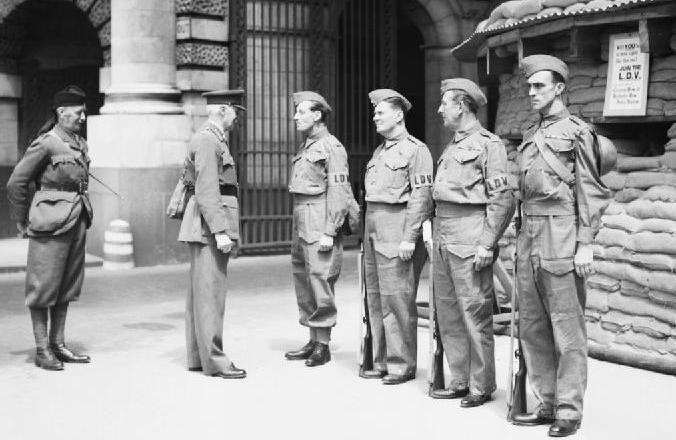
Eventually Lewis would wear another “military” uniform during the Second World War—that of the Home Guard (originally called the “Local Defence Volunteers”). But that is a curious story for another day. Lewis patrolled Oxford in a uniform similar to those portrayed in the photos on this page.

Lewis did not have formal personal ties to the Navy, although his maternal grandfather, a Church of Ireland priest, had served as chaplain in the Royal Navy.

During WWII Lewis developed a warm relationship with members of the Royal Air Force. He offered lectures at a number of installations and taught at the RAF Chaplain School. Although his first lecture began rather inauspiciously, his work with the airmen proved extremely fruitful.

Lewis is a fine example of the man of gentle demeanor who “does his duty” when called upon by his country. Had his lifetime not overarched two global conflicts, he would have been utterly content to remain a civilian and wear the “uniform” of an Oxbridge professor.

home guard