Crying for Attention

abcxyzAre you driven by the unquenchable thirst to be the center of everyone’s attention. Or, would you be more content to live out your life appreciated by a small cadre of friends?

A woman in South America recently displayed an extreme case of the former impulse. She had grown tired of her name because it was too mundane. Apparently she garnered insufficient attention as Ladyzunga Cyborg.

So now her name, legally changed, is ABCDEFGHIJKLMNOPQRSTUVWXYZ.

My first thought when reading this was not that I didn’t believe it. In our foolish world, where people use symbols that aren’t even words for their names, I just shook my head. And . . . I thought “how fortunate for her that she’s not Chinese,” with its 46,964 characters as recorded in the Kangxi Dictionary.

This is not the sort of publicity Columbia needs. She’s acting bizarrely enough to be a mistaken for a Californian.

Of course, people at the opposite extreme—those who cannot bear the presence of other human beings—are also troubled. As with so many aspects of the human personality, people at either of the extreme poles are frequently deemed mentally ill.

This fetish for exhibitionism is alien to me. I would much prefer downing a pint with friends at the Eagle and Child to standing on some stage in front of “adoring crowds.”

My “introvert” quotient appears to be eclipsing my “extravert” qualities.

C.S. Lewis never sought the limelight either. He did not find his experience with notoriety pleasant. And yet, he accepted its burden graciously.

It is commonly known that some days he would spends hours (literally) corresponding with some of the thousands of readers who wrote to him as the creator of Narnia.

It was exhausting.

I assume people like Ms. Abcdefghijklmnopqrstuvwxyz seek attention because they feel insignificant or unnoticed.

I find that tragic. Tragic because their name, their true name, is known by the most important and amazing person in the universe. The God who created them.

Each and every person, including you, is unique, precious and loved.

Knowing this provides profound peace. It also delivers us from the constant compulsion to seek attention.

Jesus described the profound value of each person by contrasting God’s love for us with the attention he devotes even to a single sparrow . . . “Not one of them will fall to the ground outside your Father’s care.”

And you, that’s you, are far more precious than these.

An Impious C.S. Lewis

csl glassWhen C.S. Lewis was contacted for permission to publish a recent sermon in a distinguished collection, he confessed an “impious” hope.

Lewis, of course, was not a pastor. He was instead a highly regarded professor. Nevertheless, due to his mastery of public speaking, and his unapologetic faith, he was invited to preach on a number of occasions.

This particular sermon had been delivered at St Mary the Virgin in Oxford, on 22 October 1939. The Student Christian Movement had already published it in pamphlet format with the title The Christian in Danger.*

Lewis ends a lengthy 1940 letter to his brother Warnie by mentioning the request, almost as an afterthought.

Did I tell you that someone wants to include that St Mary’s sermon of mine in a collection of (save the mark**) Famous Sermons?

Famous English Sermons would be published by Thomas Nelson in London later that year. The anthology was edited by Ashley Sampson, who had asked Lewis to write his volume The Problem of Pain.

Lewis’ modest “impiety” was revealed in the rest of his announcement to his brother. He confesses to that common human fear of being upstaged by the other works in the collection.

I am divided between gratification and a fear that I shall be merely made a fool of by appearing in the same book as Bede, Latimer, Donne, Taylor etc. However, let’s hope that I shall be divided from them by some good 19th century duds!—but I grow impious.

How easy it is to relate to Lewis’ concern. As I moved from assignment to assignment during my military career, I subconsciously hoped I was relieving someone who had left room for me to excel . . . and, simultaneously, that as I left my recent assignment my performance would not be outshined by my successor.

Better, in my mind, to be proceeded and followed by 20th century duds. (Forgive me, Lord.)

I doubt C.S. Lewis and I are the only people to have shared that impious thought.

Still, recognizing the impiety is the beginning of purging it. I tried to make it a practice to pray for those who followed in my ministry wake. That they would be successful, and that the men and women entrusted to our spiritual care would be blessed by their ministries.

I must confess, though, that when my literary work has been placed in direct juxtaposition to that of others, I have not been so eager for theirs to be better received than my own contributions. Not that I wish upon anyone that they would be a dud, but merely that their eloquence not put my own humble efforts to shame.

_____

* The sermon is found in The Weight of Glory with the title “Learning in War-Time.”

** “Save the mark” is an exclamation that connotes a sense something is unbelievable. It can even be dismissive, but that would not be the sense in which Lewis uses it here, since it is obvious he regards the request as a humbling honor.

Vodka the Opiate

ApolloIn our troubled world, some disappointed souls seek solace in a bottle. There are also corrupt governments that steer their people toward such destructive distractions to draw their attention from their rulers’ crimes.

Such, sadly, is the current state of Russia.

I have long felt a compassion and affinity for Russia. Even when it was the Soviet Union, I knew that the Russian people did not want the world to end in a nuclear conflagration.

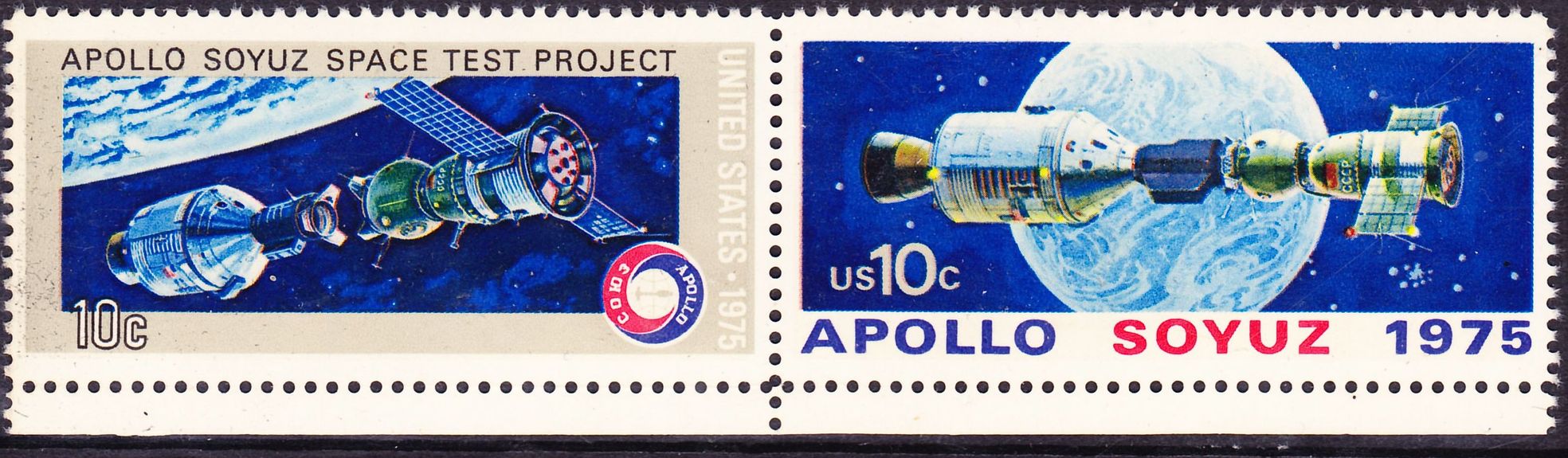
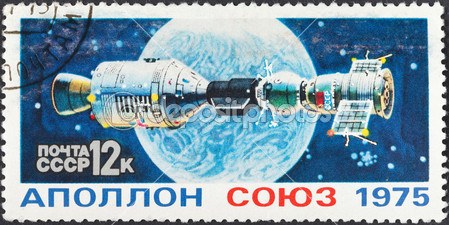
For many years I displayed the dual Soviet and American stamps issued to commemorate the docking of the Soyuz and Apollo spacecraft. I saw that event as a promise of the peace and cooperation that might someday exist between our nations. A peaceful, even warm, relationship that would be a blessing to the entire world.

I thought that day might have arrived with the end of the Soviet Union and the restoration of a Russian nation.

Unfortunately, democracy was not to prevail—at least at this moment—in that historic land. Russia ended up with the worst elements of capitalism. They got the West’s privileged (i.e. rich) classes who hoarded the nation’s wealth. And, the Russian version was even harsher. The masses have been left with dreams unfulfilled, and an oligarchy living in luxury.

As the people begin to awaken to the injustice, their leaders turn to a proven means of dulling human thought—alcohol. And, since we are talking about Russia, that means vodka. I found this analysis by David Satter quite interesting.

The Putin regime needs an end to sanctions—not because they are crippling in themselves but because, in combination with the growing crisis of the economy and the unpredictable trajectory of the war [in eastern Ukraine], they could help lead to the destabilization of Russia. . . . It is a measure of the government’s concern that it has cut the price of vodka. . . . This is a transparent attempt to use vodka to tranquilize the population.

SoyuzWhile I will continue to pray for the people of Russia, this description of Putin’s strategy reminded me of the oft-quoted Communist adage that “religion is the opiate of the masses.”

Marx or Lewis?

Karl Marx was right, in that manmade “religion” can be used to blind people to their surroundings.

Marx, however, did not understand Christianity. Because Jesus of Nazareth dispels all illusion and enables us to truly comprehend reality.

C.S. Lewis referred to Marx’s slander in his book, The Problem of Pain.

Those who reject Christianity will not be moved by Christ’s statement that poverty is blessed. But here a rather remarkable fact comes to my aid. Those who would most scornfully repudiate Christianity as a mere ‘opiate of the people’ have a contempt for the rich, that is, for all mankind except the poor.

They regard the poor as the only people worth preserving from ‘liquidation,’ and place in them the only hope for the human race. But this is not compatible with a belief that the effects of poverty on those who suffer it are wholly evil; it even implies that they are good.

The Marxist thus finds himself in real agreement with the Christian in those two beliefs which Christianity paradoxically demands–that poverty is blessed and yet ought to be removed.

Lewis aptly describes the hypocrisy of the elite who live with the comforts they supposedly disdain. In contrast, he affirms Christ’s own words about how the least are the greatest in the Kingdom of God.

Far from serving as a debilitating opiate, Christianity moves people to overcome the trials of this world. It motivates them to care for the less fortunate. It is active, not passive and resigned.

Unlike a mind-dulling spirit, Christianity calls us to forgive even our enemies and extend to them a hand of peace.

Who knows if lowering the price of vodka will distract the Russian people from the disastrous direction of their ruling regime. I hope not.

I pray that Russia will seize instead the promise bequeathed them in their Christian heritage. So that, following in the footsteps of the Prince of Peace, they might become an example of national righteousness for the rest of us, whose homelands have their own deep imperfections.

_____

Satter’s editorial, which appeared in the Wall Street Journal, is available here.

Bach’s Deathbed Hymn

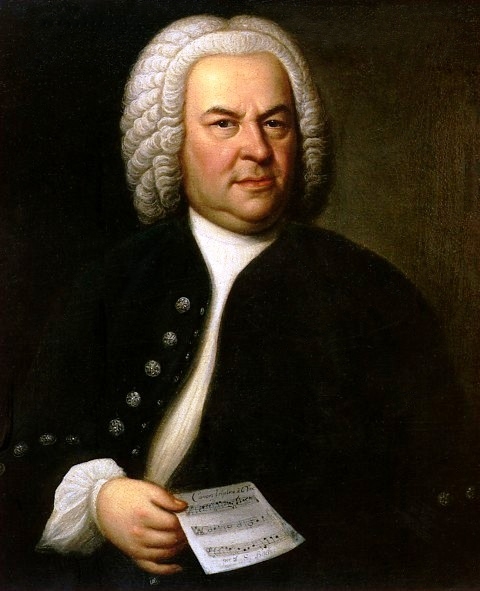
jsbBlind and restricted to his deathbed, Johann Sebastian Bach asked a fellow organist to play one of his own hymns. Bach then did what any brilliant composer would have done.

No, he did not criticize his colleague for the way he interpreted it musically. Bach, in his final hours, revised his own composition, making a number of musical improvements.

And the genius did not rest there, he retitled the work and modified its strains in a manner which perfectly addressed his circumstances. Anticipating his imminent encounter with his Creator, he changed the name to Vor deinen Thron tret’ ich hiermit (Before Your Throne I Now Appear). The first and last verses of the hymn are as follows.

Before your throne I now appear,

O God, and beg you humbly

Turn not your gracious face

From me, a poor sinner.

Confer on me a blessed end,

On the last day waken me Lord,

That I may see you eternally:

Amen, amen, hear me.

As a Lutheran, Bach was well acquainted with his sinful nature and utter dependence on the grace of God. He was a serious student of the Bible, and his annotated edition of Luther’s translation is held in the collection of Concordia Seminary. (Two of the three volumes are currently on loan to Leipzig.)

The medical missionary, Albert Schweitzer, was a renowned Bach scholar before he left a promising career in music performance to pursue medicine. Schweitzer wrote:

At heart Bach was neither pietistic nor orthodox: he was a mystic thinker. Mysticism was the living spring from which sprang his piety. There are certain chorales and certain cantatas which make us feel more than elsewhere that the master has poured into them his soul. These are precisely the mystical chorales and cantatas.

Like all the mystics, Bach, one may say, was obsessed by religious pessimism. This robust and healthy man, who lived surrounded by the affection of a great family, this man who was embodied energy and activity, who even had a pronounced taste for the frankly burlesque, felt at the bottom of his soul an intense desire, a Sehnsucht, for eternal rest. (Albert Schweitzer, The Life and Character of Bach).

During his lifetime, Bach’s international renown arose from his performance skills. It was nearly a century later that the gifted Felix Mendelssohn reintroduced Bach’s Saint Matthew Passion and the world grew to admire Bach as the brilliant composer he was. Referring to his partnership with a playwright in the effort, Mendelssohn said, “To think that it took an actor and a Jew’s son to revive the greatest Christian music for the world!”

Bach remains quite popular, although not everyone shares an appreciation of organ music. In 1956, C.S. Lewis provided insight into his own preferences in the following correspondence.

Concerning hymn singing and organ playing: if they have been helpful and edified anyone, then the fact that they set my teeth on edge is infinitely unimportant. One must first distinguish the effect which music has on people like me who are musically illiterate and get only the emotional effect, and that which it has on real musical scholars who perceive the structure and get an intellectual satisfaction as well.

Either of these effects is, I think, ambivalent from the religious point of view: i.e. each can be a preparation for or even a medium for meeting God but can also be a distraction and impediment.

In that respect music is not different from a good many other things, human relations, landscape, poetry, philosophy. The most relevant one is wine which can be used sacramentally or for getting drunk or neutrally. I think every natural thing which is not in itself sinful can become the servant of the spiritual life, but none is automatically so

When it is not, it becomes either just trivial (as music is to millions of people) or a dangerous idol. The emotional effect of music may be not only a distraction (to some people at some times) but a delusion: i.e. feeling certain emotions in church they mistake them for religious emotions when they may be wholly natural.

That means that even genuinely religious emotion is only a servant. No soul is saved by having it or damned by lacking it. The love we are commanded to have for God and our neighbour is a state of the will, not of the affections (though if they ever also play their part so much the better).

So that the test of music or religion or even visions if one has them is always the same– do they make one more obedient, more God-centred, and neighbour-centred and less self-centred? ‘Though I speak with the tongues of Bach and Palestrina and have not charity etc.’!

Fortunately, even the “musically illiterate” can be blessed by the anointed ministry of Bach. Lewis is correct that musical brilliance, without a gracious component, is empty. Fortunately, in the case of J.S. Bach we encounter a man who truly lived by the words he appended to much of his music: Soli Deo Gloria, to Glory to God Alone.

_____

You can listen to Bach’s music for this chorale here. This performance is from the church in Leipzig where Bach himself performed.

Obscenic Words

paskalevThere is something obscene about the title of some recent recordings of a Norwegian/Bulgarian musician. He labeled the collection “Obscenic Sessions.”

Now, I realize that English may be his third or fourth language, but surely someone involved in the project knew that obscenic is not really a word. And, if a person is attempting to coin a new word, there are more creative ways than simply changing the ending of an adjective to alter it into another adjective. (I suppose there is a slim chance it’s either a Norwegian or Bulgarian word, but I suspect not.)

There’s something else about the collection that also strikes me as potentially obscene. Apparently the music was recorded during a live performance at an actual Anglican church. The full title reads: “Obscenic Sessions Live From St. Margaret’s Of Antioch (Liverpool, UK).”

Why, I wonder, would a priest allow his sanctuary to be used for obscenic sessions? Certainly no Christian congregation could be that desperate for income. They could, however, be proving their open-mindedness by hosting just such an event . . . but that’s another matter.

Now, I am aware that the use of the neologisms may simply be provocative. There might not be anything at all that’s edgy about the music or performance. I wasn’t there, and I haven’t taken the time to read the lyrics to all of the music.

Returning to the subject of coining new words, it’s a rather tricky venture. You have to be just creative or witty enough to do it well. Falling short of that is either completely confusing, or simply lame.

Some people have a knack for this. Lewis Carroll, for example, created a handful of words in a single literary piece that have remained vibrant for many years. In his 1871 Through the Looking Glass, he included the nonsense poem, “Jabberwocky.” Some of the words Carroll created as nonce words—intended for a single use—have lived on beyond their appearance in the poem.

Not long ago, as a matter of fact, I read about someone “chortling.” That would not have been possible before Carroll minted this means of communication. “Mimsy” and others have found their way into dictionaries, as well.

We have written in the past about the Bandersnatch on these very pages. C.S. Lewis described J.R.R. Tolkien’s stubborn resistance to editorial suggestions by saying “you might as well try to influence a bander-snatch.”

Returning to the music of Mr. Paskalev, if his music is more uplifting than the adjective implies, I wish him the best of luck in his career. However, if it is truly obscenic (in the sense the root of that word implies) I wish him an epiphany that will transform his work. And, finally, in light of the picture above (from his official website), I suggest that he try to get a little more rest.

Norse Linguistic Invasion

vik
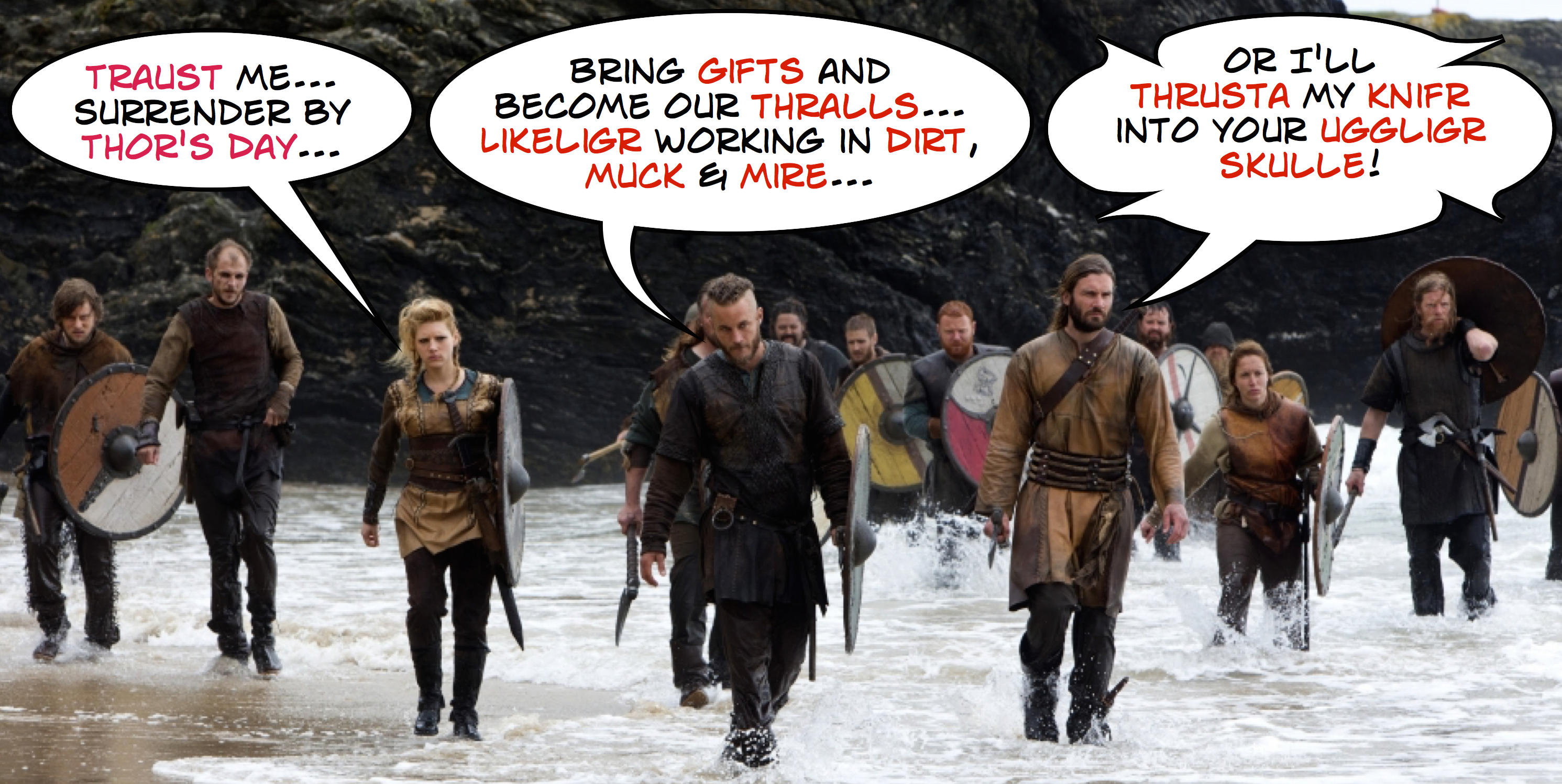
The initial Viking incursions into England were violent, but they left a colorful linguistic legacy in their wake.

Victims of the onslaught, like the unfortunate monks of Lindisfarne, paid a steep price, but the Norse eventually became farmers and craftsmen like the people they initially displaced.

Their contribution to the British gene pool was small, as was their donation to the English language, but it was not insignificant.

Some of the words fit the Viking mystique. Klubba becomes club (as in the weapon, not the association). Rannsaka may have initially meant searching the house for something like your missing keys, but the English experienced it as ransack. And slatra transfers into slaughter. The original word means “to butcher,” and one wonders if it originally applied to meal preparation. It so, the decades of Norse raids modified that focus.

Other adopted words arose from the more peaceful pursuits of the Scandinavians. Bylög meant the laws of the village and became bylaw. Law itself comes from the Norse lag. Husband, skill, thrift, litmus and loan have Viking roots. Those who enjoy a great slice of beef can thank them for their “steak” as well, since steik was their term for frying meat.

The Inkling Affection for the Sagas

J.R.R. Tolkien was actually a Professor of Anglo-Saxon at Oxford. He founded a society devoted to the study of Icelandic and Norse sagas called Kolbitar (Coalbiters).* C.S. Lewis joined him in the group, which preceded the development of the Inklings fellowship.

As a young student, Lewis was attracted to Norse myth and experimented with writing his contribution to the tales. He penned over 800 lines of a massive epic he entitled “Loki Bound.” Only fragments have survived, but the following passage is especially intriguing. In it, Loki criticizes Odin for the manner in which he created humanity.

Odin! And who art thou to make a soul

And force it into being? Who art thou

To bring forth men to suffer in the world

Without their own desire? Remember this,

In all the universe the harshest law,

No soul must ever die: it can but change

Its form and thro’ the myriad years

Must still drag on for aye its weary course,

Enduring dreadful things for thy caprice.

The echoes of teenaged angst are clear in this tirade. The words describe (well, I believe) the fatalistic despair of many people. Fortunately, this young man eventually encountered the One who rescues us from “harshest law” and “dreadful things” that are the lot of fallen mortals.

A Few More Norse>English Words

Here are some more of the seven score words that are identified as having a Scandinavian origin.

An interesting collection of verbs include: bark, blunder, choose, crawl, glitter, race, scare, stagger, stammer and whirl.

The following words associated with people: Guest, kid, lad, oaf, foot, leg, skin, freckles, ill, and weak.

The gamut of emotions: anger, awe, and happy.

And, without their Norse contribution, who knows what we would call these articles today.

axle   ~   window   ~   cake   ~   bag

glove   ~   mug   ~   plow   ~   link

they   ~   trust   ~   same   ~   gift

and even Hell

One final example, as quoted in the source of the comprehensive list of Norse words.

Even though the gun wasn’t invented until centuries after the Viking era, the word comes from Old Norse. The most common usage was in the female name Gunnhildr: gunn and hildr both can translate as “war” or “battle.” Only truly [ferocious] Vikings named their infant daughters “Warbattle.”

_____

*You can read a bit more about Kolbitar here. I have also mentioned Kolbitar in this column.


Easter, Updike & Lewis

updikeHappy Easter Monday. Even if you do not believe Jesus has risen from the dead, I sincerely hope you are experiencing a special season of hope and peace.

For Christians, however, the bodily resurrection of Jesus is not an optional doctrine.

The Scriptures affirm the truth that, “. . . if Christ has not been raised, then our preaching is in vain and your faith is in vain. . . . if Christ has not been raised, your faith is futile and you are still in your sins. Then those also who have fallen asleep in Christ have perished. If in Christ we have hope in this life only, we are of all people most to be pitied” (1 Corinthians 15:14-19, ESV).

John Updike (1932-2009) recognized this truth and wrote an oft-quoted poem about it.*

“Seven Stanzas at Easter”

Make no mistake: if he rose at all

It was as His body;

If the cell’s dissolution did not reverse, the molecule reknit,

The amino acids rekindle,

The Church will fall.

It was not as the flowers,

Each soft spring recurrent;

It was not as His Spirit in the mouths and fuddled eyes of the

Eleven apostles;

It was as His flesh; ours.

The same hinged thumbs and toes

The same valved heart

That—pierced—died, withered, paused, and then regathered

Out of enduring Might

New strength to enclose.

Let us not mock God with metaphor,

Analogy, sidestepping, transcendence,

Making of the event a parable, a sign painted in the faded

Credulity of earlier ages:

Let us walk through the door.

The stone is rolled back, not papier-mache,

Not a stone in a story,

But the vast rock of materiality that in the slow grinding of

Time will eclipse for each of us

The wide light of day.

And if we have an angel at the tomb,

Make it a real angel,

Weighty with Max Planck’s quanta, vivid with hair, opaque in

The dawn light, robed in real linen

Spun on a definite loom.

Let us not seek to make it less monstrous,

For our own convenience, our own sense of beauty,

Lest, awakened in one unthinkable hour, we are embarrassed

By the miracle,

And crushed by remonstrance.

Updike & Lewis

Poetry and faith were not the only interests shared by Updike and C.S. Lewis. Both men were literary critics, as well as authors in their own right. Updike’s description of his approach to criticism echoes many of the same principles displayed by Lewis.

1. Try to understand what the author wished to do, and do not blame him for not achieving what he did not attempt.

2. Give enough direct quotation—at least one extended passage—of the book’s prose so the review’s reader can form his own impression, can get his own taste.

3. Confirm your description of the book with quotation from the book, if only phrase-long, rather than proceeding by fuzzy précis.

4. Go easy on plot summary, and do not give away the ending.

5. If the book is judged deficient, cite a successful example along the same lines, from the author’s œuvre or elsewhere. Try to understand the failure. Sure it’s his and not yours?**

Updike wrote, “I read C.S. Lewis for comfort and pleasure,” praise that has been included in advertising campaigns. A fuller account of his appreciation for Lewis’ work comes in the following passage, from Conversations with John Updike.

The provableness of God is a subject Updike may have mused upon during the many Sunday mornings he has spent in church. Updike is a lifelong churchgoer. He was raised a Lutheran, became a Congregationalist during his first marriage, and has recently joined the Episcopal church.

“I don’t see anything else around really addressing, for me, one’s basic sense of dread and strangeness other than the Christian church,” he said. “I’ve written maybe all too much about religion here and there. But there have been times when I read a lot of theology. The year I spent in England [after graduation from Harvard] I was very nervous and frightened, standing more or less on the threshold of my adult life and career, if any.

“One of the ways I assuaged my anxiety was to read a lot of G.K. Chesterton and C.S. Lewis, some Kierkegaard, and when I moved to New England, I read a lot of Karl Barth. My intensive theology reading extends from about the age of 22 to, say, 30. I get great pleasure out of reading theology.”

Reading Theology

Updike was correct. Contemplating holy matters can certainly be pleasurable. That is true even when we are chewing on complex subjects, difficult to digest. After all, “everyone who lives on milk is unskilled in the word of righteousness, since he is a child. But solid food is for the mature, for those who have their powers of discernment trained by constant practice to distinguish good from evil” Hebrews 5:13-14, ESV).

The resurrection of Jesus may be one of these truths not simple for all to believe. I pray for those who find this a challenge. But, God forbid that any of us should reject the most significant event in human history, “Lest, awakened in one unthinkable hour, we are embarrassed by the miracle, and crushed by remonstrance.”

_____

* For the interesting story of how this poem won first place in a competition at his church, you can read his pastor’s recollections here.

** Updike’s list concludes with these words: “To these concrete five might be added a vaguer sixth, having to do with maintaining a chemical purity in the reaction between product and appraiser. Do not accept for review a book you are predisposed to dislike, or committed by friendship to like. Do not imagine yourself a caretaker of any tradition, an enforcer of any party standards, a warrior in any ideological battle, a corrections officer of any kind. Never, never . . . try to put the author ‘in his place,’ making of him a pawn in a contest with other reviewers. Review the book, not the reputation. Submit to whatever spell, weak or strong, is being cast. Better to praise and share than blame and ban. The communion between reviewer and his public is based upon the presumption of certain possible joys of reading, and all our discriminations should curve toward that end.”


Imitating Animals

bearsHave you ever imitated a bear? Perhaps not intentionally. Still, if you are typical, you may do so routinely.

And it’s all because of your acnestis.

When I first saw the word, I thought it might be some recently coined term to address a semi-serious subject. But, the word is neither new, nor is the dilemma it describes exaggerated.

From the 1828 edition of Webster’s Dictionary.

ACNESTIS, n.

That part of the spine in quadrupeds which extends from the metaphrenon, between the shoulder blades, to the loins; which the animal cannot reach to scratch.*

While most human beings may not replicate bears’ behavior with trees, it is not uncommon to seek relief from a handy doorjamb.

Scratching that unreachable epicenter of that infernal itch has motivated the creation of a variety of tools. Yet none of these instruments can match the sheer relief offered by a sturdy doorway. I doubt I am alone, or excessively ursine, for believing that.

It could be worse, of course. At least people (most of them) don’t follow the example of dogs. We’ve all seen how they use the excuse of scratching their backs, to justify picking up unsavory scents while they wriggle around on the ground.

Descending to Subhuman Levels

Emulating animals has implications extending far beyond physical considerations. It is one thing to share a mutual appreciation for scratching one’s acnestis. Quite another to echo their baser natures.

In one of his letters, the Apostle Peter considers the fate of false prophets. After describing the damnation of fallen angels, he writes about those who teach deceitful doctrines. “But these, like irrational animals, creatures of instinct, born to be caught and destroyed, blaspheming about matters of which they are ignorant, will also be destroyed . . .” (2 Peter 2:12, ESV).

The following passage from the Psalms reveals how even the righteous are not immune to behaving like animals. “When my soul was embittered, when I was pricked in heart, I was brutish and ignorant; I was like a beast toward you [God]. Nevertheless, I am continually with you; you hold my right hand. . . . My flesh and my heart may fail, but God is the strength of my heart and my portion forever” (Psalm 73:21-23, 26, ESV).

God’s word is filled with allusions to bestial behaviors. One of the most literal is found in the example of the humiliation of the great King Nebuchadnezzar. You can read it here, from the fourth chapter of the Book of Daniel.

What Distinguishes Us from the Beasts?

C.S. Lewis describes how being a true human being differentiates us from animals. We share physical natures and numerous biological similarities. But we are far more. Lewis explores this in The Abolition of Man, which begins with the chapter “Men Without Chests.”

This image of lacking a “chest” actually refers to a classical reference for the part of a person where our character or virtue resides.

The excerpt below addresses how the enlightened or morally educated individual is capable of transcending the slavery of animals to their fleshly nature.

Without the aid of trained emotions the intellect is powerless against the animal organism. I had sooner play cards against a man who was quite sceptical about ethics, but bred to believe that ‘a gentleman does not cheat,’ than against an irreproachable moral philosopher who had been brought up among sharpers.

In battle it is not syllogisms that will keep the reluctant nerves and muscles to their post in the third hour of the bombardment. The crudest sentimentalism . . . about a flag or a country or a regiment will be of more use.

We were told it all long ago by Plato. As the king governs by his executive, so Reason in man must rule the mere appetites by means of the ‘spirited element.’

The head rules the belly through the chest—the seat, as Alanus tells us, of Magnanimity, of emotions organized by trained habit into stable sentiments.

The Chest-Magnanimity-Sentiment—these are the indispensable liaison officers between cerebral man and visceral man. It may even be said that it is by this middle element that man is man: for by his intellect he is mere spirit and by his appetite mere animal.

It is wise, I believe, for every man and woman to devote themselves to the health and of their own heart and purpose—that which makes us human.

In doing so, we will still share some of the basic behaviors of the animal world about us, such as being plagued by our acnestis . . . but the choices that direct the course of our lives will no longer be dictated solely by carnal instincts.

And such growth, my friends, will make us each day, a little bit more human.

_____

* I realize Noah Webster limited his definition to quadrupeds, but today it has been expanded to aptly apply to all of us who suffer from this curse.

Pacifism as an Enemy of Peace 

blimp 01The literary careers of C.S. Lewis and George Orwell overlapped in some interesting ways.* Today we will consider a rather odd British personality mentioned by each of them in wartime essays, Colonel Blimp.

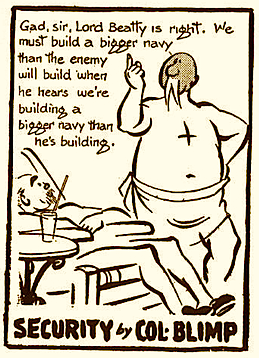
Colonel Blimp was a cartoon figure, inspired by a conversation between two military officers who were arguing that “cavalry” officers should continue to wear spurs even when they migrated into tanks.**

At one time the cartoon was so popular that Lewis wrote:

It may well be that the future historian, asked to point to the most characteristic expression of the English temper in the period between the two wars, will reply without hesitation, “Colonel Blimp.” (“Blimpophobia”).

The good colonel echoes similar foolish notions as he blusters about in a caricature of pompous military commanders. Blimp is retired, but harangues all within earshot about the wisest course for the nation.

Orwell wrote derisively of the military and imperialistic middle class, that he called “the Blimps.” He drew the label from the “colonel with his bull neck and diminutive brain, like a dinosaur.” (“The Lion and the Unicorn”).***

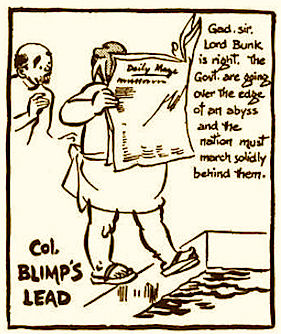
blimp 02The cartoon above illustrates how Colonel Blimp is certain he has the solution to winning the arms race. The frame to the right shows that he believes his wisdom extends beyond the military to politics in general.

Timely Advice from C.S. Lewis

In “Blimpophobia,” Lewis offers advice which proves apropos for our modern age. Today, as fanatical barbarians seek to destroy civilization, enlightened nations and individuals must be vigilant.

One dimension of that vigilance involves walking the fine line between unbridled nationalism and self-absorbed pacifism. When he wrote, Lewis was worried about the anti-war sentiment that threatened to undermine Britain’s response to the Nazis.

Lewis, a wounded combat veteran of the Great War, recognized the truth of the Colonel Blimp caricature. He said something veterans recognize even more clearly than civilians. There is an overabundance of preening and stupidity in the military.

The infection of a whole people with Blimpophobia would have been impossible but for one fact—the fact that seven out of every ten men who served in the last war, emerged from it hating the regular army much more than they hated the Germans. How mild and intermittent was our dislike of “Jerry” compared with our settled detestation of the Brass Hat, the Adjutant, the Sergeant-Major, the regular Sister, and the hospital Matron!

Now that I know more (both about hatred and about the army) I look back with horror on my own state of mind at the moment when I was demobilized. I am afraid I regarded a Brass Hat and a Military Policeman as creatures quite outside the human family.

Still, he said we cannot allow that sad truth to cause us to deny the requirement to maintain a strong defense. “A nation convulsed with Blimpophobia will refuse to take necessary precautions and will therefore encourage her enemies to attack her.”

C.S. Lewis warned his countrymen of the dangers military-phobia during the Second World War. And—among the war-weary nations of the free world battling jihadism—we are wise to heed his wise words today.

The future of civilization depends on the answer to the question, “Can a democracy be persuaded to remain armed in peacetime?” If the answer to that question is No, then democracy will be destroyed in the end. But “to remain armed” here means “to remain effectively armed”. A strong navy, a strong air force, and a reasonable army are the essentials. If they cannot be had without conscription, then conscription must be endured. (C.S. Lewis, “Blimpophobia”).

_____

* In “A Literary Phobia,” I compared some advice they offered to writers. The counsel in question sounds similar on the surface, but actually differs. In “Orwellian Advice,” I contrast the two authors in much greater detail.

** Blimp’s creator, David Low, resided in London but was actually a New Zealander.

*** You can read Orwell’s 1941 essay, “The Lion and the Unicorn,” here.

Food that Bites

Guardians_of_the_Galaxy_Rocket_movie_posterMany peculiar delights are eaten in Los Angeles County, but diners might want to reconsider the fare offered at The Metro Supermarket. While it’s apparently not illegal to sell raccoons for consumption, it could become dangerous when the Guardians of the Galaxy learn of the practice.

In one of the year’s most successful blockbusters, Guardians of the Galaxy, we were introduced to Rocket Raccoon. Rocket is a genetically altered Procyon lotor designed to be a deadly fighting machine. Not only is he a brilliant tactician, the genetic manipulations have left him with one bad attitude.

Which makes it all the more important for the customers who purchase the ten-dollar-a-pound frozen raccoon carcasses to be cautious.

On a more serious note, the question of what we eat is not merely academic.

I’m not referring to modern insights into healthy diets. I’m talking about international, and potentially intergalactic, relations!

World travelers are often introduced to foods that seem, to put it gracefully, exotic. On such occasions, some respond enthusiastically—eager to sample alien delights. Others are somewhat more wary—reluctant to place in their mouths things they cannot quite identify.

Back in the 1980s I resided for a year in the Republic of Korea. I declined to eat gaegogi, not because I assumed dog meat would be unpalatable, but because I could not imagine contributing in any way to the slaughter of dogs for their flesh.

Another time that year, a sergeant who worked at our chapel purchased a paper cone full of toasted rice during an outing. When he was done with the rice (burned, he thought, rather than “toasted”), his Korean girlfriend clarified that he had just devoured a cup of rice beetles.

Military members stationed abroad are encouraged to be respectful of the cultures they encounter. And those cultures included different foods.

We need not travel to other nations to experience this diversity. I grew up in a family which considered processed “fish sticks” to be seafood. Combined with canned tuna fish and an occasional canned salmon “patty” it constituted the whole of my exposure to the abundance of the sea.

While I have since that time expanded my tastes to include many types of fresh fish, I must admit that crustaceans are not among my favorite foods. And, well, let’s not even talk about those creatures that have tentacles . . .

Not that I’m a culinary snob. In Texas I sampled rattlesnake. In South Carolina I ate alligator. (I preferred the rattlesnake, but I don’t reserve a regular spot for reptiles on my menu.)

To Eat, Or Not to Eat

Showing respect to others by dining as they do, is not a new concept. The early Christians were advised to eat without reluctance food that may have been sacrificed in a pagan temple, without questioning their hosts as to its source. “If one of the unbelievers invites you to dinner and you are disposed to go, eat whatever is set before you without raising any question on the ground of conscience” (1 Corinthians 10:25, ESV).

C.S. Lewis enjoyed a good meal. And he wrote many times about eating. Here are two of his insights on the subject.

For eating and reading are two pleasures that combine admirably. Of course not all books are suitable for mealtime reading. It would be a kind of blasphemy to read poetry at table. What one wants is a gossipy, formless book which can be opened anywhere. (Surprised by Joy).

Contrasting humility and pride, he wrote:

A man who is eating or lying with his wife or preparing to go to sleep in humility, thankfulness and temperance, is, by Christian standards, in an infinitely higher state than one who is listening to Bach or reading Plato in a state of pride. (Letters of C.S. Lewis).

Those interested in learning more about how Lewis approached the subject of meals in his fiction should download a copy of a doctoral thesis on the subject. Lower Sacraments: Theological Eating in the Fiction of C.S. Lewis is available for free here.

We’ll close with the following words from the newly minted “doctor’s” abstract to his dissertation, citing some of the subjects he explores.

For years, critics and fans of C. S. Lewis have noted his curious attentiveness to descriptions of food and scenes of eating. Some attempts have been made to interpret Lewis‘s use of food, but never in a manner comprehensively unifying Lewis‘s culinary expressions with his own thought and beliefs.

My study seeks to fill this void [proposing] ecclesiastical themes appear whenever Lewis’s protagonists eat together. The ritualized meal progression, evangelistic discourse, and biographical menus create a unity that points to parallels between Lewis’s body of protagonists and the church. . . .

Lewis’s meals which are eaten in the presence of the novel’s Christ figure or which include bread and wine in the menu reliably align with the Anglo-Catholic doctrine of the Eucharist. . . . sinful eating affects the spiritual states of Lewis’s characters.

The author ends his introduction with a particularly intriguing thesis that makes sense with my own reading of Lewis. He argues “Lewis’s culinary language draws from Edenic sources, resonating with a very gastronomic Fall of Humanity, then examines how the progressively sinful eating of certain characters signifies a gradual alienation from the Divine. . . . Lewis’s portrayal of culinary desire and pleasure ultimately points to an eschatological theme”

I love that phrase, “gastronomic Fall of Humanity.” I’m not sure I can work it into a sermon someday, but only time will tell.

Until then, I have to be content to regard the eating of dogs—and probably raccoons as well—as consequences of humanity’s Fall. And I will look forward to the new creation when all such things will have passed away.