C.S. Lewis’ Beloved Dogs

When the internet throws unsolicited information at me, I do my best to ignore it. Yesterday I failed to duck at the right moment and Wikipedia suggested to me a “featured article” I found irresistible. It featured the earliest reference to a named dog—Abuwtiyuwwho died more than four thousand years ago and was buried in Giza in accordance with the wishes of the unknown pharaoh he guarded.

He was almost certainly a Tesem (“hunting dog”), an ancient breed resembling modern greyhounds. (Curiously, a 2004 DNA study found greyhounds are more closely related to herding breeds.)

We contemporary dog lovers understand how a pharaoh could love one of his canine companions enough to have him mummified and buried in an elaborate ceremony. In the image above, our border collie mix is juxtaposed to a hieroglyph tesem. If you’re interested in the subject, you might enjoy one of my February blogs entitled “Pets in Heaven.”

C.S. Lewis was also a dog lover. Pastor Bruce Johnson wrote a delightful article about eight of his dogs, entitled “All My Dogs Before Me.” You can read the brief but thorough article here.

Johnson walks us from Jacksie (who provided Lewis with his “adopted” name of Jack) to the friendly Ricky who was ever “anxious to be friendly.” In between, the author’s family included Tim, Pat, Mr. Papworth, Troddles, Bruce and Susie. Lewis spoke fondly of all of them, with the exception of Bruce, who possessed a predilection for barking through the night and was terribly spoiled by Mrs. Moore.

I also recommend a fine post about one of Lewis’ dogs which appeared on A Pilgrim in Narnia. It’s entitled “The Society of Tim.” The author of the blog is Brenton Dickieson, a Canadian professor and Lewisian scholar.

Wasp Wars

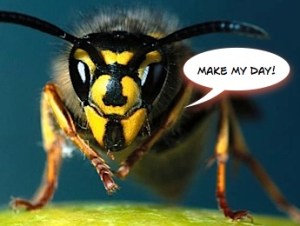
This fall I’ve entered into combat with some of fallen nature’s most ferocious and merciless creatures. Thus far, they are winning the war.

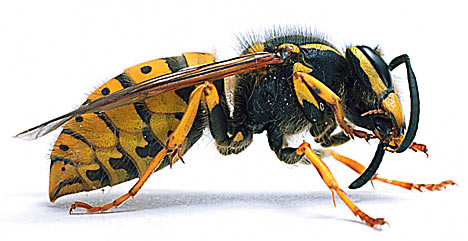
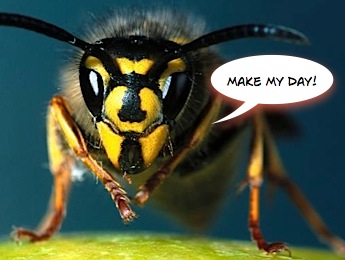
A couple months ago my castle (i.e. home) was invaded by a ruthless tribe of wasps or hornets (the latter is a subset of the species, as are yellow jackets, so they are all members of a single horrific animal family).

They found a small, un-caulked opening into our attic . . . strategically placed just above our front door. I’m sure they had thousands of alternative bastions in the forest that surrounds our house but, being wasps, they knew this was the precise location from which they could wreak the most violent havoc.

The initial fray was brief. I sprayed copious amounts of wasp insecticide into the crevice, in the hope of encouraging them to nest elsewhere. It appeared to act as an attractant. After it failed and added more recruits to their number, I donned armor and climbed a ladder after dusk when they had settled in for the night, and noiselessly attempted to close the space with insect-proof sealant.

Alas, their sentinels were vigilant. They swarmed me, and pushed me off of the ladder causing me to land on my back and crash my head on the ground. Unfortunately, my long sleeved armor did not include a concussion proof helmet. Like a craven coward I lifted my bruised body from the rocky ground (nope, we haven’t planted a lawn yet) . . . and I ran for my life. All the while I was thanking God that I was only standing on the third rung.

Aside from my bruises, they had only inflicted a single piercing wound—on my index finger. Of course, being predators, wasps carry a very nasty venom, and for the next week it failed to heal as the poison festered, despite diligent attention from my corpsman-wife.

I’m waiting patiently for winter now, when they are partially dormant and “hibernating.” When the queen wakes up in the spring, she’ll find herself sealed in a crypt. (At least, that’s what I’m hoping.)

Wasps in Narnia

C.S. Lewis, being a lover of the outdoors, was well acquainted with the hazard posed by wasps. In The Chronicles of Narnia,

When the Pevensie children are drawn back to Narnia for a second time, it is a jarring and initially frightening experience. As we read in Prince Caspian:

It was an empty, sleepy, country station and there was hardly anyone on the platform except themselves. Suddenly Lucy gave a sharp little cry, like someone who has been stung by a wasp. “What’s up, Lu?” said Edmund—and then suddenly broke off and made a noise like “Ow!”

“What on earth—” began Peter, and then he too suddenly changed what he had been going to say. Instead, he said, “Susan, let go! What are you doing? Where are you dragging me to?”

“I’m not touching you,” said Susan. “Someone is pulling me. Oh—oh—oh—stop it!” Everyone noticed that all the others’ faces had gone very white.

“I felt just the same,” said Edmund in a breathless voice. “As if I were being dragged along. A most frightful pulling—ugh! It’s beginning again.”

“Me too,” said Lucy. “Oh, I can’t bear it.”

“Look sharp!” shouted Edmund. “All catch hands and keep together. This is magic—I can tell by the feeling. Quick!”

“Yes,” said Susan. “Hold hands. Oh, I do wish it would stop—oh!” Next moment the luggage, the seat, the platform, and the station had completely vanished.

The four children, holding hands and panting, found themselves standing in a woody place—such a woody place that branches were sticking into them and there was hardly room to move. They all rubbed their eyes and took a deep breath. “Oh, Peter!” exclaimed Lucy. “Do you think we can possibly have got back to Narnia?”

Later, Edmund offers some wise advice in The Voyage of the Dawn Treader. He alludes to the deceptive natural and inherent ninja skills possessed by the killers.

“We must all show great constancy,” Caspian was saying. “A dragon has just flown over the tree-tops and lighted on the beach. Yes, I am afraid it is between us and the ship. And arrows are no use against dragons. And they’re not at all afraid of fire.”

“With your Majesty’s leave—” began Reepicheep.

“No, Reepicheep,” said the King very firmly, “you are not to attempt a single combat with it. And unless you promise to obey me in this matter I’ll have you tied up. We must just keep close watch and, as soon as it is light, go down to the beach and give it battle. . . .”

“Perhaps it will go away,” said Lucy.

“It’ll be worse if it does,” said Edmund, “because then we shan’t know where it is. If there’s a wasp in the room I like to be able to see it.”

Back to My Own Campaign

Just as I became resigned to my strategy with the vicious intruders, I became aware of a second army of insect brigands. This multitude had invaded the crawlspace under my home, through some weakness in the screens guarding my ventilation openings.

Noting that I would not require a ladder to engage them in combat I foolishly thought, oh how you will rue the day you trespassed in my domain!

I purchased a new screen to cover the entire opening, but their guards remained vigilant even during the night and before I could even begin the project, they swarmed and had me fleeing across our back lawn (yes, we do have some grass). Running recklessly in the dark I naturally stumbled and still bear some significant bruises. These would be bad enough, but two of the villains stabbed me with their poisonous stingers before I secured myself in the house.

With the aid of my faithful border collie, I discovered an infiltrator who insidiously snuck into the castle proper clinging to my pants. I immediately dropped my leggings and proceeded to stomp on them for several minutes. I was thorough, walking repeatedly over every part of the crumpled clothing. Naturally, he survived. I did manage to rewrap him in the trousers and see to his demise.

I am reconsidering my strategy now, and leaning towards placing commercial wasp traps directly outside the vent when the vermin reawaken in the spring. I’m also contemplating periodically banging a hammer near their hidden nest to disturb their rest during their hibernation. I haven’t determined yet whether this would be effective, as it is when interrogating terrorists, or whether it would simply be sadistic.

Trying to learn their weaknesses (they don’t have any) I did learn one reason why wasps are so aggressive and merciless. They are almost all female! While queens alone reproduce, and they keep a few males handy for their sole role of mating and dying, the rest of the army consists of “asexual female workers.” These perform community duties such as building the hive, gathering food, feeding the young, and protecting the colony!

Now, lest I be unfairly accused of misogyny, let me make clear that it is not their “feminine” nature that makes them violent. Rather, it is a corruption of their natural maternal instincts which cause them to guard their nest so belligerently that all rationally minded people desire their utter annihilation.

And, Once Again, to Narnia

The final book in the Chronicles has been my favorite ever since I first read the series forty years ago. I gained an even greater appreciation for The Last Battle when I read this description of the heavenly Narnia into which all of Aslan’s faithful were ushered.

Tirian had thought—or he would have thought if he had time to think at all—that they were inside a little thatched stable, about twelve feet long and six feet wide. In reality they stood on grass, the deep blue sky was overhead, and the air which blew gently on their faces was that of a day in early summer. Not far away from them rose a grove of trees, thickly leaved, but under every leaf there peeped out the gold or faint yellow or purple or glowing red of fruits such as no one has seen in our world. The fruit made Tirian feel that it must be autumn but there was something in the feel of the air that told him it could not be later than June.

They all moved toward the trees. Everyone raised his hand to pick the fruit he best liked the look of, and then everyone paused for a second. This fruit was so beautiful that each felt “It can’t be meant for me . . . surely we’re not allowed to pluck it.”

“It’s all right,” said Peter. “I know what we’re all thinking. But I’m sure, quite sure, we needn’t. I’ve a feeling we’ve got to the country where everything is allowed.”

“Here goes, then!” said Eustace. And they all began to eat. What was the fruit like? Unfortunately no one can describe a taste. All I can say is that, compared with those fruits, the freshest grapefruit you’ve ever eaten was dull, and the juiciest orange was dry, and the most melting pear was hard and woody, and the sweetest wild strawberry was sour. And there were no seeds or stones, and no wasps.

Despite our repeated failings, the victory will ultimately be won by our divine Champion!
The Glory of Storge (Love)

Storge, noun: Parental affection; the instinctive affection which animals have for their young.

Some of you will recall when I wrote about attending my wife as her nurse while she recuperated from surgery this past summer. Well, I just completed a remotely similar familial duty with my daughter and her husband the past two weeks.

We’ve all been anticipating the arrival of their fourth child and Grandpa is the on call childcare provider of choice. Well, Grandma is actually first choice . . . but since she’s a teacher, that’s not feasible. (She’ll be down here for a week to help out soon, while her husband is home recuperating from two exhausting but wonderful weeks with our inexhaustible grandchildren!)

A few days ago, our newest granddaughter breathed her first breath. I contemplated writing “entered the world,” but far less accurate. She’s beautiful, of course. And we’ll continue to pray that her inner and spiritual beauty, rather than her external appearance, will define her life.

This has gotten me thinking about C.S. Lewis’ wonderful book, The Four Loves. The following passage describes humanity’s natural love for family.

I begin with the humblest and most widely diffused of loves, the love in which our experience seems to differ least from that of the animals. Let me add at once that I do not on that account give it a lower value. Nothing in Man is either worse or better for being shared with the beasts. When we blame a man for being ‘a mere animal’, we mean not that he displays animal characteristics (we all do) but that he displays these, and only these, on occasions where the specifically human was demanded. (When we call him ‘brutal’ we usually mean that he commits cruelties impossible to most real brutes; they’re not clever enough.)

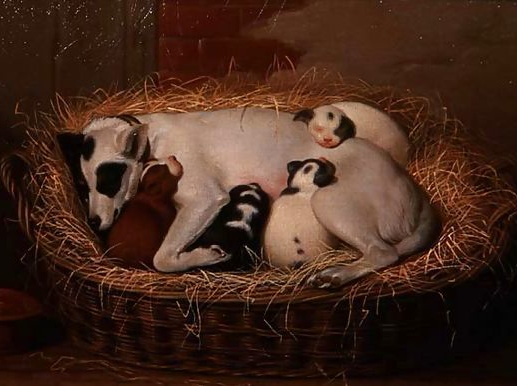
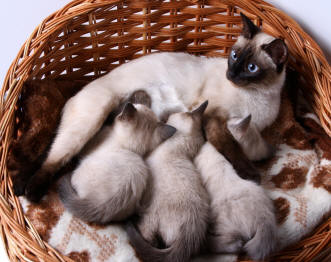
The Greeks called this love storge (two syllables and the g is ‘hard’). I shall here call it simply Affection. My Greek Lexicon defines storge as ‘affection, especially of parents to offspring’; but also of offspring to parents. And that, I have no doubt, is the original form of the thing as well as the central meaning of the word. The image we must start with is that of a mother nursing a baby, a [dog] or a cat with a basketful of puppies or kittens; all in a squeaking, nuzzling heap together; purrings, lickings, baby-talk, milk, warmth, the smell of young life.

The importance of this image is that it presents us at the very outset with a certain paradox. The Need and Need-love of the young is obvious; so is the Gift-love of the mother. She gives birth, gives suck, gives protection. On the other hand, she must give birth or die. She must give suck or suffer. That way, her Affection too is a Need-love. There is the paradox. It is a Need-love but what it needs is to give. It is a Gift-love but it needs to be needed.

As Lewis says, this storge love is a natural affection, instilled within the entire animal kingdom. That is what makes reports of people’s crimes against their own children so terribly shocking. These barbaric acts go against natural law itself. They are inhuman in the absolute sense. And witnessing them among humanity and various animal species reminds us of just how far we have fallen.

By God’s grace, such outrageous acts are the rare exception. Storge is so deeply engrained in nature’s order that we see it in nearly every direction we look. No family is perfect, but most of us are blessed with parents, siblings or other relatives who love us by virtue of our innate bonds.

However, if you are one of the unfortunates who were not loved by your father or mother . . . if you were rejected by your family, I am praying for you. Praying that you will come to know storge in its wonderful fullness through surrogate parents and siblings. After all, it’s not blood that forges these bonds—it is love. Storge is something we readily share with our spouses and our intimate friends. It is a sort of “kinship by choice.”

As I thank God for the most recent addition to our family’s number, I encourage you to thank the Lord as well for the storge love he allows you to give, and receive.

The painting above was created by Samuel De Wilde (1751-1832). And for you cat lovers who were disappointed by my selection of an image of puppies, enjoy this fine portrait of feline storge.

Creation Story Similarities

I love being welcomed into other cultures by individuals who are proud of their heritage and eager to share it. Yesterday I attended a gathering of pastors at a church in Neah Bay, Washington, which lies in the far northwest corner of the “Lower Forty-Eight” United States.

Neah Bay is the largest community on the Makah Indian Reservation. A visit to the outstanding Makah Museum taught me many things. The unfortunate burial of the Makah village of Ozette preserved numerous artifacts that teach us about “pre-contact” Native American tribal life. A 1750 mudslide covered ten long houses and that tragedy has been redeemed in a small way by providing the modern Makah nation with a wealth of knowledge about its ancestors.

As a dog lover, I was fascinated by the fact that the Makah bred a special type of dog that was sheered for its “wool.” This, of course, was due to the absence of sheep, goats, llamas and the like. These particular canines were kept on an island to prevent their interbreeding with camp dogs. Unfortunately, their breed is no longer known, although I am curious as to whether it could be established from studying remains, assuming the tribe still knows which island was used as their refuge.

The news that intrigued me most was that, in Makah mythology, at the time of their creation, all of the animals could speak. Now, it will not surprise any readers to know this reminded me of another creation tale. My thoughts immediately leapt to the story of Narnia’s creation, which C.S. Lewis describes in The Magician’s Nephew.

[Aslan] was going to and fro among the animals. And every now and then he would go up to two of them (always two at a time) and touch their noses with his. He would touch two beavers among all the beavers, two leopards among all the leopards, one stag and one deer among all the deer, and leave the rest. . . . the creatures whom he had touched came and stood in a wide circle around him. . . . The Lion, whose eyes never blinked, stared at the animals as hard as if he was going to burn them up with his mere stare. And gradually a change came over them. The smaller ones—the rabbits, moles, and such-like—grew a good deal larger. The very big ones—you noticed it most with the elephants—grew a little smaller. Many animals sat up on their hind legs. Most put their heads on one side as if they were trying very hard to understand.

The Lion opened his mouth, but no sound came from it; he was breathing out, a long, warm breath; it seemed to sway all the beasts as the wind sways a line of trees. Far overhead from beyond the veil of blue sky which hid them the stars sang again; a pure, cold, difficult music. Then there came a swift flash like fire (but it burnt nobody) either from the sky or from the Lion itself, and every drop of blood tingled in the children’s bodies, and the deepest, wildest voice they had ever heard was saying: “Narnia, Narnia, awake. Love. Think. Speak. Be walking trees. Be talking beasts. Be divine waters.”

In the Makah creation story, the two brothers of the sun and moon changed preexisting material into the people and creatures we know today. Here is the brief account of their labors. It is interesting to note that both accounts impute personhood to the trees, as well as the animals.

When the world was very young, there were no people on the earth. There were no birds or animals, either. There was nothing but grass and sand and creatures that were neither animals nor people but had some of the traits of people and some of the traits of animals.

Then the two brothers of the Sun and the Moon came to the earth. Their names were Ho-ho-e-ap-bess, which means “the Two-Men-Who-Changed-Things.” They came to make the earth ready for a new race of people, the Indians. The Two-Men-Who-Changed-Things called all the creatures to them. Some they changed to animals and birds. Some they changed to trees and smaller plants.

Among them was a bad thief. He was always stealing food from creatures who were fishermen and hunters. The Two-Men-Who- Changed-Things transformed him into Seal. They shortened his arms and tied his legs so that only his feet could move. Then they threw Seal into the Ocean and said to him, “Now you will have to catch your own fish if you are to have anything to eat.”

One of the creatures was a great fisherman. He was always on the rocks or was wading with his long fishing spear. He kept it ready to thrust into some fish. He always wore a little cape, round and white over his shoulders. The Two-Men-Who-Changed-Things transformed him into Great Blue Heron. The cape became the white feathers around the neck of Great Blue Heron. The long fishing spear became his sharp pointed bill.

Another creature was both a fisherman and a thief. He had stolen a necklace of shells. The Two-Men-Who-Changed-Things transformed him into Kingfisher. The necklace of shells was turned into a ring of feathers around Kingfisher’s neck. He is still a fisherman. He watches the water, and when he sees a fish, he dives headfirst with a splash into the water.

Two creatures had huge appetites. They devoured everything they could find. The Two-Men-Who-Changed-Things transformed one of them into Raven. They transformed his wife into Crow. Both Raven and Crow were given strong beaks so that they could tear their food. Raven croaks “Cr-r-ruck!” and Crow answers with a loud “Cah! Cah!”

The Two-Men-Who-Changed-Things called Bluejay’s son to them and asked, “Which do you wish to be—a bird or a fish?”

“I don’t want to be either,” he answered.

“Then we will transform you into Mink. You will live on land. You will eat the fish you can catch from the water or can pick up on the shore.”

Then the Two-Men-Who-Changed-Things remembered that the new people would need wood for many things.

They called one of the creatures to them and said “The Indians will want tough wood to make bows with. They will want tough wood to make wedges with, so that they can split logs. You are tough and strong. We will change you into the yew tree.”

They called some little creatures to them. “The new people will need many slender, straight shoots for arrows. You will be the arrowwood. You will be white with many blossoms in early summer.”

They called a big, fat creature to them. “The Indians will need big trunks with soft wood so that they can make canoes. You will be the cedar trees. The Indians will make many things from your bark and from your roots.”

The Two-Men-Who-Changed-Things knew that the Indians would need wood for fuel. So they called an old creature to them. “You are old, and your heart is dry. You will make good kindling, for your grease has turned hard and will make pitch. You will be the spruce tree. When you grow old, you will always make dry wood that will be good for fires.”

To another creature they said, “You shall be the hemlock. Your bark will be good for tanning hides. Your branches will be used in the sweat lodges.”

A creature with a cross temper they changed into a crab apple tree, saying, “You shall always bear sour fruit.”

Another creature they changed into the wild cherry tree, so that the new people would have fruit and could use the cherry bark for medicine.

A thin, tough creature they changed into the alder tree, so that the new people would have hard wood for their canoe paddles.

Thus the Two-Men-Who-Changed-Things got the world ready for the new people who were to come. They made the world as it was when the Indians lived in it.

New Life Continues to Blossom

After the seriousness of my last couple of posts, I hoped to come up with an “uplifting” theme for my latest reflection. And, lo and behold, God provided a perfect picture.

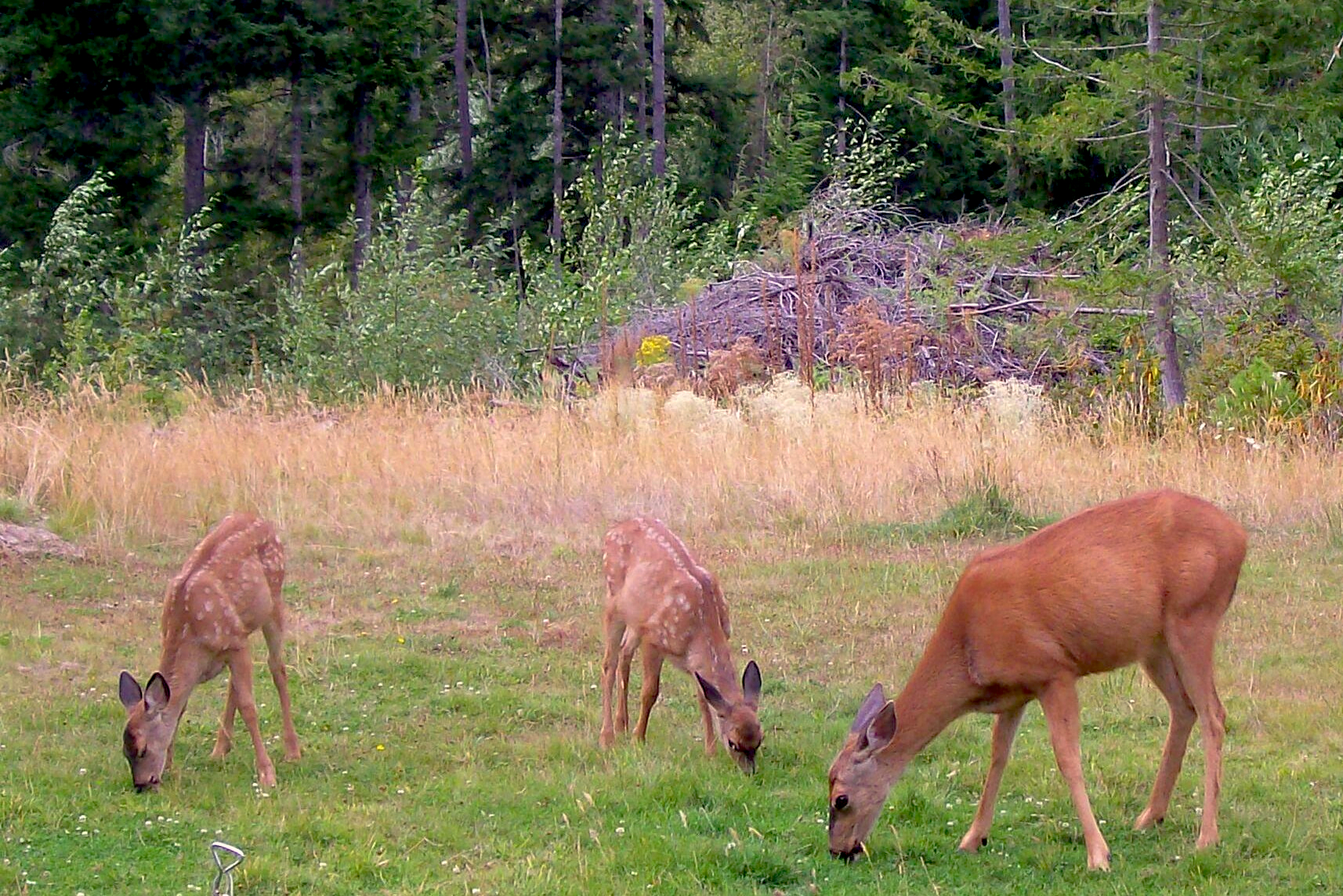
My photograph (through a glass door) doesn’t do justice to his living portrait of peace. Still, I thought some of you who recalled my initial post on the brand new fawns that pranced past my office months ago would enjoy seeing how they have grown.

Mom has them munching on the overgrown grass and clover in our back yard. (My wife says we can alternate mowing the yard, one-half each week. I argue that the deer may want to bring along friends and we wouldn’t want them disappointed by a mower-stunted banquet.)

When I see such peaceful creatures, I long for the new heaven and earth when the lion shall like down with the lamb. To see the harmony God originally designed—to touch and to taste it—is one of the reasons that Narnia resonates to strongly with many of our souls.

C.S. Lewis was a lover of nature. Nature walks were a fundamental part of his life’s regimen. And, Lewis recognized there is a danger in looking to Nature herself for life’s meaning. In The Four Loves he wrote “Nature cannot satisfy the desires she arouses nor answer theological questions nor sanctify us.”

In the same essay he elaborates on how the bliss communicated by Nature is only fully experienced by those who look beyond it, to its divine Source.

Say your prayers in a garden early, ignoring steadfastly the dew, the birds and the flowers, and you will come away overwhelmed by its freshness and joy; go there in order to be overwhelmed and, after a certain age, nine times out of ten nothing will happen to you. (The Four Loves).

I looked out the window today, grateful to God for the majesty of the mountains that grace the horizon. With that prayerful, thankful and receptive heart, I found my expectations in that moment far exceeded . . . swept aside as a trifle in a maelstrom . . . as I gazed upon the purity and peace of our three precious visitors.

Nature’s Melodies

Recently we were walking our five year old granddaughter home after a visit to our house, and she said something remarkable. (Our son’s family lives on a forested parcel adjacent to our own near Puget Sound.)

This precious little girl gazed to the top of the tall pine and fir lining the path and said, “I love the music the woods make.” She went on to describe various elements of nature’s orchestra, including the whistling wind in the treetops, the croaking of innumerable frogs drumming down by the pond, and, of course, the varied melodies of the birds who also call this glorious place “home.”

It was a wonderful moment.

When we pause to appreciate nature, it reminds us of the beneficent God who created it. Nature, especially when it is pristine and untouched by human hand, is truly wondrous. There are, I recognize, some “natural” settings that might actually be improved by human intervention . . . but these are few.

Unspoiled nature is beautiful. And that is a crucial distinction to make—because nature too has been corrupted by humanity’s fall from grace. Its capricious temperament is manifested in storms and other disasters.

So we, as Sons of Adam and Daughters of Eve must be content to savor this blurred image of God’s original creation. For, even this corrupted world, is surely magnificent.

C.S. Lewis appreciated this truth. He and his close friends enjoyed many a long walk across the English countryside.

Nature is an awe-inspiring thing, but she is incapable of communicating ultimate joy. To find that, we must look beyond the forest to see who wrote the music it so eloquently sings.

In The Four Loves, Lewis emphasizes this truth:

Nature cannot satisfy the desires she arouses nor answer theological questions nor sanctify us. Our real journey to God involves constantly turning our backs on her; passing from the dawn-lit fields into some pokey little church, or (it might be) going to work in an East End parish. But the love of her has been a valuable and, for some people, indispensable initiation.

May our Creator grant us the opportunity to enjoy his unfathomable creation—even as we recognize that it is only by his boundless grace we are capable of doing so.

Mastering the Anacoluthon

Allow me to once again display my grammatical ignorance. I was reading an online book review and the author used lots of multisyllabic words. (That’s something I actually enjoy.) But then he went and threw in one of those words I had to rush to dictionary.com to define. (That’s another thing I love—learning new words.)

Naturally, I could partially decipher the definition from the context. However, whenever I have a dictionary within reach, that shortcut doesn’t satisfy me.

In this case, the word was anacolutha, the plural form of anacoluthon. It is defined as “a construction involving a break in grammatical sequence, as ‘It makes me so—I just get angry.’” Well, we can all agree that is not a good sentence; it’s a fine example of what a writer should avoid.

Not all grammar rules make sense. Take for example the notion that one cannot end a sentence with a preposition. Some of us literally had our knuckles rapped for scribbling such grammatical “obscenities.” While it’s true that you can avoid using prepositions in this manner, it’s not the great sin we were taught it was. In his Letters to an American Lady, C.S. Lewis writes:

[Regarding] a sentence ending with a preposition. The silly “rule” against it was invented by Dryden. I think he disliked it only because you can’t do it in either French or Latin which he thought more “polite” languages than English.

Well, isn’t that an interesting historical note to become aware of?

But, back to anacolutha . . . let’s see if it’s difficult for a trained pen to sever the ties of logic, and compose this sort of literary construction.

Reepicheep was a great swordsman who, “a tail is the honor and glory of a Mouse” was his creed.

Frodo pondered his options while—the Nazgûl loathed bathing more than once each fortnight.

Wow, that’s a lot harder than it looks. If you can think of better examples (not difficult, I’m sure), feel free to share them in a comment! But only write them here, and don’t allow any anacolutha to slip into your real writing!

Our Eagle Allies

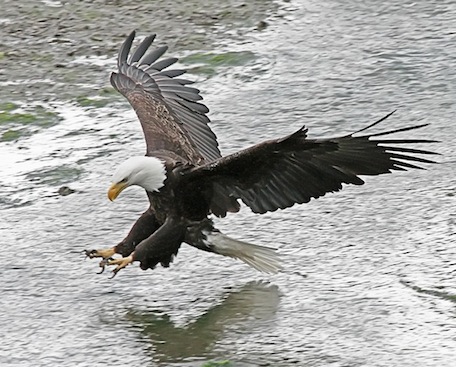
Eagles are majestic creatures. Living in the midst of a large bald eagle nesting area is something my wife and I don’t take for granted. Each year we see scores of the graceful raptors courting and then raising their young right here on Hood Canal.

Hood Canal is actually an 80 kilometer long fjord, which lies just to the east of the Olympic National Forest. It features deep blue waters at the foot of an impressive mountain range.

Eagles make a significant impression on nearly everyone fortunate enough to see them. Even though they are birds of prey, they look extremely noble. In light of that fact, it’s no accident many nations include an eagle as part of their coat of arms or national seal. These include: Albania, Armenia, Austria, Germany, Ghana, Iceland, Indonesia, Iraq, Mexico, Moldova, Montenegro, Nigeria, Panama, Russia, the United States and at least ten additional countries.

Eagles have also figured prominently in literature. For example, both of the preeminent Inklings, J.R.R. Tolkien and C.S. Lewis, featured eagles as heroes in their fictional classics.

Eagles in the Work of C.S. Lewis

Eagles are among those granted speech by Aslan at the dawn of Narnia’s creation. They reward their Creator’s gift by serving faithfully throughout the entire history of the land. Eagles play a role in virtually every battle that occurs in Narnia. They are always on the side of good.

In addition to fighting in the campaign against the White Witch, eagles are responsible for the rescue of Edmund from her camp. When Aslan calls his army to rush toward the climactic battle in The Lion, the Witch and the Wardrobe, he says:

And now! Those who can’t keep up—that is, children, dwarfs, and small animals—must ride on the backs of those who can—that is, lions, centaurs, unicorns, horses, giants and eagles. Those who are good with their noses must come in the front with us lions to smell out where the battle is.

The most noteworthy passages relate to Farsight, who is a prominent eagle during the final days of Narnia. He it is who brings to King Tirian the sad news that Narnia’s capital has fallen.

“Sire,” said the Eagle, “when you have heard my news you will be sorrier of my coming than of the greatest woe that ever befell you.” Tirian’s heart seemed to stop beating at these words, but he set his teeth and said, “Tell on.” “Two sights have I seen,” said Farsight. “One was Cair Paravel filled with dead Narnians and living Calormenes . . . And the other sight, five leagues nearer than Cair Paravel, was Roonwit the Centaur lying dead with a Calormene arrow in his side. I was with him in his last hour and he gave me this message to your Majesty: to remember that all worlds draw to an end and that noble death is a treasure which no one is too poor to buy.” “So,” said the King, after a long silence, “Narnia is no more.” (The Last Battle)

After this sad entrance, and following the “Last Battle,” Farsight is one of the leaders as the victor’s army enters into the foothills of heaven.

. . . the dogs barked, “Faster, faster!” So they ran faster and faster till it was more like flying than running, and even the Eagle overhead was going no faster than they. And they went through winding valley after winding valley and up the steep sides of hills and, faster than ever, down the other side, following the river and sometimes crossing it and skimming across mountain lakes as if they were living speedboats . . . “Further up and further in!” roared the Unicorn, and no one
held back. . . .

Only when they had reached the very top did they slow up; that was because they found themselves facing great golden gates. And for a moment none of them was bold enough to try if the gates would open. . . . “Dare we? Is it right? Can it be meant for us?” But while they were standing thus a great horn, wonderfully loud and sweet, blew from somewhere inside that walled garden and the gates swung open. (The Last Battle)

Eagles in the Work of J.R.R. Tolkien

Similar to Lewis’ distinction between dumb and speaking eagles, Tolkien distinguishes between “common” and Great Eagles. In The Hobbit he writes, “Eagles are not kindly birds. Some are cowardly and cruel. But the ancient race of the northern mountains were the greatest of all birds; they were proud and strong and noble-hearted.”

It is these noble mountain eagles who populate the six books (three volumes) of the Lord of the Rings and Tolkien’s other fiction.

At the end of the First Age, eagles fight alongside the Valar, Elves and Men in the War of Wrath. They especially contend against the dragons of Morgoth as recounted in The Silmarillion. The eagles emerge victorious, destroying most of their enemy during an aerial battle.

Near the end of the Third Age, the eagles from the Misty Mountains rescue Thorin’s troop from goblins and wargs, as related in The Hobbit. Without their aid, the Dwarves, Elves and Humans would likely have met defeat at the Battle of Five Armies.

In The Lord of the Rings (including the cinematic version) the eagles feature prominently. They are even capable of clashing head-to-head with the fearsome Nazgûl-mounted dragons.

And, of course, several of them rescued Frodo Baggins and Samwise Gamgee following the destruction of the One Ring.

Two named eagles should be mentioned. Thorondor was the initial Lord of Eagles and according to The Silmarillion was the “mightiest of all birds that have ever been.”

His descendant Gwaihir is the leader of those who aid Gandalf throughout the events of The Lord of the Rings. Not only does he rescue the wizard from the tower, but he returns him after his “resurrection” which followed the battle with the Balrog.

“Naked I was sent back—for a brief time, until my task is done. And naked I lay upon the mountain-top. . . . I was alone, forgotten, without escape upon the hard horn of the world. . . . And so at the last Gwaihir the Windlord found me again, and he took me up and bore me away. ‘Ever am I fated to be your burden, friend at need,’ I said.”

“A burden you have been,” the Eagle answered, “but not so now. Light as a swan’s feather in my claw you are. The Sun shines through you. Indeed I do not think you need me any more: were I to let you fall, you would float upon the wind.” (The Two Towers)

It may be that for this life we must remain content with seeing only the common and mute eagles that populate this mortal world. But even they, are glorious to behold.