C.S. Lewis & Iran’s Nuclear Program

Connecting C.S. Lewis to the pursuit of nuclear weapons by Iran’s mullahs admittedly sounds like a protracted stretch. Yet the current conflict between Iran and Israel does have one astonishing element that does link the great Oxbridge professor with the conflict.

If you’re familiar with Lewis’ writings, you might logically assume the connection relates to his writing on nuclear weapons. After all, in 1948 he wrote an essay entitled “On Living in an Atomic Age.” The matter is even more acute since we moved from the era of relatively minuscule A-bombs into a time when humanity’s H-bombs, employing fusion rather than mere fission, are thousands of times more deadly.

Lewis discusses some interesting philosophical (and theological) questions in his article. He begins by placing the question within the context of our inherent physical mortality. He writes, “do not let us begin by exaggerating the novelty of our situation.”

Believe me, dear sir or madam, you and all whom you love were already sentenced to death before the atomic bomb was invented: and quite a high percentage of us were going to die in unpleasant ways. . . .

It is perfectly ridiculous to go about whimpering and drawing long faces because the scientists have added one more chance of painful and premature death to a world which already bristled with such chances and in which death itself was not a chance at all, but a certainty.

Don’t let the stoic beginning of his thoughts deter you from reading the essay itself, because C.S. Lewis does not leave us despairing. On the contrary, he offers hope and practical advice for maximizing the meaning of our lives. 

Although C.S. Lewis lived into the beginning of the MAD (Mutually Assured Destruction) era, he chose not to inject himself into political subjects, lest it detract from his advocacy for the simple Gospel.

Nevertheless, the brief note “C.S. Lewis and Nuclear Weapons,”penned forty years ago by a “peace activist” pastor, conjectures on what the author’s opinion may have been. It is thought-provoking, especially in mentioning a possible link between nuclear destruction and the “deplorable word” referred to in The Chronicles of Narnia. 

In The Magician’s Nephew, Lewis’ child protagonists encounter a witch queen on the devasted world of Charn. Queen Jadis, when denied the power to rule over the planet, chose to invoke a curse that destroyed every living thing other than herself. “Then I spoke the Deplorable Word. A moment later I was the only living thing beneath the sun.”

While Lewis does not elaborate on the nature of the destructive nature of this most deplorable of powers, Aslan does offer the following caution near the end of the novel.

It is not certain that some wicked one of your race will not find out a secret as evil as the Deplorable Word and use it to destroy all living things. And soon, very soon, before you are an old man and an old woman, great nations in your world will be ruled by tyrants who care no more for joy and justice and mercy than the Empress Jadis. Let your world beware.

So, what does this have to do with Iran & Israel?

Frankly, I find the connection to be especially odd. As you may know, military entities have a propensity to apply nicknames or euphemisms to various things, such as their weapon systems.

This is true for military campaigns or discrete operations. For example, the United States has employed labels like Operation Linebacker (in Vietnam) and Operation Crossroads (for 1946 nuclear weapons tests).

Sadly, Operation Enduring Freedom (in which I personally took part) did not live up to its name. Under the Taliban, Afghanistan has degenerated once again into a primitive morass which abuses its women and children.

A number of distinct operations have taken place during the current war between Iran (and its proxies) and Israel. Operation Rising Lion is Israel’s nomenclature for the various elements of their direct attack on Iran. One independent Jewish news site points out how Benjamin Netanyahu foreshadowed the campaign in May when he said, “the verse in the Tanach that most fits with an existential war? That’s our war – a war of existence . . . A people that rises like a lion, leaps up like the king of beasts.”

Every Israeli military operation has a name, and the Iran attack is now called Am K’lavi, or “a people like a lion” – the exact wording Netanyahu used six weeks ago. English-language publications now refer to the operation as “Rising Lion.”

While this is quite interesting, it is the name assigned to one of the subsidiary operations encompassed by Rising Lion which possesses a genuinely shocking designation.

One initial focus of Israel’s campaign was to eliminate the leading scientists leading Iran’s efforts to pursue a nuclear arsenal. They named this particular facet Operation Narnia.

When I first saw that, I immediately thought I must have misread the title. But no, they actually chose Narnia as the name for the assassinations. At that point I thought they might be referring to some other Narnia. Alas, it doesn’t appear they were alluding to the medieval Italian city whose name inspired C.S. Lewis.

The reason for choosing Narnia as the operation’s title was apparently an intentional reference to the amazing world where so many of us met the awesome and compassionate Aslan. In “‘Operation Narnia:’ How Israeli Intelligence Targeted Key Iranian Nuclear Scientists,” we read:

Israel kicked off Operation “Rising Lion” last Friday, launching a sweeping military assault that dealt a major blow to Iran’s leadership and nuclear infrastructure. . . .

In a surprising detail, the Jerusalem Post reports, the component of the mission aimed at Iran’s nuclear scientists was codenamed “Narnia” by Israeli forces – a reference to the fantasy realm, underscoring how bold and unlikely such a strike might have seemed before it was executed.

Another intriguing rationale for entitling the Operation after C.S. Lewis’ creation is even more provocative. The Substack blog Wardrobe Door proposes a supernatural consideration for the choice of “Narnia.”

The [Jerusalem] Post says the name “reflects the operation’s improbable nature, like something out of a fantasy tale rather than a real-world event.” One could also imagine it involved deep espionage tactics that may have had soldiers sneaking in areas as if through a magical wardrobe.

Whatever tactics may have been used in Operation Narnia, it is intriguing to consider how the power of C.S. Lewis’ vision has spread across national boundaries. May all people heed Lewis’ witness to humanity’s Savior, for surely,

God cannot give us a happiness and peace apart from Himself, because it is not there. There is no such thing (Mere Christianity).

Short-term Sale on C.S. Lewis Study

C.S. Lewis was a champion of the historic version of the atonement wherein Jesus pays the price for our disobedience, and by his sacrificial death offers us eternal life though faith in him.

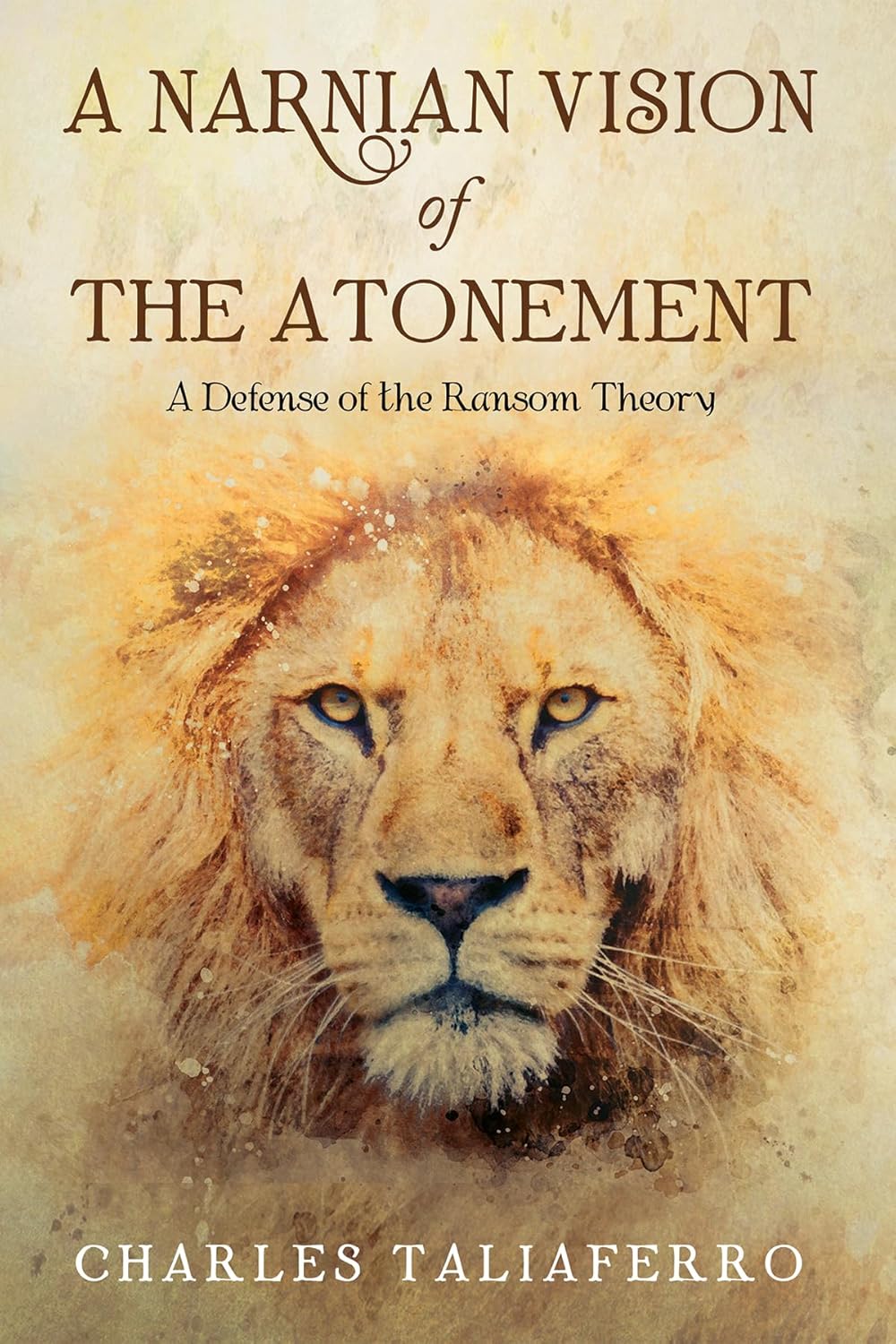
There is an excellent new book that is temporarily on sale for a mere three dollars in the Kindle format. (This low price is not due to its value, but to the occasional sales offered by publisher Wipf and Stock.) Check it out right now, because the sale ends on 24 September.

A Narnian Vision of the Atonement: A Defense of the Ransom Theory  was written by Charles Taliaferro, Professor Emeritus of Philosophy at St. Olaf College.

I’m enjoying the volume right now, although “philosophy” per se is far from my passion. But Jesus of Nazareth is. And I am passionate, as well, about the work of Yeshua’s disciple, C.S. Lewis. And Jesus and Lewis are the central characters in Taliaferro’s book.

He makes the subject of doctrine and philosophy quite accessible. I find this especially beneficial in his chapter on “the Ransom Theory and Rival Accounts of the Atonement.” Whereas some theologians are dismissive of the earliest Christian view of the atonement, this volume argues that it is far from incompatible with modern emphases (e.g. the Exemplar Model).

Since the early medieval era (roughly, the eleventh century), theories of the atonement have been any version except the ransom theory. In this chapter we will consider a host of them. I will be painting with a broad brush, with minimal references, in an effort to favorably sketch these accounts.

Afterwards, I will suggest that these accounts are not only compatible with the ransom theory, the ransom theory can provide important support for these so-called rivals.

I strongly commend this volume – especially at this unbelievable price – to anyone interested in C.S. Lewis’ faith or even in basic historic Christianity.

I will close with a wonderful passage from a letter C.S. Lewis wrote in 1954. Discussing theodicy, why God allows the suffering of innocents, Lewis offers this profound insight, inspired by Hebrews 2:10, and, it seems to me, 2 Corinthians 12:9.

Do you know, the suffering of the innocent is less of a problem to me v. often than that of the wicked. It sounds absurd; but I’ve met so many innocent sufferers who seem to be gladly offering their pain to God in Christ as part of the Atonement, so patient, so meek, even so at peace, and so unselfish that we can hardly doubt they are being, as St. Paul says, “made perfect by suffering.”

On the other hand I meet selfish egoists in whom suffering seems to produce only resentment, hate, blasphemy, and more egoism. They are the real problem (11 November 1954).

The Atonement – the restoration of humanity’s proper relationship with our Creator – is the greatest of miracles. And, A Narnian Vision of the Atonement, can help us to better celebrate its wonders.

C.S. Lewis & Longevity

How long is it good for us to live? That’s a strange question, I know. But, do you have an answer? C.S. Lewis had some thoughts on the subject that you may find provocative.

Aging is on my mind this week. I had never thought about myself becoming a septuagenarian – but this week I became one. Well, I still think of myself as being in my fifties, but that appears to be more common than one would guess. When I entered my fifties, I told my dad (then in his seventies) that “I still picture myself as being in my thirties.”

My dad responded without a moment’s thought: “That doesn’t surprise me at all. I still think of myself as being in my fifties.” 

Many people become preoccupied with age. The only time I recall it mattering to me, was when I turned eighteen – able to vote, and registered for the draft (with Vietnam still a war zone) . . . and when I turned twenty-one, for reasons I prefer not to divulge at this time.

People are living longer, and I’m not convinced that translates into living better. Listen to C.S. Lewis, as he writes in his essay “Is Progress Possible?”

I care far more how humanity lives than how long. Progress, for me, means increasing goodness and happiness of individual lives. For the species, as for each man, mere longevity seems to me a contemptible ideal.

Lewis elaborates on this concept – that long life and happiness do not always intertwine – in the Screwtape Letters. The words which follow are the advice of a senior Tempter (devil) to a less experienced junior.

The truth is that the Enemy [i.e. the true God], having oddly destined these mere animals to life in His own eternal world, has guarded them pretty effectively from the danger of feeling at home anywhere else. That is why we must often wish long life to our patients; seventy years is not a day too much for the difficult task of unravelling their souls from Heaven and building up a firm attachment to the Earth.

While they are young we find them always shooting off at a tangent. Even if we contrive to keep them ignorant of explicit religion, the incalculable winds of fantasy and music and poetry . . . are always blowing our whole structure away. They will not apply themselves steadily to worldly advancement, prudent connections, and the policy of safety first.

So inveterate is their appetite for Heaven, that our best method, at this stage, of attaching them to Earth is to make them believe that Earth can be turned into Heaven at some future date by politics or eugenics or “science” or psychology or what not.

Real worldliness is a work of time. . . . How valuable time is to us may be gauged by the fact that the Enemy allows us so little of it. . . .

We are allowed to work only on a selected minority of the race, for what humans call a “normal life” is the exception. Apparently He wants some – but only a very few – of the human animals with which He is peopling Heaven to have had the experience of resisting us through an earthly life of sixty or seventy years. Well, there is our opportunity. The smaller it is, the better we must use it. (Letter XXVIII).

Sadly, far too many people grow far too attached to this world. They lose sight of the promise of Resurrection (if they had ever known it), and as death approaches crave just one more year, another month, another week, another day, even another hour.

Now, I’m not saying long life is a negative, per se. I agree with C.S. Lewis when he wrote “I must never, like the Stoics, say that death does not matter. Nothing is less Christian than that” (“The Grand Miracle”). The danger is not in enjoying the Lord’s wonderful creation. It is in growing too attached to this fallen version of it – in losing touch with the truth proclaimed by musician Larry Norman, that this sin-stained world is not our ultimate home.

Dying

Having been at the bedside of too many people as they face their mortality, I have witnessed many final days. Some literally go, trembling and cursing. Others depart with grim resignation, and no evidence of hope. And then there are those who die with faith, experiencing true peace and joyous anticipation, despite the pain they may be enduring. 

I wish everyone could die in such a state, at peace and earnestly desiring to see the glory of God unblurred by our mortal eyes (1 Corinthians 13). 

On that day we will enter into the fullness of life, into eternal life. (Dr. Michael Zeigler offers an encouraging sermon you can read or listen to at “The Problem and Promise of Deathbed Conversion.”)

The Screwtape Letters is one of C.S. Lewis’ most imitated books. I have even experimented with his model myself. But, rather than emulate these letters, today I would be so bold as to offer an addition to this demonic epistle. 

My supplement is not intended for Christians, except as a truth they may wish to share with others who are walking through the valley of the shadow of death.

And never, my dear Wormwood, at the risk of your own torment, forget this one dire threat. Even after a long life, lived in hedonistic pleasure, deeply tethered to this decaying world, it is still possible for these wretches to be rescued from our claws.

The Enemy is so blindly compassionate that he will foolishly overlook a magnitude of savory sins sown during a carnal life. The dissolute lives we have toiled so steadfastly to soil with uncountable depravities and unrelenting selfishness, remain vulnerable until the patients’ final breath is exhaled.

The Gordian Knot we have so skillfully twisted can be undone in an instant, if they cry out to the Enemy for forgiveness. That is why we must remain vigilant to the very end. It is ideal to have them railing at the end against a God who has allowed them to suffer.

Yet it is sufficient that they die without that rage. A hopeless resignation to what they foolishly consider the end of their existence, still provides fodder for the insatiable appetite of Our Father Below quite adequately.

Final Encouragement

God’s mercy is beyond our ability to comprehend it. While there is breath, there remains hope. Even at the end of a squandered life, God’s love in Jesus Christ is sufficient to wash away every failing, and usher a penitent soul into the glory of everlasting life. 

Remember that, if you find yourself feeling too defiled to come to Christ at the end, that is a lie of Satan. Every single one of us Christians was in similar straits – “while we were still sinners, Christ died for us.”

And, should you ever have the experience of traveling beside a dying friend who sees only darkness ahead, share with them this gospel hope.

The Goodness of Good Friday

Jesus died on a cross. So why in the world would his followers choose the image of a cross to identify their faith?

The answer comes via a paradox. The cross is about two, superficially-contradictory realities. (1) Jesus bled, suffered and died on the cross. (2) On that very cross, Jesus purchased for all who call upon his name, eternal life.

This seeming paradox between simultaneous truths is sometimes referred to as a theological dialectic.

C.S. Lewis brilliantly illustrates this dynamic in his description of Death in his book Miracles.

On the one hand Death is the triumph of Satan, the punishment of the Fall, and the last enemy. Christ shed tears at the grave of Lazarus and sweated blood in Gethsemane: the Life of Lives that was in Him detested this penal obscenity not less than we do, but more.

On the other hand, only he who loses his life will save it. We are baptized into the death of Christ, and it is the remedy for the Fall. Death is, in fact, what some modern people call “ambivalent.”

It is Satan’s great weapon and also God’s great weapon: it is holy and unholy; our supreme disgrace and our only hope; the thing Christ came to conquer and the means by which He conquered (Miracles).

Thus, the grim suffering of Good Friday . . . becomes Good. It is not an accident. Nor is it a mistake. It was the necessary consequence of humanity’s fall and our costly, divine rescue. As C.S. Lewis writes in The Four Loves:

He creates the universe, already foreseeing – or should we say “seeing”? there are no tenses in God – the buzzing cloud of flies about the cross, the flayed back pressed against the uneven stake, the nails driven through the mesial nerves, the repeated torture of back and arms as it is time after time, for breath’s sake, hitched up. . . .

Herein is love. This is the diagram of Love Himself, the inventor of all loves.

Of course, this truth is only recognizable to those who have knelt before Jesus the Messiah and received his grace.

To unbelievers, “the world,” the cross makes no sense at all. Those in spiritual blindness reject it as the epitome of Christian absurdity.

Just such claims were made from the very beginning. Not long after Christ’s resurrection, these challenges were addressed by Paul, the Pharisee turned Apostle. Proclaiming the miracle of the cross, he reminds the young church in Corinth how they cannot expect the lost to comprehend its glory, its untainted goodness.

For the word of the cross is folly to those who are perishing, but to us who are being saved it is the power of God. . . .

Where is the one who is wise? Where is the scribe? Where is the debater of this age? Has not God made foolish the wisdom of the world? For since, in the wisdom of God, the world did not know God through wisdom, it pleased God through the folly of what we preach to save those who believe.

For Jews demand signs and Greeks seek wisdom, but we preach Christ crucified, a stumbling block to Jews and folly to Gentiles, but to those who are called, both Jews and Greeks, Christ the power of God and the wisdom of God. For the foolishness of God is wiser than men, and the weakness of God is stronger than men (1 Corinthians).

The crucifixion and resurrection of the only begotten Son of God are the sole means by which you and I may be cleansed, healed, and restored to the unending life for which our Lord created us.

An Evolutionary Fluke

Did trees evolve from apes? An odd question, to be sure, but one humorously posed by C.S. Lewis in a letter to his father.

While this column does discuss the theory of evolution, it’s not doctrinaire. So, whatever your opinion of Darwin’s notions, read on, and you may enjoy a pleasant surprise.

C.S. Lewis, the brilliant Christian apologist was not an ironclad “evangelical” in the American sense of the word. Here in the U.S., that typically requires adherence to a handful of doctrines, usually including the affirmation of the infallibility of the Scriptural autographs and of the creation of humanity in the persons of our first parents, Adam and Eve.

As important as these matters are, very few Christians would deem them salvific, in the sense that people holding less “vigorous” views on these issues will be excluded from heaven.

C.S. Lewis was one of those who focused on the core of the Christian faith, rather than secondary doctrines. He referred to this as “mere Christianity,” and it was based on a trusting relationship with God through the Person of Jesus, God present with us in the Incarnate Word.

As for doctrines per se, like all good defenders of the faith, C.S. Lewis preferred not to get bogged down with secondary matters. This is consistent with the spirit of Paul’s advice to the young pastor, Timothy.

Remind them of these things, and charge them before God not to quarrel about words, which does no good, but only ruins the hearers. . . . Have nothing to do with foolish, ignorant controversies; you know that they breed quarrels. And the Lord’s servant must not be quarrelsome but kind to everyone . . . (2 Timothy 2:14, 23-24).

Lewis’ 1927 Evolutionary Conversation

In March of 1927, C.S. Lewis wrote one of his eclectic letters to his father in Northern Ireland. As usual, he commented on his father’s previous correspondence and shared about his current health and activities. While his relationship with his father grew strained after his mother’s untimely death while he was still a child, Lewis’ letters to his father exude familial respect framed in the context of early twentieth century British sensibilities.

That said, Lewis was always eager to share curious or silly experiences he knew would amuse his solicitor father. He takes a humorous approach, for instance, to advising his father to consult a more skilled doctor to diagnose an ailment, rather than suffering with the incomplete work of the physician he has always known, he will simply be “offer[ing] up several months of pain as a sacrifice on the altar of an old acquaintance.”

At the same time, he acknowledges his personal inclination toward doing the same, stating that “if I lived at home [I] would continue to use Gillespie all my life.” Gillespie, it turns out, ran a taxi service long favored by the family despite his bumpy transportation. “I have never regretted Gillespie and his hexagonal wheel,” Lewis shares.

He returns to his argument, however, by saying his father’s health demands the attention of a competent physician rather than relying on past ties. He concludes with an illustration based on his own brother. “Hang it all, even you wouldn’t suggest that because I’ve known Warnie a long time I ought to trust him as an interpreter on a holiday in Spain.”

C.S. Lewis proceeds to share with his father current events at Magdalen College (“we are putting up a new building”) and a recent nightmare (“it was the sense of being on the moon . . . the complete desolateness, which gave the extraordinary effect”).

The letter includes other fascinating elements, but it is time now to consider the reference to evolution.

An Absurd Age

I absolutely love the way C.S. Lewis invites us to experience the following moment. His story is so vivid, it still lives a century after the described events transpired.

We live in the most absurd age. I met a girl the other day who had been teaching in an infant school (boys and girls up to the age of six) where the infants are taught the theory of Evolution. Or rather the Headmistress’s version of it.

Simple people like ourselves had an idea that Darwin said that life developed from simple organisms up to the higher plants and animals, finally to the monkey group, and from the monkey group to man.

The infants however seem to be taught that ‘in the beginning was the Ape’ from whom all other life developed – including such dainties as the Brontosaurus and the Iguanodon.

Whether the plants were supposed to be descendants of the ape I didn’t gather. And then people talk about the credulity of the middle ages! À propos of this can you tell me who said ‘Before you begin these studies, I should warn you that you need much more faith in science than in theology.’ It was Huxley or Clifford or one of the nineteenth century scientists, I think.

Another good remark I read long ago in one of E. Nesbitt’s fairy tales –‘Grown ups know that children can believe almost anything: that’s why they tell you that the earth is round and smooth like an orange when you can see perfectly well for yourself that it’s flat and lumpy.’

Ironically, immediately after this, Lewis introduces his next subject with the words: “Almost the only interesting thing that has happened to me lately was a visit from a young German.” You see, I wasn’t misleading you when I said his letters are filled with fascinating material.

One must assume that times have changed, and that English children are no longer being taught such simplistic distortions of actual theories. But that’s not the theme of this current post. Rather, I wish to show how wonderfully entertaining a simple family letter can be – especially when it comes from the pen of C.S. Lewis.

Climbing Ladders of Faith

One of the pivotal events in the history of God’s grace is found in the Torah account of a dream. Jacob was the heir of Abraham, through whom the Lord promised to redeem the world. But Jacob was far from noble.

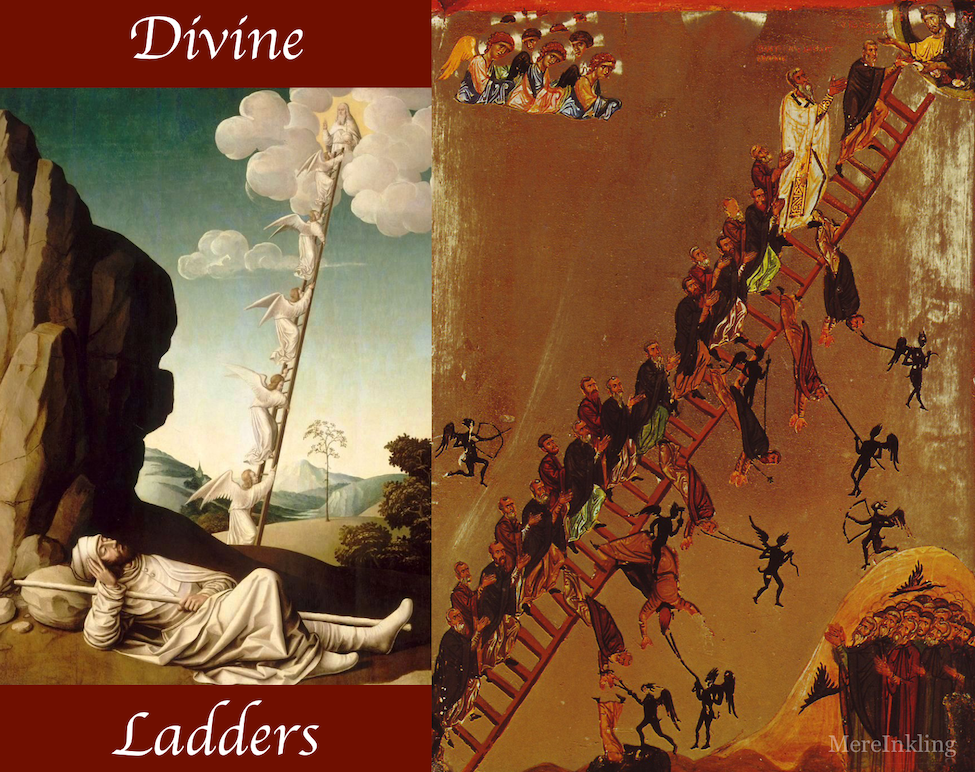
Nevertheless, because of the Lord’s mercy (the same mercy he offers to us), he forgave Jacob and promised to bless his descendants. In his dream, Jacob saw a ladder extending from earth all the way to heaven. “And behold, the angels of God were ascending and descending on it!” (Genesis 28).

This dynamic connection between heaven and earth reveals God’s constant concern for his creation. Some, such as Martin Luther, have seen in the dream a foreshadowing of the Incarnation itself.

This ladder or stairway can be interpreted in a variety of ways. One thing it is not, however, is a guide to human ascent from our fallen world to the presence of our Creator. (The Lord is the one who comes to us.)

Having acknowledged that the dream’s purpose is not to model sanctification or individual spiritual ascent, it is easy to see why the metaphor of ladders, and the action of climbing, give way to other applications.

The most vivid contemporary example comes in the form of a Christian spiritual entitled “We are Climbing Jacob’s Ladder.” A number of versions of the lyrics exist. This is quite unsurprising since it began as part of an oral tradition. According to one website devoted to spirituals, the following lyrics are typical.*

We are climbing Jacob’s ladder
Soldier of the Cross

Ev’ry round goes higher ‘n’ higher
Soldier of the Cross

Brother do you love my Jesus
Soldier of the Cross

If you love him why not serve him
Soldier of the Cross

While there are longer versions, this one aptly illustrates how the metaphor of the ladder—in this case, explicitly Jacob’s ladder—offered a powerful image of deliverance. Climbing the ladder with Jesus, was tantamount to experiencing deliverance from the ills of this world.

America’s Library of Congress offers a useful page which describes “African American Gospel music [as] a form of euphoric, rhythmic, spiritual music rooted in the solo and responsive church singing of the African American South.” They add that “its development coincided with—and is germane to—the development of rhythm and blues.” The site offers links to four 1943 recordings of spirituals. None of these, however, is the hymn we are discussing.

“We are Climbing Jacob’s Ladder” was one of the earliest spirituals to be widely adopted by the interracial faith community. It is familiar in many denominations, and was recently sung in my own Lutheran congregation. Hymnary.org states the song has been “published in 79 hymnals.” Even those who consider themselves unfamiliar with the hymn often recognize its rousing refrain: “Rise and shine and give God the glory, glory, Soldiers of the Cross.”

The talented Paul Robeson recorded the hymn on a number of his albums. The inspiring rendition by scholar Bernice Johnson Reagon was included in Ken Burn’s documentary, The Civil War.

C.S. Lewis and the Spiritual Ladder

The ladder offers such a convenient analogy for growth or spiritual maturation that others have also applied it in this manner. The ladders inspired by Jacob’s dream include the following two which continue to influence Christian disciples today, even though they were written many centuries ago. The second of these was considered by C.S. Lewis to be one of the works of faith influential in his life.

John Climacus (579-649) was a Christian teenager when he entered the monastic life at the foot of Mount Sinai. He soon earned the respect of his elders in that barren land. In the words of Fathers of the Desert, “in this ascetic seclusion he became ripe for the designs of God.”

The abbot of a monastery on the Red Sea requested guidance on the ascetic life to use with his monks. John responded with The Ladder of Divine Ascent. You can download a modern translation of this priceless work here. While the treatise was written specifically to guide monastics in their spiritual growth, many other Christians have also found its wisdom helpful in their own, non-monastic settings.

John introduces the virtue of obedience with two vivid images used by the Apostle Paul, the athlete in training and the armor of God.

Our treatise now appropriately touches upon warriors and athletes of Christ [and the manner in which] the holy soul steadily ascends to heaven as upon golden wings. And perhaps it was about this that he who had received the Holy Spirit sang: Who will give me wings like a dove? And I will fly by activity, and be at rest by contemplation and humility.

But let us not fail, if you agree, to describe clearly in our treatise the weapons of these brave warriors: how they hold the shield of faith in God and their trainer, and with it they ward off, so to speak, every thought of unbelief and vacillation; how they constantly raise the drawn sword of the Spirit and slay every wish of their own that approaches them; how, clad in the iron armour of meekness and patience, they avert every insult and injury and missile.

And for a helmet of salvation they have their superior’s protection through prayer. And they do not stand with their feet together, for one is stretched out in service and the other is immovable in prayer.

The following passage will be of particular interest to Christian writers. John advises those drawing closer to God to maintain a journal of their progress and insights. I offer it within its wise context.

Let all of us who wish to fear the Lord struggle with our whole might, so that in the school of virtue we do not acquire for ourselves malice and vice, cunning and craftiness, curiosity and anger. For it does happen, and no wonder!

As long as a man is a private individual, or a seaman, or a tiller of the soil, the King’s enemies do not war so much against him. But when they see him taking the King’s colours, and the shield, and the dagger, and the sword, and the bow, and clad in soldier’s garb, then they gnash at him with their teeth, and do all in their power to destroy him. And so, let us not slumber.

I have seen innocent and most beautiful children come to school for the sake of wisdom, education and profit, but through contact with the other pupils they learn there nothing but cunning and vice. The intelligent will understand this.

It is impossible for those who learn a craft whole-heartedly not to make daily advance in it. But some know their progress, while others by divine providence are ignorant of it. A good banker never fails in the evening to reckon the day’s profit or loss. But he cannot know this clearly unless he enters it every hour in his notebook. For the hourly account brings to light the daily account.

In the fourteenth century, an Augustinian mystic in England wrote a book called The Scale [Ladder] of Perfection.” Walter Hilton (c. 1340-1396) provides spiritual exercises requested by a woman adopting life as an anchoress.⁑ You can download a free copy of Evelyn Underhill’s 1923 edition of Hilton’s counsel at Internet Archive.

In 1940, C.S. Lewis wrote to Roman Catholic monk Bede Griffiths in response to the latter’s question about his familiarity with Hilton’s work. “Yes, I’ve read the Scale of Perfection with much admiration. I think of sending the anonymous translator a list of passages that he might reconsider for the next edition.” That same decade Lewis’ collected correspondence reveals he recommended the title to at least two individuals.

Of greatest interest to students of C.S. Lewis will be his mention of the medieval treatise in his autobiography, Surprised by Joy. Here the great author describes his worldly understanding of prayer served as a terrible stumbling block to his faith.

To these nagging suggestions my reaction was, on the whole, the most foolish I could have adopted. I set myself a standard. No clause of my prayer was to be allowed to pass muster unless it was accompanied by what I called a “realization,” by which I meant a certain vividness of the imagination and the affections.

My nightly task was to produce by sheer will power a phenomenon which will power could never produce, which was so ill-defined that I could never say with absolute confidence whether it had occurred, and which, even when it did occur, was of very mediocre spiritual value.

If only someone had read to me old Walter Hilton’s warning that we must never in prayer strive to extort “by maistry” what God does not give! But no one did; and night after night, dizzy with desire for sleep and often in a kind of despair, I endeavored to pump up my “realizations.” The thing threatened to become an infinite regress.

One began of course by praying for good “realizations.” But had that preliminary prayer itself been “realized”? This question I think I still had enough sense to dismiss; otherwise it might have been as difficult to begin my prayers as to end them.

How it all comes back! The cold oilcloth, the quarters chiming, the night slipping past, the sickening, hopeless weariness. This was the burden from which I longed with soul and body to escape. It had already brought me to such a pass that the nightly torment projected its gloom over the whole evening, and I dreaded bedtime as if I were a chronic sufferer from insomnia. Had I pursued the same road much further I think I should have gone mad.

This ludicrous burden of false duties in prayer provided, of course, an unconscious motive for wishing to shuffle off the Christian faith; but about the same time, or a little later, conscious causes of doubt arose.

David Downing, co-director of the Wade Center wrote an excellent essay entitled “Into the Region of Awe: Mysticism in C.S. Lewis” which describes in the broader context what C.S. Lewis wrote in Surprised by Joy.

Note for example a passage in Surprised by Joy in which Lewis discusses the loss of his childhood faith while at Wynyard School in England. He explains that his schoolboy faith did not provide him with assurance or comfort, but created rather self-condemnation.

He fell into an internalized legalism, such that his private prayers never seemed good enough. He felt his lips were saying the right things, but his mind and heart were not in the words. Lewis adds “if only someone had read me old Walter Hilton’s warning that we must never in prayer strive to extort ‘by maistry’ [mastery] what God does not give.”

This is one of those casual references in Lewis which reveals a whole other side to him which may surprise those who think of him mainly as a Christian rationalist. “Old Walter Hilton” is the fourteenth-century author of a manual for contemplatives called The Scale of Perfection. This book is sometimes called The Ladder of Perfection, as it presents the image of a ladder upon which one’s soul may ascend to a place of perfect unity and rest in the Spirit of God . . . [passage continued in footnotes]. ⁂

We’ve considered four separate ladders today. Despite their differences, they all share a common trait—they are meaningful to those who are earnest about growing in the faith. Whether slave or free, wise or simple, or hermit or cosmopolitan—each of these ladders affirms eternal truths.

Underhill described Hilton’s motivation for writing in this way: “It is for those who crave for this deeper consciousness of reality, and feel this impulse to a complete consecration, that Hilton writes.” I believe this is true for the authors of each of these four treasures.


* The following, simpler version appears to follow an earlier tradition. A musical accompaniment for this example can be found in The Books of American Negro Spirituals. The author, James Weldon Johnson (1876-1938), provides a rich and earnest introduction to the book, originally published in two volumes. He expresses his hope that collection “will further endear these sons to those who love Spirituals, and will awaken an interest in many others.”

We am clim’in’ Jacob’s ladder
Soldiers of the cross

O

Ev’ry roun’ goes higher, higher
Soldiers of the cross

⁑ An anchoress (or anchorite) was a religious woman (or man) who would often be walled off in their monastic cell near a church, to foster their life of prayer by freeing them from interruption.

⁂ Downing’s discussion of C.S. Lewis’ reference to Walter Hinton’s insights on prayer is so valuable that I am compelled to offer the rest of it here. You can read the entire essay via the link on the article’s title.

The passage about “maistry” Lewis wished he’d known as a boy comes early in The Scale of Perfection, a section about different kinds of prayer, including liturgical prayers, spontaneous prayers, and “prayers in the heart alone” which do not use words.

Hilton’s advice for people “who are troubled by vain thoughts in their prayer” is not to feel alone. He notes it is very common to be distracted in prayer by thoughts of what “you have done or will do, other people’s actions, or matters hindering or vexing you.”

Hilton goes on to explain that no one can keep fully the Lord’s command to love the Lord your God with all your heart, soul, strength, and mind. The best you can do is humbly acknowledge your weakness and ask for mercy. However badly one’s first resolve fades, says Hilton, you should not get “too fearful, too angry with yourself, or impatient with God for not giving you savor and spiritual sweetness in devotion.”

Instead of feeling wretched, it is better to leave off and go do some other good or useful work, resolving to do better next time. Hilton concludes that even if you fail in prayer a hundred times, or a thousand, God in his charity will reward you for your labor. Walter Hilton was the canon of a priory in the Midlands of England and an experienced spiritual director of those who had taken monastic vows. His book is full of mellow wisdom about spiritual growth, and Lewis considered it one of “great Christian books” that is too often neglected by modern believers.

Hilton’s recurring theme—do what you know to be right and don’t worry about your feelings—is one that appears often in Lewis’s own Christian meditations. But, alas, Lewis as a boy did not have the benefit of Hilton’s advice.

In those boyhood years at Wynyard, he was trapped in a religion of guilt, not grace. More and more he came to associate Christianity with condemnation of others, as in Northern Ireland, or condemnation of oneself, for not living up to God’s standards.


A Note on the Illustration

Nicolas Dipre was a French early Renaissance painter, who flourished 1495-1532. His painting of Jacob’s Ladder portrays the biblical account of the Jewish patriarch’s dream. The icon Ladder of Divine Ascent was painted four centuries earlier by an anonymous iconographer. It is from Saint Catherine’s Monastery beside Mount Sinai, and portrays the ascent of saints in the pursuit of holiness. While fallen angels (devils) seek to drag them from the path, John Climacus leads other in the path to heaven.


C.S. Lewis and Martin Luther on Suicide

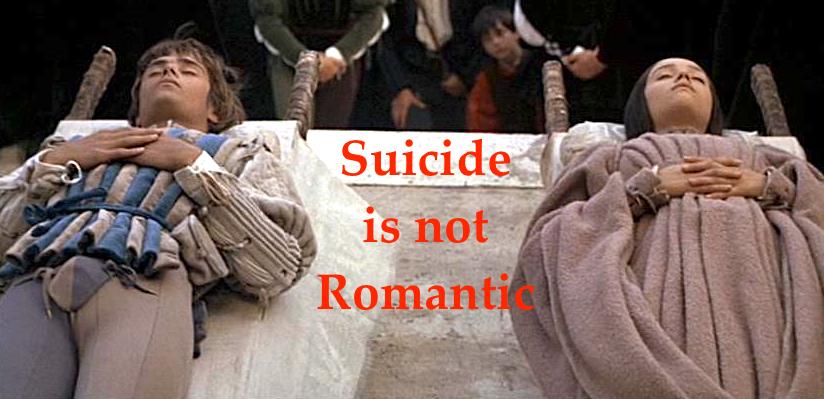
shakespearean-suicideAre all who commit suicide damned? Some would claim this is true. I, however, agree with Martin Luther and C.S. Lewis that God’s mercy is capable of rescuing even these. Suicide invariably leaves in its wake more sorrow than it heals.

Even the irreligious Mark Twain recognized this. In 1889 he wrote to a friend: “I do see that there is an argument against suicide: the grief of the worshipers left behind, the awful famine in their hearts, these are too costly terms for the release.”

I share with Lewis and Luther the belief that suicide can be forgiven. Our position is based on our personal understanding of the counsel in God’s word, as viewed through the lens of the Incarnate Word himself. As a personal conviction, not based on clear biblical guidance yea or nay, it is not a concept that should be formally taught.

There a second reason why this interpretation should not be actively promoted. It may encourage the premature ending of human life. The fact is that many, perhaps most, people contemplate suicide at some point in their life. But nearly all choose instead to live—some because of their fear of damnation. Prevented from killing themselves due to this fear, the critical moment passes, and they learn suicidal impulses are a transitory curse. Some seek help from others, which is even better.

In other words, when people are especially vulnerable to such thoughts, the last thing they need to hear is that suicide offers a ticket from the trials of this life to the bliss of heaven. On the contrary, if they can be discouraged from choosing the irreversible course during these moments of deep confusion and suffering, they can survive to experience restoration and renewed hope.

Many potential suicides press on and end up living lives filled with joy, contentment and meaning.

Martin Luther put it this way.

I don’t share the opinion that suicides are certainly to be damned. My reason is that they do not wish to kill themselves but are overcome by the power of the devil.

They are like a man who is murdered in the woods by a robber.

However, this ought not be taught to the common people, lest Satan be given an opportunity to cause slaughter, and I recommend that the popular custom be strictly adhered to according to which it [the suicide’s corpse] is not carried over the threshold, etc.

Such persons do not die by free choice or by law, but our Lord God will dispatch them as he executes a person through a robber. Magistrates should treat them quite strictly, although it is not plain that their souls are damned.

However, they are examples by which our Lord God wishes to show that the devil is powerful and also that we should be diligent in prayer. But for these examples, we would not fear God. Hence he must teach us in this way.

C.S. Lewis understood this dilemma as well. In a 1955 letter to Sheldon Vanauken, who had lost his wife and was drowning in grief, Lewis even appealed to the church’s traditional teaching on the subject to quash in advance any contemplation of suicide.

[Jean] was further on [more spiritually mature] than you, and she can help you more where she now is than she could have done on earth. You must go on.

That is one of the many reasons why suicide is out of the question. (Another is the absence of any ground for believing that death by that route would reunite you with her. Why should it? You might be digging an eternally unbridgeable chasm. Disobedience is not the way to get nearer to the obedient.)

There’s no other man, in such affliction as yours, to whom I’d dare write so plainly. And that, if you can believe me, is the strongest proof of my belief in you and love for you. To fools and weaklings one writes soft things.

In our world, which appears to value life less each day, Lewis proclaimed the mere Christian commitment to the value of every life. Historian Richard Weikart addresses this in “C.S. Lewis and the Death of Humanity, or Heeding C.S. Lewis’s Warnings against Dehumanizing Ideologies.”

Many Christians recognize that we are living in a “culture of death,” where—especially in intellectual circles—there is easy acceptance of abortion and increasing support for physician-assisted suicide, infanticide, and euthanasia. While many Christians make cogent arguments against such practices—as they should—we seem to be losing ground.

This is because our society is embracing secular philosophies and ideologies, many of which deny that the cosmos has any purpose, meaning, or significance. Once the cosmos is stripped of value, humanity is not far behind, especially since most secularists have also rejected any objective morality.

When C.S. Lewis cautioned about the dangers of dehumanizing secular ideologies in The Abolition of Man and his science fiction novel That Hideous Strength, many Christians took notice. But, on the whole, the intellectual world paid little heed, careening further down the fateful road against which Lewis warned. Lewis’s critique is still a powerful antidote to the degrading vision of humanity being foisted on us by intellectuals in many institutions of higher learning.

We Christians are not immune to the genuine power of some of these arguments. For example, as a military chaplain I determined many years ago to one day write an article about the complexity of “Euthanasia on the Battlefield.” We do not serve Christ well by ignoring complex subjects or dismissing the reasoning of our “adversaries” without giving their points genuine consideration.

The ultimate barrier comes in the fact that our worldviews ultimately collide. Secularism and other religious philosophies are irreconcilable with the teachings of the One who said, “I am the way, and the truth, and the life” (John 14:6).

In The Problem of Pain, C.S. Lewis notes that suicide has been regarded in some philosophies as a virtuous path. Not so, in Christianity.

If pain sometimes shatters the creature’s false self-sufficiency, yet in supreme ‘Trial’ or ‘Sacrifice’ it teaches him the self-sufficiency which really ought to be his—the ‘strength, which, if Heaven gave it, may be called his own:’ for then, in the absence of all merely natural motives and supports, he acts in that strength, and that alone, which God confers upon him through his subjected will.

Human will becomes truly creative and truly our own when it is wholly God’s, and this is one of the many senses in which he that loses his soul shall find it. . . . When we act from ourselves alone—that is, from God in ourselves—we are collaborators in, or live instruments of, creation: and that is why such an act undoes with ‘backward mutters of dissevering power’ the uncreative spell which Adam laid upon his species.

Hence as suicide is the typical expression of the stoic spirit, and battle of the warrior spirit, martyrdom always remains the supreme enacting and perfection of Christianity.

This great action has been initiated for us, done on our behalf, exemplified for our imitation, and inconceivably communicated to all believers, by Christ on Calvary. There the degree of accepted Death reaches the utmost bounds of the imaginable and perhaps goes beyond them; not only all natural supports, but the presence of the very Father to whom the sacrifice is made deserts the victim, and surrender to God does not falter though God ‘forsakes’ it.

Whenever you encounter someone overshadowed by the dark cloud of despair and death, speak to them life. Dispel the lies of suicide. Confront the Enemy, so that Satan would not be “given an opportunity to cause slaughter.” As Luther also said in the context quoted above:

It is very certain that, as to all persons who have hanged themselves, or killed themselves in any other way, ’tis the devil who has put the cord round their necks, or the knife to their throats.

Graphic and true. I choose not to participate in Satan’s murderous purposes by promoting suicide, and I encourage you to join me.

_____

The photo above comes from one of the many renditions of Romeo and Juliet.

Oxymoronic Misunderstanding

guardian angelOxymoron is a great word. Too bad so few people understand what it means.

In America, at least, nine times out of ten you will hear it misused. Most folks seem to think it means a “contradiction in terms.”

One common example is “military intelligence.” Perhaps I am sensitive to it, being a veteran, but I would enjoy never again hearing people guffaw at that term.

In actuality, the oxymoron is a much more sophisticated rhetorical device.

An oxymoron is the combination of two incongruous words or images to create a unique effect. Often it hints of irony. For example, “she was a poor little rich girl.”

Further examples suggest complex circumstances. “Cruel kindness” and “making haste slowly,” are quite intriguing. The context would provide greater illumination, but these phrases suggest a painful treatment given in love . . . and urgency, tempered by caution.

Another example, apropos for an age in which zombies have become so popular, is the phrase “living death.” Reanimated corpses aside, this oxymoron is extremely powerful.

It evokes the sense of a person’s life having become deathlike in some way. Perhaps it is physical, emotional, psychological or spiritual. In any case, drawing together life and death in this epigram is provocative.

In his most vulnerable work, A Grief Observed, C.S. Lewis describes humanity itself as an oxymoron. Most certainly, he uses the word appropriately.

Sometimes, Lord, one is tempted to say that if you wanted us to behave like the lilies of the field you might have given us an organization more like theirs. But that, I suppose, is just your grand experiment. Or no; not an experiment, for you have no need to find things out. Rather, your grand enterprise. To make an organism which is also a spirit; to make that terrible oxymoron, a ‘spiritual animal.’

Lewis’ point is well taken. That the Creator of the cosmos would make flesh bound human beings with a spiritual nature that allows him to describe as made in his own image, is incomprehensible.

Animals are animals. That is what modern secularists argue that we are. Yet it is evident to the vast majority of humans throughout all times and cultures, that we are unlike beasts. For we possess a spirit. And we are, accordingly, that unique thing among all beings—a spiritual animal.

So peculiar are we in the universe that even the angels themselves—spirits, never “animals”—are curious about the nature of our redemption. As Peter writes in his first epistle:

Concerning this salvation, the prophets who prophesied about the grace that was to be yours searched and inquired carefully, inquiring what person or time the Spirit of Christ in them was indicating when he predicted the sufferings of Christ and the subsequent glories.

It was revealed to them that they were serving not themselves but you, in the things that have now been announced to you through those who preached the good news to you by the Holy Spirit sent from heaven, things into which angels long to look.

From one oxymoron to another, I hope that this new year brings you many blessings. Most especially, I pray that if you have not already experienced this wondrous miracle which amazes even the angels of heaven . . . that you would come to know God’s love.

The World’s End

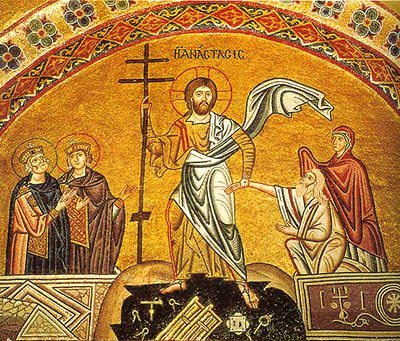
christ arisenMany years ago, while attending seminary, I was invited to preach at a Pentecostal congregation in my home town. One of the conversations I had that day taught me more about the importance of sound biblical preaching than every homiletics course I ever took (combined).

Lutherans, I must admit, are not big advocates of “end times” concerns. The reasons for this are far too complicated to address in a brief column now. Ironically, however, although we confess our confidence that Jesus “will come again to judge the living and the dead” every week, we seldom talk about the details of that arrival.

At the aforementioned service, I did preach on the second coming of the Messiah. And, to distill it down to a single message, I suggested that the Scriptures teach us to live in a sort of tension. We should live with a conscious awareness and urgency that the parousia could happen at any moment . . . and, prepare for the future as though the return of Christ (and subsequent new creation) will not take place for another thousand years.

Shortly after the service ended, a woman approached me and shared how she “wished she could have heard that sermon thirty years earlier.” She related how different her life would have been.

She said in her youth she had longed to attend college, but she never did . . . because she knew Jesus would return before she graduated.

When she and her husband bought a home, she wished the property had some fruit trees, but she never planted any . . . because she knew Jesus would return before they bore fruit.

Saddest of all, she told me that when her children were born, she never raised them to become mature adults . . . because she knew Jesus would return before they grew into the men and women they became.

Nearly forty years later I am more convinced than ever that living with the “tension” I described is the proper course of disciples of Jesus.

So, how does this work out in reality?

While a few of us know people who become so preoccupied with the end of the world that their lives go askew, it’s the other error to which most of us are prone. We tend to think that the return of Christ bears little or no connection to the age in which we live.

We are so preoccupied with our present responsibilities and dreams that we invest precious little time in contemplating how these things will matter in the scope of eternity.

I highly recommend to you a recent article on this subject that will remedy this dilemma. Andrée Seu Peterson, a gifted writer I have commended before at Mere Inkling, reminds us all of the fact that Jesus’ second coming may be just around the corner. Andrée writes:

Who would have thought that after centuries of modernity, beheading would once again be a means of persecuting the people of God? Does it not send a chill up our spine to read all about it in Revelation 20:4 even as we hear about it on CNN? “Then I saw thrones, and seated on them were those to whom the authority to judge was committed. Also I saw the souls of those who had been beheaded for the testimony of Jesus.”

C.S. Lewis famously described two errors people fall into when considering the occult. Either we get caught up in unhealthy expressions of the supernatural, or we dismiss the reality of demons and their destructive agenda altogether.

I believe humanity’s impulsive nature makes us vulnerable to the same extremes when it comes to the final days of the world we call home.

I strongly encourage you to read Peterson’s article here, as a timely reminder that you were created for far more wonderful and amazing things than we can ever know in this life. Even the best this world offers is but a hint and a foretaste of what awaits those who trust in God.

Any Name But That

jesus nameThis week I read one of the clearest descriptions of the gospel I have ever heard. It appeared in an article written by the most (how do I put this mildly?) daunting professor I have encountered in my Doctor of Ministry studies. “Intimidating” would also work . . .

But his brilliance and rapid fire delivery of thought-provoking concepts is not the reason for me mentioning him here. It is his ability to cut through the confusion, and express simply the essence of the good news, the Christian hope, the gospel.

I’m not pandering to him, mind you, because my grade for his systematics course was filed long ago. It is simply that Joel Biermann said extremely succinctly, something that I have always attempted to emphasize in my own ministry.

The Gospel is the good news, but it is not just any good news. The Gospel is a word of liberation and encouragement, but it is not just any word of liberation and encouragement. The Gospel is a wonderful event and a joyful experience, but it is not just any wonderful event and joyful experience.

In other words, when it comes to defining the Gospel, it is vitally important that we move past vague ideas or general notions and grab hold of the central thing. The central thing is Jesus.

This is a truth too many fail to understand. Sadly, this is true for some “inside” the Church as well as outside of its doors.

Goodness is good. Generosity is wonderful. Encouragement is precious. Courage is noble. Love is (almost) divine.

Yet none of these are the Gospel. The Gospel is Jesus. In him the world discovers every good thing from the hand of God the Father, our Creator.

Jesus is indispensable. Without his holy name, the “faith” would simply be a praiseworthy “religion.” Without Jesus, it could instruct how to live, but it could not redeem.

It is precisely this point—the name of Jesus—that makes the Gospel objectionable to some. “Care for the sick,” some say, “just don’t mention that name.” On other lips we hear “The Church does lots of things that benefit the community, but please don’t mention that name that offends people.”

They arrested the apostles and put them in the public prison. But during the night an angel of the Lord opened the prison doors and brought them out, and said, “Go and stand in the temple and speak to the people all the words of this Life. . . .”

And someone came and told [the High Priest], “Look! The men whom you put in prison are standing in the temple and teaching the people. . . .”

And the high priest questioned them, saying, “We strictly charged you not to teach in this name, yet here you have filled Jerusalem with your teaching, and you intend to bring this man’s blood upon us.”

But Peter and the apostles answered, “We must obey God rather than men. The God of our fathers raised Jesus, whom you killed by hanging him on a tree. God exalted him at his right hand as Leader and Savior, to give repentance to Israel and forgiveness of sins. And we are witnesses to these things, and so is the Holy Spirit, whom God has given to those who obey him.” (Acts of the Apostles, chapter five).

C.S. Lewis knew quite well that Christianity is all about Jesus. Without him, the person Jesus the Christ, whatever passes for the “Church” would merely be a noisy gong. Lots of “religious” talk would remain . . . but the Gospel would be absent.

“What are we to make of Christ?” There is no question of what we can make of Him, it is entirely a question of what He intends to make of us. You must accept or reject the story. The things He says are very different from what any other teacher has said. Others say, “This is the truth about the Universe. This is the way you ought to go,” but He says, “I am the Truth, and the Way, and the Life.” He says, “No man can reach absolute reality, except through Me. Try to retain your own life and you will be inevitably ruined. Give yourself away and you will be saved. . . .”

“Come to Me everyone who is carrying a heavy load, I will set that right. Your sins, all of them, are wiped out, I can do that. I am Re-birth, I am Life.” (1950 essay, “What Are We to Make of Jesus Christ?”).

In the same way as the apostles, C.S. Lewis, my seminary professor, and all of those who have entrusted themselves to the grace of God in Christ, know the name of Jesus is not optional. In fact, it is all about the name.

For it is Jesus, and him alone, who is the alpha, omega and the whole of the Gospel.